- Twice-yearly inspections (spring and fall) are the single most effective maintenance habit, per NRCA guidelines [1]
- Preventive maintenance reduces repair costs by 30-50% compared to purely reactive approaches, and every $1 spent saves approximately $4 in future repairs [2]
- Proactive care adds 10-15 years to a roof's functional lifespan, according to the International Association of Certified Home Inspectors [3]
- 75% of emergency roof calls received by contractors in the NearbyHunt network involve damage that a scheduled inspection would have caught 6-12 months earlier
- Gutter cleaning twice per year directly prevents ice dams, rot, and fascia damage that cost $500 to $2,500 to repair [4]
- Roof inspections cost $150-$400 in 2026, a fraction of the $8,000-$15,000 average full replacement [5]

Get quotes from top-rated pros.
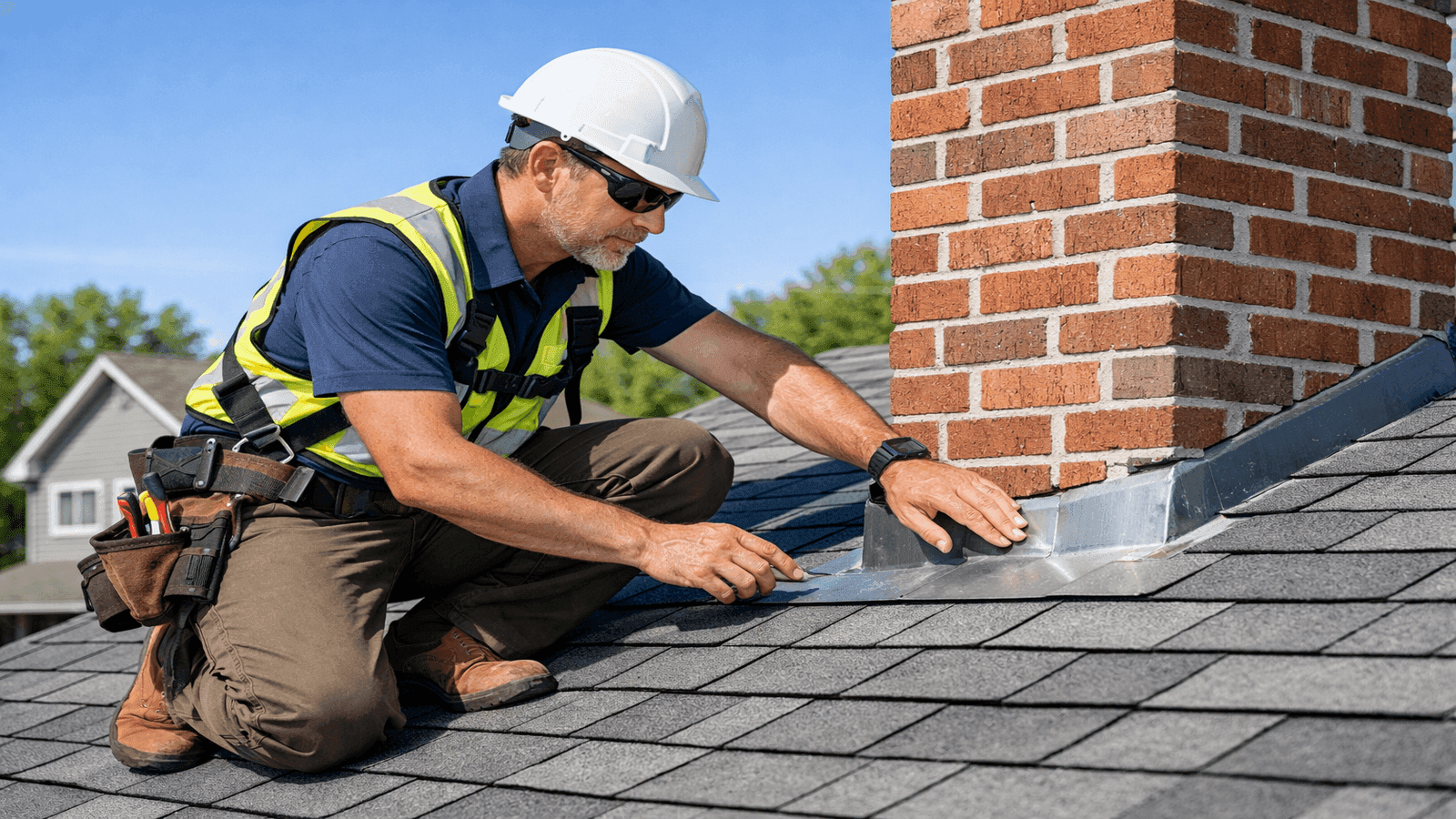
Photo: Licensed roofing contractor in safety gear inspecting shingles and chimney flashing on a residential roof during a spring maintenance inspection
Why Roof Maintenance Is Non-Negotiable
Your roof is your home's first defense against everything the sky throws at it. Rain, snow, hail, UV radiation, wind, and temperature swings all work against it every single day. Yet most homeowners treat their roof as "out of sight, out of mind," and only pay attention when a leak shows up on the ceiling or an insurance adjuster is standing in the living room.
The numbers are sobering. Nearly 60% of U.S. homeowners say they have put off home repairs due to cost, according to a 2026 survey by Today's Homeowner [6]. But deferred roof maintenance is one of the most expensive gambles a homeowner can take. A minor flashing problem that costs $200 to seal today can become a $4,000 structural repair in 18 months if water is quietly working its way under the roof deck.
James Carver, a licensed roofing contractor with more than 20 years of experience and over 2,800 residential and commercial roofing projects across the U.S. South and Midwest, puts it plainly: "I've never met a homeowner who regretted spending a few hundred dollars on routine maintenance. I've met plenty who regretted not doing it."
This guide gives you a complete, actionable roofing maintenance framework: seasonal checklists, a multi-year schedule, material-specific tips, and guidance on when to call a professional. You'll also find links to our dedicated cluster pages covering every major maintenance topic in depth.
Understanding Your Roof System
Before you can maintain a roof properly, you need to know what you're maintaining. A residential roof is not just the visible shingles; it's a layered system of components that work together. Our Roof Components Explained guide covers the full anatomy, but here's a quick orientation.
Roofing surface material is what you see from the street. Asphalt shingles dominate at roughly 69% of U.S. homes, followed by metal, tile, wood shake, and flat membrane systems. For detailed comparisons, see our Types of Roofing Materials article.
Underlayment sits beneath the surface material and acts as a secondary water barrier. It deteriorates over time, especially if surface shingles are damaged and water gets underneath.
Decking (sheathing) is the wood layer under the underlayment. It's vulnerable to rot and mold if moisture penetrates the layers above it.
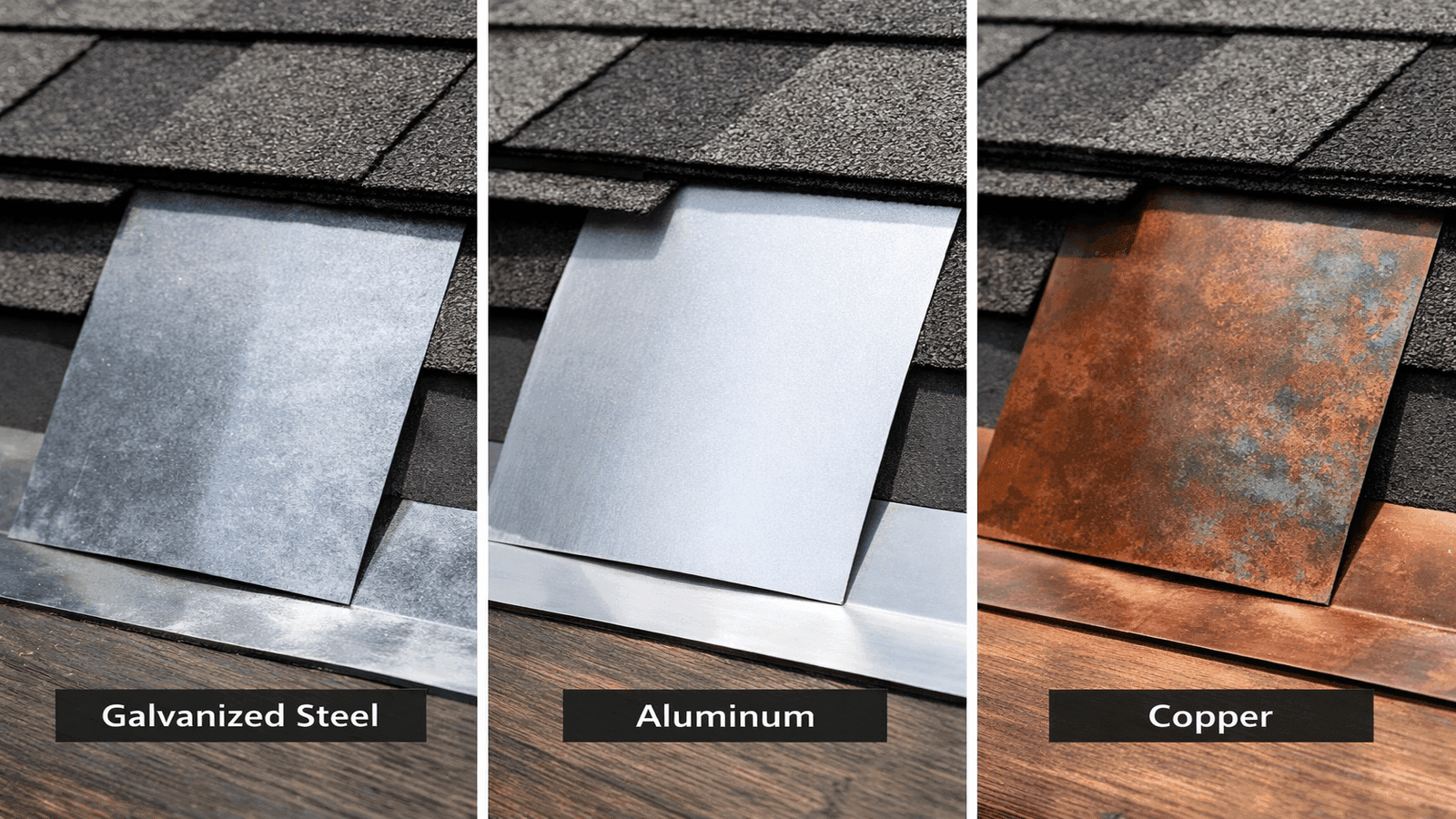
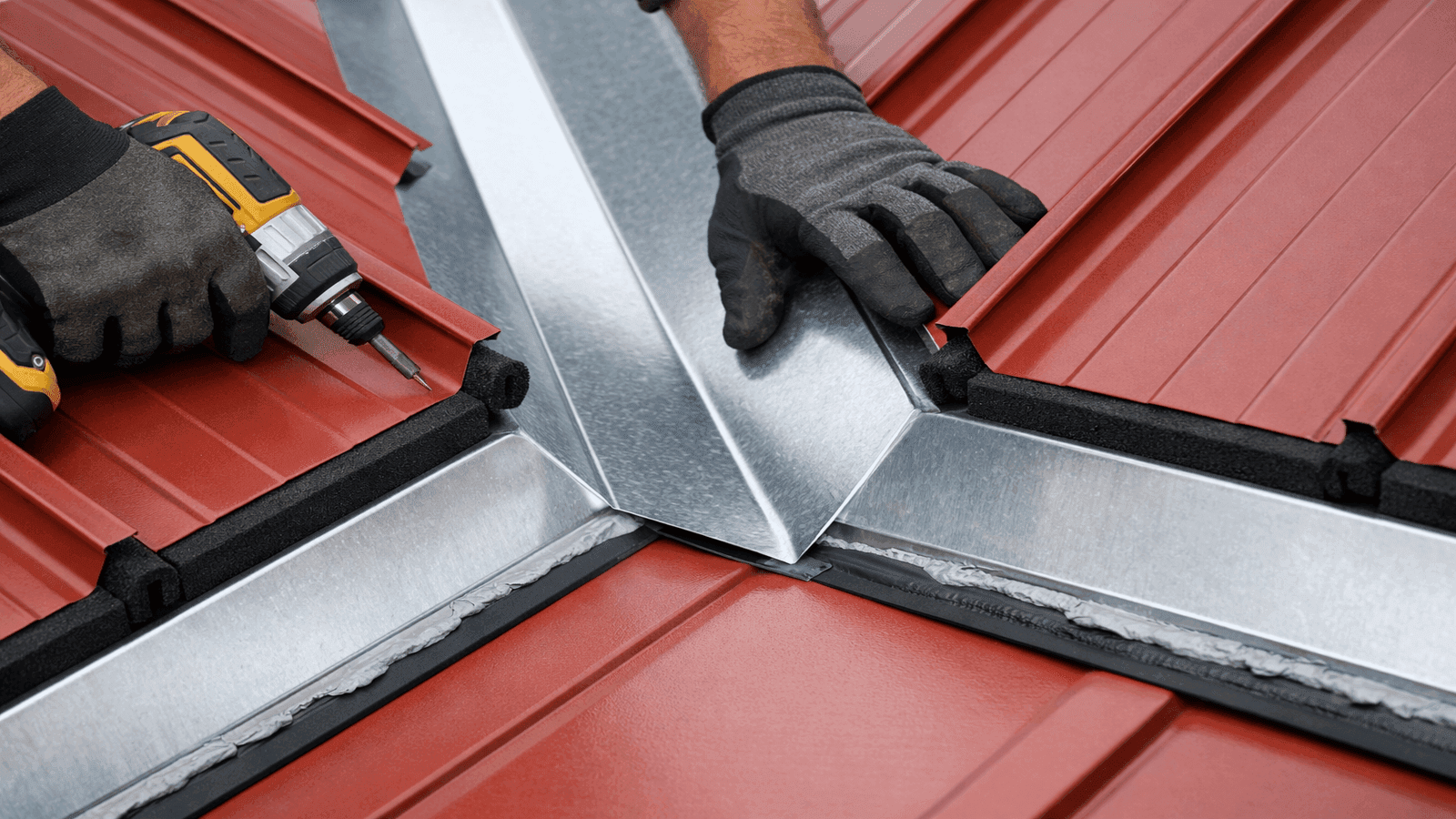
Flashing is metal (usually aluminum or galvanized steel) installed around roof penetrations such as chimneys, skylights, vents, and valleys. It's the most common failure point on residential roofs.
Gutters and downspouts are technically separate from the roof but directly affect it. Clogged gutters cause water to back up under shingles and ice dams to form in winter.
Attic ventilation regulates temperature and moisture beneath the roof deck. Poor ventilation causes shingles to blister from heat and decking to rot from trapped humidity. See our dedicated Attic Ventilation Maintenance guide for full coverage.
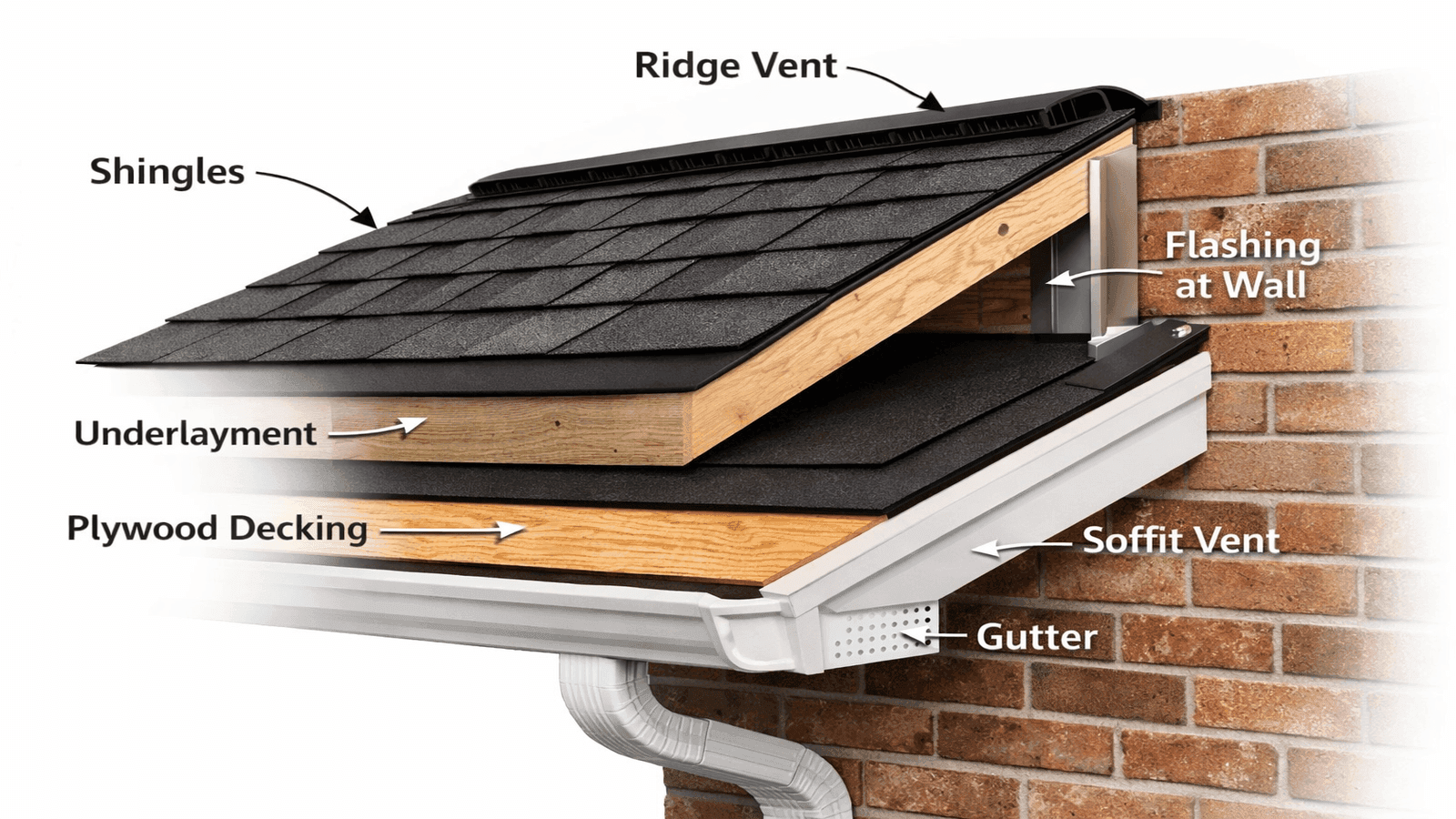
Photo: Labeled diagram showing the layers of a residential roof system including shingles, underlayment, decking, flashing, ridge vent, and gutters
The Roof Maintenance Schedule
The most effective way to approach roof maintenance is to follow a structured schedule. Ad hoc attention (checking your roof only when something looks wrong) misses 60-70% of developing problems because most early-stage damage is not visible from the ground.
Roof Maintenance Cost Reference (2026)
| Task | Frequency | DIY Cost | Pro Cost | Notes |
| Professional inspection | 2x/year | N/A | $150-$400 | Attic check adds $50-$100 |
| Gutter cleaning | 2-4x/year | $0-$30 | $100-$250 | Depends on linear footage |
| Pipe boot replacement | As needed | $15-$40 | $150-$300 | DIY feasible on low slopes |
| Sealant/caulk reapplication | Every 3-5 yrs | $10-$30 | $100-$200 | Per penetration area |
| Moss treatment (soft-wash) | Every 2-3 yrs | $20-$60 | $250-$600 | Size-dependent |
| Zinc strip installation | Every 5-10 yrs | $50-$150 | $200-$400 | Ridge length determines cost |
| Flashing re-seal | Every 3-5 yrs | $20-$50 | $200-$500 | Chimney flashing: pro only |
Annual and Biannual Tasks
Professional inspections twice per year are the cornerstone of any serious maintenance program. NRCA recommends scheduling these in spring (after winter stress) and fall (before cold-weather exposure) [1]. A professional inspection takes 1-2 hours and typically costs $150-$350, with comprehensive attic checks running up to $400 [5]. Our Roof Inspection Cost article breaks down exactly what you pay for.
Gutter cleaning twice per year should happen in late spring after tree pollen and seed drops clear, and in late fall after leaves have fallen. In areas with heavy tree canopy, you may need quarterly cleaning. See our Clean Gutters Safely guide for step-by-step instructions.
Visual ground-level inspection after every major storm takes 10 minutes and can catch obvious damage (missing shingles, visible dents from hail) that warrants a professional follow-up. Our Storm Damage Assessment guide walks you through what to look for.
Every 3-5 Years
Caulk and sealant inspection around all penetrations. Sealant around pipe boots, vents, and skylights degrades from UV exposure and thermal cycling. It's among the cheapest maintenance tasks ($10-$30 in materials) but prevents some of the most damaging leaks.
Flashing inspection and re-sealing. Even properly installed flashing can work loose over time from thermal expansion and contraction. See our Roof Flashing Maintenance guide for what to check.
Attic inspection for moisture, mold, or insulation gaps. Attic problems are often the first sign of roof issues because water travels down rafters before appearing on interior ceilings.
After 10+ Years
Underlayment condition assessment. If your roof is approaching the midpoint of its expected life, a professional should probe the decking and underlayment condition during an inspection. Early replacement planning can save thousands by avoiding emergency replacement. Our How Long Do Roofs Last article covers expected lifespans by material.
Warranty review. Manufacturer and contractor warranties have specific maintenance requirements. Failure to meet them can void coverage. See our Roof Warranty Guide for everything you need to know about keeping your warranty valid.
Get quotes from top-rated pros.
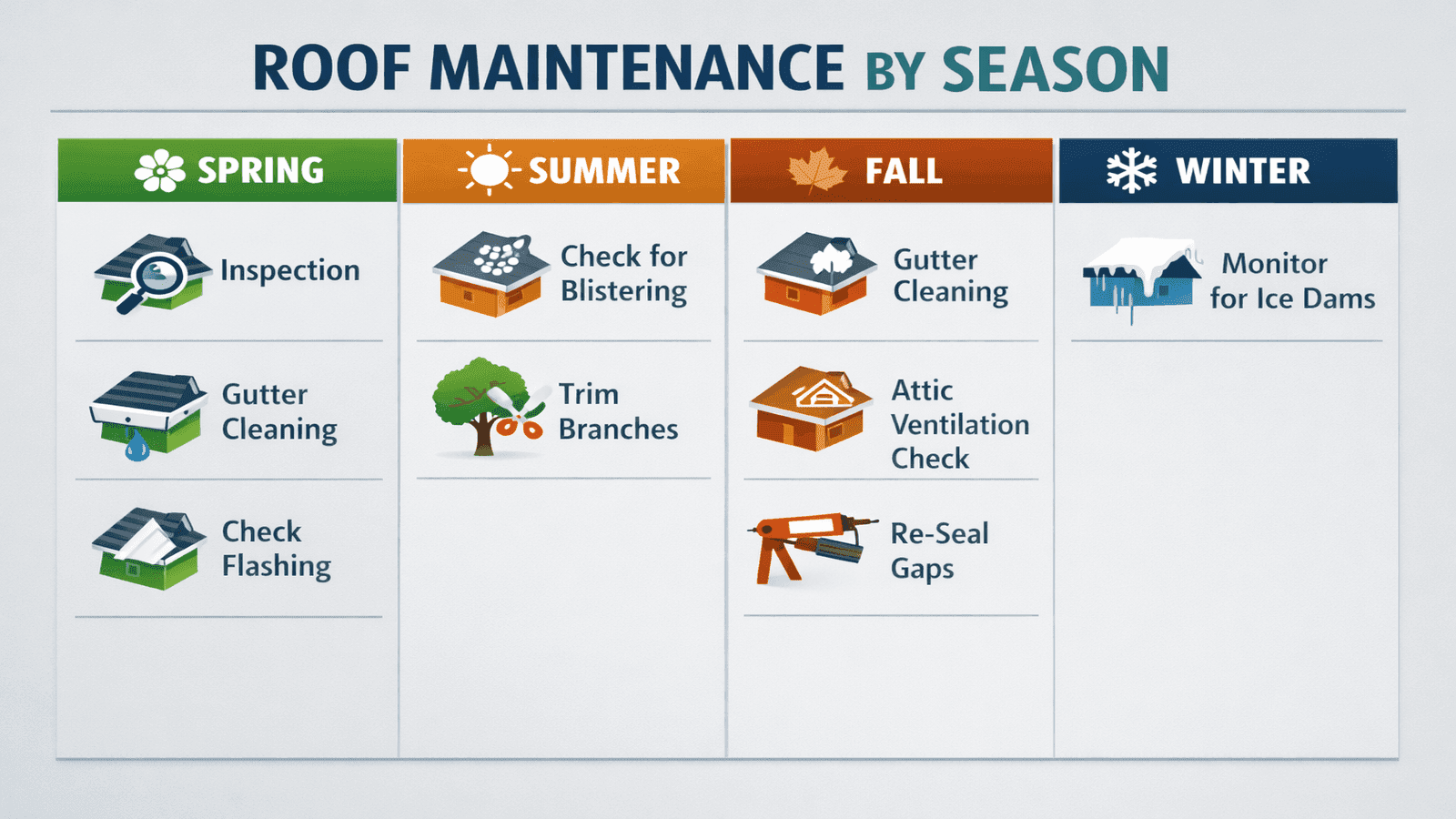
Photo: Seasonal roof maintenance calendar showing spring inspection, summer monitoring, fall gutter cleaning and sealing, and winter ice dam monitoring tasks
Spring Roof Maintenance
Spring inspection is arguably the most important of the year. Winter is brutal on roofs: freeze-thaw cycles crack sealants, ice dams can lift shingles, and months of snow load stress the decking. Spring gives you the first opportunity to assess the damage and address it before summer heat bakes problems in.
What to do in spring:
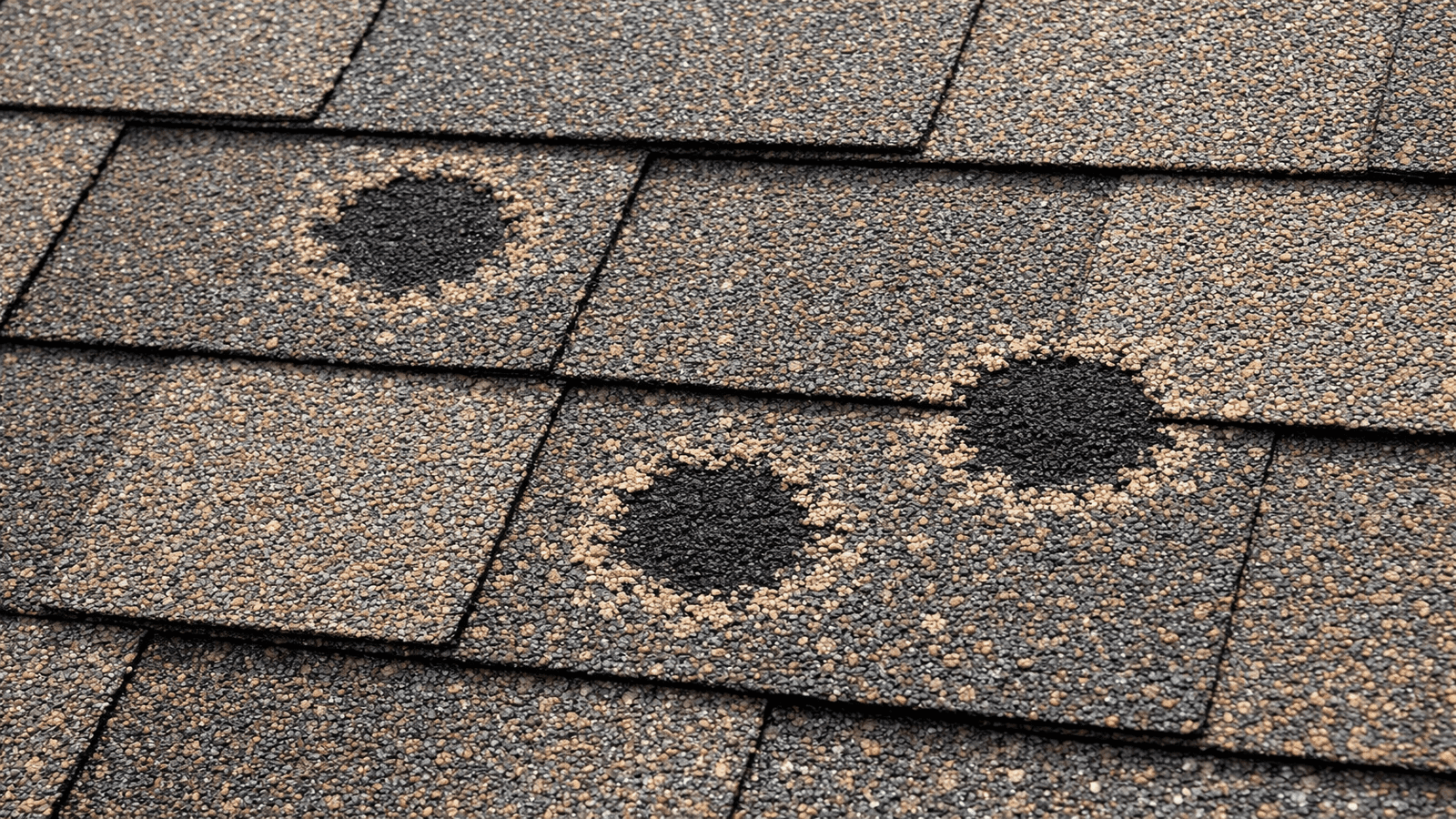
- Inspect shingles for cracking, curling, blistering, or missing granules (granules in gutters are a warning sign)
- Check all flashing around chimneys, skylights, and vents for gaps or separation
- Clear gutters and downspouts of winter debris
- Look for sagging sections or visible dips in the roofline from the ground
- Inspect attic for daylight coming through the deck, water staining, or mold
- Trim any tree branches that grew close to the roof over winter
The licensed roofing contractors in our NearbyHunt network report that more than 75% of emergency repair calls in late spring involve damage that began during winter and was not caught early. A spring inspection that costs $200 frequently prevents a $3,000-$6,000 summer repair.
Marcus T., a homeowner in Charlotte, NC, learned this the hard way. After skipping his spring inspection for two consecutive years, he noticed a brown stain on his bedroom ceiling in June. What started as a failed pipe boot seal had allowed water to saturate 40 square feet of decking and two ceiling joists. The repair totaled $4,800. "The contractor told me a spring inspection would have caught the boot seal for about $15 in materials," Marcus said. He now schedules both spring and fall inspections every year.
Our dedicated Spring Roof Maintenance guide provides a complete checklist with photos of what to look for.
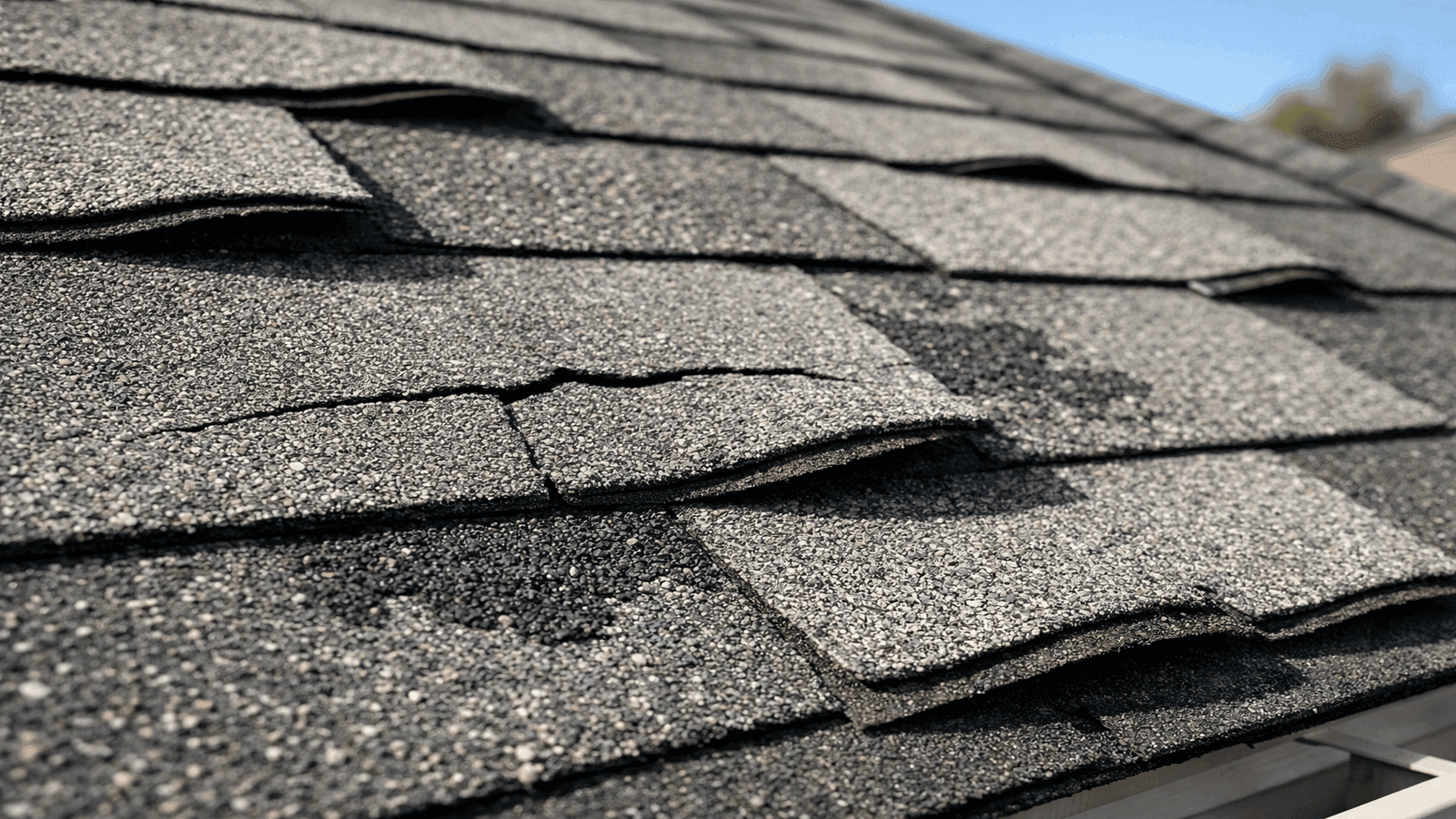
Photo: Close-up of asphalt shingles showing curling edges, granule loss, and cracking after winter weather stress, typical findings during a spring roof inspection
Fall Roof Preparation
Fall preparation is about getting the roof ready for winter before cold temperatures make repairs difficult and dangerous. In most of the country, November marks the start of the window when ice, snow, and frozen moisture can turn minor issues into emergencies overnight.
What to do in fall:
- Clean gutters and downspouts thoroughly after the last major leaf drop
- Inspect and clear roof valleys where leaves accumulate and trap moisture
- Check flashing and re-seal any gaps before temperatures drop
- Verify attic ventilation is clear and functioning (blocked vents cause ice dams)
- Look for any shingles that may have lifted or cracked during summer heat
- Test downspout drainage by running water from a hose
Ice dam prevention starts with fall preparation. Ice dams form when heat escapes through the roof, melts snow, and the meltwater refreezes at the cold eaves. The result can be water backed up under shingles across several feet of roof. Our Ice Dam Prevention guide covers ventilation, insulation, and emergency response strategies in detail.
Fall is also the time to check your roof warranty documentation. Many warranties require that you document maintenance activities; a simple photo log taken during your fall inspection can be invaluable if you ever need to file a claim. The Roof Warranty Guide explains exactly what documentation manufacturers require.
Our Fall Roof Preparation guide has a season-specific checklist you can print and use during your inspection.
Gutter Maintenance and Drainage
Gutters are the most frequently neglected part of the roof system. They seem minor, but their failure has outsized consequences: water overflow saturates fascia boards, foundation splashback causes grading issues, and in cold climates, backed-up gutters are the primary cause of ice dams.
Cleaning frequency: Most homes need gutters cleaned twice per year. Homes surrounded by deciduous trees, especially pine trees that shed needles continuously, may need cleaning three or four times annually.
Signs of gutter problems:
- Water marks or streaks on exterior siding below the gutter line
- Gutters visibly sagging or pulling away from the fascia
- Plants growing inside the gutters (a sign of significant soil buildup)
- Peeling paint on exterior wood near gutters
- Standing water pooling near the foundation after rain
Gutter guards reduce maintenance frequency but do not eliminate it. Professional-grade guards still need inspection annually and can trap fine debris over time. Our Gutter Maintenance Guide covers guard types, cleaning methods, and replacement costs in full detail.
Gutters are where I find the most deferred maintenance when I do inspections. A homeowner calls me for a roof problem, and half the time the actual source is that gutters haven't been cleaned in three years and water has been wicking back under the drip edge.
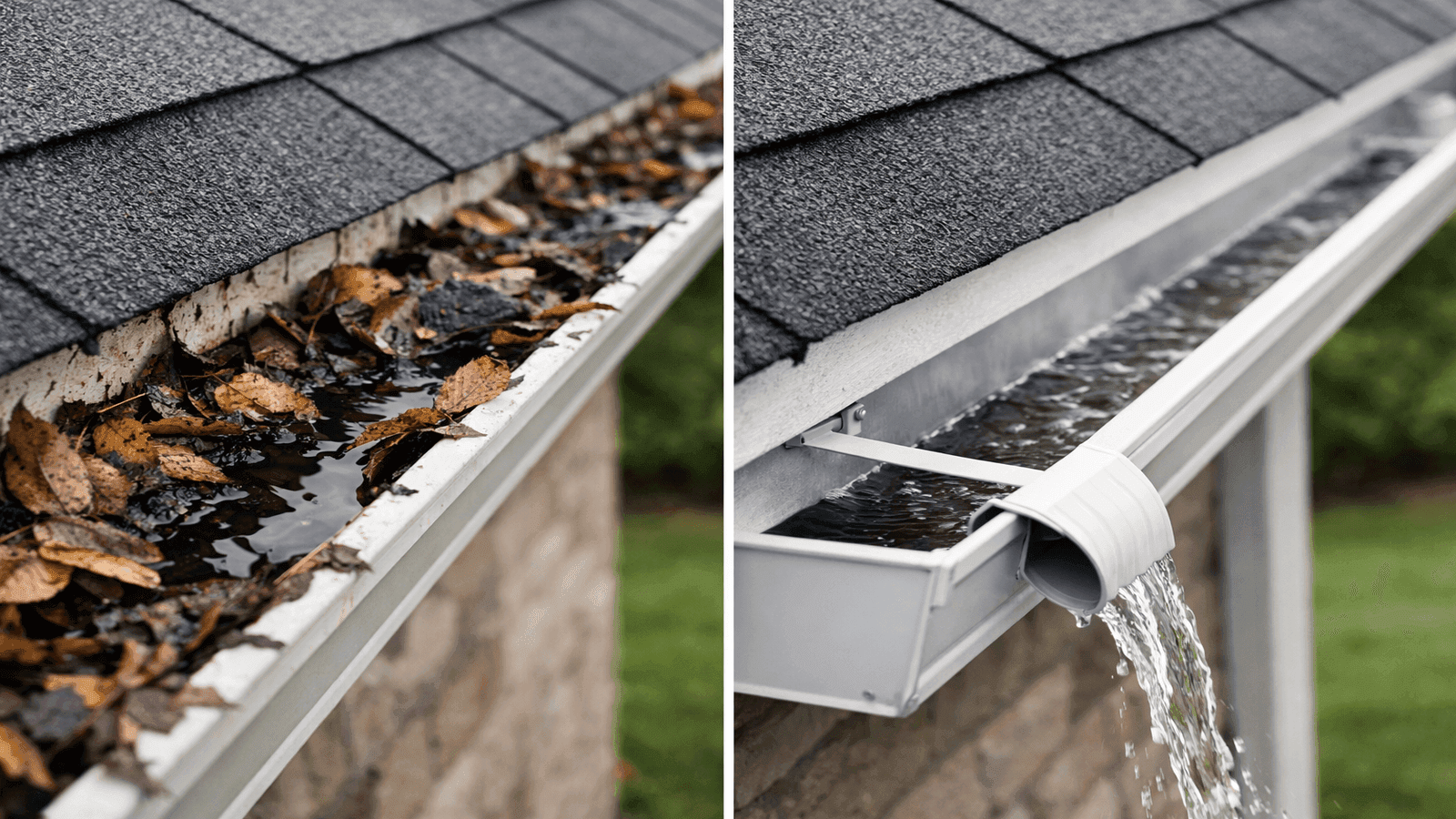
Photo: Side-by-side comparison of a gutter packed with leaves and debris on the left versus a clean properly draining gutter on the right after professional cleaning
Flashing: The Most Common Failure Point
Flashing is responsible for sealing the gaps where the roofing surface meets vertical structures or changes direction. Chimneys, skylights, dormers, vents, and roof valleys all rely on flashing. When flashing fails, water gets in fast.
James Carver notes that in his more than 1,800 roofing projects across the U.S. South and Midwest, flashing failures account for roughly 35% of all diagnosed roof leaks in homes under 20 years old. On older homes, the percentage climbs higher because original sealants have fully degraded.
What to inspect on flashing:
- Step flashing along dormers and walls (individual pieces should be tight, not lifted or separated)
- Counter flashing on chimneys (the upper piece set into mortar joints; mortar can crack and allow it to slip)
- Valley flashing where two roof planes meet
- Pipe boot flashings around plumbing vents (rubber collars crack from UV exposure)
- Skylight flashing (common source of leaks in homes over 10 years old)
When to call a professional: Flashing repairs on chimneys or steep roofs should always be done by a licensed contractor. Ground-accessible pipe boots can sometimes be replaced by a skilled DIYer. Our Roof Flashing Maintenance article covers material choices, repair methods, and cost ranges.
Moss, Algae, and Biological Growth
Moss and algae on roofs are more than cosmetic problems. Moss holds moisture against the roof surface, accelerating shingle deterioration. Algae (usually presenting as dark black or green streaking) indicates the granule coating is compromised and UV protection is reduced. In humid climates across the Southeast, Pacific Northwest, and Gulf Coast, biological growth is a persistent challenge.
Prevention is far cheaper than remediation. Zinc or copper strips installed at the ridge release metal ions that inhibit moss and algae growth. They cost $50-$150 in materials for a typical house and can protect the entire roof for 5-10 years [3].
Treatment options:
- Diluted bleach solution (1 part bleach, 3 parts water) applied with a garden sprayer, left for 20 minutes, rinsed gently: effective and inexpensive
- Commercial zinc sulfate products: longer-lasting but higher cost
- Professional soft-wash treatment: recommended for heavy infestations or steep pitches
Our Roof Moss Prevention guide covers climate-specific prevention strategies, and our Remove Roof Moss article provides step-by-step removal instructions.
Never pressure-wash an asphalt shingle roof. I see it every year: homeowners blast the moss off and strip the granules right with it. That roof is now 5-7 years older from a single cleaning. Use soft-wash only.
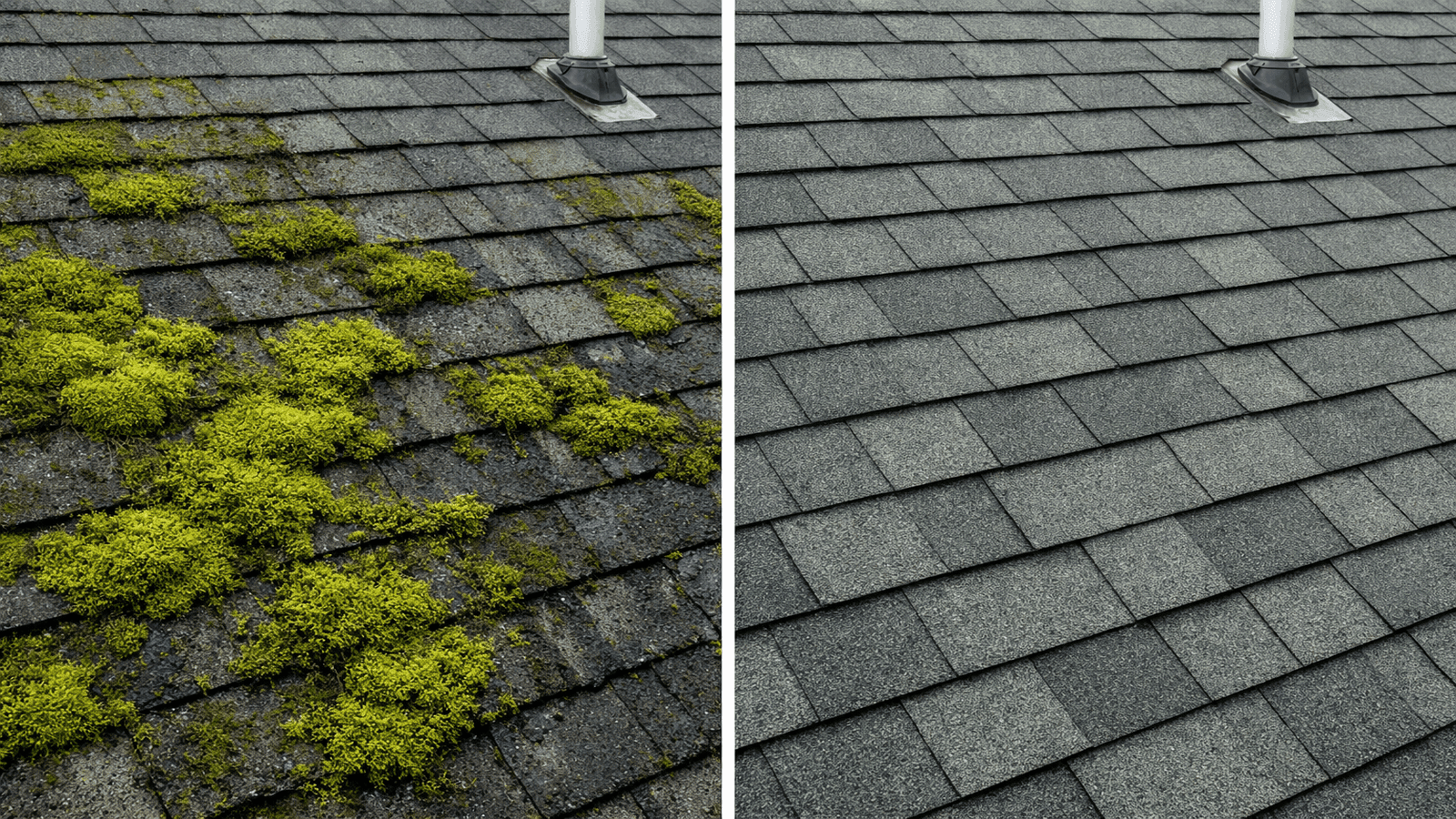
Photo: Comparison of a residential roof section with heavy moss and algae growth on the left versus a clean well-maintained asphalt shingle roof on the right
Attic Ventilation and Moisture Control
Attic ventilation is one of the least visible and most impactful aspects of roof longevity. The attic sits directly beneath the roof deck and affects it from below, unlike every other maintenance issue that works from the top down.
How ventilation affects the roof:
In summer, an under-ventilated attic can reach 150°F or higher. This heat transfers directly to the roof deck, causing shingles to blister and age prematurely. Most shingle manufacturers require adequate ventilation as a condition of their warranty, and some will deny warranty claims if ventilation does not meet their specifications [7].
In winter, warm moist air from living spaces rises into a poorly ventilated attic. It condenses on the cold underside of the roof deck, causing rot, mold, and degraded insulation. Ice dams are often a symptom of ventilation failure.
Ventilation standards: The general guideline is 1 square foot of net free ventilating area per 150 square feet of attic floor space, split between intake (soffits) and exhaust (ridge or high vents). Our Attic Ventilation Maintenance guide covers ridge vents, soffit vents, powered ventilators, and how to diagnose ventilation problems.
Signs of ventilation problems:
- Shingles blistering or curling within 5-7 years on a new roof
- Ice dams forming at the eaves in winter
- Mold or dark staining on attic rafters
- High energy bills from excessive attic heat transfer
- Frost inside the attic in cold climates
Our Install Roof Vents guide covers adding or upgrading vents for homeowners ready to address ventilation directly.
Get quotes from top-rated pros.
Flat Roof Maintenance
Flat roofs (more accurately described as low-slope roofs, typically with a pitch under 2:12) are common on commercial buildings, garages, and some residential additions. They require a different maintenance approach than sloped systems because water does not shed quickly, and pooling is a constant threat.
Common flat roof systems:
- TPO (thermoplastic polyolefin): single-ply white membrane, popular for energy efficiency
- EPDM (ethylene propylene diene monomer): black or white rubber membrane, durable
- Modified bitumen: multi-layer asphalt system, traditional choice for flat applications
- Built-up roofing (BUR): alternating layers of felt and asphalt, also called "tar and gravel"
Maintenance priorities for flat roofs:
- Clear drains and scuppers monthly (or quarterly at minimum) to prevent ponding water
- Inspect seams and penetrations twice yearly (these are the primary failure points)
- Check for blistering or bubbling in membrane surfaces after extreme heat periods
- Look for visible cracks or splits in flashing at parapet walls
The detailed maintenance schedule, repair procedures, and cost ranges for all flat roof types are covered in our Flat Roof Maintenance guide.
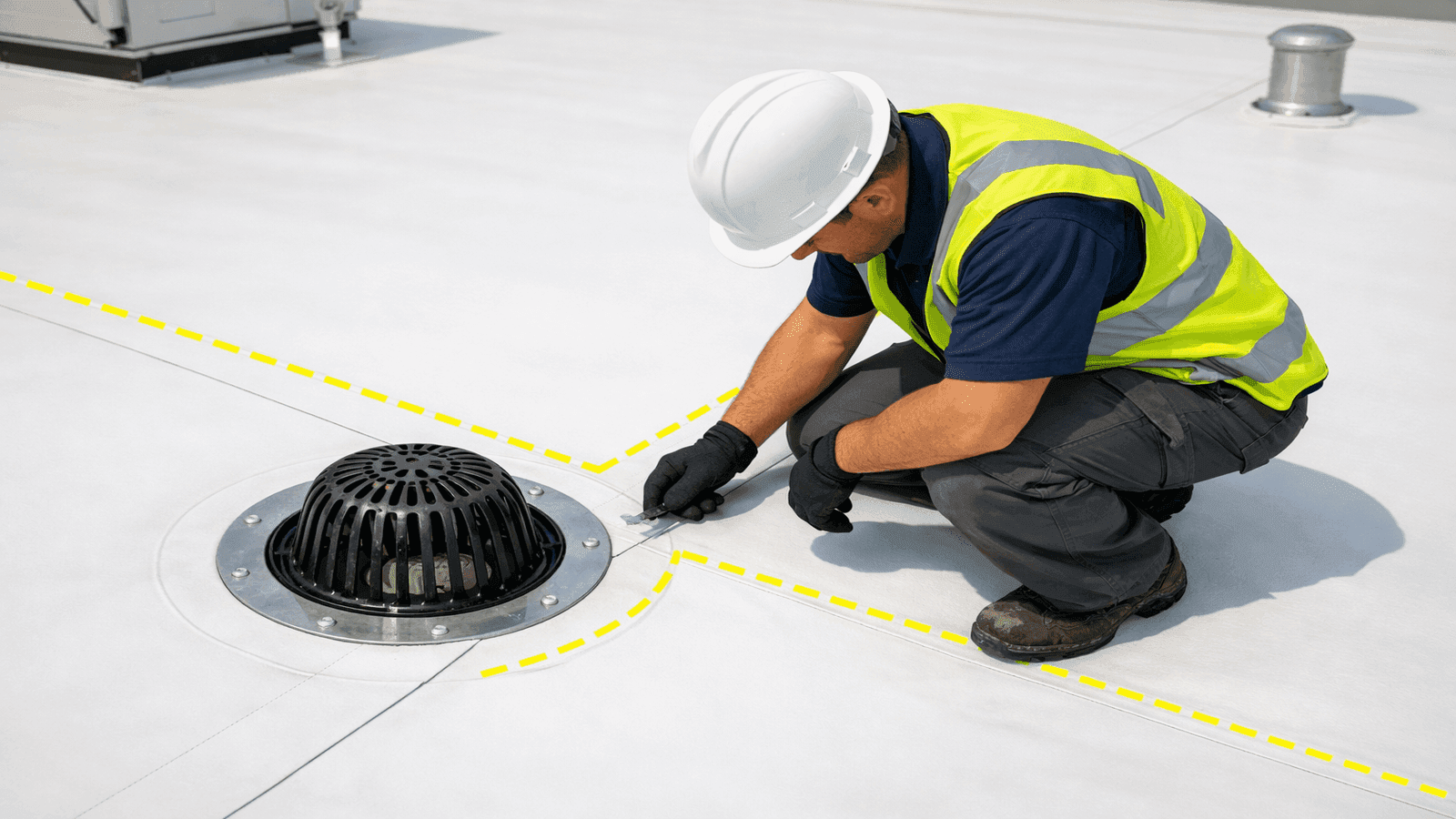
Photo: Overhead view of a white TPO flat roof with a roofing professional inspecting a seam near a roof drain during a scheduled maintenance inspection
Storm Damage: What to Do After Severe Weather
Storm damage is the category that catches homeowners most off guard because it happens suddenly, is not always visible from the ground, and insurers require timely reporting. The NearbyHunt network contractors report that delayed claims, filed more than 30-45 days after a storm, are denied at significantly higher rates than claims filed promptly.
Hail damage is the most common storm-related roofing claim in the U.S. Small hail (under 1 inch) can knock granules loose from asphalt shingles without creating visible dents, reducing their lifespan by years. Larger hail creates visible dents on metal flashings and skylights, and can crack or puncture shingles.
Wind damage most commonly manifests as lifted or missing shingles, separated flashing, and broken ridge caps. Even small gaps from lifted shingles allow significant water intrusion.
What to do immediately after a major storm:
- Do a ground-level visual scan for missing shingles, visible damage, or debris on the roof
- Check attic for daylight, water staining, or active drips
- Document everything with photos, including date stamps
- Contact your insurance company within 24-48 hours to report suspected damage
- Schedule a professional inspection before authorizing any repairs
Do not get on a wet or storm-damaged roof. Our Storm Damage Assessment guide covers insurance documentation, contractor selection, and temporary protection steps.
Temporary tarping is sometimes necessary to prevent additional water intrusion before permanent repairs are made. Our Tarp a Roof guide covers safe tarping methods.
After a hail event, I always say: get on your downspouts before anything else. If you see a surge of granules, you had hail damage. That's your physical evidence before an adjuster even arrives.
Material-Specific Maintenance
Different roofing materials have different maintenance requirements and vulnerabilities. What works for asphalt shingles is often wrong for tile, and what protects metal can harm wood shake.
Maintenance Demands by Roofing Material
| Material | Expected Lifespan | Inspection Frequency | Primary Maintenance Needs | Maintenance Intensity |
| Asphalt shingles | 20-30 years | 2x/year | Granule check, moss control, flashing | Low-Medium |
| Metal (standing seam) | 40-70 years | 1-2x/year | Seam inspection, coating check | Low |
| Metal (exposed fastener) | 25-40 years | 2x/year | Fastener/washer replacement | Low-Medium |
| Clay/concrete tile | 40-60+ years | 1-2x/year | Cracked tile replacement, underlayment | Low (tile), High (underlayment) |
| Wood shake | 20-30 years | 2x/year | Preservative treatment, moss/rot control | High |
| TPO/EPDM flat | 15-25 years | 4x/year | Drain clearing, seam inspection | Medium-High |
| Built-up roofing (BUR) | 15-30 years | 2-4x/year | Blister repair, drain maintenance | Medium |
Asphalt Shingles
Asphalt shingles are the most common and, in terms of maintenance, the most forgiving. They degrade gradually and signal distress visibly through curling, cracking, and granule loss. Key maintenance tasks include keeping algae and moss at bay, ensuring flashing integrity, and replacing individual damaged shingles promptly to prevent water infiltration. Our Replace Roof Shingles guide covers DIY shingle replacement.
Metal Roofing
Metal roofs require minimal maintenance compared to asphalt, but they are not maintenance-free. Fastener inspection is critical on exposed-fastener metal systems: the rubber washers under screw heads degrade over 10-20 years and must be replaced. Standing seam metal roofs should be inspected for panel separation at joints. All metal roofs benefit from periodic cleaning to remove debris that traps moisture and can cause surface corrosion.
Clay and Concrete Tile
Tile roofs are extremely durable but vulnerable to foot traffic damage. Walking on a tile roof can crack tiles that would otherwise last 50+ years. Maintenance focuses on keeping gutters clear, preventing moss growth (moss roots can crack tiles), and replacing individual cracked or broken tiles promptly. The underlayment under tile typically needs replacement every 20-30 years even when the tiles themselves are fine.
Get quotes from top-rated pros.
Wood Shake
Wood shake requires the most active maintenance of any common roofing material. It must remain dry to prevent rot and mold, which means regular cleaning, periodic treatment with wood preservative, and immediate replacement of any deteriorating shakes. Wood shake is also vulnerable to moss and lichen growth that holds moisture. In fire-prone regions, some municipalities require specific treatment or prohibit new wood shake installations.
Flat Membrane Systems (TPO, EPDM)
Covered above in the Flat Roof Maintenance section. The key addition for residential flat roofs is that ponding water (water standing for more than 48 hours after rain) indicates a drainage or leveling problem that shortens membrane life significantly.
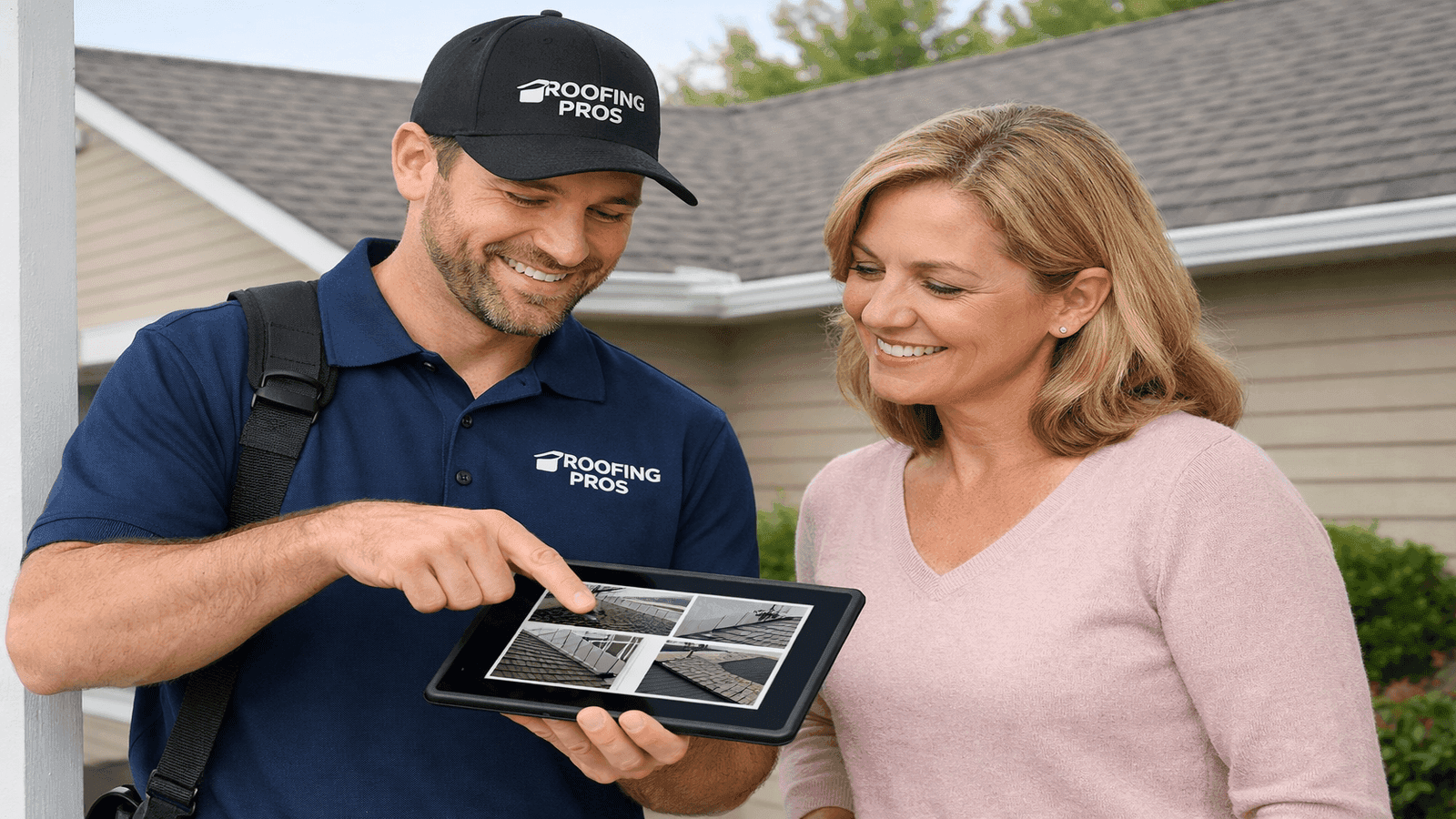
Photo: A licensed roofing contractor shows a homeowner inspection photos on a tablet during a professional roof maintenance consultation at a suburban home
DIY vs. Professional Maintenance
Knowing what you can safely do yourself vs. when to call a licensed contractor is one of the most practical decisions in roof maintenance. The risk is not just falling: poorly executed DIY repairs often make the underlying problem worse and void warranties.
Safe for most homeowners (ground-level or gentle-slope tasks):
- Ground-level visual inspection
- Gutter cleaning from a ladder (following ladder safety protocols)
- Applying moss/algae treatment with a sprayer
- Replacing a single accessible pipe boot on a low-slope area
- Installing zinc strips at the ridge from a ladder
Requires professional expertise:
- Any work on a roof with a pitch greater than 6:12
- Flashing installation or major flashing repair around chimneys
- Underlayment replacement
- Skylight flashing
- Any structural repair to decking or rafters
- Re-roofing or large-section replacement
For tasks that fall in between, our Roofing How To & DIY hub covers safety, tools, and step-by-step instructions for the most common homeowner-accessible repairs.
My rule of thumb for homeowners is simple: if you need a harness to do it safely, you need a contractor to do it. Harness work on residential roofs isn't something most people are trained for, and falls are serious.
The True Cost of Neglect
Maintenance has a direct, measurable return on investment. The math is straightforward. A $300 inspection twice a year costs $600 annually [5]. Preventive maintenance programs reduce overall roof repair costs by 30-50% [2]. On a roof that might need $2,000 in reactive repairs over five years, that's $600-$1,000 in savings beyond the cost of the inspections themselves.
The bigger risk is catastrophic deferred maintenance. When a minor leak under a chimney is ignored for two or three years, the water follows the path of least resistance through insulation, into ceiling joists, and potentially into electrical wiring. A $150 flashing repair becomes a $6,000 remediation project involving a roofer, a water damage contractor, and an electrician.
Replacement cost context: The average cost to replace a full roof ranges from $8,000 to $20,000 depending on material, pitch, and region. Our Roofing Costs pillar covers these costs in full detail, and our Cost to Replace Roof article has region-specific data. Even a $500/year maintenance spend that extends roof life by 10 years represents $80,000 in replacement cost deferred, a return measured in multiples.
Hiring a Roofing Contractor for Maintenance
Not every roofing job requires a full roofing contractor, but routine professional inspections and any repair work do. Choosing the wrong person for roof work is a common and costly mistake.
What to look for:
- Valid state contractor's license (required in most states for roof work)
- General liability insurance and workers' compensation coverage
- Physical business address and established local presence
- References from recent local jobs
- Written inspection report with photos provided after inspection
- No-pressure approach to recommending repairs
Red flags:
- Door-to-door solicitation immediately after a storm (storm chasers often disappear after payment)
- Requests for large upfront deposits (standard is 30-50% at most for larger jobs)
- Oral-only estimates with no written documentation
- Inability to provide proof of insurance on the spot
For serious repair work, always get three written estimates. Our Roofing How To & DIY hub includes a contractor vetting checklist.
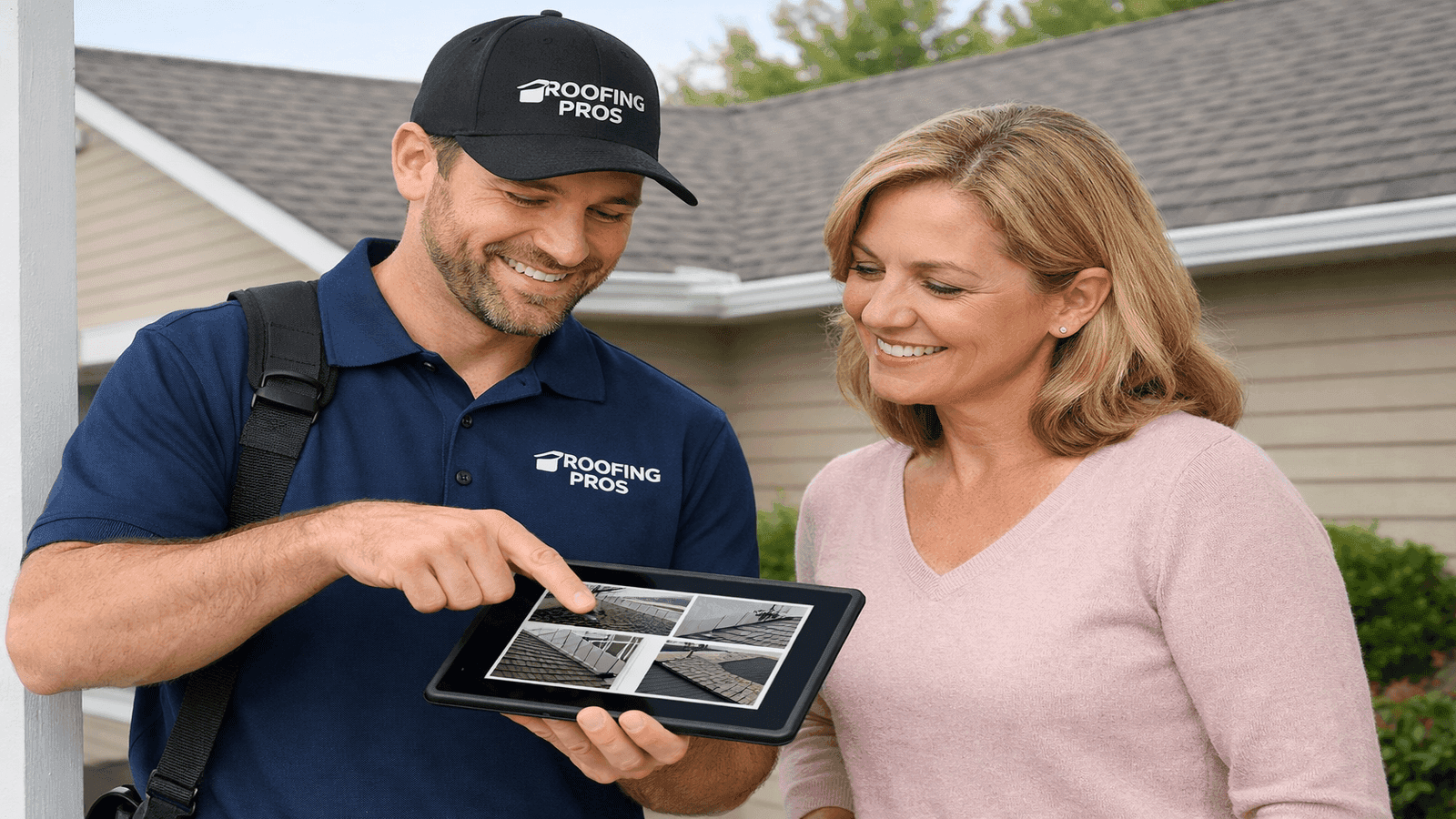
Photo: A licensed roofing contractor shows a homeowner inspection photos on a tablet during a professional roof maintenance consultation at a suburban home
Common Mistakes That Shorten Roof Life
Even homeowners who mean well sometimes do things that accelerate roof deterioration. These are the mistakes James Carver sees most often in the field.
Pressure washing the roof. As noted earlier, pressure washing strips granules from asphalt shingles. It also forces water under shingle edges and can damage flashing. Always use soft-wash methods.
Walking on the roof unnecessarily. Every step on a roof creates stress. Cracked tiles and dented metal are direct results of foot traffic. If you need to inspect, a drone or a camera on a long pole gives you the view without the damage.
Painting or coating without professional advice. Roof coatings can be beneficial on flat roofs and metal systems but can trap moisture and cause premature failure on asphalt shingles. Never apply any coating without manufacturer approval.
Ignoring small stains on ceilings. Interior ceiling stains often represent weeks or months of intermittent water intrusion. By the time you see the stain, the insulation is already saturated. Always investigate immediately. Our How to Find a Roof Leak and Fix Roof Leak guides help you trace and address leaks before they grow.
Blocking soffit vents with insulation. During attic insulation upgrades, it's easy to accidentally push insulation into soffit vent baffles. This kills intake airflow and creates ventilation problems within one heating season.
Conclusion
A well-maintained roof is not just a functional necessity: it's one of the highest-return investments you can make in your home. The $600-$800 you spend annually on professional inspections and routine maintenance works against a backdrop of $8,000-$20,000 replacement costs and the compounding damage that deferred problems cause over time.
The framework is simple: inspect twice a year (spring and fall), clean gutters in late spring and late fall, address any identified issues within 30 days, and keep records of everything. Use the cluster guides linked throughout this article for detailed coverage of every specific topic. When in doubt, call a licensed contractor. The cost of professional advice is always less than the cost of a problem that grew because you waited.
For a complete overview of residential roofing from materials to installation, visit our All About Roofing pillar. To understand how roofing fits into your home's biggest maintenance decisions, explore our Roofing How To & DIY hub.
Disclaimer: This article is intended for general educational purposes only. Roofing conditions, material performance, and local building codes vary significantly by region and climate. Always consult a licensed roofing contractor before undertaking any repair or maintenance work on your roof. NearbyHunt does not provide roofing services directly. Information in this article reflects conditions and pricing current as of 2026 and is subject to change.
Sources & References
- National Roofing Contractors Association — Roofing Guidelines and Inspection Recommendations
- Professional Roofing Magazine — Paybacks of Preventive Maintenance
- International Association of Certified Home Inspectors — Roof Lifespan Data
- Roofing Contractor Magazine — 2026 Homeowner Survey
- FoxHaven Roofing — Roof Inspection Cost Guide 2026
- Today's Homeowner — Home Repair Survey 2026
- Roofing Contractor Magazine — Survey: 23% Plan to Re-Roof in 2026
- Consumer Affairs — Roofing Statistics 2026
- RoofConnect — Preventative vs. Reactive Commercial Roof Maintenance
- DeckingHub — The Complete Roof Inspection Guide 2026
- NRCA — 2026 Roofing Manual Set
- Bloom Roofing — Data Shows That Roof Maintenance Saves Money

James is a licensed roofing contractor with 20 years of experience in roof installation, inspection, and repair across the U.S. South and Midwest. He specialises in asphalt shingles, metal roofing, and storm damage restoration. On NearbyHunt, James offers practical advice on roof maintenance, insurance claims, and selecting the right materials for long-lasting protection.

Jacob is a licensed roofing contractor with over 18 years of experience in roof inspection, installation, and restoration. Based in Texas, he has led hundreds of successful roofing projects across residential and commercial properties. Jacob is also a certified storm damage specialist, ensuring that all NearbyHunt roofing content meets industry best practices and safety standards.