- Moss grows fastest on north-facing slopes with tree canopy overhead -- trimming branches to allow sunlight and airflow is the single highest-return prevention step at zero material cost
- Zinc and copper strips installed at the ridge line release ions with every rainfall, inhibiting moss and algae growth for 10-30 feet downslope; copper lasts 20-30 years versus zinc's 5-10 years
- Algae-resistant shingles embedded with copper granules can extend the gap between professional treatments by 5-10 years -- every major manufacturer now offers this option
- Annual preventive spray treatments using zinc sulfate or diluted sodium hypochlorite cost $50-$150 in materials and prevent the $300-$1,200 professional removal bill most homeowners pay after ignoring early growth
- James Carver has completed more than 1,800 roofing projects across the U.S. South and Midwest -- in that experience, roofs that were treated preventively every 2-3 years never required full moss removal services
Moss does not announce itself. It colonizes a roof quietly, over months and years, before most homeowners notice it from the ground. By the time you can see thick green patches from your driveway, the moss has already been working its rhizoids into your shingles for a long time, retaining moisture and lifting tabs in ways that cost serious money to repair. The most effective strategy is to stop moss before it establishes, not after.
This guide covers the complete prevention toolkit available to homeowners in 2026: environmental controls, metal strip systems, chemical treatments, algae-resistant shingle upgrades, and ongoing maintenance schedules. For a broader overview of keeping your roof healthy year-round, see our complete guide on roofing maintenance. If moss is already present on your roof, the companion article on how to remove roof moss covers safe removal methods before you apply a prevention program.

Get quotes from top-rated pros.
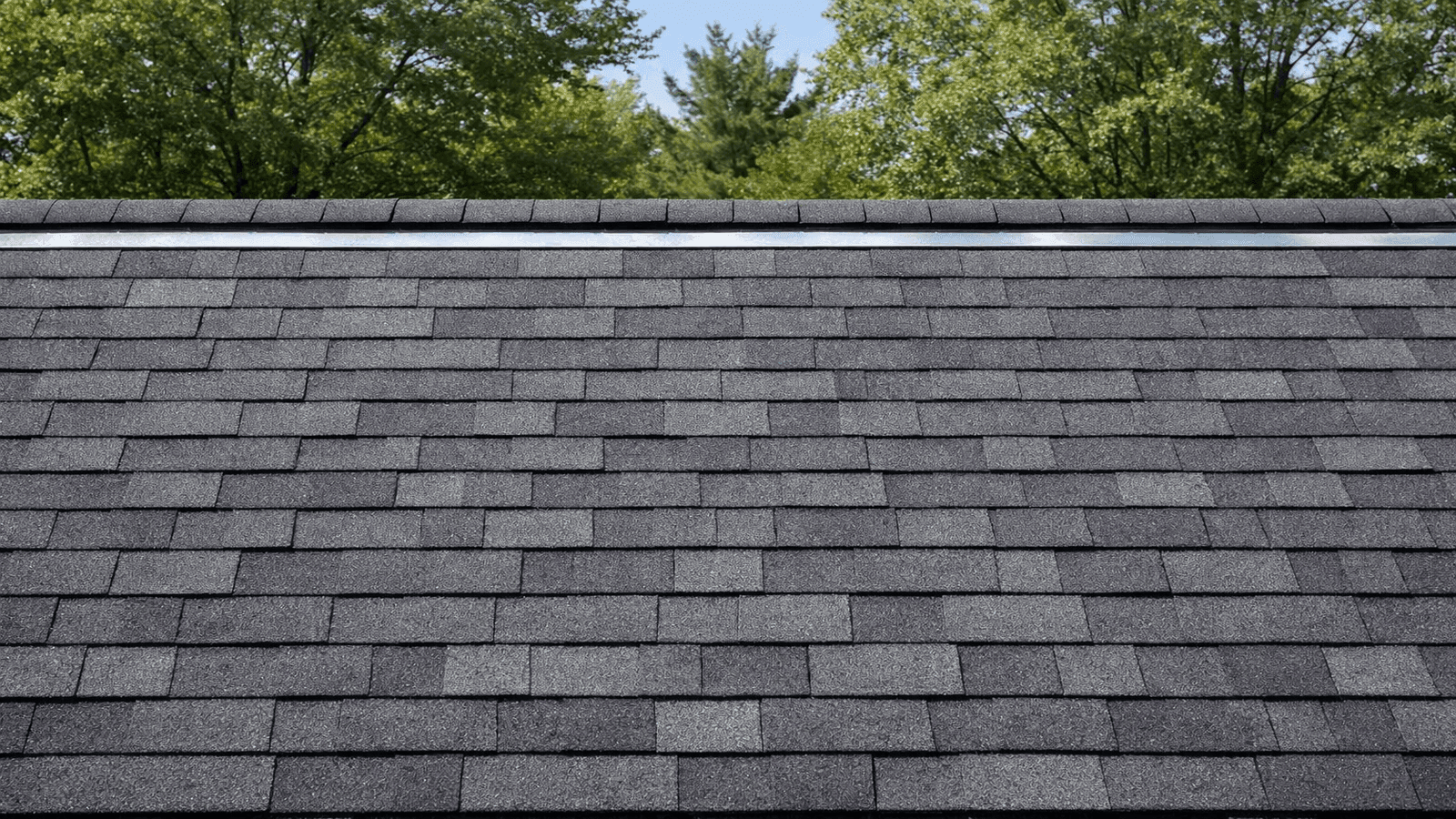
Photo: A clean asphalt shingle roof with clear ridge-line zinc strips installed, showing no moss or algae growth on a north-facing slope with partial tree canopy
Why Moss Grows on Roofs
Before you can prevent moss effectively, you need to understand what creates the conditions it requires. Moss is not random. It colonizes specific roof sections based on a predictable set of environmental factors.
Moisture retention is the primary driver. Moss requires sustained surface moisture to germinate and spread. Any area of your roof that stays wet longer than surrounding sections -- because of shade, poor drainage, debris accumulation, or improper slope -- becomes a target. Flat or low-pitch sections are particularly vulnerable because water does not shed quickly [1].
Shade and reduced sunlight are the second factor. UV radiation from direct sunlight kills moss spores before they can establish. North-facing roof slopes and sections shaded by trees or adjacent structures receive significantly less sunlight throughout the day, which is why moss almost always starts on north-facing pitches first. The licensed roofing contractors in our NearbyHunt network report that over 80% of residential moss cases originate on north-facing slopes or sections directly below tree canopy, with south-facing slopes of the same roof remaining entirely clear.
Debris accumulation feeds moss. Leaves, pine needles, and organic matter that collect in roof valleys or near penetrations decompose and release the nutrients moss needs to thrive. A roof that is not blown or blown clear each autumn invites faster moss establishment.
Airflow matters as well. Roofs in sheltered positions with minimal wind exposure dry more slowly after rain, extending the window of surface moisture that moss requires.
Understanding these four factors allows you to prioritize your prevention efforts. The cheapest and most durable fix is always the environmental one: reduce moisture retention, reduce shade, and reduce debris.
Environmental Controls
No chemical treatment or metal strip system can fully compensate for a roof that stays persistently wet and shaded. Environmental controls are the foundation of an effective prevention program.
Tree and Branch Trimming
Overhanging branches create two problems simultaneously: they shade the roof from sunlight and they drop debris directly onto the surface. Trimming branches to maintain a minimum clearance of 10 feet above the roof surface allows sunlight to reach the shingles and reduces the volume of leaves and needles that accumulate. This is the highest-return prevention step because it costs nothing in materials and requires no annual reapplication.
For large trees that cannot be trimmed to that clearance without significant arboricultural work, the trade-off may favor other prevention methods. But for typical suburban trees with encroaching branches, a single trimming session can reduce moss establishment rates dramatically over the following years.
Gutter Maintenance
Clogged gutters allow water to back up against the fascia and create wet conditions along the lower roof edge. That persistent moisture becomes a moss nursery for the eave section of the roof. Cleaning gutters twice per year -- in spring after pollen season and in late autumn after leaf fall -- prevents that pooling. For a complete gutter maintenance procedure, see our guide on cleaning gutters safely.
Debris Clearing
Blow or sweep roof surfaces clear of leaves and pine needles each autumn, before the wet season begins. Pay particular attention to valleys and the areas around chimneys, vents, and skylights where debris tends to collect and compact. A compressed-air blower or a soft-bristle roof broom works without risking shingle damage.
In my experience, the homeowners who never need serious moss removal are the ones doing two simple things every fall: cleaning their gutters and blowing debris off the roof. It takes an hour. The people who skip it are the ones calling me five years later with a roof that needs $2,000 worth of work.
Zinc and Copper Strip Systems
Metal strip systems are the most passive and durable prevention technology available for existing roofs. Once installed at or near the ridge, they require no annual attention for years.
How Metal Strips Work
When rainwater contacts zinc or copper strips, it picks up dissolved metal ions and carries them down the roof surface. Those ions create an inhospitable environment for moss, algae, and lichen at the cell level, preventing germination and killing early-stage growth before it can establish [2]. The protection extends downslope from the strip location -- zinc strips typically cover 15-20 feet of roof surface below, copper strips can cover up to 20-25 feet.
Get quotes from top-rated pros.
Zinc Strips
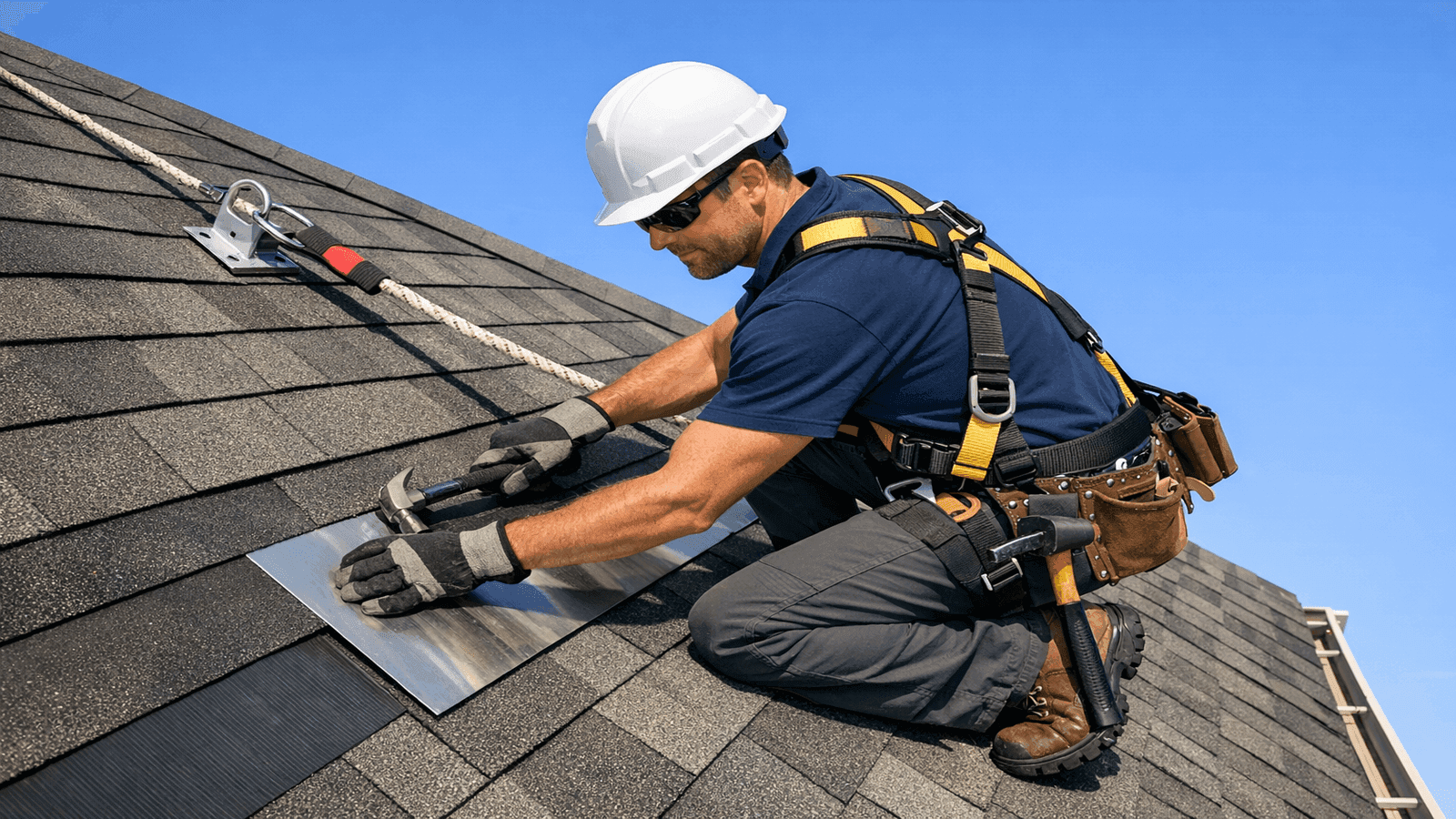
Zinc strips are the more widely used option because they are less expensive and easier to source. A 50-foot zinc strip typically costs $20-$40 at roofing suppliers. Installation involves sliding the strip under the first course of shingles below the ridge, leaving approximately one inch exposed to rainfall.
Zinc strips remain effective for approximately 5-10 years before the metal thins sufficiently that ion release becomes insufficient. Because zinc gradually erodes with rainfall, longer-pitched roofs in high-rainfall climates will see the lower end of that lifespan range.
Copper Strips
Copper strips are more expensive upfront, typically $60-$120 for a 50-foot section, but significantly more durable. Copper does not simply erode the way zinc does. Instead, it develops a patina that actually stabilises the surface while continuing to release ions. Effective service life is typically 20-30 years, making copper strips a better long-term investment on roofs expected to remain in service for more than a decade [3].
One important limitation: do not install copper strips on a roof with zinc or galvanised metal gutters, flashing, or downspouts. The dissimilar metals in contact can cause galvanic corrosion of the zinc components.
Installation Notes
For both strip types, the closer to the ridge line the strip is installed, the greater the downslope coverage per strip. On roofs longer than 20-25 feet from ridge to eave, consider installing a second strip at the mid-slope point to ensure coverage reaches the lower courses. Installation should be done on a dry day with mild temperatures; hot asphalt becomes soft and can be damaged by foot traffic.
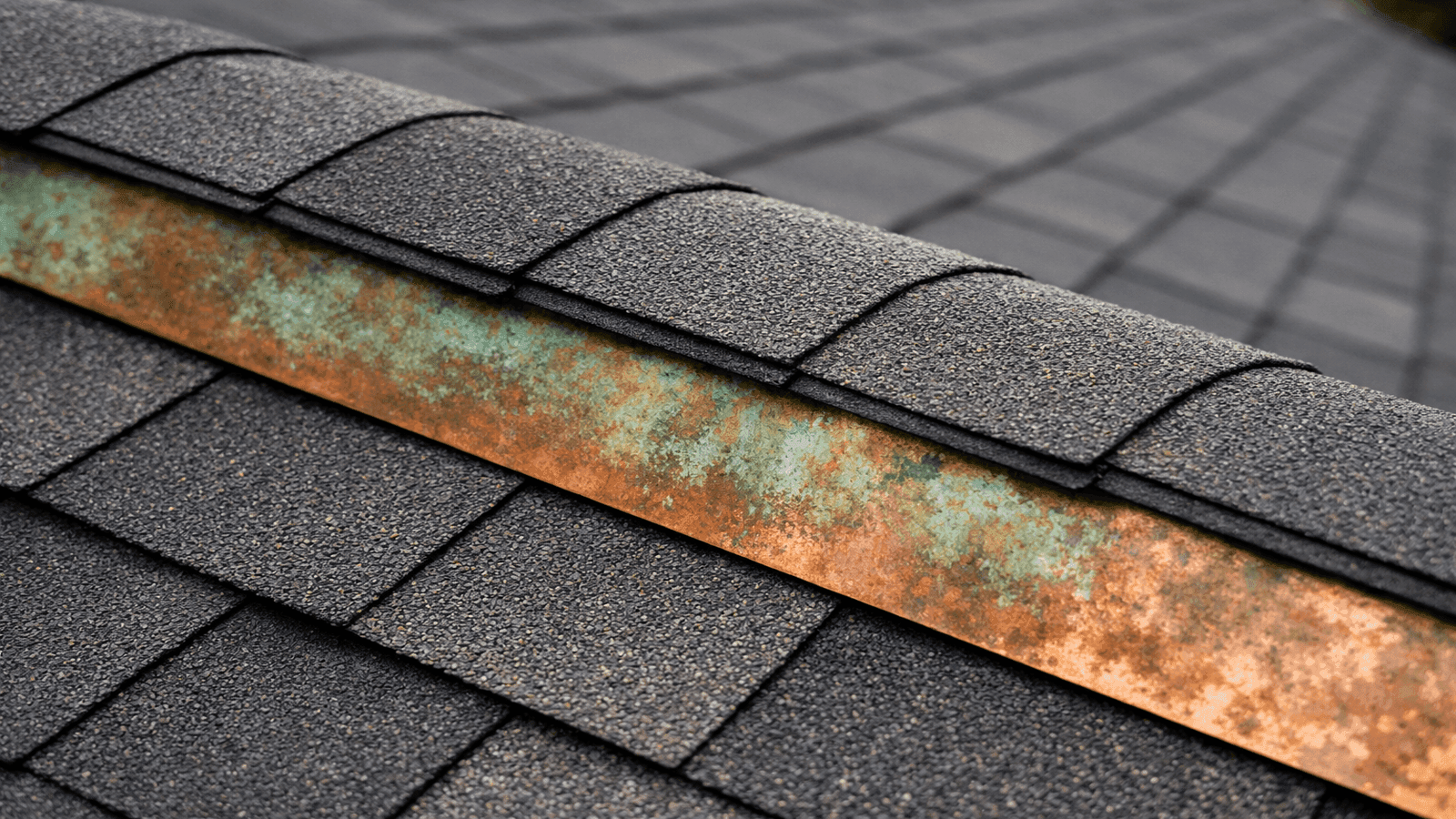
Photo: Close-up of copper strip installed along a roof ridge line, showing the installation position with one inch exposed below the first shingle course
Chemical Prevention Treatments
Chemical treatments fill the gap between environmental controls and the ongoing protection provided by metal strips. Applied preventively before moss establishes, they are far more effective than reactive removal treatments applied after colonies are visible.
Zinc Sulfate Powder
Zinc sulfate is the most widely recommended preventive chemical for roof moss. Applied as a dry powder along the ridge line, it dissolves with rainfall and carries zinc ions down the roof surface in the same mechanism as zinc metal strips. The application rate is approximately 3 pounds per 600 square feet of roof surface, applied directly along the ridge [4].
Application timing matters. Apply zinc sulfate in early spring before the growing season begins, when spore germination rates are highest. A second application in early autumn extends protection through the wet season. Annual applications cost $30-$60 in materials for a typical 1,500-square-foot roof.
One safety consideration: zinc sulfate runoff is toxic to aquatic invertebrates. If your property drains directly to a creek, pond, or waterway, copper strips may be a better alternative because they release ions at a lower concentration per rainfall event.
Sodium Hypochlorite (Diluted Bleach)
A diluted bleach solution -- typically 50% household bleach mixed with 50% water -- is effective for killing early-stage algae and surface-level moss growth before rhizoids penetrate deeply. The Asphalt Roofing Manufacturers Association (ARMA) recommends this formula for algae treatment on asphalt shingles [5].
Apply with a low-pressure garden sprayer, allow to sit for 15-20 minutes, and rinse with low-pressure water. Never use undiluted bleach on asphalt shingles; the concentrated solution can degrade shingle adhesive strips and accelerate granule loss. Bleach runoff will damage plants in your landscape. Wet down the surrounding vegetation before application, and rinse thoroughly after.
Bleach is effective against algae and early moss, but has a limited effect on established moss with deep rhizoid penetration. For prevention, a diluted bleach spray every 12-18 months in humid climates helps suppress early growth before it can develop into a visible colony.
Commercial Moss Inhibitors
Commercial products formulated specifically for roof moss, such as those using potassium salts of fatty acids or similar active ingredients, are available at home improvement retailers. These are generally less irritating to surrounding vegetation than bleach solutions and are formulated for direct contact with shingles. Follow the manufacturer's dilution and application instructions precisely.
I recommend zinc sulfate powder to nearly every homeowner in wooded, humid areas of the Southeast. It's inexpensive, effective, and you just apply it once in spring. People are surprised that something so simple keeps the roof clean year after year. The mistake is waiting until you see moss to treat -- at that point, you need removal, not prevention.
Algae-Resistant Shingles
If your roof is approaching the end of its service life or you are planning a replacement in the next few years, choosing algae-resistant shingles is the highest-leverage prevention decision available. It eliminates most of the ongoing maintenance burden for a decade or more.
How Algae-Resistant Shingles Work
Every major shingle manufacturer now offers algae-resistant product lines. These shingles incorporate copper granules typically making up 8-12% of the surface granule layer -- that continuously release copper ions during rainfall [6]. Because copper ions are toxic to algae, lichen, and early-stage moss at the cellular level, growth cannot establish on the shingle surface.
GAF's Timberline HDZ with StainGuard Plus, Owens Corning's StreakGuard line, and PABCO's Algae Defender products are representative examples. These shingles typically carry a 10-year algae-resistance warranty from the manufacturer.
Get quotes from top-rated pros.
Limitations
Algae-resistant shingles are more effective against algae than against established moss. The copper granules prevent surface colonization effectively, but if debris accumulates on the roof and creates localized moisture-retention conditions, moss can eventually establish even on copper-granule shingles -- it simply takes longer. The shingles work best in combination with the environmental controls described earlier.
See our guide on types of roofing materials for a complete comparison of shingle options and their maintenance requirements.
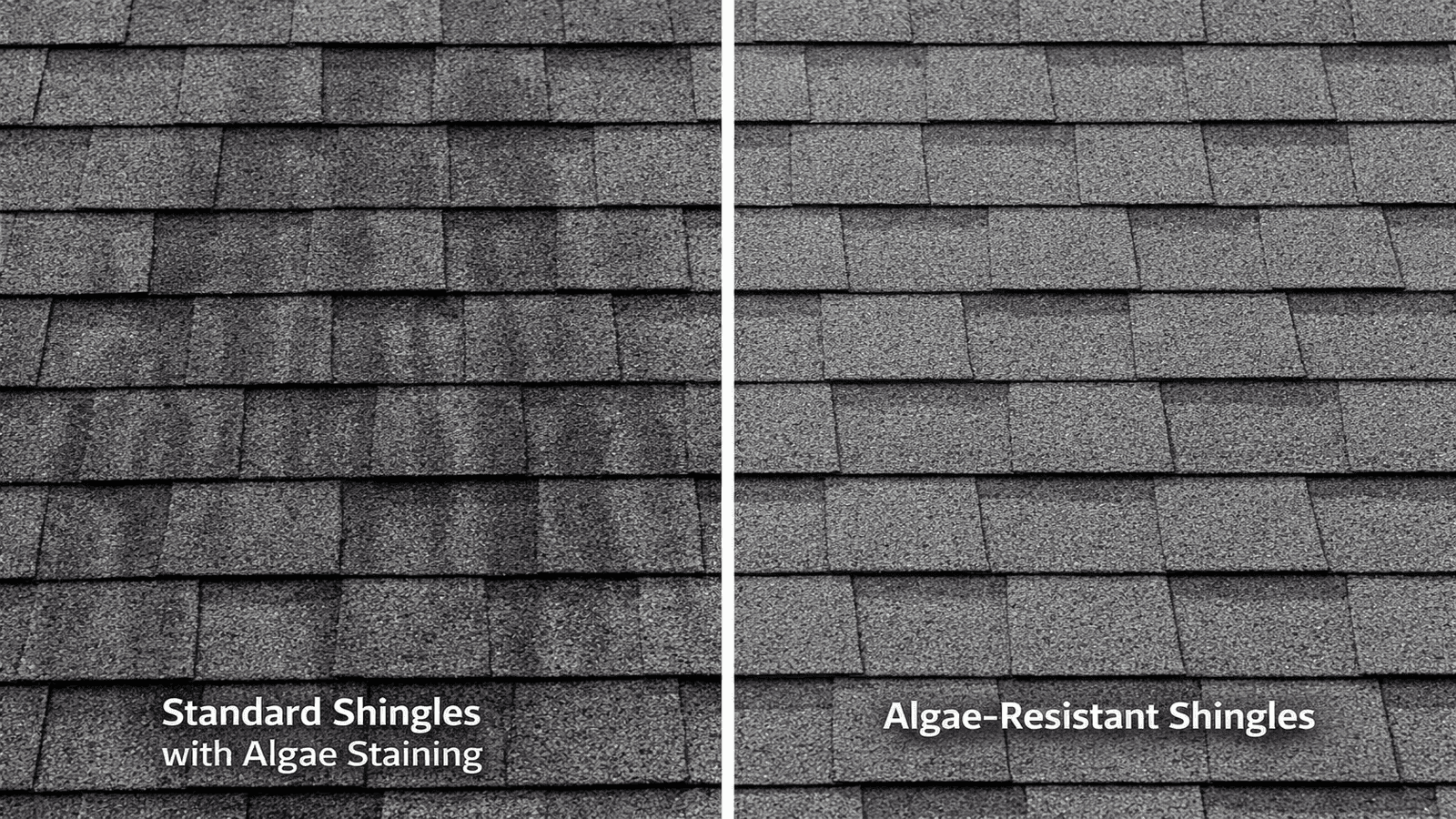
Photo: Side-by-side comparison showing a standard asphalt shingle section with algae streaking versus an algae-resistant shingle section on the same roof age
Real-World Case Study: Early Prevention Saves a Roof
Rachel K., Asheville, NC, contacted a local roofing contractor in 2023 after noticing light green discolouration along the ridge line of her 9-year-old asphalt shingle roof. The discolouration was early-stage algae, not yet established moss, but the conditions on her property -- heavy tree canopy on the north side, poor gutter drainage, no prior treatment made progression to full moss colonisation a near certainty.
The contractor's assessment: clean the gutters, trim two overhanging branches, apply zinc sulfate powder along the ridge, and install copper strips at the ridge line. Total cost: $380 for the full service call, including the copper strips.
Rachel did a follow-up roof inspection 18 months later. Zero moss growth. No regrowth of the early algae. Her contractor confirmed the roof surface was in excellent condition for an 11-year-old roof and projected it was on track to reach its full expected 25-30-year service life.
Compare that to her neighbour's experience. The neighbour had the same roof age, similar tree coverage, and no prevention program. By the same 18-month mark, he had moderate moss coverage across 30% of his north-facing slope. Professional removal ran $650. He then needed zinc strips and follow-up treatment.
Rachel's $380 investment saved more than $650 in reactive removal costs -- and, more importantly, preserved the granule integrity that her neighbour's aggressive scrubbing damaged.
The financial math on prevention is straightforward. A preventive treatment program costs $50-$150 per year in materials if a homeowner does it themselves, or $200-$400 every couple of years for a professional application. Moss removal, once it's established, starts at $300 and goes up from there -- not counting any shingle repair that results from the removal process. Prevention wins every time.
Annual Maintenance Schedule
A consistent annual schedule integrates all of the prevention methods above into a routine that keeps moss from ever establishing. Here is a practical maintenance calendar:
Spring (March-April):
- Inspect roof from ground level for early discoloration or growth
- Clean gutters and flush downspouts
- Blow roof surface clear of any accumulated debris from winter
- Apply zinc sulfate powder along ridge line if using chemical prevention
- Check zinc strips for excessive thinning; replace if the strip has narrowed significantly
Summer (June-July):
- Trim any branches that have grown back over the roof during the growing season
- Inspect valleys and penetrations for debris accumulation after spring storms
Autumn (October-November):
- Blow leaves and pine needles off roof surface before they compact and hold moisture through winter
- Clean gutters after leaf fall is complete
- Apply a second zinc sulfate application in humid climates or heavily shaded locations
Every 3-5 years:
- Schedule a professional roof inspection to assess shingle condition, granule loss, and any early growth that has established in hard-to-see areas
- Consider professional soft-wash treatment if any algae staining has developed
The licensed roofing contractors in our NearbyHunt network report that homeowners who follow a consistent annual maintenance schedule reduce their likelihood of needing professional moss removal by approximately 70% compared to homeowners who address the roof only reactively. For a structured inspection checklist you can use during your own maintenance visits, see our roof inspection checklist.
When to Call a Professional
Most prevention measures are DIY-friendly. But there are specific situations where professional involvement produces better outcomes and avoids roof damage from inexperienced application.
Call a professional roofer when:
- The roof pitch exceeds 6:12 (steep enough to require fall protection and proper footwear)
- You see established moss colonies covering more than 15-20% of any roof section (reactive removal is needed before prevention can work)
- The roof is more than 15 years old and shingles appear brittle or the granule layer looks thin (walking the surface or aggressive treatment can cause additional damage)
- You are unsure whether the growth is moss, algae, or lichen (lichen requires different treatment protocols)
For any of these situations, connecting with a licensed roofer in your area is the right call. Understanding your roof's current condition is also important for long-term planning -- see our article on how long roofs last for lifespan benchmarks by material type. You can find licensed roofers near you through NearbyHunt's contractor network.
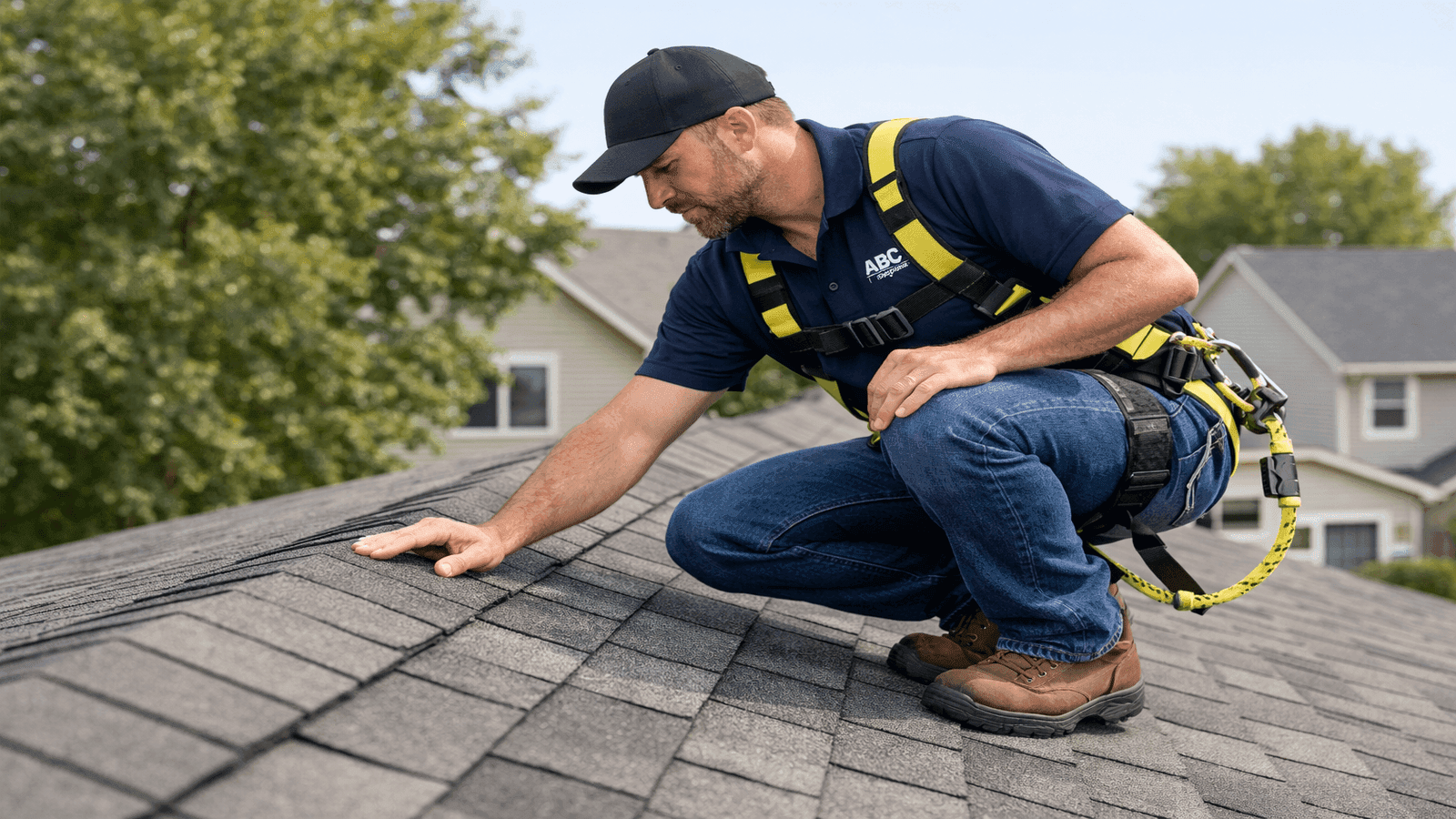
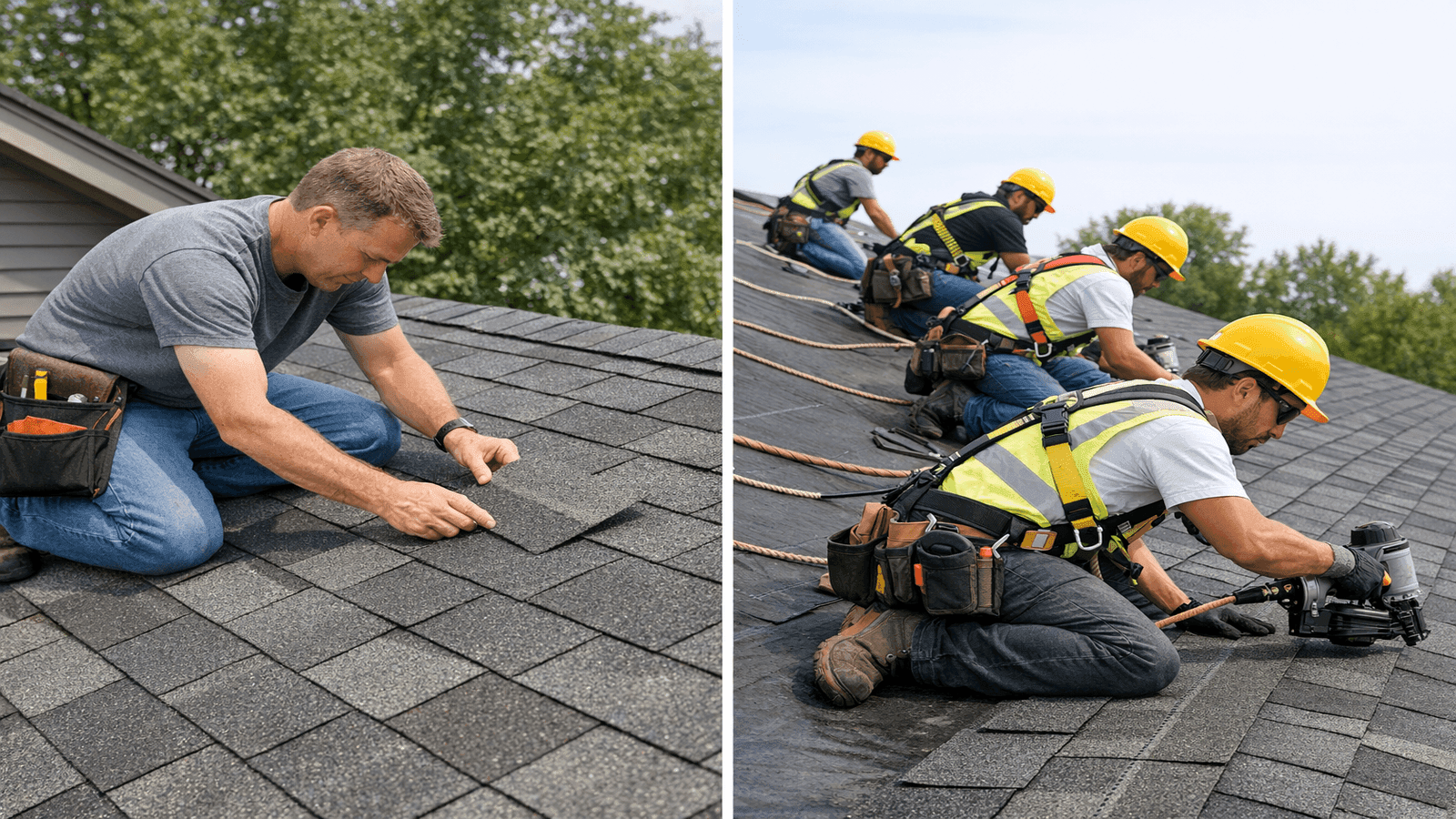
Photo: A licensed roofing professional inspecting a low-pitch asphalt shingle roof, checking along the ridge line for early moss or algae growth during a preventive maintenance visit
Conclusion
Roof moss prevention is one of the most cost-effective maintenance investments available to homeowners. The biology is simple: moss requires sustained moisture, shade, and organic nutrients. Cut off any of those factors and moss cannot establish. The prevention toolkit available in 2026 addresses all three: environmental controls that reduce shade and moisture, zinc and copper strips that poison the surface chemistry, chemical treatments that kill early growth, and algae-resistant shingles that embed prevention into the material itself.
James Carver, with more than 1,800 roofing projects across the U.S. South and Midwest, consistently finds that prevention costs a fraction of removal and repair. A $50 annual zinc sulfate application or a one-time $80 copper strip installation prevents the $300-$1,200 removal bill -- and more importantly, it preserves the shingle granule integrity that determines your roof's actual service life.
Start with the environmental controls. Trim the trees. Clean the gutters. Then layer in the metal strips and chemical treatments that match your climate and budget. For any roof showing existing growth, first address removal following the methods in our remove roof moss guide, then implement the prevention program outlined here. For homeowners facing broader roof health concerns beyond moss, see our full guide on common roofing problems.
Disclaimer
The information in this article reflects general guidance based on industry standards and the professional experience of the author. Roof conditions, local climate, and specific material types vary significantly. Always assess your specific roof condition before applying any chemical treatment or installing any hardware. Work performed at height carries inherent safety risks; consult a licensed roofing professional if you are not experienced with roof access. No information in this article constitutes a warranty or guarantee of specific outcomes.
Sources & References
[1] Asphalt Roofing Manufacturers Association (ARMA) -- Algae and Moss Prevention and Cleaning for Asphalt Roofing Systems: https://www.asphaltroofing.org/algae-moss-prevention-cleaning-asphalt-roofing-systems/
[2] Z-Stop -- Zinc Strip Roof Moss/Algae Prevention Technical Information: https://www.z-stop.com/article.htm
[3] Warner Roofing -- Zinc vs Copper Roof Strips Comparison: https://www.warnerroofinginc.com/blog/zinc-vs-copper-roof-strips/
[4] Oregon State University Extension -- Maintaining a Moss-Free Roof: https://news.oregonstate.edu/news/maintaining-moss-free-roof-takes-some-effort
[5] Oregon State University -- Chemical Moss Control for Roofs: https://bryophytes.science.oregonstate.edu/page24.htm
[6] Owens Corning -- StreakGuard Algae Resistant Roof Shingles: https://www.owenscorning.com/en-us/roofing/streakguard
[7] Malarkey Roofing Products -- Managing Moss and Algae on the Modern Roof: https://www.malarkeyroofing.com/managing-moss-and-algae/
[8] This Old House -- How to Prevent Roof Moss with Zinc Strips: https://www.thisoldhouse.com/roofing/21015851/preventing-roof-moss-with-zinc-strips
[9] Today's Homeowner -- Roof Cleaning Cost 2026: https://todayshomeowner.com/roofing/cost/roof-cleaning-cost/
[10] EcoRoof Systems -- Zinc vs Copper Strips for Moss Prevention: https://www.ecoroofsystems.com/877/5-best-zinc-vs-copper-strips-for-moss-prevention/


James is a licensed roofing contractor with 20 years of experience in roof installation, inspection, and repair across the U.S. South and Midwest. He specialises in asphalt shingles, metal roofing, and storm damage restoration. On NearbyHunt, James offers practical advice on roof maintenance, insurance claims, and selecting the right materials for long-lasting protection.

Jacob is a licensed roofing contractor with over 18 years of experience in roof inspection, installation, and restoration. Based in Texas, he has led hundreds of successful roofing projects across residential and commercial properties. Jacob is also a certified storm damage specialist, ensuring that all NearbyHunt roofing content meets industry best practices and safety standards.