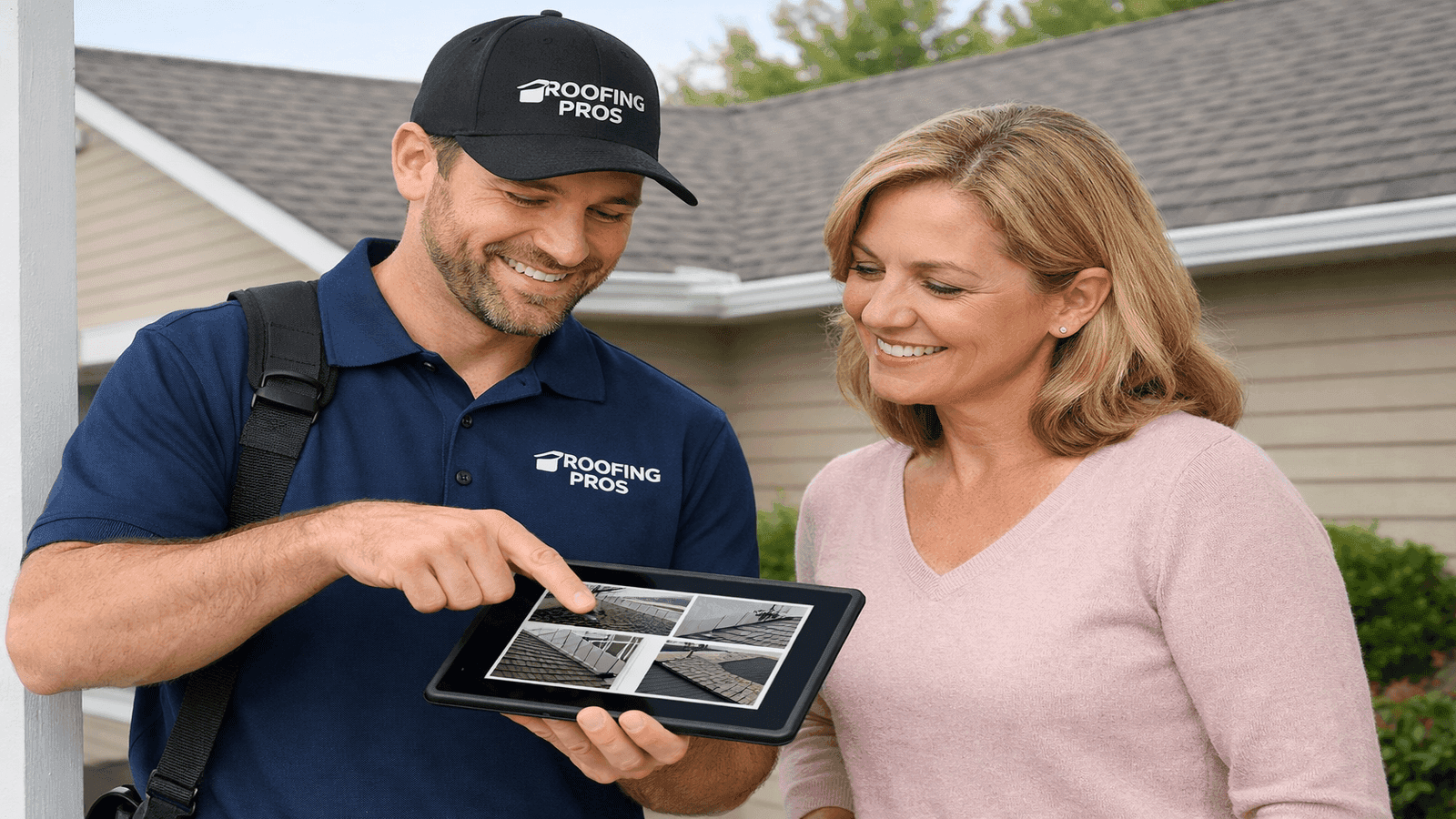
- Asphalt shingles last 15-30 years on average, but hot climates like Florida and the Southwest can cut that to 14 years or less, according to InterNACHI's Standard Estimated Life Expectancy Chart [1].
- Metal roofs last 40-70 years, with copper and zinc varieties exceeding 100 years; the upfront cost premium pays for itself over two full asphalt roof replacement cycles.
- Natural slate tops all materials at 75-200 years, with hard slate rated above 100 years when installed on a structurally reinforced deck [2].
- Climate is the single biggest lifespan variable: the same shingle that lasts 25 years in Minnesota may fail in 14 years in Phoenix due to thermal cycling and UV intensity.
- The NRCA recommends two inspections per year (spring and fall) as the highest-ROI maintenance action for catching small failures before they become structural emergencies.
- Missing or broken shingles exceeding 20-30% of the surface signal replacement time regardless of age; waiting longer accelerates deck rot and interior water damage.
Knowing how long your roof will last isn't a guess. It's a materials science question, a climate question, and a maintenance question. Every homeowner eventually faces the decision: repair or replace? Getting that decision right means understanding what your specific material was designed to do, how your local climate taxes it, and what warning signs indicate the end of its functional life. This guide to all about roofing is your starting point. Below, James Carver, who has overseen 1,800-plus roofing projects across the U.S. South and Midwest, breaks down realistic lifespans by material type, the factors that accelerate or extend them, and exactly when to call a licensed roofer.

Get quotes from top-rated pros.

Photo: Aerial photograph of a residential street showing homes with different roofing materials including asphalt shingles, standing seam metal, and clay tile, illustrating lifespan differences by material type
How Long Do Roofs Last
A roof's rated lifespan is a manufacturer's best-case estimate under ideal conditions. Real-world lifespans are almost always shorter, shaped by installation quality, climate, maintenance habits, and attic ventilation. Understanding this gap is the first step toward making smart roofing decisions.
The table below summarizes realistic lifespans for the most common residential roofing materials:
| Material | Rated Lifespan | Realistic Range | Key Variable |
| Asphalt 3-tab | 20-25 yrs | 14-22 yrs | Climate (heat, hail) |
| Asphalt architectural | 25-30 yrs | 20-28 yrs | Installation quality |
| Asphalt premium/luxury | 30-50 yrs | 25-40 yrs | Maintenance consistency |
| Metal (corrugated) | 40-60 yrs | 35-55 yrs | Coating/paint system |
| Metal (standing seam) | 50-70 yrs | 45-70 yrs | Fastener concealment |
| Steel (galvalume) | 40-60 yrs | 38-55 yrs | Coastal salt exposure |
| Aluminum | 40-70 yrs | 40-65 yrs | Corrosion resistance |
| Copper | 100+ yrs | 80-150 yrs | Natural patina protection |
| Zinc | 80-100 yrs | 75-100+ yrs | Self-healing patina |
| Clay tile | 50-100 yrs | 50-80 yrs | Freeze-thaw cycles |
| Concrete tile | 40-50 yrs | 35-50 yrs | Surface coating life |
| Natural slate (soft) | 50-90 yrs | 50-75 yrs | Quarry grade |
| Natural slate (hard) | 75-200 yrs | 80-150 yrs | Installer experience |
| Wood shake | 20-40 yrs | 20-30 yrs | Fire zone rules, moisture |
| TPO/EPDM flat membrane | 20-30 yrs | 18-28 yrs | UV exposure, traffic |
The number one mistake I see is homeowners treating the warranty year as the actual lifespan. A 30-year architectural shingle in a Dallas summer can start showing granule loss at year 18 or 19. The warranty doesn't replace your roof automatically. You have to inspect it, document it, and act on what you find before it becomes a bigger problem.
The licensed roofers in our NearbyHunt network report that roughly 62% of residential roof replacements they complete involve roofs that are still within their manufacturer warranty period but have failed due to poor ventilation, improper installation, or deferred maintenance. The warranty year is the ceiling, not the floor.
Asphalt Shingle Lifespan
Asphalt shingles are the most common roofing material in the U.S., used on approximately 80% of homes [1]. They divide into three tiers, each with distinct longevity profiles.
Three-Tab Asphalt Shingles
Three-tab shingles are the oldest and least expensive asphalt option. They're a single layer of material with cutouts (tabs) that create a uniform, flat appearance. Rated at 20-25 years, they realistically last 14-22 years depending on climate. In the Southwest, the combination of intense UV radiation and thermal cycling shortens life dramatically. According to InterNACHI, the average lifespan for three-tab shingles in warmer environments is just 14 years versus 19-plus years in the Northeast [1].
Three-tab shingles are rarely the right choice for new construction or full replacement. Their lower wind resistance (typically 60-70 mph) makes them particularly vulnerable in storm-prone states like Florida and Texas.
Architectural (Dimensional) Asphalt Shingles
Architectural shingles are the current residential standard. Their laminated, multi-layer construction creates a textured, wood-shake-like appearance and adds structural depth that helps resist wind uplift. Rated lifespans run 25-30 years, with realistic performance of 20-28 years in most climates.
These shingles typically carry wind ratings of 110-130 mph when properly installed with the correct nail pattern and starter strip. They're the best value option for most homeowners, balancing upfront cost, aesthetics, and longevity.
Premium and Luxury Asphalt Shingles
At the top of the asphalt tier sit luxury or designer shingles: thick, multi-layer products engineered to mimic natural slate or wood shake. Some carry 50-year limited warranties. Realistic lifespans fall between 25-40 years, with the best products installed correctly in mild climates reaching the higher end.
Architectural shingles are the right call for 80% of my clients, but I always push for the 130 mph rated version in the U.S. South and Midwest. After the 2004-2005 hurricane seasons, I saw firsthand how three-tab shingles completely failed while properly nailed architectural shingles stayed intact on the same street. That experience shaped how I spec every job now.
For context on what components sit beneath those shingles and affect their performance, the roof components explained guide covers decking, underlayment, and flashing in detail.
Get quotes from top-rated pros.
Metal Roof Lifespan
Metal roofing has become the fastest-growing residential roofing segment largely because of one thing: lifespan. The investment calculus is straightforward: pay more now, replace far less often.
Steel and Galvalume Steel
Standard galvanized steel roofing lasts 30-45 years. Galvalume steel (aluminum-zinc alloy coated) performs better, typically lasting 40-60 years because the coating sacrifices itself to protect the steel substrate beneath it. Galvalume is the most common standing seam and corrugated metal panel material in residential applications.
Paint system quality matters significantly. A premium PVDF (polyvinylidene fluoride) coating retains color and protects against UV degradation far longer than standard polyester coatings.
Aluminum
Aluminum is the preferred metal for coastal environments because it doesn't corrode in salt air the way steel does. Realistic lifespan runs 40-65 years. It's softer than steel, which means it's more susceptible to hail dents, but in coastal the U.S. South and Midwest markets, the corrosion-resistance advantage outweighs that tradeoff.
Copper and Zinc
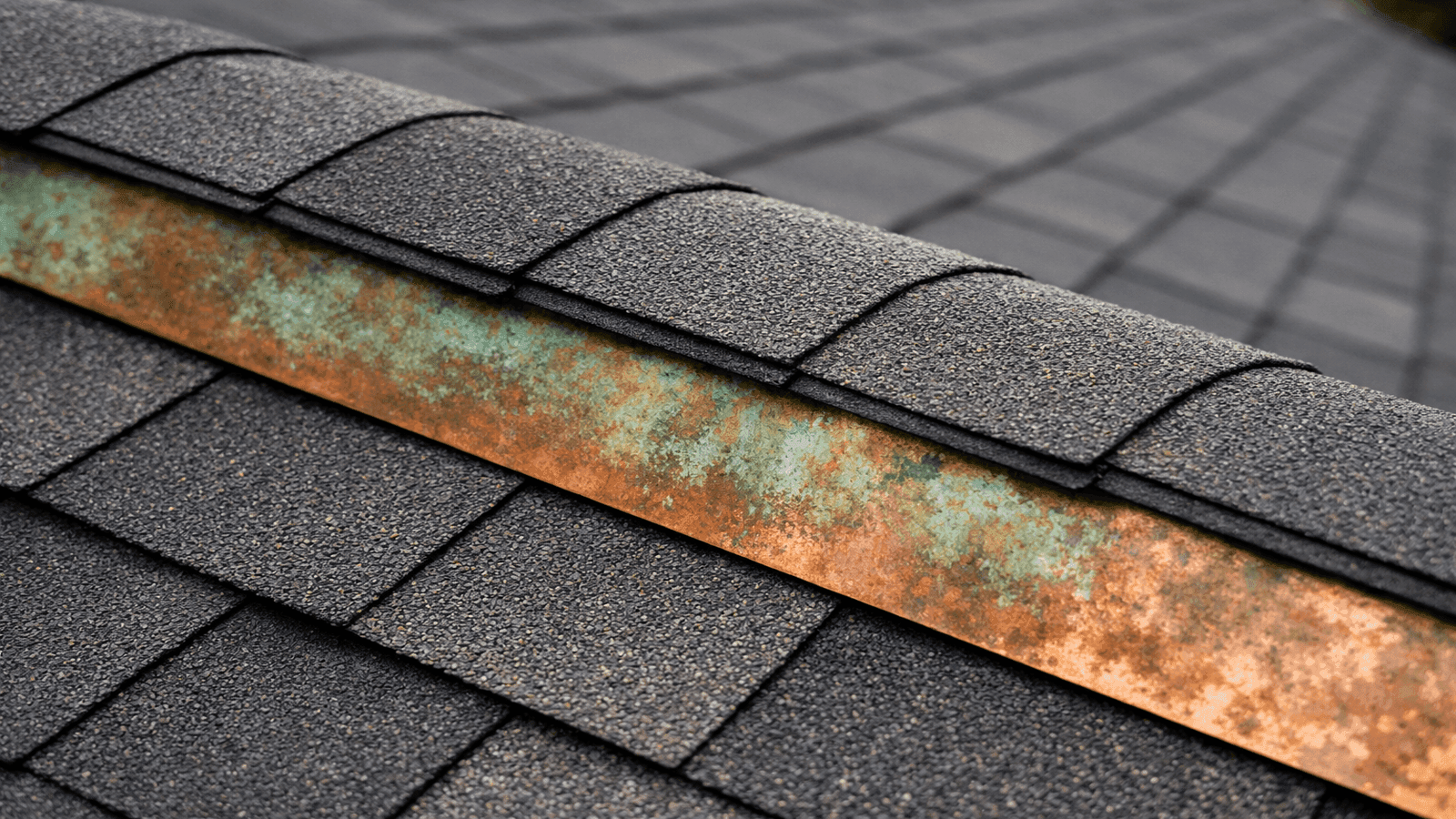
These are the premium tier of metal roofing. Copper develops a natural patina (the green-blue oxidation layer) that acts as a self-sealing protective coating, giving properly installed copper roofs realistic lifespans of 80-150 years [2]. Zinc works similarly: it forms a zinc carbonate patina that can even "heal" minor surface scratches over time, yielding lifespans of 75-100 years.
Both materials carry significant upfront cost premiums, making them most common on high-end custom homes and historic restorations.
When I run the math with clients on standing seam metal, the numbers are usually persuasive. If an architectural shingle roof costs $12,000 and lasts 25 years, you'll replace it 2-3 times in a 60-year ownership window for $24,000-$36,000 total. A metal roof at $22,000 installed lasts 50-60 years. It's actually cheaper over time, and you're never dealing with an emergency replacement.
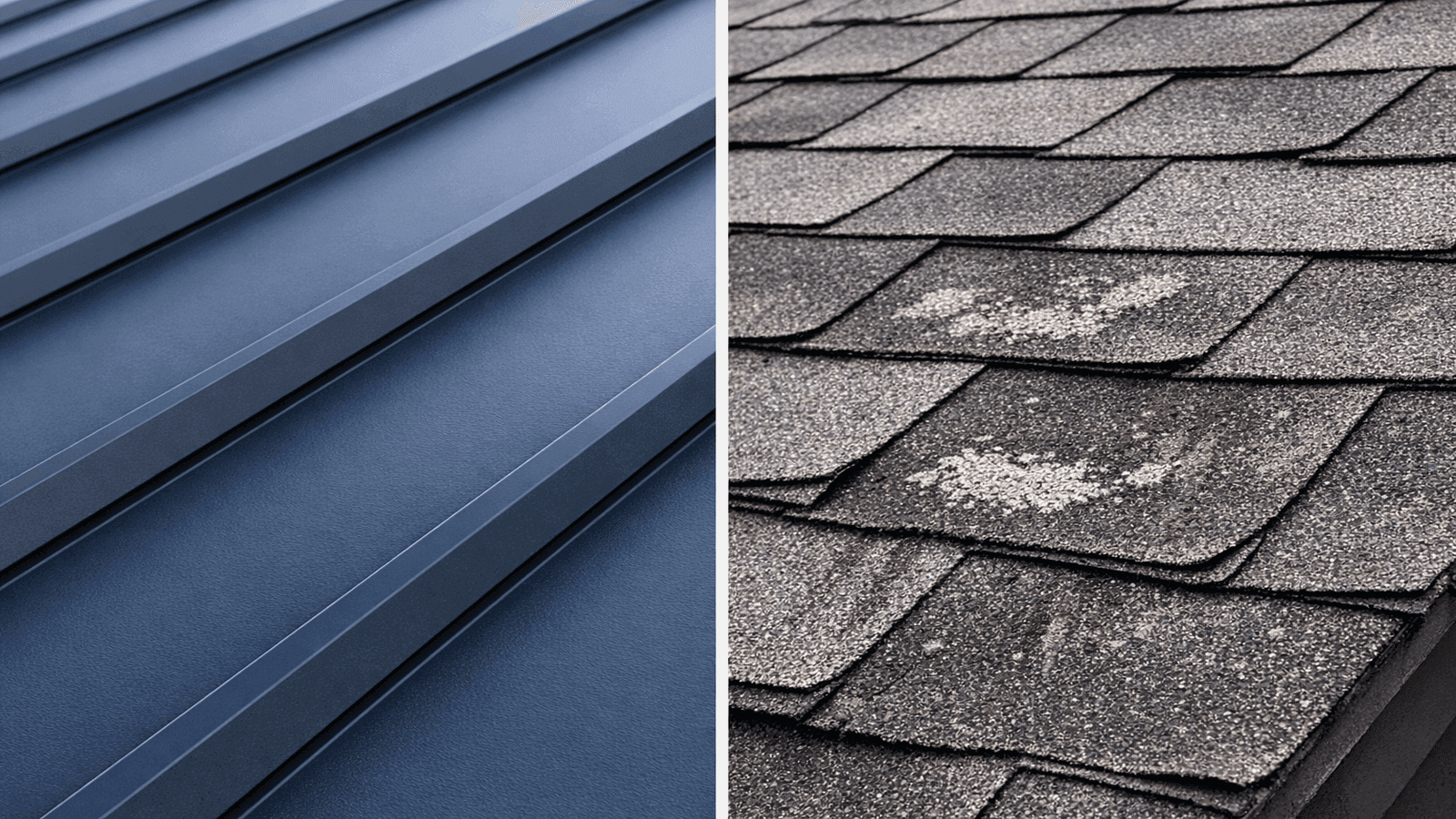
Photo: Close-up comparison of a standing seam metal roof panel next to weathered asphalt shingles showing granule loss, illustrating the lifespan difference between the two materials
Tile and Slate Roof Lifespan
For homeowners who want a roof that outlasts them, and possibly their children, clay tile and natural slate are the only realistic choices. Both are heavy, require structural reinforcement, and demand specialist installers, but their durability is unmatched in the residential world.
Clay Tile Lifespan
Clay tile realistically lasts 50-80 years in most climates, with well-maintained installations in warm climates like Florida, Arizona, and California regularly exceeding 100 years [2]. The tile itself is essentially inert: it doesn't rot, rust, or degrade under UV. The limiting factors are usually the underlayment beneath the tile (which may need replacement at 20-30 years) and the mortar or fastening system at hips and ridges.
Clay tile resists freeze-thaw damage well if properly made, but cheaper imported tiles can crack in climates with hard winters. Look for ASTM C1167 Grade 1 ratings for northern applications. For a detailed breakdown of tile options by region and climate, see our types of roofing materials guide.
Concrete Tile Lifespan
Concrete tile is a less expensive alternative to clay, typically lasting 40-50 years. It's heavier than clay (around 9-12 lbs per square foot vs. 6-8 for clay) and has a more porous surface that can absorb moisture and fade faster. The surface coating that gives concrete tile its color typically needs refreshing at 15-20 years to maintain both aesthetics and moisture resistance.
Natural Slate Lifespan
Natural slate is the longest-lasting conventional roofing material available. Soft slate (Buckingham Virginia, New York, Vermont grades) realistically lasts 50-75 years. Hard slate (Spanish slate, Chinese slate, Pennsylvania grades) can last 100-200 years when properly installed and maintained.
The most important variable for slate is the installer. Soft slate requires correct head lap, specific fasteners (copper or stainless), and careful handling to avoid cracking during installation. A misinstalled slate roof might last only 40-50 years; a masterfully installed one can outlast the house structure itself.
Consider a real-world case: Marcus T. in Baltimore, Maryland called Jacob Hollis for a second opinion after a roofer told him his 1920s slate roof needed full replacement. Patrick's assessment found that roughly 30% of the individual slates had delaminated (a sign of soft slate approaching end of life), but the remaining 70% were sound hard-grade slates in excellent condition. A slate restoration, replacing only the failed pieces at $6,200, extended the roof's life by an estimated 25-30 more years instead of a full replacement that would have cost $38,000. Knowing your material saves money.
For the specific terminology used in professional roofing assessments like this, the roofing terms glossary covers key vocabulary you'll encounter when getting quotes.
What Shortens a Roof's Lifespan
Most premature roof failures trace back to one or more of five root causes. Understanding them helps you make maintenance decisions that actually extend your roof's life.
1. Poor Installation
Installation errors are the leading cause of premature failure across every roofing material category. Common mistakes include: incorrect nail placement (too high on asphalt shingles, causing blow-offs), inadequate head lap, improper flashing at valleys and penetrations, and skipping ice-and-water shield in required zones. A roof installed even 10% incorrectly may fail 30-40% sooner than its rated lifespan.
Get quotes from top-rated pros.
2. Inadequate Attic Ventilation
Trapped attic heat is a silent roof killer. When an attic exceeds 150 degrees Fahrenheit in summer (common in poorly ventilated southern homes), it bakes the shingle adhesive strips from below, accelerating granule loss and brittleness. The EPA recommends 1 sq ft of ventilation per 150 sq ft of attic floor space as a minimum standard. Ice dams in northern climates also trace directly to ventilation failures.
3. Climate and Weather Exposure
Hail, UV radiation, thermal cycling, high winds, and freeze-thaw cycles all degrade roofing materials at different rates. A climate-appropriate material choice is the single biggest factor within a homeowner's control at installation time. Choosing a 3-tab shingle in a Florida climate means replacing it 6-10 years sooner than an architectural shingle in the same location.
4. Deferred Maintenance
Small problems become structural emergencies quickly. A cracked flashing joint left for one winter can allow water to wick into the decking, saturating the OSB and requiring full deck replacement alongside the roofing material. The NRCA estimates that over 40% of commercial roofing claims stem from overlooked small leaks that evolved into major failures, and the same principle applies to residential roofs.
5. Physical Damage
Walking on a roof improperly cracks tile and slate and bruises asphalt shingles (damaging the granule layer). Falling debris from overhanging trees creates impact damage and holds moisture. Ice dams force water under shingles during freeze-thaw events. Consistent management of trees, gutters, and access points protects the material from avoidable physical damage.
For a full breakdown of what goes wrong and how to spot it early, the common roofing problems guide covers the 15 most frequent failure modes with photographs and repair guidance.
How to Know When Your Roof Needs Replacement (Not Just Repair)
This is the decision most homeowners get wrong in one of two directions: they replace too soon (spending money on a roof that had years left) or too late (delaying until interior damage multiplies the cost). Here's a systematic approach.

Photo: A roofer performing an inspection on an aging asphalt shingle roof, highlighting missing granules, curling shingles, and deteriorated flashing near a chimney as signs of approaching end-of-life
Age-Based Assessment
Start with material age relative to realistic lifespan. If you have a 3-tab asphalt shingle roof at 18-20 years old, you're in the replacement window regardless of visible condition. If you have architectural shingles at 22 years in a mild climate, you may have 5-8 more years with proper maintenance. Age alone isn't the whole story, but it frames every other observation.
Physical Condition Inspection
From the ground (or from attic below), check for:
- Granule loss: Heavy granule accumulation in gutters or downspout splash blocks indicates shingle surfaces are degrading. Bald patches visible on the shingle face mean accelerated UV degradation ahead.
- Curling or cupping: Shingles curling upward at corners (cupping) or downward at centers (clawing) indicate moisture imbalance and end-of-life degradation.
- Missing or cracked shingles: Isolated missing shingles are repairable. When 20-30% or more of the surface is compromised, replacement is more economical than continual patching [2].
- Sagging deck sections: Visible dips in the roof surface from the ground indicate decking rot or structural compromise beneath.
- Flashing failures: Rust-stained streaks, cracked caulk, and lifted metal at chimneys and valleys are primary leak entry points and among the most critical inspection items.
The Attic Test
Look up from inside the attic during daylight. Visible daylight through the decking is an immediate replacement indicator. Also look for water stains, dark streaks, or soft/spongy wood. These confirm active moisture infiltration.
The 50% Rule
If the cost of repairs exceeds 50% of the cost of a full replacement, replace the roof. This applies especially to roofs already within 5 years of their expected lifespan end. Patching an old roof repeatedly produces diminishing returns: you pay repair costs but still face a full replacement shortly.
One thing I always tell homeowners: if you're at 80% of your roof's expected life and you need a major repair, do the math on full replacement. I've seen people spend $4,000 on emergency shingle and flashing repairs on a 28-year-old 30-year shingle roof. Eighteen months later, they needed a full replacement anyway. That $4,000 was gone. A few hundred dollars on an inspection at year 22 or 23 would have told them the end was near and saved them from an avoidable expense.
How to Extend Your Roof's Lifespan by 5-10 Years
The gap between a roof lasting 22 years and 30 years is usually maintenance. These are the highest-ROI actions for any roofing material.
Get quotes from top-rated pros.
Annual Professional Inspections
The NRCA recommends two professional inspections per year (spring and fall). In practice, one inspection annually by a licensed roofer is adequate for most homeowners. Professional eyes catch flashing separations, granule loss patterns, and early deck softening that homeowners miss from the ground. Inspection costs run $150-$350 and routinely identify $500-$2,000 problems before they become $8,000-$15,000 emergencies.
Gutter Maintenance Every Six Months
Clogged gutters cause water to back up under the drip edge and into the fascia board, rotting the wood that supports the roof edge. Clean gutters in spring after pollen season and in fall after leaf drop. This single maintenance task costs nothing more than time and extends roof-edge life by years.
Keep Trees Trimmed Back
Overhanging branches deposit debris, create perpetual shade (promoting moss and algae growth), and cause physical abrasion on asphalt and metal surfaces during wind events. The common roofing problems guide includes moss removal and prevention guidance. Keep branches at least 10 feet from the roof surface.
Address Small Repairs Immediately
A cracked piece of flashing costs $200-$400 to repair. Left for six months in a rainy climate, it can rot 40 square feet of decking at $3-$5 per square foot plus the cost of removing and reinstalling the roofing above it. Speed is ROI in roof maintenance.
Ensure Attic Ventilation Is Code-Compliant
If your attic gets excessively hot in summer or you're seeing ice dams in winter, have ventilation assessed by a licensed contractor. Adding ridge vents and soffit vents to bring the system into balance can add 5-8 years to an asphalt shingle roof's functional life. The roof pitch explained guide covers how pitch interacts with ventilation and drainage design.
Homeowners who want a greener, longer-lasting alternative should also explore green roofing options, which covers living roofs, cool roofs, and solar-integrated systems that offer both longevity and energy benefits.
Roofing Lifespan by Region
Not every roof ages at the same rate. Regional climate is one of the most significant modifiers of manufacturer-rated lifespans.
| Region | Key Climate Stress | Asphalt Lifespan Adj. | Best Materials |
| Southwest (AZ, NV, NM) | Extreme UV, heat cycling | -5 to -8 years | Metal, tile, premium asphalt |
| Southeast / Gulf Coast | Hurricanes, humidity, heat | -4 to -7 years | Metal (standing seam), tile |
| Florida | Hurricanes + year-round heat | -5 to -8 years | Metal, concrete tile |
| Great Plains (TX, KS, OK) | Hail, tornadoes, heat | -3 to -6 years | Impact-rated shingles, metal |
| Pacific Northwest | Constant moisture, moss | -2 to -4 years | Metal, architectural shingles |
| Northeast | Freeze-thaw, snow, ice dams | -2 to -4 years | Metal, slate, architectural |
| Upper Midwest | Severe winters, hail | -3 to -5 years | Metal, impact shingles, slate |
| Mountain West | High UV, snow load | -2 to -4 years | Metal, slate, architectural |
In high-risk climate zones like Florida and the Gulf Coast, impact-resistant (Class 4) shingles can qualify for homeowner's insurance discounts of 15-30%, partially offsetting the premium material cost.
Warranty vs. Real Lifespan
A "30-year shingle" doesn't guarantee 30 years of protection. Roofing warranties are prorated, meaning coverage diminishes over time. Here's how most manufacturer warranties work:
- Years 1-10: Full replacement coverage for manufacturing defects
- Years 11-20: Prorated replacement cost (often 50-70% by year 15)
- Years 21-30: Minimal prorated coverage (often 10-20% of original cost)
Workmanship warranties from the contractor are separate and typically cover only 1-5 years. GAF, Owens Corning, and CertainTeed offer system warranties (covering both materials and labor) that last 25-50 years, but these require installation by a certified contractor and registration of the warranty within a specific timeframe.
Read the warranty exclusions carefully: most void if a different contractor performs repairs, if correct ventilation wasn't installed, or if specific underlayment products weren't used. The warranty is a marketing tool as much as a protection document. Understanding roofing vs. siding priority can also help you decide where to allocate home improvement budgets when both systems are aging.
Conclusion
Knowing how long your roof will last is knowing when to act: when to inspect more frequently, when to start budgeting for replacement, and when a repair estimate is good money after bad. The core principle is simple: match your material to your climate, install it correctly, inspect it annually, and address problems before they compound. Asphalt shingles will serve most homeowners well for 20-28 years with proper care. Metal roofing is the long-game choice, delivering 40-70 years of protection with virtually no mid-cycle replacements. Tile and slate are century-class investments for homeowners who want to address the roof question once.
If your roof is approaching the end of its realistic lifespan or you're seeing granule loss, curling, or flashing failures, get a professional assessment before the problem gets expensive.
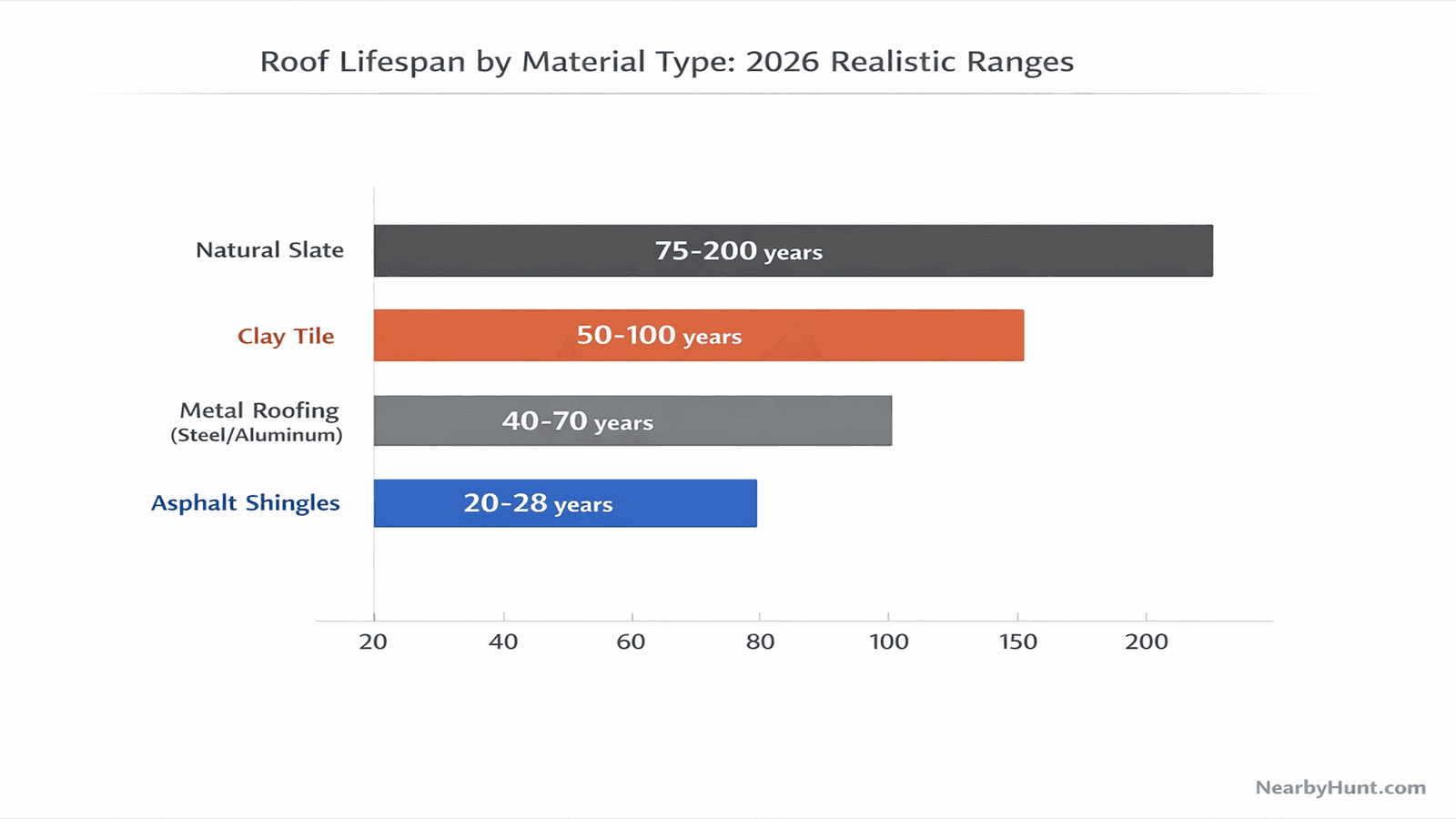
Photo: Infographic-style illustration showing roof lifespan comparison bars for asphalt shingles (20-28 years), metal (40-70 years), tile (50-100 years), and slate (75-200 years) on a timeline background
Disclaimer: The lifespan estimates in this article reflect industry research, manufacturer data, and field experience. Actual roof lifespan varies based on specific products, local climate, installation quality, maintenance practices, and structural conditions unique to each property. Consult a licensed roofing contractor in your area for an assessment tailored to your home. NearbyHunt does not endorse specific manufacturers or contractors. All cost figures are general estimates and may vary by region and project scope.
Sources & References
[1] InterNACHI Standard Estimated Life Expectancy Chart for Homes - International Association of Certified Home Inspectors. Roofing material lifespan by type and climate region. Accessed March 2026.
[2] FoxHaven Roofing: How Long Does a Roof Last in 2026 - Comprehensive material lifespan breakdown including metal, tile, and slate categories. Accessed March 2026.
[3] National Roofing Contractors Association (NRCA) - Roofing inspection frequency recommendations and maintenance guidelines. The NRCA Roofing Manual: Steep-slope Roof Systems, 2025 edition. Accessed March 2026.
[4] JAG Metals: How Long Does a Metal Roof Last - A Complete Guide 2026 - Metal roof lifespan by material type including steel, aluminum, copper, and zinc. Accessed March 2026.
[5] Bill Ragan Roofing: How Long Does a Slate Roof Last - Hard and soft slate lifespan comparison and maintenance factors. Accessed March 2026.

James is a licensed roofing contractor with 20 years of experience in roof installation, inspection, and repair across the U.S. South and Midwest. He specialises in asphalt shingles, metal roofing, and storm damage restoration. On NearbyHunt, James offers practical advice on roof maintenance, insurance claims, and selecting the right materials for long-lasting protection.

Jacob is a licensed roofing contractor with over 18 years of experience in roof inspection, installation, and restoration. Based in Texas, he has led hundreds of successful roofing projects across residential and commercial properties. Jacob is also a certified storm damage specialist, ensuring that all NearbyHunt roofing content meets industry best practices and safety standards.