- Asphalt shingles cover 75% of U.S. homes but last only 20-30 years; metal roofs cost 2-3x more upfront yet last 40-70 years, outlasting at least three asphalt roofs over the same period.
- The average roof replacement runs $9,500-$15,000 for a standard home, though premium materials like slate or tile can push costs to $80,000 or more.
- 5 million roofs are installed annually across the U.S., driving a $31.4 billion industry with strong projected growth through 2030 [1].
- Roof pitch directly controls material options : slopes below 2:12 require flat-roof membrane systems, while pitches above 4:12 open the full range of shingle, metal, and tile choices.
- A neglected roof that leaks for just six months can turn a $400 flashing repair into an $8,000-plus structural project.
- Annual inspections and seasonal gutter cleaning are the two highest-ROI maintenance actions for extending any roof's life by 5-10 years beyond its rated warranty.
Your roof is the single most important structural system on your home. It handles rain, snow, wind, UV radiation, and temperature swings year-round while quietly protecting everything inside. Most homeowners only think about it when something goes wrong, and by then, a small problem has often grown into an expensive one. James Carver has completed more than 1,800 roofing projects across the U.S. South and Midwest in his 20-year career, and he's seen firsthand how a lack of basic roofing knowledge costs homeowners thousands of dollars in avoidable repairs. This guide covers everything you need: materials, costs, maintenance, hiring, and the systems that make a modern roof work.

Get quotes from top-rated pros.

Photo: Aerial view of a residential neighborhood showing a variety of roof types including asphalt shingles, metal panels, and clay tile roofs
Understanding Your Roof: The Systems That Keep You Dry
Most homeowners think of a roof as a single thing (the shingles visible from the street). In reality, a residential roof is a multi-layer system, and each layer serves a critical and distinct function. Failure in any one layer can compromise the entire assembly.
A complete roofing system includes six main layers or components:
- Roof decking (the structural base, typically 7/16-inch or 1/2-inch OSB plywood)
- Ice and water shield (a self-adhering waterproof membrane installed at eaves, valleys, and roof penetrations)
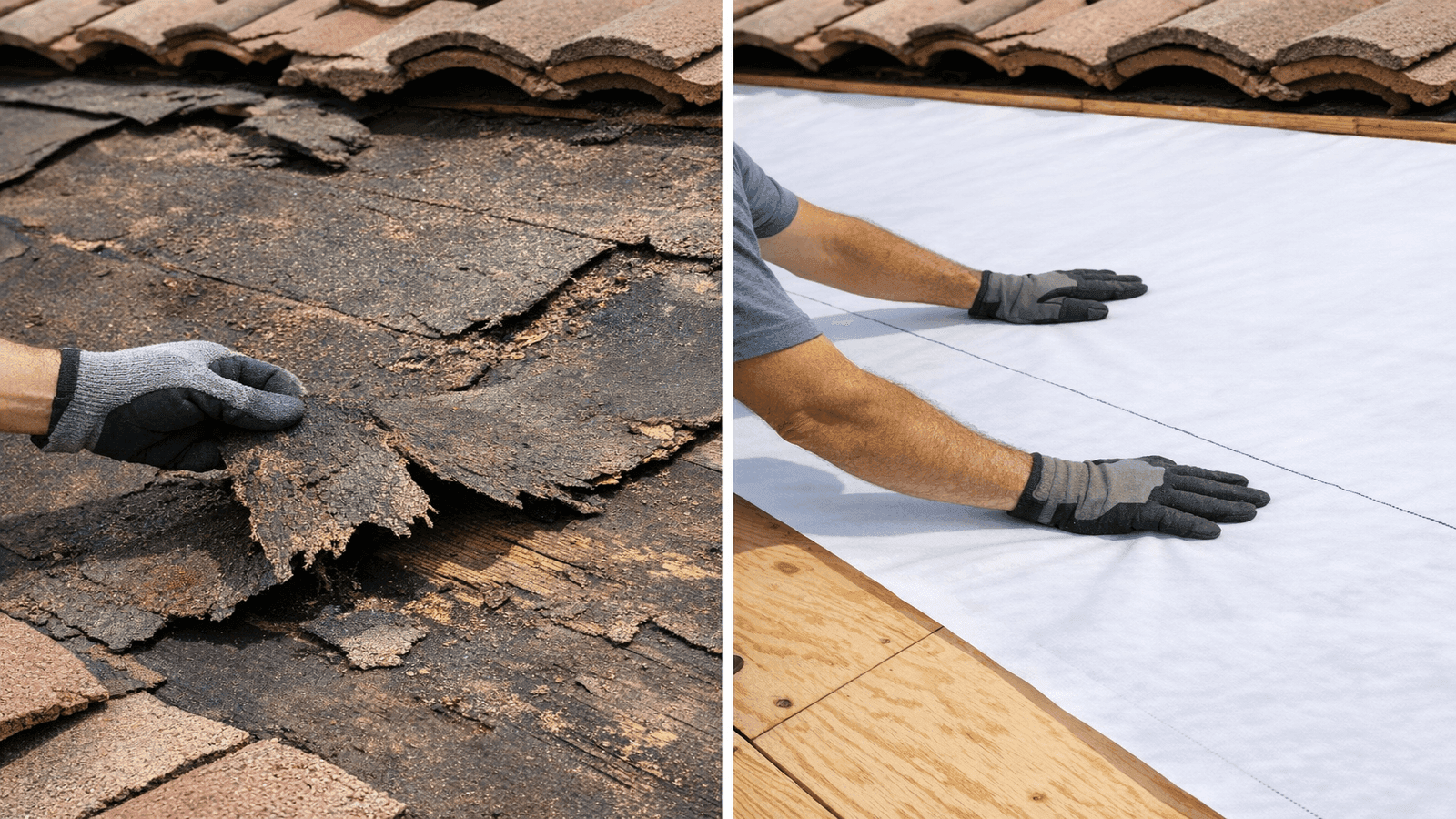
- Underlayment (a secondary moisture barrier beneath the roofing material; either felt or synthetic)
- Drip edge (metal flashing at eaves and rakes that directs water away from the fascia)
- Roofing material (the visible outer layer: shingles, metal panels, tile, or membrane)
- Flashing (metal or rubberized sections sealing joints at chimneys, skylights, walls, and valleys)
- Ventilation system (soffit vents plus ridge vents work together to manage attic temperature and humidity)
In my 20 years doing roofing work across the U.S. South and Midwest, every major roof failure I've seen started small. A cracked piece of flashing, a clogged gutter that sat for one season, six inches of missing underlayment at a valley. Homeowners focus on the shingles because that's what they can see from the driveway, but the layers underneath are what truly protect the structure long-term.
The interconnected nature of these layers means that skipping or cutting corners on any one of them during installation creates a weak point the entire system must compensate for. A proper roof is only as strong as its least-maintained component. For a deep dive into every part of the system, see our complete guide: Roof Components Explained.
Types of Roofing Materials: Which Is Right for Your Home?
Choosing a roofing material is one of the largest financial decisions a homeowner makes, and it's not just about upfront cost. Climate, roof pitch, HOA restrictions, and long-term plans all factor into which material makes sense for a specific home.
Asphalt Shingles
Asphalt shingles are the most widely used roofing material in North America, covering roughly 75% of U.S. homes [2]. They come in two main categories:
- 3-tab shingles: flat, uniform appearance; lower cost ($3.50-$5.50 per sq ft installed); shorter lifespan (15-25 years)
- Architectural (dimensional) shingles: layered, textured look; more wind-resistant; better lifespan (25-30 years); recommended for most homeowners
Asphalt is affordable, widely available, and easy to install. Its main drawbacks are a relatively short lifespan compared to metal or tile, and environmental impact: approximately 11 million tons of asphalt shingles are sent to U.S. landfills annually and cannot be recycled in most markets [3].
Metal Roofing
Metal roofing is the fastest-growing segment in residential roofing, driven by its extraordinary durability. A quality metal roof lasts 40 to 70 years (the standing seam variety can reach 70 years or more with minimal maintenance) [4].
The two main types are corrugated (screw-down) panels and standing seam (concealed fastener). Standing seam is the premium option, with concealed attachment points that prevent fastener-related leaks. Metal's main barrier is upfront cost: $7-$22 per square foot installed, compared to $3.50-$7.50 for asphalt.
Slate Roofing
Natural slate is the premium tier of roofing, lasting 75 to 150 years, when properly installed on a structurally reinforced roof deck. It's beautiful, fireproof, and completely natural. The downsides: it's the heaviest roofing material (requires structural reinforcement), the most expensive ($20-$40 per sq ft installed), and demands specialist installers. Synthetic slate offers a lighter, less costly alternative at $8-$15 per sq ft.
Clay and Concrete Tile
Clay tile is the classic material of Spanish Colonial, Mediterranean, and Southwestern architecture. It lasts 50 to 100 years, resists fire, and withstands Florida's hurricane-force winds when installed correctly. Like slate, it requires structural reinforcement for the added weight. Concrete tile is a less expensive alternative ($12-$18/sq ft vs. clay's $18-$25/sq ft) with a slightly shorter lifespan of 40-50 years.
Flat and Low-Slope Systems
Homes or additions with low-slope roofs (under 2:12 pitch) require membrane systems: TPO (thermoplastic polyolefin), EPDM (rubber), or modified bitumen. These are standard on commercial buildings and increasingly common on contemporary residential designs with flat sections. Lifespan ranges from 20 to 30 years depending on the system and maintenance.
| Material | Avg. Lifespan | Installed Cost (per sq ft) | Best For |
| Asphalt (3-tab) | 15-25 yrs | $3.50-$5.50 | Budget replacement; mild climates |
| Asphalt (architectural) | 25-30 yrs | $4.50-$7.50 | Most homeowners; best value |
| Metal (corrugated) | 40-60 yrs | $7-$14 | Storm-prone areas; durability seekers |
| Metal (standing seam) | 50-70 yrs | $14-$22 | Premium longevity; modern aesthetic |
| Slate (natural) | 75-150 yrs | $20-$40 | High-end historic homes |
| Clay tile | 50-100 yrs | $18-$25 | Southwest/Mediterranean climates |
| Concrete tile | 40-50 yrs | $12-$18 | More affordable tile alternative |
| Wood shake | 20-25 yrs | $7-$13 | Rustic aesthetic; fire zone restrictions apply |
| Flat membrane (TPO/EPDM) | 20-30 yrs | $5-$12 | Low-slope and flat roofs |
In Florida, I almost always steer clients toward architectural shingles rated for 130+ mph winds or standing-seam metal. The hurricane risk is real, and three-tab shingles just don't hold up when a named storm rolls through. Material choice is a climate decision as much as an aesthetic one.

Photo: Side-by-side grid showing six roofing material types: asphalt shingles, standing seam metal, natural slate, clay tile, wood shake, and TPO flat membrane
For a full comparison including pros, cons, and regional recommendations, see: Types of Roofing Materials.
How Long Should Your Roof Last? Lifespan by Material
The rated lifespan on a roofing material is a best-case scenario, not a guarantee. Actual lifespan depends heavily on four factors: installation quality, climate exposure, maintenance consistency, and attic ventilation.
Lifespan by Material (Realistic Expectations)
- Asphalt 3-tab: 15-22 years in hot or hail-prone climates; up to 25 in mild zones
- Architectural asphalt: 22-30 years; manufacturer warranties of 30-50 years are marketing (pro-rated, rarely covering full replacement)
- Metal: 40-70+ years; minimal maintenance required beyond annual inspection
- Tile (clay or concrete): 50-100 years; cracked individual tiles can be replaced without re-roofing
- Slate: 75-150 years for natural slate; 30-40 years for synthetic
- Wood shake: 20-25 years with regular treatment; shorter in humid climates
Get quotes from top-rated pros.
What Cuts Lifespan Short
Poor attic ventilation is the single biggest killer of asphalt shingles, causing heat buildup that bakes the shingles from below. An unvented or under-vented attic can reduce a 30-year shingle's actual lifespan to 15-18 years.
Climate extremes accelerate aging. Texas leads the nation with an estimated 878 hail events annually; homeowners in high-hail regions (Texas, Colorado, Kansas, Nebraska) should plan for inspection or replacement every 15-20 years regardless of material age [3].
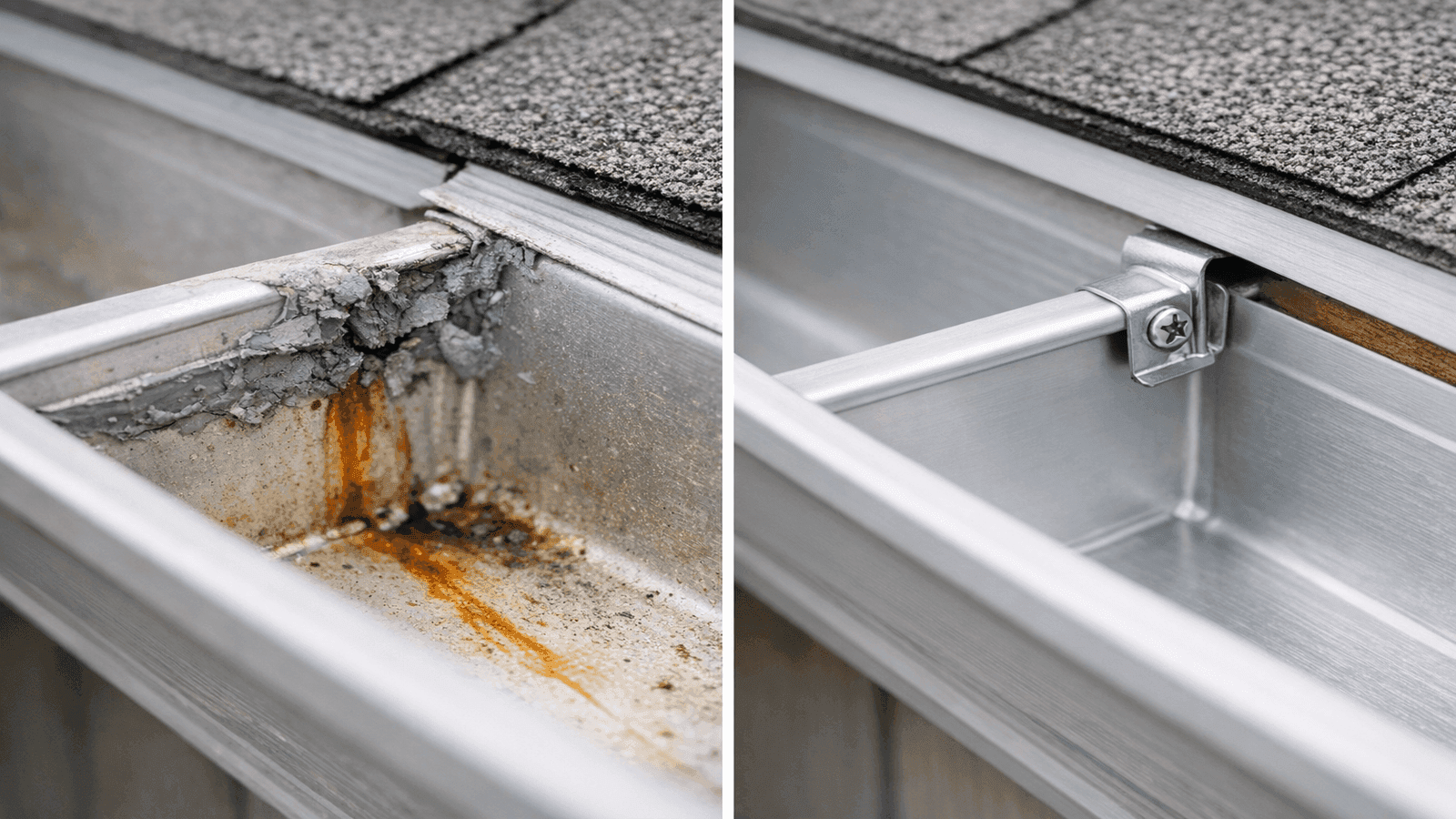
Deferred maintenance compounds every other factor. Clogged gutters hold moisture at the eaves, accelerating shingle edge deterioration and fascia rot. Ignored flashing lets water infiltrate for months before interior damage is visible.
When to Start Planning Replacement
Start budgeting when your roof reaches 75% of its rated lifespan. For a 25-year architectural shingle roof, that means starting to plan around year 18-19. Waiting until you see ceiling water stains means you've already allowed structural damage.
Signs that replacement is imminent regardless of age:
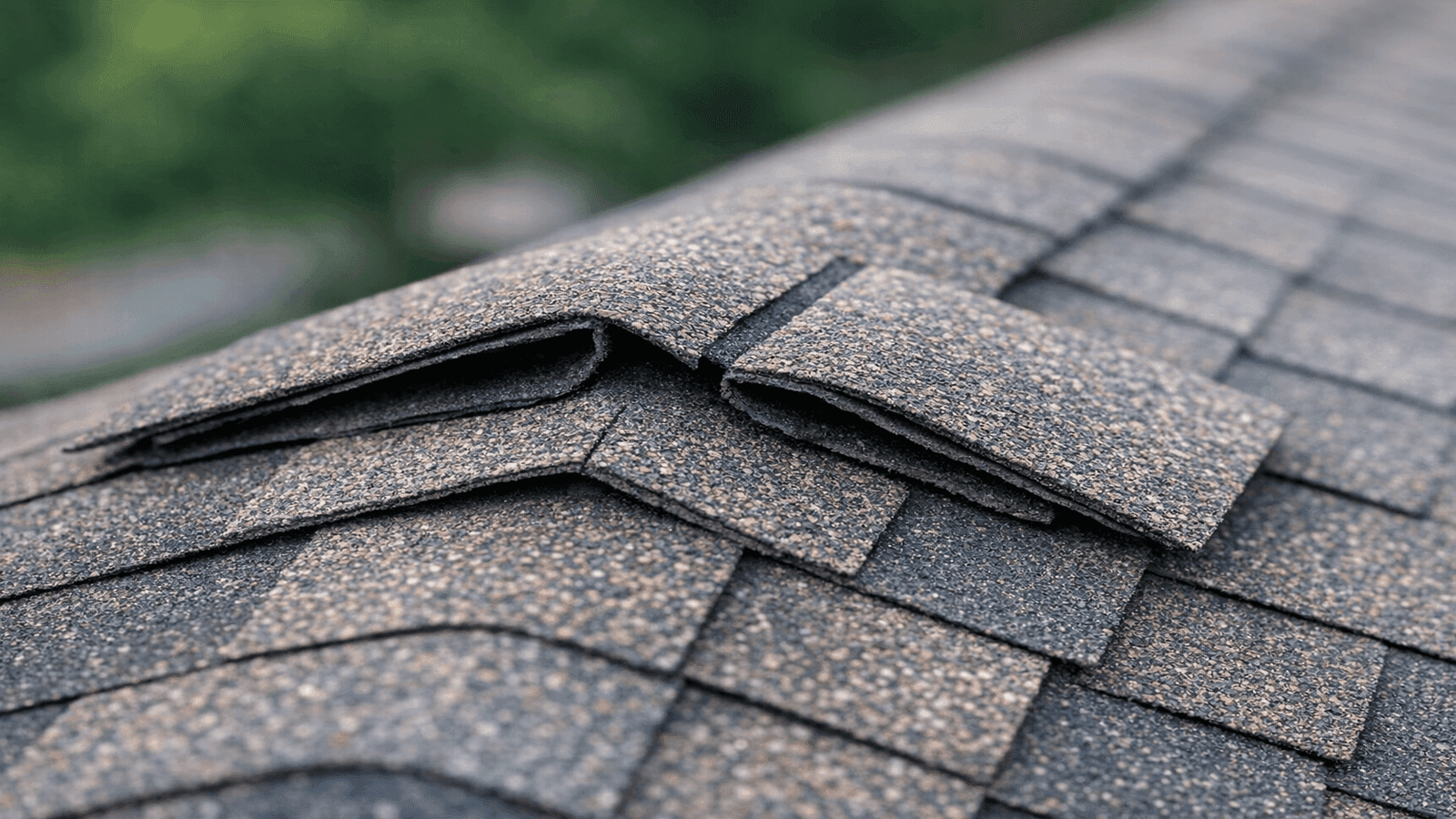
- Shingles curling at edges or buckling in the middle
- Granules accumulating in gutters (the protective coating is gone)
- Multiple bald patches or missing shingles
- Daylight visible through attic rafters
- Interior ceiling stains or active dripping

Photo: Side-by-side comparison of new architectural shingles vs. aged shingles showing curling edges, granule loss, and surface cracking
See our full guide for lifespan data by material and climate zone: How Long Do Roofs Last.
The Anatomy of Your Roofing System: Key Components
Understanding the components of your roof helps you communicate clearly with contractors, identify problems early, and understand what's included (or not) in a replacement estimate. A full roofing system has 12 to 15 distinct components, each with a specific protective role.
Structural and Base Components
- Roof decking: typically 7/16-inch OSB or 1/2-inch plywood; the foundation everything else attaches to. Rotted decking must be replaced during re-roofing (add $2-$4 per sq ft)
- Ice and water shield: a rubberized, self-adhering waterproof membrane; required by code at eaves (typically first 3-6 feet) and valleys in most northern states; highly recommended everywhere
- Underlayment: felt (15 lb or 30 lb) or synthetic; acts as secondary moisture barrier if outer material is breached; synthetic lasts longer and is more tear-resistant
Edge and Drainage Components
- Drip edge: L-shaped metal flashing at roof eaves and rakes; directs water off the edge and away from fascia; required by most modern building codes. Skipping drip edge causes fascia rot within 5-7 years
- Gutters and downspouts: not technically part of the roof system, but integral to water management; must be sized and sloped correctly
Roofing Material Components
- Starter strip: specialized shingles (or inverted regular shingles) installed at the eave edge to seal the first course and prevent wind blow-off
- Field shingles: the main roofing material covering the majority of the roof area
- Hip and ridge cap shingles: specially formed shingles that seal the peak (ridge) and hip lines; critical for wind resistance and weather tightness
Penetration Sealing Components
- Step flashing: L-shaped metal pieces installed with each course of shingles at sidewall intersections (where a dormer or wall meets the roof slope)
- Counter flashing: metal embedded in mortar joints above step flashing at chimneys; seals the top of the step flashing
- Pipe boot flashing: rubber or metal collar around plumbing vent pipes; rubber degrades in UV over time and is a common leak point after 15-20 years
- Valley flashing: open metal valley (W-metal) or closed woven valley; where two slopes meet requires special handling due to high water volume
Ventilation Components
- Soffit vents: perforated panels along the underside of the roof overhang; intake air into the attic
- Ridge vents: continuous low-profile vents along the ridge peak; allow hot air to exhaust from the attic
- Proper ventilation ratio: 1 sq ft of net free ventilation area per 150 sq ft of attic floor space (or 1:300 with vapor barrier)
The most common installation shortcuts that drive callbacks and early failures: skipping ice-and-water shield in northern climates, omitting drip edge to save materials cost, and installing ridge vents without adequate corresponding soffit intake.

Photo: Detailed cross-section diagram of a complete residential roofing system with labeled layers: decking, ice shield, underlayment, drip edge, shingles, step flashing, ridge vent, and soffit
Explore every component in detail: Roof Components Explained.
Common Roofing Problems and How to Catch Them Early
The roof problems that cost homeowners the most money are almost never the ones that cause immediate, visible damage. They're the slow ones: the minor flashing gap that lets in half an ounce of water per rainstorm for two years before the ceiling shows a stain.
The 8 Most Common Roofing Problems
1. Leaks and water infiltration. The most frequent roofing complaint. The leak source is rarely directly above the stain; water travels along rafters and decking before dripping. Chimney flashing, skylight seals, and pipe boots are the most common points of failure, not the field shingles.
2. Ice dams. Common in northern states, ice dams form when heat from the living space warms the roof deck, melting snow that refreezes at the colder eave edge. The resulting ice ridge forces meltwater back under shingles. Prevention requires attic insulation plus ventilation working together, not just heat cables on the eave.
3. Wind damage. Shingles rated for 130 mph can still blow off if incorrectly nailed. Most building codes require 6 nails per shingle in high-wind zones (vs. 4 in standard zones). After any storm above 50 mph, inspect for lifted tabs or missing shingles.
4. Hail damage. Often invisible from the ground, hail creates "bruises" in asphalt shingles: soft spots where the granule layer is knocked away, exposing the asphalt mat below. These don't leak immediately but accelerate aging by 5-10 years. After any significant hail event, have a professional inspect from the roof surface.
5. Moss and algae growth. Common in the Pacific Northwest, Southeast, and any shaded roof. Algae creates black streaking (often called "roof algae") and is primarily cosmetic. Moss is more destructive: it holds moisture against the shingles and can lift tabs. Treatment: zinc or copper strips at the ridge, or low-pressure chemical wash. Never power-wash a shingle roof.
6. Sagging. A sagging or uneven roofline signals structural problems: rotted decking, failed rafters, or inadequate support. This requires immediate professional assessment. This is not a DIY problem.
7. Poor attic ventilation damage. Manifests as shingles aging faster than expected, blistering, or granule loss concentrated near the ridge. The fix is adding ventilation, not replacing shingles.
8. Flashing failure.The single most common source of roof leaks, in the experience of most seasoned contractors. Flashing is metal, and metal expands and contracts with temperature changes. Over 15-20 years, caulking fails, counter flashing lifts, and step flashing can corrode or gap.
Real-World Case Study: Sandra R., Tampa, FL
Sandra noticed a faint water stain on her bedroom ceiling in March 2025. She assumed it was air conditioning condensation from the ductwork above and waited to see if it resolved on its own. Six months later, in October, after the stain had doubled in size, she called a licensed roofer for an inspection.
The contractor found rotted decking in a 4 x 6-foot section at the chimney base. The counter flashing had pulled away from the mortar joint two years earlier, allowing water to infiltrate during every rain event. What would have been a $380 reflashing job in 2023 had become an $8,200 partial re-roof covering 18 squares of deteriorated material and deck replacement.
The lesson: any unexplained ceiling stain warrants a roofing inspection within 30 days, not six months.
NearbyHunt Network Insight
The licensed roofers in our NearbyHunt network report that more than 70% of emergency service calls involve water damage originating from flashing failures (around chimneys, skylights, or roof-to-wall transitions), not from failure of the field shingles. Inspecting and maintaining flashing is the single highest-ROI maintenance action for any homeowner. [5]

Photo: Four-panel image showing common roof problems: curling shingles, moss growth on north-facing slope, ice dam forming at eave, and corroded chimney flashing with gap
For solutions to each of these problems in detail: Common Roofing Problems.
Get quotes from top-rated pros.
Roofing Costs in 2026: What to Budget
Roofing is one of the few home systems where the cheapest option almost always costs more over time. A 3-tab asphalt roof at $8,000 today replaced every 18-20 years costs more across 60 years than a standing-seam metal roof at $32,000 installed once.
National Average Costs (2026)
- Minor roof repair (patching, flashing): $393-$1,939 average [6]
- Asphalt shingle replacement (avg. 2,000 sq ft home): $9,500-$15,000
- Architectural shingle replacement: $11,000-$17,000
- Metal roof replacement: $18,000-$45,000 depending on system
- Clay tile replacement: $22,000-$50,000
- Natural slate replacement: $30,000-$80,000+
- Gutter replacement (full perimeter): $1,000-$3,500
What Drives Cost Variation
Material selection is the biggest lever, as shown in the table above. Beyond material, four factors drive significant price differences:
Roof size and pitch. Contractors price by the "square" (100 sq ft of roof surface). A steeper pitch (above 6:12) adds a 10-20% labor premium because workers need additional safety equipment and move more slowly. A 9:12 pitch can add $1,500-$3,000 to the total cost of a typical replacement versus the same roof at 4:12.
Location. Labor rates vary 30-40% by state. BLS data shows the national median roofer wage at $50,970/year, with New Jersey at $63,533 and some Southern states in the low $40,000s [7]. Urban markets also carry higher overhead costs than rural areas.
Roof complexity. Each valley, dormer, skylight, chimney, or wall penetration adds labor time and materials. A simple gable roof replaces faster and cheaper than an equivalent square footage with six dormers and two chimneys.
Tear-off vs. re-roof. Installing new shingles over existing ones (allowed in most codes up to two layers) saves $1-$2 per sq ft in disposal costs. However, most experienced contractors recommend full tear-off: it allows inspection of the decking, ensures proper flat surface for new shingles, and doesn't hide existing problems.
| Scope | Low End | Mid Range | High End |
| Minor repair (patching, flashing) | $393 | $1,158 | $1,939 |
| Asphalt shingle replacement | $8,000 | $12,000 | $17,000 |
| Architectural shingle upgrade | $10,000 | $14,000 | $20,000 |
| Metal roof (corrugated) | $16,000 | $22,000 | $30,000 |
| Metal roof (standing seam) | $24,000 | $35,000 | $50,000 |
| Tile replacement (concrete) | $18,000 | $28,000 | $42,000 |
| Tile replacement (clay) | $22,000 | $36,000 | $55,000 |
| Slate replacement | $28,000 | $50,000 | $80,000+ |
The hidden costs of a roof replacement that my clients never anticipate: rotted decking found at tear-off ($2-$4/sq ft extra), fascia and soffit replacement ($8-$18 per linear foot), city permit fees ($150-$600 depending on municipality), and debris disposal. I always tell clients to build a 15% contingency into their budget before signing any contract.

Photo: Infographic-style graphic comparing roofing material costs on the x-axis against expected lifespan in years on the y-axis, showing the long-term cost advantage of metal and tile
Roof Pitch: Why It Controls Everything
Roof pitch is the slope of your roof expressed as a ratio of rise to run. A 6:12 pitch rises 6 inches vertically for every 12 inches of horizontal distance. This single measurement controls which roofing materials you can use, how efficiently your roof drains, and how much a replacement will cost you in labor.
Common Residential Pitch Categories
- Low-slope (under 2:12): essentially flat; requires membrane roofing systems (TPO, EPDM, modified bitumen). Standard shingles will not properly shed water at this angle.
- Conventional low (2:12 to 4:12): modified asphalt systems or low-slope metal panels acceptable; standard shingles generally not recommended. Common on ranch homes and additions.
- Standard residential (4:12 to 9:12): the full range of materials works well here. Most new construction falls in the 4:12 to 7:12 range.
- Steep-slope (9:12 and above): excellent drainage and longevity, but labor cost rises 20-35% due to safety requirements. Walkability becomes a concern.
- Very steep (12:12 and above): 45-degree angle. Specialists only; premium labor rates.
How Pitch Affects Performance
Steeper pitches drain faster, leaving less time for water to find its way through any imperfections. They also shed snow more readily, reducing ice dam risk. Shallow pitches accumulate debris, hold moisture longer, and require stricter installation methods to prevent wind-driven rain infiltration.
Pitch also affects which valleys and transitions are most vulnerable. On a 3:12 pitch, the low water velocity in valleys means debris accumulates faster, requiring more frequent cleaning.
Homeowners ask me all the time why their neighbor's roof is lasting longer even though they have the same shingles. Half the time it's pitch. A 7:12 roof in the same neighborhood just sheds water faster, dries out quicker, and runs cooler than a 3:12 roof with the same material. Pitch matters more than most people realize.
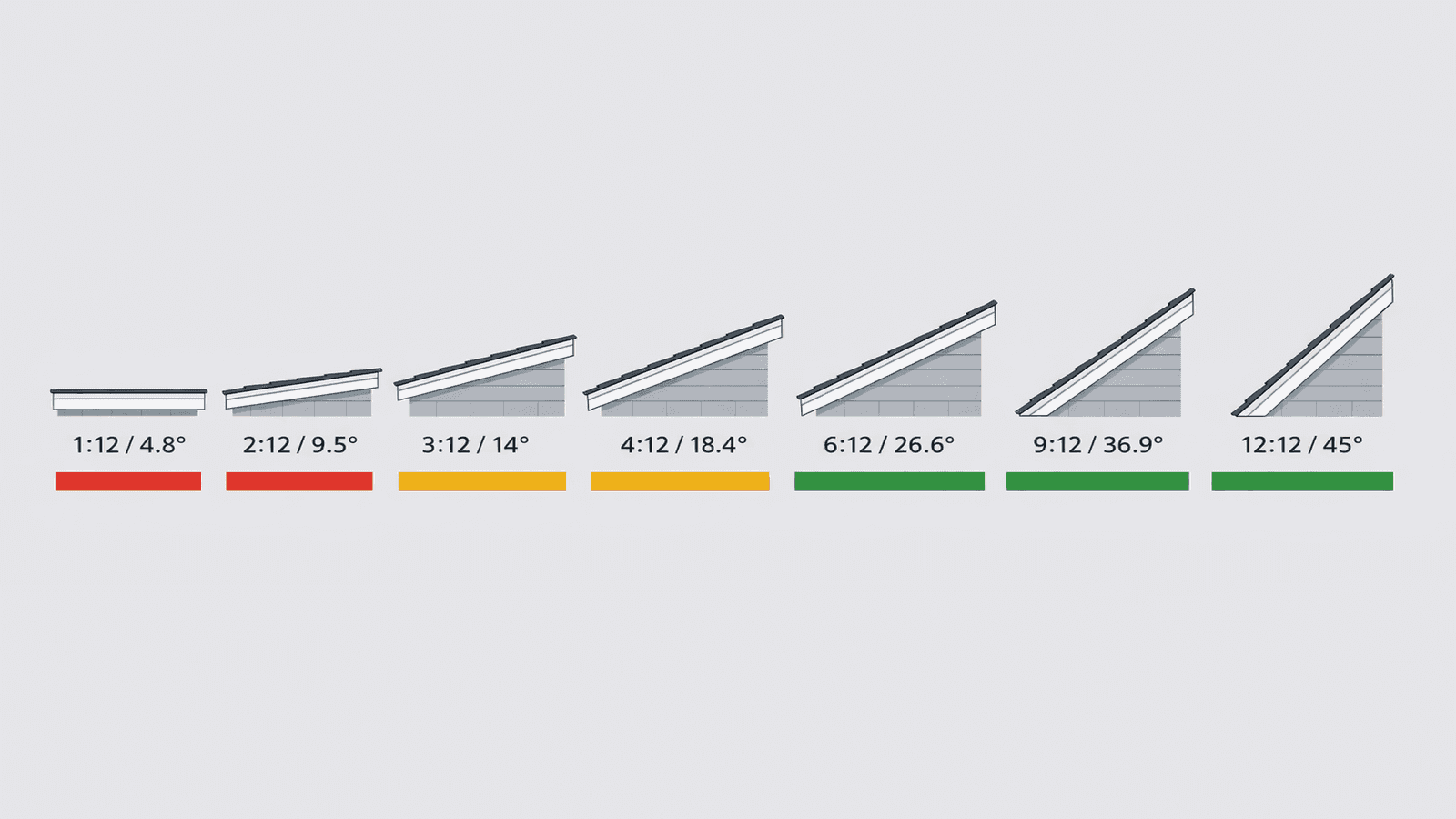
Photo: Illustrated diagram showing residential roof pitches from 1:12 (nearly flat) through 12:12 (45 degrees) with labels indicating material compatibility at each pitch range
For calculation methods, pitch tables, and material compatibility charts: Roof Pitch Explained.
Green and Eco-Friendly Roofing Options
Sustainability is reshaping the roofing industry. Metal roofing contains 25-95% recycled content and is fully recyclable at end of life, making it the most environmentally responsible conventional option. But the eco-roofing category has expanded well beyond material recycled content.
Cool Roofs
A cool roof uses reflective coatings, light-colored materials, or specially designed tiles to reflect more sunlight and absorb less heat than a standard roof. Cool roofs can reduce cooling energy consumption by 10-15% in hot climates, with larger benefits in areas with high air conditioning loads like Florida, Texas, and Arizona.
ENERGY STAR-certified roofing products meet minimum solar reflectance requirements. Some state utility programs (California, Texas, Florida) offer rebates of $0.20-$0.50 per sq ft for certified cool roofing installations.
Solar-Integrated Roofing
Solar roof tiles, pioneered by Tesla's Solar Roof product and now joined by GAF Timberline Solar and others, integrate photovoltaic cells directly into the roofing material. Rather than panels mounted above the roof surface, solar tiles replace conventional shingles and generate electricity simultaneously.
Solar roofing systems qualify for the federal Investment Tax Credit (ITC) at 30% of installation cost through 2032. For a $45,000 solar roof installation, that's a $13,500 federal tax credit. Many states stack additional incentives on top.
The breakeven calculation is longer than conventional solar panels (15-20 years vs. 8-12 for rack-mounted panels) due to higher installation costs, but the aesthetic benefit and dual function of roofing plus energy generation appeals to many homeowners replacing aging roofs.
The Environmental Cost of Asphalt Shingles
Standard asphalt shingles carry a significant environmental burden. Approximately 11 million tons of asphalt shingle waste enter U.S. landfills annually, and most cannot be recycled [3]. The short lifespan means 2-3 replacements occur in the same period as one metal or tile roof, multiplying the material consumption and disposal impact.
Recycled-content shingles made from rubber, plastic composites, or reclaimed slate offer an alternative: similar installation to standard shingles but manufactured from post-consumer waste streams.
My Florida clients are increasingly asking about solar roof tiles and cool roof coatings, not just because they're environmentally conscious but because their electric bills are $350-$450 a month in summer. A cool roof coating at $2-$4 per sq ft applied to an existing flat or low-slope section can pay for itself in 2-3 cooling seasons in Tampa's climate.
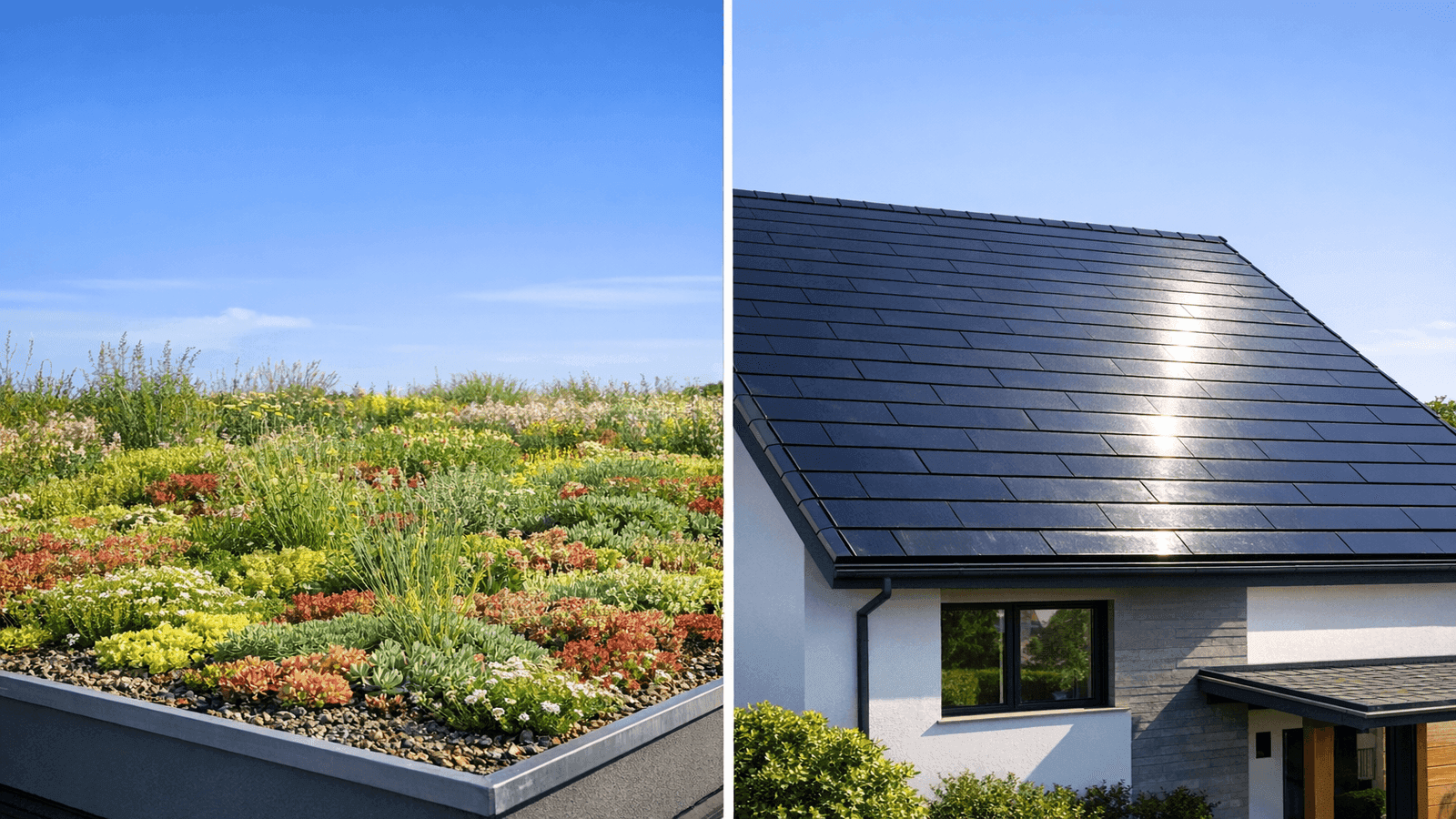
Photo: Split image: left side shows a rooftop covered in a living green roof with vegetation, right side shows a modern suburban home with integrated solar roof tiles
For a full exploration of sustainable material options and incentives: Green Roofing Options.
Get quotes from top-rated pros.
Roofing vs. Siding: Which Replacement Takes Priority?
When a home has both an aging roof and deteriorating siding, homeowners on a budget face a difficult sequencing decision. In the vast majority of cases, the roof takes priority over siding. Here's the logic:
Why Roof Almost Always Comes First
A failing roof creates cascading water damage that travels through the structure: into insulation, wall cavities, subfloor, and even the foundation in severe cases. The cost of interior water damage from a failed roof (mold remediation, drywall replacement, structural repairs) can easily exceed the cost of the roof itself.
Siding failure, while serious, typically allows moisture infiltration over months or years rather than in acute events. The damage progression is slower, giving homeowners more time to respond.
When the Sequence Might Flip
There are exceptions. If siding has active gaps or rot at the roof line, water may bypass the roof's drip edge and flashing entirely, entering the wall system regardless of roof condition. In that case, siding repair at the roof-siding interface should accompany or precede roofing work.
Also: if both systems are being replaced simultaneously, coordinating the contractors can reduce mobilization cost. A single general contractor managing both trades typically saves 15-25% on total project cost compared to two separate contracts in sequential years.
The Insurance Angle
Storm damage often affects both roof and siding simultaneously (hail, hurricane, severe wind). In that case, a single insurance claim adjuster visit and single claim for both systems is appropriate. Insurers prefer comprehensive claims to piecemeal ones, and adjusters can document both systems in one visit.
See the full analysis: Roof vs. Siding: Which to Replace First.
How to Hire a Qualified Roofer: Avoid the Most Costly Mistakes
Choosing the wrong roofing contractor can be more expensive than choosing the wrong material. Poor workmanship voids manufacturer warranties, creates liability exposure, and often results in repairs within two to five years of a new roof installation.
What to Verify Before Signing
State contractor license: Required in 48 of 50 states for roofing work (exceptions: Colorado and North Dakota). Verify the license number directly on your state's licensing board website; do not take a contractor's word or a photocopy.
General liability insurance: Minimum $300,000; ideally $1 million or more. Request a certificate of insurance directly from the insurer (not the contractor) with your name as the certificate holder.
Workers' compensation coverage: If a laborer is injured on your property and the contractor lacks workers' comp, you may be liable as the property owner. Verify this certificate separately from general liability.
Local references from recent work: Ask for 3-5 references from jobs completed in the past 12 months within 25 miles. Call them. Ask specifically about cleanliness, communication, whether the final cost matched the estimate, and whether they'd hire the contractor again.
Manufacturer certification: Programs like GAF Master Elite, Owens Corning Preferred Contractor, and CertainTeed SELECT ShingleMaster require contractors to maintain insurance, pass quality inspections, and complete training. Certified contractors can offer extended manufacturer warranties (25-50 year system warranties vs. standard 10-year material-only coverage).
Red Flags That Signal Storm Chasers or Fly-by-Night Operations
- Canvassing door-to-door immediately after a storm: Legitimate local contractors don't need to solicit work this way
- Demanding large deposits upfront: Industry standard is 10-20% down; rest on satisfactory completion
- No physical local address or post office box only: You need a place to find them if problems arise
- Bids that are 30%+ below all others: Someone is cutting corners on materials, labor, permits, or all three
- Pressure to sign same-day without written estimate: This is a hard sales tactic; legitimate contractors give you time to review
The Estimate Process
Get three written bids with line-item breakdowns including: material brand and product name, labor cost, tear-off and disposal, permit fees, and warranty terms for both material and workmanship. A missing line item is a red flag.
The middle bid is often the best value. The lowest has you wondering what's being skipped. The highest isn't always better quality. Ask all three bidders the same questions: payment terms, project timeline, subcontractor use, and warranty on labor (minimum 5 years on workmanship).

Photo: Licensed roofer in safety harness inspecting a residential roof while a homeowner below reviews a written contract with a contractor on a tablet
Essential Roofing Terms Every Homeowner Should Know
You don't need to speak like a roofer, but knowing the basic vocabulary helps you understand estimates, communicate problems, and spot missing line items. Here are the 15 most important terms:
- Square: 100 square feet of roofing material; the standard pricing unit (a 2,000 sq ft roof has approximately 20-22 squares accounting for waste)
- Pitch: the slope ratio (rise over run); determines material options and drainage performance
- Hip roof: slopes on all four sides to a central ridge; excellent wind resistance
- Gable roof: slopes on two sides with triangular vertical walls (gables) at each end; most common in North America
- Valley: where two descending roof slopes meet; high-water-volume zone requiring careful detailing
- Ridge: the horizontal peak at the top of two opposing slopes
- Eave: the lower edge of the roof that projects beyond the wall below; where gutters attach
- Fascia: the horizontal board at the roof edge to which gutters are fastened; faces outward
- Soffit: the underside of the roof overhang between the fascia and the exterior wall; often contains ventilation openings
- Dormer: a window structure projecting from a sloping roof; creates additional light and sometimes living space in upper floors
- Flashing: metal or rubberized membrane used to waterproof joints between roofing material and penetrations (chimneys, skylights, walls)
- Underlayment: secondary moisture barrier installed between decking and roofing material; felt (15 lb or 30 lb) or synthetic
- Ice and water shield: self-adhering rubberized waterproof membrane at vulnerable areas; provides protection even if outer material is damaged
- Starter strip: the first row of shingles at the eave, installed face-down or specialized strips; seals the bottom edge and prevents wind-driven rain infiltration
- Cricket: a small peaked saddle built behind a chimney to divert water around it; required by code on chimneys wider than 30 inches
For a complete A-to-Z reference: Roofing Terms Glossary.
A Brief History of Roofing: From Thatch to Modern Systems
Roofing is one of humanity's oldest construction crafts. Clay tiles fired in kilns were used in China and Greece more than 3,000 years ago, and Roman tile roofing has survived two millennia. Understanding the evolution of roofing materials helps explain why modern systems are designed the way they are.
Key Historical Milestones
Ancient era (pre-1800s): Thatch (dried grass, reeds, and straw) was the dominant material for ordinary dwellings across Europe and Asia for millennia. Clay tile was reserved for civic and religious buildings. Wood shingles were common in forested North America from the colonial period through the 1800s.
Slate era (1850s-1900s): The expansion of the U.S. railroad network made Welsh and Pennsylvania slate economically viable across the country. Victorian-era homes were frequently slate-roofed, and many of those roofs still stand today after 100-plus years.
Asphalt shingle invention (~1903): The first asphalt shingle patents appeared in the early 1900s, using a felt base coated in asphalt and mineral granules. By the post-World War II housing boom, asphalt had become the dominant material, driven by low cost and easy machine production.
Fiberglass revolution (1960s-70s): Organic-mat asphalt shingles gave way to fiberglass-mat composition shingles, which are lighter, more fire-resistant, and more dimensionally stable. Today, 90% of asphalt shingles sold in the U.S. use fiberglass composition [2].
Modern innovation (2000s-present): Standing-seam metal roofing moved from commercial-only to mainstream residential. Synthetic underlayments replaced felt. Solar-integrated roofing emerged as a genuine product category. The 2020s have brought solar tiles, cool roof coatings, and AI-powered aerial measurement that lets contractors generate precise estimates from satellite imagery without setting foot on a roof.
For the full historical narrative: History of Roofing.
Roofing as a Career: Industry Outlook
The U.S. roofing industry supports 102,744 roofing businesses and employs an estimated 134,365 roofers [1]. The industry's $31.4 billion annual market is driven primarily by reroofing (replacement) work, which accounts for more than 80% of annual volume [8].
Career Outlook and Earnings
BLS data puts the national median roofer wage at $50,970 per year (2024), with the top 10% earning above $82,000 [7]. Geographic variation is significant: New Jersey tops the state rankings at $63,533, while some Southern states average in the low $40,000s. Experienced foremen and estimators with manufacturer certifications often earn $65,000-$90,000 in high-demand markets.
The industry is projected to grow 6% over the next decade, driven by an aging U.S. housing stock (average home age is approximately 40 years) and increased storm-driven replacement demand. The workforce shortage is real: the roofing industry, like most construction trades, reports chronic difficulty finding trained applicants.
Path to Becoming a Licensed Roofer
Most states that license roofers require either a journeyman or contractor license, which typically involves:
- 3-4 year apprenticeship program (often through NRCA or local union) or equivalent documented field experience
- Written examination on code, safety, and trade knowledge
- Proof of insurance before licensure
- Continuing education for license renewal (typically every 2 years)
Manufacturer certification programs (GAF Master Elite, Owens Corning Preferred, CertainTeed ShingleMaster) add credibility and marketing advantage but are separate from state licensing.
Safety is the critical issue: roofers face the fifth-highest fatality rate in construction at 29.9 deaths per 100,000 workers [3]. OSHA 10-hour and 30-hour courses are standard expectations for anyone entering the trade.
For a complete career guide including licensing requirements by state: Roofing Careers Guide.
Conclusion
Your roof is a complex, interconnected system, not just a surface material. The decisions that matter most come down to three things: choosing the right material for your climate and budget, maintaining the system consistently (especially flashing and gutters), and hiring a licensed, insured contractor who uses quality materials and backs their work with a written warranty.
The two most common and costly roofing mistakes are waiting too long to address small problems and hiring an unvetted contractor based solely on price. Both are entirely avoidable with basic knowledge and a proactive approach to inspection.
Disclaimer: Cost figures in this guide are national averages for 2026 and vary significantly by region, project complexity, material availability, and contractor pricing. Always obtain 2-3 written quotes from licensed, insured roofing contractors before committing to any roofing project. Verify contractor licenses through your state licensing board before signing any agreement.
Sources & References
- IBISWorld: Roofing Contractors in the U.S. Industry Analysis 2026
- This Old House: Roofing Facts and Statistics 2025
- RoofLink: 30 Roofing Industry Statistics 2026
- This Old House: Metal vs. Asphalt Roof Guide 2026
- NearbyHunt licensed contractor network survey, Q1 2026
- Forbes Home: Roof Repair Cost Guide 2026
- Bureau of Labor Statistics: Roofers Occupational Employment and Wages 2024
- Roofing Contractor Magazine: 2026 State of the Roofing Industry Report
- NRCA: Q3 2025 Market Index Survey for Reroofing
- U.S. Department of Energy: ENERGY STAR Roofing
- Roofers Guild: 32 Roofing Statistics 2026
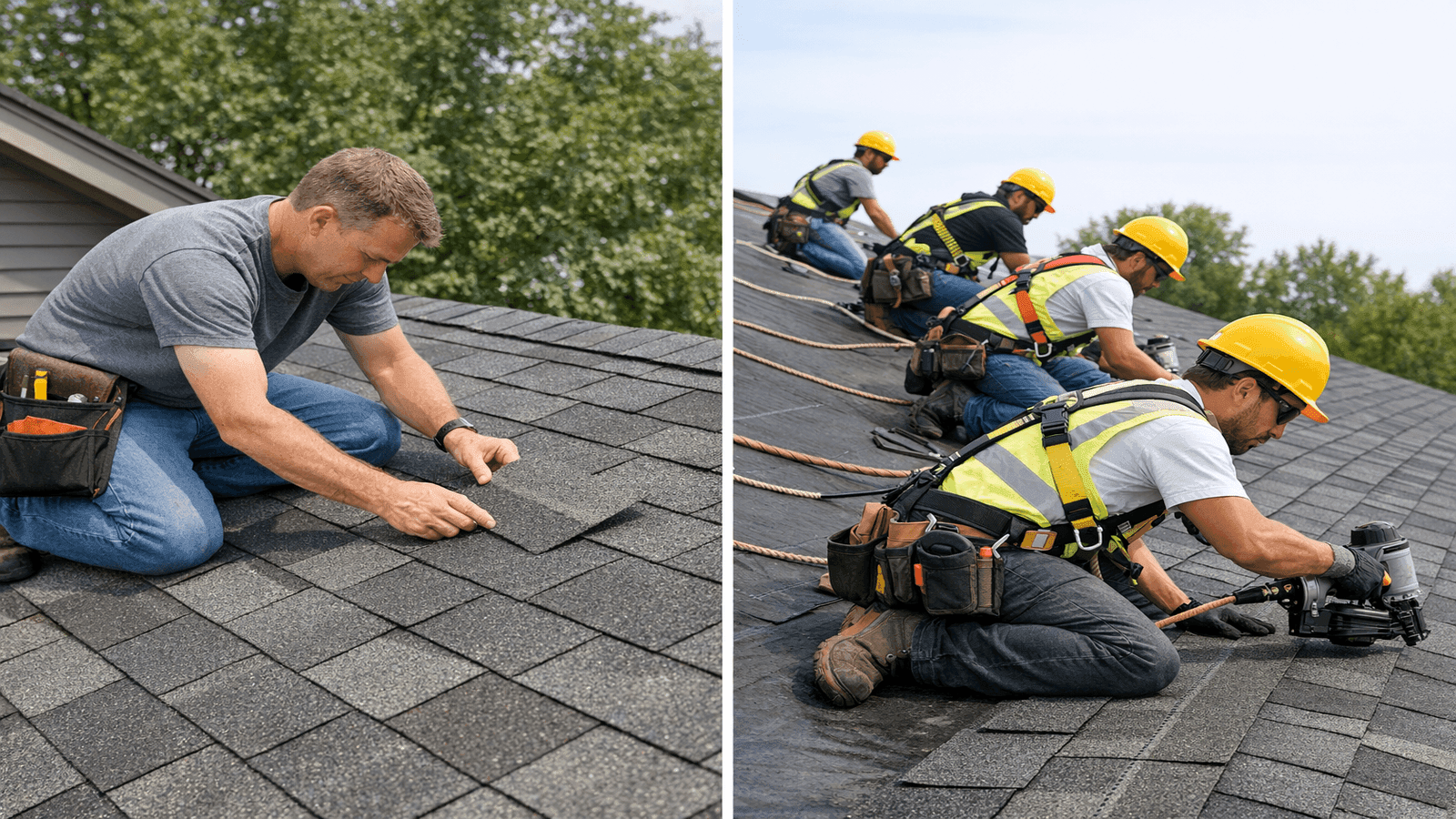

James is a licensed roofing contractor with 20 years of experience in roof installation, inspection, and repair across the U.S. South and Midwest. He specialises in asphalt shingles, metal roofing, and storm damage restoration. On NearbyHunt, James offers practical advice on roof maintenance, insurance claims, and selecting the right materials for long-lasting protection.

Jacob is a licensed roofing contractor with over 18 years of experience in roof inspection, installation, and restoration. Based in Texas, he has led hundreds of successful roofing projects across residential and commercial properties. Jacob is also a certified storm damage specialist, ensuring that all NearbyHunt roofing content meets industry best practices and safety standards.