- Professional roof inspections cost $150-$350 for standard assessments -- certified InterNACHI or HAAG inspectors charge $300-$600 for thorough written reports
- Many roofing contractors offer free inspections -- useful for getting a repair estimate but NOT a substitute for an independent certified inspection when you need an unbiased opinion
- A $250 inspection can identify $8,000-$25,000 in storm damage that homeowners would otherwise miss until catastrophic failure
- Drone roof inspections cost $150-$300 -- ideal for steep or fragile roofs where walking risks breaking tiles or creating additional damage
- James Carver has performed 800+ roof inspections over 20 years -- the biggest mistake homeowners make is choosing a contractor's free inspection when they need an unbiased opinion for an insurance claim or real estate transaction
A roof inspection is one of the least-expensive evaluations a homeowner can schedule and one of the most financially consequential. A standard inspection running $150-$350 can reveal storm damage worth tens of thousands of dollars in insurance claim value. It can identify deteriorating flashings that, left unaddressed, will allow water infiltration that destroys decking, rafters, and interior finishes. It can give a home buyer the documented evidence needed to negotiate a price reduction or repair credit.
Most homeowners skip regular roof inspections entirely -- relying instead on a quick visual check from the ground that misses the conditions that matter most. This guide covers every inspection type available in 2026, what each costs, what each covers, and how to choose the right one for your situation. For the full picture of roofing project costs including repairs and replacement, see our guide on roofing costs.

Get quotes from top-rated pros.
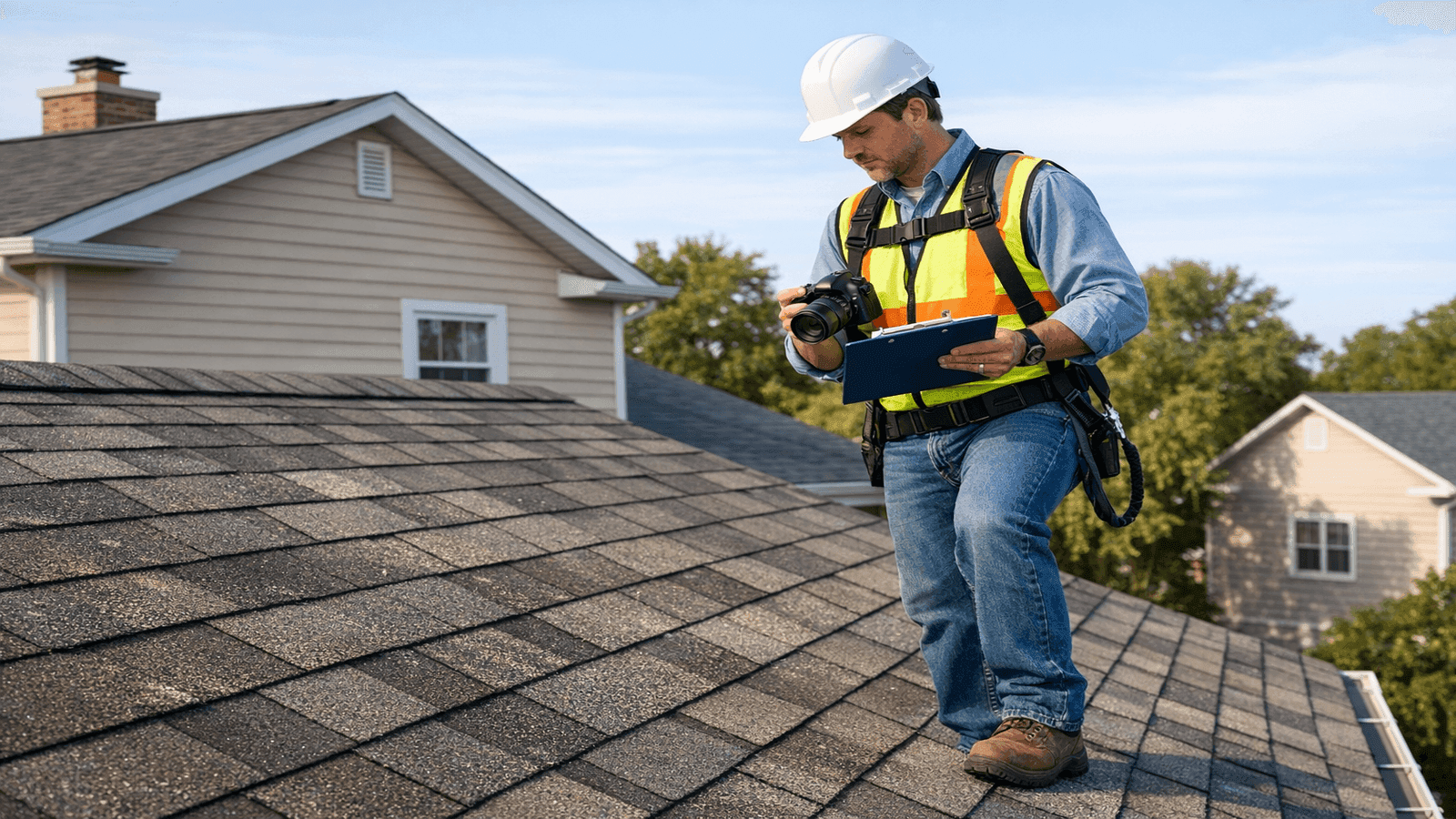
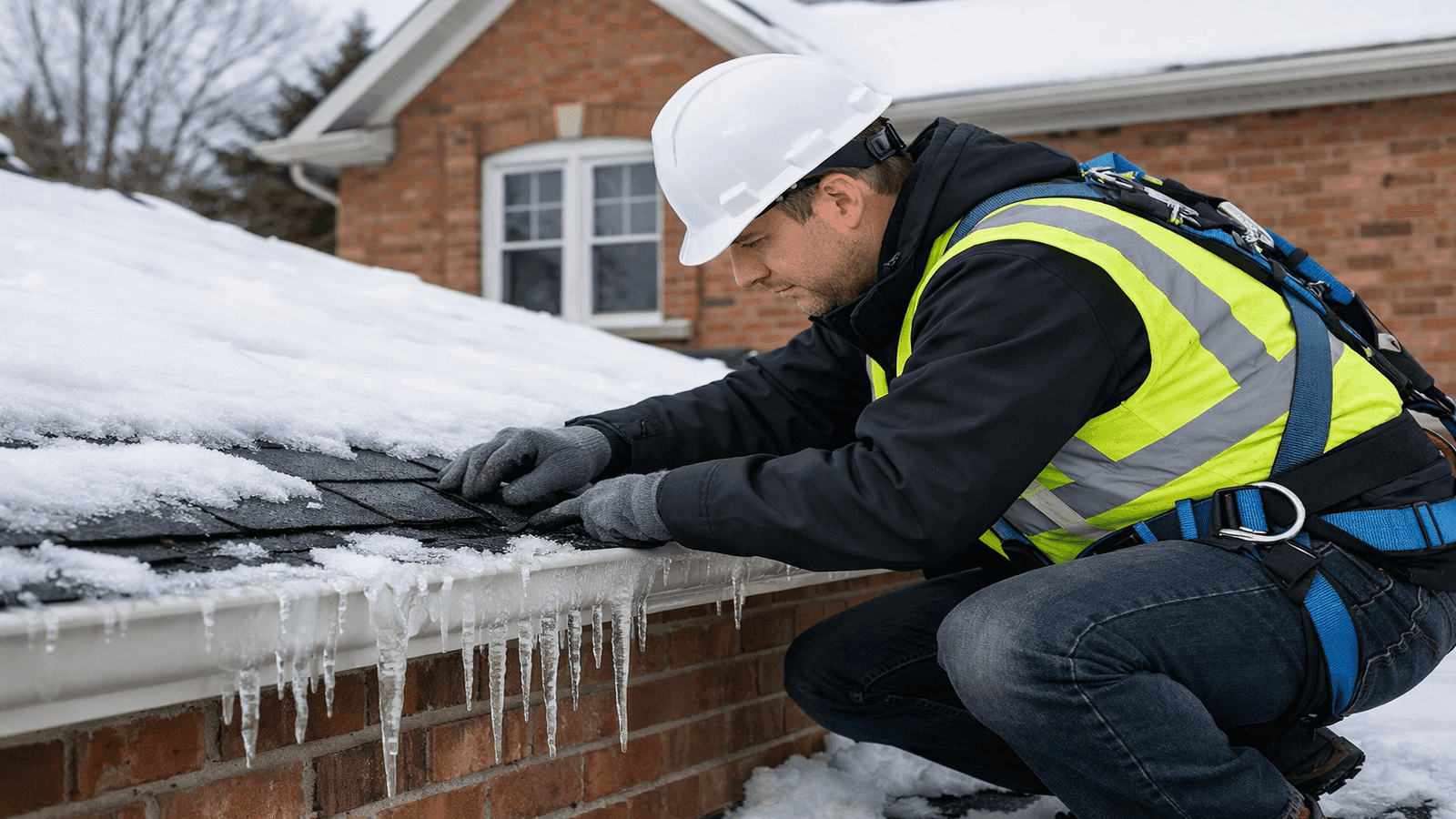
Photo: Professional roof inspector on a residential roof with clipboard and camera, documenting shingle condition and wear patterns on an asphalt shingle roof
Types of Roof Inspections and Cost
Not all roof inspections are the same service. The type you need depends on your goal: routine maintenance, insurance documentation, real estate transaction, or forensic storm damage analysis. Each inspection type carries a distinct cost, methodology, and deliverable.
Standard visual inspection ($150-$250) is the baseline service. A roofer or inspector accesses the roof surface, walks the field, documents shingle condition, checks visible flashings, and provides a verbal or brief written summary. This is appropriate for routine maintenance checks and general condition assessment before buying a new homeowner policy.
Full structural inspection ($250-$400) goes further. The inspector walks the entire roof surface, evaluates decking integrity from above, checks every flashing point, assesses ventilation openings, and inspects the attic when accessible. This service produces a written report with photographs and is appropriate for pre-listing home sales or when planning a repair or replacement project.
Certified inspection ($300-$600) from an InterNACHI-certified inspector or NRCA-credentialed professional includes a comprehensive documented report with photo evidence, condition ratings, estimated remaining service life, and specific findings that insurance companies and mortgage lenders recognize. This is the right choice for real estate transactions and initial insurance coverage applications [1].
HAAG Engineering inspection ($500-$1,200) represents forensic-level storm damage assessment. HAAG-certified inspectors are trained to differentiate storm-caused damage from manufacturing defects, normal wear, and improper installation -- a distinction that determines insurance claim validity. Reports from HAAG-certified professionals are accepted by all major insurance carriers as authoritative damage documentation [2].
Drone inspection ($150-$300) uses an unmanned aerial vehicle with a high-resolution optical or thermal camera to photograph every square foot of roof surface without anyone walking on the material. This is the safest choice for tile roofs (foot traffic cracks tiles), metal roofs with fragile coatings, steep pitches above 8:12, and multi-family buildings. Digital photo reports typically include 50-200 images documenting surface conditions from multiple angles.
Infrared/thermal inspection ($400-$700) uses a thermal imaging camera to detect moisture trapped under roofing material that is invisible to optical inspection. Wet insulation, saturated decking, and concealed leak pathways all appear as thermal anomalies. This is the most accurate diagnostic for identifying active or historic water infiltration before planning a repair strategy.
| Inspection Type | Cost Range | What It Covers | When to Use It | Report Included |
| Standard visual | $150-$250 | Surface shingles, visible flashings | Routine maintenance | Brief or verbal |
| Full structural | $250-$400 | Full surface, decking, flashings, attic | Pre-listing, repair planning | Written with photos |
| Certified (InterNACHI/NRCA) | $300-$600 | Comprehensive documented assessment | Real estate, insurance apps | Full documented report |
| HAAG Engineering | $500-$1,200 | Forensic storm damage analysis | Insurance claims, disputes | Insurance-grade report |
| Drone | $150-$300 | Full surface optical documentation | Tile, steep, fragile roofs | Digital photo report |
| Infrared/thermal | $400-$700 | Subsurface moisture detection | Leak source identification | Thermal imaging report |
What Affects Roof Inspection Cost
Six variables determine where your inspection falls within the price ranges above. Understanding these factors helps you anticipate cost accurately and evaluate quotes fairly.
Home size is the primary cost driver for structural and certified inspections. Inspectors commonly base pricing on square footage, with rates running $0.03-$0.10 per square foot for the base service. A 1,500 sq ft roof runs $45-$150 in base coverage cost; a 3,500 sq ft roof with complex geometry runs $105-$350 before other factors are applied.
Roof complexity adds significant time. Dormers, multiple pitches, penetrations (chimneys, skylights, pipe boots, HVAC curbs), valleys, and transitions between roof planes each require individual attention. A complex roof with 6 penetrations and 4 dormers takes 40-60% longer to inspect than a simple gable configuration of the same square footage -- and pricing reflects that time.
Accessibility and pitch create safety equipment requirements and slow walking time. Low-slope roofs (under 4:12) are fast to walk. Steep pitches above 8:12 require rope and harness systems, adding 20-30% to most quotes. Roofs above two-story structures add access time for ladder setup and safe repositioning between sections.
Inspector credentials create the largest cost gap in the table above. A general roofing contractor performing a free or low-cost inspection has no additional certification costs embedded in the fee. An InterNACHI-certified inspector carries CE requirements and insurance. A HAAG-certified expert carries engineering-level credentials and professional liability coverage -- expenses that are reflected in inspection fees.
Report type affects price meaningfully. A verbal summary after a 45-minute walk costs less than a written report with photograph documentation and condition ratings. Insurance-grade reports with item-by-item findings and cost estimates represent the most labor-intensive deliverable and price accordingly.
Region drives the widest cost variation between markets. High-labor-cost markets including California, New York, Washington, and the Pacific Northwest run 25-45% above the national averages listed here. Markets in the South and Midwest generally fall at or below the midpoint of the published ranges.
A contractor's free inspection is a sales tool -- I do them myself. The inspector is looking for work, not looking for reasons to tell you the roof is fine. For an insurance claim, a home purchase, or a legal dispute, you want someone with no financial stake in the outcome. A $300 independent certified inspection is the only way to get that.
When You Need a Professional Roof Inspection
Knowing when to schedule an inspection -- and what type -- protects both the roof and your financial position.
After major storms is the most time-sensitive trigger. Hailstorms, winds over 50 mph, and events that deposit debris on your roof cause damage that is often invisible from the ground but documented by a trained inspector within hours. Insurance policies typically require you to report damage promptly; inspecting within 48-72 hours creates documentation before weather erases evidence. Insurers can and do deny claims when they determine damage predates the claimant's report [2].
Before buying or selling a home is the second highest-value trigger. A buyer who receives a vague "roof is near end of life" notation from a general home inspector has no negotiating ammunition. A certified inspection report documenting specific findings -- 6 missing shingles, 2 failed pipe boot seals, one lifted ridge cap section -- converts a vague concern into a documented repair list with a known cost to remediate.
Before filing an insurance claim gives you independent documentation of what exists before the insurance adjuster's inspection. An adjuster works for the insurer; an independent inspector works for you. Knowing what damage exists before the adjuster arrives means you know what to point to and what to push back on if findings are missed.
Every 2-3 years as routine maintenance for homes with roofs under 10 years old. Proactive inspection catches minor flashing separations, cracked pipe boot seals, and early granule loss patterns before they allow water entry. A $200 inspection that catches a $350 flashing repair prevents that repair from becoming a $7,000 decking replacement.
Annually for roofs 10 years and older as failure risk accelerates. According to Bob Vila, roofs over 10 years old warrant heightened monitoring frequency [3]. Asphalt shingles experience accelerating granule loss and brittleness after year 12; the difference between year-12 and year-15 condition can be dramatic on sun-exposed slopes.
After any DIY work to verify that repairs are properly sealed and that work done near penetrations, flashings, or ridge caps has not created new entry points or voided manufacturer warranty provisions.
What a Professional Inspection Covers
A thorough roof inspection evaluates the roof system from multiple vantage points: surface, perimeter, and attic. Each vantage point reveals conditions the others cannot.
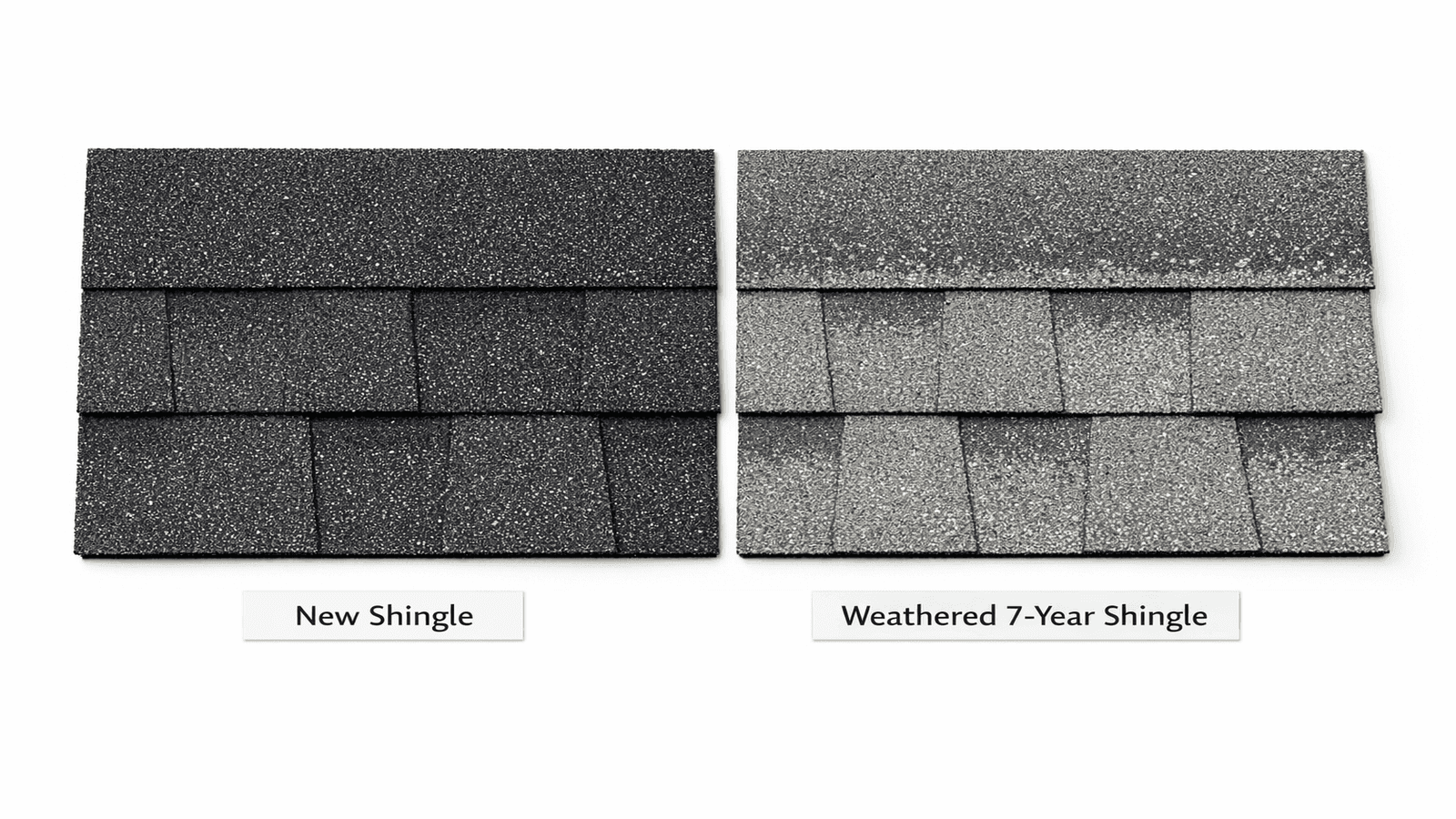
Shingle condition is the primary surface assessment: granule loss patterns (uniform vs. localized), cracking and brittleness, cupping and curling edges, blistering from heat or moisture, missing shingles, and impact marks from hail. Inspectors note whether granule loss is age-normal or storm-accelerated -- a distinction that determines insurance claim eligibility.
Flashing integrity at every penetration and transition point is the second critical assessment. Chimney flashings, valley flashings, pipe boot seals, skylight perimeter seals, and wall-to-roof intersections are the most common leak entry points on residential roofs. A visual inspection from the ground cannot evaluate these areas; a trained inspector accessing the surface can identify lifted, cracked, separated, or deteriorated flashing components directly.
Ridge and hip caps protect the roof's highest and most exposed transitions. Mortar condition on masonry ridges, sealant integrity on metal ridges, and cap shingle condition on asphalt roofs all warrant individual assessment. Failed ridge caps allow wind-driven rain and debris entry at the peak.
Gutters and drainage systems are evaluated for blockage, slope, gutter section attachment, and downspout extensions. Gutters that are pulling away from fascia boards, blocking at downspout transitions, or directing water toward the foundation create conditions that compromise the entire roof perimeter.
Ventilation is assessed at ridge vents, soffit vents, gable vents, and powered attic ventilators. Proper ventilation ratio (typically 1 sq ft of free ventilation per 150 sq ft of attic space, per NRCA guidelines) prevents heat and moisture buildup that degrades roofing material from below. Blocked soffit vents -- often the result of improper insulation installation -- create conditions that cut shingle lifespan significantly.
Attic inspection rounds out a full structural evaluation. Inspectors look for moisture staining on rafters and decking (indicating past or current water infiltration), daylight visible through decking gaps, insulation condition, and structural element integrity including rafter and truss connections. Sagging or deflected areas visible from the attic identify decking that is failing or has failed.
Half of what I find in a roof inspection is discovered from the attic. Staining patterns on rafters tell me where water entered years before it showed up on the ceiling below. I've found evidence of decade-old leaks that the current owner didn't know existed, conditions that were actively rotting the structure without any visible interior symptoms. If your inspector doesn't access the attic, they're giving you half an inspection.
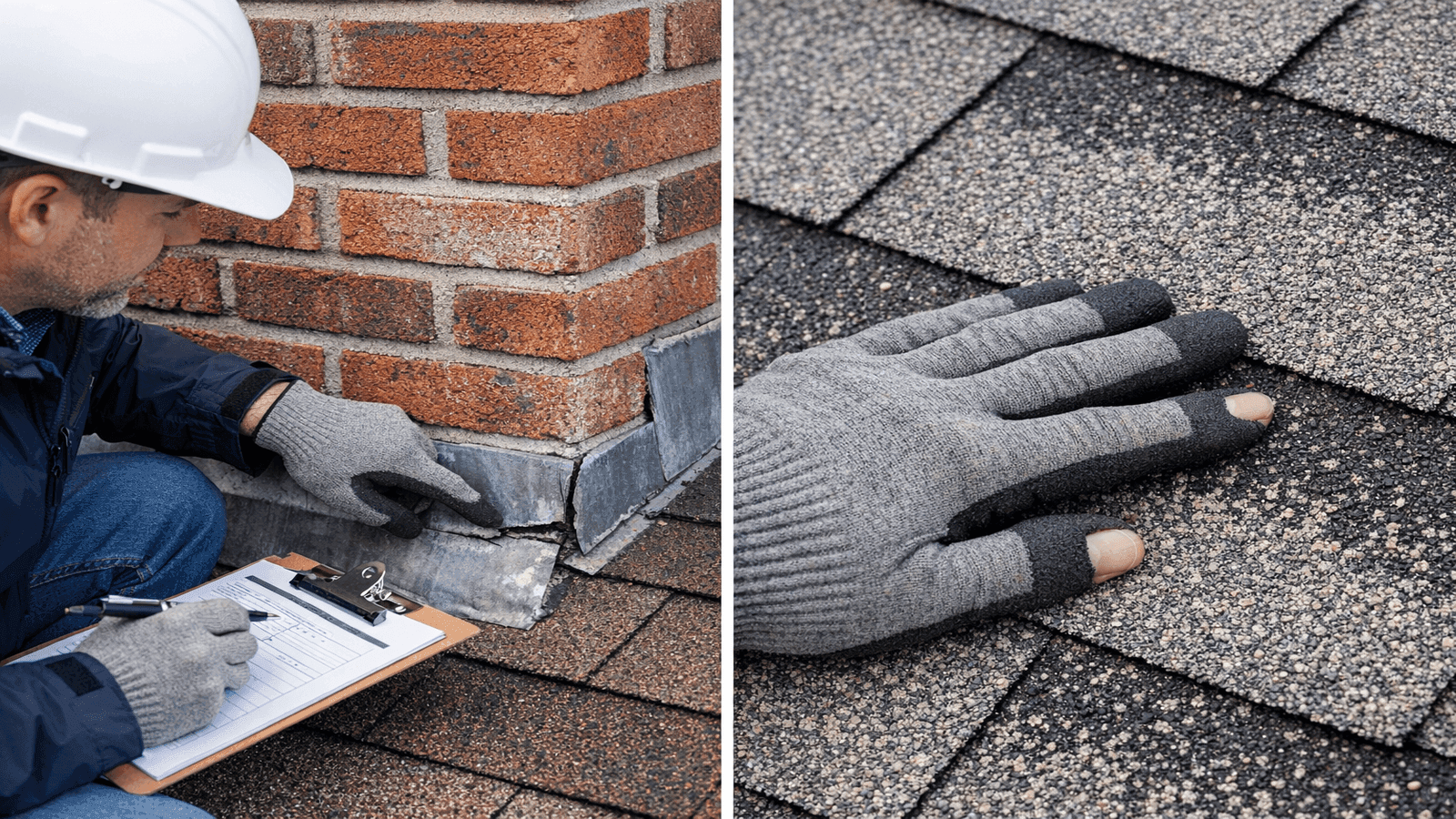
Photo: Inspector documenting flashing condition at chimney base on left, and examining granule loss pattern across shingle field on right
Drone Roof Inspections: When and Why
Drone inspection has moved from a specialty service to a mainstream option for residential roof evaluation. As of 2026, EagleView -- the largest drone inspection provider -- offers fully automated drone inspections with AI-powered damage detection that produces condition reports used by insurance carriers, contractors, and home inspectors [2].
How drone inspection works: A licensed drone operator or autonomous drone system flies a pre-programmed path over the roof, capturing overlapping high-resolution images from multiple altitudes and angles. The resulting image set is processed to produce a complete photographic record of the roof surface. Advanced systems add thermal imaging to detect moisture anomalies invisible in optical images alone.
Cost: Drone inspections run $150-$300 for most residential homes, including a digital photo report. EagleView's detailed measurement and condition report runs approximately $100-$150 per property and is accepted directly by many major insurance companies as damage documentation.
Best applications for drone inspection:
- Tile roofs (Spanish tile, concrete tile, slate) where foot traffic cracks individual tiles and creates new damage
- Steep pitch roofs above 9:12 where walking creates both safety risk and potential shingle damage
- Insurance documentation purposes where comprehensive photo coverage is the deliverable
- Multi-family buildings and commercial structures where scale makes physical access impractical
- Initial assessment after storms to determine whether a full physical inspection is warranted
Limitations to understand: Drone inspection cannot assess underlying deck integrity, cannot test sealant condition at penetrations, cannot access attic space, and cannot evaluate structural elements. Image resolution and angle limitations can also miss hairline cracks or small lifted edges. For most roofing decisions, a drone inspection should supplement a physical inspection rather than replace it.
Get quotes from top-rated pros.
Free Contractor Inspections: What to Know
Most roofing contractors offer free inspections as a standard lead-generation tool, and there is real value in this service -- within specific limits.
What a free contractor inspection delivers: A qualified assessment of visible damage and deterioration, a repair or replacement estimate based on that assessment, and documentation that can initiate an insurance claim conversation. For homeowners who are already planning repairs and want multiple quotes, three free contractor inspections cover the same ground as a paid inspection at no cost.
What a free contractor inspection cannot provide: An unbiased opinion. A contractor performing a free inspection has a financial interest in finding work. That does not mean the contractor will misrepresent findings -- most do not -- but it does mean the report cannot serve as neutral third-party documentation in an insurance dispute, real estate transaction, or legal matter.
When to use a free contractor inspection:
- You are already planning repairs and want to scope the project and collect quotes
- You want a quick assessment following a storm before deciding whether to file an insurance claim
- You need an immediate response and a certified inspector is not available within your timeframe
When to hire an independent certified inspector:
- You are buying or selling a home and need documented, unbiased condition assessment
- You are filing or disputing an insurance claim and need independent findings
- A contractor has recommended full roof replacement and you want an independent second opinion
- You are involved in a legal matter related to roof condition or workmanship
Red flag to watch for: Any contractor who offers to "waive the inspection fee if you book the repairs" is not providing an independent inspection. That arrangement creates an explicit financial link between the finding and the service being sold -- exactly the conflict of interest that makes contractor inspections unsuitable for insurance or legal purposes.
Real-World Case Study: Kevin B., Nashville, Tennessee
Kevin listed his home for sale in August 2025. During the buyer's inspection, the general home inspector's report included the notation "roof appears to be approaching end of serviceable life -- recommend evaluation by licensed roofing contractor." That single line cost Kevin leverage: the buyers submitted an offer contingent on a $6,000 seller credit for anticipated roof work.
Kevin hired an independent certified inspector before responding to the offer. The inspection cost $295. The findings: 4 missing shingles on the north slope, 2 pipe boot seals showing cracking and separation, and one blocked ridge vent section. The inspector documented every finding with photographs and provided a repair cost estimate of $850 for all identified issues.
Kevin's real estate attorney submitted the inspection report alongside a revised counteroffer. The documented repair list -- with photographic evidence and a specific remediation cost -- replaced the buyer's vague "approaching end of life" assessment. The deal closed with Kevin completing the $850 repair rather than providing a $6,000 credit.
The certified inspection returned over 700% of its cost in a single real estate transaction. As James Carver explains: "A report that shows 4 missing shingles and 2 pipe boots is a repair problem. A report that says 'roof is near end of life' is a negotiating lever. Documentation converts the second into the first."
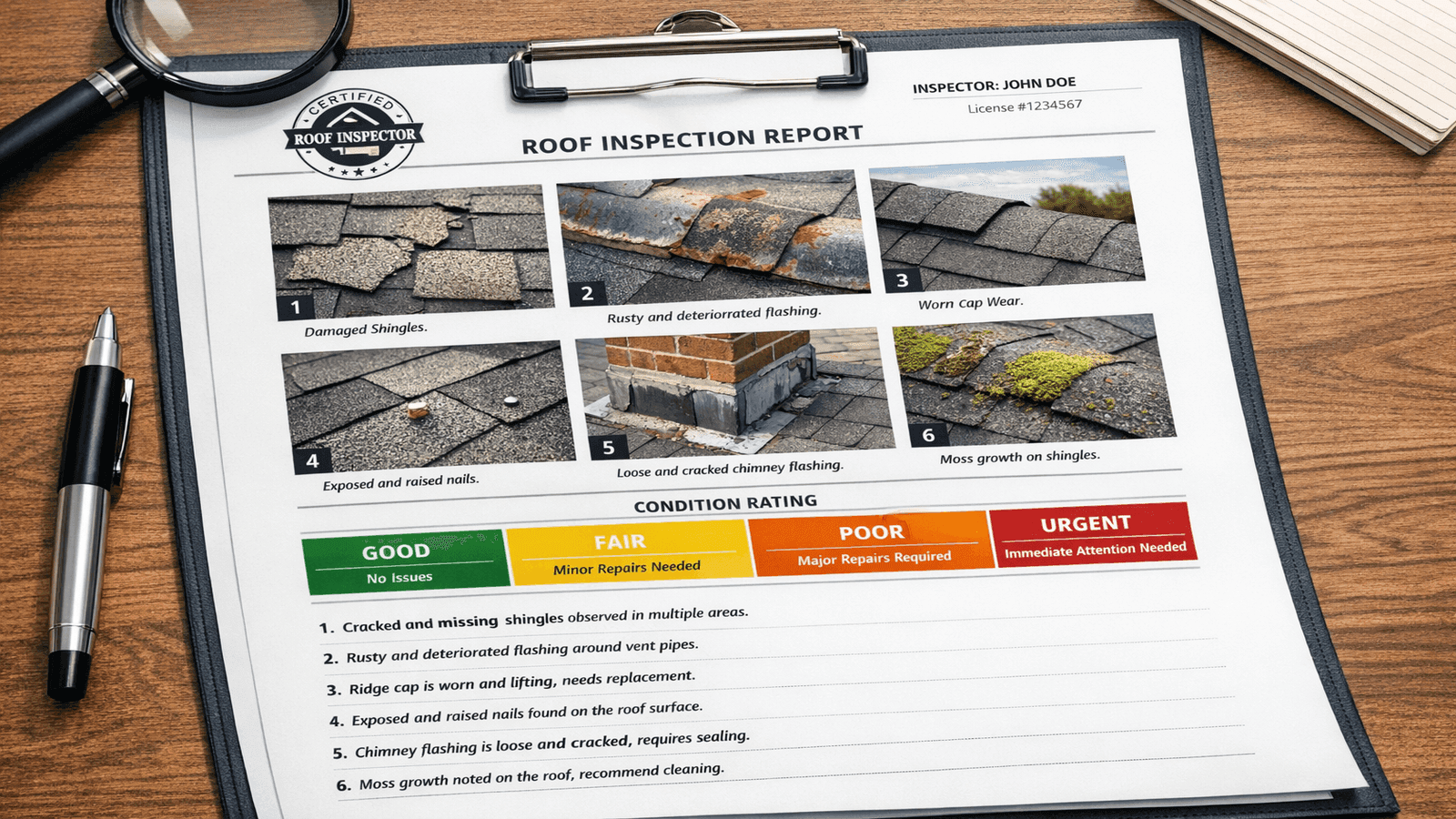
Photo: Sample roof inspection report page showing photo documentation grid, condition rating system, and annotated finding descriptions for a residential asphalt shingle roof
How to Choose a Roof Inspector
Choosing the right inspector for your situation requires matching the inspector's credentials to the purpose of the inspection.
Certifications that carry weight:
- InterNACHI (International Association of Certified Home Inspectors) certification indicates training in residential inspection methodology and adherence to a defined Standards of Practice. InterNACHI's Certified Roof Inspector designation specifically covers roofing systems and is recognized for insurance documentation [1].
- NRCA (National Roofing Contractors Association) membership and training programs indicate roofing-specific technical knowledge and ongoing education requirements.
- HAAG Engineering certification is the highest credential for storm damage assessment. HAAG-certified inspectors have documented expertise in differentiating storm damage from wear and manufacturing defects -- the specific analysis insurance adjusters and claim disputes require [2].
- RCI Inc. (Roof Consultants Institute) credentials indicate commercial-level roofing expertise, most relevant for flat roofs, commercial buildings, and complex residential systems.
Questions to ask before booking:
- Does the report include photographs of specific findings, or only a general condition summary?
- Can you physically access and walk the roof surface, or is this a ground-level assessment only?
- Do you carry Errors and Omissions (E&O) insurance that covers the findings in your report?
- Do you have any business relationship with roofing contractors to whom you refer work?
That last question is the most important. Some "independent" inspectors maintain referral arrangements with specific contractors. An inspector who refers to a contractor they have a financial relationship with is not functionally independent, regardless of their credentials.
How to find certified inspectors: The InterNACHI directory at internachi.org and the HAAG directory at haag.com both allow geographic search for credentialed professionals. For insurance claim purposes, confirm that any inspector you hire is recognized by your specific insurer before scheduling.
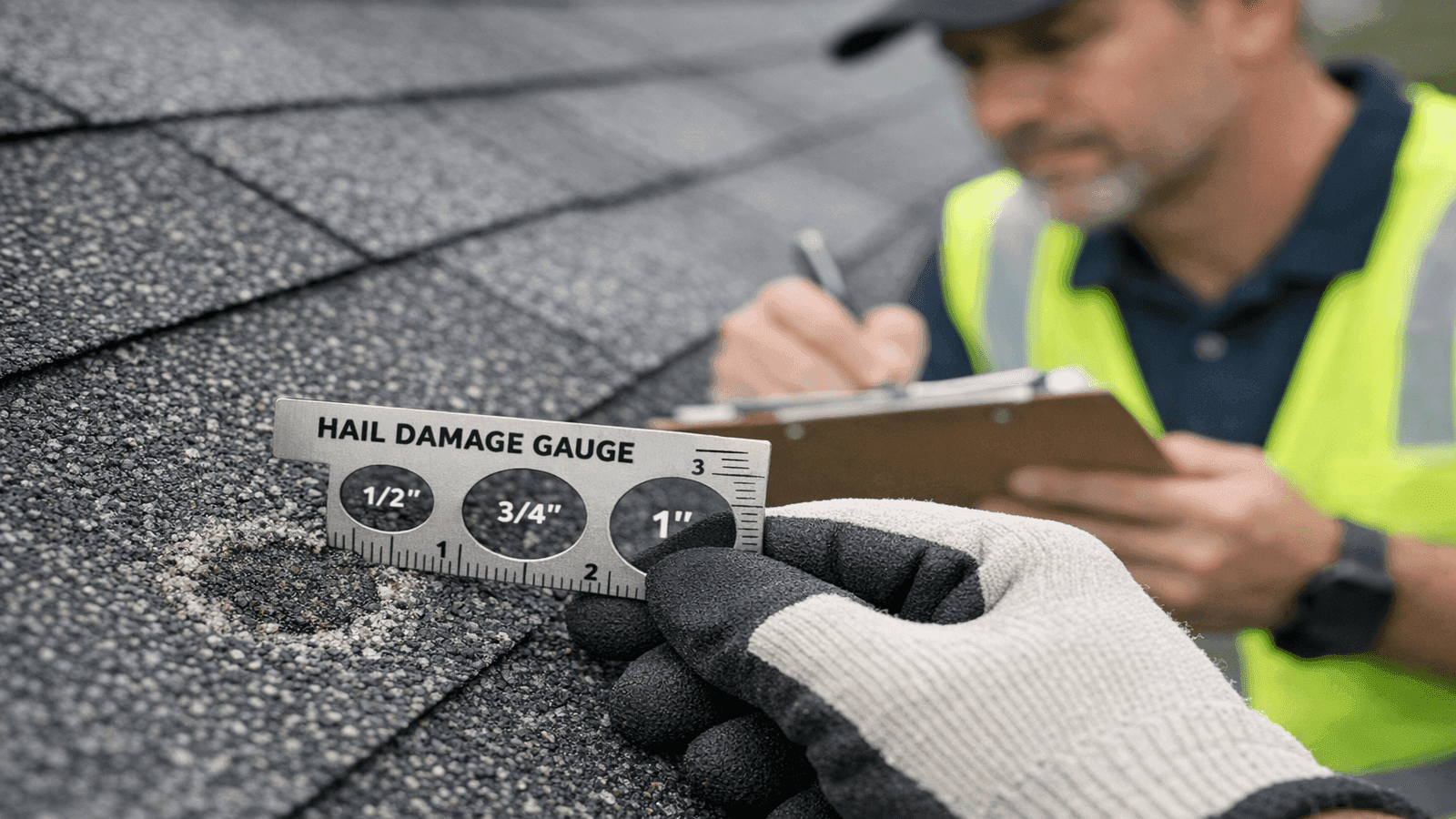
Photo: Close-up of roofing inspector's gloved hand examining hail impact marks on asphalt shingles with measuring tool, storm damage assessment in progress
Conclusion
A professional roof inspection costs $150-$600 for most residential applications in 2026 -- with HAAG forensic assessments running up to $1,200 when insurance claims are at stake. That cost range represents exceptional return on investment given what a thorough inspection can reveal and document.
The most important variable is not price: it is the independence and credentials of the inspector relative to the purpose of the inspection. A free contractor inspection covers maintenance planning and repair quoting. A certified independent inspection covers everything where an unbiased written report matters -- insurance claims, real estate transactions, second opinions on replacement recommendations, and legal documentation.
James Carver has performed 800-plus roof inspections over 20 years across the U.S. South and Midwest. His consistent finding: homeowners who invest in regular independent inspections spend less on emergency repairs, collect more from insurance claims, and negotiate better in real estate transactions than those who rely on periodic free contractor assessments. A $250 inspection every two to three years is among the least expensive forms of home maintenance protection available.
Use NearbyHunt to connect with certified roof inspectors in your area who carry the credentials appropriate to your specific situation.
Disclaimer: The cost figures in this article represent national averages and ranges compiled from contractor and inspector data as of early 2026. Actual costs vary by region, home size, roof complexity, and inspector credentials. Always obtain at least two quotes and verify inspector certifications before scheduling.*
Sources & References
[1] InterNACHI
[2] HAAG Engineering
[3] Bob Vila
[4] Fixr.com
[5] NRCA (National Roofing Contractors Association)

James is a licensed roofing contractor with 20 years of experience in roof installation, inspection, and repair across the U.S. South and Midwest. He specialises in asphalt shingles, metal roofing, and storm damage restoration. On NearbyHunt, James offers practical advice on roof maintenance, insurance claims, and selecting the right materials for long-lasting protection.

Jacob is a licensed roofing contractor with over 18 years of experience in roof inspection, installation, and restoration. Based in Texas, he has led hundreds of successful roofing projects across residential and commercial properties. Jacob is also a certified storm damage specialist, ensuring that all NearbyHunt roofing content meets industry best practices and safety standards.