- Metal roofing costs $10,000-$30,000 installed for a 2,000 sq ft home, which is 2-3x the upfront cost of asphalt shingles but often lower in total lifetime cost per year.
- Standing seam metal lasts 40-70 years versus 20-30 years for asphalt shingles, making it the superior long-term investment for homeowners who plan to stay in place.
- Corrugated and ribbed steel panels cost $7,000-$15,000 installed and represent the most affordable metal option with a 30-40 year lifespan.
- Metal roofs can reduce cooling costs 10-25% in hot climates due to their highly reflective surface coatings, according to the Metal Roofing Alliance [1].
- Over 1,800-plus residential roofing projects across the U.S. South and Midwest, James Carver has seen metal roofing become the fastest-growing material category in the residential market, particularly in storm-prone coastal states.
Metal roofing is no longer a niche choice for commercial buildings or rural barns. In 2026, it accounts for roughly 17% of the U.S. residential roofing market and is growing at a faster rate than any other material category. Homeowners are drawn by a combination of longer lifespan, lower maintenance burden, and energy savings that asphalt simply cannot match over a 30-50 year horizon.
The upfront sticker price is real, and it often gives homeowners pause. A standing seam metal roof for a 2,000 sq ft home can cost $18,000-$28,000 installed, compared to $9,500-$15,000 for architectural asphalt shingles. But that comparison looks very different when you account for the fact that you will likely replace asphalt once or twice over the same period. For a full breakdown of roofing costs across all material types, see our complete guide to roofing costs.
This guide covers current 2026 pricing by metal type, the cost factors that matter most, a real-world case study from a homeowner in Jackson, Mississippi, and the questions to ask before hiring a metal roofing contractor.

Get quotes from top-rated pros.
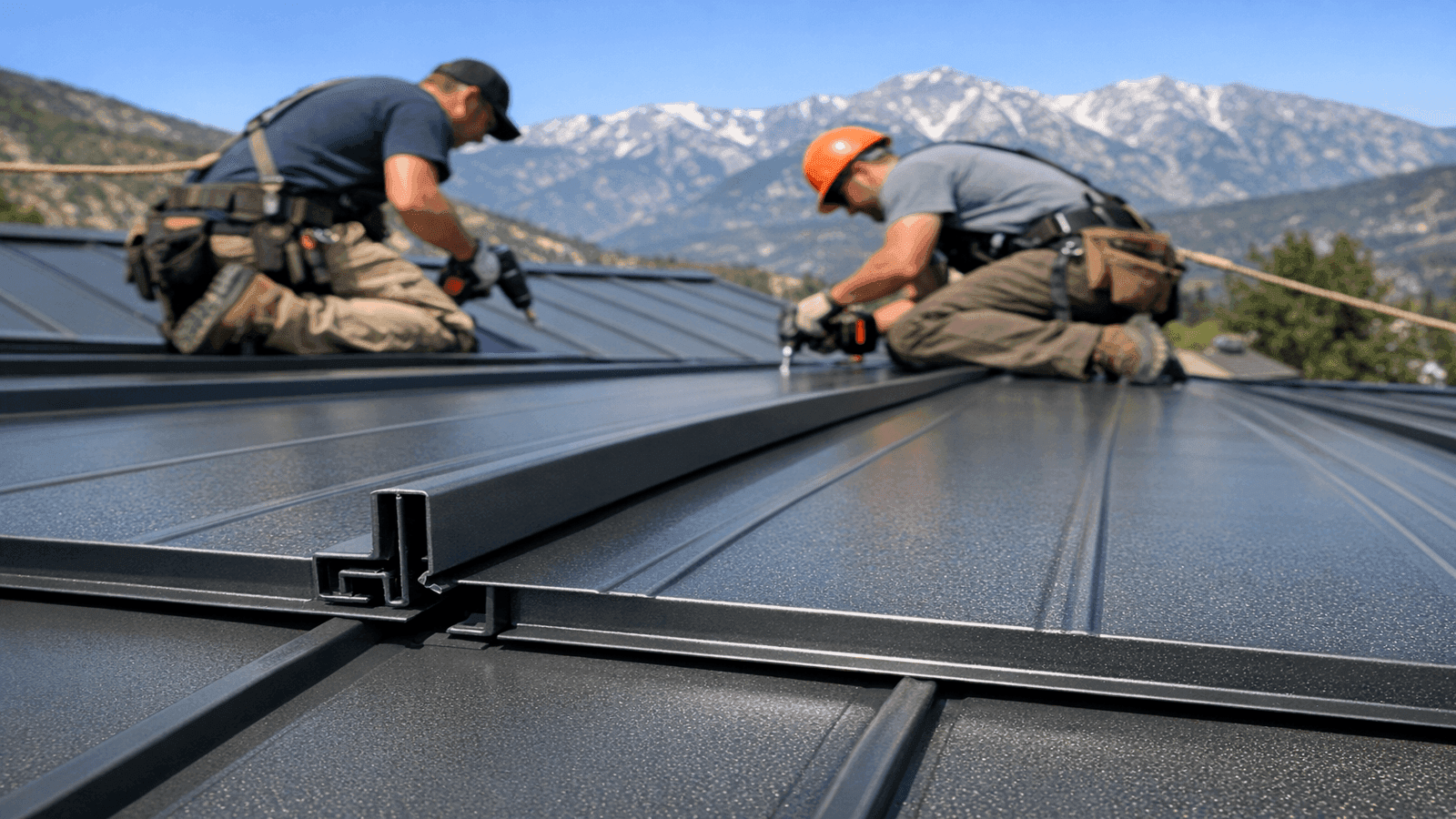
Photo: Two roofers installing standing seam steel panels on a residential roof with snap-lock seam detail in the foreground
Metal Roofing Types and Costs
Not all metal roofing is the same. The term covers five distinct product categories that differ substantially in material, installation method, performance, and price. Matching the right product to your home, climate, and budget is the first decision that will shape every cost downstream.
Standing Seam Metal Roofing
Standing seam is the premium standard for residential metal roofing. Panels run vertically from ridge to eave and connect at concealed seams that clip together, hiding all fasteners. Because no exposed screws penetrate the metal surface, standing seam eliminates the most common failure point of other metal roof systems: fastener holes that loosen over time and allow water intrusion.
Installed cost: $12-$18 per square foot, or $12,000-$36,000 for a typical 2,000 sq ft home depending on panel width, gauge, paint system, and roof complexity. The most common residential installation (24-gauge Galvalume steel, Kynar 500 paint system, standard pitch) lands in the $15,000-$22,000 range [2].
Corrugated and Ribbed Metal Panels
Corrugated and exposed-fastener ribbed panels are the most affordable metal roofing option. Fasteners are visible on the surface, which requires periodic inspection and re-sealing. These systems work well on lower-pitch roofs and outbuildings, and are increasingly popular for Craftsman and modern farmhouse aesthetics.
Installed cost: $7-$12 per square foot, or $7,000-$15,000 for a 2,000 sq ft home.
Stone-Coated Metal Shingles
Stone-coated steel shingles replicate the appearance of asphalt, wood shake, or tile while offering the durability of steel. They are installed with exposed fasteners but the stone coating adds UV resistance and substantially reduces sound transfer. Lifespan: 40-70 years with a Class IV impact rating.
Installed cost: $9-$14 per square foot, or $9,000-$20,000 for a 2,000 sq ft home [3].
Aluminum Roofing
Aluminum is lighter than steel (approximately 50% by weight) and will not rust in coastal or high-humidity environments. This makes it the preferred choice within 5 miles of saltwater. It is softer than steel, however, meaning it dents more easily under hail impact.
Installed cost: $9-$14 per square foot. On par with stone-coated steel but with a coastal-climate advantage.
Zinc Roofing
Zinc is the premium end of the metal roofing market. It develops a natural patina over time that becomes self-healing: minor scratches and oxidation are absorbed back into the surface over years. Zinc systems can last 80-100 years with essentially no maintenance.
Installed cost: $18-$28 per square foot, or $18,000-$40,000 for a standard home [4].
| Metal Type | Material Cost (per sq ft) | Installed Total Range | Lifespan |
| Corrugated/Ribbed Steel | $3-$6 | $7,000-$15,000 | 30-45 years |
| Stone-Coated Steel | $4-$8 | $9,000-$20,000 | 40-70 years |
| Aluminum | $4-$8 | $9,000-$20,000 | 40-50 years |
| Standing Seam (steel/aluminum) | $6-$12 | $12,000-$36,000 | 40-70 years |
| Zinc | $10-$18 | $18,000-$40,000 | 80-100 years |
What Drives Metal Roof Cost
The line-item total on your metal roofing quote is the result of six compounding variables. Understanding each one lets you compare bids accurately and identify where a contractor is cutting corners.
Get quotes from top-rated pros.
Panel System: Standing Seam vs. Exposed Fastener
The single biggest cost variable is the panel system. Standing seam costs $3-$6 more per square foot installed compared to exposed-fastener systems because it requires more material, more precise cutting, and specialized clip installation. For most residential applications where water-tightness and longevity are the priority, standing seam is worth the premium. Exposed-fastener systems are appropriate for lower budgets, lower pitches, and outbuildings.
Metal Gauge
Gauge measures the thickness of the metal panel, and in roofing, a lower gauge number means a thicker (and more expensive) panel. Residential standing seam is most commonly available in 24-gauge and 26-gauge steel.
- 24-gauge: Thicker, more rigid, better dent resistance, longer warranty support from manufacturers. Adds $1-$2 per square foot over 26-gauge.
- 26-gauge: Adequate for most residential applications in regions without significant hail exposure. The more commonly quoted gauge in budget bids.
For homes in Midwest hail corridors or Gulf Coast hurricane zones, specifying 24-gauge is the right decision.
Roof Pitch and Complexity
Steep roofs (above 8:12 pitch) require additional safety equipment, slower installation pace, and more material due to the increased surface area. Expect a 15-25% labor premium over standard-pitch installations. Every valley, dormer, chimney, skylight, and vent penetration adds flashing labor. A complex hip roof with four dormers can add $2,000-$5,000 over a simple gable roof of the same square footage.
Underlayment
Metal roofing requires a specific underlayment designed for the thermal expansion and contraction metal undergoes through seasons. Standard felt paper tears at fastener points over time with metal. Proper underlayments include:
- Synthetic underlayment (minimum, all systems): adds $0.15-$0.30 per sq ft
- Self-adhering ice and water shield (required at eaves, valleys): adds $0.40-$0.80 per sq ft
- Acoustic underlayment (for standing seam on living spaces): adds $0.50-$1.20 per sq ft and significantly reduces rain noise
The two things that separate a $10 standing seam job from a $7 one are gauge and underlayment. When I review low bids for homeowners, I almost always find they're quoting 26-gauge on a thin synthetic base. That combination saves $2,000-$3,000 upfront but costs the homeowner a decade of service life and more noise in heavy rain. The Kynar paint system matters too -- cheap paint fades in 10 years and the panel manufacturer won't honor the warranty.
Paint System and Finish
Residential metal panels come with either PVDF (Kynar 500) or polyester paint systems. Kynar 500 is the industry standard for fade and chalk resistance, carrying 30-40 year paint warranties. Polyester systems cost less but fade within 10-15 years. Always ask which paint system is being quoted, and verify the warranty covers chalking and fading, not just perforation.
Metal Roof vs. Asphalt Shingles: 50-Year Cost Comparison
The most common objection to metal roofing is the upfront cost. The correct way to evaluate that objection is to compare total cost of ownership over the life of the home, not the invoice on day one.
For a 2,000 sq ft home, here is a conservative 50-year comparison for standing seam metal versus architectural asphalt shingles [2][5]:
Asphalt shingles (25-year lifespan):
- Initial installation: $11,000
- Replacement at year 25: $13,500 (2026 pricing, accounting for modest inflation)
- Maintenance (repairs, resealing, gutter replacement): $3,500 over 50 years
- Increased cooling costs vs. reflective metal (10-25% difference): $4,000-$12,000 over 50 years
- 50-year total: $32,000-$40,000
Standing seam metal (50+ year lifespan):
- Initial installation: $18,000
- No full replacement needed over 50 years
- Maintenance (fastener inspection, sealant touch-ups): $1,000 over 50 years
- Energy savings from cool-roof reflectance: $4,000-$12,000 over 50 years
- 50-year total: $7,000-$15,000 net cost after energy savings
The net difference is $17,000-$25,000 in favor of metal over 50 years for a homeowner who stays in the home. Even if the homeowner sells after 20 years, metal roofing adds 1-6% to home resale value according to Fixr.com's analysis of agent surveys, partially recouping the installation premium at sale [3].
| Category | Asphalt (50-Year) | Standing Seam Metal (50-Year) | Difference |
| Initial Install | $11,000 | $18,000 | +$7,000 metal |
| Replacement Costs | $13,500 | $0 | +$13,500 metal advantage |
| Maintenance | $3,500 | $1,000 | +$2,500 metal advantage |
| Energy Savings (net) | $0 | $4,000-$12,000 | +$4,000-$12,000 metal advantage |
| Net 50-Year Total | $32,000-$40,000 | $7,000-$15,000 | $17,000-$25,000 saved |
Sources: [2][5]
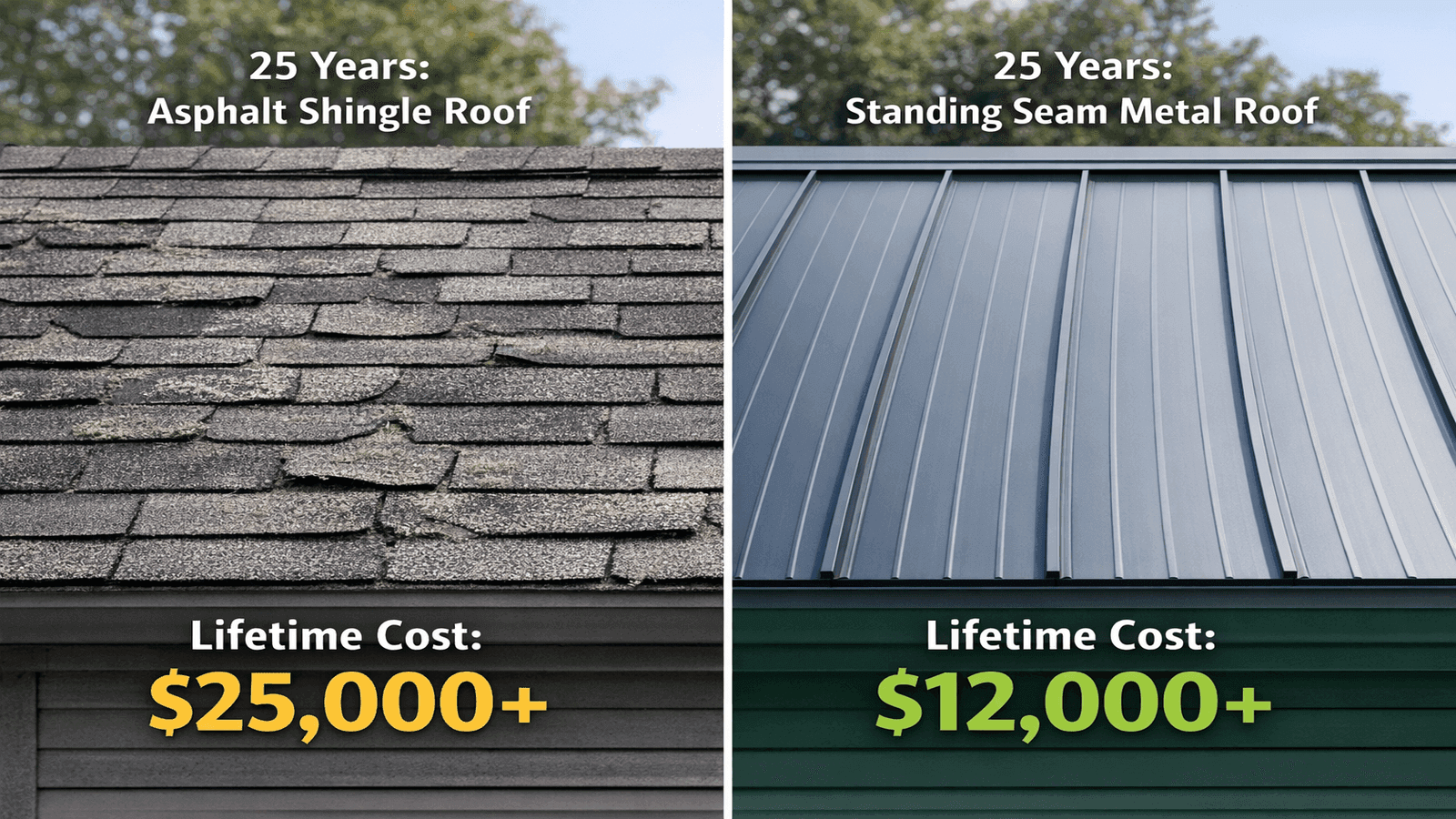
Photo: Side-by-side comparison infographic showing asphalt shingle roof at year 25 requiring replacement versus standing seam metal roof at year 25 in good condition with 50-year cost totals overlaid
Metal Roofing Labor Costs
Labor is where metal roofing separates itself most clearly from standard asphalt installation. The skill set required for standing seam metal is significantly higher, the tool investment is greater, and the crew size requirements are similar, making labor the largest line item in most metal roofing quotes.
Get quotes from top-rated pros.
Labor Rate by System
- Exposed-fastener corrugated/ribbed: $2.50-$4.00 per sq ft labor
- Stone-coated metal shingles: $3.00-$5.00 per sq ft labor
- Standing seam: $4.00-$7.00 per sq ft labor
By comparison, architectural asphalt shingle labor runs $2.00-$4.00 per sq ft. The 30-50% premium for metal reflects the additional training, slower pace on standing seam clip installation, and the precision cutting required around penetrations [2][3].
Installation Time
A two-person crew can typically complete a standing seam installation on a 2,000 sq ft home in 3-5 days, compared to 1-2 days for asphalt. Exposed-fastener metal systems install faster, closer to 2-3 days. Longer installation timelines increase the homeowner's exposure to weather delays, particularly in spring and fall in the Midwest.
Regional Availability
This is a cost factor that does not appear on quotes but significantly affects them: not every roofing market has an adequate supply of certified metal roofing installers. In markets where standing seam contractors are scarce, supply and demand pushes labor rates 20-35% above the national average. The Gulf Coast, upper Midwest, and Mountain West markets all show tighter supply than the national average.
The licensed roofers in the NearbyHunt network show that fewer than 40% of roofing contractors hold manufacturer certification for standing seam installation, meaning homeowners who need metal work must be more selective and should expect to wait longer for a qualified crew.
Real-World Case Study: Robert M., Jackson, Mississippi
Robert M. owns a 1,900 sq ft ranch-style home in Jackson, Mississippi, where he has lived for 18 years. His original three-tab asphalt shingle roof was installed when the house was built in 2003 and had reached the end of its service life. Following significant wind damage in a spring storm, Robert decided to use the insurance claim as an opportunity to upgrade to standing seam metal rather than replacing with asphalt again.
He received three bids:
- Bid A: $16,400 -- 26-gauge Galvalume steel, polyester paint, basic synthetic underlayment, 20-year workmanship warranty
- Bid B: $19,800 -- 24-gauge steel with Kynar 500 finish, ice-and-water shield at eaves and valleys, 5-year workmanship warranty
- Bid C: $23,200 -- 24-gauge steel with Kynar 500, acoustic underlayment system, snap-lock panels (no exposed fasteners on ridgeline), 10-year workmanship warranty, Metal Roofing Alliance certified installer
The $6,800 spread between the lowest and highest bid looked like an easy decision from a budget standpoint. But the differences behind the numbers were substantial. Bid A used a thinner gauge panel with a paint system that would require recoating within 12-15 years. Bid B offered better material but a shorter workmanship warranty than Bid A, a flag worth investigating. Bid C was the only certified MRA installer with acoustic underlayment and a fully concealed fastener system suited to a living space with bedrooms below the roofline.
Robert ultimately selected Bid C. The total cost after his insurance payout of $9,400 was $13,800 out of pocket. Given that Jackson averages 58 inches of rain annually and sits in an active tornado corridor, the 24-gauge panel with full concealed-fastener installation was the appropriate specification for his conditions.
His first-year cooling bill came in $340 lower than the prior year, consistent with the 12-18% reduction common for reflective metal roofing in the Deep South.
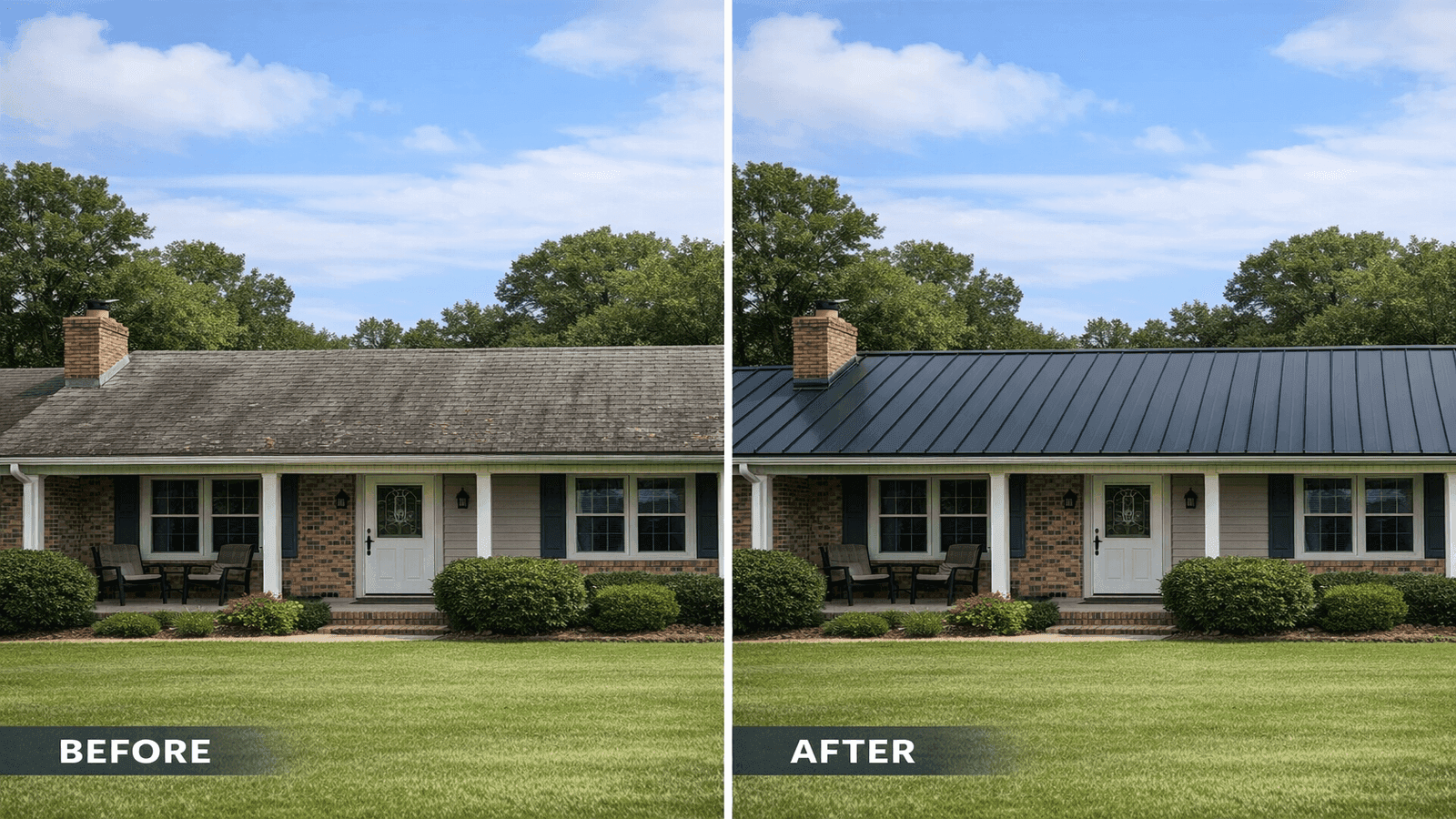
Photo: Before and after photos of a ranch-style Mississippi home showing worn three-tab asphalt shingles replaced with charcoal gray standing seam metal roofing
When Metal Roofing Makes Sense
Metal roofing is not the right choice for every homeowner or every project. There are specific conditions under which the investment pays off most clearly. For a broader view of which materials perform best by climate and budget, see our types of roofing materials guide.
Long Time Horizon (15+ Years in the Home)
The financial case for metal roofing requires time to materialize. If you are planning to sell within five to seven years, the upfront premium is unlikely to be fully recouped through energy savings, and the resale value bump (1-6%) may not close the gap. If you plan to stay 15 or more years, the lifetime cost math clearly favors metal.
High-Wind and Hurricane Zones
Metal roofing, particularly standing seam with concealed fasteners and clip systems designed for thermal movement, outperforms asphalt shingles significantly in high-wind events. Standing seam systems with proper clip density are rated to 110-160 mph wind uplift. Asphalt shingles at standard installation are rated to 60-130 mph depending on product. In the Gulf Coast market where James Carver does a significant portion of his work, metal is often the only long-term solution that survives successive hurricane seasons without major damage.
Fire-Prone Regions
Metal roofing carries a Class A fire rating, the highest available and identical to concrete tile and slate. In Western states where wildland-urban interface fires are an annual concern, metal roofing combined with proper ember-resistant venting significantly improves a structure's survival odds. Many insurance carriers offer premium discounts of 5-30% for Class A rated roofing in fire-prone counties.
Low-Slope and Snow-Load Roofs
Metal handles low-slope applications (as low as 1:12 for standing seam with proper sealant) better than asphalt, which requires a minimum 2:12 pitch. In northern climates, the smooth metal surface allows snow to shed cleanly, reducing ice dam formation and structural load. Snow guards are required to prevent dangerous avalanche-style shedding over entryways.
In the Gulf Coast markets I work in, I've started recommending 24-gauge standing seam to almost every homeowner who can reasonably afford it, regardless of age of the current roof. After a major hurricane, the asphalt roofs need full replacement. The standing seam roofs from the same storm need a panel check and some sealant. I've seen side-by-side houses where the metal roof homeowner filed a $1,200 claim and the asphalt neighbor filed a $16,000 claim. That's the real insurance premium savings over time.
Get quotes from top-rated pros.
Historic and Architectural Homes
Standing seam metal has been used on American homes since the 18th century and is appropriate on Federal, Greek Revival, Craftsman, and farmhouse styles. It is often required by historic preservation ordinances for period-correct restoration. Stone-coated steel provides a more traditional shingle appearance for homeowners who want the durability of metal without the modern industrial aesthetic.
Finding and Vetting Metal Roofing Contractors
Hiring the wrong contractor for a metal roofing project carries significantly higher risk than hiring the wrong contractor for asphalt installation. If you are unsure whether replacement is the right call at all, our roof inspection checklist can help you assess the current condition before committing to a full installation. Mistakes in standing seam clip spacing, panel seaming, or flashing detail create water intrusion problems that are expensive to diagnose and difficult to repair without removing panels.
Manufacturer Certification
Every major metal roofing panel manufacturer -- including Drexel Metals, McElroy Metal, Englert, and Metal Sales -- offers installer certification programs. Certified installers receive training on proper clip spacing, thermal expansion accommodation, and penetration flashing. Manufacturer warranties are frequently voided if installation is performed by uncertified contractors.
Ask every bidder: "Are you certified by the panel manufacturer you are proposing?" If they cannot name the manufacturer and certification level, that is a red flag.
Metal Roofing Alliance Certification
The Metal Roofing Alliance (MRA) maintains a directory of certified residential metal roofing contractors at metalroofing.com. MRA-certified contractors have demonstrated familiarity with multiple metal roofing systems and agreed to uphold industry installation standards. This is not a guarantee of quality, but it narrows the field considerably.
Reference Verification
Ask specifically for references from metal roofing projects, not general roofing projects. A contractor who has completed 200 asphalt jobs and two standing seam jobs should not be quoting your standing seam project at the same price as an experienced metal installer. Ask references about installation timeline, crew behavior, clean-up, and specifically whether any leaks or issues appeared in the first two rainy seasons.
Warranty Structure
A complete metal roofing warranty requires two documents:
- Manufacturer material warranty: Covers the panel, coating, and perforation -- typically 30-50 years depending on product tier. This is issued by the panel manufacturer, not the contractor.
- Contractor workmanship warranty: Covers the installation -- seams, flashing, penetrations, trim. Should be minimum 5 years; 10 years is industry best practice for standing seam.
A contractor who offers only one of these is leaving you exposed. Material failures at penetrations are often workmanship failures that panel manufacturers correctly exclude from their coverage.
The biggest red flag I see when homeowners show me bids is a standing seam quote without a named manufacturer. The contractor is telling you they haven't committed to a panel system yet, which means they're going to source the cheapest available option after you sign. Always get the manufacturer name, the panel profile name, the gauge, and the paint system in writing before you sign anything. Those four items tell you what you're actually buying.
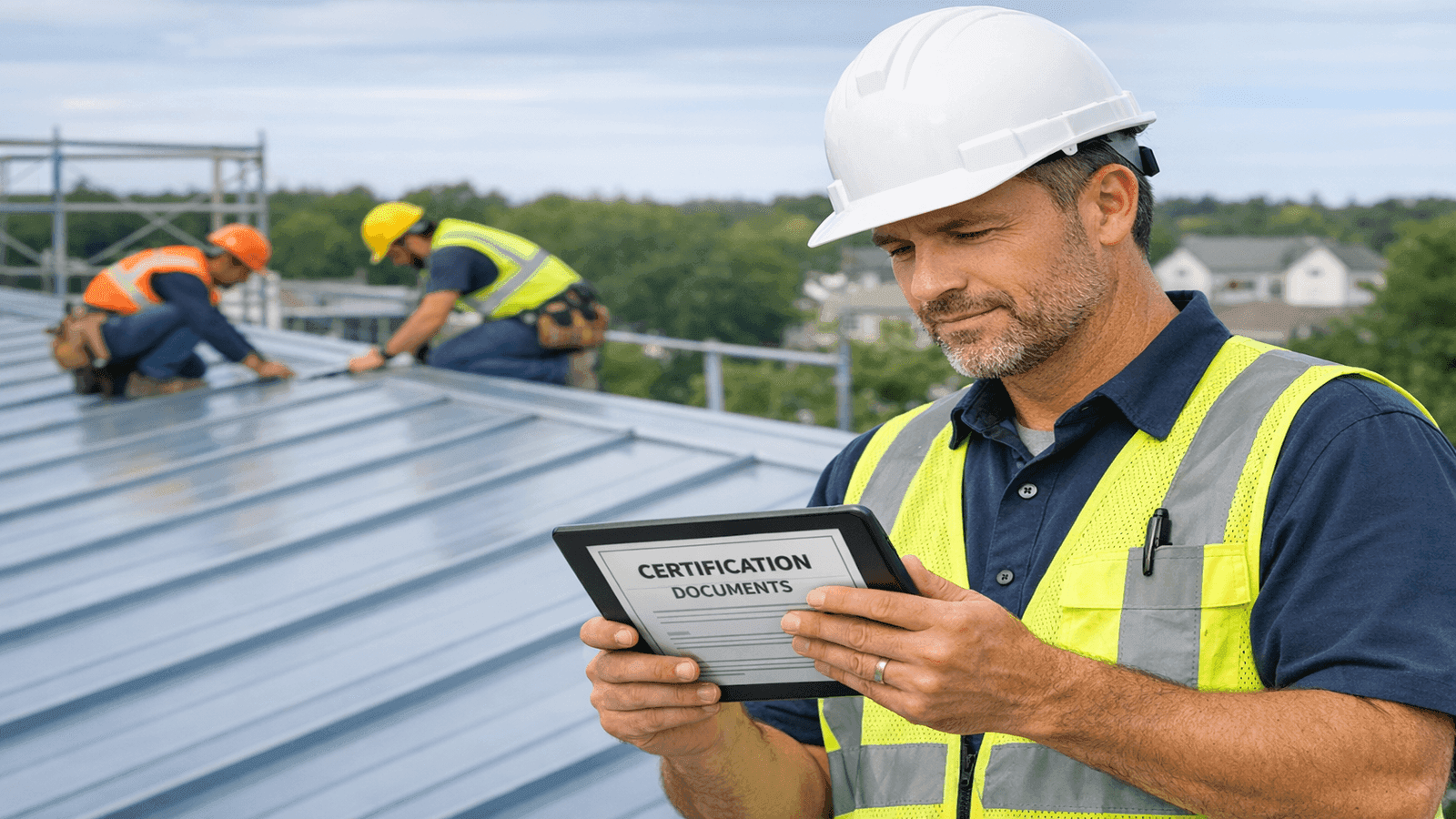
Photo: Metal roofing contractor reviewing manufacturer certification documents on a tablet at a job site with completed standing seam panels visible in the background
Conclusion
Metal roofing carries a real upfront premium over asphalt shingles, and that premium is justified for homeowners who plan to stay in their home for 15 or more years, live in high-wind or fire-prone regions, or want a roof that will not need replacing in their lifetime. Standing seam systems in 24-gauge steel with a Kynar 500 finish represent the best combination of durability, energy performance, and long-term value in the 2026 market.
The critical variables are gauge, paint system, underlayment specification, and installer certification. A low bid that cuts any of those four corners will cost more over 20 years than the higher bid that got them right the first time.
Whether you are researching metal roofing for the first time or reviewing bids from local contractors, start by finding installers who hold manufacturer certification and can provide metal-specific references. Use the NearbyHunt roofing contractor directory to compare licensed metal roofing contractors in your area and request itemized quotes that specify material, gauge, and warranty terms before making a decision.
Disclaimer: The cost ranges and data presented in this article represent typical national averages for 2026 based on the sources cited. Actual project costs vary based on geographic location, roof complexity, local labor rates, material availability, and site-specific conditions. This content is for informational purposes only and does not constitute a professional estimate or guarantee of final project cost. Always obtain multiple written bids from licensed, insured contractors before committing to any roofing project.
Sources & References
[1] Metal Roofing Alliance, Energy Savings Resource
[2] This Old House, "Metal Roofing Cost (2026): Prices, Factors, and Savings.
[3] Fixr.com, "How Much Does a Metal Roof Cost? (2026 Price Guide).
[4] Bob Vila, "How Much Does a Metal Roof Cost?
[5] This Old House, "Shingles vs. Metal Roof Cost (2026 Guide)


James is a licensed roofing contractor with 20 years of experience in roof installation, inspection, and repair across the U.S. South and Midwest. He specialises in asphalt shingles, metal roofing, and storm damage restoration. On NearbyHunt, James offers practical advice on roof maintenance, insurance claims, and selecting the right materials for long-lasting protection.

Jacob is a licensed roofing contractor with over 18 years of experience in roof inspection, installation, and restoration. Based in Texas, he has led hundreds of successful roofing projects across residential and commercial properties. Jacob is also a certified storm damage specialist, ensuring that all NearbyHunt roofing content meets industry best practices and safety standards.