- Clean gutters at least twice per year (spring and fall), and quarterly if you have heavy tree coverage overhead.
- Clogged gutters can cause $8,000 or more in foundation and fascia damage when left unaddressed [1].
- Professional gutter cleaning costs $119 to $234 on average for a single-story home, making routine maintenance far cheaper than repairs [2].
- Downspouts must discharge water at least 4 to 6 feet from the foundation to prevent soil saturation and structural damage [3].
- Gutter guards reduce cleaning frequency but do not eliminate the need for periodic inspection and debris removal.
- Fascia rot from water overflow can cost $500 to $4,000 to repair, a preventable expense with a consistent maintenance schedule [4].

Get quotes from top-rated pros.
Gutters are a critical but frequently overlooked part of your home's drainage system. When they work correctly, rainwater flows off your roof, through the gutters, and safely away from your foundation. When they fail, the consequences compound quickly: water saturates your fascia boards, seeps behind siding, pools against your foundation, and invites mold into your attic and walls. If you are looking for a broader picture of how gutters fit into overall roof health, start with the roofing maintenance guide on NearbyHunt, which covers the full system from shingles to drainage.
This guide covers a practical, season-by-season maintenance schedule, the most effective clog prevention strategies, signs that your gutters need professional attention, and the real costs of skipping routine care.

Photo: Homeowner on a ladder cleaning leaf debris from gutters in autumn
Why Gutters Fail and What It Costs
Most homeowners do not think about gutters until water appears somewhere it should not. By then, the damage is often already done. Understanding the failure chain helps explain why a $150 cleaning appointment is one of the highest-return maintenance investments you can make.
When gutters clog, standing water accumulates. That water has nowhere to go, so it backs up under your drip edge, rots the fascia boards behind the gutter, and eventually works its way into your roof deck. On the ground level, overflow spills against your foundation wall repeatedly. Over time, that saturation softens the soil, causes hydrostatic pressure against basement walls, and can crack or heave your foundation.
The numbers reflect this clearly. Water damage from overflowing gutters averages $8,000 in combined foundation and fascia repairs [1]. Fascia rot specifically runs $500 to $4,000 depending on how far the damage has spread [4]. Compare that to professional gutter cleaning, which runs $119 to $234 for most single-story homes and rarely exceeds $400 even for larger two-story properties [2].
| Damage Type | Typical Repair Cost | Preventable With |
| Fascia rot (partial section) | $500 – $1,500 | Annual gutter cleaning |
| Fascia rot (full run) | $1,500 – $4,000 | Annual gutter cleaning |
| Foundation water intrusion | $2,000 – $8,000+ | Proper downspout extensions |
| Soffit replacement | $600 – $2,500 | Gutter re-anchoring |
| Mold remediation (attic) | $1,500 – $5,000 | Gutter slope maintenance |
| Professional gutter cleaning | $119 – $400 | Scheduled maintenance |
In my 20-plus years of roofing work across more than 2,800 residential and commercial projects in the U.S. South and Midwest, gutters are the single most neglected maintenance item I see. A homeowner will invest $15,000 in a new roof and then skip gutter cleaning for three years. That decision costs them fascia replacement, soffit repairs, and sometimes a rotten roof deck at the eaves.
Sandra K. in Memphis, Tennessee, learned this the hard way. She noticed her gutters were pulling away from the roofline on one side of the house but assumed it was just cosmetic. Six months later, water had soaked the fascia behind that section and worked its way into the corner of her garage. The total repair bill for fascia replacement, soffit work, and interior drywall was $3,800. A gutter cleaning and re-anchoring appointment the prior spring would have cost her $165.
The licensed roofing contractors in our NearbyHunt network report that roughly 68 percent of fascia rot cases they diagnose are directly traceable to gutters that have not been cleaned or re-sloped within the past two years. That figure holds across climate zones, roof styles, and home ages.
The Year-Round Maintenance Schedule
A structured maintenance schedule removes guesswork and ensures your gutters are ready for every season's demands. The baseline recommendation from roofing professionals is two cleanings per year: one in late spring after trees finish dropping seeds and pollen, and one in late fall after the bulk of leaves have dropped [3]. Homeowners with significant tree coverage, particularly oak, maple, or pine, should plan for quarterly cleaning.
Spring Cleaning (April to May)
Spring cleaning addresses the debris load that accumulated through winter. Ice and wind push leaves, twigs, and organic material deep into gutters and pack them against downspout openings. During spring cleaning, focus on:
- Removing all packed debris by hand or with a gutter scoop before flushing
- Flushing gutters from the far end toward the downspout with a garden hose to confirm slope and flow
- Checking downspout outlets at ground level to confirm water exits freely
- Inspecting gutter hangers and spike connections for movement caused by ice weight
- Looking for rust stains, paint peeling on fascia, or green algae streaks on siding below the gutter line, all of which indicate past overflow
Spring is also the right time to check gutter slope. Gutters must maintain a pitch of roughly one-quarter inch of drop for every 10 feet of run toward the downspout. If water pools in sections rather than flowing cleanly, the hangers need adjusting.
Summer Inspection (June to August)
Summer does not require a full cleaning for most homes, but a visual inspection after major storms is worthwhile. Heavy summer thunderstorms can drop large branches into gutters, dislodge end caps, and push downspout extensions out of position. Walk the perimeter of your home after any storm that drops more than an inch of rain and look for:
- Overflowing at any point along the gutter run during rain
- Gutters that appear to have shifted or are pulling away from the fascia
- Downspout extensions that have been displaced
- Standing water visible inside gutters from the ground
For homes in the Southeast and Gulf Coast states where afternoon thunderstorms are a near-daily occurrence from June through September, a mid-summer flush is a reasonable addition to the schedule.
Get quotes from top-rated pros.
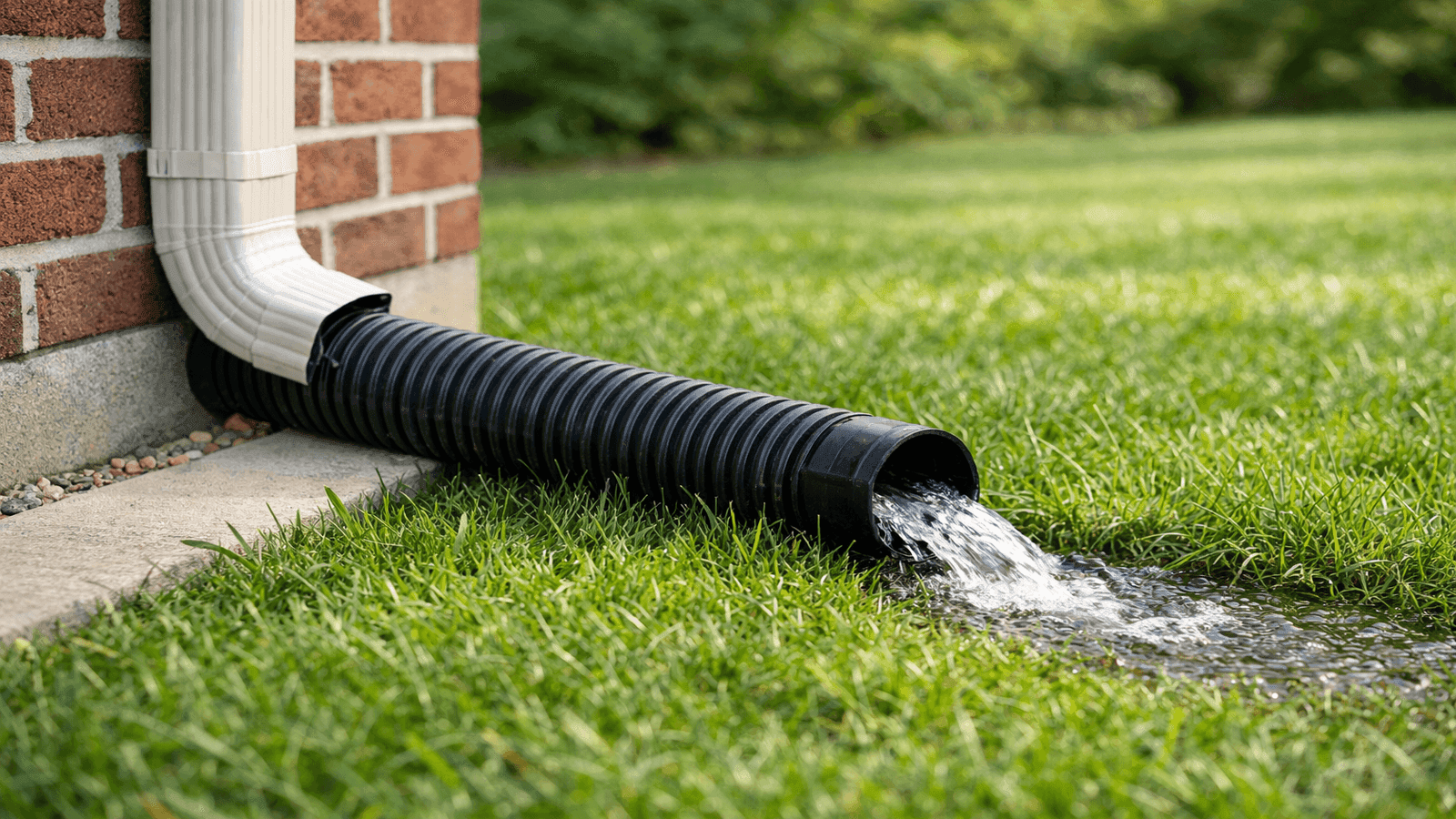
Photo: Downspout extension directing water away from a home's foundation on a green lawn
Fall Cleaning (October to November)
Fall cleaning is the most important cleaning of the year for most homes. Leaves are the primary culprit, but seed pods, pine needles, and small twigs accumulate rapidly during October and November. The goal is to complete fall cleaning after the bulk of leaves have fallen but before the first hard freeze.
Timing matters. If you clean too early, leaves continue falling and clog the gutters again before winter. If you wait too long, wet leaves freeze solid inside the gutters and are difficult to remove without damaging the gutter material. Target late October in northern climates and mid-November in the South.
During fall cleaning, also check:
- Gutter guard screens or inserts for debris accumulation on top of or inside the guard
- Downspout strainers for leaf buildup that restricts water entry
- All gutter seams and end caps for gaps that could allow water behind the fascia
- The roof surface immediately above the gutter for shingle granule accumulation, which indicates shingle aging
Fall cleaning is the one I push hardest with every client. If their gutters go into winter clogged, I am almost certain I will be back in spring fixing fascia or dealing with ice dam damage at the eaves. One cleaning in October prevents three service calls in March.
Winter Monitoring (December to February)
Winter maintenance is primarily monitoring rather than cleaning, unless you live in a climate where temperatures remain above freezing. In cold climates, watch for:
- Ice dams forming at the roof edge above the gutter, which indicate inadequate attic insulation or ventilation rather than a gutter problem alone. See the ice dam prevention guide for full remediation steps.
- Gutters sagging or pulling away from fascia under the weight of ice
- Icicles forming from the gutter face, which are normal in cold climates but indicate standing water inside
Do not attempt to remove ice from gutters by chipping or prying. The risk of gutter damage and personal injury is high. Use calcium chloride ice melt in a tube sock laid horizontally across the ice dam instead.
Gutter Clog Prevention
Consistent cleaning is the most reliable prevention strategy. However, several additional measures reduce how quickly gutters clog between cleanings.
Gutter Guards
Gutter guards are covers or inserts placed over the gutter opening to block debris while allowing water to pass through. They range from basic foam inserts at $1 to $2 per linear foot to micro-mesh stainless steel systems at $15 to $30 per linear foot installed.
No gutter guard eliminates maintenance entirely. That said, micro-mesh guards perform best at blocking pine needles and small debris, but they still accumulate shingle granules, roof algae, and fine organic material on the mesh surface over time. Plan on at least one inspection per year even with a high-quality guard installed.
Foam inserts are the least effective option. Debris settles into the foam, retains moisture, and becomes an ideal environment for moss and plant growth inside the gutter channel. Most roofing contractors advise against foam inserts.
I have seen micro-mesh guards perform very well on homes surrounded by hardwood trees in Atlanta and along the Gulf Coast. But I always tell homeowners: a guard is a maintenance reducer, not a maintenance eliminator. You still need eyes on the gutters every year.
Tree Trimming
Overhanging branches are the primary source of gutter debris. Branches that extend over the roofline drop leaves, seeds, small limbs, and organic matter directly into the gutter channel. Keep branches trimmed so the closest limbs are at least 10 feet from the roofline. Across James Carver's more than 1,800 project history in the Dallas area and Southeast, tree-related gutter damage accounts for the majority of premature gutter failures he sees on homes under 15 years old.
In addition to reducing debris, trimmed branches prevent damage during storms. A limb that falls on a gutter section can crush the metal, separate the gutter from the fascia, and create a gap that allows water behind the fascia board.
Downspout Strainers
Downspout strainers are wire or plastic basket inserts that sit at the top of the downspout opening inside the gutter. They catch large debris before it enters the downspout and creates a blockage. Strainers cost $5 to $15 each and are simple to remove and clean during routine maintenance.
Without a strainer, a single large leaf clump can compact at the top of the downspout and cause the entire run of gutter above it to back up and overflow. Strainers add a first line of defense at the most failure-prone point in the drainage system.
Proper Slope Maintenance
Gutters that sag in the middle or lose their pitch toward the downspout create standing water zones that collect debris and promote accelerated corrosion. Check slope by running a garden hose and watching whether water flows continuously toward the downspout or pools anywhere along the run.
Re-pitching a sagging gutter section requires repositioning the hanger closest to the low point. This is a straightforward DIY repair for accessible single-story gutters but should be handled by a contractor on taller homes. For a complete look at safely working on gutters at height, see the clean gutters safely guide.
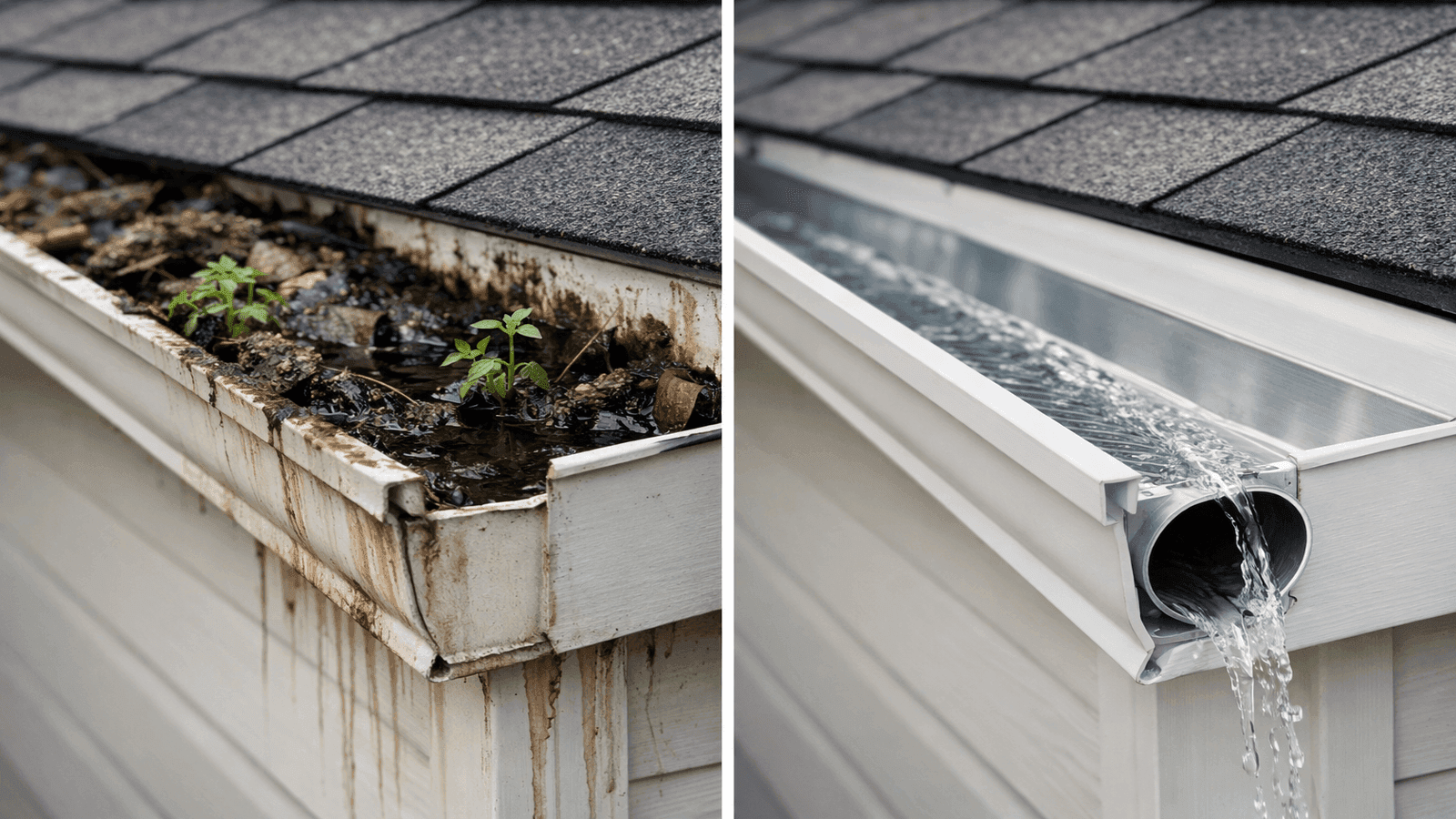
Photo: Side-by-side comparison of a clogged gutter with standing water and a clean properly sloped gutter
Signs Your Gutters Need Immediate Attention
Some gutter problems require prompt action rather than waiting for the next scheduled cleaning. Specifically, learn to recognize these signs during your regular walkarounds.
Water staining on siding or foundation. Vertical streaks of brown, gray, or green on your siding below the gutter line indicate chronic overflow. This means water has been spilling over the gutter edge repeatedly, either from a clog or from gutters that are undersized for your roof drainage area.
Gutters pulling away from the fascia. When hangers fail or fascia wood begins to rot, gutters separate from the roofline. A gap between the gutter back and the fascia allows water to run directly behind the gutter, accelerating rot. This requires immediate re-anchoring and a fascia inspection.
Sagging sections. A section of gutter that dips below its neighbors is holding water and debris. That water weight accelerates hanger failure and makes the sag progressively worse. Re-pitching is needed.
Rust or large holes. Steel gutters develop rust over time, especially in humid climates. Small holes can be patched with gutter sealant, but widespread rust indicates the gutter material has reached the end of its service life. See the gutter replacement cost guide for current pricing on full replacements.
Plant growth inside the gutter. Visible moss, grass, or small plants growing inside a gutter means debris has accumulated and decomposed into enough organic matter to support plant life. The gutter has been clogged long enough for soil to form, which means the downspout is also very likely blocked.
Peeling paint or soft wood on fascia. Press your finger against the fascia board behind the gutter. Soft, spongy wood is actively rotting. This is a multi-trade repair: the fascia must be replaced, the gutter re-hung, and the underlying cause addressed.
For a full structural inspection of your roof and drainage system, review the roof components explained guide to understand how gutters connect to fascia, soffit, and drip edge.
Get quotes from top-rated pros.
DIY vs. Professional Gutter Cleaning
Most homeowners can clean single-story gutters safely with basic tools: a stable ladder, work gloves, a gutter scoop or small trowel, a garden hose with a spray nozzle, and a bucket. In most cases, the total supply cost is under $50.
The risks increase significantly on two-story and three-story homes. Ladder placement becomes more complicated, the consequences of a fall are more severe, and working from the top of an extension ladder while reaching into a gutter is an awkward and physically demanding task. Professional cleaning for a two-story home averages $100 to $275 and includes the cost of proper equipment and insurance [2].
| Home Story Count | Professional Cleaning Cost Range | Notes |
| Single-story | $119 – $234 | Most DIY-accessible |
| Two-story | $100 – $275 | Recommend hiring pro |
| Three-story | $130 – $400 | Always hire licensed contractor |
| Heavily clogged (any height) | Add 10%–50% to base cost | Per industry pricing data |
Source: [2]
When hiring a professional, ask whether the quote includes:
- Flushing downspouts to confirm they drain freely
- A visual inspection of gutter hangers and seam sealant
- Bagging and removal of debris
- A slope check and minor re-pitching if needed
Some contractors offer annual gutter maintenance contracts that include two scheduled cleanings per year plus a post-storm inspection for a flat annual fee. For homes with significant tree coverage, these contracts typically offer better value than one-off appointments.
For homes requiring more extensive repairs beyond routine cleaning, connect with licensed roofing contractors through NearbyHunt to get local estimates.

Photo: Professional gutter cleaning crew using safety harnesses and truck-mounted vacuum on a two-story brick home
Seasonal Gutter Maintenance Quick Reference
Below is a condensed maintenance checklist organized by season. Use this as a recurring reminder throughout the year.
Spring (April to May):
- Remove all debris by hand or scoop
- Flush gutters and downspouts with a garden hose
- Check slope and re-anchor any loose hangers
- Inspect fascia for soft spots or staining
- Confirm downspout extensions are in place and directing water at least 4 feet from the foundation
Summer (June to August):
- Inspect visually after storms
- Clear any large debris dropped by branches
- Check downspout extensions for displacement
- Note any overflow streaks on siding for follow-up
Fall (October to November):
- Complete primary cleaning after peak leaf fall
- Inspect and clean gutter guard surfaces
- Check seams and end caps for gaps
- Look for shingle granules accumulating in gutters
- Assess downspout strainers and clean or replace as needed
Winter (December to February):
- Monitor for ice dam formation at roof edge
- Do not chip ice from gutters
- Check for gutters pulling away from fascia under ice weight
- Apply calcium chloride if ice buildup is severe
For roofing and exterior preparation specific to season transitions, see the fall roof preparation guide and the spring roof maintenance guide.
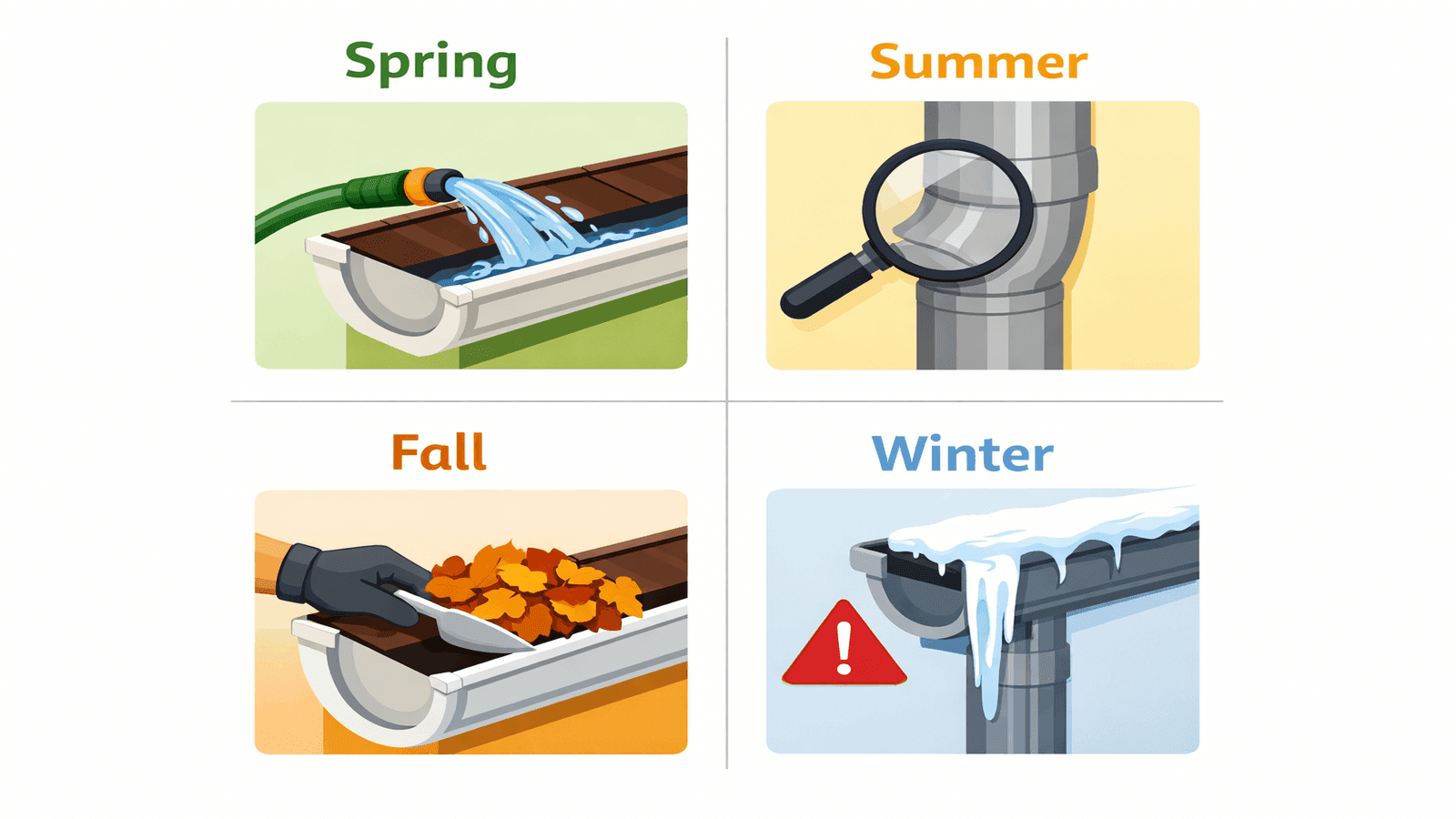
Photo: Four-panel seasonal gutter maintenance checklist showing tasks for spring, summer, fall, and winter
When to Call a Professional
Some gutter issues exceed what routine DIY maintenance can address. In those cases, call a licensed contractor when you observe:
- Fascia wood that is soft, discolored, or visibly rotted behind the gutter
- Gutters that have separated from the fascia along more than one section
- Interior water stains on your ceiling near exterior walls, which may indicate water is entering through the roof-to-gutter junction
- Downspouts that drain toward rather than away from the foundation
- Visible cracks in the foundation combined with water-stained siding (this indicates the overflow has been chronic and the foundation may need a drainage assessment)
- Roof flashing at the eaves that has lifted or separated from the gutter, which allows water behind the drip edge. The roof flashing maintenance guide explains what to look for.
- Evidence of storm damage, which warrants a full exterior assessment as described in the storm damage assessment guide
The cost of calling a professional early is almost always lower than the cost of addressing the compounded damage that results from delayed action. A contractor who identifies a failing hanger and re-anchors the gutter during a spring cleaning visit charges far less than one who returns six months later to replace the fascia board the unsupported gutter has been crushing.
Find Licensed Roofers Near You:https://www.nearbyhunt.com/roofing
Conclusion
Gutters are simple systems with a critical job. They collect hundreds of gallons of runoff from your roof during every significant rainstorm and route that water safely away from your foundation and structural framing. When they are maintained consistently, they do that job invisibly and reliably for 20 to 50 years depending on material. When they are neglected, the failure chain moves fast: clogs lead to overflow, overflow leads to fascia rot and foundation saturation, and what started as a $150 cleaning becomes a $4,000 repair or worse.
The most effective strategy is a simple one: clean in spring, clean in fall, inspect after major storms, and respond quickly to any visible sign of overflow or structural movement. Add gutter guards if tree coverage is heavy, trim overhanging branches, and keep downspout extensions in place. That routine, applied consistently, eliminates most of the risk.
If your gutters are past the point of routine maintenance, or if you are seeing signs of structural damage to fascia or foundation, connect with a licensed roofing contractor through NearbyHunt to get a professional assessment before the damage deepens.
Disclaimer
The information in this article is intended for general educational purposes and reflects commonly accepted best practices in residential gutter maintenance. Gutter conditions, local building codes, climate factors, and home construction vary significantly. Always consult a licensed roofing or exterior contractor before undertaking repairs that involve working at height, structural modifications, or assessments of foundation drainage. NearbyHunt does not warrant specific outcomes for any maintenance activity described here.
Sources & References
[1] LeafFilter — Gutter Cleaning Cost Guide 2026: https://www.leaffilter.com/blog/gutter-cleaning/gutter-cleaning-cost/
[2] This Old House — Gutter Cleaning Cost 2026: https://www.thisoldhouse.com/gutters/gutter-cleaning-cost
[3] InterNACHI — Inspecting Gutters and Downspouts: https://www.nachi.org/gutters-downspouts-inspection.htm
[4] Rescue My Roof — Soffit and Fascia Repair Costs 2026: https://rescue-my-roof.com/blog/soffit-fascia-cost-what-to-expect/
[5] RCAW — How Often Should Gutters Be Cleaned: https://www.rcaw.com/how-often-should-gutters-be-cleaned/
[6] GSA — General Inspection and Maintenance of Gutters and Downspouts: https://www.gsa.gov/real-estate/historic-preservation/historic-preservation-policy-tools/preservation-tools-resources/technical-procedures/general-inspection-and-maintenance-of-gutters-and-downspouts
[7] Bob Vila — How Often to Clean Gutters: https://www.bobvila.com/articles/how-often-to-clean-gutters/
[8] Valor Exterior Partners — Top 10 Tips to Prevent Gutter Clogs: https://www.valorexteriorpartners.com/blog-posts/top-10-tips-to-prevent-gutter-clogs-and-roof-water-pooling


James is a licensed roofing contractor with 20 years of experience in roof installation, inspection, and repair across the U.S. South and Midwest. He specialises in asphalt shingles, metal roofing, and storm damage restoration. On NearbyHunt, James offers practical advice on roof maintenance, insurance claims, and selecting the right materials for long-lasting protection.

Jacob is a licensed roofing contractor with over 18 years of experience in roof inspection, installation, and restoration. Based in Texas, he has led hundreds of successful roofing projects across residential and commercial properties. Jacob is also a certified storm damage specialist, ensuring that all NearbyHunt roofing content meets industry best practices and safety standards.