- Flat roofs require inspections twice per year (spring and fall) plus post-storm checks within 48 hours, along with quarterly drain cleaning to prevent the ponding water that causes 70 percent of flat roof failures.
- The 48-hour rule is non-negotiable: any standing water on a flat roof surface more than 48 hours after rain stops is classified as ponding and must be investigated and corrected before membrane damage accelerates.
- TPO seams are heat-welded and must be probed during every inspection; EPDM seams are adhesive-bonded and require checking for edge lifting; modified bitumen granule coverage must be monitored as it thins with age.
- Tapered insulation is the most cost-effective permanent fix for chronic ponding caused by inadequate original slope or structural settling, typically costing a fraction of the full replacement triggered by water damage.
- Early intervention dramatically reduces repair costs: the NearbyHunt network reports that 65 percent of flat roof repairs could have been avoided or reduced in scope with earlier drainage correction, often a $800 to $1,200 fix versus a $10,000 to $15,000 repair.
- Professional contractor involvement is required for any seam or flashing repair, persistent ponding after drain clearing, soft or deflecting deck areas, and biannual documented inspections.
Flat roofs look simple from the street, but anyone who owns or manages one knows the maintenance picture is anything but straightforward. Unlike a pitched roof that sheds water naturally by gravity, a flat or low-slope roof depends on a precisely engineered drainage system, an intact membrane, and consistent upkeep to stay watertight. Skip a quarterly drain cleaning or ignore a small seam separation, and you can find yourself facing a repair bill that runs well into five figures.
This guide covers the complete maintenance framework for flat roofs in 2026, from spring inspection checklists to membrane-specific care for TPO, EPDM, and modified bitumen systems. For broader context on roof upkeep across all roof types, see our roofing maintenance guide as a starting point before diving into the flat-roof specifics below.

Get quotes from top-rated pros.
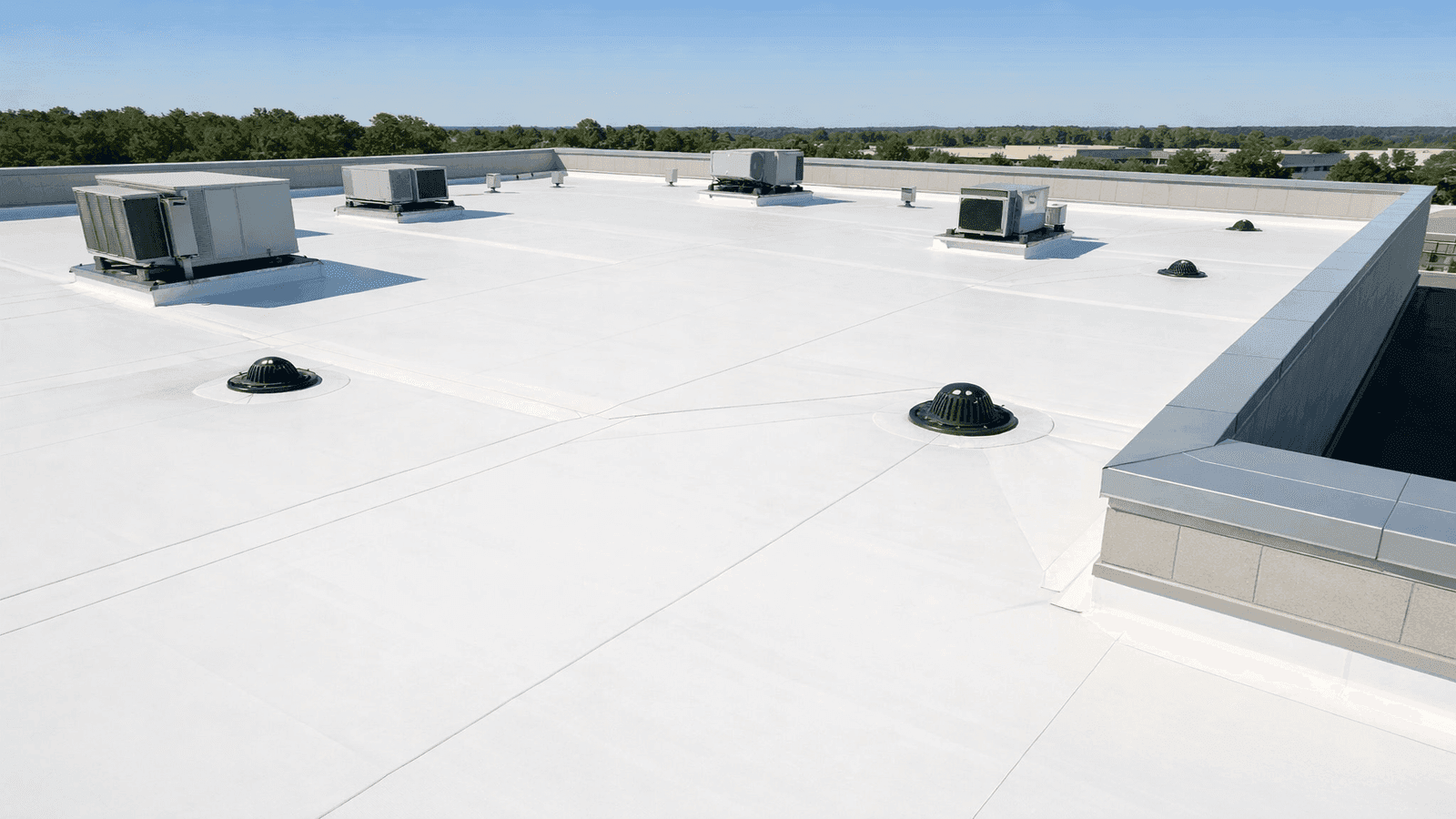
Photo: Aerial view of a well-maintained commercial building with a white TPO flat roof membrane, clean drains, and properly flashed HVAC curbs
Why Flat Roofs Require Different Maintenance
A conventional pitched roof moves water off the surface within seconds of rainfall. A flat roof, by contrast, relies on internal drains, scuppers, or edge gutters to move water off a nearly horizontal deck. Most building codes require a minimum slope of one-quarter inch per foot on "flat" roofs, but even that slight grade leaves water sitting longer than it would on any pitched surface [1].
The consequences of neglect compound quickly. Ponding water, defined as any standing water that remains on the roof surface 48 hours or more after rainfall stops, is the primary threat to flat roof longevity. It adds live load weight the structure was not designed to carry permanently, accelerates UV degradation of membranes, promotes algae and vegetation growth that can penetrate seams, and masks developing cracks or punctures beneath a water lens that makes visual inspection nearly impossible [2].
The licensed roofing contractors in our NearbyHunt network report that more than 70 percent of flat roof failures they diagnose trace back to one of three root causes: clogged or undersized drainage, failed seams at penetrations, or deferred maintenance that allowed small punctures to become large leaks. Understanding these failure modes is the starting point for any effective maintenance program.
Flat roofs are not low-maintenance roofs. They are high-frequency, low-cost maintenance roofs. If you put in the time twice a year and after every major storm, you can get 25 years out of a TPO system. If you skip those visits, you might be replacing it at 12.
James Carver, Licensed Roofing Contractor, more than 1,800 roofing projects across the U.S. South and Midwest
Inspection Frequency and Timing
The industry standard for flat roof inspections is twice per year, with spring and fall as the preferred windows [1]. Spring inspections catch damage from winter freeze-thaw cycles, ice damming at drains, and membrane contraction. Fall inspections clear debris accumulated over summer, check UV degradation on exposed membranes, and prepare drainage systems for the heavier precipitation months ahead.
In addition to scheduled biannual visits, a flat roof should be visually assessed within 48 hours after any significant storm event. This post-storm window is when ponding water is actively present and easy to identify. It is also when freshly dislodged flashing or punctures from wind-driven debris will show up before they have a chance to cause interior damage.

Photo: Licensed roofing contractor using a probe tool to inspect an EPDM membrane seam during a professional flat roof inspection
What to Inspect Each Visit
A thorough flat roof inspection covers eight primary areas:
- Membrane surface condition -- look for blistering, cracking, chalking (on EPDM), or discoloration that indicates UV breakdown
- Seams and laps -- probe every seam edge for lifting, separation, or adhesive failure; seams are where most flat roof leaks originate
- Flashing at all penetrations -- HVAC curbs, pipes, skylights, and parapet walls are high-failure zones
- Drainage inlets and covers -- remove covers, clear debris, verify the drain bowl is fully seated
- Scuppers and gutters -- confirm openings are clear and gutters are not holding standing water
- Parapet walls and coping -- check coping cap joints for cracked sealant; parapet walls that allow water intrusion can damage both the roof deck and interior walls below
- Ponding water indicators -- water staining, algae rings, and sediment deposits reveal historical ponding locations even after the water drains
- Structural deflection -- soft or spongy spots underfoot indicate wet insulation or a compromised deck; these require immediate professional assessment
For a comprehensive inspection form applicable to all roof types, see our roof inspection checklist.
Drainage Maintenance
Drainage is the single most important maintenance task on a flat roof, and it is also the most neglected. Clogged drains are the leading cause of ponding water, and ponding water is the leading cause of premature membrane failure [2].
Quarterly Drain Cleaning
Most roofing professionals recommend clearing flat roof drains on a quarterly schedule rather than waiting for biannual inspections. Debris accumulates year-round: leaves in fall, seed pods and pollen in spring, windblown material after storms at any time of year. A drain that was clear in October can be fully blocked by January in areas with nearby deciduous trees.
The cleaning process involves removing the drain cover or strainer, clearing any accumulated debris from the bowl by hand, and flushing the drain with a garden hose to verify free flow. If water backs up during the flush test, the blockage is deeper in the standpipe. A roofing contractor with a drain snake or water jet can clear internal blockages without damaging the drain body or surrounding membrane.
Get quotes from top-rated pros.
Scupper and Edge Drain Maintenance
Buildings that drain via scuppers (openings through the parapet wall) or edge gutters require the same quarterly attention. Scupper openings should be checked for debris buildup and the downspout or leader pipe below confirmed to be clear. Gutter sections on flat-roofed buildings tend to collect more sediment than pitched-roof gutters because water moves more slowly across the surface. Sediment buildup in gutters eventually blocks flow entirely and can cause water to back up under the membrane edge.
I've pulled handfuls of gravel, a dozen golf balls, and more dead pigeons than I can count out of flat roof drains. The building owners had no idea those drains were partially blocked. After we cleared them, their ponding problem went away without a single membrane repair.
TPO Membrane Maintenance
Thermoplastic polyolefin (TPO) is currently the most widely installed flat roof membrane in North America, valued for its heat-reflective white surface, weldable seams, and competitive installed cost [1]. TPO systems typically carry 20 to 25-year manufacturer warranties, but reaching that service life requires attentive maintenance.
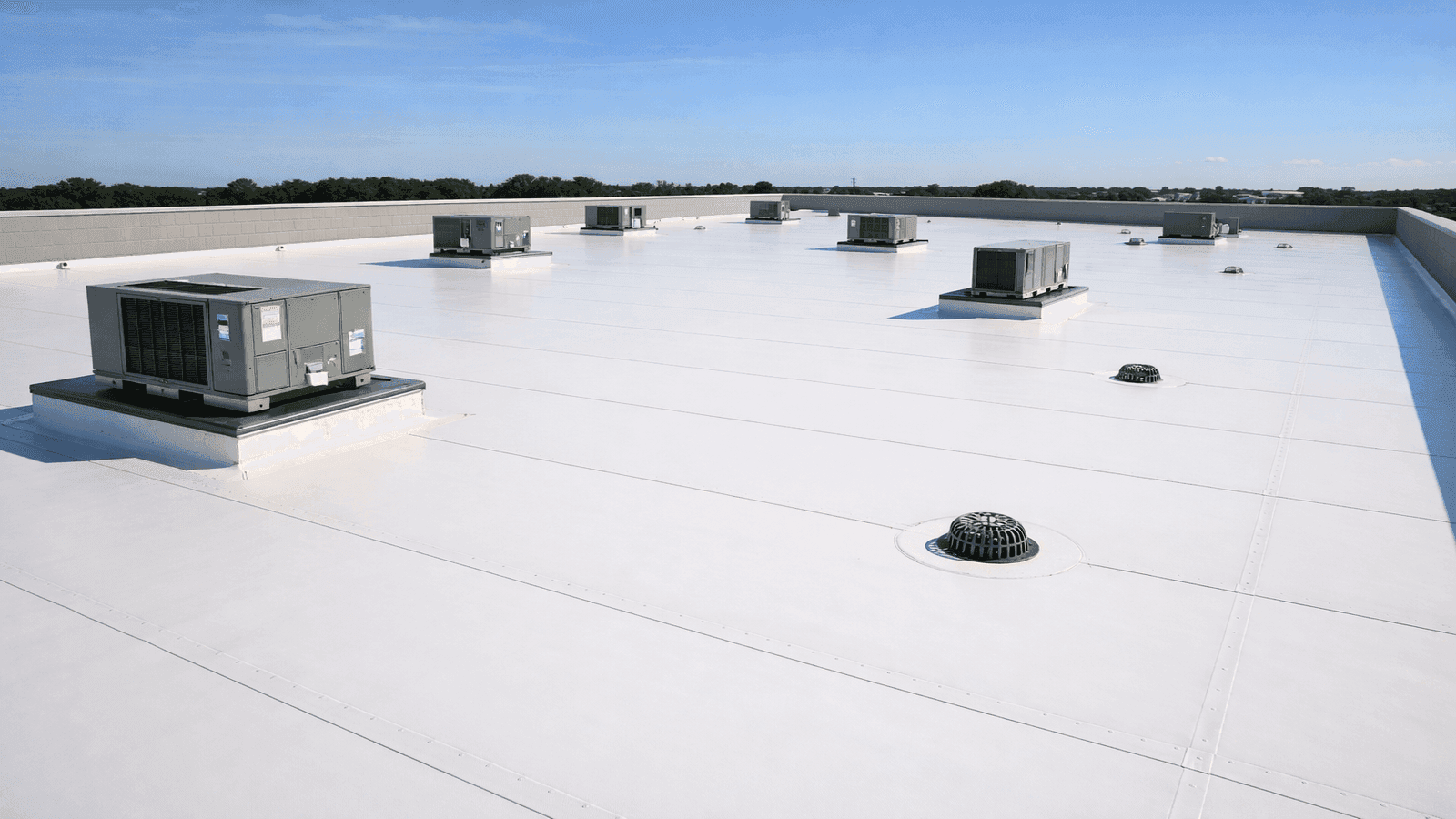
Photo: Wide view of a white TPO commercial flat roof showing parallel heat-welded seam lines, HVAC equipment on flashed curbs, and drain covers
TPO-Specific Inspection Points
TPO is susceptible to several failure modes that require targeted attention during inspections:
Seam integrity: TPO seams are heat-welded in the field, creating a bond that, when properly executed, is stronger than the membrane itself. However, improperly welded seams (too cool, too hot, or inadequate overlap) can peel apart over time. Test seams by probing with a rounded tool along every lap. Any separation indicates a failed weld that needs to be re-welded with a hot-air gun.
Membrane shrinkage TPO can experience dimensional shrinkage over time, particularly on older formulations from the early 2000s. Shrinkage pulls the membrane away from flashings and perimeter terminations, creating gaps that allow water entry. Look for the membrane pulling tight at corners or flashings lifting at edges.
Punctures from foot traffic, HVAC technicians, electricians, and other trades regularly walk flat roofs and often lack training on how to move safely across a membrane. Sharp tool edges, dropped equipment, and improper footwear can puncture TPO. Establish designated walkway paths using walkway pads, and brief any trade contractors before they access the roof.
Chalk or dark streaking Black streaks on a white TPO membrane typically indicate algae or mould growth in areas of chronic ponding. This is both an aesthetic issue and a sign of a drainage problem that needs to be corrected.
TPO Cleaning
TPO should be cleaned annually to remove accumulated dirt, algae staining, and HVAC condensate deposits. Use a mild detergent solution and a soft-bristle brush. Avoid petroleum-based solvents, citrus cleaners, or pressure washing at close range, all of which can degrade the membrane surface or force water under laps. After cleaning, inspect the surface closely for fine cracks or surface weathering that is easier to see on a clean membrane.
EPDM Membrane Maintenance
Ethylene propylene diene monomer (EPDM) has been in use since the 1960s and remains widely specified for commercial and low-slope residential applications. Well-maintained EPDM systems can push 25 to 30 years of service life [2]. The maintenance protocol differs from TPO in several key respects.
EPDM-Specific Inspection Points
Chalking and surface degradation: EPDM naturally chalks as it ages, a process in which UV exposure breaks down the surface layer. Moderate chalking is normal and does not indicate imminent failure. Heavy chalking combined with surface cracking does indicate the membrane is approaching the end of its life.
Seam adhesive failure. Unlike TPO, EPDM seams are bonded with contact adhesive or seam tape rather than heat welding. These adhesive bonds can soften in sustained high temperatures and harden and crack in cold climates. Probe seams carefully; any lifting edge should be re-secured with EPDM-compatible seam tape or lap sealant before it opens to water entry.
Punctures and shrinkage EPDM is more puncture-resistant than TPO, but not impervious. Inspect particularly around HVAC equipment bases and any areas with pipe penetrations. EPDM also exhibits greater thermal movement than TPO; check termination bars at parapet walls for fastener backing out or membrane pulling away.
Blistering Air or moisture trapped between the membrane and insulation during installation can cause blisters. Small blisters that remain stable are generally not an immediate structural threat but should be documented and monitored. Large blisters, or those that have grown between inspections, indicate active moisture infiltration and require professional evaluation.
EPDM Coating
Aged EPDM membranes that have not yet failed but show significant surface weathering can benefit from a restorative coating application. EPDM-compatible coatings restore reflectivity, seal minor surface cracks, and extend service life by 5 to 10 years in many cases. Coating is significantly less expensive than full replacement and can be applied without tearing off the existing membrane if the deck is dry and structurally sound. For cost context, see our breakdown on roof repair cost.
We coated a 15-year-old EPDM roof in Memphis last spring instead of replacing it. The owner was looking at $85,000 for replacement. The coating job cost $18,000 and gave them another eight years minimum. You have to know the membrane is still sound first, which is why the inspection has to come before the financial decision.
Modified Bitumen Maintenance
Modified bitumen (mod-bit) systems are hybrid membranes that combine asphalt with polymerized modifiers, installed in two or three plies by torch application or cold adhesive. They are common on older commercial buildings and on residential flat-roof sections like garage roofs or low-slope dormers [1].
Modified bitumen is generally more UV-resistant than EPDM and more impact-resistant than TPO, but it comes with its own maintenance profile. The granulated surface layer, similar to asphalt shingles, gradually wears and washes away over time. Bare or thin-granule areas are visible during inspection and indicate zones where UV degradation is accelerating. These areas should be treated with a compatible asphalt emulsion coating and granule broadcast before they develop cracks.
Inspect all torch-welded seam areas carefully. The heat application used during installation creates a strong bond, but thermal cycling over years can cause seam edges to lift at corners where the membrane changes direction. Re-torch or apply cold sealant as needed at any lifted seam edge.
For additional context on how different roofing materials age and what to expect from each system, see our types of roofing materials guide and our overview of how long roofs last.
Get quotes from top-rated pros.
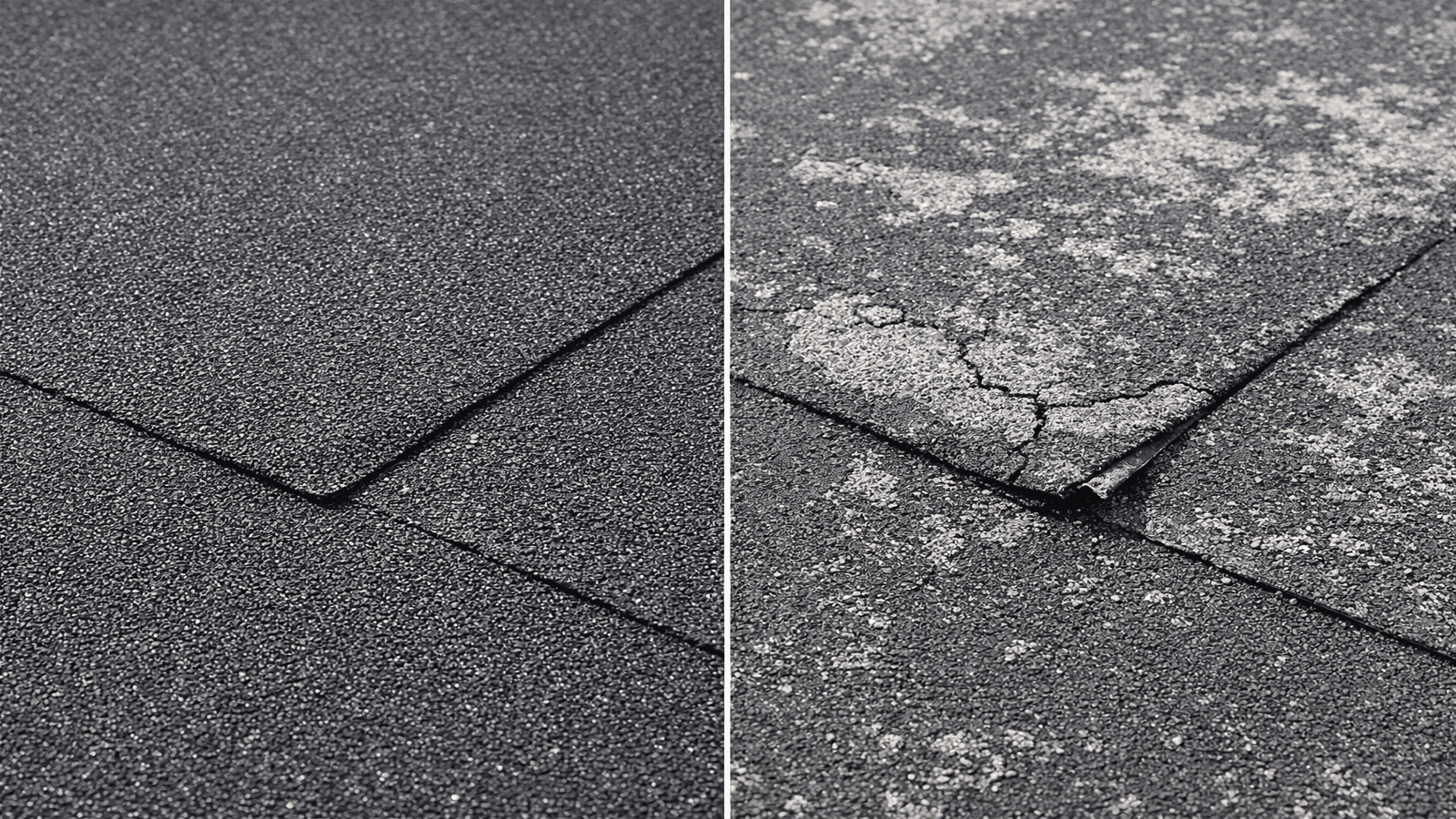
Photo: Side-by-side comparison of a well-maintained modified bitumen roof with full granule coverage versus a weathered section showing granule loss and surface cracking
Ponding Water: Prevention and Remediation
Ponding water is the defining challenge of flat roof ownership and deserves its own detailed treatment.
The 48-Hour Rule
Any water that remains on a flat roof surface more than 48 hours after rainfall stops is classified as ponding water and represents an active risk factor [2]. The weight alone is significant. Fresh water weighs approximately 5.2 pounds per square foot per inch of depth. A 5,000-square-foot roof with two inches of standing water is carrying more than 52,000 pounds of unplanned live load.
Case Study: Sandra L., Houston TX
Sandra purchased a 1,200-square-foot commercial condo unit with a flat TPO roof for her small business. The previous owner had maintained the building but had never addressed chronic ponding in the northwest corner of the roof. By the time Sandra commissioned a professional inspection after purchasing the property, the insulation beneath the membrane in that corner had become saturated, the deck below showed early rot, and the TPO membrane had delaminated from the insulation across a roughly 200-square-foot area.
The repair required full tear-off of the affected section, replacement of four sheets of insulation board, and installation of a new TPO membrane section with tapered insulation to correct the slope. The final invoice was $14,200. A drain cleaning and tapered insulation insert installed when the ponding first appeared would have cost approximately $800 to $1,200.
Sandra's experience is not unusual. The licensed roofing contractors in our NearbyHunt network report that 65 percent of flat roof repairs they complete could have been avoided or substantially reduced in scope with earlier intervention, typically drainage correction within the first year of visible ponding.
Correcting Inadequate Slope
When ponding persists after drains are cleared and functional, the problem is often inadequate original slope or structural settling that has created low spots in the deck. The two primary correction methods are:
Tapered insulation -- Polyisocyanurate (polyiso) insulation boards are manufactured in tapered thicknesses that create positive slope across the roof surface. They are installed over the existing deck and membrane system (if the existing membrane is sound) or as part of a full replacement. Tapered insulation is the most common and cost-effective long-term solution for chronic ponding [2].
Crickets and saddles -- For isolated low spots, particularly behind HVAC curbs or at interior drains, a roofing contractor can fabricate a cricket (a wedge-shaped build-up of tapered insulation or rigid foam) that directs water toward the drain opening. Crickets are a targeted solution where full re-sloping is not economically justified.
Flat Roof Maintenance Schedule
Organizing maintenance into a recurring calendar prevents the most common failure mode: deferred inspection. The following schedule reflects the consensus approach of commercial roofing professionals.
Monthly (owner/manager walkby): Visually scan from grade or from any accessible vantage point for obvious debris accumulation, standing water visible from the edge, or displaced flashing components.
Quarterly (owner/facilities staff): Clear all drain covers, strainer baskets, and scupper openings by hand. Flush drains to verify flow. Remove any debris from the roof surface. Check parapet and coping visible from the roof edge.
Biannually (licensed roofing contractor): Full membrane inspection per the eight-point checklist above. Document all findings with photographs. Probe all seams and flashings. Test drains under flow. Provide written report with priority repair recommendations.
After significant storms: Check for standing water within 48 hours. Visually scan for displaced flashing, membrane punctures, or coping cap displacement.
Annually: Professional cleaning of membrane surface. Reseal any cracked or degraded caulk at penetrations, parapet copings, and mechanical curbs.
For a printable version of a full inspection record form covering both flat and pitched roofs, see our roof inspection checklist.
When to Call a Professional
Many flat roof maintenance tasks, specifically drain clearing, debris removal, and visual surface inspection, can be completed by a building owner or facilities manager with basic safety precautions. However, several situations require a licensed roofing contractor:
- Any seam, flashing, or membrane repair, including patch work over punctures
- Professional biannual inspections with documented findings
- Any evidence of structural deflection, soft spots, or deck movement
- Ponding water that persists after drains are cleared
- Suspected interior moisture or ceiling staining that may trace to the roof
For help finding a vetted flat roofing contractor in your area, connect with a local roofing professional through NearbyHunt.
Storm damage adds urgency to all of these triggers. See our guide on storm damage assessment for the immediate steps after a major weather event, and our resource on how to fix a roof leak for interim mitigation before the contractor arrives. Our article on common roofing problems also provides broader diagnostic context.
The question I always get is: 'Can I patch this myself?' For a TPO or EPDM roof, the answer is yes for a small puncture in the field of the membrane if you use the right materials. But for anything at a seam, a penetration, or a flashing termination, hire a contractor. Those repairs require tools and technique that come with experience. A bad DIY patch can be harder to fix than the original damage.
Conclusion
Flat roof maintenance is a discipline of consistency over heroics. The roofs that reach 25 to 30 years of service life without major structural repair all share the same history: they were inspected twice a year, their drains were kept clear on a quarterly schedule, and small problems (a lifting seam edge, a cracked pipe boot, a minor surface blister) were addressed promptly rather than monitored until they became large problems.
The membrane type determines the specific inspection focus points, TPO requires seam probe testing and shrinkage checks; EPDM demands attention to adhesive bonds and surface chalking; modified bitumen calls for granule coverage monitoring and torch-seam inspection. But the underlying maintenance logic is identical across all flat roof systems: keep water moving, keep the membrane intact, and never let a small finding sit unaddressed until the next scheduled visit.
If your flat roof is overdue for a professional inspection or you are dealing with active ponding or a suspected leak, start with a qualified contractor assessment before any repair decisions. For attic and ventilation issues that sometimes accompany flat roof moisture problems, see our guide on attic ventilation maintenance.
Disclaimer: This article is provided for general educational purposes only and does not constitute professional roofing or engineering advice. Flat roof systems vary significantly by membrane type, building structure, local climate, and installation quality. Always consult a licensed roofing contractor before making maintenance, repair, or replacement decisions. NearbyHunt does not guarantee specific outcomes, costs, or service life projections. Costs and timelines referenced are general estimates based on industry data and contractor experience and will vary by region, project scope, and current material pricing.
Sources & References
[1] National Roofing Contractors Association (NRCA). Roofing Manual: Membrane Roof Systems. https://www.nrca.net/
[2] FM Global Property Loss Prevention Data Sheet 1-29: Above Deck Roof Components. https://www.fmglobal.com/
[3] ENERGY STAR Roofing Products Program. Roofing Product Criteria. https://www.energystar.gov/products/building_products/roof_products
[4] International Building Code (IBC) 2021: Section 1503 Weather Protection. https://codes.iccsafe.org/content/IBC2021P2
[5] Whole Building Design Guide (WBDG) -- Roofing Systems. National Institute of Building Sciences. https://www.wbdg.org/guides-specifications/building-envelope-design-guide/roofing-systems
[6] ASTM International. ASTM D4637: Standard Specification for EPDM Sheet Used in Single-Ply Roof Membrane. https://www.astm.org/
[7] TPO Roofing Alliance Technical Resources. Thermoplastic Polyolefin (TPO) Roofing Systems. https://www.roofingalliance.net/
[8] Building Enclosure Council. Flat Roof Drainage Design Guidelines. https://www.nibs.org/
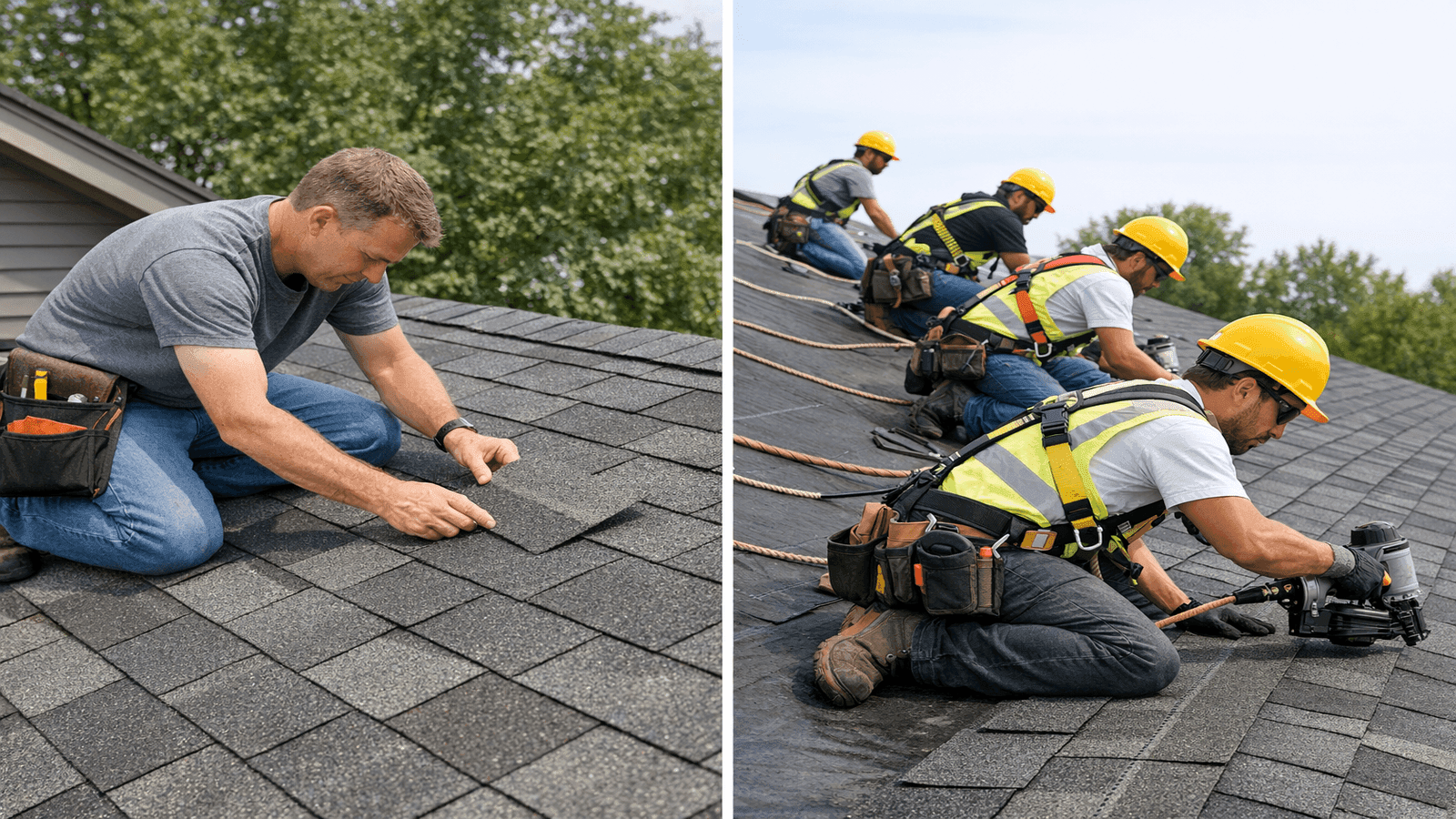

James is a licensed roofing contractor with 20 years of experience in roof installation, inspection, and repair across the U.S. South and Midwest. He specialises in asphalt shingles, metal roofing, and storm damage restoration. On NearbyHunt, James offers practical advice on roof maintenance, insurance claims, and selecting the right materials for long-lasting protection.

Jacob is a licensed roofing contractor with over 18 years of experience in roof inspection, installation, and restoration. Based in Texas, he has led hundreds of successful roofing projects across residential and commercial properties. Jacob is also a certified storm damage specialist, ensuring that all NearbyHunt roofing content meets industry best practices and safety standards.