- Never use a pressure washer on shingles -- high-pressure water blasts off the granules that protect shingles from UV rays, cutting roof lifespan by 5-10 years
- Professional moss removal costs $300-$1,200, but a DIY zinc sulfate treatment runs just $30-$80 and prevents regrowth for 2-3 years
- Moss accelerates on north-facing slopes and shaded areas -- trimming overhanging branches is the single most effective long-term prevention step
- Left untreated, moss works under shingles, lifts tabs, and can force $5,000-$15,000 in early roof replacement costs
- James Carver removes moss from 40-50 roofs per year in Texas and the Southeast -- the most common mistake is scrubbing with a stiff brush that tears shingle tabs
Moss on a roof looks like a low-priority cosmetic problem. It is not. Moss is a living plant that holds water against shingle surfaces around the clock, and its root-like structures -- called rhizoids -- physically penetrate between granules to anchor themselves. Over months and years, that sustained moisture accelerates freeze-thaw damage, granule loss, and shingle tab lifting in ways that are invisible from the ground until the damage is severe. In humid climates from the Pacific Northwest to the Southeast, roof moss is one of the leading causes of premature roof failure.
This guide covers every safe method for removing moss from asphalt shingles, identifying moss versus algae versus lichen, and preventing regrowth long-term. For a broader look at roof maintenance and repair projects, see our complete guide on roofing how-to and DIY. Moss removal done correctly protects your roof investment; done incorrectly, it accelerates the very damage you are trying to stop. If you are evaluating whether your roof needs repair or replacement after moss damage, see our guide on roof repair costs and options.

Get quotes from top-rated pros.
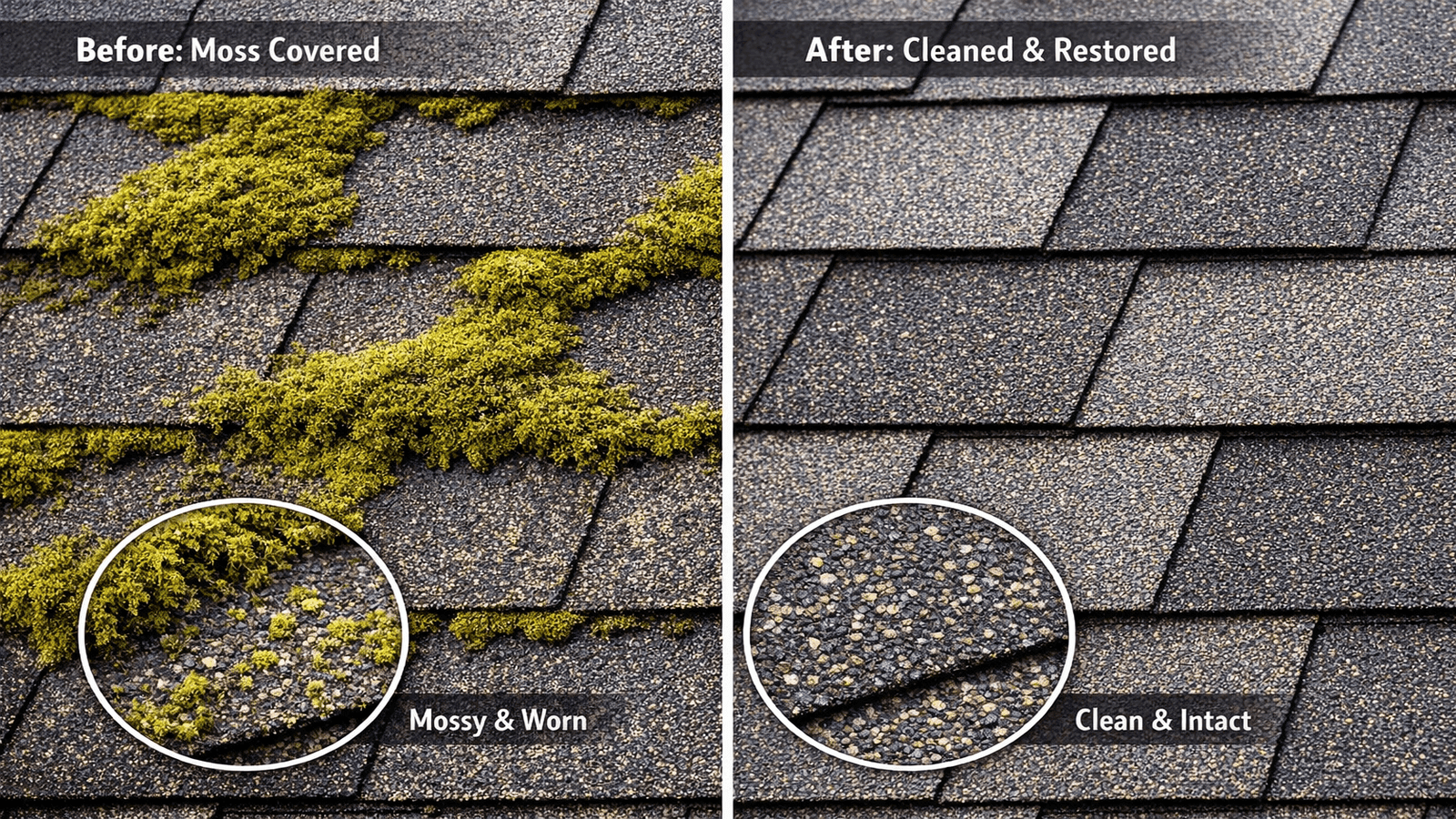
Photo: Before and after comparison of a moss-covered asphalt shingle roof showing clean granule condition after professional moss removal
Why Moss Damages Your Roof
Asphalt shingles rely on their surface granules for everything. Those tiny mineral particles block UV radiation, add fire resistance, and shed water. Once granule loss begins, the underlying asphalt mat is exposed and degradation accelerates exponentially. Moss is one of the most reliable granule destroyers on any roof.
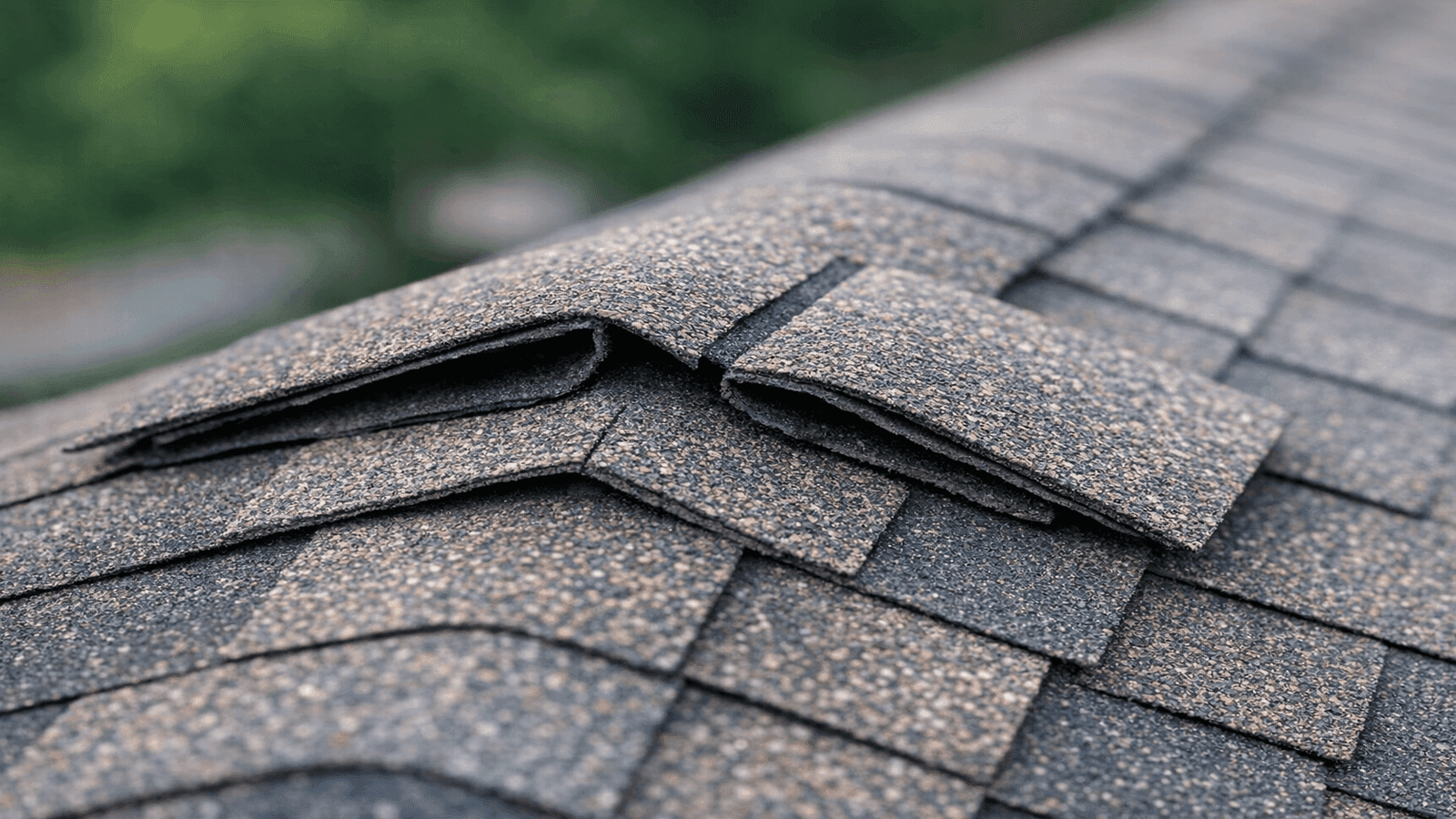
The biological mechanism is direct. Moss anchors to shingle surfaces using rhizoids -- structures that are not true roots but function similarly. As those rhizoids grow, they wedge between granules and mechanically pry them loose [1]. The moss colony also retains moisture far longer than bare shingles would, keeping the shingle surface wet for hours or days after rain stops. In regions that experience freezing temperatures, that retained water expands as it freezes, lifting shingle tabs at their weakest points -- the nail line and the adhesive strip.
Mature moss colonies can accumulate significant mass. Dense coverage reaches 5-10 pounds per square foot, a load that stresses older nail fasteners that were not designed to carry that additional weight. As shingle tabs lift, they allow wind-driven rain to penetrate below the shingle layer, and the cycle of water intrusion and structural damage accelerates.
The licensed roofing contractors in our NearbyHunt network report that 75% of homes with chronic moss problems have significant tree canopy coverage above the roof, and that north-facing slopes account for the majority of severe cases because they receive less direct sunlight and dry more slowly after rain [2].
| Moss Coverage Level | Estimated Shingle Life Reduction | Estimated Repair Cost If Ignored |
| Light (under 10%) | 1-3 years | $500-$1,500 spot repairs |
| Moderate (10%-30%) | 3-5 years | $2,000-$5,000 section replacement |
| Heavy (over 30%) | 5-10 years | $5,000-$15,000 full replacement |
Identifying Moss vs. Algae vs. Lichen
Not every green or dark growth on a roof is moss, and correct identification matters because each type responds to different treatments and poses different risk levels.
Moss is the most damaging of the three. It appears as thick, green, fuzzy growth that stands noticeably above the shingle surface. Because it physically lifts shingles through rhizoid penetration, it causes structural damage over time, not just cosmetic staining. Moss thrives in shade and moisture and spreads across a roof slope over a period of years.
Algae (most commonly Gloeocapsa magma) appears as dark gray or black streaks running down the roof surface, often starting near the ridge. Algae growth is largely cosmetic -- it stains shingles but does not penetrate or lift them. It spreads through airborne spores and is extremely common in humid climates. Treatment with diluted bleach or zinc sulfate is effective, and algae-resistant shingles (containing copper granules) can prevent regrowth.
Lichen is a composite organism formed from algae and fungi in a symbiotic relationship. It appears as a flat, gray-green crusty layer that bonds directly to the shingle surface. Lichen is the hardest growth type to remove because it forms a physical bond with the granule layer that chemical treatments alone cannot always break. Removing lichen aggressively risks pulling granules off with it, which is why heavy lichen infestations typically require professional mechanical removal.
Lichen is the one I worry about most on older roofs. Homeowners will treat it with bleach, the black color fades, and they think it is gone -- but the organism is still anchored to the shingle. Six months later it comes back darker than before. On a roof that is already 15-plus years old with moderate granule loss, attempting aggressive lichen removal yourself can strip enough granules in one session to drop the remaining lifespan by two or three years.
Safe DIY Removal Method (Low-Pressure and Chemical Treatment)
The safest and most effective DIY approach combines a chemical treatment with low-pressure rinsing and patience. Skipping any of these steps -- especially by substituting scrubbing or pressure washing for dwell time -- is how homeowners cause more damage during removal than the moss caused in years of growth.
Step 1: Gear up properly. Moss-covered shingles are extraordinarily slippery, especially when wet. Wear rubber-soled non-slip boots, rubber gloves, and safety glasses. For any roof with a pitch steeper than 4:12, use a roof safety harness secured to a ridge anchor. Do not work on a wet roof or in windy conditions.
Step 2: Protect surrounding plants and shrubs. Zinc sulfate and bleach solutions are toxic to vegetation. Before applying anything, thoroughly wet all shrubs, plants, and grass below your roofline with a garden hose. Cover sensitive plantings with plastic sheeting. After treatment, rinse all vegetation again.
Step 3: Mix your treatment solution. For zinc sulfate: dissolve 1 pound of powder per 1 gallon of water and add a small amount of dish soap as a surfactant. For oxygen bleach (sodium percarbonate): follow manufacturer dilution instructions, typically 8-16 ounces per gallon of water. Both are gentler on landscaping than chlorine bleach.
Step 4: Apply with a garden pump sprayer at low pressure. Work from the ridge down, applying an even coat that thoroughly saturates the moss. Do not scrub. Do not use a brush. The goal is chemical penetration of the moss colony, and physical agitation at this stage loosens granules and tears shingle tabs.
Step 5: Allow a dwell time of 15-20 minutes. The solution needs time to penetrate through the moss colony to the shingle surface below. Do not rinse prematurely. On very thick growth, a second application after the first dwell period improves penetration.
Step 6: Rinse gently with a garden hose at low pressure, always working from ridge to eave. Never spray water upward against the shingle grain -- that drives water under shingle tabs and defeats the purpose of directional drainage. A standard garden hose at tap pressure is appropriate. A pressure washer at any setting is not.
Step 7: Allow rain to complete the cleanup over 2-4 weeks. Dead moss loses its grip on the shingle surface gradually. Rain will wash the dead material off the roof naturally over the following weeks. Do not return to the roof to scrub off remaining dead moss -- this is the step where most DIY granule damage occurs.
The hardest thing to convince homeowners of is that patience is part of the process. They apply the treatment, come back two days later, see brown dead moss still on the roof, and grab a brush. Everything they just killed is about to wash off on its own in the next rain. Thirty minutes of scrubbing at that point can remove more granules than five years of moss growth would have.
Get quotes from top-rated pros.
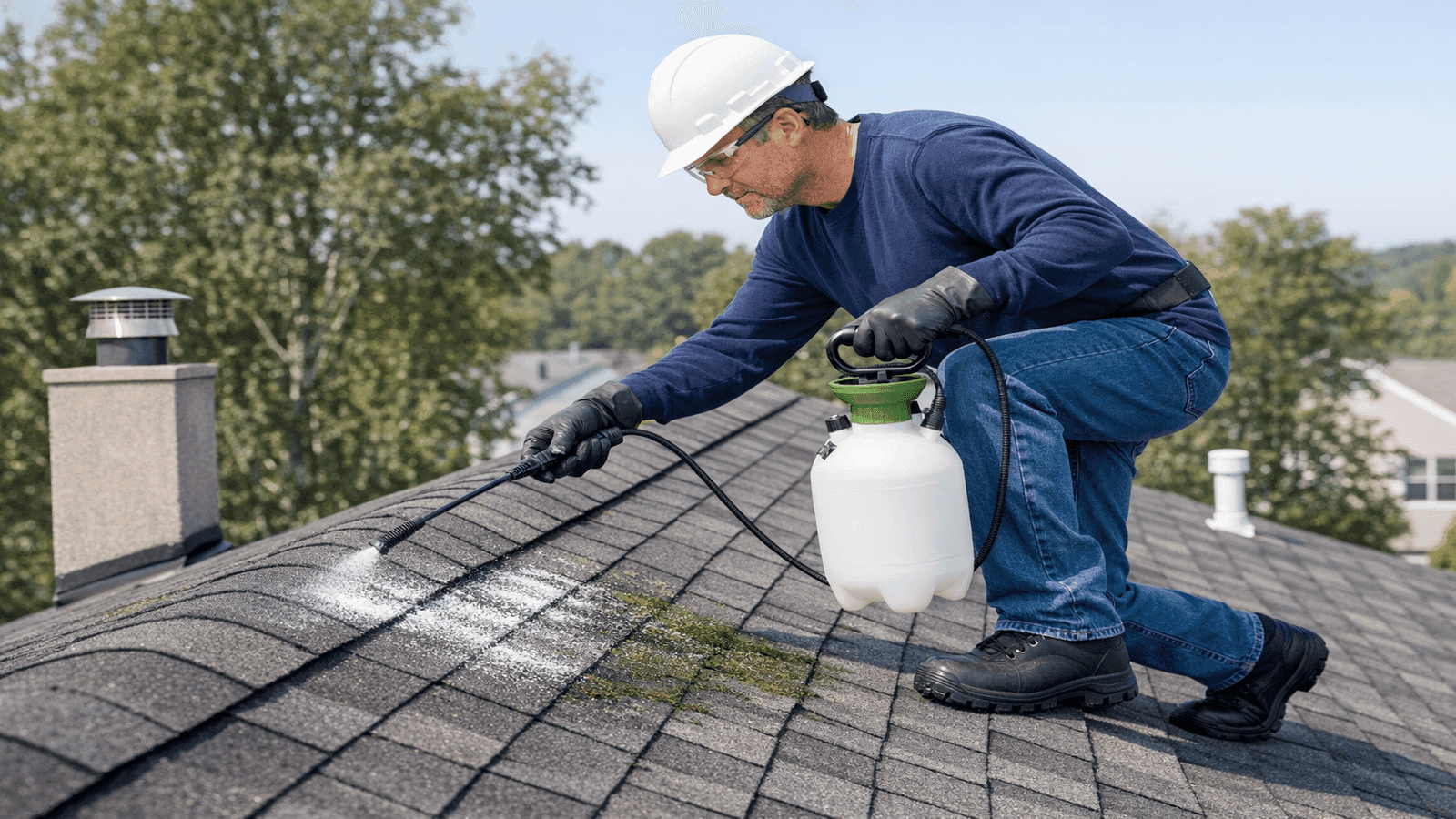
Photo: Homeowner in safety gear applying zinc sulfate moss treatment to asphalt shingle roof using a low-pressure garden pump sprayer
Chemicals That Work (And What to Avoid)
Choosing the right treatment product matters for both effectiveness and shingle preservation. The market offers everything from safe, slow-acting commercial products to aggressive chemicals that work fast but at significant cost to shingle integrity.
Zinc sulfate solution is the most effective treatment for established moss. At a typical dilution of 1 pound per gallon of water, it kills moss and algae on contact and leaves a residual zinc coating that prevents regrowth for 2-3 years. Cost runs $20-$40 per pound [1]. It is moderately toxic to aquatic organisms, so rinsing landscaping before and after application is important.
Oxygen bleach (sodium percarbonate) is the safest chemical option for surrounding vegetation and is effective on both moss and algae. It breaks down into water, oxygen, and sodium carbonate -- no persistent toxic residue. It is slower-acting than zinc sulfate but significantly safer for repeated use and in areas with sensitive landscaping.
Chlorine bleach diluted 1:5 with water is effective but comes with trade-offs. It kills moss quickly but can bleach or discolor shingles on contact, accelerates asphalt degradation with repeated use, and requires careful management of runoff to prevent landscape damage. It should not be the default choice when better alternatives exist.
| Product | Effectiveness | Shingle Safety | Cost Per Treatment | Eco Impact |
| Zinc sulfate | High | Good (diluted) | $20-$40 | Moderate |
| Oxygen bleach | Moderate-High | Excellent | $15-$30 | Low |
| Chlorine bleach (1:5) | High | Fair | $5-$15 | High |
| Wet and Forget | Moderate | Excellent | $25-$50 | Low |
| Bayer 2-in-1 Killer | Moderate | Excellent | $20-$35 | Low |
What not to use: undiluted bleach in any form, pressure washers, stiff scrub brushes, wire brushes, or any abrasive tool. These cause direct mechanical damage to the granule layer and often void shingle manufacturer warranties.
Moss Prevention: Keep It From Coming Back
Removing existing moss without addressing why it grew is a temporary solution. In humid climates, untreated roofs see moss return within 2-3 years. Prevention involves changing the conditions that allowed moss to establish in the first place.
Zinc strip installation is the most cost-effective long-term prevention method. Zinc strips -- typically 6-inch-wide metal strips -- are installed just below the ridge cap. When it rains, water flows over the zinc, picks up zinc ions, and carries them down the entire roof slope. That zinc residue creates an environment hostile to moss, algae, and lichen growth. A zinc strip installation costs $100-$300 for an average residential roof and prevents regrowth for 10 or more years with no maintenance. Copper strips provide even stronger protection but cost significantly more.
Tree trimming addresses the root cause of most severe moss problems. Trees with branches extending over or near the roof block sunlight, increase shade time, deposit organic debris that retains moisture, and create the consistently damp environment moss needs to establish. Removing or trimming branches so they clear the roof surface by at least 10 feet is the single most impactful prevention step for chronically affected homes.
The licensed roofing contractors in our NearbyHunt network report that 75% of homes with chronic moss problems have significant tree canopy coverage above the roof -- a finding that aligns with the conditions James Carver consistently sees in Texas and Southeast markets where humidity combined with shade creates ideal moss growth conditions.
Annual roof inspections allow early detection before moss colonies establish fully. Catching light growth early means a single treatment application rather than multiple rounds of heavy-coverage removal.
I run the numbers for homeowners every time. Zinc strips for an average home: $150-$200 installed. Professional moss cleaning without zinc strips: $400-$700, and it needs to happen every two to three years in humid climates. Over ten years, zinc strips pay for themselves three or four times over. The homeowners who skip zinc strips to save $200 are paying me $500 every other year instead.
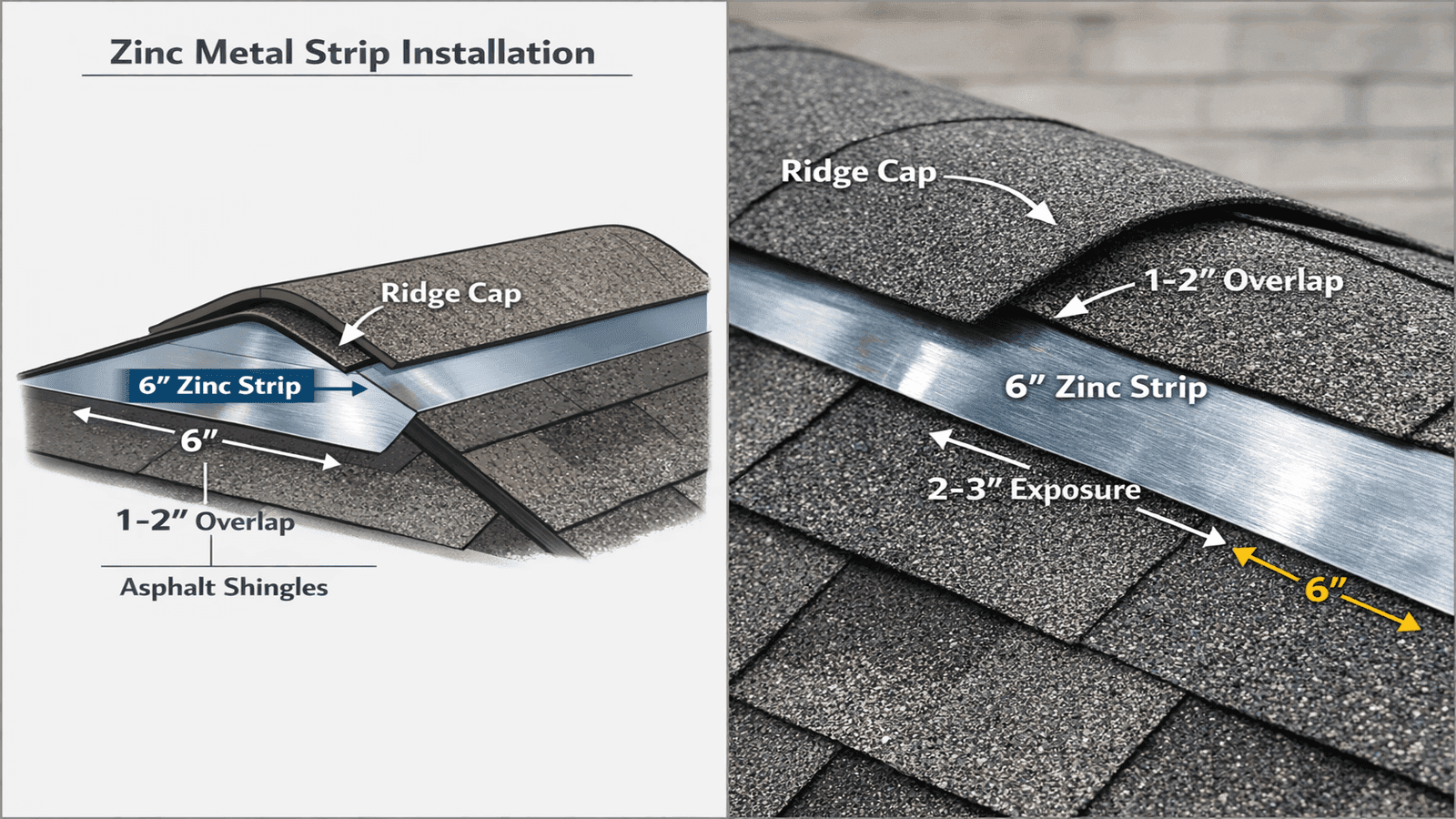
Photo: Zinc strip installation diagram showing proper 6-inch strip positioned just below ridge cap for long-term moss prevention on asphalt shingle roof
When to Call a Professional
DIY moss removal is appropriate for light to moderate coverage on accessible, low-pitch roofs with healthy shingles. There are specific situations where professional removal is the right call, and attempting DIY in those situations can cause significant damage.
Heavy lichen growth requires professional handling. Lichen bonds directly to shingle granules, and removing it without pulling granules off requires mechanical techniques -- controlled scraping at specific angles with purpose-built tools -- that professionals develop through experience. Aggressive DIY lichen removal on aged shingles frequently removes more granule material than the lichen itself had displaced.
Steep pitch (above 6:12) with wet moss creates fall hazard conditions that exceed what non-professionals should work in. Moss reduces friction to near zero on steep surfaces, and the combination of slope, slippery organic material, and wet conditions makes professional equipment and harness systems essential.
Large coverage area (over 30% of roof surface) typically requires multiple treatment rounds and more solution volume than a single DIY treatment efficiently delivers. Professionals have commercial application equipment that covers large areas more evenly and at correct dilution ratios.
Aged shingles with existing granule loss are already at reduced integrity. Any treatment or mechanical action on a shingle that has lost significant granule coverage accelerates its degradation. A professional can assess shingle condition before treatment and adjust the approach accordingly.
Get quotes from top-rated pros.
| Situation | DIY Safe? | Professional Cost Range |
| Light moss, low-pitch, healthy shingles | Yes | $300-$500 |
| Moderate moss, 4:12-6:12 pitch | With harness | $400-$700 |
| Heavy moss, steep pitch (above 6:12) | No | $600-$1,200 |
| Heavy lichen on aged shingles | No | $700-$1,200 |
| Flat/low-slope roof (EPDM/TPO) | Yes (limited) | $300-$600 |
Find a Licensed Roofing Contractor Near You: If your roof has significant moss, lichen, or coverage that qualifies for professional removal, NearbyHunt connects you with vetted local contractors who specialize in roof cleaning and moss treatment. Get free quotes from licensed roofers in your area.
Real-World Case Study: Robert T., Seattle, WA
Robert T. contacted a roofing contractor in Seattle after noticing what he described as "a green carpet" spreading across the north-facing slope of his 10-year-old asphalt shingle roof. The south-facing slope had no visible growth; the north slope had approximately 40% moss coverage concentrated near the ridge and eave line, where shaded areas from two large Douglas fir trees kept the surface consistently damp.
James Carver reviewed photographs of the roof and recommended a two-part approach: a zinc sulfate treatment followed by zinc strip installation at the ridge.
Robert handled the treatment himself using a 3-gallon pump sprayer, applying a zinc sulfate solution on a dry day in early fall. He pre-wet all plantings below the roofline, applied the solution in two passes from ridge to eave, let it dwell for 20 minutes, and rinsed gently with a garden hose. Total material cost: $45.
Six weeks later, with several rain events in between, the moss had turned brown and the majority had washed off the slope. Residual dead material in the eave area was gone after the first significant November rain. Robert then had zinc strips installed below the ridge cap on both slopes. Total material and labor for zinc strip installation: $135.
Combined project cost: $180. Two years after treatment, Robert reported no visible regrowth on either slope. The trees have since been trimmed to clear the roofline by 12 feet, further reducing the shade and debris conditions that fed the original colony.
James notes that this outcome is typical for homeowners who follow the treatment process correctly and invest in zinc strip prevention afterward. "The ones who skip the zinc strips are back on the phone with me 18 months later. The ones who install them are the ones I never hear from again, which is exactly what I want."
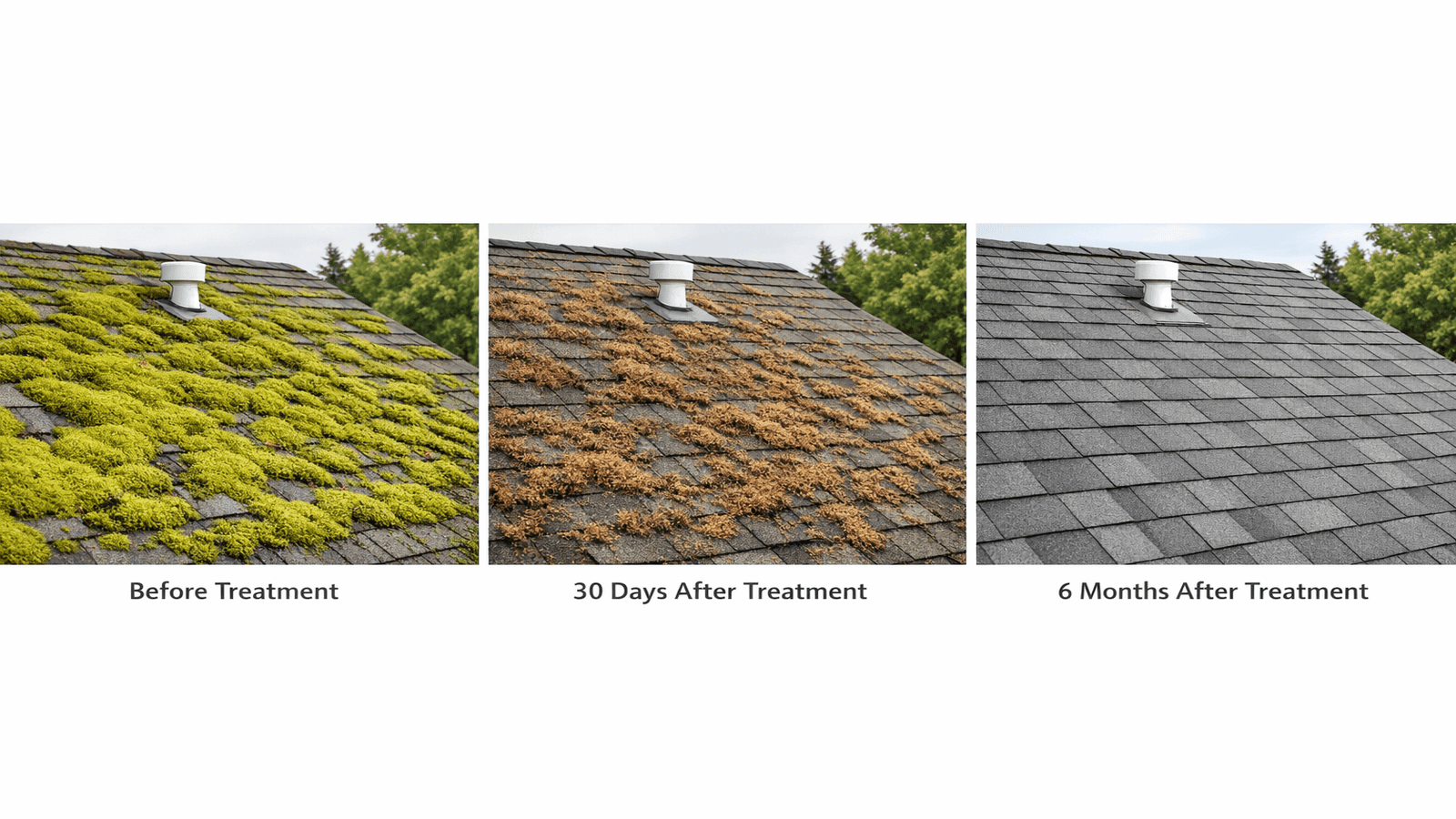
Photo: Three-stage annotated photo series showing roof moss removal results at baseline, 30 days, and 6 months after zinc sulfate treatment on Seattle residential roof
Flat Roof Moss and Algae (Different Approach)
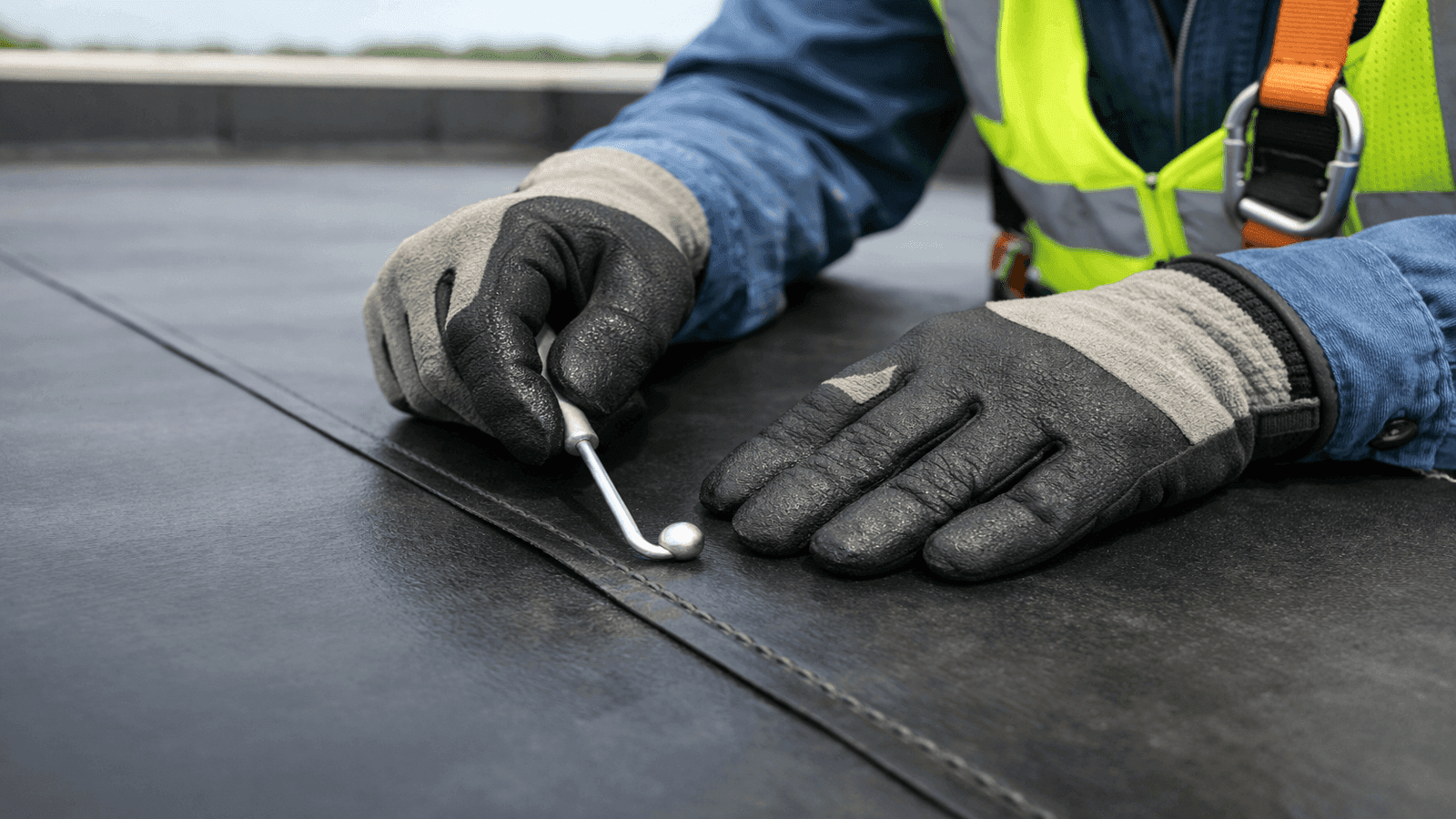
Flat and low-slope roofs (under 2:12 pitch) present a different moss problem than sloped asphalt shingle roofs. Common flat roof membranes -- EPDM (rubber), TPO (thermoplastic polyolefin), and modified bitumen -- do not have granule layers that moss can penetrate in the same way. However, moss and algae growth on flat roofs blocks drainage, retains moisture above the membrane surface, and accelerates membrane degradation at seams and penetrations.
The correct treatment sequence for flat roofs starts with a soft-bristle brush to remove the bulk of standing growth without dragging debris toward drains or scratching the membrane surface. Follow with a biocide spray appropriate for the membrane type -- avoid chlorine bleach on EPDM membranes, which degrades the rubber compound over time. Oxygen bleach is the safer choice.
Prevention on flat roofs centers on maintaining proper drainage slope (minimum 1/8 inch per foot to drain) and clearing organic debris -- leaves, seed pods, twigs -- regularly. Debris accumulation creates the moist, shaded conditions moss needs to establish. Quarterly inspections of drains and scuppers in tree-heavy environments are more effective than reactive treatment.
| Roof Type | Moss Treatment | Prevention Method |
| Asphalt shingles (sloped) | Zinc sulfate or oxygen bleach spray, low-pressure rinse | Zinc strips, tree trimming |
| EPDM flat membrane | Soft brush removal, oxygen bleach spray | Clear drains, quarterly debris removal |
| TPO flat membrane | Soft brush removal, biocide spray | Maintain drainage slope, quarterly inspection |
| Modified bitumen | Soft brush removal, diluted bleach (patch check first) | Annual professional inspection |
Conclusion
Roof moss is a preventable problem that becomes expensive only when it is ignored or treated incorrectly. The two mistakes that cause the most damage are using a pressure washer -- which can strip granules in a single session -- and scrubbing dead moss off aggressively after treatment instead of letting rain do the work. Both errors accelerate the granule loss that moss was already causing, and both are easily avoided.
For most homeowners with light to moderate moss on accessible roofs, a zinc sulfate treatment followed by zinc strip installation is a weekend project that costs under $200 and delivers 10-plus years of protection. Heavy lichen, steep pitches, and aged shingles are the situations where professional removal is worth every dollar of the $300-$1,200 cost range.
If your roof has significant moss coverage or you are unsure about shingle condition, get a professional assessment before treating. An experienced roofing contractor can tell you whether the shingles underneath the moss are still worth protecting or whether the moss removal conversation is really a roof replacement conversation.
- Disclaimer: This article is for general informational purposes only and does not constitute professional roofing advice. Roof conditions, local building codes, and material specifications vary significantly. Always consult a licensed roofing contractor before beginning any roof work. Working on a roof carries serious fall hazards -- use appropriate safety equipment and hire a professional for steep-pitch or high-coverage situations.*
Sources & References
- Oregon State University Extension Service -- Moss Control on Roofs -- Research on zinc-based treatments and efficacy timelines
- University of Washington Urban Ecology -- Roof Moss in Pacific Northwest Climates -- Study data on canopy coverage correlation with moss growth rates
- National Roofing Contractors Association (NRCA) -- Low-Slope and Steep-Slope Maintenance Guidelines -- Industry standards for moss treatment and prevention
- Asphalt Roofing Manufacturers Association (ARMA) -- Residential Asphalt Roofing Manual -- Shingle granule protection and warranty considerations
- EPA Safer Choice Program -- Outdoor Biocides for Residential Use -- Chemical safety ratings for moss and algae treatments
- International Association of Certified Home Inspectors (InterNACHI) -- Roof Inspection Standards -- Coverage assessment and damage classification criteria

James is a licensed roofing contractor with 20 years of experience in roof installation, inspection, and repair across the U.S. South and Midwest. He specialises in asphalt shingles, metal roofing, and storm damage restoration. On NearbyHunt, James offers practical advice on roof maintenance, insurance claims, and selecting the right materials for long-lasting protection.

Jacob is a licensed roofing contractor with over 18 years of experience in roof inspection, installation, and restoration. Based in Texas, he has led hundreds of successful roofing projects across residential and commercial properties. Jacob is also a certified storm damage specialist, ensuring that all NearbyHunt roofing content meets industry best practices and safety standards.