- Asphalt shingles cover roughly 75% of U.S. homes [1] and cost $8,000-$11,000 installed for a standard home, making them the most widely used and affordable option available.
- Metal roofs last 40-70 years compared to 20-30 years for asphalt [2], meaning a single metal roof can outlast two to three asphalt replacements over the same period.
- Slate is the longest-lasting material, with natural slate documented at 100-200 years [3]; installation runs $10-$30 per square foot, putting it firmly in the premium tier.
- Clay and concrete tile roofs cost $8-$25 per square foot installed and perform best in hot, dry climates where their thermal mass naturally moderates indoor temperatures.
- The National Roofing Contractors Association (NRCA) estimates up to 40% of roofing failures are caused by improper installation, not material defects [4].
- 1 in 4 homeowners who hire a roofer without verifying credentials end up paying for a second installation within 10 years due to premature failure.
Picking a roofing material for your home is one of the largest financial decisions you'll make as a homeowner. You're choosing a product that will protect your family, affect your energy bills, and either hold its value or drain your equity for the next two to seven decades. The right choice depends on your climate, your roof's pitch, your HOA rules, and how long you plan to stay in the home. Our parent guide on all about roofing covers the full system: how layers work together, when to repair versus replace, and what to ask a contractor. This guide focuses specifically on the materials themselves, comparing every major option on cost, lifespan, weight, and suitability.

Get quotes from top-rated pros.
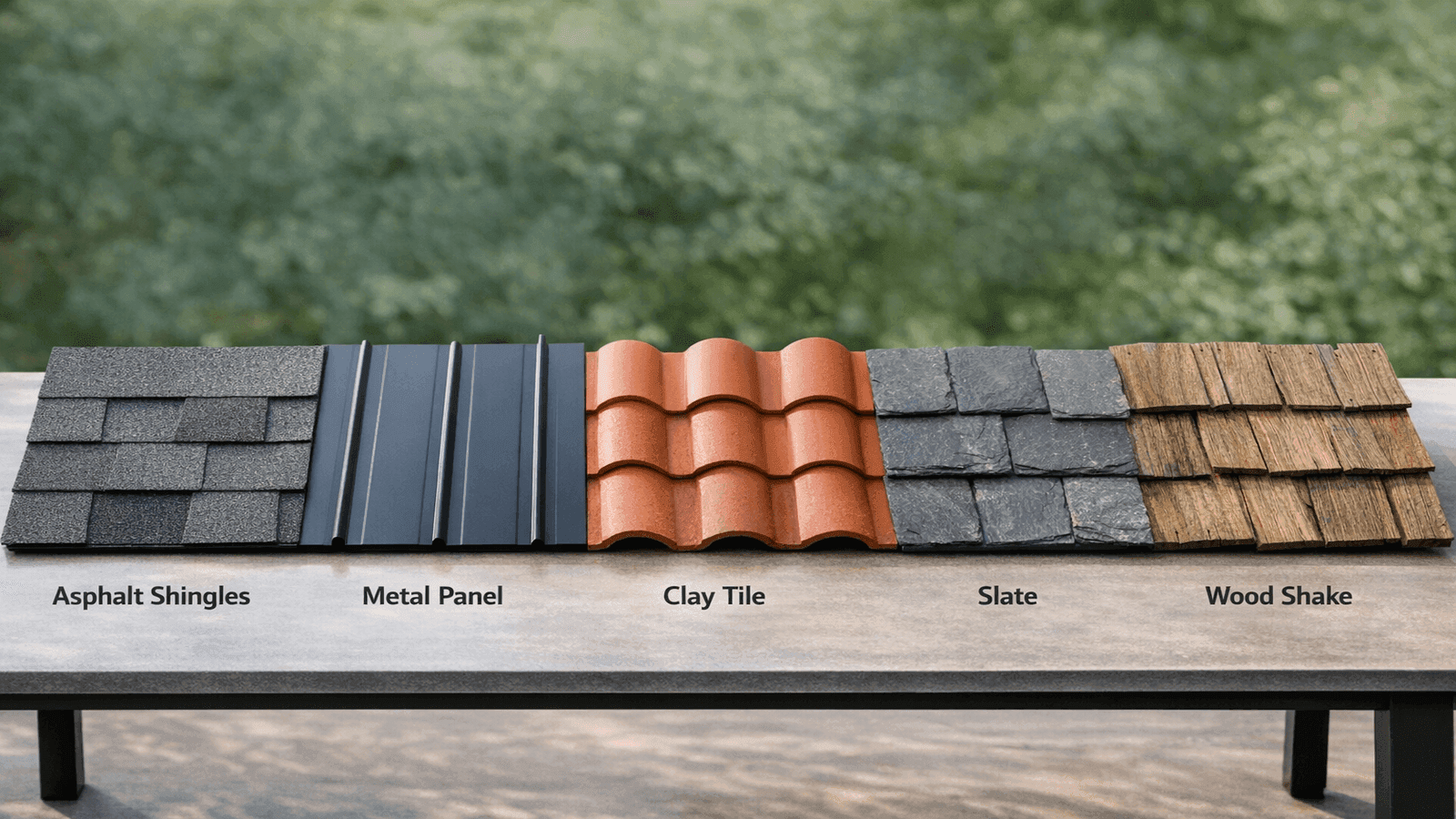
Photo: Side-by-side comparison of five roofing material samples: asphalt shingles, standing seam metal panel, clay tile, natural slate, and wood shake, laid out on a table in natural light
Asphalt Shingles
Asphalt shingles dominate U.S. residential roofing for a straightforward reason: they balance upfront cost, ease of installation, and widely available labor in a way no other material currently matches. Roughly 75% of American homes use asphalt shingles [1], and the market reflects that dominance, with asphalt holding about 55% of overall roofing revenue even as metal and composite alternatives grow.
3-Tab vs. Architectural Shingles
There are two primary categories of asphalt shingles that homeowners encounter.
3-tab shingles are a flat, single-layer product cut to create three uniform tabs. They're the cheaper option at $1.50-$3.50 per square foot installed, but their 15-20 year lifespan and limited wind resistance (typically rated to 60-70 mph) make them increasingly rare in new installations. Most building departments still permit them, but contractors in storm-prone regions routinely steer customers toward architectural shingles instead.
Architectural shingles (also called laminated or dimensional shingles) use two fused layers to create a textured look that mimics wood shake. They cost $4.50-$8.00 per square foot installed and carry wind ratings of 110-130 mph on premium products. Their lifespan runs 25-30 years under standard conditions. This is currently the most popular roofing choice in the entire U.S. market, and it's what most contractors mean when they quote a standard shingle roof.
| Feature | 3-Tab Shingles | Architectural Shingles |
| Cost (installed) | $1.50-$3.50/sq ft | $4.50-$8.00/sq ft |
| Lifespan | 15-20 years | 25-30 years |
| Wind rating | 60-70 mph | 110-130 mph |
| Weight | 230-250 lbs/square | 320-400 lbs/square |
| Warranty | 20-25 years | 30-50 years |
In my experience across 1,800-plus roofing projects in the U.S. South and Midwest, I've stopped recommending 3-tab shingles to almost any client. The cost difference between 3-tab and a quality architectural product is rarely more than $800-$1,200 on a standard home, but you gain 8-12 extra years of life and dramatically better wind performance. In high-wind zones especially, wind uplift is a real risk. That cost delta pays for itself the first time a storm rolls through.
Asphalt Shingle Pros and Cons
The advantages of asphalt are clear: low upfront cost, widely available contractors, simple repairs, and compatibility with virtually every roof pitch above 2:12. You can get a damaged section repaired by any licensed roofer in any market. Replacement shingles are available at every home improvement retailer.
The drawbacks matter too. Asphalt shingles are petroleum-based and end up in landfills at end of life, though some recycling programs exist. They're also the most climate-sensitive of the major materials; extreme temperature cycling in northern states or intense UV exposure in southern climates can shorten their lifespan by 20-30% compared to rated expectations.
Metal Roofing
Metal roofing has moved from a niche commercial product to a serious residential option over the last 15 years. Metal's share of the U.S. residential roofing market has grown to roughly 14% [1] as homeowners prioritize durability and energy performance. In certain Sun Belt markets, metal now competes directly with asphalt in new construction.
Standing Seam vs. Metal Shingles
Standing seam metal roofing uses concealed fasteners with raised seams that interlock panels, creating a clean, modern profile. It's the premium metal option at $12-$25 per square foot installed, with a lifespan of 40-70 years. The concealed fastener system is what makes it last: there are no exposed screw heads to fail or corrode over time. Steel, aluminum, zinc, and copper are all available, with copper carrying the longest potential lifespan of any roofing material (copper roofs on historic buildings routinely exceed 100 years).
Metal shingles are stamped or formed to mimic asphalt, wood shake, or tile profiles. They use exposed fasteners and cost $7-$14 per square foot installed. Lifespan runs 40-50 years. They're easier to repair than standing seam and allow for piecemeal replacement of damaged sections.
For context on how long metal roofs actually perform in the field, our article on how long do roofs last breaks down verified real-world data across materials.
| Feature | Standing Seam Metal | Metal Shingles |
| Cost (installed) | $12-$25/sq ft | $7-$14/sq ft |
| Lifespan | 40-70 years | 40-50 years |
| Wind resistance | Up to 160 mph | Up to 120 mph |
| Weight | 100-200 lbs/square | 100-200 lbs/square |
| Maintenance | Very low | Low |
The Cost-Per-Year Case for Metal
The upfront cost of a metal roof runs $28,000-$80,000 for a 2,000-square-foot home, versus $8,000-$11,000 for asphalt shingles [5]. That difference makes many homeowners stop reading. But the cost-per-year comparison changes the picture substantially.
A $10,000 asphalt shingle roof lasting 25 years costs $400 per year. A $40,000 standing seam metal roof lasting 60 years costs $667 per year. However, when you account for the two asphalt replacements you'd need over that same 60-year period (one at year 25, another at year 50, with rising labor costs), the total asphalt expenditure exceeds $35,000 in most markets. Metal also reduces cooling costs by 10-25% in hot climates through solar reflectance, adding further long-term savings.
The licensed roofers in our NearbyHunt network report that approximately 68% of homeowners who choose metal roofing cite long-term cost savings as their primary motivation, with energy efficiency a close second driver, particularly in Florida, Texas, and Arizona.
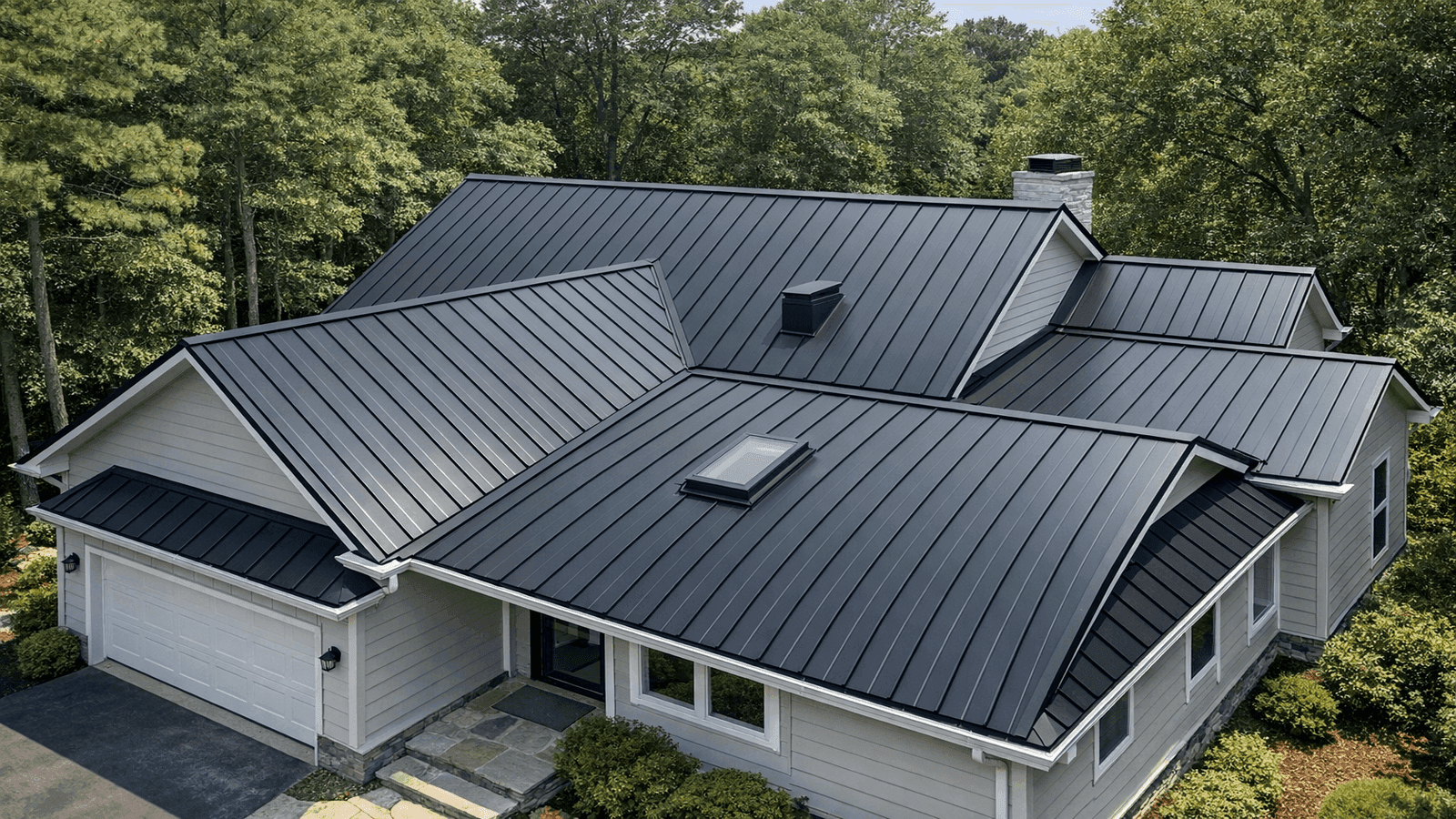
Photo: Aerial view of a residential home with a standing seam metal roof in dark charcoal, surrounded by mature trees, showing clean panel lines and concealed fasteners
Slate Roofing
Natural slate is simply stone, quarried and cut into flat tiles. It has been used as a roofing material for hundreds of years, and when properly installed on an adequate structure, it genuinely delivers the longevity those centuries imply. Natural slate roofs are documented to last 100-200 years [3], with many 19th-century examples still actively weathering out in the Mid-Atlantic and New England states.
Get quotes from top-rated pros.
What Slate Actually Costs
Slate is expensive, and the reasons are real: the material must be quarried (primarily in Vermont, New York, Pennsylvania, and imported from Spain and Brazil), it requires a specialist installer, and the weight demands structural assessment before installation. Installation costs run $10-$30 per square foot, or $22,000-$70,000 on a typical home [6]. A structurally sound home can support natural slate, but many homes built after 1970 with engineered lumber trusses require reinforcement before a slate installation can proceed.
If you're comparing whole-project costs across premium materials, our roof components explained article covers the structural and underlayment requirements that differ by material weight.
Synthetic Slate
Synthetic or composite slate tiles are manufactured from recycled rubber, plastic, or polymer compounds to replicate the look of natural slate. They cost $7-$14 per square foot installed and carry a rated lifespan of 40-50 years. Weight is dramatically lower (typically 100-200 lbs per square versus 700-1,500 lbs per square for natural slate), meaning they work on standard residential framing without structural reinforcement.
The tradeoff is longevity: synthetic slate won't outlive a natural slate installation. But for homeowners who want the aesthetic at a fraction of the weight and cost, composite slate has become a compelling middle option. You can explore whether your home is a candidate in our green roofing options guide, which covers recycled-content roofing products in depth.
Clay and Concrete Tile
Clay tile roofs are among the most visually distinctive roofing options available, and they've earned their place in hot, dry climates for functional reasons beyond aesthetics. The thermal mass of clay and concrete tile naturally moderates attic temperatures, reducing heat transfer into living spaces and cutting cooling costs in markets like Arizona, Southern California, and Florida.
Clay Tile vs. Concrete Tile
Clay tile is kiln-fired from natural clay and carries a rated lifespan of 50-100 years. The material is fire-resistant (Class A when installed correctly), extremely low-maintenance once installed, and holds its color for decades without fading. Installation costs run $8-$25 per square foot [6], with most homeowners paying $20,000-$55,000 for a complete installation.
Concrete tile is manufactured from sand, cement, and water, molded into profiles that match clay tile shapes. It costs less, typically $7-$18 per square foot installed, but carries a somewhat shorter lifespan of 40-50 years and is heavier than clay (900-1,200 lbs per square versus 600-900 lbs per square for clay tile). Both materials require structural assessment before installation.
| Feature | Clay Tile | Concrete Tile |
| Cost (installed) | $8-$25/sq ft | $7-$18/sq ft |
| Lifespan | 50-100 years | 40-50 years |
| Weight | 600-900 lbs/sq | 900-1,200 lbs/sq |
| Fire resistance | Class A | Class A |
| Best climate | Hot, dry | Hot, dry |
Tile roofs confuse a lot of homeowners because they look fragile but they're not. What IS fragile is the underlayment beneath the tile. Clay or concrete tile can last 75 years, but the 30-pound felt underlayment under it might only last 20. I've done re-tiling projects in Florida where the tile itself is perfect and the underlayment is completely deteriorated. The job becomes a full tear-off anyway. When you're evaluating a tile roof purchase, always ask about underlayment age, not just tile condition.
Wood Shingles and Shakes
Wood roofing has been used in North America since colonial times. Cedar, redwood, and treated pine are the most common species used today, either as machine-sawn shingles or hand-split shakes. Shingles have smooth, uniform surfaces; shakes are thicker and textured, with a more rustic profile.
Performance and Limitations
A properly maintained wood shake roof can last 25-40 years in a favorable climate. Moist, shaded environments are wood's enemy: moss, algae, rot, and fungal growth all accelerate in humid conditions without regular treatment. Wood roofing requires more ongoing maintenance than any other material category, typically needing treatment every 2-5 years and periodic moss removal to achieve its rated lifespan.
Fire resistance is the other significant limitation. Untreated wood is combustible (Class C), and several western states and fire-prone counties in California have prohibited or restricted wood shake installations due to wildfire risk. Fire-treated wood shingles can achieve Class A or B ratings, but the treatment degrades over time and may require re-treatment. Review your local fire code and HOA rules before specifying wood.
Wood roofing costs $6-$12 per square foot installed, putting it in the mid-range for materials but at the high end for lifetime maintenance cost when you account for regular treatments, repairs, and the likelihood of early replacement in humid climates.
Flat Roof Membranes
Flat and low-slope roofs (below 2:12 pitch) require entirely different materials than pitched residential roofs. If your home has a flat section, an addition with low slope, or a commercial-style roof, you'll need a membrane system rather than any of the products listed above. For a full explanation of how pitch affects material choice, see our roof pitch explained guide.
The three most common flat roof membrane systems for residential use are TPO (thermoplastic polyolefin), EPDM (ethylene propylene diene terpolymer), and modified bitumen. TPO and EPDM are single-ply synthetic membranes that heat-weld or mechanically fasten to the roof deck. Modified bitumen is an asphalt-based product applied in layers with a torch or cold adhesive.
TPO costs $5-$10 per square foot installed and carries a 15-20 year lifespan. EPDM is slightly more affordable at $4-$9 per square foot installed with a similar lifespan. Modified bitumen runs $4-$8 per square foot. All three require qualified installation to achieve proper drainage and avoid pooling water, which is the primary failure mode for flat roofs.
Comparing All Materials: Side-by-Side
The table below provides a direct comparison across the seven material categories covered in this guide, using mid-range installed cost figures for a 2,000-square-foot home.
| Material | Installed Cost (2,000 sq ft home) | Lifespan | Best Climate | Structural Load | Maintenance |
| 3-Tab Asphalt | $8,000-$11,000 | 15-20 years | All | Low | Low |
| Architectural Asphalt | $12,000-$18,000 | 25-30 years | All | Low | Low |
| Standing Seam Metal | $28,000-$55,000 | 40-70 years | All | Low | Very Low |
| Metal Shingles | $18,000-$32,000 | 40-50 years | All | Low | Low |
| Natural Slate | $22,000-$70,000 | 100-200 years | Cool, dry | Very High | Very Low |
| Clay Tile | $20,000-$55,000 | 50-100 years | Hot, dry | High | Low |
| Wood Shake | $15,000-$28,000 | 25-40 years | Dry, cool | Low-Med | High |
A Real Homeowner Decision: Marcus T., Orlando, FL
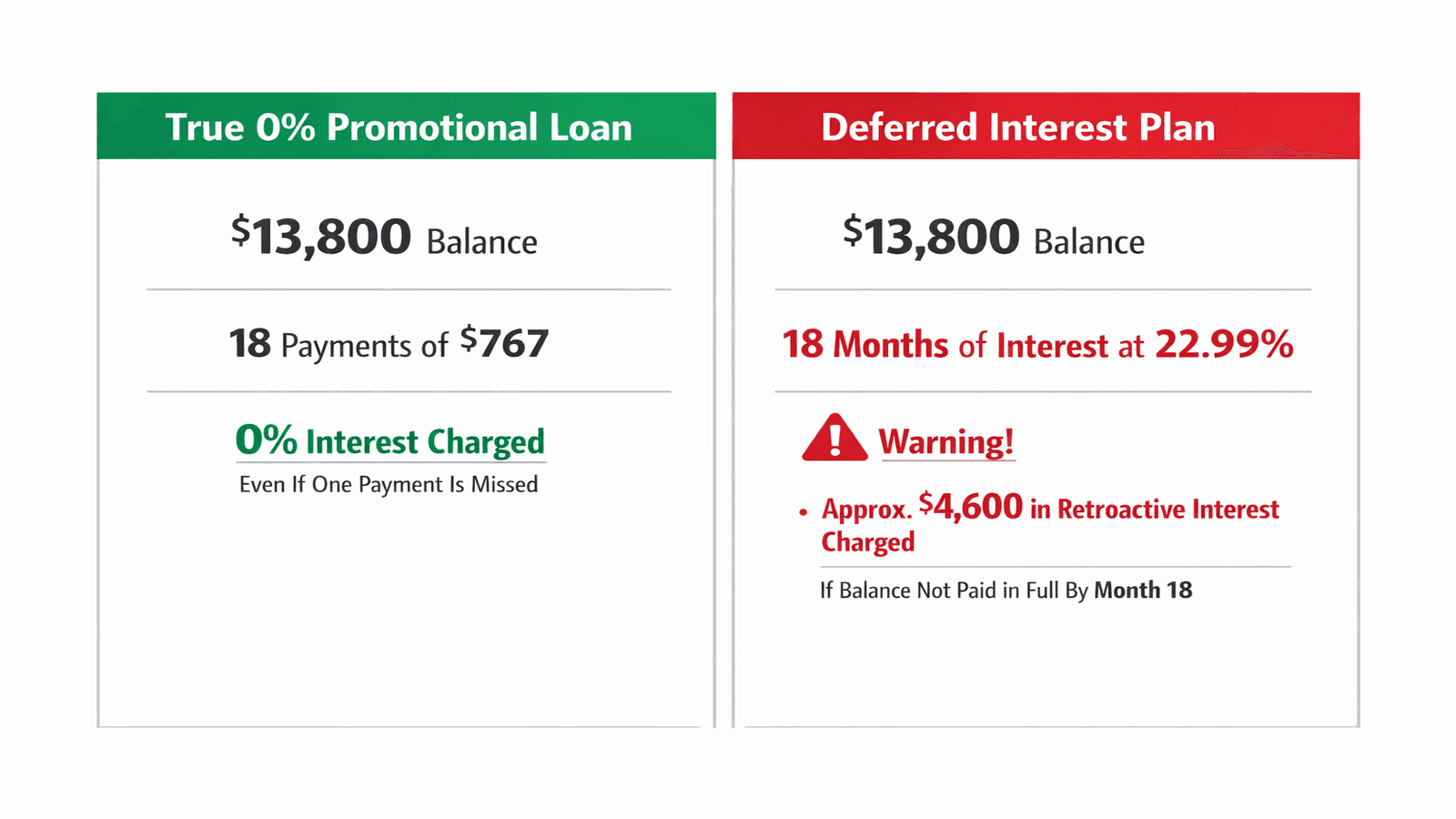
Marcus T. owns a 1,995-square-foot ranch-style home in Orlando, Florida. His original 3-tab asphalt shingle roof, installed in 2004, was showing granule loss and had two small leaks repaired over the previous two years. He received three contractor quotes in late 2025 and faced a decision familiar to many Florida homeowners: re-shingle with architectural asphalt at $13,800, or step up to a metal roof at $38,500.
Marcus contacted James Carver for a second opinion. After reviewing the home's structure (standard truss framing, no reinforcement needed for metal), the HOA's approved material list (metal panels permitted), and Marcus's 15-year plan to stay in the home, the recommendation was clear: the metal roof. The energy savings estimate in the Orlando climate was $180-$230 per month in summer cooling cost reduction, or roughly $1,800-$2,400 per year. Over 15 years, that recovery adds up to $27,000-$36,000 in utility savings alone, before accounting for the avoided second asphalt re-roof he'd need around year 20.
Marcus chose standing seam steel in a medium gray. The project was completed in four days. He also filed for a Florida homeowner's insurance discount, which many Florida insurers offer for metal roofs due to superior wind resistance. His annual premium dropped by $340. The total first-year savings paid for more than 1% of the roof's installed cost before a single shingle would have blown off.
Get quotes from top-rated pros.
How to Choose the Right Material for Your Home
Start with these five questions before contacting any contractor.
1. What is your roof pitch? Anything below 2:12 requires membrane systems. Pitches of 2:12-4:12 narrow your options to low-slope metal panels or modified products. Above 4:12, the full range opens up.
2. What does your HOA allow? Many HOAs in suburban communities restrict materials to asphalt, or specify approved colors for metal and tile. Verify in writing before requesting quotes.
3. What is your climate?Hot, dry climates favor clay tile and metal (energy performance). Cold, wet climates favor architectural asphalt and metal (freeze-thaw performance). High-wind coastal areas favor metal and impact-resistant architectural shingles rated to 130+ mph.
4. How long will you stay? If you're selling within 5 years, a quality architectural shingle roof is usually the right financial call. If you're staying 20-plus years, the cost-per-year math often favors metal or tile.
5. Can your structure support the weight? Natural slate and concrete tile require structural assessment. Most wood-framed homes built after 1980 can handle any lighter material without modification.
If you're seeing signs that your current roof is failing, our common roofing problems guide covers the 15 most common issues and helps you determine whether repair or replacement is the right call before you spend money on a new material.
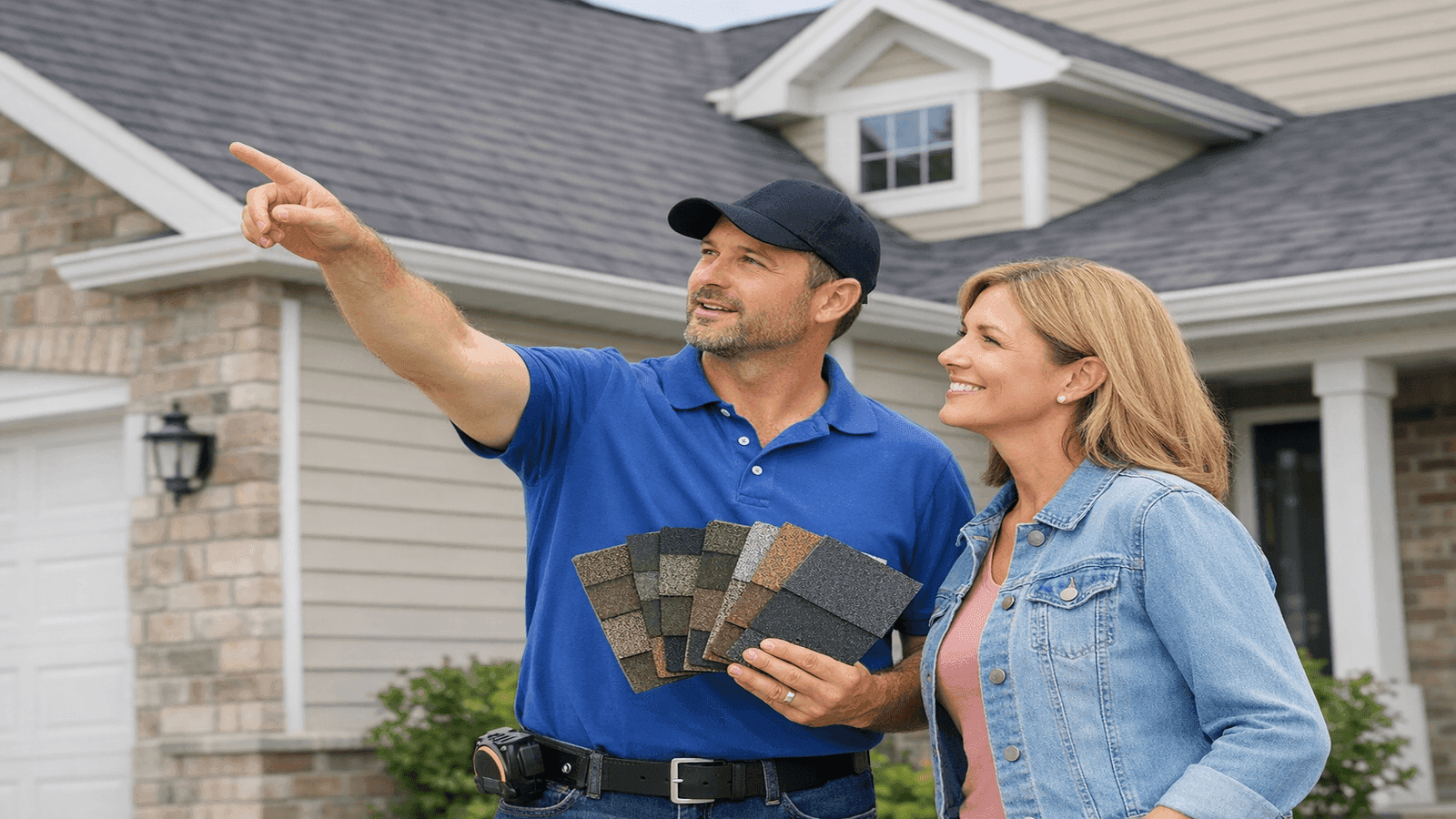
Photo: Roofing contractor holding material samples next to a homeowner outside a suburban home, pointing to the roof during a consultation meeting
What to Expect from the Installation Process
Every roofing material installs differently, and the installation method matters as much as the material itself. The NRCA estimates that up to 40% of roofing failures are caused by improper installation [4], not material defects. Understanding what a proper installation involves helps you evaluate contractor proposals and identify shortcuts.
Asphalt Shingle Installation
A standard asphalt shingle replacement involves tear-off of existing material (one or two layers maximum before code requires full tear-off and deck inspection), inspection and repair of the decking, installation of drip edge, ice and water shield at vulnerable areas, synthetic underlayment across the full deck, and then shingle installation from eaves to ridge. A crew of 3-4 workers typically completes a standard home in one day.
Warning signs of a poor asphalt installation: skipped underlayment, misaligned shingle courses, inadequate nail placement (nails too high or too few per shingle), and missing flashing at all penetrations and valleys.
Metal Roof Installation
Metal installation takes longer, typically 2-4 days for a standard home. Standing seam requires precision panel cutting, proper alignment, and correctly torqued concealed fasteners. Metal expands and contracts with temperature, so proper clip placement is critical to allow movement without buckling. Inadequate allowance for thermal expansion is the most common metal roof installation error in climates with significant temperature range.
Tile and Slate Installation
Tile and slate are set on battens (horizontal wood strips attached to the deck), with each tile or slate overlapping the course below and anchored with nails or hooks. Weight distribution matters: a structural engineer's assessment ensures the framing can handle the load. Hiring a contractor without direct experience in tile or slate installation is one of the most common causes of premature failure in these premium materials. Ask for project references specifically for your chosen material type.
One thing I always tell homeowners before a tile or slate install: interview the crew, not just the company. The installer's personal experience with that specific material is what determines whether your $40,000 tile roof lasts 80 years or fails in 15. I've inspected failed tile roofs where the contractor was licensed and reputable in asphalt, but had never set a tile roof before. The learning curve happens on your dime unless you ask upfront.
Red Flags When Hiring a Roofing Contractor
Verifying licensing before signing any contract is non-negotiable. In Florida, roofing contractors must hold a state license from the DBPR. Most states have equivalent requirements. A contractor who can't provide a license number on request should be disqualified immediately.
Additional warning signs to watch for:
- Pressure to sign before a written estimate is provided
- No physical business address (truck-only operation, especially after storms)
- Request for full payment upfront
- No permit pulled for work that legally requires one
- Substantially below-market bid (typically signals material substitution or no license)
Maintaining Your Roof to Maximize Material Life
The material you choose only delivers its rated lifespan if you maintain it. Proactive maintenance can add 10-15 years to any roof's service life [4], regardless of material type.
The two highest-return maintenance actions for any roof are: keeping gutters clean so water drains freely at the eaves (clogged gutters cause ice dams in cold climates and rot in fascia boards everywhere), and annual visual inspections after major storms to catch flashing failures, lifted shingles, or cracked tiles before water infiltrates the deck.
For detailed guidance on what to watch for and how often to inspect, see our roofing vs. siding priority guide, which helps homeowners sequence exterior maintenance decisions when budgets require prioritization.
People ask me all the time whether they should fix their siding or their roof first. My answer is always the same: the roof. Water enters through the top of the structure and travels down. A compromised roof will damage your walls, your insulation, your electrical, and eventually your foundation. Siding is important, but it doesn't create interior damage the way a failing roof does. If you have a limited budget, protect the envelope from the top down.
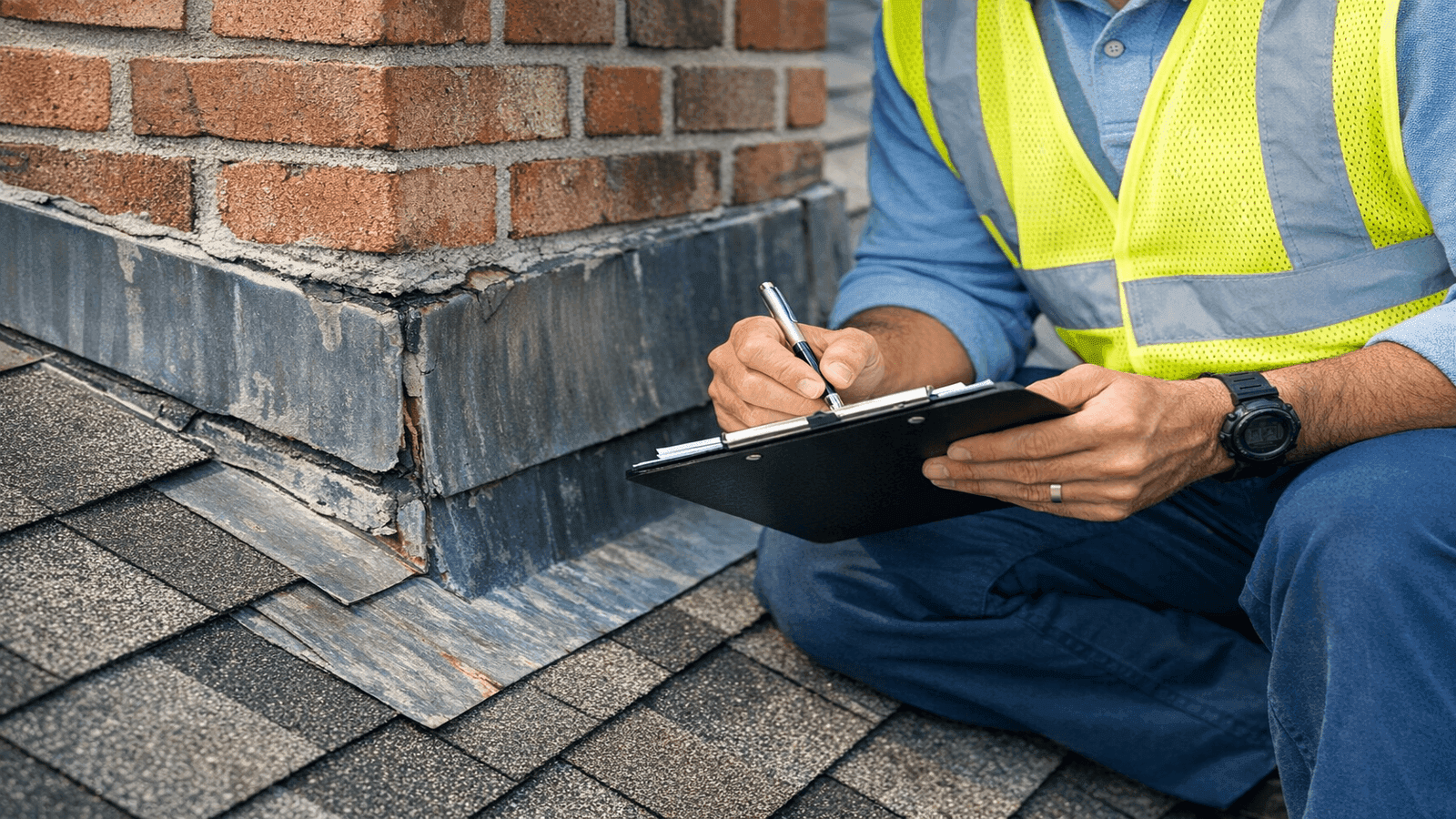
Photo: Close-up of a roofing inspector using a tablet to document flashing condition at a chimney, checking for gaps or sealant failure on an asphalt shingle roof
Conclusion
Your roofing material choice shapes your home's protection, appearance, and value for the next two to seven decades. Architectural asphalt shingles are the right answer for most homeowners who want proven performance at a reasonable cost and can plan for a replacement within 30 years. Metal roofing is the right answer for homeowners who prioritize longevity, energy performance, and the lowest lifetime maintenance burden. Tile and slate are the right answers for homeowners in specific climates or architectural contexts who value a century-class product and can support the structural requirements.
Whatever you choose, verify contractor licensing, pull the required permit, and understand what a proper installation for your chosen material looks like before any crew gets on your roof. The material matters, but the installation matters just as much. Working with a licensed professional you've vetted through a credible source is the single best investment you can make in any roofing project.
Disclaimer: The cost figures, lifespan estimates, and contractor guidance in this article are provided for general informational purposes only. Actual project costs vary significantly by region, home size, structural condition, and contractor pricing. Always obtain multiple written quotes from licensed, insured roofing contractors before making any financial commitment. This article does not constitute professional engineering or legal advice. Structural load calculations for heavy roofing materials such as tile and slate must be performed by a qualified structural engineer.*
Sources & References
- Asphalt Shingles Market Size, Share & Growth Analysis 2025-2032 - GM Insights, 2025
- Shingles vs. Metal Roof Cost (2026 Guide) - This Old House, 2026
- 12 Types of Roof Materials: Choosing the Best Option - Cedur, 2025
- The Roofing Industry in 2025 - National Roofing Contractors Association (NRCA), 2025
- Metal Roof vs. Shingles Cost Comparison (2026) - This Old House, 2026
- Tile Roof Cost Guide: Clay & Concrete Tile (2026) - This Old House, 2026
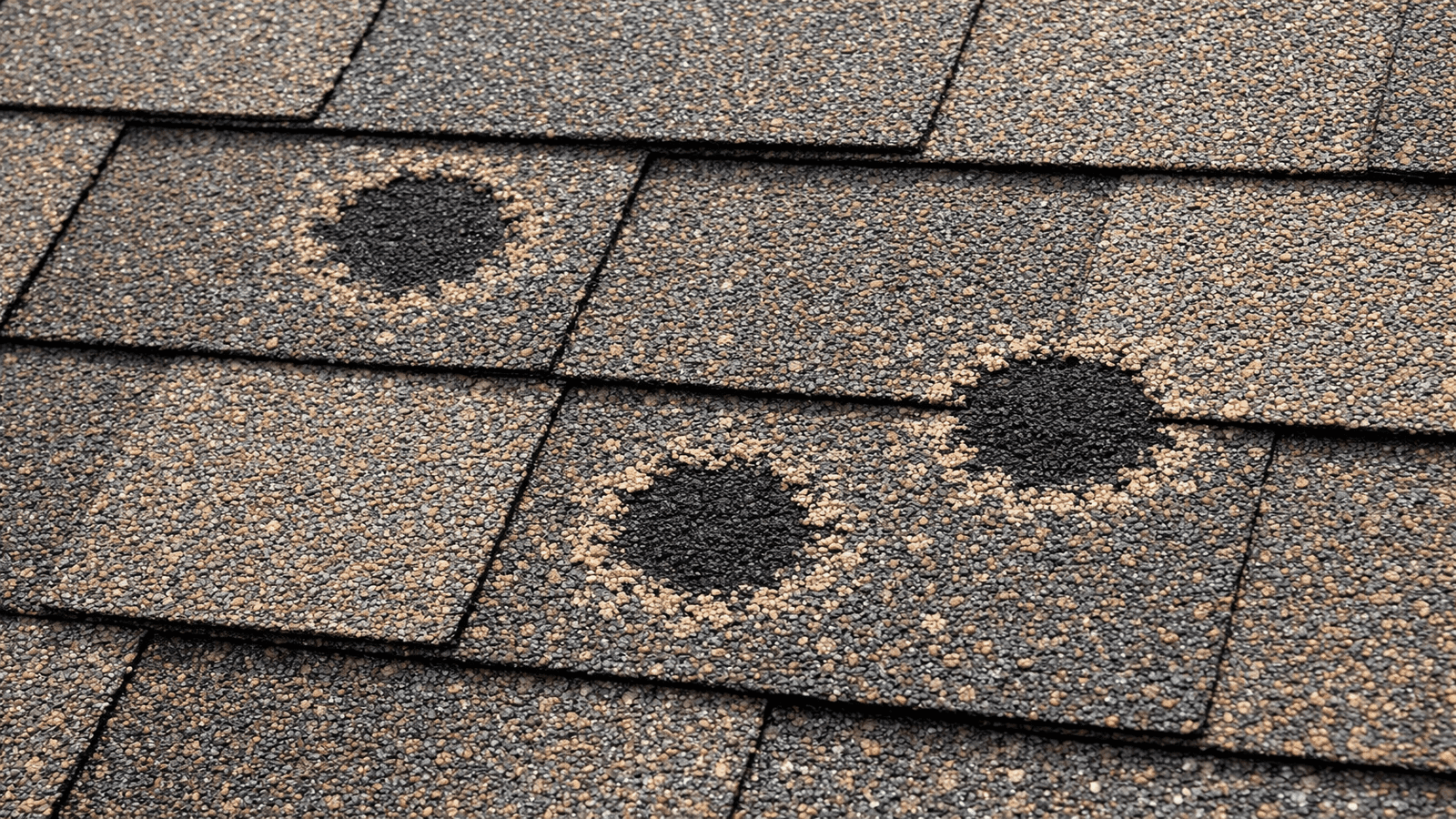

James is a licensed roofing contractor with 20 years of experience in roof installation, inspection, and repair across the U.S. South and Midwest. He specialises in asphalt shingles, metal roofing, and storm damage restoration. On NearbyHunt, James offers practical advice on roof maintenance, insurance claims, and selecting the right materials for long-lasting protection.

Jacob is a licensed roofing contractor with over 18 years of experience in roof inspection, installation, and restoration. Based in Texas, he has led hundreds of successful roofing projects across residential and commercial properties. Jacob is also a certified storm damage specialist, ensuring that all NearbyHunt roofing content meets industry best practices and safety standards.