- Annual plumbing inspections cost $100 to $200 but can prevent emergency repairs ranging from $500 to $15,000.
- A single dripping faucet wastes more than 3,000 gallons of water per year — a slow drain leak wastes even more.
- Homeowners who invest $400 annually in preventive maintenance save 40% to 60% on total plumbing costs over 20 years.
- Burst pipes from frozen or deteriorating plumbing average $10,000 to $15,000 in insurance claims.
- Water heaters, sump pumps, and drain lines need service at least once per year to perform reliably.
- Early leak detection can save the average homeowner $500 to $2,000 annually on water and repair bills.
Home plumbing operates mostly out of sight, which makes it easy to ignore until something goes wrong. The reality is that a few hours of routine maintenance each year protects you from the water damage, emergency repair bills, and structural issues that result from neglect. This guide covers everything you need to know to keep your plumbing system running reliably through every season.
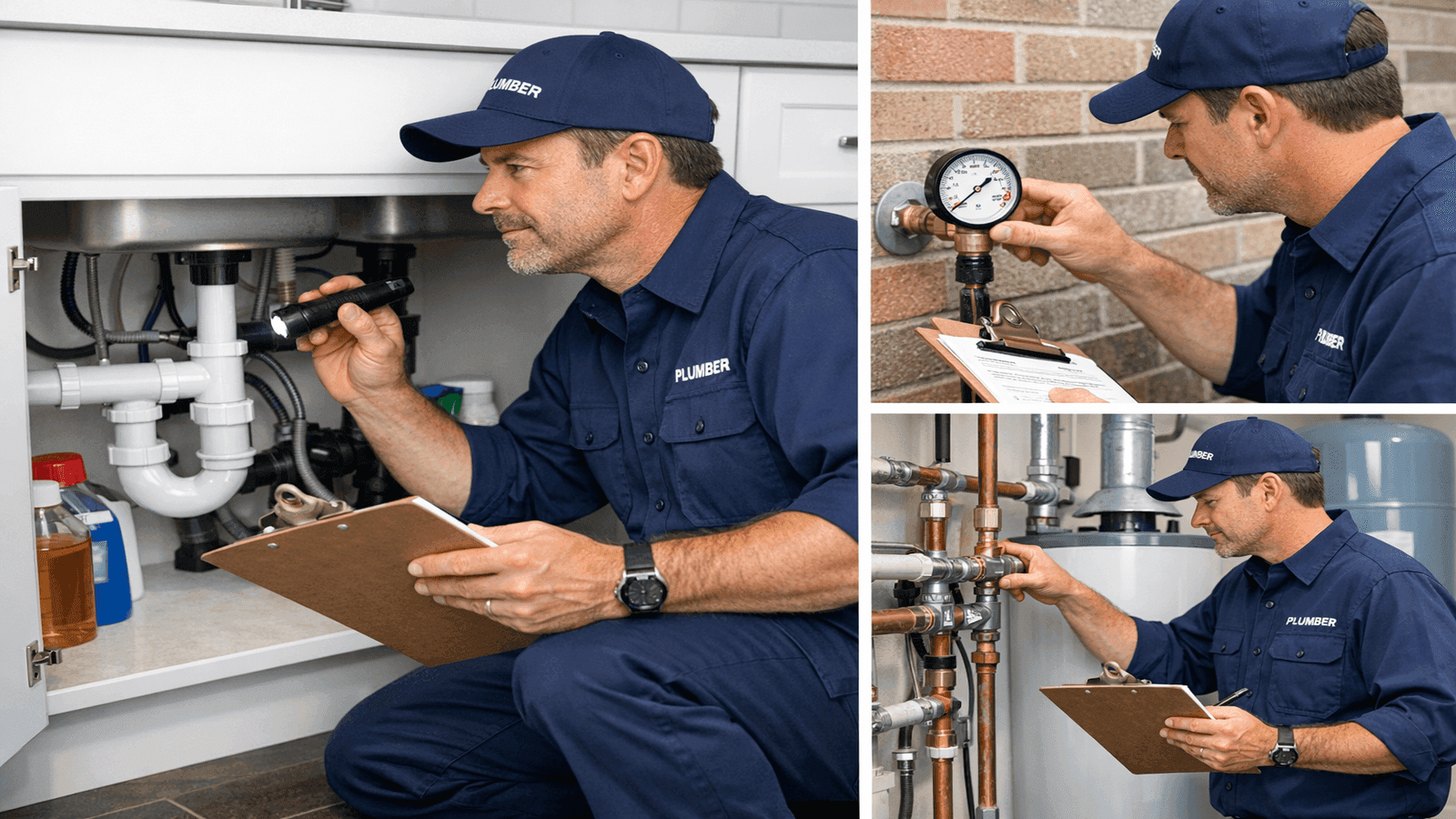
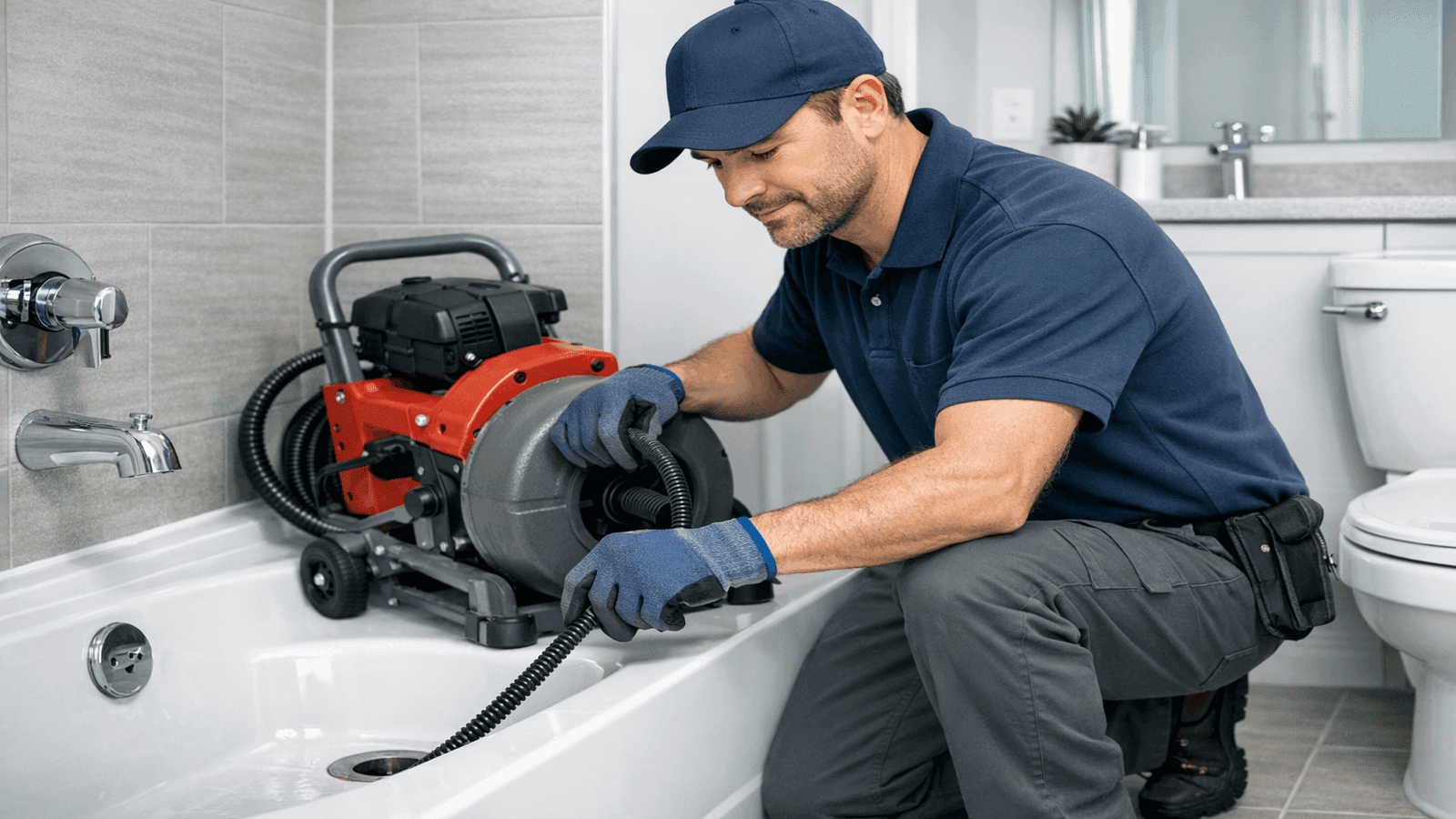
Photo: Licensed plumber conducting comprehensive home plumbing maintenance inspection
Why Plumbing Maintenance Matters
Most homeowners only think about plumbing when a pipe bursts, a drain backs up, or the water heater stops working. By that point, a small, preventable problem has become an expensive emergency.
Preventive maintenance costs a fraction of emergency repairs. An annual plumbing inspection averages $100 to $200. A burst pipe repair, including drywall work and mold remediation, routinely exceeds $5,000. Water heater replacement after a catastrophic failure costs $900 to $3,500, while routine flushing and anode rod replacement extends the unit's life by 5 to 10 years for under $100.
Beyond repair costs, neglected plumbing affects water bills. A running toilet wastes 200 gallons per day. A leaking faucet dripping once per second wastes more than 3,000 gallons annually. According to the EPA, household leaks account for nearly 1 trillion gallons of water wasted nationwide each year, and most of that waste comes from fixtures that would cost under $50 to fix. Find Licensed Plumbers Near You

Get quotes from top-rated pros.
In 18 years and 2,400+ projects, I've seen a clear pattern: the homeowners who call me for emergencies are almost always the ones who skipped routine maintenance. The homeowners who do annual inspections call me for scheduled work, not crisis situations. The difference in what they spend over a decade is enormous.
Seasonal Plumbing Maintenance Checklist
Plumbing systems face different stresses each season. A seasonal approach ensures nothing gets overlooked.
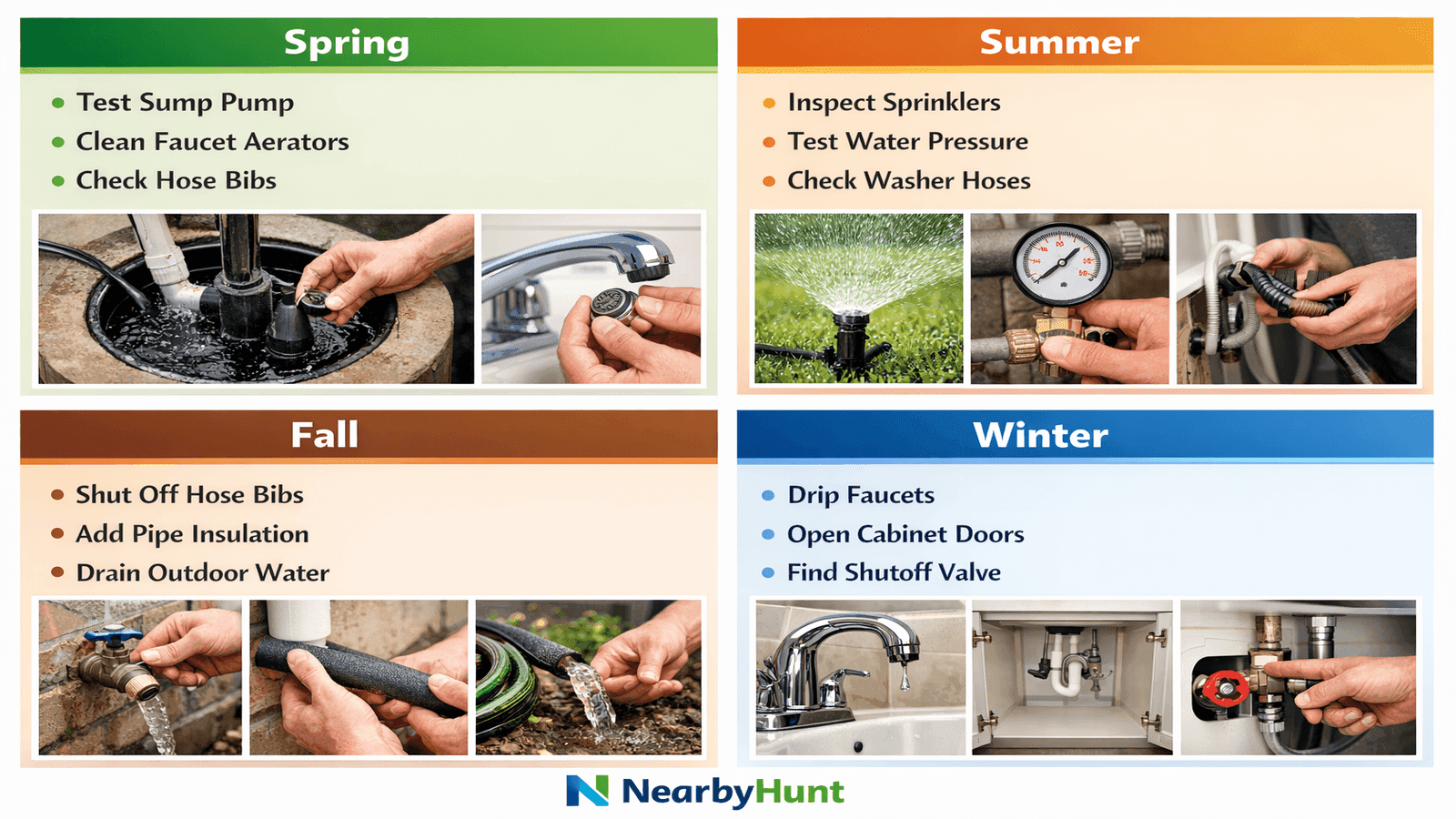
Photo: Four-season plumbing maintenance checklist infographic
Spring (March to May)
Spring is the time to assess any damage caused by winter freezing and prepare for increased water use.
- Inspect all exposed pipes in basements, crawl spaces, and garages for cracks or joints that shifted during freeze-thaw cycles
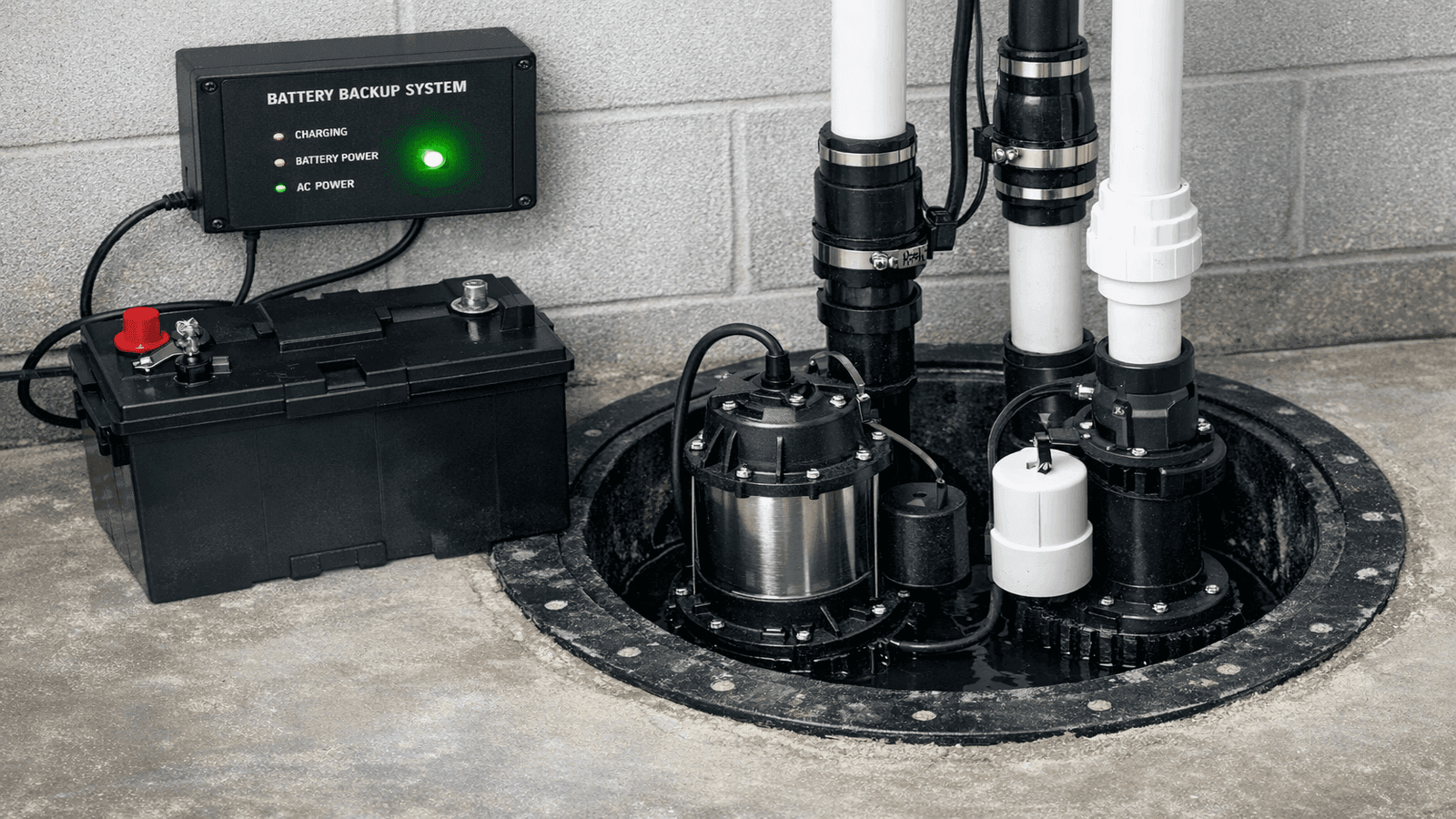
- Test your sump pump by pouring water into the pit and confirming the float triggers the pump
- Clean faucet aerators and showerheads that accumulated mineral deposits over winter
- Check hose bibs and outdoor spigots for leaks after being shut off all winter
- Inspect the water heater anode rod and flush sediment from the tank
- Run water through infrequently used fixtures to clear stagnant water from pipes
Summer (June to August)
Summer increases water usage through irrigation, cooling, and outdoor activities.
- Inspect irrigation and sprinkler systems for leaks at heads and connection points
- Check washing machine hoses for bulging, cracking, or corrosion at connection points
- Clean garbage disposal with ice cubes and salt to clear buildup from increased kitchen use
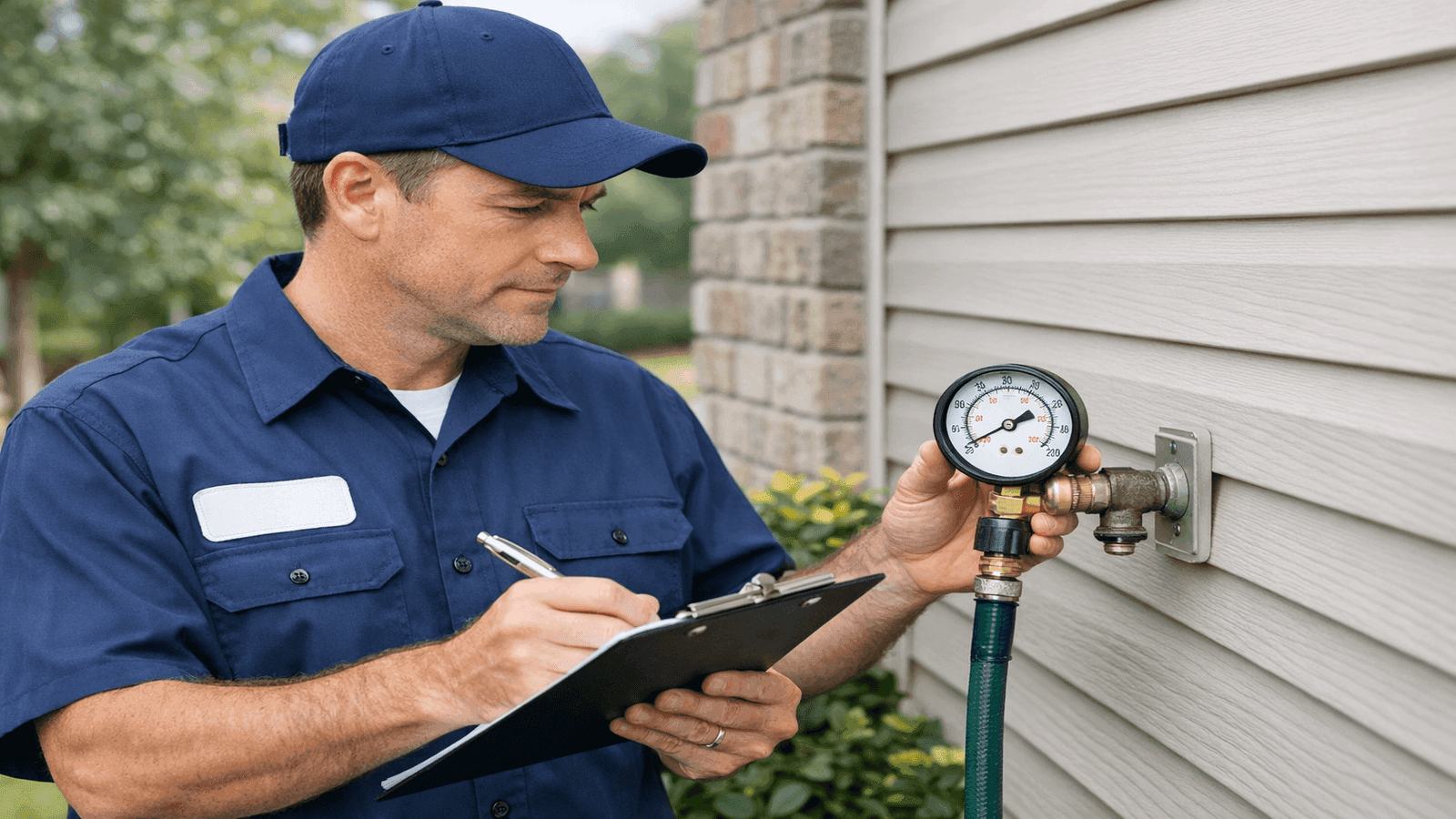
- Test water pressure at an outdoor hose bib with a gauge (optimal range: 40 to 80 PSI)
- Inspect toilet flappers and fill valves for signs of wear
Fall (September to November)
Fall preparation prevents the most costly plumbing failures: frozen and burst pipes.
- Disconnect and drain garden hoses before the first freeze
- Shut off and drain all outdoor hose bibs using the interior shutoff valve
- Drain in-ground irrigation systems or hire a professional to blow them out with compressed air
- Insulate pipes in unheated spaces: basement walls, crawl spaces, attached garages
- Schedule a professional plumbing inspection before the heating season starts
- Test smoke and carbon monoxide detectors and check the water heater's pressure relief valve
Winter (December to February)
Winter maintenance focuses on freeze prevention and monitoring.
- Set the thermostat no lower than 55 degrees Fahrenheit when away from home
- Open cabinet doors under sinks on exterior walls to allow warm air circulation
- Let faucets drip slightly during extreme cold snaps when temperatures fall below 20 degrees Fahrenheit
- Know the location of your main water shutoff valve for emergency pipe bursts
- Monitor your water bill monthly for unexpected spikes that may indicate a hidden leak
Get quotes from top-rated pros.
Monthly Plumbing Maintenance Tasks
Some maintenance tasks should happen every month regardless of season. NearbyHunt data from 2025 shows that homeowners who perform monthly plumbing checks identify problems an average of 4 months earlier than those who wait for visible symptoms.
Drain maintenance is the most important monthly task. Pour 2 liters of boiling water down kitchen and bathroom drains to clear grease and soap buildup. Add a cup of baking soda followed by a cup of white vinegar monthly, then flush with hot water after 15 minutes. This routine prevents 80% of the clogs that would otherwise require professional drain cleaning.
Toilet checks take less than 2 minutes. Add a few drops of food coloring to the tank and wait 10 minutes without flushing. Color in the bowl indicates a leaking flapper that needs replacement. A running toilet that gets ignored wastes 200 gallons per day.
Under-sink inspections require nothing more than opening the cabinet and looking. Check for moisture, drips, or staining around the drain assembly, supply lines, and P-trap. Early detection of a slow leak under the sink prevents cabinet rot, subflooring damage, and mold growth.
Monthly checks take 15 minutes total for the whole house. I walk clients through this during every service call. The ones who actually do it almost never need emergency visits. I had a client in Plano catch a pinhole leak in a copper supply line just from noticing a small water stain during their monthly look. That repair cost $180. If it had gone undetected for another month, we'd have been looking at drywall, insulation, and possible mold — easily $3,000.
Annual Water Heater Maintenance
The water heater is the most maintenance-sensitive appliance in your plumbing system. A tank water heater that never gets serviced lasts 8 to 10 years on average. One that receives annual maintenance routinely lasts 12 to 15 years.
The two most important annual tasks are sediment flushing and anode rod inspection. Sediment from hard water settles at the bottom of the tank and insulates the heating element, forcing it to work harder and shortening its life. Flushing the tank annually removes this buildup. Full instructions are available in the water heater maintenance guide.
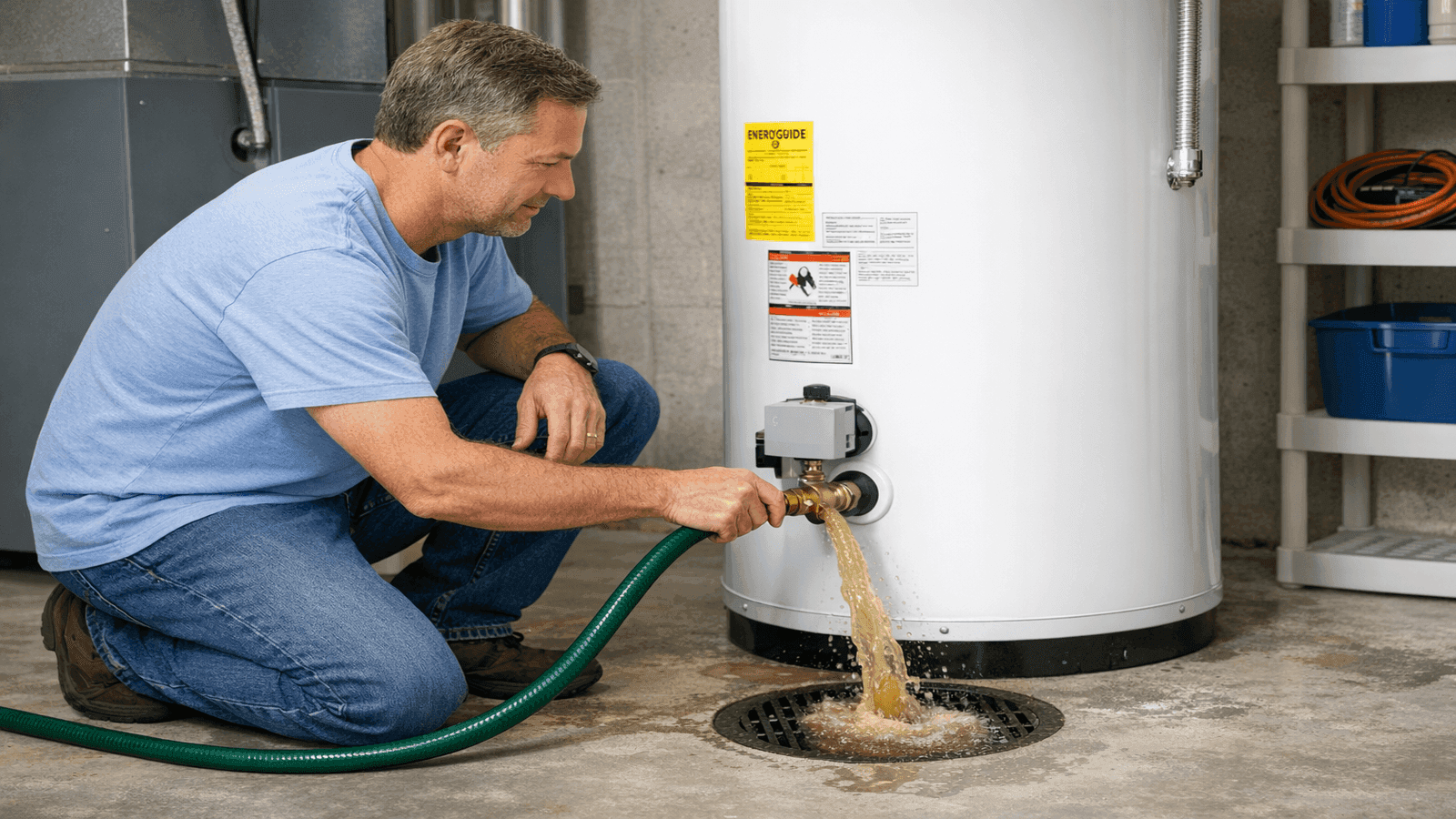
Photo: Homeowner performing annual water heater flush as part of plumbing maintenance
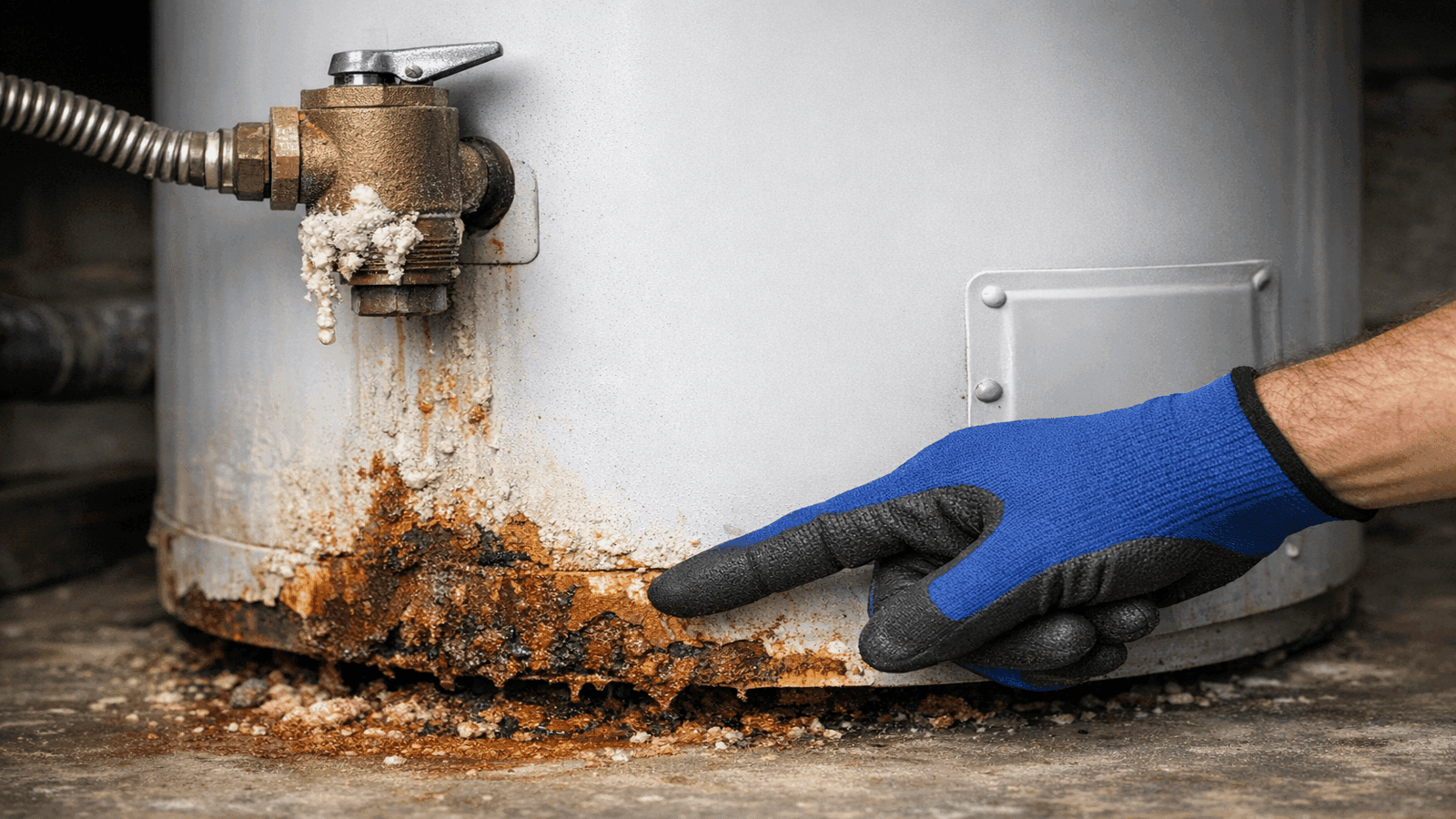
The anode rod is a sacrificial magnesium or aluminum rod that corrodes instead of letting the tank corrode. Once the rod is depleted, the tank begins rusting from the inside. Inspect it every 2 to 3 years and replace it when it is less than half an inch in diameter or heavily pitted.
For tankless water heaters, annual descaling with a citric acid or vinegar solution removes mineral scale from the heat exchanger. Most manufacturers require documented annual service to maintain the warranty.
| Task | Frequency | DIY Difficulty | Estimated Cost |
| Flush tank sediment | Annual | Easy | $0 (DIY) |
| Inspect anode rod | Every 2-3 years | Moderate | $20-50 (part) |
| Test pressure relief valve | Annual | Easy | $0 (DIY) |
| Descale tankless heater | Annual | Moderate | $10-30 (materials) |
| Professional inspection | Every 3-5 years | N/A | $80-150 |
Drain and Sewer Maintenance
Drain problems account for the largest share of plumbing service calls. Most clogged drains are preventable with simple habits and monthly maintenance.
Kitchen drains suffer from grease accumulation. Never pour cooking oil or grease down the drain, even with hot water running. Grease solidifies in the pipe, traps food particles, and creates clogs that build for months before causing a backup. Use drain strainers on all kitchen sinks to catch food solids.
Bathroom drains clog primarily from hair and soap scum. Hair catches on the drain stopper and accumulates over weeks. Clean the stopper weekly and use a hair-catching drain cover to prevent hair from entering the pipe.
Main sewer line maintenance is often overlooked until a full backup occurs. If your home is older than 20 years, a professional camera inspection of the main line every 5 years identifies root intrusion, pipe deterioration, or buildup before a complete blockage forces emergency service. The sewer line replacement cost guide covers what to expect if the main line requires work.
For homes on septic systems, pumping on schedule is the most important maintenance task. A 1,000-gallon tank serving a family of four requires pumping every 2 to 3 years. Neglecting pumping can result in drain field failure, which costs $5,000 to $25,000 to repair or replace. Read the full septic system maintenance guide for complete schedules by tank size and household size.
I get called in after the backup happens, not before. In my experience, about 70% of main line clogs that required emergency service could have been caught in a scheduled camera inspection 2 or 3 years earlier. A camera inspection costs $150 to $300. Emergency main line clearing costs $350 to $600. And if there's tree root intrusion, you could be looking at $3,000 to $10,000 in repairs. The math is obvious.
Plumbing Leak Detection and Prevention
Hidden leaks cause more damage than visible ones because they go undetected for months. Water migrates through walls and subfloor, feeds mold growth, and weakens structural framing before any visible sign appears.
The water meter test is the most reliable way to check for hidden leaks. Turn off all water-using appliances and fixtures, then check the meter. If the dial is moving, water is flowing somewhere. Note the reading, wait 2 hours without using any water, then check again. Any change indicates a leak. Detailed detection methods are covered in the plumbing leak detection guide.
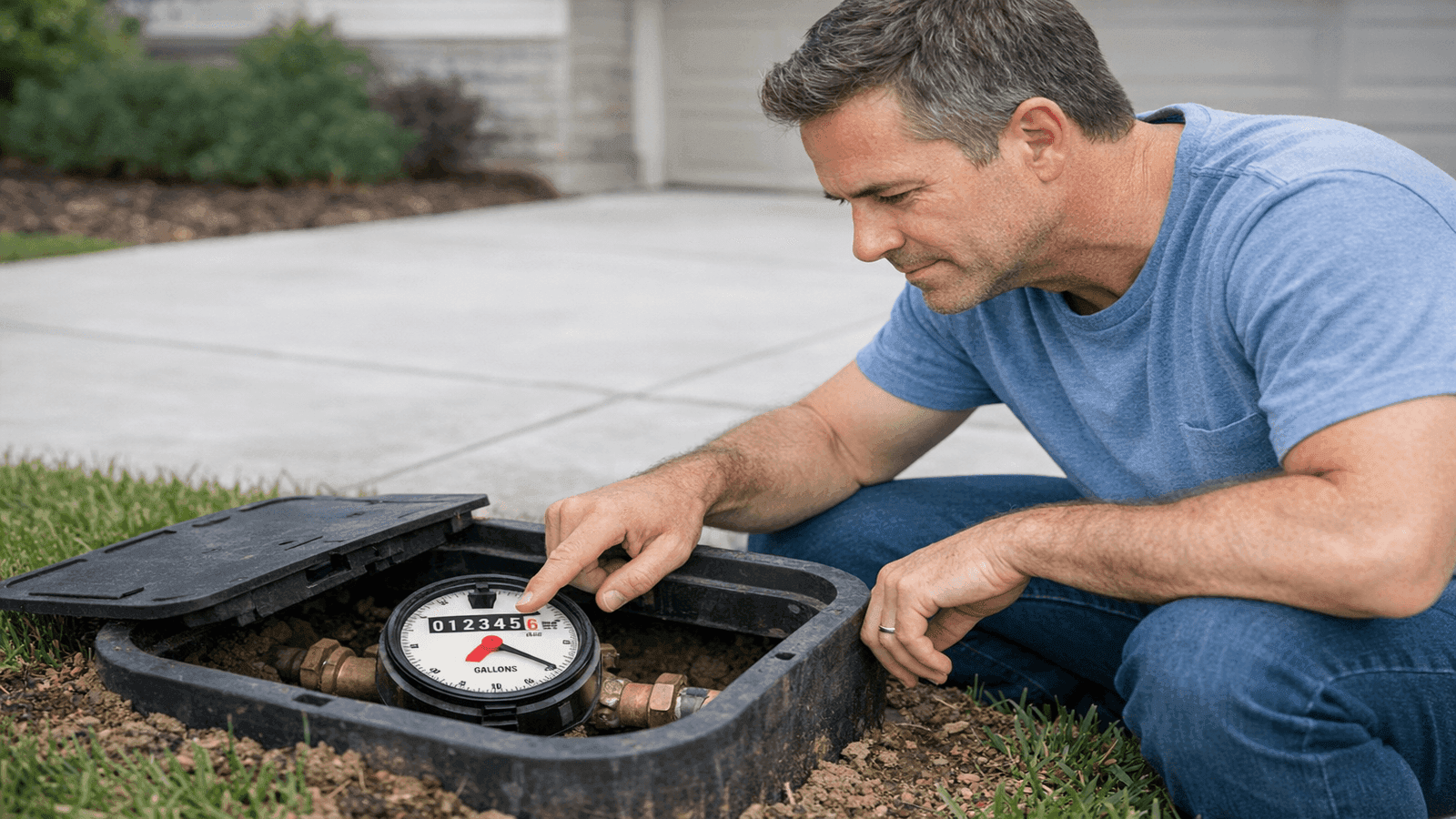
Photo: Homeowner testing water meter for silent plumbing leaks
Supply line inspection is critical and often overlooked. The braided stainless steel lines connecting the shutoff valves to your sink, toilet, and dishwasher have a typical lifespan of 10 years. Inspect them annually for bulging, corrosion at the fittings, or any moisture. Replace them proactively every 10 years regardless of appearance — a failed supply line can dump 4 to 8 gallons per minute onto your floor.
Toilet supply lines, shutoff valves, and wax ring seals should all be inspected during annual walkthroughs. A toilet that rocks at all has a compromised wax ring that will eventually leak into the subfloor.
Water pressure above 80 PSI accelerates wear on every component in your plumbing system. Test your pressure with a gauge at an outdoor hose bib. If it reads above 80 PSI consistently, a pressure reducing valve (PRV) adjustment or replacement is needed. Learn more in the water pressure maintenance guide.
Get quotes from top-rated pros.
Well and Water Quality Maintenance
Homes on private wells require maintenance beyond what municipal water users need. The well pump, pressure tank, and water quality all need annual attention.
Well pump performance depends on the condition of the pressure tank and the pump itself. Test the pressure tank annually by checking the air charge with a tire gauge (with pump off and pressure bled). The air charge should be 2 PSI below the pump's cut-in pressure. Short-cycling — the pump turning on and off rapidly — signals a waterlogged pressure tank that needs replacement. Full guidance is in the well pump maintenance guide.
Water quality testing should happen annually for well water and every 3 to 5 years for municipal water, or immediately after flooding, plumbing work, or changes in taste, color, or odor. Test for bacteria, nitrates, lead, and hardness at minimum. The water quality testing guide covers what to test for, how to interpret results, and treatment options.
Winterizing Your Plumbing System
Frozen pipes represent the single most preventable plumbing disaster. Water expands by 9% when it freezes, generating enough pressure to split copper and PVC pipes regardless of wall thickness.
Pipes most vulnerable to freezing are those in exterior walls, crawl spaces, attached garages, and attics. These areas may drop below freezing even when the interior of the home stays warm. Insulating these pipes with foam pipe insulation before temperatures drop is the most cost-effective protection available.
For vacation homes or properties left unoccupied in winter, full winterization is essential. This involves draining the entire water system, blowing out lines, and adding RV antifreeze to traps and fixtures. A professional winterization service costs $100 to $300 and prevents catastrophic damage that can exceed $50,000 in extreme cases. The complete process is detailed in the winterize plumbing guide.
February is when I get the burst pipe calls. Every single year. And every single time, the homeowner tells me it's a vacation home, or they set the heat too low, or they didn't know that bathroom was on an exterior wall. Three things prevent almost all of it: insulate vulnerable pipes in fall, keep the heat above 55 degrees when you leave, and know where your shutoff valve is. That's it.
Plumbing Maintenance Costs
Understanding what maintenance costs helps homeowners budget appropriately and avoid skipping tasks due to uncertainty about pricing.
| Maintenance Task | DIY Cost | Professional Cost | Frequency |
| Drain cleaning (preventive) | $5-15 | $100-250 | Monthly/Annual |
| Water heater flush | $0 | $80-150 | Annual |
| Anode rod replacement | $20-50 | $100-200 | Every 2-3 years |
| Plumbing inspection | N/A | $100-300 | Annual |
| Sump pump test/service | $0-30 | $75-150 | Annual |
| Pipe insulation install | $20-80 | $150-400 | One-time |
| PRV replacement | N/A | $200-600 | Every 10-15 years |
| Septic pumping | N/A | $300-600 | Every 2-5 years |
The total annual cost of routine plumbing maintenance for a typical home runs $200 to $600 depending on the home's age, size, and systems. Licensed plumbers in the NearbyHunt network report that homeowners who maintain this annual spend avoid emergency repair costs that average $1,200 per incident for those who skip routine service.
When to Call a Professional Plumber
Some maintenance tasks are straightforward DIY projects. Others require a licensed plumber for safety, code compliance, or technical complexity.
Call a professional for:
- Any work on main supply lines, shutoff valves, or the water meter
- Water heater installation, gas line work, or venting issues
- Main sewer line inspection, cleaning, or repair
- Well pump service, pressure tank replacement, or water treatment installation
- Permit-required work including re-piping, fixture additions, or any work behind walls
- Emergency situations: burst pipes, sewage backup, gas smell near water heater
Appropriate for DIY:
- Replacing faucet aerators and showerheads
- Swapping toilet flappers and fill valves
- Cleaning P-traps under sinks
- Flushing water heater sediment (gas shutoff required for some models)
- Installing drain strainers and hair catchers
- Testing water pressure with a gauge
For unexpected emergencies outside business hours, review the emergency plumber rates guide to understand after-hours pricing before calling.
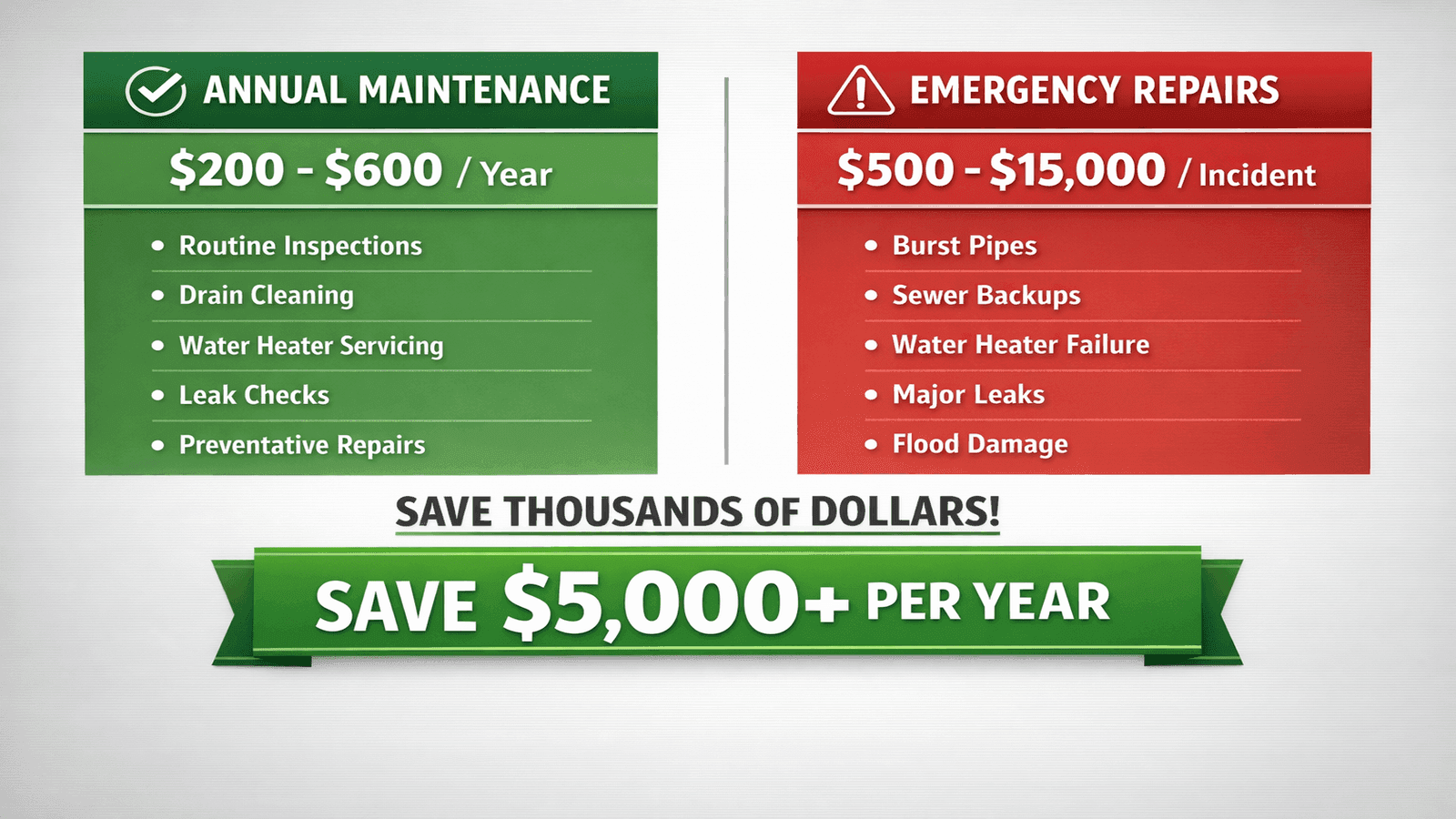
Photo: Infographic comparing annual maintenance costs versus emergency plumbing repair costs
Conclusion
Plumbing maintenance is one of the highest-return investments a homeowner can make. Annual maintenance spending of $200 to $600 consistently prevents emergency repairs that cost 3 to 10 times that amount. The tasks are straightforward, the costs are predictable, and the results include lower water bills, longer-lasting fixtures, and no water damage claims. Start with a professional inspection, establish a seasonal routine, and follow the guides linked throughout this article for each specific system in your home.
Sources & References
- Environmental Protection Agency. (2026). WaterSense: Fix a Leak Week. epa.gov
- PHCC National Association. (2026). Homeowner Plumbing Maintenance Guidelines. phccweb.org
- U.S. Department of Energy. (2026). Water Heater Maintenance. energy.gov
- This Old House. (2026). Annual Plumbing Maintenance Checklist. thisoldhouse.com
- Bob Vila. (2026). Seasonal Plumbing Checklist for Homeowners. bobvila.com
- Forbes Home. (2026). How Much Does Plumbing Maintenance Cost? forbes.com
- HouseCall Pro. (2026). Plumbing Maintenance Best Practices. housecallpro.com
- Fixr. (2026). Home Plumbing Maintenance Cost Guide. fixr.com
- ServiceTitan. (2026). Plumbing Industry Benchmarks and Statistics. servicetitan.com
- Insurance Institute for Business and Home Safety. (2026). Preventing Frozen Pipe Claims. ibhs.org
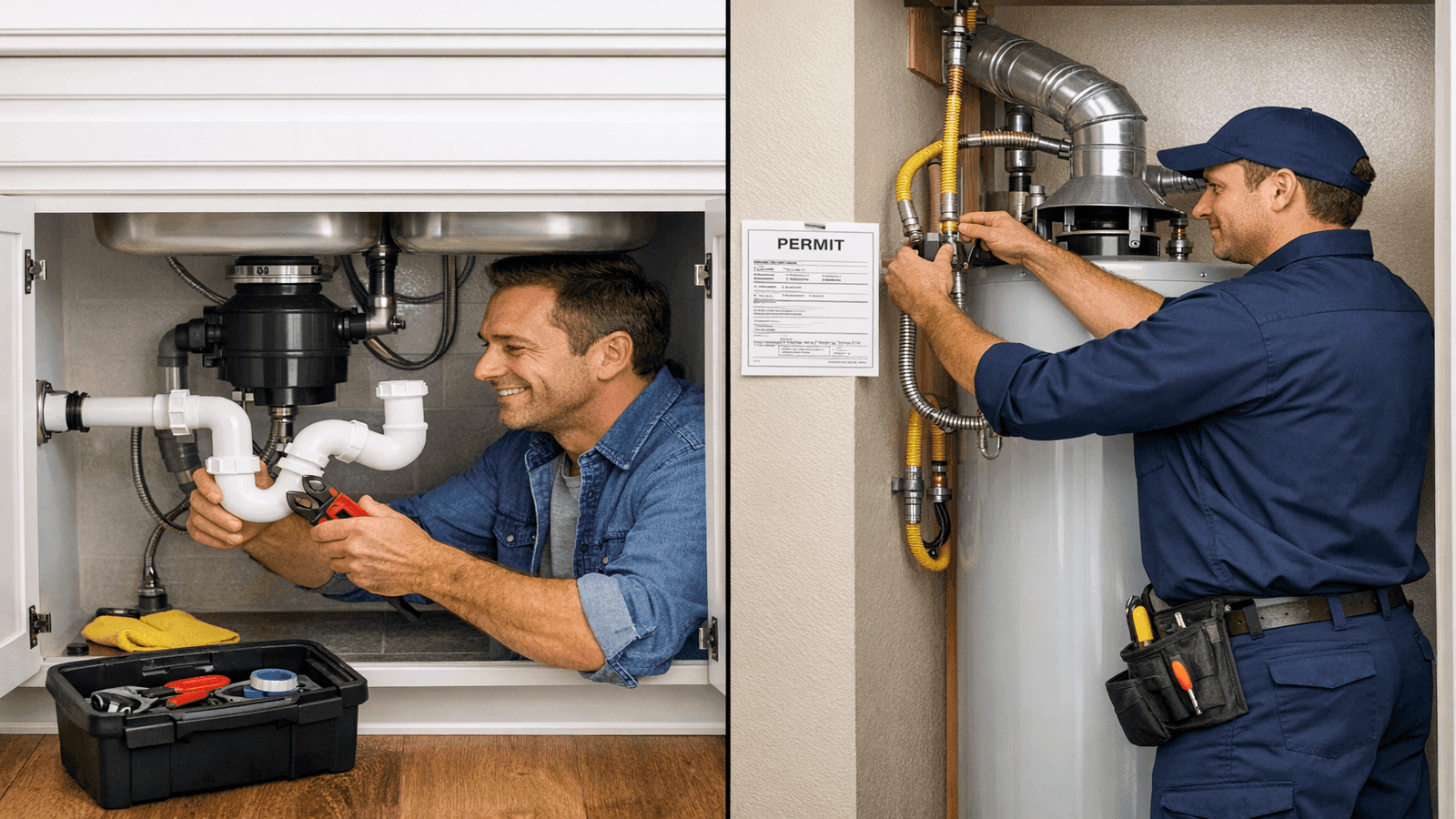

Michael Jennings is a licensed master plumber & water systems specialist with over 18 years of hands-on experience in residential and commercial plumbing, serving clients across California and Texas. At NearbyHunt, he shares practical advice on pipe installations, water heater maintenance, and home plumbing upgrades. Michael has helped thousands of homeowners prevent costly water damage and improve water efficiency through modern plumbing solutions.

Robert is a licensed master plumber with over 20 years of experience serving both residential and commercial clients across the Midwest. Specialising in advanced plumbing systems and sustainable water technologies, Rob brings deep technical insight and hands-on expertise to every project. As a reviewer for NearbyHunt, he ensures all plumbing content reflects the highest standards of safety, compliance, and practicality.