- The EPA estimates household leaks waste nearly 1 trillion gallons of water annually; the average home loses 10,000 gallons per year to fixable leaks.
- A water meter test takes 30 minutes and confirms or rules out a leak at zero cost.
- Undetected hidden leaks cause $10,000+ in structural damage when left inside walls or slabs for more than 6 months.
- Professional acoustic and thermal detection costs $175-$600 and locates leaks without opening walls.
Leaks do not announce themselves. A pinhole in a copper supply line can drip silently for months before the first water stain appears, and by then drywall is saturated, framing is rotting, and mold has established itself behind the surface. According to EPA WaterSense, 10% of U.S. homes have leaks wasting 90 or more gallons per day. Based on service call data from the NearbyHunt plumber network, undetected leaks account for more than 40% of all water damage insurance calls network plumbers respond to each year. Leak detection is one of the most critical tasks in any home plumbing maintenance plan.
This guide covers how to recognize warning signs, run the water meter test, locate leaks by area of the home, use professional methods, and respond correctly once a leak is confirmed.

Get quotes from top-rated pros.

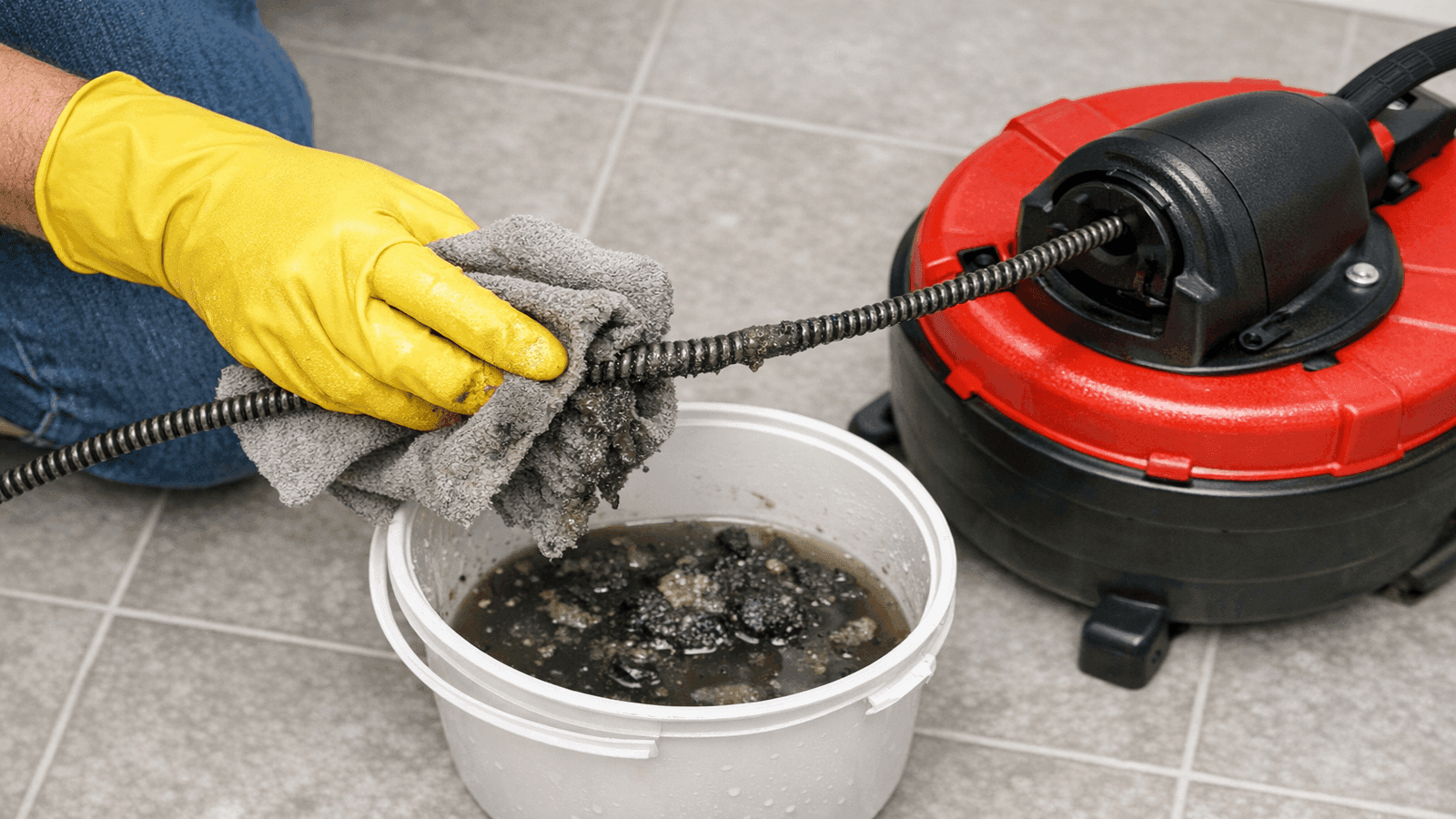
Photo: Plumber using acoustic leak detection equipment on a residential floor to locate hidden pipe leak
Warning Signs of Hidden Leaks
Most hidden leaks produce signals weeks before visible damage appears. Catching them early is the most cost-effective form of detection available.
Unexplained increases in your water bill are the most reliable early indicator. A household consistently using 5,000-7,000 gallons per month should not spike to 10,000 gallons without a clear reason. A 20% or greater jump with no change in usage habits strongly suggests a hidden leak.
Low water pressure at multiple fixtures signals a supply line leak between the meter and the fixtures. Pressure drops at a single fixture usually point to a clogged aerator. Drops at two or more fixtures in different areas indicate a main supply line problem. See water pressure maintenance for troubleshooting steps.
Additional monthly warning signs to check:
- Discoloration, soft spots, or staining on ceilings and walls
- Peeling paint or bubbling wallpaper not caused by humidity
- Musty odors in bathrooms, under sinks, or near plumbing walls
- Warping or soft spots in flooring near fixtures
- Sound of running water when all fixtures are off
In 18 years of plumbing work in Dallas, I've walked into hundreds of homes where a slow leak had been draining behind the wall for 4-6 months. One call in 2024 stands out: a homeowner in North Dallas had a 3-month-old water stain the size of a dinner plate on her hallway ceiling. By the time we opened the wall, we found a failed copper elbow that had been dripping onto the top plate. The bottom plate was rotting, the subfloor had gone soft, and mold covered an 8-square-foot section behind the drywall. The plumbing repair was $380. The remediation bill was $14,200. A $400 pressure test six months earlier would have caught it.
The Water Meter Leak Test: Step-by-Step
The water meter test is the most reliable zero-cost DIY method for confirming a leak before investing in professional detection.
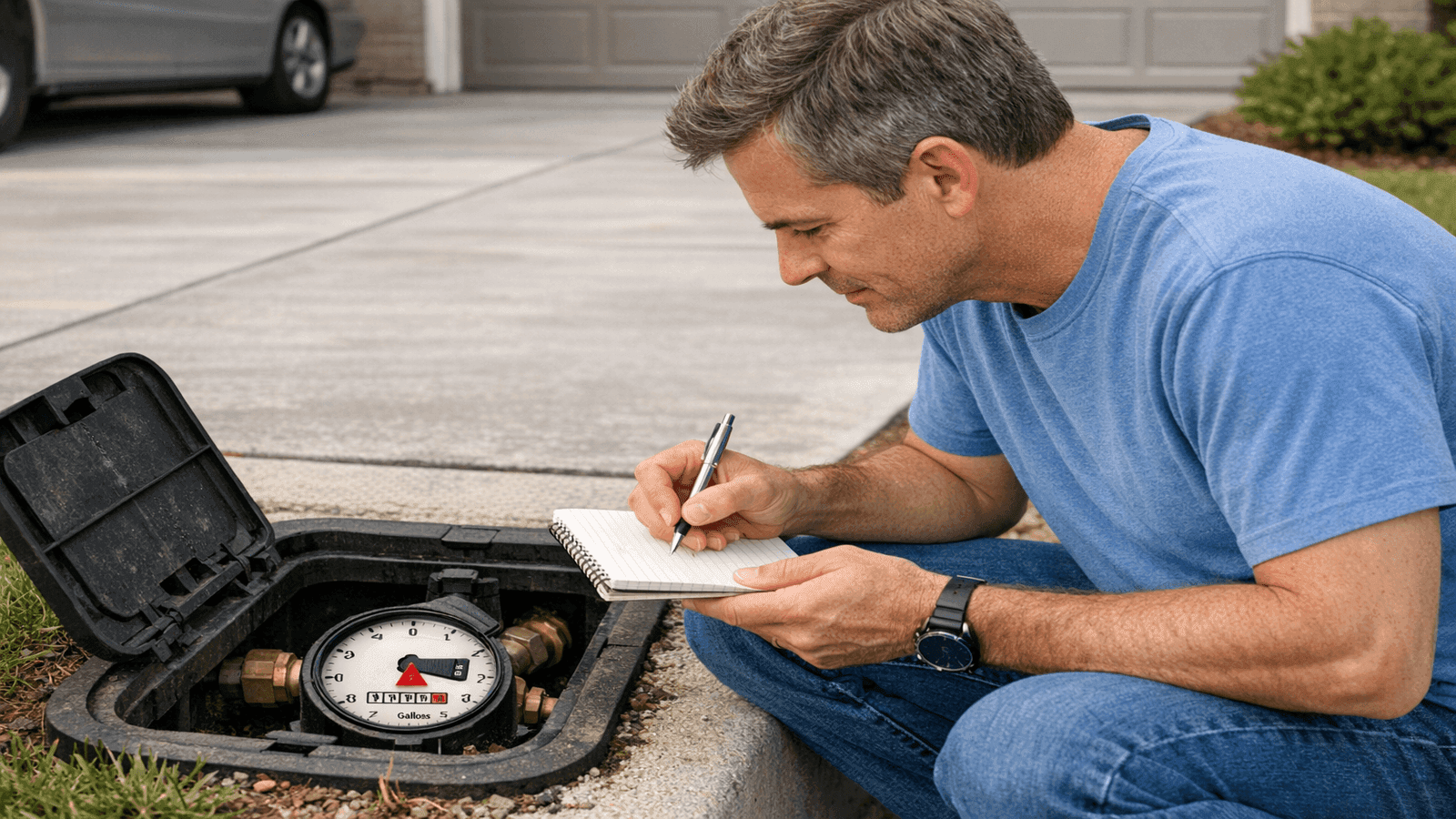
Photo: Homeowner checking residential water meter dial indicator for leak detection triangle
Step 1: Turn off every water source. This includes faucets, dishwashers, washing machines, ice makers, and irrigation. Check that no toilets are running silently by adding food coloring to each tank. Color appearing in the bowl confirms a flapper leak that must be fixed before the test.
Step 2: Locate your water meter and record the exact reading. Most residential meters sit in a concrete box near the street. In cold climates, check the basement or utility room.
Step 3: Look for the leak indicator. Most modern meters have a small triangular or star-shaped dial that rotates with any water flow. If it is moving while everything is off, you have an active leak.
Step 4: Wait 30 minutes without using any water, then take a second reading.
| Meter Behavior | What It Means |
| Indicator still, reading unchanged | No active leak detected |
| Indicator moving with everything off | Active leak confirmed |
| Indicator stops after main shutoff | Leak is inside the home |
| Indicator continues after main shutoff | Leak is in underground service line |
DIY Leak Detection by Location
Once the meter test confirms a leak, narrow down the source by checking each area systematically.
Get quotes from top-rated pros.
Walls and Ceilings
Press firmly on any discolored or stained drywall. Soft or spongy material indicates moisture saturation. A moisture meter ($20-$50 at any hardware store) confirms moisture presence without cutting into the wall. Map the wettest point before opening anything.
For suspected supply line leaks, close the local shutoff valve for the affected fixture. If moisture stops spreading, the source is a supply line. If moisture continues despite shutoff, the source is a drain line or external intrusion.
Slab Leaks
Slab leaks occur when pipes embedded in or below a concrete foundation fail. Warning signs include warm spots on the floor surface, water sounds beneath the slab when all fixtures are off, and new cracks forming in the floor. Never jackhammer concrete without professional location first. Opening the wrong spot adds $500-$2,000 in unnecessary concrete repair.
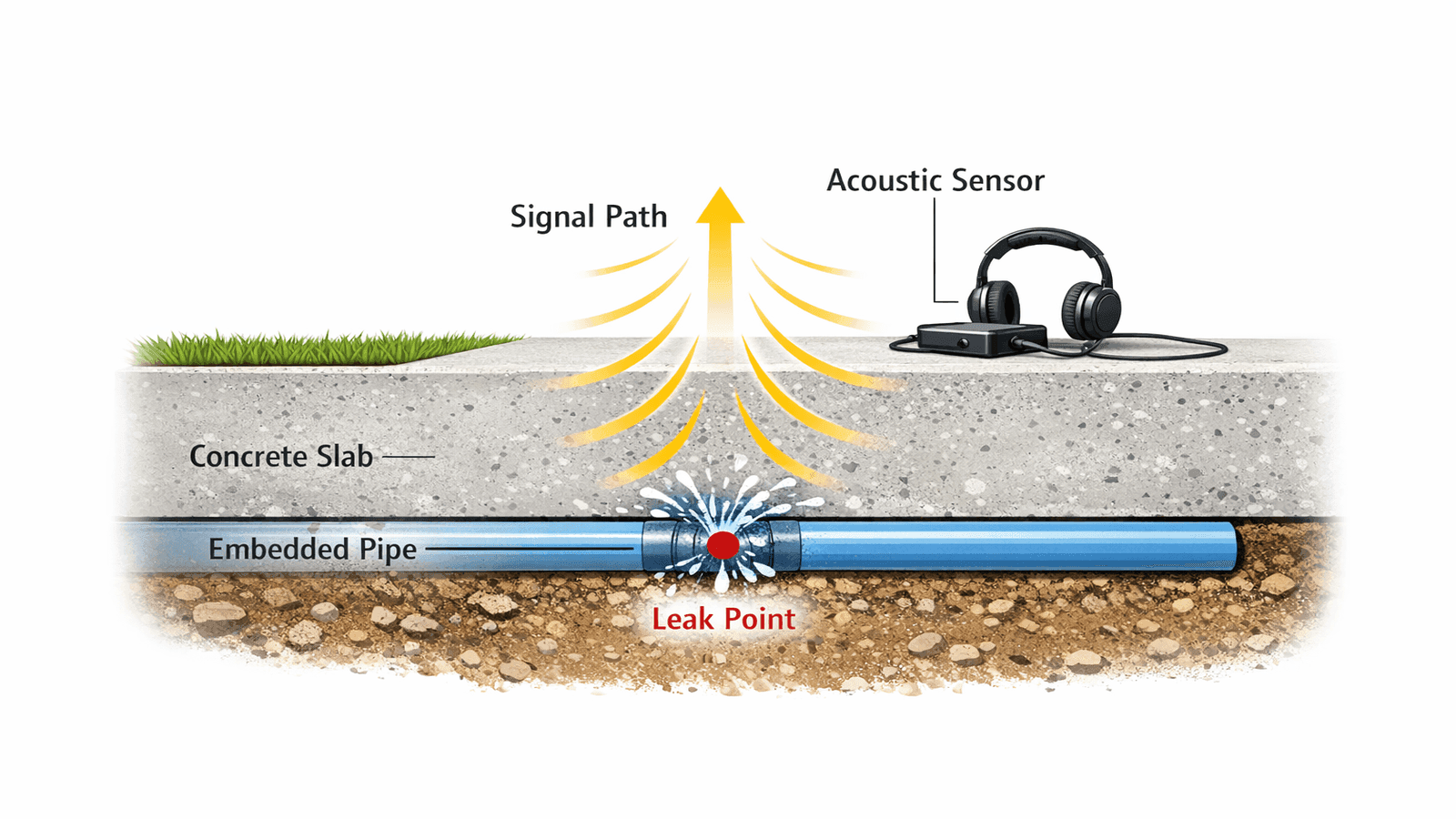
Photo: Cross-section diagram showing acoustic equipment identifying pipe failure beneath concrete foundation
Underground and Exterior Leaks
Underground leaks appear as soggy ground, unusual grass patches, or sinkholes along the pipe route. The water meter test distinguishes interior from underground leaks. Service line failures often require trenchless replacement. See repiping house cost for full pricing.
Fixtures and Visible Connections
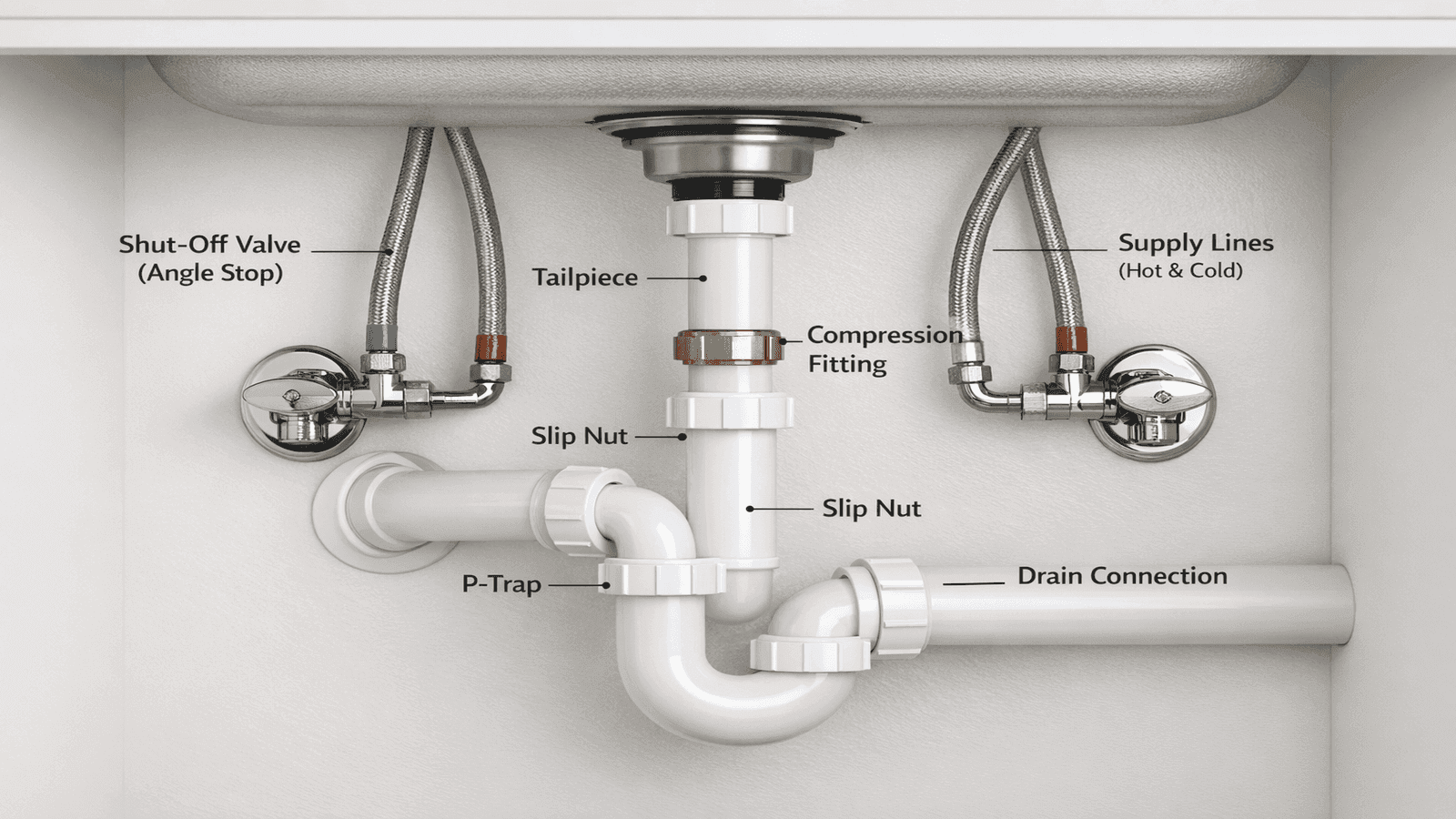
Check every accessible connection: supply lines under sinks, shutoff valves, toilet supply tubes, and water heater connections. Use dry white paper towels to check for moisture at each fitting. Inspect exposed pipes in the basement and crawlspace for mineral deposits or green oxidation on copper, which mark where water has dripped and evaporated. Before any repair, know how to shut off your water supply to isolate the affected zone safely.
Homeowners always want to poke holes in drywall when they see a stain. Spend $50 renting a moisture meter first. Map exactly where the moisture is before opening anything. A 30-minute investigation saves hours of unnecessary demo work and prevents patching perfectly dry drywall next to the actual leak.
Professional Detection Methods and Costs
When DIY methods cannot locate the source, professional equipment finds leaks non-invasively through walls, slabs, and soil.
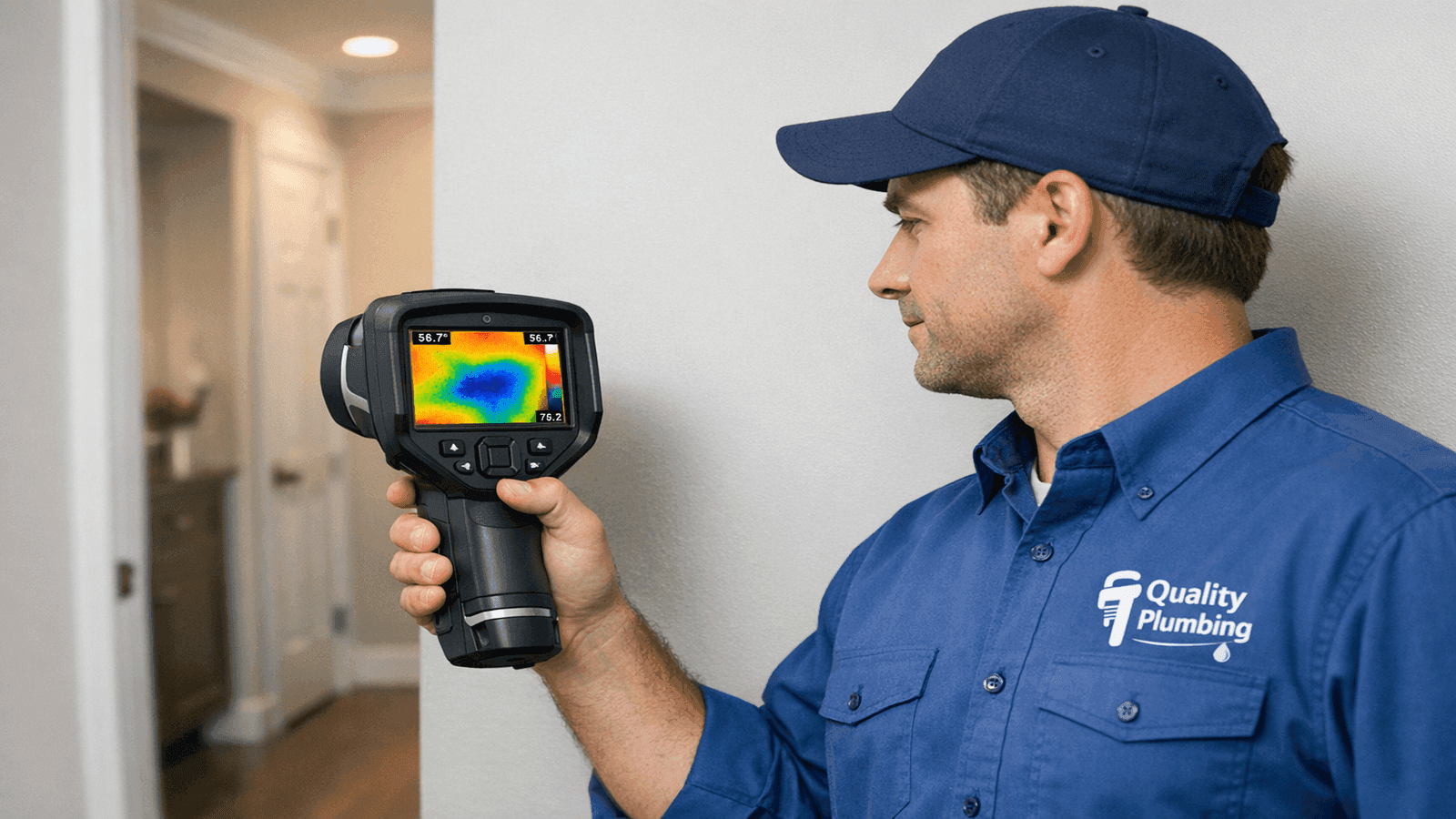
Photo: Professional plumber with thermal imaging camera detecting hidden wall leak in residential home
Acoustic Leak Detection
Acoustic equipment amplifies the sound of water escaping under pressure. A technician places listening discs along the pipe route and identifies the loudest point. This method pinpoints a slab or underground leak within 12-18 inches without any access holes. Cost: $175-$400 for a standard residential service.
Get quotes from top-rated pros.
Thermal Imaging
Thermal cameras detect temperature differences where escaping water changes the thermal properties of surrounding material. Wet areas inside walls appear cooler than dry areas in the image. Most effective for supply line leaks where water temperature differs from ambient room temperature. Adding thermal imaging to acoustic detection costs $200-$300 additionally.
Video Pipe Inspection
A sewer camera pushed through a drain cleanout provides a real-time view of drain line and sewer lateral condition. Identifies cracks, joint separations, and root intrusion. Cost: $125-$300 standalone. See plumbing inspection cost for a full breakdown.
| Detection Method | Cost Range | Best Application |
| Acoustic listening | $175-$400 | Slab and underground leaks |
| Thermal imaging | $200-$600 | Wall and ceiling supply leaks |
| Video pipe inspection | $125-$300 | Drain line cracks, root intrusion |
| Pressure testing | $100-$250 | Isolating leak zone in supply lines |
Acoustic detection gets me to within 8 inches on most slab leaks. That means the concrete crew opens a 12-inch square instead of jackhammering half the floor. That difference saves the homeowner $1,500 in concrete repair on an average job.
What to Do When You Find a Leak
Your actions in the first 1-2 hours after confirming a leak determine whether the situation stays a plumbing repair or becomes a water damage restoration project.
Shut off the water immediately using the local shutoff valve for the affected fixture or zone. If you cannot isolate it, close the main house shutoff. Review our guide on how to shut off your water supply to locate all shutoffs before an emergency.
Remove standing water fast. Water sitting on flooring for more than 24-48 hours penetrates the subfloor and creates conditions for mold growth. Use towels, a wet-dry vacuum, or a sump pump. Run fans and open windows.
Document all damage before cleanup. Photograph every affected area. Contact your insurer before major repairs, since most policies cover sudden and accidental water damage but exclude gradual leaks.
Call a licensed plumber. Supply line failures inside walls, slab leaks, and underground service breaks require licensed repair. For after-hours emergencies, see emergency plumber rates to understand after-hours cost expectations.
Assess the surrounding system after repair. A pinhole in copper often means the pipe is thinning throughout, and another failure in a different section follows within 12-18 months. A full plumbing inspection after any hidden leak is standard for homes built before 1980. Review repiping house cost and plumbing costs if the pipe system is aging. See also common plumbing problems for related issues that often surface during leak investigation.
Waiting until morning to avoid emergency rates is the most expensive decision a homeowner makes. Six extra hours of water intrusion in a wall cavity adds $2,000-$4,000 to drying and remediation costs. Emergency plumber rates run $150-$250 per hour. The math always favors calling immediately.
Conclusion
Plumbing leak detection starts with awareness: unexplained water bills, wall stains, musty odors, and the sound of running water when nothing is on. The 30-minute water meter test confirms whether a leak exists before you spend anything on professional services. For leaks inside walls, beneath slabs, or underground, professional acoustic and thermal detection finds the exact location without opening walls or floors. The $175-$600 detection cost is a fraction of the $10,000+ damage that a 90-day undetected leak causes. Act the same day you find a leak, not the next morning.
Pricing disclaimer: All cost ranges are estimates based on national averages compiled from industry sources as of 2026. Actual costs vary by region, home size, pipe material, leak severity, and local labor rates. Always obtain 2-3 quotes from licensed plumbers before proceeding with detection or repair services. NearbyHunt does not guarantee pricing accuracy for your specific location.
Sources & References
- EPA WaterSense. (2026). "Fix a Leak Week: Household Leak Statistics." epa.gov/watersense
- American Water Works Association. (2025). "Residential Water Loss and Infrastructure Reports." awwa.org
- PHCC — Plumbing-Heating-Cooling Contractors Association. (2026). "Leak Detection Best Practices for Residential Plumbing." phccweb.org
- This Old House. "How to Read a Water Meter and Check for Leaks." thisoldhouse.com
- Bob Vila. "7 Ways to Find Hidden Water Leaks in Your Home." bobvila.com
- Fixr. (2026). "Professional Leak Detection Cost Guide." fixr.com
- Forbes Home. (2026). "Hidden Water Leak Warning Signs and Repair Costs." forbes.com/home-improvement
- Bankrate. (2025). "Does Homeowners Insurance Cover Water Damage from Leaks?" bankrate.com

Michael Jennings is a licensed master plumber & water systems specialist with over 18 years of hands-on experience in residential and commercial plumbing, serving clients across California and Texas. At NearbyHunt, he shares practical advice on pipe installations, water heater maintenance, and home plumbing upgrades. Michael has helped thousands of homeowners prevent costly water damage and improve water efficiency through modern plumbing solutions.

Robert is a licensed master plumber with over 20 years of experience serving both residential and commercial clients across the Midwest. Specialising in advanced plumbing systems and sustainable water technologies, Rob brings deep technical insight and hands-on expertise to every project. As a reviewer for NearbyHunt, he ensures all plumbing content reflects the highest standards of safety, compliance, and practicality.