- Sump pumps last 7 to 10 years on average; annual maintenance extends service life and prevents failure during storms.
- FEMA reports that just one inch of basement flooding can cause $25,000 or more in damage.
- A 5-gallon bucket pour test takes under 10 minutes and confirms float switch and discharge line function.
- Battery backup systems should be load-tested every 6 months with batteries replaced every 3 to 5 years.
- Annual maintenance costs $150 to $250 versus $1,200 to $4,000 for a water damage remediation event.
- Plumbers in the NearbyHunt network report over 60% of emergency sump pump calls involve units not serviced in more than 2 years.
Sump pumps are among the most neglected mechanical systems in any home. Homeowners rarely think about them until a heavy rain event reveals a failure at the worst possible moment. According to FEMA, flooding is the most common and costly natural disaster in the United States, and a single pump failure during a storm can turn a dry basement into a remediation project. The good news is that most failures are preventable with a consistent maintenance routine, making sump pump care a key part of your home plumbing maintenance plan.
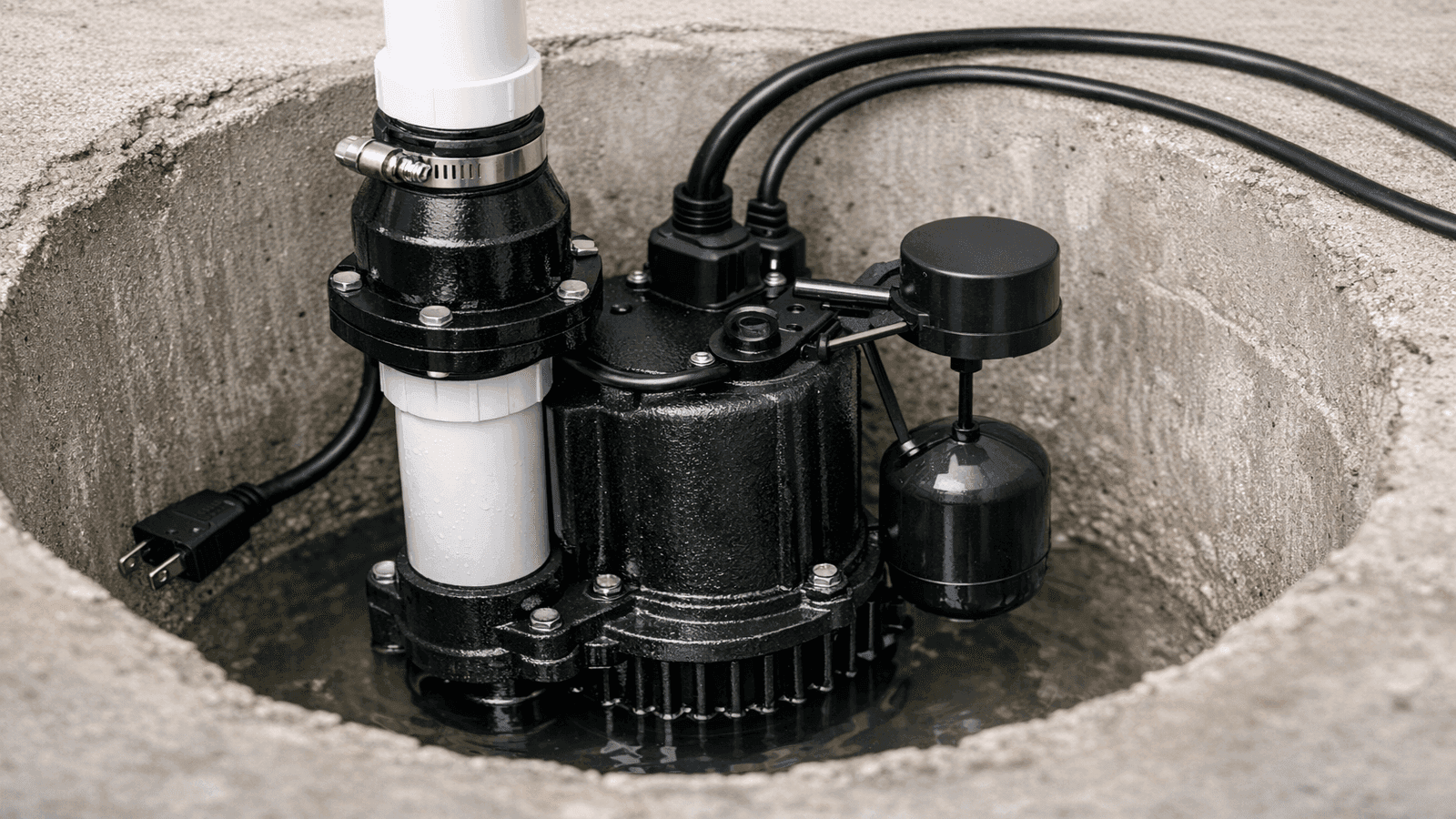
Photo: Pedestal and submersible sump pump installed in a basement pit with discharge pipe and check valve visible
Annual Sump Pump Maintenance Schedule
The PHCC (Plumbing-Heating-Cooling Contractors Association) recommends a full inspection at least once per year with an operational test every 3 to 4 months. Early spring before peak rain season is the critical maintenance window. Pairing your sump pump check with your annual plumbing inspection consolidates both costs and time.
Quarterly testing takes fewer than 15 minutes and focuses on the float switch, the most failure-prone component. A stuck or restricted float will prevent pump activation even when water is rising. The table below outlines a complete maintenance calendar.
| Task | Frequency | Time Required |
| Float switch test (bucket pour) | Every 3 months | 5-10 minutes |
| Pit visual inspection | Every 3 months | 5 minutes |
| Full pump and pit cleaning | Annually | 30-60 minutes |
| Discharge line and check valve inspection | Annually | 10-15 minutes |
| Battery backup load test | Every 6 months | 10 minutes |
| Battery replacement | Every 3-5 years | 15 minutes |
| Professional service inspection | Annually | 45-90 minutes |
Annual service covers more than testing alone. A thorough inspection includes checking the pump housing for cracks, verifying the check valve seats properly, and confirming the discharge pipe terminates at least 10 feet from the foundation. A failed check valve forces water back into the pit after every pump cycle, causing the motor to run more than necessary and shortening its life significantly.
I tell every homeowner the same thing: treat your sump pump like your smoke detector. Test it regularly and do not wait for a storm to find out it failed. In 18 years and over 2,400 service calls, I have never had a client with a documented quarterly testing habit end up with a flooded basement from a pure mechanical failure.

How to Test Your Sump Pump
The bucket pour test is the standard method recommended by manufacturers and home inspectors. Perform this test every 3 months for reliable baseline data.
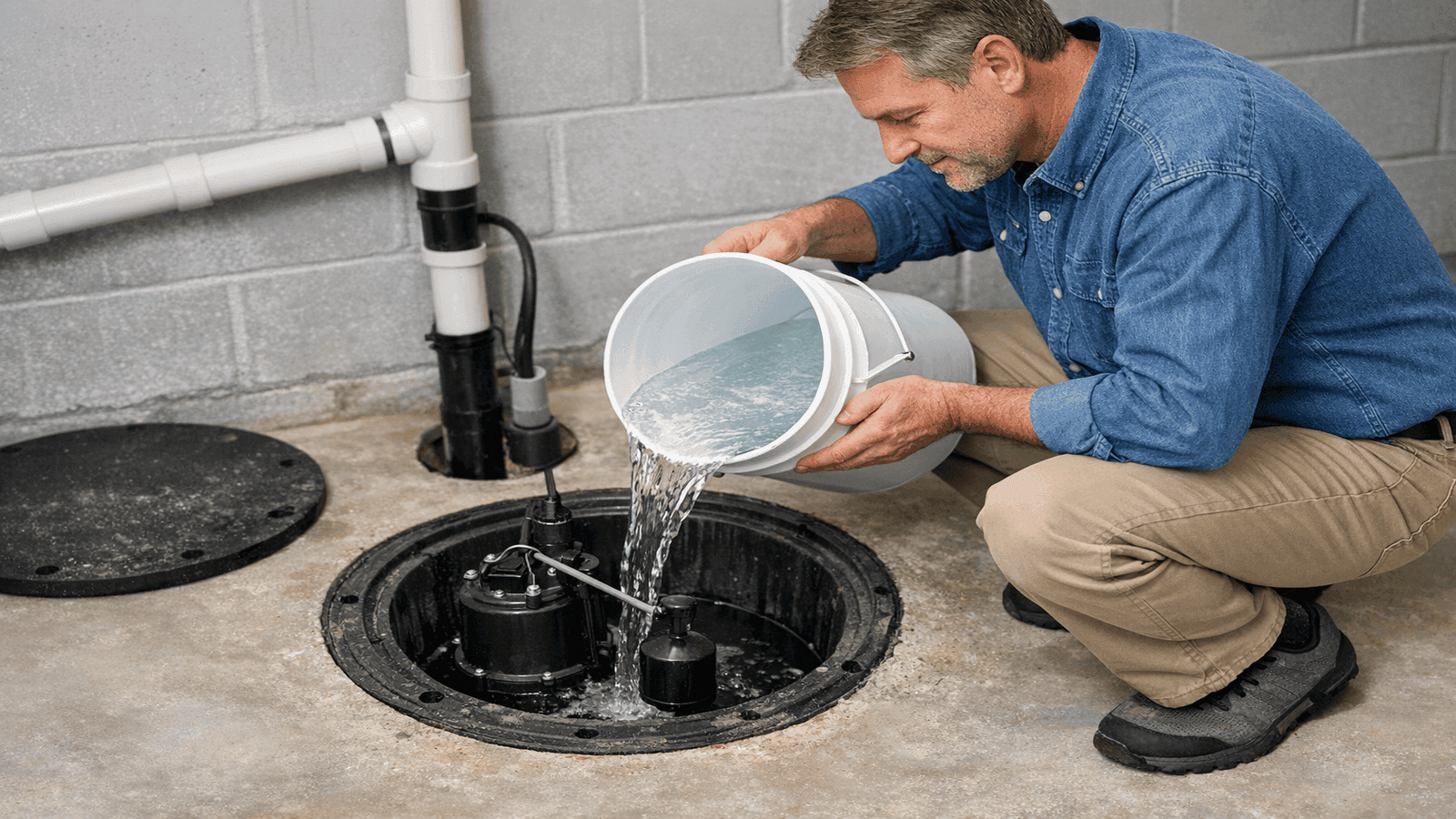
Photo: Homeowner pouring 5-gallon bucket of water into sump pit to verify float switch activation and discharge flow
Step 1: Remove the pit cover and inspect for debris, gravel, or standing water. Confirm the float arm moves freely without contacting the pump housing or pit walls.
Step 2: Slowly pour 5 gallons of water into the pit. Watch the float rise. The pump should activate automatically before the water level reaches the top of the pit, typically at 8 to 12 inches of depth in most residential installations.
Step 3: Walk outside and confirm water flows from the discharge pipe. A pump that runs but does not discharge indicates a blocked line, a failed impeller, or a seized check valve.
Step 4: Watch the cycle to completion. The pump should shut off automatically when the pit drains to 2 to 3 inches of water. Continuous running after the pit empties means the float switch is stuck in the "on" position and needs immediate service. A dry-running pump can burn its motor out within minutes.
If water is unavailable for the test, manually lift the float by hand until the motor engages. Hold for 2 to 3 seconds only. Immediate motor response confirms the switch is functional.
Get quotes from top-rated pros.
Do not just listen for the pump to kick on from inside the house and call it done. Walk outside and verify flow from the discharge pipe. I have diagnosed pump failures where the motor was humming but the impeller was stripped. The motor ran, nothing pumped. The exterior check is non-negotiable.
Cleaning the Pit and Pump
A dirty sump pit is one of the leading causes of float switch failure. Sediment, mineral scale, and iron bacteria accumulate on the float mechanism and cause it to stick. Annual cleaning takes under an hour and prevents the majority of float-related failures. For additional context on diagnosing plumbing issues, see our guide on common plumbing problems.
Tools needed: Wet/dry shop vacuum, stiff brush, garden hose, diluted white vinegar (or 1:10 bleach solution), rubber gloves, and safety glasses.
Disconnect power before starting. Unplug the pump from its GFCI outlet. Lift the pump out of the pit if your model allows. Use the shop vacuum to remove all standing water and visible debris. Scoop out any gravel or sand accumulation by hand. Large volumes of sand or gravel in the pit indicate a crack in the pit liner requiring professional assessment.
Scrub the pump housing, intake screen, and float arm with the brush and vinegar solution. Iron bacteria appears as an orange-brown slime and clogs intake screens rapidly in areas with iron-rich groundwater. Rinse thoroughly. Scrub the pit walls and vacuum out all rinse water before reinstalling the pump.
Inspect the check valve before reconnecting power. Shake it and listen for the internal flapper moving freely. A seized valve will not open under pump pressure, causing the motor to overheat rapidly. Check valves cost $15 to $40 and should be replaced every 5 to 7 years.
Battery Backup Maintenance
According to IBHS (Insurance Institute for Business and Home Safety), power outages during severe weather events are among the primary causes of flooded basements in homes with functional sump pumps. A battery backup system is essential in any home where basement flooding would cause meaningful damage.
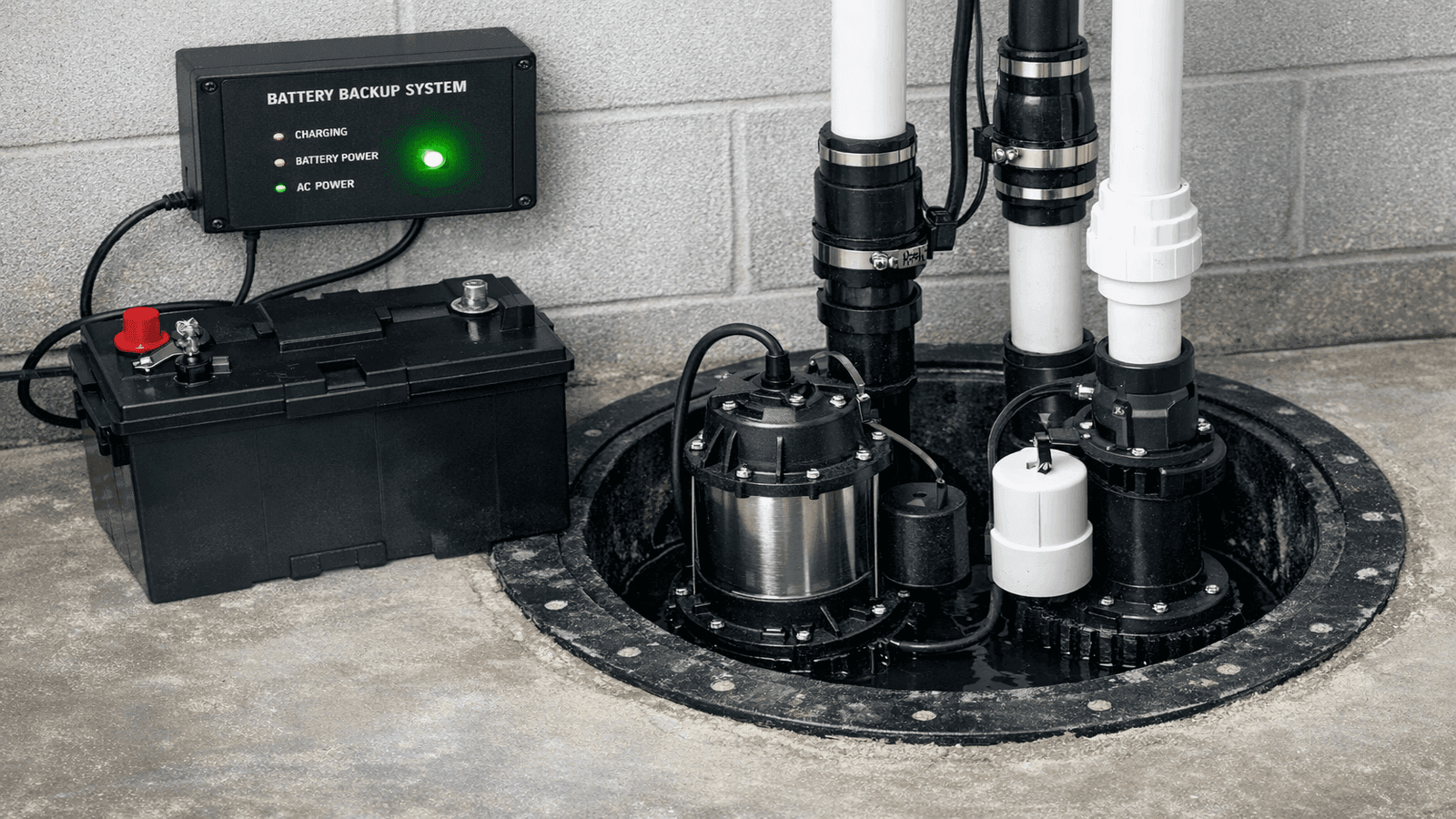
Photo: Battery backup sump pump next to primary pump showing marine deep-cycle battery and charge indicator panel
Load-test the backup every 6 months. A green indicator light does not confirm the battery can sustain the pump under actual load. Disconnect shore power and run the backup through 2 to 3 complete fill-and-drain cycles while monitoring the charge level. A charge drop to yellow during testing indicates the battery is near the end of its life.
Replace the battery every 3 to 5 years regardless of indicator status. Deep-cycle marine and AGM batteries degrade gradually. A battery that reads full charge at rest may deliver only 40% of its rated capacity under load. Most manufacturers recommend a 3-year cycle for standard batteries and up to 5 years for premium AGM units. Annual terminal cleaning with baking soda paste and petroleum jelly coating prevents corrosion-related resistance buildup.
Signs of Sump Pump Failure
Recognizing warning signs early allows planned replacement rather than emergency response. The table below maps symptoms to likely causes and urgency level.
Get quotes from top-rated pros.
| Warning Sign | Likely Cause | Urgency |
| Grinding or rattling during operation | Damaged impeller or debris | High - service within 1 week |
| Pump runs but no water discharges | Failed impeller or clogged line | High - service immediately |
| Rapid cycling (on/off repeatedly) | Float switch misaligned | Medium - service within 2 weeks |
| Continuous operation with empty pit | Float stuck in on position | High - unplug and service immediately |
| Rust or corrosion on housing | Water infiltration into motor | Medium - schedule assessment |
| Burning smell during operation | Motor overheating | High - unplug and service immediately |
Rapid cycling is particularly destructive. When the pump cycles more than 5 to 6 times per hour, repeated motor startup currents overheat the windings and cause premature failure. This is usually caused by a float arm that has shifted position, activating the pump at a water level too close to the shutoff point. Adjusting the float arm position resolves most rapid cycling issues. For related diagnostic guidance, see our article on plumbing leak detection and emergency plumber rates for service cost planning.
Rapid cycling is a slow motor killer. Every time the motor starts, it pulls 3 to 5 times its normal running current for the first second. Thirty short cycles per hour is thirty hard starts. I have opened up pumps that ran only 4 years but looked like they had run for 12 because the owner did not realize the float arm had slipped and the pump was cycling constantly.
When to Replace Your Sump Pump
Most sump pumps reach the end of their serviceable life between 7 and 10 years. High-demand environments with constant groundwater pressure can reduce this to 5 to 7 years. Proactive replacement costs $350 to $1,000 including installation. Waiting for failure adds water damage remediation costs averaging $1,200 to $4,000 for minor events.
Replace rather than repair when:
- The pump is 7 years old or older with any active warning signs
- The pump is 10 years old regardless of apparent condition
- Motor repair cost exceeds 50% of new pump cost
- The pump requires service more than twice in 12 months
- The pump fails completely during a storm event
Choosing a replacement pump requires matching horsepower to pit depth and expected inflow rate. Most residential applications use 1/3 or 1/2 horsepower submersible units. Homes with long discharge runs exceeding 20 feet, deep pits, or high groundwater tables should specify 3/4 horsepower for adequate margin. Review plumbing costs to budget for unit and installation together. For seasonal preparation guidance, see winterizing your plumbing and how plumbing works for foundational context.
Also consult all about plumbing for a broader view of what licensed plumbers provide during pump service calls. NearbyHunt data from pro contractors in our network shows that 1/3 HP pumps handle the majority of residential applications, while properties in flood-prone areas or with finished basements typically upgrade to 1/2 HP for added reliability.
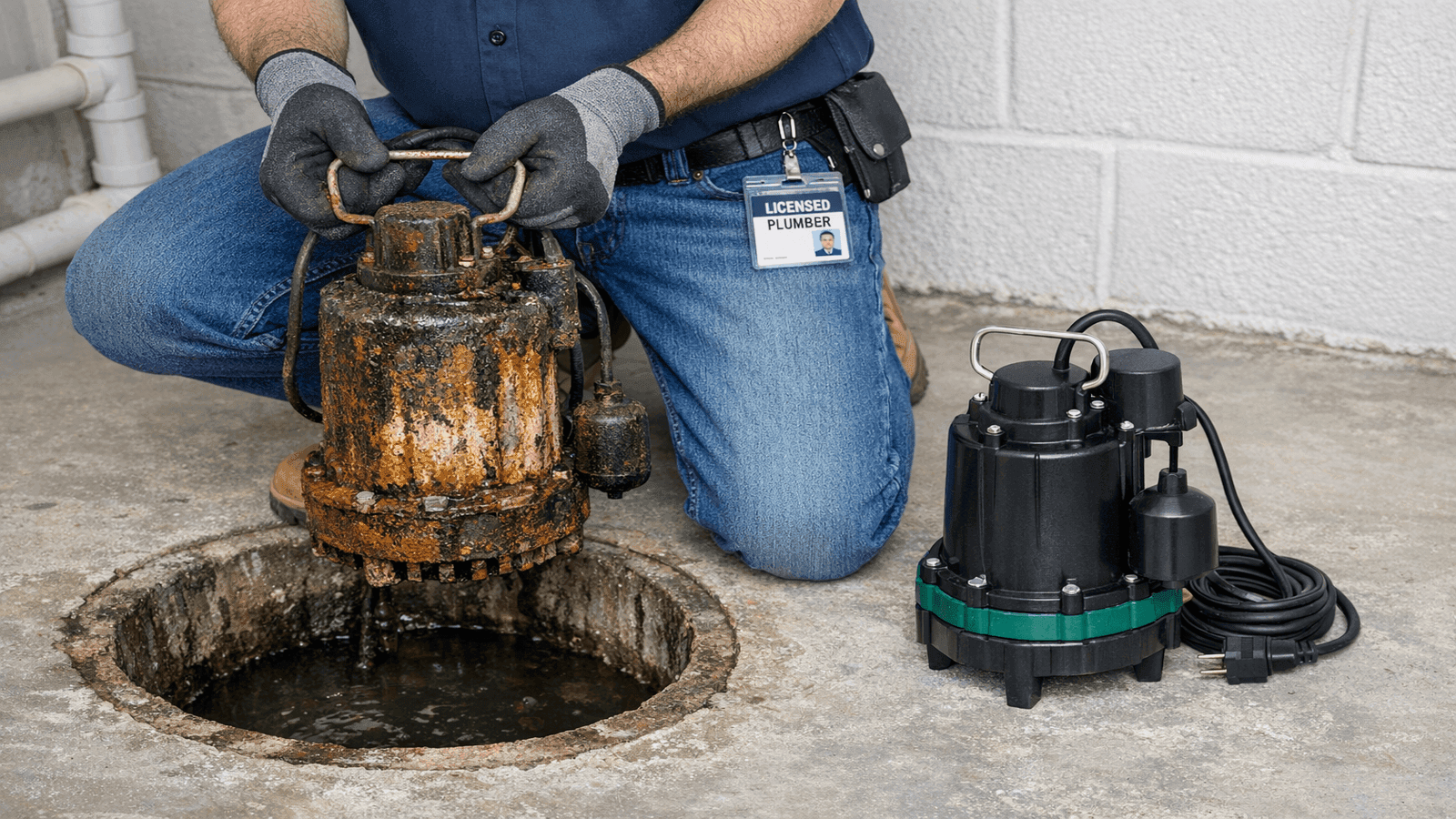
Photo: Licensed plumber removing old corroded sump pump from basement pit for replacement with new submersible unit
Conclusion
Sump pump maintenance is straightforward but unforgiving when skipped. The annual cost of keeping a pump in service runs $150 to $250. A single water damage event costs 5 to 20 times more. Test the float switch every 3 months. Clean the pit and pump once per year. Load-test the battery backup every 6 months. Replace the battery every 3 to 5 years. These four habits eliminate the most common causes of residential sump pump failure.
If your pump is approaching 7 years old, or if you have never had a professional assess your system, schedule an inspection before the next rain season arrives.
Sources & References
- FEMA: Maintain Your Sump Pump
- FEMA: Protect Your Home from Future Flooding
- PHCC (Plumbing-Heating-Cooling Contractors Association): Maintenance Guidelines
- IBHS (Insurance Institute for Business and Home Safety): Home Flood Resilience
- This Old House: Pumping Water Out of a Basement
- Bob Vila: Sump Pump Maintenance
- Forbes Home: Sump Pump Costs and Service Guide
- ServiceTitan: Sump Pump Maintenance Checklist

Michael Jennings is a licensed master plumber & water systems specialist with over 18 years of hands-on experience in residential and commercial plumbing, serving clients across California and Texas. At NearbyHunt, he shares practical advice on pipe installations, water heater maintenance, and home plumbing upgrades. Michael has helped thousands of homeowners prevent costly water damage and improve water efficiency through modern plumbing solutions.

Robert is a licensed master plumber with over 20 years of experience serving both residential and commercial clients across the Midwest. Specialising in advanced plumbing systems and sustainable water technologies, Rob brings deep technical insight and hands-on expertise to every project. As a reviewer for NearbyHunt, he ensures all plumbing content reflects the highest standards of safety, compliance, and practicality.