- A basic visual plumbing inspection costs $100-$200, while a sewer camera inspection runs $125-$500 for most residential homes.
- A combined visual and camera inspection costs $400-$1,300 and gives the most complete picture of your system.
- Home buyers should always budget for a separate plumbing inspection in addition to a general home inspection, which rarely covers sewer lines or water pressure in detail.
- Emergency and after-hours inspections add $100-$500 to the base cost; scheduling during business hours avoids this premium.
- Older homes built before 1980 often require a camera inspection due to clay, cast iron, or Orangeburg pipes that fail without warning.
A plumbing inspection is one of the most valuable diagnostic services a homeowner can buy. A $150 visual inspection can uncover a $4,000 sewer problem before you close on a house. A $300 camera inspection can spot root intrusion that, left undetected, becomes a $12,000 excavation job within two years.
Most homeowners either skip the inspection entirely or confuse a basic walkthrough with a thorough evaluation. This guide breaks down the costs of each inspection type in 2026, what you get for your money, when you actually need one, and how to prepare so nothing gets missed.
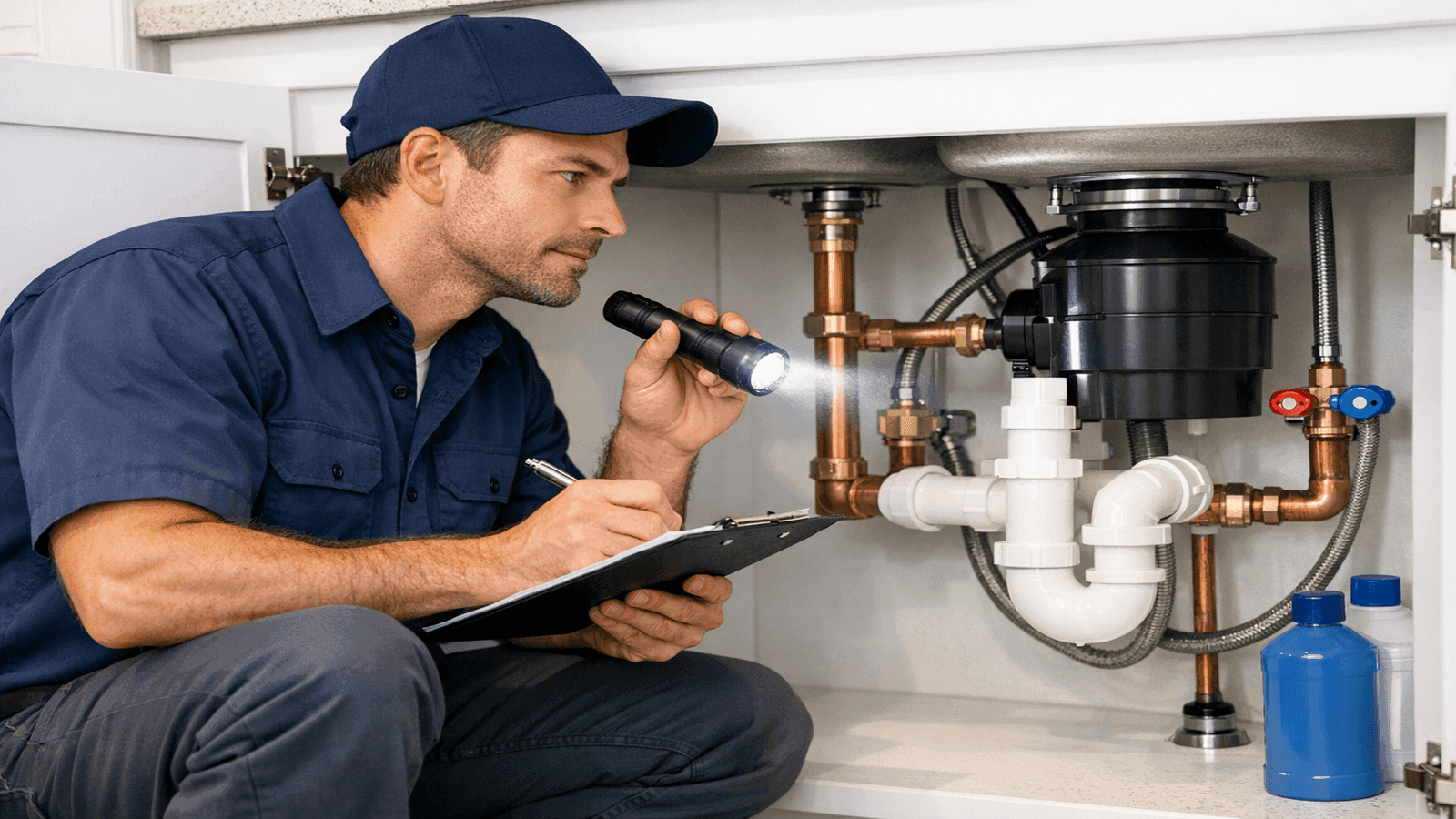
Photo: Licensed plumber performing a visual inspection under a kitchen sink, checking pipes and connections with a flashlight
Average Plumbing Inspection Costs in 2026
Plumbing inspection pricing follows three tiers based on the depth of evaluation. The right choice depends on your home's age and the reason for the inspection.
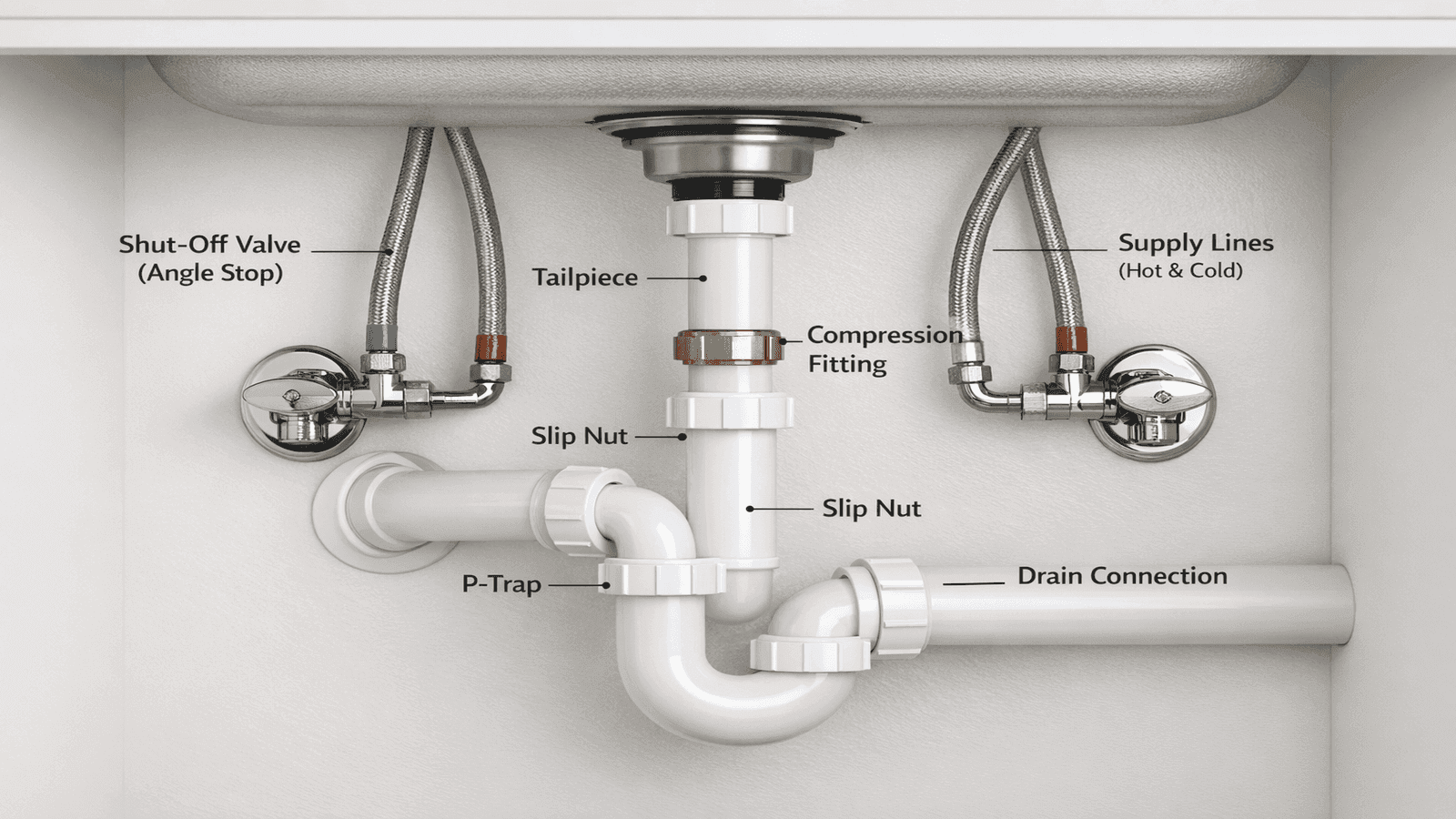
Visual inspections cover accessible fixtures, shutoff valves, water heater connections, drain function, and visible supply lines. A licensed plumber walks through your home room by room and documents what they see. These run $100-$200 for most single-family homes and take 60-90 minutes.
Camera inspections add a sewer scope that sends a high-resolution camera through your drain lines and sewer lateral. These run $125-$500 as a standalone service, including a full recorded report. Licensed plumbers in the NearbyHunt network report that camera-only calls are most common for homes with known drainage symptoms or recent backups.
Combined inspections bundle visual and camera evaluation into a single visit and cost $400-$1,300. This is the most thorough option and the standard recommendation for any home purchase.
| Inspection Type | Cost Range | Time Required | Best For |
| Visual only | $100-$200 | 60-90 min | Routine annual checkup |
| Camera/sewer only | $125-$500 | 45-60 min | Suspected sewer issues |
| Combined visual + camera | $400-$1,300 | 2-3 hours | Home purchase, older homes |
| Emergency/after-hours | Add $100-$500 | Varies | Urgent leak or backup |
I've conducted over 400 plumbing inspections for home buyers, and the number one mistake I see is relying on a general home inspector's plumbing notes. A home inspector checks whether water comes out of the faucet. A licensed plumber tests pressure at multiple fixtures, checks every shutoff valve, evaluates the water heater anode rod, and scopes the sewer line. Those are completely different evaluations.

Camera vs. Full Inspection: Key Differences
A camera inspection and a full plumbing inspection evaluate entirely different parts of your system. Understanding the difference prevents you from ordering the wrong service.
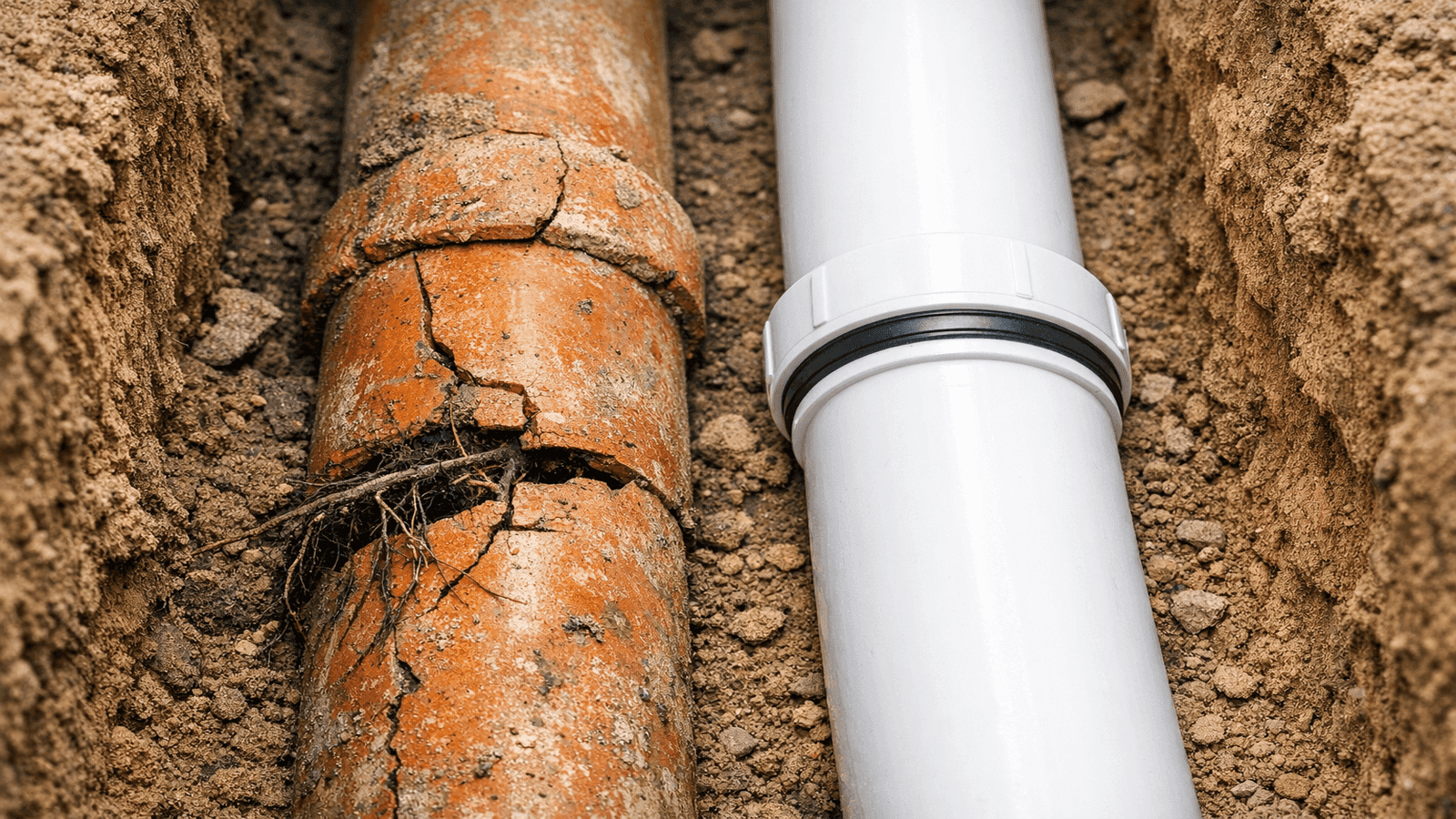
A sewer camera inspection focuses exclusively on underground drain lines. The plumber inserts a waterproof camera through a cleanout or toilet opening and pushes it through your sewer lateral. The camera reveals cracks, root intrusion, bellied pipe sections, grease buildup, and material condition. It does not check faucets, supply pressure, water heater condition, or fixture shutoffs.
A full visual inspection covers everything the camera misses: every fixture in the home, water pressure readings at multiple points, water heater age and condition, supply line material, and shutoff valve operation. It evaluates the interior of the system but cannot see inside buried drain lines.
| Factor | Camera Inspection | Full Visual Inspection |
| Sewer line condition | Yes | No |
| Root intrusion | Yes | No |
| Water pressure | No | Yes |
| Fixture condition | No | Yes |
| Water heater evaluation | No | Yes |
| Shutoff valve testing | No | Yes |
| Approximate cost | $125-$500 | $100-$200 |
The ideal inspection for a home purchase combines both. For an existing homeowner doing routine maintenance, the right choice depends on the age of the system and whether any symptoms are present. See the overview of how plumbing works for background on what each system component does.
Get quotes from top-rated pros.
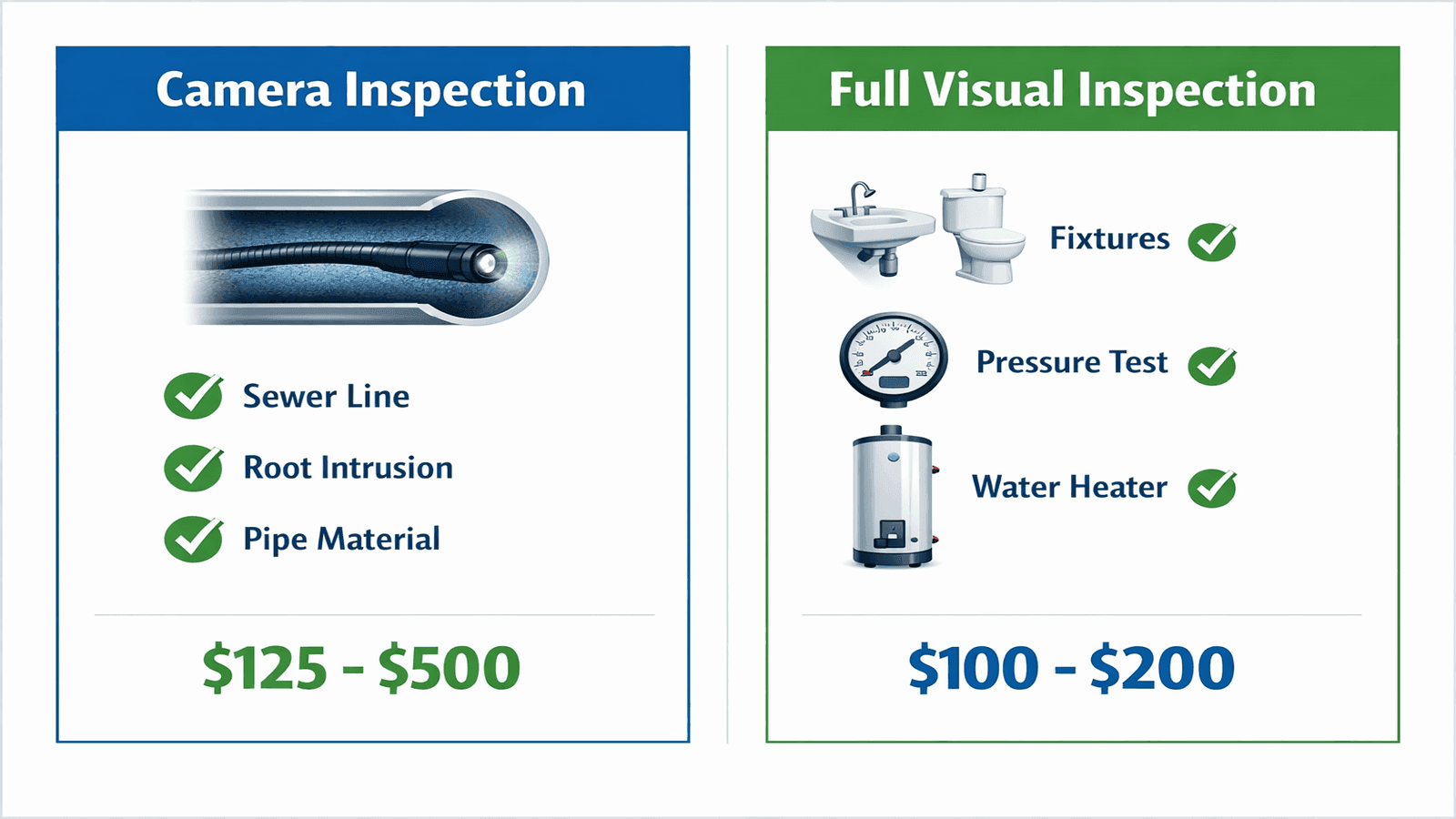
Photo: Split infographic comparing sewer camera inspection vs full visual plumbing inspection with checklist icons and cost ranges
What a Full Plumbing Inspection Includes
A thorough plumbing inspection covers five major system areas. Knowing what should be checked helps you verify that your inspector is doing a complete job.
Water supply system: The inspector checks your main water shutoff valve, individual fixture shutoffs, supply line material and age, and water pressure. Acceptable residential pressure runs 40-80 PSI. Readings above 80 PSI indicate a failing pressure regulator. Readings below 40 PSI suggest a supply restriction or partially closed valve.
Fixtures and drains: Every faucet, toilet, shower, and tub is tested for flow rate, drain speed, and signs of leaks. Slow drains often indicate buildup in the branch line or a partial blockage forming in the sewer lateral. P-traps under every sink are checked for proper installation and corrosion.
Water heater: The plumber checks the age (most tank units last 8-12 years), the condition of the anode rod, the pressure relief valve function, and signs of sediment or rust. A failing anode rod is a $30 repair that, left unchecked, becomes a full water heater replacement costing $900-$1,800.
Drain and sewer lines: For a combined inspection, this includes the camera evaluation. A visual-only inspection checks drain speed and looks for signs of backup or sewage odor but cannot see inside buried lines.
Exterior connections: Outdoor hose bibs are checked for proper shutoffs and freeze protection. The inspector looks for signs of ground settling or root activity near the sewer cleanout.
Water pressure is the vital sign of a plumbing system. I take a reading at the hose bib and at a bathroom sink on the upper floor of every inspection. If there is more than a 15 PSI difference, something is wrong. A failing pressure regulator or a partially closed zone valve will not appear on any general home inspection checklist. A licensed plumber checks it as a matter of course.
Factors That Affect Plumbing Inspection Cost
Several variables shift your actual quote above or below published averages.
Home size and fixture count is the primary driver. A 1,200-square-foot home with one bathroom takes 60 minutes to inspect. A 3,500-square-foot home with three bathrooms and outdoor plumbing connections takes twice as long and costs proportionally more. NearbyHunt quote data from 2025 shows inspection prices vary by up to 45% between the lowest and highest cost metros for the same service type.
Pipe age and material affects complexity significantly. Homes built before 1970 may have galvanized steel supply lines that are partially corroded. Homes with Orangeburg sewer pipe need a camera inspection because the material degrades and collapses without warning. Understanding types of plumbing pipes helps you anticipate what the inspector may find.
Cleanout access determines whether a camera scope is straightforward or complicated. If your home lacks a dedicated cleanout, the plumber must remove a toilet to insert the camera, adding 30-45 minutes and typically $75-$150 to the price.
Geographic location affects all plumbing pricing. An inspection that costs $150 in a mid-size Midwest city may cost $300-$400 in San Francisco or New York. Regional plumbing costs vary significantly across the country.
Emergency and after-hours premiums add $100-$500 to the base cost. Scheduling during regular weekday business hours avoids this charge entirely.
When I hear that a homeowner got a camera inspection for $80, I ask questions. At that price, either the camera resolution is too low to spot hairline cracks, or the inspector is rushing through the lateral in under 10 minutes. A proper sewer scope for a 100-foot lateral, with full documentation, takes a minimum of 25-35 minutes. You need to see recorded footage, not just a verbal summary.
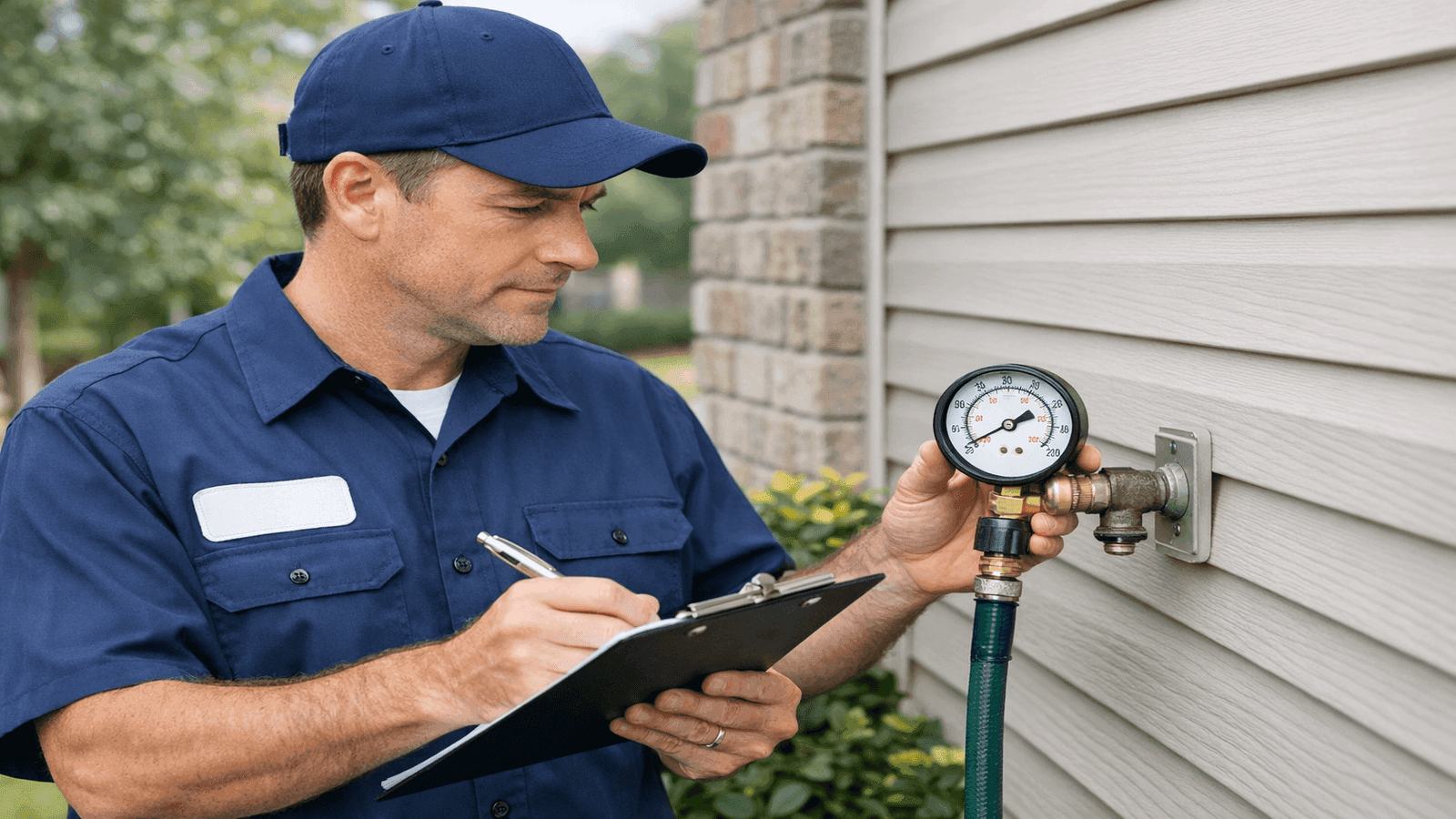
Photo: Licensed plumber using a pressure gauge at an outdoor hose bib during a home inspection, notebook in hand
When You Need a Plumbing Inspection
Not every homeowner needs an annual inspection, but specific situations create real financial risk if you skip it.
Before closing on a home purchase is the most critical use case. A general home inspection gives you a surface-level assessment that satisfies lenders but rarely includes sewer scoping or detailed pressure testing. A licensed plumber's pre-purchase inspection gives you leverage to negotiate repairs, request a price reduction, or walk away from a property with hidden problems. The cost of a $400 combined inspection is negligible against the risk of inheriting a $15,000 sewer replacement. Understanding common plumbing problems helps you recognize red flags during your own walkthrough as well.
After buying a home built before 1980, a baseline inspection within the first year establishes what you have and what will need attention. Cast iron drain pipes last 50-75 years. Galvanized steel supply lines last 20-50 years. Clay sewer laterals fail as tree roots mature.
After a major plumbing event such as a sewer backup, burst pipe, or extended freeze, an inspection confirms whether hidden damage exists before it causes a secondary failure.
Every 2-3 years for homes over 20 years old catches developing problems while they are still inexpensive to fix. This is especially true for the sewer lateral, which is invisible and inaccessible until it fails at the worst possible moment. Staying current on plumbing code requirements also helps homeowners understand what upgrades may be required when selling.
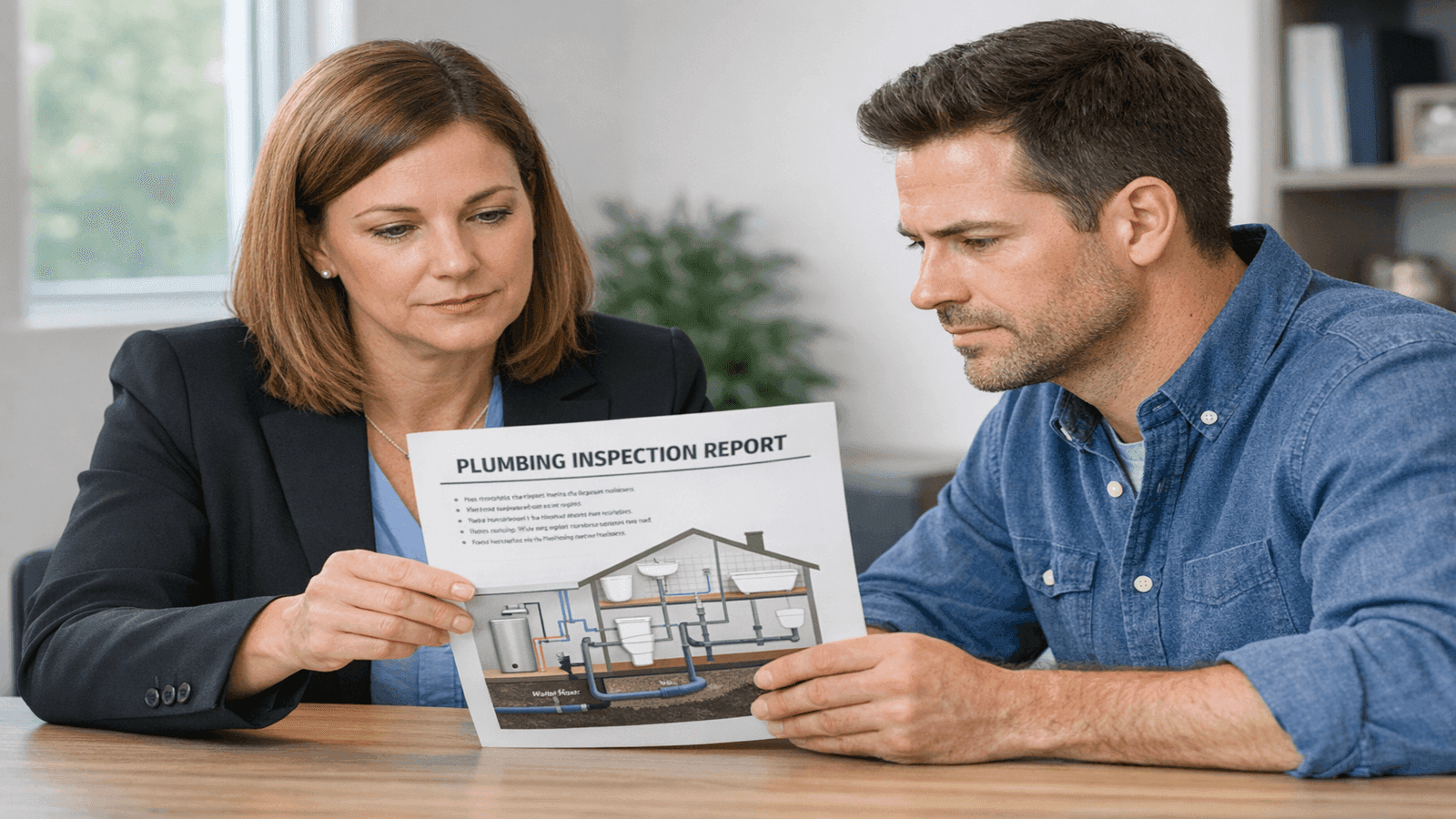
Photo: Real estate agent and home buyer reviewing a plumbing inspection report at a table in a professional office setting
Conclusion
A plumbing inspection is diagnostic information that determines whether a home has a costly sewer problem hiding underground or whether an aging system needs a water heater next spring. The cost of the inspection is always a fraction of the cost of the problem it prevents.
Budget $100-$200 for a visual inspection, $125-$500 for a camera scope alone, or $400-$1,300 for a combined evaluation. For home purchases, always order both. For ongoing maintenance on homes older than 20 years, schedule a combined inspection every 2-3 years and ask for written documentation with camera footage included.
For a broader view of what repairs cost after an inspection reveals issues, the complete plumbing costs guide covers pricing for the most common repairs. The overview of all about plumbing explains how each system component works and what a repair typically involves.
Sources & References
- Fixr: Plumbing Inspection Cost Guide (2026)
- Bob Vila: How Much Does a Plumbing Inspection Cost? (2026)
- This Old House: Home Plumbing Inspection Guide (2026)
- Forbes Home: Sewer Camera Inspection Cost (2026)
- Inspection Support Network: What Is a Plumbing Inspection? (2026)
- ServiceTitan: Plumbing Service Pricing Data (2026)
- PHCC (Plumbing-Heating-Cooling Contractors Association): Industry Standards Reference
- NearbyHunt Pro Network: Quote Data from Licensed Plumbers (2025)

Michael Jennings is a licensed master plumber & water systems specialist with over 18 years of hands-on experience in residential and commercial plumbing, serving clients across California and Texas. At NearbyHunt, he shares practical advice on pipe installations, water heater maintenance, and home plumbing upgrades. Michael has helped thousands of homeowners prevent costly water damage and improve water efficiency through modern plumbing solutions.

Robert is a licensed master plumber with over 20 years of experience serving both residential and commercial clients across the Midwest. Specialising in advanced plumbing systems and sustainable water technologies, Rob brings deep technical insight and hands-on expertise to every project. As a reviewer for NearbyHunt, he ensures all plumbing content reflects the highest standards of safety, compliance, and practicality.