- Septic tanks should be pumped every 3 to 5 years; a family of four with a 1,000-gallon tank typically needs service every 2 to 3 years
- Annual inspections cost $150 to $450 and catch problems before they escalate into $10,000+ drain field replacements
- Flushing anything other than human waste and toilet paper is the leading cause of preventable septic failures
- Warning signs include slow drains, sewage odors, wet spots over the drain field, and unusually green grass above the leach field
- According to NearbyHunt data, licensed septic professionals in most U.S. markets charge $300 to $700 per pumping visit
- Routine maintenance costs a fraction of the $15,000 to $50,000 needed to replace a failed system
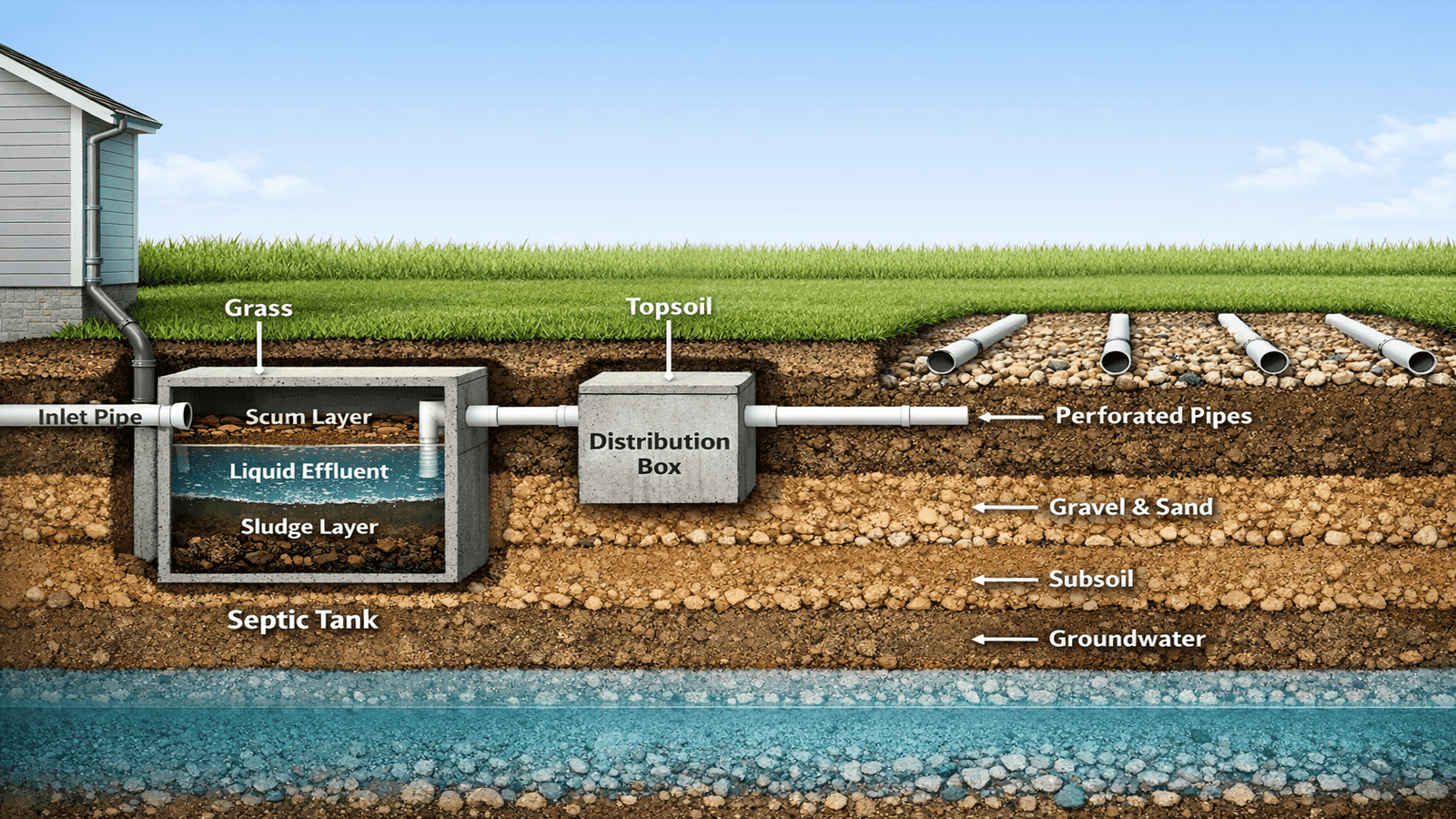
Photo: Cross-section diagram of residential septic system components
How a Septic System Works
A conventional septic system has two main parts: the septic tank and the drain field. Wastewater from your home flows into the tank, where solids settle to form sludge at the bottom while grease floats as scum on top. The liquid effluent in the middle flows out to the drain field, a network of perforated pipes in gravel-filled trenches. Effluent percolates through the soil, where bacteria neutralize pathogens before the water reaches groundwater. Understanding how this system works is foundational to your home plumbing maintenance plan.
This system depends on biological balance. Neglect, improper use, or chemical interference disrupts that balance and can cause complete system failure. For a broader look at how residential plumbing connects to your septic system, see our guide on how plumbing works.
Most homeowners don't think about their septic system until something goes wrong. I've seen $400 pumping jobs that were skipped for a decade turn into $30,000 drain field replacements. The biology inside that tank is doing you a favor every single day. Your job is to not disrupt it.

Septic Tank Pumping Schedule by Household Size
Pumping is the single most important septic maintenance task. When the sludge layer gets too high, it flows into the drain field and clogs the soil permanently. The U.S. EPA recommends pumping every 3 to 5 years, but your actual interval depends on tank size and household occupancy.
Recommended Pumping Frequency by Tank Size and Household
| Tank Size (Gallons) | 1-2 People | 3-4 People | 5-6 People | 7+ People |
| 750 | Every 3 years | Every 2 years | Every 1 year | Every 1 year |
| 1,000 | Every 5 years | Every 3 years | Every 2 years | Every 1.5 years |
| 1,500 | Every 7 years | Every 5 years | Every 3 years | Every 2.5 years |
| 2,000 | Every 9 years | Every 6 years | Every 4 years | Every 3 years |
Source: EPA Septic System Pumping Frequency Guidelines
Additional factors that accelerate pumping frequency:
- Garbage disposals: In-sink disposals can cut your pumping interval nearly in half by adding food solids to the tank.
- Laundry habits: Multiple loads in a single day push large volumes of water through the tank before solids settle.
- Additives: The EPA does not endorse biological or chemical additives as a substitute for pumping. Tank bacteria are self-sustaining under normal use.
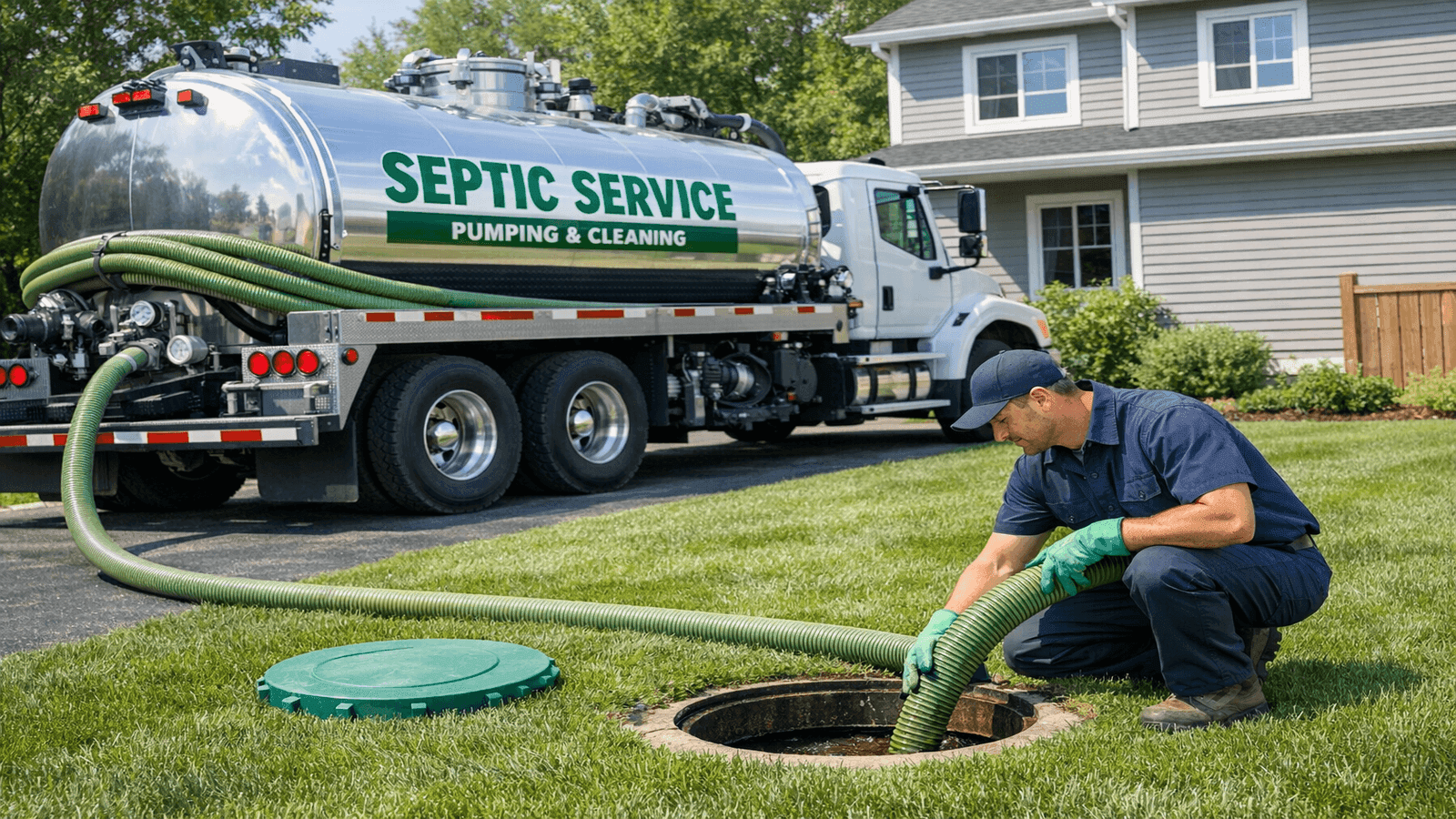
Photo: Septic pumping truck at residential home during maintenance service
Tank size matters, but water habits matter just as much. I serviced a 1,500-gallon tank for a couple who did laundry every day and ran a garbage disposal constantly. Their tank needed pumping every 18 months. The math changes when your water usage is above average.
Get quotes from top-rated pros.
What Not to Flush or Pour Down the Drain
Your septic system is a biological treatment system, not a trash can. Certain materials kill beneficial bacteria, clog baffles, or block drain field pipes.
Never flush:
- Wipes, including those labeled "flushable"
- Paper towels, feminine hygiene products, dental floss, or cotton swabs
- Medications (pharmaceutical compounds disrupt bacterial populations)
- Cat litter or cigarette butts
Never pour down the drain:
- Grease, oils, or fats (solidify in the tank and build up scum)
- Chemical drain cleaners (caustic formulas kill beneficial bacteria)
- Paint, solvents, antifreeze, or pesticides
Only human waste, toilet paper, and normal household wastewater should enter your system. For additional tips on protecting your drains, read our drain maintenance tips.
Drain Field Maintenance
The drain field is the most expensive component to repair or replace. Four practices protect it long-term:
Avoid vehicle traffic over the drain field. Driving or parking compacts the soil and can crush perforated pipes. Mark boundaries clearly.
Divert surface water away. Saturated soil cannot treat effluent. Route gutters and sump pumps away from the drain field area.
Plant only grass. Shallow grass roots hold soil without invading pipes. Keep trees and large shrubs at least 30 feet away from the system.
Fix leaks promptly. A running toilet can add 200 or more gallons per day to your system load. For help identifying hidden leaks, see our guide on plumbing leak detection.
Schedule professional inspections every one to two years. At $150 to $450 per visit, inspections are the lowest-cost way to catch failing baffles, high sludge levels, or early drain field saturation before they become catastrophic.
The drain field is the system's lungs. Once those lungs fill up with solids, the whole organism suffocates. A $250 inspection every other year is cheap life insurance. I've watched people skip inspections for 15 years and then face a $40,000 drain field replacement that was entirely preventable.
Warning Signs of Septic System Failure
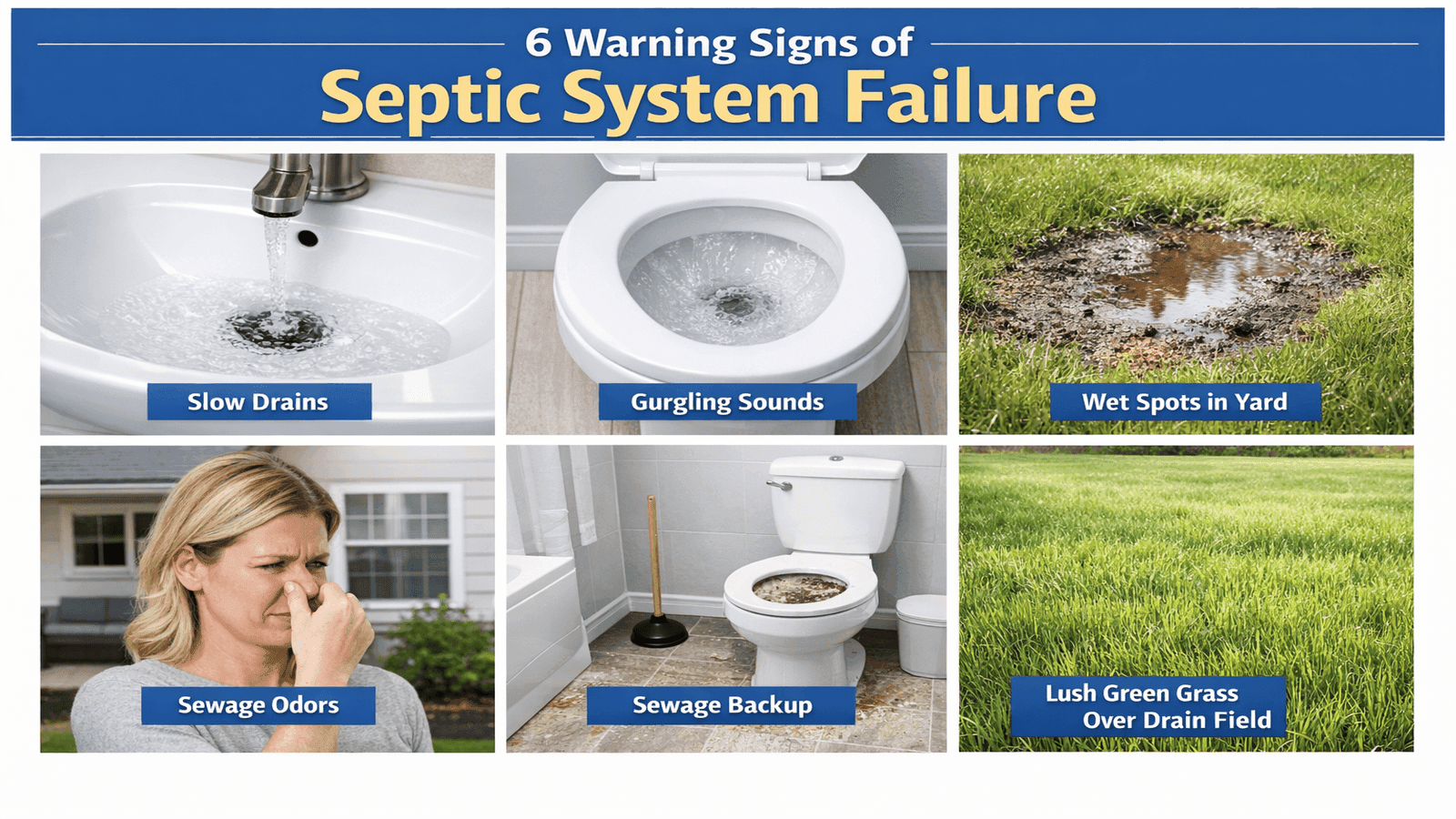
Photo: Infographic showing 6 warning signs of septic system failure
Septic systems rarely fail without warning. Recognizing early signals is the difference between a $500 service call and a $50,000 replacement. According to the Washington State Department of Health, the most common indicators are:
1. Slow drains throughout the house. Multiple sluggish drains simultaneously suggest the tank is full or the drain field is backing up. A single slow drain usually means a localized clog.
2. Gurgling sounds in plumbing. Gurgling after flushing indicates air being pushed back through pipes from a full or clogged tank.
3. Sewage odors indoors or outdoors. A functioning system is odorless. Persistent smells point to a full or failing system.
4. Wet spots or pooling water over the drain field. When the drain field is overwhelmed, effluent surfaces to the ground. Spongy or wet areas above the field require immediate professional attention.
5. Unusually lush green grass over the drain field. Dramatically greener grass above the leach field means effluent is surfacing and fertilizing the soil from below.
6. Sewage backup into the home. The most severe sign. This is a plumbing emergency requiring immediate service.
If you notice any of these signs, minimize water use and call a licensed professional immediately. Our guide on common plumbing problems covers additional emergency scenarios.
Get quotes from top-rated pros.
Cost of Neglect vs. Routine Maintenance
The financial case for regular maintenance is clear.
| Maintenance Task | Typical Cost | Frequency |
| Routine pumping | $300 to $700 | Every 3 to 5 years |
| Professional inspection | $150 to $450 | Every 1 to 3 years |
| Baffle replacement | $150 to $500 | As needed |
| Distribution box repair | $500 to $1,500 | As needed |
| Drain field repair (partial) | $1,000 to $5,000 | As needed |
| Full drain field replacement | $10,000 to $50,000 | System failure |
| Complete system replacement | $15,000 to $75,000 | System failure |
Sources: EPA, Fixr, NOWRA 2026 industry data
A homeowner who pumps every 3 years and inspects biennially spends roughly $2,500 to $4,000 over a decade. Neglecting the system for a decade risks spending 10 to 20 times that amount on emergency repairs. According to NearbyHunt data, homeowners who maintain regular service schedules with licensed professionals report significantly lower lifetime system costs.
For a full breakdown of what septic and plumbing work costs in your area, see our guide on plumbing costs. Buyers purchasing a home with a septic system should also review plumbing inspection costs before closing.
Every emergency call I go on for a septic failure has the same story: the homeowner hasn't had it pumped in 10 years, they had no idea where the tank was, and they've been flushing wipes and grease for years. At that point, we're talking drain field replacement, not just pumping. Regular maintenance buys you decades of reliable service.
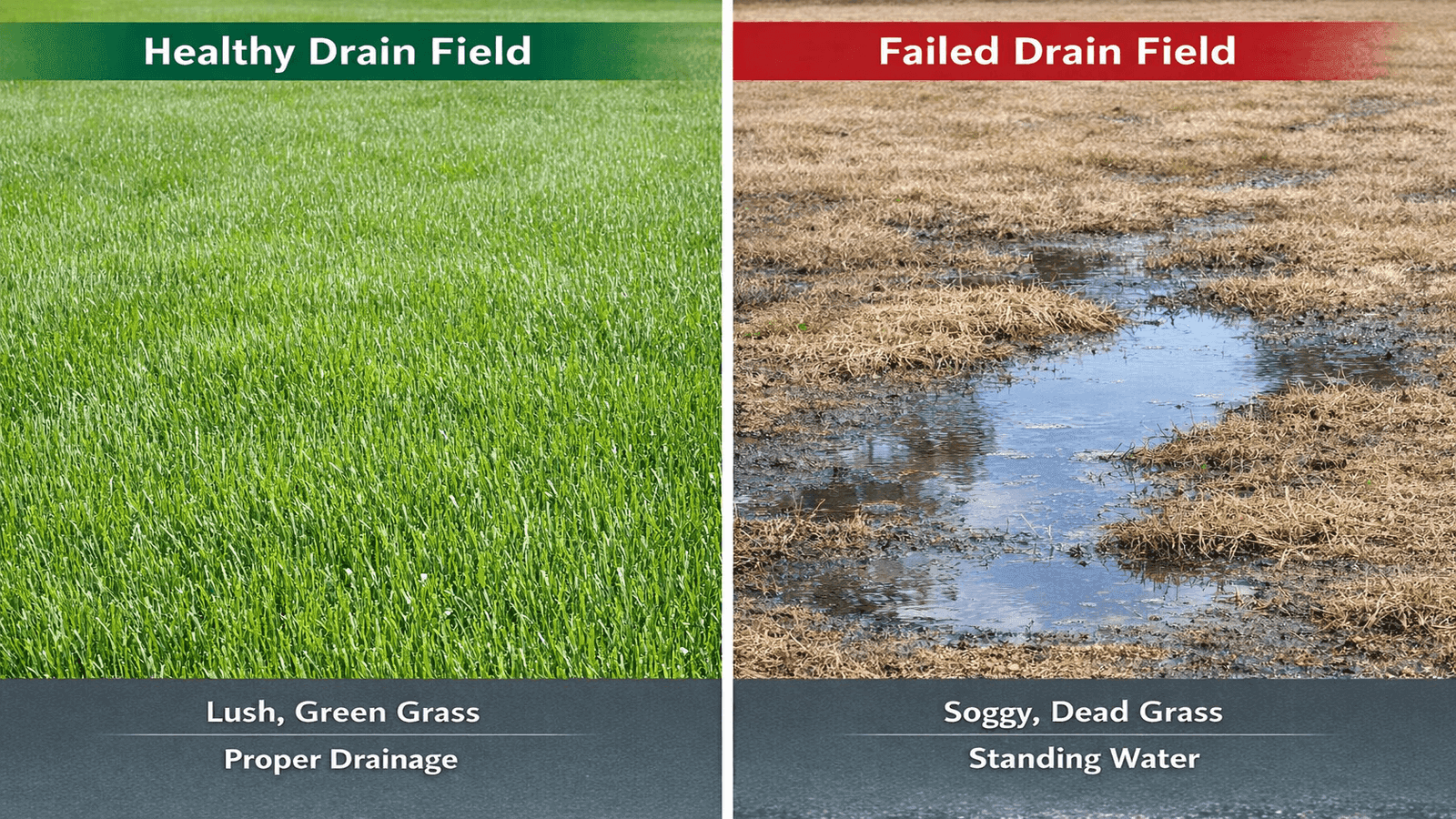
Photo: Comparison of healthy drain field versus failing waterlogged drain field
Conclusion
Septic system maintenance requires consistency, not complexity. Pump on schedule, inspect every one to three years, protect your drain field, and keep harmful materials out of the system. Homeowners who follow these fundamentals routinely get 30 or more years of reliable service. Those who neglect routine maintenance often face catastrophic failure in half that time.
For additional resources, see our guides on sewer line replacement cost and all about plumbing.
Sources & References
- U.S. Environmental Protection Agency. "How to Care for Your Septic System." https://www.epa.gov/septic/how-care-your-septic-system
- U.S. Environmental Protection Agency. "Resolving Septic System Malfunctions." https://www.epa.gov/septic/resolving-septic-system-malfunctions
- Washington State Department of Health. "Signs of Septic System Failure." https://doh.wa.gov/community-and-environment/wastewater-management/septic-system/signs-failure
- Washington State Department of Health. "Caring for Your Septic System." https://doh.wa.gov/community-and-environment/wastewater-management/septic-system/caring-your-system
- National Onsite Wastewater Recycling Association (NOWRA). Industry data, 2026.
- Fixr. "Septic Tank Pumping Cost Guide." https://www.fixr.com/costs/septic-tank-pumping
- HomeGuide. "How Much Does Septic Tank Pumping Cost?" https://homeguide.com/costs/septic-tank-pumping-cost

Michael Jennings is a licensed master plumber & water systems specialist with over 18 years of hands-on experience in residential and commercial plumbing, serving clients across California and Texas. At NearbyHunt, he shares practical advice on pipe installations, water heater maintenance, and home plumbing upgrades. Michael has helped thousands of homeowners prevent costly water damage and improve water efficiency through modern plumbing solutions.

Robert is a licensed master plumber with over 20 years of experience serving both residential and commercial clients across the Midwest. Specialising in advanced plumbing systems and sustainable water technologies, Rob brings deep technical insight and hands-on expertise to every project. As a reviewer for NearbyHunt, he ensures all plumbing content reflects the highest standards of safety, compliance, and practicality.