- Deep clean your garbage disposal once per month using ice, rock salt, baking soda, and citrus peels.
- Always run cold water during use and for 15 seconds after to flush debris through the drain.
- Avoid fibrous vegetables, grease, pasta, and coffee grounds to prevent jams and drain blockages.
- A well-maintained disposal lasts 10-15 years; most fail early from improper use and no cleaning routine.
- The red reset button under the unit and a hex wrench resolve most jams without a service call.
- Replacement averages $250-$600 installed in 2026, making maintenance a clear financial priority.
Garbage disposals handle constant use with almost zero maintenance attention from most homeowners. The result is premature failure, persistent odors, and drain backups that are almost entirely preventable with a simple monthly routine. Disposal care is also a key component of your broader home plumbing maintenance plan.
This guide covers the weekly and monthly cleaning schedule, the foods that cause most failures, step-by-step troubleshooting for jams and dead units, and a clear framework for when to reset versus when to call a plumber. For pricing context if your unit is beyond saving, see the garbage disposal cost guide.
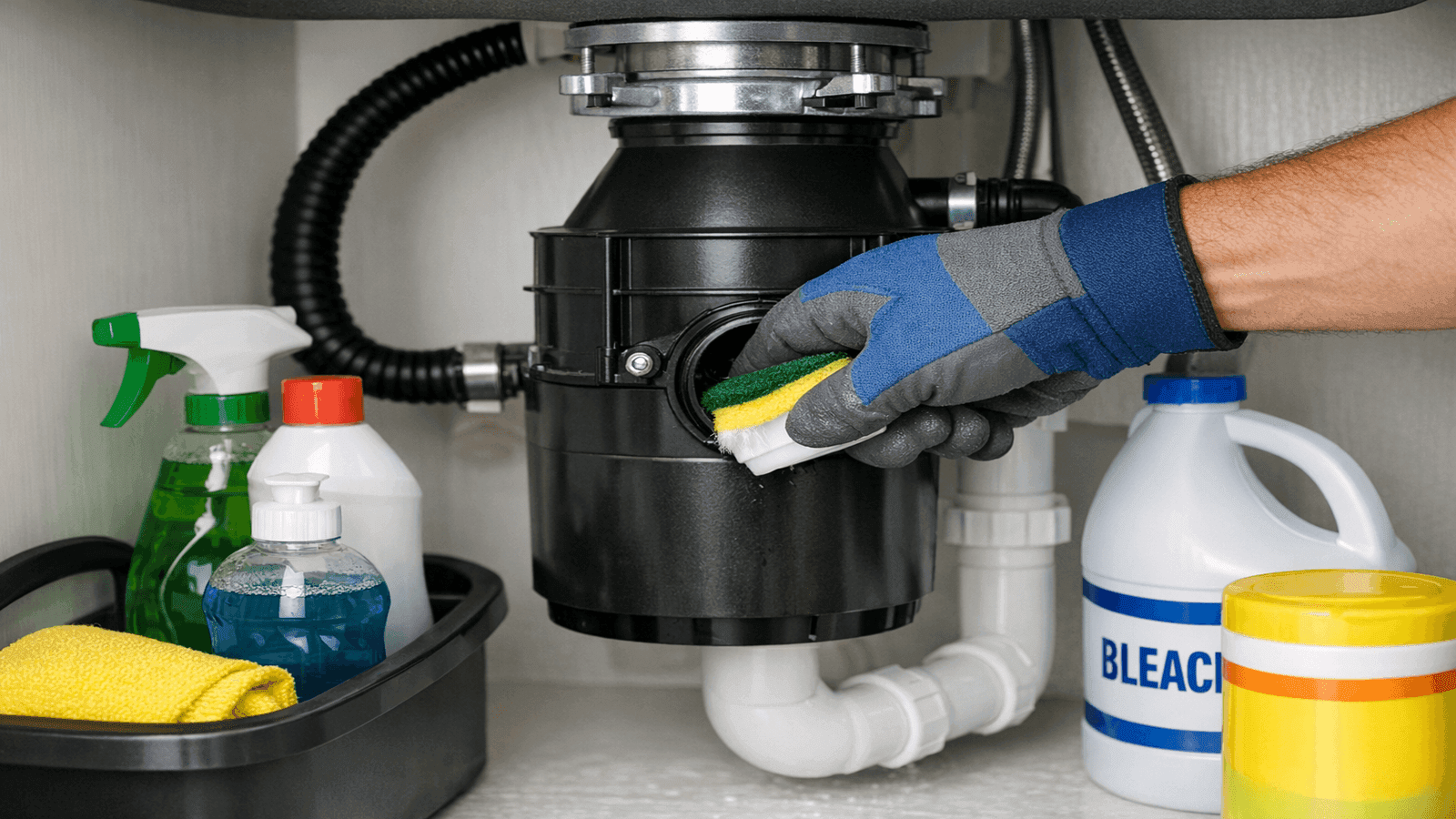
Photo: Homeowner cleaning garbage disposal under kitchen sink
Weekly and Monthly Maintenance Routine
Weekly: Run cold water for 15 seconds after every use. On days the disposal is not used, run it briefly with cold water to prevent food residue from drying in the grinding chamber. Scrub the splash guard underside weekly with a stiff brush and dish soap. The underside of the rubber flap accumulates biofilm faster than any other surface and is responsible for most disposal odors.
Monthly deep clean: The ice and salt method is the most effective mechanical cleaning approach. Pour two cups of ice and one cup of rock salt into the unit, run cold water, and turn on the disposal. Ice knocks hardened food deposits loose; salt provides abrasive scrubbing inside the grinding chamber. Follow with half a cup of baking soda and one cup of white vinegar. Let the mixture fizz for 10 minutes, then flush with cold water. Finish by grinding a handful of lemon or orange peels. According to This Old House, citrus peels are among the most effective natural deodorizers for disposal units and are safe to use weekly.
I tell every homeowner the same thing: the monthly ice and salt treatment costs nothing and takes two minutes. In 18 years and over 2,400 disposal-related service calls, the units I see failing early almost always come from kitchens where nothing has gone in except food scraps and tap water. The grinding chamber needs mechanical agitation to stay clean.

Foods to Avoid Putting in the Garbage Disposal
Most disposal failures trace back to the wrong items being processed. Knowing what to exclude is as important as the cleaning routine.
Fibrous vegetables. Celery, asparagus, onion skins, corn husks, and banana peels contain long fibers that wrap around the impeller shaft and cause motor jams. These belong in the trash or compost bin.
Starchy foods. Potato peels, pasta, and rice expand with water and form a paste that coats the grinding chamber and clogs drain lines. Pasta continues absorbing water even after grinding.
Grease and cooking oils. Liquid when hot, grease solidifies further down the drain pipe and builds up in layers until flow is restricted. Pour used cooking grease into a sealed container and discard it in the trash. The drain maintenance tips guide covers grease-related drain blockages in detail.
Coffee grounds. Fine in appearance but they accumulate into dense sediment in traps and slow drain sections. Most plumbers cite coffee grounds as a contributing factor in kitchen drain blockages.
Hard bones and fruit pits. Items like peach pits, avocado stones, and large chicken bones can fracture impeller blades. Small soft bones such as fish bones are generally acceptable.
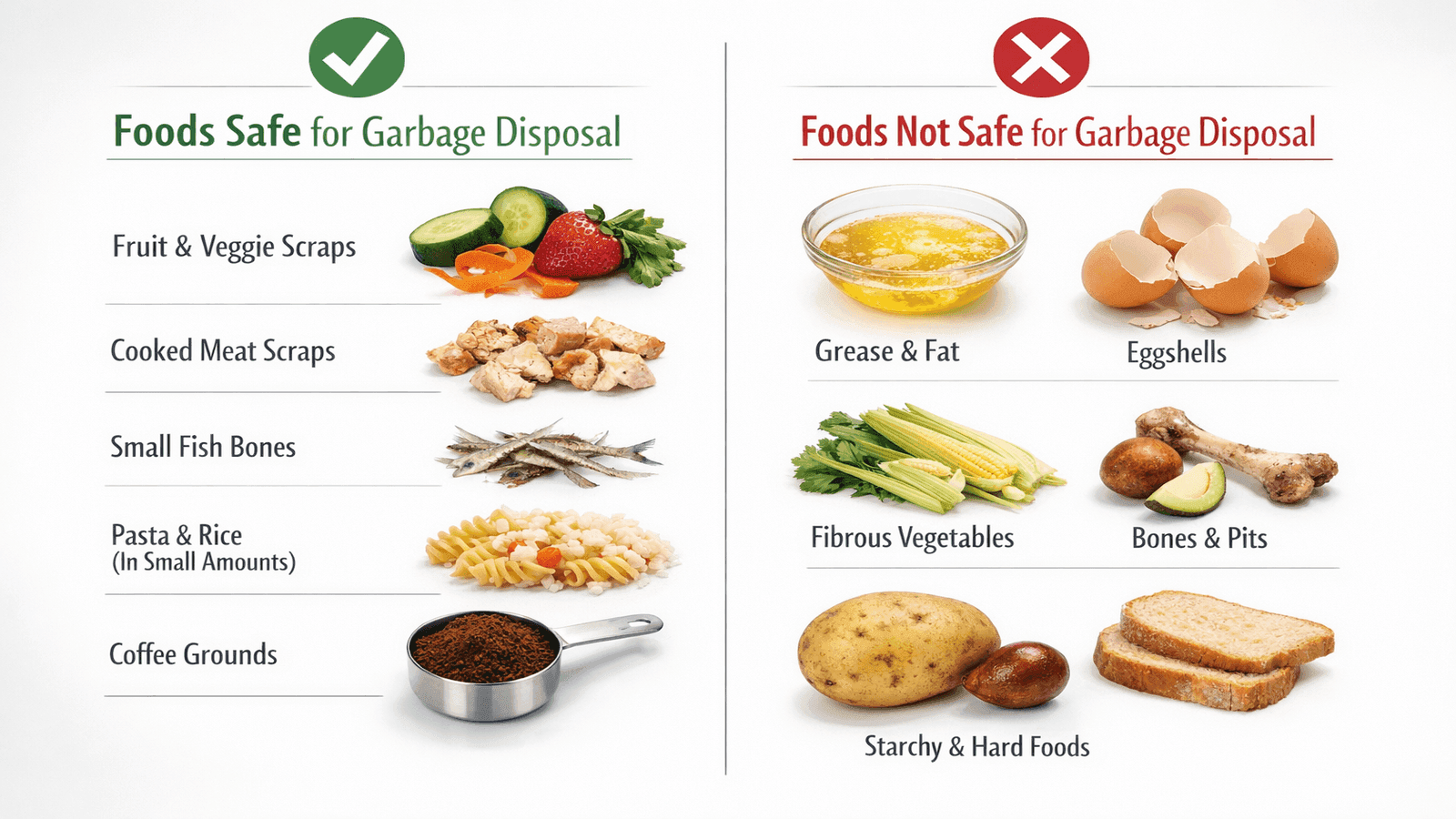
Photo: Infographic of foods safe and unsafe for garbage disposal
| Safe for Disposal | Avoid Completely |
| Soft food scraps | Fibrous vegetables (celery, asparagus) |
| Small citrus pieces | Starchy foods (pasta, rice, potato peels) |
| Soft fruit without pits | Grease and cooking oils |
| Ice cubes | Coffee grounds |
| Small, soft fish bones | Hard bones, fruit pits |
Troubleshooting Jams and Dead Units
Get quotes from top-rated pros.
Humming But Not Spinning
This indicates a jammed flywheel. The motor is receiving power but cannot turn. Do not run the unit repeatedly when it hums, which burns out the motor within minutes.
- Turn off and unplug the disposal under the sink.
- Insert the 1/4-inch hex wrench (included with most units) into the hex socket at the center of the unit's bottom. Turn back and forth to free the jam.
- Use tongs to remove the obstruction. Never insert your hand into the grinding chamber.
- Press the red reset button on the bottom of the unit until it clicks, restore power, and test with cold water running.
Completely Dead (No Sound)
If the unit has no response at all, work through this sequence: press the red reset button, confirm the unit is plugged in under the sink, check and reset the kitchen circuit breaker, and test the wall switch with another device. If none of these restore function, the unit has an internal electrical failure requiring professional diagnosis or replacement.
Persistent Odors
Odors that return within days of cleaning usually point to biofilm on the splash guard underside or a dry P-trap. If the sink has been unused for a week or more, the water seal in the P-trap evaporates and allows sewer gases to enter through the drain. Pour a quart of water into the drain to restore the seal.
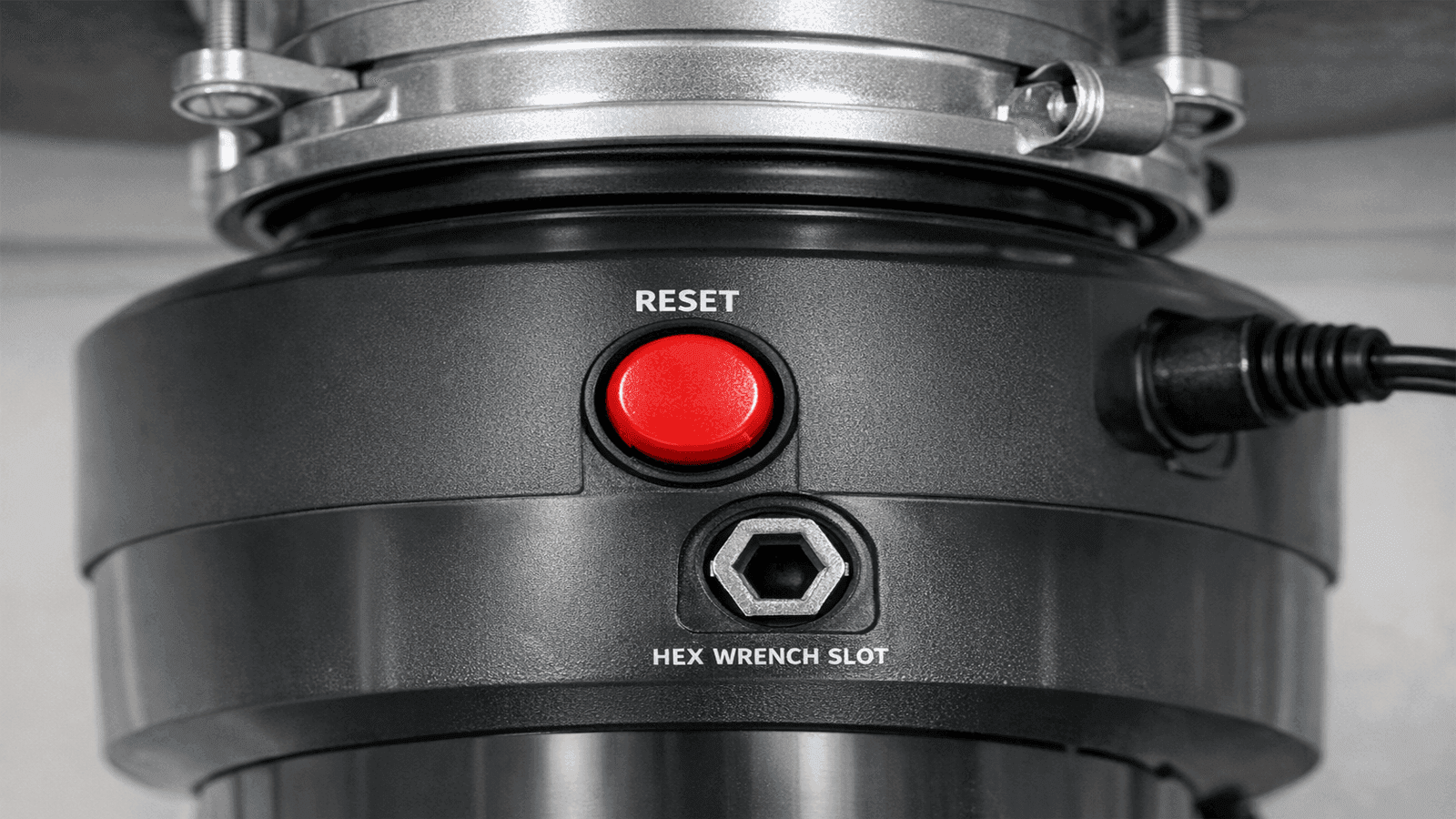
Photo: Bottom of garbage disposal showing red reset button
NearbyHunt data from licensed plumbers in its network shows that odor complaints and minor jams account for over 60 percent of disposal service calls, and most are resolved during a single visit at $75-$150 in labor with no parts required.
Reset Button vs. When to Call a Plumber
Use the reset button when:
- The disposal ran without water and shut off automatically (thermal overload protection).
- The unit stopped mid-use and is now unresponsive.
Allow the motor to cool 15-20 minutes before pressing the reset button. If the button pops back out immediately, there is likely still a jam in the grinding chamber. Clear the jam with the hex wrench first, then reset.
Call a licensed plumber when:
- The reset button will not stay in after clearing visible jams.
- The unit hums even after using the hex wrench, indicating a seized motor bearing.
- Water leaks from the bottom of the unit (internal seal failure, not repairable on residential units).
- Water leaks from the side or top at drain connections.
- The unit is over 10 years old with repeated failures in the same year.
For drain line leaks separate from the disposal itself, drain cleaning cost covers what professional drain service costs in 2026. Related issues may also appear in the common plumbing problems guide.
Leaking from the bottom seal is almost always end of life for the unit. Internal seals on most residential disposals are not serviceable separately. If the unit is over eight years old and the bottom is dripping, repair cost often exceeds 70 percent of a new unit. At that point the math is straightforward: replace it.
Get quotes from top-rated pros.
Disposal Lifespan and Replacement Signs
A well-maintained garbage disposal lasts 10-15 years. Units that regularly process grease, fibrous vegetables, or starchy foods often fail at 5-7 years. Key replacement indicators:
Frequent resets. Pressing the reset button weekly means the motor is at end of service life. Occasional resets after overloading are normal; recurring resets under normal use are not.
Constant odors despite thorough cleaning. Food debris has worked into seals and surfaces unreachable from the top. Replacement is more effective than continued cleaning attempts.
Visible cracks in the unit body. These cause leaks and cannot be repaired with sealant.
Age over 12 years. Even a functioning unit in this range is a candidate for proactive replacement before failure disrupts kitchen use.
| Symptom | Likely Cause | Action |
| Humming, no spin | Jammed flywheel | Hex wrench, then reset |
| Completely dead | Overload or tripped breaker | Reset button, check breaker |
| Leaking from bottom | Failed internal seal | Replace unit |
| Frequent odors | Biofilm on splash guard | Monthly cleaning routine |
| Slow drainage | Grease buildup in drain line | Professional drain cleaning |
| Frequent resets | Motor wear | Replace unit |
Replacement unit costs range from $100-$300 for the unit alone depending on horsepower, with licensed plumber installation adding $100-$250. If you are upgrading the sink at the same time, see the kitchen sink replacement cost guide. General plumbing repair pricing is covered in the plumbing costs guide. For those comfortable with DIY, the DIY plumbing guide covers disposal installation steps.
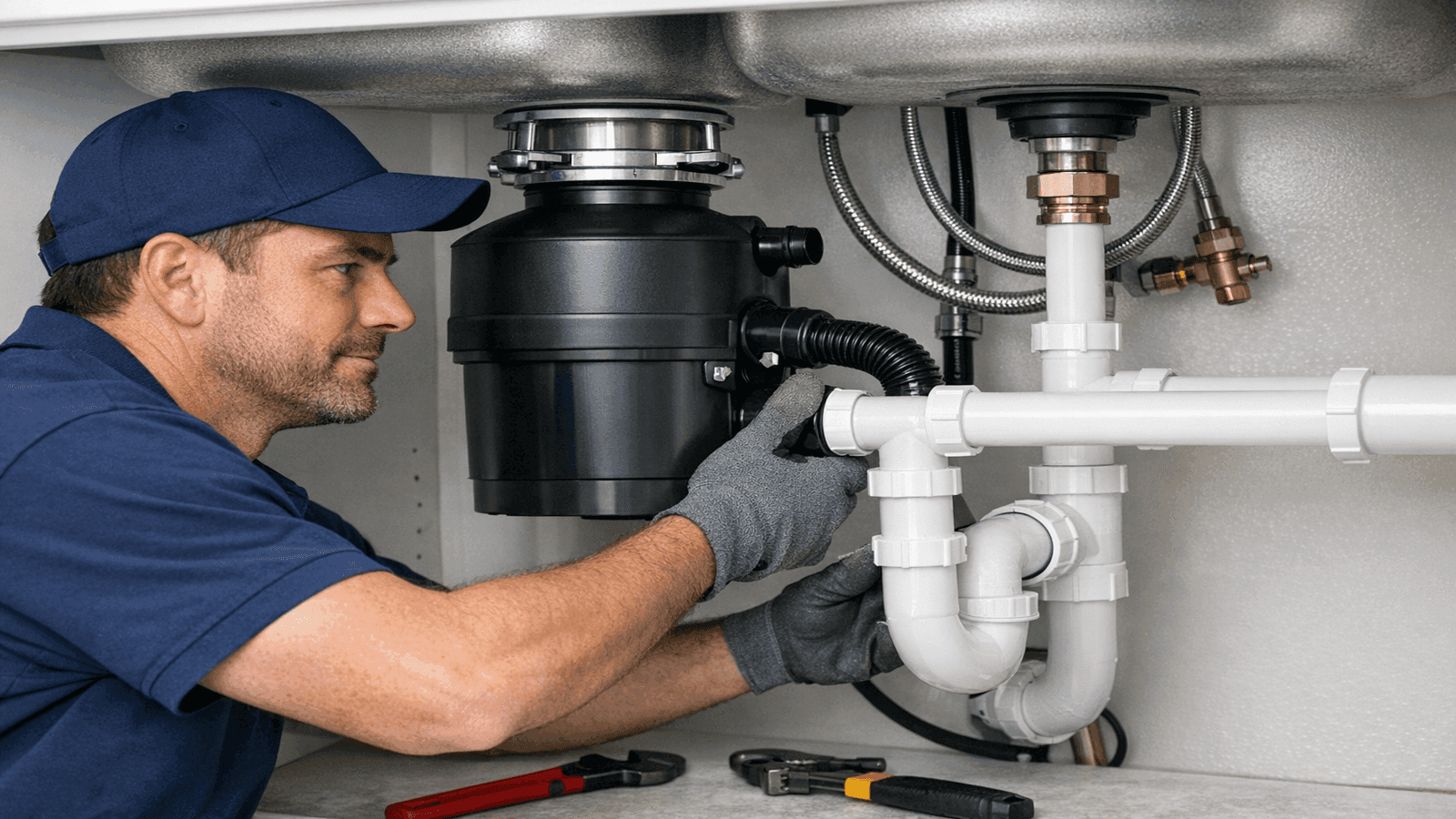
Photo: Plumber installing new garbage disposal under kitchen sink
When I quote a replacement, I always ask what motor horsepower the homeowner currently has. A 1/3 HP unit is fine for a single person or couple. A family of four cooking daily needs at least 1/2 HP. Undersizing the replacement is the most common mistake I see, and it leads to the same jam problems within two years.
Conclusion
Garbage disposal maintenance is straightforward and inexpensive when done consistently. A monthly deep clean with ice, salt, baking soda, and citrus eliminates the odors and mechanical problems that drive most service calls. Knowing how to use the reset button and hex wrench resolves the majority of jams without a plumber.
When reset attempts fail, bottom leaks appear, or the unit requires frequent intervention, replacement is almost always the better financial choice. NearbyHunt connects homeowners with licensed plumbers who can evaluate whether your current unit is repairable or whether a properly sized replacement will serve your household reliably for the next decade.
Find Licensed Plumbers Near You
Sources & References
- This Old House: Garbage Disposal Maintenance Tips and Cleaning Guide (2026)
- Bob Vila: How to Clean a Garbage Disposal (2026)
- Forbes Home: Garbage Disposal Repair and Maintenance Guide (2026)
- PHCC (Plumbing-Heating-Cooling Contractors Association): Residential Disposal Standards (2026)
- Fixr: Garbage Disposal Repair and Replacement Cost Data (2026)
- ServiceTitan: Plumbing Service Call Industry Benchmarks (2026)
- NearbyHunt Pro Network: Service Call Data from Licensed Plumbers (2025-2026)

Michael Jennings is a licensed master plumber & water systems specialist with over 18 years of hands-on experience in residential and commercial plumbing, serving clients across California and Texas. At NearbyHunt, he shares practical advice on pipe installations, water heater maintenance, and home plumbing upgrades. Michael has helped thousands of homeowners prevent costly water damage and improve water efficiency through modern plumbing solutions.

Robert is a licensed master plumber with over 20 years of experience serving both residential and commercial clients across the Midwest. Specialising in advanced plumbing systems and sustainable water technologies, Rob brings deep technical insight and hands-on expertise to every project. As a reviewer for NearbyHunt, he ensures all plumbing content reflects the highest standards of safety, compliance, and practicality.