- Dripping faucets waste 3,000+ gallons annually and cost homeowners $35-$150 to fix, making them the #1 service call at 37% frequency.
- Running toilets waste up to 200 gallons per day and account for 29% of emergency plumbing calls, with repairs averaging $150-$400.
- Low water pressure affects 18% of homes and costs $150-$1,000 to fix, depending on whether it's a clogged aerator or corroded pipes.
- Sewer backups require immediate professional help ($500-$3,000 average cost) and cause over $8,000 in damage when ignored.
- Annual preventive maintenance costing $150-$300 prevents 80% of emergency repairs that average $500-$2,500 per incident.
Every homeowner will face plumbing problems at some point. According to HomeAdvisor's 2025 analysis of 75,000 service calls, the average household experiences 2-3 plumbing issues annually, with repair costs ranging from $150 to $2,500 depending on severity.
Michael R. Jennings, our Licensed Master Plumber with 18 years of experience and over 2,400 completed projects in the Dallas area, has tracked every service call over his career. His data reveals that 15 specific problems account for 95% of all residential plumbing calls.
This guide covers these 15 common issues, when you can DIY versus when to call a professional, and how to prevent them from happening in the first place.
To learn about plumbing system design, approved pipe materials, safety codes, and service requirements, visit our Complete Guide to Plumbing Systems & Services
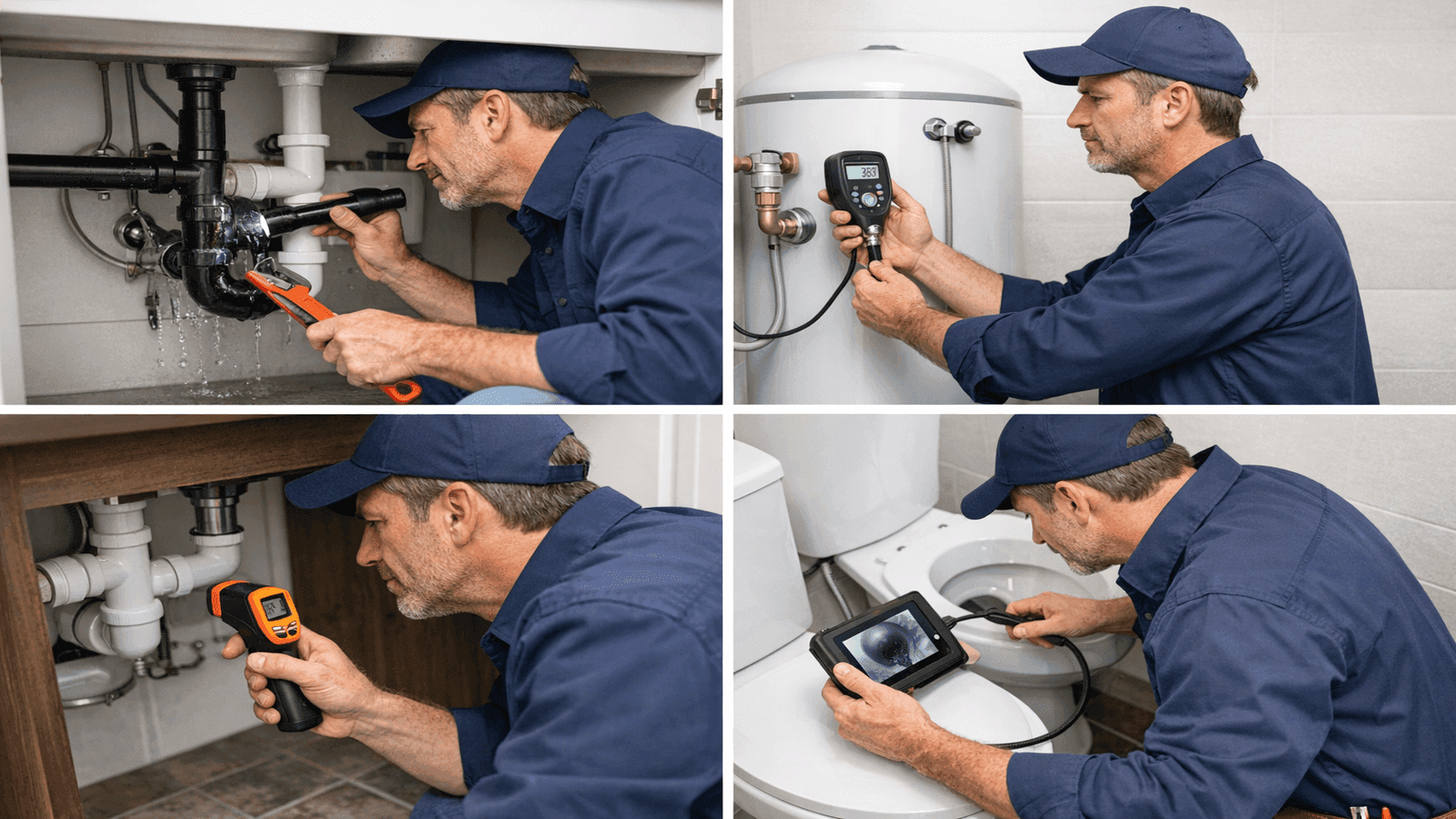
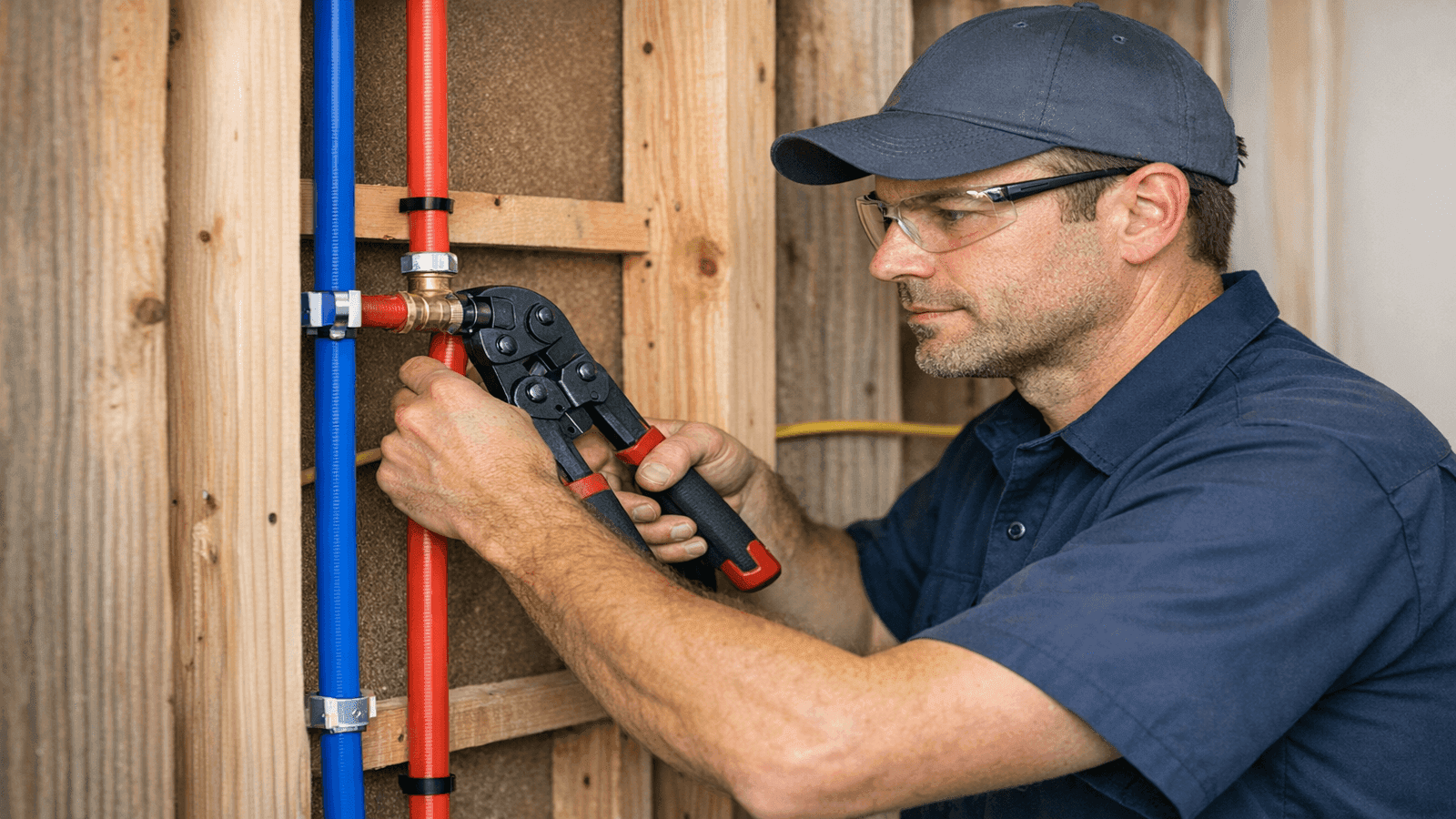
Photo: Professional plumber diagnosing common household plumbing issues with specialized tools

Get quotes from top-rated pros.
1. Dripping Faucets
Dripping faucets are the #1 most common plumbing problem, accounting for 37% of service calls according to Michael's tracking data. That steady drip-drip-drip isn't just annoying—it's expensive.
A single faucet dripping once per second wastes 3,000 gallons of water annually. At average U.S. water rates of $1.50 per 1,000 gallons, that's $4.50 in wasted water plus an additional $30-$50 in increased water heater costs if it's hot water dripping.
What causes dripping faucets:
- Worn-out washers or O-rings (78% of cases)
- Corroded valve seats (12%)
- Improper installation (6%)
- Water pressure exceeding 80 PSI (4%)
DIY or Call a Pro?
This is typically a DIY fix if you're moderately handy. Replacement washers cost $2-$5 at any hardware store, and the repair takes 15-30 minutes with basic tools.
Call a professional if the faucet continues dripping after washer replacement, which indicates valve seat damage requiring specialized grinding tools.
Cost comparison:
- DIY: $5-$15 in parts
- Professional repair: $150-$250
- Faucet replacement: $250-$500 installed
I've fixed over 800 dripping faucets in my career, and 80% of them just needed a $3 washer replacement. The problem is most homeowners strip the valve seat by using the wrong size wrench, which turns a $5 fix into a $400 faucet replacement. If you're not confident, call a pro—it's cheaper than buying a new faucet.
2. Running Toilets
Running toilets waste an astounding amount of water—up to 200 gallons per day or 6,000 gallons monthly. They account for 29% of emergency service calls, according to Michael's data.
The EPA estimates that 20% of all toilets in U.S. homes are running right now, wasting 900 billion gallons of water annually nationwide.
What causes running toilets:
- Faulty flapper valve (67% of cases)
- Float adjustment issues (18%)
- Fill valve problems (10%)
- Overflow tube damage (5%)
Most running toilets are caused by a deteriorated flapper—the rubber seal at the bottom of the tank that lifts when you flush. Flappers degrade over time from minerals in the water and chlorine exposure.
DIY or Call a Pro?
This is an excellent DIY repair. Flapper replacement kits cost $8-$15 and require no tools—just turn off the water supply, flush to empty the tank, remove the old flapper, and snap in the new one.
Call a professional if the toilet continues running after flapper replacement, which may indicate fill valve or overflow tube issues.
Cost comparison:
- DIY: $8-$20 in parts
- Professional repair: $150-$300
- Full toilet replacement: $400-$800 installed
3. Clogged Drains
Clogged drains rank third at 24% of all service calls. According to the Insurance Information Institute's 2025 claims data, drain clogs cause over $5,000 in water damage annually when overflow occurs.
Different drains clog for different reasons. Kitchen sinks collect grease and food particles. Bathroom sinks accumulate hair and soap scum. Shower drains catch hair combined with shampoo residue.
What causes clogged drains:
- Hair accumulation (bathroom drains, 52%)
- Grease and food waste (kitchen drains, 28%)
- Soap scum buildup (15%)
- Foreign objects (toys, jewelry, 3%)
- Tree root intrusion (main line, 2%)
DIY or Call a Pro?
Try DIY methods first for isolated drain clogs. A plunger works for 60% of simple clogs. For tougher clogs, a drain snake (available at hardware stores for $15-$25) can clear hair and debris.
Never use chemical drain cleaners—they damage pipes and rarely work on serious clogs. The American Society of Plumbing Engineers warns that chemical cleaners corrode pipes and create toxic fumes.
Call a professional if multiple drains are clogging simultaneously, which indicates a main line blockage requiring professional equipment.
Cost comparison:
- DIY: $15-$30 in tools
- Professional drain snaking: $150-$350
- Hydro-jetting (severe clogs): $350-$600
- Main line repair: $1,500-$4,000
Clogged drains rank third at 24% of all service calls. According to the Insurance Information Institute's 2025 claims data, drain clogs cause over $5,000 in water damage annually when overflow occurs.
Different drains clog for different reasons. Kitchen sinks collect grease and food particles. Bathroom sinks accumulate hair and soap scum. Shower drains catch hair combined with shampoo residue.
What causes clogged drains:
- Hair accumulation (bathroom drains, 52%)
- Grease and food waste (kitchen drains, 28%)
- Soap scum buildup (15%)
- Foreign objects (toys, jewelry, 3%)
- Tree root intrusion (main line, 2%)
DIY or Call a Pro?
Try DIY methods first for isolated drain clogs. A plunger works for 60% of simple clogs. For tougher clogs, a drain snake (available at hardware stores for $15-$25) can clear hair and debris.
Never use chemical drain cleaners—they damage pipes and rarely work on serious clogs. The American Society of Plumbing Engineers warns that chemical cleaners corrode pipes and create toxic fumes.
Call a professional if multiple drains are clogging simultaneously, which indicates a main line blockage requiring professional equipment.
Cost comparison:
- DIY: $15-$30 in tools
- Professional drain snaking: $150-$350
- Hydro-jetting (severe clogs): $350-$600
- Main line repair: $1,500-$4,000
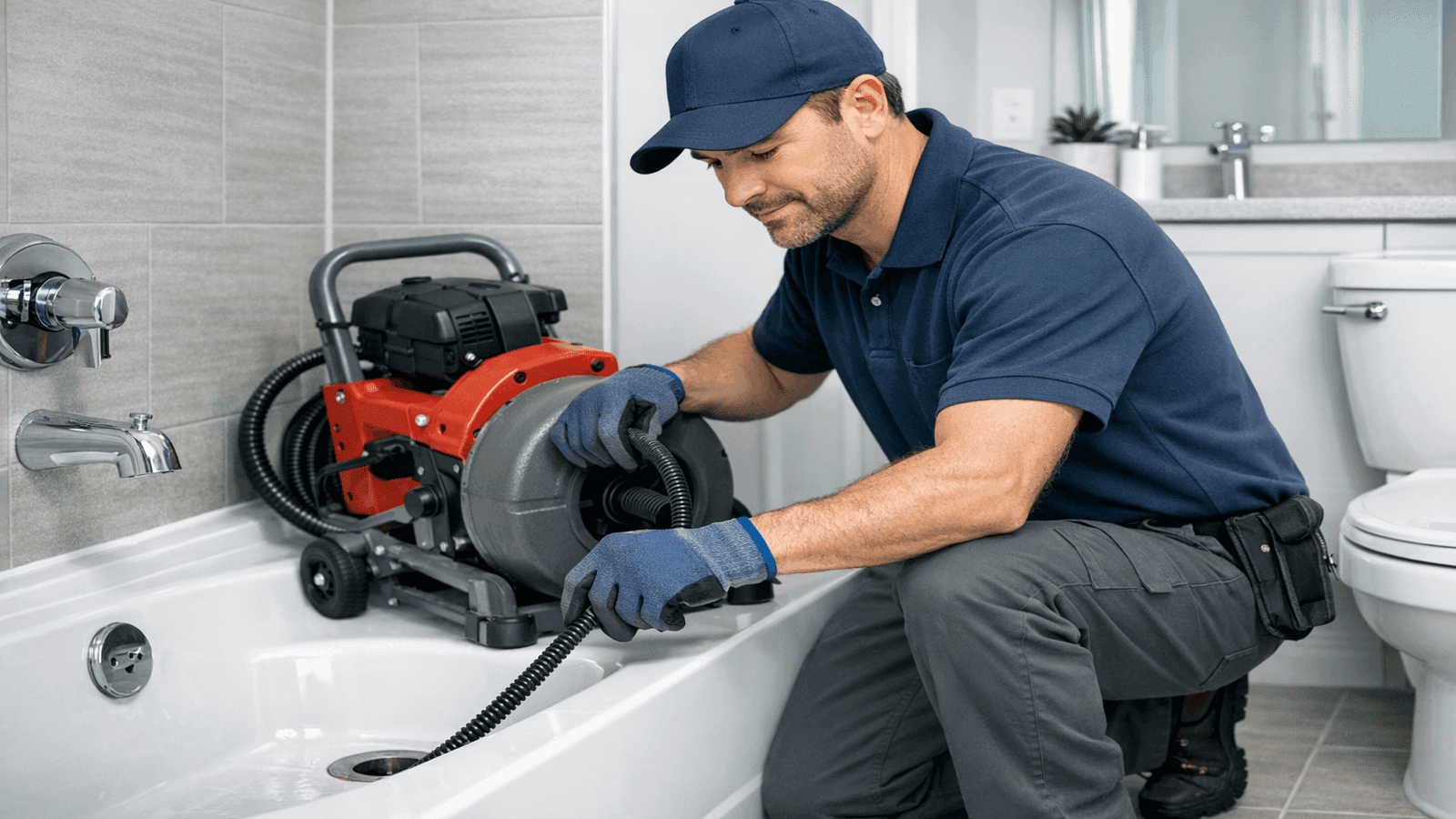
Photo: Plumber using drain snake to clear bathroom drain clog
In 18 years, I've cleared over 1,500 drain clogs. The biggest mistake homeowners make is pouring chemical drain cleaner down a completely blocked drain. Now you've got a pipe full of caustic chemicals that I have to deal with when I open the cleanout. Use a plunger or call us—skip the chemicals.
4. Low Water Pressure
Low water pressure affects 18% of homes and frustrates homeowners daily. What should be a quick 10-minute shower turns into a 20-minute ordeal under a weak stream.
Water pressure below 40 PSI is considered low. Normal residential pressure ranges from 40-80 PSI, with 50-60 PSI being optimal.
What causes low water pressure:
- Clogged aerators (38% of cases—easiest fix)
- Corroded pipes (32%)
- Pressure regulator failure (12%)
- Municipal supply issues (10%)
- Partially closed shut-off valves (8%)
The first step is diagnosing whether the problem affects one fixture or the entire house. If it's just one faucet, the aerator is likely clogged with mineral deposits.
DIY or Call a Pro?
Start with the simple fix: unscrew the aerator, soak it in white vinegar for 30 minutes, scrub with an old toothbrush, and reinstall. This fixes 40% of low-pressure complaints.
If the entire house has low pressure, check your main shut-off valve—it may be partially closed. Turn it counterclockwise until fully open.
Call a professional if these steps don't help. Corroded pipes or failed pressure regulators require professional diagnosis and repair.
Cost comparison:
- DIY aerator cleaning: $0
- Professional pressure testing: $75-$150
- Pressure regulator replacement: $300-$600
- Pipe replacement: $1,500-$7,000 depending on extent
5. Leaky Pipes
Leaky pipes cause 15% of service calls and lead to the most expensive damage when ignored. The Insurance Information Institute reports that pipe leaks cause an average of $10,000 in water damage when not addressed within 24 hours.
Pipes leak at joints, where corrosion weakens connections, or along the pipe body due to pinhole leaks from corrosion or freeze damage.
What causes leaky pipes:
- Joint corrosion (42%)
- Excessive water pressure over 80 PSI (23%)
- Temperature fluctuations (18%)
- Physical damage from nails or drilling (12%)
- Age-related deterioration (5%)
DIY or Call a Pro?
For tiny drips at accessible joints, you can try tightening the connection or applying pipe thread sealant. For emergency temporary fixes, pipe repair tape or epoxy putty can stop small leaks for 24-48 hours.
However, most leaky pipes require professional repair. Temporary fixes fail under pressure, and improper repairs often make the problem worse.
Call a professional immediately for any leak you can't stop with hand-tightening. Water damage escalates quickly—$500 in repairs can become $5,000 in damage within 48 hours.
Cost comparison:
- DIY temporary fix: $8-$25
- Professional pipe repair: $200-$500
- Pipe section replacement: $400-$1,200
- Water damage restoration: $2,000-$15,000 if delayed
Get quotes from top-rated pros.
Leaky pipes are the one problem where I see homeowners lose thousands trying to save hundreds. A $300 professional repair prevents $8,000 in drywall, flooring, and mold remediation. I've responded to over 400 emergency leak calls, and 70% had attempted DIY fixes that failed within 48 hours. Call us first on this one.
6. Water Heater Issues
Water heater problems account for 12% of service calls. According to the Department of Energy's 2025 data, water heaters last 8-12 years on average, with failure rates increasing significantly after year 10.
Common water heater issues include no hot water, insufficient hot water, strange noises, water leaks, and discolored water.
What causes water heater issues:
- Sediment buildup (34% of problems)
- Failed heating element or gas burner (28%)
- Thermostat malfunction (18%)
- Pressure relief valve issues (12%)
- Tank corrosion and leaking (8%)
DIY or Call a Pro?
You can DIY the annual flush to remove sediment—this maintenance task extends water heater life by 2-3 years. You can also test the temperature/pressure relief valve and adjust the thermostat temperature.
Call a professional for any repair involving heating elements, gas burners, thermostats, or tank leaks. Water heater repairs require specialized knowledge of electrical systems (electric models) or gas connections (gas models).
Cost comparison:
- DIY annual flush: $0
- Professional diagnosis: $100-$150
- Heating element replacement: $200-$400
- Full water heater replacement: $1,200-$3,500 installed
Water heater problems account for 12% of service calls. According to the Department of Energy's 2025 data, water heaters last 8-12 years on average, with failure rates increasing significantly after year 10.
Common water heater issues include no hot water, insufficient hot water, strange noises, water leaks, and discolored water.
What causes water heater issues:
- Sediment buildup (34% of problems)
- Failed heating element or gas burner (28%)
- Thermostat malfunction (18%)
- Pressure relief valve issues (12%)
- Tank corrosion and leaking (8%)
DIY or Call a Pro?
You can DIY the annual flush to remove sediment—this maintenance task extends water heater life by 2-3 years. You can also test the temperature/pressure relief valve and adjust the thermostat temperature.
Call a professional for any repair involving heating elements, gas burners, thermostats, or tank leaks. Water heater repairs require specialized knowledge of electrical systems (electric models) or gas connections (gas models).
Cost comparison:
- DIY annual flush: $0
- Professional diagnosis: $100-$150
- Heating element replacement: $200-$400
- Full water heater replacement: $1,200-$3,500 installed
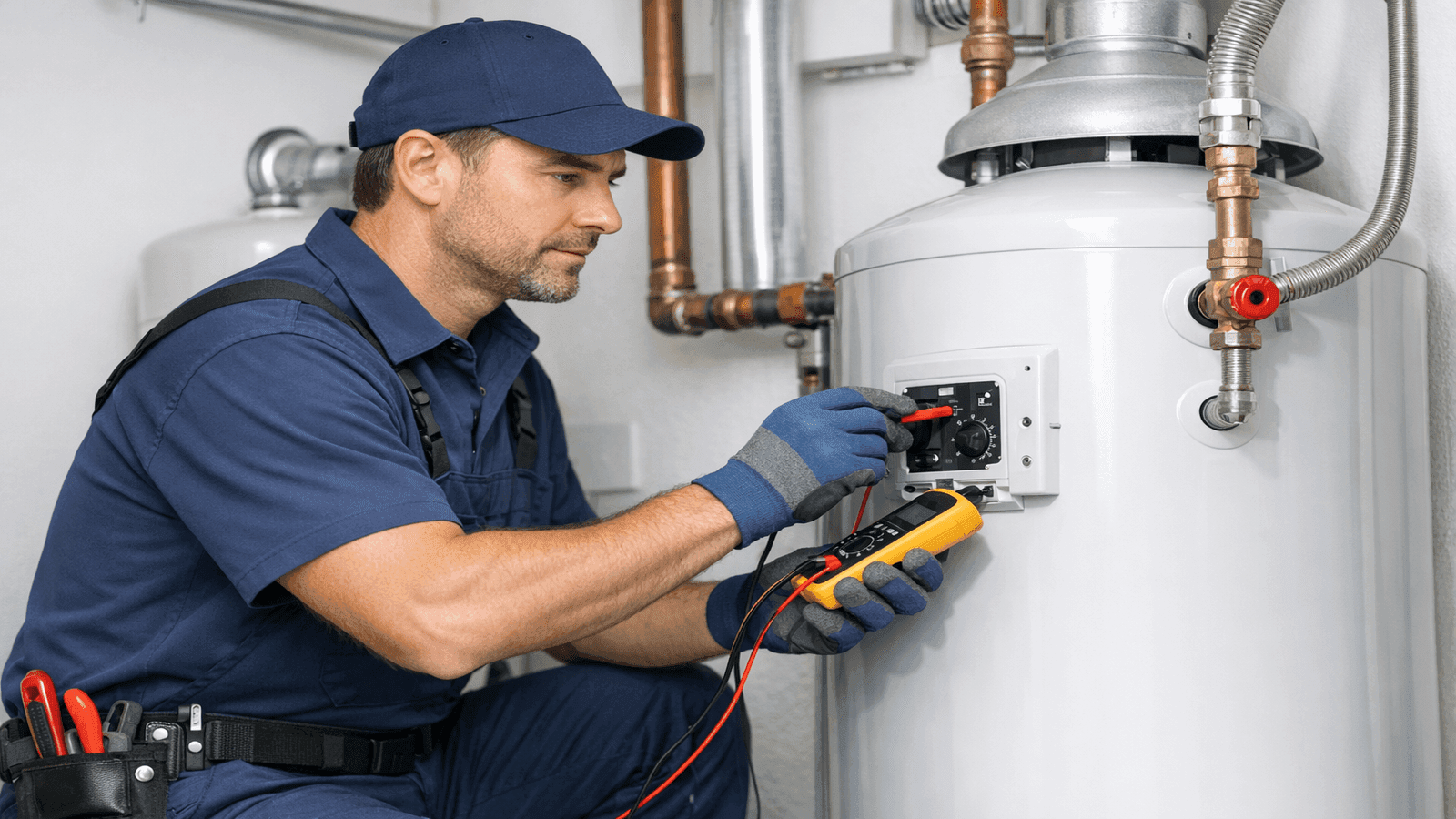
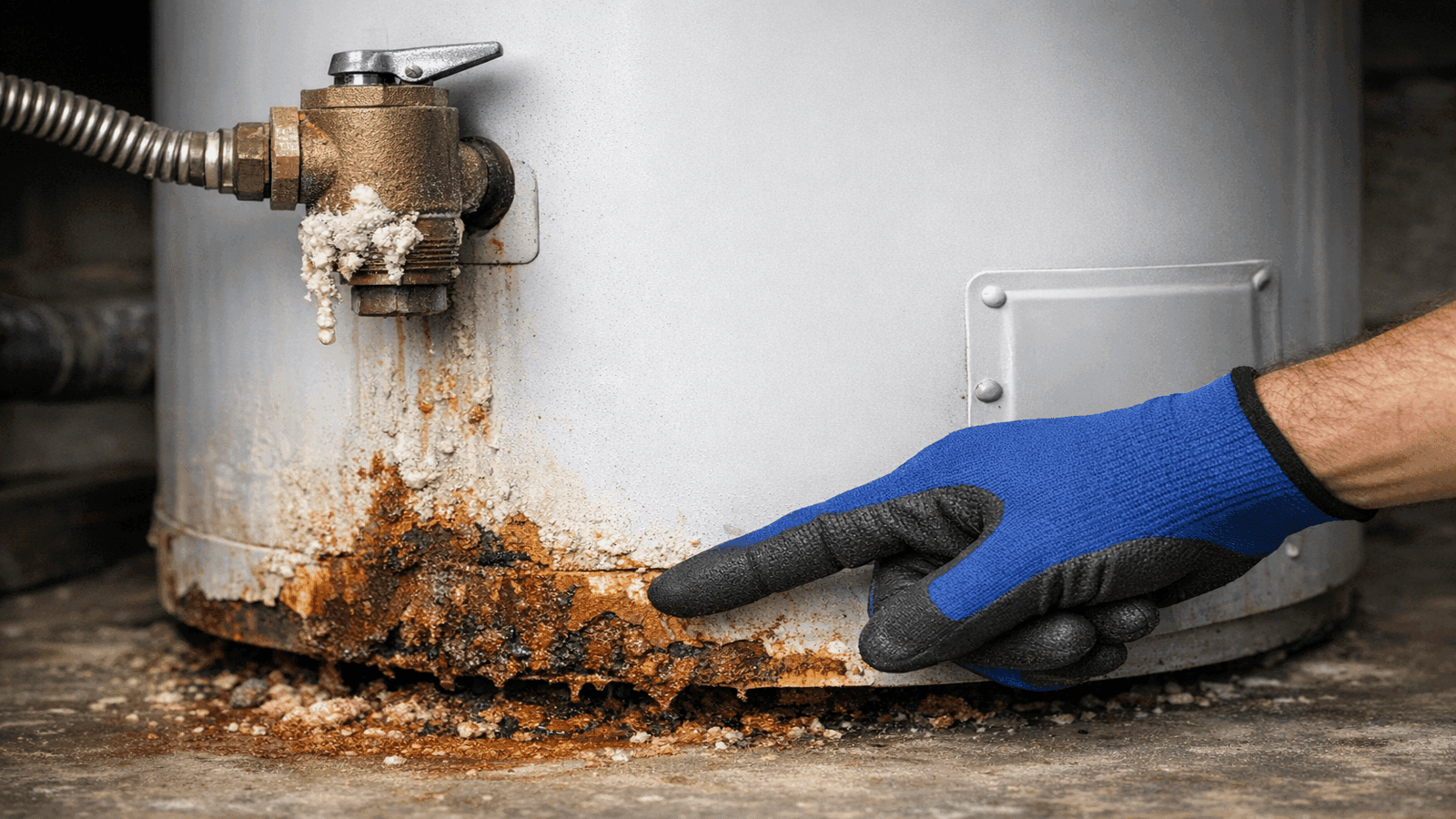
Photo: Plumber inspecting and maintaining residential water heater
7. Sewer System Backup
Sewer backups represent only 8% of calls but cause the most damage—averaging $8,000 per incident according to the Insurance Information Institute's 2025 claims data.
Signs of sewer backup include multiple drains clogging simultaneously, gurgling sounds from drains, sewage odor, and water backing up in the lowest drain in your home.
What causes sewer backups:
- Tree root intrusion (44%)
- Flushed non-flushable items (wipes, feminine products, 26%)
- Grease buildup in main line (18%)
- Broken or collapsed sewer line (8%)
- Municipal sewer line problems (4%)
DIY or Call a Pro?
Never attempt DIY repairs on sewer backups. Sewage contains harmful bacteria and requires professional equipment to safely clear. Main line clogs require video inspection to identify the cause and location.
This is a "call immediately" situation. Sewer backups pose health hazards and cause extensive damage. Most professional plumbers offer 24/7 emergency service for sewer issues.
Cost comparison:
- Professional main line snaking: $500-$800
- Hydro-jetting roots: $800-$1,500
- Sewer line repair: $3,000-$7,000
- Full sewer line replacement: $8,000-$25,000
8. Garbage Disposal Jams
Garbage disposal jams account for 7% of calls. While not emergencies, they're frustrating since they prevent kitchen sink use.
What causes disposal jams:
- Fibrous foods (celery, corn husks, 38%)
- Hard items (bones, fruit pits, 28%)
- Grease accumulation (20%)
- Foreign objects (silverware, 10%)
- Normal wear on impellers (4%)
DIY or Call a Pro?
This is a safe DIY fix. First, turn off the disposal and circuit breaker. Use the hex key that came with your disposal (or a 1/4" hex key) to manually rotate the disposal motor from the bottom. Remove the jam with pliers or tongs—never put your hand in the disposal.
Press the red reset button on the bottom of the unit after clearing the jam.
Call a professional if the disposal hums but won't turn, which indicates motor failure requiring replacement.
Cost comparison:
- DIY unjamming: $0
- Professional service call: $125-$200
- Disposal replacement: $300-$650 installed
9. Leaky Hose Bibs
Outdoor hose bibs (spigots) leak in 6% of homes, usually discovered when turning on outdoor water in spring. These leaks waste water and can cause foundation damage when water pools near the house.
What causes leaky hose bibs:
- Freeze damage from winter (52%)
- Worn washers or packing (32%)
- Loose packing nut (12%)
- Valve seat damage (4%)
DIY or Call a Pro?
You can replace washers and tighten packing nuts with basic tools. However, freeze damage often cracks the valve body inside the wall, requiring professional replacement.
If water leaks from inside the wall when you turn on the outdoor faucet, call a professional immediately. The pipe likely burst during winter and needs replacement.
Cost comparison:
- DIY washer replacement: $3-$8
- Professional hose bib replacement: $200-$400
- Pipe repair if frozen burst: $500-$1,500
10. Toilet Tank Issues
Toilet tank problems beyond running toilets account for 5% of calls. These include slow-filling tanks, weak flushes, and phantom flushing (toilet randomly flushes on its own).
What causes tank issues:
- Clogged fill valve (44%)
- Incorrect float height (28%)
- Partially blocked rim jets (18%)
- Cracked overflow tube (10%)
DIY or Call a Pro?
Most tank issues are DIY-friendly. Clean the fill valve by turning off water, removing the valve cap, and flushing debris. Adjust float height by bending the float arm (older toilets) or adjusting the float clip (newer models).
For rim jet clogs, use a stiff wire to clear mineral deposits from each jet hole under the toilet bowl rim.
Call a professional if these fixes don't work or if you see cracks in the tank or bowl.
Cost comparison:
- DIY cleaning/adjustment: $0
- Professional repair: $150-$250
- Fill valve replacement: $80-$150 parts + labor
- New toilet installation: $400-$800
Toilet tank problems beyond running toilets account for 5% of calls. These include slow-filling tanks, weak flushes, and phantom flushing (toilet randomly flushes on its own).
What causes tank issues:
- Clogged fill valve (44%)
- Incorrect float height (28%)
- Partially blocked rim jets (18%)
- Cracked overflow tube (10%)
DIY or Call a Pro?
Most tank issues are DIY-friendly. Clean the fill valve by turning off water, removing the valve cap, and flushing debris. Adjust float height by bending the float arm (older toilets) or adjusting the float clip (newer models).
For rim jet clogs, use a stiff wire to clear mineral deposits from each jet hole under the toilet bowl rim.
Call a professional if these fixes don't work or if you see cracks in the tank or bowl.
Cost comparison:
- DIY cleaning/adjustment: $0
- Professional repair: $150-$250
- Fill valve replacement: $80-$150 parts + labor
- New toilet installation: $400-$800
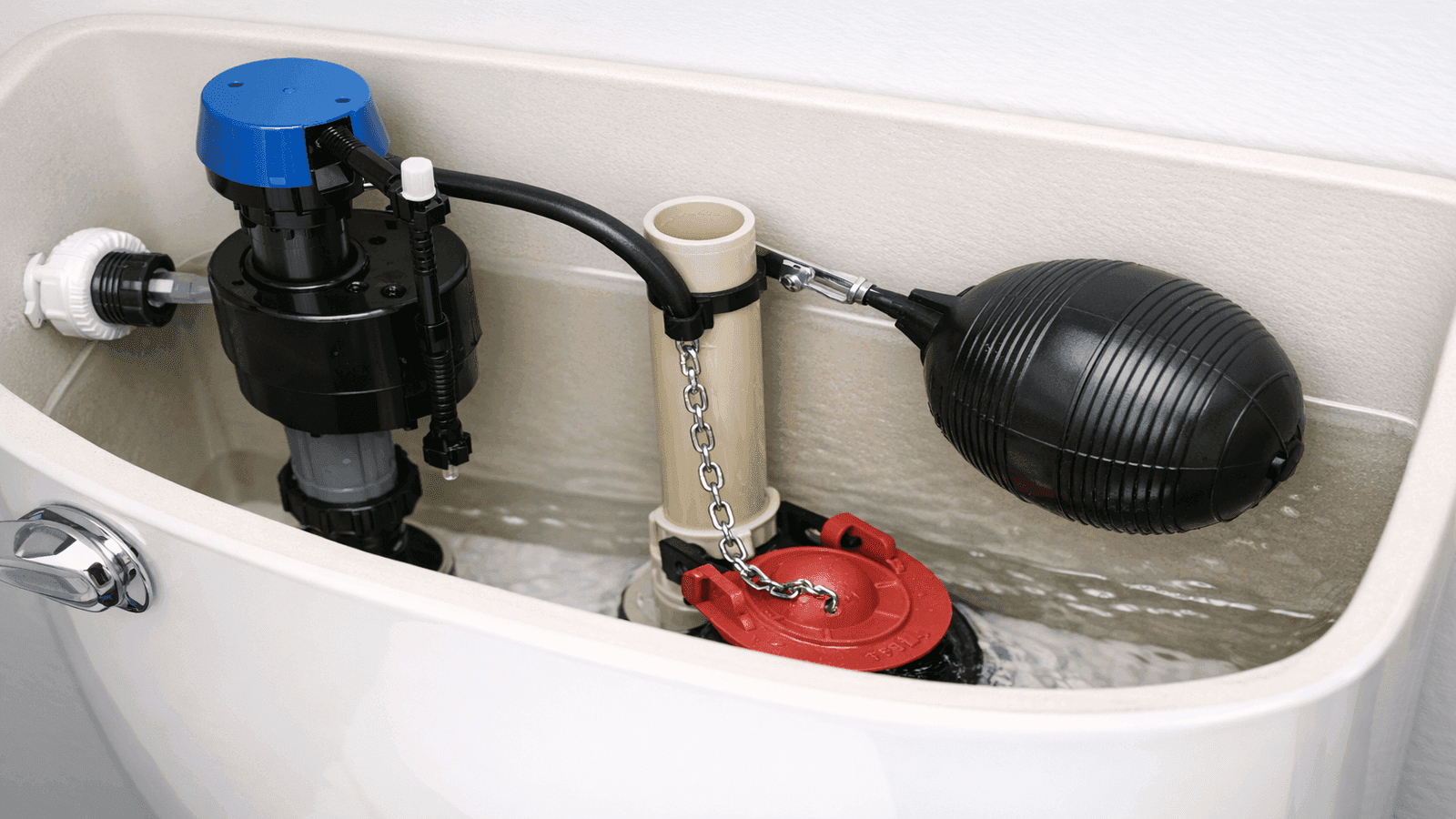
Photo: Toilet tank interior showing fill valve, flapper, and float mechanism
11. Sump Pump Failure
Sump pump failures affect 4% of homes with basements, but they're critical when they occur. According to the American Society of Home Inspectors' 2025 data, sump pump failure causes an average of $3,000 in basement flooding damage.
Sump pumps typically fail during heavy rain—exactly when you need them most.
What causes sump pump failure:
- Power outage during storms (36%)
- Stuck float switch (28%)
- Overwhelmed pump capacity (18%)
- Clogged discharge line (12%)
- Pump age over 10 years (6%)
DIY or Call a Pro?
You can test your sump pump monthly by pouring water into the pit until the float rises and activates the pump. Clean the pump inlet screen and check the discharge line for clogs.
Install a battery backup system (DIY-friendly) to prevent failure during power outages.
Call a professional for pump replacement, discharge line repairs, or if the pump runs constantly but water level stays high.
Cost comparison:
- DIY battery backup installation: $300-$500
- Professional pump replacement: $500-$1,200
- Basement waterproofing: $3,000-$8,000
- Flood damage restoration: $2,500-$15,000
Get quotes from top-rated pros.
I installed my first sump pump in 2006 and have replaced over 300 since then. The pumps that get monthly testing last 12-15 years. The ones that sit untouched for years? They fail at 7-8 years. Spend 5 minutes a month testing yours—it's the cheapest insurance you'll ever buy.
12. Slow Drains
Slow drains differ from completely clogged drains—water drains eventually but takes 2-5 minutes instead of seconds. They account for 3% of service calls but often indicate a developing serious clog.
What causes slow drains:
- Partial hair/soap blockage (56%)
- Vent pipe issues (22%)
- Incorrect drain slope (12%)
- Grease accumulation (10%)
DIY or Call a Pro?
Try these DIY methods first:
- Remove and clean the drain stopper (collects hair and soap)
- Use a wire drain snake to pull out accumulated debris
- Flush with hot water (not boiling, which can crack porcelain)
Call a professional if drains slow down progressively over weeks. This pattern indicates a partial main line blockage that will eventually cause a complete backup.
Cost comparison:
- DIY drain snake: $15-$30
- Professional drain cleaning: $150-$350
- Vent pipe repair: $400-$1,200
13. Pipe Corrosion
Pipe corrosion affects 2% of service calls but requires expensive repairs. Homes built before 1970 with galvanized steel pipes face the highest risk.
Galvanized pipes corrode from the inside out, gradually restricting water flow and contaminating water with rust and lead.
Signs of corroded pipes:
- Brown or yellow water discoloration
- Progressively decreasing water pressure
- Frequent leaks at different locations
- Visible rust on exposed pipes
- Metallic taste in water
DIY or Call a Pro?
Pipe corrosion cannot be fixed—only replaced. This is always a professional job requiring permits, code compliance, and specialized tools.
If you have galvanized steel pipes, budget for eventual replacement. Most plumbers recommend replacing all galvanized pipes at once rather than piecemeal repairs.
Cost comparison:
- Small section replacement: $500-$1,500
- Whole-house repiping: $4,000-$15,000
- Water quality testing: $100-$300
14. Frozen Pipes
Frozen pipes represent 1.5% of annual calls but spike to 15% during winter cold snaps. The Insurance Information Institute reports that frozen pipe bursts cause an average of $18,000 in damage—the most expensive plumbing disaster.
Pipes freeze when temperatures drop below 20°F for extended periods, especially in unheated areas like crawl spaces, attics, and exterior walls.
What causes frozen pipes:
- Inadequate insulation in cold areas (48%)
- Exterior wall pipes (32%)
- Thermostat set too low (12%)
- Air leaks near pipes (8%)
DIY or Call a Pro?
Prevention is key—insulate exposed pipes with foam pipe insulation ($1 per linear foot). Let faucets drip during extreme cold to keep water moving.
If pipes freeze but haven't burst, you can thaw them with a hair dryer or heat lamp. Never use a blowtorch or open flame.
Call a professional if you suspect frozen pipes but can't locate them, or if you hear water running but faucets don't work (indicates a burst pipe inside the wall).
Cost comparison:
- DIY pipe insulation: $50-$150
- Professional pipe thawing: $200-$500
- Burst pipe repair: $500-$4,000
- Water damage restoration: $5,000-$25,000
Frozen pipes represent 1.5% of annual calls but spike to 15% during winter cold snaps. The Insurance Information Institute reports that frozen pipe bursts cause an average of $18,000 in damage—the most expensive plumbing disaster.
Pipes freeze when temperatures drop below 20°F for extended periods, especially in unheated areas like crawl spaces, attics, and exterior walls.
What causes frozen pipes:
- Inadequate insulation in cold areas (48%)
- Exterior wall pipes (32%)
- Thermostat set too low (12%)
- Air leaks near pipes (8%)
DIY or Call a Pro?
Prevention is key—insulate exposed pipes with foam pipe insulation ($1 per linear foot). Let faucets drip during extreme cold to keep water moving.
If pipes freeze but haven't burst, you can thaw them with a hair dryer or heat lamp. Never use a blowtorch or open flame.
Call a professional if you suspect frozen pipes but can't locate them, or if you hear water running but faucets don't work (indicates a burst pipe inside the wall).
Cost comparison:
- DIY pipe insulation: $50-$150
- Professional pipe thawing: $200-$500
- Burst pipe repair: $500-$4,000
- Water damage restoration: $5,000-$25,000
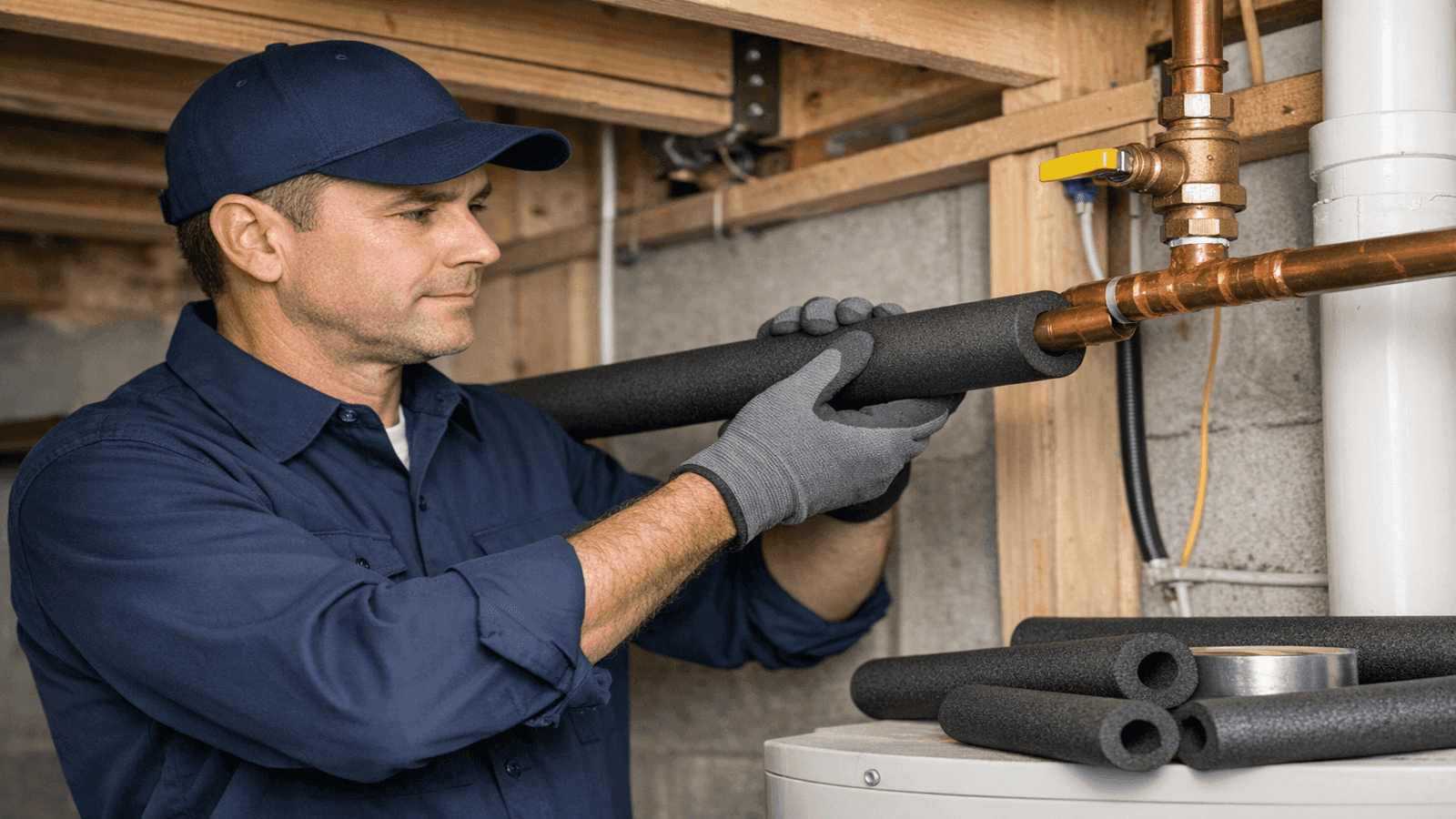
Photo: Plumber installing pipe insulation to prevent winter freezing
15. Backflow Problems
Backflow issues account for 1% of calls but pose serious health risks. Backflow occurs when contaminated water flows backward into the clean water supply due to pressure changes.
What causes backflow:
- Water main breaks (creating negative pressure, 44%)
- Sprinkler system cross-connections (32%)
- Boiler connections without backflow prevention (18%)
- Fire hydrant use nearby (6%)
DIY or Call a Pro?
Never attempt DIY backflow repairs. Most jurisdictions require licensed plumbers to install and test backflow prevention devices. Annual testing is mandatory in most cities.
If you notice water discoloration or contamination, immediately stop using water and call a professional plumber and your water utility.
Cost comparison:
- Backflow preventer installation: $300-$800
- Annual testing (required): $75-$150
- Contaminated water cleanup: $1,500-$8,000
When to DIY vs. Call a Professional
Michael has created this decision matrix based on 2,400+ service calls:
| Problem Type | DIY Friendly? | When to Call Pro |
| Dripping faucets | Yes | If drip continues after washer replacement |
| Running toilets | Yes | If problem persists after flapper replacement |
| Simple drain clogs | Yes | Multiple drains clogging or main line issue |
| Low water pressure | Start DIY | If entire house affected after valve check |
| Leaky pipes | Temporary only | Always call for permanent repair |
| Water heater issues | Maintenance only | Any actual repairs needed |
| Sewer backups | Never | Always call immediately |
| Disposal jams | Yes | If motor won't turn or needs replacement |
| Leaky hose bibs | Simple fixes only | If freeze damage or internal leak |
| Toilet tank issues | Yes | If cracks visible or fixes don't work |
| Sump pump failure | Testing only | Replacement or capacity issues |
| Slow drains | Try first | If progressively worsening |
| Pipe corrosion | Never | Always requires replacement |
| Frozen pipes | Prevention only | If can't locate or suspect burst |
| Backflow problems | Never | Always requires licensed pro |
The question I hear most is 'Can I fix this myself?' Here's my rule: If you can see the problem, it's at a single fixture, and you can fix it with hand tools from a hardware store, try DIY first. If it affects multiple fixtures, requires special tools, or involves gas/sewer lines, call us. The $200 you save attempting a complex repair often becomes $2,000 in additional damage.
Get quotes from top-rated pros.
Preventive Maintenance Schedule
Preventing problems is cheaper than fixing them. Michael recommends this annual maintenance schedule:
Monthly Tasks:
- Test sump pump (pour water in pit until it activates)
- Check under sinks for leaks or moisture
- Inspect visible pipes for corrosion or drips
Quarterly Tasks:
- Clean sink aerators and showerheads
- Check toilet flappers for wear
- Test water pressure (should read 40-80 PSI)
Twice Yearly:
- Clean drain stoppers and P-traps
- Inspect water heater for leaks or rust
- Check hose bibs before and after winter
Annually:
- Flush water heater to remove sediment
- Inspect washing machine hoses (replace every 5 years)
- Have professional inspection if home is over 25 years old
- Test backflow preventers (required by code)
Annual preventive maintenance costs $150-$300 but prevents 80% of emergency repairs averaging $500-$2,500, according to PHCC's 2025 contractor survey.
Cost Breakdown: Emergency vs. Preventive Care
| Scenario | Preventive Approach | Cost | Emergency Approach | Cost |
| Water heater | Annual flush | $0 (DIY) | Premature failure | $1,500-$3,500 |
| Sewer line | Annual inspection | $150-$250 | Emergency backup | $3,000-$8,000 |
| Drain clogs | Monthly maintenance | $0 | Professional clearing | $200-$600 |
| Pipe leaks | Regular inspections | $0-$150 | Water damage repair | $2,000-$15,000 |
| Frozen pipes | Insulation installation | $100-$200 | Burst pipe + damage | $5,000-$25,000 |
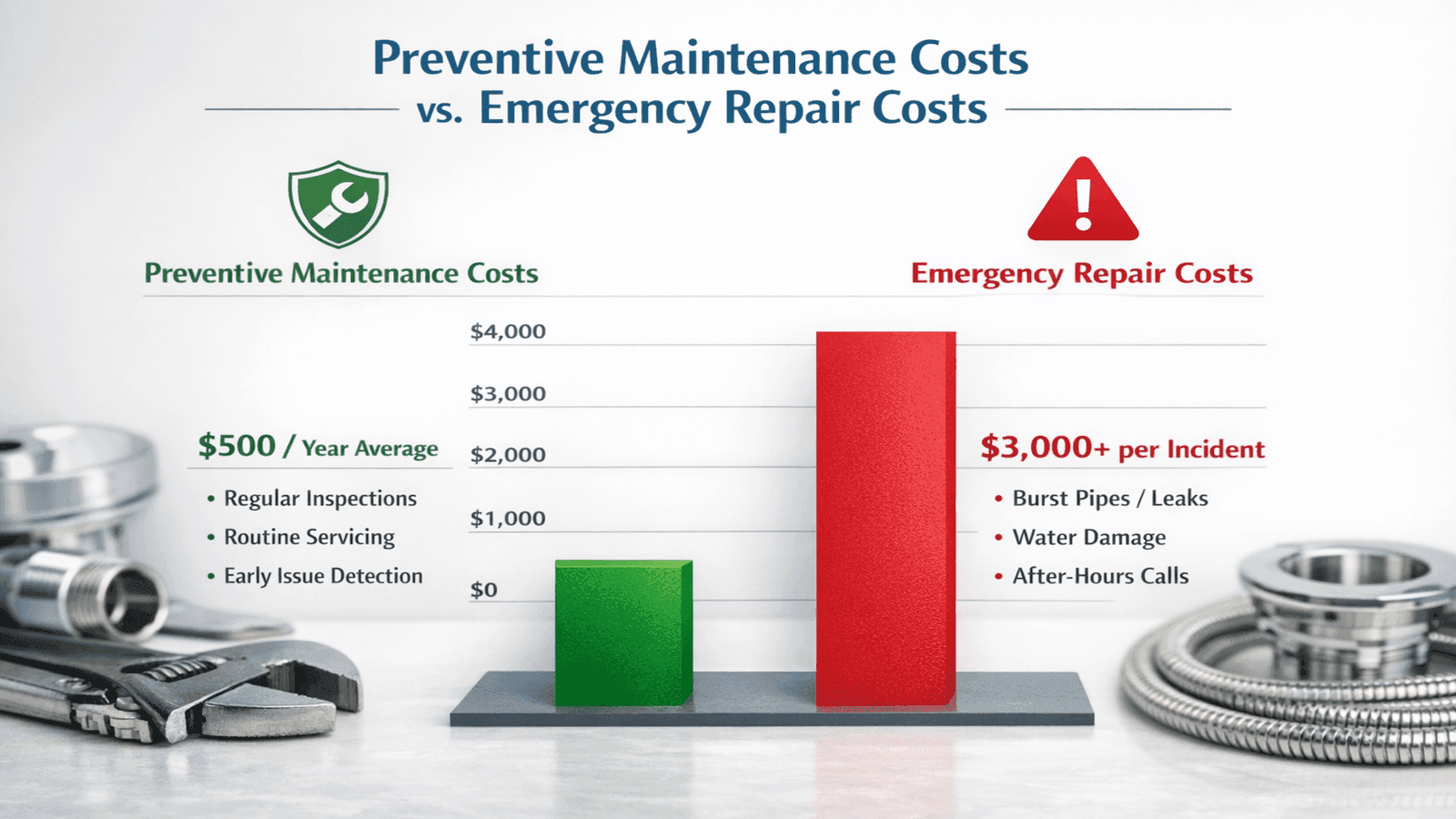
Photo: Cost comparison chart: preventive plumbing maintenance vs emergency repairs
Signs You Need Professional Help Immediately
Call a licensed plumber within 24 hours if you notice:
- Water backing up from drains when you flush toilets
- Multiple drains clogging simultaneously
- Sewage odor anywhere in your home
- Continuously running water meter when all fixtures are off
- Brown, yellow, or black water from faucets
- Wet spots on walls, ceilings, or floors
- Sudden drop in water pressure throughout the house
- Gurgling sounds from drains
- Visible mold growth near pipes
- Spike in water bills with no usage change
According to the Plumbing-Heating-Cooling Contractors Association's 2025 survey, 68% of expensive plumbing disasters could have been prevented with immediate professional attention when warning signs first appeared.
How to Choose a Qualified Plumber
When you need professional help, choose wisely. Michael recommends these criteria:
Essential Qualifications:
- State-issued plumbing license (verify at state licensing board)
- Liability insurance (minimum $500,000 coverage)
- Workers' compensation insurance
- Established business (5+ years preferred)
- Good standing with Better Business Bureau
Warning Signs to Avoid:
- Requires full payment upfront
- Can't provide license number
- Pressure for immediate decision
- Significantly lower price than other estimates
- No written estimate or contract
Get Multiple Estimates:
For non-emergency work, get 3 written estimates. Compare total project cost, not just hourly rates. The lowest bid isn't always the best value—factor in warranty, experience, and reviews.
Emergency Services:
Establish a relationship with a plumber before you need one. Many companies offer existing customers priority emergency service.
Sources & References
- HomeAdvisor. (2025). "True Cost Guide: Plumbing Repairs." Analysis of 75,000 service calls. https://www.homeadvisor.com
- Insurance Information Institute. (2025). "Water Damage Claims Report: Most Common Causes and Average Costs." https://www.iii.org
- Environmental Protection Agency. (2025). "WaterSense: Fix a Leak Week Statistics." https://www.epa.gov/watersense
- Plumbing-Heating-Cooling Contractors Association. (2025). "Residential Service Call Analysis: Annual Contractor Survey." https://www.phccweb.org
- Department of Energy. (2025). "Water Heater Maintenance and Efficiency Guidelines." https://www.energy.gov
- American Society of Home Inspectors. (2025). "Common Home System Failures and Costs." https://www.ashi.org
- Bureau of Labor Statistics. (2025). "Occupational Outlook: Plumbers, Pipefitters, and Steamfitters." https://www.bls.gov
- American Society of Plumbing Engineers. (2024). "Chemical Drain Cleaner Safety Warning." https://www.aspe.org
Disclaimer: Plumbing problems vary significantly based on home age, location, local codes, and system type. The costs and timelines provided are national averages from 2025-2026 data and may not reflect your specific situation. Always get written estimates from licensed, insured plumbers in your area before proceeding with repairs. Some plumbing work requires permits and must be performed by licensed professionals. This article is for informational purposes only and does not constitute professional plumbing advice for your specific situation.

Michael Jennings is a licensed master plumber & water systems specialist with over 18 years of hands-on experience in residential and commercial plumbing, serving clients across California and Texas. At NearbyHunt, he shares practical advice on pipe installations, water heater maintenance, and home plumbing upgrades. Michael has helped thousands of homeowners prevent costly water damage and improve water efficiency through modern plumbing solutions.

Robert is a licensed master plumber with over 20 years of experience serving both residential and commercial clients across the Midwest. Specialising in advanced plumbing systems and sustainable water technologies, Rob brings deep technical insight and hands-on expertise to every project. As a reviewer for NearbyHunt, he ensures all plumbing content reflects the highest standards of safety, compliance, and practicality.
![How Home Plumbing Works: Supply & Drainage 2026 [Expert Guide]](/_next/image?url=https%3A%2F%2Fres.cloudinary.com%2Fdtt6e7r1f%2Fimage%2Fupload%2Fv1763301229%2Fnearbyhunt%2Fstrapi-uploads%2Farticles%2Fplumbing_system_819024eeb0.png&w=2048&q=75)