- Pipes begin to freeze when surrounding air drops below 20 degrees Fahrenheit for six or more hours.
- A single burst pipe can release 250 gallons of water per day and cause $5,000-$70,000 in property damage.
- Active home winterization takes 2-4 hours and costs $25-$75 in materials.
- Vacant home professional winterization costs $125-$400 and removes all water from the system.
- Outdoor spigots, irrigation systems, and unheated crawl spaces carry the highest freeze risk in any home.
- Starting before the first hard freeze is the single most effective step to prevent burst pipe losses.
Frozen and burst pipes are among the most expensive and disruptive plumbing events a homeowner can face. Unlike a slow leak, a burst pipe can flood a basement and destroy finished living space within hours. The damage is almost entirely preventable. Winterizing your plumbing before cold weather arrives is a straightforward process that costs a fraction of what a single burst pipe would set you back, and it belongs on every homeowner's plumbing maintenance checklist.
This guide covers when to start, which pipes are at risk, the step-by-step process for occupied homes, how to handle a vacant property, and what to do if a pipe freezes anyway.

Get quotes from top-rated pros.
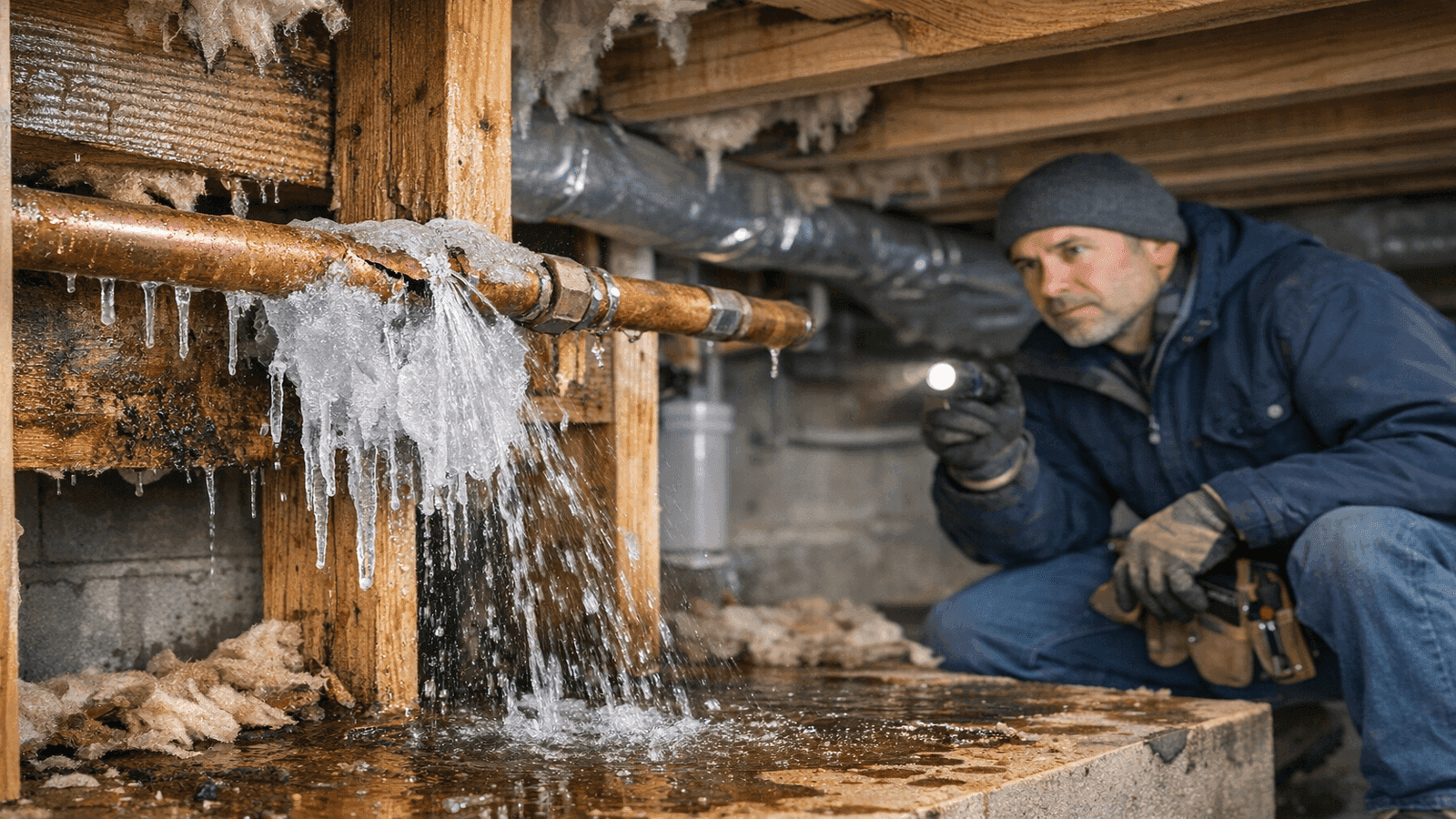
Photo: Burst copper water pipe with ice damage in a residential basement, showing freeze damage that proper winterization prevents
When to Winterize and Why It Matters
Start winterization in October in northern states and by mid-November in the mid-Atlantic and upper South. Waiting until a freeze warning is issued is too late for proper preparation.
Factors that increase your risk regardless of geography:
- Pipes routed through exterior walls with minimal insulation
- Crawl spaces with open foundation vents
- Older homes built before modern codes required interior pipe placement
- Vacation homes or rentals left vacant for weeks at a time
For homes with known plumbing leak detection issues, winterizing is especially urgent because existing hairline cracks fail catastrophically under freeze pressure.
The Real Cost of a Burst Pipe
| Damage Scenario | Estimated Repair Cost |
| Single burst supply pipe (wall repair + replumb) | $1,500-$5,000 |
| Burst pipe with finished basement flooding | $8,000-$20,000 |
| Multiple burst pipes, structural damage | $20,000-$70,000 |
| Professional winterization (active home) | $150-$350 |
| DIY winterization materials | $25-$75 |
The cost-benefit math is clear. For more context on repair pricing, see our plumbing costs guide.
I have been called out to burst pipe emergencies across Dallas-Fort Worth for 18 years, and the pattern is always the same: the homeowner knew the weather was coming and skipped the prep. In my 2,400-plus projects, I have never once seen freeze damage in a home that was properly winterized. The pipes that burst are almost always in crawl spaces or exterior walls where no one thought to insulate or drip a faucet. A two-hour investment in October prevents a two-week insurance nightmare in January.
Step-by-Step: Winterizing an Occupied Home
1. Locate and Test Your Main Shutoff
Confirm you know exactly where your main water shutoff valve is and that it operates freely. A valve not turned in years can seize. For detailed instructions, see our guide on shutting off your water supply.
Get quotes from top-rated pros.
2. Insulate Exposed Pipes
Foam pipe insulation sleeves (pre-split tubes) are the primary defense for pipes in unheated spaces. Target:
- Crawl space supply and drain lines
- Pipes through unheated garages or utility rooms
- Any pipe within 12 inches of an exterior wall in an older home
- Basement rim joist areas
Foam insulation costs $0.25-$1.50 per linear foot. For extremely cold climates, add electric heat tape before applying foam over it.
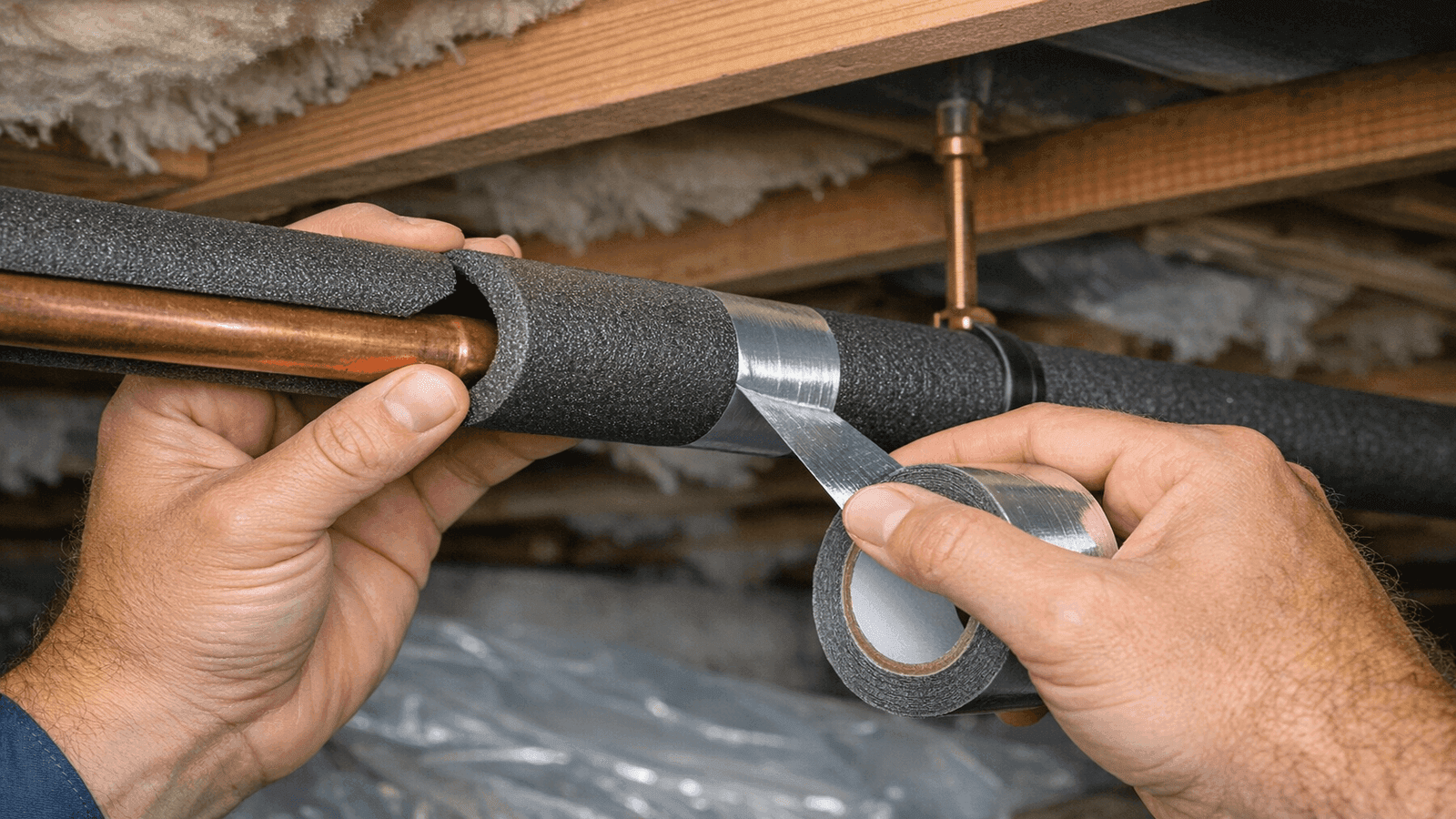
Photo: Installing foam pipe insulation sleeves on copper pipes in a residential crawl space to prevent freezing
3. Disconnect Garden Hoses and Winterize Outdoor Spigots
A garden hose left connected to an outdoor spigot traps water behind the shutoff valve, even with a frost-free sillcock. This is one of the most common causes of exterior pipe failures. Disconnect and store all hoses, then install foam faucet covers ($2-$5 each) on all spigots.
If your home does not have frost-free sillcocks, shut off the dedicated indoor supply valve for each outdoor faucet and open the spigot to drain residual water.
4. Shut Off and Drain Irrigation
Turn off the irrigation controller and the supply valve to the sprinkler system. Blow out sprinkler lines with compressed air to remove standing water. Most homeowners hire an irrigation company for this at $60-$120. For help understanding your home's supply system, see how plumbing works.
5. Set Thermostat Minimums and Open Cabinet Doors
Set your thermostat no lower than 55 degrees Fahrenheit even when traveling. Open cabinet doors under kitchen and bathroom sinks on exterior walls so heated air can circulate around the pipes. Allow faucets on exterior walls to drip slowly (cold side) during extreme cold snaps to relieve pressure if ice begins to form.
The cabinet door trick sounds too simple to matter, but it is one of the most effective zero-cost steps you can take. In houses built before 1980, the space behind sink cabinets on exterior walls often has zero insulation and a direct cold air path. Opening those doors can keep pipe temperature 10-15 degrees warmer than when the cabinet stays sealed. I tell every client in a cold climate to make this an automatic November habit.
Winterizing a Vacant or Vacation Home
An unoccupied home needs complete system draining since there is no daily heat source and no one present to catch a small problem before it escalates.
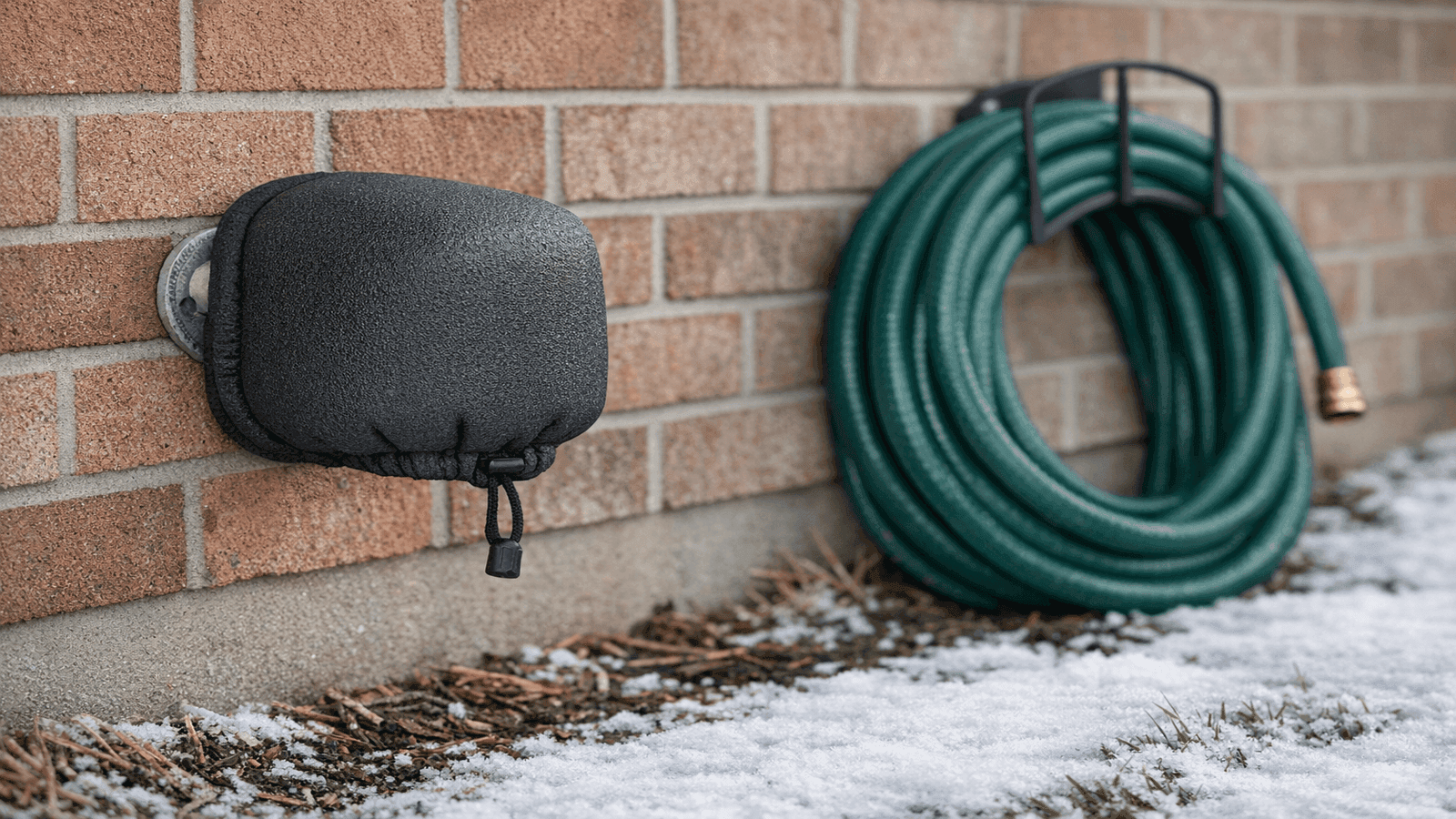
Photo: Foam faucet cover installed on outdoor spigot with disconnected garden hose stored nearby for winter freeze protection
Full Draining Process
- Shut off the main water supply at the meter.
- Shut off the water heater (gas: turn to pilot; electric: shut off the breaker). See our water heater maintenance guide for details.
- Open all faucets throughout the home, starting at the highest floor and working down.
- Flush all toilets and use a sponge to remove residual tank and bowl water.
- Drain the water heater by connecting a hose to the drain valve and running it to a floor drain.
- Blow out supply lines with compressed air from the lowest point.
- Pour RV-grade propylene glycol antifreeze (non-toxic) into every drain trap: sinks, tubs, showers, floor drains, and toilet bowls. Use 1-2 cups per trap. Never use automotive antifreeze.
Professional winterization for vacant homes costs $125-$400 and typically takes 1-2 hours. Data from NearbyHunt's licensed plumber network shows that professional winterization in the $150-$250 range saves homeowners an estimated $12,000-$18,000 in avoided freeze damage over a 10-year period.
Get quotes from top-rated pros.
What to Do If Pipes Freeze
Signs of a frozen pipe:
- No flow from a specific faucet when others work normally
- Visible frost on an exposed pipe
- Unusually low pressure during a cold snap
Response steps:
- Open the faucet the frozen pipe feeds so steam can escape as ice melts.
- Apply gentle heat with a hair dryer or heating pad, working from the faucet end toward the frozen section.
- Never use an open flame near pipes.
- After flow resumes, inspect carefully for hairline splits. See our guide on common plumbing problems to recognize signs of pipe stress.
- If flow does not return within 30 minutes, shut off the main water and call a licensed plumber.
The most dangerous moment with a frozen pipe is after it thaws. Homeowners feel relieved, see water flowing, and assume everything is fine. What they miss is that a pipe that froze once already has microfractures from ice expansion. I have seen pipes fail 12 to 48 hours after thawing with no warning. After any freeze event, have a plumber inspect the affected section and replace any pipe that shows discoloration or was frozen for more than 8 hours.
Pipe Materials and Freeze Risk
| Pipe Material | Freeze Resistance | Notes |
| Copper | Low-moderate | Expands slowly; splits at fittings under sustained freeze |
| PVC (rigid) | Low | Brittle in cold; cracks cleanly |
| CPVC | Low-moderate | Slightly more flexible than PVC |
| PEX | High | Most freeze-tolerant; expands without splitting |
| Galvanized Steel | Low | Corrodes at freeze damage points; replacement recommended |
PEX is now the NAHB standard for new residential construction and the most freeze-tolerant option available. For a full breakdown of pipe types, see our guide on types of plumbing pipes. If you are considering a larger upgrade before next winter, see our repiping house cost breakdown.
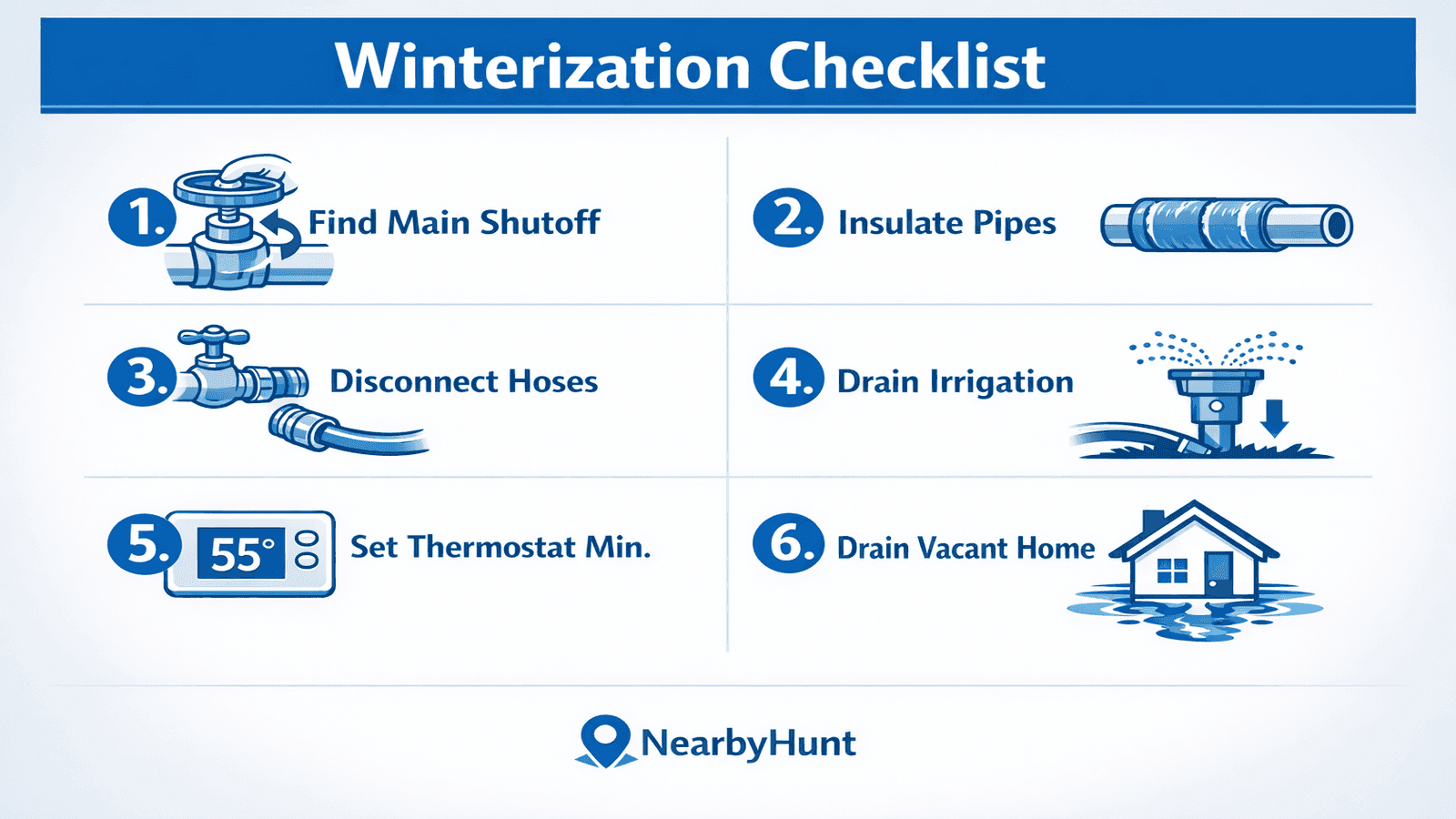
Photo: Step-by-step plumbing winterization checklist infographic showing six key tasks to protect pipes from freezing in winter 2026
Conclusion
Winterizing your plumbing is one of the highest-return maintenance tasks a homeowner can complete. The combination of pipe insulation, outdoor fixture protection, and minimum thermostat settings eliminates the vast majority of freeze risk at a cost far below what a single burst pipe causes.
For occupied homes, start in October: foam insulate exposed pipes, disconnect all garden hoses, and keep the thermostat at 55 degrees or above when away. For vacant homes, a complete draining and antifreeze treatment is the only reliable protection through months of unattended cold.
If you are uncertain about your home's vulnerabilities, or if you have older pipe materials or a complex irrigation system, a licensed plumber can identify risks you might miss and document the work for insurance purposes.
Find Licensed Plumbers Near You
For related guides, see our articles on emergency plumber rates and how plumbing works.
Sources & References
- American Red Cross: Winter Storm Safety and Frozen Pipe Prevention
- IBHS (Insurance Institute for Business and Home Safety): Frozen Pipe Risk Reports
- PHCC (Plumbing-Heating-Cooling Contractors Association): Winterization Best Practices
- NAHB (National Association of Home Builders): Residential Plumbing Standards 2026
- Energy.gov: Home Insulation and Pipe Protection in Cold Climates
- Bob Vila: How to Winterize Pipes and Plumbing Systems
- This Old House: Winter Plumbing Preparation Guide
- Fixr: Cost to Winterize a House (2026 data)
- Forbes Home: Frozen Pipe Damage Costs and Prevention
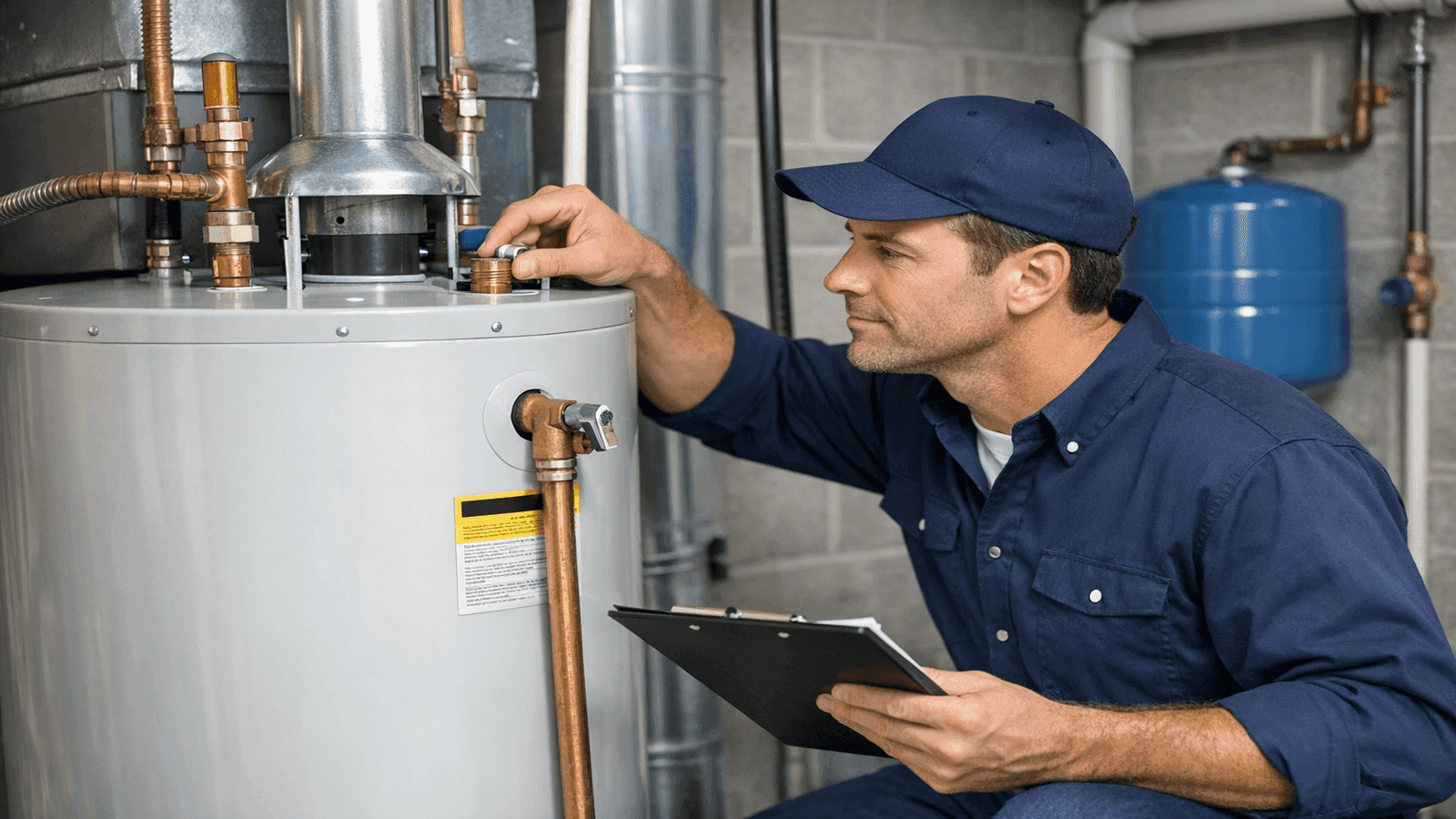

Michael Jennings is a licensed master plumber & water systems specialist with over 18 years of hands-on experience in residential and commercial plumbing, serving clients across California and Texas. At NearbyHunt, he shares practical advice on pipe installations, water heater maintenance, and home plumbing upgrades. Michael has helped thousands of homeowners prevent costly water damage and improve water efficiency through modern plumbing solutions.

Robert is a licensed master plumber with over 20 years of experience serving both residential and commercial clients across the Midwest. Specialising in advanced plumbing systems and sustainable water technologies, Rob brings deep technical insight and hands-on expertise to every project. As a reviewer for NearbyHunt, he ensures all plumbing content reflects the highest standards of safety, compliance, and practicality.