- Monthly drain maintenance takes less than 15 minutes and prevents 80% of common household clogs
- Kitchen grease causes nearly 47% of all municipal sewer overflows, according to EPA data
- Drain strainers cost $5 to $15 and stop most hair and debris before it enters pipes
- A manual drain snake ($10 to $80) is safer and more effective than chemical cleaners for most clogs
- Professional drain cleaning costs $150 to $500; routine maintenance costs a fraction of that
- NearbyHunt data shows households that skip monthly maintenance average 3 emergency plumbing calls per year
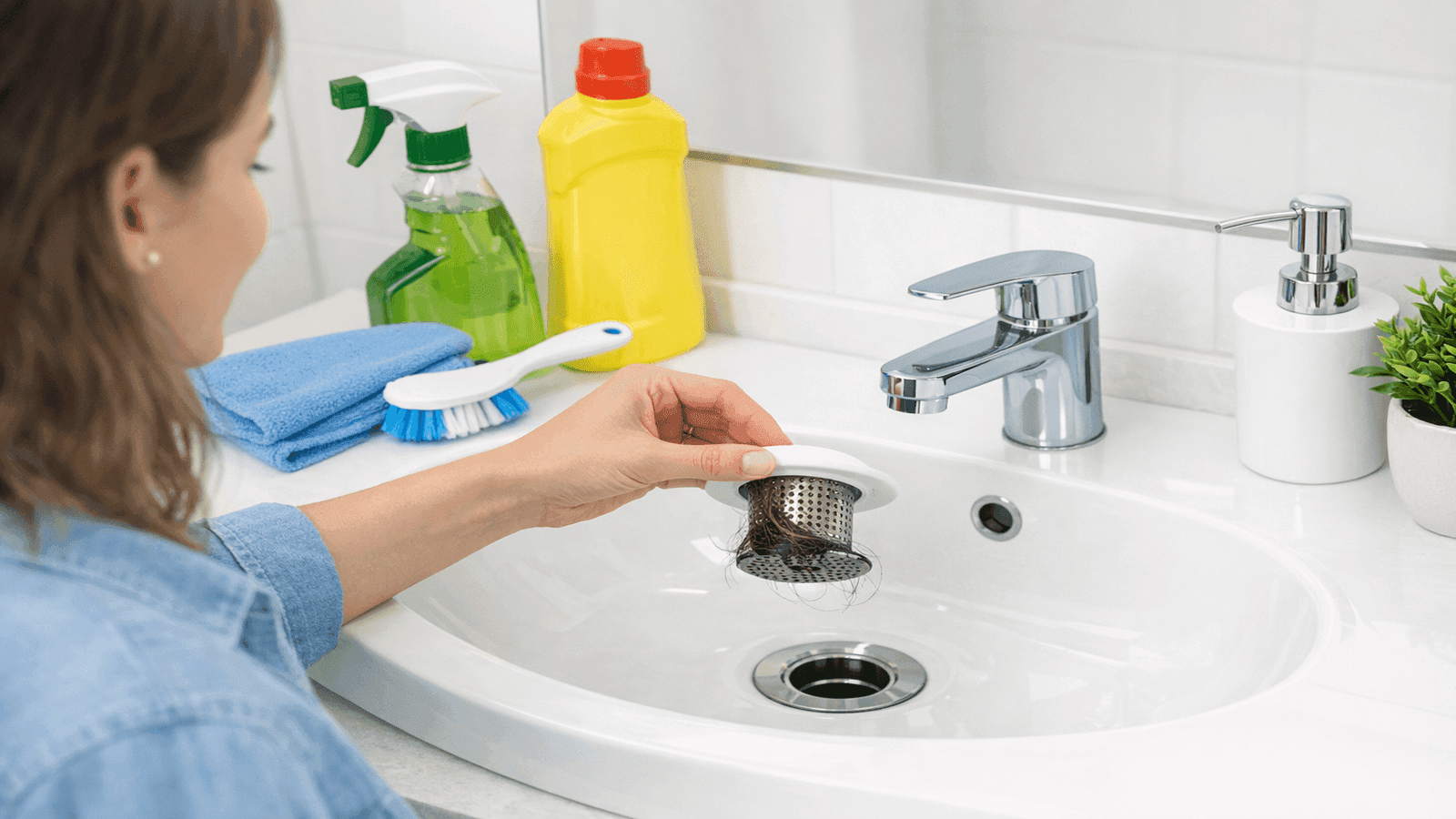
Photo: Homeowner cleaning bathroom drain with strainer to prevent clogs
Why Drain Maintenance Matters in 2026
Most homeowners ignore drains until water backs up in the sink or the shower takes five minutes to empty. By that point, the clog has typically been building for weeks. A consistent routine is the single best way to avoid emergency calls, foul odors, and potential pipe damage, and it's one of the most impactful habits covered in a complete home plumbing maintenance plan.
In 2026, with plumbing repair costs continuing to rise, prevention is far more cost-effective than reaction. The average cost of professional drain cleaning ranges from $150 to $500 depending on severity. A basic monthly maintenance routine, by contrast, costs pennies using supplies most households already own.
This guide covers a monthly schedule, kitchen and bathroom-specific tips, natural versus chemical cleaning methods, prevention products, and clear signs it is time to call a licensed plumber.
Monthly Drain Maintenance Routine
A simple schedule keeps drains flowing year-round in about 10 to 15 minutes.
Weekly (5 minutes):
- Run hot water down kitchen and bathroom drains for 30 to 60 seconds after each use
- Wipe hair and soap scum off drain covers in showers and tubs
- Check that sink stoppers move freely and are not accumulating debris underneath
Monthly (10 to 15 minutes):
- Flush each drain with the baking soda and vinegar method (see below)
- Remove and clean all drain strainers and stoppers
- Run ice cubes and coarse salt through the garbage disposal with cold water to clean the blades
- Check under all sinks for drips or moisture indicating backpressure from a partial blockage
Quarterly:
- Inspect visible drain pipes under sinks for corrosion or mineral buildup
- Snake bathroom drains to remove accumulated hair even if drainage seems normal
- Flush floor drains in basements and laundry rooms with hot water and a baking soda rinse
I've been clearing drains in Dallas homes for 18 years, and the calls I get most often are completely preventable. If homeowners spent 10 minutes a month on drain maintenance, I'd handle maybe a third of the emergency clog calls I currently see. A baking soda flush makes a measurable difference, especially in older homes with narrower cast iron pipes.

Kitchen Drain Maintenance Tips
The kitchen drain is the most frequently clogged drain in the house. Grease, food particles, soap, and mineral deposits accumulate rapidly inside kitchen lines.
What Not to Pour Down the Kitchen Drain
| Item | Why It Causes Clogs | Alternative Disposal |
| Cooking grease and oil | Solidifies on pipe walls, catches debris | Seal in a jar, dispose in trash |
| Coffee grounds | Accumulate into dense blockages | Compost or trash |
| Pasta, rice, bread | Expand with water, swell in pipes | Trash or compost |
| Starchy vegetable peels | Become paste-like in disposal | Compost or trash |
| Fibrous vegetables | Wrap around disposal blades | Compost or trash |
For a monthly kitchen drain flush: pour a boiling kettle slowly down the drain in two stages, follow with 1/2 cup baking soda (let sit 5 minutes), then 1 cup white vinegar. Cover the drain immediately and wait 15 to 20 minutes. Flush with another kettle of hot water.
For disposal maintenance, see our guide on garbage disposal care.
Grease is the number one enemy of kitchen drain lines. Homeowners think rinsing with hot water is enough, but grease coats the inside of pipes and then catches every food particle that passes through. I recommend a monthly hot water and baking soda flush to every client, and I tell them to never put anything in the disposal they wouldn't want stuck in their drain pipe permanently.
Get quotes from top-rated pros.
Bathroom Drain Care
Shower and tub drains accumulate hair, soap scum, shampoo residue, and hard water deposits. These combine into adhesive clogs that worsen quickly.
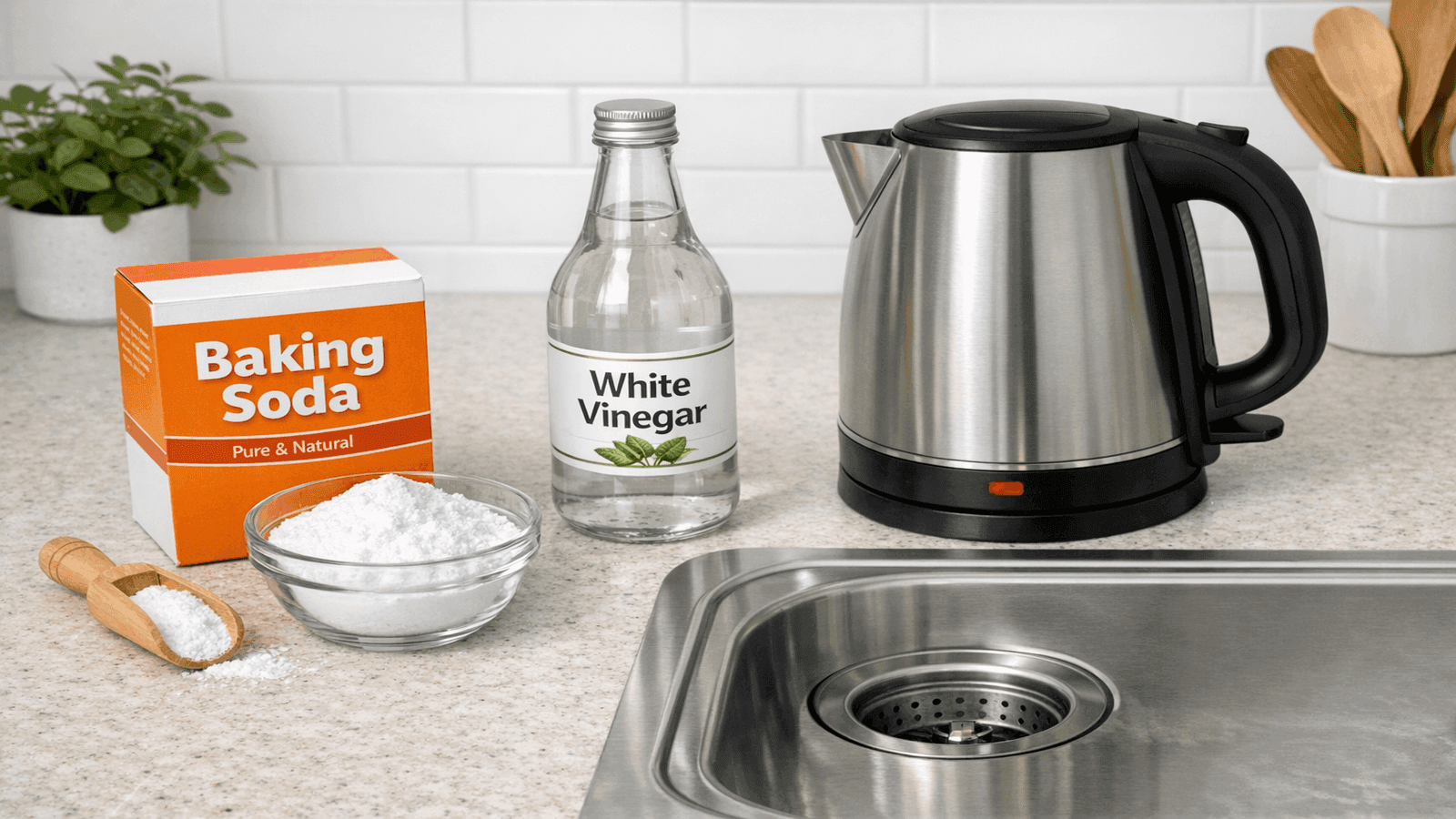
Photo: Baking soda and vinegar natural drain cleaning method supplies
Shower and tub drain tips:
- Install a fine mesh hair catcher ($5 to $15) over every shower and tub drain
- Brush hair before showering to minimize loose strands entering the drain
- Clean the drain cover and strainer at least once a week; soap scum bonds to hair almost immediately
- Use a zip-it drain cleaning tool monthly to pull accumulated hair from the top few inches of the drain
Bathroom sink drain tips: Remove and clean the pop-up stopper once a month. Most pop-up stoppers lift out with a counterclockwise turn. Rinse under hot water and scrub with an old toothbrush.
For a step-by-step tutorial on clearing a shower drain, see how to unclog a shower drain.
Natural vs. Chemical Drain Cleaners
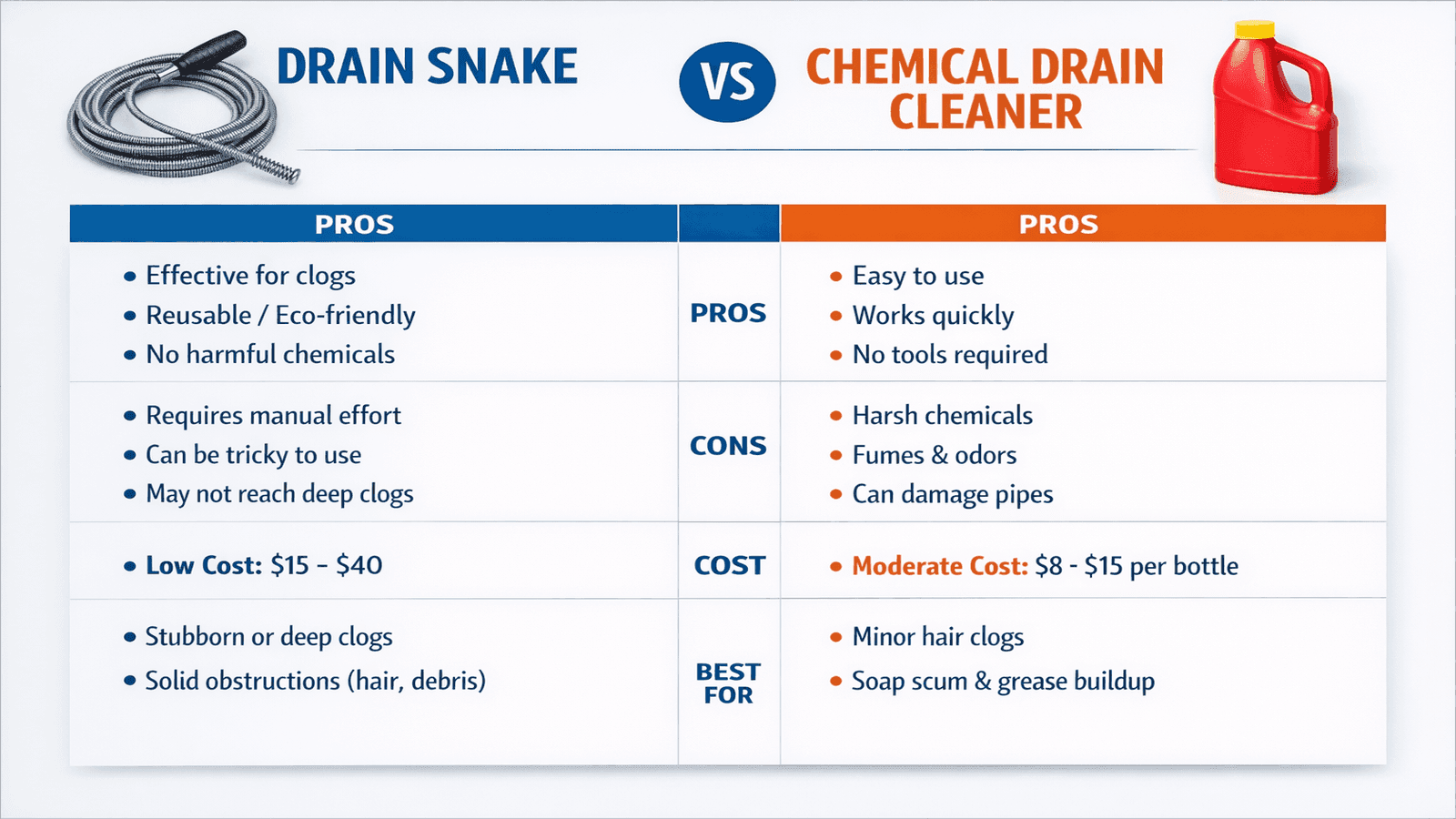
Photo: Infographic comparing drain snake versus chemical drain cleaner
Natural: Baking Soda and Vinegar
When sodium bicarbonate meets acetic acid, they produce carbon dioxide gas. The fizzing action dislodges light buildup, and the alkaline baking soda breaks down grease and soap scum.
Best for: Maintenance and light buildup within 2 to 3 feet of the drain opening.
Not effective for: Hair clogs, solid debris, or deep blockages.
Cost: Under $1 per treatment. Safe for all pipe types, children, pets, and septic systems.
Chemical Drain Cleaners
Fast-acting on soft surface clogs, but repeated use can corrode PVC and older metal pipes. Dangerous to skin and eyes during handling. Harmful to septic systems and the environment.
Drain Snake (Mechanical Auger)
Physically removes blockages rather than attempting to dissolve them. The option most licensed plumbers recommend.
Get quotes from top-rated pros.
| Method | Cost | Pipe Safety | Best For |
| Baking soda + vinegar | Under $1 | Very safe | Monthly maintenance |
| Chemical cleaner | $5 to $30 | Can damage pipes | Surface soft clogs only |
| Manual drain snake | $10 to $80 (one-time) | Safe | Hair and debris clogs up to 25 feet |
| Professional service | $150 to $500 | Safe | Any clog type |
For a hands-on guide, see how to snake a drain.
Skip the chemical drain cleaners. Over 18 years and 2,400+ projects, I've seen them accelerate pipe corrosion in older homes and create hazardous situations when the drain is still blocked and someone tries to plunge or snake it afterward. A $20 plastic snake from the hardware store will do more good in 5 minutes than a bottle of caustic liquid.
When to Call a Licensed Plumber

Photo: Professional plumber using motorized drain snake for drain cleaning
Some drain problems go beyond what household maintenance can address. Call a plumber when you notice:
- Multiple drains slowing or backing up simultaneously (sign of a main line blockage)
- Gurgling sounds from the toilet when you run the sink or shower
- Sewage or rotten egg odors from drains even after cleaning
- Water backing up into other fixtures (sink water appears in the tub)
- A drain that repeatedly clogs within days of being cleared
- Any sign of pipe leakage under sinks or in crawl spaces
According to NearbyHunt data, homeowners who ignore multiple slow drains for more than 30 days have a significantly higher rate of main sewer line backups requiring hydrojetting or professional rooter service, which can cost $300 to $1,200.
Main sewer line issues require camera inspection and professional equipment. See our guide to common plumbing problems for deeper warning signs. For septic systems, see septic system maintenance.
For a full cost breakdown, see drain cleaning cost or plumbing costs.
Conclusion
Drain maintenance is one of the highest-return home maintenance tasks available in 2026. A 10-minute monthly routine involving baking soda, vinegar, hot water, and a clean strainer prevents the vast majority of household clogs. Keep grease out of the kitchen drain, use a hair strainer in every shower and tub, clean stoppers weekly, and do a full flush monthly. For stubborn clogs, a manual drain snake is safer and more effective than chemical cleaners. When multiple drains slow simultaneously, odours persist, or DIY methods repeatedly fail, bring in a licensed plumber before a manageable clog becomes a main line backup.
Sources & References
- Plumbing-Heating-Cooling Contractors Association (PHCC): phccweb.org
- Bob Vila, Best Drain Cleaners: bobvila.com/articles/best-drain-cleaner
- This Old House, Drain Care Guides: thisoldhouse.com
- Family Handyman, How to Prevent Clogged Drains: familyhandyman.com
- Fixr, Drain Cleaning Cost Guide: fixr.com
- ServiceTitan, Drain Maintenance Field Data 2026

Michael Jennings is a licensed master plumber & water systems specialist with over 18 years of hands-on experience in residential and commercial plumbing, serving clients across California and Texas. At NearbyHunt, he shares practical advice on pipe installations, water heater maintenance, and home plumbing upgrades. Michael has helped thousands of homeowners prevent costly water damage and improve water efficiency through modern plumbing solutions.

Robert is a licensed master plumber with over 20 years of experience serving both residential and commercial clients across the Midwest. Specialising in advanced plumbing systems and sustainable water technologies, Rob brings deep technical insight and hands-on expertise to every project. As a reviewer for NearbyHunt, he ensures all plumbing content reflects the highest standards of safety, compliance, and practicality.