- Annual maintenance can extend your water heater's lifespan from 8-10 years to 12-15 years
- Flushing sediment from a tank heater takes 30-45 minutes and should happen at least once per year
- Anode rods need inspection every 1-2 years and replacement every 3-5 years, costing $20-$50
- Professional annual service typically costs $150-$300; DIY materials run $20-$50
- Tankless units require annual descaling with a food-grade solution, not sediment flushing
- NearbyHunt data shows homeowners who skip annual maintenance face water heater failures twice as often before the 10-year mark
Your water heater works every single day without much attention from you. Most homeowners notice it only when something breaks, and by then a simple maintenance task has become an emergency repair. According to the U.S. Department of Energy, water heaters account for roughly 18% of a home's energy use. Keeping the unit well-maintained directly cuts your utility bill and prevents premature failure. It's one of the highest-priority tasks in any home plumbing maintenance plan.
This guide covers everything you need to know about water heater maintenance in 2026: an annual checklist, step-by-step flushing instructions, anode rod inspection, and the key differences between tank and tankless maintenance.
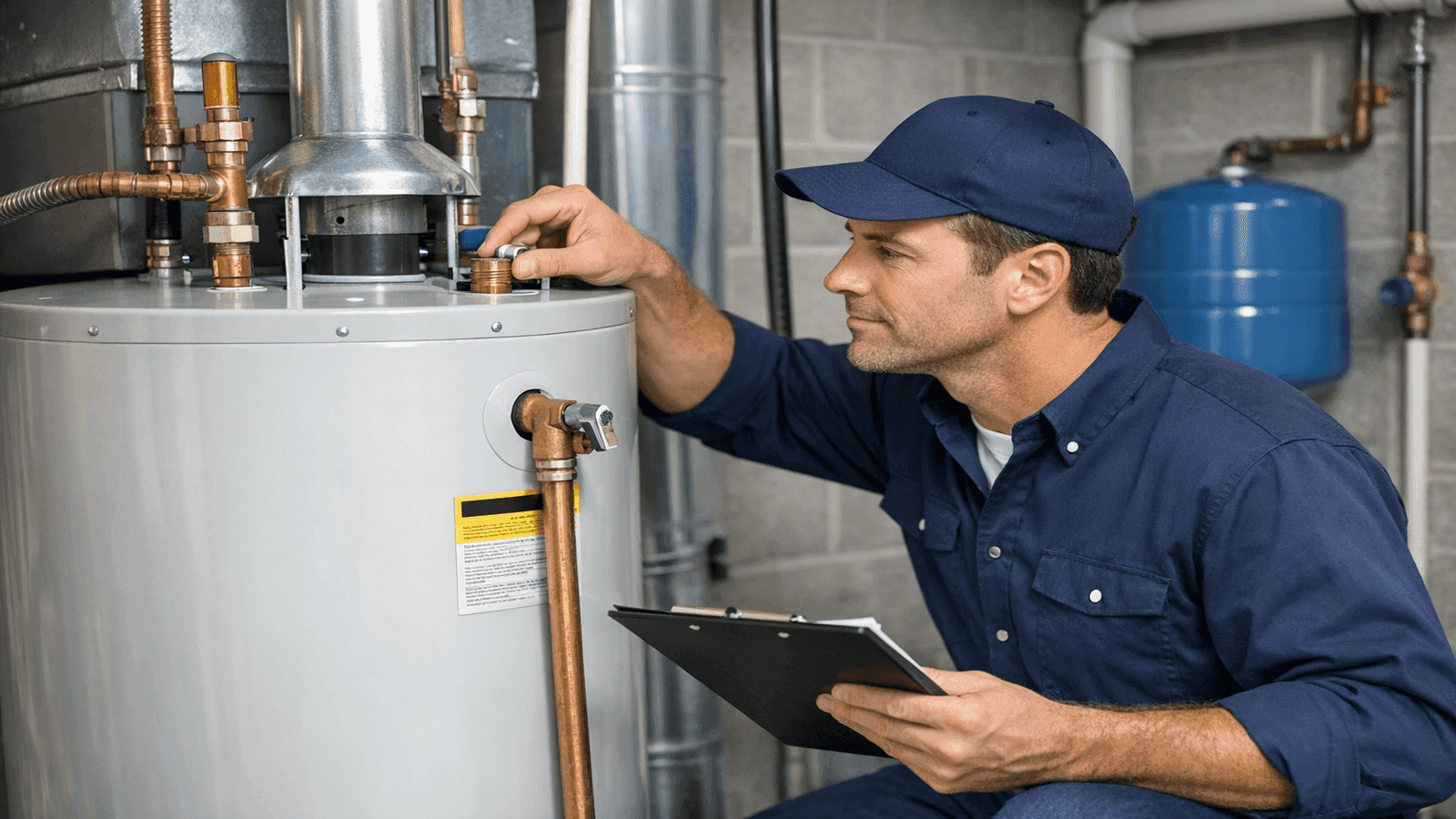
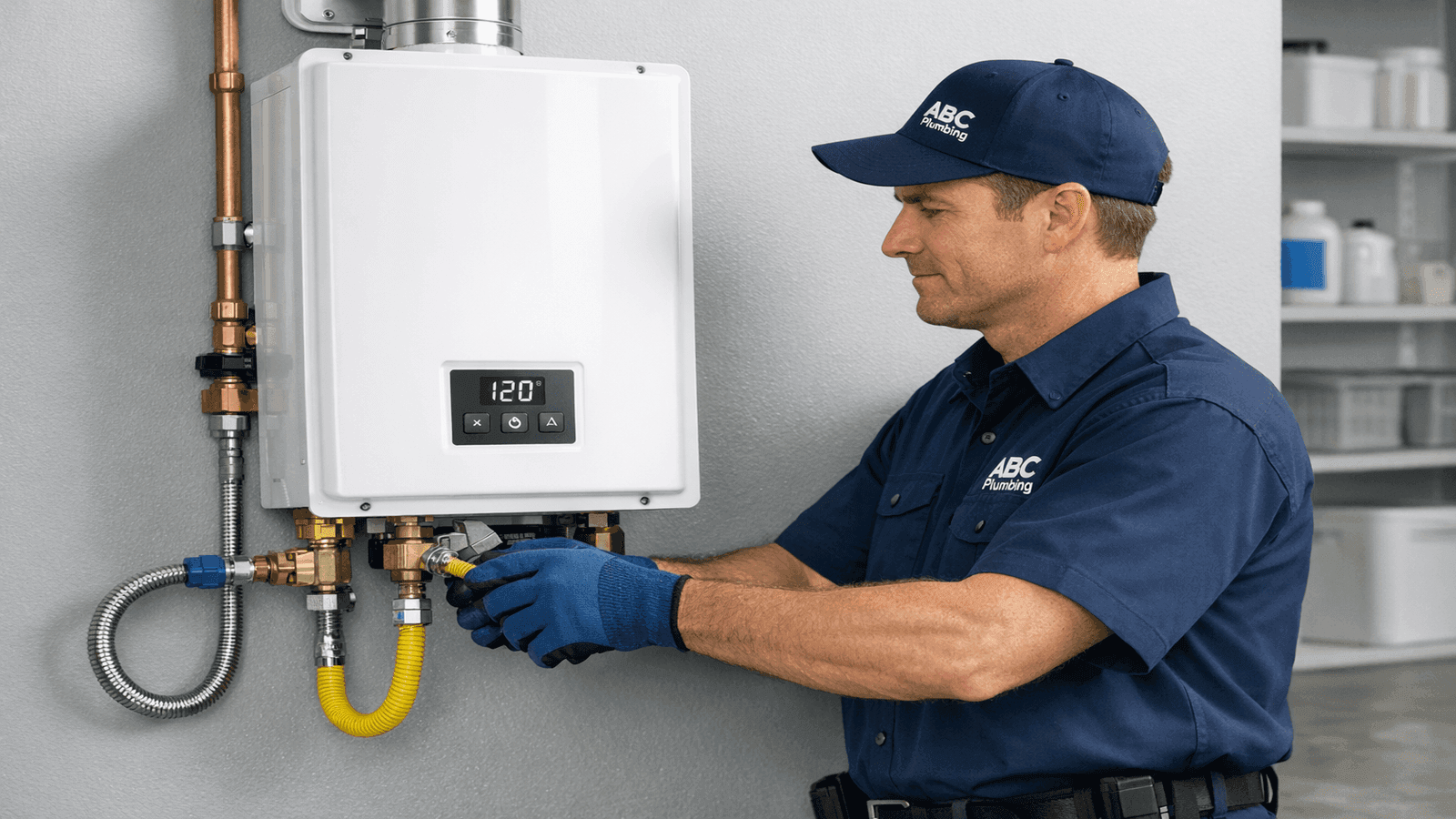
Photo: Plumber inspecting tank water heater during annual maintenance
Annual Water Heater Maintenance Checklist
Complete these tasks once per year. If your home has hard water, flush every six months.
| Task | Frequency | DIY or Pro | Time |
| Flush tank sediment | Annually | DIY | 30-45 min |
| Test pressure relief valve | Annually | DIY | 5 min |
| Inspect anode rod | Every 1-2 years | DIY or Pro | 20-30 min |
| Check temperature setting | Annually | DIY | 5 min |
| Descale tankless unit | Annually | DIY or Pro | 45-60 min |
| Inspect gas burner or heating elements | Annually | Pro | 20 min |
The pressure relief valve (T&P valve) is a critical safety component. Lift the lever briefly with a bucket under the discharge pipe. Hot water should release and stop cleanly. If the valve drips or will not seal, replace it immediately. Set temperature at 120 degrees Fahrenheit for most households. Higher settings accelerate sediment buildup and scalding risk; lower settings can allow bacterial growth in the tank.
In my 18 years servicing water heaters across Dallas, TX, the most common issue I see is neglected sediment buildup. Homeowners wonder why their bills went up or why they run out of hot water faster. Nine times out of ten, a simple annual flush would have prevented it. I've serviced over 800 water heaters and the ones that last longest always have records of consistent annual maintenance.

How to Flush a Tank Water Heater
Flushing removes sediment that collects at the tank bottom. Sediment forces the burner or heating element to work through a layer of mineral buildup, reducing efficiency and accelerating internal corrosion. For more on system fundamentals, see our guide on how plumbing works.
What you need: Garden hose, bucket, work gloves, flat-head screwdriver
- Turn off the heat source. For gas heaters, set the dial to "Pilot." For electric units, shut off the circuit breaker. Never run the heating element without water in the tank.
- Connect a garden hose to the drain valve at the tank bottom. Route the hose to a floor drain or outside.
- Open a hot water faucet nearby to relieve pressure and let the tank drain without a vacuum.
- Open the drain valve with a screwdriver. Discolored or cloudy water confirms sediment was present.
- Drain 2-3 gallons, then flush. Briefly open the cold water supply to stir remaining sediment. Repeat until water runs clear.
- Close the drain valve and refill. Remove the hose, close the hot tap, and reopen cold supply fully. Let the tank fill completely before restoring heat.
Get quotes from top-rated pros.
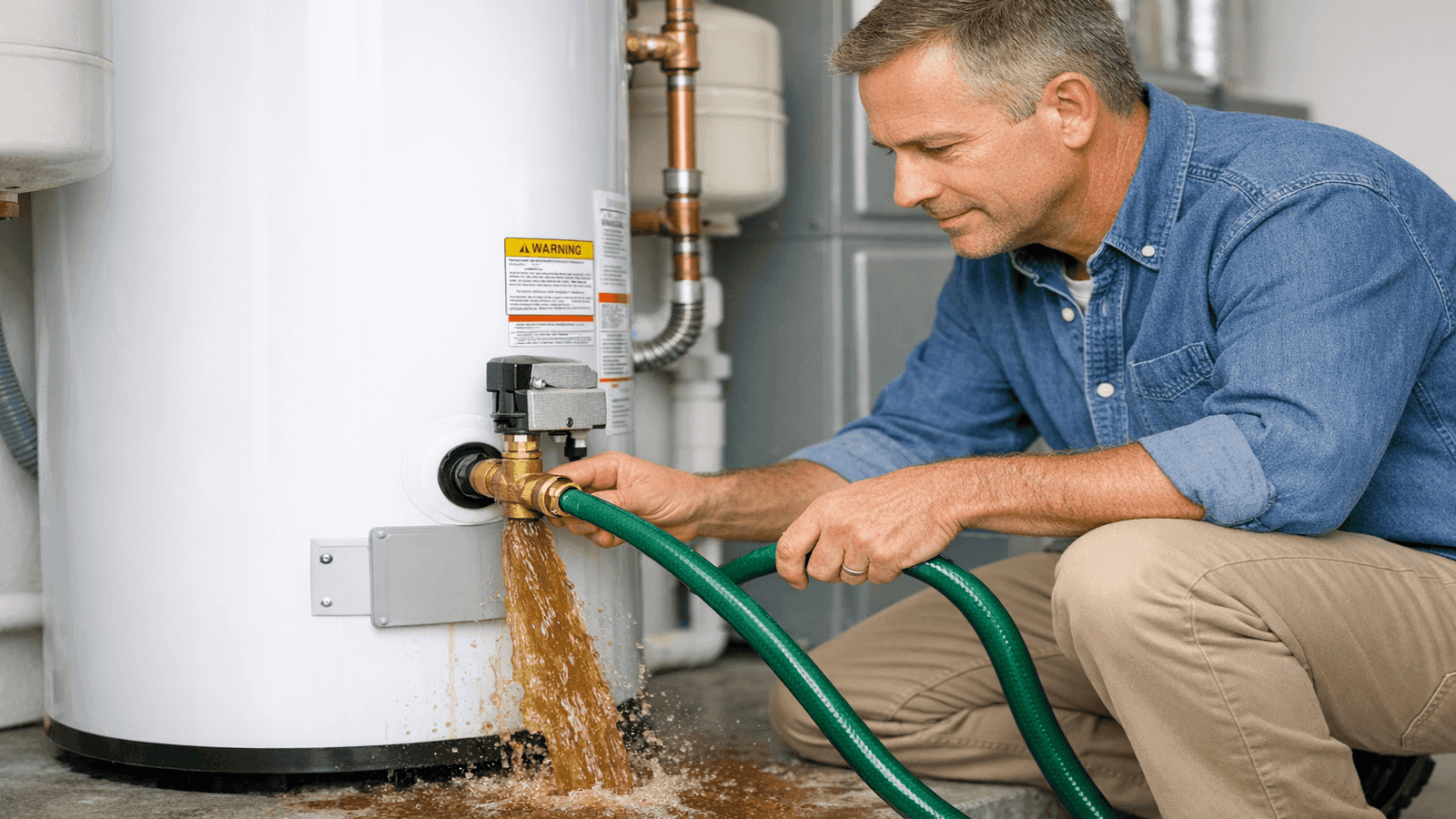
Photo: Homeowner draining sediment from water heater with garden hose
If the drain valve drips after closing, replace it. Replacement valves cost $5-$15 and are a quick fix that prevents long-term corrosion damage.
Anode Rod Inspection and Replacement
The anode rod is the most important component for extending tank heater life. Made of magnesium, zinc, or aluminum, it attracts corrosive minerals before they attack the steel tank walls. When the rod is consumed, the tank begins to corrode. Bob Vila describes it as the water heater's sacrificial protector.
Replace when: More than 50% of the surface is coated in calcium deposits or the rod has corroded to its core wire. This typically happens every 3-5 years. Homes with hard water or softened water may see rods fail faster.
How to inspect:
- Turn off the water supply and set the heater to pilot or off
- Relieve pressure briefly by opening a hot water tap
- Locate the anode rod port on top of the heater
- Unscrew counterclockwise with a 1-1/16-inch socket wrench
- Apply penetrating oil if stuck, wait 15 minutes, then try again
- Examine the rod for coating thickness and remaining metal
Choosing a replacement: Magnesium rods suit standard municipal water. Aluminum rods work better for softened water. A replacement rod costs $20-$50. Compare that to a water heater replacement costing $900-$1,800, and the maintenance math is obvious.
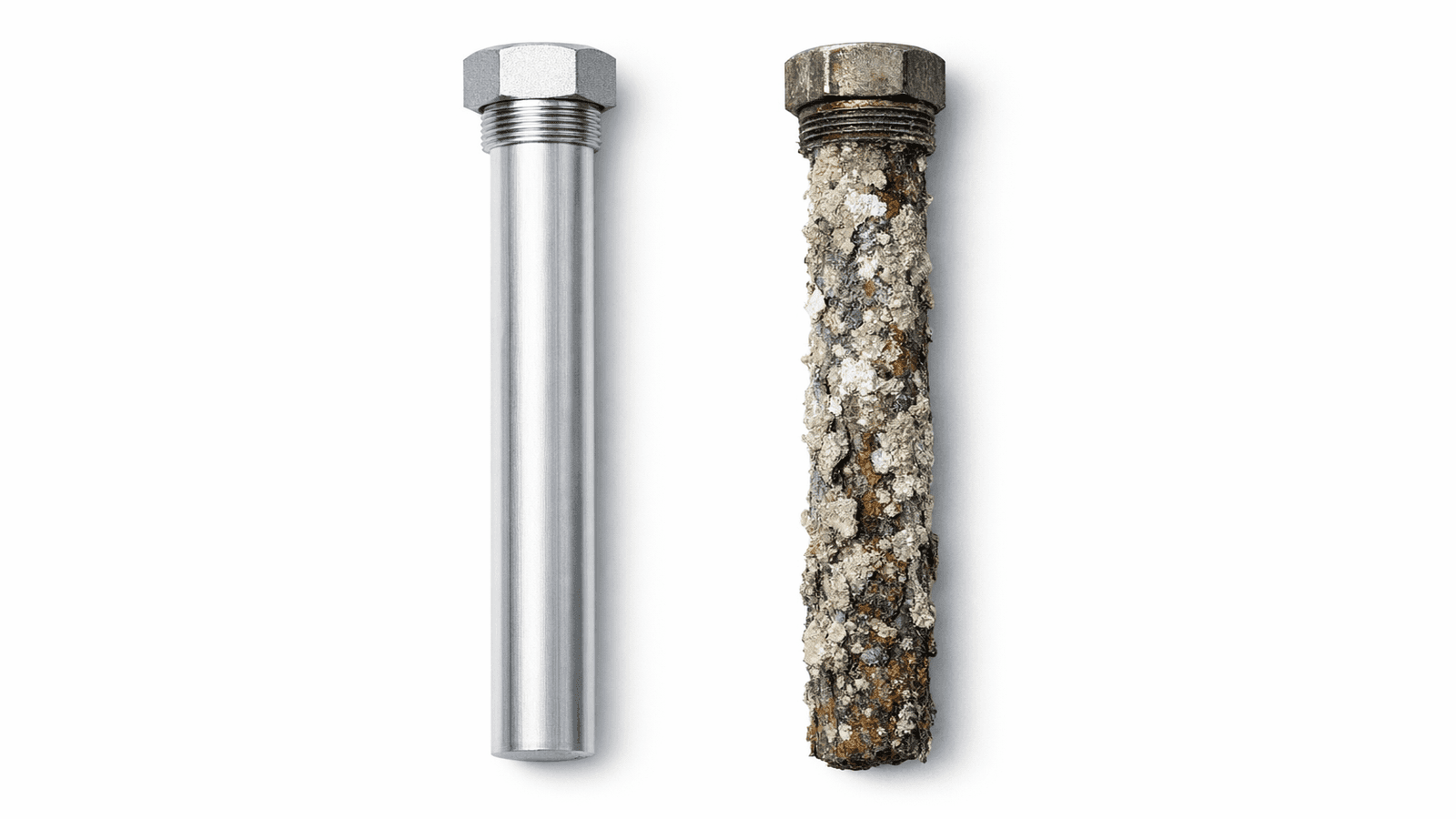
Photo: New vs corroded water heater anode rod comparison
The anode rod is the cheapest insurance policy you can buy for your water heater. I replaced a rod on a 14-year-old unit last spring and the tank interior was still in excellent shape because the rod had been replaced twice before. Skip the anode rod and you might get 8 years out of the tank. Replace it on schedule and 15 years is very achievable.
Tankless vs. Tank Maintenance Differences
Tankless and tank water heaters share some maintenance needs but differ significantly in the core procedures.
| Task | Tank Water Heater | Tankless Water Heater |
| Sediment flushing | Annual (30-45 min) | Not applicable |
| Descaling | Not applicable | Annual (45-60 min) |
| Anode rod inspection | Every 1-2 years | No anode rod |
| Inlet filter cleaning | No inline filter | Every 3-6 months |
| Annual professional service | $150-$300 | $150-$350 |
Tankless units heat water through a heat exchanger. Over time, calcium and magnesium coat the exchanger and reduce efficiency. Descaling reverses this. You will need a submersible pump, two short hoses, a 5-gallon bucket, and food-grade white vinegar or a commercial descaling solution. Circulate the solution for 45-60 minutes, then flush with clean water for a minimum of 10 minutes. Navien recommends this process at least once per year, or every six months in hard water areas.
Tankless units also have inlet screens that catch sediment before it reaches the heat exchanger. Rinse these under running water every 3-6 months. The job takes about five minutes and prevents expensive heat exchanger damage. For more on related service costs, see our guide on plumbing costs.
Get quotes from top-rated pros.
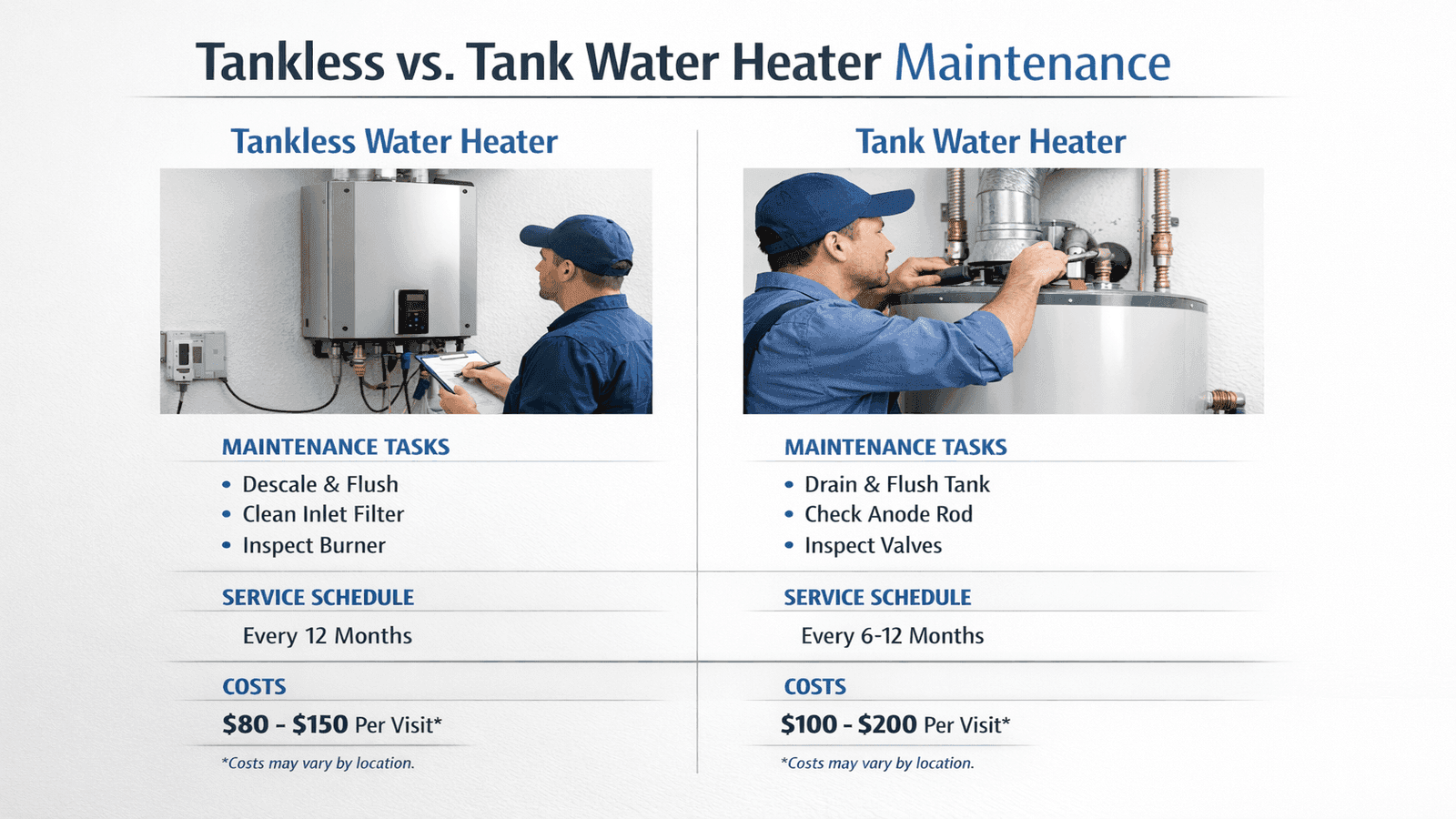
Photo: Infographic comparing tankless vs tank water heater maintenance
Tankless heaters get sold as maintenance-free and that drives me crazy because it is absolutely not true. The descaling requirement is real, especially in Texas where we have notoriously hard water. I've pulled heat exchangers that were nearly fully blocked with calcium scale. At that point you're looking at a $500-$800 heat exchanger replacement that wipes out years of energy savings.
Signs Your Water Heater Needs Professional Service
NearbyHunt data from plumbers across the country shows the most common emergency calls involve water heater failures that showed warning signs weeks or months before the breakdown.
Rusty or discolored hot water: Brown or reddish water from hot taps typically means the tank interior is corroding. If this persists after a flush and fresh anode rod, the tank itself may be compromised. See our guide on common plumbing problems for more on diagnosing discolored water.
Rumbling or popping sounds: These sounds during heating cycles are caused by sediment heating and cracking on the tank floor. A thorough flush may resolve mild cases. Severe or persistent noise often signals the tank is nearing the end of its service life.
Water pooling around the base: Any standing water near the heater needs immediate attention. Water seeping from the tank body itself means the tank is failing. For help identifying the source, see our guide on plumbing leak detection.
Age over 10 years: A tank heater older than 10 years should have a professional inspection annually rather than DIY maintenance alone. A licensed plumber can assess internal corrosion and give you a realistic picture of remaining lifespan so you can plan on your timeline rather than scrambling during an emergency.
For a broader professional inspection, a plumber can perform a whole-home plumbing inspection to catch additional issues before they escalate.
Conclusion
Annual water heater maintenance is one of the most cost-effective habits a homeowner can develop. The core tasks, flushing the tank, inspecting the anode rod, testing the T&P valve, and descaling tankless units, take a few hours per year and cost very little in materials. In return, you get a unit that lasts years longer, operates more efficiently, and is far less likely to fail unexpectedly.
If you prefer to have a licensed plumber handle maintenance or if you notice any of the warning signs described above, getting a professional involved is always the right call.
Sources & References
- U.S. Department of Energy - Water Heating
- Bob Vila - Anode Rod Replacement Guide
- This Old House - How to Change a Water Heater Anode Rod
- Navien - Tankless Water Heater Descaling
- Plumbing-Heating-Cooling Contractors Association (PHCC)
- NearbyHunt - Water Heater Replacement Cost
- NearbyHunt - Plumbing Costs
- NearbyHunt - Common Plumbing Problems

Michael Jennings is a licensed master plumber & water systems specialist with over 18 years of hands-on experience in residential and commercial plumbing, serving clients across California and Texas. At NearbyHunt, he shares practical advice on pipe installations, water heater maintenance, and home plumbing upgrades. Michael has helped thousands of homeowners prevent costly water damage and improve water efficiency through modern plumbing solutions.

Robert is a licensed master plumber with over 20 years of experience serving both residential and commercial clients across the Midwest. Specialising in advanced plumbing systems and sustainable water technologies, Rob brings deep technical insight and hands-on expertise to every project. As a reviewer for NearbyHunt, he ensures all plumbing content reflects the highest standards of safety, compliance, and practicality.