- Water heater replacement costs $900-$2,500 installed for a standard tank unit in 2026.
- Tankless water heaters cost $1,400-$5,600 installed, with gas tankless running $2,100-$5,600.
- Labor alone runs $150-$450 for tank units and $600-$1,850 for tankless installations.
- A 50-gallon gas tank water heater is the most common residential replacement, averaging $1,100-$1,800 installed.
- Heat pump water heaters qualify for a 30% federal tax credit up to $2,000 under the Inflation Reduction Act.
- The DOE's updated efficiency standards take effect in May 2029, making high-efficiency models increasingly important now.
Replacing a water heater is predictable: it will happen eventually, and it rarely gives much warning. Knowing the real numbers before that moment puts you in control of any plumber conversation.
This guide covers every cost factor for 2026: tank vs tankless pricing, labour rates, fuel type differences, permit costs, and regional variables. For a broader view, see our Plumbing Costs Guide 2026.
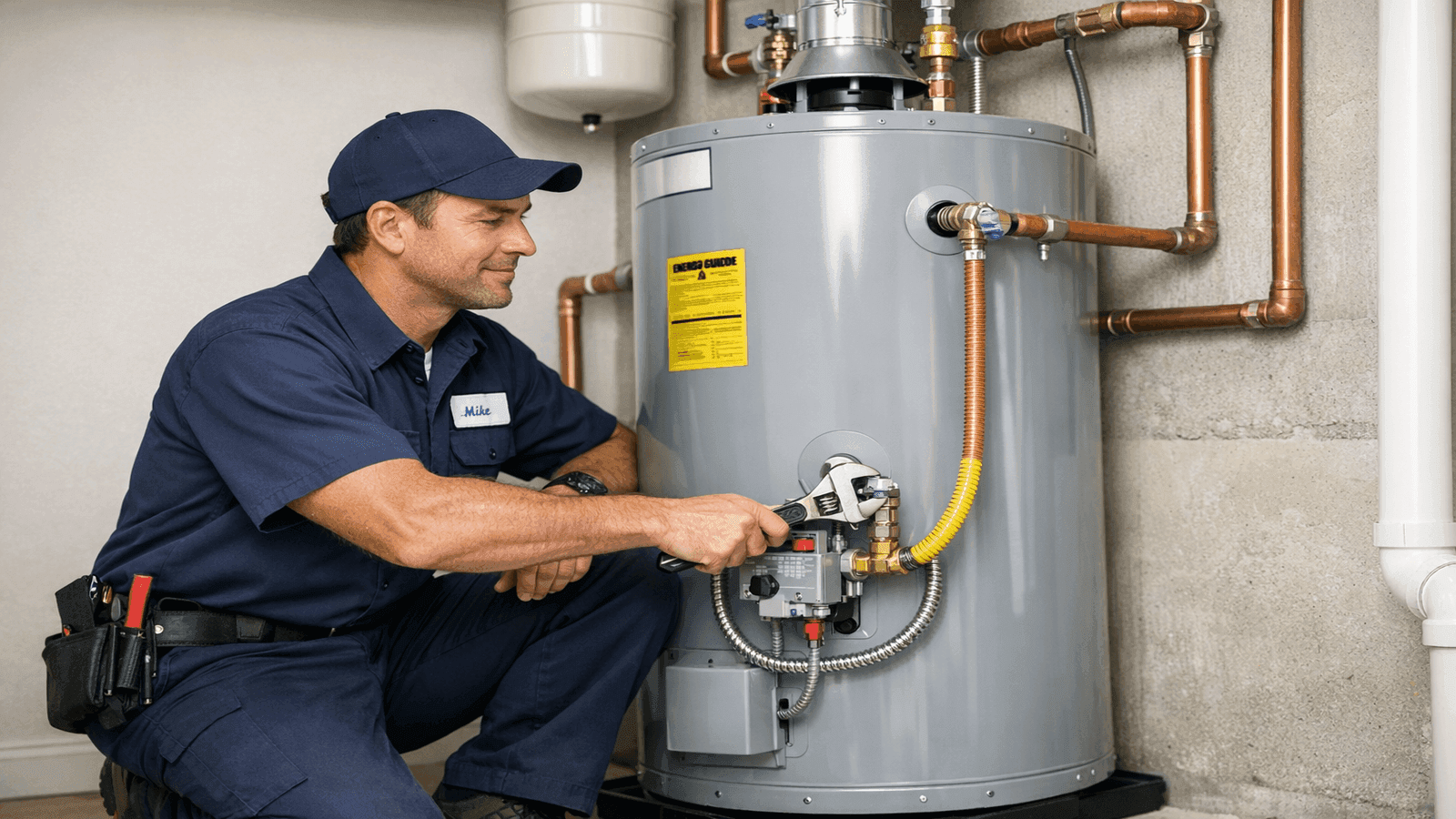
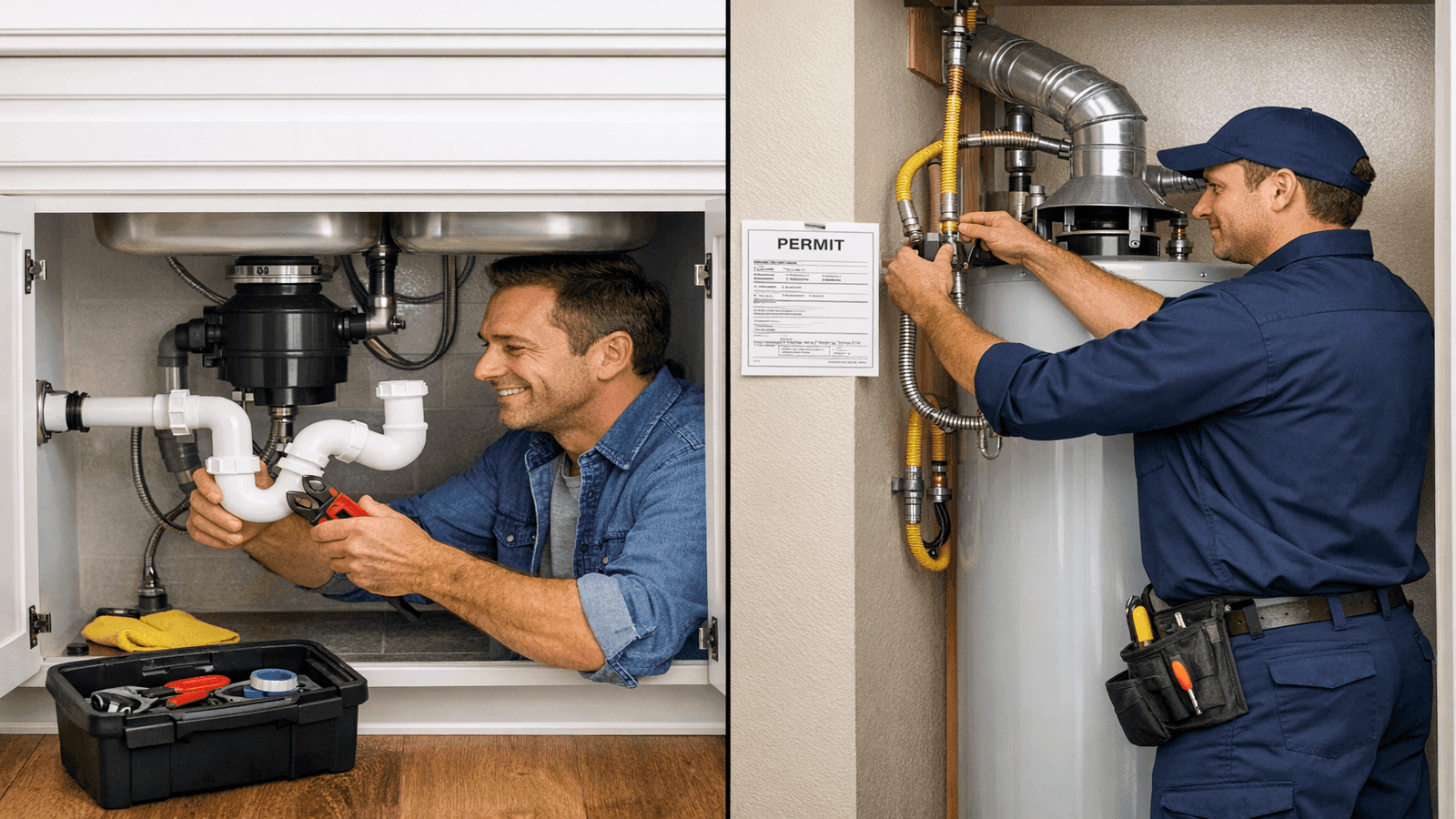
Photo: Licensed plumber installing a 50-gallon gas water heater in a residential utility room
Tank vs. Tankless Water Heater Replacement Costs in 2026
The biggest decision that determines your total cost is whether you are replacing like-for-like (tank to tank) or converting to a tankless system. These are fundamentally different products at fundamentally different price points.
Standard tank water heaters store 30-80 gallons of pre-heated water and are the most common replacement in American homes. A full replacement including unit and labor runs $900-$2,500. Most homeowners land between $1,100 and $1,800 for a typical 40-50 gallon unit.
Tankless water heaters heat water on demand and have no storage tank. They cost significantly more upfront: $1,400-$5,600 installed depending on fuel type and flow rate. The installation complexity is also higher, often requiring venting upgrades, gas line modifications, or electrical panel upgrades.
| Type | Unit Cost | Labor Cost | Total Installed |
| Tank (electric, 40-50 gal) | $400-$900 | $150-$300 | $550-$1,200 |
| Tank (gas, 40-50 gal) | $500-$1,200 | $200-$450 | $700-$1,650 |
| Tankless (electric) | $700-$1,500 | $300-$600 | $1,000-$2,100 |
| Tankless (gas) | $1,000-$3,000 | $500-$1,500 | $1,500-$4,500 |
| Heat pump water heater | $1,200-$3,000 | $300-$600 | $1,500-$3,600 |
In 500+ water heater installations over 18 years, the conversion from tank to tankless is almost always more expensive than people expect. The unit price is just the beginning. I regularly see $500-$1,200 in additional costs: new venting, dedicated gas line work, or electrical upgrades. If a contractor quotes you the same price for a tankless swap as a like-for-like tank replacement, ask them to itemize. Either they are missing something or the quote will change.

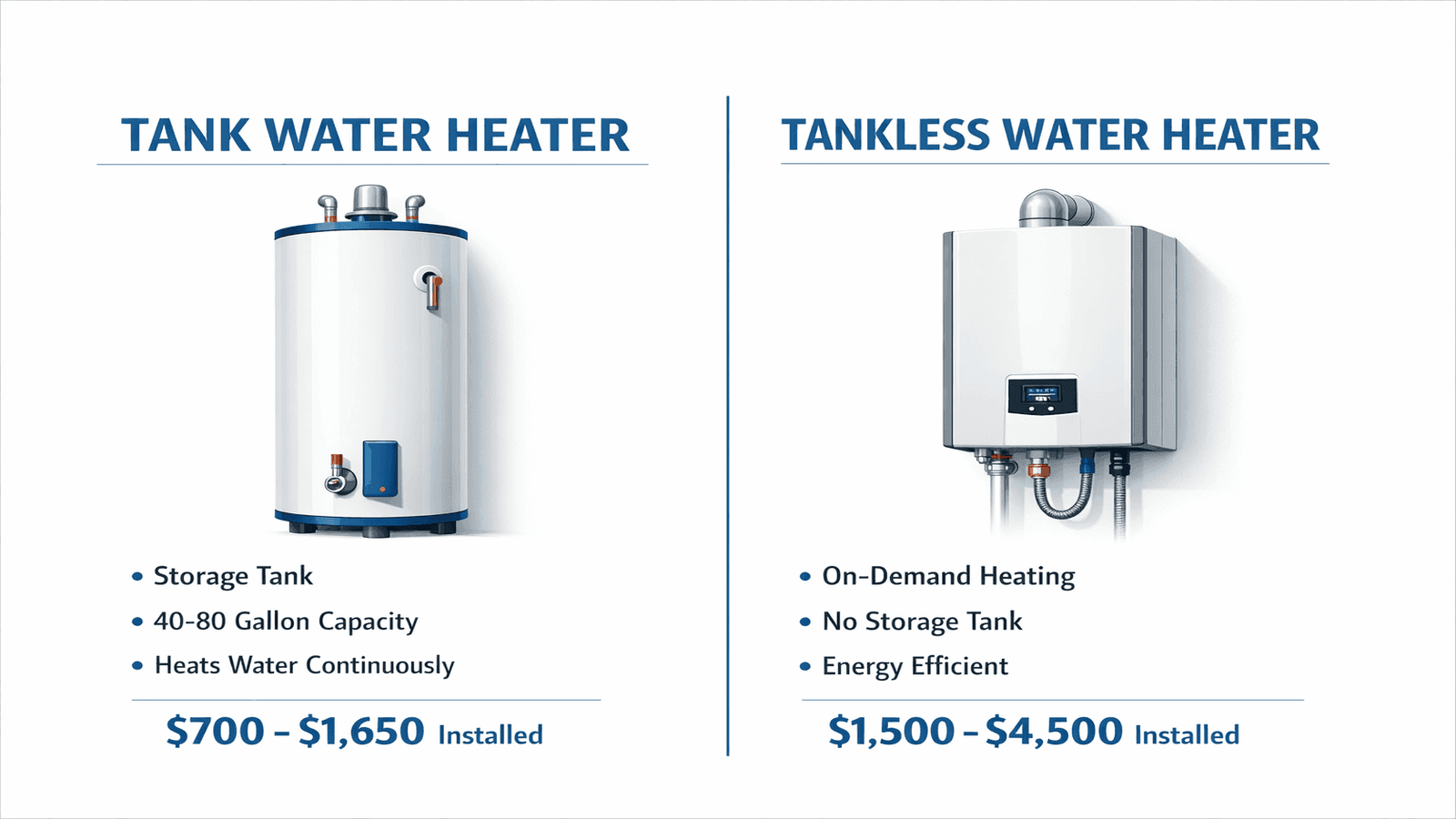
Photo: Side-by-side comparison of tank versus tankless water heater costs and specifications
Water Heater Cost by Fuel Type and Size
Fuel type and tank size are the two variables that affect unit price the most. They also affect what you pay each month in energy costs, which matters over the 8-12 year lifespan of a tank unit.
Electric tank water heaters cost $300-$900 for the unit. They are cheaper to install because they do not require gas line connections or combustion venting. However, they typically cost more to operate monthly than gas units, depending on local electricity and gas rates.
Gas tank water heaters cost $400-$1,200 for the unit. Installation is more involved because gas connections must be inspected and venting must meet current plumbing code requirements. In most U.S. markets, gas is cheaper to operate than electric resistance heating.
Heat pump water heaters (HPWHs) are electric but extract heat from surrounding air rather than generating it directly. They use 2-3 times less electricity than standard electric tanks. Unit cost runs $1,200-$3,000. The DOE projects that switching from a conventional electric tank to a heat pump unit saves the average household approximately $1,800 over the appliance's lifetime, according to Energy.gov.
| Tank Size | Best For | Approximate Unit Price |
| 30-gallon | 1-2 person household | $300-$600 |
| 40-gallon | 2-3 person household | $400-$800 |
| 50-gallon | 3-4 person household | $500-$1,100 |
| 75-80 gallon | 5+ person household | $700-$1,500 |
Sizing matters more than most homeowners realize. I have replaced undersized 40-gallon tanks with 50-gallon units for families of four who were constantly running out of hot water, and they were shocked at the difference. Under-sizing also stresses the unit and shortens its life. If you are replacing, consider going up one size: the cost difference between a 40 and 50-gallon unit is usually $50-$150, and the comfort improvement is immediate.
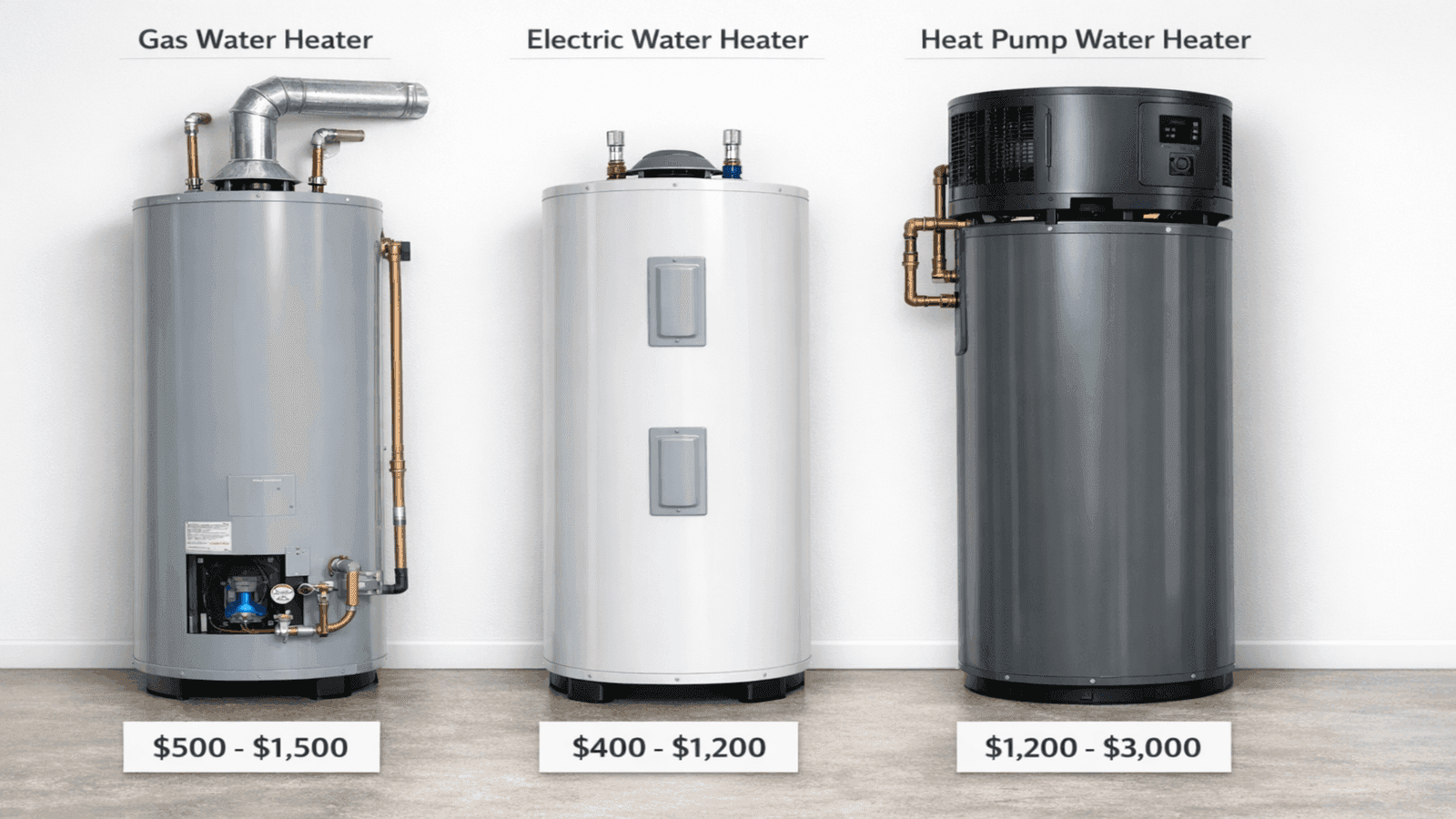
Photo: Three types of residential water heaters: gas tank, electric tank, and heat pump unit
Labor Costs for Water Heater Installation
Labor is where regional differences show up most clearly. Plumber hourly rates range from $45-$200 per hour nationally; most residential water heater work runs $75-$150/hour in mid-range markets.
A standard tank replacement takes 2-4 hours. Most plumbers price it flat-rate: expect $200-$450 in labor for a gas or electric tank swap. Tankless installations run $600-$1,850 in labor, reflecting 4-10 hours plus any additional trades such as an electrician for panel upgrades.
Additional line items that commonly appear on invoices:
- Permit fees: $50-$500. Most jurisdictions require a permit. An unpermitted installation can void insurance coverage and create resale issues.
- Expansion tank: $150-$350 installed. Required by most building codes when a pressure-reducing valve is present.
- Disposal of old unit: $25-$100 depending on contractor and municipality.
- Emergency/after-hours service: Adds 25-50% to the base quote.
NearbyHunt quote data from 2025 shows the expansion tank is the most common add-on, appearing in 62% of gas water heater replacements in IPC-adopted markets. If your plumber does not mention it during quoting, ask.
Get quotes from top-rated pros.
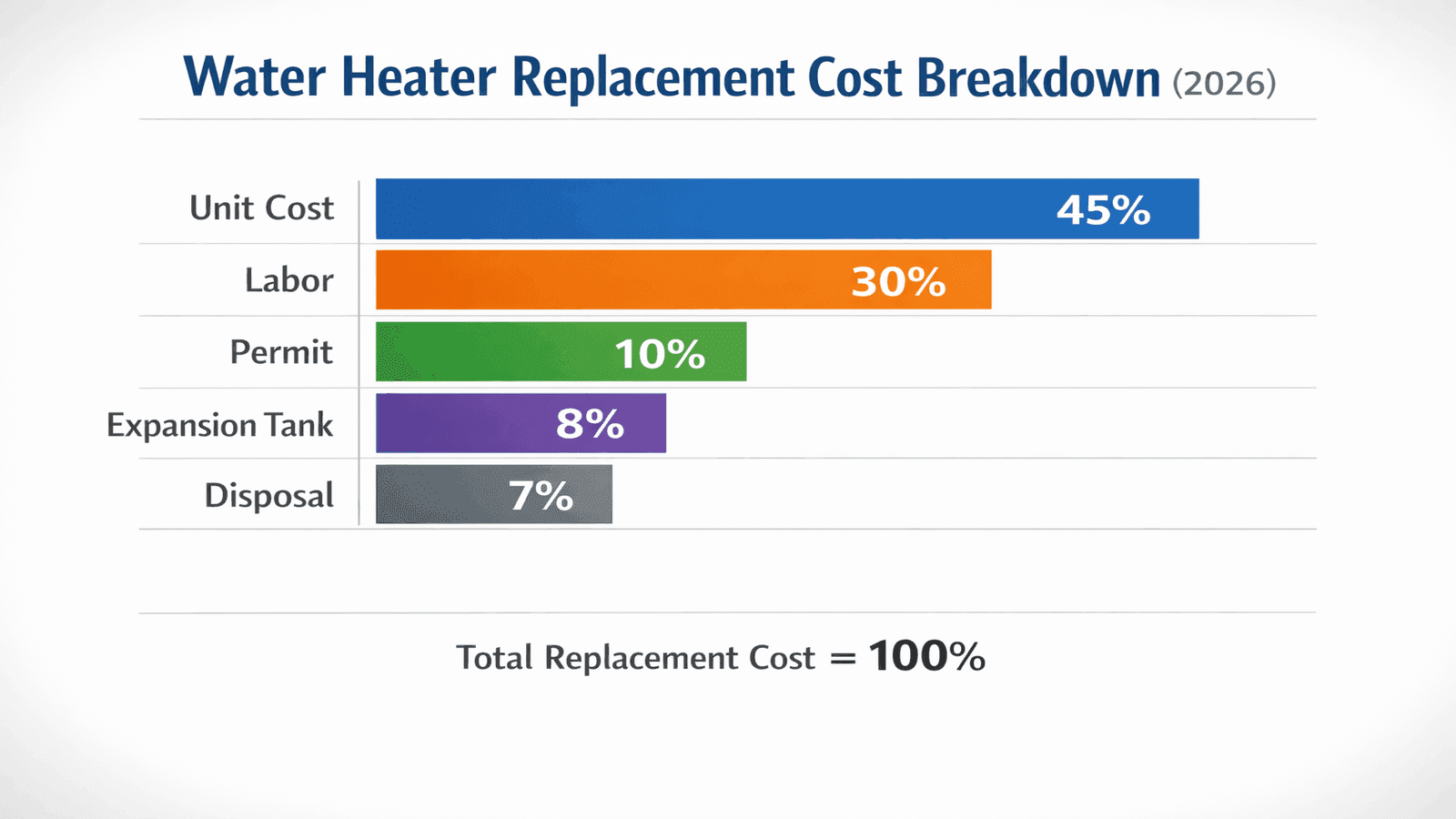
Photo: Infographic breaking down water heater replacement costs by component: unit, labor, permit, expansion tank, and disposal
Factors That Affect Water Heater Replacement Price
No two replacements are identical. These are the factors that move the final number significantly.
Geographic location is the largest single variable. A 50-gallon gas tank replacement costs $900-$1,200 installed in rural markets and $1,500-$2,500 in high-cost metros like San Francisco, New York, or Boston. Bureau of Labor Statistics data shows plumber wages in California run 40% above the national median.
Access and installation location matters. Open utility rooms are the least expensive to service. Crawl spaces, attics, or tight closets add $100-$400 in labor. For guidance on related systems, see our article on types of plumbing pipes.
Converting fuel type (from electric to gas or vice versa) adds $350-$2,000 or more in infrastructure costs: new gas line, new venting, or electrical panel upgrades.
Brand and efficiency tier affects unit price. A standard builder-grade 50-gallon gas unit runs $500-$700. A higher-efficiency condensing unit runs $900-$1,400. Efficiency savings typically pay back the price difference in 3-5 years.
One thing that adds cost that people never think about: drain pan installation. If your old unit didn't have a drain pan and the new unit is in an area where a leak could cause water damage, like a second-floor utility closet, most code inspectors now require one. It is $50-$150 in materials and an hour of time, but skipping it is not worth the risk. I have seen a slow water heater leak destroy hardwood floors and subfloor for $15,000 in damage.
When to Replace vs. Repair a Water Heater
A targeted repair extends a unit's life by 2-5 years in the right circumstances. The key is knowing which situation you are in.
Replace when: the unit is 10+ years old, there is rust or sediment in hot water, the tank itself is leaking (a leaking tank cannot be repaired), or repair costs exceed 50% of a replacement unit's price.
Repair when: the unit is under 7 years old and the issue is a failed heating element ($200-$400), thermostat ($150-$350), or anode rod ($150-$300). For an understanding of how plumbing works and what components are serviceable, it helps to know your system.
Licensed plumbers in the NearbyHunt network report that roughly 35% of water heater service calls result in a repair recommendation. The 65% requiring replacement are typically units over 10 years old or those with active tank corrosion.
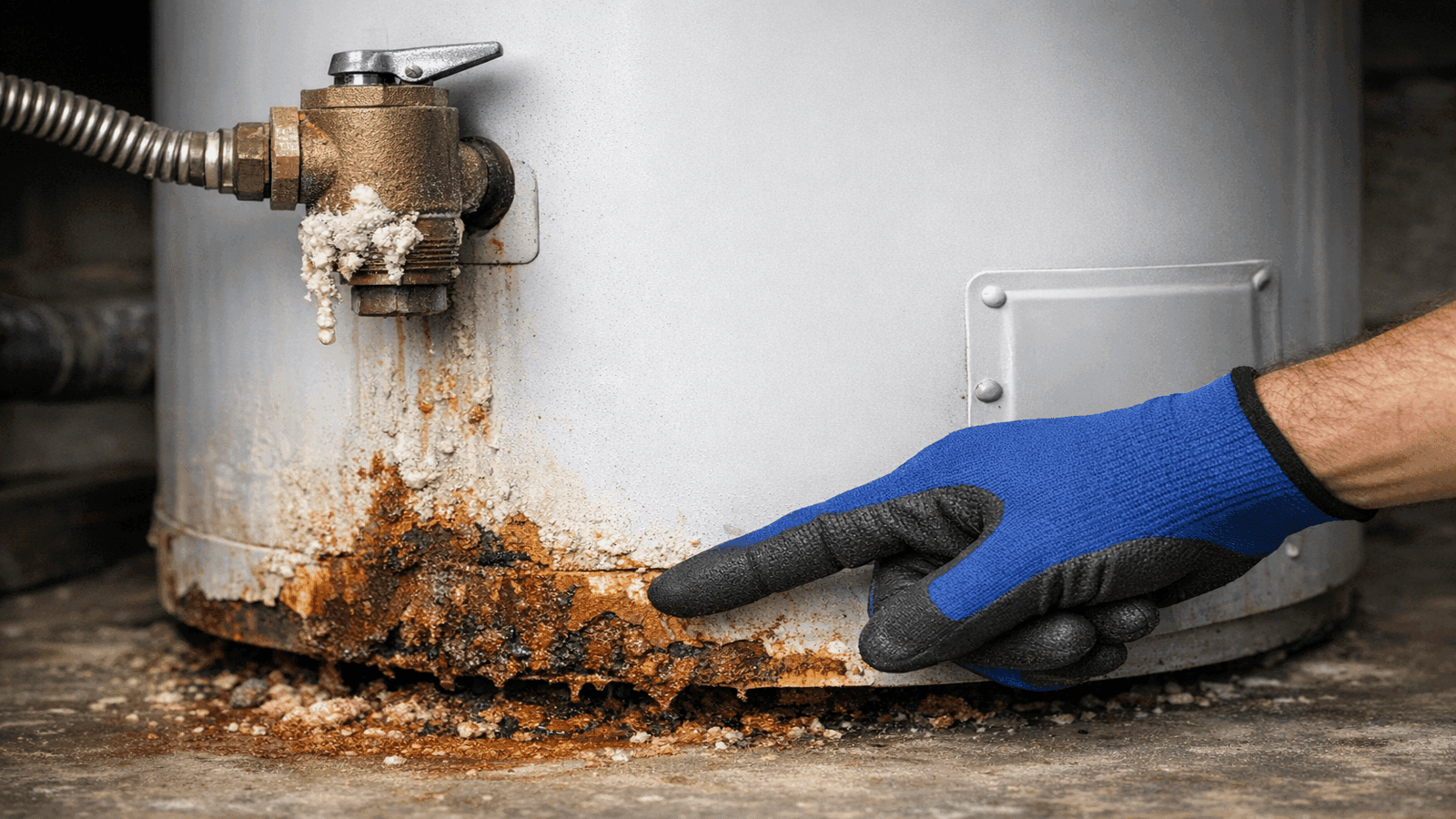
Photo: Corroded and rusted water heater base showing signs that indicate replacement is needed
Federal Tax Credits and Rebates for 2026
The Inflation Reduction Act's Energy Efficient Home Improvement Credit remains in effect for 2026 and meaningfully reduces the net cost of high-efficiency water heaters.
Heat pump water heaters qualify for 30% of equipment cost, up to $2,000. ENERGY STAR-certified tankless units qualify for 30% up to $600 (separate cap). Many utility companies stack additional rebates of $100-$500 on top of federal credits. Check dsireusa.org for state-level programs.
The DOE's updated efficiency standards take effect May 2029 and are projected to save households over $7 billion annually. Installing a high-efficiency unit now captures those savings years early. For context on DIY plumbing work, see plumbing how-to DIY, though water heater replacement requires a licensed plumber in nearly every jurisdiction.
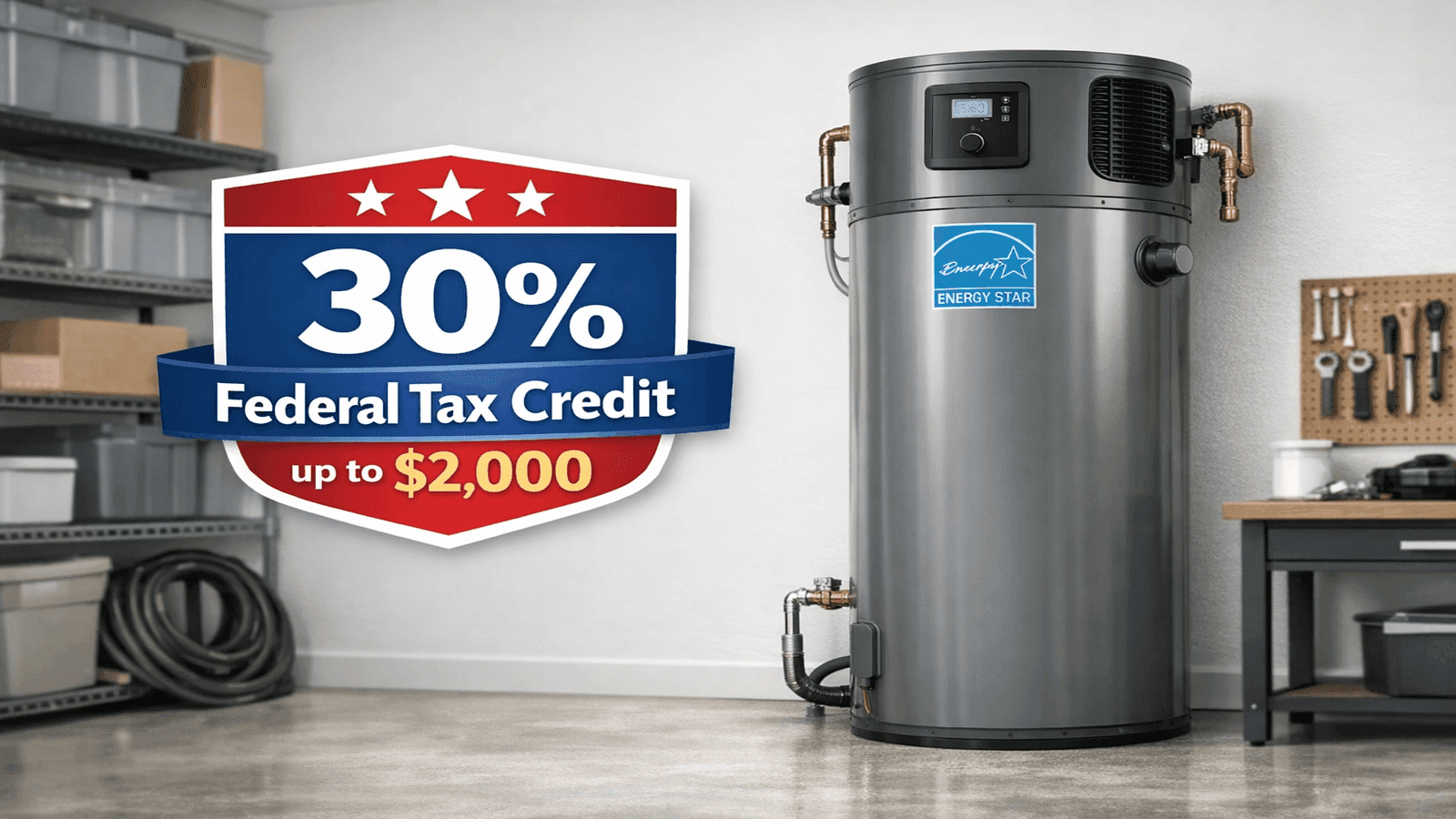
Photo: Heat pump water heater with 2026 federal tax credit badge showing 30 percent credit up to $2,000
Conclusion
Water heater replacement costs in 2026 range from $700 for a straightforward electric tank swap to over $5,000 for a full tankless gas conversion. Most homeowners with a standard 40-50 gallon gas unit should budget $1,100-$1,800 installed; get 3 quotes to confirm local pricing. If your unit is over 10 years old or showing signs of sediment, reduced efficiency, or rust, proactive replacement is almost always less expensive than an emergency call. See our guides on common plumbing problems and all about plumbing for related guidance.
Sources & References
- U.S. Department of Energy, "DOE Finalizes Efficiency Standards for Water Heaters," energy.gov, 2024.
- U.S. Department of Energy, Consumer Water Heaters overview, energy.gov/eere/buildings/consumer-water-heaters.
- Bureau of Labor Statistics, Occupational Employment and Wages for Plumbers, Pipefitters, and Steamfitters, bls.gov, May 2024.
- NerdWallet, "Water Heater Cost in 2026: DIY or Professional Installation?" nerdwallet.com.
- Fixr.com, "How Much Does Water Heater Installation Cost in 2026?" fixr.com.
- HouseCall Pro, "2026 Plumbing Price Guide: Average Rates and How to Estimate," housecallpro.com.
- Energy Star, Federal Tax Credits for Energy Efficiency, energystar.gov.
- A.O. Smith, DOE NAECA4 Residential Regulations for Water Heaters, hotwater.com.
- Rinnai, "How Much Does a Tankless Water Heater Cost?" rinnai.us.
- Intellihot, "Gas Water Heater Ban: DOE 2026 Rule Explained," intellihot.com.

Michael Jennings is a licensed master plumber & water systems specialist with over 18 years of hands-on experience in residential and commercial plumbing, serving clients across California and Texas. At NearbyHunt, he shares practical advice on pipe installations, water heater maintenance, and home plumbing upgrades. Michael has helped thousands of homeowners prevent costly water damage and improve water efficiency through modern plumbing solutions.

Robert is a licensed master plumber with over 20 years of experience serving both residential and commercial clients across the Midwest. Specialising in advanced plumbing systems and sustainable water technologies, Rob brings deep technical insight and hands-on expertise to every project. As a reviewer for NearbyHunt, he ensures all plumbing content reflects the highest standards of safety, compliance, and practicality.