- The EPA recommends testing private well water at least once per year for bacteria, nitrates, and local contaminants.
- DIY test strips cost $10-$30 and screen for 10-16 parameters; certified lab testing costs $50-$400 and detects 200+ contaminants.
- Lead in drinking water originates almost entirely from household plumbing -- homes built before 1986 carry the highest risk.
- Hard water affects roughly 85% of U.S. homes, reducing water heater efficiency by up to 25%.
- NearbyHunt data shows whole-house filtration installation is among the most requested plumbing services in hard water regions.
Water quality affects the safety of every glass you drink and every meal you cook. Most homeowners never test their water until something goes wrong -- and by then, exposure has already occurred. Water quality testing is a critical but often skipped step in a complete home plumbing maintenance plan.
Michael R. Jennings, our Licensed Master Plumber with 18 years of experience in the Dallas-Fort Worth area, has encountered every water quality issue in residential settings, from corroded lead solder in 1970s homes to coliform bacteria breaching deteriorated well casings. This guide walks you through when to test, what to test for, how to read results, and which treatment options match your situation.

Get quotes from top-rated pros.
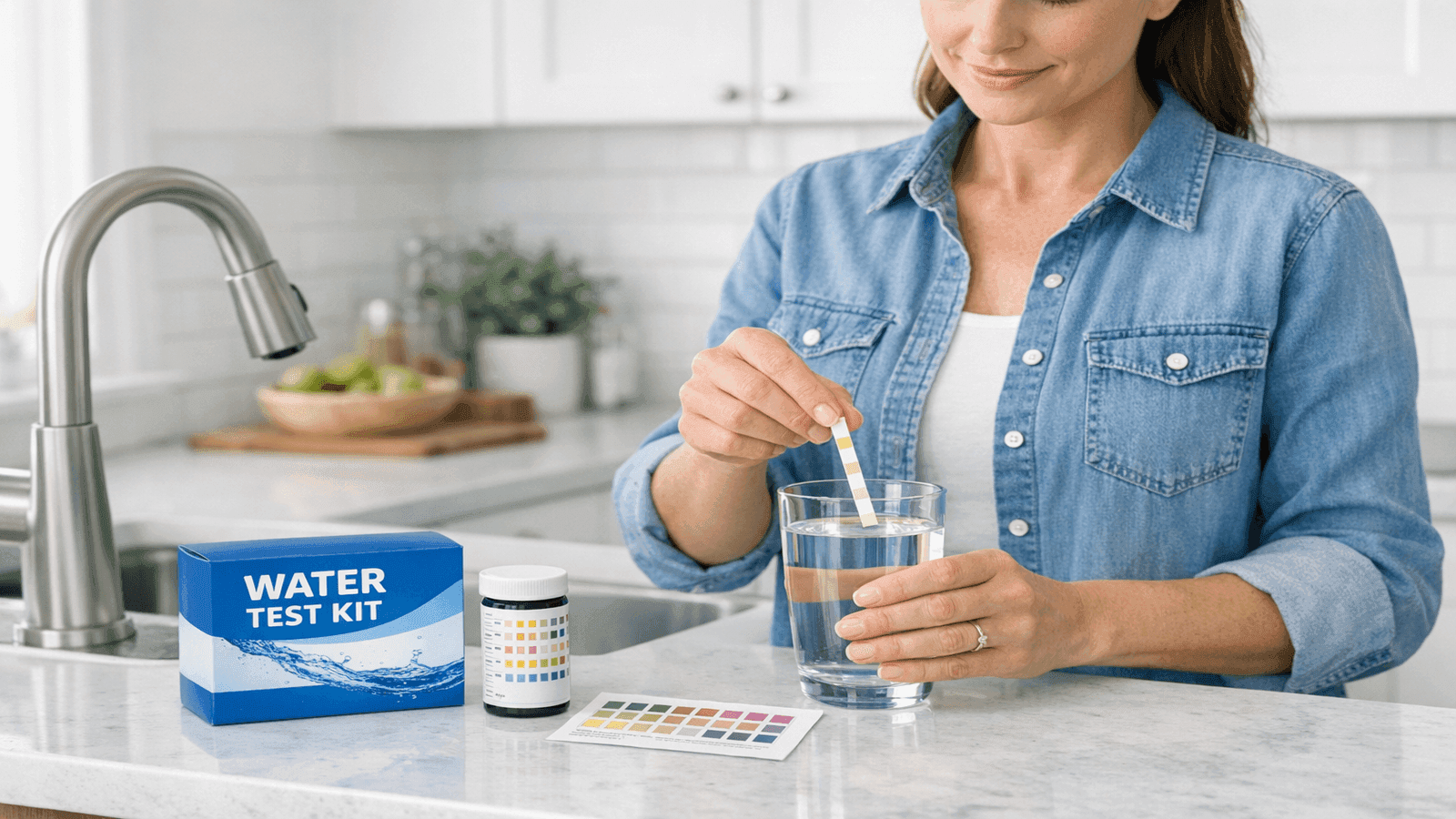
Photo: Homeowner testing tap water quality with a home test kit at the kitchen sink
When to Test Your Home Water Quality
Many homeowners assume municipal water is always safe and that private wells only need attention when something smells off. Both assumptions carry real risk.
City water users should test when moving into a home built before 1986, after any significant plumbing repair, when a newborn joins the household, or when local authorities issue a water advisory. Municipal utilities monitor water at the treatment plant -- they do not account for lead leaching from pipes inside your specific home.
Private well owners carry full responsibility for their water safety. The CDC recommends annual testing for total coliform bacteria, nitrates, pH, and total dissolved solids. Every three to five years, a comprehensive panel covering heavy metals, pesticides, and volatile organic compounds is advisable. Test immediately after flooding, after well repairs, or whenever you notice a change in taste, odor, or appearance.
Other trigger events: unexplained gastrointestinal illness, blue-green fixture staining (copper corrosion), orange-brown staining (iron), or visible scale buildup. For well owners, our guide on well pump maintenance covers the broader system context that affects water quality year-round.
If your home was built before 1986, test for lead before anything else. Lead solder was standard through the mid-1980s. It costs $20 at a hardware store and could be the most important $20 you ever spend.
Types of Water Tests: Basic vs. Comprehensive
| Test Type | Cost Range | Parameters Covered | Best For |
| DIY Strip Kit | $10-$30 | 10-16 | Quick screening, renters |
| Basic Lab Panel | $50-$100 | 20-40 | Annual well check, city water screen |
| Comprehensive Lab Panel | $150-$400 | 50-200+ | New home purchase, health concerns |
| PFAS-Specific Test | $100-$200 | 40+ PFAS compounds | Homes near industrial sites |
Basic panel tests screen for bacteria, nitrates, hardness, pH, chlorine, and total dissolved solids. They cost $20-$75 and suit general annual checks.
Comprehensive panel tests cover 50 to 200+ parameters including heavy metals, VOCs, pesticides, and PFAS. Certified labs charge $150-$400. The EPA recommends comprehensive testing for new well installations or when contamination history is unclear.
DIY Test Kits vs. Certified Lab Testing
For anything involving lead, bacteria, PFAS, or health concerns, certified lab testing is the responsible option. The EPA maintains a state-by-state list of certified drinking water laboratories. Labs mail collection bottles, you return the sample, and results arrive in 5-10 business days.
DIY test strips detect chlorine, hardness, pH, and nitrates in 1-3 minutes. They do not reliably detect lead at health-risk concentrations and cannot detect bacteria. Use strips for initial screening, not safety decisions.
NearbyHunt data shows a licensed plumber reviewing lab results alongside your plumbing layout identifies contamination sources far more accurately than results alone. Find licensed plumbers near you who specialize in water quality.
>Expert Insight -- Michael R. Jennings, Licensed Master Plumber:
> "Test strips have their place for quick field checks. But when a client calls because their children keep getting stomach issues, we go straight to a certified lab. Strips cannot detect E. coli, and they cannot quantify lead at levels that matter for a child's neurological development. The lab test costs less than one hour of my service call rate."
Get quotes from top-rated pros.
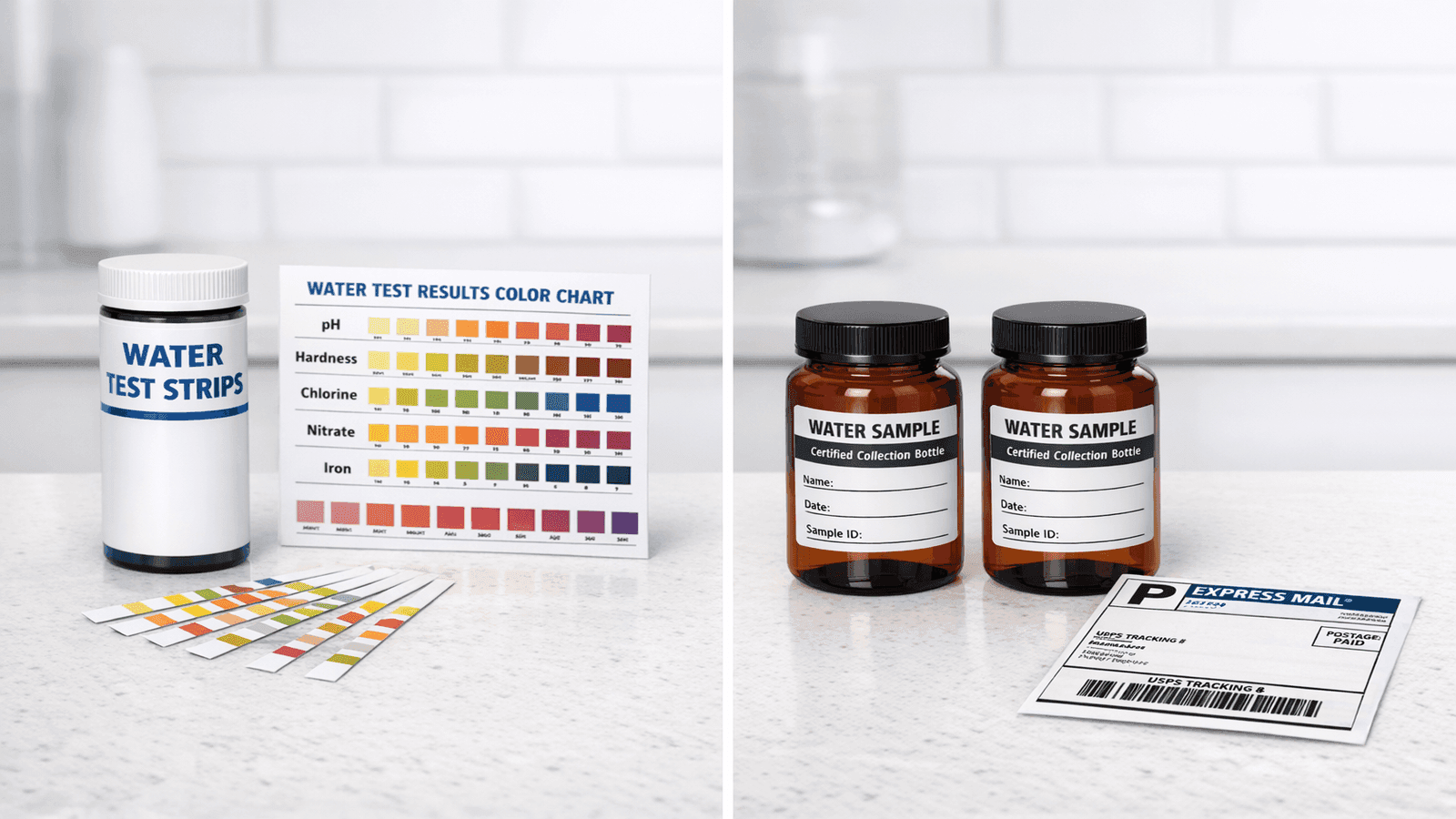
Photo: Side-by-side comparison of DIY water test strips and certified laboratory sample collection bottles on a kitchen counter
Common Water Contaminants
Lead
Lead in drinking water comes almost entirely from household plumbing: lead pipes, lead solder, and brass fixtures. Homes built before 1986 face the highest risk. The EPA's Maximum Contaminant Level Goal (MCLG) for lead is zero -- there is no safe exposure level for children. If your test shows lead above 15 parts per billion (the EPA action level), replace the source plumbing and install a certified lead-reduction filter. See our guide on types of plumbing pipes for help identifying your pipe material.
Bacteria
Total coliform bacteria indicate general microbial contamination. E. coli specifically indicates fecal contamination. Neither should be present in any detectable amount. Well contamination is common after flooding or when the well casing deteriorates. Disinfection options include UV treatment, chlorination, and well rehabilitation by a licensed contractor.
Hardness
Water hardness is measured in grains per gallon (GPG). Water above 7 GPG is considered hard. Hardness is not a health hazard, but the American Water Works Association estimates it reduces water heater efficiency by up to 25% and cuts appliance lifespans by 30-50%.
Nitrates
Nitrates are the most common agricultural contaminant in well water, originating from fertilizer runoff and septic system leaching. The EPA maximum contaminant level (MCL) is 10 mg/L as nitrogen. Nitrates above this threshold are dangerous for infants under six months, causing methemoglobinemia (blue baby syndrome).
PFAS
PFAS (per- and polyfluoroalkyl substances) are persistent synthetic chemicals linked to cancer and immune disruption. In 2024, the EPA set an MCL of 4 parts per trillion for PFOA and PFOS. Test for PFAS if you live near an airport, military base, or industrial site with known PFAS history.
Get quotes from top-rated pros.
| Contaminant | EPA Limit | Primary Health Risk | Main Source |
| Lead | 15 ppb action level | Neurological damage | Old pipes, solder |
| E. coli | Zero detected | Severe gastrointestinal illness | Fecal contamination |
| Nitrates | 10 mg/L MCL | Infant oxygen deficiency | Fertilizer, septic |
| Arsenic | 10 ppb MCL | Cancer (long-term) | Natural geology |
| PFOA/PFOS | 4 ppt MCL | Cancer, immune disruption | Industrial sites |
Nitrates are the silent hazard in rural well water. I've had clients farming the same land for three generations who never tested their well and never knew their nitrate levels were three times the EPA limit. If you have a well near cropland or a septic system, test every single year.
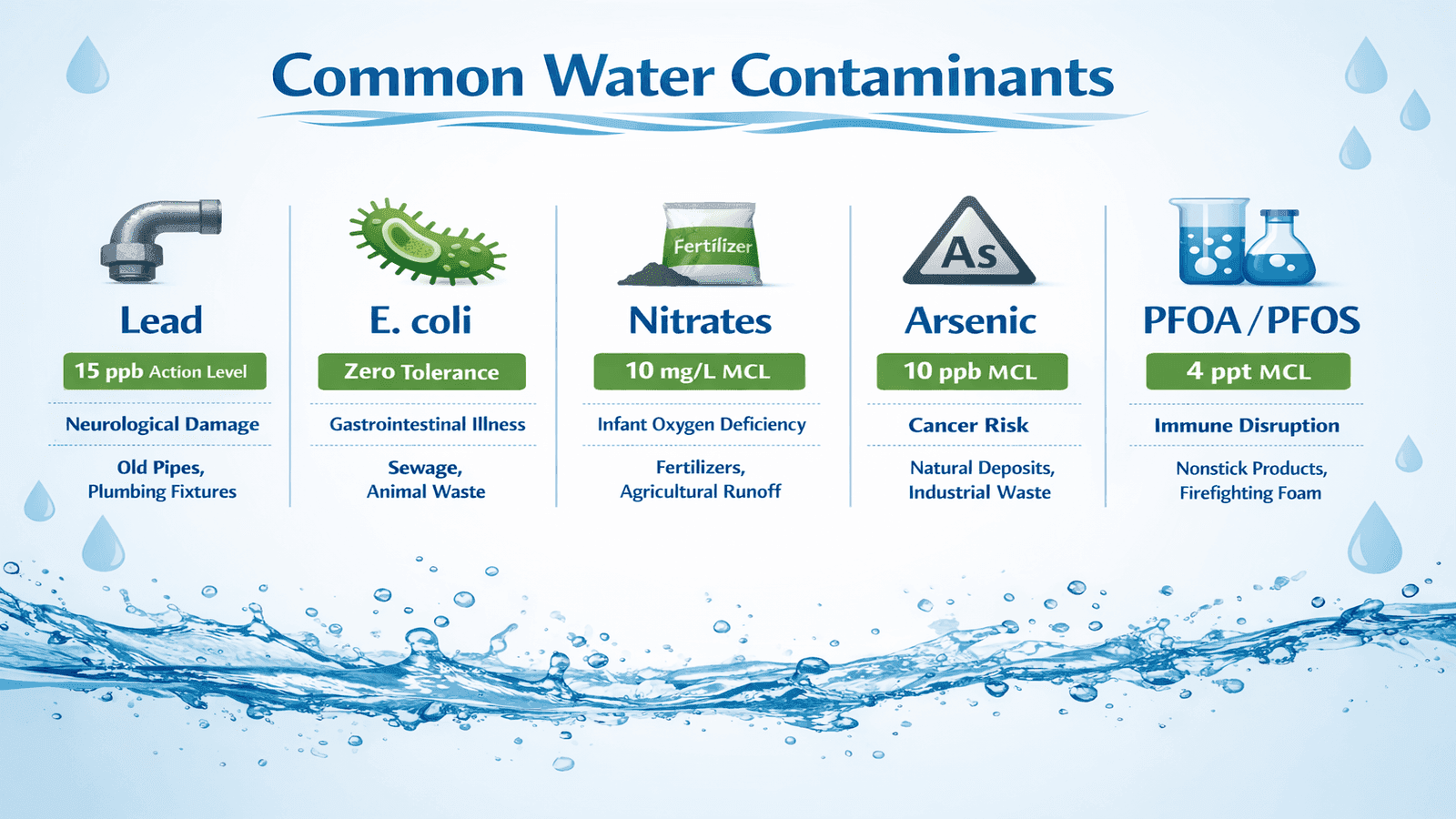
Photo: Infographic showing common water contaminants including lead, E. coli, nitrates, arsenic, and PFAS with their EPA limits and health effects
Understanding Your Water Test Results
When lab results arrive, compare each measurement to the EPA's Maximum Contaminant Level -- the legally enforceable safety benchmark for public water and the best available reference for private wells. Results labeled "ND" (not detected) mean the contaminant fell below the lab's detection threshold. Any result above the MCL or action level requires action, not continued monitoring.
Consider the complete picture rather than individual numbers. Multiple contaminants at sub-limit levels can point to a systemic source like corroding pipes or a deteriorating well casing. Our article on how plumbing works helps trace contamination through your supply system. For a professional evaluation, review plumbing inspection costs to budget appropriately.
Water Treatment Options
Treatment choice follows directly from test results. No single technology removes every contaminant.
Reverse osmosis (RO) systems are the most comprehensive point-of-use option, removing lead, nitrates, arsenic, fluoride, and PFAS at 95-99% reduction. Under-sink systems cost $150-$600 installed and must carry NSF/ANSI Standard 58 certification.
Whole-house filtration treats all water entering the home and is appropriate when contaminants affect bathing or laundry -- chlorine, VOCs, or iron. Expect $500-$3,000 plus installation.
Water softeners use ion exchange to remove hardness minerals but do not remove health-risk contaminants. If results show both hard water and elevated lead or bacteria, you need both systems. Installation runs $800-$2,500.
UV disinfection destroys bacteria and viruses without chemicals and is the preferred bacterial treatment for well owners after the contamination source is physically repaired.
For broader context on your plumbing system, see our guides on water pressure maintenance and common plumbing problems.
>Expert Insight -- Michael R. Jennings, Licensed Master Plumber:
> "The most common mistake I see is homeowners buying a water softener because a salesperson said their water was hard, without ever testing for bacteria or lead first. Soft water feels better and protects your appliances, but it does nothing for health-risk contaminants. Always test first, then treat."
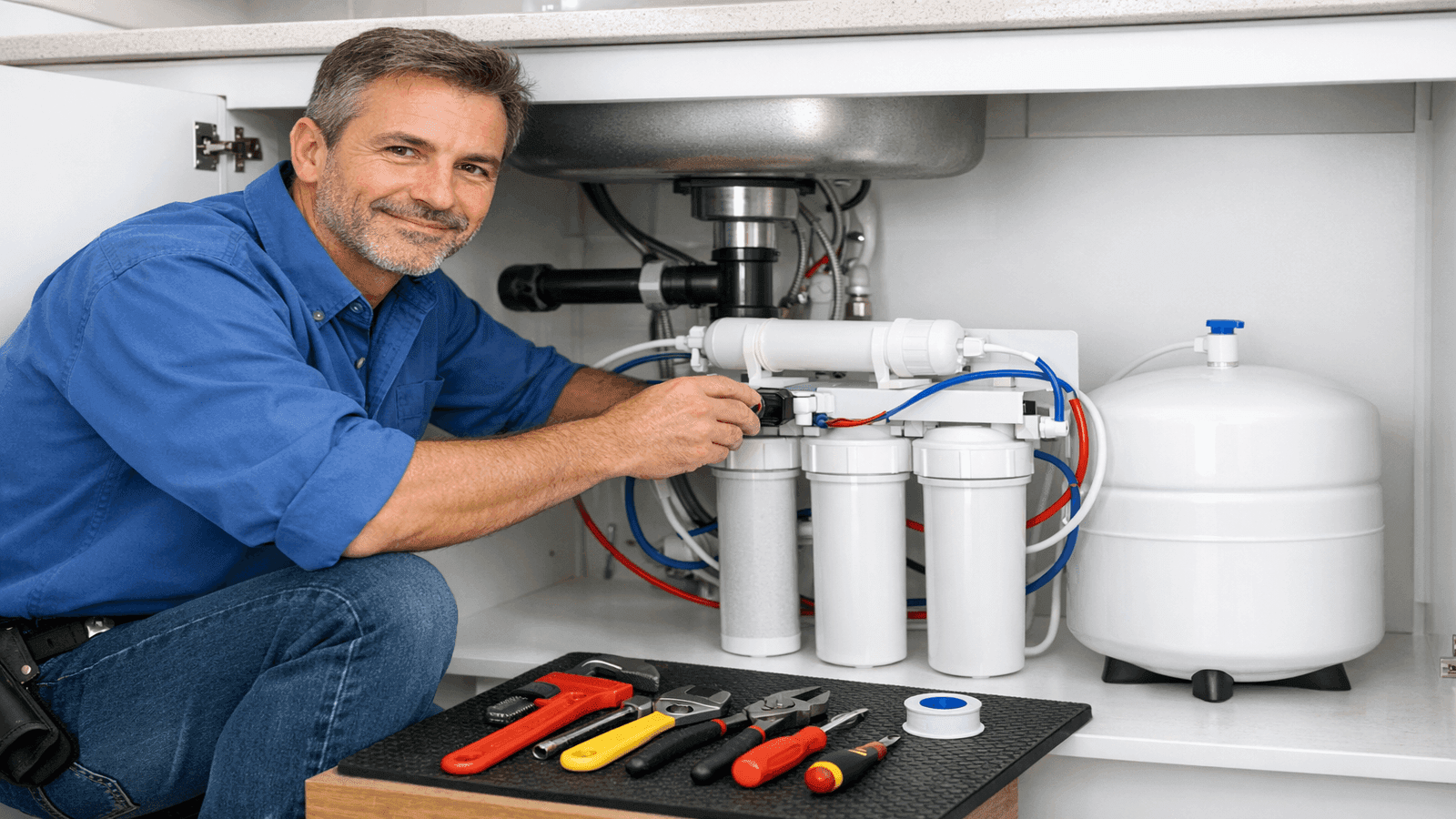
Photo: A licensed plumber installing an under-sink reverse osmosis water filtration system beneath a kitchen sink
Get quotes from top-rated pros.
Conclusion
Water quality testing is not a one-time event -- it is an ongoing responsibility, especially for private well owners. A comprehensive lab test costs $50-$400, far less than treating waterborne illness, replacing scale-damaged appliances, or repiping corroded lines.
The process is straightforward: identify your risk factors, choose the right test scope, send samples to a certified lab, compare results to EPA benchmarks, and match treatment to confirmed findings. A licensed plumber can guide every step, from sampling to system installation.
Find Licensed Plumbers Near You
Sources & References

Michael Jennings is a licensed master plumber & water systems specialist with over 18 years of hands-on experience in residential and commercial plumbing, serving clients across California and Texas. At NearbyHunt, he shares practical advice on pipe installations, water heater maintenance, and home plumbing upgrades. Michael has helped thousands of homeowners prevent costly water damage and improve water efficiency through modern plumbing solutions.

Robert is a licensed master plumber with over 20 years of experience serving both residential and commercial clients across the Midwest. Specialising in advanced plumbing systems and sustainable water technologies, Rob brings deep technical insight and hands-on expertise to every project. As a reviewer for NearbyHunt, he ensures all plumbing content reflects the highest standards of safety, compliance, and practicality.

![How Home Plumbing Works: Supply & Drainage 2026 [Expert Guide]](/_next/image?url=https%3A%2F%2Fres.cloudinary.com%2Fdtt6e7r1f%2Fimage%2Fupload%2Fv1763301229%2Fnearbyhunt%2Fstrapi-uploads%2Farticles%2Fplumbing_system_819024eeb0.png&w=2048&q=75)