- Well pumps need a professional inspection once per year, paired with an annual water quality test.
- Submersible pumps last 15-25 years; jet pumps average 10-15 years with proper care.
- Check pressure tank air charge every 3-6 months; target 2 PSI below the pump's cut-in pressure.
- Annual service costs $200-$400, far less than an emergency replacement averaging $1,000-$2,500.
- Fluctuating pressure, air spitting from faucets, and a pump running constantly all require prompt attention.
Approximately 43 million Americans rely on private wells for drinking water, according to the EPA. Unlike municipal systems, private wells are entirely the homeowner's responsibility. The pump, pressure tank, and electrical components all require regular attention to stay reliable, making well pump care an essential part of your home plumbing maintenance plan.
Skipping well pump maintenance is one of the most expensive mistakes rural homeowners make. A $300 annual service call prevents failures that become $2,000 emergency replacements at 11 PM on a weekend. This guide covers what to do, when to call a professional, and how much it costs in 2026.

Get quotes from top-rated pros.
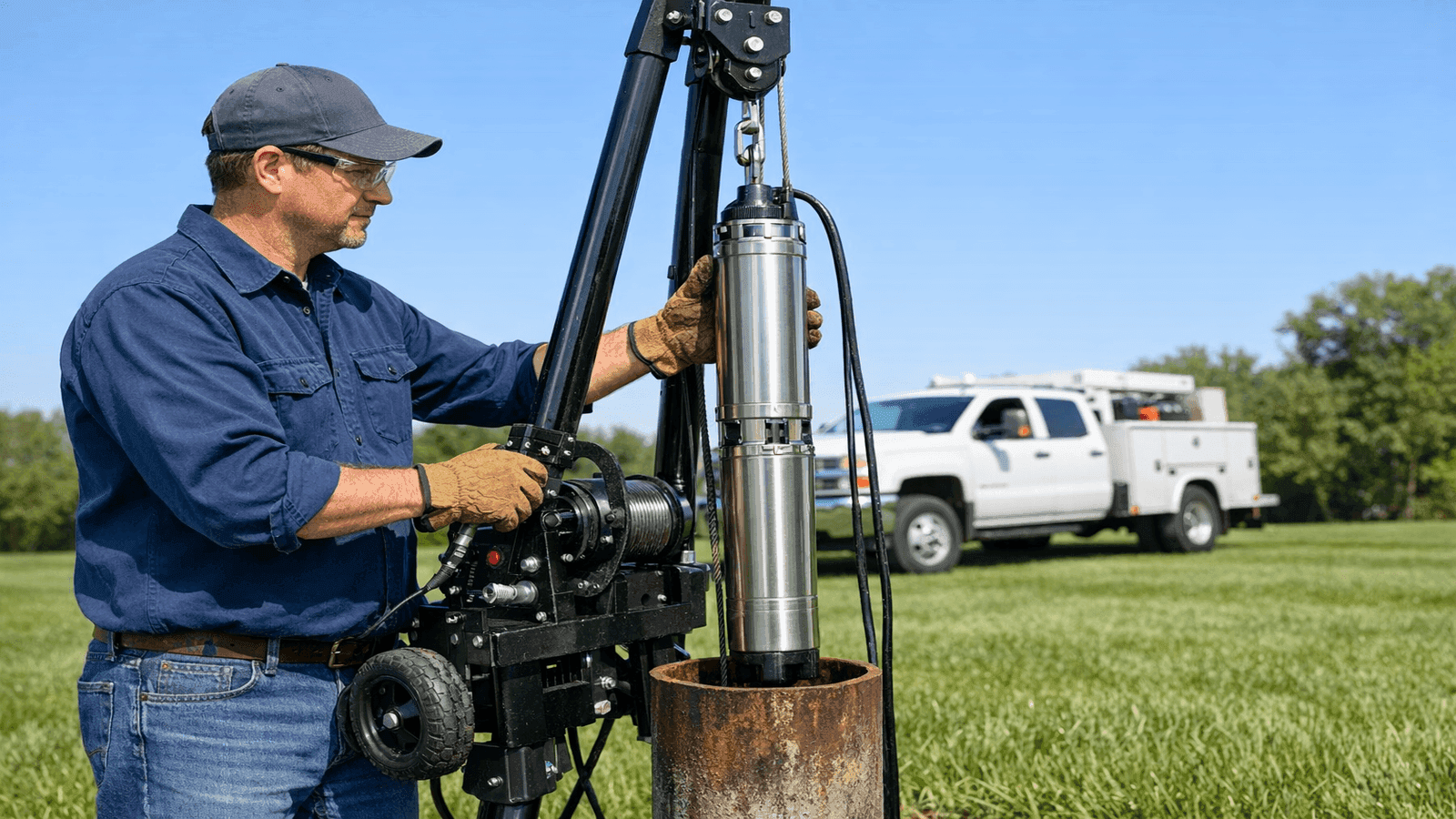
Photo: Submersible well pump being pulled from a residential well casing during annual maintenance, technician with lifting equipment, green lawn in background
Types of Well Pumps: Submersible vs. Jet
Understanding which pump type your system uses is the foundation of any maintenance plan.
Submersible pumps are sealed units installed inside the well casing, typically 100-400 feet underground. They push water upward using a multi-stage impeller, stay cool by running submerged, and last 15-25 years. Accessing them requires pulling the pump from the well, a task that always needs professional equipment.
| Feature | Submersible Pump | Jet Pump |
| Typical depth | 100-400 feet | Up to 110 feet |
| Average lifespan | 15-25 years | 10-15 years |
| Maintenance access | Requires well pulling | Surface accessible |
| Freeze risk | None | Moderate to high |
| Annual service cost | $250-$400 | $200-$350 |
In 18 years of well system work in Dallas, the pumps I see reach 20-plus years almost always belong to homeowners who scheduled annual water quality tests. That one visit per year forces a technician onsite to catch small electrical issues before they burn out the motor.
Annual Well Pump Maintenance Checklist
A structured annual routine covers every component that affects reliability.
Professional annual tasks (require a licensed technician):
- Electrical and wiring inspection at the pump control box
- Motor amperage draw test to detect internal wear
- Pressure switch calibration and contact cleaning
- Water quality testing for bacteria, nitrates, pH, and hardness
- Well cap and casing inspection for cracks that allow surface water infiltration
- Flow rate measurement to confirm the pump meets design specifications
Homeowner tasks (every 3-6 months):
- Check pressure tank air charge with a tire gauge (target: 2 PSI below cut-in pressure)
- Inspect the well cap for insect or debris entry
- Test water pressure at a hose bib (acceptable range: 40-60 PSI)
- Watch for rapid pump cycling, which signals a waterlogged tank
The National Ground Water Association and the EPA both recommend annual water quality testing at minimum for bacteria and nitrates. Review the water quality testing guide for a complete breakdown of what to test and how often.
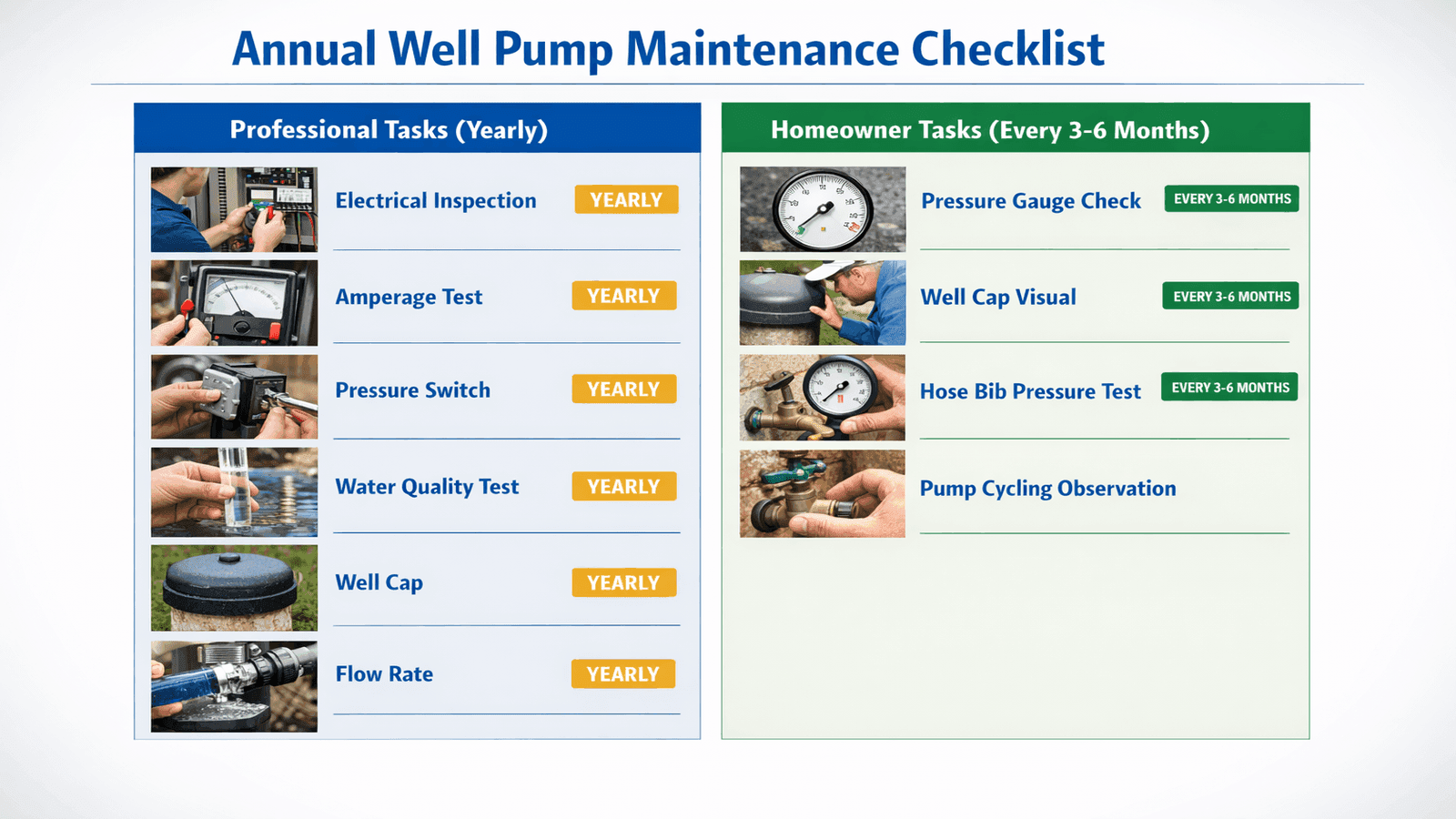
Photo: Annual well pump maintenance checklist infographic showing professional and homeowner tasks with icons and frequency labels
Pressure Tank Testing and Maintenance
The pressure tank prevents short cycling, the leading cause of premature pump motor failure. A properly functioning tank means the pump starts and stops far less frequently, dramatically extending motor life.
Checking air pressure: Turn off power to the pump at the breaker and run a faucet to drain pressure to zero. Check the Schrader valve (identical to a tire valve) with a tire gauge. The reading should be 2 PSI below the pressure switch cut-in setting. On a standard 30-50 PSI switch, the target is 28 PSI. Add air with a bicycle pump or compressor as needed.
Signs of a waterlogged tank: If the pump runs for 3-5 seconds, shuts off, then immediately restarts, the bladder has likely failed. A waterlogged tank cannot be fixed by adding air alone. Replacement costs $800-$3,900 including labor depending on tank size. A functioning pressure tank also supports consistent water pressure maintenance throughout your home.
A $25 pressure gauge mounted at the pressure tank tells you everything. Normal operation shows the gauge sitting steady between cuts. Rapid swings or a gauge that never moves when you run water both point to something specific. Most homeowners live with a slow pressure problem for months before calling, when the fix at month one was often a $75 pressure switch.
Warning Signs of Well Pump Failure
Most well pump failures give weeks of warning. Recognizing early signs prevents losing water entirely.
Fluctuating or low water pressure is the most common early indicator. Pressure that drops when multiple fixtures run simultaneously suggests a worn impeller, a drop in the water table, or a blocked intake screen.
Air spitting from faucets means the pump is drawing air, occurring when water levels drop below the pump intake or when the pump develops a suction leak. Air in lines also causes pipes to hammer and accelerates fixture wear. Read about common plumbing problems for more context.
Pump running continuously means the pump cannot build enough pressure to trigger the cut-off point. This condition burns out motors within hours and requires same-day diagnosis.
Dirty or discolored water indicates sediment entering through a degraded well screen or a pump that has dropped into a sediment-heavy zone.
Higher electricity bills with no usage change are an early warning. A struggling motor draws 15-25% more amperage before other symptoms appear.
Get quotes from top-rated pros.
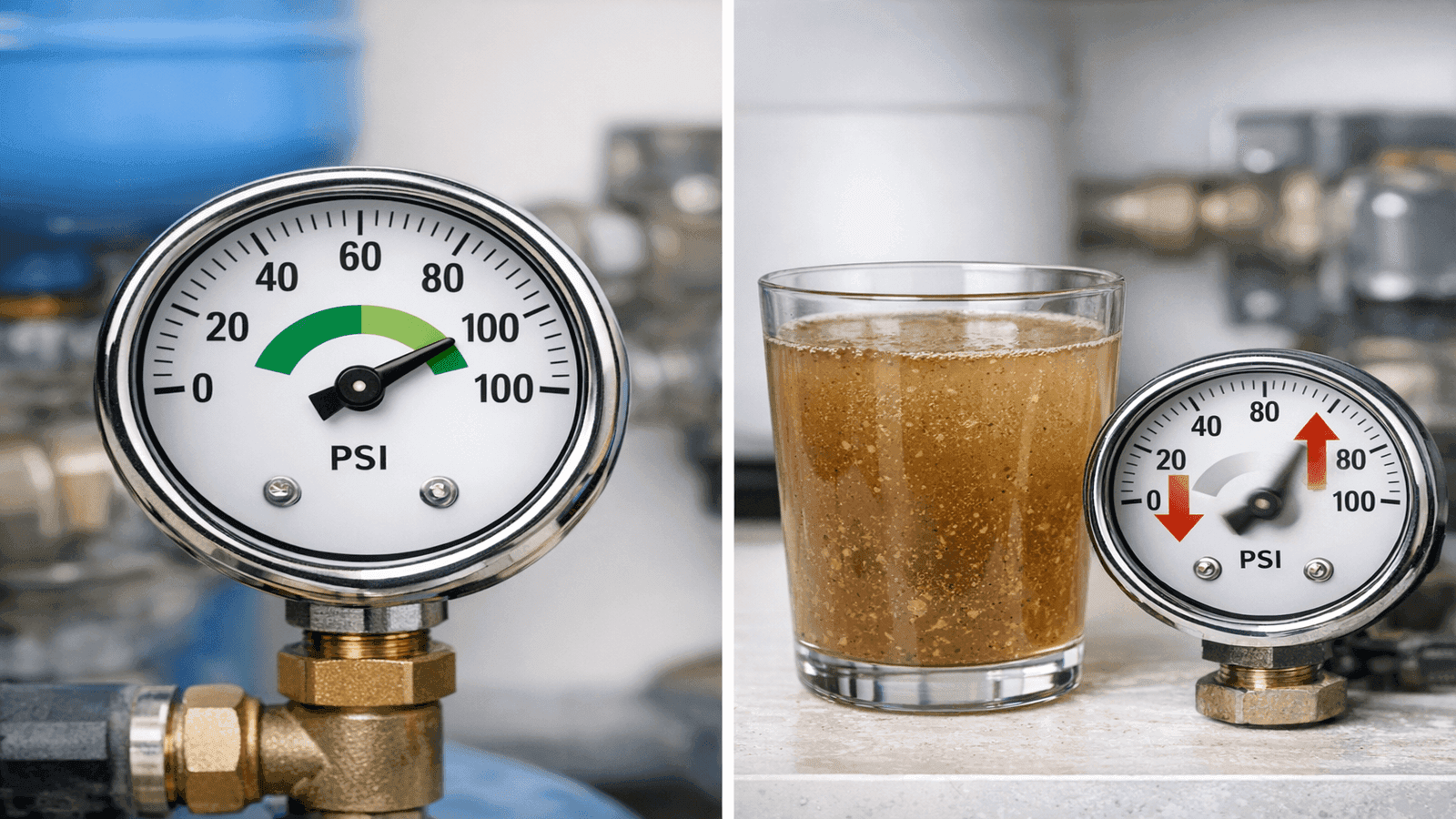
Photo: Composite showing normal pressure gauge reading versus rapid cycling pressure swings, and clear water versus discolored well water samples
DIY vs. Professional Well Pump Tasks
Safe DIY tasks:
- Checking and adjusting pressure tank air charge (pump power off first)
- Testing water pressure at fixtures with a gauge
- Inspecting the well cap for damage or debris
- Flushing sediment from the pressure tank by draining and refilling
Always require a professional:
- Pulling and reinstalling a submersible pump
- Any work inside the well casing below ground level
- Disinfecting the well after contamination
- Replacing underground water lines
- Diagnosing electrical faults at the motor or control box
Working inside a well casing without proper equipment risks contaminating the water supply and creates a confined space hazard. For underground leak issues, plumbing leak detection covers the methods professionals use. NearbyHunt data shows diagnostic service calls for well systems average $150-$275 before parts or repair labor.
Well Pump Replacement Costs in 2026
When maintenance is no longer sufficient, knowing cost ranges helps you evaluate quotes accurately.
| Service | Average Cost | Typical Range |
| Annual pump maintenance | $300 | $200-$400 |
| Pressure tank air recharge | $75 | $50-$150 |
| Pressure switch replacement | $150 | $75-$300 |
| Pressure tank replacement | $1,200 | $800-$3,900 |
| Jet pump replacement | $900 | $500-$1,500 |
| Submersible pump replacement | $1,750 | $1,000-$2,500 |
| Deep well submersible (200+ ft) | $3,200 | $2,000-$4,500 |
Submersible pump replacement requires pulling the pump from the well, averaging $1,000-$2,500 and rising to $3,000-$4,500 for wells deeper than 200 feet. Jet pump replacement costs $500-$1,500 with no well-pulling equipment required. Pressure tank replacement is frequently recommended alongside pump replacement since both components experience similar cumulative wear. After-hours emergency service adds $100-$300; see emergency plumber rates for detail.
The complete plumbing costs guide covers pricing for common services, and plumbing inspection cost explains what a diagnostic visit includes.
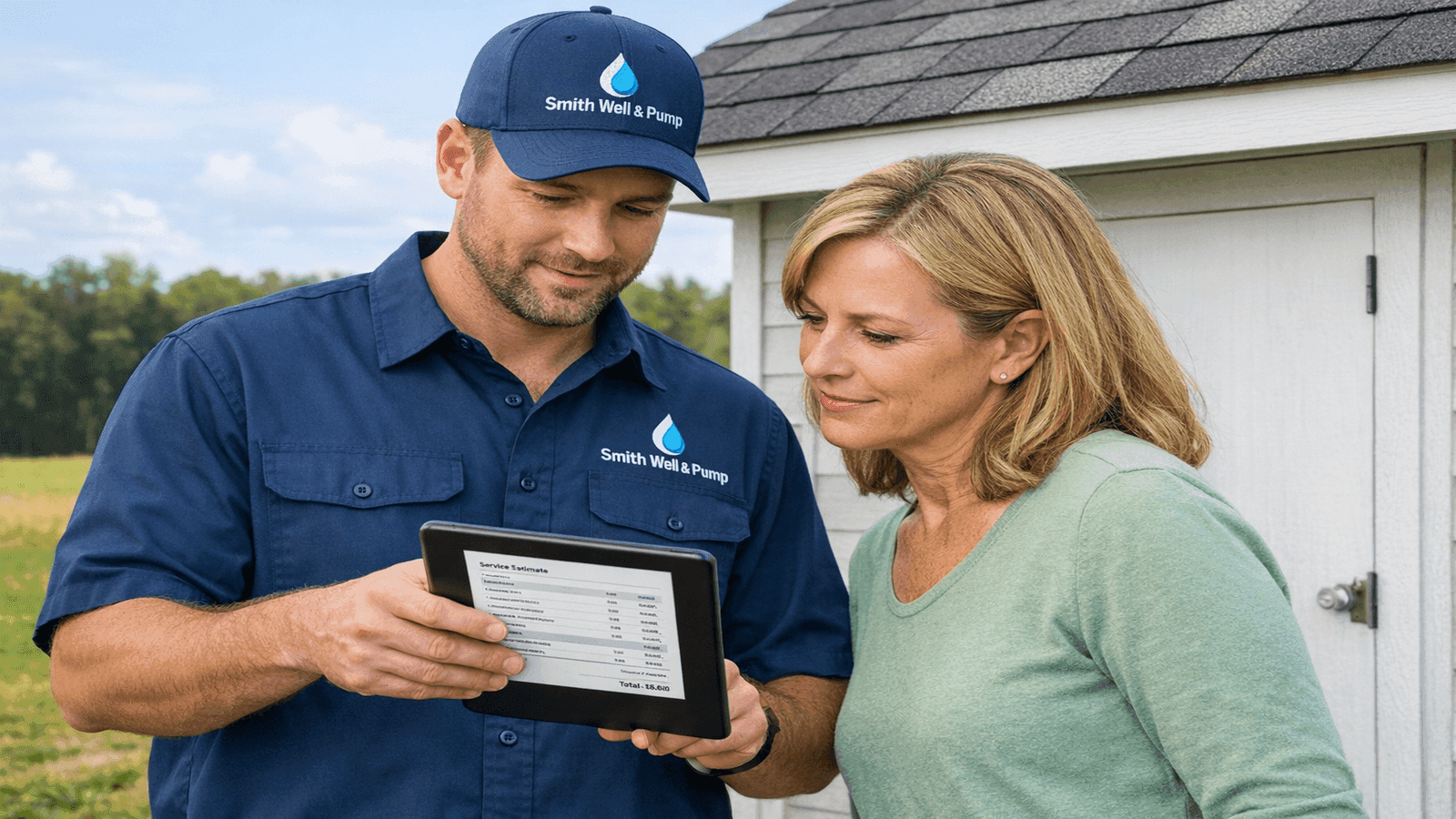
Photo: Licensed well pump technician reviewing a cost estimate with a homeowner outside a pump house, holding a tablet, rural property background
A pump that is 15 years old and short cycling is not automatically at end of life. I run a flow test and an amperage draw test before recommending replacement. If the motor draws within 10% of nameplate amperage and flow is within spec, the problem is often a failing pressure switch or a waterlogged tank. I have extended pump life by 3-4 years with an $80 switch and a $40 tank recharge.
Get quotes from top-rated pros.
Conclusion
Well pump maintenance is not optional for homeowners on private water supplies. Annual professional service at $200-$400 prevents failures that cost 5-10 times more as emergencies. Checking pressure tank air charge every few months, watching for early warning signs, and testing water quality annually keep systems running reliably for 20-plus years.
When symptoms appear, act quickly. A pump running continuously or sudden water discoloration signals a problem that worsens with every hour of delay. Licensed plumbers in the NearbyHunt network serve well system owners nationwide with same-day diagnostic service in most markets.
Find Licensed Plumbers Near You
Sources & References
- EPA: Private Drinking Water Wells - Maintenance and Testing Guidance (2026)
- National Ground Water Association (NGWA): Well Owner's Handbook (2026)
- This Old House: Well Pump Cost and Installation Guide (2026)
- Bob Vila: How Much Does a Well Pump Cost? (2026)
- Forbes Home: Well Pump Replacement Cost (2026)
- Fixr: Well Pump Maintenance and Repair Cost Data (2026)
- PHCC (Plumbing-Heating-Cooling Contractors Association): Water Well System Standards
- NearbyHunt Pro Network: Quote Data from Licensed Well System Technicians (2025-2026)

Michael Jennings is a licensed master plumber & water systems specialist with over 18 years of hands-on experience in residential and commercial plumbing, serving clients across California and Texas. At NearbyHunt, he shares practical advice on pipe installations, water heater maintenance, and home plumbing upgrades. Michael has helped thousands of homeowners prevent costly water damage and improve water efficiency through modern plumbing solutions.

Robert is a licensed master plumber with over 20 years of experience serving both residential and commercial clients across the Midwest. Specialising in advanced plumbing systems and sustainable water technologies, Rob brings deep technical insight and hands-on expertise to every project. As a reviewer for NearbyHunt, he ensures all plumbing content reflects the highest standards of safety, compliance, and practicality.