- Sewer line replacement costs $3,000 to $10,000 on average, or $60 to $250 per linear foot
- Trenchless methods (pipe lining and pipe bursting) cost $1,900 to $20,000 and cause far less property disruption
- Traditional open-cut excavation adds $4 to $12 per linear foot just for trenching, plus landscaping restoration costs
- A sewer camera inspection ($100 to $500) is essential before any replacement decision
- Permits can add up to $1,000 per project, depending on your municipality
- Repair costs $150 to $3,800 for isolated damage; full replacement makes more sense when pipes are 40+ years old or extensively damaged
A failing sewer line is one of the most disruptive plumbing problems a homeowner can face. Understanding what drives costs, and when to repair versus replace, can save you thousands. This guide breaks down 2026 pricing for both traditional and trenchless sewer line replacement.
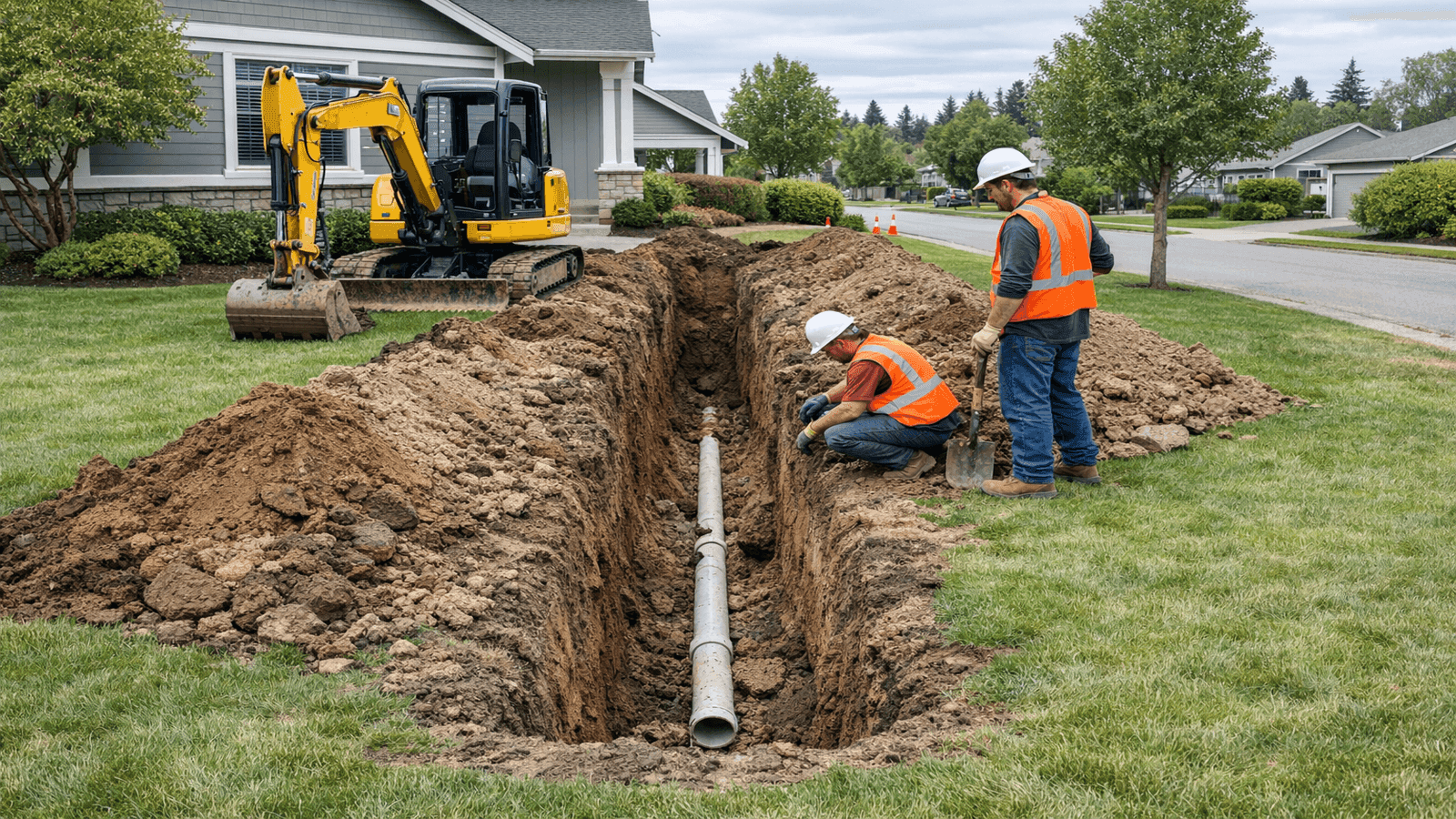
Photo: Mini excavator digging a trench for sewer line replacement in a residential front yard
Average Sewer Line Replacement Cost in 2026
Most homeowners spend between $3,000 and $10,000 on sewer line replacement. The national average sits around $3,319, though projects involving long runs, deep pipes, or difficult terrain can push costs to $25,000 or more.
Cost is almost always quoted per linear foot. Expect to pay $60 to $250 per linear foot for a complete sewer line replacement, with the average falling near $150 per linear foot including materials and labor. A typical residential line runs 40 to 75 linear feet from the home to the municipal connection.
| Project Scope | Estimated Cost Range |
| Minor spot repair | $150 to $1,050 |
| Partial replacement (20 feet) | $1,200 to $5,000 |
| Full replacement (50 feet) | $3,000 to $12,500 |
| Full replacement (100 feet) | $6,000 to $25,000 |
| Trenchless pipe lining (per foot) | $135 to $250 |
| Pipe bursting (per foot) | $150 to $190 |
In my 18 years as a licensed master plumber, I've found homeowners routinely underbudget for sewer work because they focus on pipe cost alone. The real price driver is access: how deep is the line, what's above it, and how far from the cleanout to the street connection. A 50-foot run under an asphalt driveway can cost three times more than the same run across open lawn.

Traditional vs. Trenchless Replacement: A Full Cost Comparison
The method you choose has a major impact on total project cost and property disruption. Traditional open-cut excavation is often less expensive per foot on the pipe itself, but restoration costs can quickly close that gap.
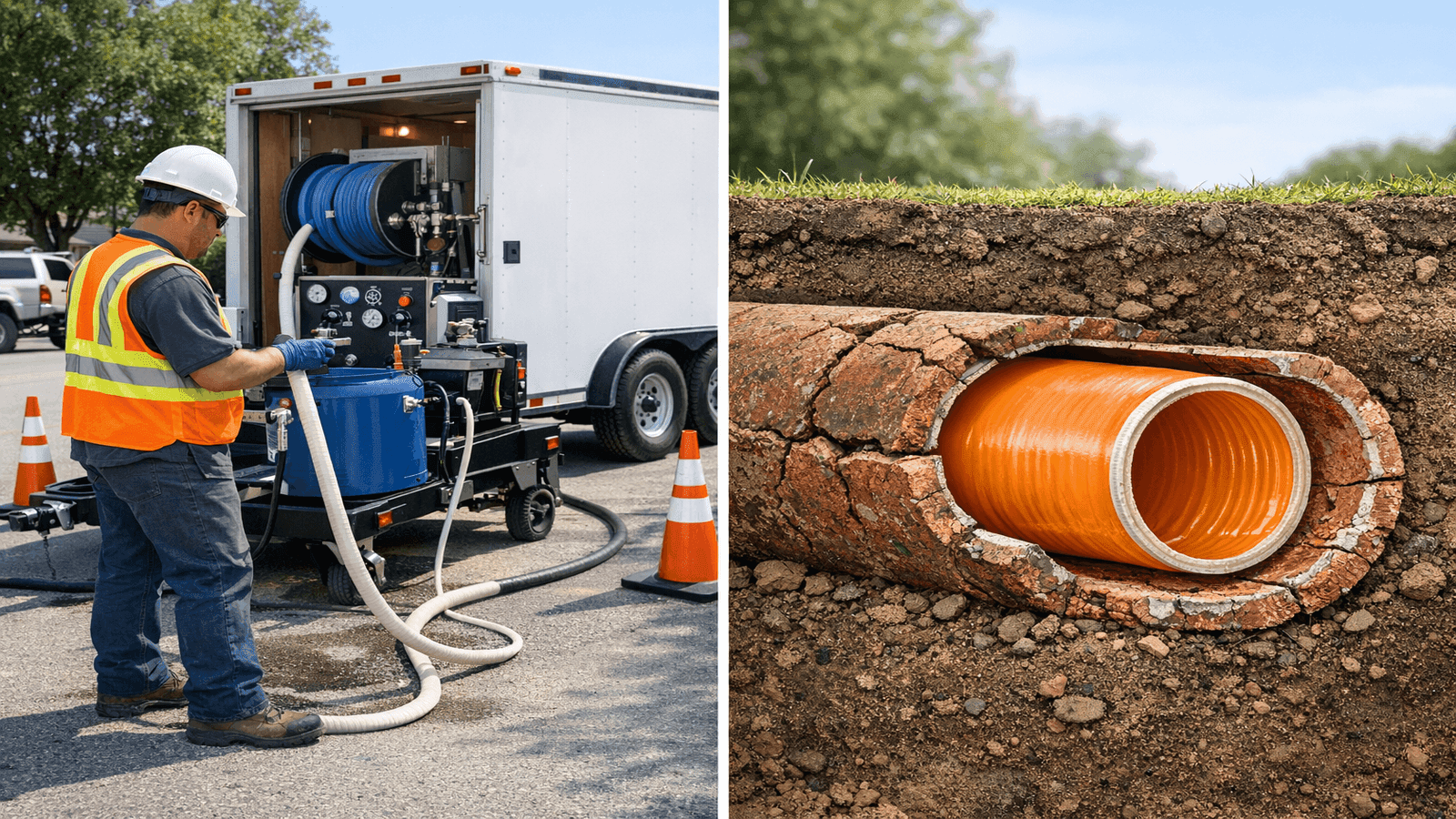
Photo: Technician operating CIPP trenchless pipe lining equipment with cross-section view of liner inside old sewer pipe
Traditional Open-Cut Excavation
Traditional replacement involves digging a trench along the full length of the pipe, removing the old pipe, installing new pipe, and backfilling. Labor runs $45 to $200 per hour. Trenching alone adds $4 to $12 per linear foot on top of pipe and labor costs.
After the work is done, you'll pay additional amounts to restore what was disturbed. Driveway concrete repair averages $1,500 to $4,000. Landscaping and sod replacement typically runs $500 to $2,500 depending on yard size and what was removed. These restoration costs are often left out of initial quotes, so always ask your contractor for an all-in estimate.
Get quotes from top-rated pros.
Trenchless Pipe Lining (CIPP)
Cured-in-place pipe lining (CIPP) inserts a flexible liner coated in epoxy resin into the existing pipe. The liner is inflated and cured to form a new pipe within the old one. This method costs $90 to $250 per linear foot and works well when the existing pipe still has structural integrity.
Total project costs for CIPP typically run $1,900 to $6,000 for a standard residential line. The main advantage: no trench, no concrete removal, and minimal landscaping disruption.
Trenchless Pipe Bursting
Pipe bursting is used when the old pipe is too damaged for lining. A hydraulic head is pulled through the old pipe, fracturing it outward while simultaneously pulling new HDPE pipe into place. Costs run $150 to $190 per linear foot, slightly more than lining, but still far less disruptive than traditional excavation.
| Method | Cost Per Linear Foot | Property Disruption | Best For |
| Traditional excavation | $60 to $150 | High (full trench) | Deep pipes, major damage |
| CIPP pipe lining | $90 to $250 | Low | Partial damage, intact structure |
| Pipe bursting | $150 to $190 | Low to moderate | Severely damaged pipes |
I recommend trenchless methods in probably 60% of the jobs I assess, but they're not always possible. If a pipe has collapsed sections, severe root intrusion over a long stretch, or significant offset joints, trenchless methods won't solve the underlying problem. A thorough camera inspection before deciding on a method is non-negotiable in my shop.
Factors That Affect Sewer Line Replacement Cost
Several variables determine where your project falls in the price range.
Pipe length and depth are the two biggest cost drivers. Longer runs require more materials and labor. Deeper pipes (below 6 feet) require shoring equipment for worker safety, which adds significant cost.
Pipe material affects costs significantly. PVC is the most affordable and current standard for new installs. Cast iron and clay, common in older homes, cost more to work around during trenchless procedures. HDPE used in pipe bursting costs more per foot but offers 50+ year life expectancy.
Access and obstacles significantly impact labor cost. Lines running under driveways, patios, or mature trees require extra work and careful hand-digging near utility conduits.
Location and permits matter considerably. Permit costs vary widely from $150 to $1,000. Urban markets in the Northeast and West Coast typically run 20 to 40% higher in labor rates than the national average.
Video inspection is a required first step. A sewer camera inspection costs $100 to $500 and reveals cracks, root intrusion, collapsed sections, offset joints, or simple buildup. Skipping this step means guessing, which always costs more.
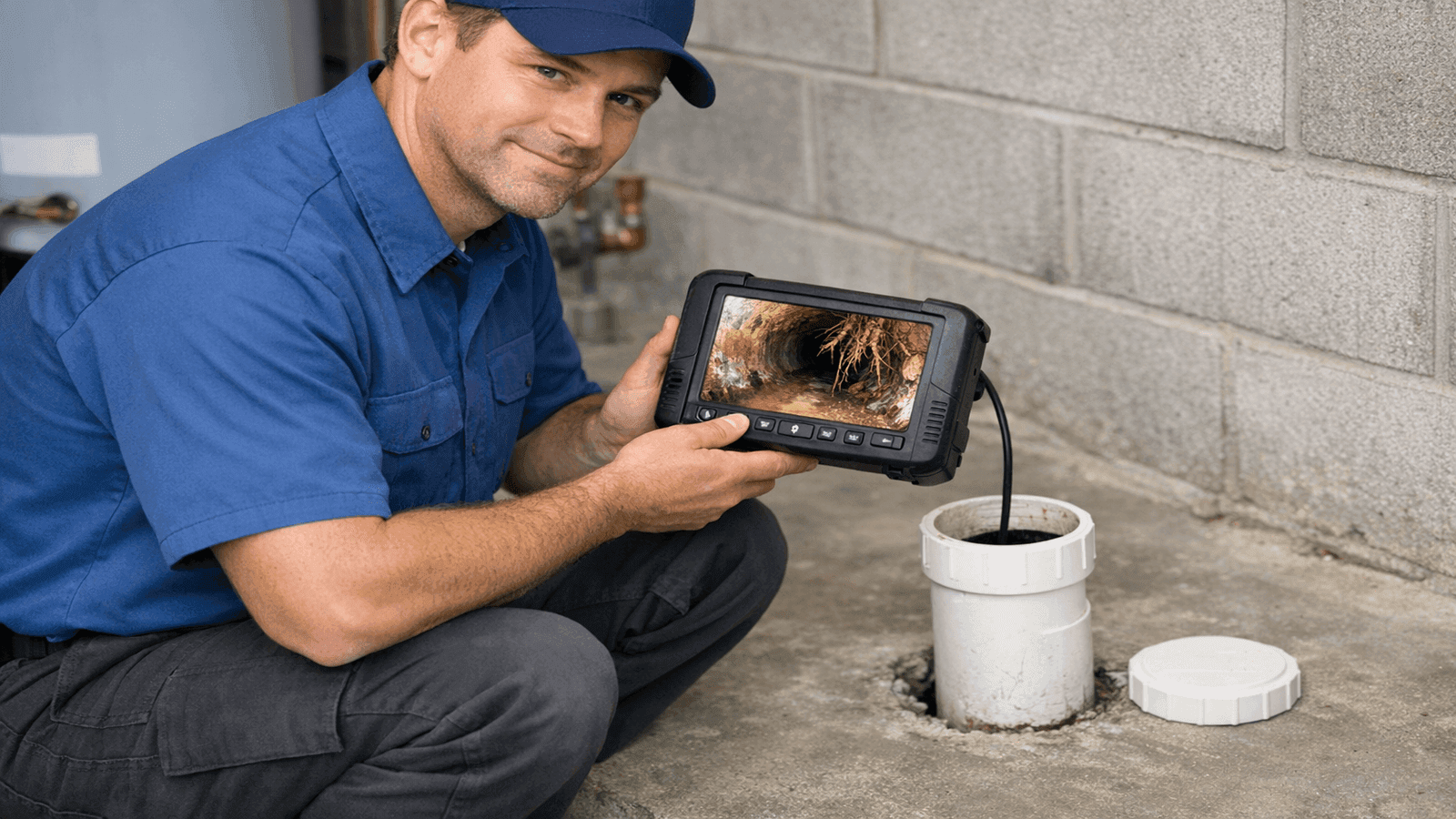
Photo: Plumber reviewing sewer camera inspection monitor showing root intrusion inside residential sewer pipe
I've seen homeowners try to save $200 by skipping the camera inspection and end up spending $3,000 more because the contractor hit unexpected conditions. In my 18 years, I've never started a sewer job without scoping the line first. NearbyHunt quote data from 2025 shows that projects starting with a camera inspection average 22% lower final costs than those that don't, likely because contractors can give more accurate bids upfront.
Get quotes from top-rated pros.
Warning Signs You Need Sewer Line Replacement
Knowing when to act early can prevent a partial problem from becoming a full emergency.
Slow drains throughout the house indicate a main line issue, not just a localized clog. If multiple fixtures drain slowly at the same time, the problem is downstream of the individual drain connections.
Sewage backups in lower-level fixtures such as basement floor drains or ground-floor toilets signal a blockage or collapse in the main line. This is a health hazard requiring immediate professional assessment.
Persistent wet spots or unusually lush grass in your yard above the sewer line path often indicate a slow leak underground. Effluent acts as fertilizer, so suspiciously green patches in a dry yard are a common warning sign.
Rodent or insect intrusion can follow sewer line cracks, which provide entry points from underground. If pest issues correlate with plumbing symptoms, have the line inspected.
For more on identifying plumbing issues, see our guide on common plumbing problems.
Should You Repair or Replace Your Sewer Line?
This is the most important decision in the process. Repair is always less expensive upfront: isolated repairs cost $150 to $3,800 depending on the method. But repair makes sense only when the damage is truly isolated and the rest of the pipe is in good condition.
Replacement is the better investment when:
- The pipe is 40 years or older (clay and cast iron pipes degrade significantly past this point)
- Multiple sections are damaged or root-invaded
- The pipe has collapsed or experienced significant offset
- You've had the same line repaired more than twice in five years
Licensed plumbers in the NearbyHunt network consistently recommend full replacement over repeated spot repairs when a pipe shows widespread deterioration. The cost-per-repair over five to ten years often exceeds a single replacement, with none of the disruption benefits.
For more context on overall plumbing costs and how sewer work fits into a home plumbing budget, visit our plumbing costs guide.
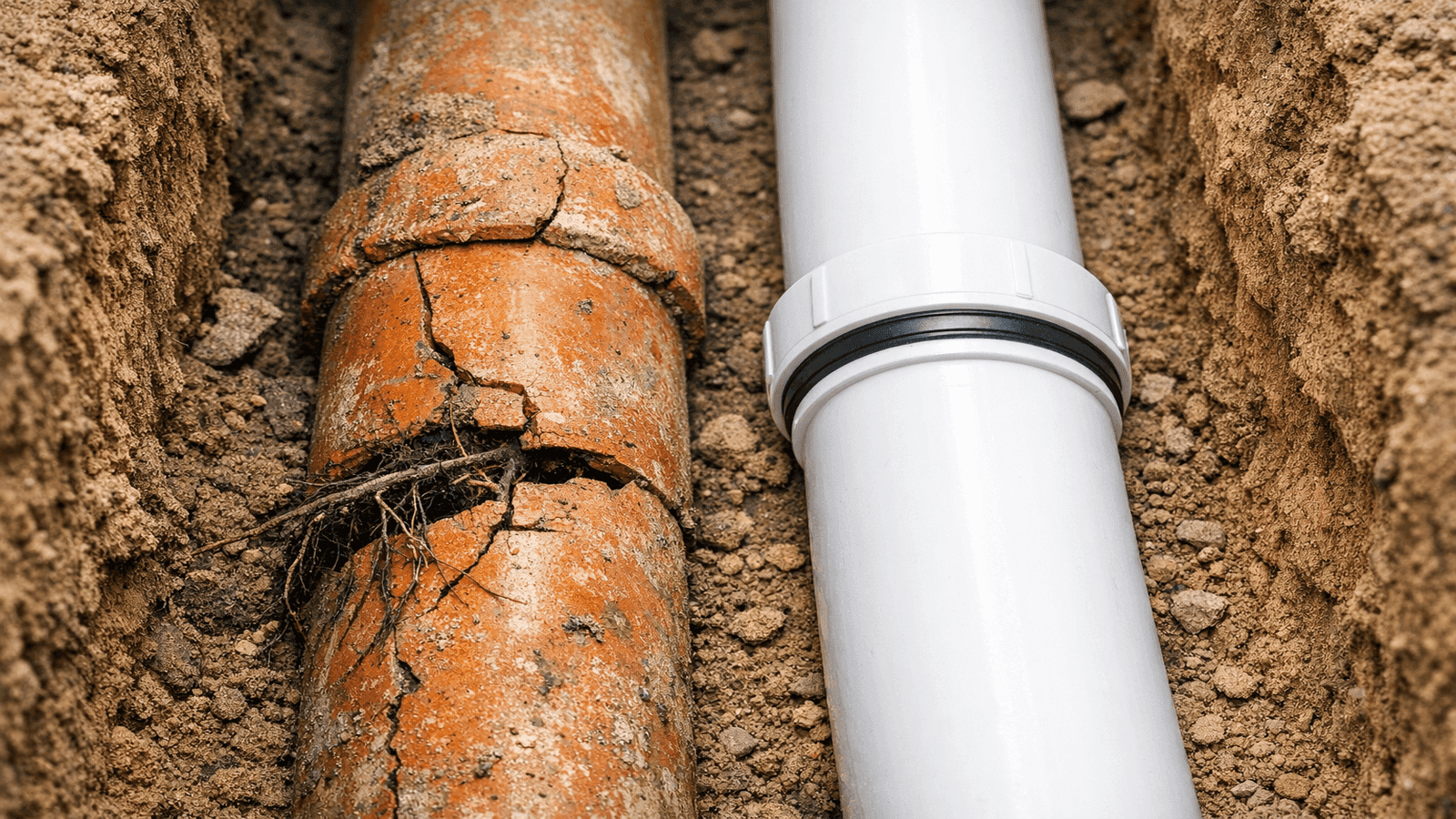
Photo: Comparison of deteriorated clay sewer pipe next to new white PVC replacement pipe inside an excavated trench
My rule of thumb: if repair costs exceed 40% of the full replacement cost, replace the line. I've watched homeowners patch a 45-year-old clay sewer line three times in eight years, spending $6,000 total, when a full trenchless replacement would have cost $7,500 once. The math rarely favors repeated repairs on aging pipes
How to Get Accurate Sewer Line Replacement Quotes
Getting multiple quotes is essential for any sewer project. Prices vary significantly between contractors, and the lowest bid is not always the best value.
Ask every contractor for a camera inspection report before they quote the work. Request an itemized quote that separates pipe materials, labor, trenching (if applicable), permit fees, and restoration costs. Verify that any contractor holds a current state plumbing license and carries liability insurance.
Understanding your home's overall plumbing layout helps before the inspection. Our guide to how plumbing works provides a solid foundation, and reviewing plumbing code requirements for your state ensures you understand what the project must comply with.
For pre-purchase or annual maintenance, a plumbing inspection can catch sewer issues before they become emergencies.
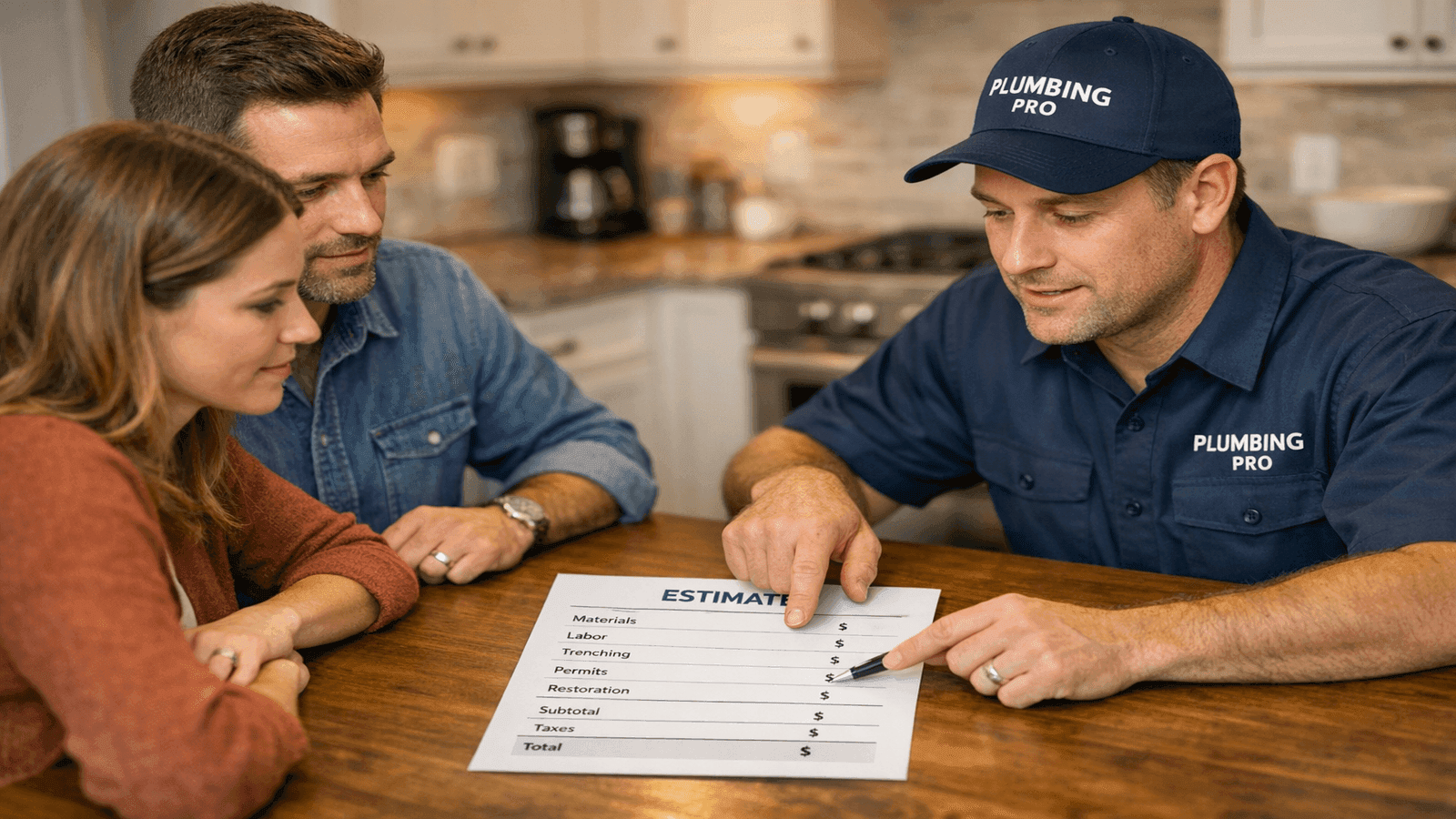
Photo: Homeowner and licensed plumber reviewing an itemized sewer line replacement quote at a kitchen table
Conclusion
Sewer line replacement in 2026 costs $3,000 to $10,000 for most residential projects, with trenchless methods offering a less disruptive alternative at comparable cost per linear foot. The key decisions are whether to repair or replace, and which method suits your pipe's condition and property layout. Start with a camera inspection, get at least three itemized quotes from licensed plumbers, confirm permit requirements, and budget for restoration if open-cut excavation is required.
For a broader look at your home's plumbing system, explore our all-about-plumbing guide.
Sources & References
- Fixr: Sewer Line Replacement Cost Guide
- This Old House: Sewer Line Repair and Replacement
- Bob Vila: How Much Does Sewer Line Replacement Cost
- PHCC (Plumbing-Heating-Cooling Contractors Association): Industry Labor Rate Data
- Forbes Home: Sewer Line Replacement Cost Guide
- Bankrate: Home Repair Cost Estimator
- BLS (Bureau of Labor Statistics): Plumber, Pipefitter, and Steamfitter Occupational Data

Michael Jennings is a licensed master plumber & water systems specialist with over 18 years of hands-on experience in residential and commercial plumbing, serving clients across California and Texas. At NearbyHunt, he shares practical advice on pipe installations, water heater maintenance, and home plumbing upgrades. Michael has helped thousands of homeowners prevent costly water damage and improve water efficiency through modern plumbing solutions.

Robert is a licensed master plumber with over 20 years of experience serving both residential and commercial clients across the Midwest. Specialising in advanced plumbing systems and sustainable water technologies, Rob brings deep technical insight and hands-on expertise to every project. As a reviewer for NearbyHunt, he ensures all plumbing content reflects the highest standards of safety, compliance, and practicality.