- A complete HVAC replacement costs $7,000 to $18,000 on average in 2026, with the national midpoint around $12,000 to $14,000 for a standard efficiency system in a 2,000 sq ft home [1].
- Heat pumps cost 10-20% more upfront than traditional furnace-plus-AC setups, but state rebates of $4,000 to $8,000 can close the gap entirely for qualifying households [2].
- AC replacement alone runs $3,500 to $14,000 depending on tonnage (system size) and SEER2 efficiency rating [3].
- HVAC repair costs average $150 to $600, with service call fees of $75 to $200. Emergency after-hours rates are typically double to triple standard rates [4].
- Annual maintenance plans cost $150 to $400 and prevent up to 95% of major breakdowns according to ASHRAE guidelines [5].
- The federal 25C tax credit expired December 31, 2025. State HOMES/HEAR rebates (up to $8,000) and the 30% geothermal credit (through 2032) are the remaining incentive programs [6].
Replacing an HVAC system is one of the largest home improvement investments most homeowners will make. The national average for a complete system replacement ranges from $7,000 to $18,000, with premium installations exceeding $20,000 [1]. Yet many homeowners go into the process with no idea what drives those numbers or how to tell a fair quote from an inflated one.
This guide breaks down every major HVAC cost category: new system installations, AC and furnace replacements, heat pumps, ductless mini-splits, repairs, ductwork, smart thermostats, maintenance plans, and emergency service. Each section includes 2026 national averages, the factors that push prices up or down, and practical advice for getting the best value. The cost data in this guide is compiled from manufacturer pricing guides, NearbyHunt network contractor quotes, and federal agency data (DOE, EPA, ENERGY STAR).
Daniel Torres, a Certified HVAC Technician and Energy Efficiency Consultant with 14+ years of experience in Minneapolis, MN (EPA 608 Universal, NATE Certified, HVAC Excellence), contributed the expert insights throughout this guide. His pricing observations are drawn from years of quoting and installing systems across the Midwest, where he specializes in energy-efficient retrofits.

Get quotes from top-rated pros.
The biggest pricing mistake I see is homeowners comparing quotes based only on the bottom line number. A $9,000 quote with proper Manual J sizing, quality ductwork sealing, and a 10-year labor warranty is a better deal than a $7,000 quote with rule-of-thumb sizing and a 1-year warranty. In my 14 years of installing systems in the Minneapolis area, the cheapest quote has almost never been the cheapest system over 15 years.

Photo: Infographic showing average HVAC system costs broken down by type in 2026
New HVAC System Cost
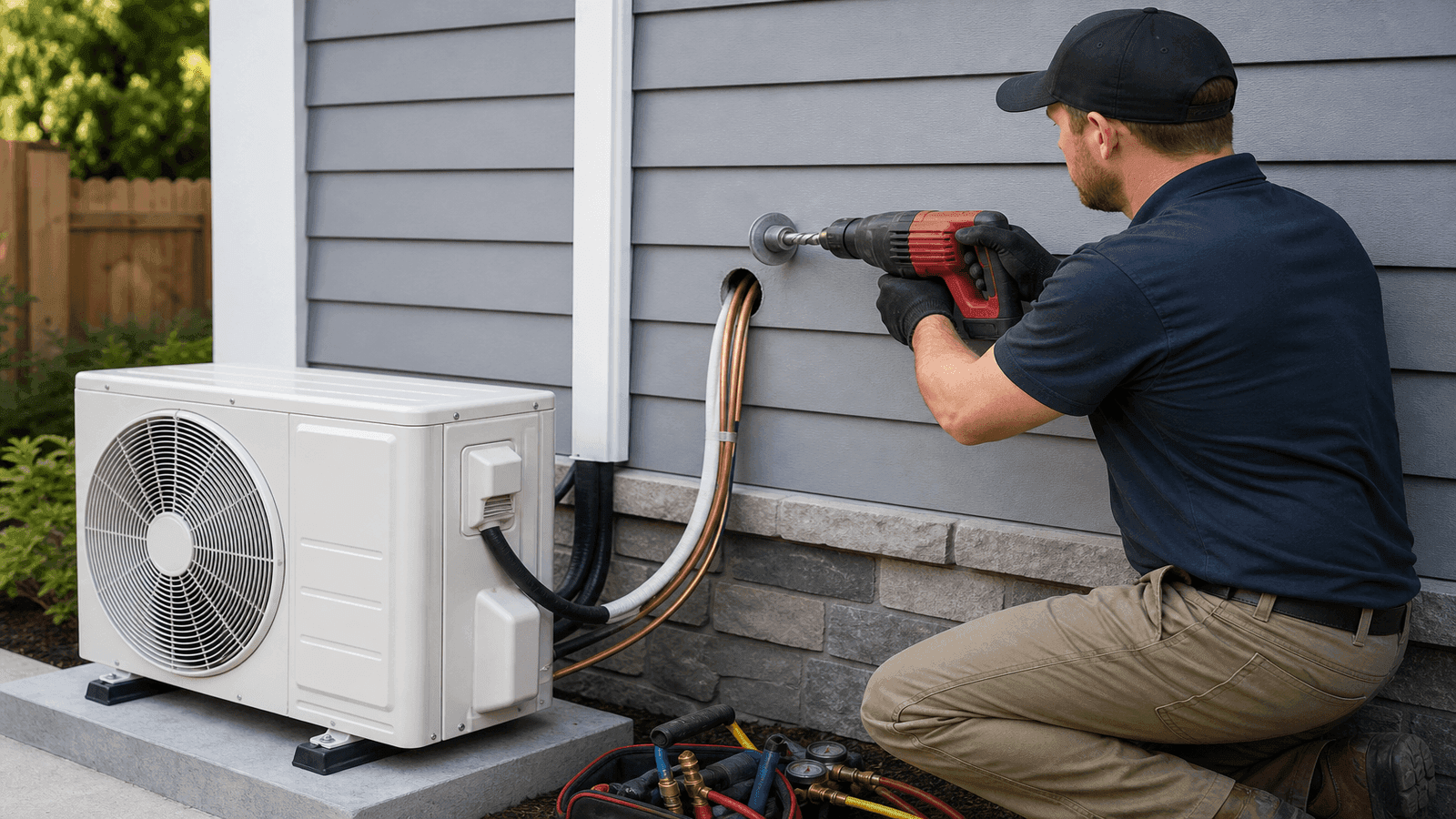
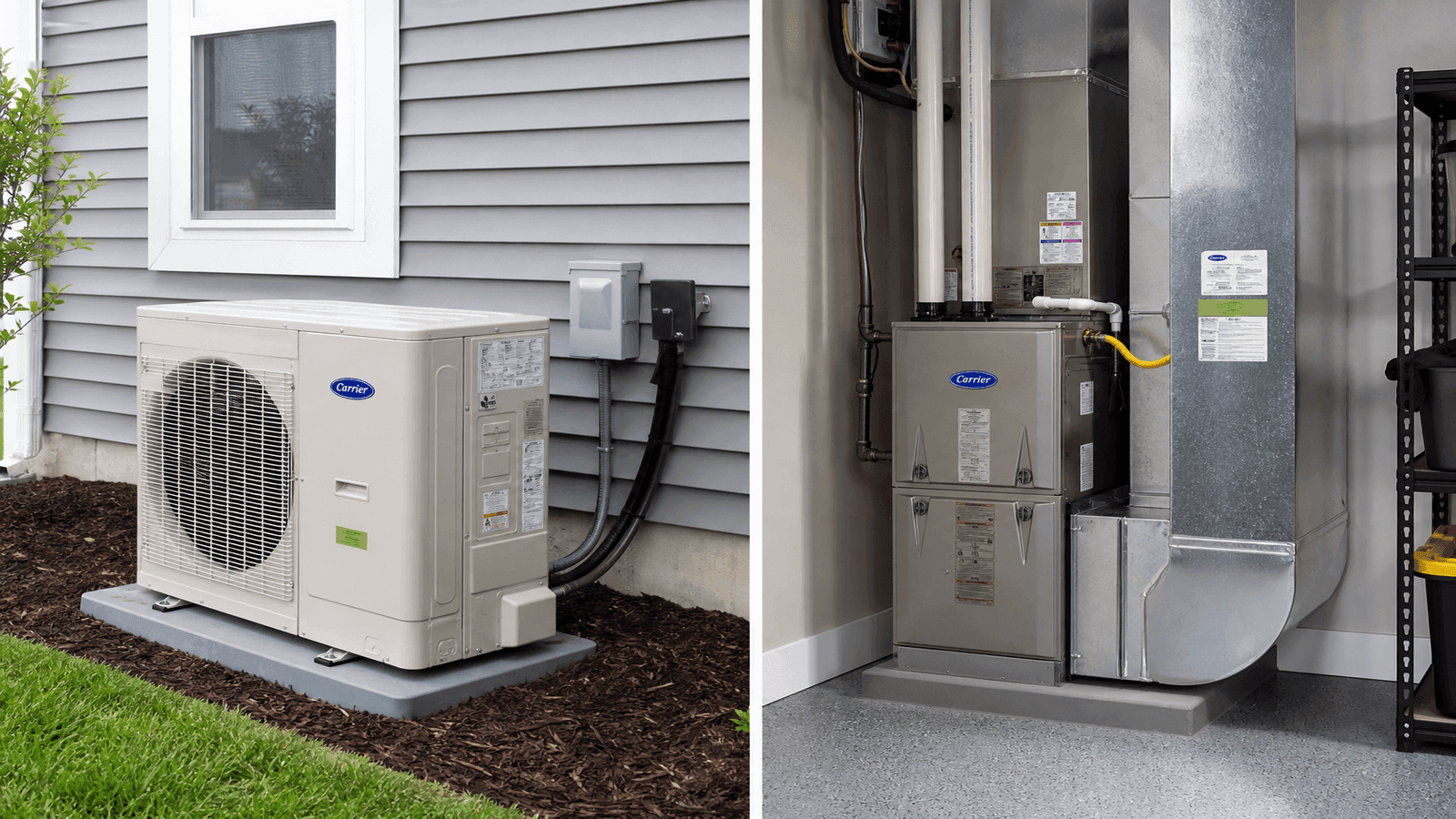
A complete HVAC system replacement, which includes the outdoor unit (AC or heat pump), indoor unit (furnace or air handler), thermostat, and any necessary ductwork modifications, ranges from $7,000 to $18,000 in 2026 [1]. For a typical 2,000 to 2,500 sq ft home, expect to pay $12,000 to $14,000 for a mid-efficiency system.
Cost by System Type
| System Type | Average Cost (Installed) | Best For |
| AC + Gas Furnace | $7,000 to $15,000 | Homes with existing gas lines and ductwork |
| Air-Source Heat Pump | $8,000 to $18,000 | Moderate climates, homes electrifying |
| Dual-Fuel (HP + Gas) | $10,000 to $20,000 | Cold climates with gas access |
| Ductless Mini-Split | $3,000 to $15,000 | Homes without ducts, additions, zone control |
| Geothermal Heat Pump | $15,000 to $40,000 | Long-term investment, maximum efficiency |
What Drives the Price:
- System size (tonnage): A 2-ton system costs 30-40% less than a 5-ton system
- Efficiency rating: Upgrading from 14 SEER2 to 20 SEER2 adds $2,000 to $5,000 to equipment cost
- Ductwork condition: Replacing or modifying ducts adds $2,000 to $5,000
- Labor rates: Vary 20-40% by region (Northeast and West Coast highest)
- Brand: Premium brands (Carrier, Trane, Lennox) cost 15-25% more than value brands (Goodman, Amana)
I always tell homeowners to get three quotes, but compare them line by line, not just the total. Last winter I quoted a dual-fuel heat pump system in Bloomington, MN at $14,200 including a Manual J calculation, new refrigerant lines, and a 10-year labor warranty. A competitor quoted $11,500 for the same home but with no load calculation and a 1-year labor warranty. The homeowner went with the cheaper quote and called me six months later because the system was undersized and running constantly. The quote should specify the exact model number, SEER2 rating, warranty terms, and whether the price includes a Manual J load calculation.
For detailed pricing by system size, brand, and region, read: New HVAC System Cost
AC Replacement Cost
Replacing a central air conditioner without changing the furnace costs $3,500 to $14,000 in 2026, depending on the tonnage and efficiency level [3]. The AC unit itself accounts for roughly 60% of the cost, with labor and materials making up the rest.
Cost by Tonnage (2026 Averages)
| System Size | Home Size (Approx.) | Average Installed Cost |
| 1.5 Ton | 600 to 1,000 sq ft | $3,500 to $5,500 |
| 2 Ton | 1,000 to 1,300 sq ft | $4,000 to $6,500 |
| 2.5 Ton | 1,300 to 1,600 sq ft | $4,500 to $7,500 |
| 3 Ton | 1,600 to 2,000 sq ft | $5,000 to $9,000 |
| 4 Ton | 2,000 to 2,500 sq ft | $6,000 to $11,000 |
| 5 Ton | 2,500 to 3,500 sq ft | $7,000 to $14,000 |
Efficiency Premium: Moving from the minimum 14.3 SEER2 to a high-efficiency 20+ SEER2 unit typically adds $2,000 to $4,000 to the equipment price. However, the higher efficiency unit saves $300 to $500 per year in a warm climate, paying back the premium in 5 to 8 years [3].
Real-World Example (Martinez Family, San Antonio, TX): The Martinez family replaced their 15-year-old 10 SEER AC with a 3-ton, 16 SEER2 unit. They got three quotes ranging from $6,800 to $9,200. The middle quote ($7,900) included a Manual J load calculation, new refrigerant lines, thermostat upgrade, and a 10-year parts-and-labor warranty. Their monthly cooling bill dropped from $285 to $180 during peak summer, saving roughly $630 per year.
For the full AC replacement pricing guide with brand comparisons, read: AC Replacement Cost
Get quotes from top-rated pros.
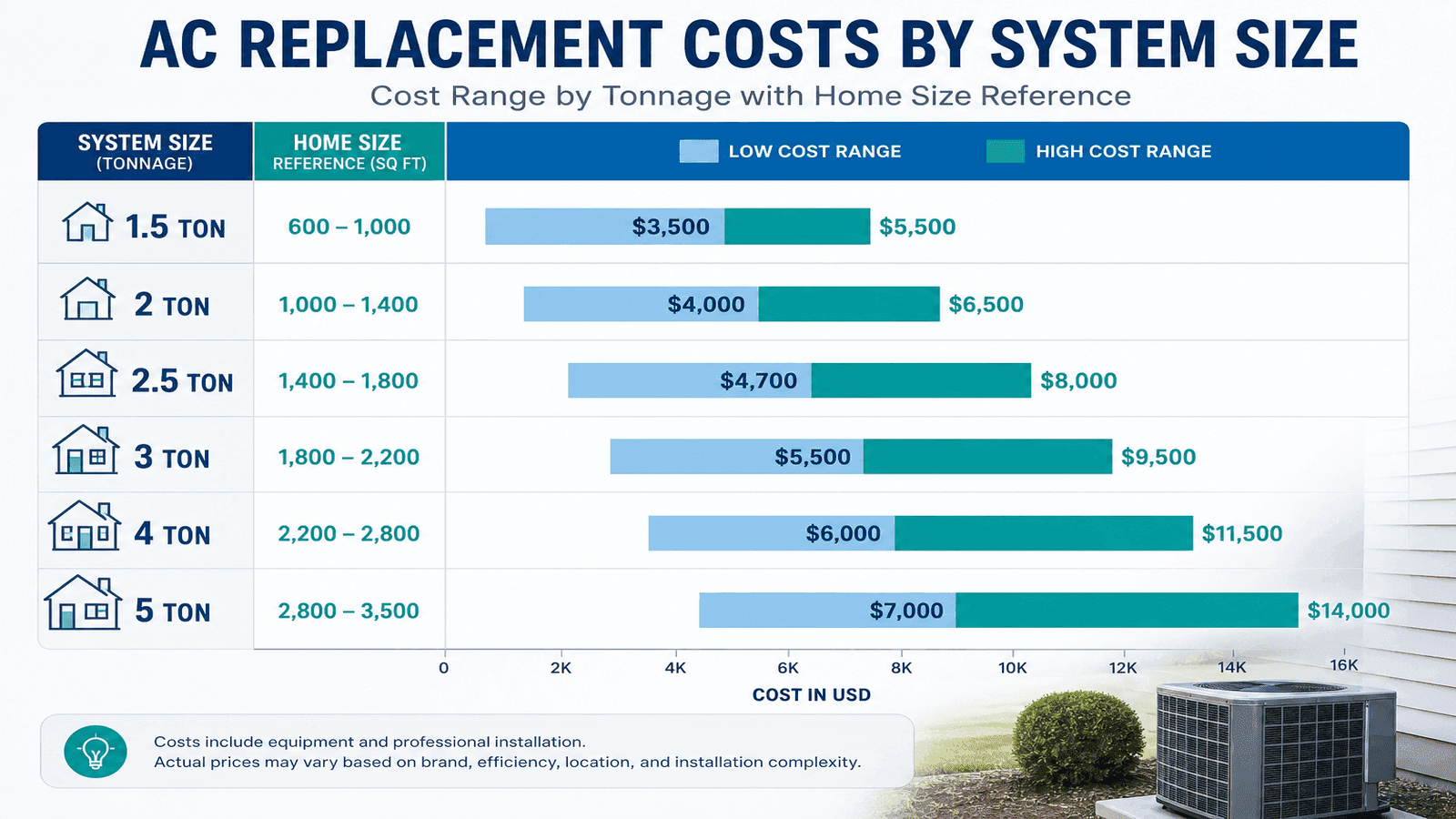
Photo: Comparison chart showing AC replacement costs by tonnage and efficiency level
Furnace Replacement Cost
Replacing a gas furnace costs $3,000 to $10,000 in 2026, with most homeowners paying $4,500 to $7,500 for a mid-efficiency unit installed. Electric furnaces cost less upfront ($2,000 to $5,000) but have significantly higher operating costs in most markets [1].
Cost by Furnace Type
| Furnace Type | AFUE Rating | Average Installed Cost |
| Standard Gas | 80% AFUE | $3,000 to $5,500 |
| High-Efficiency Gas | 90-96% AFUE | $4,500 to $8,000 |
| Condensing Gas | 96-98.5% AFUE | $5,500 to $10,000 |
| Electric | 100% AFUE | $2,000 to $5,000 |
| Oil | 80-87% AFUE | $4,000 to $8,000 |
Key Factors: The biggest cost driver beyond the unit itself is whether your home needs a new flue/venting system. Upgrading from a standard 80% AFUE furnace to a condensing 96%+ unit requires PVC venting instead of a metal chimney flue, which can add $500 to $1,500 to the installation.
For the complete furnace pricing guide including gas vs. electric vs. oil comparisons, read: Furnace Replacement Cost
Heat Pump Cost
Air-source heat pump systems cost $8,000 to $18,000 installed in 2026, with the national average around $15,400 before incentives [2]. Cold-climate models (rated to -15°F) typically cost $2,000 to $4,000 more than standard models.
Cost by Heat Pump Type
| Heat Pump Type | Average Installed Cost | Notes |
| Standard Air-Source | $8,000 to $14,000 | Most common residential option |
| Cold-Climate Air-Source | $10,000 to $18,000 | Mitsubishi, Bosch, Daikin models |
| Ductless Mini-Split HP | $3,000 to $8,000 (single zone) | No ductwork needed |
| Dual-Fuel (HP + Gas) | $10,000 to $20,000 | Best for extreme cold with gas |
| Geothermal (Ground-Source) | $15,000 to $40,000 | Highest efficiency, longest lifespan |
Incentives That Reduce Net Cost:
The federal Section 25C tax credit for air-source heat pumps expired December 31, 2025 [6]. However, significant incentives remain:
- State HOMES/HEAR rebates: Up to $8,000 for income-qualifying households (varies by state, some states already exhausted allocations)
- Geothermal 30% federal credit: Still active through 2032 under Section 25D
- Utility rebates: $200 to $2,000 depending on local utility programs
- Combined savings: Homeowners in participating states can offset $4,000 to $14,000 or more [2]
HVAC professionals in the NearbyHunt network report that heat pump installations now account for roughly 40% of all replacement jobs in their service areas, up from under 20% just three years ago.
For the complete heat pump pricing guide with rebate eligibility by state, read: Heat Pump Cost
Ductless Mini-Split Cost
Ductless mini-split systems cost $3,000 to $8,000 for a single-zone installation and $7,000 to $15,000 for multi-zone systems (2 to 4 zones) in 2026 [1]. They eliminate ductwork entirely, which means no duct losses and no need for major construction to add AC to homes without existing ducts.
Cost by Number of Zones
| Configuration | Average Installed Cost |
| Single Zone (1 indoor unit) | $3,000 to $8,000 |
| Dual Zone (2 indoor units) | $5,000 to $10,000 |
| Tri Zone (3 indoor units) | $7,000 to $13,000 |
| Quad Zone (4 indoor units) | $9,000 to $15,000 |
Best use cases: Room additions, garages, attics, sunrooms, older homes without ductwork, and supplemental cooling/heating for specific rooms.
For the full mini-split pricing breakdown with brand comparisons, read: Ductless Mini-Split Cost
Get quotes from top-rated pros.
HVAC Repair Cost
Most HVAC repairs cost $150 to $600, with the service call fee (diagnostic charge) running $75 to $200. Labor rates average $85 to $150 per hour for residential work [4].
Common Repair Costs (2026)
| Repair Type | Average Cost |
| Capacitor replacement | $150 to $350 |
| Refrigerant recharge (R-410A) | $200 to $600 |
| Blower motor replacement | $400 to $900 |
| Contactor replacement | $150 to $400 |
| Thermostat replacement | $150 to $400 |
| Evaporator coil replacement | $800 to $2,000 |
| Condenser coil replacement | $1,000 to $2,500 |
| Compressor replacement | $1,500 to $3,500 |
| Circuit board replacement | $400 to $1,200 |
| Condensate drain line clearing | $100 to $250 |
The 50% Rule: If a single repair costs more than 50% of a new system and the current system is over 10 years old, replacement usually makes more financial sense. A $2,500 compressor repair on a 14-year-old system is rarely worth it when a new system costs $8,000 to $12,000 and comes with a full warranty.
I always give homeowners the repair cost AND the replacement cost side by side. Just last month, a customer in Eagan, MN had a 13-year-old system needing a $1,800 evaporator coil replacement. I showed them that for $10,000 they could get a new 16 SEER2 system with a 10-year warranty and save $350 per year in energy costs. They chose the replacement and the math proved right within the first cooling season.
For the full repair cost guide with diagnostic tips, read: HVAC Repair Cost
Duct Replacement Cost
Replacing ductwork costs $2,000 to $6,000 for a typical 2,000 sq ft home, with larger or more complex layouts running up to $10,000 [1]. Most homeowners don't think about ducts until a technician flags leaks, damage, or undersized runs during a system replacement.
When Duct Replacement Is Needed:
- Ducts are more than 20 to 25 years old
- Visible damage, rust, or disconnected joints
- Rooms that never reach comfortable temperature despite a working system
- Energy bills significantly higher than comparable homes
- Duct testing shows leakage above 15% (ENERGY STAR threshold)
Leaky ducts waste 20 to 30% of heating and cooling energy according to ENERGY STAR [5]. Sealing alone (without full replacement) costs $500 to $2,000 and often delivers the best ROI of any HVAC upgrade.
For the complete duct replacement pricing guide, read: Duct Replacement Cost
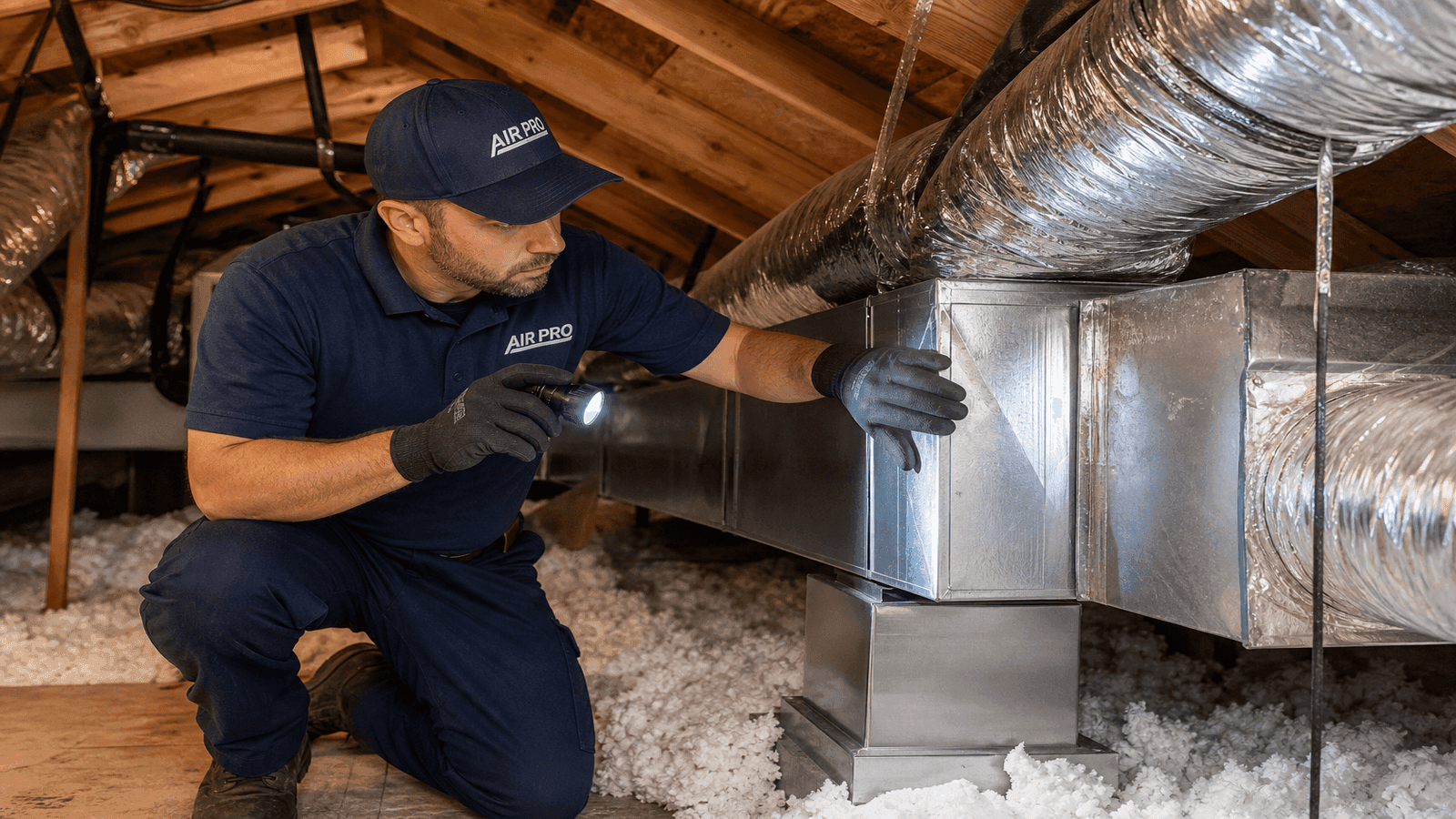
Photo: HVAC technician inspecting ductwork in a residential attic
Smart Thermostat Cost
Smart thermostats cost $150 to $300 for the device plus $50 to $200 for professional installation, bringing the total to $200 to $500 [7]. Most homeowners can install a smart thermostat themselves in 30 to 60 minutes if their system has a C-wire (common wire).
Popular Models (2026 Pricing)
| Model | Price (Device Only) | Key Feature |
| Google Nest Learning | $220 to $250 | Auto-learning schedule |
| Ecobee Smart Premium | $230 to $260 | Room sensors included |
| Honeywell T9 | $180 to $200 | Smart room sensors |
| Amazon Smart Thermostat | $60 to $80 | Budget option, Alexa built-in |
| Emerson Sensi Touch 2 | $130 to $160 | Easy DIY installation |
ROI: Smart thermostats save 10 to 15% on heating and cooling costs, translating to $100 to $150 per year for the average household [7]. A $250 thermostat pays for itself in under 2 years, making it one of the highest-ROI HVAC upgrades available.
For the full smart thermostat comparison with installation guide, read: Smart Thermostat Cost
Get quotes from top-rated pros.
HVAC Maintenance Cost
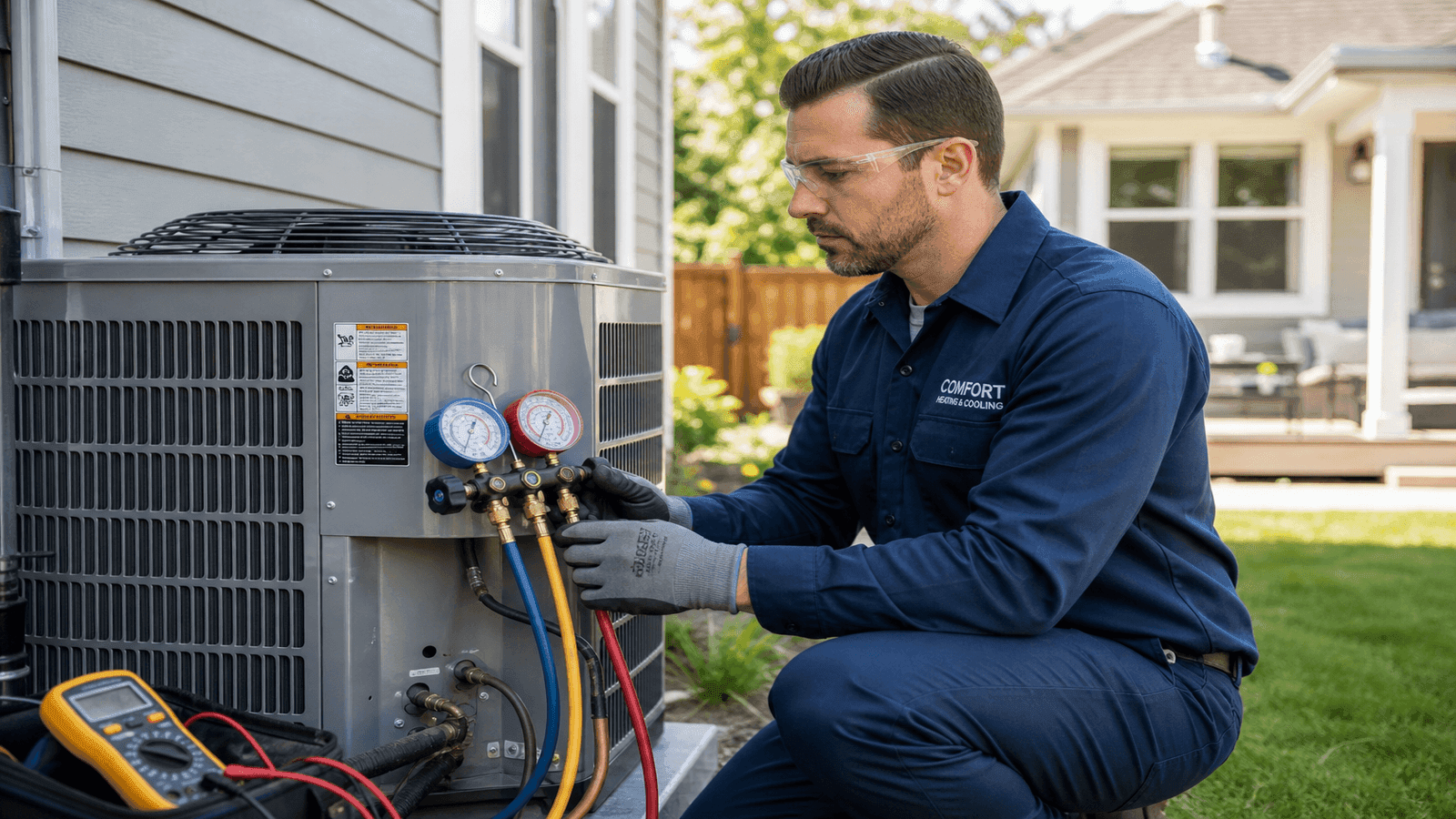
Annual HVAC maintenance plans cost $150 to $400 per year, which typically includes two visits (spring cooling tune-up and fall heating tune-up) plus priority scheduling and repair discounts [5]. A single tune-up visit without a plan runs $80 to $200.
What a Professional Tune-Up Includes:
- Check and adjust refrigerant charge
- Clean evaporator and condenser coils
- Inspect and tighten electrical connections
- Lubricate moving parts
- Test safety controls and thermostat calibration
- Check ductwork for visible leaks
- Replace or check air filter
- Measure airflow and temperature differential
Why It Pays Off: Systems with regular maintenance last 5 to 10 years longer, run 15 to 25% more efficiently, and experience 95% fewer major breakdowns according to ASHRAE guidelines [5]. A $300 annual plan prevents the $3,000 to $5,000 emergency repairs that hit unmaintained systems.
HVAC professionals in the NearbyHunt network report that customers on maintenance plans have a system lifespan averaging 18 to 22 years, compared to 12 to 15 years for customers who skip routine service.
For the full maintenance cost breakdown with plan comparisons, read: HVAC Maintenance Cost
Emergency HVAC Cost
Emergency HVAC service calls (nights, weekends, holidays) cost $250 to $600 just for the diagnostic visit, roughly double to triple standard rates [4]. Parts and labor for the actual repair come on top of that.
Emergency vs. Standard Pricing
| Service | Standard Rate | Emergency/After-Hours Rate |
| Service call/diagnostic | $75 to $200 | $250 to $600 |
| Hourly labor | $85 to $150 | $150 to $300 |
| Capacitor replacement | $150 to $350 | $300 to $600 |
| Refrigerant recharge | $200 to $600 | $400 to $1,000 |
When Emergency Service Is Worth the Premium:
- No heat when temperatures are below freezing (frozen pipe risk)
- Gas smell near the furnace (safety hazard)
- Carbon monoxide detector alarm (health emergency)
- Water actively leaking from the indoor unit
When You Can Wait for a Standard Appointment:
- AC not cooling on a warm (not extreme) day
- Uneven temperatures between rooms
- Unusual noises that are not accompanied by burning smell
- System running but not as efficiently as usual
>Need HVAC Service Now?
> NearbyHunt connects you with licensed HVAC professionals in your area for both standard and emergency service. Find HVAC Pros on NearbyHunt
For the complete emergency service cost guide, read: Emergency HVAC Cost
How to Get the Best HVAC Price
Getting a fair price requires preparation. Follow these steps to avoid overpaying:
- Get three quotes minimum. Compare line by line: model numbers, efficiency ratings, warranty terms, and included work
- Insist on a Manual J load calculation. Any contractor who sizes by "rule of thumb" is guessing. Oversized systems waste energy and undersized systems can't keep up
- Ask about the total cost of ownership. A higher-efficiency system costs more upfront but saves $200 to $500 per year in energy costs
- Check for rebates before signing. State HOMES/HEAR programs, utility rebates, and manufacturer promotions can save $2,000 to $8,000
- Verify licensing and insurance. Ask for the contractor's state license number, EPA 608 certification, and proof of general liability plus workers' comp insurance
- Read the warranty carefully. Equipment warranties range from 5 to 12 years, but labor warranties vary wildly (1 year to lifetime). The labor warranty is what matters most for the first 5 years
- Time your purchase. Spring and fall (shoulder seasons) often bring lower prices and faster scheduling than peak summer/winter
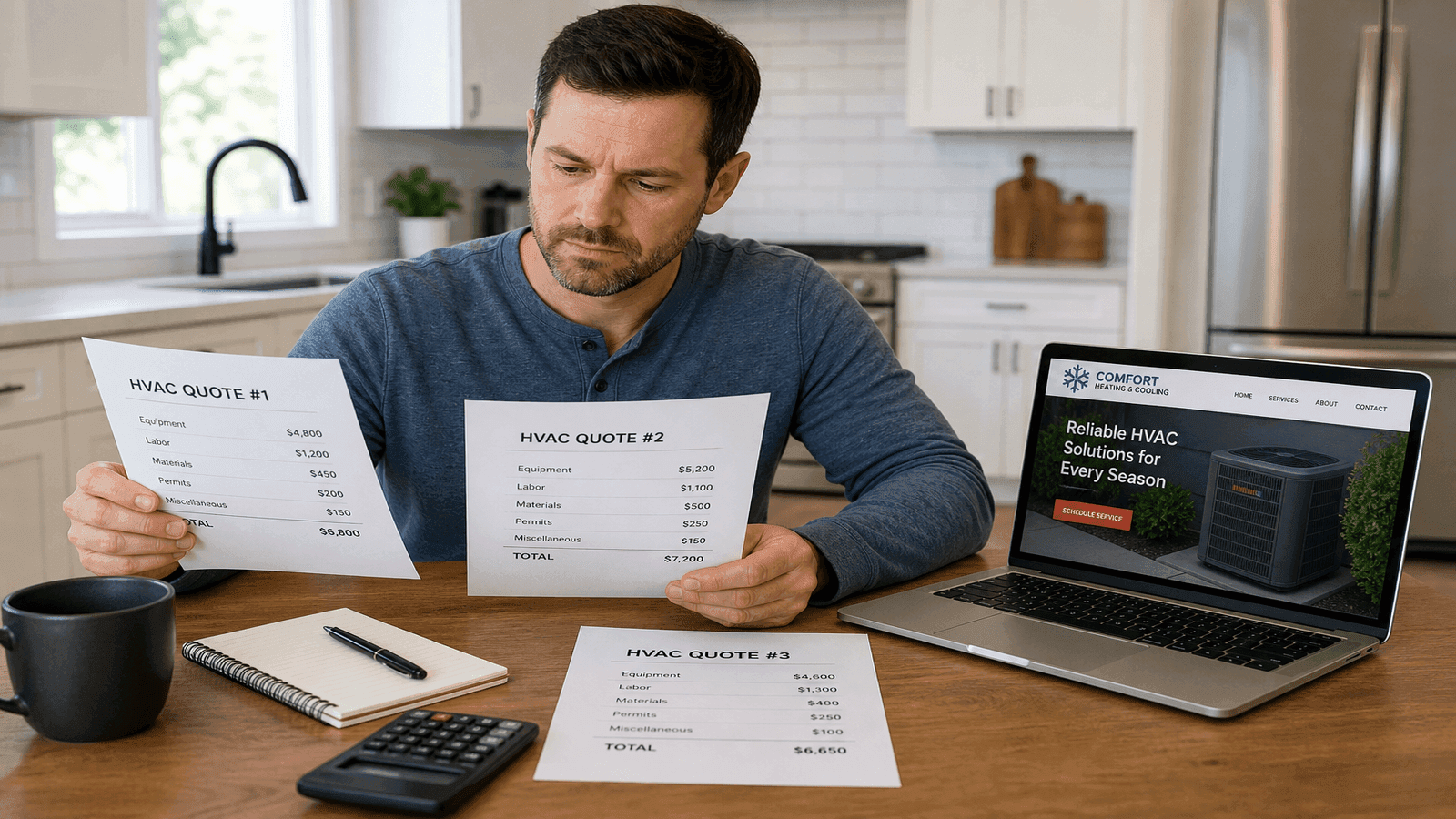
Photo: Homeowner at kitchen table reviewing and comparing three HVAC installation quotes
The best time to replace your HVAC is before it dies. Emergency replacements cost more because you lose bargaining power and contractors charge premium rates. If your system is 12 to 15 years old, start getting quotes now while you still have time to compare.
Disclaimer: HVAC costs vary significantly by region, home size, system type, and contractor. The prices in this article are national averages based on 2026 data and may not reflect costs in your specific area. Always get written estimates from multiple licensed contractors before making a decision. The federal 25C tax credit expired December 31, 2025. State and utility rebates vary by location and may have limited allocations. This article is for informational purposes only and does not constitute professional HVAC or financial advice.
Sources & References
[1] Bryant. "How Much Does a New HVAC System Cost? 2026 Pricing Guide." Trane. "2026 HVAC Replacement Cost Guide."
[2] Carrier. "Heat Pump Cost Guide 2026." ENERGY STAR. "Air Source Heat Pumps."
[3] Carrier. "Air Conditioner Prices 2026." Sears Home Services. "Air Conditioner Replacement Cost 2026."
[4] American Standard Air. "Average HVAC Repair Cost." ServiceTitan. "HVAC Statistics 2026."
[5] ENERGY STAR. "Duct Sealing." ASHRAE. "Standard 180: HVAC Maintenance."
[6] ENERGY STAR. "Federal Tax Credits." U.S. DOE. "Home Upgrades (HOMES/HEAR Programs)."
[7] U.S. Department of Energy. "Programmable Thermostats."

Daniel is an EPA-certified HVAC technician & Energy Efficiency Consultant with over 14 years of experience in maintaining and installing heating and cooling systems throughout the Midwest. Passionate about sustainability, Dan specialises in energy-efficient retrofits and intelligent climate control systems. He writes for NearbyHunt to help homeowners extend the lifespan of their HVAC units while lowering utility bills.

Christine is an EPA-certified HVAC professional with 17 years of experience in heating, cooling, and indoor air quality systems. She has managed large-scale residential installations and worked as a technical trainer for new HVAC apprentices. Chris’s reviews focus on accuracy, safety, and performance standards in modern HVAC practices.