- A new HVAC system costs $5,000 to $15,000 installed for a standard replacement in 2026, with complete systems running $10,000 to $25,000+ when ductwork is needed.
- Central air conditioners cost $3,500 to $8,000 installed, gas furnaces run $3,800 to $8,500, and air-source heat pumps range from $8,000 to $16,000.
- System size is the primary cost driver. A 3-ton system (the most common residential size) averages $6,000 to $10,500 installed with furnace and AC.
- The federal 25C tax credit expired December 31, 2025. Homeowners installing in 2026 can no longer claim the $2,000 heat pump credit, though state HOMES/HEAR rebates remain active up to $8,000 for qualifying households [1].
- Geothermal heat pumps still qualify for a 30% federal tax credit through 2032, making the $15,000 to $30,000 installed cost significantly more manageable [2].
- SEER2 minimum efficiency standards now require 14-15 SEER2 depending on your climate region, which has pushed base equipment prices up 10-15% since 2023 [3].
A new HVAC system is one of the largest purchases you will make as a homeowner, and the pricing is anything but straightforward. Equipment alone accounts for only 40-60% of the total. Labor, permits, ductwork modifications, and local market rates fill in the rest, and those variables swing the final number by thousands of dollars.
Daniel Torres, a certified HVAC technician with 14+ years of experience in Minneapolis, holds EPA 608 Universal and NATE certifications. His work focuses on energy-efficient retrofits across the Upper Midwest, where heating performance is tested every winter. "I replaced the original builder-grade 80% AFUE furnace and 10 SEER AC in a 1,800-square-foot rambler in Bloomington, Minnesota last October," Torres notes. "The homeowner went with a 96% two-stage furnace and 16 SEER2 central AC.
Total installed cost came to $11,400, including a new thermostat and permit fees. That system cut the homeowner's heating bill by roughly 28% through this past winter." For a broader view of HVAC pricing, see our HVAC Costs Guide.

Get quotes from top-rated pros.
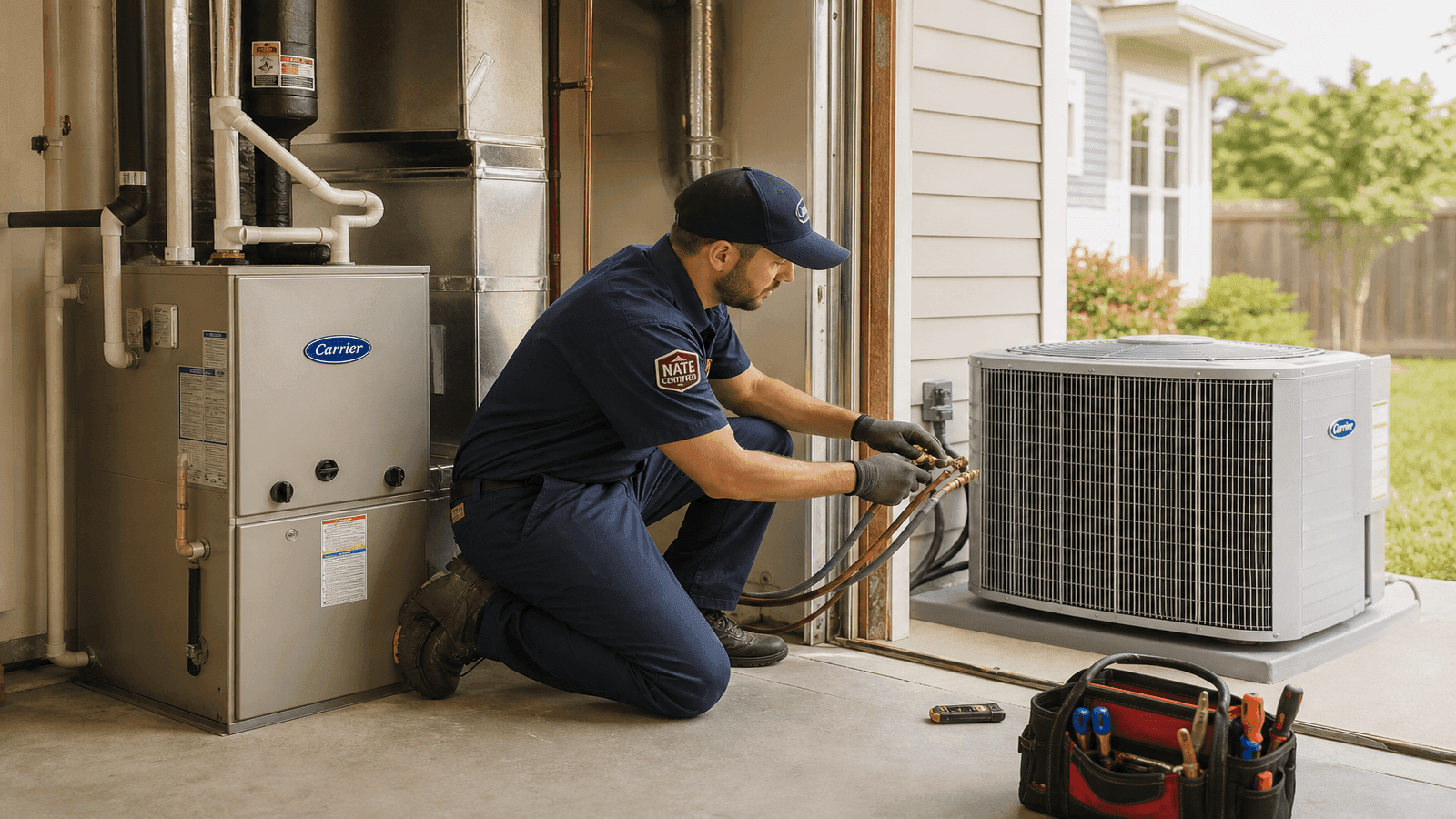
Photo: Certified HVAC technician installing a new high-efficiency furnace and air conditioning system in a residential mechanical room
Average New HVAC System Cost in 2026
The national average for a complete HVAC replacement (furnace plus central air conditioner) falls between $7,500 and $12,500 in 2026. That range covers the most common scenario: removing existing equipment and installing matched, mid-efficiency replacements in a home with existing ductwork.
Your actual cost depends on what you are replacing, what you are replacing it with, and where you live. A straight swap of a gas furnace and AC unit in a home with accessible equipment and clean ductwork sits at the low end. A system conversion (say, from a furnace/AC combo to a heat pump), homes requiring ductwork, or high-efficiency equipment pushes toward the upper range and beyond.
| System Type | Equipment Cost | Labor + Materials | Total Installed |
| Central AC only | $1,800-$4,500 | $1,500-$3,500 | $3,500-$8,000 |
| Gas furnace only | $1,500-$4,000 | $2,000-$4,500 | $3,800-$8,500 |
| AC + gas furnace combo | $3,500-$7,500 | $3,000-$5,500 | $7,000-$13,000 |
| Air-source heat pump | $3,500-$8,000 | $4,000-$8,000 | $8,000-$16,000 |
| Ductless mini-split (whole home) | $5,000-$12,000 | $3,000-$8,000 | $8,000-$20,000 |
| Geothermal heat pump | $8,000-$15,000 | $7,000-$15,000 | $15,000-$30,000 |
The price jump between a basic single-stage system and a two-stage or variable-speed system is real, usually $2,000 to $4,500 more. But in climates like Minnesota, where you run heat five to six months a year, the efficiency savings pay that difference back in four to seven years. I have seen it consistently across hundreds of installations.
NearbyHunt network data from Q1 2026 shows that 64% of HVAC replacement quotes requested through the platform were for combined furnace-plus-AC systems, with heat pump inquiries rising 31% year over year [4].
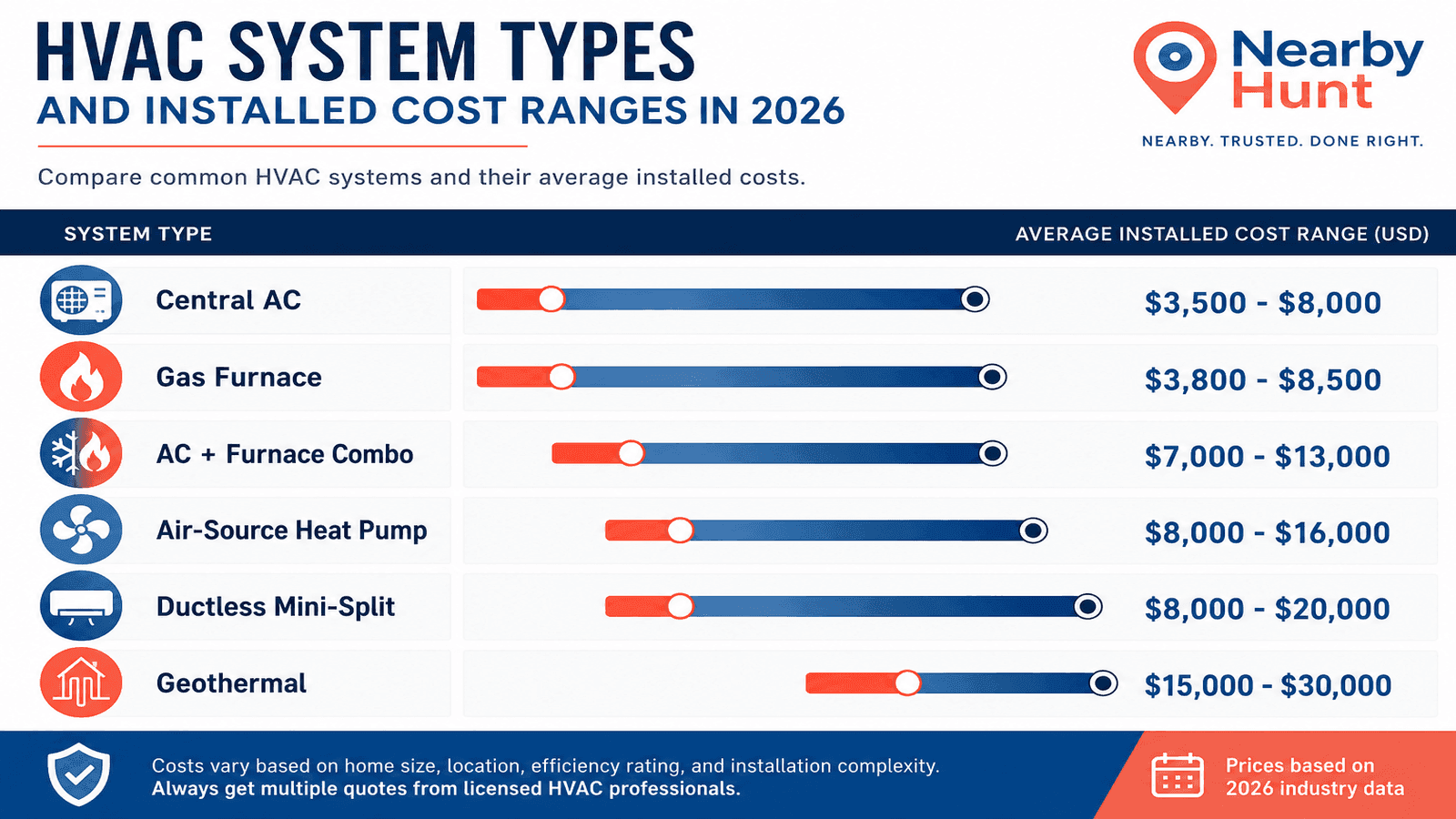
Photo: Infographic comparing installed costs of six HVAC system types in 2026 from central AC at $3,500 to geothermal at $30,000
Cost by System Size
System size, measured in tons for cooling and BTUs for heating, is the single biggest factor determining equipment cost. An undersized system runs constantly and fails early. An oversized system short-cycles, creates uneven temperatures, and wastes energy.
HVAC contractors determine proper sizing using a Manual J load calculation, which accounts for your home's square footage, insulation quality, window area, climate zone, and orientation. A proper load calculation costs $100 to $300 but prevents costly sizing mistakes.
| Home Size (sq ft) | System Size | AC/Heat Pump Cost (installed) | Furnace + AC Cost (installed) |
| 800-1,200 | 1.5-2 ton | $3,500-$6,000 | $6,000-$9,500 |
| 1,200-1,800 | 2-2.5 ton | $4,500-$7,000 | $7,000-$10,500 |
| 1,800-2,400 | 2.5-3 ton | $5,500-$8,500 | $8,000-$12,000 |
| 2,400-3,200 | 3-3.5 ton | $6,500-$10,000 | $9,500-$13,500 |
| 3,200-4,000 | 4-5 ton | $8,000-$14,000 | $11,000-$17,000 |
I see contractors skip the Manual J calculation and size based on square footage alone at least once a month. That is how a 2,200-square-foot home with R-49 attic insulation and triple-pane windows ends up with a 4-ton system when a 2.5-ton would have been correct. The homeowner pays $2,000 to $3,000 more for equipment they did not need, and the system performs worse.
Central Air Conditioner Costs
Central air conditioning is the most common cooling system in American homes. In 2026, a new central AC unit costs $3,500 to $8,000 installed, with most homeowners paying $4,500 to $6,500 for a mid-efficiency replacement [3].
The minimum efficiency standard for central AC is now 14 SEER2 in northern states and 15 SEER2 in southern states (DOE South region). Higher SEER2 ratings reduce operating costs but increase the upfront price.
| SEER2 Rating | Efficiency Level | Installed Cost (3-ton) | Annual Cooling Cost* |
| 14-15 SEER2 | Standard | $4,000-$6,000 | $450-$550 |
| 16-17 SEER2 | High efficiency | $5,500-$8,000 | $350-$450 |
| 18-20 SEER2 | Premium | $7,000-$10,000 | $280-$380 |
| 21+ SEER2 | Ultra premium | $9,000-$13,000 | $220-$300 |
Estimated annual cooling costs for a 2,000 sq ft home at national average electricity rates ($0.16/kWh).
Brand pricing varies significantly. Budget brands like Goodman and Amana start lower (equipment at $1,200 to $2,500), while premium brands like Carrier, Trane, and Lennox run $2,500 to $5,000+ for the equipment alone [5]. The installed price difference narrows somewhat because labor is roughly the same regardless of brand.
Get quotes from top-rated pros.
Heat Pump System Costs
Heat pumps have become the fastest-growing HVAC segment in the United States, with the Air-Conditioning, Heating, and Refrigeration Institute (AHRI) reporting heat pump shipments exceeding gas furnace shipments for the third consecutive year in 2025 [6]. A new air-source heat pump costs $8,000 to $16,000 installed for a whole-home system in 2026.
Heat pumps both heat and cool, which means they replace both your furnace and air conditioner. That makes the upfront cost comparison misleading if you compare a heat pump only to an AC unit. The correct comparison is heat pump vs. furnace-plus-AC.
Air-Source Heat Pumps
Standard air-source heat pumps work efficiently down to about 35-40 degrees Fahrenheit. Below that, they rely on backup electric resistance heat, which is expensive to operate.
Cold-climate heat pumps (ccASHP) are designed for northern states, maintaining heating capacity down to -15 degrees Fahrenheit or lower. These cost $10,000 to $18,000 installed but eliminate the need for a backup gas furnace in most homes [7].
Ductless Mini-Split Heat Pumps
Mini-splits bypass ductwork entirely. A single-zone system costs $2,000 to $5,000 installed. Whole-home multi-zone systems (3-5 indoor heads) run $8,000 to $20,000 installed. Mini-splits are ideal for homes without existing ductwork, additions, or as supplemental heating/cooling for specific rooms.
Geothermal Heat Pumps
Geothermal systems exchange heat with the ground rather than outdoor air, achieving 300-500% efficiency. The installed cost is $15,000 to $30,000, with ground loop installation accounting for roughly half of that total [8].
The 30% federal tax credit for geothermal systems (Section 25D) remains active through 2032 with no annual cap. On a $22,000 geothermal installation, that is $6,600 back on your federal taxes.
Geothermal is the only HVAC system type that still carries a meaningful federal tax incentive in 2026. For homeowners planning to stay in their home 10+ years, the math works. I installed a geothermal system in a 2,800-square-foot home in Eagan, Minnesota last year. The total was $24,500 before the tax credit, $17,150 after. The homeowner's combined heating and cooling costs dropped from $3,200 per year to about $1,100.
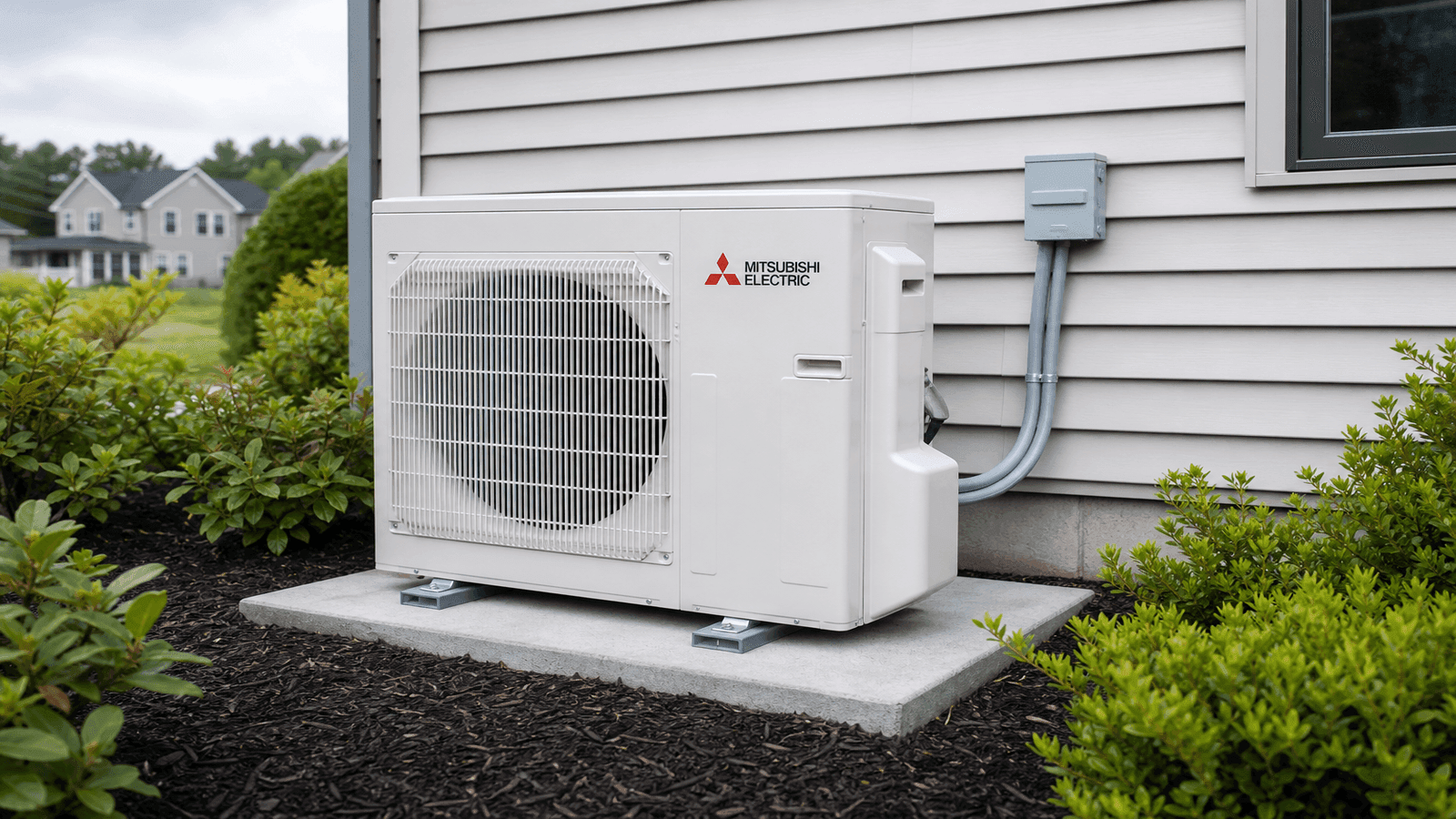
Photo: New air-source heat pump outdoor condenser unit installed on a concrete pad beside a residential home
Gas Furnace Costs
A new gas furnace costs $3,800 to $8,500 installed in 2026, depending on efficiency rating and heating capacity. Gas furnaces remain the dominant heating system in states with cold winters and affordable natural gas [3].
Furnace efficiency is measured by Annual Fuel Utilization Efficiency (AFUE). The current minimum standard is 80% AFUE for non-weatherized furnaces (no change from previous standards). High-efficiency models run 90-98% AFUE.
| AFUE Rating | Type | Equipment Cost | Installed Cost |
| 80% AFUE | Standard efficiency | $1,200-$2,500 | $3,800-$5,500 |
| 90-92% AFUE | Mid efficiency | $1,800-$3,200 | $4,500-$6,500 |
| 95-96% AFUE | High efficiency | $2,500-$4,000 | $5,500-$8,000 |
| 97-98% AFUE | Ultra high efficiency | $3,200-$5,000 | $6,500-$9,500 |
High-efficiency furnaces (90%+ AFUE) require PVC venting rather than a metal chimney flue. If your home currently has a standard-efficiency furnace with a chimney flue, converting to high-efficiency adds $500 to $1,500 in venting costs. This is a one-time upgrade that pays back through lower gas bills.
Installation Labor and Hidden Costs
Labor accounts for 35-55% of total HVAC installation cost. Hourly rates for HVAC technicians range from $75 to $150 per hour nationally, with higher rates in coastal and metro markets [9]. Most contractors quote flat-rate pricing rather than hourly.
A standard furnace-and-AC replacement takes 8-14 hours with a two-person crew. Complex installations, system conversions, or homes with difficult access can push the job to two full days.
Commonly Overlooked Costs
These line items frequently surprise homeowners when the final invoice arrives:
- Permit fees: $100-$500. Required in most jurisdictions. Some contractors include this in the quote; others list it separately.
- Ductwork modifications: $500-$3,000. Older duct systems may not match new equipment specs. Undersized returns are the most common issue.
- Electrical upgrades: $500-$2,500. Heat pump installations often require a dedicated 240V circuit or panel upgrade.
- Thermostat: $150-$500. Many contractors include a basic programmable thermostat. Smart thermostats (Ecobee, Nest) add $100-$300.
- Refrigerant line set: $300-$1,200. Required if relocating the outdoor unit or if existing lines are incompatible with R-410A or R-454B refrigerant.
- Disposal of old equipment: $50-$150.
- Code-required upgrades: $200-$1,500. Older homes may need gas line upgrades, condensate drain routing, or combustion air supply modifications to meet current code.
Real Example From Rachel in Denver
Rachel, a homeowner in a 1978-built split-level in Denver, Colorado, needed to replace a 25-year-old 80% AFUE furnace and 8 SEER AC. She received three quotes ranging from $8,200 to $14,700. The lowest quote did not include ductwork sealing, a new thermostat, or permit fees. The highest quote was for a variable-speed system with a whole-home humidifier.
Rachel chose the mid-range option: a 96% AFUE two-stage furnace paired with a 16 SEER2 central AC, new thermostat, and duct sealing for the main trunk line. Total cost: $11,200 installed. Her first full winter heating bill came in 34% lower than the previous year, saving approximately $680 annually on gas.
Get quotes from top-rated pros.
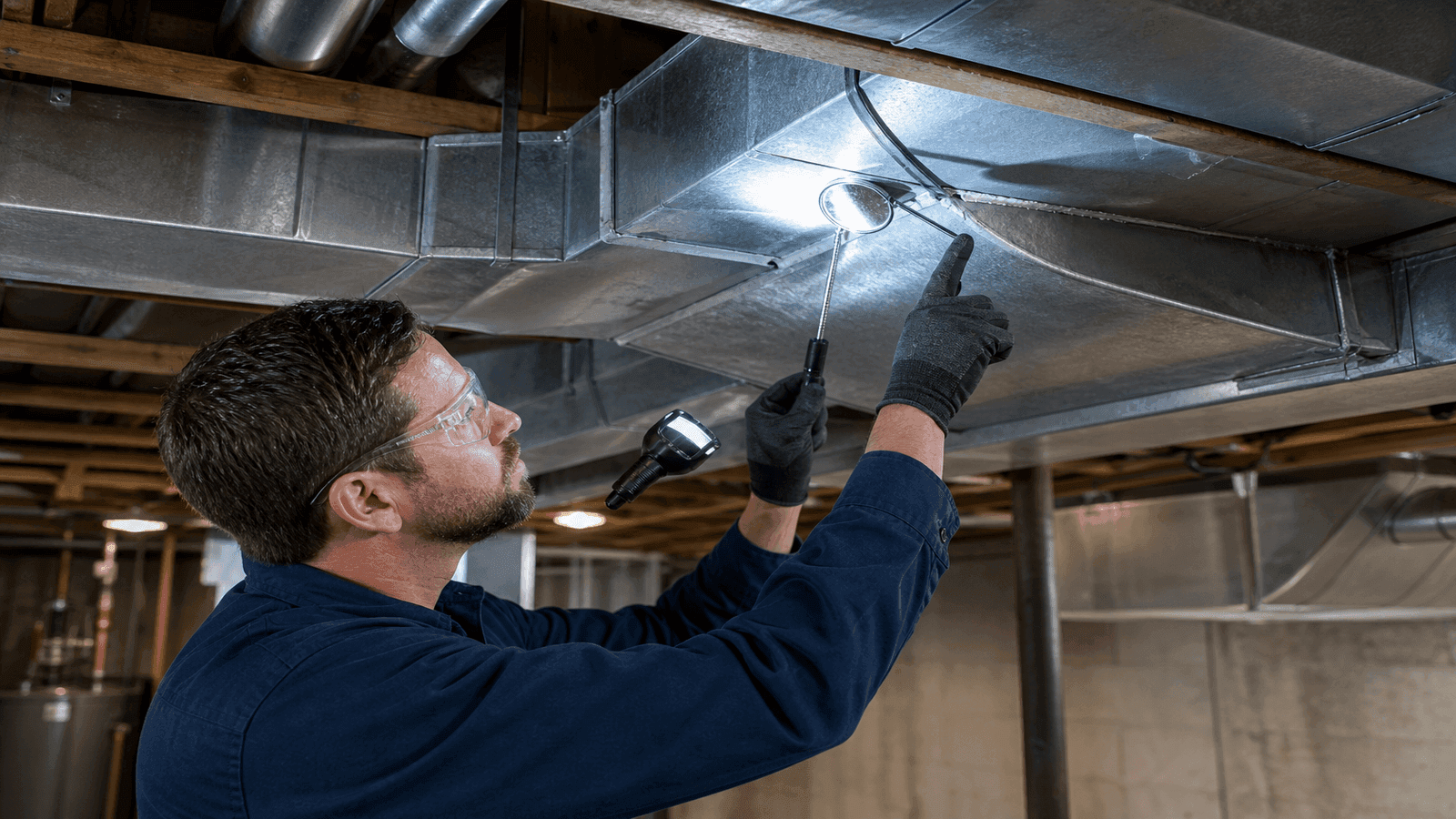
Photo: HVAC technician inspecting residential ductwork in a basement for air leaks and sizing issues
2026 Tax Credits and Rebates
Available incentives for HVAC systems changed significantly at the start of 2026. Homeowners need to understand what is still available and what is not.
Federal 25C Tax Credit (Expired)
The Energy Efficient Home Improvement Credit (Section 25C), which provided up to $2,000 for qualifying heat pumps and $600 for qualifying furnaces and central AC, expired on December 31, 2025 [1]. Installations completed in 2026 do not qualify. If you installed a qualifying system in 2025, you can still claim the credit on your 2025 tax return filed in 2026.
Geothermal Tax Credit (Still Active)
The Residential Clean Energy Credit (Section 25D) provides a 30% tax credit for geothermal heat pump systems with no annual cap. This credit remains active through 2032 at 30%, dropping to 26% in 2033 and 22% in 2034 [2].
State HOMES and HEAR Rebates (Still Active)
The Inflation Reduction Act funded two rebate programs administered at the state level:
- HOMES (Home Energy Performance-Based): Rebates of $2,000 to $4,000 for efficiency improvements, up to $8,000 for low-income households.
- HEAR (Home Electrification and Appliance Rebates): Up to $8,000 for heat pump installations for households earning below 80% of Area Median Income. Households at 80-150% AMI qualify for 50% of costs, up to $4,000 [10].
State rollout timelines vary. As of May 2026, some states have fully launched these programs while others are still processing applications. Check your state energy office for current availability.
Utility Rebates
Many local utilities offer $200 to $1,500 in rebates for high-efficiency HVAC equipment. These stack with state rebates. Contact your electric or gas utility before purchasing to confirm current offers and any pre-approval requirements.
The expiration of the federal 25C credit is real, and I am already seeing it affect purchasing decisions. In 2025, about 40% of my customers chose heat pumps partly because of the $2,000 credit. In Q1 2026, that dropped to about 25%. The state rebates are still excellent for qualifying households, but the income limits mean they do not help everyone.
How to Get the Best Price
Getting a fair price on a new HVAC system requires effort, but the payoff is significant when the investment is this large.
Get three quotes minimum. NearbyHunt data shows the average spread between the lowest and highest quote for the same job is 38%, meaning on a $10,000 project, you might see quotes from $8,100 to $12,900 [4]. Three quotes give you enough data to identify outliers.
Time your purchase strategically. Spring (March through May) and fall (September through November) are the busiest seasons for HVAC installations. Contractors are more willing to negotiate during winter and summer lulls. Equipment manufacturers also run dealer incentive programs during off-peak months.
Ask about financing. Most HVAC contractors offer 0% financing for 12-36 months through manufacturer programs. Longer terms (60-120 months) carry interest rates of 5-12%. A $12,000 system at 7.9% APR over 10 years adds roughly $5,500 in interest, so shorter terms save substantially.
Verify credentials. Every HVAC contractor should carry a state-level HVAC license, general liability insurance, and workers' compensation coverage. Ask for the license number and verify it with your state contractor licensing board.
Check the warranty. Most manufacturers offer 5-10 year parts warranties, but registration is required within 60-90 days of installation. Labor warranties vary by contractor: 1 year is standard, 2-5 years is better. Get the warranty terms in writing before signing.
Get free HVAC installation quotes from certified contractors on NearbyHunt
When to Replace Your HVAC System
Not every breakdown requires a full replacement. But several indicators suggest replacement is the smarter financial decision.
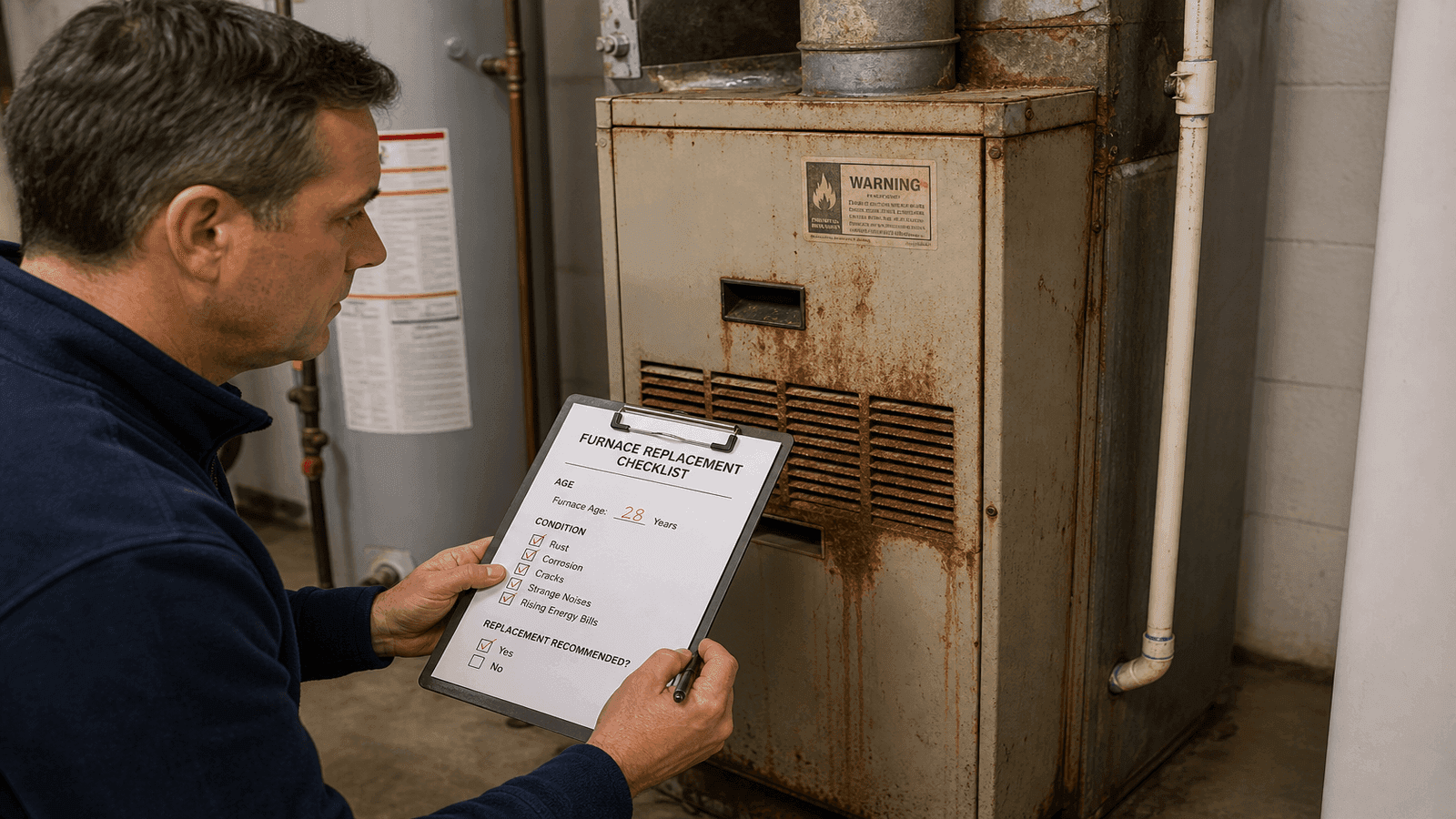
- Age: Central AC units last 15-20 years. Gas furnaces last 15-25 years. Heat pumps last 12-17 years. If your system is within 2-3 years of these thresholds and needs a major repair, replacement usually makes more sense.
- Repair cost exceeds 50% of replacement cost. A $2,500 compressor repair on a 14-year-old AC unit with a replacement cost of $5,000 is a poor investment.
- R-22 refrigerant system. R-22 (Freon) was phased out in 2020. Remaining supplies cost $100-$200 per pound. If your system uses R-22, any refrigerant leak makes replacement the only practical option.
- Rising energy bills. A system losing efficiency may still run but costs significantly more per month. Compare your utility bills to two and three years prior, adjusting for rate changes.
- Frequent repairs. Two or more service calls per year, especially on different components, signals systemic failure.
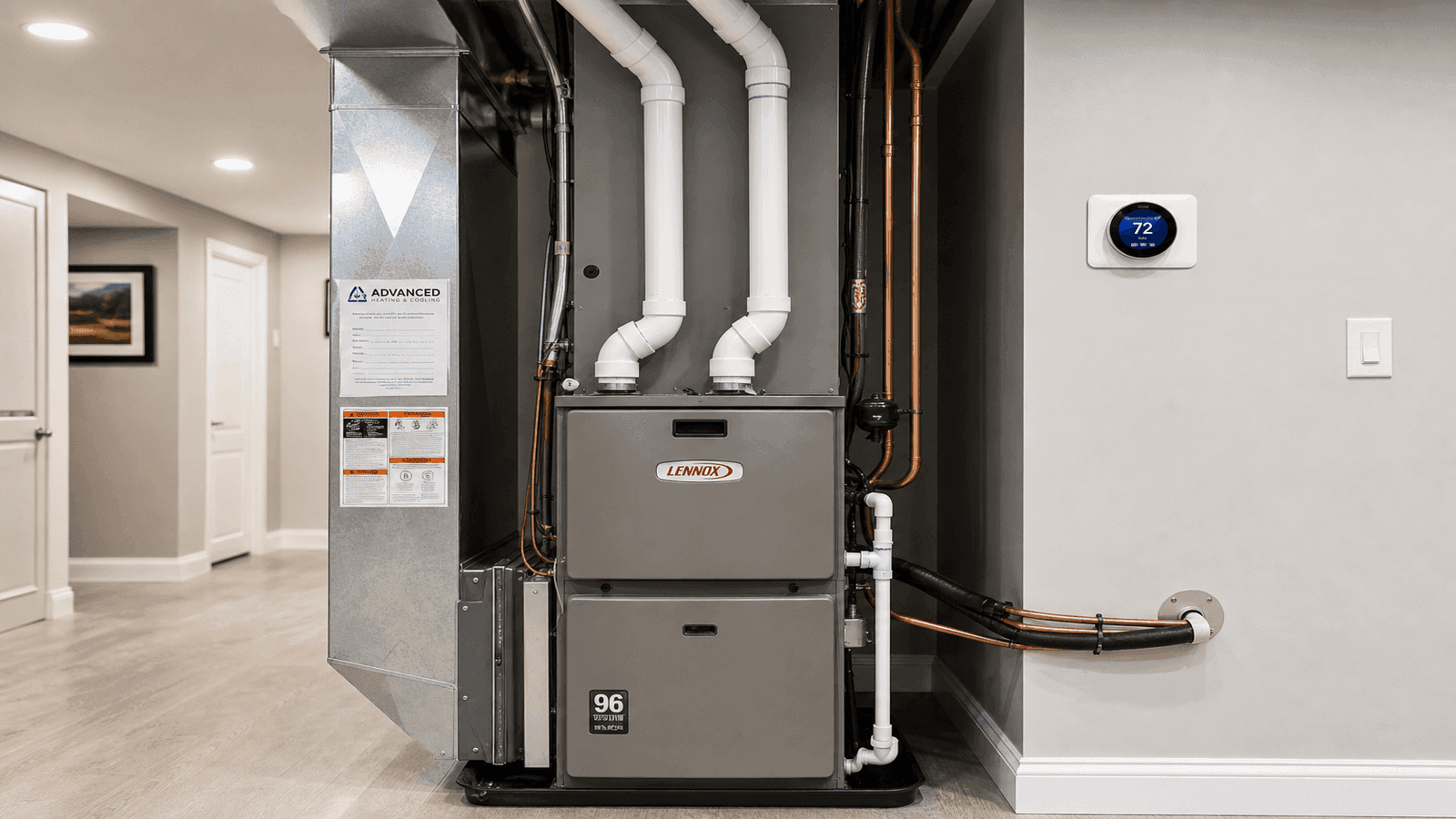
Photo: Completed high-efficiency HVAC system installation in a residential basement with furnace, coil, and smart thermostat
Disclaimer
This article provides general cost estimates and guidance for informational purposes only. Actual costs vary by location, home condition, equipment selection, and contractor pricing. All prices reflect 2026 national averages and may differ in your local market. Tax credit and rebate information is current as of May 2026 but is subject to change. Consult a licensed HVAC professional for a project-specific estimate and a qualified tax advisor for personalized tax guidance. NearbyHunt does not provide tax, legal, or financial advice.
Sources
- Energy Efficient Home Improvement Credit - IRS
- Federal Tax Credits for Energy Efficiency - ENERGY STAR
- HVAC Installation Cost in 2026 - BuiltRight Academy
- NearbyHunt HVAC Quote Data, Q1 2026
- 2026 Carrier Air Conditioner Prices - Carrier
- AHRI Monthly Shipment Data Reports
- Cold Climate Heat Pump Technology - Northeast Energy Efficiency Partnerships
- Geothermal Heat Pump Installation and Pricing 2026 - Bryant
- Cost to Install Air Conditioning 2026 - Homewyse
- HVAC Rebates by State 2026 - HVAC Project Cost

Daniel is an EPA-certified HVAC technician & Energy Efficiency Consultant with over 14 years of experience in maintaining and installing heating and cooling systems throughout the Midwest. Passionate about sustainability, Dan specialises in energy-efficient retrofits and intelligent climate control systems. He writes for NearbyHunt to help homeowners extend the lifespan of their HVAC units while lowering utility bills.

Christine is an EPA-certified HVAC professional with 17 years of experience in heating, cooling, and indoor air quality systems. She has managed large-scale residential installations and worked as a technical trainer for new HVAC apprentices. Chris’s reviews focus on accuracy, safety, and performance standards in modern HVAC practices.