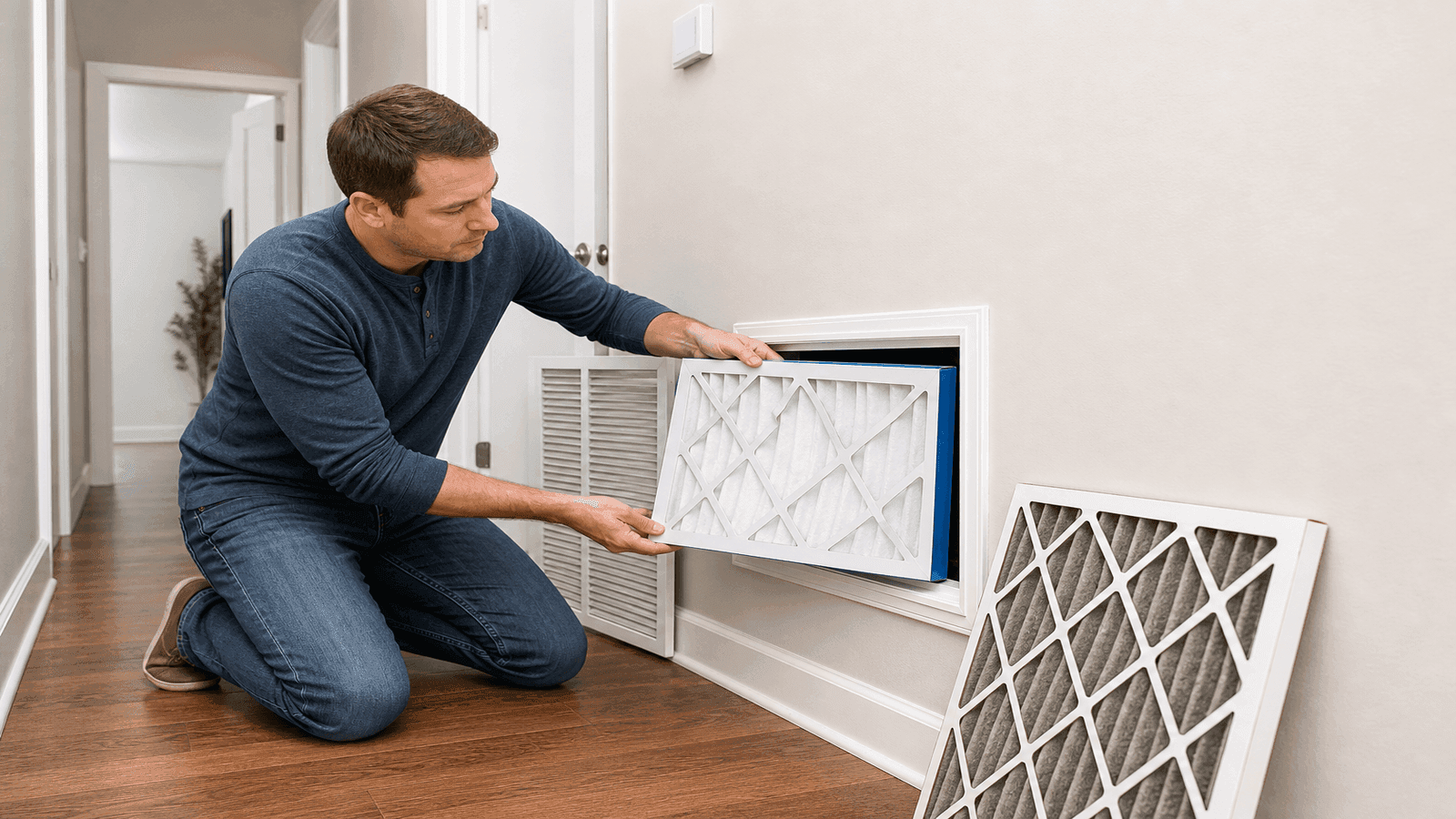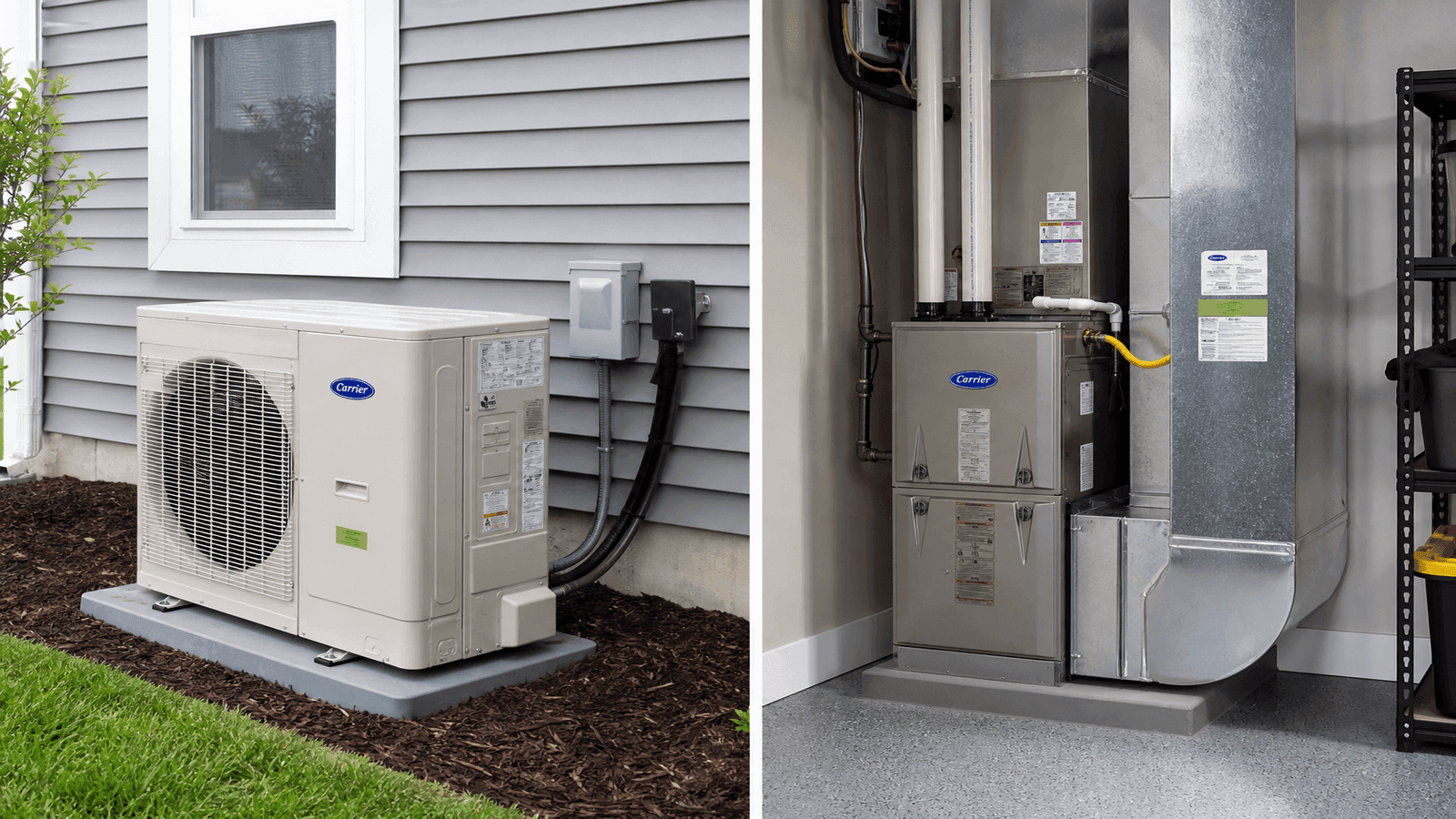
- HVAC is not a specific system type. It stands for Heating, Ventilation, and Air Conditioning. Heat pumps, furnaces, and air conditioners all fall under the HVAC umbrella [1].
- Heat pump sales outpaced gas furnaces by 12% in 2025, with 3.6 million units shipped versus 3.2 million gas furnaces [2].
- Cold-climate heat pumps now operate at -15 to -22 degrees F, with models from Mitsubishi, Daikin, and Bosch maintaining full capacity at 5 degrees F [3].
- A heat pump replaces both your furnace and air conditioner with a single system. A traditional setup uses two separate pieces of equipment.
- Federal 25C tax credits expired December 31, 2025. State HOMES Act rebates still offer up to $8,000 for qualifying households [4]. Geothermal systems retain a 30% federal credit through 2032.
- Dual-fuel systems are the fastest-growing configuration in Northern states, handling 85-95% of heating hours with the heat pump [5].
"Should I get a heat pump or HVAC?" is one of the most common questions homeowners ask when shopping for new heating and cooling equipment. The question contains a misconception that leads thousands of buyers toward the wrong decision every year. HVAC stands for Heating, Ventilation, and Air Conditioning. It is an umbrella term for all climate control systems.
A heat pump IS a type of HVAC system, not a competitor to one. The real comparison most people are looking for is heat pump system versus traditional furnace plus air conditioner [1].
Heat pump shipments outpaced gas furnace sales by 12% in 2025, with manufacturers shipping approximately 3.6 million heat pump units compared to 3.2 million gas furnaces [2]. That gap has widened every year since 2022, driven by cold-climate technology improvements and state rebate programs.
But a heat pump is not automatically the best choice for every home. Climate zone, existing infrastructure, and local energy costs all affect which configuration delivers the best value.

Get quotes from top-rated pros.
The first thing I tell every customer is that a heat pump IS an HVAC system. Once we clear up that confusion, the real conversation starts: what does your home need, what does your budget allow, and what are your energy goals? In Minneapolis, I install heat pumps, gas furnaces, and dual-fuel systems depending on the situation. There is no universal best answer.
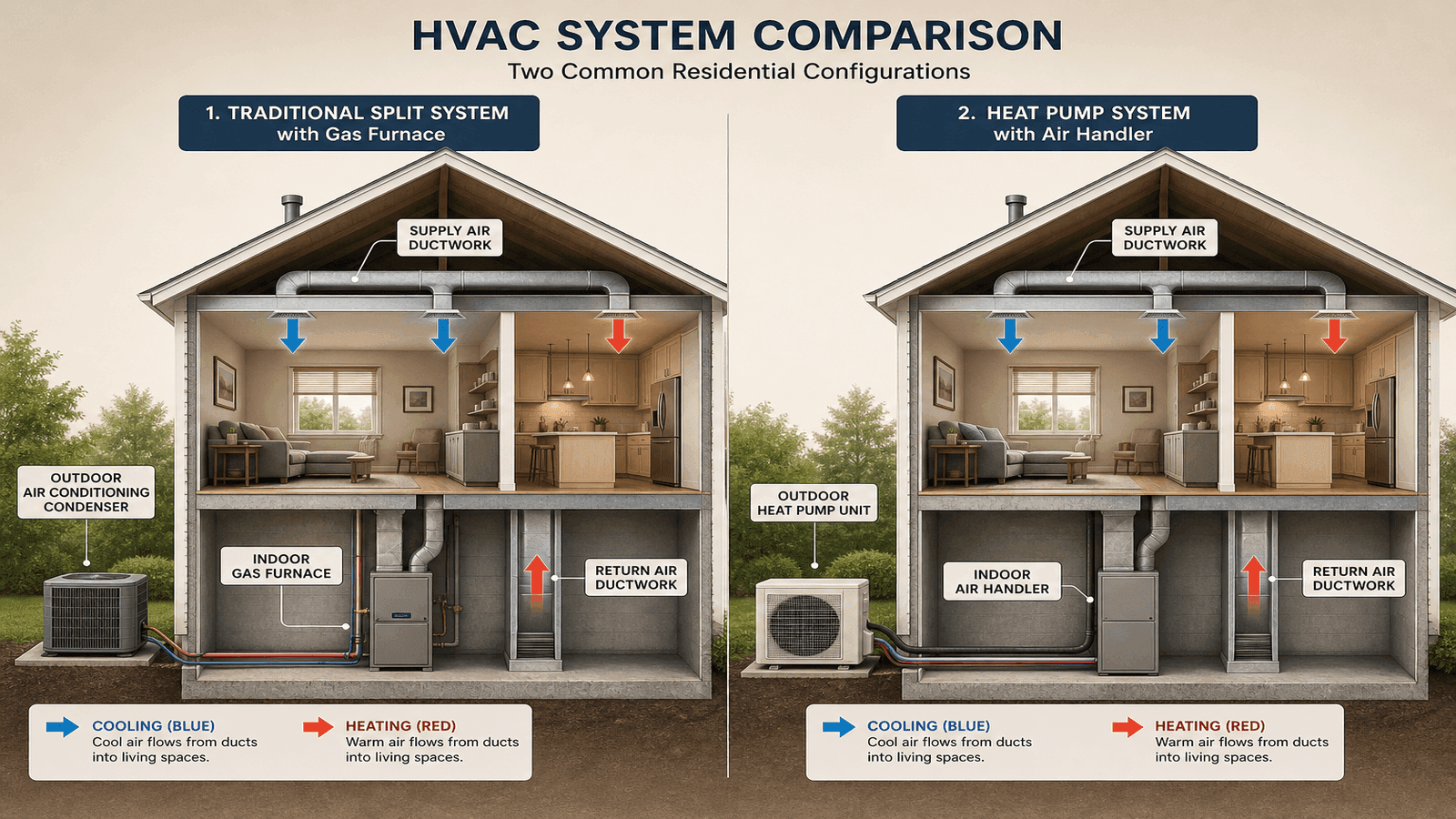
Photo: Comparison diagram showing a heat pump system versus a traditional furnace plus air conditioner setup in a residential home
What People Actually Mean
When someone searches "HVAC vs heat pump," they are comparing two configurations:
Traditional Furnace + Air Conditioner: A gas or oil furnace for heating and a separate air conditioner for cooling. Two machines, two energy sources, two mechanisms. This has been the standard residential setup since the 1970s.
Heat Pump System: A single outdoor unit handles both heating and cooling. In summer, it works exactly like an air conditioner. In winter, it reverses the refrigeration cycle, extracting heat from outdoor air and delivering it inside. One machine, one energy source (electricity).
The fundamental difference: a gas furnace creates heat through combustion at 80-98% efficiency. A heat pump moves existing heat using the refrigeration cycle, achieving 200-400% efficiency because moving heat requires less energy than creating it [6]. This is measured as COP (Coefficient of Performance), where a COP of 3.0 means every dollar of electricity produces three dollars of heating.
A third option is the dual-fuel system, pairing a heat pump with a gas furnace backup. The heat pump handles mild and moderate weather at high efficiency. When temperatures drop below the economic balance point (typically 25-35 degrees F), the gas furnace takes over. HVAC professionals in the NearbyHunt network report that dual-fuel systems now represent roughly 45% of new installations in Northern states.
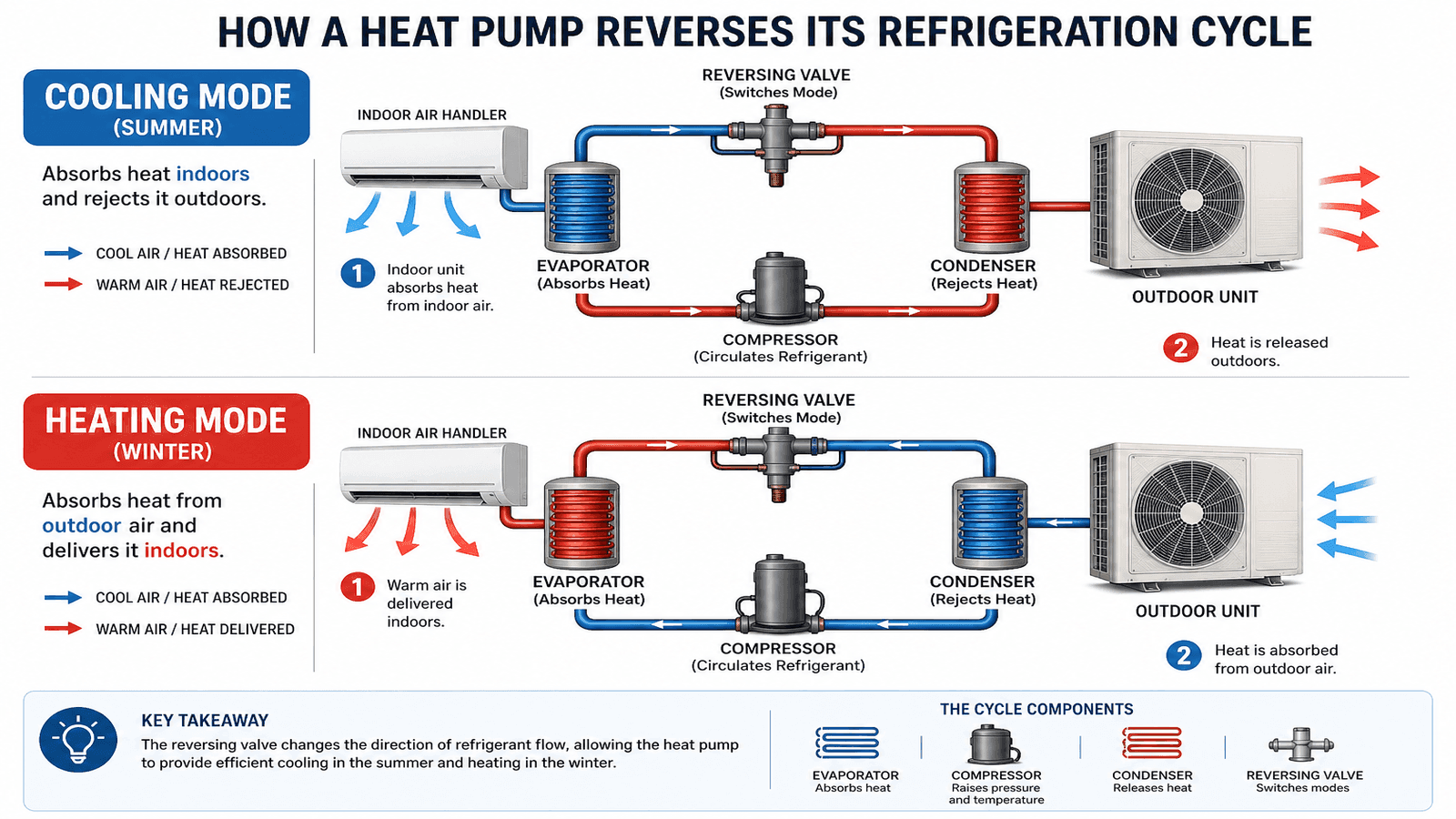
Photo: Infographic explaining how a heat pump reverses the refrigeration cycle to provide both heating and cooling from a single outdoor unit
Efficiency Comparison
Cooling Efficiency
Both heat pumps and air conditioners use SEER2 to measure cooling performance. Minimum requirements are 13.4 SEER2 in Northern states and 14.3 SEER2 in Southern states, with high-efficiency models reaching 18-22+ SEER2 [7]. In cooling mode, there is no meaningful efficiency difference between a quality AC and a quality heat pump at the same rating.
Heating Efficiency
| System Type | Metric | Typical Range | Meaning |
| Gas furnace (standard) | AFUE | 80% | 80 cents of every fuel dollar becomes heat |
| Gas furnace (high-efficiency) | AFUE | 96-98.5% | Nearly all fuel becomes heat |
| Air-source heat pump | COP | 2.0-4.0 | Moves 2-4x more heat than electricity consumed |
| Geothermal heat pump | COP | 3.5-5.0 | Uses stable ground temperatures for higher efficiency |
Heat pump COP drops as outdoor temperatures decrease. At 17 degrees F, a typical COP falls to 2.0-2.5. Cold-climate models maintain higher COP values, but no air-source heat pump matches the consistent output of a gas furnace during a polar vortex [3].
Get quotes from top-rated pros.
Efficiency on paper and efficiency in your home are two different things. A 96% AFUE furnace sounds great until you factor in 20-30% duct losses. A heat pump with a COP of 3.0 sounds even better until you realize that COP was measured at 47 degrees and your January average is 10 degrees. I always calculate actual operating costs using local utility rates and real weather data.
Cost Comparison
Installation Costs (2026 Averages)
| System | Equipment + Installation | Notes |
| Gas furnace + central AC | $7,000 - $14,000 | Two units |
| Air-source heat pump (ducted) | $10,000 - $20,000 | Single system, both heating and cooling |
| Dual-fuel (heat pump + gas furnace) | $12,000 - $20,000 | Maximum flexibility |
| Geothermal heat pump | $20,000 - $35,000 | Ground loop adds significant cost |
After state rebates, a ducted heat pump can be price-competitive with a furnace-plus-AC system [8].
Annual Operating Costs
| Climate Zone | Furnace + AC | Heat Pump | Estimated Savings |
| Southeast (mild winters) | $1,800 - $2,400 | $1,200 - $1,600 | $500 - $900/year |
| Mid-Atlantic (moderate) | $2,200 - $2,800 | $1,600 - $2,200 | $400 - $700/year |
| Upper Midwest (cold) | $2,500 - $3,200 | $2,000 - $2,800 | $200 - $500/year |
| Pacific Northwest | $1,600 - $2,200 | $1,000 - $1,400 | $500 - $800/year |
Over a 15-year equipment lifespan, total cost of ownership typically favors heat pumps in moderate climates by $8,000 to $15,000. In cold climates, dual-fuel systems often deliver the lowest total cost [9].
Climate Zone Recommendations
Zones 1-3 (Florida, Texas, Arizona, Southeast): Heat pumps are the clear winner. Mild winters mean high efficiency year-round, with 30-50% savings on combined heating and cooling [9].
Zone 4 (Mid-Atlantic, Pacific Northwest): Heat pumps handle the full heating load in most years. Consider dual-fuel only if you have existing gas infrastructure and want backup for occasional cold snaps.
Zones 5-6 (Upper Midwest, Great Lakes, New England): Dual-fuel is the standard recommendation. Cold-climate heat pumps from Mitsubishi (Hyper-Heat), Bosch (IDS Ultra), and Daikin (Aurora) maintain full capacity at 5 degrees F and operate at -15 to -22 degrees F [3].
Zone 7 (Northern Minnesota, Montana, Alaska): Dual-fuel strongly recommended. While modern heat pumps operate at -22 degrees F, reduced efficiency at those temperatures raises electricity costs. Gas furnace backup keeps costs manageable.
Case Study: The Peterson Family, Denver
Mark and Sarah Peterson replaced a 15-year-old 80% AFUE gas furnace and 10 SEER AC in their 2,400 square foot Denver home. They chose a Bosch IDS 2.0 cold-climate heat pump paired with a 96% AFUE gas furnace backup.
Results after one full year:
- Heating and cooling costs dropped from $3,100/year to $2,050/year (34% reduction)
- Heat pump handled 89% of heating hours
- Gas furnace ran only 16 days when temperatures dropped below 15 degrees F
- $4,000 Colorado HOMES Act rebate brought net system cost to $11,200
- Projected payback: 4.8 years
NearbyHunt Network Insight: HVAC contractors in the NearbyHunt network serving Colorado report that dual-fuel installations now exceed 50% of new system replacements in the Denver metro area, up from roughly 20% in 2022.
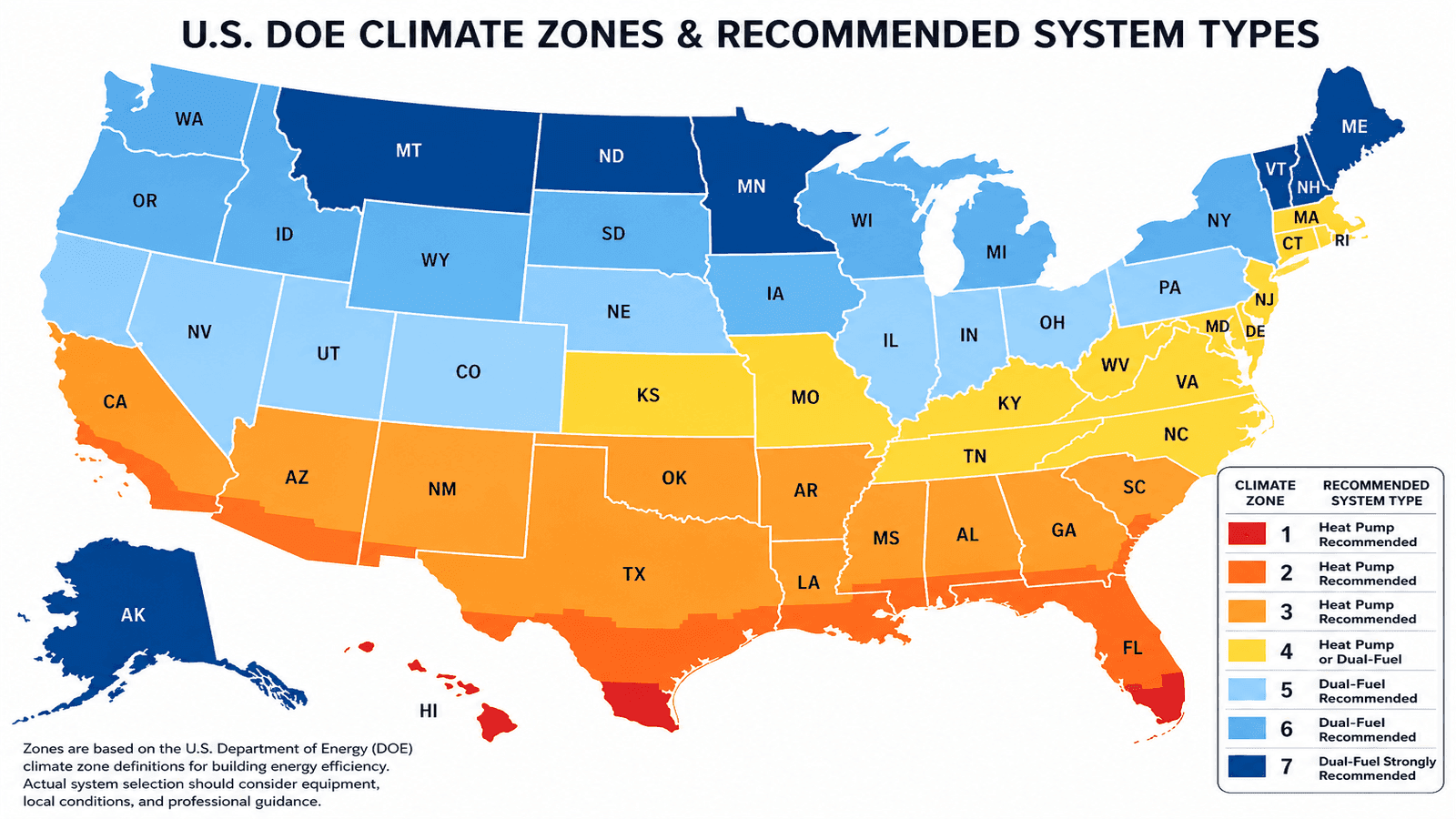
Photo: Map of U.S. DOE climate zones showing recommended system type for each region from heat pump in warm zones to dual-fuel in cold zones
Rebates and Incentives in 2026
The federal 25C tax credit expired at year-end 2025. Here is what remains available [4]:
Geothermal: 30% federal tax credit on total installed cost, no income cap, through 2032.
HOMES Act Rebates (state-administered):
- Below 80% Area Median Income: up to $8,000 (100% of eligible costs)
- 80-150% AMI: up to $4,000 (50% of eligible costs)
- Over 30 states have launched programs as of May 2026
Utility Rebates: Many utilities offer $500-$2,000 for high-efficiency heat pumps, stackable with HOMES Act rebates.
Gas furnaces do not qualify for HOMES Act rebates. The incentive structure strongly favors heat pump adoption.
Get quotes from top-rated pros.
Equipment Lifespan and Maintenance
| Factor | Gas Furnace + AC | Heat Pump |
| Average lifespan | Furnace: 15-25 years; AC: 15-20 years | 12-15 years (runs year-round) |
| Annual maintenance cost | $150-$300 (two systems) | $100-$200 (one system) |
| Professional tune-ups | 2x/year | 2x/year |
| Common failures | Heat exchanger, ignitor, compressor, capacitor | Compressor, reversing valve, defrost board |
Heat pumps have shorter lifespans because they run year-round. But you maintain one system instead of two. Dual-fuel configurations extend heat pump life by reducing winter workload [10].
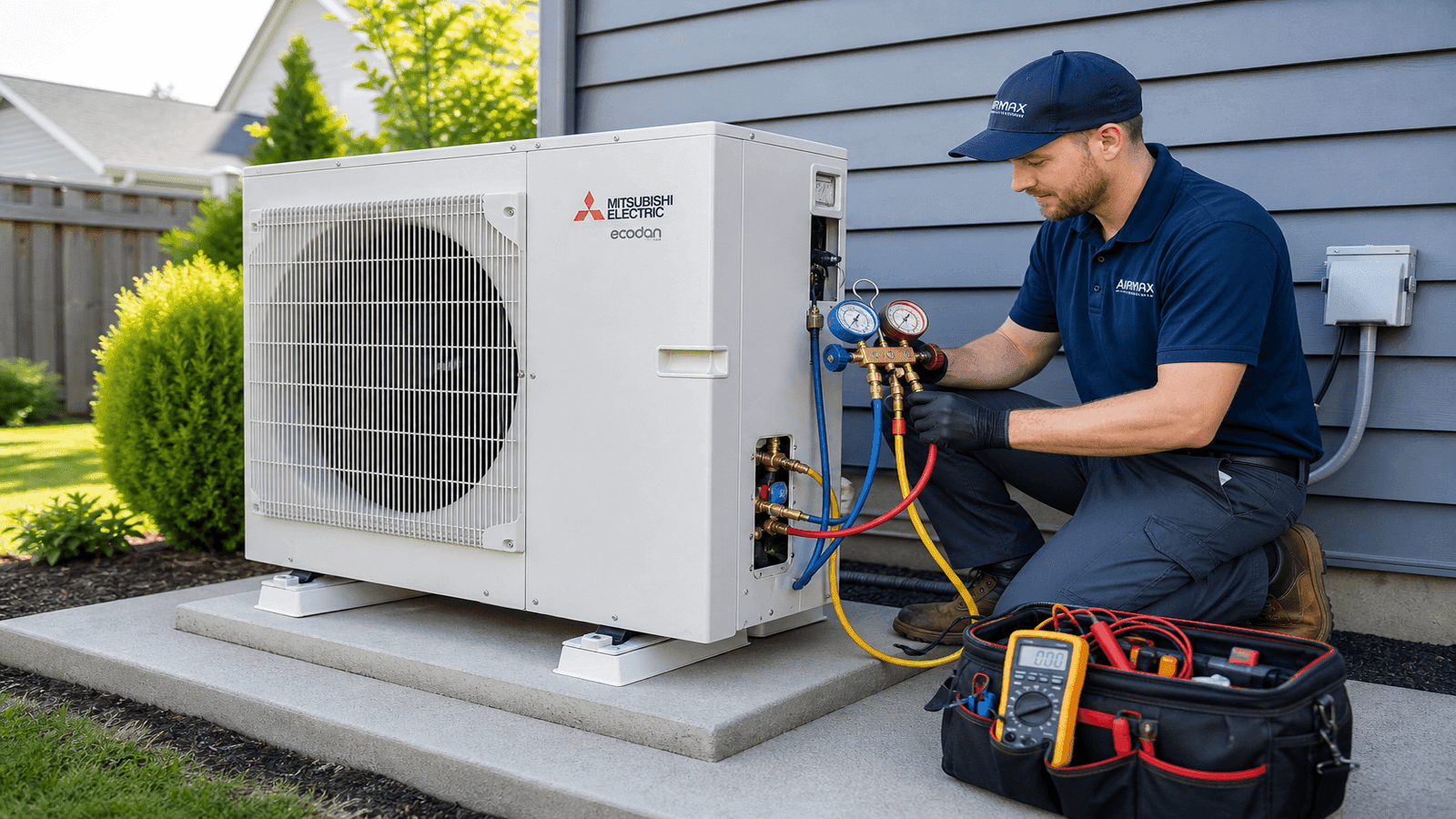
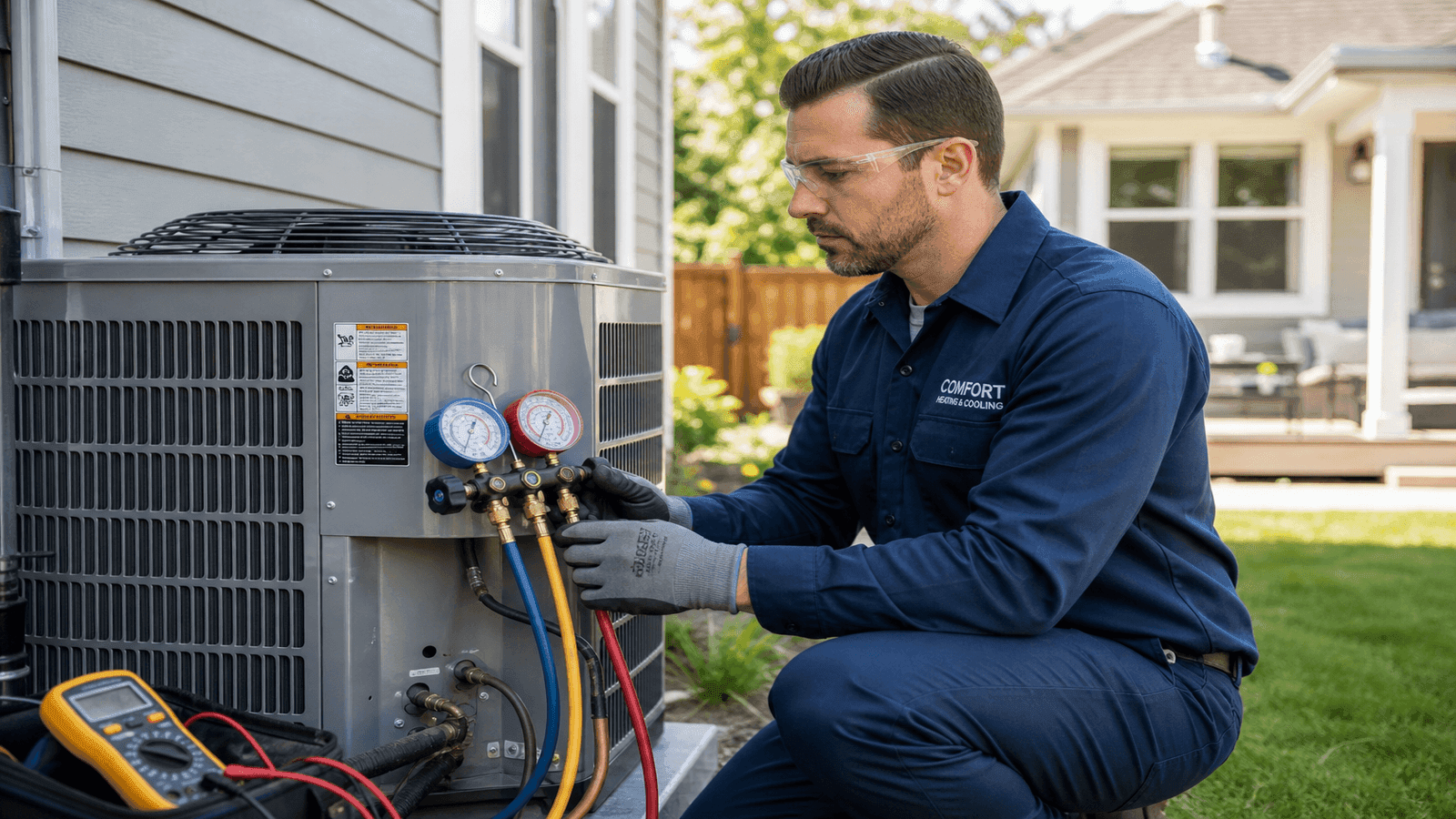
Photo: HVAC technician performing maintenance on a residential heat pump outdoor unit with refrigerant gauges
How to Decide
Choose a standalone heat pump if:
- You live in Climate Zones 1-4 (mild to moderate winters)
- Local electricity rates are below $0.16/kWh
- You qualify for HOMES Act rebates
Choose dual-fuel if:
- You live in Climate Zones 5-7 (cold winters)
- You have existing natural gas service
- You want maximum efficiency across all seasons
Choose furnace + AC if:
- Natural gas is very cheap (below $0.80/therm) AND electricity is expensive (above $0.18/kWh)
- Upfront budget is the primary constraint and rebates are unavailable
- Your electrical panel cannot support a heat pump without costly upgrades
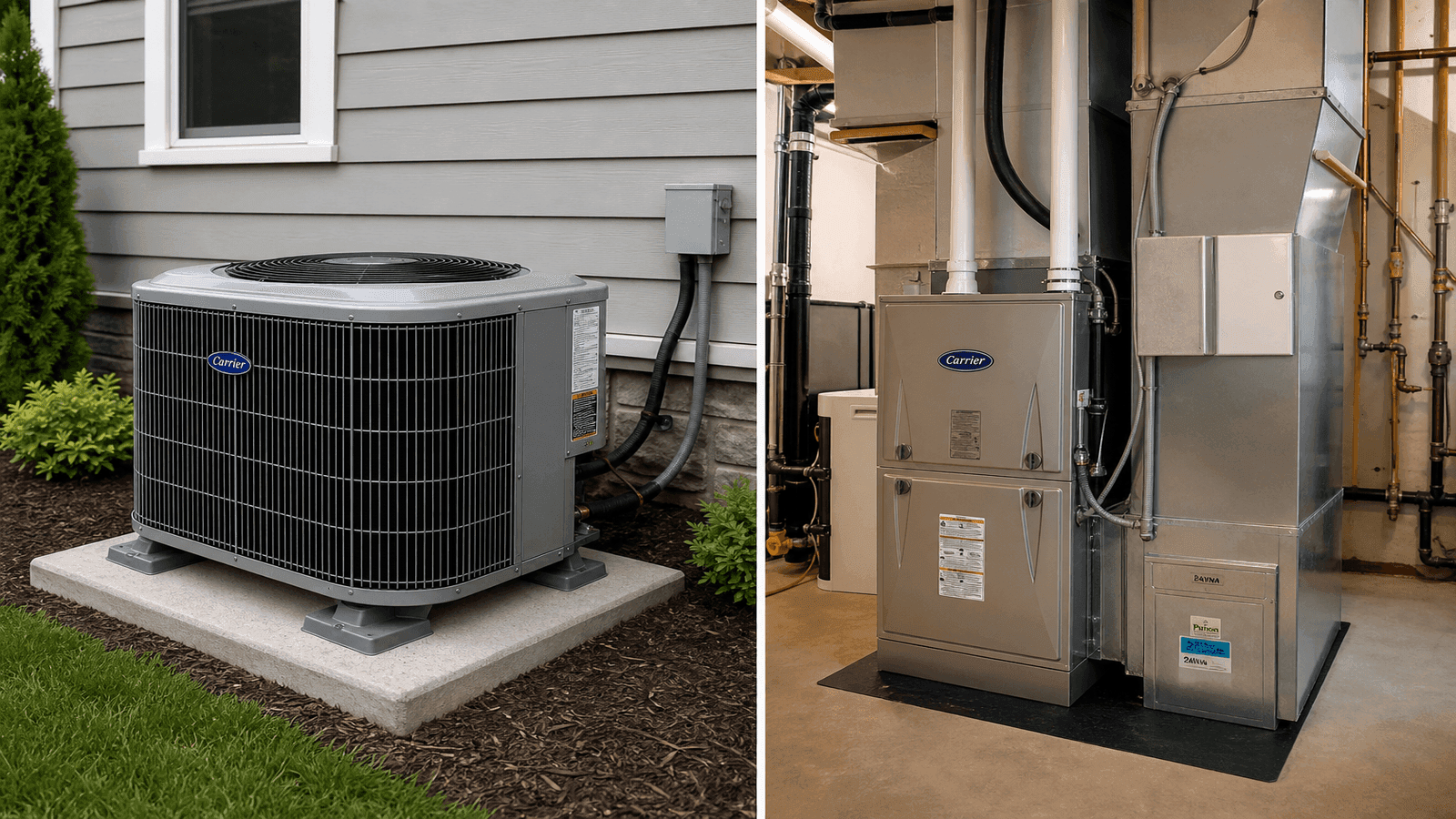
Photo: Completed dual-fuel HVAC installation showing heat pump outdoor unit and gas furnace indoor unit in a residential utility room
Conclusion
How We Gathered This Data?: Statistics and cost figures come from federal agency reports (U.S. DOE, EPA, EIA), industry organisations (AHRI, ACCA, NATE), manufacturer specifications (Mitsubishi, Bosch, Daikin), and market data (Canary Media). NearbyHunt network data reflects contractor-reported trends from licensed HVAC professionals handling thousands of installations annually across all 50 states. Reviewed by Christine Walters (EPA 608, NATE, OSHA 10-Hour, R-410A Certified), Kansas City, MO.
Disclaimer: This article provides general educational information about HVAC system selection and is not professional HVAC advice for specific situations. Local codes, climate conditions, energy rates, and home characteristics vary. Always consult a licensed HVAC professional for system-specific recommendations. Cost estimates are national averages as of 2026 and may differ in your area.
Sources & References
[1] U.S. Department of Energy. "Heating and Cooling."
[2] Canary Media. "Heat pump sales dipped in 2025. They still beat gas furnaces."
[3] EnergySage. "Best Cold Climate Heat Pumps." NuWatt Energy. "Cold-Climate Heat Pumps at 5 Degrees F and Below."
[4] U.S. Department of Energy. "Home Upgrades." IRS. "Energy Efficient Home Improvement Credit."
[5] American Standard. "Understanding AFUE, EER2, HSPF2 and SEER2."
[6] Trane. "Learn HVAC Metrics."
[7] DOE/ICC. "SEER2/EER2 Efficiency Requirements."
[8] This Old House. "How Much Does a Heat Pump Cost?" BuiltRight Academy. "HVAC Installation Cost in 2026."
[9] AC Direct. "Heat Pump vs. Gas Furnace in 2026." InverterCool. "Gas Furnace vs. Heat Pump: 2026 Guide."
[10] ENERGY STAR. "Heating and Cooling Equipment."

Daniel is an EPA-certified HVAC technician & Energy Efficiency Consultant with over 14 years of experience in maintaining and installing heating and cooling systems throughout the Midwest. Passionate about sustainability, Dan specialises in energy-efficient retrofits and intelligent climate control systems. He writes for NearbyHunt to help homeowners extend the lifespan of their HVAC units while lowering utility bills.

Christine is an EPA-certified HVAC professional with 17 years of experience in heating, cooling, and indoor air quality systems. She has managed large-scale residential installations and worked as a technical trainer for new HVAC apprentices. Chris’s reviews focus on accuracy, safety, and performance standards in modern HVAC practices.