- HVAC stands for Heating, Ventilation, and Air Conditioning, a complete climate control system that regulates temperature, humidity, and air quality inside your home using a network of indoor and outdoor components [1].
- The refrigeration cycle is the core of all cooling and heat pump systems, using four steps (compression, condensation, expansion, evaporation) to move heat from one place to another rather than creating it from scratch [2].
- Your furnace, air handler, and ductwork form the delivery system, pushing conditioned air through supply vents at roughly 400 CFM per ton of cooling capacity and pulling return air back for reconditioning.
- Variable-speed inverter systems run 30-100% capacity, continuously adjusting output to match the exact load. These systems are 30-40% more efficient than single-stage equipment and deliver the most consistent temperatures [3].
- SEER2 replaced SEER as the federal efficiency metric in 2023, with minimum requirements of 13.4 SEER2 in Northern states and 14.3 SEER2 in Southern states for all new installations [4].
- Regular maintenance prevents up to 25% energy waste, and the U.S. Department of Energy estimates that unmaintained systems eventually consume 30% more energy than properly serviced equipment [5].
Your HVAC system is the largest energy consumer in your home, accounting for nearly 48% of total residential energy use according to the U.S. Department of Energy [1]. Despite this, most homeowners have only a vague idea of what actually happens when they adjust the thermostat.
This guide breaks down the heating, cooling, and ventilation processes inside your system, explains each component and its role, and covers the efficiency metrics that determine your energy bills. This article is part of our comprehensive All About HVAC pillar resource.

Get quotes from top-rated pros.
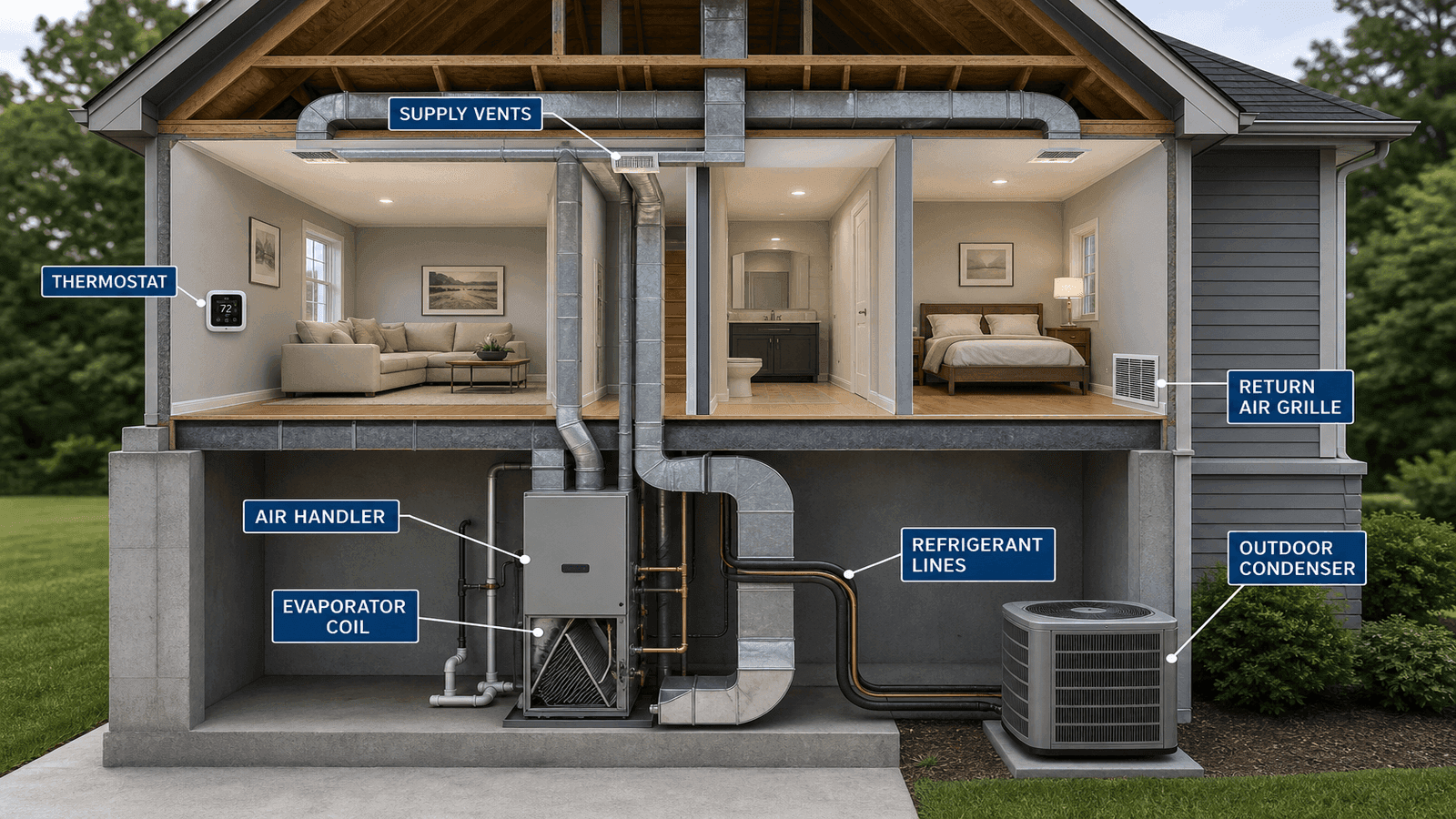
Photo: Cutaway illustration of a residential HVAC system showing indoor and outdoor units connected by refrigerant lines
What HVAC Actually Means
HVAC is an acronym for Heating, Ventilation, and Air Conditioning. These three functions work together to maintain comfortable indoor conditions year-round.
Heating raises indoor temperatures during cold months using a furnace (gas, oil, or electric), a heat pump, or a boiler. Gas furnaces burn natural gas or propane in a combustion chamber and transfer that heat to air passing over a heat exchanger. Heat pumps extract thermal energy from outdoor air (even cold air contains usable heat) and deliver it indoors through the refrigeration cycle.
Ventilation is the controlled exchange of indoor and outdoor air. Mechanical ventilation uses fans and ductwork to circulate fresh air, remove stale air, and control moisture levels. Your HVAC system's blower motor handles the mechanical ventilation, while exhaust fans in bathrooms and kitchens supplement the process. Proper ventilation prevents indoor pollutant buildup, controls humidity, and reduces the conditions that lead to mold growth [1].
Air Conditioning removes heat and moisture from indoor air during warm months. Every air conditioning system uses the refrigeration cycle to absorb indoor heat and reject it outdoors. The term "air conditioning" technically includes humidity control, not just cooling, which is why your system also removes moisture from the air as it cools.
Homeowners often focus on heating and cooling but forget ventilation entirely. In tightly sealed modern homes, poor ventilation causes indoor air quality problems, humidity issues, and even premature equipment failure. All three parts of HVAC need to work together for a comfortable and healthy home.
The Refrigeration Cycle Explained
The refrigeration cycle is the fundamental process behind all air conditioners, heat pumps, and refrigerators. Understanding this cycle explains how your system moves heat and why certain components fail.
The cycle relies on one scientific principle: when a liquid evaporates into a gas, it absorbs heat from its surroundings. When a gas condenses back into a liquid, it releases heat. Your HVAC system exploits this principle using a chemical compound called refrigerant (most commonly R-410A, with R-454B becoming the new standard for systems manufactured after January 2025) [2].
Here are the four steps of the refrigeration cycle:
Step 1: Compression
The compressor, located in the outdoor unit, acts as the heart of the system. It receives low-pressure, low-temperature refrigerant gas from the indoor evaporator coil and compresses it into high-pressure, high-temperature gas. This compression raises the refrigerant temperature well above the outdoor air temperature, which is critical for the next step. The compressor is the most expensive single component in your system, typically costing $1,500 to $3,000 to replace [2].
Step 2: Condensation
The hot, high-pressure refrigerant gas flows through the condenser coil (the outdoor coil in cooling mode). A fan blows outdoor air across the condenser coil, and because the refrigerant is hotter than the outdoor air, heat transfers from the refrigerant to the outside air. As the refrigerant loses heat, it condenses from a gas into a high-pressure liquid. This is why you feel warm air blowing from your outdoor unit during summer. It is your indoor heat being rejected outside [2].
Step 3: Expansion
The high-pressure liquid refrigerant passes through the expansion valve (also called a metering device or thermostatic expansion valve). This device creates a dramatic pressure drop, which causes the refrigerant temperature to plummet. The refrigerant exits the expansion valve as a cold, low-pressure mixture of liquid and vapor. The expansion valve regulates exactly how much refrigerant enters the evaporator, matching the system's cooling demand [2].
Step 4: Evaporation
The cold, low-pressure refrigerant flows through the evaporator coil inside your home. The blower motor pushes warm indoor air across this coil. Because the refrigerant is much colder than the indoor air, it absorbs heat from the air, cooling it. As the refrigerant absorbs heat, it evaporates from liquid back to gas. The now-cooled air is distributed through your ductwork to each room. The warmed refrigerant gas returns to the compressor, and the cycle repeats [2].
The entire cycle runs continuously while your system is operating, typically completing multiple loops per minute. In cooling mode, the evaporator is indoors (absorbing heat) and the condenser is outdoors (rejecting heat). Heat pumps can reverse this flow using a component called a reversing valve, making the outdoor coil the evaporator in winter to absorb heat from outdoor air and deliver it indoors.
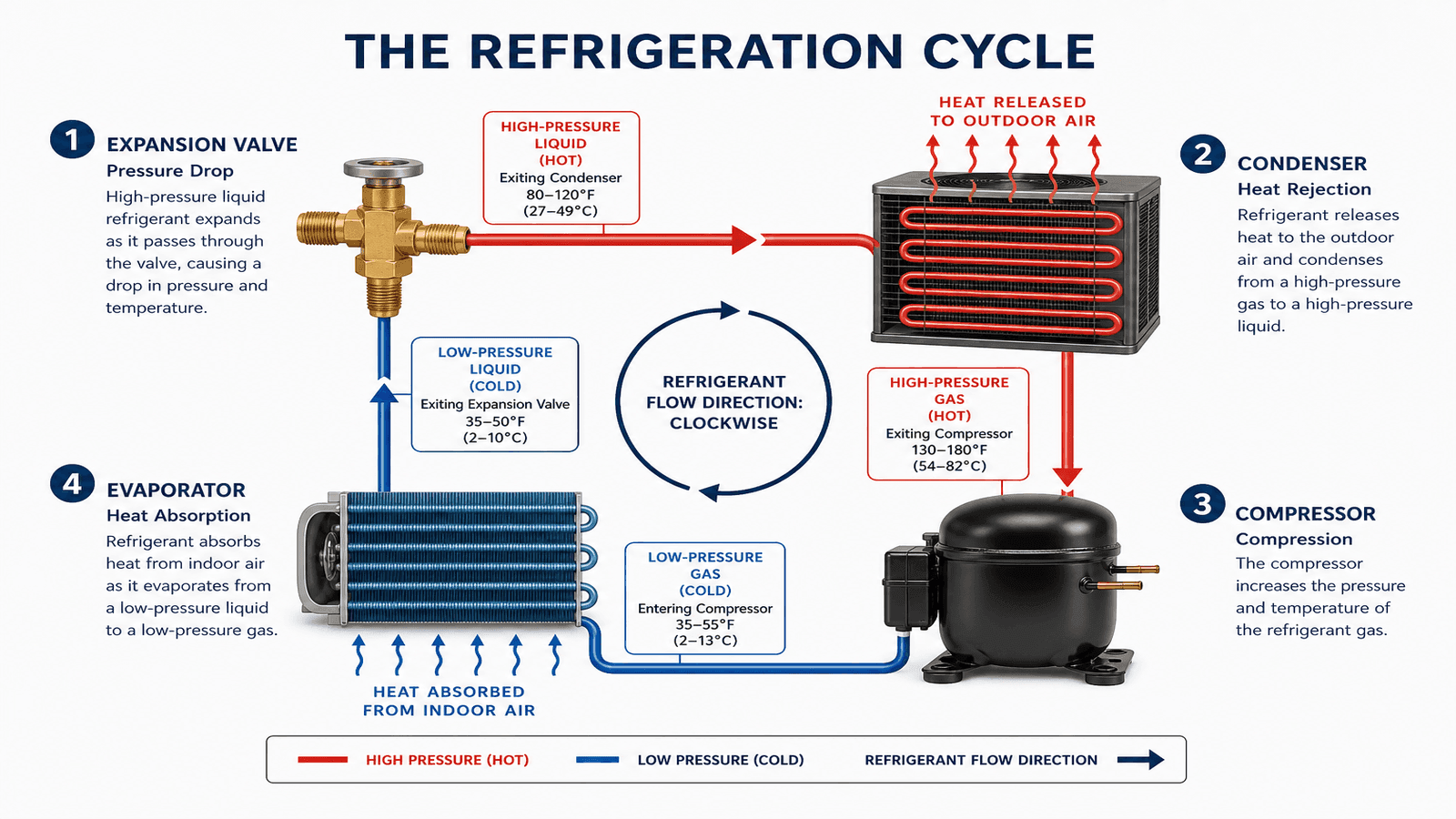
Photo: Diagram of the refrigeration cycle showing compressor, condenser, expansion valve, and evaporator with refrigerant flow direction
Major Components and What They Do
Every residential HVAC system consists of several interconnected components. Here is what each one does and why it matters.
Thermostat
The thermostat is the control center of your HVAC system. It measures the current indoor temperature and signals the system to turn on or off based on your desired setpoint. Modern programmable and smart thermostats (Nest, Ecobee, Honeywell Home) allow scheduled temperature adjustments, learning algorithms, and remote control via smartphone apps. According to ENERGY STAR, a properly programmed thermostat can save approximately 8% on heating and cooling costs annually [3].
Get quotes from top-rated pros.
Furnace or Air Handler
The furnace generates heat through combustion (gas or oil) or electric resistance elements. The air handler houses the blower motor and evaporator coil. In many systems, the furnace doubles as the air handler, containing the blower that circulates air for both heating and cooling modes.
Gas furnaces are rated by AFUE (Annual Fuel Utilization Efficiency). A 96% AFUE furnace converts 96 cents of every dollar spent on gas into heat, with only 4 cents lost through exhaust. High-efficiency condensing furnaces achieve 95-98% AFUE by extracting additional heat from exhaust gases through a secondary heat exchanger [1].
Evaporator Coil
This A-shaped or N-shaped coil sits inside the air handler or on top of the furnace. Cold refrigerant flows through the coil's copper or aluminum tubing while indoor air passes over the fins. The coil absorbs heat from the air, cooling it before distribution. The evaporator also removes humidity: as warm air contacts the cold coil surface, moisture condenses on the fins and drips into a drain pan, lowering indoor humidity levels.
Condenser Unit
The outdoor unit houses the compressor, condenser coil, and condenser fan. The condenser coil releases absorbed indoor heat to the outside air. Proper airflow around the condenser is essential, which is why manufacturers recommend maintaining at least 24 inches of clearance on all sides and keeping the unit free of leaves, grass clippings, and debris [1].
Ductwork
Ducts are the highway system for conditioned air. Supply ducts carry heated or cooled air from the air handler to each room through supply registers. Return ducts pull room air back to the system for reconditioning. According to ENERGY STAR, the average home loses 20-30% of heating and cooling energy through duct leaks, holes, and poorly connected ductwork [6]. Proper duct sealing and insulation are among the most cost-effective efficiency improvements a homeowner can make.
Blower Motor
The blower motor is the component that actually moves air through your system and ductwork. There are three main types:
- Single-speed (PSC motors): On/off operation at one fixed speed. Least expensive but least efficient and loudest.
- Multi-speed: Can operate at several preset speeds selected by the control board based on heating or cooling mode.
- Variable-speed (ECM motors): Continuously adjust speed to match the exact airflow needed. These motors use 60-75% less electricity than PSC motors and produce significantly less noise [3].
Air Filter
The air filter traps dust, pollen, pet dander, and other airborne particles before they reach the evaporator coil. A clogged filter restricts airflow, forcing the blower to work harder and reducing system efficiency. The U.S. Department of Energy reports that replacing a dirty filter with a clean one can lower air conditioner energy consumption by 5-15% [5]. Filters should be checked monthly and replaced every 1-3 months depending on the filter type, household size, and whether pets are present.
The Heating Cycle
When your thermostat detects that indoor temperature has dropped below the setpoint, it signals the heating system to start. What happens next depends on your system type.
Gas Furnace Heating Cycle:
- The thermostat sends a signal to the furnace control board.
- The draft inducer motor starts, pulling combustion gases through the heat exchanger to verify proper exhaust venting.
- The gas valve opens and the igniter (hot surface igniter or spark igniter) lights the burners.
- Flames heat the metal heat exchanger tubes. Indoor air passes over the outside of these tubes, absorbing heat without contacting combustion gases.
- Once the supply air reaches a preset temperature (typically 120-140 degrees Fahrenheit), the blower motor activates and begins distributing heated air through the ductwork.
- When the thermostat senses the setpoint has been reached, the gas valve closes, the burners shut off, and the blower continues running briefly to extract remaining heat from the heat exchanger before shutting down.
Heat Pump Heating Cycle:
- The reversing valve switches refrigerant flow direction so the outdoor coil becomes the evaporator and the indoor coil becomes the condenser.
- The outdoor coil absorbs heat from outdoor air (even at low temperatures, outdoor air contains thermal energy).
- The compressor pressurizes the refrigerant, raising its temperature significantly.
- Hot refrigerant flows through the indoor coil, releasing heat into the air stream.
- The blower distributes this warmed air through the ductwork.
- Supply air temperature from a heat pump is typically 90-100 degrees Fahrenheit, lower than a furnace but delivered over longer run times.
In dual-fuel systems, the heat pump handles heating during mild weather. When outdoor temperatures drop below the economic balance point (typically 25-35 degrees Fahrenheit depending on local energy costs), the system automatically switches to the gas furnace backup for more cost-effective heating [1].
The number one complaint I hear about heat pumps in cold climates is that the air coming out of the vents doesn't feel as hot as a furnace. That is normal. Heat pumps deliver 90-100 degree air instead of 120-140 degree air, but they run longer to maintain the same room temperature. The total heat delivered is the same, and the operating cost is usually lower.
The Cooling Cycle
When indoor temperature rises above the thermostat setpoint, the cooling cycle begins:
- The thermostat signals the outdoor unit and indoor blower to start.
- The compressor begins circulating refrigerant through the system.
- Cold refrigerant flows through the indoor evaporator coil.
- The blower pushes warm indoor air across the evaporator coil. The refrigerant absorbs heat from the air, cooling it by 15-20 degrees Fahrenheit as it passes over the coil.
- Moisture in the warm air condenses on the cold coil surface and drips into the condensate drain pan, reducing indoor humidity.
- The cooled, dehumidified air is distributed through supply ducts to each room.
- Return air grilles pull room air back to the system for reconditioning.
- Meanwhile, the hot refrigerant travels to the outdoor condenser coil, where it releases absorbed heat to the outside air.
- The cycle continues until the thermostat registers the setpoint temperature.
A properly sized air conditioning system should run in cycles of 15-20 minutes, two to three times per hour during peak cooling demand. If your system runs constantly or cycles on and off every few minutes (short cycling), it may be improperly sized, low on refrigerant, or have restricted airflow [1].
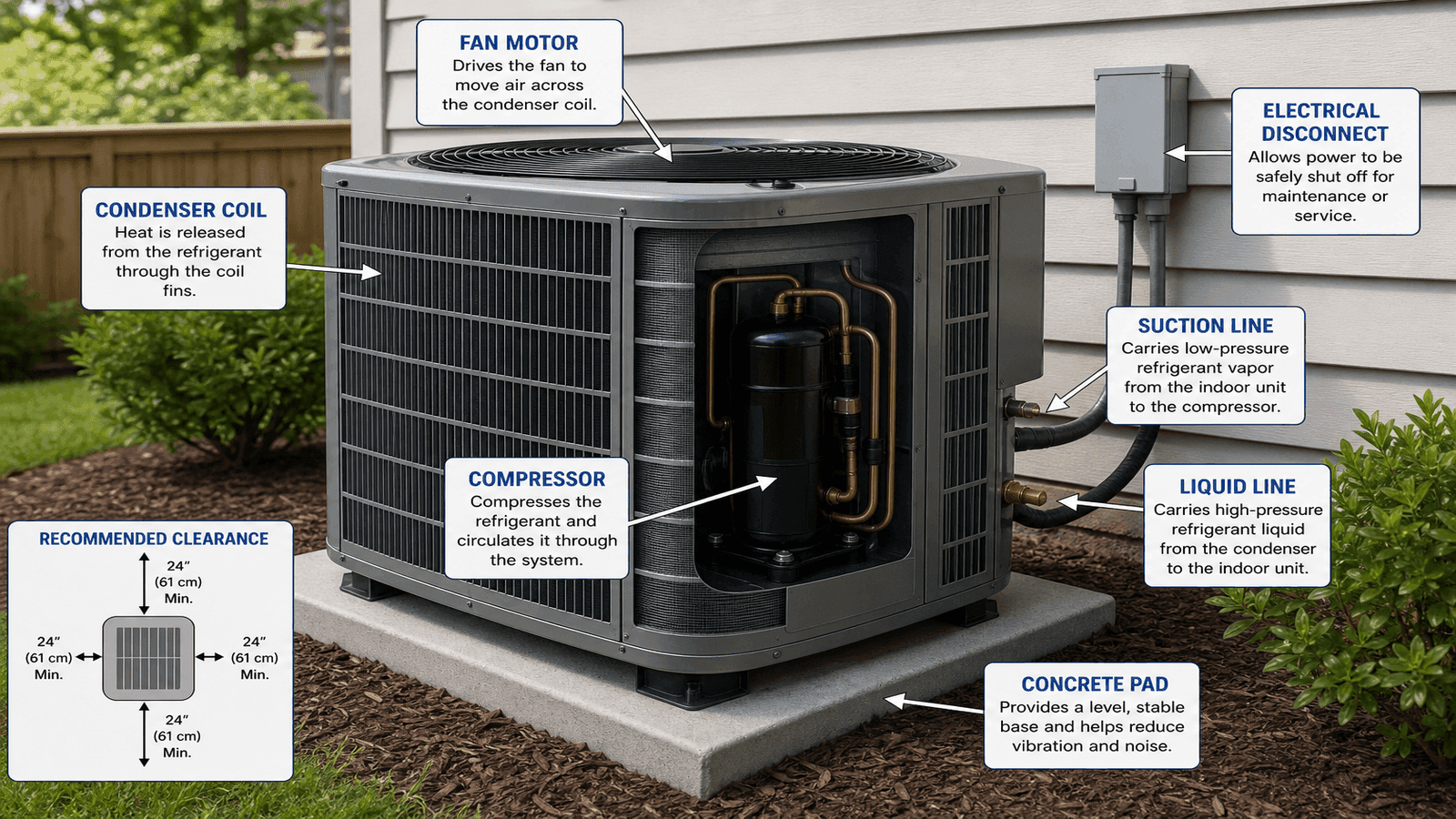
Photo: Residential air conditioner outdoor unit with labeled components including compressor, condenser coil, and fan
Ventilation and Air Quality
Ventilation is the "V" in HVAC, and it plays a larger role in home comfort and health than most homeowners realize.
Mechanical Ventilation
Your HVAC blower motor provides the primary mechanical ventilation, circulating air through the filter and ductwork. Supplemental ventilation includes:
- Exhaust fans in bathrooms and kitchens that remove moisture and cooking byproducts directly to the outdoors.
- Energy Recovery Ventilators (ERVs) and Heat Recovery Ventilators (HRVs) that bring in fresh outdoor air while transferring heat and (in ERVs) moisture between incoming and outgoing air streams. These devices provide fresh air ventilation without the energy penalty of conditioning raw outdoor air.
- Fresh air intakes connected to the return duct system that introduce measured amounts of outdoor air into the HVAC system for conditioning and distribution.
Get quotes from top-rated pros.
Filtration
Air filters are rated using the MERV scale (Minimum Efficiency Reporting Value), ranging from 1 to 20. For residential HVAC systems, the American Society of Heating, Refrigerating and Air-Conditioning Engineers (ASHRAE) recommends a minimum MERV 13 filter for effective particulate removal [7]. Higher MERV ratings capture smaller particles but also increase airflow resistance, so the filter rating must be compatible with your system's blower capacity.
| MERV Rating | Captures | Common Use |
| 1-4 | Large particles (dust, pollen) | Basic residential |
| 5-8 | Mold spores, pet dander | Standard residential |
| 9-12 | Fine dust, legionella | Better residential |
| 13-16 | Bacteria, smoke, sneeze droplets | Superior residential, hospitals |
| 17-20 | Viruses, carbon dust | Clean rooms, surgical suites |
Humidity Control
Your air conditioner naturally dehumidifies as a byproduct of the cooling process, but this is not always sufficient. Whole-house dehumidifiers integrate with your ductwork to maintain 30-50% relative humidity year-round. Proper humidity control prevents mold growth, reduces dust mite populations, and improves perceived comfort at higher thermostat setpoints [7].
Understanding HVAC Efficiency Ratings
Efficiency ratings tell you how much useful heating or cooling you get per unit of energy consumed. Higher numbers mean lower operating costs.
SEER2 (Cooling Efficiency)
SEER2 (Seasonal Energy Efficiency Ratio 2) replaced SEER as the federal standard in January 2023. SEER2 testing uses higher external static pressure (0.5 inches of water column versus 0.1 inches under old SEER testing), which better simulates real-world conditions with connected ductwork and filters [4].
2026 federal minimums:
- Northern states: 13.4 SEER2 (equivalent to 14 SEER under the old system)
- Southern states: 14.3 SEER2
A system rated 20 SEER2 uses roughly 33% less electricity for cooling than a 13.4 SEER2 system for the same cooling output. For a home spending $1,200 annually on cooling, upgrading from 13.4 to 20 SEER2 could save approximately $400 per year [4].
AFUE (Heating Efficiency for Furnaces)
AFUE (Annual Fuel Utilization Efficiency) measures what percentage of fuel is converted to heat. A 96% AFUE furnace converts 96% of gas energy to heat. Federal minimum is 80% AFUE, but most new furnaces are 90% or higher. High-efficiency condensing furnaces (95-98% AFUE) extract additional heat from exhaust gases through a secondary heat exchanger [1].
HSPF2 (Heat Pump Heating Efficiency)
HSPF2 (Heating Seasonal Performance Factor 2) measures heat pump heating efficiency over a typical heating season. The federal minimum is 7.5 HSPF2. Higher-efficiency heat pumps reach 10-13 HSPF2, delivering more heat per kilowatt-hour of electricity consumed.
What These Numbers Mean for Your Bills
| Metric | Federal Minimum | Good | Excellent |
| SEER2 | 13.4-14.3 | 16-18 | 20+ |
| AFUE | 80% | 92-95% | 96-98% |
| HSPF2 | 7.5 | 9-10 | 11+ |
The Hendersons' System Upgrade in Charlotte, NC
Mark and Lisa Henderson lived in a 2,200-square-foot colonial in Charlotte, NC, with a 16-year-old 10 SEER air conditioner paired with an 80% AFUE gas furnace. Their summer electric bills regularly exceeded $350 per month, and the upstairs bedrooms were consistently 4-6 degrees warmer than the main floor.
After consulting with a licensed HVAC contractor through the NearbyHunt network, they learned that their ductwork had significant leaks in the attic (losing an estimated 25% of conditioned air), and their system was oversized by half a ton for their home's actual cooling load based on a Manual J calculation.
The contractor recommended a right-sized 3-ton, 18 SEER2 dual-fuel heat pump system with a 96% AFUE gas furnace backup, sealed and insulated ductwork, and a variable-speed air handler. Total project cost was $14,800. The Hendersons' summer electric bills dropped to $185 per month (a 47% reduction), the upstairs temperature differential shrank to 1-2 degrees, and the system runs significantly quieter due to the variable-speed blower.
"We were initially planning to just replace the AC with the cheapest option," Mark Henderson said. "But the contractor showed us that fixing the ductwork and right-sizing the system would save us more money over 10 years than the price difference of the higher-efficiency equipment."
NearbyHunt Network Insight: HVAC contractors in the NearbyHunt network report that 40% of system replacements they perform involve correcting original sizing errors. Manual J load calculations, which account for your home's insulation, window area, orientation, and local climate data, are essential for proper sizing. An oversized system short-cycles (turns on and off too frequently), wastes energy, fails to dehumidify properly, and wears out faster than a correctly sized unit.
Variable-Speed and Inverter Technology
Traditional HVAC systems operate in an on/off pattern: full capacity or nothing. Modern variable-speed and inverter-driven systems represent a significant advancement in comfort and efficiency.
How inverter technology works: A conventional compressor has one speed. An inverter-driven compressor uses an electronic controller to vary the motor speed continuously, adjusting output from roughly 30% to 100% capacity. Instead of cycling on at full blast, cooling the house past the setpoint, shutting off, and waiting for the temperature to rise before repeating, an inverter system runs at a low speed that precisely matches the current heat load [3].
Benefits of variable-speed operation:
- 30-40% energy savings compared to single-stage systems, because the compressor runs at lower speeds most of the time (lower speed equals lower energy consumption).
- Tighter temperature control, typically within 0.5 degrees Fahrenheit of the setpoint versus 2-4 degrees with single-stage systems.
- Better dehumidification, because longer run times at lower capacity pull more moisture from the air than short, high-intensity cycles.
- Quieter operation, since the system runs at low speed 80% of the time.
- Longer equipment life, because gradual startups reduce the mechanical stress of full-power compressor starts.
I tell customers to think of variable-speed HVAC like cruise control on a highway. Your car uses less gas maintaining 65 mph on cruise than it does accelerating from 45 to 75 and back again repeatedly. A variable-speed system works the same way, it finds the right speed and holds it, using less energy and keeping the temperature rock-steady.
Get quotes from top-rated pros.
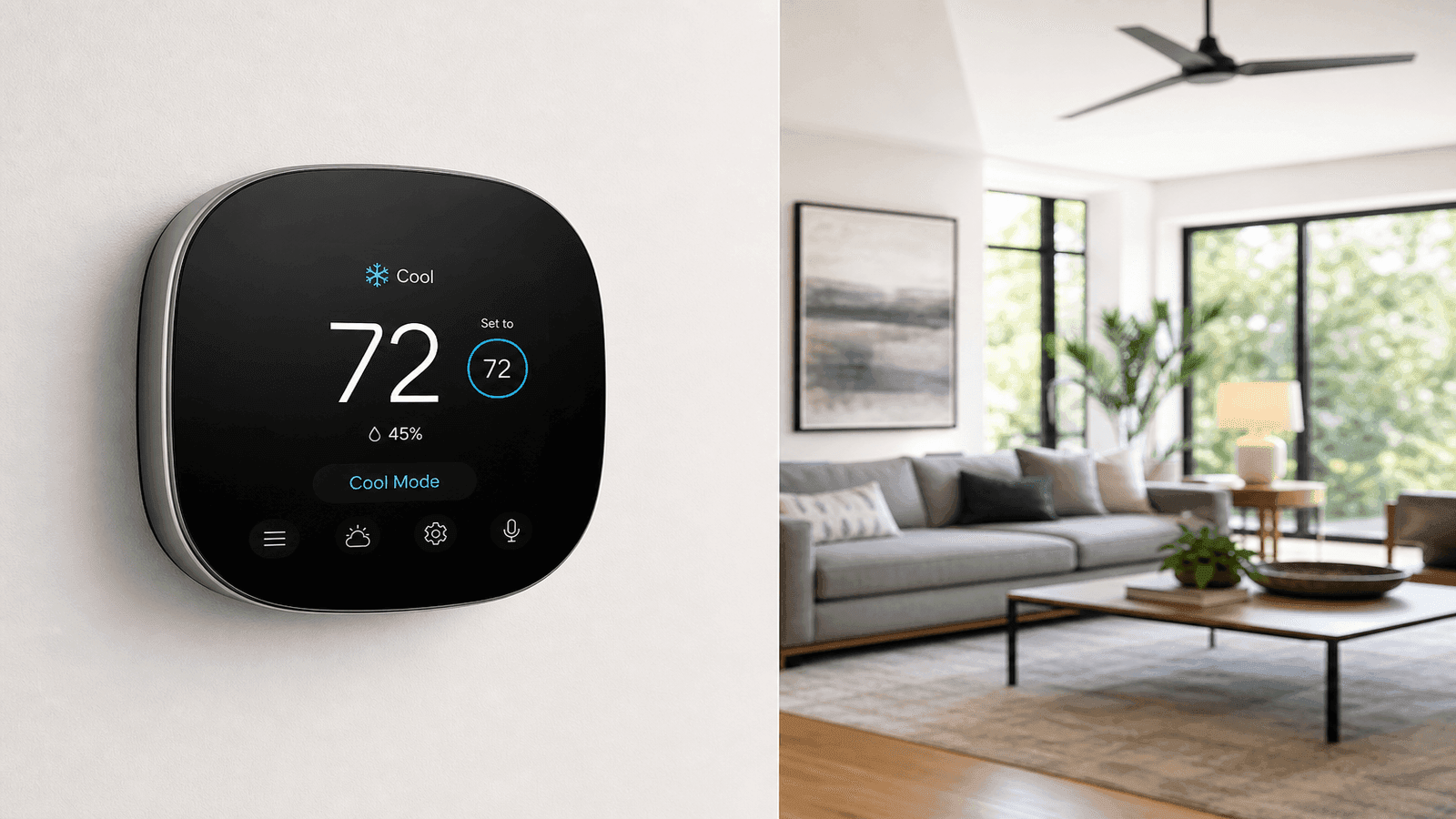
Photo: Smart thermostat mounted on a living room wall displaying temperature and HVAC system status
Maintenance That Keeps Your System Running
The U.S. Department of Energy estimates that an unmaintained HVAC system eventually uses 30% more energy than when it was new [5]. Regular maintenance is the single most effective way to protect your equipment investment and keep energy bills under control.
Homeowner Tasks (Monthly to Quarterly)
- Check and replace air filters every 1-3 months. A clogged filter is the number one cause of HVAC service calls. Hold the filter up to a light: if you can't see through it, replace it.
- Keep the outdoor unit clear. Remove leaves, grass clippings, and debris. Maintain 24 inches of clearance on all sides.
- Check the condensate drain line. A clogged drain causes water backup that can damage your system and home. Pour a cup of white vinegar through the drain access monthly during cooling season.
- Listen for unusual noises. Grinding, squealing, or banging sounds indicate mechanical problems that worsen quickly if ignored.
Professional Maintenance (Twice Per Year)
Schedule professional maintenance once before heating season (fall) and once before cooling season (spring). A thorough professional tune-up includes:
- Refrigerant level check and leak inspection
- Electrical connection testing and tightening
- Thermostat calibration verification
- Evaporator and condenser coil cleaning
- Blower motor inspection and lubrication
- Safety control testing (gas furnace: heat exchanger inspection, carbon monoxide check)
- Duct inspection for leaks and damage
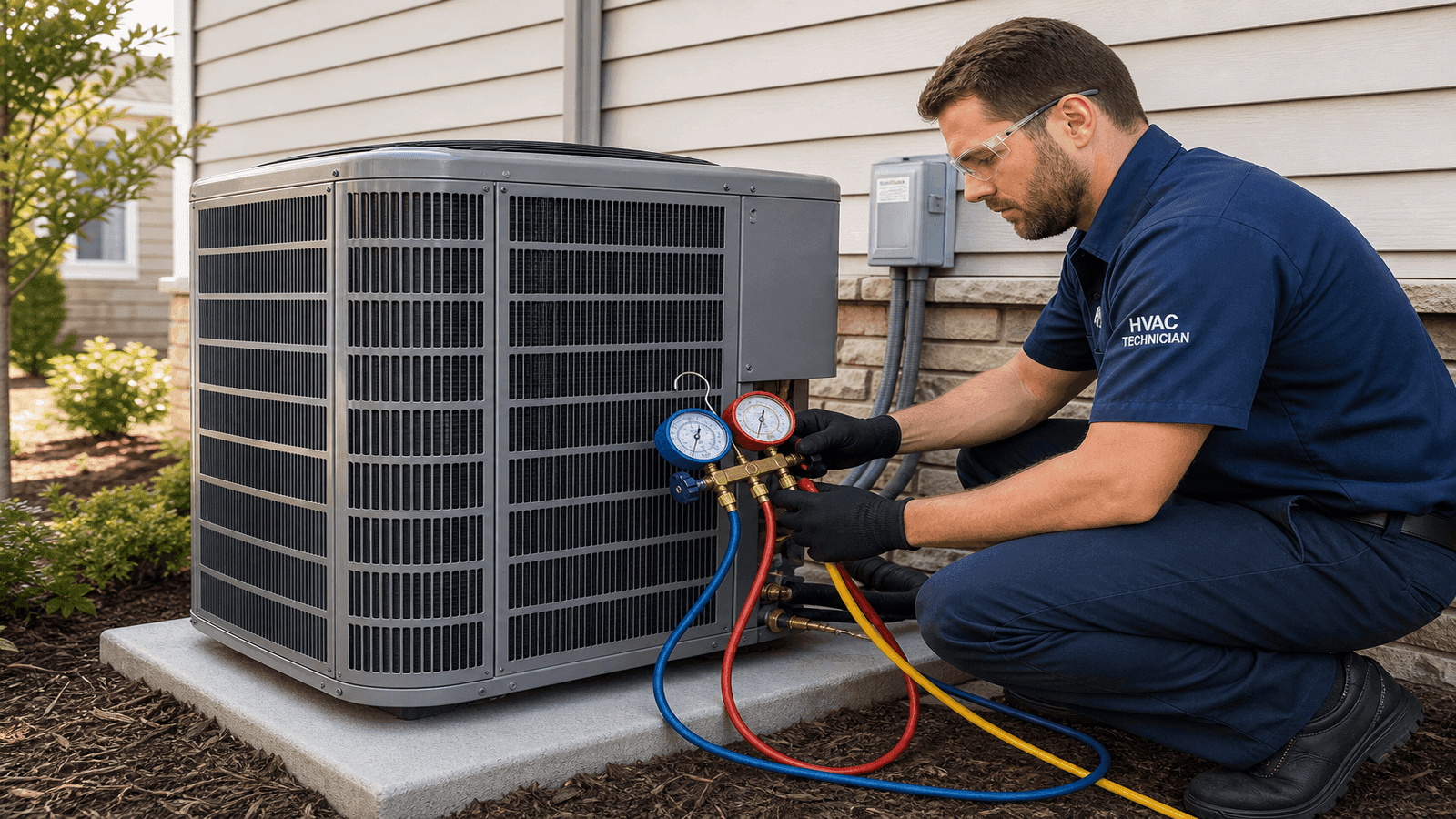
Professional maintenance typically costs $75-$200 per visit, or $150-$350 for an annual service agreement covering both visits [5]. Considering that the average HVAC repair costs $300-$600 and emergency calls can exceed $1,000, preventive maintenance consistently pays for itself.
Common Signs Your System Needs Attention
Recognizing early warning signs prevents small problems from becoming expensive repairs:
| Warning Sign | Possible Cause | Urgency |
| System runs constantly | Low refrigerant, dirty coils, undersized system | Soon |
| Short cycling (on/off every 5 minutes) | Oversized system, thermostat issue, restricted airflow | Soon |
| Uneven temperatures between rooms | Duct leaks, damper issues, sizing problems | Monitor |
| Unusual odors | Mold in ducts, electrical issue, gas leak (rotten egg smell) | Emergency if gas |
| Ice on outdoor or indoor coils | Low refrigerant, restricted airflow, faulty expansion valve | Soon |
| Higher than normal energy bills | Declining efficiency, duct leaks, maintenance needed | Monitor |
| Excessive humidity indoors | Oversized system, failed dehumidification, duct leaks | Soon |
| Strange noises (grinding, squealing) | Worn bearings, loose parts, failing compressor | Soon |
If you smell natural gas (a rotten egg odor) or suspect a carbon monoxide leak, leave the home immediately and call your gas utility's emergency line or 911. Do not operate any electrical switches [1].
How Long HVAC Systems Last
System lifespan depends on equipment type, installation quality, maintenance frequency, and local climate conditions:
| Component | Average Lifespan | With Proper Maintenance |
| Central air conditioner | 15-20 years | Up to 20-25 years |
| Gas furnace | 15-20 years | Up to 25 years |
| Heat pump | 10-15 years | Up to 20 years |
| Ductless mini-split | 15-20 years | Up to 25 years |
| Thermostat | 10-15 years | 15+ years |
| Ductwork | 20-25 years | 25-30 years |
The DOE states that regular maintenance can extend HVAC system life by up to 30% [5]. Systems that receive professional maintenance twice annually consistently outlast neglected equipment by 5-10 years.
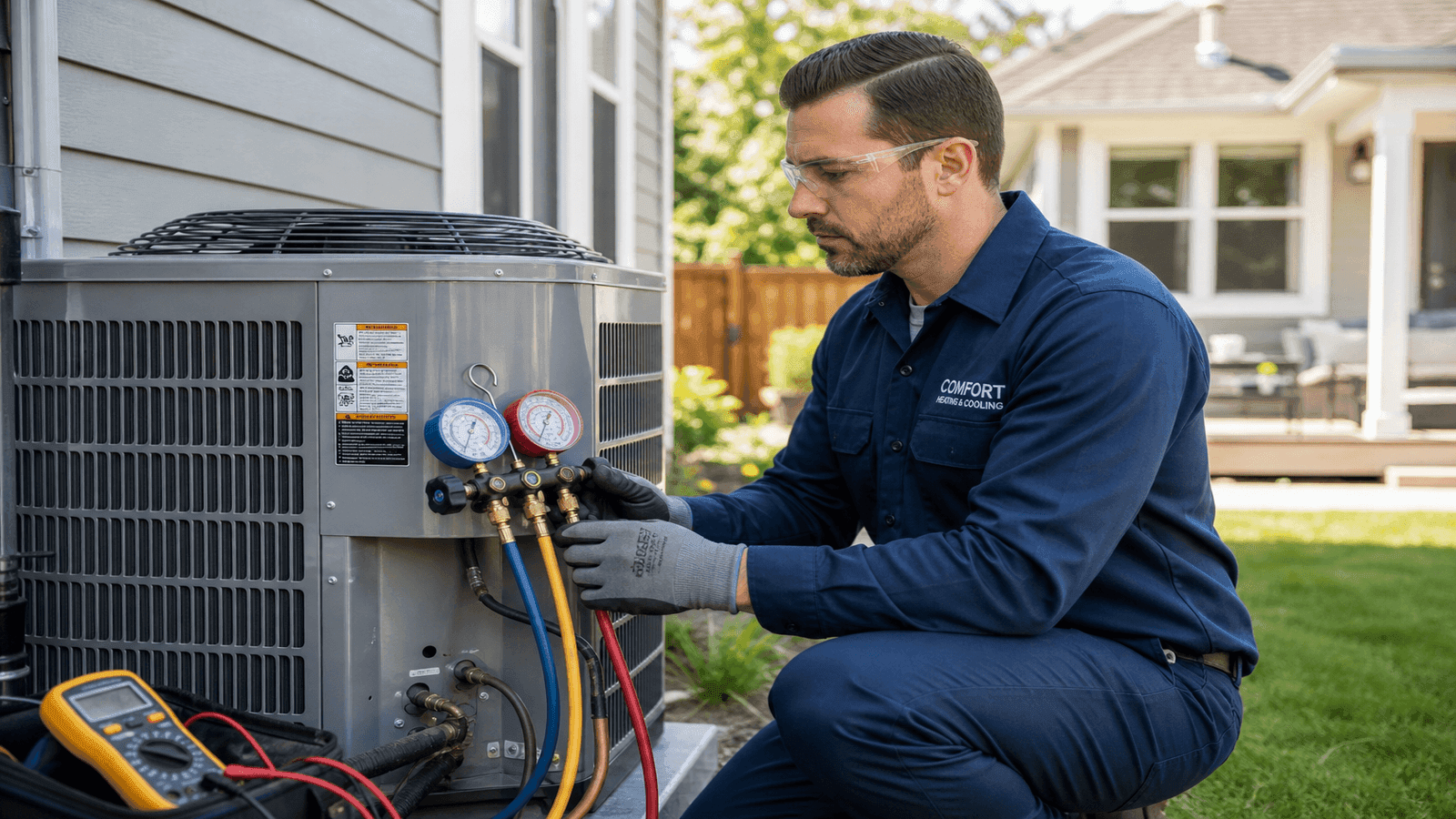
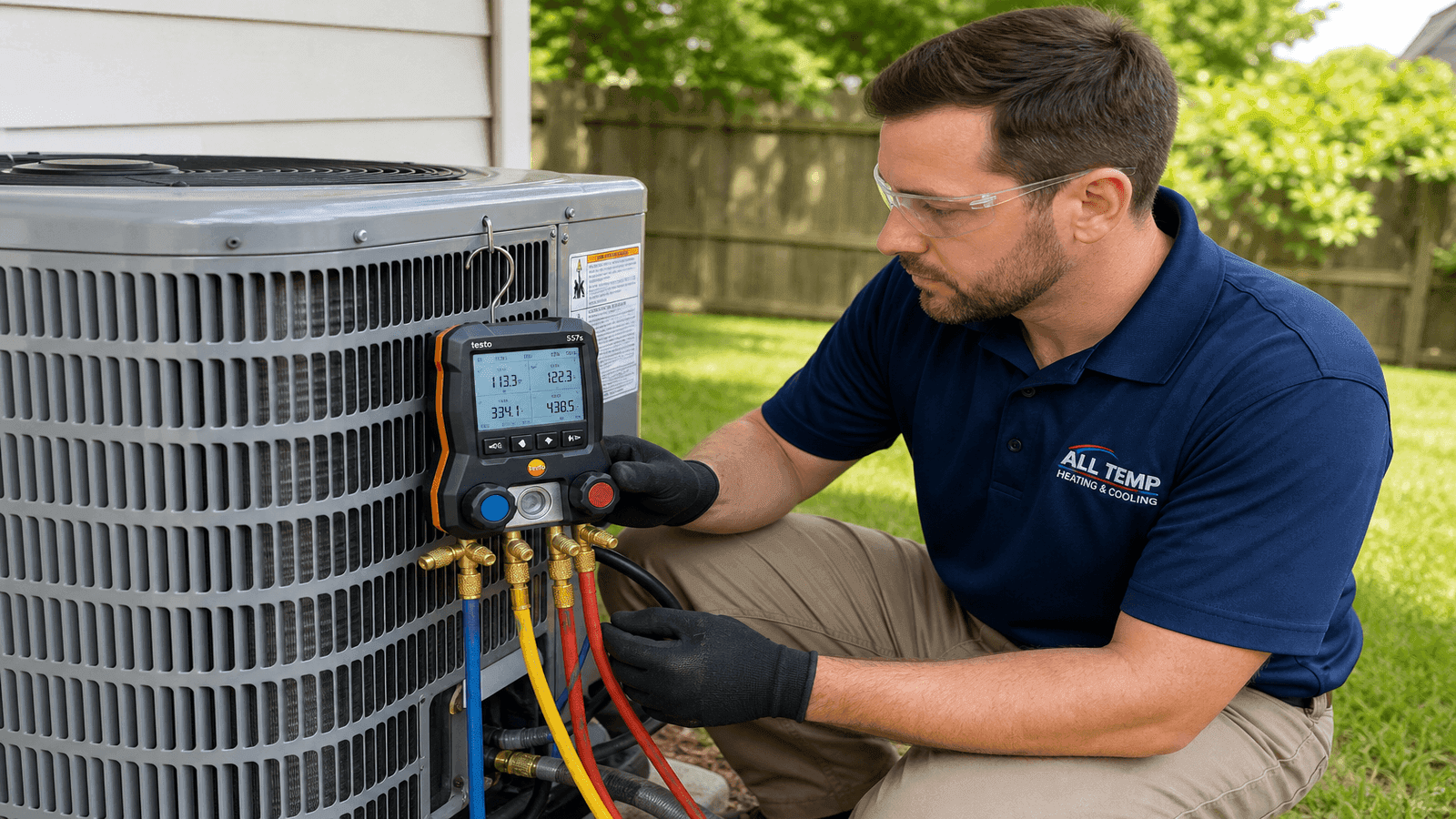
Photo: HVAC technician performing maintenance on a residential air conditioning unit checking refrigerant levels
Disclaimer: This article provides general educational information about HVAC systems and services. It is not intended as professional HVAC advice for specific situations. Local building codes, climate conditions, and individual home characteristics vary significantly. Always consult a licensed, certified HVAC professional for system-specific recommendations, installations, and repairs. Cost estimates are national averages as of 2026 and may differ in your area.
Sources
- U.S. DOE. "Heating and Cooling."
- ENERGY STAR. "Duct Sealing."
- Trane. "HVAC Components."
- ASHRAE. "Ventilation Standards."
- ACCA. "Manual J."

Daniel is an EPA-certified HVAC technician & Energy Efficiency Consultant with over 14 years of experience in maintaining and installing heating and cooling systems throughout the Midwest. Passionate about sustainability, Dan specialises in energy-efficient retrofits and intelligent climate control systems. He writes for NearbyHunt to help homeowners extend the lifespan of their HVAC units while lowering utility bills.

Christine is an EPA-certified HVAC professional with 17 years of experience in heating, cooling, and indoor air quality systems. She has managed large-scale residential installations and worked as a technical trainer for new HVAC apprentices. Chris’s reviews focus on accuracy, safety, and performance standards in modern HVAC practices.