- BLS projects 6% employment growth for roofers from 2024 to 2034, faster than the national average, with approximately 12,700 annual job openings [1].
- Median annual pay for roofers is $50,970, with experienced journeymen and foremen earning $60,000–$80,000+ and roofing business owners clearing $100,000+ [1].
- Most entry-level roofers start as helpers earning $17–$22 per hour, with union or NRCA apprenticeships offering a structured 3–4 year path to journeyman status.
- 27 of 50 states require a contractor license to operate a roofing business; California, Florida, and Texas have among the most demanding requirements.
- Roofing has the second-highest fatal injury rate of any civilian occupation at 51.8 fatalities per 100,000 workers, making OSHA 10 certification a practical necessity, not just a credential [3].
- Specialty niches including commercial flat roofing, metal roofing, and solar integration offer premium wages that often exceed standard residential work by 15–30%.
Roofing is one of the few skilled trades where a motivated person can go from first day on the job to running a six-figure business within a decade. The work is physical, technically demanding, and not for everyone. But for the right person, it offers a clear career ladder, strong job security, and income that rivals many four-year degree paths. The roofing industry supports approximately 166,700 employed roofers in the United States [1], and that number is climbing. For broader context on the industry these professionals serve, see the full guide at All About Roofing.

Get quotes from top-rated pros.
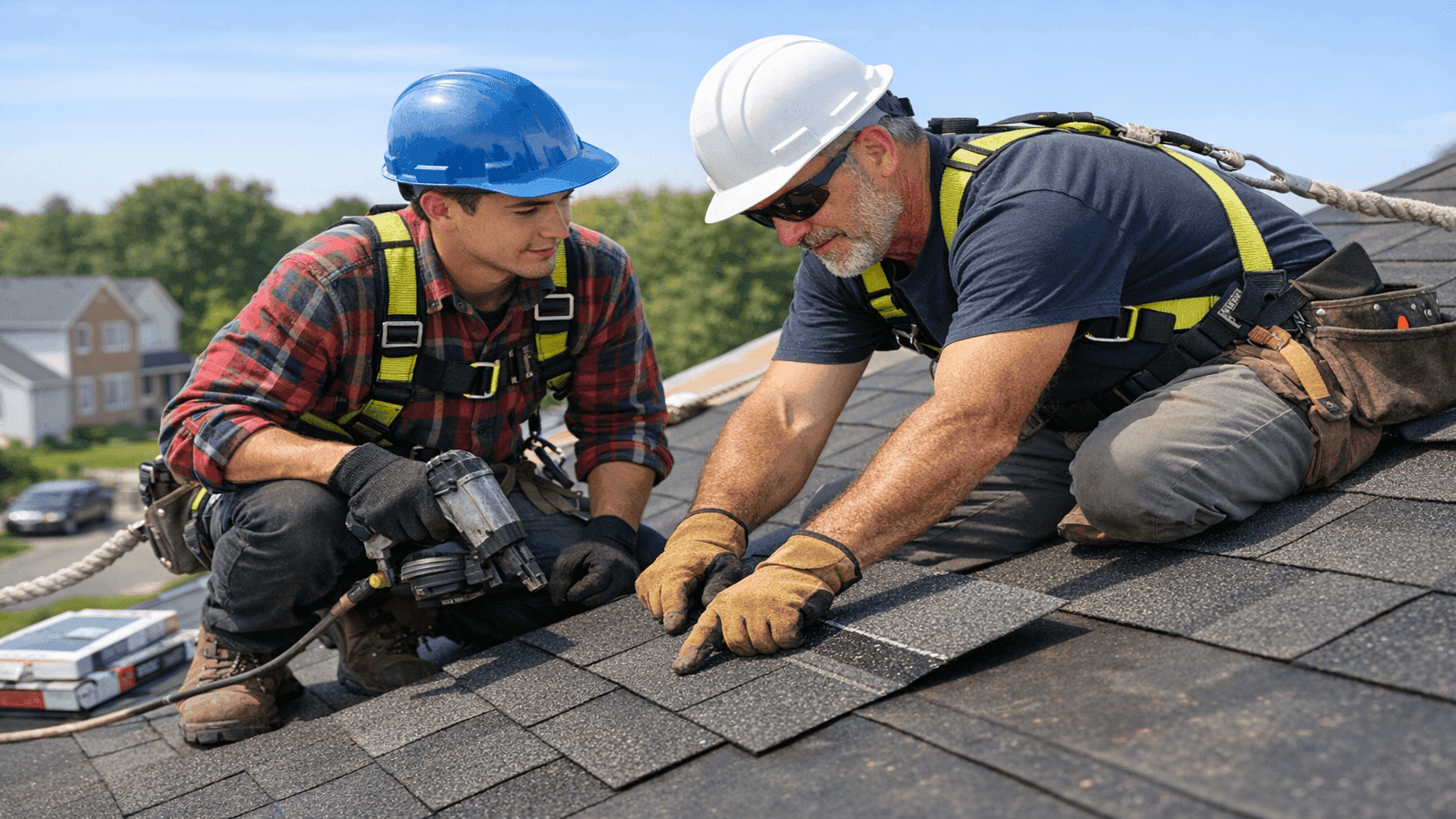
Photo: A roofing apprentice and journeyman working side by side on a steep-slope residential roof, both wearing fall protection harnesses and hard hats, installing asphalt shingles on a sunny day
The State of Roofing Careers in 2026
Job Outlook and Demand
The Bureau of Labor Statistics projects employment of roofers will grow 6 percent from 2024 to 2034, which is faster than the average for all occupations [1]. This growth is driven by a combination of factors: aging housing stock requiring re-roofing, new construction demand, storm damage replacement cycles, and the growing integration of solar panels on building rooftops.
The U.S. roofing industry replaces or installs approximately 5 million roofs annually. Storm seasons in the South and Midwest alone generate surges in demand that routinely exceed local labor supply, creating a persistent shortage of qualified workers. The licensed roofers in our NearbyHunt network report that over 70% of their referrals come from repeat customers or direct referrals, reflecting both the trust required in this trade and the shortage of reliable professionals in most markets.
I've been doing exterior work for 20 years across the U.S. South and Midwest, and I have never once worried about running out of work. After a single hurricane season in Florida, the backlog in some areas stretches six to eight months. Skilled roofers who show up on time and do quality work are booked solid. The demand isn't going away.
Salary Ranges by Career Stage
Understanding how earnings progress through a roofing career is critical before you commit to the path. Pay varies by region, specialty, and whether you work for an employer or run your own business.
| Career Stage | Typical Annual Earnings | Hourly Equivalent |
| Helper / Laborer (entry) | $35,000–$42,000 | $17–$20/hr |
| Apprentice (year 1–2) | $38,000–$48,000 | $18–$23/hr |
| Journeyman Roofer | $50,000–$65,000 | $24–$31/hr |
| Foreman | $60,000–$80,000 | $29–$38/hr |
| Estimator / Project Manager | $65,000–$95,000 | $31–$46/hr |
| Roofing Business Owner | $90,000–$150,000+ | Varies |
The BLS median annual wage for roofers was $50,970 in May 2024, with the highest 10 percent earning more than $80,780 [1]. Workers in the lowest 10 percent earned under $37,060, reflecting the entry-level helper tier. Geographic variation is significant: roofers in Hawaii, Illinois, and Massachusetts consistently rank among the highest-paid in BLS state data, while wages in rural Southern states tend to sit closer to the median.
How to Enter the Roofing Trade
Path 1: Start as a Helper
The most common entry point in the U.S. is starting as a roofing helper with no prior experience. Most roofing contractors hire helpers at 18 or older with a valid driver's license and willingness to do physical labor. The first weeks involve carrying materials, cleaning job sites, operating ground equipment, and learning basic safety protocols.
Starting as a helper is low-risk: you're earning while learning, and most employers who value their helpers will invest in your training. The downside is that informal on-the-job training can leave gaps in both technical skills and business knowledge that a structured apprenticeship fills.
Path 2: Union or NRCA Apprenticeship (3–4 Years)
Formal apprenticeship programs offer the most complete training pathway. The National Roofing Contractors Association (NRCA) partnered with the National Center for Construction Education and Research (NCCER) to create a national roofing apprenticeship curriculum registered with the U.S. Department of Labor [4]. Programs are available for both steep-slope and low-slope (flat) roofing specializations.
A typical union roofer and waterproofer apprenticeship requires:
- Minimum age of 18 with a high school diploma or GED
- Approximately 1,400 on-the-job training hours per year (3–4 year total commitment)
- 400 hours of related classroom instruction per program year
- Progression through wage scales starting at 50% of journeyman pay
Union apprenticeships through United Union of Roofers, Waterproofers and Allied Workers provide structured wage increases as skills advance. Many programs include no tuition for classroom instruction; the cost is offset through slightly lower wages during training years.
Path 3: Vocational or Trade School
Community colleges and trade schools in many states offer roofing-specific certificate programs, typically running 6 months to 1 year. These programs cover roofing fundamentals, safety, estimating, and business basics. They do not replace hands-on field hours, but they can fast-track classroom requirements and strengthen an application to an apprenticeship program.
Some programs (such as the one at Hillsborough College in Florida) are offered as registered apprenticeship programs combining school with employer-sponsored field work. This hybrid model is expanding in states with contractor workforce shortages.
One of the best things about roofing is that it doesn't require student loan debt to enter. I started as a helper right out of high school, learned from a foreman who had been in the trade for 25 years, and built from there. The formal training came later, but the foundation was those first two years carrying bundles and watching how experienced roofers solved problems on the fly.
Get quotes from top-rated pros.
Skills and Physical Requirements
Physical Demands
Roofing is one of the most physically demanding trades. A typical day involves:
- Carrying bundles of asphalt shingles (each bundle weighs 60–80 lbs) up ladders
- Working on slopes at heights of 15–40+ feet
- Kneeling, bending, and moving in confined positions for extended periods
- Exposure to direct sun in summer, with roof surface temperatures reaching 150°F or more
Physical fitness is not optional. Workers need strong lower back and leg strength, good balance, and cardiovascular endurance. Anyone with a fear of heights should assess this honestly before entering the trade: roofing is not a career where height discomfort can be managed away.
Technical Skills
Beyond physical fitness, the job requires:
- Math for measurement: calculating roof area, pitch, waste factor, and materials needed
- Pattern reading: interpreting blueprints, architectural drawings, and manufacturer installation guides
- Material knowledge: understanding how different roofing systems work, where they fail, and how to sequence installation correctly (see our roofing terms glossary for foundational vocabulary)
- Troubleshooting: diagnosing why a roof is leaking or failing, which requires understanding all system layers (for common failure points, see Common Roofing Problems)
- Equipment operation: nail guns, cutting tools, hoists, and lift equipment
Certifications and Licensing
OSHA Safety Certifications
OSHA certifications are the baseline credential for any serious roofing career. They are not legally mandatory in all states, but most commercial contractors and many residential firms require them for employment.
- OSHA 10-Hour Construction: a two-day course covering fall protection, ladder safety, PPE, struck-by hazards, and electrical safety. This is the minimum for most entry-level positions and a practical necessity in a trade where falls account for 80.6% of fatalities [3].
- OSHA 30-Hour Construction: a four-day course for supervisors, foremen, and safety officers, covering all OSHA 10 content plus more advanced topics including job hazard analysis, emergency response, and management of safety programs.
OSHA training is available through authorized outreach training providers and online, though hands-on components are increasingly required for recognition by major contractors.
Manufacturer Certifications
Major roofing product manufacturers offer certified contractor programs that carry real market value:
- GAF Master Elite Contractor: awarded to contractors who pass GAF training, maintain full licensing and insurance, and receive strong customer satisfaction scores. Fewer than 3% of U.S. roofing contractors hold this designation.
- Owens Corning Roofing Preferred Contractor / Platinum Preferred Contractor: tiered program requiring training completion, active license, and insurance verification.
- CertainTeed Master Shingle Applicator (MSA) / Master Craftsman: technical exam-based credentials covering shingle installation standards.
These certifications allow contractors to offer enhanced manufacturer warranty coverage to homeowners, which is a genuine sales differentiator in competitive markets. A GAF Master Elite or CertainTeed Master Craftsman designation can justify a 10–20% price premium on a bid.
NRCA ProCertification
The NRCA ProCertification program offers professional credentials for steep-slope and low-slope installation, covering specific roof system types. Assessments are practical and written, testing real installation knowledge. This credential is increasingly recognized by commercial general contractors as a qualification standard.
State Contractor Licensing
This is where many aspiring roofing business owners get surprised. Starting a roofing company requires more than knowing how to install a roof.
27 of 50 states require a roofing or general contractor license to perform roofing work legally [2]. Requirements vary significantly by state:
- Florida: Certified Roofing Contractor license from the FL DBPR (Department of Business and Professional Regulation) requires passing a business and law exam, a trade exam, verifying 3+ years of experience, and carrying specified insurance minimums.
- California: C-39 Roofing Contractor license requires 4+ years of journeyman or foreman experience, passing two exams (trade and business/law), fingerprinting, background check, and a $25,000 contractor bond.
- Texas: No state-level roofing license required, but many cities and counties require local registration. Roofing contractors in Texas should carry adequate insurance regardless.
- Alabama: License required for projects exceeding $10,000 residential or $50,000 commercial.
Even in states without mandatory licensing, counties and municipalities often impose their own registration requirements. Always verify with your local building department before bidding or contracting work.
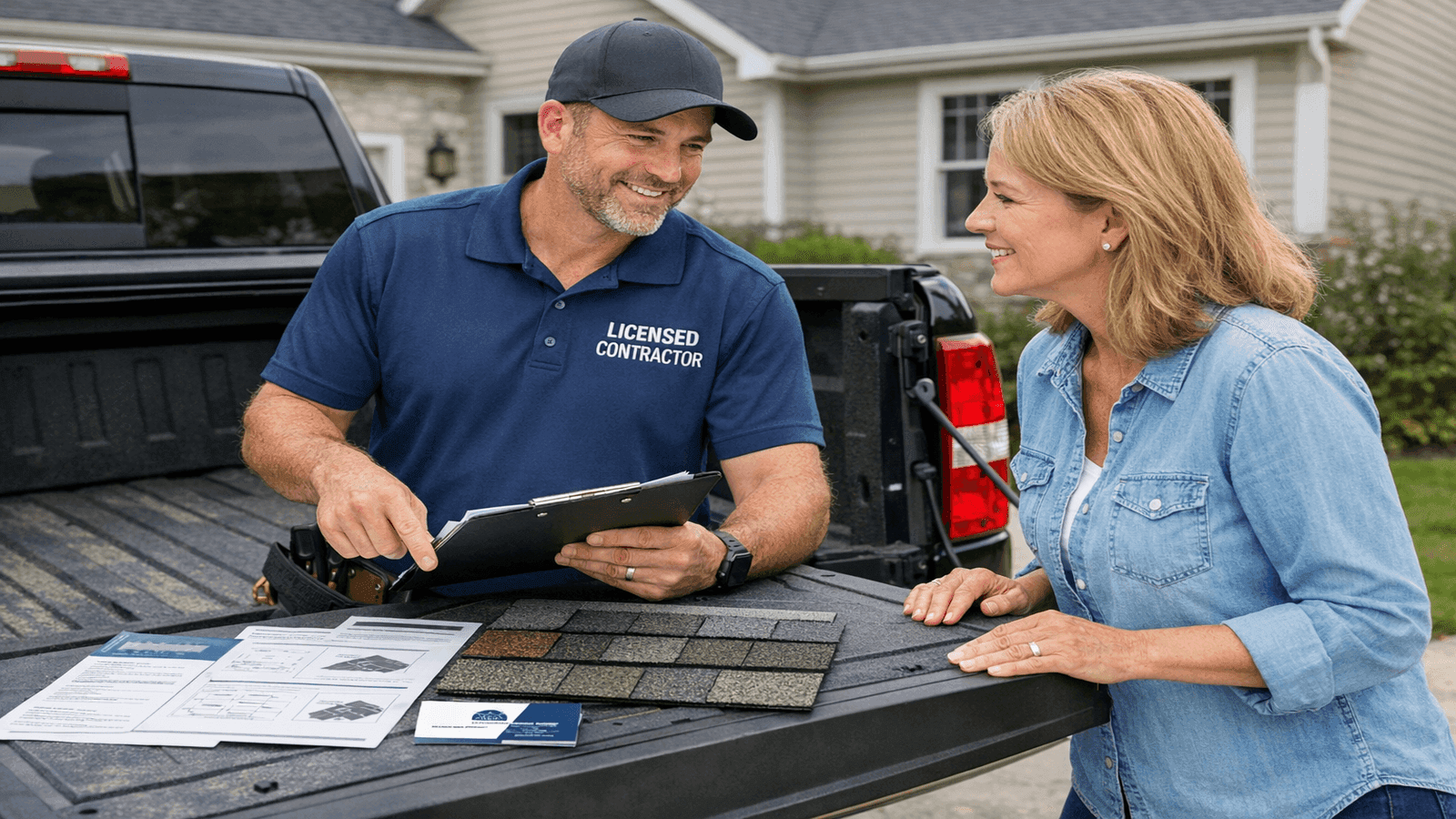
Photo: Roofing contractor reviewing plans and material samples with a homeowner outside a house, demonstrating professional consultation and certification knowledge
Career Advancement Path
The Standard Ladder
Most roofing careers follow a recognizable progression:
- Helper/Laborer: entry-level, no certification required, learning the physical work
- Apprentice: formal or informal training, progressing through wage tiers
- Journeyman Roofer: fully skilled, able to perform any standard installation without supervision
- Lead / Foreman: responsible for a crew of 2–8 workers, quality control, site safety, schedule
- Estimator: calculates material and labor costs for bids, requires strong math and product knowledge
- Project Manager: oversees multiple crews and projects simultaneously
- Business Owner / Contractor: carries full legal and financial responsibility for the operation
The path from helper to journeyman typically takes 3–4 years. The jump to foreman often happens within 1–2 years after journeyman status, depending on the company's needs and the worker's leadership aptitude. Many roofers who start their own businesses do so 8–12 years into their careers, once they have accumulated technical skills, a network of suppliers and subcontractors, and enough savings to cover startup costs.
Case Study: Marcus's Career Trajectory
Marcus started as a roofing helper at 19 in Atlanta, Georgia, hired by a mid-size residential contractor. He spent the first two years carrying materials, running cut lists, and absorbing how his foreman read roof layouts. By year three, he was installing independently and completed his OSHA 10 certification through his employer.
At year five, Marcus was promoted to lead roofer on a four-person crew, earning approximately $28 per hour. He pursued his NRCA ProCertification for steep-slope systems and added a GAF training certification. By year eight, he moved into estimating and project management at a larger firm, earning $78,000 annually. At year eleven, Marcus launched his own roofing company in the Atlanta metro area, specializing in residential re-roofing and storm damage restoration. His business grossed over $420,000 in its second year of operation. His trajectory mirrors what the licensed roofers in our NearbyHunt network consistently describe: the trades reward consistent skill-building and patience far more reliably than most white-collar career paths.
The roofers who build real businesses are the ones who treat every project as a learning experience, not just a paycheck. I've worked alongside hundreds of tradespeople across 1,800-plus projects across the U.S. South and Midwest, and the common thread is always the same: the ones who advance are the ones who show up, pay attention, and ask questions. The technical knowledge accumulates fast when you're genuinely curious about why things work the way they do.
Get quotes from top-rated pros.
Specialty Niches in Roofing
Commercial Flat Roofing
Low-slope and flat commercial roofing uses different materials and techniques than residential steep-slope work. Systems include TPO (thermoplastic polyolefin), EPDM (rubber), modified bitumen, and built-up roofing (BUR). Commercial roofers often earn at the higher end of the wage scale, reflecting the complexity and liability of large-scale installations.
Metal Roofing
Metal roofing installation (standing seam, corrugated panels, metal tiles) is a specialty with a separate skill set from shingle installation. Metal roofers who specialize in standing seam systems are in particularly high demand as the metal roofing market grows. See our guide to types of roofing materials for a full comparison of metal systems and their performance characteristics.
Solar Integration
The intersection of roofing and solar is growing rapidly. Roofers who understand photovoltaic system mounting, roof penetration sealing for solar installations, and integrated solar roof products (such as Tesla Solar Roof tiles) command significantly higher rates. BLS notes that solar PV installation demand is contributing to roofer job growth through the 2034 projection period [1].
Historic and Specialty Restoration
Slate, clay tile, copper flashing, and wood shake restoration require skills and materials knowledge well beyond standard residential work. Historic restoration work is done by a small number of highly specialized contractors who charge premium rates and frequently operate on waiting lists. This niche typically develops after 10+ years in the trade with deliberate specialization.
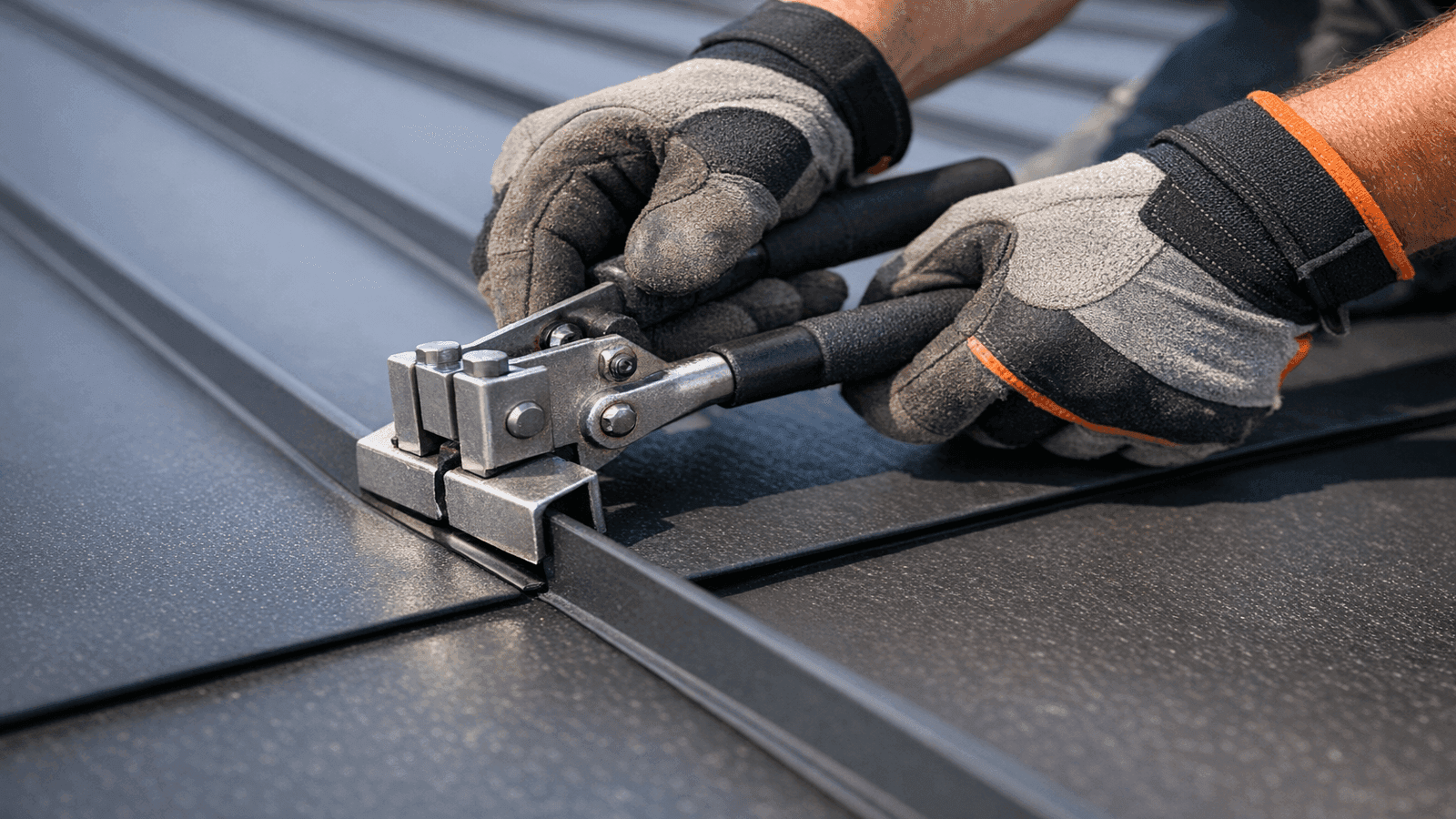
Photo: Close-up of a roofer's hands installing a standing seam metal roof panel, demonstrating precision metal roofing specialty work with proper seaming tool
Starting a Roofing Business
Insurance and Bonding Requirements
Operating a roofing contracting business requires specific insurance coverage. This is non-negotiable: a single uninsured roofing accident can generate liability that exceeds many years of revenue.
Minimum recommended coverage:
- General liability: $1 million per occurrence, $2 million aggregate (most clients and municipalities will not contract with less)
- Workers' compensation: required in all states where you have employees; covers medical costs and lost wages for job-site injuries
- Commercial auto: covers vehicles used to transport workers, materials, and equipment
- Contractor's bond: required in many states for licensing; amounts range from $5,000 to $25,000 depending on state
General liability insurance for a small roofing contractor typically runs $3,000–$7,000 annually depending on revenue, location, and claims history. Workers' comp rates in roofing are among the highest of any trade (roofing classification codes often carry rates of $15–$30 per $100 of payroll) due to the elevated injury statistics.
Business Startup Costs
Starting a roofing business requires more capital than most trades. Initial costs include:
- Liability insurance and workers' comp deposit (first quarter)
- Vehicle and basic equipment (ladders, safety gear, nail guns, compressors): $15,000–$40,000
- Licensing and bond fees: $500–$3,000 depending on state
- Software for estimating, invoicing, and CRM: $100–$500/month
- Working capital to cover payroll and materials before first receivables arrive
Most successful roofing business owners recommend having 3–6 months of operating capital before taking on crews. Many start as a solo operator or with one helper, subcontracting larger jobs until cash flow stabilizes.
Safety: What the Statistics Say
Roofing carries genuine physical risk that must be understood before entering the trade. Acknowledging this reality is not discouraging: it simply means safety practices are not optional.
Roofing recorded 134 workplace fatalities in 2023, a rate of 51.8 fatalities per 100,000 full-time equivalent workers [3]. Only logging and commercial fishing have higher rates among civilian occupations. Falls account for 80.6% of roofing fatalities, consistent with the broader construction pattern where falls are the leading cause of death.
OSHA's most-cited violations in roofing include fall protection failures (the most cited construction violation for 13 consecutive years), inadequate ladder safety, and improper scaffold use [3]. Compliance with OSHA fall protection standards, including proper use of personal fall arrest systems, guardrails, and safety nets, is not bureaucratic box-checking: it is how experienced roofers work for 20–30 years without a serious injury.
The non-fatal injury rate for roofing contractors was 3.6 per 100 full-time workers as of the most recent reporting period [3]. This is higher than the overall construction industry average. Heat illness is a secondary risk in warm climates, particularly during summer installation work on dark-colored roofing materials.
Experienced tradespeople manage these risks through discipline: using a harness every time even on low slopes, hydrating consistently on hot days, inspecting ladders before every use, and enforcing safety standards on their crews without exceptions. OSHA 10 certification provides the foundational framework for this discipline.
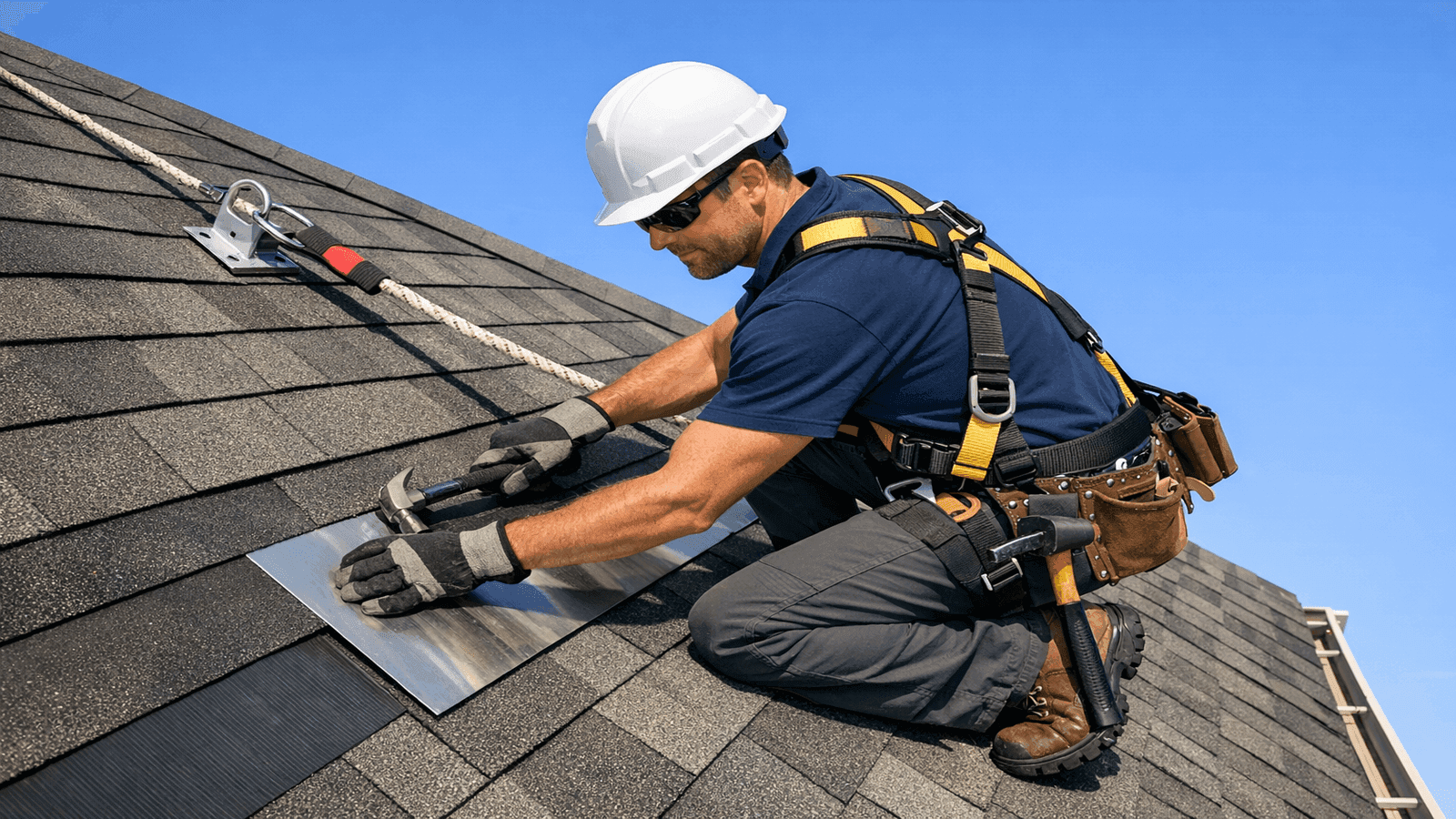
Photo: Roofer wearing full fall protection harness, hard hat, and safety boots on a steep residential roof, demonstrating proper OSHA-compliant safety equipment and positioning
Conclusion
A roofing career in 2026 offers something increasingly rare in the U.S. labor market: a clear, accessible path from no experience to a skilled trade, strong middle-class income, and legitimate entrepreneurial opportunity, all without a four-year degree. The work is hard, the safety stakes are real, and building a business requires discipline beyond installation skill. But the fundamentals are strong: demand is growing, skilled workers are scarce, and the income ceiling for competent professionals keeps rising.
If you are exploring this career, start with the basics: talk to a local roofing contractor about a helper position, look into your state's licensing requirements, and get your OSHA 10 training in your first year. The rest of the path builds from there.
Find Licensed Roofers Near You
Disclaimer: This article is intended for general informational purposes only. Licensing, insurance, and certification requirements vary by state and locality and are subject to change. Readers should verify all requirements with the relevant state licensing board, local building department, or a licensed contractor attorney before starting a business or performing regulated work. Salary data reflects national BLS figures and regional averages; individual earnings will vary based on experience, location, employer, and market conditions. This content does not constitute legal, financial, or professional advice.
Sources & References
- Roofers Occupational Outlook Handbook — U.S. Bureau of Labor Statistics
- Roofing License Requirements by State — Next Insurance
- Roofing Workplace Fatality and Injury Statistics — Roofing Contractor Magazine / OSHA
- NRCA National Roofing Apprenticeship Program — NCCER
- NRCA ProCertification — National Roofing Contractors Association
- Roofers Occupational Employment and Wage Statistics — BLS OEWS May 2024
- Construction Safety Statistics 2026 — OSHA Online Center

James is a licensed roofing contractor with 20 years of experience in roof installation, inspection, and repair across the U.S. South and Midwest. He specialises in asphalt shingles, metal roofing, and storm damage restoration. On NearbyHunt, James offers practical advice on roof maintenance, insurance claims, and selecting the right materials for long-lasting protection.

Jacob is a licensed roofing contractor with over 18 years of experience in roof inspection, installation, and restoration. Based in Texas, he has led hundreds of successful roofing projects across residential and commercial properties. Jacob is also a certified storm damage specialist, ensuring that all NearbyHunt roofing content meets industry best practices and safety standards.