- Drain snaking is the next step after plunging fails: a flexible metal cable feeds into the pipe to break up or retrieve clogs that plungers cannot reach.
- Most household clogs form within 15-25 feet of the fixture drain opening, putting them well within reach of a $15-$40 hand auger.
- 90% of shower drain clogs are within 24 inches of the drain opening and are retrievable by pulling out, not pushing through.
- Professional drain snaking costs $100-$250 for sink or shower drains and $300-$500 for main sewer line clogs (HomeGuide 2026). A $30-$60/day rental handles most DIY jobs.
- Never use a regular drain snake in a toilet: only a toilet auger (closet auger) with a rubber sleeve is safe for porcelain bowls.
- Removing the P-trap before snaking a sink drain often solves the clog instantly, with no snake needed at all.
You have plunged until your arms gave out, and the drain is still backed up. That is the moment a drain snake earns its place in the toolbox. Drain snaking (also called drain augering) feeds a flexible metal cable into a pipe to physically break apart or retrieve the clog causing the backup. It is the standard next step when plunging fails, and it is a skill any homeowner can master on most fixtures.
This guide covers which type of drain snake to use for each fixture, safety and prep before you start, step-by-step instructions for sinks, showers and tubs, and floor drains, what to do after the clog clears, and when snaking will not work and what to do instead.
This guide is part of the broader DIY Plumbing Guides series on NearbyHunt.
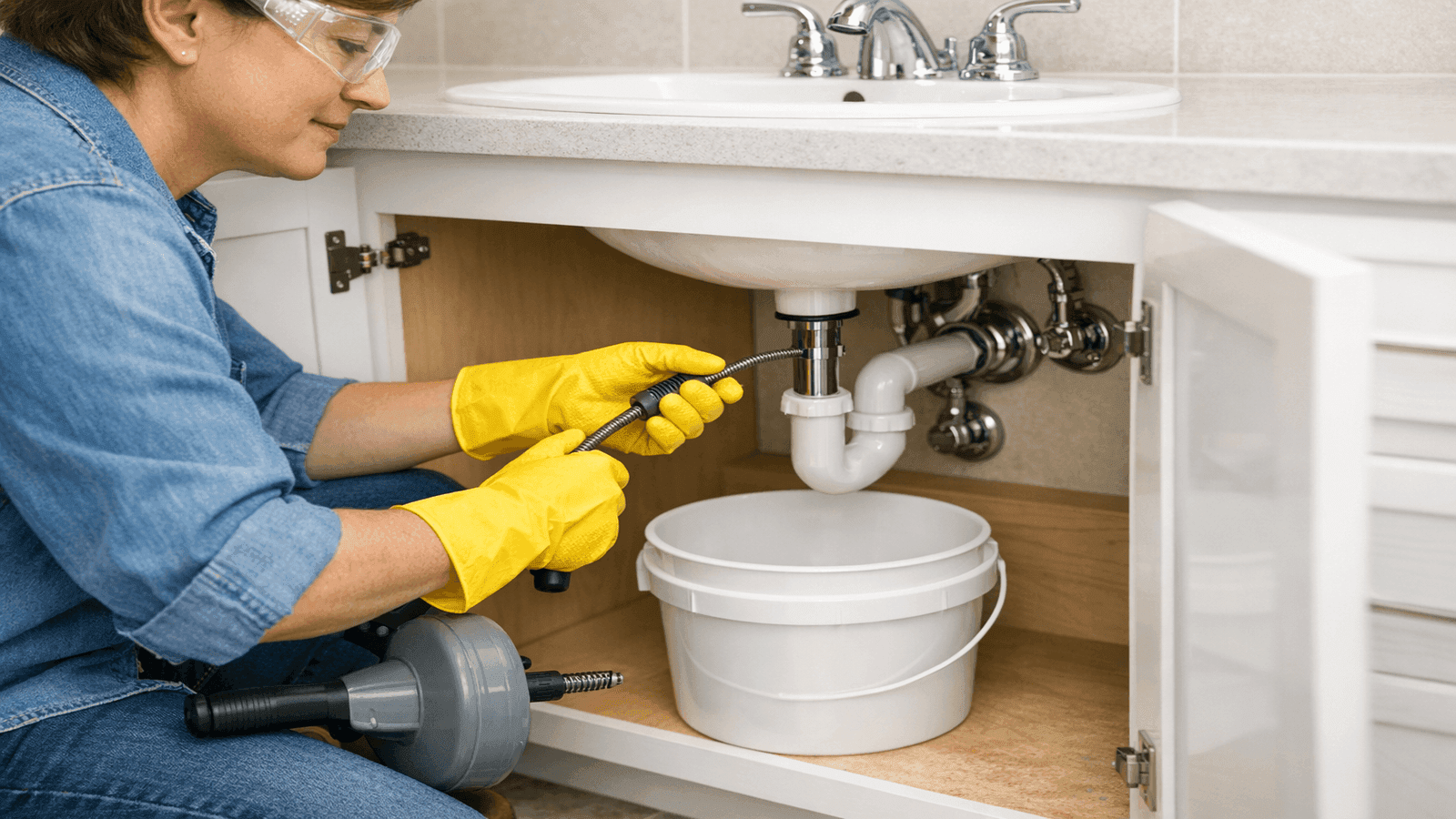
Photo: Homeowner feeding a hand drum auger into a bathroom sink drain wearing rubber gloves and safety glasses with bucket under cabinet
Which Drain Snake Do You Need?
Choosing the right tool before you buy or rent anything saves you time and protects your fixtures. The wrong snake leads to damaged pipes or a clog that stays exactly where it started.
| Snake Type | Best For | Reach | Cost |
| Hand / drum auger | Sinks, shower drains, tub drains | 15-25 ft | $15-$40 (buy) |
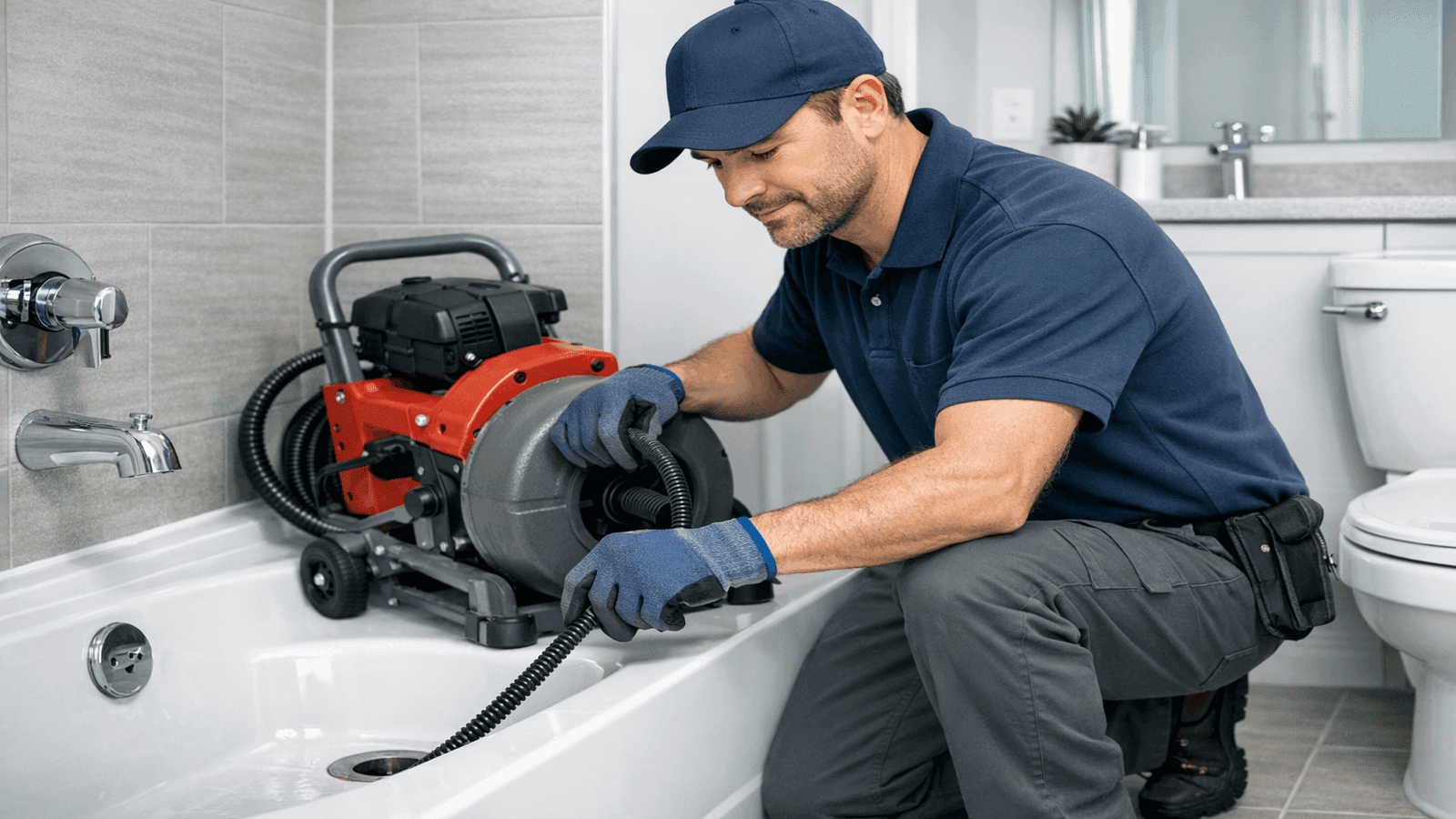
| Power / electric drain snake | Stubborn or deep clogs, kitchen lines | 25-50 ft | $30-$60/day (rent), $200-$500 (buy) |
| Toilet auger / closet auger | Toilets ONLY | 3-6 ft | $25-$60 (buy) |
| Sewer snake | Main sewer line | 50-100 ft | Professional use |
Hand augers handle pipes 1-1/4 inch to 2 inches in diameter (sinks, bathroom drains). Power augers handle 1-1/2 inch to 3 inch pipes. Always match the tool to the pipe size.
A toilet auger is not interchangeable with a drain snake. Toilet augers have a rubber sleeve that protects the porcelain bowl from scratching and a curved guide that navigates the toilet trap correctly. Using a standard drain snake in a toilet scratches the bowl and often fails to clear the clog. For toilets, see How to Unclog a Toilet for the correct process.
Homeowners always ask me if they should rent or buy. My answer: if you own a home, buy a hand drum auger. A 25-foot hand snake handles 90% of the clogs you will ever face in a sink or shower. It costs $25 at any hardware store and pays for itself the first time you use it. Only rent a power snake if you are dealing with a stubborn kitchen grease clog or a floor drain that has not moved in years.

Before You Snake: Safety and Prep
Gather your supplies before you open a single drain. You need rubber gloves, safety glasses, old towels or plastic sheeting, and a bucket.
Do this first:
- Remove the drain cover, stopper, or pop-up assembly.
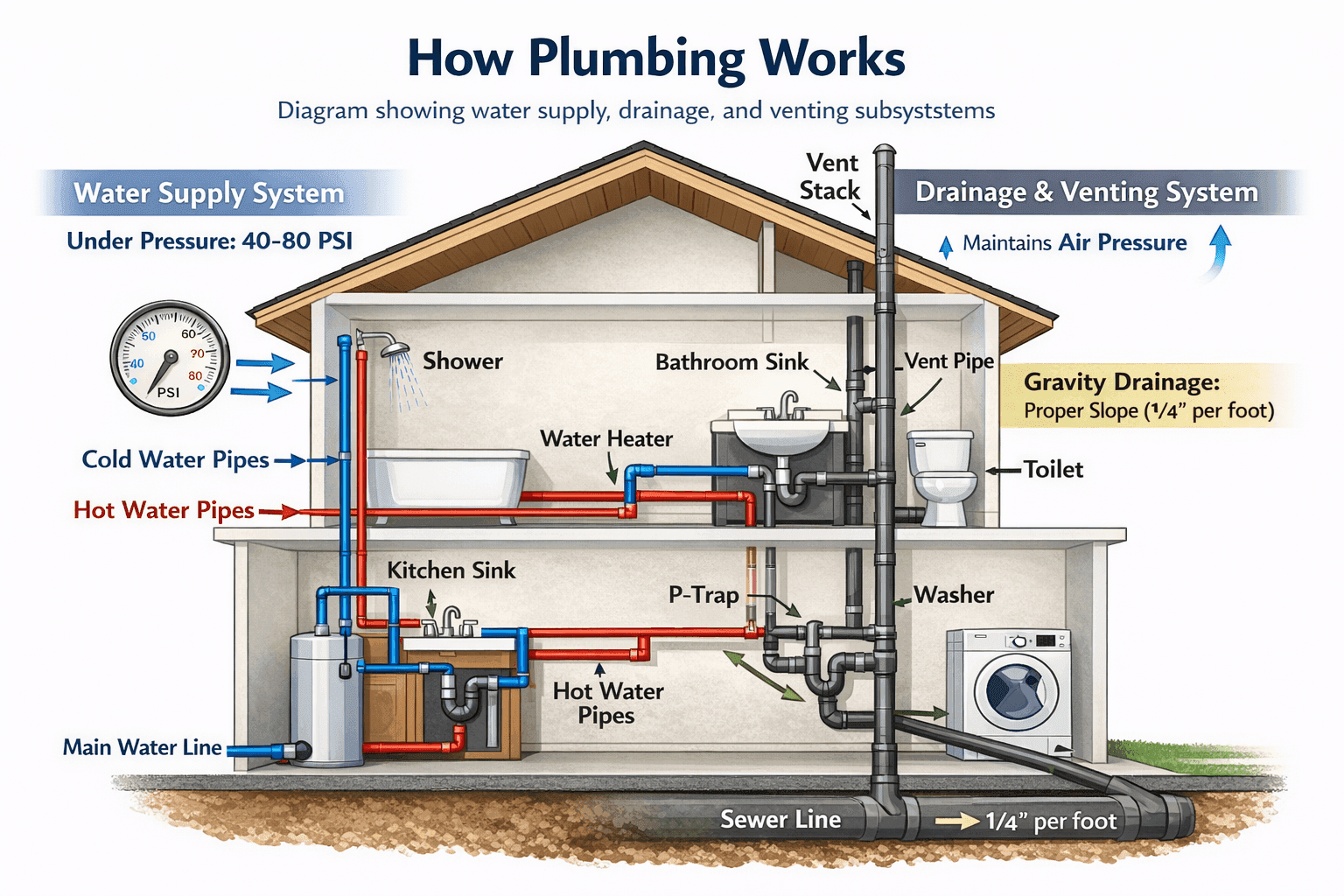
- For sink drains: place a bucket under the P-trap. If the clog is in the P-trap, removing it clears the blockage without snaking at all.
- Run water briefly to confirm which drain is backing up.
What not to do before snaking: Do not pour chemical drain cleaners before snaking. When you retrieve the cable, any chemical residue splashes back and can cause serious burns. Do not feed more cable than needed; excess cable coils inside the pipe and kinks.
How to Snake a Drain: Step-by-Step
Snaking a Sink Drain
- Remove the P-trap first. Place a bucket under the curved pipe, unscrew the slip-joint nuts by hand or with channel-lock pliers, and check inside for the clog. This step resolves the majority of sink clogs with no snake needed. If the trap itself is cracked or corroded, see How to Replace a P-Trap.
- If the clog is deeper, insert the snake cable into the wall pipe opening, not the sink drain above.
- Feed the cable clockwise. Clockwise rotation tightens the coil and keeps it rigid as it advances.
- Feel for resistance. When you hit the clog, stop and work it rather than forcing past it.
- Work the clog. Rotate and push to break up organic material; reverse slowly to hook and retrieve solid objects.
- Retrieve the cable slowly. Counter-clockwise rotation releases the hook. Keep the bucket positioned to catch debris.
- Flush with hot water for 2-3 minutes to clear residue from the pipe walls.
Get quotes from top-rated pros.
Snaking a Shower or Tub Drain
- Remove the drain cover (usually two screws or a simple lift-out).
- Check within the first 24 inches. 90% of shower clogs sit here, composed almost entirely of hair and soap scum.
- Insert the cable and crank clockwise. Hair clogs tangle around the cable tip as it rotates.
- Pull out, do not push through. Reverse the cable and retrieve the hair clog rather than pushing it deeper into the line. For more on clearing shower drain blockages, see How to Unclog a Shower Drain.
- Remove the debris from the cable tip into a trash bag.
- Flush with hot water for 2 minutes to clear any remaining soap residue.
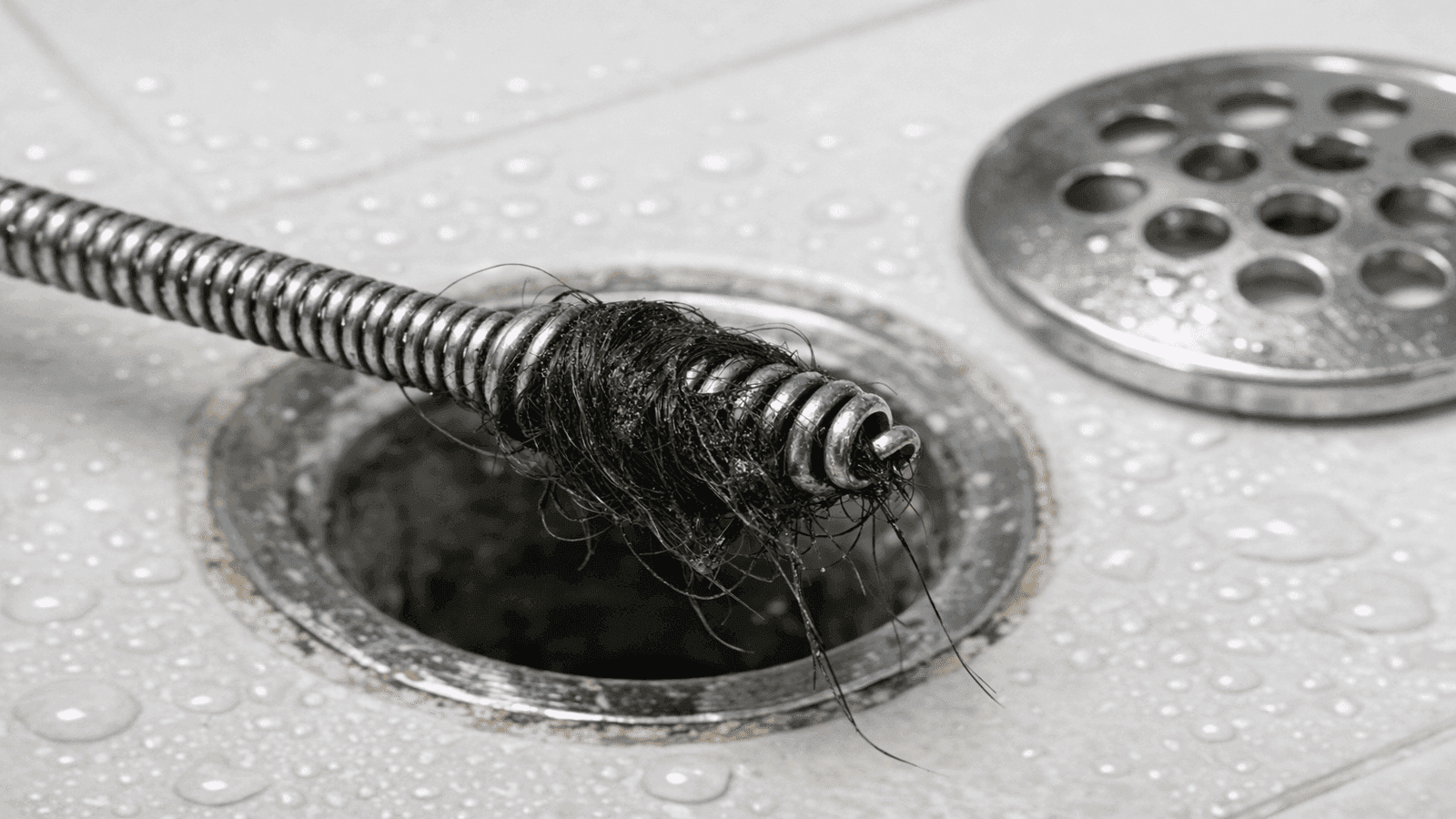
Photo: Close-up of drain snake cable inserted into a shower drain with cover removed and hair clog visible on cable tip
Snaking a Floor Drain
- Remove the cleanout plug in the center of the drain body using a wrench.
- Use a power snake for floor drain lines, which are typically 3-4 inches in diameter.
- Feed the cable until you feel resistance. Floor drain clogs are often sediment buildup, debris accumulation, or in older homes, root intrusion.
- Apply steady clockwise rotation with forward pressure. Do not force the cable if it will not advance.
- Retrieve the cable and flush with a garden hose at full pressure.
Persistent floor drain clogs that return within days indicate partial root intrusion or a collapsed pipe section. Camera inspection is the correct next step in that situation.
Clockwise is almost always the right direction when feeding cable. Clockwise keeps the coil tight and lets the tip bite into the clog. The only time I go counter-clockwise is when I want to release a hook or back the cable out slowly. I have seen homeowners crank counter-clockwise the whole time and wonder why the snake will not advance. The cable just goes slack and coils up inside the pipe.
What to Do After Snaking
Testing the drain properly after snaking confirms whether the clog is fully cleared. Run cold water for 30 seconds, then switch to hot water for 2 minutes. A drain that is still slow after snaking means the clog is partially cleared; run a second pass before reassembling anything.
Flush completely. Kitchen sinks need 3-5 minutes of hot water to fully clear grease residue from the pipe walls. Shower and tub drains need one full flush cycle.
Clean the snake before storing it:
- Wipe the entire cable with old rags as you retract it into the drum.
- Spray the cable with light lubricating oil (WD-40 or similar) to prevent rust.
- Coil the cable back into the drum without any kinks.
Store the drum auger in a dry location only. A damp drum auger corrodes within a few months and becomes difficult to crank the next time you need it.
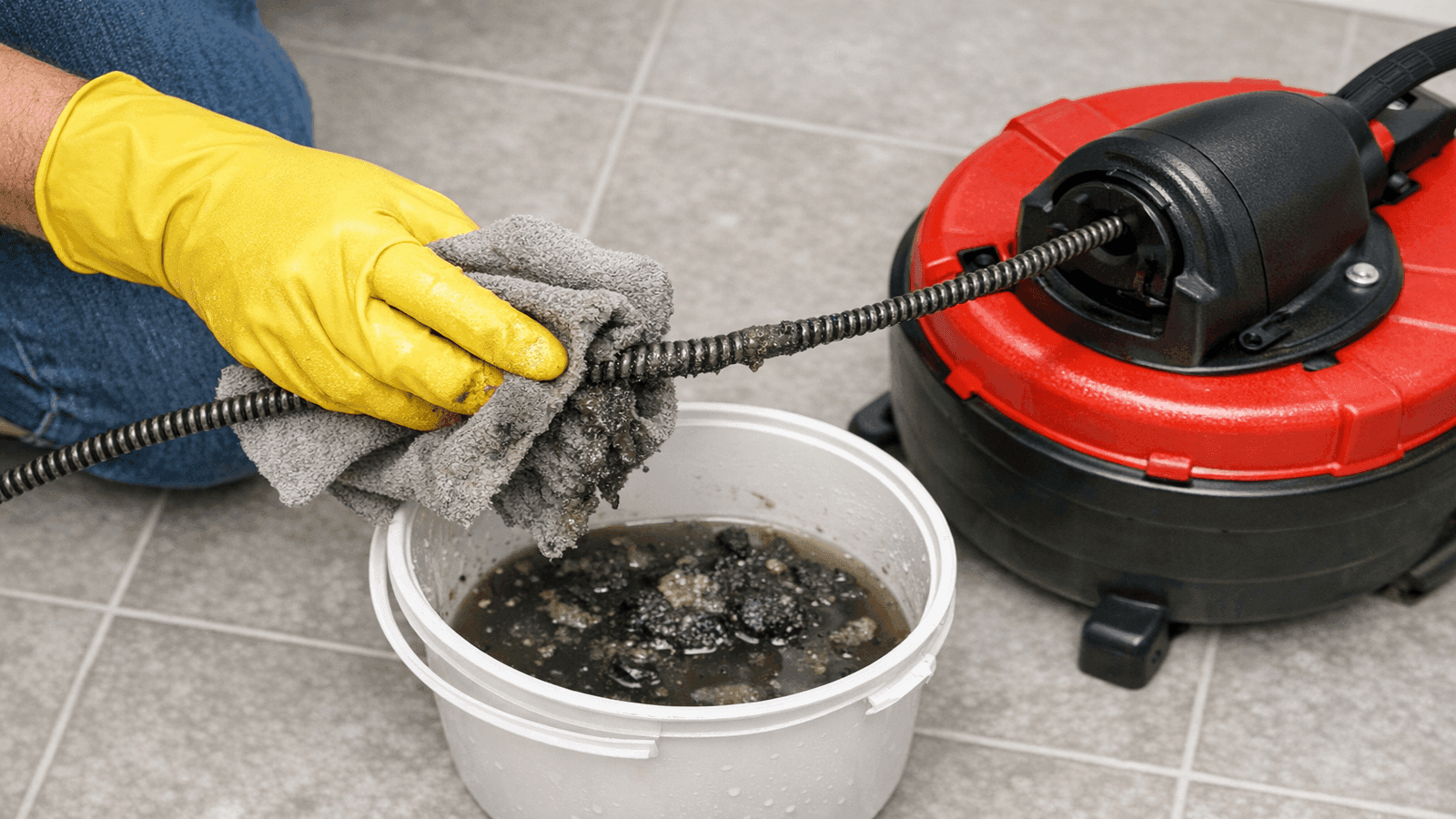
Photo: Homeowner wiping drain snake cable clean with rags as it is retracted with bucket nearby containing debris
When Snaking Does Not Work
Signs the snaking has not solved the problem:
- The drain backs up again within 24-48 hours
- Multiple fixtures back up simultaneously (main sewer line issue)
- The cable hits solid resistance that will not move in any direction
- Water backs up from a different drain than the one being snaked
When snaking is the wrong tool entirely:
- Grease buildup: A snake punches through the center of a grease clog but leaves the coating on the pipe walls. The drain slows again within days. Hydrojetting at 3,000-4,000 PSI scours the entire pipe wall clean and is the correct method for kitchen grease.
- Mineral buildup: Hard water deposits narrow the pipe diameter over time. Snaking cannot remove scale; hydrojetting or pipe replacement is required.
- Tree root intrusion: A snake cuts roots temporarily but they regrow within months. Camera inspection followed by root treatment or pipe lining is the long-term fix.
Cost comparison for 2026:
Cost comparison for 2026
| Service | Average Cost (2026) |
| Professional drain snaking (sink/shower) | $100-$250 |
| Professional drain snaking (main sewer line) | $300-$500 |
| Hydrojetting (residential) | $350-$600 |
| Camera inspection | $150-$300 |
| Renting a power snake (DIY) | $30-$60/day |
Get quotes from top-rated pros.
When a customer calls me because their drain is slow again two days after they snaked it themselves, I already know what happened: it was a grease clog, not a hair clog. Snaking a grease clog is like poking a hole through peanut butter with a pencil. It opens up briefly and closes right back. Hydrojetting is the correct tool for kitchen grease. I use a jetter on every kitchen drain service call, not a snake. The difference in how long the result lasts is not even close.
If the backup involves multiple fixtures or you suspect a main sewer line issue, see How to Shut Off Your Water Supply before calling a plumber to prevent overflow damage.
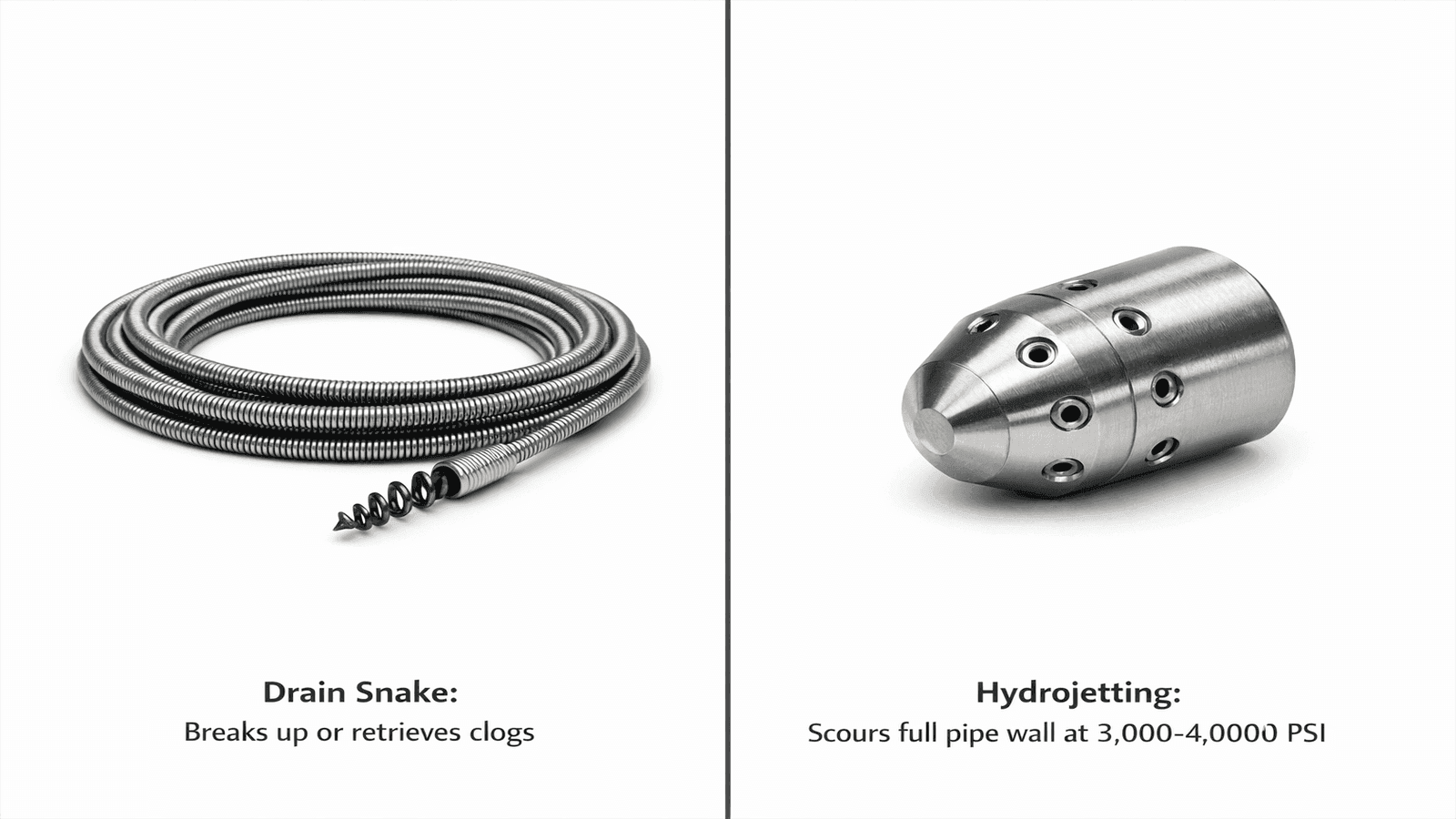
Photo: Split image showing a standard drain snake cable next to a hydrojetting nozzle with labels explaining the difference in application
Conclusion
Drain snaking is the most effective DIY solution when plunging fails, and the clog is within 15-25 feet of the fixture. A $25-$40 hand drum auger handles the majority of sink and shower clogs that most homeowners ever face. Use clockwise rotation when feeding, pull hair clogs out rather than pushing them deeper, and always flush thoroughly after clearing. Know the limits: recurring clogs, multiple backed-up fixtures, or a drain that slows again within 48 hours signal that the problem needs a professional with a camera or a hydrojetter. For more DIY plumbing guidance, visit the full DIY Plumbing Guides series.
Disclaimer: Cost ranges listed in this guide are national averages based on 2025-2026 industry data. Actual costs vary by location, severity, and contractor. Always get multiple quotes for plumbing work. Prices in major metro areas may be 20-40% higher than the national average. This guide is for educational purposes; consult a licensed plumber for issues beyond basic DIY repairs.

Michael Jennings is a licensed master plumber & water systems specialist with over 18 years of hands-on experience in residential and commercial plumbing, serving clients across California and Texas. At NearbyHunt, he shares practical advice on pipe installations, water heater maintenance, and home plumbing upgrades. Michael has helped thousands of homeowners prevent costly water damage and improve water efficiency through modern plumbing solutions.

Robert is a licensed master plumber with over 20 years of experience serving both residential and commercial clients across the Midwest. Specialising in advanced plumbing systems and sustainable water technologies, Rob brings deep technical insight and hands-on expertise to every project. As a reviewer for NearbyHunt, he ensures all plumbing content reflects the highest standards of safety, compliance, and practicality.