- Whole house repiping costs $4,500-$22,000 for most homes, with a national average near $8,500.
- PEX pipe is the most affordable material at $0.50-$2.00 per foot; copper runs $2.00-$4.00 per foot.
- A 1,500 sq ft home costs $5,500-$11,000 with PEX and $12,000-$22,000 with copper.
- Labor accounts for 70% of total cost, making contractor selection critical to your final price.
- Homes with galvanized steel or polybutylene pipes are highest priority for repiping in 2026.
- Permits are required in virtually every U.S. jurisdiction; budget $200-$800 for permit fees.
Repiping a house is one of the largest single plumbing investments a homeowner will face. Unlike a leaky faucet or a clogged drain, whole house repiping touches every supply line in the building and requires a licensed plumber working for several days. Understanding the real costs before you call a contractor puts you in a stronger position to evaluate quotes and avoid surprises.
This guide covers the full cost picture for 2026: material comparisons, pricing by home size, warning signs that indicate repiping is necessary, and what the process actually includes. For a broader view of plumbing project pricing, see our Plumbing Costs Guide 2026.

Photo: Licensed plumber holding corroded galvanized steel pipe removed during whole house repiping project
Average Cost to Repipe a House in 2026
The national average for a whole house repipe sits between $6,000 and $10,000 for a typical 1,500-2,000 square foot home using PEX pipe. The full range runs from $4,500 on the low end for a small PEX job to over $22,000 for a large copper repipe in a high-cost metro.
Material type is the single biggest cost driver after home size. PEX (cross-linked polyethylene) runs 40-60% less than copper for a comparable job because the material is cheaper per foot and installs faster. A job that takes 3-4 days in PEX can take 5-7 days in copper, and that labor difference adds up quickly at $75-$150 per hour for licensed plumbers.
| Material | Cost Per Linear Foot | Avg. Total (1,500 sq ft) | Lifespan |
| PEX | $0.50-$2.00 | $5,500-$11,000 | 40-50 years |
| Copper | $2.00-$4.00 | $12,000-$22,000 | 50-70 years |
| CPVC | $0.50-$1.50 | $4,500-$9,000 | 50-75 years |
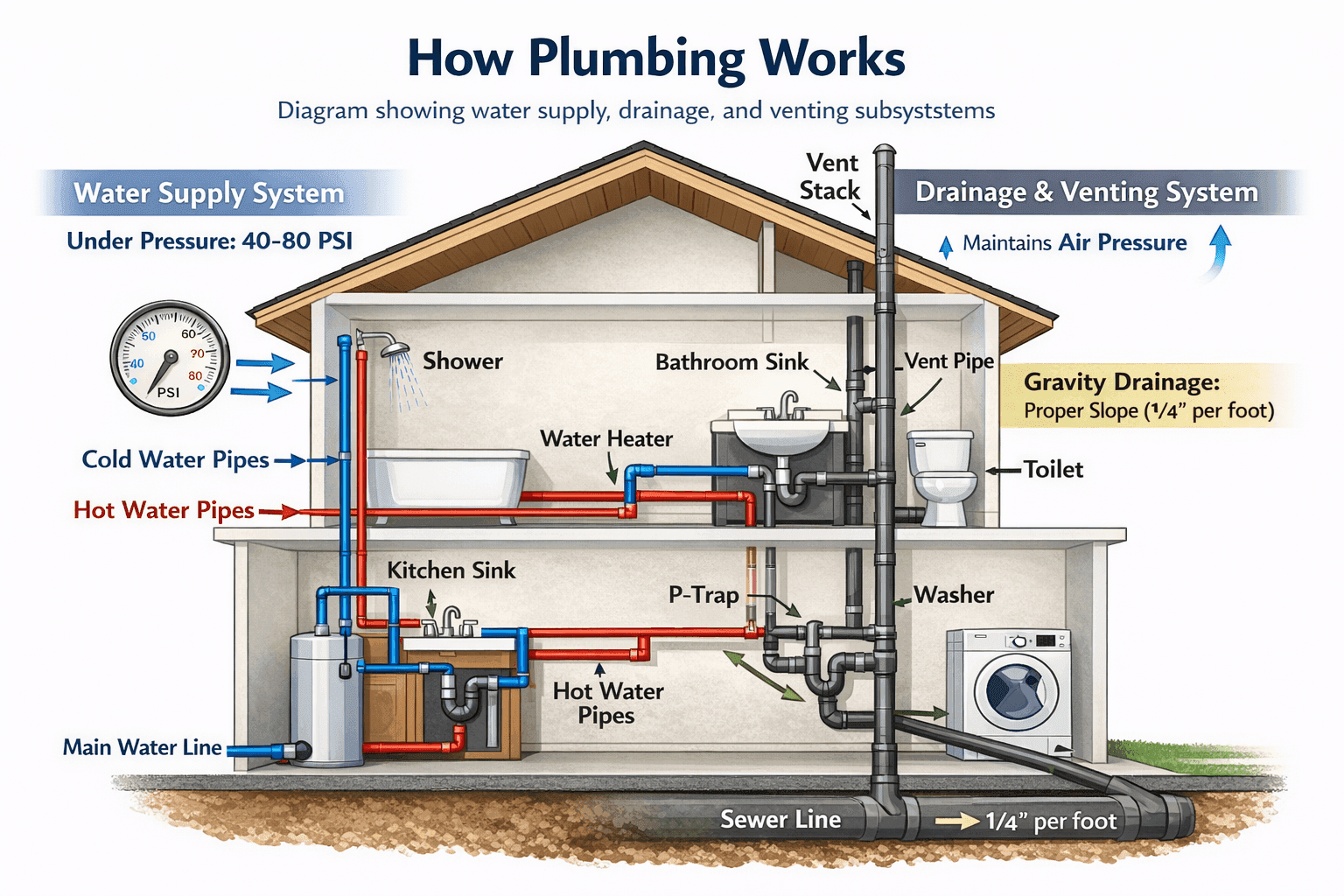
Keep in mind these figures reflect supply lines only. Drain, waste, and vent (DWV) line replacement is a separate scope and adds significantly to the total. To understand how these systems relate, see our guide on how plumbing works.
In my 18 years as a master plumber, I have repiped over 120 homes across the Dallas-Fort Worth area. The number one thing homeowners get wrong is comparing quotes that cover different scopes. One contractor includes supply lines only; another quotes supply and DWV; a third may or may not include drywall repair. Before you compare prices, make sure every bid covers the same work. I have seen homeowners choose a cheaper quote and pay 30% more in the end.

Repiping Cost by Home Size
Home size drives material quantity and total labor time. Larger homes have more linear feet of pipe, more fixture connections, and often more complex layouts with multiple stories or bathrooms.
The following estimates assume PEX pipe at mid-range labor rates and supply lines only. Copper costs will be roughly double these figures.
| Home Size | Bedrooms/Baths | PEX Repipe Cost | Copper Repipe Cost |
| Under 1,000 sq ft | 2 bed/1 bath | $3,500-$7,000 | $8,000-$15,000 |
| 1,000-1,500 sq ft | 3 bed/1-2 bath | $5,000-$9,000 | $10,000-$18,000 |
| 1,500-2,000 sq ft | 3-4 bed/2 bath | $5,500-$11,000 | $12,000-$22,000 |
| 2,000-2,500 sq ft | 4 bed/2-3 bath | $7,000-$14,000 | $16,000-$28,000 |
Each bathroom beyond the first two typically adds $800-$1,500 to the total. Access difficulty is a major cost modifier: homes on a slab foundation can cost 25-50% more to repipe than those with a crawl space or basement, because plumbers must route supply lines through walls and ceilings.
PEX vs. Copper vs. CPVC: Choosing the Right Material
PEX has become the dominant choice for residential repiping over the past decade. It is flexible, which means fewer fittings and faster installation. It handles freeze-thaw cycles better than rigid pipe and does not corrode in most water chemistries. The main limitation is that PEX cannot be used for outdoor exposed runs because UV degrades it over time.
Copper has a 70-year proven track record in American homes. It is code-approved everywhere and extremely durable. The tradeoff is cost: both the material and the labor-intensive soldering process make copper the most expensive option. Copper is also vulnerable to pinhole leaks in homes with highly acidic water. For a detailed breakdown of pipe types and properties, see our guide on types of plumbing pipes.
CPVC (chlorinated polyvinyl chloride) is a rigid plastic pipe approved for hot and cold supply water. It costs less than copper and is fully code-compliant nationwide, but it is more brittle than PEX and more susceptible to cracking in freezing conditions.
Get quotes from top-rated pros.
My default recommendation for most residential repiping clients in 2026 is PEX-A, the highest-quality grade of PEX. The cost savings over copper are substantial and the material is reliable. That said, if a homeowner has very acidic well water, I lean toward CPVC or copper because PEX can leach small amounts of material in those conditions over decades. Water chemistry should always be part of the conversation before selecting a material.
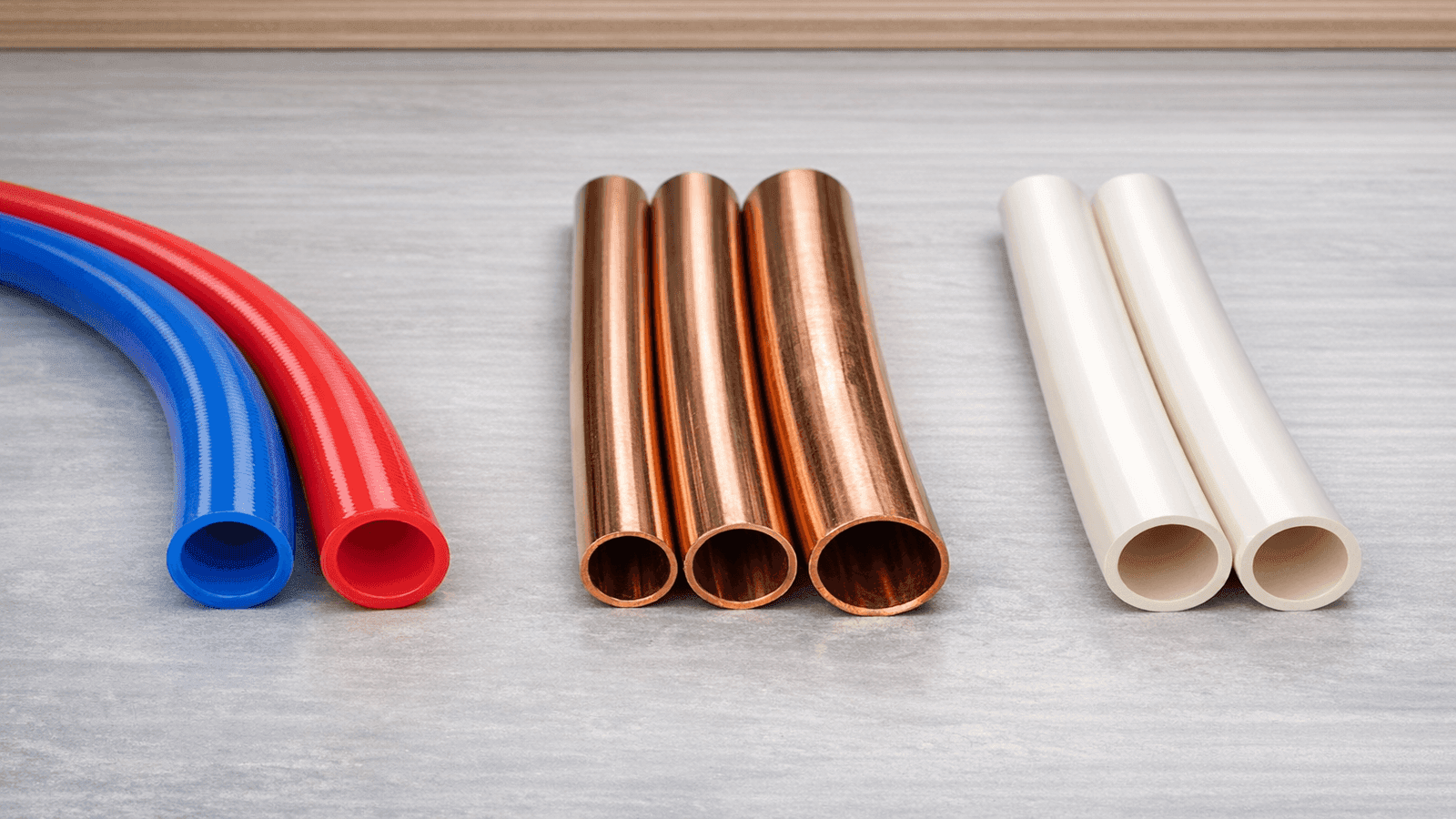
Photo: Side-by-side comparison of PEX, copper, and CPVC plumbing pipes used for whole house repiping
Warning Signs You Need to Repipe Your House
Low water pressure throughout the house is one of the most common symptoms of deteriorating galvanized steel pipes. As galvanized pipes corrode internally, mineral deposits narrow the pipe diameter over decades, reducing flow at every fixture. If pressure is low everywhere and not just at one fixture, the pipes themselves are typically the cause.
Discolored water is a direct indicator of pipe corrosion. Rusty or brown water, especially from hot water lines, signals that galvanized or aging copper pipes are shedding corrosion into the supply. This is also a health concern that should be addressed without delay.
Recurring leaks at multiple locations indicate systemic pipe degradation rather than isolated joint failures. When a homeowner is calling for the third or fourth leak repair in 18 months, the cumulative repair cost is approaching what a full repipe would cost, with none of the long-term benefit.
Polybutylene pipes create an urgent repiping need regardless of current performance. Polybutylene (often gray flexible pipe installed from 1978 to 1995) is known to fail catastrophically without warning and is no longer code-compliant in most jurisdictions. See our guide on common plumbing problems for more on system-wide failures.
When I do a repipe assessment, I look at four things: pipe material, pipe age, water color, and pressure readings at multiple fixtures. Galvanized steel pipes over 40 years old almost always need replacement. Polybutylene is an automatic repipe recommendation. Copper with pinhole leak history gets a water chemistry test first. The material tells you most of what you need to know before you even turn on a faucet.

Photo: Rusty brown discolored water running from kitchen faucet indicating corroded pipes that need repiping
What Is Included in a Whole House Repipe?
A standard whole house repipe scope covers supply line replacement from the main shutoff to every fixture in the home: kitchen sink, bathrooms, showers, tubs, toilets, and laundry connections. The main shutoff valve and fixture supply stops (angle stops) are also typically replaced.
Wall opening and patching is included by some contractors and excluded by others. Many repiping contractors will cut access holes but leave drywall repair to a separate contractor. Drywall patching and painting on a full repipe can add $1,500-$4,000 separately, so clarify this in writing before signing any contract.
What is typically not included in a standard supply-line repipe: drain, waste, and vent line replacement; water heater replacement; fixture replacement; or any underground pipe work beyond the main line entry. For related code requirements that affect repiping scope, see our guide on plumbing code requirements.
Permit fees are a required cost in every U.S. jurisdiction. A whole house repipe permit runs $200-$800 in most markets, with high-cost metros occasionally exceeding $1,000. Permits protect homeowners by requiring a licensed inspector to verify the work meets current code. An unpermitted repipe can void insurance claims and complicate future home sales. NearbyHunt quote data from 2025 shows that reputable licensed plumbers include permit costs in their initial quotes over 85% of the time; always confirm this when comparing bids.
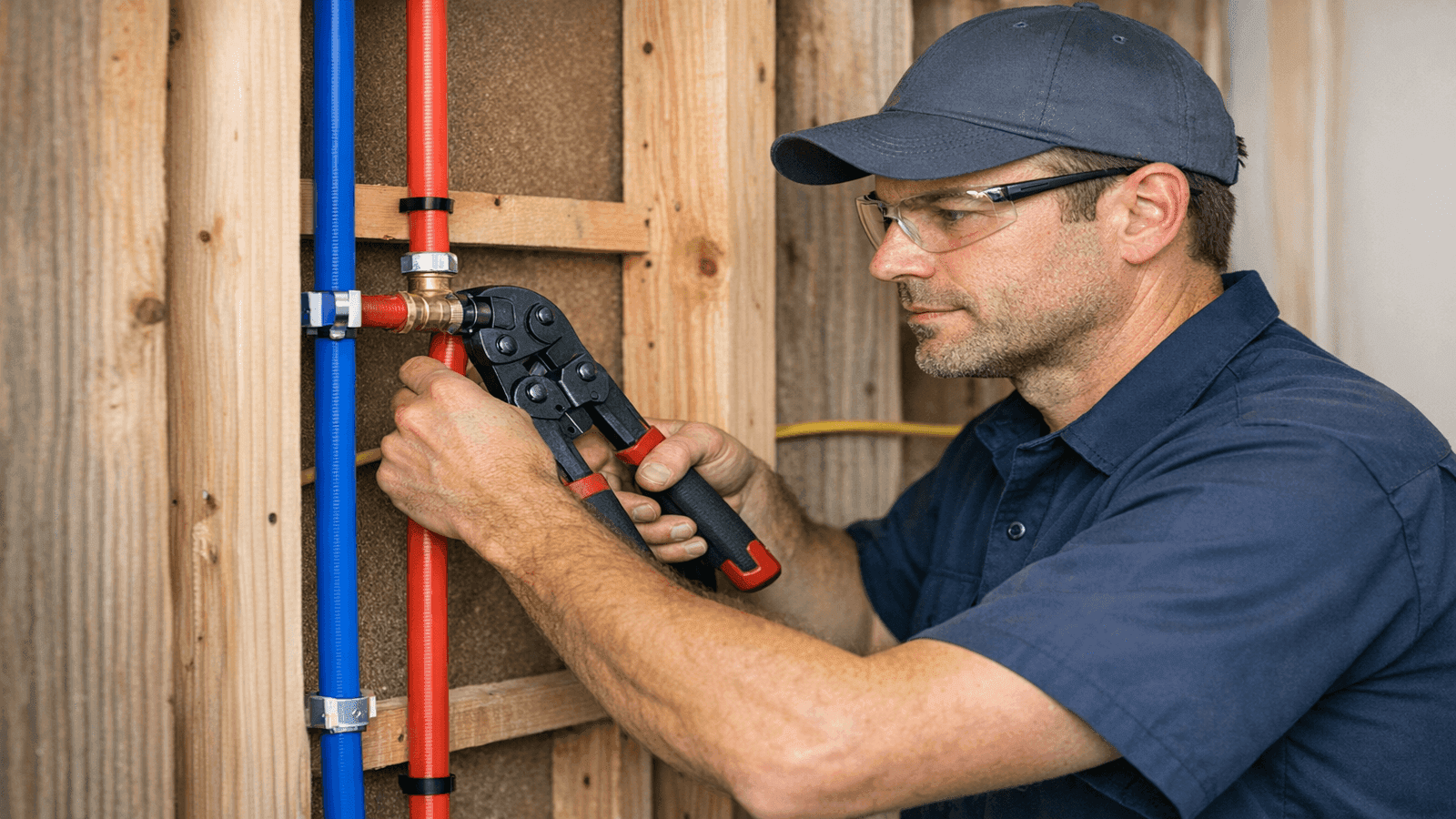
Photo: Licensed plumber installing flexible PEX pipe through wall studs during whole house repiping project
Conclusion
Whole house repiping in 2026 costs $4,500-$22,000, depending on pipe material, home size, foundation type, and regional labour rates. Most homeowners with a 1,500-2,000 sq ft home using PEX should budget $6,000-$11,000 for a complete supply line repipe, including permits. Copper doubles that estimate. The warning signs that make repiping necessary are clear: galvanised steel over 40 years old, polybutylene pipe, chronic low pressure, discoloured water, or a pattern of recurring leaks. Get three detailed quotes from licensed plumbers and confirm the scope in writing before committing. NearbyHunt connects homeowners with pre-screened licensed plumbers who can provide accurate local pricing for your specific home.
Sources & References
- Bureau of Labour Statistics, Occupational Employment and Wages for Plumbers, Pipefitters, and Steamfitters, bls.gov, May 2024.
- Plumbing-Heating-Cooling Contractors Association (PHCC), "2026 Plumbing Industry Workforce and Wage Report," phccweb.org.
- Fixr.com, "How Much Does It Cost to Repipe a House in 2026?" fixr.com.
- Bob Vila, "How Much Does It Cost to Repipe a House?" bobvila.com.
- This Old House, "How Much Does It Cost to Repipe a House?" thisoldhouse.com.
- Forbes Home, "How Much Does It Cost to Repipe a House in 2026?" forbes.com/home-improvement.
- HouseCall Pro, "2026 Plumbing Price Guide: Average Rates and How to Estimate," housecallpro.com.
- Bankrate, "How Much Does It Cost to Repipe a House?" bankrate.com.
- National Association of Home Builders (NAHB), "Remodelling Market Index 2025," nahb.org.
- NerdWallet, "Repiping a House: Costs and What to Expect," nerdwallet.com.


Michael Jennings is a licensed master plumber & water systems specialist with over 18 years of hands-on experience in residential and commercial plumbing, serving clients across California and Texas. At NearbyHunt, he shares practical advice on pipe installations, water heater maintenance, and home plumbing upgrades. Michael has helped thousands of homeowners prevent costly water damage and improve water efficiency through modern plumbing solutions.

Robert is a licensed master plumber with over 20 years of experience serving both residential and commercial clients across the Midwest. Specialising in advanced plumbing systems and sustainable water technologies, Rob brings deep technical insight and hands-on expertise to every project. As a reviewer for NearbyHunt, he ensures all plumbing content reflects the highest standards of safety, compliance, and practicality.