- Whole-home leak detection systems cost $350–$700 installed and can trigger automatic shutoff within seconds of detecting a breach, potentially saving tens of thousands in water damage. [1]
- Smart heat pump water heaters qualify for a 30% federal tax credit through 2032, reducing the effective cost of a $1,200–$2,500 installed system to as little as $840–$1,750. [2]
- Insurance discounts of 5–12% are available from most major carriers when a whole-home leak detection device with automatic shutoff is installed on the main supply line. [3]
- Hot water recirculation pumps save 8,000–15,000 gallons per year by eliminating cold-water wait, with installed cost of $400–$900. [4]
- Smart irrigation controllers reduce outdoor water use 30–50% versus conventional timer-based systems, with EPA WaterSense-certified models available from $150–$400 installed. [5]
- Licensed plumbers in the NearbyHunt network report that smart plumbing upgrades are the fastest-growing segment of residential service calls in 2026, with homeowners citing both cost savings and water damage prevention as primary motivations.
Smart plumbing technology has moved well beyond novelty. Devices that once appeared only in luxury custom builds are now standard catalog items at plumbing supply houses, and the payback math has improved significantly as installation costs have dropped. The complete plumbing ideas and inspiration guide covers the full range of modern plumbing upgrades; this guide focuses specifically on the connected, automated systems that can reduce water bills, prevent catastrophic damage, and bring app-level control to every water-using appliance in the home. Michael R. Jennings has completed 2,400-plus residential plumbing projects across Dallas-Fort Worth and California over 18 years, and the recommendations here reflect real-world installation experience rather than spec-sheet promises.

Get quotes from top-rated pros.
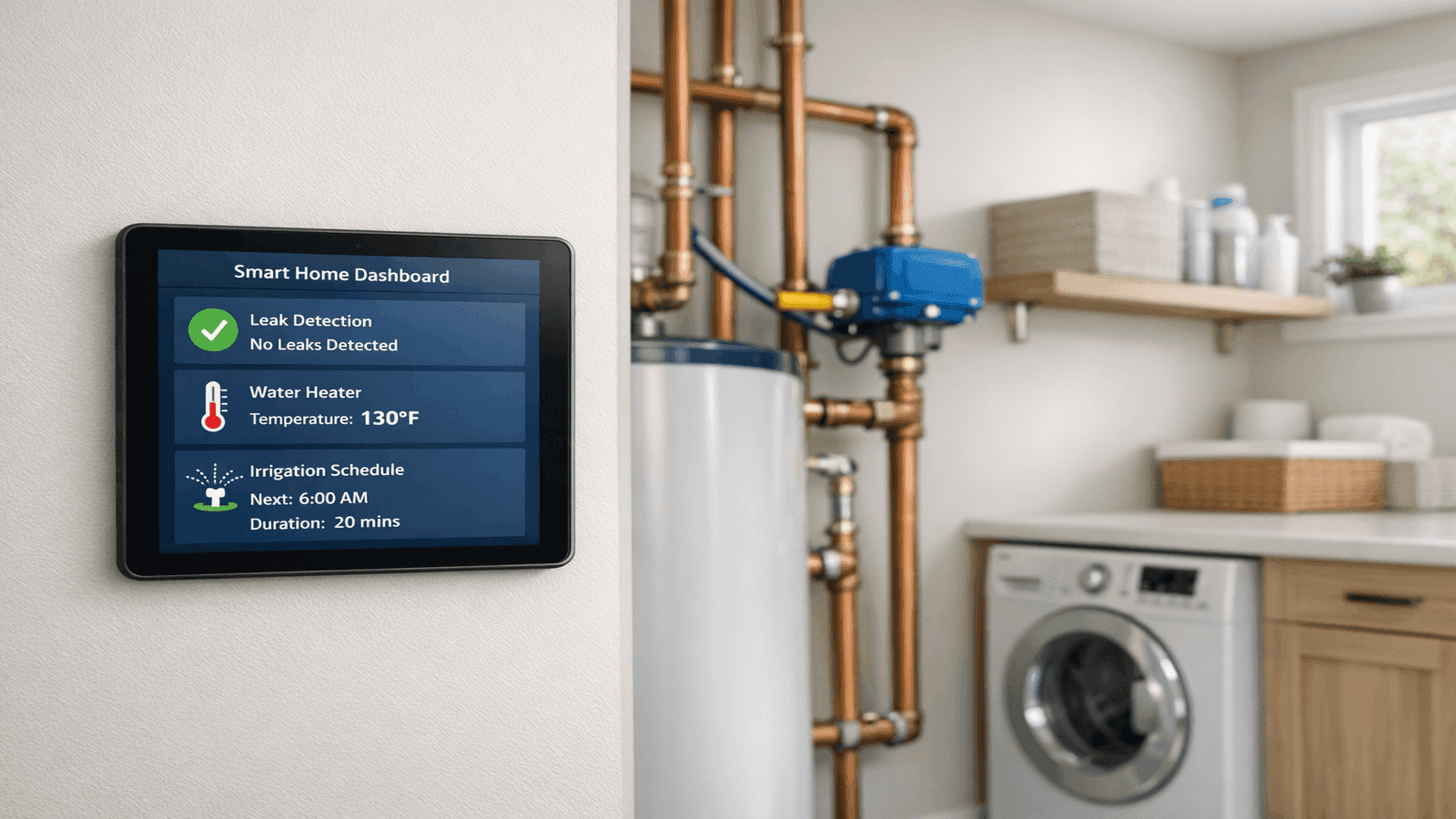
Photo: Smart home plumbing control panel showing leak detection, water heater status, and irrigation schedule on tablet mounted near utility room entrance
Whole-Home Leak Detection and Automatic Shutoff
Water damage is the most expensive category of homeowner insurance claims, averaging $11,000 per incident according to insurance industry data. [1] Whole-home leak detection systems address the problem at the source by monitoring flow patterns on the main supply line and automatically closing a motorized shutoff valve when an anomaly is detected.
How the Systems Work
Devices like the Flo by Moen and Phyn Plus install on the main cold water supply line before it branches to any fixtures. They use two distinct detection methods working in parallel.
The first is microphone-based acoustic sensing. A sensitive transducer listens continuously for the acoustic signature of water passing through pipe walls. Pinhole leaks and slow seeps that would never show on a pressure test produce detectable sound at frequencies that background fixture noise does not. The second method is micro-pressure testing: the device runs a brief automated test each night when the house is statistically quiet, pressurizing the system to a known value and monitoring for decay. A slow pressure drop indicates a leak somewhere in the system even when flow volume is too low to trigger flow-based alerts.
When either method detects an anomaly outside programmed thresholds, the system closes the motorized ball valve on the main line within seconds. Homeowners receive an app notification with the detected anomaly type and location estimate. The system also learns household water usage patterns over time and can flag unusual consumption even before a hard pressure failure occurs.
Cost and Insurance Benefits
Flo by Moen installed by a licensed plumber runs $350–$700 depending on pipe size (half-inch versus one-inch mains) and access difficulty. Phyn Plus is in a similar range at $400–$650 installed. The installation typically takes two to three hours and requires a short water shutoff to the home.
The insurance benefit is significant and often overlooked. Most major carriers including State Farm, Allstate, and Liberty Mutual offer premium discounts of 5–12% when a whole-home automatic shutoff device is installed and registered with the policy. [3] On a $2,000 annual premium, a 10% discount equals $200 per year, producing a payback period of two to three years on the device alone before counting any actual damage prevention.
The single biggest ROI item I install in 2026 is a whole-home leak detector with automatic shutoff. I've walked into homes where a pinhole in a copper elbow behind drywall had been leaking for weeks. A Flo by Moen on the main line would have caught that on night one. The insurance discount typically pays for the device in two to three years, and that's before you count one prevented claim.
For a complete guide to locating leaks before they become emergencies, see the plumbing leak detection guide.
Smart Water Heaters: Heat Pump and Hybrid Models
How Heat Pump Water Heaters Work
Heat pump water heaters (HPWHs) move heat rather than generate it. A refrigeration loop extracts thermal energy from surrounding air and transfers it to the water tank, using two to three times less electricity than a resistance element doing the same job. WiFi-enabled models from Rheem (ProTerra series) and A.O. Smith (Voltex Hybrid series) add app control on top of that efficiency.
WiFi Features That Matter
Vacation mode suspends heating entirely when no one is home, eliminating standby losses during trips without the need to manually drain or adjust settings. Usage scheduling allows the unit to pre-heat during off-peak utility rate windows (typically 10pm to 6am in states with time-of-use pricing) and coast on stored heat through peak hours. Energy monitoring shows actual kWh consumed per day with historical trending, which helps identify when sediment buildup is reducing efficiency and maintenance is needed.
The Rheem app also integrates with utility demand-response programs in participating states: the utility can send a brief curtailment signal during grid stress events in exchange for a bill credit, and the water heater shifts to stored heat during that window with no perceptible impact on hot water availability.
Federal Tax Credit and Installed Cost
HPWHs qualify for the 30% federal Residential Clean Energy Credit through 2032 under the Inflation Reduction Act. [2] On a $1,200–$2,500 installed project, that credit reduces effective cost to approximately $840–$1,750. Many utilities layer an additional $100–$400 rebate on top of the federal credit. The water heater installation guide covers the full installation process; the key smart-technology consideration is that the WiFi configuration and demand-response enrollment need to happen at commissioning, not as an afterthought.
Get quotes from top-rated pros.
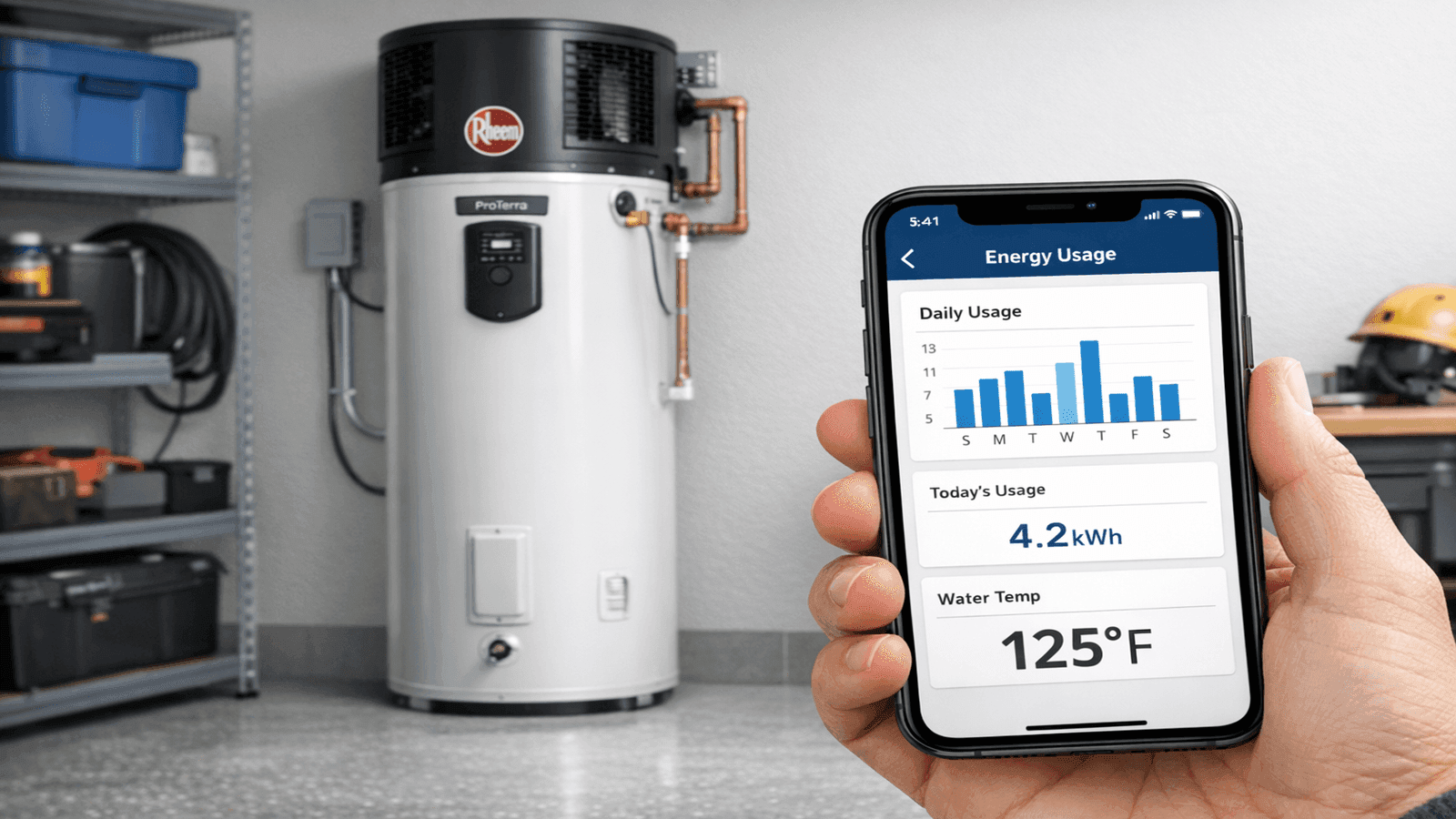
Photo: Rheem ProTerra heat pump water heater installed in garage with smartphone showing energy monitoring app and current water temperature
Heat pump water heaters need at least 700 cubic feet of surrounding air space to work efficiently. I see a lot of homeowners try to put them in tight closets where the tank water heater used to live. The compressor ends up pulling cooled air from an adjacent conditioned space and the efficiency advantage disappears. Location matters as much as brand selection.
Tankless Water Heaters with Smart Controls
Tankless water heaters eliminate standby loss entirely by heating water only when a fixture calls for it. Smart-connected tankless units add remote temperature adjustment, diagnostic monitoring, and usage alerts to the core on-demand delivery function.
Gas tankless units deliver 6–10 gallons per minute and are well suited to households with simultaneous demand from multiple fixtures. Electric tankless units work well for point-of-use applications (under-sink, bathroom additions) where a full gas system would be cost-prohibitive. The water heater maintenance guide covers descaling procedures that apply specifically to tankless systems, which are more sensitive to mineral buildup than tank units.
Installed cost ranges from $1,000–$3,500 depending on fuel type, venting requirements, and whether a gas line or electrical service upgrade is needed. Remote temperature adjustment is the most used smart feature in practice: homeowners with young children set a lower default temperature from the app without touching the unit; households with high simultaneous demand can raise setpoint during peak hours.
Across 2,400-plus residential projects in Dallas-Fort Worth and California, the tankless upgrade question I hear most is whether the gas line will need upsizing. The answer in most pre-2000 homes is yes. I always do a gas pressure and BTU demand audit before quoting tankless. That one step prevents about 80% of the surprise costs I see other contractors miss.
Hot Water Recirculation Pumps
Demand-controlled recirculation pumps solve one of the most common household water complaints: waiting 30–60 seconds for hot water to reach a distant bathroom while cold water runs down the drain.
Demand-Controlled vs. Timer-Based
Demand-controlled systems activate the recirculation pump only when triggered by a push button, motion sensor, or voice command. The pump pulls hot water from the water heater through the supply line and returns the standing cooled water to the heater through the cold line (or a dedicated return line in homes equipped with one). By the time the user reaches the fixture, hot water is already at the tap.
Timer-based systems run the pump on a schedule (6am to 9am, 5pm to 8pm) regardless of actual demand. They are less efficient because they circulate hot water and lose heat to pipe walls even when no fixture is used. Demand-controlled systems are the recommended choice for 2026 installations.
Water and Energy Savings
The U.S. Environmental Protection Agency estimates that homes waste 8,000–15,000 gallons per year waiting for hot water to arrive at fixtures. [4] A recirculation pump eliminates most of that waste. The pump itself consumes $15–$40 per year in electricity depending on run cycles, but water savings of 8,000+ gallons can offset that cost in most utility markets. Installed cost is $400–$900, with the high end reflecting retrofits that require a dedicated return line.
Smart Irrigation Controllers
Outdoor water use accounts for 30–50% of residential water consumption in warm-climate states, and conventional timer-based irrigation systems waste a significant portion of that through fixed schedules that ignore rainfall, soil moisture, and seasonal temperature variation.
EPA WaterSense-certified smart irrigation controllers including the Rachio 3 and RainBird ST8I use local weather data and an algorithm based on evapotranspiration rates to calculate exactly how much water each zone needs each day. When rainfall meets or exceeds irrigation need, the scheduled cycle skips automatically. The result is typically a 30–50% reduction in outdoor water use compared to a conventional timer. [5]
Installed cost for a Rachio 3 or comparable model runs $150–$400 including professional wiring to existing irrigation zones. The device replaces the existing timer and uses the same wiring, making retrofit straightforward in most systems. EPA WaterSense certification also qualifies these controllers for utility rebates in many water districts, with rebates ranging from $50 to $200 in California, Arizona, Texas, and Florida.
Marcus T. in Scottsdale, Arizona ran a conventional 8-zone timer that watered on a fixed daily schedule regardless of weather. After a licensed plumber in the NearbyHunt network installed a Rachio 3 in March 2025, his first full summer of data showed a 41% reduction in irrigation water use and a $340 reduction in his annual water bill, fully recovering the $290 installed cost with money left over by October.
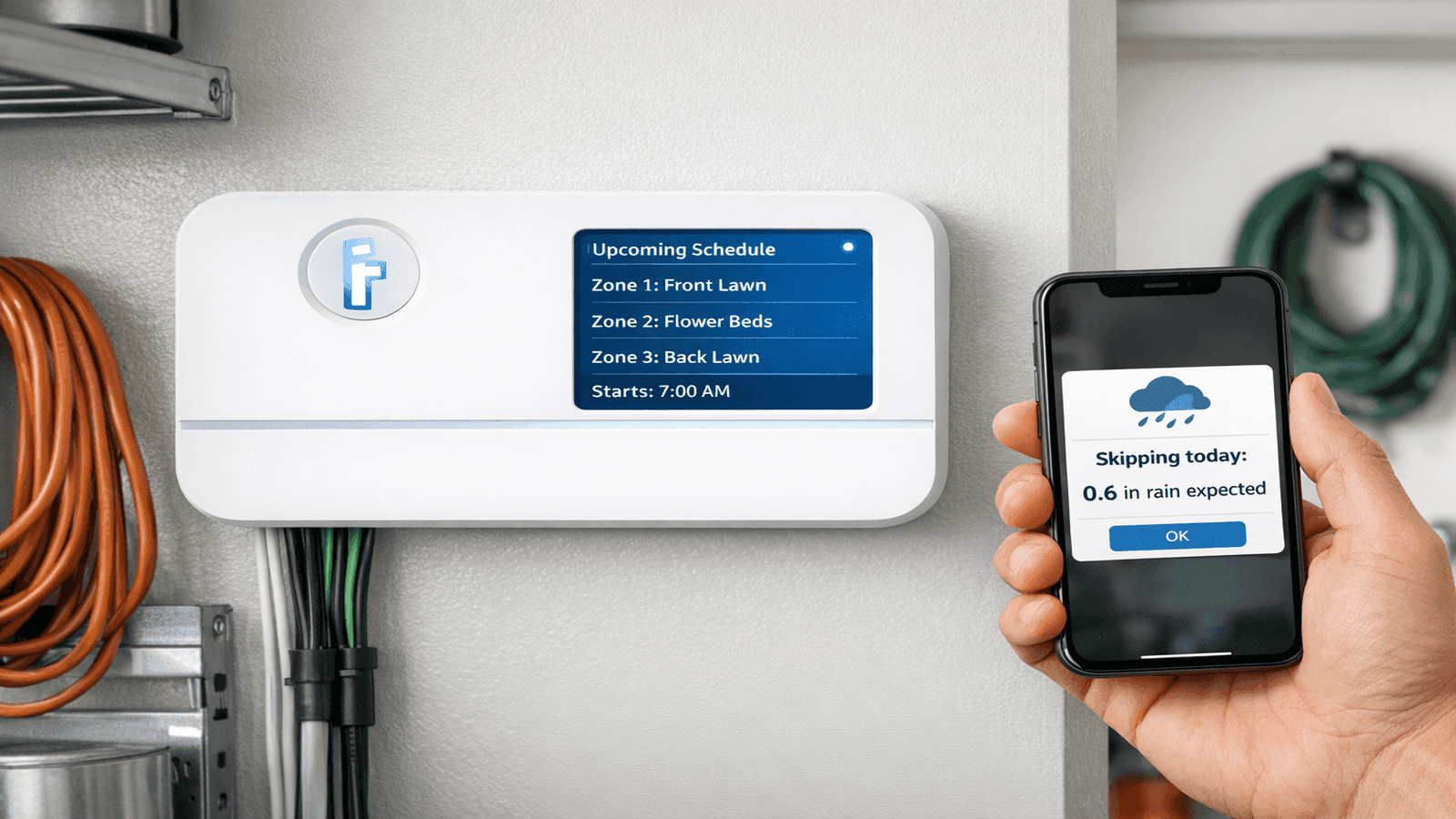
Photo: Rachio 3 smart irrigation controller mounted on garage wall showing zone schedule on LCD display, with smartphone displaying weather-based skip notification
Smart Shower Systems
Smart shower systems from Kohler (Konnect) and Moen (U by Moen) allow users to set preferred temperature and flow presets that activate at the push of a button or a voice command. A digital display on the shower valve shows real-time temperature, and the system can send a notification to a smartphone when the shower is ready.
The primary practical benefit is safety: households with elderly members or young children can program a maximum temperature cap that the digital valve enforces regardless of hot water heater setpoint. Secondary benefits include water conservation (the shower activates at the right temperature immediately rather than running cold water to waste) and convenience.
Installed cost for a complete smart shower system including the digital valve, volume controls, and one handshower or rain head runs $800–$2,500, with higher costs reflecting premium trim packages and multiple outlet configurations. These systems require a licensed plumber for installation due to the valve body work and the low-voltage wiring for the digital controller.
Water Quality Monitors
Inline water quality monitors measure total dissolved solids (TDS), pH, chlorine, lead, and other parameters continuously and report through an app. Products like the Moen Flo Water Monitor (distinct from the leak detection product) and the Wint Water Intelligence system provide a baseline reading when first installed and alert homeowners when readings drift from that baseline.
This is particularly valuable in homes with aging galvanized or lead solder connections, where water quality can change gradually without any visible sign. An app alert that TDS has risen 30% over two weeks is actionable information that motivates a water test and professional assessment before the change becomes a health concern. Installed cost is $150–$350 for most inline monitors. For context on what tests to order when a monitor flags an issue, see the water quality testing guide.
Cost, ROI, and Insurance Benefits: Full Comparison
The licensed plumbers in our NearbyHunt network report that homeowners who ask about smart plumbing ROI are most surprised by the insurance angle: most have never been told that a connected leak detector can generate a recurring annual premium discount.
Get quotes from top-rated pros.
| Device | Installed Cost | Annual Savings | Payback Period | Insurance Benefit |
| Whole-home leak detector (Flo by Moen) | $350–$700 | $200–$400 (insurance discount) | 2–3 years | 5–12% premium discount |
| Heat pump water heater (Rheem ProTerra) | $840–$1,750 (after tax credit) | $300–$600 (energy) | 2–5 years | None standard |
| Tankless water heater with smart controls | $1,000–$3,500 | $150–$400 (energy) | 4–10 years | None standard |
| Hot water recirculation pump | $400–$900 | $50–$150 (water) | 3–8 years | None standard |
| Smart irrigation controller | $150–$400 | $200–$500 (water) | 1–2 years | None standard |
| Smart shower system | $800–$2,500 | $30–$80 (water) | 15–30 years | None standard |
| Water quality monitor | $150–$350 | Variable (damage prevention) | Difficult to calculate | None standard |
The table shows that whole-home leak detection and smart irrigation controllers deliver the fastest documented payback. Smart water heaters deliver the largest dollar savings but require a longer horizon and benefit significantly from the federal tax credit.
For a broader view of plumbing project costs, the plumbing costs guide covers typical pricing across all major residential plumbing work.
Federal and Utility Incentives Available in 2026
The 30% Residential Clean Energy Credit covers heat pump water heaters through 2032. [2] The Energy Efficient Home Improvement Credit (25C) covers other qualifying upgrades at up to $600 per item. Utility rebates vary widely: Pacific Gas and Electric (PG&E), Southern California Edison, Austin Energy, and Xcel Energy all have active smart plumbing rebate programs in 2026 for both heat pump water heaters and WaterSense-certified irrigation controllers. Check the DSIRE database at dsireusa.org for state-by-state rebate listings.
Planning Your Smart Plumbing Upgrade
Start With Leak Detection
For homeowners choosing one upgrade, the whole-home leak detection system with automatic shutoff delivers the most defensible financial case when insurance discounts are factored in, and it provides catastrophic loss prevention that no other device category matches.
Sequence of Installation
Choosing a Contractor
Smart plumbing devices that include a motorized valve on the main supply line, a new water heater, or any work inside a wall require a licensed plumber in virtually all jurisdictions. A licensed plumber familiar with smart plumbing also ensures the WiFi commissioning and app setup are done correctly at installation, not left as a homeowner task that often goes incomplete.
For related modern fixture upgrades that complement smart systems, see eco-friendly fixtures and modern bathroom fixtures.
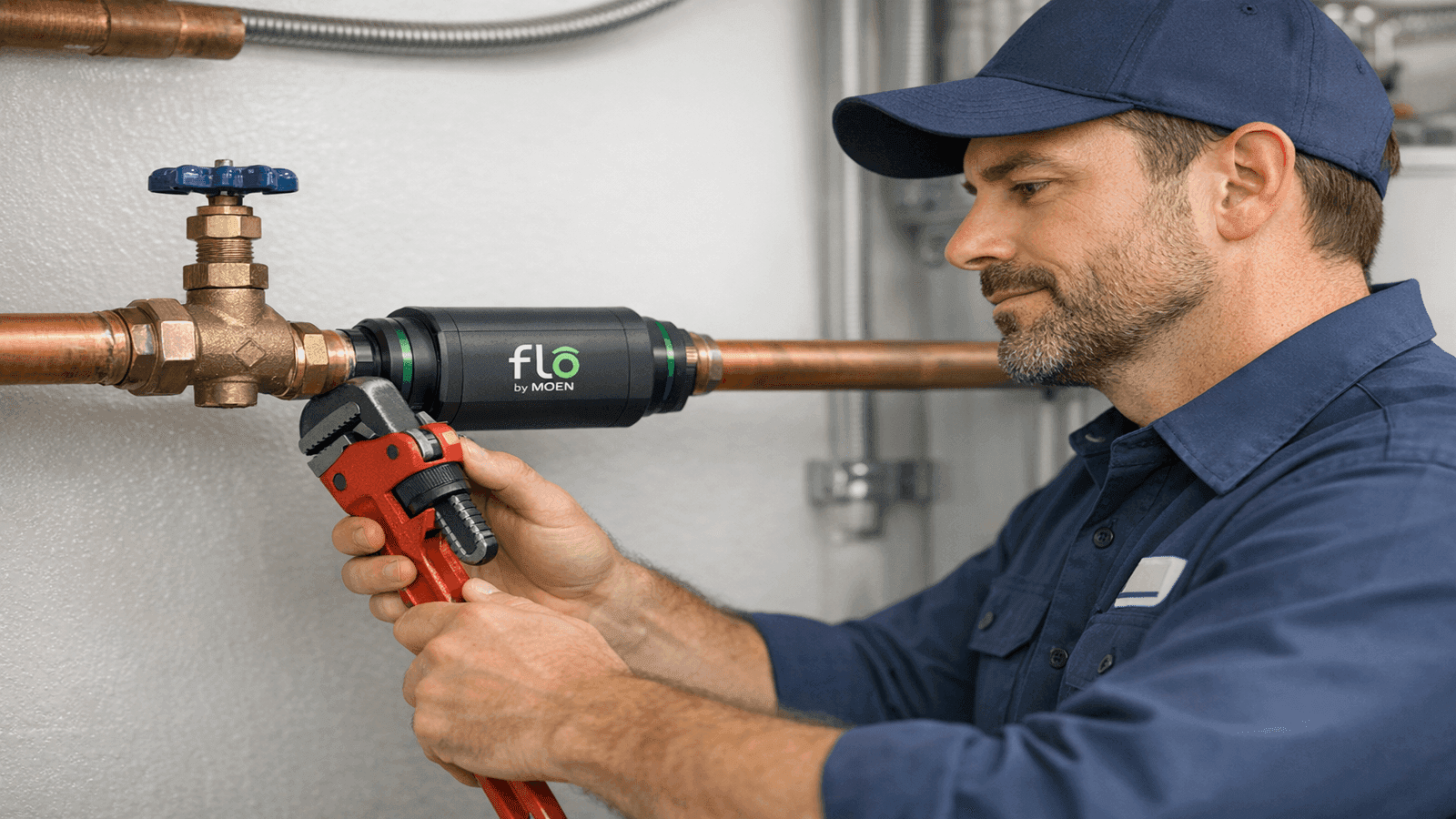
Photo: Licensed plumber installing Flo by Moen leak detection device on copper main water supply line in residential utility room, pipe wrench and shutoff valve visible
Smart Plumbing by Home Type and Budget
| Home Type | Priority Upgrade | Typical Budget | Key Benefit |
| Older home (25+ years) | Water quality monitor + leak detector | $500–$1,050 | Damage prevention, health protection |
| High water-use (family 4+) | Heat pump water heater | $840–$1,750 after credit | Energy savings, tax credit |
| Warm-climate home | Smart irrigation controller | $150–$400 | Outdoor water savings |
| Home with well water | Water quality monitor | $150–$350 | Health safety alerts |
| Luxury remodel | Full suite (leak, heater, shower, irrigation) | $3,000–$8,000 | Comprehensive automation |
| Rental property | Leak detector only | $350–$700 | Insurance discount, damage prevention |
Conclusion
Smart plumbing technology in 2026 represents a category where the financial math is no longer speculative. Whole-home leak detection with automatic shutoff delivers documented insurance discounts that typically recover installed cost within two to three years. Smart heat pump water heaters qualify for a 30% federal tax credit, which dramatically improves the payback profile. Smart irrigation controllers consistently deliver 30–50% reductions in outdoor water use in documented deployments. The key to capturing these benefits is working with a licensed plumber who is familiar with smart device commissioning, not just the pipe work: proper app setup and insurance enrollment at installation are as important as the physical installation itself.
Disclaimer: The information in this guide reflects 2026 pricing and available programs. Federal tax credits, utility rebates, and insurance discount programs are subject to change. Consult a licensed plumber for project-specific recommendations and a tax professional for credit eligibility confirmation.*
Sources & References
- Insurance Information Institute: Water Damage Claims
- U.S. Department of Energy: Heat Pump Water Heater Tax Credits
- Insurance Journal: Smart Home Water Leak Detection Discounts
- U.S. Environmental Protection Agency: WaterSense Hot Water
- EPA WaterSense: Smart Irrigation Controllers
- DSIRE: Residential Energy Incentives Database
- Moen Flo: Whole-Home Water Monitor Technology Overview
- Rheem ProTerra Heat Pump Water Heater Specification Sheet


Michael Jennings is a licensed master plumber & water systems specialist with over 18 years of hands-on experience in residential and commercial plumbing, serving clients across California and Texas. At NearbyHunt, he shares practical advice on pipe installations, water heater maintenance, and home plumbing upgrades. Michael has helped thousands of homeowners prevent costly water damage and improve water efficiency through modern plumbing solutions.

Robert is a licensed master plumber with over 20 years of experience serving both residential and commercial clients across the Midwest. Specialising in advanced plumbing systems and sustainable water technologies, Rob brings deep technical insight and hands-on expertise to every project. As a reviewer for NearbyHunt, he ensures all plumbing content reflects the highest standards of safety, compliance, and practicality.