- Emergency roof tarping costs $300-$1,500 from a professional service -- after-hours and weekend rates run 50-100% above standard pricing
- Storm damage repairs average $1,500-$8,000 for wind or hail damage covering 10-25% of a roof; full replacement often runs $12,000-$25,000 for catastrophic damage
- Call your insurance company within 24-72 hours of storm damage -- most policies require prompt reporting and delays can jeopardize your coverage
- Emergency contractors routinely charge 1.5-3x normal rates for same-day response -- know the difference between emergency-necessary and can-wait repairs
- James Carver has handled 200+ emergency storm damage calls -- the most expensive mistake homeowners make is doing nothing for 48-72 hours while water infiltrates walls and insulation
A loud crack at 2 a.m., a tree branch through your roof, or waking up to ceiling stains spreading across your living room ceiling -- these are the moments when emergency roof repair becomes the only thing on your mind. What you pay in the next 24 hours depends heavily on what you do in the first 60 minutes.
Emergency roof repairs are not priced like standard contractor work. The combination of immediate response, after-hours labor, and liability exposure for working on storm-damaged structures drives costs well above normal scheduling rates. This guide explains exactly what drives those costs, what each damage type typically runs in 2026, and how to move through the insurance process without leaving money on the table.
For a complete picture of roofing costs across repair types, project sizes, and materials, see our parent guide on roofing costs. If your immediate need is stabilizing the structure before a contractor arrives, our detailed walkthrough on how to tarp a roof covers safe DIY methods and when to call a professional instead.

Get quotes from top-rated pros.
What Qualifies as a Roof Emergency
Not every storm-related roofing problem demands an emergency call. Understanding the distinction matters because emergency rates carry a 50-100% premium over standard scheduling -- and misidentifying an urgent situation as an emergency can cost an extra $500-$2,000 unnecessarily.
Genuine emergencies -- call immediately:
- Active water entering the living space: ceiling drips, visible wet insulation, or water stains spreading in real time
- Structural damage: a collapsed roof section, fallen tree resting on rafters, or visibly crushed framing
- Large-section blow-off: a significant area of shingles (more than 20-25 square feet) removed entirely by wind, leaving felt or decking exposed
- Broken tile or slate creating an opening larger than two square feet, where rain entry is certain before a standard appointment is available
- Any breach where interior contents, electrical wiring, or structural wood will sustain damage from the next rainfall
Urgent but not emergency -- schedule within 2-5 days:
- Three to five missing shingles with underlying felt intact
- Minor flashing gap with no active leak
- Small crack in ridge cap without exposed decking
- Granule loss visible in gutters without punctures or openings
The decision framework is straightforward: will rain enter the structure before a contractor can reach you on a normal scheduled appointment? If yes, you have an emergency. If no, you have an urgent repair.
I get calls every storm season from homeowners panicking about five missing shingles. That's urgent, not emergency. Emergency means water is actively entering or will enter with the next rainfall -- that's when after-hours rates apply. If your roof lost a handful of tabs but the felt is intact and no rain is forecast for four days, call me first thing in the morning and we'll get you on the schedule. Don't pay emergency rates for a problem that can wait 48 hours.
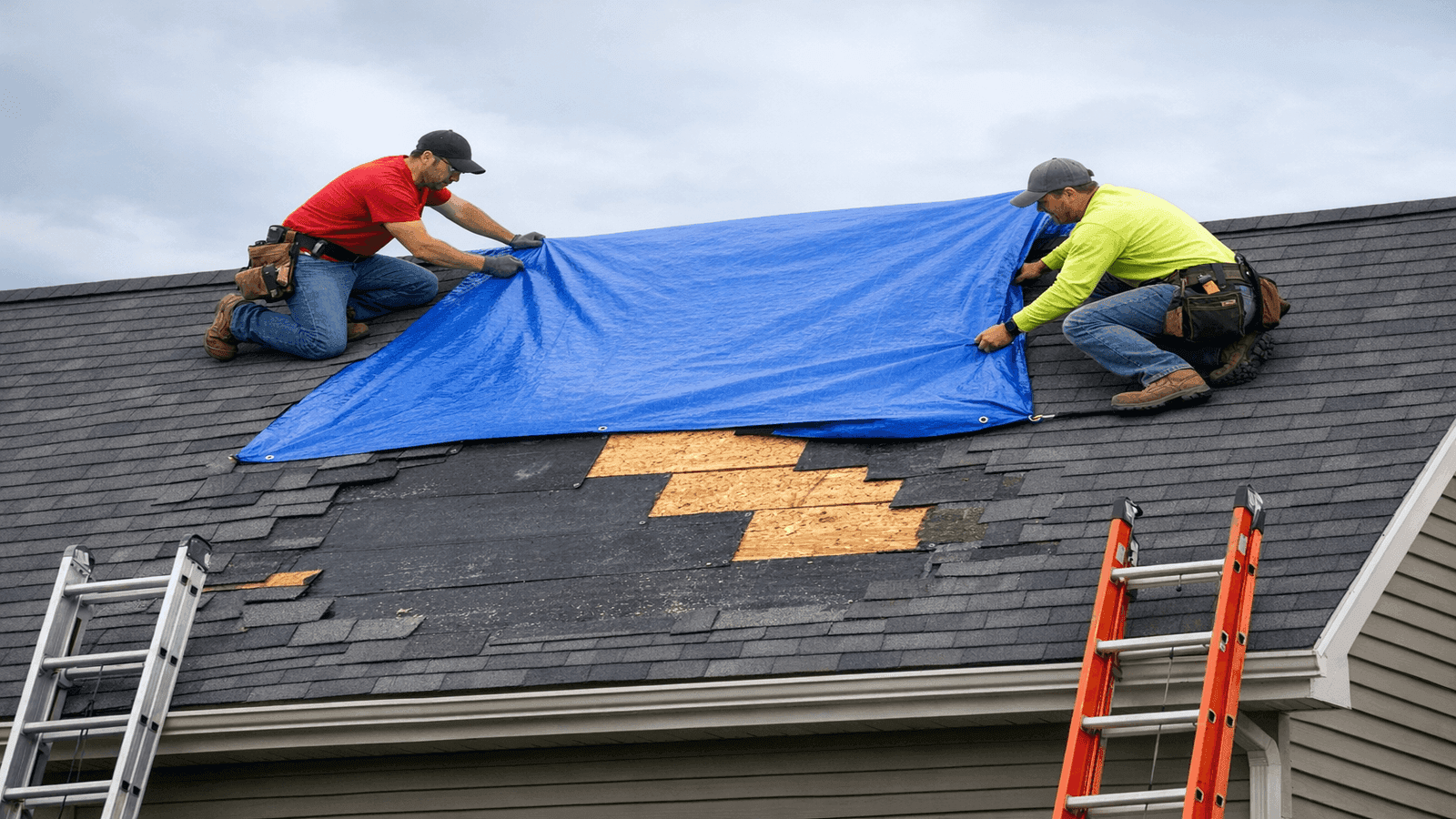
Photo: Two roofing contractors applying a blue emergency tarp over a large section of storm-damaged residential roof where wind has removed multiple rows of asphalt shingles
Emergency Roof Repair Cost Breakdown
Emergency roofing costs consist of the base service rate plus one or more premium multipliers. Understanding each line item prevents you from being surprised when the invoice arrives.
Emergency tarping: $300-$1,500 for professional installation; $50-$150 in materials for DIY if safe access is possible. The professional rate reflects after-hours labor, material hauling, and liability exposure for working on a structurally compromised surface.
Debris and tree removal from the roof: $300-$2,500 depending on tree size, number of pieces, and roof accessibility. A single large branch typically runs $300-$800; a full-size tree requiring a crane or arborist coordination can reach $2,500 or more before structural repairs begin.
Temporary structural support: $500-$3,000 for emergency shoring of fallen or damaged rafters. This is specialized work -- improperly supported rafters can shift further and create additional damage.
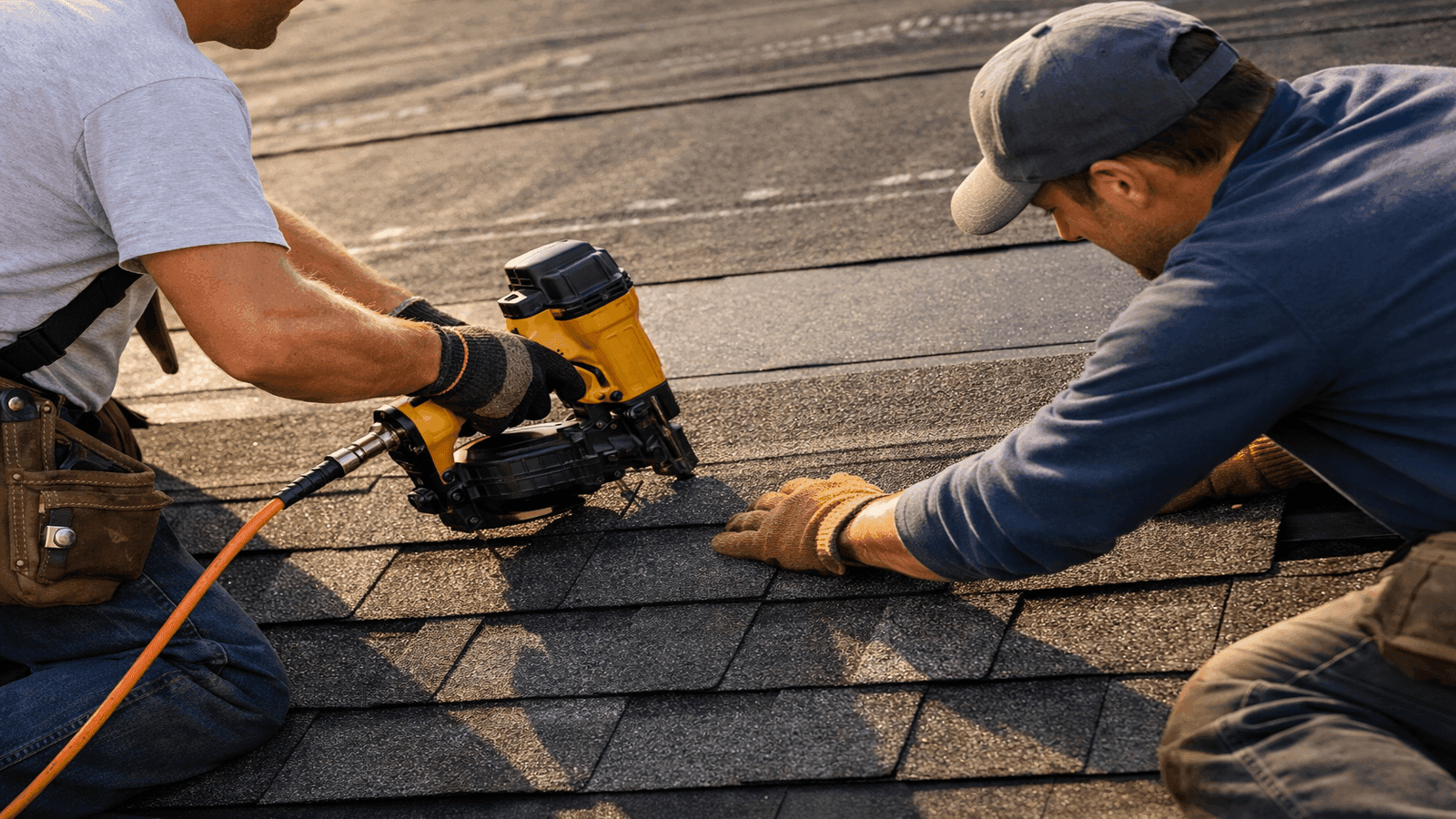
Emergency patch repair (2-5 squares of missing shingles): $800-$3,500 depending on material type, pitch, and accessibility. Emergency rates apply on top of material costs.
Emergency flashing repair (active leak at chimney, valley, or pipe boot): $300-$900 for same-day response. Flashing failures during heavy rain are a common emergency call.
Board-up for structural openings: $400-$1,500 to secure large structural gaps with plywood, preventing further water entry and vandalism or animal intrusion.
| Service | Standard Rate | Emergency Rate | Typical Response Time | Insurance Covered? |
| Emergency tarping | $200-$800 | $300-$1,500 | 2-6 hours | Often yes, as mitigation |
| Tree/debris removal | $200-$1,500 | $300-$2,500 | 4-12 hours | Yes, if tree caused damage |
| Temporary structural support | $300-$1,800 | $500-$3,000 | Same day | Yes, as emergency repair |
| Patch repair (2-5 sq) | $500-$2,500 | $800-$3,500 | 24-48 hours | Yes, with documentation |
| Emergency flashing repair | $200-$600 | $300-$900 | 2-8 hours | Yes |
| Board-up for openings | $250-$1,000 | $400-$1,500 | 2-6 hours | Yes, as mitigation |
Cost by Damage Type
Emergency repair costs vary significantly based on what the storm actually did to your roof. The damage mechanism determines whether repair is possible or whether replacement becomes the only practical path.
Wind Damage
Wind blow-off and lifted tabs are the most common post-storm emergency calls. Repairs for 10-20% wind damage typically run $500-$3,000, covering shingle replacement, re-nailing lifted sections, and spot flashing repairs. When wind affects more than 40% of the roof surface, insurance adjusters and roofing contractors both typically recommend full replacement rather than a patchwork repair that will create long-term performance problems [2].
Get quotes from top-rated pros.
Hail Damage
Hail presents differently from wind damage. The visible impact marks -- circular bruising on asphalt shingles or star-crack patterns on tile -- indicate that the material's integrity is compromised across the entire surface, not just where shingles went missing. This is why hail events rarely result in partial repair and instead trigger full replacement. According to the Insurance Information Institute, the average claim severity for wind and hail damage from 2018 through 2022 was $13,511, with recent severe convective storms driving $54 billion in insured losses nationally in 2024 [3].
Emergency calls after hail events typically involve tarping until an adjuster can document the full scope rather than immediate patch work. Full replacement for an average residential roof runs $12,000-$25,000 depending on size and material.
Tree and Branch Strike
A branch through the roof is among the most visually alarming emergencies and also one of the most variable in cost. A single branch that punches through shingles and decking without hitting rafters might cost $400-$2,000 to repair after debris removal. A large tree that collapses a section of rafters, requires crane removal, and leaves multiple structural members compromised can easily reach $2,000-$15,000 in roofing costs alone, with additional interior repair costs if water entered before tarping occurred [2].
Ice Dam Damage
Ice dams form when heat loss from the living space melts snow on the roof, and that meltwater refreezes at the cold eave overhang. The resulting ice backup forces water under shingles. Gutter and shingle repair from ice dam damage typically runs $500-$3,000, but when water has infiltrated wall cavities, insulation, or ceiling assemblies, the interior remediation cost adds $3,000-$15,000 to the total -- and that interior damage is where mold risk lives [6].
Flat Roof and Membrane Damage
Low-slope and flat roofs face a different failure mode: standing water breaching membrane seams or punctures. Emergency membrane repair for commercial or residential flat roofs runs $1,000-$5,000 depending on the membrane type (TPO, EPDM, or modified bitumen), puncture size, and roof accessibility.
Contractors in the NearbyHunt network report that 70% of post-hail-storm calls in active hail events result in full roof replacement, with insurance claim amounts typically ranging from $14,000-$22,000 in affected markets [NearbyHunt Network Insight].
| Damage Type | Typical Repair Range | Full Replacement Often Needed? | Covered by Insurance? |
| Wind blow-off (10-20%) | $500-$3,000 | Only if widespread | Yes |
| Hail damage | $12,000-$25,000 (replacement) | Yes, in most cases | Yes |
| Tree/branch strike | $400-$15,000+ | If structural damage | Yes, if sudden event |
| Ice dam | $500-$3,000 repair + interior | Rarely | Varies by policy |
| Flat roof membrane breach | $1,000-$5,000 | Not typically | Yes |
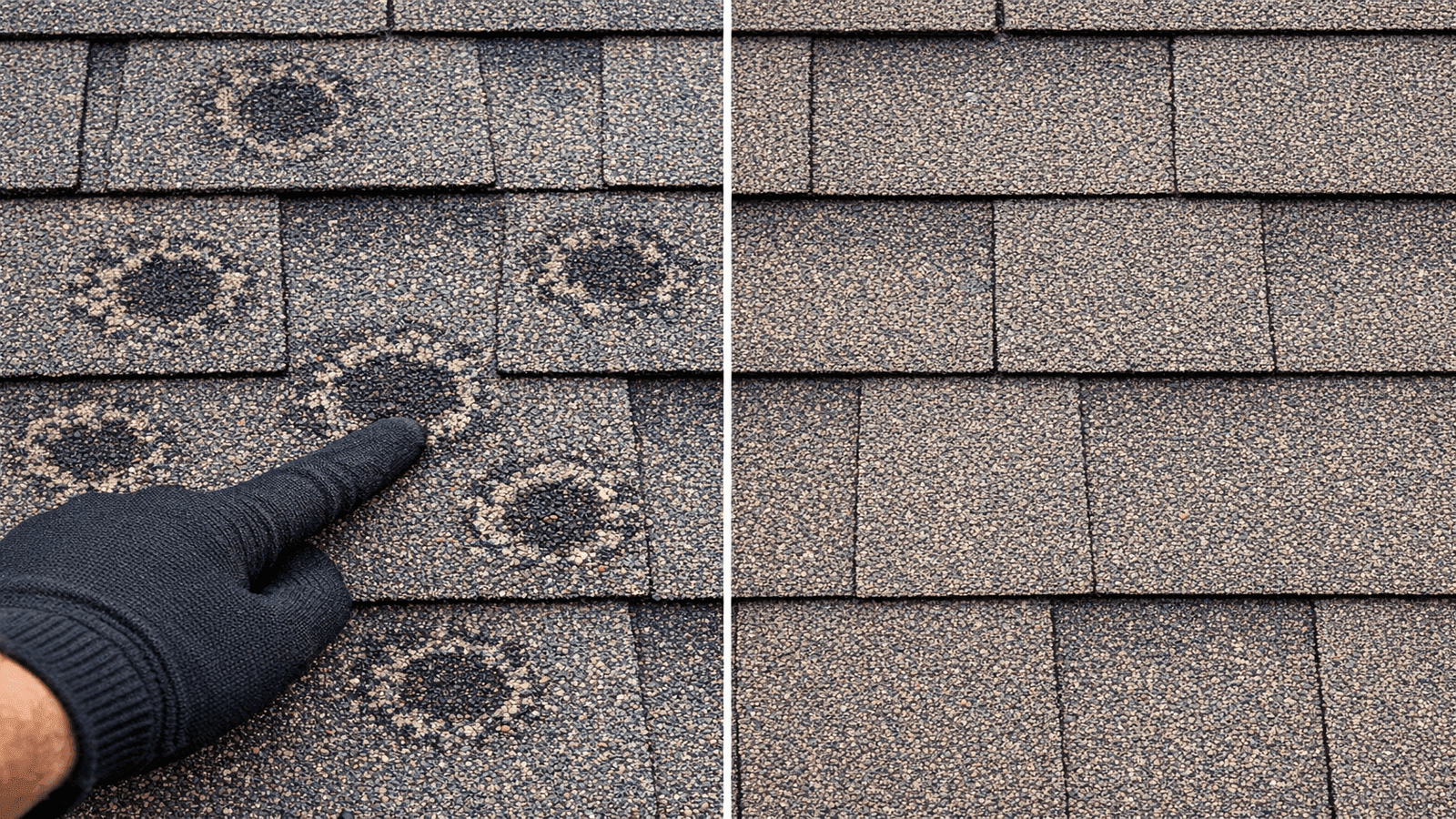
Photo: Close-up comparison of asphalt shingles showing circular hail impact bruise marks with granule displacement on the left versus undamaged shingles with uniform granule coverage on the right
Insurance Claims for Emergency Roof Damage
Filing a storm damage claim correctly determines how much money you recover. The process has specific steps, and missteps in the first 72 hours can compromise your payout.
Document before any repair work begins. Walk the perimeter of your home and capture video of all visible damage from the ground. Do not attempt to climb the roof during or immediately after a storm. Photograph every impact mark, every missing shingle section, every gutter deformation. Timestamp all photos and video -- insurance adjusters verify storm timing against local weather records, and timestamps establish that damage occurred during the event.
Notify your insurer within 24-72 hours. Most homeowners policies include a prompt-reporting requirement. Delays beyond the policy window can give the insurer grounds to reduce or deny the claim on the basis that further damage occurred due to neglect rather than the original storm event. If you are unsure of your policy's specific language, call your agent and ask them to note the call in your file.
Understand your coverage type before the adjuster arrives. Replacement Cost Value (RCV) policies pay the full cost to replace the damaged section with like materials. Actual Cash Value (ACV) policies deduct depreciation -- a 15-year-old roof on an ACV policy may yield a payout covering only 40-60% of replacement cost after the depreciation calculation is applied.
Request contractor presence during the adjuster's visit. An experienced roofing contractor walking the roof with your adjuster can identify damage that would otherwise go unrecorded. Items commonly missed in initial adjuster scopes include gutter damage, vent damage, satellite dish mounts, skylight flashing, ridge cap, and fascia. If the adjuster's estimate is lower than your contractor's assessment, the supplement process exists specifically to address this gap: your contractor submits documentation of missed items and the insurer reviews the claim.
Public adjusters as an option. If your claim is large and complex, a licensed public adjuster (a claims professional who works for you rather than the insurer) can maximize the documented settlement. Public adjusters typically charge 10-15% of the final settlement amount. For claims above $20,000, this fee often pays for itself through improved documentation and negotiation.
I always recommend homeowners have a contractor present during the adjuster's visit. I've been on-site during adjustments where the adjuster scoped $9,000 in visible damage and missed the gutters, three additional sections, and all the ridge cap -- items that added over $4,000 when we submitted the supplement. The supplement process is standard in the industry. Don't accept the first number as final.
Get quotes from top-rated pros.

Photo: Homeowner and roofing contractor reviewing storm damage documentation on a tablet while an insurance adjuster photographs roof damage in the background during a post-storm inspection
How to Find Emergency Roof Repair Services
At 11 p.m. after a tornado warning, the instinct is to call the first number that answers. That instinct is exactly what storm chasers -- non-local contractors who flood disaster markets after major weather events -- rely on.
Start with a targeted search. Search "24-hour roof repair" plus your city name. Verify that the company has a permanent local address, not a recently registered P.O. box or a phone number with an out-of-state area code. Many lead generation services advertise local emergency roofing and sell the lead to whoever pays, regardless of contractor quality or proximity.
Verify credentials before signing anything. Every legitimate emergency roofing contractor should provide, on request:
- Current state roofing contractor license number (verify on your state's contractor licensing board website)
- General liability insurance certificate showing at least $1 million per occurrence
- Workers' compensation certificate covering their crew
Recognize storm chaser warning signs:
- Contractors who appear at your door unsolicited within 24 hours of a storm event
- High-pressure language about "your neighbor already signed" or "spots are filling up fast"
- Requests for large upfront payment or full payment before work begins
- Reluctance to provide license numbers or insurance certificates
- No local office address or established web presence in your market
Get two estimates even in emergency situations. Two calls placed 30 minutes apart can yield meaningfully different quotes and give you a baseline comparison. Any legitimate contractor should be willing to provide a written estimate before work begins.
I've re-roofed more than 30 homes over my career where a storm chaser installed defective work and then dissolved the company before the homeowner discovered the problems. New shingles installed over damaged decking, improper flashing at valleys, no ice and water shield where the climate requires it. Always use a contractor with verifiable local presence and at least five years in your specific market. If they can't give you a license number you can check online in 60 seconds, walk away.
Cost to Prevent Emergency Repairs: Proactive Maintenance
The most cost-effective emergency is the one that never happens. Preventive roofing maintenance consistently returns four to six dollars for every dollar spent when measured against avoided emergency repair costs.
Annual professional inspection: $150-$350. A qualified contractor on your roof each year identifies pipe boots that are cracking, flashing that is lifting, ridge cap that is losing adhesion, and gutter sections that are pulling away from fascia. These are $200-$400 repairs when caught early. They become $1,500-$4,000 emergency calls when caught during a storm.
Pipe boot replacement (the most common residential leak source): $200-$400 preventive vs. $800-$2,000 emergency. Rubber pipe boots degrade in 10-15 years under UV exposure. Proactive replacement before failure prevents the most common source of non-storm leak calls.
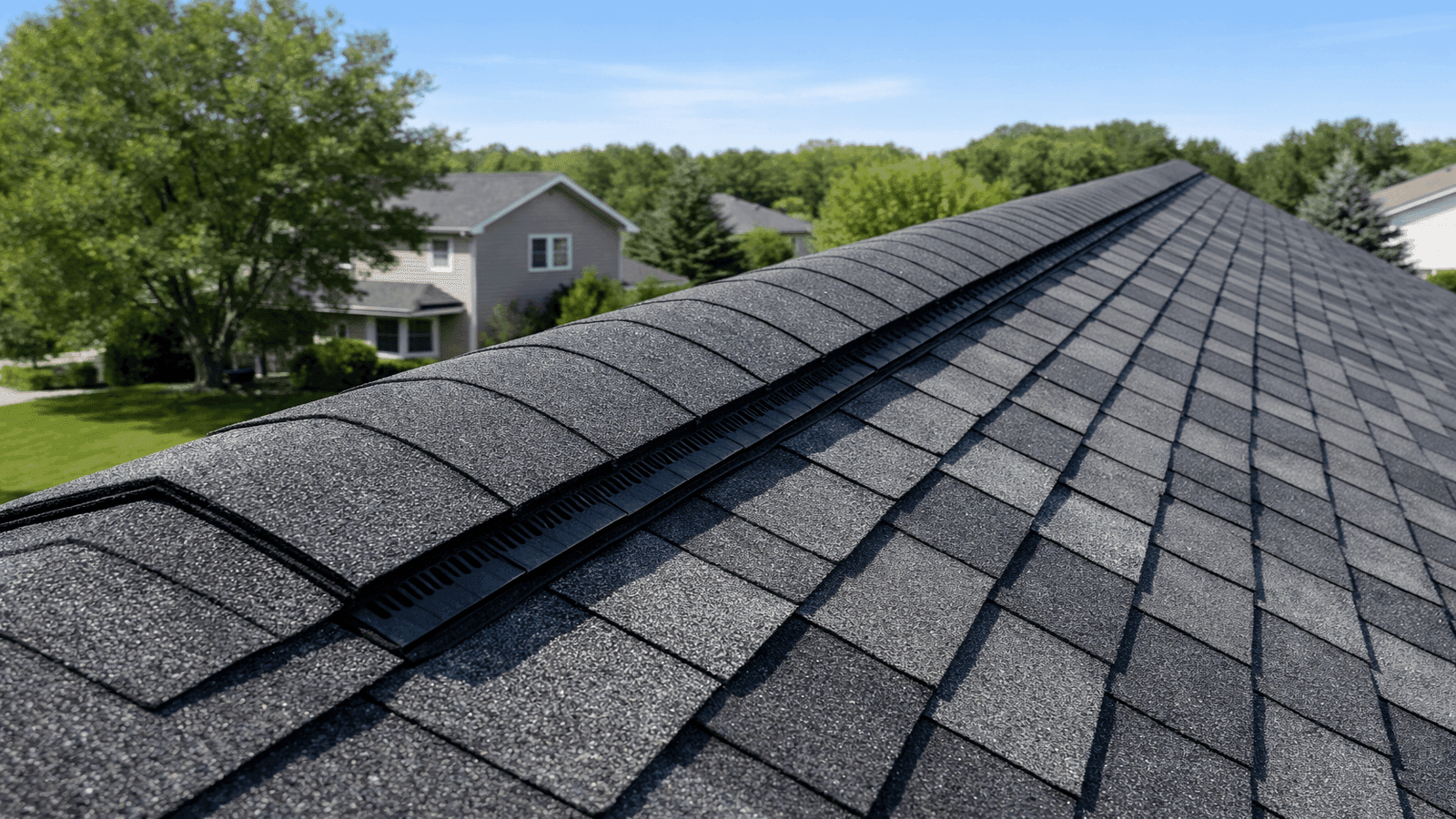
Ridge cap re-sealing: $300-$600 preventive vs. $1,500-$4,000 post-storm. Ridge cap adhesion fails with age, and loosened ridge cap is among the first material to blow off in high winds. Proactive re-sealing closes this vulnerability before the next storm season.
Gutter cleaning: $150-$300 per year. Clogged gutters back up water against fascia boards and create conditions for ice dam formation. Ice dam repair, once water has infiltrated wall assemblies, is among the most expensive storm-related remediation projects a homeowner faces.
Total proactive maintenance cost per year: $600-$1,200. Against an average emergency repair call that runs $2,500-$8,000, the five-year return on preventive maintenance is typically 4:1 to 6:1 in avoided costs.
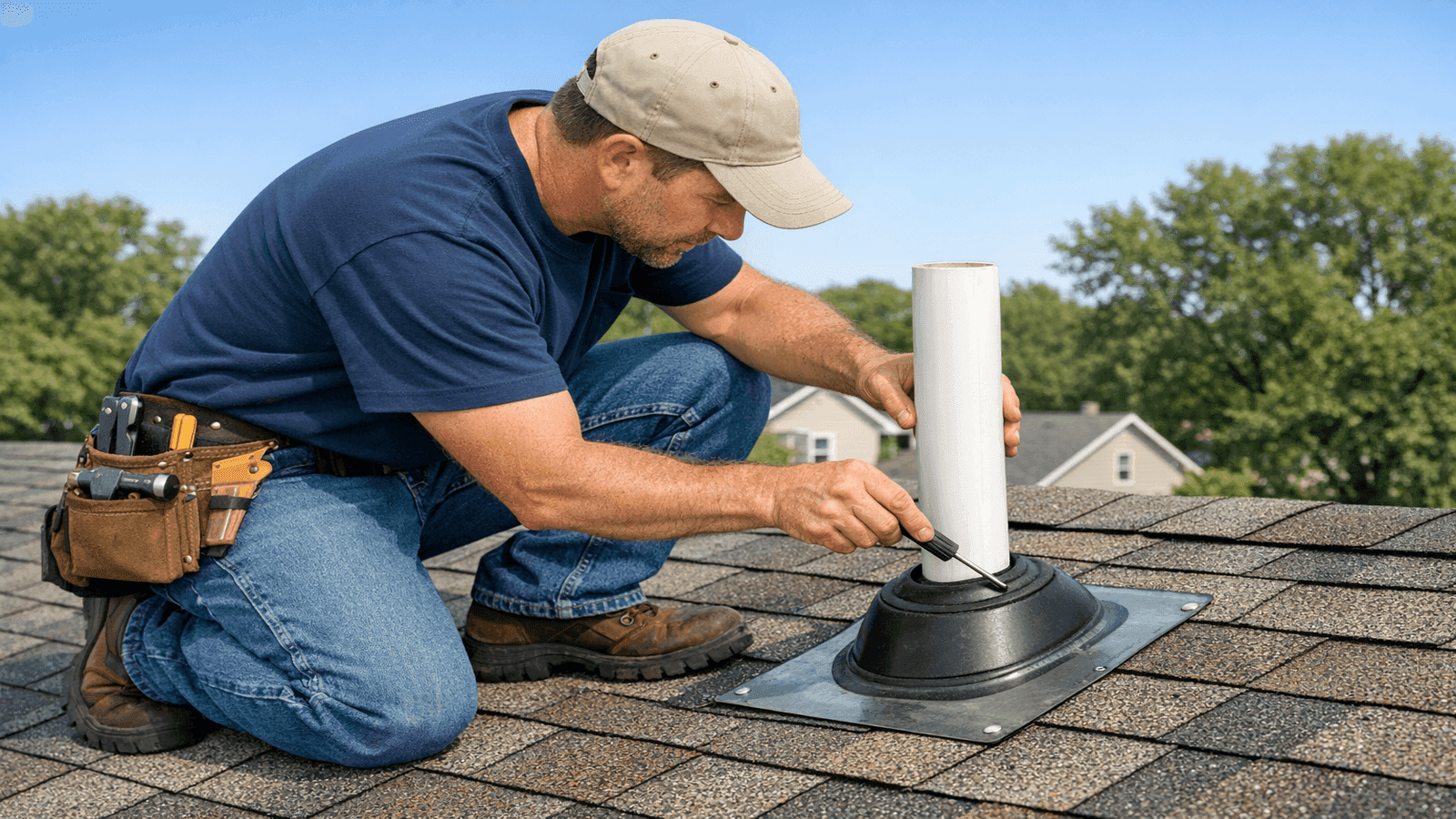
Photo: Roofing contractor kneeling on a residential asphalt shingle roof during an annual preventive inspection, examining a pipe boot flashing for UV cracking and seal failure
Real-World Case Study: Frank D., Oklahoma City, Oklahoma
In April 2025, a hailstorm moved through the Oklahoma City metro. Frank D., a homeowner in a 14-year-old neighborhood, heard the impact during the storm and saw ceiling stains beginning to spread in his upstairs hallway within an hour of the storm passing.
Frank called an emergency roofing service at 9:30 p.m. the same evening. A crew arrived by 12:30 a.m. and completed emergency tarping of three sections within two hours for $900. The tarping held through two subsequent rain events while the claims process moved forward.
Frank filed his insurance claim by phone before midnight on the storm date and documented 47 photos and a full-perimeter video walk before the contractor arrived. The insurer dispatched an adjuster three days later.
The initial adjuster scope came in at $9,200, covering shingle replacement on the primary damage zones and skylight resealing. James Carver, who served as the contractor of record, walked the roof with the adjuster and identified additional damage the initial scope missed: all six gutters, the satellite mount and surrounding flashing, three additional roof sections on the rear elevation, and the full ridge cap run. The documented supplement totaled $4,100.
The insurer approved the supplemented claim at $13,300. Frank's deductible was $1,500, putting his out-of-pocket cost at $1,500 against a total project cost of $14,800 for full roof replacement, skylight work, and gutter replacement. The project was completed within six weeks of the storm date.
The emergency tarping cost -- $900 -- was also covered by the insurer as documented mitigation expense, bringing Frank's effective out-of-pocket to his deductible alone.
Conclusion
Emergency roof repair costs in 2026 range from a few hundred dollars for professional tarping to more than $25,000 for full post-storm replacement following catastrophic wind or hail events. The variables that matter most are the severity of damage, whether the structure was compromised, and whether you act within the first 24-72 hours.
Homeowners who document thoroughly, notify their insurer promptly, and engage a licensed local contractor rather than a storm chaser consistently recover more of their costs through insurance and avoid secondary damage—water infiltration, mould, and compromised insulation —that can drive projects from repair-scale to replacement-scale.
For detailed cost ranges by roofing material type and project scope, visit our roof repair cost guide, along with the parent guide on roofing costs.
Disclaimer: Cost figures in this article reflect national averages and ranges compiled from contractor network data and published industry sources as of 2026. Actual costs in your area may vary based on local labor rates, material costs, roof complexity, and contractor availability. Always obtain multiple written estimates before authorizing work. Insurance coverage details depend on your specific policy terms; consult your insurer or a licensed public adjuster for guidance on your claim.
Sources & References
[1] Today's Homeowner Emergency Roof Repair Cost 2026
[2] This Old House Cost of Roof Repair 2026
[3] Insurance Information Institute Facts and Statistics: Homeowners and Renters Insurance
[4] Fixr.com How Much Does It Cost to Repair a Roof 2026
[5] Forbes Home Roof Repair Cost Guide
[6] Bob Vila Ice Dam Roof Damage and Repair

James is a licensed roofing contractor with 20 years of experience in roof installation, inspection, and repair across the U.S. South and Midwest. He specialises in asphalt shingles, metal roofing, and storm damage restoration. On NearbyHunt, James offers practical advice on roof maintenance, insurance claims, and selecting the right materials for long-lasting protection.

Jacob is a licensed roofing contractor with over 18 years of experience in roof inspection, installation, and restoration. Based in Texas, he has led hundreds of successful roofing projects across residential and commercial properties. Jacob is also a certified storm damage specialist, ensuring that all NearbyHunt roofing content meets industry best practices and safety standards.