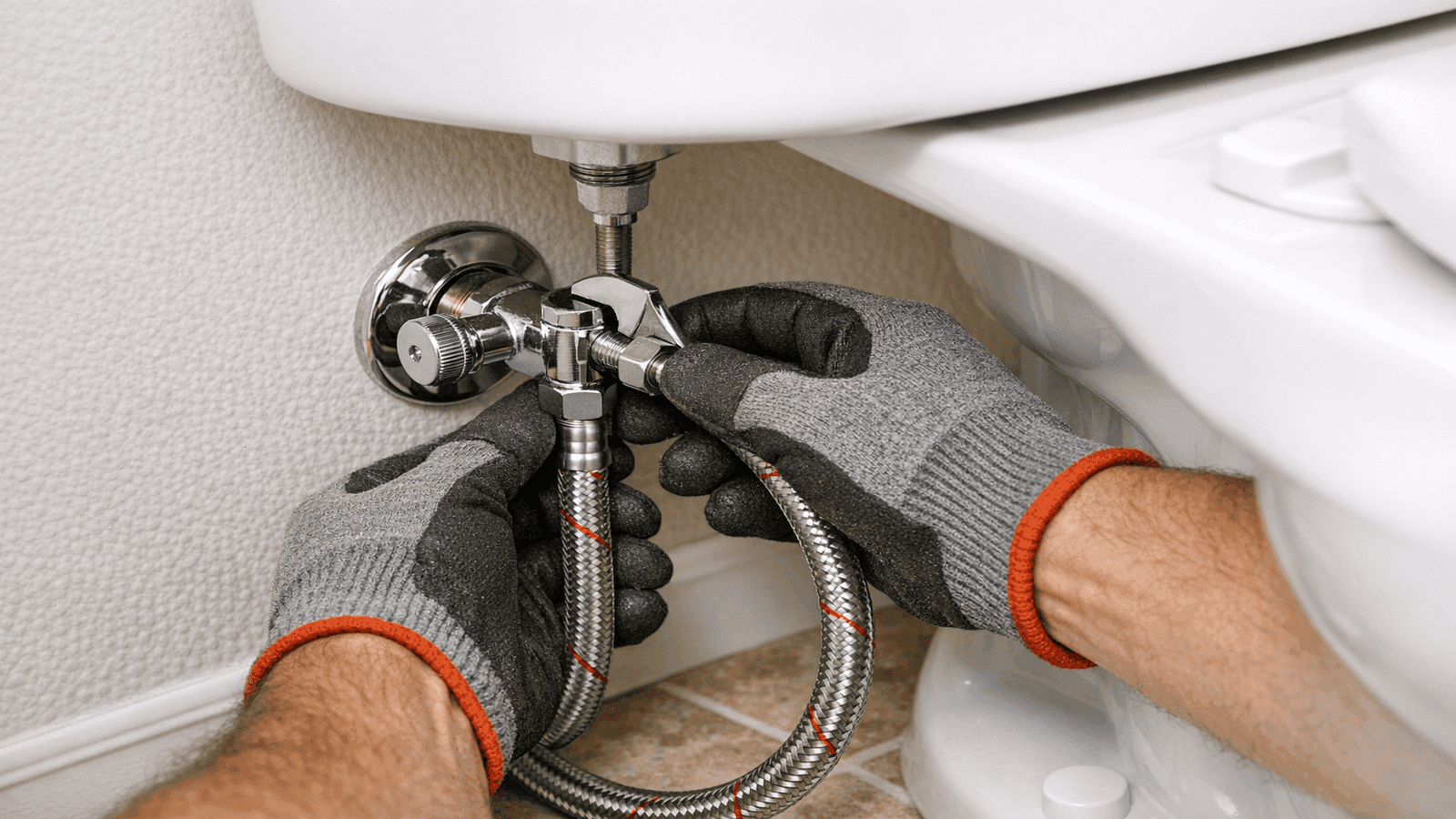
- WaterSense toilets use 1.28 GPF versus 3.5 GPF in pre-1994 toilets, cutting per-flush water use by 64% and saving the average household roughly 13,000 gallons per year.
- WaterSense faucet aerators cost as little as $5 to $15 and reduce flow from 2.2 GPM to 1.5 GPM, a 32% reduction, with no noticeable pressure drop.
- Heat pump water heaters use up to 60% less electricity than conventional electric resistance heaters and qualify for a federal 30% tax credit up to $600 through 2032.
- Hot water recirculation systems eliminate the cold-water wait and save 8,000 to 15,000 gallons annually per household.
- Greywater reuse systems can reduce outdoor water demand by 30% to 50%, with basic laundry-to-landscape setups costing as little as $200 to $800.
The average American household spends about $1,100 per year on water bills, yet up to 30% of indoor water use comes from toilets, and another 20% from faucets and showers [1]. Switching to eco-friendly plumbing fixtures addresses all of those categories at once, cutting costs without sacrificing comfort or performance. This guide, part of our complete plumbing ideas and inspiration resource, walks through every major category of water-saving and energy-saving fixture, with real cost data, payback periods, and rebate information for 2026.

Get quotes from top-rated pros.
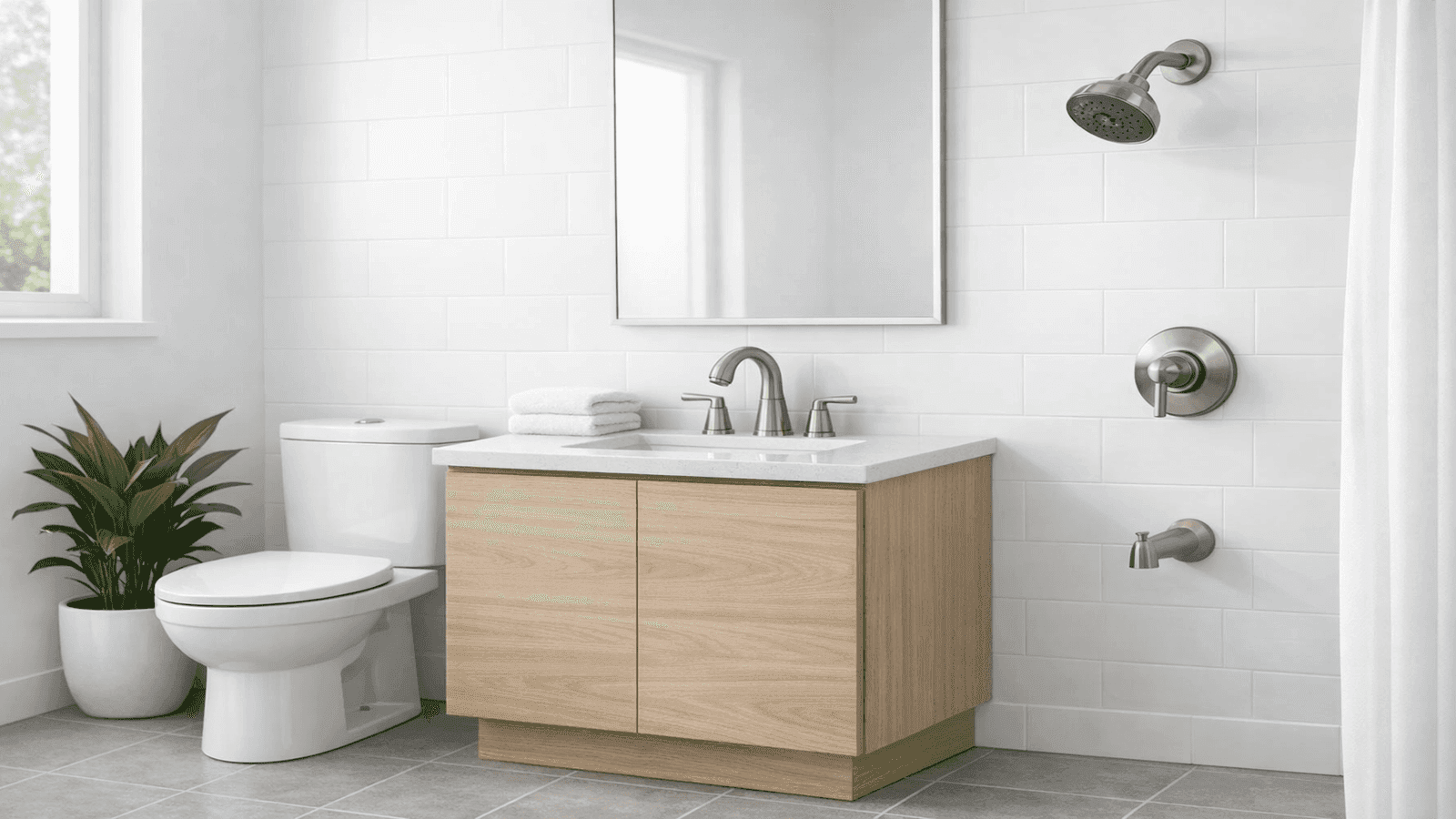
Photo: Modern eco-friendly bathroom with WaterSense toilet, low-flow showerhead, and water-saving faucet in bright white tile setting
After 18 years and 2,400-plus residential projects across Dallas-Fort Worth and California, I can say with confidence that eco-friendly fixtures have the fastest return on investment of anything a homeowner can do to their plumbing system. In many cases the payback period is under two years, and the fixtures last 15 to 20 years.
WaterSense Toilets
Toilets are the single largest indoor water user in most homes, accounting for nearly 30% of household water consumption [1]. If your toilet was installed before 1994, it likely uses 3.5 GPF or more. Some older models use as much as 7 GPF. A modern WaterSense-certified toilet uses 1.28 GPF, representing a 64% reduction per flush compared to a 3.5 GPF unit.
How Much Water Do WaterSense Toilets Actually Save?
For a household of four flushing an average of five times per person per day, the annual savings from replacing one 3.5 GPF toilet with a 1.28 GPF WaterSense model works out to roughly 13,000 gallons per year. At the U.S. average water rate of about $0.01 per gallon for residential use, that translates to approximately $130 to $170 in annual savings per toilet replaced [1][2].
Over the 20-year lifespan of a new toilet, that is $2,600 to $3,400 in cumulative water savings per fixture.
Dual-Flush Toilets
Dual-flush models give you two flush volumes: 0.8 GPF for liquid waste and 1.28 GPF for solid waste. Households that use the lower-volume option for most flushes can push annual savings above 15,000 gallons per toilet. These models typically cost $200 to $600 for the toilet itself and $150 to $300 to install professionally, making the payback period 2 to 4 years in most markets.
Toilet Replacement Cost and Payback
| Item | Cost Range |
| WaterSense toilet (basic) | $100 to $200 |
| WaterSense toilet (mid-range) | $200 to $450 |
| Dual-flush toilet | $250 to $600 |
| Professional installation | $150 to $300 |
| Annual water savings (vs 3.5 GPF) | $130 to $170 |
| Payback period | 2 to 4 years |
Marcus T., a homeowner in Phoenix, AZ, replaced three 1987-era toilets in his home with dual-flush WaterSense models. His water bill dropped from $112 to $74 per month, a savings of $456 annually. He recouped the full installation cost in approximately 26 months.
WaterSense Faucets and Aerators
Standard bathroom faucets flow at 2.2 GPM. WaterSense-certified faucets and aerators limit flow to 1.5 GPM, a 32% reduction. For a family using faucets for handwashing, teeth brushing, and face washing, this adds up quickly.
How Aerators Work
An aerator is a small mesh screen installed at the tip of a faucet spout. It mixes air into the water stream, maintaining the perception of full pressure while delivering less water. A basic aerator costs $5 to $15 and takes less than five minutes to install by hand. If you have a 2.2 GPM faucet, swapping to a 1.5 GPM aerator can save 700 to 1,000 gallons per person per year at that fixture.
Kitchen faucets often flow at 2.2 GPM and are used for longer tasks like rinsing produce and filling pots. WaterSense does not certify kitchen faucets (they certify bathroom lavatory faucets and accessories), but installing a 1.5 to 1.8 GPM aerator on a kitchen faucet is still straightforward and yields real savings. For tasks that genuinely need higher flow, a simple pull-out or swivel aerator with a flow-pause button lets you temporarily stop flow while keeping the water temperature set.
Get quotes from top-rated pros.
One of the fastest wins I show homeowners is the aerator swap. For $10 in parts they can cut bathroom faucet water use by nearly a third. I have done this on hundreds of jobs in California and Texas, and I have never had a homeowner complain about reduced pressure afterward. The air entrainment makes the stream feel full.
Faucet Savings Summary
| Faucet Type | Flow Rate | Annual Use Per Person | Annual Savings vs 2.2 GPM |
| Standard (no aerator) | 2.2 GPM | ~3,000 gallons | baseline |
| WaterSense aerator | 1.5 GPM | ~2,000 gallons | ~1,000 gallons ($10) |
| High-efficiency WaterSense faucet | 0.5 GPM | ~700 gallons | ~2,300 gallons ($23) |
The licensed plumbers in our NearbyHunt network report that aerator retrofits are among the most commonly overlooked water-saving measures, with more than 65% of the homes they inspect still running 2.2 GPM or higher bathroom faucets.
WaterSense Showerheads
The federal standard for showerhead flow is 2.5 GPM. WaterSense-certified showerheads must perform at 2.0 GPM or less, a 20% reduction. Each person who showers for 8 minutes daily saves roughly 730 gallons per year by switching from a standard 2.5 GPM head to a 2.0 GPM WaterSense model [1].
For a household of four, that is nearly 3,000 gallons annually from showerheads alone, before accounting for any other fixture changes.
Pressure-Compensating vs Standard Low-Flow Showerheads
Standard low-flow showerheads simply restrict flow, which can result in a weak, unsatisfying spray at lower inlet pressures. Pressure-compensating showerheads use an internal regulator that maintains consistent flow regardless of inlet pressure variation. These models cost $30 to $80 more than basic low-flow units but deliver noticeably better performance.
High-end WaterSense showerheads with multiple spray modes and pressure-compensation technology range from $80 to $150 installed. Basic WaterSense showerheads start at $20 and take under 15 minutes to swap without tools beyond a wrench and plumber's tape.
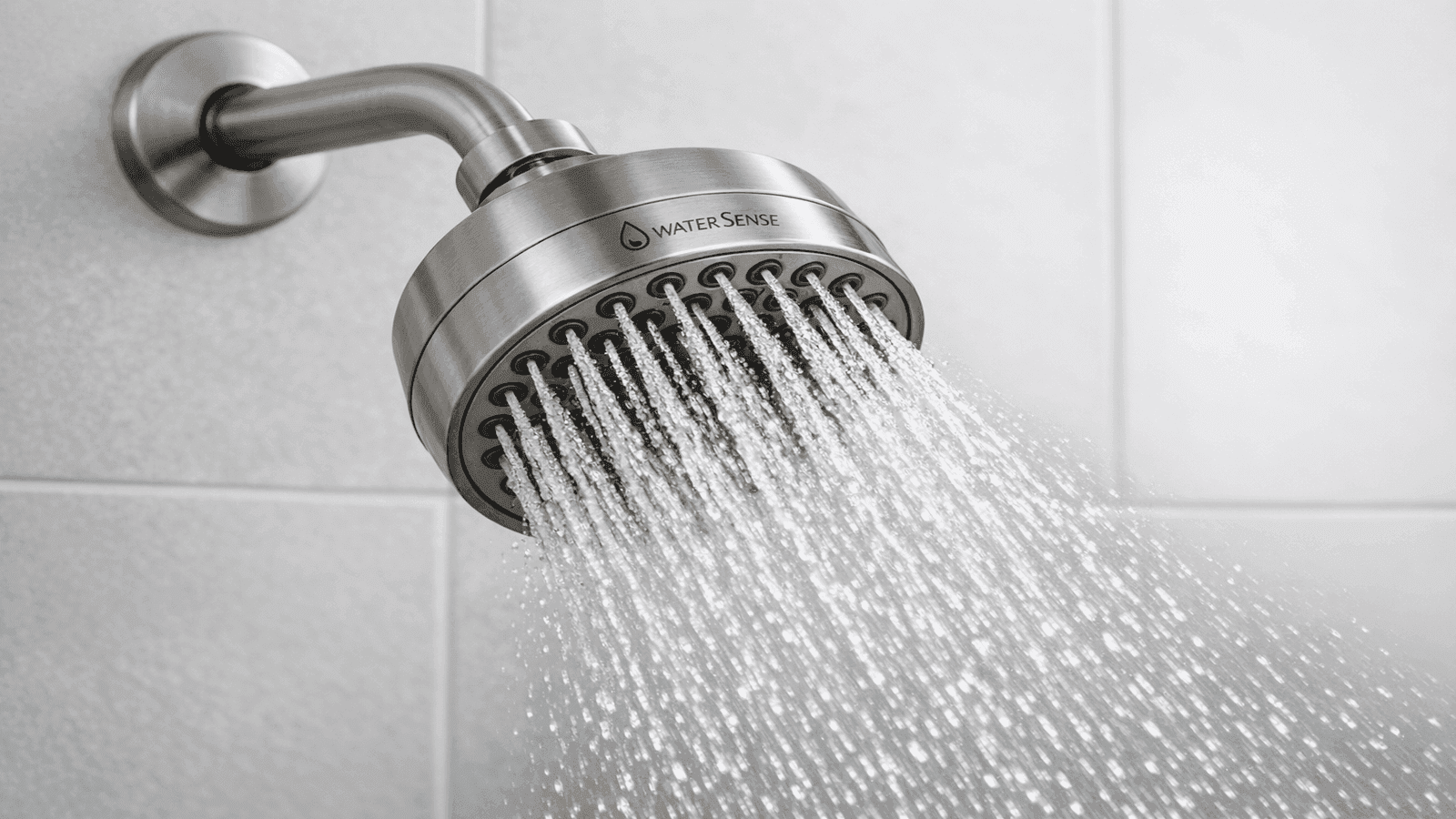
Photo: WaterSense certified low-flow showerhead with full spray pattern showing strong water pressure in modern tiled bathroom
Showerhead Water and Energy Savings
Because showers use hot water, showerhead efficiency affects both your water bill and your water heating bill. Reducing shower flow from 2.5 GPM to 2.0 GPM cuts water heating energy proportionally, which the EPA estimates saves the average household $70 or more annually in combined water and energy costs [1].
| Showerhead Type | Flow Rate | Annual Gallons (4 people, 8 min/day) | Annual Savings vs 2.5 GPM |
| Standard | 2.5 GPM | ~29,200 gallons | baseline |
| WaterSense (2.0 GPM) | 2.0 GPM | ~23,360 gallons | ~5,840 gallons (~$58-$80) |
| Ultra-low-flow (1.5 GPM) | 1.5 GPM | ~17,520 gallons | ~11,680 gallons (~$116-$160) |
Heat Pump Water Heaters
Water heating accounts for roughly 18% of a typical home's energy use [2]. Conventional electric resistance water heaters convert electricity to heat at near 100% efficiency: one unit of electricity in, one unit of heat out. Heat pump water heaters (HPWHs) work differently. They extract heat from surrounding air and move it into the water, achieving 200% to 300% efficiency (2 to 3 units of heat for every unit of electricity consumed). The U.S. Department of Energy estimates that HPWHs use up to 60% less electricity than conventional electric resistance models [2].
For a household currently paying $500 annually to heat water with a conventional electric heater, switching to an HPWH reduces that cost to approximately $200 per year, a $300 annual savings.
Federal Tax Credit and Utility Rebates
Under the Inflation Reduction Act, homeowners replacing a conventional electric water heater with a heat pump water heater qualify for a federal tax credit of 30% of installed costs, up to $600, through December 31, 2032. This credit is non-refundable but can be carried forward.
Many utilities layer additional rebates on top of the federal credit. In California, some PG&E and SCE customers have received rebates of $300 to $800 on top of the federal credit. Texas utilities including Oncor and CPS Energy offer rebates of $100 to $400 depending on unit efficiency rating (Uniform Energy Factor, UEF).
Get quotes from top-rated pros.
Heat Pump Water Heater Cost and Payback
| Cost Item | Range |
| HPWH unit (50-gallon, residential) | $900 to $1,800 |
| Professional installation | $300 to $700 |
| Total installed cost | $1,200 to $2,500 |
| Federal 30% tax credit (up to $600) | ($360 to $600) |
| Net cost after federal credit | $600 to $1,900 |
| Annual energy savings vs conventional electric | $250 to $400 |
| Payback period (after credit) | 2 to 5 years |
| Expected lifespan | 15 to 20 years |
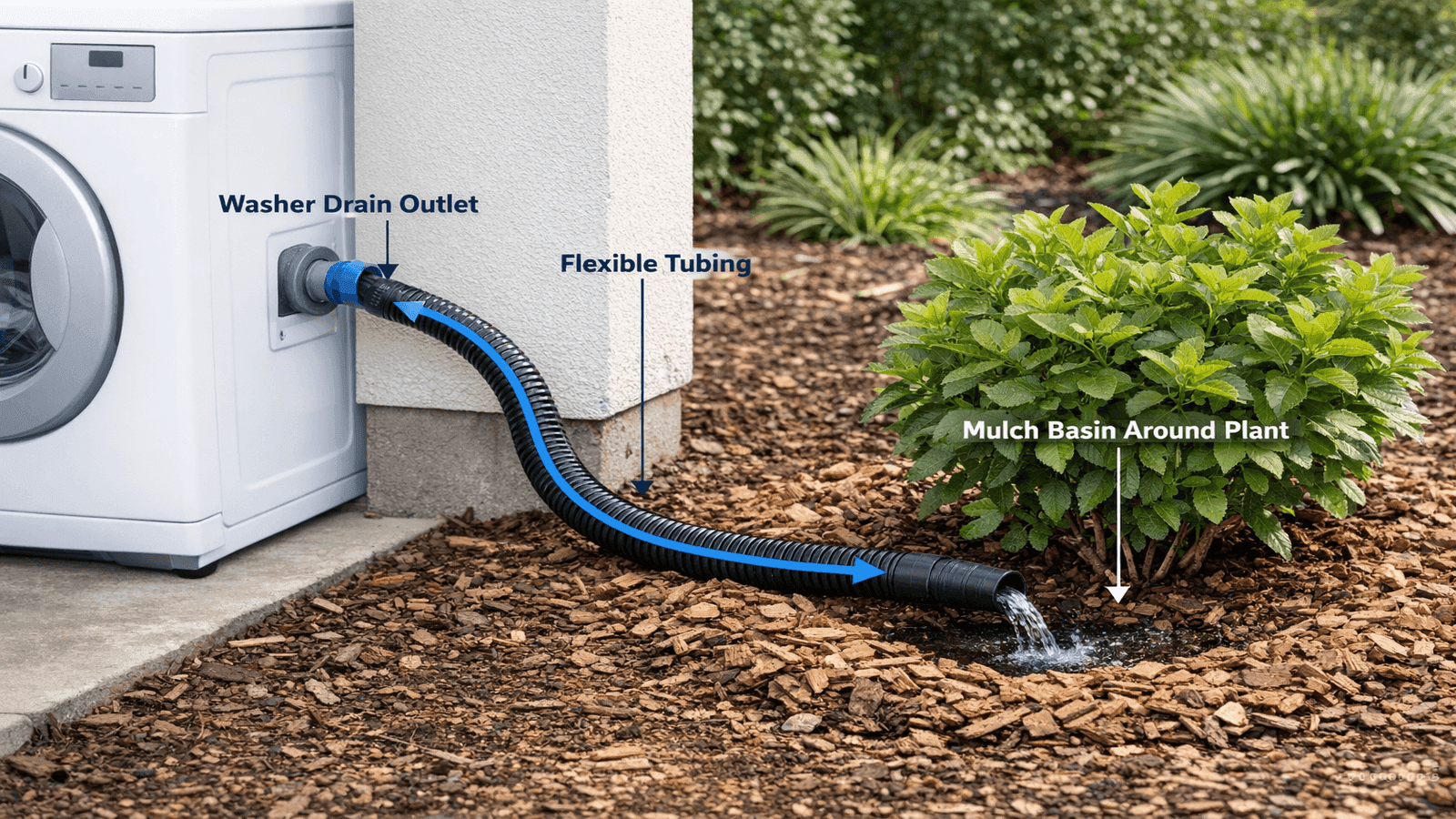
Photo: Laundry-to-landscape greywater system showing washing machine outlet connected to mulched garden basin for water-efficient irrigation
HPWHs do have installation requirements: they need at least 700 to 1,000 cubic feet of surrounding air space, operate best in ambient temperatures above 40 degrees Fahrenheit, and can make a low operational hum. In garages, basements, or dedicated utility rooms these requirements are easy to meet.
For more on water heater options and installation, see our water heater installation guide.
Tankless Water Heaters
Traditional tank water heaters keep 40 to 80 gallons of water hot around the clock, even when you are asleep or at work. This standby heat loss wastes energy continuously. Tankless (on-demand) water heaters eliminate standby loss entirely by heating water only when a tap is opened.
The U.S. DOE estimates that for homes using 41 gallons or less of hot water daily, tankless heaters are 24% to 34% more energy-efficient than conventional storage tank models [2]. For homes using around 86 gallons daily, tankless units are still 8% to 14% more efficient. Over the full 20-year lifespan of a tankless unit (versus 10 to 12 years for most tank heaters), the combined savings in energy and replacement costs can exceed $1,000 per household.
I have installed tankless water heaters across hundreds of homes in the Dallas-Fort Worth area over my 18-year career. The number one thing homeowners get wrong is undersizing the unit. A whole-house natural gas tankless heater needs to produce at least 5 to 7 gallons per minute to handle simultaneous shower and dishwasher demand. Always calculate your peak demand before purchasing.
Tankless gas water heaters typically cost $800 to $1,500 for the unit plus $500 to $1,500 for installation (venting and gas line upgrades can add cost). Tankless electric units cost less upfront ($300 to $700) but may require electrical panel upgrades that add $500 to $2,000 to the project. For a detailed cost breakdown, see our plumbing costs guide.
Hot Water Recirculation Systems
Before hot water reaches a distant fixture, cold water sitting in the supply line must be purged. In a large home, that wait can mean 1 to 2 gallons of water go down the drain before the shower warms up. Multiply that by four people showering daily and the waste reaches 1,460 to 2,920 gallons per year from shower wait alone.
Demand-controlled hot water recirculation systems solve this by keeping hot water close to all fixtures using a dedicated return line or a crossover valve at the furthest fixture. When you push a button or trigger a motion sensor, a pump activates and circulates hot water from the heater to the fixture in seconds, so no cold water is wasted.
The EPA estimates that recirculation systems save 8,000 to 15,000 gallons per year in the average home [1]. Installed cost ranges from $400 to $900 for a demand-controlled system (timer-only systems are cheaper but waste more energy by running continuously).
Jennifer P., a homeowner in Sacramento, CA, had a demand-controlled recirculation system installed in her 2,400-square-foot home. Her plumber quoted $650 installed, and her water bill dropped $45 per month, a 14-month payback. She also noted that family members stopped complaining about cold showers, which had been a daily source of frustration.
Greywater Reuse Systems
Greywater is wastewater from sinks, showers, bathtubs, and laundry machines that does not contain sewage. In most U.S. states, greywater can legally be reused for outdoor landscape irrigation and, in some states, for toilet flushing. The average household generates 40 to 80 gallons of greywater daily, a substantial resource for outdoor use.
Laundry-to-Landscape Systems
The simplest permitted greywater system in most states routes laundry machine discharge directly to mulched basins around trees and shrubs using gravity, no pump required. These systems are legal in California, Arizona, Colorado, and most Western states with basic permit requirements.
Cost breakdown for laundry-to-landscape:
- DIY materials (pipe, mulch, surge tank): $200 to $500
- Permitted professional installation: $1,500 to $3,000 depending on state inspection requirements
- Annual water savings: 10,000 to 20,000 gallons redirected from municipal supply
- California utility rebates: up to $200 (varies by water district)
Branched-Drain and Pumped Systems
More complex greywater systems collect from multiple sources (showers, bathtubs, bathroom sinks) and pump treated greywater to toilets or subsurface drip irrigation. These systems cost $3,000 to $8,000 installed and typically require a licensed plumber for permitting. For areas with significant water restrictions or high water rates, they can pay back in 5 to 10 years. For information on your local water quality and whether greywater reuse makes sense in your area, see our water quality testing guide.
Get quotes from top-rated pros.
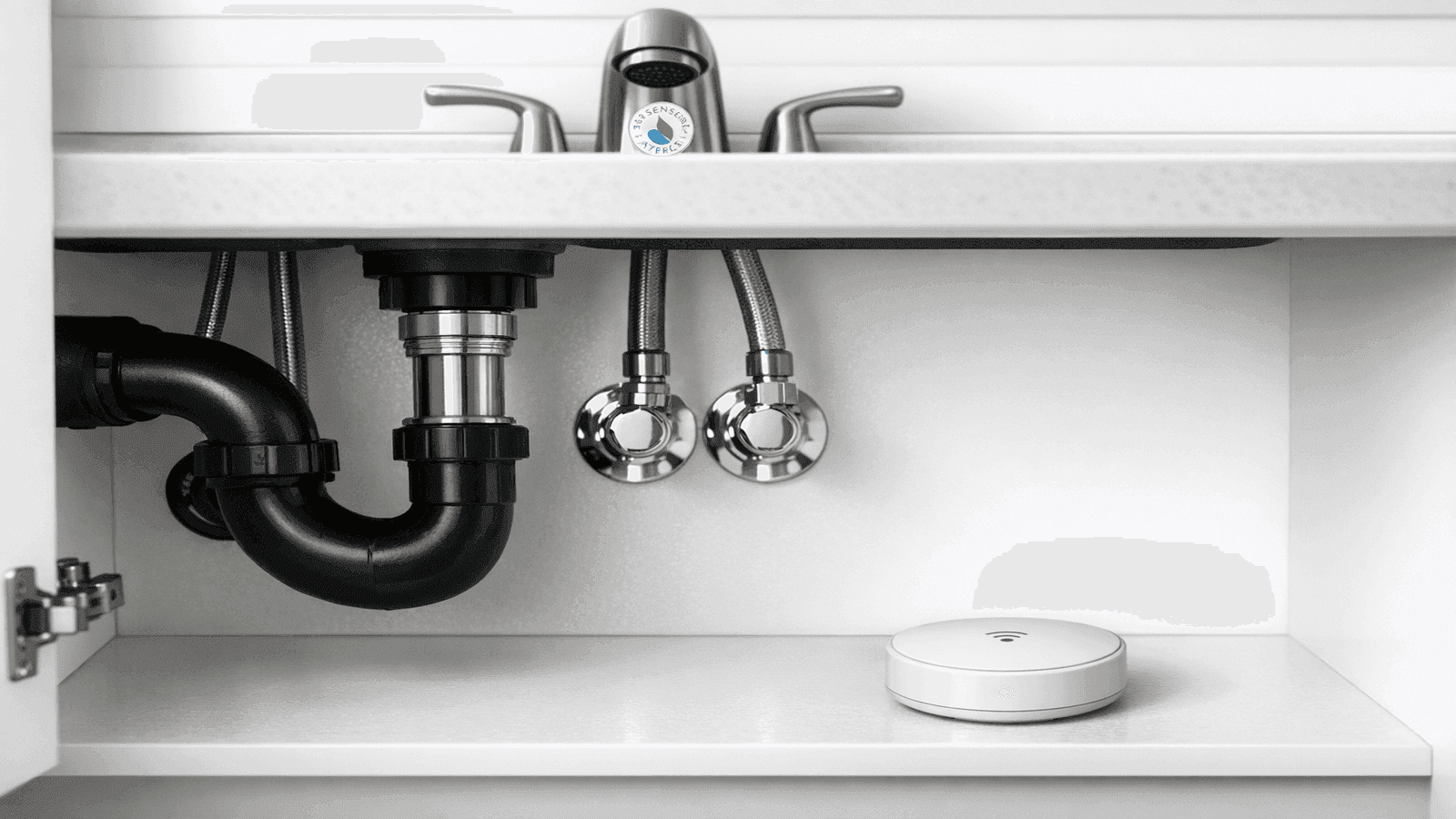
Photo: Smart leak detector sensor installed under bathroom sink next to supply lines showing water monitoring technology for eco-friendly homes
Comprehensive Eco-Fixture Cost and Savings Table
| Fixture / System | Purchase Cost | Installed Cost | Annual Water Savings | Annual Energy Savings | Payback Period |
| WaterSense toilet (per unit) | $100 to $450 | $250 to $750 | 13,000 gal / $130-170 | minimal | 2 to 4 years |
| WaterSense faucet aerators (per faucet) | $5 to $15 | DIY | 700-1,000 gal / $7-10 | minimal | Under 1 year |
| WaterSense showerhead (per unit) | $20 to $150 | $20 to $60 | 730 gal/person / $10-20 | $15 to $30 | 1 to 2 years |
| Heat pump water heater | $900 to $1,800 | $1,200 to $2,500 | minimal | $250 to $400 | 2 to 5 years |
| Tankless water heater (gas) | $800 to $1,500 | $1,300 to $3,000 | none | $100 to $200 | 6 to 12 years |
| Hot water recirculation system | $150 to $400 | $400 to $900 | 8,000-15,000 gal / $80-150 | minimal | 1 to 3 years |
| Greywater (laundry-to-landscape) | $200 to $500 | $1,500 to $3,000 | 10,000-20,000 gal / $100-200 | none | 5 to 15 years |
Rebates and Tax Credits: How to Claim in 2026
Federal Inflation Reduction Act Credits
The IRA's Energy Efficient Home Improvement Credit (Section 25C) covers:
- Heat pump water heaters: 30% of costs, up to $600 per year
- Other efficient water heating upgrades: 30% of costs, up to $600 per year
This is an annual cap, meaning you can claim up to $600 per tax year. The credit runs through December 31, 2032. File IRS Form 5695 with your federal return.
State and Utility Programs
State programs vary significantly:
- California: Water districts including LADWP, EBMUD, and SFPUC offer rebates of $50 to $200 on WaterSense toilets, $25 to $75 on showerheads, and $200 to $800 on HPWHs. Check your district's portal or call customer service.
- Texas: Many municipal utilities offer rebates. Austin Water's WaterWise program provides $75 to $125 rebates on WaterSense toilets. SAWS (San Antonio) offers similar programs.
- Arizona: SRP and APS offer appliance rebates; water rebates vary by city. Tucson Water offers $75 per WaterSense toilet.
To find rebates available in your area, the ENERGY STAR Rebate Finder (energystar.gov/rebate-finder) aggregates current offers by zip code. For a broader picture of how eco-fixtures fit into your home's sustainability plan, see our green plumbing solutions article.
Smart Fixtures: Pairing Eco-Upgrades With Technology
Smart plumbing technology pairs naturally with eco-friendly fixtures to optimize savings further. Leak detectors placed under sinks and behind toilets can alert you within minutes to drips that would otherwise waste thousands of gallons undetected. Smart shower systems allow you to preset temperature and volume so you can step in the moment water reaches your preferred temperature without waiting or wasting. See our smart plumbing technology guide for a full breakdown of connected fixtures that complement eco upgrades.
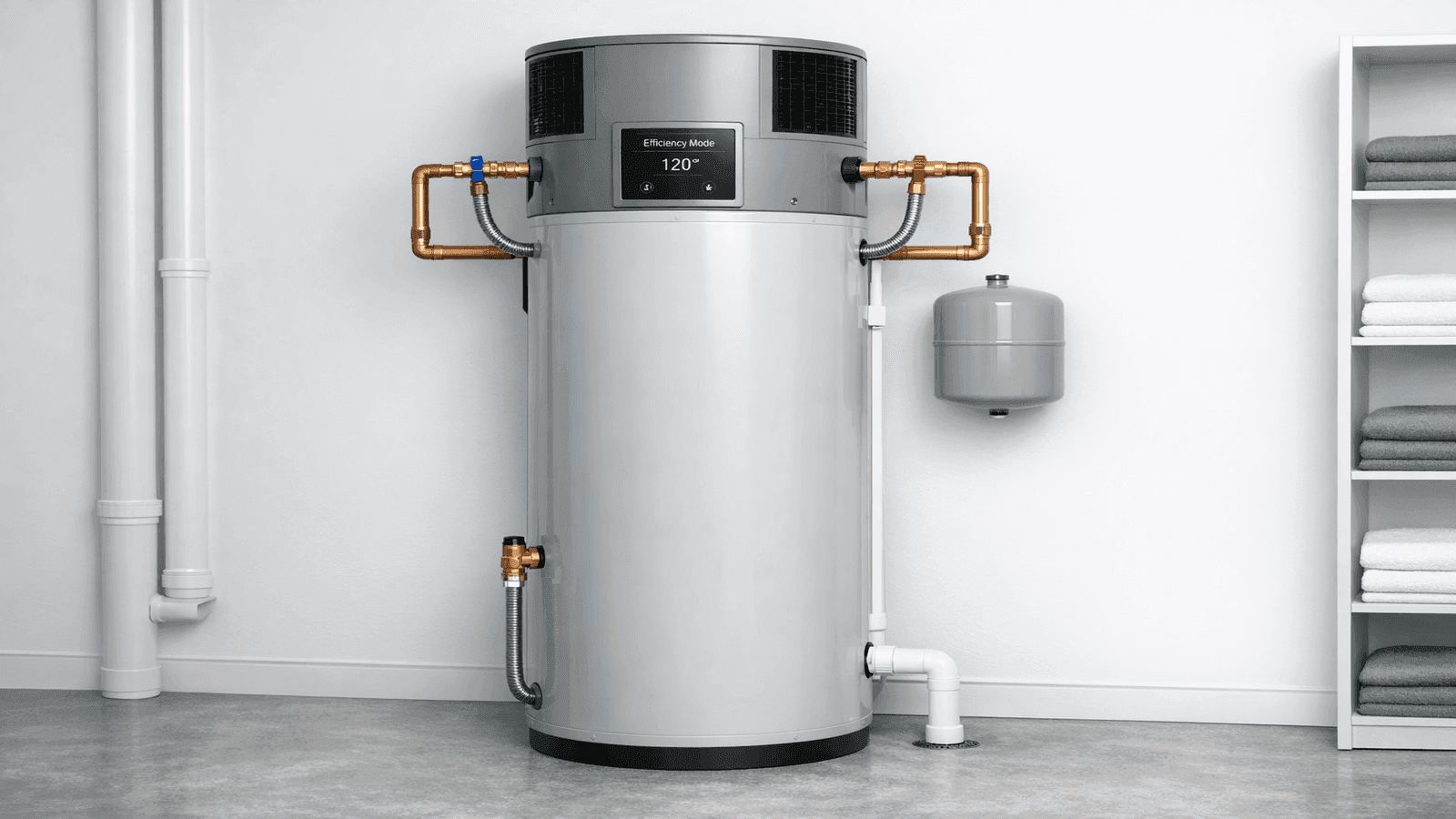
Photo: Heat pump water heater installed in clean utility room showing compact design and digital efficiency controls for residential energy savings
Smart irrigation controllers that connect to weather data and soil sensors prevent overwatering, which is among the largest outdoor water waste sources. When paired with a greywater reuse system, smart irrigation can reduce outdoor water use by 50% or more in dry climates.
Installation Considerations and When to Hire a Plumber
Most WaterSense aerators and showerheads are genuine DIY installs: unscrew the old part, screw on the new one, done in under 15 minutes. Toilet replacements are manageable for a confident DIYer with a wrench and a bucket, but professional installation ensures a proper wax ring seal and correct supply line connection, eliminating leak risk.
Heat pump water heaters, tankless systems, recirculation systems, and greywater reuse all require professional installation. HPWHs may need electrical panel work. Tankless gas units require venting and potentially gas line upgrades. Greywater systems require permits in most jurisdictions.
The licensed plumbers in our NearbyHunt network report that improperly self-installed tankless water heaters account for more than 30% of their warranty-void service calls, underscoring the value of professional installation for these higher-complexity systems.
For a full picture of what modern plumbing upgrades look like in practice, including fixture selection for both function and aesthetics, see our modern bathroom fixtures guide.
Conclusion
Eco-friendly plumbing fixtures are one of the most direct investments a homeowner can make in both financial savings and environmental responsibility. A pre-1994 toilet costs your household thousands of gallons per year more than necessary. A $10 aerator can cut bathroom faucet water use by a third with no loss in performance. A heat pump water heater cuts water heating energy costs by up to 60% and qualifies for a meaningful federal tax credit through 2032.
The complete picture, replacing toilets, adding aerators, upgrading showerheads, and installing an efficient water heater, can reduce a household's annual water and energy bills by $400 to $700 or more, with most upgrades paying back their cost in two to five years. For personalized recommendations on which eco-friendly fixtures make the most sense for your home, connect with a licensed plumber through NearbyHunt.
Disclaimer: This article is for informational purposes only. Water and energy savings vary based on household size, local utility rates, existing fixture efficiency, and usage patterns. Tax credit eligibility depends on individual tax circumstances; consult a qualified tax professional before claiming credits. Local permit requirements for greywater systems vary; always verify with your local building department before installation.*
Sources & References
- U.S. EPA WaterSense: Statistics and Facts - EPA WaterSense program data on residential water use and fixture savings
- U.S. Department of Energy: Water Heating - DOE energy savings estimates for water heaters including heat pump and tankless models
- ENERGY STAR: Heat Pump Water Heaters - Efficiency ratings and rebate finder for certified heat pump water heaters
- Forbes Home: Water Saving Tips That Actually Work - Independent analysis of residential water conservation strategies
- Bob Vila: Best Low-Flow Toilets - Performance reviews and buyer guidance for WaterSense toilets
- NAHB: Green Building and Energy Efficiency - National Association of Home Builders data on green plumbing adoption
- Bankrate: Home Energy Tax Credits 2026 - Current IRA tax credit details and filing guidance for homeowners
- Consumer Reports: Water Heater Buying Guide - Independent performance and reliability data for residential water heaters

Michael Jennings is a licensed master plumber & water systems specialist with over 18 years of hands-on experience in residential and commercial plumbing, serving clients across California and Texas. At NearbyHunt, he shares practical advice on pipe installations, water heater maintenance, and home plumbing upgrades. Michael has helped thousands of homeowners prevent costly water damage and improve water efficiency through modern plumbing solutions.

Robert is a licensed master plumber with over 20 years of experience serving both residential and commercial clients across the Midwest. Specialising in advanced plumbing systems and sustainable water technologies, Rob brings deep technical insight and hands-on expertise to every project. As a reviewer for NearbyHunt, he ensures all plumbing content reflects the highest standards of safety, compliance, and practicality.