- 20% of homeowners deal with clogged toilets regularly, making it the single most common bathroom plumbing call.
- A flange plunger clears 80% of toilet clogs in under 5 minutes without any tools or chemicals.
- Hiring a plumber to unclog a toilet costs $110-$320 on average ($150-$400 for emergency calls). DIY costs $0 if you already own a plunger.
- "Flushable" wipes are not actually flushable: they cause more clogged toilet calls than toilet paper and excessive TP combined.
- A toilet auger (also called a closet auger or plumber's snake) is the correct tool for clogs a plunger cannot reach. It costs $25-$60 at any hardware store.
- Never use chemical drain cleaners (Drano, Liquid-Plumr) in a toilet: they can crack the porcelain bowl and corrode wax ring seals.
A clogged toilet is one of those problems that demands immediate attention. According to a Google Consumer Survey, 20% of homeowners deal with toilet clogs on a regular basis, making it the most common bathroom plumbing issue. The good news: most clogs clear in under 10 minutes with the right technique.
This guide covers what actually causes clogs, the right tools to have ready, 5 methods in order of escalation (start with the easiest), when an auger beats a plunger, and when it's time to stop and call a professional. It's part of the broader DIY Plumbing Guides series on NearbyHunt.
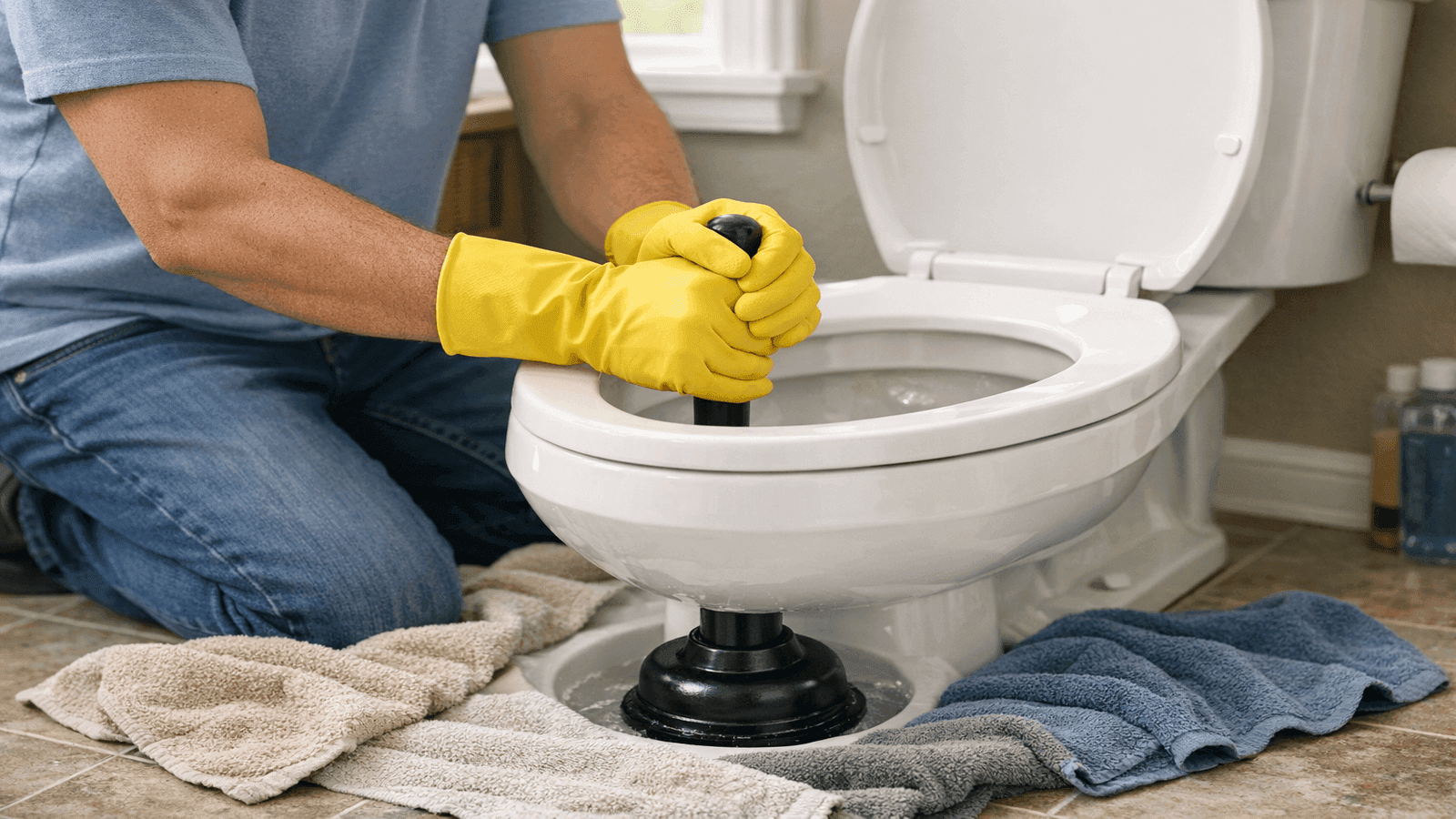
Photo: Homeowner using a flange plunger on a toilet with towels on the floor and rubber gloves on, demonstrating proper plunging technique
What Causes Most Toilet Clogs
Your toilet drain is only 3-4 inches in diameter. That sounds like plenty of room, but it's narrower than most people picture, and it has a built-in trap bend that foreign objects get stuck behind easily.
Four causes account for nearly every toilet clog a plumber sees:
- Too much toilet paper in one flush (about 45% of clogs): half a roll in one go is a recipe for a blockage.
- Non-flushable items (about 30%): wipes, cotton balls, feminine products, and yes, children's toys.
- Low-flow toilet with a weak flush (about 15%): older models often can't move solid waste efficiently.
- Partial sewer line blockage further down (about 10%): the problem isn't in the toilet at all.
Before you grab a plunger, check one thing: are other fixtures backing up? If your sink gurgles when you flush, or your shower drain is slow at the same time, that's a sewer line issue, not a toilet clog. That requires a professional, not a plunger.
I get at least 3-4 toilet clog calls a week, and 'flushable' wipes are responsible for more emergency calls than anything else I see. I've pulled entire ropes of wipes out of sewer lines. They don't break down. The toilet paper test is simple: put a wipe and a sheet of toilet paper in a glass of water and swirl it. The TP dissolves in 30 seconds. The wipe is still intact after 10 minutes.

Tools You'll Need Before You Start
Grab these before you get started. The right tools save you from a much wetter situation.
| Tool | Best For | Cost |
| Flange plunger | All toilet clogs (first attempt) | $10-$25 |
| Rubber gloves | Protection | $5-$10 |
| Old towels or plastic sheeting | Floor protection | $0 (use what you have) |
| Toilet auger (closet auger) | Clogs the plunger can't reach | $25-$60 |
| Dish soap | Method 2 assist | $0 (pantry) |
| Baking soda and white vinegar | Light organic clogs | $0 (pantry) |
One important distinction: a cup plunger (red, flat bottom) is designed for sinks and tubs. A flange plunger (typically black, with a rubber extension at the bottom) is the correct tool for toilets. Using the wrong one wastes your time and makes a bigger mess.
5 Methods to Unclog Your Toilet
Work through these in order. Start with Method 1 and only move to the next if you don't have progress after a few attempts.
Get quotes from top-rated pros.
Method 1: Flange Plunger (Clears 80% of Clogs)
This handles the vast majority of toilet clogs. Do it right and you'll be done in under 5 minutes.
- Turn off the water supply valve (the knob behind or below the toilet) if the bowl is close to overflowing.
- Put on rubber gloves and lay old towels around the base of the toilet.
- Submerge the plunger so the flange (rubber extension) seats fully into the drain opening.
- Push down slowly on the first stroke to create a seal and push air out, not water everywhere.
- Pull back sharply. Repeat 8-10 times in a row, keeping the seal throughout.
- Lift the plunger and watch whether water drains. If yes, do one test flush.
- Repeat 2-3 more full sets if the clog hasn't cleared.
Pro tip: pour a bucket of hot water (not boiling) into the bowl before plunging. The heat softens the clog and improves your results.
The most common plunging mistake I see is people using a cup plunger instead of a flange plunger. The cup plunger is designed for flat drains like sinks. It won't create a proper seal in the toilet drain. If you've been plunging for 10 minutes with no result, the first thing I'd check is what kind of plunger you're using.
Method 2: Hot Water and Dish Soap
A solid second step when plunging alone isn't moving things. The soap lubricates the clog; the hot water softens it.
- Squirt 1-2 tablespoons of dish soap directly into the bowl.
- Heat 1 gallon of water on the stove until hot but not boiling (boiling water can crack porcelain).
- Pour the hot water from waist height in a steady stream.
- Wait 10-15 minutes.
- Try flushing.
This works particularly well for toilet paper buildup and partial organic clogs. It's faster than the baking soda method and easier to do at 2 a.m.
Method 3: Baking Soda and Vinegar
A chemical-free option for light organic buildup. It won't move a solid foreign object, but it's worth trying before reaching for an auger if the clog is soft.
- If the bowl is nearly full, scoop out some water with a cup first.
- Pour 1 cup of baking soda directly into the drain.
- Slowly add 1 cup of white vinegar. It will fizz immediately.
- Add 4 cups of hot (not boiling) water.
- Wait 30-60 minutes before flushing.
Don't skip ahead to Method 4 just because this takes longer. If you prefer to avoid chemicals, give this one a full hour before moving on.
Method 4: Toilet Auger (Closet Auger)
When plunging and the above methods don't work after 3+ attempts, you need a toilet auger. This is the right tool for clogs sitting 6-12 inches into the drain, past where a plunger can reach.
- A toilet auger has a rubber sleeve to protect the porcelain from scratches. Insert the curved end into the drain opening.
- Crank clockwise while pushing the cable down. The auger navigates the trap bend.
- When you feel resistance, you've hit the clog. Keep cranking steadily.
- If it's a solid object (wipes, toy), try hooking it and crank in reverse to pull it back out.
- If it's organic material (TP mass), the auger breaks it apart. Flush to clear.
Important: a regular drain snake designed for sinks will scratch your porcelain bowl and won't navigate the trap correctly. Use a closet auger specifically. They're available at any hardware store for $25-$60. See also How to Snake a Drain for sink and tub applications.
Method 5: Enzyme Drain Cleaner (Overnight Method)
This is a slow-drain method, not a sudden-clog fix. Enzyme cleaners use natural bacteria to break down organic material over several hours.
- Purchase an enzyme-based drain cleaner (not chemical). Brands include Bio-Clean and Green Gobbler Enzyme.
- Pour the recommended amount into the toilet before bed.
- Do not flush for 6-8 hours.
- Flush in the morning.
Best use case: slow-draining toilets with gradual organic buildup. Also useful as monthly preventive maintenance in households that have recurring drain issues.
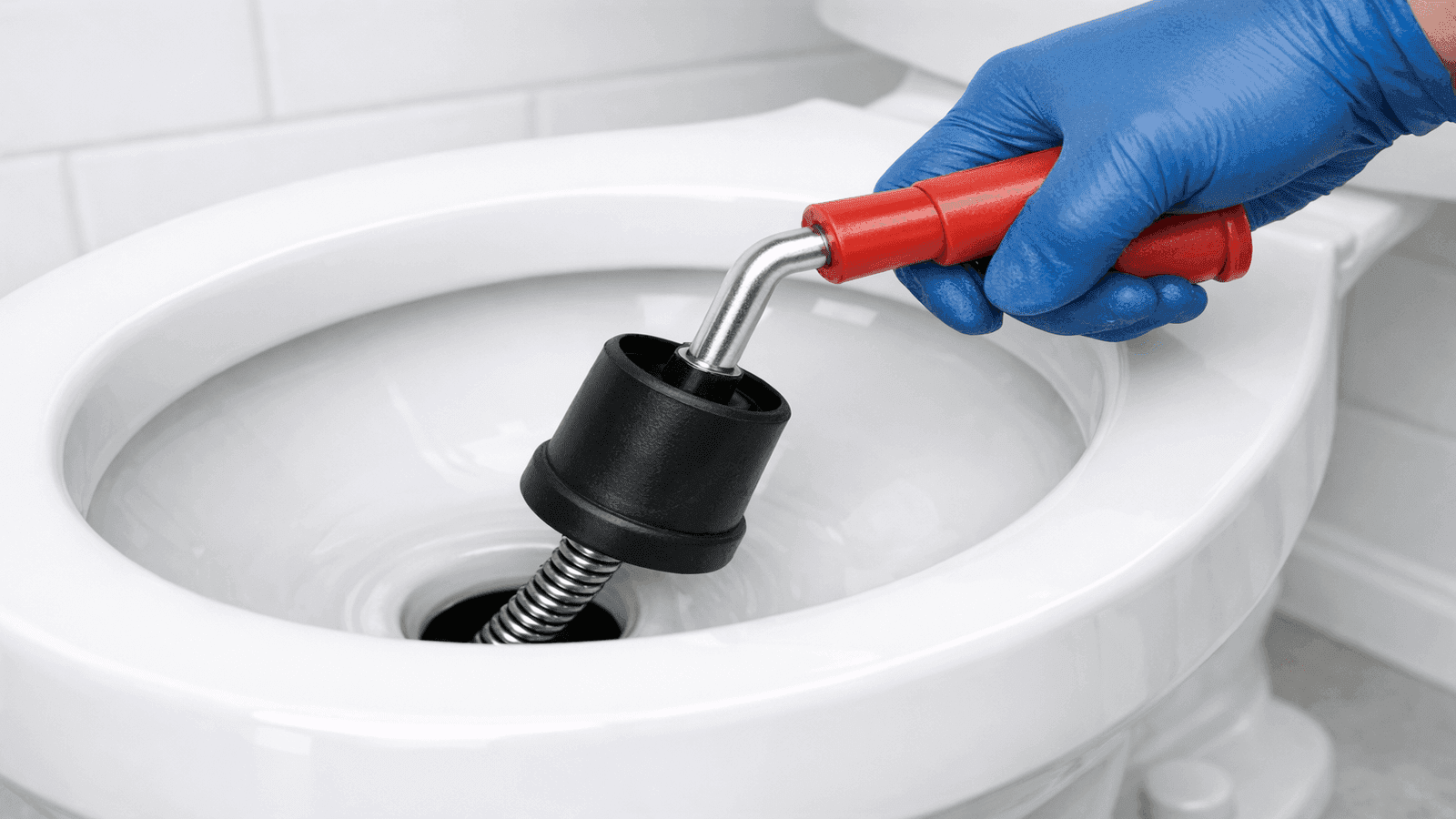
Photo: Toilet auger (closet auger) with rubber sleeve visible, being inserted into a toilet drain at the correct angle
When to Stop and Call a Plumber
Knowing when to stop is just as important as knowing what to try. Some situations will not respond to DIY methods, and pushing harder makes them worse.
Call a plumber immediately if:
- Multiple fixtures are backing up at the same time (other toilets, sinks, shower drains all gurgling or slow): this is a sewer line issue, not a toilet clog.
- You've tried all 5 methods with no progress after 45-60 minutes.
- The toilet overflows repeatedly with minimal water in the bowl.
- You hear a gurgling noise from the drain even when the toilet hasn't been used.
- The clog keeps coming back every few days despite clearing it.
What it costs when you do call**
| Service | DIY Cost | Professional Cost |
| Standard toilet unclog (plunger) | $0-$25 (plunger) | $110-$320 |
| Toilet auger (closet auger) | $25-$60 (tool) | included in service call |
| Sewer line snaking | Not DIY | $150-$500 |
| Emergency/after-hours | Not applicable | $150-$400 |
| Hydrojetting (severe buildup) | Not DIY | $300-$600 |
If the toilet is running continuously rather than clogged, that's a different problem entirely. See How to Fix a Running Toilet for that issue. If the fill valve is the problem, Replace Toilet Fill Valve walks you through that repair.
Get quotes from top-rated pros.
How to Prevent Toilet Clogs
The simplest rule in plumbing: only three things go down a toilet drain.
- Human waste
- Toilet paper (in reasonable amounts, not half a roll per flush)
- Water
Never flush any of these:
- "Flushable" wipes (they don't actually break down)
- Paper towels, facial tissues, napkins
- Cotton balls, cotton swabs, dental floss
- Feminine hygiene products
- Medications
- Food scraps, grease, or hair
Additional steps worth taking: if you have a low-flow toilet, use two flushes for heavy use instead of forcing one. For older 1.6 gpf models, flush once while still adding toilet paper rather than waiting until you have a large amount. Monthly enzyme cleaner treatments work well for households with recurring slow drains.
I tell every homeowner the same thing: put a small sign inside the tank lid that says 'Only 3 things go in here.' It sounds ridiculous, but in households with kids, it prevents the toy-in-the-toilet calls I get every single week.
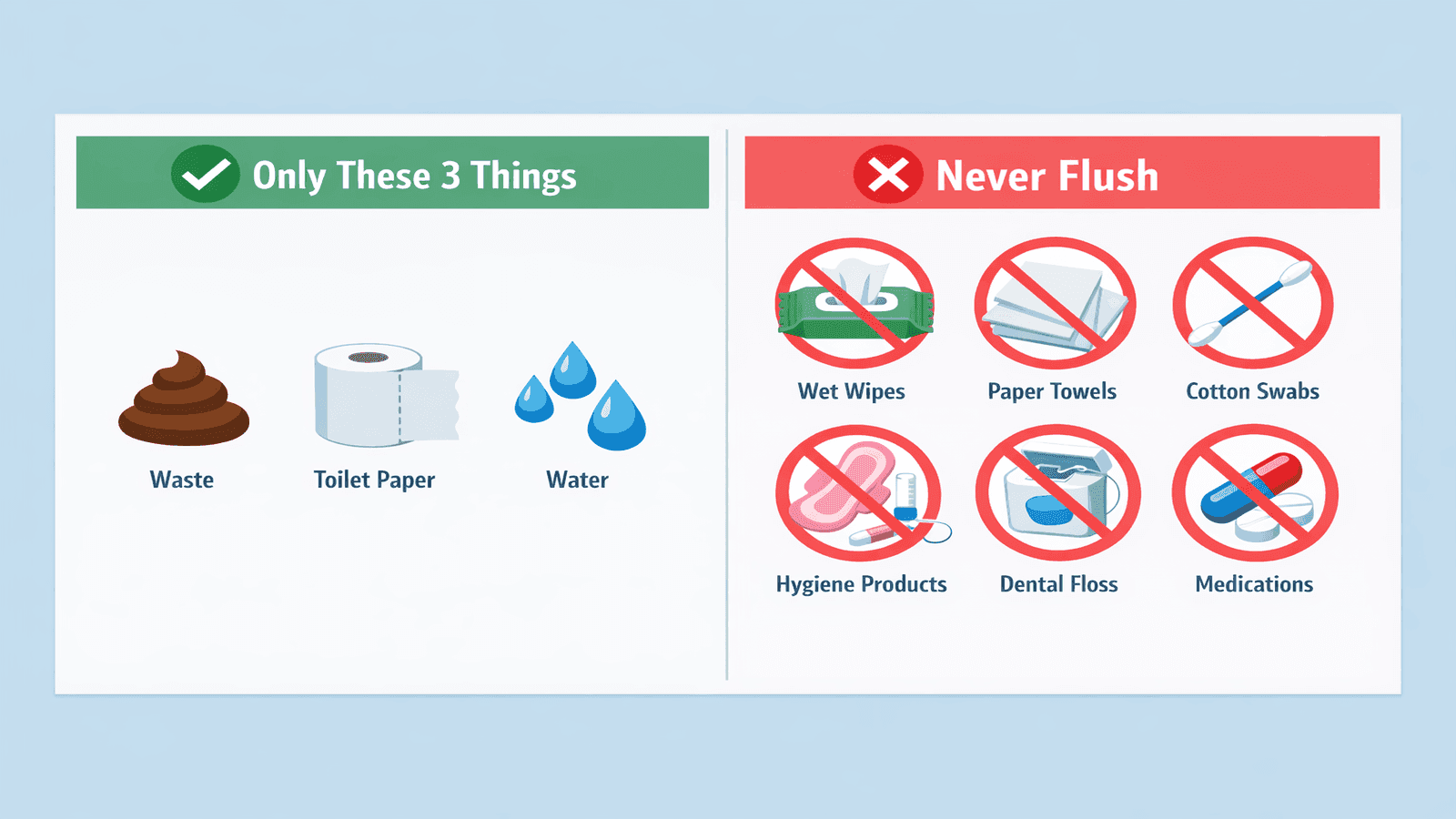
Photo: Infographic showing the only three things safe to flush (human waste, toilet paper, water) on one side and a crossed-out list of items that should never be flushed on the other
Conclusion
Most toilet clogs can be cleared with a flange plunger in under 5 minutes. Work through the 5 methods in order, starting with the easiest, and you'll clear the vast majority of clogs without spending a dollar on a service call. Save the phone number of a licensed plumber for the situations that genuinely need one: multi-fixture backups, sewer line issues, or anything that doesn't respond after a full set of attempts.
For more DIY plumbing repairs you can handle yourself, visit the full DIY Plumbing Guides series on NearbyHunt.
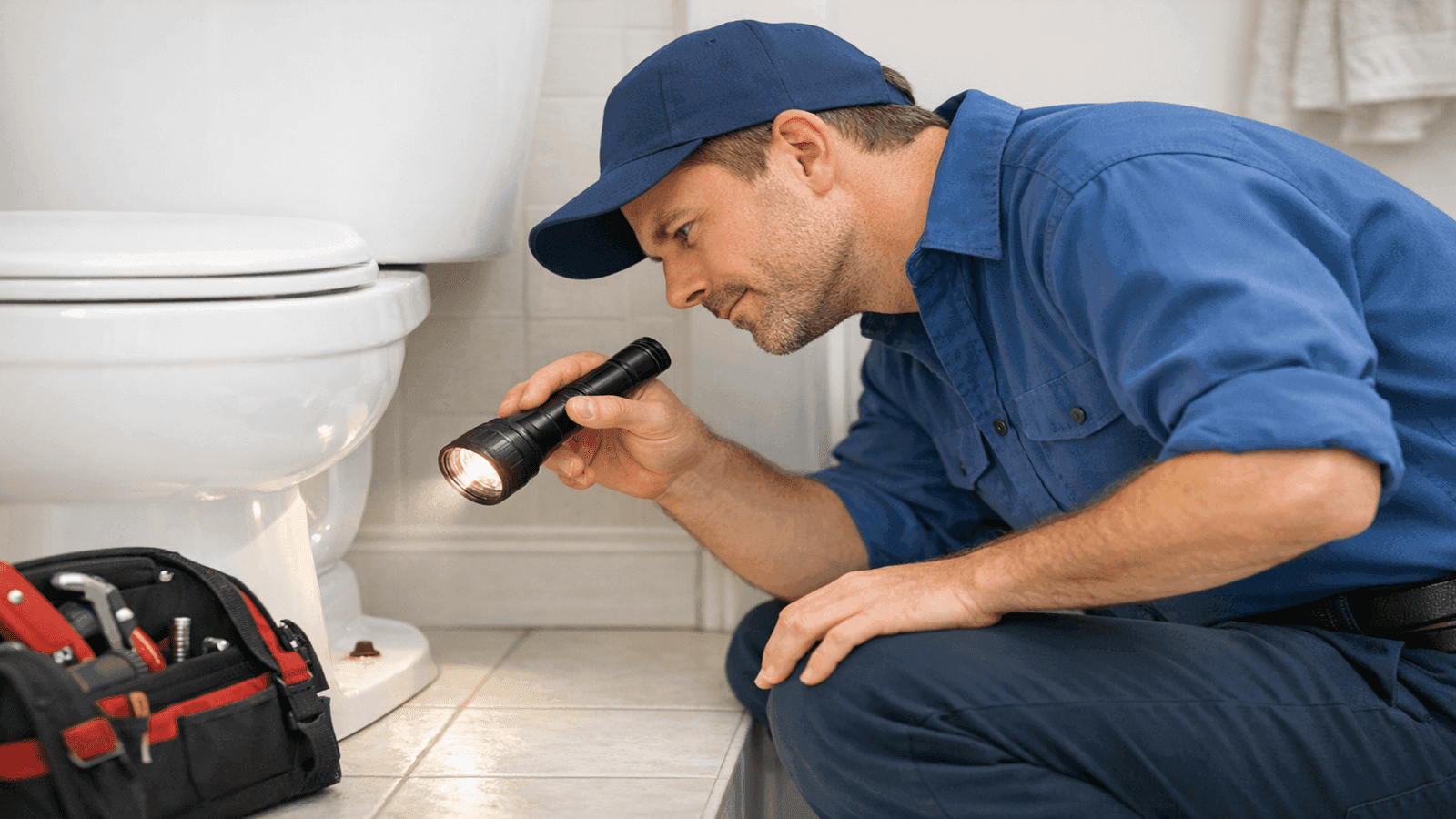
Photo: Licensed plumber examining the base of a toilet and connecting pipes, representing the "when to call a professional" scenario
Disclaimer: Cost ranges listed in this guide are national averages based on 2025-2026 industry data. Actual costs vary by location, severity, and contractor. Always get multiple quotes for plumbing work. Prices in major metro areas may run 20-40% higher than national averages. This guide is for educational purposes; consult a licensed plumber for issues beyond basic DIY repairs.

Michael Jennings is a licensed master plumber & water systems specialist with over 18 years of hands-on experience in residential and commercial plumbing, serving clients across California and Texas. At NearbyHunt, he shares practical advice on pipe installations, water heater maintenance, and home plumbing upgrades. Michael has helped thousands of homeowners prevent costly water damage and improve water efficiency through modern plumbing solutions.

Robert is a licensed master plumber with over 20 years of experience serving both residential and commercial clients across the Midwest. Specialising in advanced plumbing systems and sustainable water technologies, Rob brings deep technical insight and hands-on expertise to every project. As a reviewer for NearbyHunt, he ensures all plumbing content reflects the highest standards of safety, compliance, and practicality.