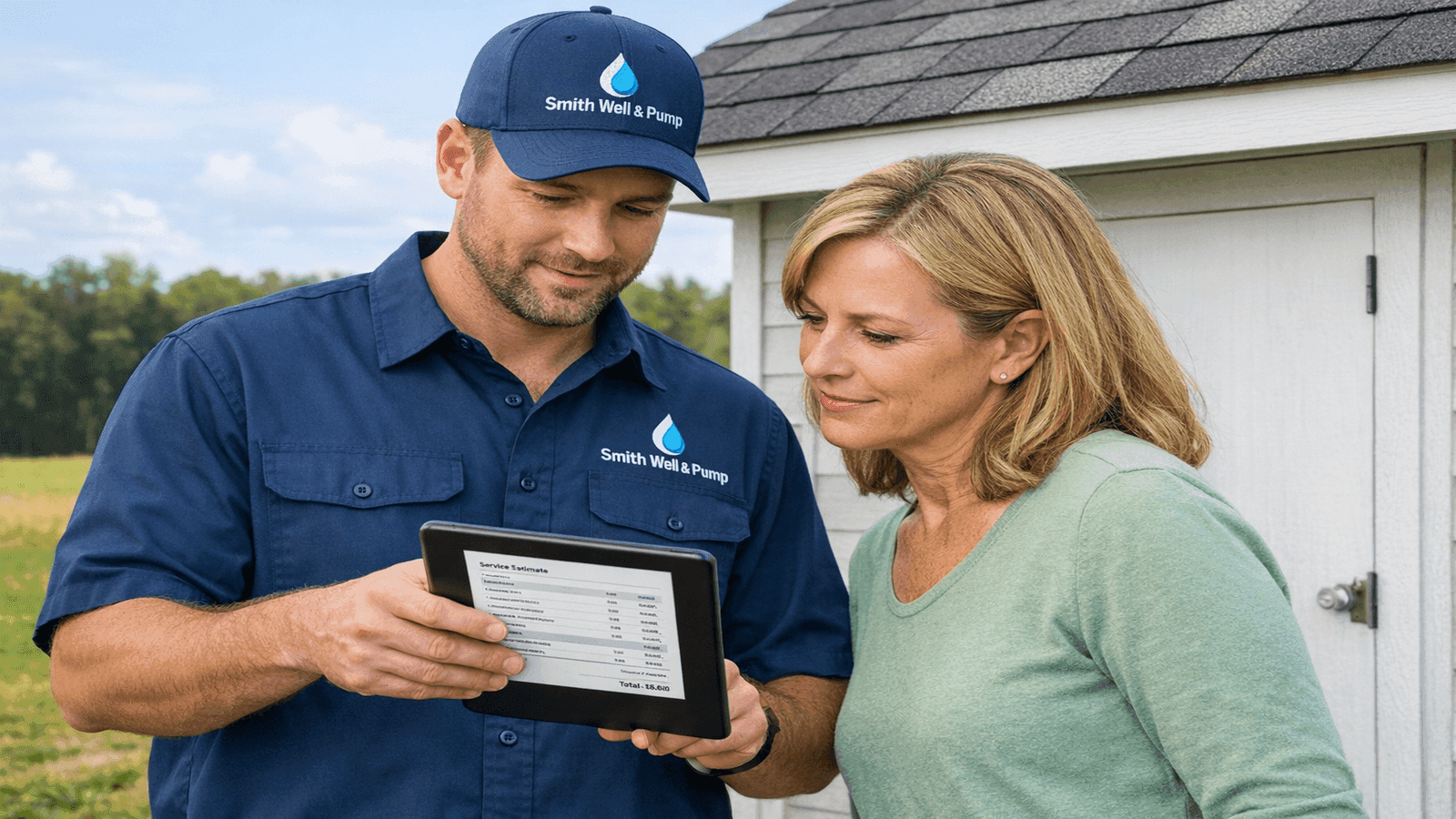
- Tank water heaters cost $600–$2,500 installed in 2026; tankless units run $1,400–$3,900 depending on fuel type and venting.
- Labor accounts for 40–50% of total project cost: $150–$450 for tank-style, $600–$1,850 for tankless.
- Permits are required in most jurisdictions for any water heater replacement; unpermitted work can void homeowner's insurance.
- Expansion tanks are code-required in closed plumbing systems (homes with a pressure-regulating valve or backflow preventer
- Tankless units last 15–20 years versus 8–12 years for tank units and use 24–34% less energy per the U.S. Department of Energy.
- Gas tankless installation runs 40–60% more than electric tankless due to venting, gas line upgrades, and combustion air requirements.
Replacing a water heater touches every plumbing code in the book: pipe sizing, pressure relief valves, seismic strapping, venting, and expansion tank requirements. Get it right, and the unit runs quietly for a decade or more. Get it wrong, and you face a flooded utility room, a carbon monoxide hazard, or a failed home inspection.
Michael has completed 2,400-plus residential plumbing projects across Dallas-Fort Worth and California in his 18-year career, and this guide draws on lessons from installations ranging from straightforward swaps to complex remodels. This guide covers everything needed to plan a water heater installation in 2026, from choosing between tank and tankless to pulling the permit and hiring the right contractor.
For a broader look at all residential plumbing installations, see the complete plumbing installation guide.

Get quotes from top-rated pros.
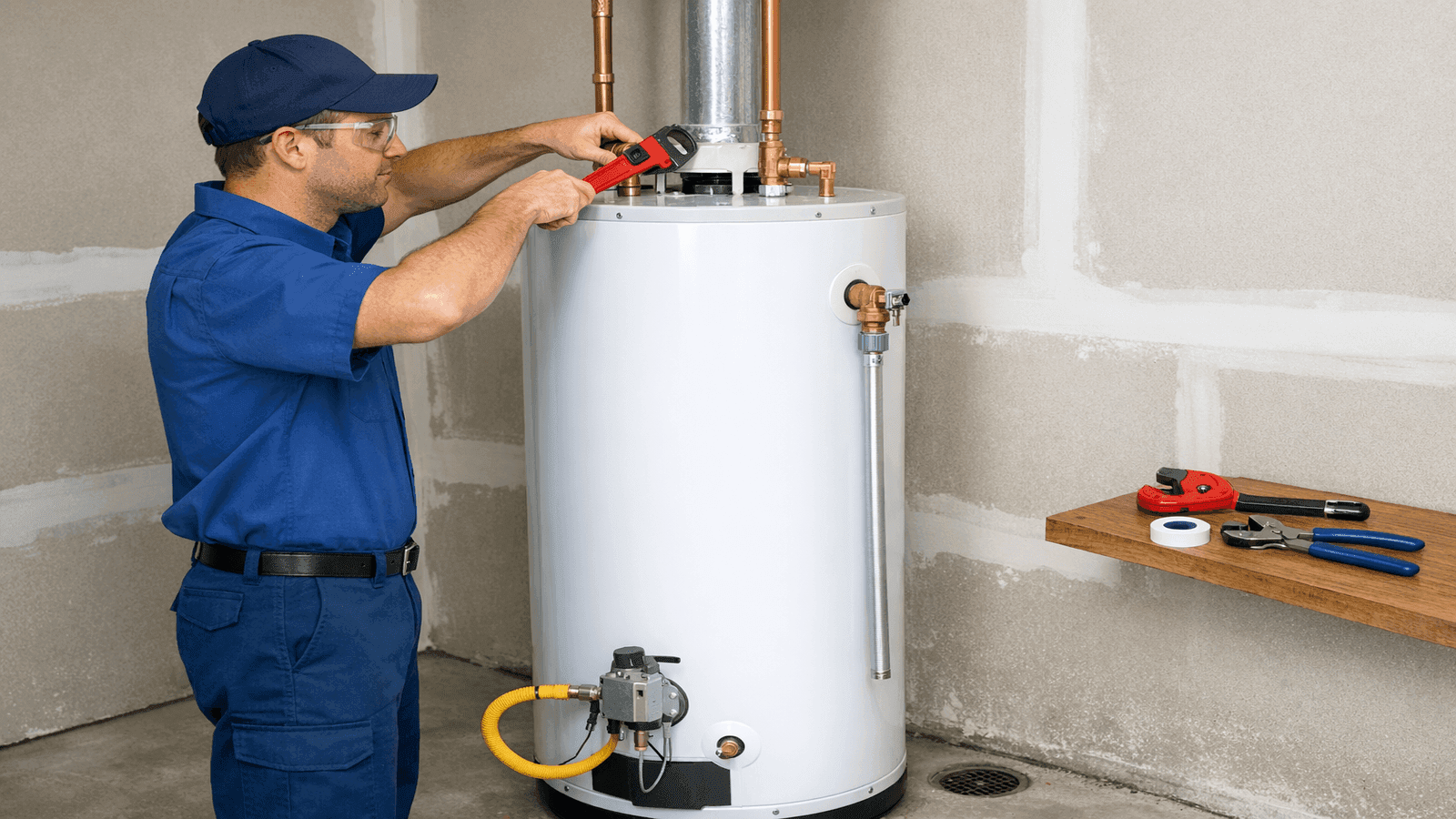
Photo: Licensed plumber installing a 50-gallon gas tank water heater in a residential utility room, copper supply lines and PRV valve visible
Tank vs. Tankless: Choosing the Right System
Storage Tank Water Heaters
Tank units store 30–80 gallons of heated water and deliver it instantly. A 50-gallon natural gas tank costs $500–$900 for the unit plus $150–$450 labor, totaling $650–$1,350 in most markets. Electric tank units install faster with no venting and run $400–$800 plus $100–$300 labor.
The tradeoff is standby heat loss: the unit continuously reheats water, adding $15–$35 per month to utility bills. Tank units also occupy 16–20 square feet of floor space with clearances.
Best for: Households of 4+, tight upfront budgets, homes where gas line or panel upgrades are cost-prohibitive.
Tankless Water Heaters
Tankless units heat water on demand, eliminating standby loss. They wall-mount in 2–3 square feet and last 15–20 years. Gas tankless units deliver 6–10 GPM but require Category III/IV venting and often a gas line upsizing to three-quarter inch or larger. Electric tankless units need a dedicated 240V/100–200-amp circuit; a panel upgrade alone can run $1,000–$2,500.
Total installed cost: $1,400–$3,900. [2] The U.S. Department of Energy estimates 24–34% energy savings for homes using under 41 gallons per day. [1]
| Feature | Tank (Gas) | Tankless (Gas) | Tankless (Electric) |
| Unit cost | $500–$900 | $800–$1,800 | $500–$1,200 |
| Labor cost | $150–$450 | $500–$1,200 | $300–$650 |
| Lifespan | 8–12 years | 15–20 years | 15–20 years |
| Energy savings | Baseline | 24–34% | 24–34% |
| Venting required | Yes (B-vent) | Yes (Cat III/IV) | No |
In Michael's 18-year career spanning 2,400-plus residential projects across Texas and California, the biggest surprise when switching tank units to tankless is almost always the gas line. Most homes have half-inch supply to the water heater; tankless units typically need three-quarter inch. Budget $200–$600 for that upsizing before committing to any tankless quote.
Sizing Your Water Heater
For tank units: 30 gallons for 1–2 people, 40 gallons for 3–4, 50 gallons for 4–5, 80 gallons for 6+. For tankless, size by GPM demand: a shower runs 2 GPM, a faucet 0.5–1.5 GPM, a dishwasher 1–1.5 GPM. Two simultaneous showers need at least a 5 GPM unit.
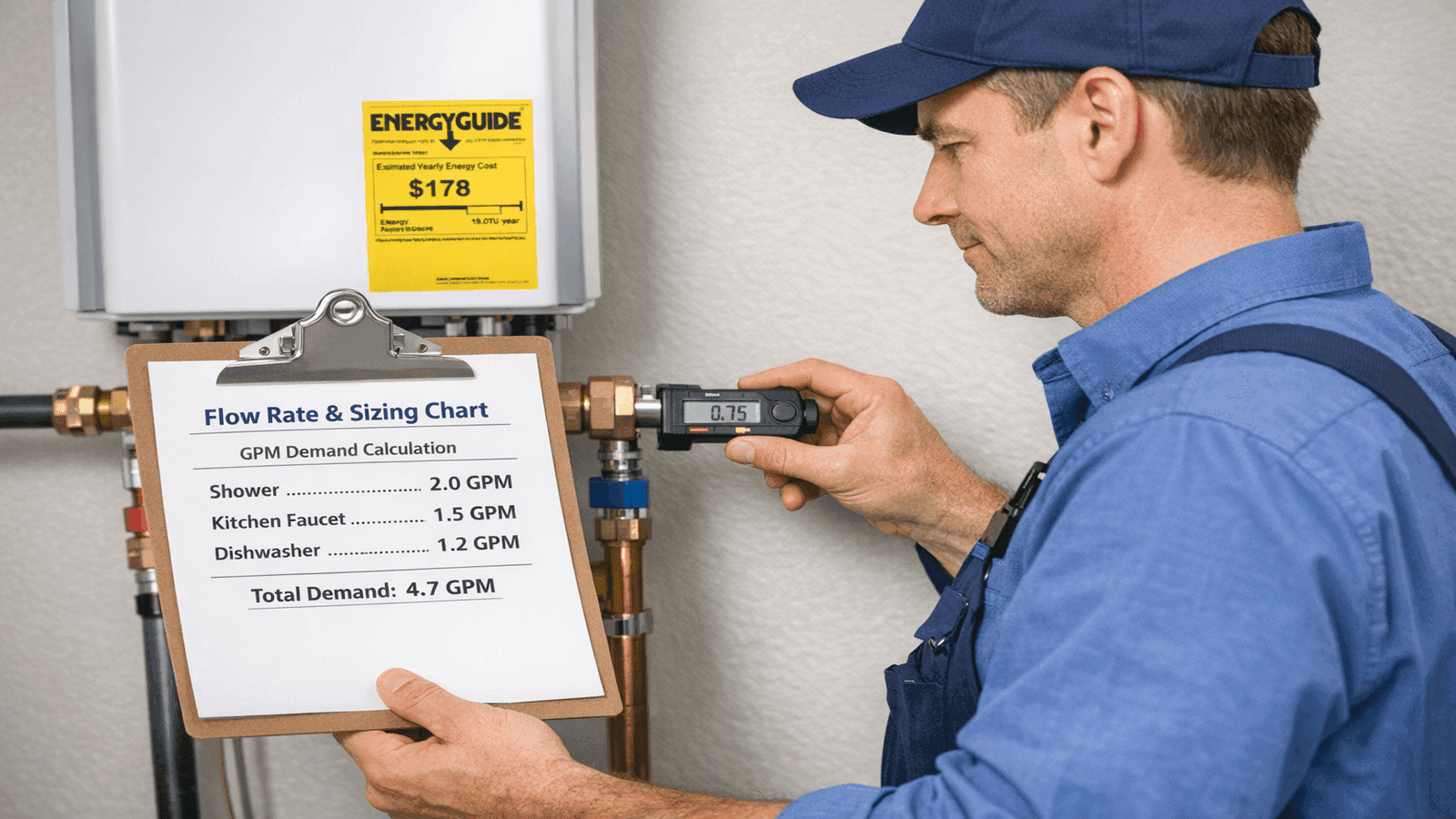
Photo: Plumber measuring pipe diameter and reviewing tankless water heater sizing chart mounted on wall beside unit
First-hour rating (FHR) matters more than tank size for most households. A 50-gallon tank with a 90-gallon FHR outperforms a 50-gallon tank rated at 60 gallons FHR. Always check FHR on the EnergyGuide label before purchasing.
Get quotes from top-rated pros.
Permits and Code Requirements
Most jurisdictions require a plumbing permit for any water heater replacement, not just new installations. Permit fees run $50–$400 and require a licensed plumber in most states, a rough-in inspection, and a final inspection confirming the PRV, seismic strapping (required in California, Washington, Nevada, and other seismic states), and proper venting. For full code breakdowns, see the plumbing code requirements guide.
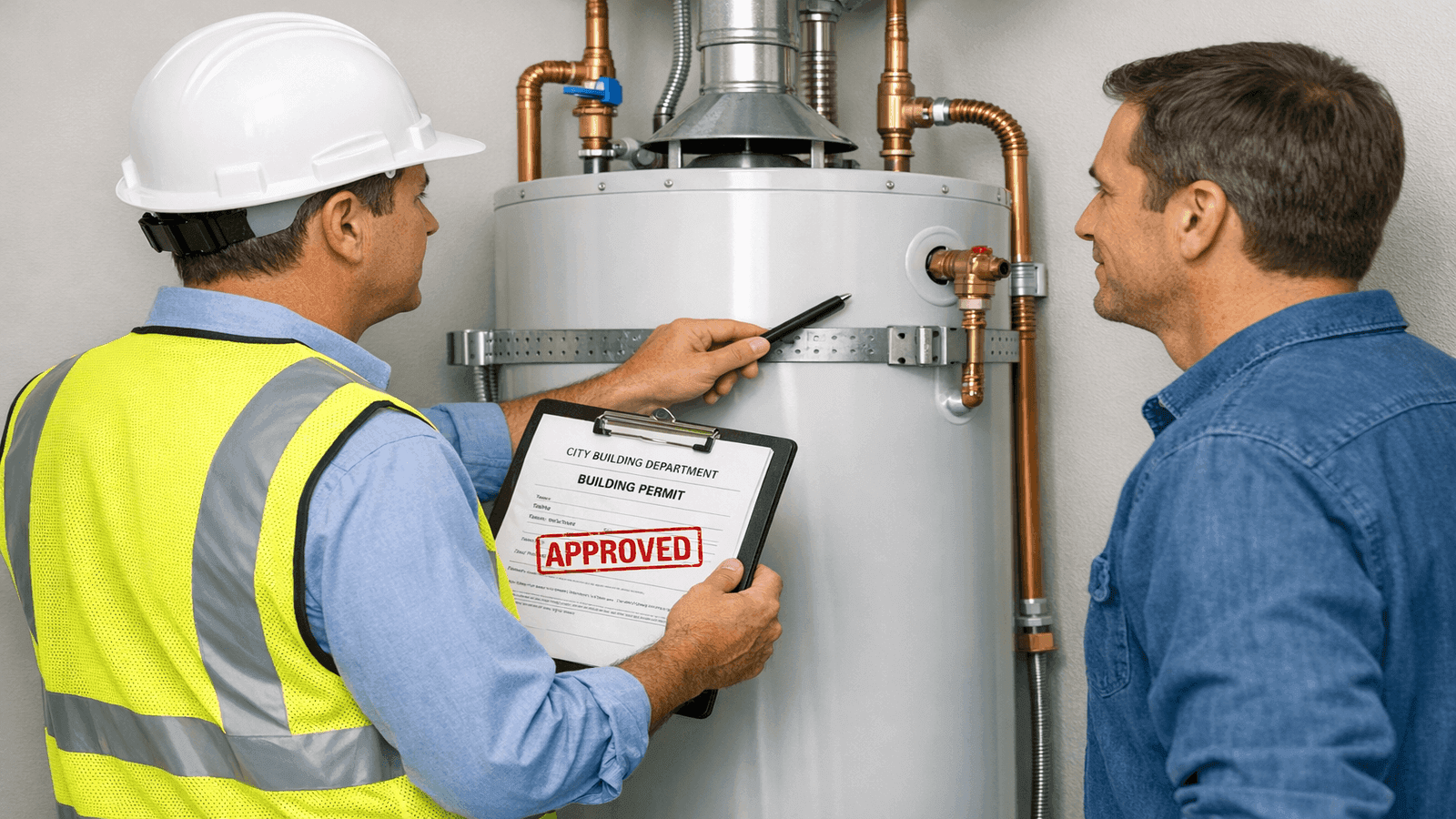
Photo: Building inspector reviewing water heater installation permit paperwork at residential utility room, city permit stamp visible
Expansion Tank Requirements
Homes with a closed plumbing system (indicated by a pressure-reducing valve, or PRV, on the main line) require an expansion tank under the International Plumbing Code. [5] When the heater warms cold water, it expands. Without a relief path, that pressure stresses the tank and all connected fittings. Expansion tanks cost $30–$80 for the part plus $75–$150 to install.
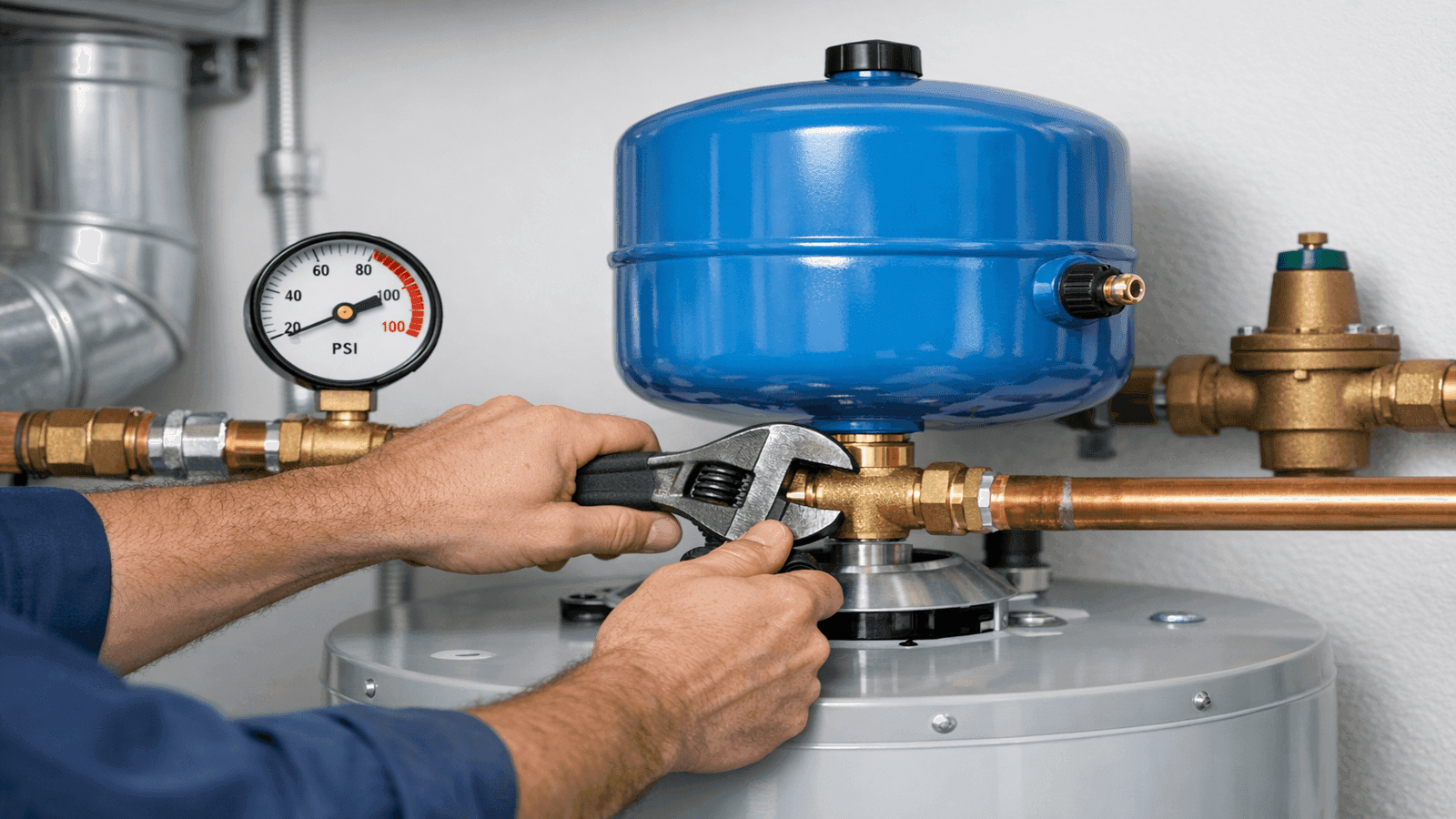
Photo: Plumber installing thermal expansion tank on cold water supply line above water heater, copper fittings and pressure gauge visible
Gas vs. Electric: Key Installation Differences
Gas Installation
Gas work requires: shutting off gas supply, disconnecting the old gas line, connecting the new unit with a flexible gas connector (never rigid black iron at the appliance), setting up flue venting, installing the PRV discharge pipe, and leak-testing all connections. Gas venting is the most critical step: improper B-vent is a carbon monoxide hazard and the most common inspection failure.
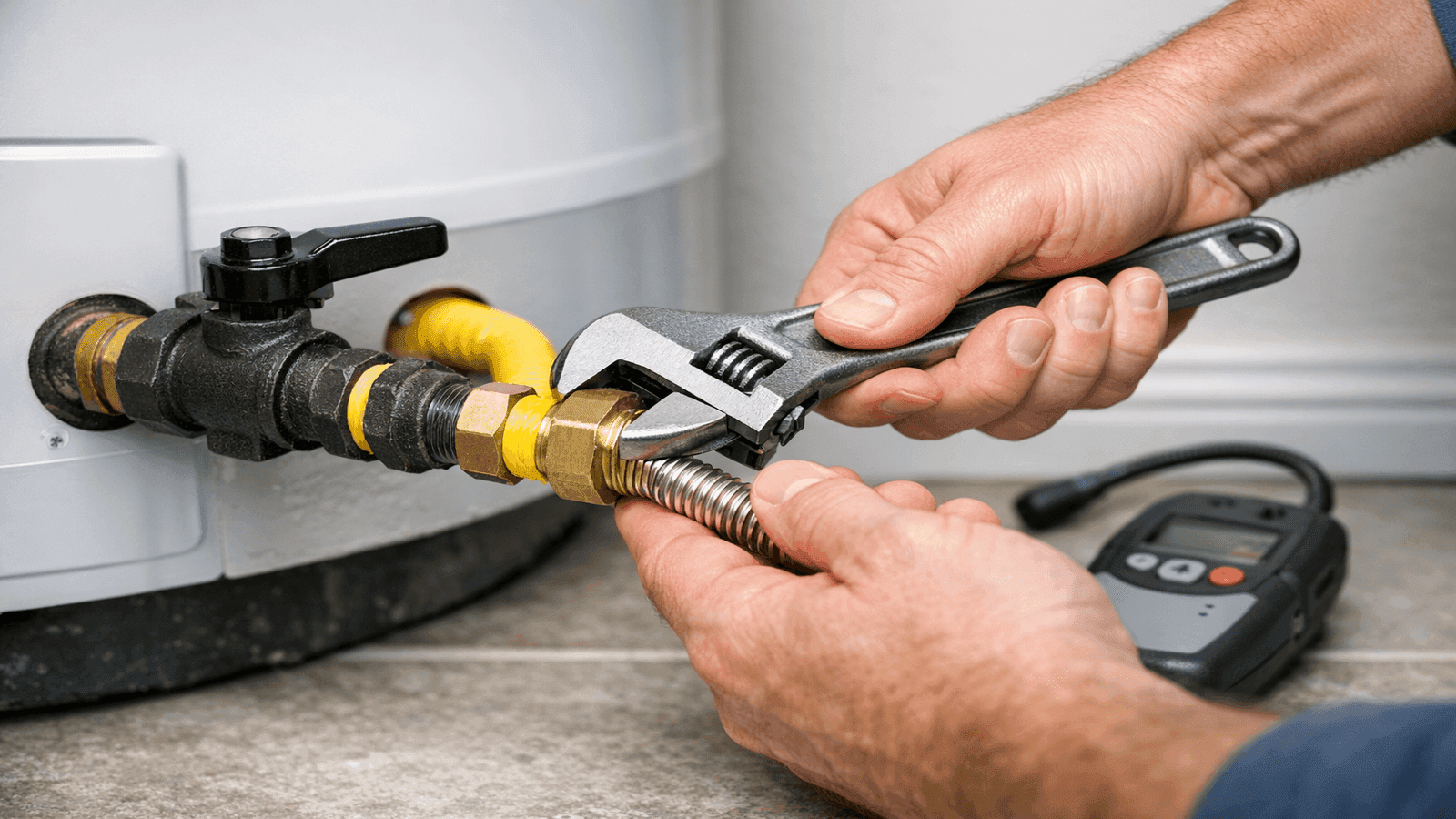
Photo: Close-up of licensed plumber making gas line connection to new water heater using yellow flexible gas connector, pipe wrench in hand
Electric Installation
Electric skips venting but requires verifying electrical supply. Most electric tank units need a dedicated 240V/30A circuit. Older homes may need a panel or circuit upgrade first. Connection involves two hot leads, a ground, and internal wiring to upper and lower heating elements.
On electric installs I always verify element wattage against the breaker. A 4,500-watt element draws 18.75 amps at 240V. A 30-amp breaker is code-compliant in most jurisdictions and gives proper headroom. Undersized breakers trip under load and shorten element life.
Installation Steps (Licensed Plumber Process)
- Shut off fuel and cold water: gas valve or circuit breaker, then cold inlet valve.
- Drain the tank: attach hose to drain valve, run to floor drain. A 50-gallon unit takes 15–30 minutes.
- Disconnect and remove old unit: gas/electrical connections first, then supply lines. 50-gallon tanks weigh 130–150 lbs; use a dolly.
- Inspect rough-in: replace corroded nipples, verify gas line sizing, confirm venting condition.
- Install new unit: connect PRV discharge pipe, set up expansion tank if required, connect supply lines with dielectric unions.
- Connect fuel supply: flexible gas connector or wired electrical junction box.
- Fill before energizing: open a hot tap to purge air; light pilot or flip breaker only after water runs clear.
- Test everything: check for leaks, verify PRV discharges freely, set thermostat to 120°F.
For guidance on safely shutting down your home's water supply before starting, see the shut off water supply guide.
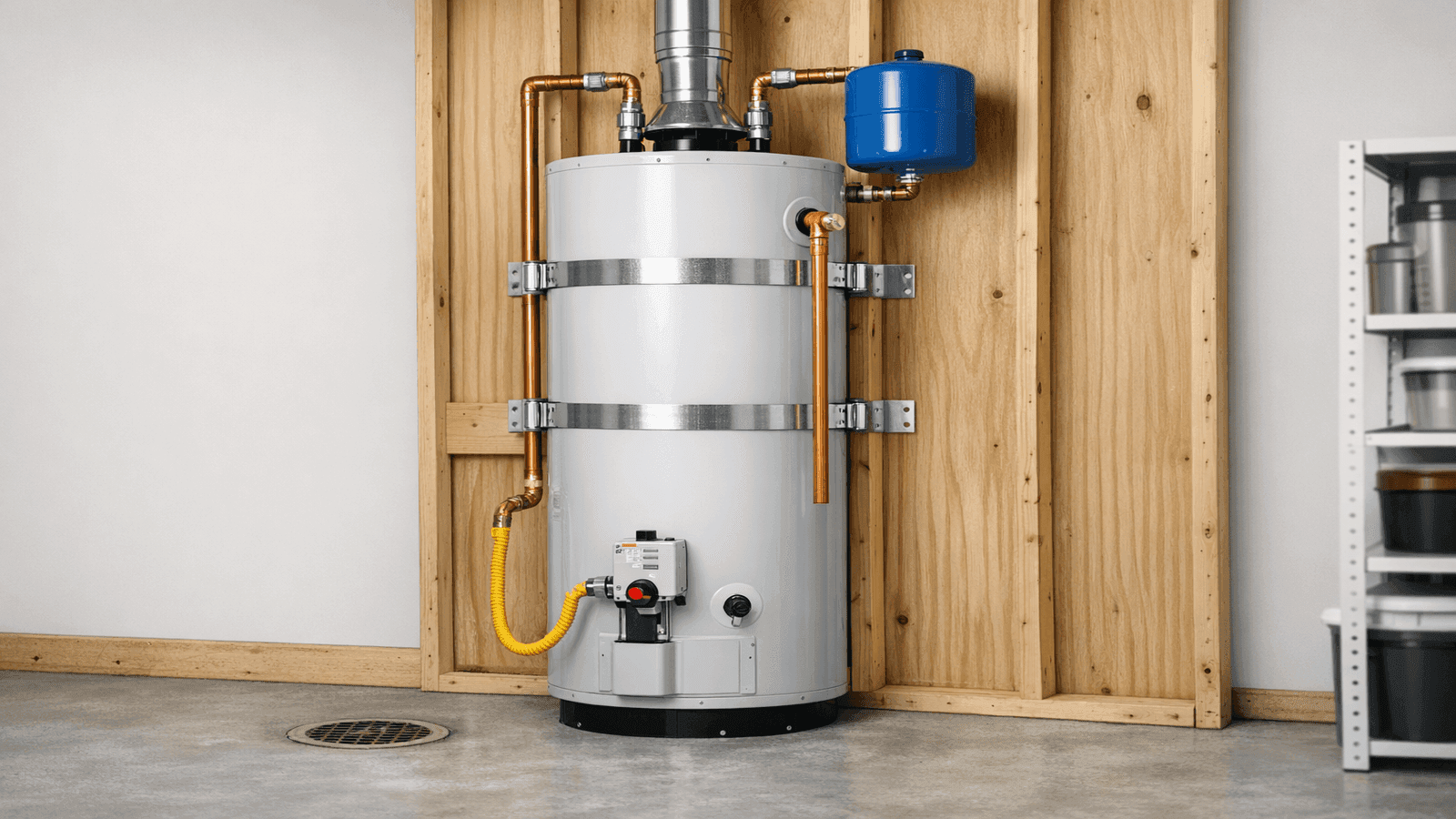
Photo: Finished water heater installation showing PRV valve, expansion tank, copper supply lines with dielectric unions, and seismic strapping
Full Cost Breakdown
Get quotes from top-rated pros.
| Item | Tank (Gas) | Tankless (Gas) | Tank (Electric) |
| Unit cost | $500–$900 | $800–$1,800 | $400–$800 |
| Labor | $150–$450 | $500–$1,200 | $100–$300 |
| Permit fee | $50–$200 | $75–$250 | $50–$200 |
| Expansion tank | $100–$230 | $100–$230 | $100–$230 |
| Gas line upgrade | N/A | $200–$600 | N/A |
| Panel/circuit upgrade | N/A | N/A | $0–$2,500 |
| Total range | $800–$1,780 | $1,675–$4,080 | $650–$4,030 |
Always get three quotes. Labor rates vary 30–40% within the same city. A quote under $150 for labor on a gas unit is a red flag; that plumber is likely skipping steps or not pulling a permit.
The licensed plumbers in our NearbyHunt network report that expansion tank requirements have caught more homeowners off guard than any other line item in 2025 and 2026, with many quotes jumping $150–$230 after the plumber discovers a PRV on the main line that the homeowner was unaware of.
Real Installation Story
David Chen in Frisco, Texas, called Michael after his 12-year-old 40-gallon gas water heater started making rumbling noises. When Michael arrived, he found the tank had significant sediment buildup from hard DFW water: over three inches of mineral deposits coating the heating element. The unit was beyond flushing. Michael replaced it with a 50-gallon high-efficiency model, added a thermal expansion tank (required by Frisco code because the home had a PRV on the main line), and installed a new drip leg on the gas line. Total cost: $1,340 installed. David has had zero issues in 18 months. Hard water areas like North Texas need annual flushing -- it is the single biggest factor in water heater longevity.
Lifespan, Maintenance, and ROI
A maintained tank heater lasts 8–12 years. Annual maintenance (flushing sediment, testing the PRV, and inspecting the anode rod) extends life by 2–3 years. See the water heater maintenance guide for the full process. Tankless units last 15–20 years with annual descaling in hard-water areas.
Tankless systems break even on energy savings in 7–10 years for average households. High-usage homes (86+ gallons per day) see only 8–14% savings, extending break-even to 12–15 years. For ongoing plumbing maintenance beyond the water heater, a whole-house inspection every 2–3 years prevents emergency replacements.
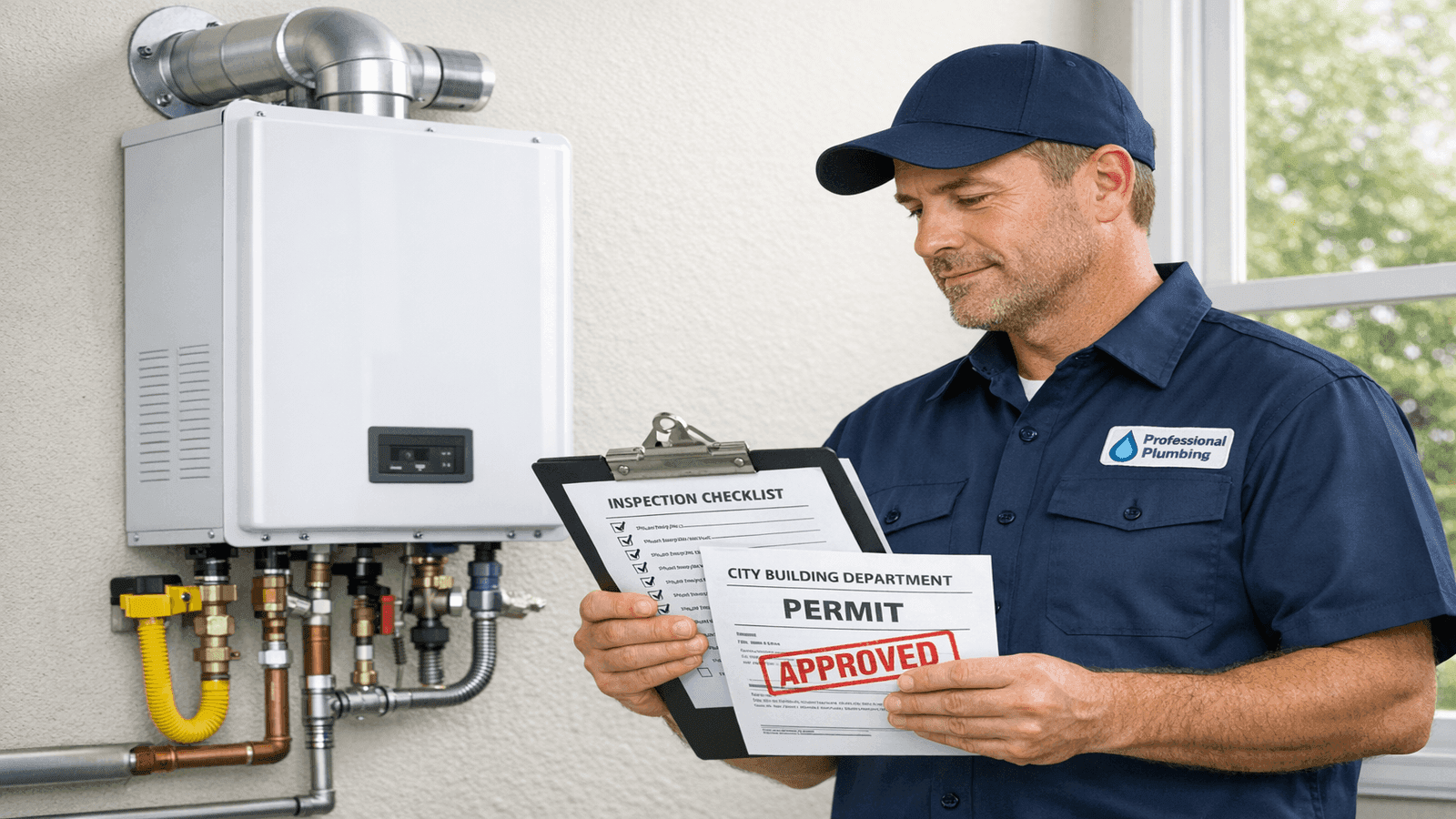
Photo: Licensed master plumber in uniform reviewing installation checklist beside newly installed tankless water heater mounted on exterior wall
When to Call a Plumber
Gas work requires a licensed plumber in nearly every state. Hire a pro for any tankless installation, gas or venting work, and homes with older galvanized or polybutylene piping where disturbing connections creates new leaks. Call immediately if you see:
- Rust-colored water at hot taps (tank liner failing)
- Water pooling beneath the unit (tank breach or fitting failure)
- Rumbling or banging during heating (severe sediment buildup)
- Unit over 10 years old with recurring issues
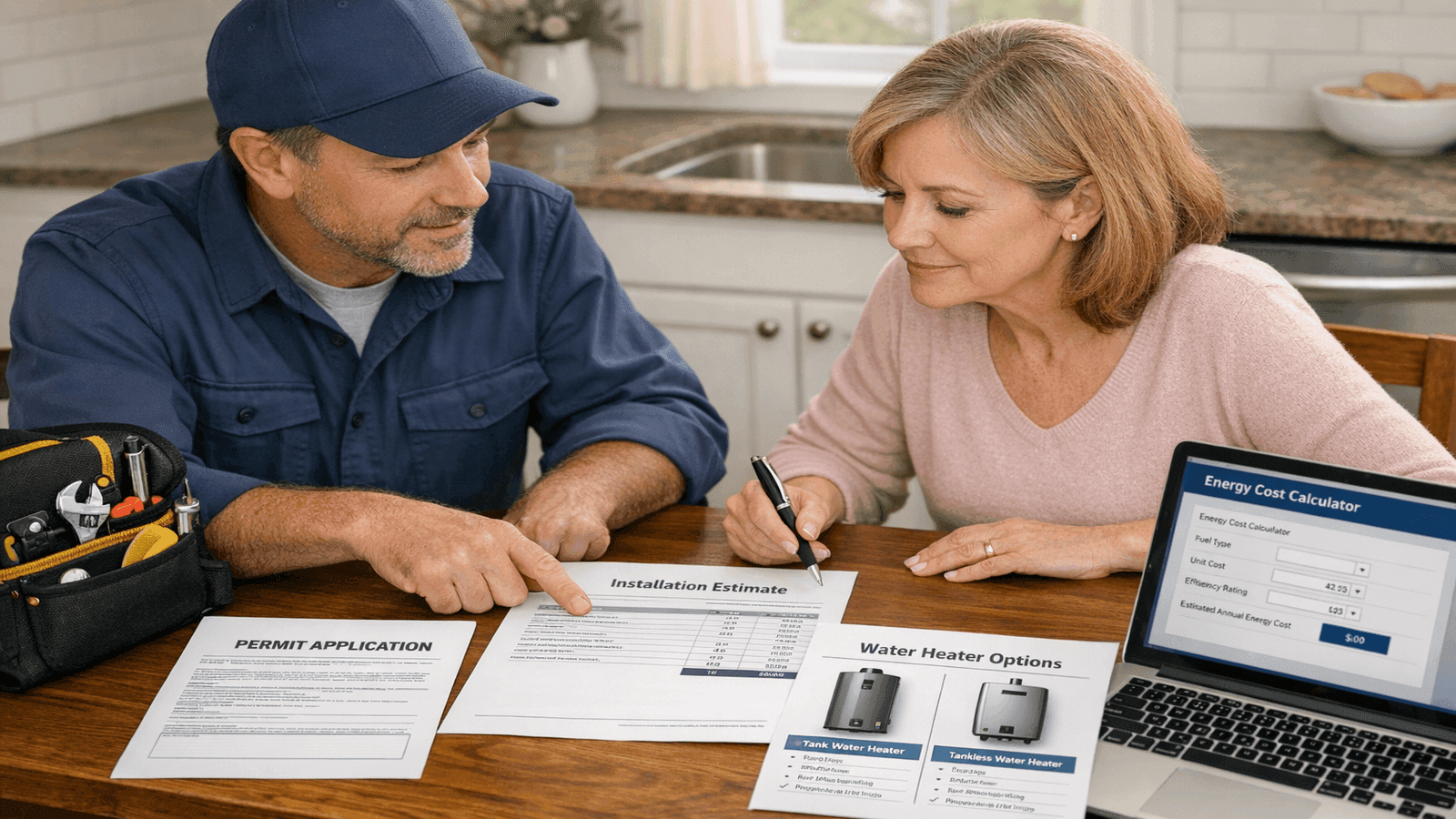
Photo: Homeowner and plumber reviewing permit documentation and water heater installation quote at kitchen table, inspection checklist visible
Conclusion
Water heater installation in 2026 involves more code complexity than most homeowners expect: permits, expansion tanks, gas line sizing, venting categories, and electrical capacity all affect scope and budget. Tank units are the practical choice for large households and tight budgets. Tankless systems offer compelling long-term savings for smaller households staying in the same home for 10+ years. Either way, pull the permit, hire a licensed plumber for gas work, and schedule the inspection.
Disclaimer: This article is for informational purposes only. Water heater installation involves gas lines, high-voltage electrical connections, and pressurized plumbing systems. Always hire a licensed plumber or contractor for installations in your jurisdiction, and obtain all required permits before beginning work. Local codes vary; consult your municipal building department for requirements specific to your location.
Sources & References
- U.S. Department of Energy: Tankless or Demand-Type Water Heaters
- Forbes Home: Water Heater Installation Cost 2026
- This Old House: Water Heater Installation Cost 2026
- Bob Vila: How Much Does Water Heater Installation Cost?
- Plumbing-Heating-Cooling Contractors Association (PHCC): Industry Pricing Data (2026)
- Western Rooter & Plumbing: Expansion Tank Requirements California 2026
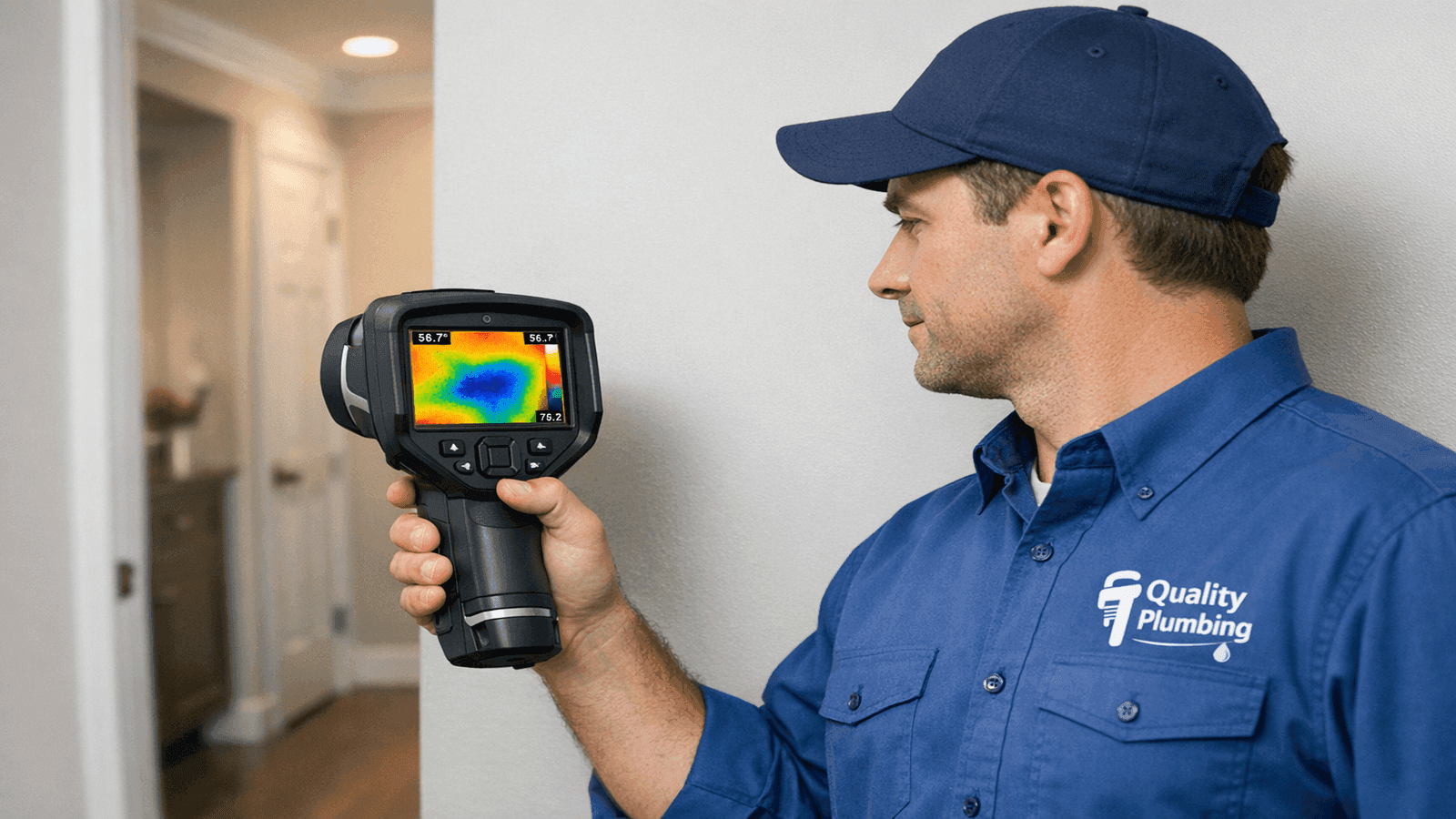

Michael Jennings is a licensed master plumber & water systems specialist with over 18 years of hands-on experience in residential and commercial plumbing, serving clients across California and Texas. At NearbyHunt, he shares practical advice on pipe installations, water heater maintenance, and home plumbing upgrades. Michael has helped thousands of homeowners prevent costly water damage and improve water efficiency through modern plumbing solutions.

Robert is a licensed master plumber with over 20 years of experience serving both residential and commercial clients across the Midwest. Specialising in advanced plumbing systems and sustainable water technologies, Rob brings deep technical insight and hands-on expertise to every project. As a reviewer for NearbyHunt, he ensures all plumbing content reflects the highest standards of safety, compliance, and practicality.