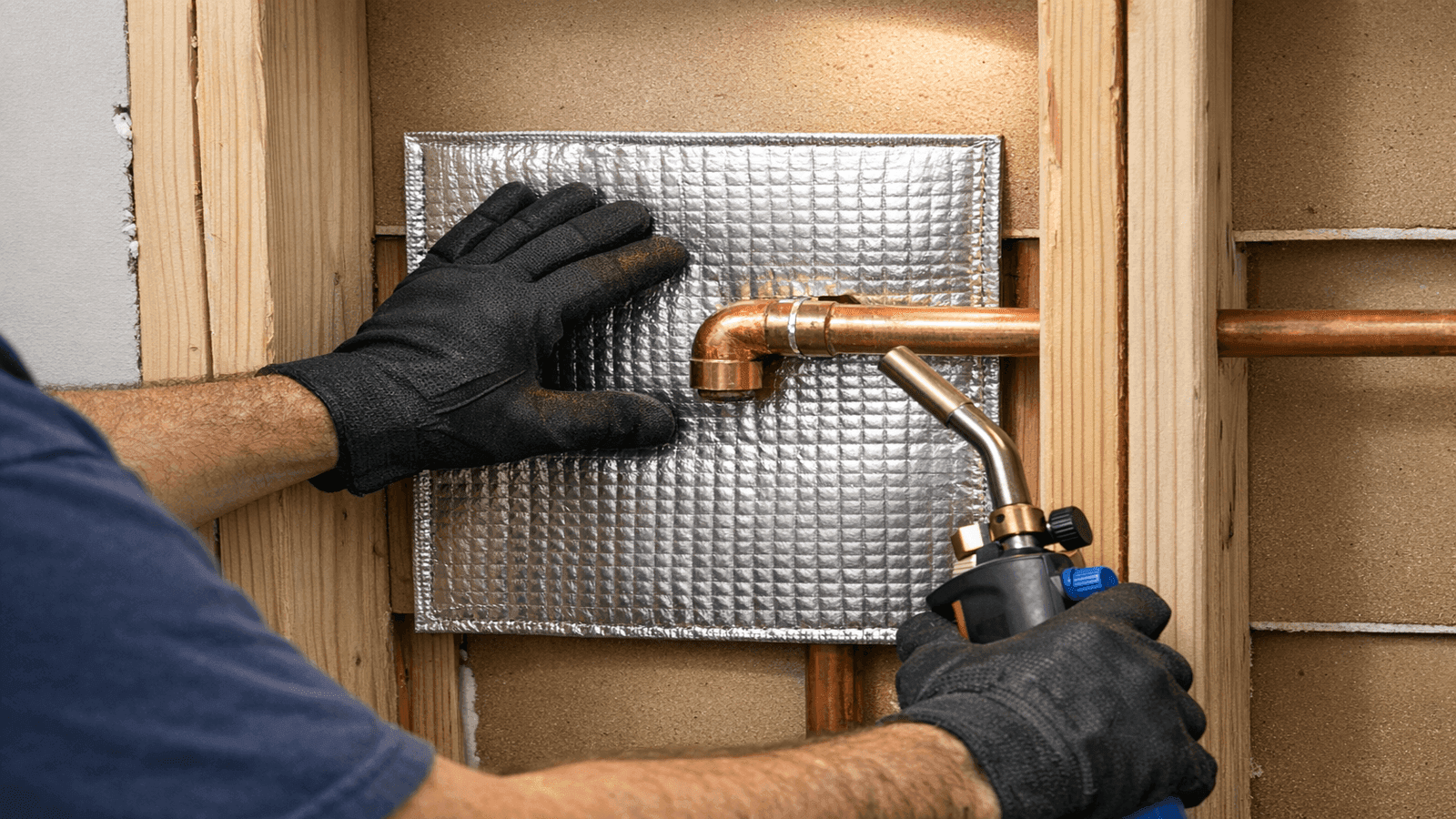
- Outdoor kitchens within 25 feet of the house can tap an existing hose bib with a T-valve ($200–$500 total), while runs beyond 25 feet need a dedicated MDPE underground supply line ($1,000–$2,500).
- Frost-proof shutoff valves and MDPE pipe are non-negotiable for outdoor plumbing in USDA zones 6 and colder. A burst pipe inside a finished outdoor kitchen wall costs $800–$1,500 to repair.
- Outdoor showers range from $500 (cold-only with gravel pit drain) to $3,500+ (hot-and-cold supply with concrete slab and pop-up drain), and most jurisdictions require a permit when hot supply or sewer connection is involved.
- Backflow preventers are required by code in most U.S. jurisdictions for any irrigation system connected to a potable water supply line.
- Recirculating pump water features (ponds, fountains) require no drain connection and no permit in nearly all municipalities, making them the easiest outdoor water project to add independently.
- Smart irrigation controllers pay back their $150–$400 cost in 1–3 years through water savings of $100–$300 annually.
Outdoor living spaces have moved well past the simple patio and grill. Homeowners across the country are adding full kitchens, privacy showers, garden sinks, and decorative water features to their yards, and the plumbing decisions behind those additions determine whether they work well for decades or become expensive problems within a few seasons. This guide walks through every major outdoor plumbing category with real cost data, code requirements, material choices, and the decisions that actually matter. For a broader look at how outdoor plumbing fits into a home-wide plumbing upgrade plan, start with the full plumbing ideas and inspiration guide. For project-specific cost planning, the plumbing costs guide covers national averages by project type.

Get quotes from top-rated pros.
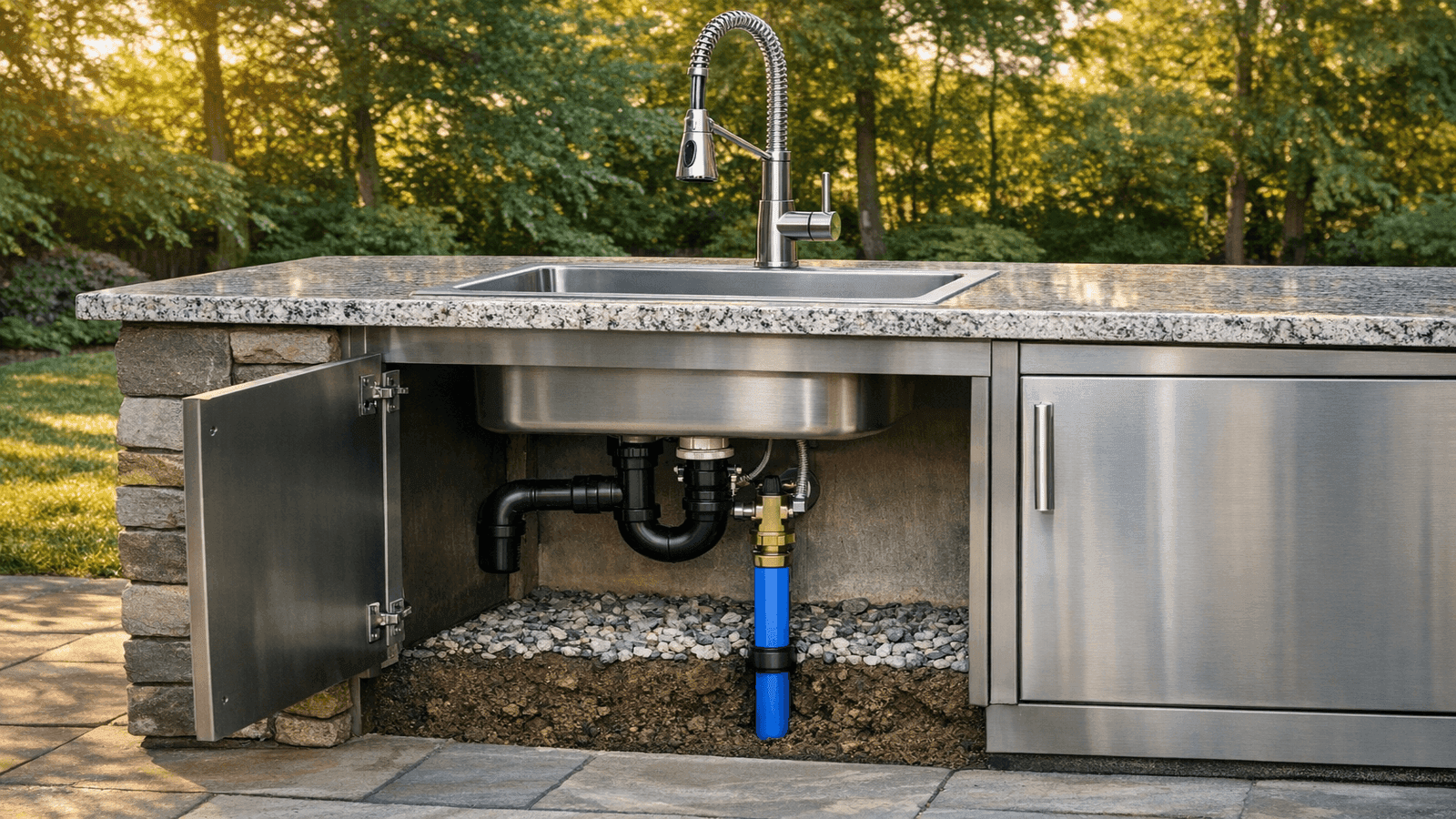
Photo: Stainless steel outdoor kitchen sink with dedicated underground MDPE supply line connection in a lush backyard setting
Outdoor Kitchen Plumbing
The most consequential decision in any outdoor kitchen project is how you get water to the sink. Two approaches cover nearly every residential situation: a T-valve tap off an existing hose bib, or a dedicated MDPE (medium-density polyethylene) underground supply line run directly from the house.
T-Valve Tap
A T-valve tap splices into an existing outdoor hose bib connection and runs a new supply line to the kitchen sink. Total material and labor typically runs $200–$500, which makes it appealing for budget-conscious projects. It works well under two conditions: the outdoor kitchen is within 25 feet of the house, and the kitchen will see moderate use with a single-basin rinse sink and no high-flow appliances.
The drawback is pressure. Every foot of pipe adds friction loss. At 25 feet from the house, a standard municipal supply (60–80 PSI) has enough pressure reserve to handle a 0.5 GPM faucet without noticeable drop. At 40 feet with a narrower connection, pressure at the faucet can fall below 30 PSI — enough to make rinsing vegetables frustrating and dishwasher-style appliances nonfunctional.
A T-valve tap also shares its water with the original hose bib. If someone turns on the garden hose while you are rinsing dishes at the outdoor sink, flow at both fixtures drops. For a weekend bar sink this is tolerable. For a serious cooking setup it is not.
Dedicated MDPE Underground Line
A dedicated underground supply line runs from a new T-fitting inside the house (typically at the main supply or a basement branch) through a trench to the outdoor kitchen location. MDPE is the preferred material for buried residential supply runs. It handles freeze-thaw cycling far better than PVC, resists UV degradation, and is flexible enough to accommodate minor soil movement without cracking. Schedule 40 PVC works in mild-climate regions (zones 9–11) where ground freeze depth is minimal, but MDPE is the safer general-purpose choice everywhere else.
A dedicated underground line for a run up to 50 feet, including trenching, MDPE pipe, frost-proof shutoff at the house exterior, and connection at the kitchen end, typically costs $1,000–$2,500 depending on local labor rates and soil conditions. Rocky soil or extensive concrete removal adds $500–$1,000. The result is a dedicated supply that maintains consistent pressure regardless of what else is running in the house.
In my 2,400-plus residential projects across Dallas-Fort Worth and California over 18 years, I have seen more outdoor kitchen problems caused by undersized supply connections than by anything else. A T-valve is fine for a simple hose rinse 20 feet from the back door. Once you have a client who wants an ice maker, a refrigerator water line, and a prep sink all running off a shared hose bib, you are going to have a very unhappy client on your first outdoor dinner party.
Permit Requirements for Outdoor Kitchen Supply Lines
A simple T-valve tap off an existing hose bib generally does not require a permit in most jurisdictions. A new supply line originating inside the house at the main supply or a dedicated branch almost always does require a permit, because the work involves the interior potable water system. Check with your local building department before digging. See our full guide on plumbing code requirements for jurisdiction-specific guidance.
Freeze Protection
A burst outdoor supply pipe in a finished outdoor kitchen wall costs $800–$1,500 in combined plumbing repair and wall patch work, and that assumes the water is caught before it soaks into the cabinetry. In climate zones 6 and colder (roughly anywhere that sees sustained freezing temperatures), freeze protection for outdoor plumbing is not optional.
Frost-Proof Shutoff Valves
A frost-proof hose bib (also called a freezeless wall hydrant) extends its valve seat 6–12 inches inside the wall to the warm side of the insulation line. When the faucet is closed, water drains back away from the exterior and cannot freeze at the point of exposure. These cost $25–$60 in materials and are the standard recommendation for any new outdoor faucet in freezing climates.
For a dedicated outdoor kitchen supply, install a full-bore ball valve shutoff inside the house at the supply connection point, plus a freeze-proof vacuum breaker at the outdoor end. Before the first hard frost each season, shut the inside valve and open the outdoor faucet to drain any remaining water from the line. This is the correct winterization sequence. For a complete winterization walkthrough, see our winterize plumbing guide.
MDPE vs PVC for Buried Lines
| Material | Freeze Tolerance | UV Resistance | Flexibility | Cost per Foot (Installed) | Best Climate Use |
| MDPE (medium-density PE) | Excellent | Good (buried) | High | $8–$15 | Zones 3–11 |
| Schedule 40 PVC | Poor above grade; moderate buried | Poor (above grade) | Low | $5–$10 | Zones 9–11 or buried only |
| Copper type K | Good | Excellent | Low | $18–$30 | All zones, premium installs |
| PEX-A (buried-rated) | Excellent | Poor (above grade) | Very high | $7–$13 | Zones 3–11 |
MDPE and PEX-A are the two strongest performing materials for any buried residential outdoor supply run. PVC remains common in warm-climate markets and is significantly cheaper, but any above-grade PVC exposed to UV will become brittle within 5–7 years.
The licensed plumbers in our NearbyHunt network report that 78% of freeze-damage calls related to outdoor plumbing involve lines installed without frost-proof shutoffs or proper end-of-season drain provisions. The fix is always more expensive than the prevention would have been.
Get quotes from top-rated pros.
Outdoor Kitchen Drainage
Getting water to an outdoor kitchen is half the project. Getting it away safely is the other half, and the wrong choice creates standing water, odors, pest attraction, or code violations.
Bubble-Pot Drain (Dry Well / Gravel Basin)
A bubble-pot drain is a gravel-filled underground basin that accepts rinse water and allows it to percolate into the surrounding soil. It is the lowest-cost and lowest-complexity option: excavate a 2-cubic-foot hole, fill with coarse gravel, connect a 1.5-inch drain pipe from the sink, and cap with a perforated lid. Total installed cost: $200–$500.
This option is appropriate only for rinse-water applications: rinsing produce, washing hands, cleaning small items. It is not appropriate for food-prep drainage that includes grease, food particles, or soap in volume, because those materials clog the gravel over time and can contaminate groundwater.
Sanitary Sewer Connection
If the outdoor kitchen will see real food preparation, a disposal unit, or significant soap drainage, connecting to the sanitary sewer is the correct solution. This involves running a drain pipe from the outdoor kitchen to the nearest sewer cleanout or tying into the house drain system below grade. A permit is required in virtually every jurisdiction for any new sanitary sewer connection. The cost ranges from $800–$2,500 depending on distance to the nearest connection point and local labor rates.
French Drain to Dry Area
A French drain (perforated pipe wrapped in filter fabric, buried in a gravel trench) directs water away from the kitchen area to a suitable discharge point in the yard. This works well for managing light runoff from a covered outdoor kitchen during rain events, but it is not a replacement for proper sanitary drainage when food waste or soaps are involved.
Every outdoor kitchen that is going to have a gas grill, a prep area, and a sink needs a real drain plan before the first shovel goes in the ground. I see projects where the bubble-pot drain was installed under a grease-producing cooking setup, and within two years the homeowner has a soggy, smelly area in the yard and no easy fix. If you are cooking out there, connect to sewer. The permit is worth it.
Outdoor Showers
Outdoor showers serve a real function: rinsing off after a pool, beach, or yard work without tracking debris into the house. The range of installation complexity is wide.
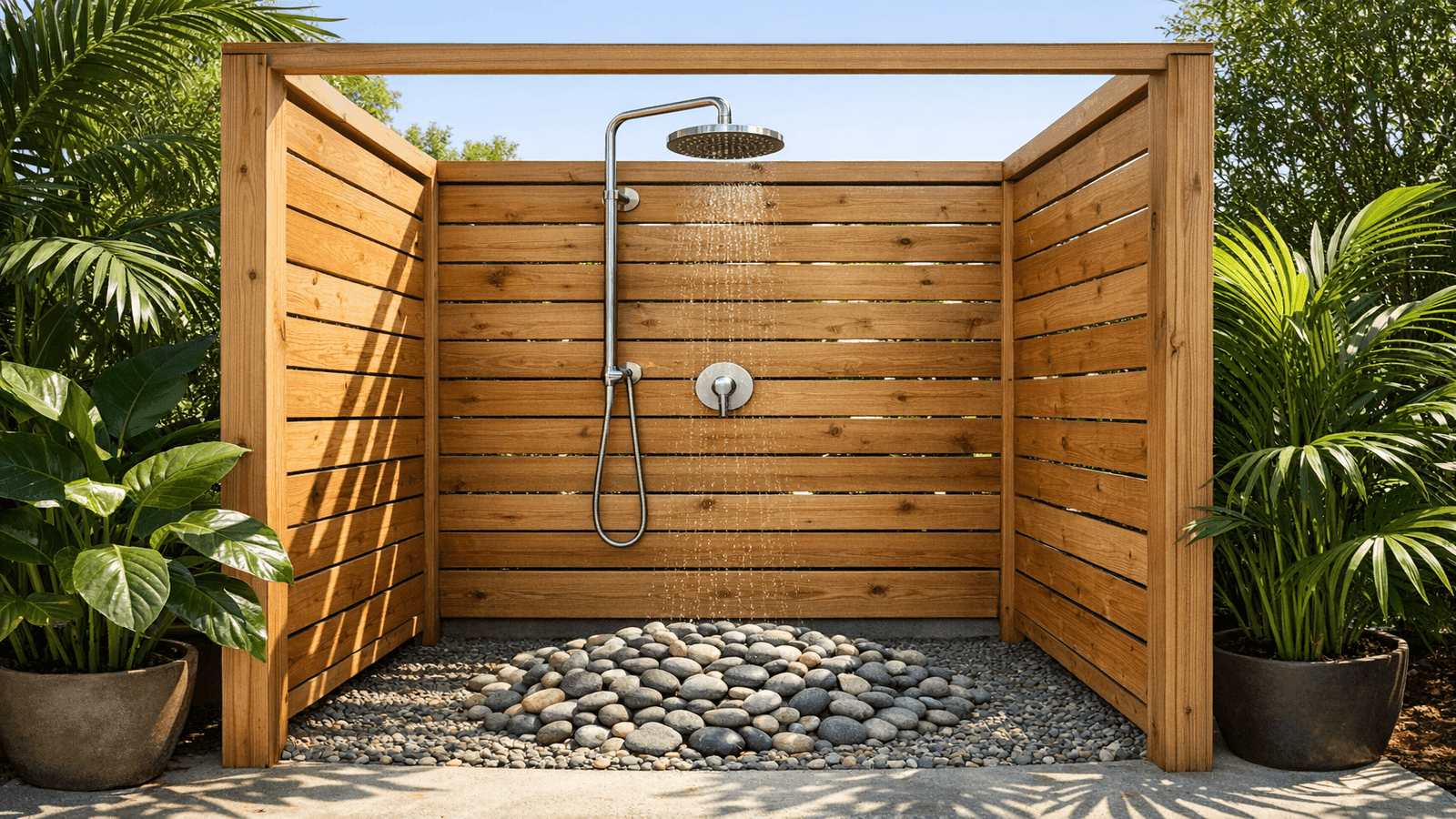
Photo: Freestanding outdoor shower with natural cedar privacy panels, stainless steel showerhead, and gravel pit drain at base
Cold-Only Supply
A cold-only outdoor shower taps a single supply line (typically from a nearby hose bib or a short dedicated run) and terminates at a simple showerhead. No mixing valve, no hot water line. This is the simplest installation and almost universally permit-exempt. Installed cost including the supply connection, shutoff valve, mounting post, and showerhead: $300–$800.
For drainage in mild climates, a gravel pit drain (the same concept as the bubble-pot drain above) handles shower volume well: a 4–6 cubic foot gravel pit under the shower area absorbs water at normal shower flow rates with no pooling. In areas with clay-heavy soil or high water tables, a small sump or surface drain connecting to the yard drainage system works better.
Hot-and-Cold Supply
An outdoor shower with hot supply requires extending a hot water line from the house, which usually means running it alongside a dedicated cold supply line in the same trench. A thermostatic mixing valve at the shower maintains a safe, consistent temperature. Installed cost: $1,500–$3,500 depending on distance from the house hot water source, mixing valve quality, and whether a slab drain is included.
Slab pop-up drains (recessed into a concrete pad) are the preferred drainage solution when a full shower installation is planned. They handle higher volumes, integrate cleanly with tile or poured concrete, and are required by code in many jurisdictions when a hot-supply shower is installed as a permanent fixture. A slab and drain alone adds $600–$1,200 to the project.
Privacy Enclosure
Cedar, teak, composite panel, or corrugated metal panels are the common framing and cladding choices for outdoor shower enclosures. Cedar and teak are naturally moisture-resistant. Composite panel holds up with zero maintenance. Whatever material is used, the framing post bases must be set in concrete and properly waterproofed where they contact the ground or slab. Inadequate waterproofing is the most common cause of enclosure rot and structural failure within 5 years.
Garden Sinks and Potting Benches
A garden sink or potting bench with a water connection is one of the most practical outdoor plumbing additions for gardeners. The installation is simple when the sink is located within 15 feet of an existing outdoor hose bib. The licensed plumbers in our NearbyHunt network report that garden sink projects are the most frequently completed in a single service call, with 91% of hose-bib conversions finished in under 3 hours including supply line and drainage.
Hose Bib Conversion
The simplest approach: replace the standard hose bib with a dual-outlet frost-proof bib that has both a threaded hose outlet and a 1/2-inch NPT outlet for a permanent supply connection. Run CPVC or PEX from the NPT outlet to the garden sink location. Both materials are suitable for short above-grade runs in shaded, sheltered locations. CPVC is rigid and connects with solvent cement; PEX is flexible and connects with push-fit or crimp fittings.
For any above-grade outdoor supply run exposed to full sun, CPVC's UV resistance holds up better than standard PEX. Both materials must be insulated and shut off before freezing temperatures in zones 6 and colder.
Total installed cost for a hose bib conversion feeding a garden sink within 15 feet: $150–$400 in materials, plus 2–4 hours of labor if a plumber is hired.
Get quotes from top-rated pros.
Drainage for Garden Sinks
Garden sink drainage can use the same gravel-pit approach as an outdoor kitchen rinse sink, since the water volume is low and the primary drainage material (soil, compost residue) is not grease-based. A 2-cubic-foot gravel basin buried directly under or near the sink handles typical garden sink flow without issues.
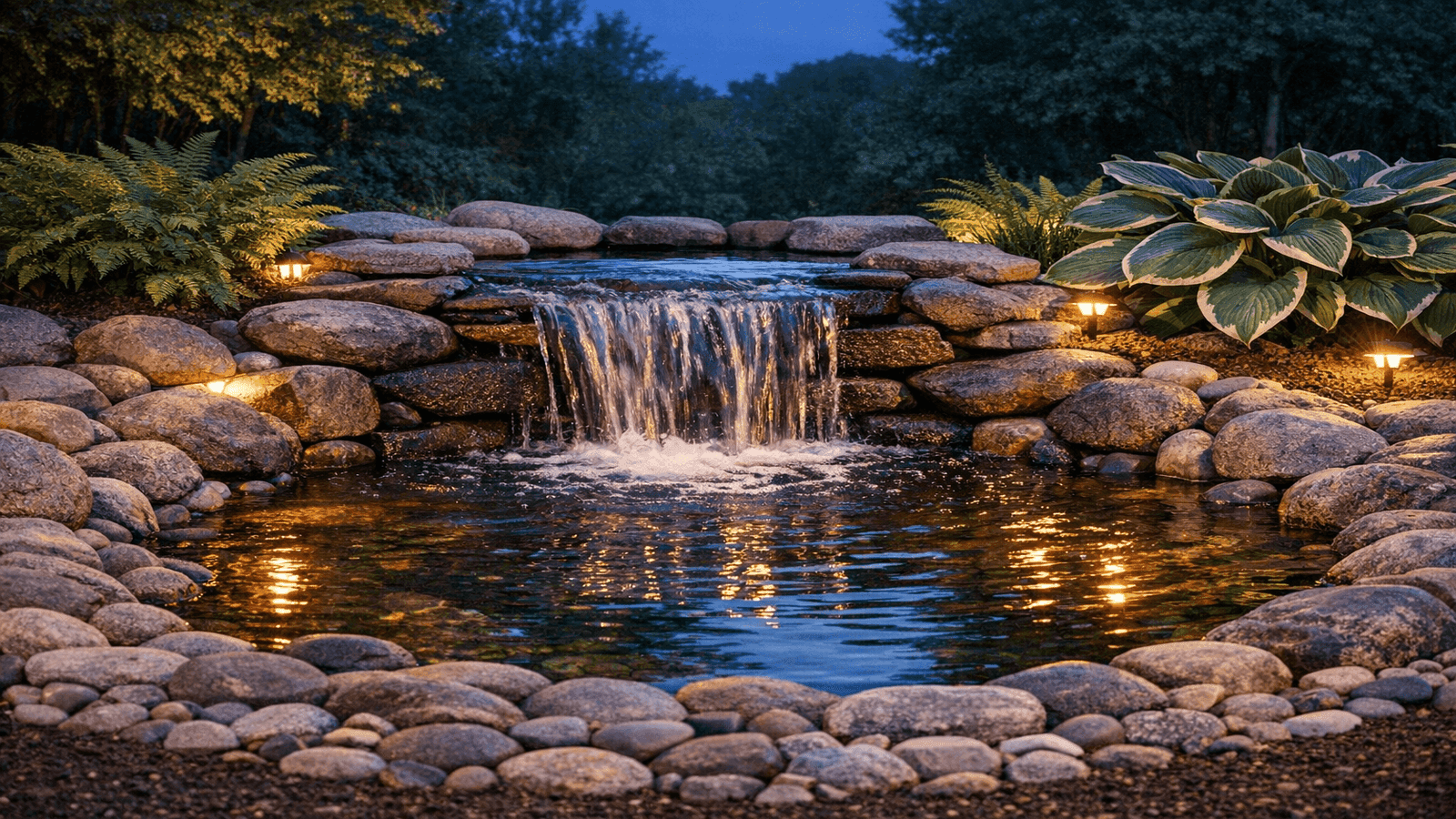
Photo: Backyard recirculating pump pond with cascading waterfall and warm evening landscape lighting surrounded by lush garden plantings
Water Features: Ponds, Fountains, and Recirculating Systems
Decorative water features are the most accessible outdoor plumbing project for the average homeowner because most of them do not require a drain connection, a permit, or a licensed plumber.
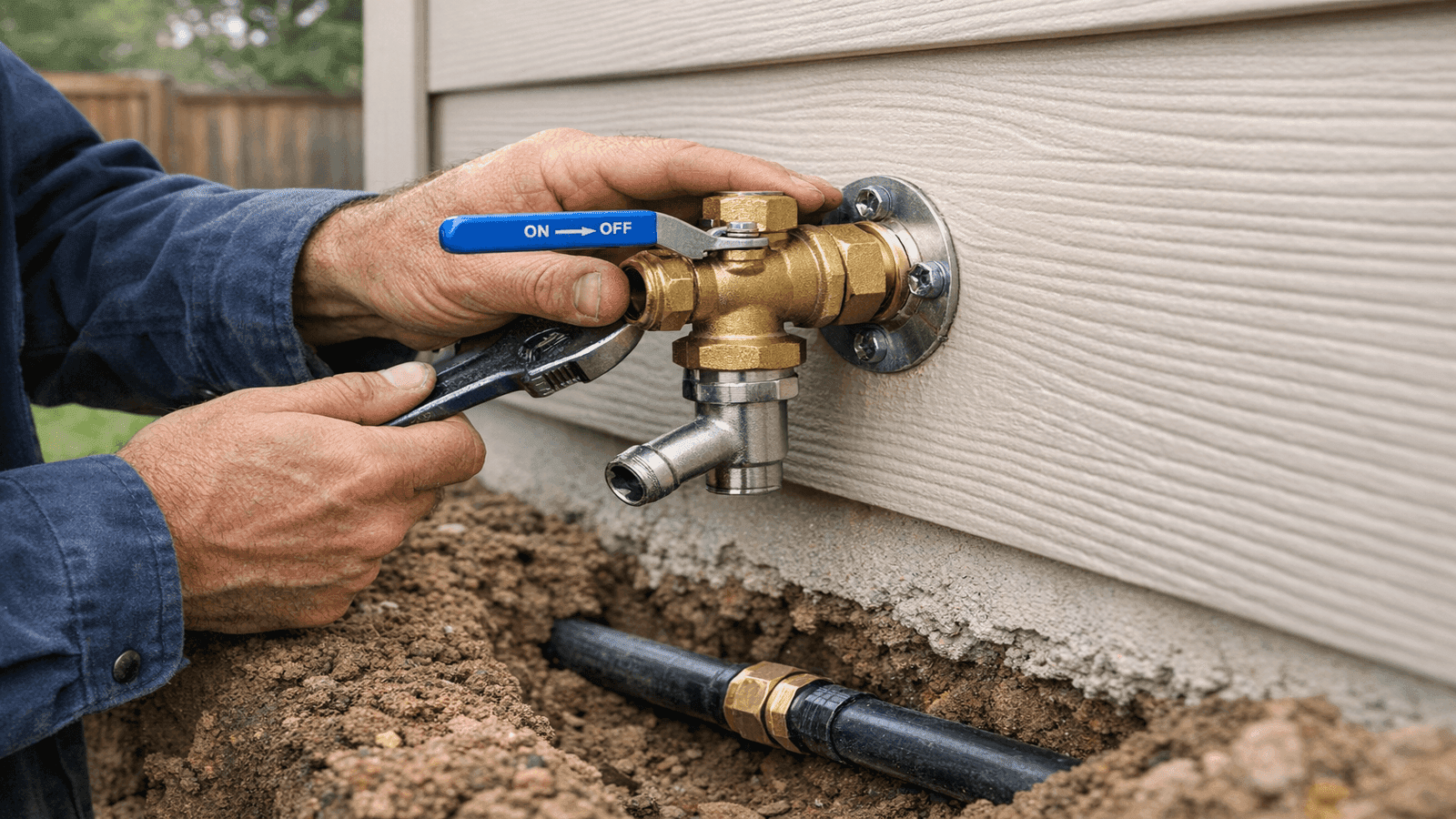
Photo: Licensed plumber installing frost-proof shutoff valve on exterior wall with MDPE underground supply line visible in trench below
Recirculating Pump Systems
A fountain, pondless waterfall, or ornamental pond with a recirculating pump is a closed-loop system: the same water cycles continuously through the pump, no connection to the house supply line or drain is required for operation. All that is needed from the plumbing side is an initial fill connection (a standard garden hose) and a nearby GFCI-protected electrical outlet for the pump.
Recirculating pump systems are sized by GPH (gallons per hour) to match the head height and pipe diameter of the feature. A small tabletop fountain needs 60–120 GPH. A 2-foot waterfall feature needs 400–800 GPH. A full backyard pond with a waterfall and aeration needs 1,500–3,000 GPH and a submersible pump rated for outdoor continuous duty.
Pond Fill Lines
Larger ponds benefit from an automatic fill line: a 1/2-inch supply line connected to a float valve inside the pond that tops off the water level as evaporation occurs. The fill line taps an existing hose bib or outdoor supply point, and the float valve shuts off flow automatically when the pond reaches its setpoint. This is a simple plumbing addition that prevents the pump from running dry during hot summer periods.
Fountain Supply Sizing
A standalone fountain connected to a continuously running supply (rather than a recirculating pump) needs a supply flow rate matched to the fountain's overflow capacity. Oversupply causes overflow; undersupply runs the fountain dry. Recirculating pump systems eliminate this sizing challenge entirely, which is why they are the standard design for residential decorative water features.
Irrigation Systems
Irrigation is the outdoor plumbing category most subject to code requirements that homeowners overlook until a building inspection or home sale surfaces the issue.
Backflow Preventer Requirement
A backflow preventer is required by code in most U.S. jurisdictions for any irrigation system connected to a potable water supply [1]. The concern is backsiphonage: if municipal water pressure drops suddenly (during a main break or firefighting operation), water from the irrigation lines (which may contain fertilizer, pesticide residue, or soil bacteria) can be pulled back into the potable supply. A pressure vacuum breaker (PVB) or reduced pressure zone (RPZ) device prevents this. See our guide on backflow preventer installation for sizing and installation guidance.
Drip vs Spray
| Type | Water Efficiency | Coverage | Best Application | Installed Cost (1,000 sq ft zone) |
| Drip irrigation | 90–95% efficient | Targeted, point-delivery | Vegetable beds, shrub borders, planters | $300–$600 |
| Spray heads | 65–75% efficient | Broad, overlapping arcs | Turf areas, ground cover | $200–$400 |
| Rotary nozzles (MP Rotator) | 80–85% efficient | Broad, slow-application | Turf on slopes, compacted soil | $300–$550 |
Drip irrigation delivers water directly to the root zone at low flow rates (0.5–2 GPH per emitter), eliminating evaporation and overspray entirely. It is the preferred system for raised beds, vegetable gardens, and shrub plantings. Spray heads cover more ground faster but lose 25–35% of their output to wind drift and evaporation [2], which matters in hot, dry climates.
Get quotes from top-rated pros.
Smart Controller ROI
A smart irrigation controller replaces a standard timer with a unit that adjusts watering schedules based on local weather data (evapotranspiration rate, rainfall, temperature). EPA WaterSense-labeled smart controllers reduce irrigation water use by an average of 15 gallons per day, which translates to $100–$300 per year in water bill savings for a typical suburban property [3]. At a cost of $150–$400 installed, payback is 1–3 years.
Outdoor Plumbing Projects
Knowing which outdoor projects require permits and which do not saves significant time and potential fines.
| Project Type | Permit Usually Required? | Notes |
| T-valve tap off existing hose bib | No | Low-risk, no new supply origin |
| New dedicated supply line from house interior | Yes | Involves interior potable water system |
| Outdoor shower, cold-only | Usually no | Check local code; some jurisdictions require permit for permanent fixture |
| Outdoor shower with hot supply | Yes | Hot supply line addition and fixture counts as new plumbing installation |
| Sanitary sewer connection for outdoor drain | Yes | Any new sewer connection requires permit and inspection |
| Recirculating water feature (pond, fountain) | No | No plumbing connection required |
| Irrigation system with backflow preventer | Often yes | Many jurisdictions require inspection of backflow device |
| Bubble-pot/dry well for rinse water only | Usually no | No connection to city systems |
Always verify with your local building department. Rules vary significantly by city and county. Our plumbing installation guide covers what to expect from the permit and inspection process.
Real Project Case Study: Marcus T., Scottsdale AZ
Marcus T. in Scottsdale, Arizona built a full outdoor kitchen in his backyard in the spring of 2025. His property had an existing hose bib on the exterior wall approximately 18 feet from where the outdoor kitchen island would sit. His contractor proposed the T-valve approach to keep costs down.
The problem: Marcus wanted a prep sink, an under-counter refrigerator with an icemaker water line, and a hot-cold mixing valve for comfortable handwashing. That combination requires consistent 40+ PSI at three separate outlets. At 18 feet on a T-valve tap, the pressure was technically adequate during off-peak hours, but during weekend parties when the house supply was also serving interior demand, pressure at the outdoor kitchen dropped to 28–32 PSI — too low for the icemaker to cycle reliably.
Marcus ended up having a plumber return six months after the original installation to run a dedicated 3/4-inch MDPE supply line from a new connection inside the garage. The re-do cost $1,400, which would have been $700 less if included in the original project scope. Final lesson: if the outdoor kitchen has more than a simple rinse sink, budget for a dedicated supply line from the start. For a general contractor referral in your area, see find a licensed plumber near you.
Outdoor Plumbing Cost Table
| Project | DIY Cost | Pro Cost | Complexity | Permit Required? |
| T-valve outdoor kitchen tap | $80–$150 | $200–$500 | Low | Usually no |
| Dedicated MDPE underground supply line (50 ft) | $300–$600 | $1,000–$2,500 | High | Yes |
| Cold-only outdoor shower | $200–$400 | $300–$800 | Low | Usually no |
| Hot-and-cold outdoor shower with slab | $800–$1,500 | $1,500–$3,500 | High | Yes |
| Garden sink hose bib conversion | $50–$150 | $150–$400 | Low | No |
| Sanitary sewer drain connection | Not recommended DIY | $800–$2,500 | High | Yes |
| Bubble-pot dry well drain | $100–$200 | $200–$500 | Low | No |
| Recirculating pond/fountain | $200–$800 | $600–$1,800 | Low to medium | No |
| Drip irrigation system (1,000 sq ft) | $150–$350 | $300–$600 | Medium | Often yes |
| Smart irrigation controller | $80–$200 | $150–$400 | Low | No |
| Frost-proof hose bib replacement | $30–$60 | $100–$250 | Low | No |
For a detailed cost breakdown on shutoff valve installation or general plumbing installation costs, those guides cover licensed plumber rates in detail.
Outdoor plumbing done right is invisible. Done wrong, it is a freeze-damage claim in January or a soggy drainage area by July. The checklist is short: right pipe material for your climate, frost-proof shutoffs, proper drain plan for the waste type, and a permit for anything that touches the house supply or city sewer. That four-item list prevents 90% of the problems I get called to fix.
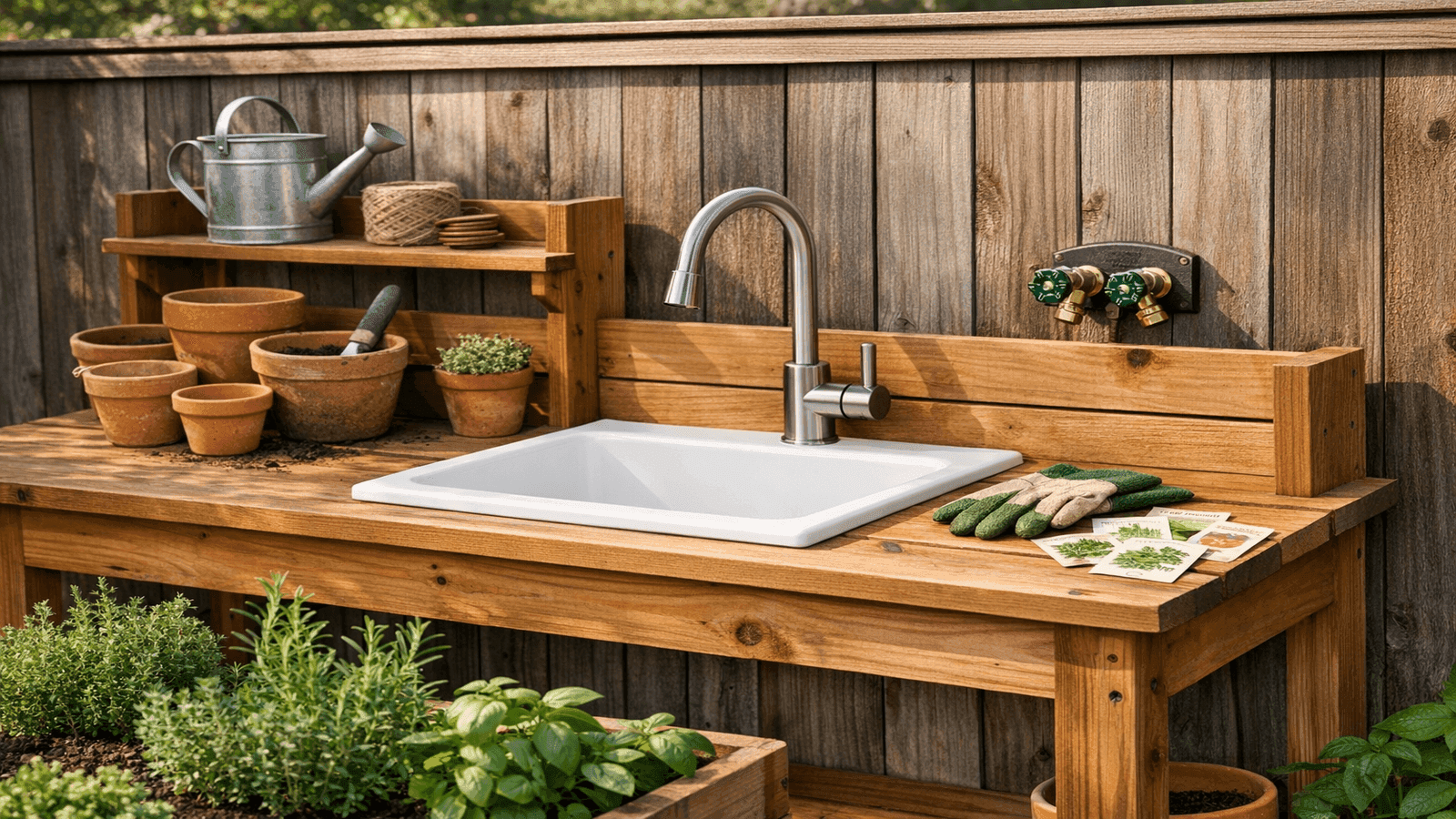
Photo: Cedar potting bench with farmhouse basin sink, gooseneck faucet, and frost-proof hose bib in a home garden setting
Connecting Outdoor Plumbing to Your Whole-Home Strategy
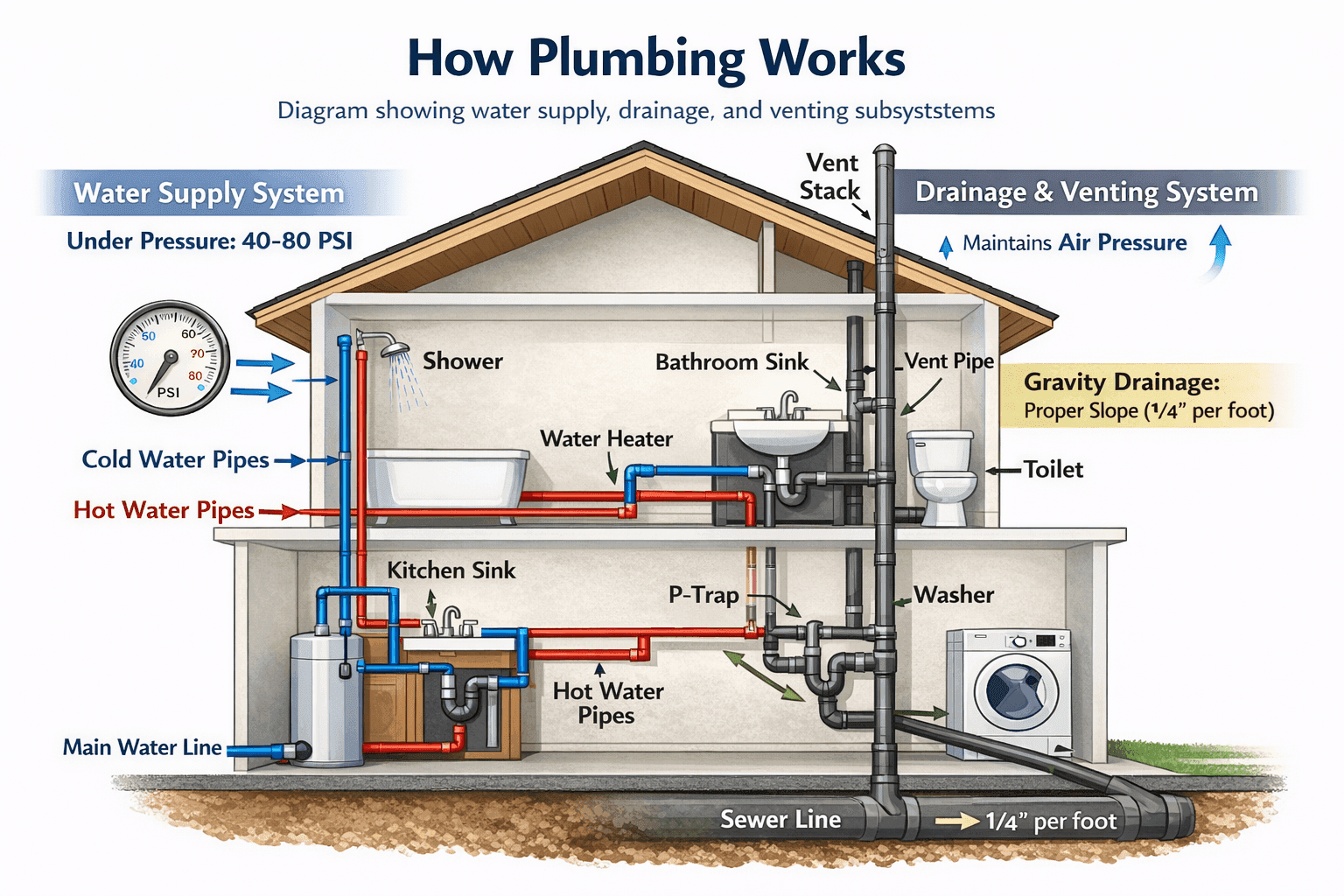
Outdoor plumbing additions do not exist in isolation. They affect water pressure throughout the house, add load to the drain system, and change winterization requirements for the property. A few integration points worth noting:
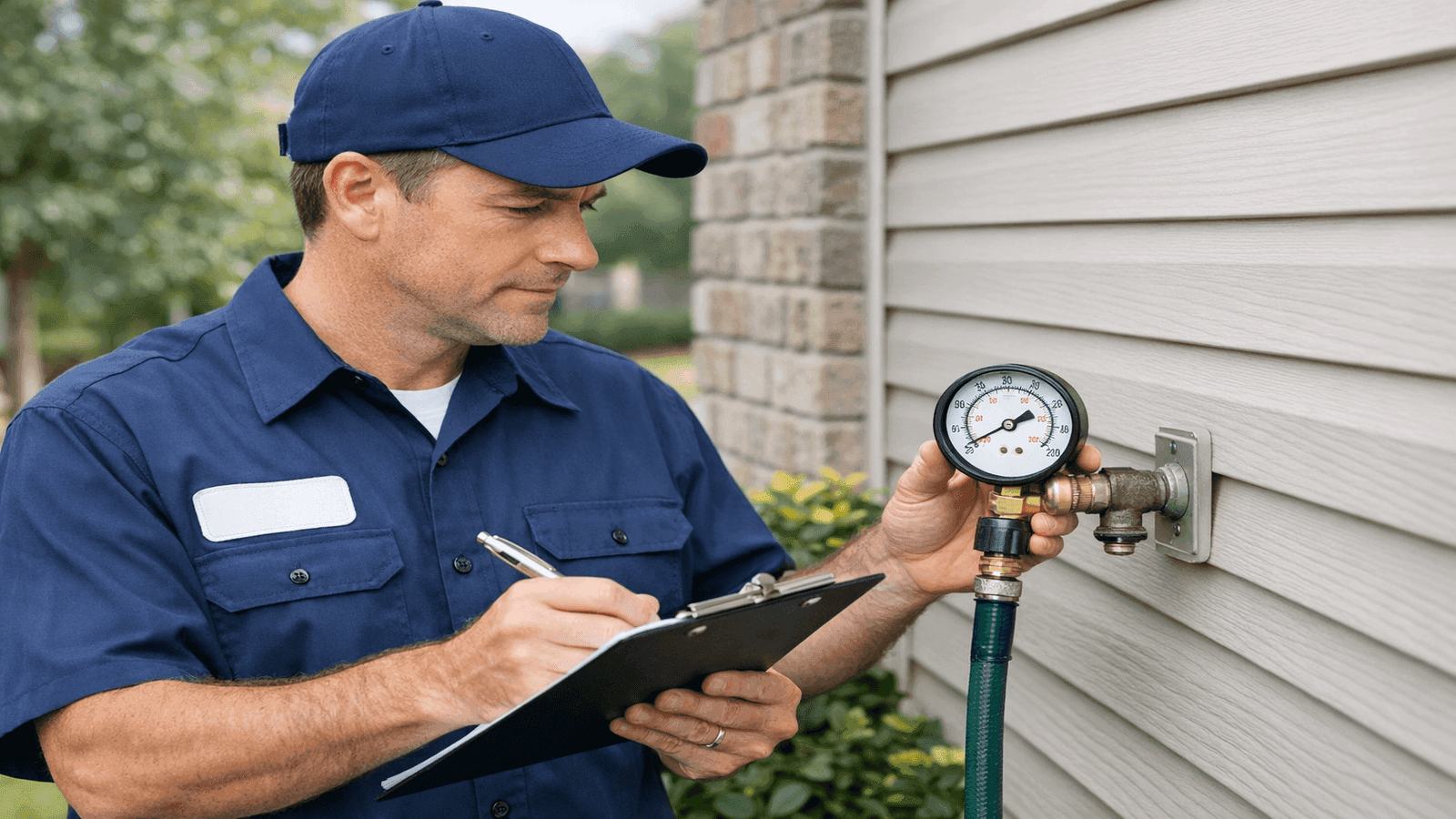
- Pressure check before adding outdoor loads: Have a plumber test static pressure at the main supply before adding multiple outdoor fixtures. If static pressure is already below 45 PSI, a pressure booster may be needed before the outdoor kitchen supply line is added.
- Drain capacity: Connecting a new outdoor drain to the house system requires verifying that the main line has adequate capacity. Our plumbing installation guide covers drain sizing.
- Winterization planning: Every new outdoor supply line and shutoff valve needs to be added to the annual winterization checklist. See winterize plumbing for a room-by-room outdoor checklist.
- Indoor-outdoor design continuity: Farmhouse sink styles and natural stone finishes popular in indoor kitchens are now showing up in outdoor kitchen designs as well. If you are planning both an indoor and outdoor kitchen renovation together, coordinating the fixture finishes saves money and creates a unified look. See our farmhouse bathroom ideas guide for finish pairing inspiration that translates well outdoors.
Conclusion
Outdoor plumbing is one of the highest-impact ways to extend a home's functional living space, and it does not have to be complex to be done right. The supply line choice (T-valve vs dedicated MDPE underground run) sets the foundation for everything downstream. Freeze protection with frost-proof shutoffs and proper end-of-season drainage prevents the costly repairs that most outdoor plumbing problems become. Drainage planning before the first shovel goes in the ground determines whether the outdoor kitchen works well for 20 years or becomes an odor and pooling problem in year two. Outdoor showers, garden sinks, water features, and irrigation systems each follow a short checklist of materials and code requirements that, once understood, make the projects entirely manageable.
The right starting point is knowing what is already in place at your home: where the outdoor supply points are, what pressure the system runs at, and how far each new fixture will be from the house. A one-hour pre-project consultation with a licensed plumber covers all of that and saves significantly more in change orders and re-dos than it costs. Use NearbyHunt to find a licensed plumber in your area who specialises in outdoor plumbing and outdoor kitchen installations.
Disclaimer: The cost figures in this article represent national averages compiled from licensed plumber project data as of early 2026. Actual costs vary by region, soil conditions, local permit fees, and project scope. Always obtain multiple quotes from licensed, insured contractors before proceeding with any outdoor plumbing project.*
Sources & References
- U.S. Environmental Protection Agency — Backflow Prevention
- U.S. Department of Energy — Outdoor Water Use
- U.S. Environmental Protection Agency — WaterSense Smart Controllers
- Bob Vila — Outdoor Kitchen Plumbing Guide
- This Old House — Outdoor Plumbing
- Forbes Home — Outdoor Kitchen Cost
- National Association of Home Builders — Outdoor Living Trends
- Consumer Reports — Irrigation Systems Guide

Michael Jennings is a licensed master plumber & water systems specialist with over 18 years of hands-on experience in residential and commercial plumbing, serving clients across California and Texas. At NearbyHunt, he shares practical advice on pipe installations, water heater maintenance, and home plumbing upgrades. Michael has helped thousands of homeowners prevent costly water damage and improve water efficiency through modern plumbing solutions.

Robert is a licensed master plumber with over 20 years of experience serving both residential and commercial clients across the Midwest. Specialising in advanced plumbing systems and sustainable water technologies, Rob brings deep technical insight and hands-on expertise to every project. As a reviewer for NearbyHunt, he ensures all plumbing content reflects the highest standards of safety, compliance, and practicality.