- RPZ assemblies cost $300 to $700 installed and require annual testing by a certified backflow tester; testing runs $50 to $150 per year.
- Four device types exist for residential use: AVB, PVB, DCVA, and RPZ; the required type depends on the cross-connection hazard level.
- Installation is permit-required and must be performed by a licensed plumber in virtually every U.S. jurisdiction.
- Annual testing is legally required for PVB, DCVA, and RPZ assemblies in most states; missed testing leads to fines and possible water service disconnection.
- Most homes need at least one device if they have an irrigation system, fire suppression connection, or boiler fill line connected to municipal water.
Backflow happens when contaminated water flows backward into the potable supply under negative pressure -- caused by a water main break, firefighting draw-down, or pump failure. Irrigation lines saturated with fertilizer, hose ends submerged in buckets, and boiler fill connections all become contamination sources when supply pressure drops below zero. A correctly installed backflow preventer is the only code-compliant barrier between those sources and your drinking water [1].
Michael has worked through 2,400-plus residential projects across Dallas-Fort Worth and California over 18 years, including hundreds of irrigation and fire suppression connections requiring certified backflow protection. This guide covers every device type, where code requires them, installation requirements, and what annual testing involves. For the full picture, see our plumbing installation guide on NearbyHunt.

Get quotes from top-rated pros.
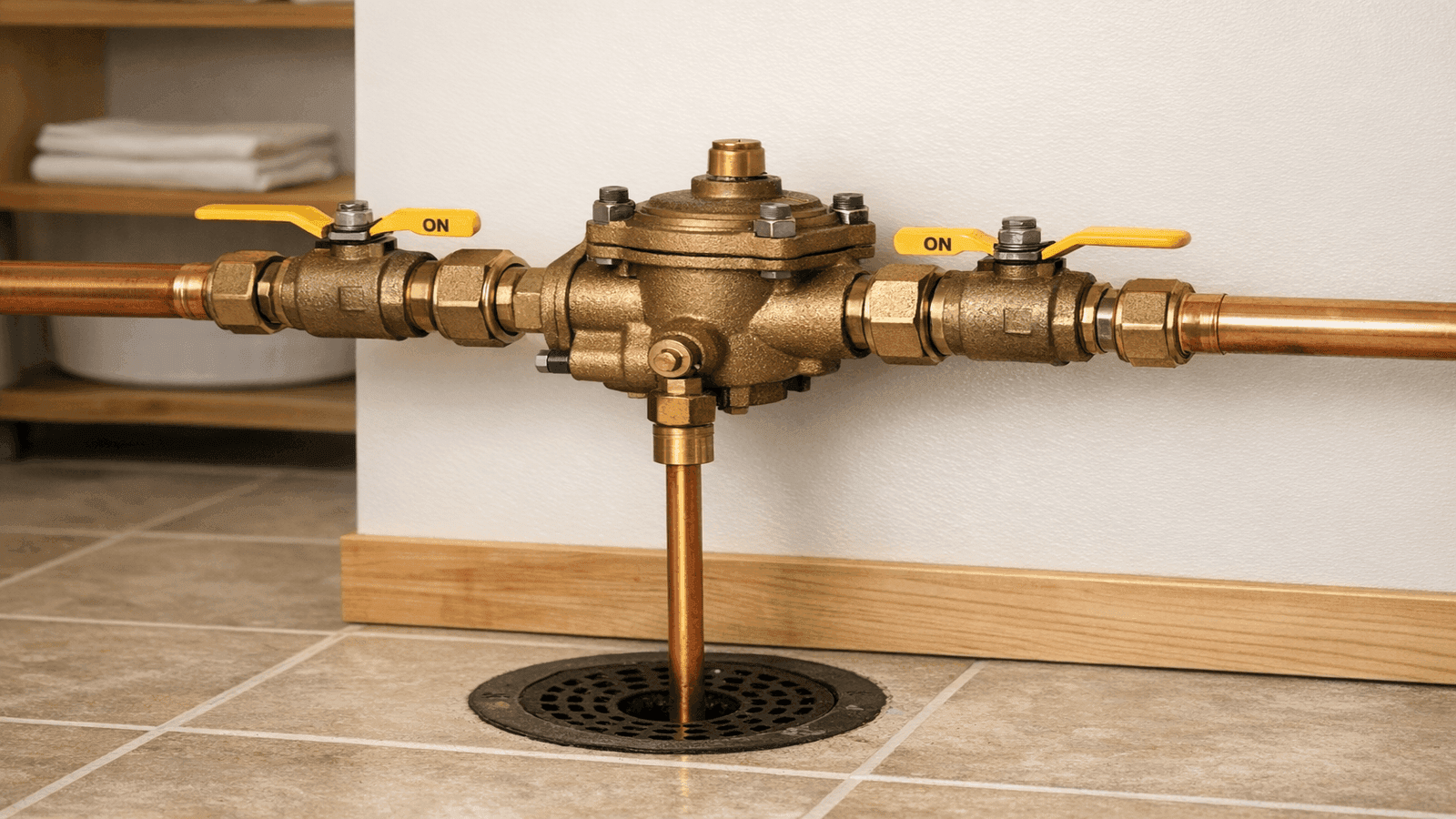
Photo: Brass RPZ backflow preventer assembly installed on main supply line in utility room, showing bronze body, two shut-off handles, and relief valve port with discharge pipe
The Four Types of Backflow Preventers
The IPC Section 608 and UPC Section 603 both require a device rated for the specific hazard level at each cross-connection [1]. Installing the wrong type is a code violation.
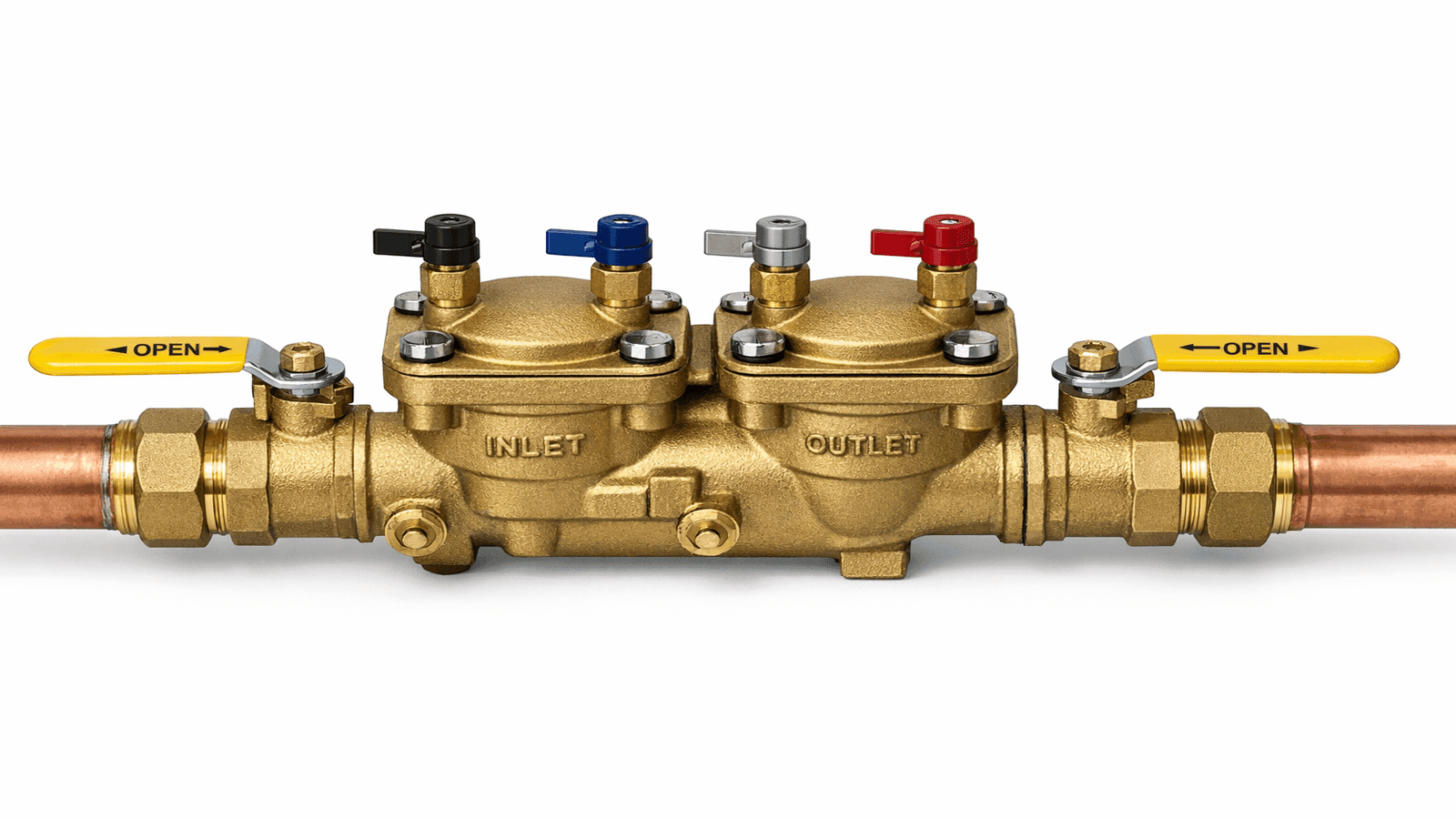
Photo: Double check valve assembly close-up showing two brass check valves in series, test ports, and shutoff handles on copper pipe installation
| Device Type | Hazard Rating | Continuous Pressure | Height Requirement | Annual Test | Installed Cost |
| AVB (Atmospheric Vacuum Breaker) | Low | No | Min 6" above outlets | Not required | $85 to $190 |
| PVB (Pressure Vacuum Breaker) | Low-Medium | Yes | Min 12" above outlets | Yes | $150 to $400 |
| DCVA (Double Check Valve Assembly) | Low-Medium | Yes | At or below grade OK | Yes | $200 to $550 |
| RPZ (Reduced Pressure Zone) | High | Yes | Above ground required | Yes -- certified | $300 to $700 |
AVB (Atmospheric Vacuum Breaker): The simplest device; installed at individual hose bibs or irrigation zone valves. Cannot operate under continuous pressure or downstream of any shutoff valve that traps it under pressure.
PVB (Pressure Vacuum Breaker): Handles continuous pressure; suitable for main irrigation supply lines. Must be at least 12 inches above the highest downstream outlet. Protect from freezing -- freeze damage to the body is the most common failure mode.
DCVA (Double Check Valve Assembly): Two spring-loaded check valves in series with four test ports. Can be installed below grade in a vault. Required for fire suppression systems and boiler fill lines without chemical additives. No relief valve, so a failure is not visible between tests.
RPZ (Reduced Pressure Zone Assembly): Two check valves plus a differential pressure relief valve that discharges water to a drain if either check valve fails. Required for any high-hazard application with chemical injection. Must be installed above ground with a discharge air gap. Must be registered with the local water authority [2].
I have been on jobs where a homeowner had a fertilizer injector connected directly to their irrigation system with no backflow preventer. When the city flushed a main nearby and dropped supply pressure, the fertilizer was pulled into the service line. The fix was a $400 RPZ assembly that should have been there from day one. Backflow protection is not optional -- it is the line between a water main and a contamination event.
Where Code Requires Backflow Prevention
Most U.S. municipalities require backflow prevention on these connections [1]. For a full state-by-state breakdown, see our plumbing code requirements guide.
Always required in virtually all jurisdictions:
- Irrigation systems connected to municipal water
- Hose bibs with chemical injection potential
- Fire suppression systems with a potable water connection
- Boiler fill connections with chemical treatment additives
- Swimming pool and spa fill lines
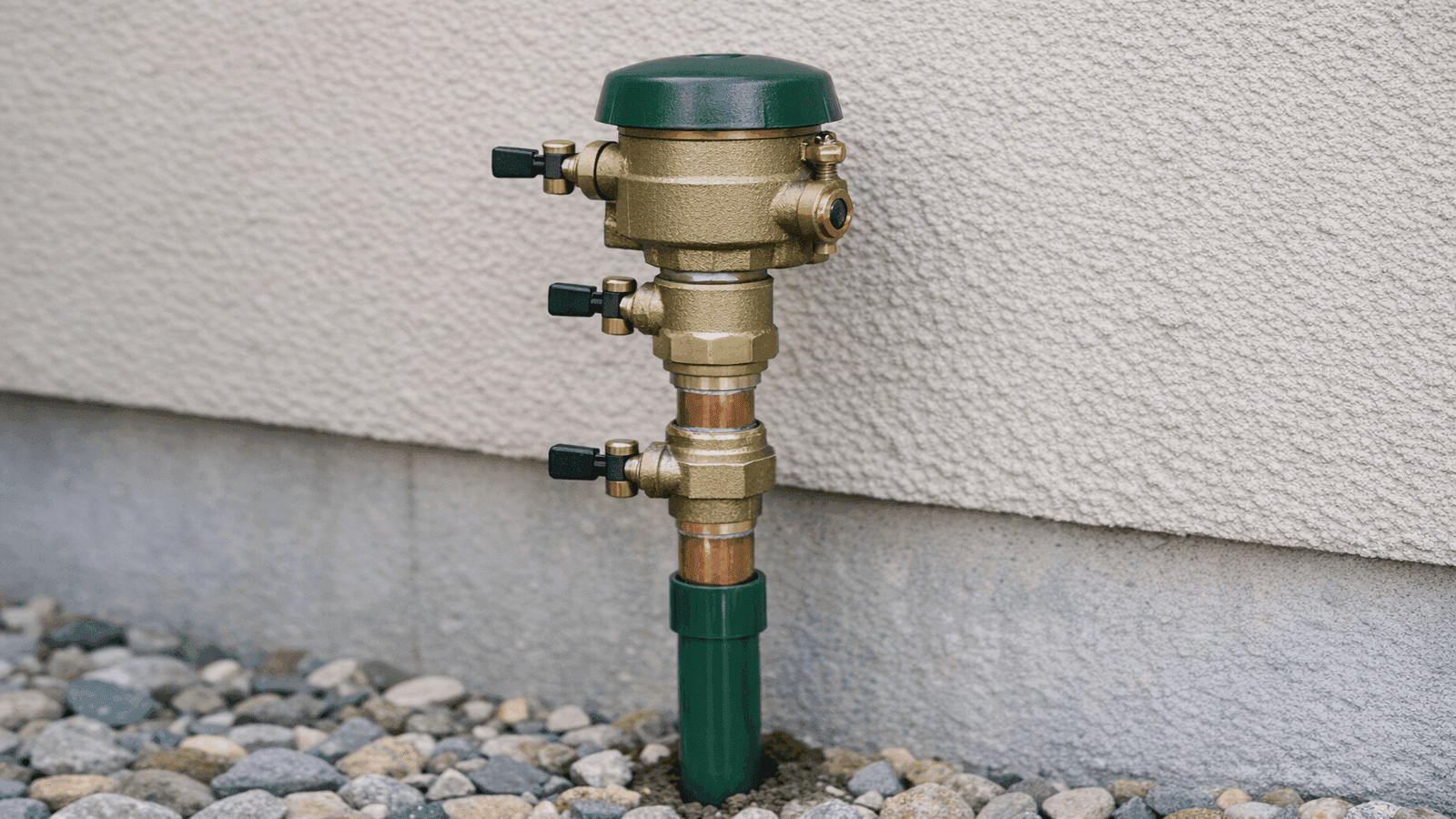
Photo: Pressure vacuum breaker installed on irrigation supply line at exterior of house, showing spring-loaded air inlet and shutoff handles above ground level
In the Dallas service area, any irrigation system installed after 2019 requires a PVB at minimum, and any system with a fertilizer or pesticide injector requires an RPZ. Water utilities send cross-connection inspectors to properties flagged by high flow on irrigation meters. I have seen homeowners fined $500 and given 30 days to install the required device or face disconnection. Verify what your water authority requires before any irrigation work starts.
Get quotes from top-rated pros.
The licensed plumbers in our NearbyHunt network report that more than 40% of irrigation systems they assess in California and Texas were installed without the correct backflow device type for the hazard level present, requiring a retrofit preventer and permit after the fact.
Installation Location Requirements
Backflow preventers must be installed at the cross-connection point, upstream of all zone valves or downstream equipment.
- RPZ: Minimum 12 inches above finished floor or grade; maximum 5 feet for serviceability; must have a 2-inch air gap below the relief valve discharge; cannot be in a pit or below-grade vault subject to flooding.
- PVB: Minimum 12 inches above the highest downstream outlet; must be installed vertically (flow upward); cannot be subject to back-pressure from a pump.
- DCVA: Can be installed at any angle; can go in a below-grade vault if not subject to flooding; minimum 12-inch clearance below for test kit access.
Before installation, locate and confirm your main shutoff valve operates correctly. See our how to shut off your water supply guide for step-by-step instructions on shutoff types and locations.
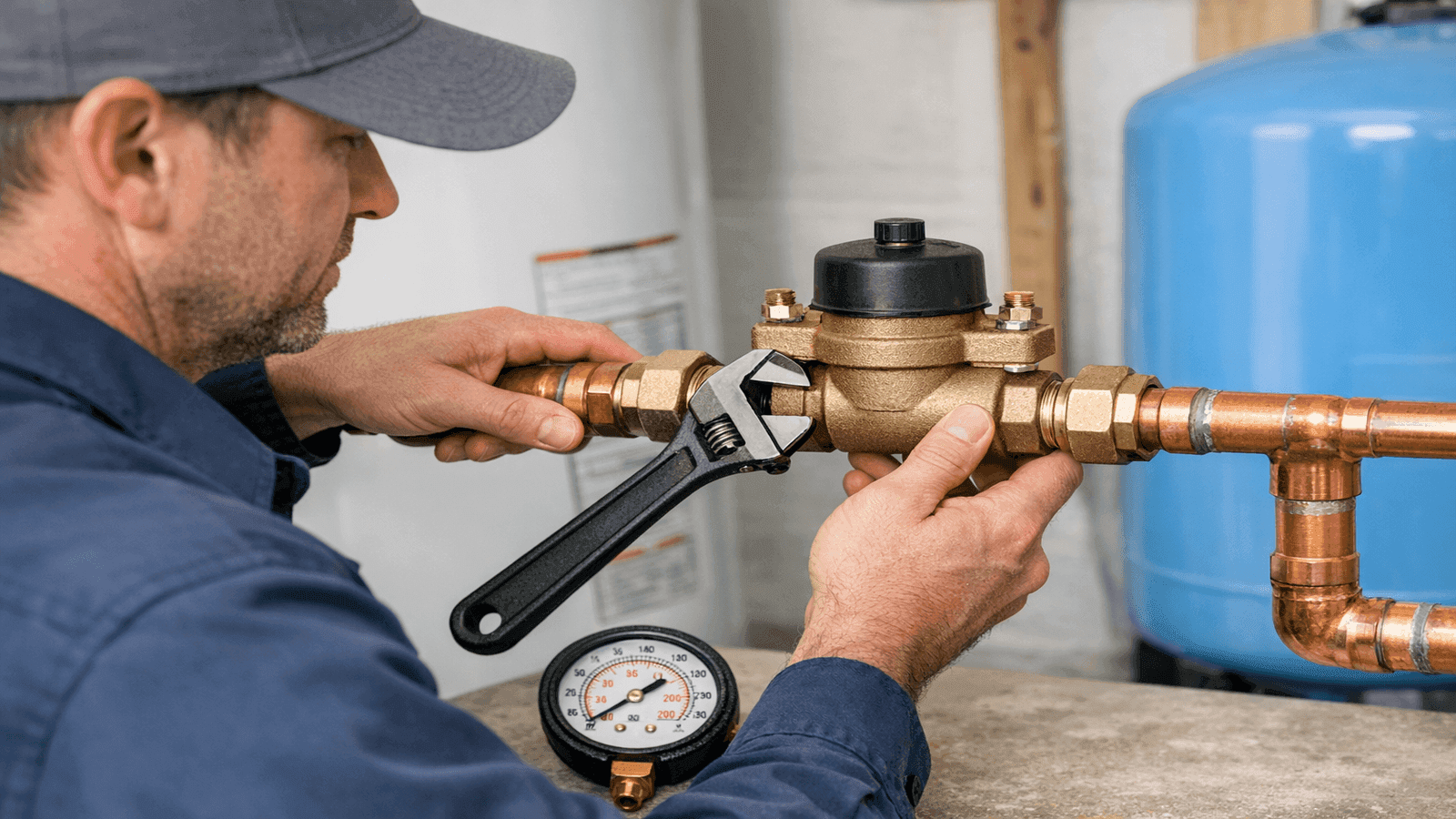
Photo: Licensed plumber in residential utility room installing a backflow preventer on copper supply pipe, using adjustable wrench on union fittings, test gauge visible nearby
Installation Steps and Permit Requirements
Backflow preventer installation is always a licensed plumber job [3]. Homeowner-installed devices are not permit-eligible in most states.
Installation sequence (PVB on residential irrigation):
- Pull building permit from local building department
- Shut off main water supply
- Install isolation ball valve upstream of device location
- Install PVB body with union fittings on both sides (required for future serviceability)
- Connect downstream irrigation manifold; piping must slope away from the PVB body
- Install drain provision for winterization
- Restore supply and pressure-test all connections
- Schedule initial test by a certified BPAT (Backflow Prevention Assembly Tester)
- Submit test report to water authority; retain copy
Full installation takes 2 to 4 hours for an accessible supply line. RPZ installations in confined utility rooms run 4 to 6 hours [4]. For a complete view of permit requirements and costs, see our plumbing safety standards guide.
Real Installation Story
A homeowner in Dallas, Texas received a compliance notice from the water authority after a routine inspection flagged an irrigation system with a fertilizer injector and only an AVB installed. The AVB was not rated for continuous pressure, meaning it had been out of compliance since the injector was added three years prior. The plumber pulled a building permit, removed the AVB, and installed a properly sized RPZ assembly above grade with a registered test report submitted to the water authority. The failed initial test on the old device also revealed a cracked check valve seat. Total cost of the RPZ installation, permit, and initial certification test: $680. The homeowner avoided a $500 non-compliance fine by completing the work within the 30-day notice window.
Annual Testing Requirements
Annual testing is legally required for PVB, DCVA, and RPZ assemblies in most jurisdictions [2]. Testing is performed with a calibrated differential pressure gauge kit.
What testing confirms:
- Each check valve seats completely and holds adequate differential pressure
- The RPZ relief valve opens at the correct pressure differential
- No internal leakage or bypass
Certification: As of July 2026, California requires all testers to be certified through a program recognized by the State Water Resources Control Board [5]. Most states recognize ASSE International or American Backflow Prevention Association certifications. Florida requires testing every 2 years for some device types; most other states require annual testing.
Consequence of missed testing: Warning notice, then compliance order, then water service disconnection. Restoration fees add $150 to $400 to the testing cost.
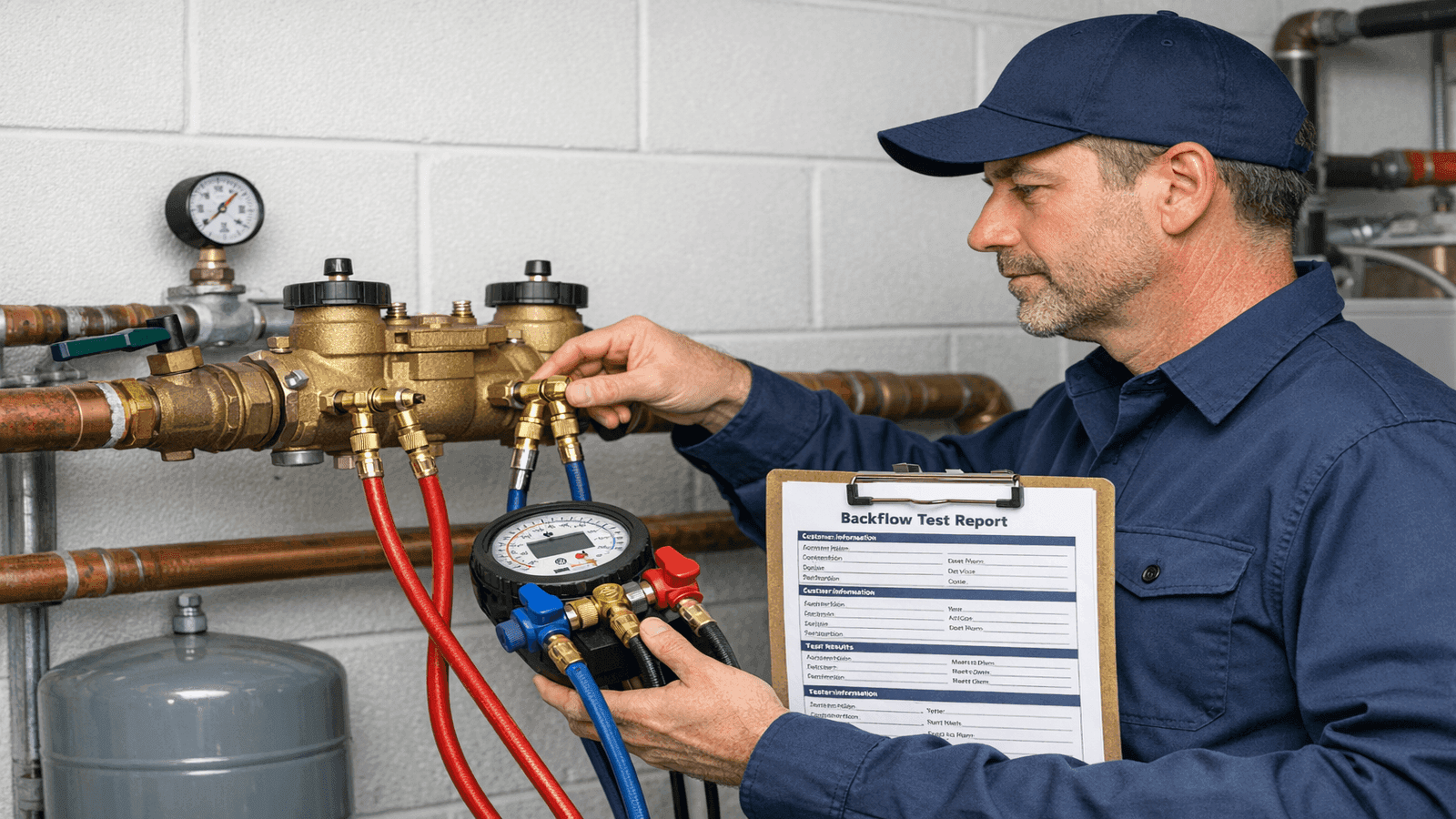
Photo: Certified backflow tester using differential pressure gauge test kit on brass RPZ assembly, filling out test report form on clipboard
Annual testing is where most homeowners fall behind. They install the device correctly, pass the initial test, and then forget about it. Set a calendar reminder for 11 months after the initial test date. A device that fails testing needs repair or replacement before re-testing -- we are not talking about a lot of money, but you do not want to deal with the utility disconnection process.
2026 Cost Reference
| Item | Cost Range |
| AVB installed (per hose bib) | $85 to $190 |
| PVB installed (irrigation line) | $150 to $400 |
| DCVA installed | $200 to $550 |
| RPZ assembly installed | $300 to $700 |
| Building permit | $50 to $200 |
| Initial test (BPAT) | $50 to $150 |
| Annual test (ongoing) | $50 to $150 |
| Device repair (failed test) | $75 to $250 |
| Freeze cover (cold climates) | $15 to $40 |
Regional variation: Labor in California, New York, and the Pacific Northwest runs 25 to 40% above the national average [4]. Rural markets run 15 to 25% below.
Get quotes from top-rated pros.
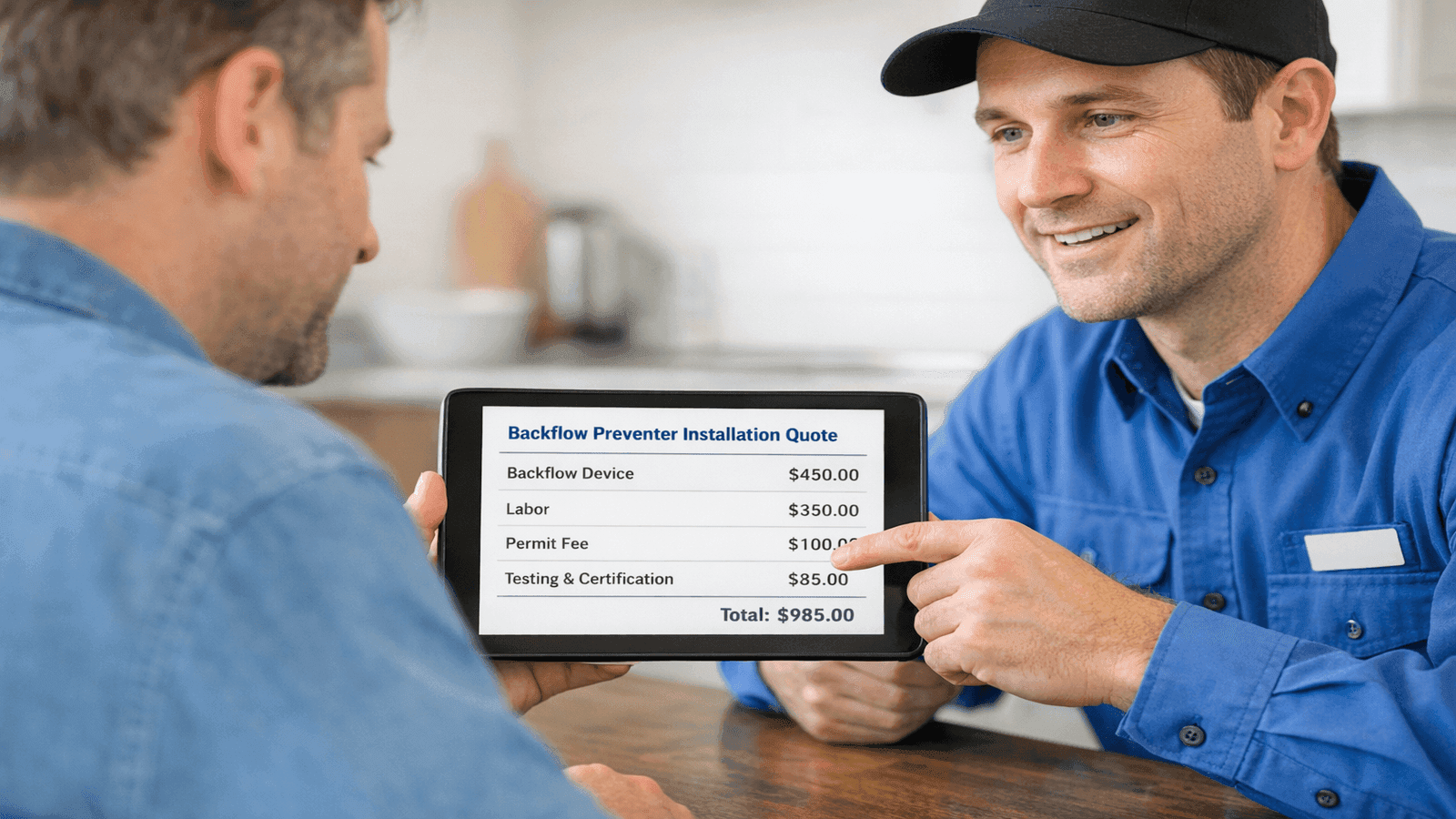
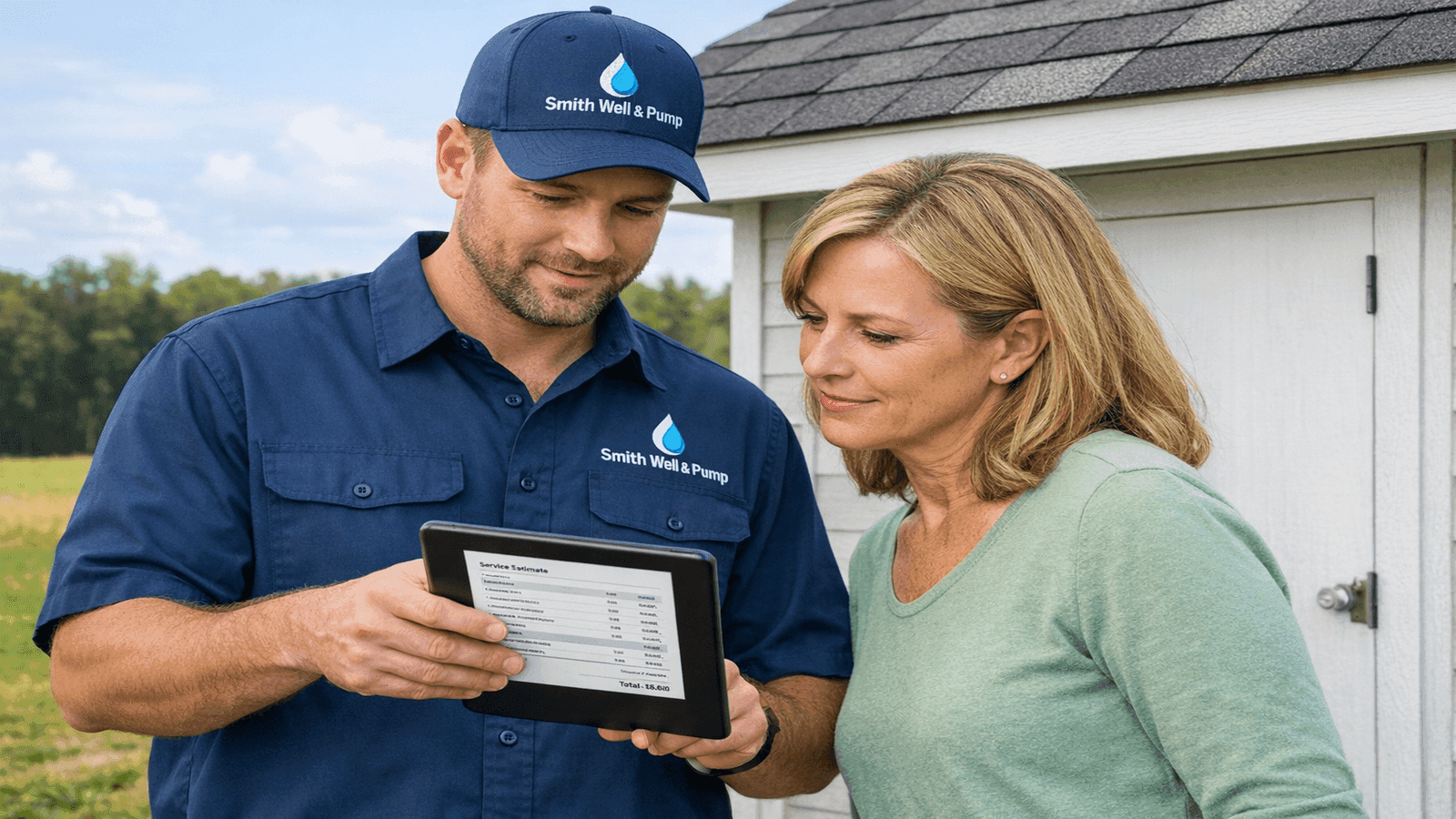
Photo: Homeowner reviewing backflow preventer installation quote on a tablet with a licensed plumber, itemized line items visible on screen
Licensing: Who Can Install and Test
Installation requires a licensed plumber and a building permit in virtually all U.S. jurisdictions [3]. Homeowner permits are not accepted for backflow preventer work in most states.
Testing requires a BPAT certification separate from a plumbing license. Not every plumber who installs these devices holds BPAT certification. Ask directly: "Do you hold a current BPAT certification, and are you registered as a certified tester with the water authority?"
Registration: RPZ assemblies must be registered with the local water authority. This is typically handled by the installing plumber at permit close, but confirm before signing off.
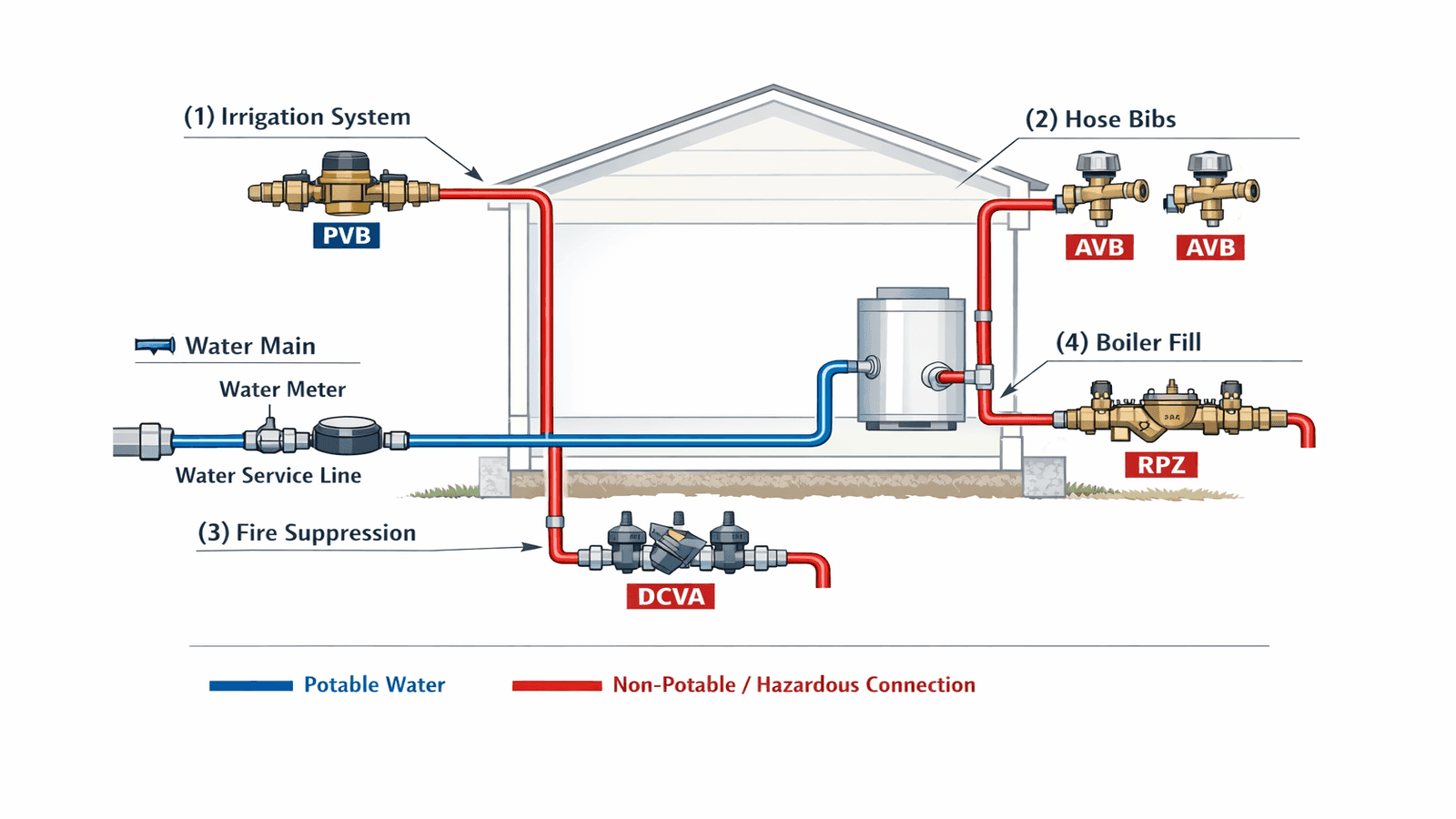
Photo: Cross-connection control diagram showing required backflow prevention device locations on a residential water system: irrigation supply, hose bibs, fire suppression, and boiler fill connections
There is a real difference between a plumber who installs backflow preventers and a certified backflow tester. Before hiring, ask specifically if they hold a current BPAT certification registered with the water authority. The test report has to come from a recognized certified tester or it does not count toward your compliance record.
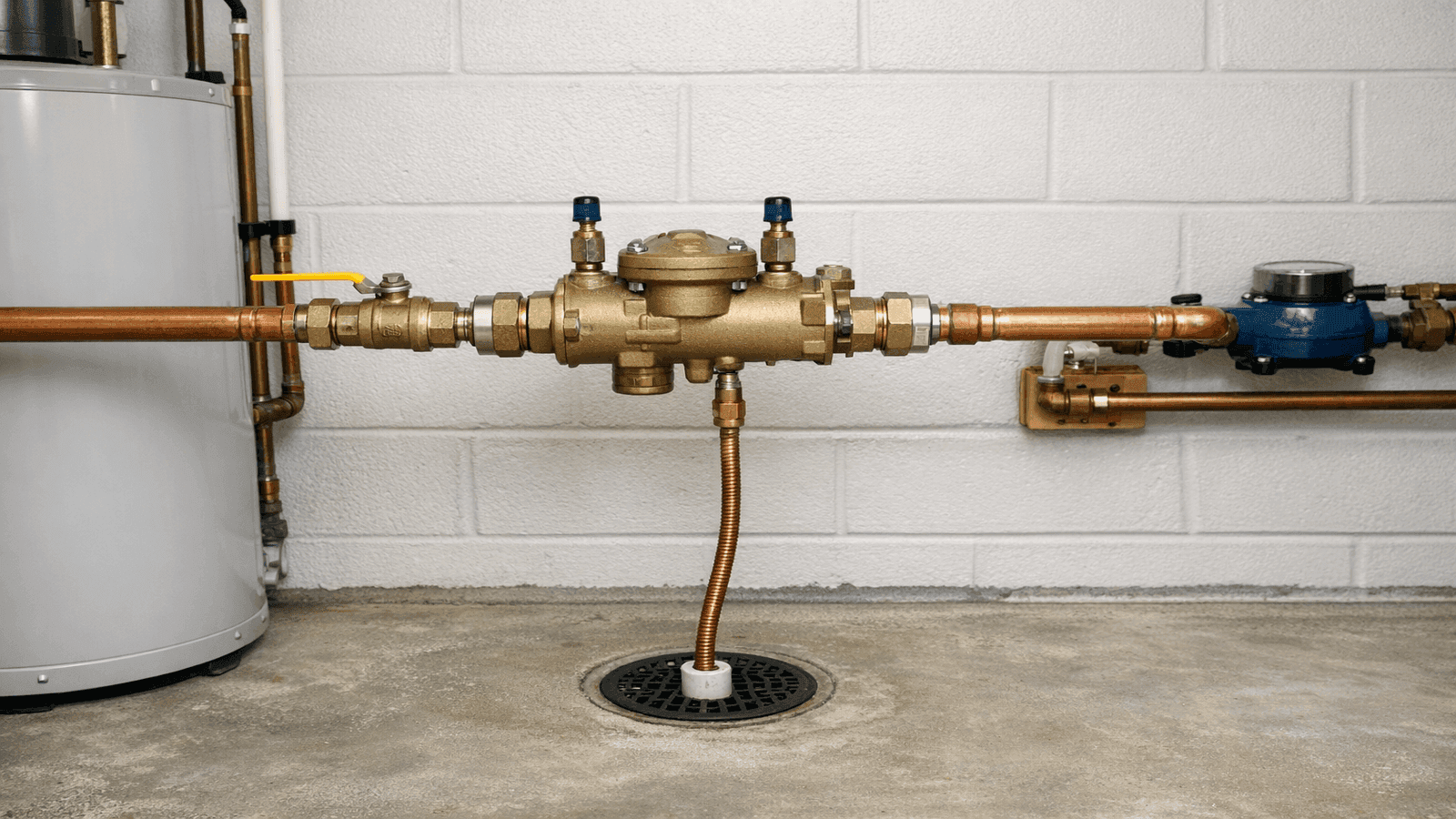
Photo: Complete RPZ backflow preventer installation on copper main supply line in utility room, showing union fittings, isolation valve, and relief valve drain line
Conclusion
Backflow prevention is a code requirement on irrigation systems, fire suppression connections, boiler fill lines, and several other cross-connections. The required device -- AVB, PVB, DCVA, or RPZ -- depends on the hazard classification. Installation requires a licensed plumber and a building permit. Annual testing by a certified BPAT is required for PVB, DCVA, and RPZ assemblies.
If you do not have the correct device on a qualifying connection, contact a licensed plumber to assess the cross-connection and install the right device. Unprotected cross-connections expose your home's drinking water supply to contamination risk with no warning.
Disclaimer: Cost figures are national averages for 2026 and vary by region, device type, and local permit requirements. Annual testing requirements vary by jurisdiction. Backflow preventer installation must be performed by a licensed plumber holding the appropriate permits. Always confirm requirements with your local water authority before starting work.
Sources & References
- International Plumbing Code (IPC) 2024: Section 608 Cross-Connection Control
- ASSE International: Backflow Prevention Assembly Tester Certification
- NYC DEP: Backflow Prevention FAQs
- This Old House: Backflow Preventer Cost Guide 2026
- Pacific Backflow: California Backflow Testing Requirements 2026
- Pacific Backflow: RPZ vs. Double Check Valve Differences
- Backflow Direct: Reduced Pressure vs. Double Check Backflow Preventers
- Missouri DNR: Backflow Prevention FAQ

Michael Jennings is a licensed master plumber & water systems specialist with over 18 years of hands-on experience in residential and commercial plumbing, serving clients across California and Texas. At NearbyHunt, he shares practical advice on pipe installations, water heater maintenance, and home plumbing upgrades. Michael has helped thousands of homeowners prevent costly water damage and improve water efficiency through modern plumbing solutions.

Robert is a licensed master plumber with over 20 years of experience serving both residential and commercial clients across the Midwest. Specialising in advanced plumbing systems and sustainable water technologies, Rob brings deep technical insight and hands-on expertise to every project. As a reviewer for NearbyHunt, he ensures all plumbing content reflects the highest standards of safety, compliance, and practicality.