- Plumbers earn $62,970 median annually (BLS 2026), with top states like Illinois paying $97,314—nearly double Florida's $48,854.
- Becoming a licensed plumber takes 4-5 years through apprenticeship, combining 8,000+ paid work hours with classroom training.
- The U.S. faces a 550,000 plumber shortage by 2026, creating exceptional job security and 4.5% growth through 2034.
- Master plumbers in high-demand metros earn $100,000+ annually with potential to start their own businesses within 10 years.
- Zero student debt: apprentices earn $35,000-$45,000 while learning, compared to college grads starting at $40,000 with $30,000+ debt.
While college graduates struggle with $30,000 in student debt and uncertain job prospects, licensed plumbers graduate debt-free after earning $200,000+ during their apprenticeship years. According to the Bureau of Labour Statistics' 2026 data, plumbers earn a median annual salary of $62,970, with top earners exceeding $100,000 in high-demand markets.
The United States faces a critical shortage of 550,000 plumbers by 2026, creating exceptional opportunities for new workers entering the trade. Job growth is projected at 4.5% through 2034, and unlike many careers, plumbing work can't be outsourced or automated. This essential infrastructure work remains recession-proof.
Michael R. Jennings, our Licensed Master Plumber with 18 years of experience in the Dallas-Fort Worth area, started as an apprentice in 2006 at age 20 with no construction background. He became a journeyman in 2011, earned his master plumber license in 2014, and now runs his own successful plumbing business where he's trained 12 apprentices over his career.
This comprehensive guide covers everything you need to know about becoming a plumber: requirements, the step-by-step licensing path, realistic salary expectations by experience level and location, and what to expect in daily plumbing work.
To fully understand plumbing components, service requirements, and system maintenance, review our Complete Guide to Plumbing Systems & Services
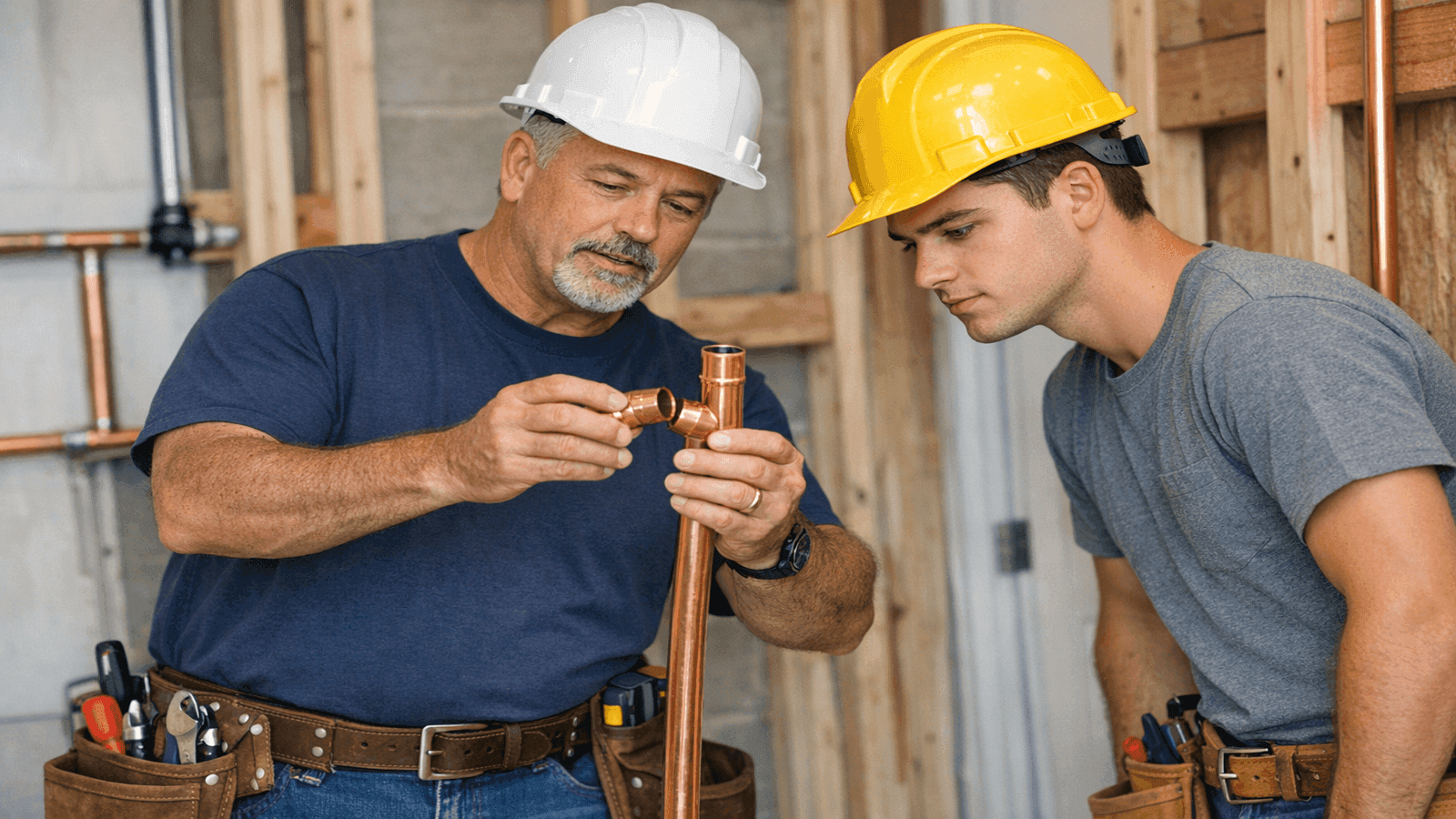
Photo: Experienced master plumber teaching apprentice proper pipe installation techniques on residential job site

Get quotes from top-rated pros.
What Do Plumbers Actually Do?
Daily Responsibilities
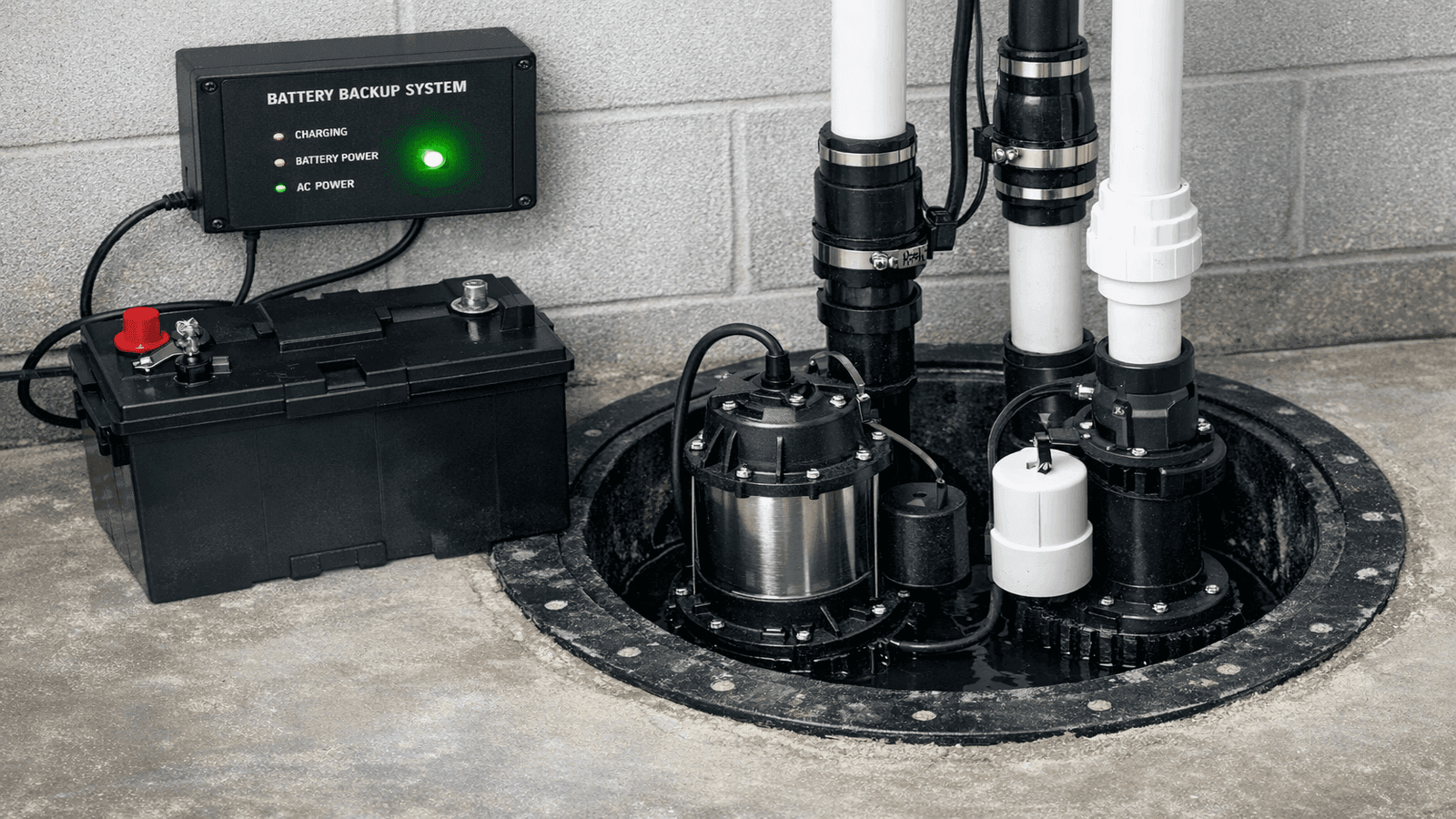
Residential plumbers handle the plumbing systems most homeowners interact with daily:
- Install and repair water supply systems (fixtures, pipes, water heaters)
- Clear drain clogs and maintain sewer lines
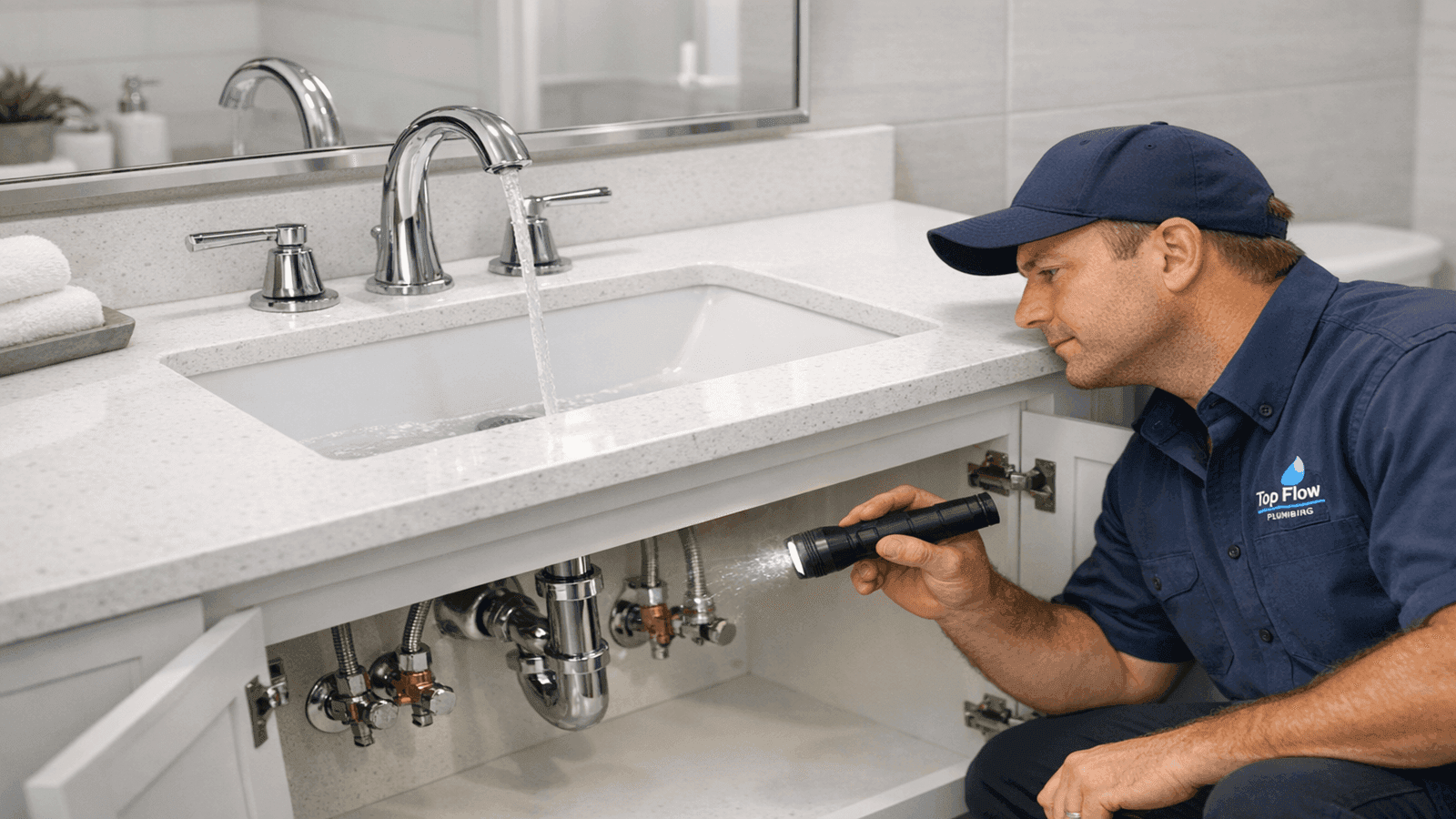
- Diagnose leaks and water pressure problems
- Read blueprints for new construction installations
- Ensure all work meets current building codes
Commercial and industrial plumbers work with larger-scale systems in offices, hospitals, factories, and industrial facilities:
- Maintain boiler and industrial equipment
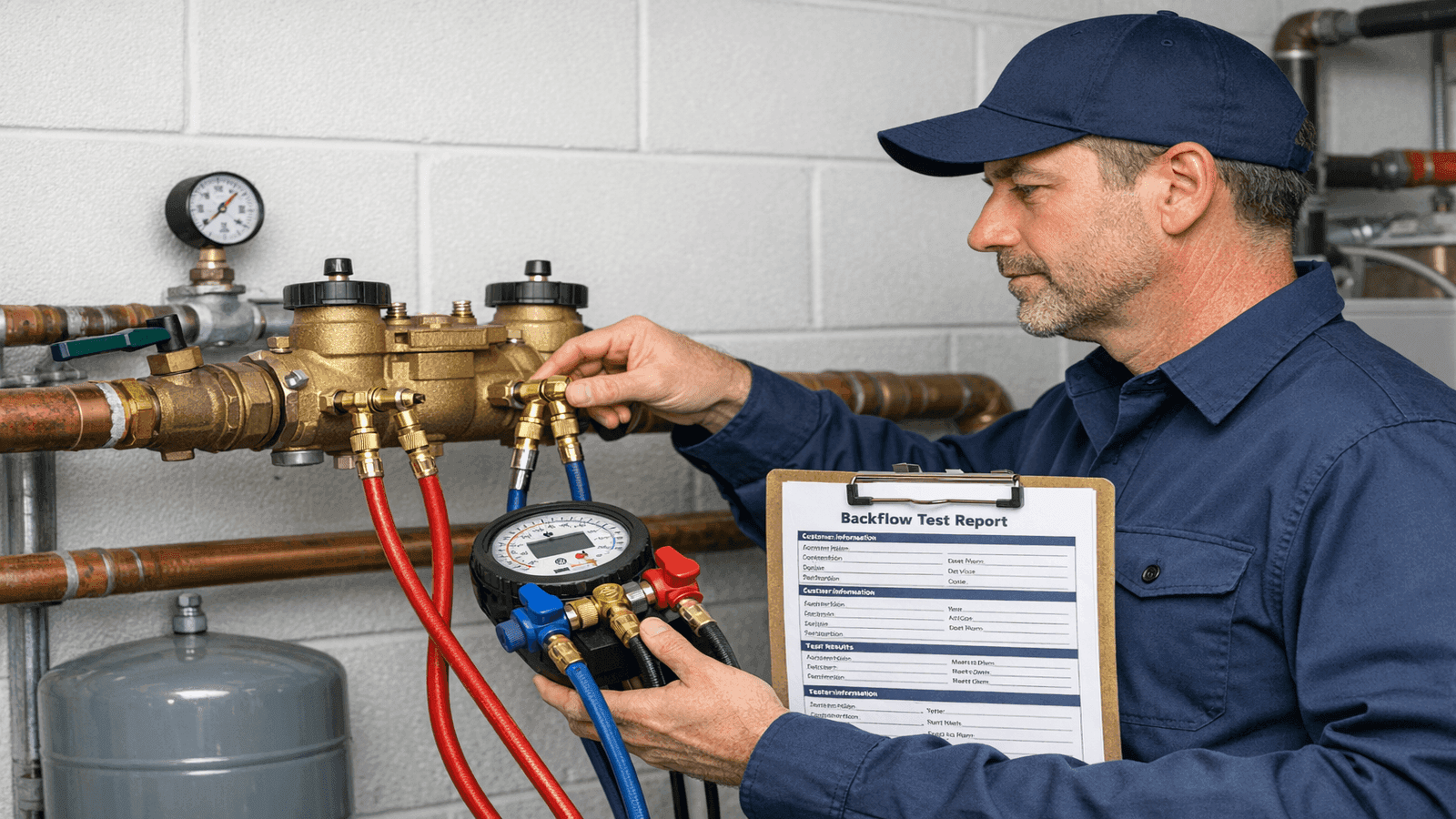
- Test backflow prevention systems
- Install medical gas piping in hospitals
- Design industrial process piping for manufacturing plants
The plumbing profession splits into two main specialisations: service plumbers and construction plumbers. Service plumbers handle emergency repairs, residential service calls, and troubleshooting existing systems. Construction plumbers focus on new builds and remodels, following blueprints and roughing in plumbing systems before walls close up.
Work Environment & Physical Demands
Most plumbers work 40-50 hour weeks, with overtime common during busy seasons and emergencies. The work mixes indoor and outdoor environments—you'll work in crawl spaces, attics, basements, and on rooftops depending on the job.
Physical demands are significant:
- Regularly lift 50-75 pounds of materials and equipment
- Extensive kneeling, bending, and working in tight spaces
- Work in crawl spaces, attics, and basements
- On-call rotations for residential service plumbers
- Respond to emergency calls nights and weekends
Weather exposure comes with the territory. Outdoor repairs and new construction work continue in heat, cold, rain, and snow. The job suits people who prefer active work over desk jobs but demands physical resilience.
People think plumbing is all fixing toilets, but I've installed $50,000 water filtration systems, designed whole-house plumbing for custom homes, and worked on 20-story commercial buildings. Every day is different, and problem-solving never gets boring. In 18 years, I've never had two identical jobs.
Why Choose a Plumbing Career?

Photo: Side-by-side comparison infographic showing plumbing apprenticeship earnings of $180,000 versus college debt of $30,000-$50,000
Job Security & Demand
The plumbing industry faces a severe labor shortage. Industry projections show a shortage of 550,000 plumbers by 2026 as baby boomer plumbers retire—approximately 60% of the current workforce is over 50 years old. The Bureau of Labor Statistics projects 4.5% job growth through 2034, with 22,500 new positions added annually plus 60,000 additional openings from retirements.
Why plumbing offers exceptional job security:
- Can't be outsourced to other countries
- Can't be automated by robots
- Every building needs plumbing
- Aging infrastructure requires constant maintenance and replacement
- New construction drives steady demand
- Green building initiatives create specialized opportunities
Earning Potential
Plumber salaries progress significantly with experience and licensing level:
| Experience Level | National Median | Top States | Description |
| Apprentice Year 1 | $35,000 | $42,000 | Entry-level, supervised work |
| Apprentice Year 4 | $48,000 | $58,000 | Advanced apprentice |
| Journeyman (2-4 years) | $62,970 | $97,314 (IL) | Licensed independent work |
| Master Plumber (6+ years) | $75,800 | $106,000+ (top metros) | Supervise others, own business |
| Business Owner | $90,000-$250,000+ | Varies | Multiple crews, overhead |
Geographic location dramatically impacts earning potential. Top-paying states for plumbers in 2026:
- Illinois: $97,314
- Massachusetts: $89,456
- Oregon: $84,920
- Minnesota: $82,150
- Washington: $79,680
These states share strong union presence, higher costs of living, and steady demand from aging infrastructure or fast-growing metros.
Lowest-paying states:
- Florida: $48,854 (nearly half Illinois wages)
- Mississippi: $46,200
- Arkansas: $45,780
Top metros exceed six figures:
- Rochester, Minnesota: $106,751
- Madison, Wisconsin: $103,825
- Kennewick-Richland, Washington: $102,012
- San Francisco, California: $101,400
Career Flexibility & Advancement
Plumbing offers multiple career paths beyond basic residential service:
Sector specializations:
- Commercial/industrial plumbing (higher pay, larger projects)
- New construction specialist (blueprint reading, rough-in work)
- Residential service plumber (customer-facing, varied work)
- Service management (dispatch, team leadership)
- Plumbing inspector (government, stable hours)
- Vocational instructor (teach at trade schools)
- Business owner (unlimited earning potential)
Advanced certifications:
- Backflow prevention specialist
- Water heater expert
- Green plumbing and sustainability consultant
- Medical gas systems installer (hospitals)
- Fire suppression systems technician
No Student Debt
The financial comparison between plumbing and traditional college is striking:
| Education Path | Cost | Time | Starting Salary | Debt at Completion |
| 4-Year College | $80,000-$120,000 | 4 years | $40,000-$55,000 | -$30,000 to -$50,000 |
| Plumbing Apprenticeship | $0 (earn while learning) | 4-5 years | $62,970 (journeyman) | +$180,000 earned |
College students pay tuition and graduate with debt. Plumbing apprentices get paid from day one, earning approximately $180,000 total over their 4-5 year apprenticeship while gaining valuable skills and experience.
Get quotes from top-rated pros.
My college friends graduated with $40,000 in debt and struggled to find jobs. I graduated my apprenticeship with $180,000 in my bank account and a guaranteed career. Five years later, they're still paying off loans while I bought my first rental property. The ROI on a plumbing career is unbeatable.
Requirements to Become a Plumber
Basic Requirements
Age requirements:
- Minimum 18 years old (most states)
- Some states allow 16-17 with restrictions
Education requirements:
- High school diploma or GED (mandatory)
- Math skills: geometry and basic algebra
- Reading comprehension for codes and blueprints
- Vocational/trade school helpful but optional
Physical requirements:
- Lift 50-75 pounds regularly without assistance
- Work in confined spaces (crawlspaces, attics)
- No debilitating claustrophobia
- Extended kneeling, bending, and squatting
- Good hand-eye coordination
- Color vision for gas system wire coding
Background and character:
- Clean driving record preferred
- Pass background check and drug testing
- No felony convictions (some states)
- Professional demeanor for customer-facing work
Helpful Skills & Traits
Technical aptitude:
- Mechanical problem-solving ability
- Spatial reasoning (visualize pipe layouts behind walls)
- Attention to detail (precision measurements)
- Willingness to study building codes
Soft skills that drive advancement:
- Customer service (explain issues clearly to homeowners)
- Communication (work with contractors, inspectors, team members)
- Time management (juggle multiple job sites)
- Physical stamina and mental resilience
The best apprentices aren't always the strongest or smartest—they're the ones who show up on time, ask questions, and take pride in their work. I can teach someone to solder copper, but I can't teach work ethic. That comes from within.
Step-by-Step Path to Becoming a Licensed Plumber
Step 1: Complete High School / Earn GED
Focus on mathematics during high school—algebra and geometry directly apply to plumbing calculations. Take vocational classes if your school offers them. Consider pre-apprenticeship trade school programs that provide foundational knowledge.
Start researching apprenticeship opportunities in your area before graduation. Most successful apprentices begin planning their career path 1-2 years before starting their apprenticeship.
Timeline: Complete before age 18-20
Step 2: Apply for Apprenticeship Programs
Three main apprenticeship types offer different advantages:
Union apprenticeships operate through local plumbers unions affiliated with the United Association (UA). These highly competitive programs accept only 10-30% of applicants. They offer structured 5-year programs with higher wages, comprehensive benefits, pension plans, and strong job placement after completion. Examples include UA Local 68 in Dallas and UA Local 1 in New York City.
Non-union contractor apprenticeships allow you to apply directly to plumbing companies. Entry requirements are more flexible than union programs. These 4-5 year programs vary by company in structure and compensation. Many require concurrent trade school enrollment.
State-registered apprenticeships require registering with your state apprenticeship agency and finding a sponsor employer. These programs are less structured than union apprenticeships and may be self-paced in some states.
Application strategy:
- Apply to multiple programs (union and non-union)
- Prepare for aptitude tests (math, mechanical reasoning)
- Create resume highlighting reliability and work history
- Emphasize any construction or trades experience
- Show up prepared and professional
Interview preparation:
- Discuss your work ethic and commitment
- Explain why you chose plumbing
- Articulate long-term career goals
- Dress professionally
- Arrive 10-15 minutes early
Timeline: Start applying 3-6 months before your desired start date
Step 3: Complete Apprenticeship Training (4-5 years)
Apprenticeships combine on-the-job training with classroom instruction. You'll complete 8,000-10,000 work hours depending on your state—typically 2,000 hours annually working full-time. All work occurs under supervision of licensed journeyman or master plumbers. Your responsibilities progress from basic tasks to complex installations as you gain experience.
Classroom requirements total 144-240 hours annually, usually scheduled evenings or weekends. Topics covered:
- Plumbing codes (IPC/UPC)
- Safety protocols and OSHA requirements
- Blueprint reading and job layout
- Pipe fitting techniques
- Water supply systems
- Drainage design
- Mathematics (pipe sizing, pressure calculations, material estimates)
Apprentice wages increase each year:
- Year 1: 40-50% of journeyman wage ($25,000-$35,000)
- Year 2: 50-60% ($32,000-$40,000)
- Year 3: 60-70% ($38,000-$45,000)
- Year 4: 70-80% ($45,000-$52,000)
- Year 5: 80-90% ($50,000-$58,000)
During your apprenticeship, you'll master:
- Pipe installation (copper, PEX, CPVC, cast iron)
- Fixture installation (toilets, faucets, water heaters)
- Drain cleaning and repair techniques
- Gas line installation (requires additional certification)
- Blueprint reading and job layout
- Building code compliance
- Customer service and professionalism
Timeline: 4-5 years full-time
My apprenticeship was the best education I ever received. I earned $160,000 over those 5 years while learning from master plumbers with 30+ years experience. By year 3, I was running small jobs independently. By year 5, I could handle anything.
Step 4: Pass Journeyman Licensing Exam
Exam eligibility requirements:
- Minimum 8,000 work hours
- Completion of classroom hours
- Application fee ($100-$300)
- Background check clearance
- Verify specifics with your state licensing board
Exam format:
- 80-120 multiple choice questions
- 4-6 hours to complete
- Passing score: 70-75%
- Based on IPC 2024 or UPC 2024 (depending on state)
Topics covered:
- Code knowledge
- Safety regulations
- Pipe sizing calculations
- Drainage design
- Fixture installation
Preparation strategies include studying code books thoroughly, taking practice exams, and reviewing all classroom materials from your apprenticeship. Most apprentices pass on their first attempt—success rates run 60-70%.
Passing the journeyman exam grants you a license to work independently, supervise apprentices, and command higher pay ($60,000-$75,000). Job opportunities expand significantly with journeyman certification.
Timeline: Usually taken at the end of year 4 or beginning of year 5
Step 5: Gain Experience as Journeyman (2-4 years)
Many journeymen pursue additional certifications during this phase: backflow prevention, medical gas systems, or specialized equipment training. You'll also decide whether to remain an employee or pursue master plumber licensing to start your own business.
Most states require minimum 2 years journeyman experience before you can attempt the master plumber exam.
Timeline: Minimum 2 years journeyman experience required for master license
Step 6: Pursue Master Plumber License (Optional)
Master plumber requirements include 2-4 years minimum as a journeyman, additional work hours (typically 12,000-15,000 total career hours), and passing an advanced master plumber exam. Some states also require business law and contractor knowledge for business ownership.
The master exam covers advanced code interpretation, complete plumbing system design, gas system design, backflow prevention systems, and business management. It's significantly harder than the journeyman exam—preparation is essential.
Master plumber benefits:
- Pull permits independently
- Start your own plumbing business
- Higher earning potential ($75,000-$150,000+)
- Supervise multiple crews
- Sign off on inspections
- Ultimate career advancement in the trade
Most plumbers achieve master status 6-10 years into their careers.
Get quotes from top-rated pros.
Master plumber requirements include 2-4 years minimum as a journeyman, additional work hours (typically 12,000-15,000 total career hours), and passing an advanced master plumber exam. Some states also require business law and contractor knowledge for business ownership.
The master exam covers advanced code interpretation, complete plumbing system design, gas system design, backflow prevention systems, and business management. It's significantly harder than the journeyman exam—preparation is essential.
Master plumber benefits:
- Pull permits independently
- Start your own plumbing business
- Higher earning potential ($75,000-$150,000+)
- Supervise multiple crews
- Sign off on inspections
- Ultimate career advancement in the trade
Most plumbers achieve master status 6-10 years into their careers.
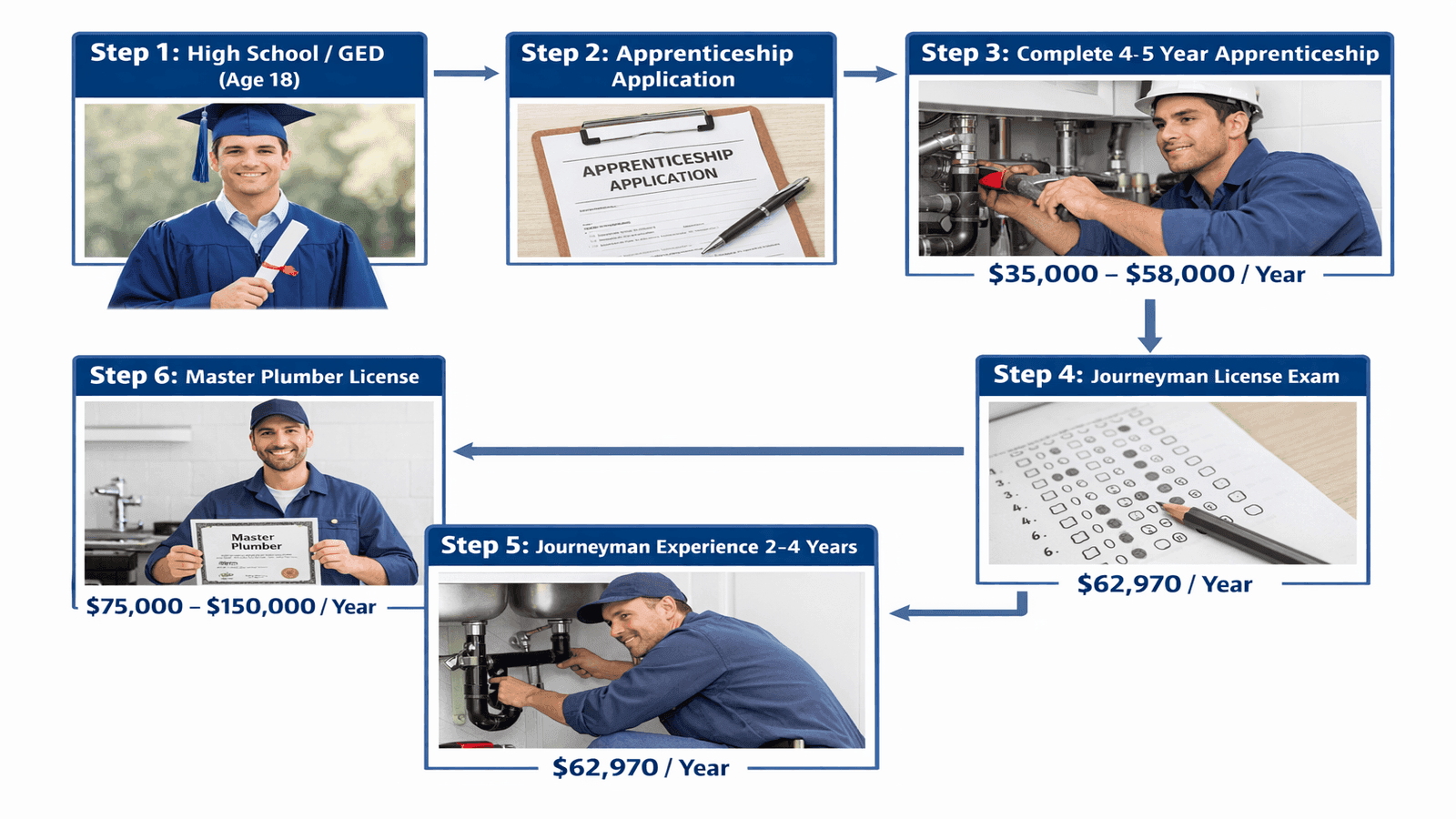
Photo: Flowchart showing 6-step career progression from high school to master plumber with timeframes and salary ranges at each stage
State-Specific Licensing Requirements
How Requirements Vary by State
Building code adoption:
- 37 states: International Plumbing Code (IPC)
- 13 Western states: Uniform Plumbing Code (UPC)
- Many states add state-specific amendments
Licensing structures:
- Most states: Three-tier (Apprentice, Journeyman, Master)
- Some states: Two-tier (Apprentice and Plumber only)
- Texas, Kansas, Missouri: No statewide licensing (city/county licenses)
Work hour requirements range from 6,000 hours (3 years) in some states to 10,000 hours (5 years) in others. The most common requirement is 8,000 hours (4 years).
California has no statewide plumbing license. Major cities including Los Angeles, San Francisco, and San Diego maintain their own requirements. Business owners pursue C-36 Plumbing Contractor licenses through the state.
Texas offers state licensing through the Texas State Board of Plumbing Examiners. The state recognizes Tradesman Plumber-Limited, Journeyman, and Master Plumber levels. Journeyman requires 8,000 hours; master requires 12,000 hours total.
New York City requires a 5-year apprenticeship for journeyman licensing. Rules differ between New York City and upstate regions. The city maintains strict exam requirements and competitive apprenticeship programs.
Florida requires state licensing after minimum 4 years apprenticeship. Despite the licensing requirement, Florida pays among the lowest wages nationally due to lower cost of living and high competition.
Always verify current requirements with your state licensing board before starting your apprenticeship—requirements change periodically.
Plumbing Salary & Compensation Deep Dive
Salary by Experience Level
Entry-level apprentices in years 1-2 earn $35,000-$40,000 annually ($17-$19 per hour). Advanced apprentices in years 3-4 earn $45,000-$52,000 ($22-$25 per hour). Most apprentices qualify for health insurance and retirement benefits after year 1.
Journeyman plumbers with 2-4 years post-license experience earn a national median of $62,970 ($30.27 per hour). The range spans $48,000-$85,000 depending on location and sector. Full benefits packages are standard at this level.
Senior plumbers and master plumbers with 6+ years experience earn a national median of $75,800 ($36.44 per hour). The range extends from $60,000 to $120,000+ for employees. Business owners earn $90,000-$250,000+ annually, though this varies greatly based on overhead, number of employees, and business management skills.
Salary by Geographic Location
Illinois leads the nation with plumbers earning an adjusted median of $97,314. Massachusetts follows at $89,456. Oregon pays $84,920. Minnesota offers $82,150. Washington rounds out the top five at $79,680.
These top-paying states share characteristics: strong union presence, higher costs of living, and steady demand from aging infrastructure or population growth. Illinois and Massachusetts have dense cities with old infrastructure requiring constant work. Oregon's fast-growing metros push demand higher. Minnesota's harsh winters keep plumbing systems under constant pressure.
The lowest-paying states tell a different story. Florida pays median $48,854—about half Illinois wages. Mississippi pays $46,200. Arkansas pays $45,780. Lower costs of living partially offset lower wages in these states.
Top metros exceed six figures. Rochester, Minnesota pays $106,751. Madison, Wisconsin pays $103,825. Kennewick-Richland, Washington pays $102,012. San Francisco pays $101,400.
Salary by Sector
Different plumbing sectors offer varying compensation and working conditions:
| Sector | Median Salary | Job Type | Pros/Cons |
| Residential Service | $58,000-$72,000 | Service calls, repairs | Varied work, customer interaction, emergency calls |
| New Construction | $62,000-$78,000 | Rough-in, installations | Steady hours, fewer emergencies, seasonal |
| Commercial/Industrial | $68,000-$95,000 | Large systems, maintenance | Higher pay, union jobs, less customer-facing |
| Government/Municipal | $65,000-$85,000 | Public buildings, inspections | Benefits, pension, stable hours |
| Self-Employed | $75,000-$250,000+ | Business ownership | Unlimited potential, overhead costs, risk |
Additional Compensation
Beyond base salary:
- Overtime pay (time-and-a-half): $10,000-$25,000 annually
- On-call pay: $100-$300 per day
- Truck and tool allowance: $500-$1,000 monthly
- Performance bonuses: 10-20% of salary
- Profit sharing (some companies)
Benefits package value:
- Health insurance: $12,000-$18,000 annually
- Retirement matching: 3-6% of salary
- Union benefits: pension, annuity, comprehensive healthcare
Beyond base salary:
- Overtime pay (time-and-a-half): $10,000-$25,000 annually
- On-call pay: $100-$300 per day
- Truck and tool allowance: $500-$1,000 monthly
- Performance bonuses: 10-20% of salary
- Profit sharing (some companies)
Benefits package value:
- Health insurance: $12,000-$18,000 annually
- Retirement matching: 3-6% of salary
- Union benefits: pension, annuity, comprehensive healthcare
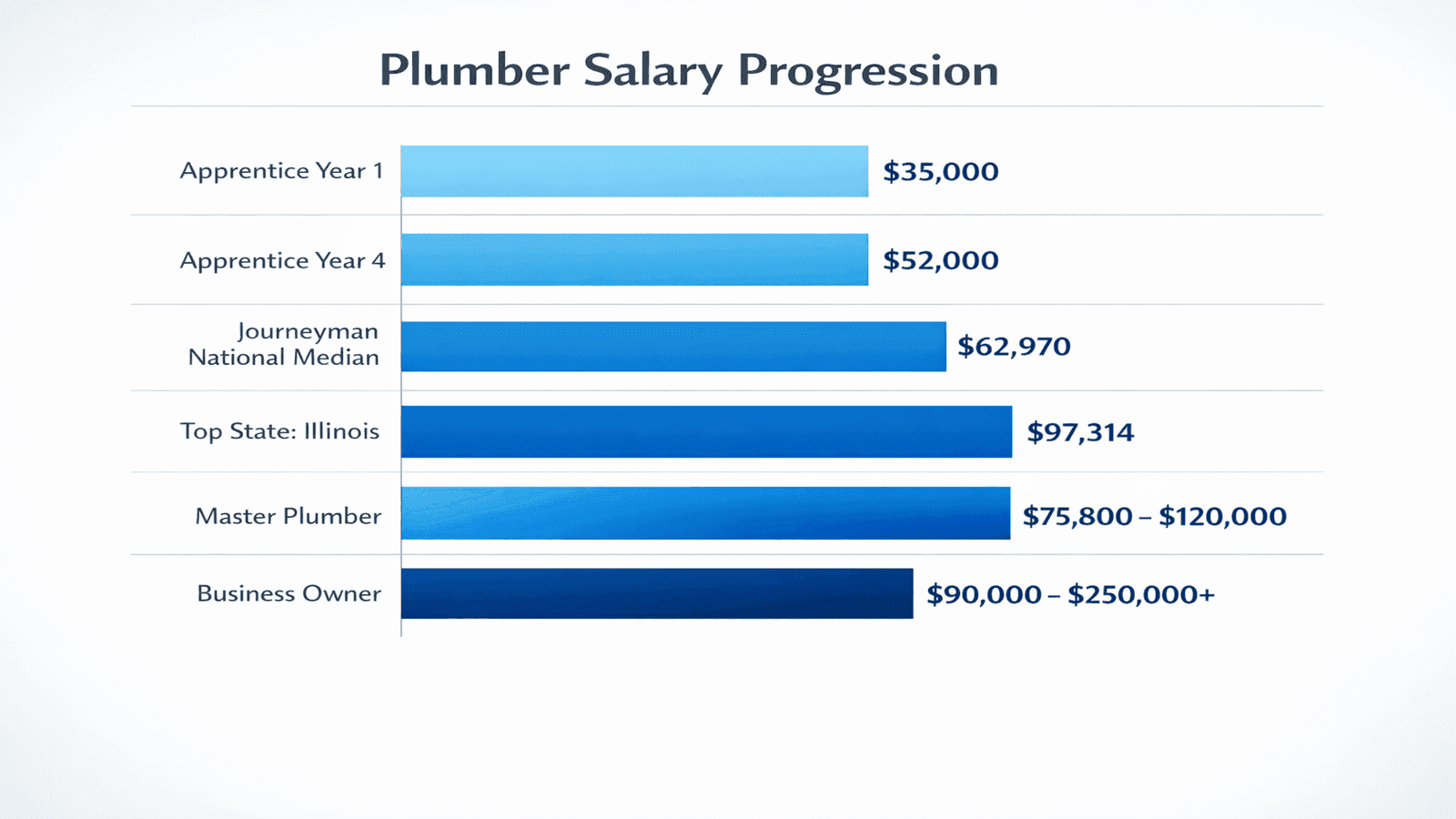
Photo: Bar chart comparing plumber salaries from apprentice through master plumber and business owner showing $35,000 to $250,000+ range
Job Outlook & Market Demand
Employment Growth Projections
The Bureau of Labor Statistics projects 4.5% employment growth for plumbers from 2024 to 2034—roughly matching the average across all occupations. However, these numbers understate true opportunity. With over 500,000 plumbers currently employed nationwide, this growth translates to 22,500 new positions annually.
Retirements create even larger opportunity. Approximately 60,000 plumbers retire annually as baby boomers age out of the workforce. Combined new job creation and replacement needs total over 82,000 annual openings.
Industry analysis reveals a more urgent picture. The plumbing industry faces a projected shortage of 550,000 skilled plumbers by 2026. Fewer young people enter trades compared to previous generations. Baby boomer retirements are accelerating. Demand outpaces supply in every region.
Demand Drivers
Infrastructure needs:
- Aging buildings require constant maintenance
- 50+ year old systems need replacement
- Lead pipe removal mandates
- Water quality concerns drive upgrades
New construction demand:
- Single-family housing starts increasing in 2026
- Multi-family construction strong in growing metros
- Commercial development follows population shifts
- Green building initiatives require specialized knowledge
Environmental regulations:
- Water conservation mandates (low-flow fixtures)
- Backflow prevention system requirements
- Greywater recycling systems
- Regulations create work, not eliminate it
Technology adoption opportunities:
- Smart home plumbing systems
- Advanced leak detection technology
- Tankless water heaters
- Whole-house water filtration systems
Get quotes from top-rated pros.
Geographic Hotspots
Sun Belt states (highest demand growth):
- Texas, Arizona, Florida, North Carolina
- Population growth drives new construction
- Steady work despite lower wages than northern states
West Coast metros (highest compensation):
- Seattle, Portland, San Francisco
- Premium wages ($85,000-$100,000+)
- Strong union presence
- Aging infrastructure creates constant work
Midwest industrial centers (strong union opportunities):
- Chicago, Minneapolis
- Excellent wages ($75,000-$90,000)
- Cold winters create system stress
- Strong union contracts
Northeast urban areas (high wages, high costs):
- New York City, Boston, Philadelphia
- Strong compensation ($70,000-$95,000)
- Expensive living costs
- Historic buildings need endless maintenance
Pros & Cons of Plumbing Career
Advantages
Financial benefits:
- Zero student debt (earn while learning)
- Above-average salary ($63,000 median)
- Top earners reach $100,000+ annually
- Business ownership offers unlimited potential
- Recession-resistant income
Job security:
- Can't be outsourced or automated
- Critical infrastructure work
- 550,000 plumber shortage creates opportunities
- Work available in every city
- Relocate anywhere and find employment
Career flexibility:
- Choose residential, commercial, or industrial
- Service work for variety or construction for predictability
- Self-employment viable after experience
- Multiple specialization paths
- Part-time or side work opportunities
Personal satisfaction:
- Fix actual problems and help people
- Problem-solving challenges daily
- Variety (no two jobs identical)
- Earn respect as skilled tradesperson
- Independence working alone or small teams
Work-life balance potential:
- Standard 40-50 hour weeks (construction)
- Predictable schedules depending on sector
- Union jobs offer better hours and conditions
- Can limit on-call work in some positions
- Self-employed control own schedules
Disadvantages
Physical demands:
- Heavy lifting (50-75 pounds regularly)
- Tight spaces (crawlspaces, attics)
- Kneeling, bending, awkward positions
- Weather exposure
- Injury risk (cuts, burns, falls)
- Long-term effects on knees and back
Work environment challenges:
- Dirty conditions (sewage, crawlspaces)
- Unpleasant smells
- Exposure to mold and asbestos (older buildings)
- Variable customer home cleanliness
- Occasionally difficult clients
- Emergency calls disrupt personal time
Schedule considerations:
- On-call requirements (nights, weekends, holidays)
- Unpredictable hours in residential service
- Seasonal slow periods (winter in cold climates)
- Busy seasons demand long hours
- Early start times (7am or earlier)
Career progression challenges:
- Mandatory 4-5 year apprenticeship (can't be shortened)
- Lower pay in early years
- Continuing education required for license renewal
- Must stay current with code changes
- Physical limitations increase with age
Business ownership challenges:
- High startup costs ($50,000-$100,000)
- Overhead expenses (trucks, insurance, licensing)
- Marketing and customer acquisition skills needed
- Managing employees adds complexity
- Economic downturns hit small businesses hard
Physical demands:
- Heavy lifting (50-75 pounds regularly)
- Tight spaces (crawlspaces, attics)
- Kneeling, bending, awkward positions
- Weather exposure
- Injury risk (cuts, burns, falls)
- Long-term effects on knees and back
Work environment challenges:
- Dirty conditions (sewage, crawlspaces)
- Unpleasant smells
- Exposure to mold and asbestos (older buildings)
- Variable customer home cleanliness
- Occasionally difficult clients
- Emergency calls disrupt personal time
Schedule considerations:
- On-call requirements (nights, weekends, holidays)
- Unpredictable hours in residential service
- Seasonal slow periods (winter in cold climates)
- Busy seasons demand long hours
- Early start times (7am or earlier)
Career progression challenges:
- Mandatory 4-5 year apprenticeship (can't be shortened)
- Lower pay in early years
- Continuing education required for license renewal
- Must stay current with code changes
- Physical limitations increase with age
Business ownership challenges:
- High startup costs ($50,000-$100,000)
- Overhead expenses (trucks, insurance, licensing)
- Marketing and customer acquisition skills needed
- Managing employees adds complexity
- Economic downturns hit small businesses hard
I love plumbing, but it's not for everyone. If you can't handle dirty work, tight spaces, or physical labor, choose a different path. But if you want job security, good pay, and the pride of skilled work, it's one of the best careers out there. My body aches more now at 38 than at 25, but my bank account is healthy and I sleep well knowing I'll always have work.
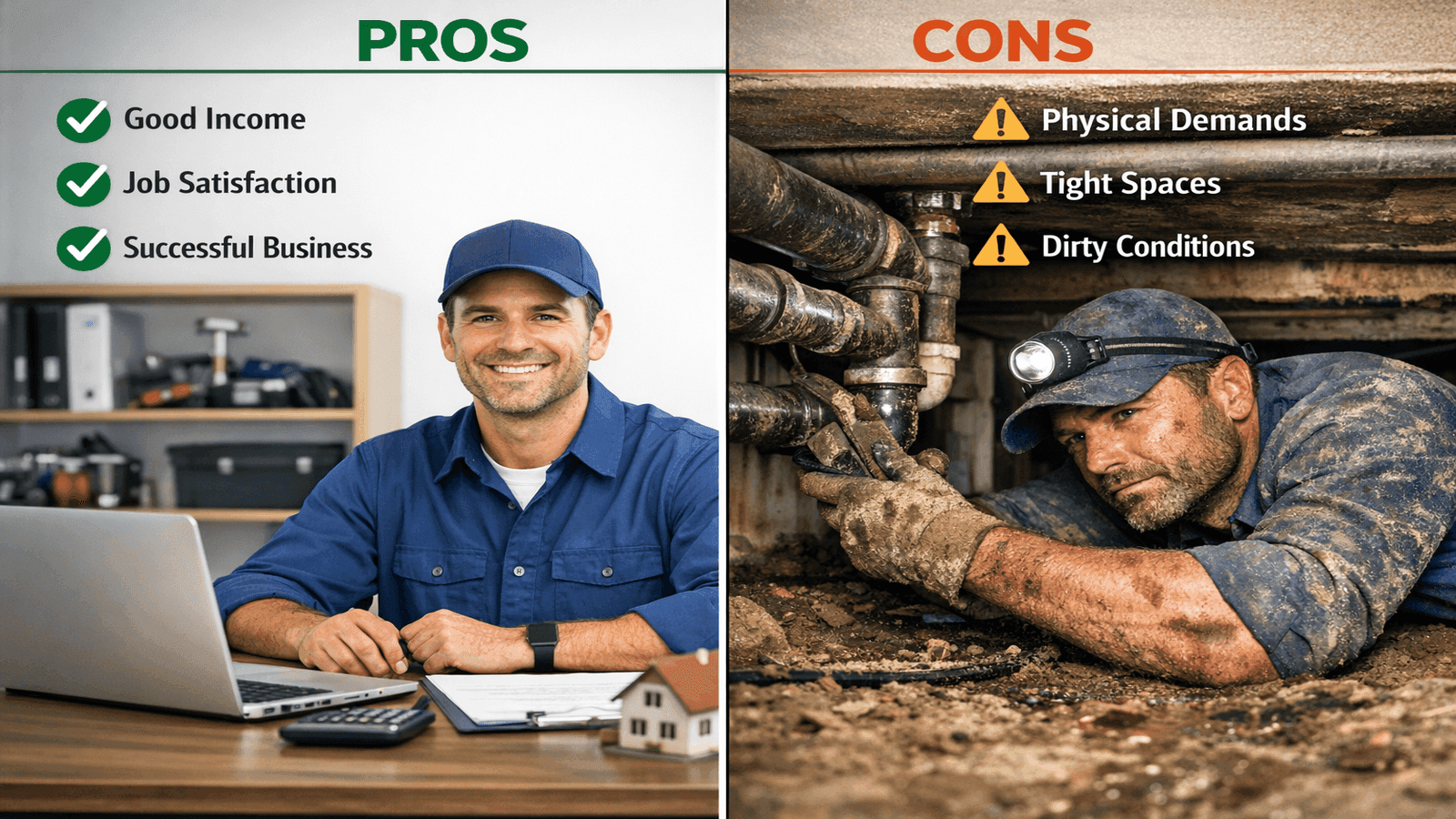
Photo: Split screen comparison showing benefits of plumbing career including good salary versus physical challenges like working in confined spaces
Next Steps to Start Your Plumbing Career
Action Plan for Aspiring Plumbers
Within 1 month:
- Research apprenticeship programs (union and non-union)
- Verify state licensing requirements
- Complete high school or earn GED if needed
- Visit local plumbing supply stores
- Attend trade shows or career fairs
Within 3 months:
- Apply to multiple apprenticeship programs
- Study for aptitude tests (math, mechanical reasoning)
- Consider pre-apprenticeship vocational program
- Network with local plumbers for job shadowing
- Prepare resume highlighting reliability and experience
Within 6 months:
- Complete all applications
- Interview with programs and contractors
- Accept apprenticeship position
- Purchase basic tools (boots, work clothes, safety gear)
- Prepare mentally and physically for first day
Don't wait for the 'perfect time'—apply now. I started my apprenticeship at 20 with no construction experience. Eighteen years later, I have zero regrets. The demand is there, the pay is good, and the work is satisfying. If you're willing to work hard and learn, plumbing will reward you.

Photo: Young person researching plumbing apprenticeship programs and preparing career applications at desk with laptop and notepad
Sources & References
- U.S. Bureau of Labor Statistics. (2026). "Occupational Outlook Handbook: Plumbers, Pipefitters, and Steamfitters." https://www.bls.gov/ooh/construction-and-extraction/plumbers-pipefitters-and-steamfitters.htm
- U.S. Bureau of Labor Statistics. (2026). "Occupational Employment and Wage Statistics: Plumbers." https://www.bls.gov/oes/current/oes472152.htm
- ServiceTitan. (2026). "Plumber Salaries: A State-by-State Guide to the Best Pay in 2026." https://www.servicetitan.com/blog/plumber-salary
- ConsumerAffairs. (2026). "Plumbing Industry Statistics 2026."https://www.consumeraffairs.com/homeowners/plumbing-industry-statistics.html
- Plumbing & Mechanical Magazine. (2026). "Cautious Growth Through Critical Change: 2026 Plumbing Industry Outlook." https://www.pmmag.com/articles/107036-cautious-growth-through-critical-change-2026-plumbing-industry-outlook
- HomeGuide. (2026). "How to Become a Plumber: Requirements, Timeline, & Salary." https://homeguide.com/articles/how-to-become-a-plumber
- NEXT Insurance. (2026). "Plumber License Requirements in Every State [2026]." https://www.nextinsurance.com/blog/plumber-licensing-requirements/
- Plumbing-Heating-Cooling Contractors Association. (2025). "Apprenticeship Standards and Training Guidelines." https://www.phccweb.org
Disclaimer: Plumbing licensing requirements, apprenticeship programs, and salary ranges vary significantly by state, city, and employer. The information provided represents national averages and general guidelines from 2026 data and may not reflect your specific situation. Always verify current requirements with your state licensing board and local apprenticeship programs before making career decisions. Salary figures are estimates based on BLS data and industry surveys—actual earnings depend on location, experience, sector, and individual performance. This article is for informational purposes only and does not constitute professional career advice for your specific situation.

Michael Jennings is a licensed master plumber & water systems specialist with over 18 years of hands-on experience in residential and commercial plumbing, serving clients across California and Texas. At NearbyHunt, he shares practical advice on pipe installations, water heater maintenance, and home plumbing upgrades. Michael has helped thousands of homeowners prevent costly water damage and improve water efficiency through modern plumbing solutions.

Robert is a licensed master plumber with over 20 years of experience serving both residential and commercial clients across the Midwest. Specialising in advanced plumbing systems and sustainable water technologies, Rob brings deep technical insight and hands-on expertise to every project. As a reviewer for NearbyHunt, he ensures all plumbing content reflects the highest standards of safety, compliance, and practicality.