- Luxury shower systems require adequate water pressure (minimum 45 PSI) and supply line upgrades from 1/2-inch to 3/4-inch in most homes to support multiple simultaneous outlets
- A thermostatic valve is non-negotiable for any multi-outlet system, it maintains exact temperature to within plus or minus 1 degree regardless of pressure fluctuations elsewhere in the house
- Body jet arrays running 8 to 12 outlets can demand 15 to 30 GPM, far exceeding standard residential supply capacity without infrastructure upgrades
- Steam generators require a dedicated 240V electrical circuit, a sealed and sloped enclosure, and steam-tight grout throughout, overlooking these requirements is the most common cause of cost overruns
- Total installed costs range from $900 to $1,800 for a basic upgrade to $12,000 to $22,000 for a full steam shower suite with digital controls
- Digital shower controls are brand-specific ecosystems; Kohler Konnect requires Kohler valves, Moen U by Moen requires Moen M-PACT valves; do not mix brands
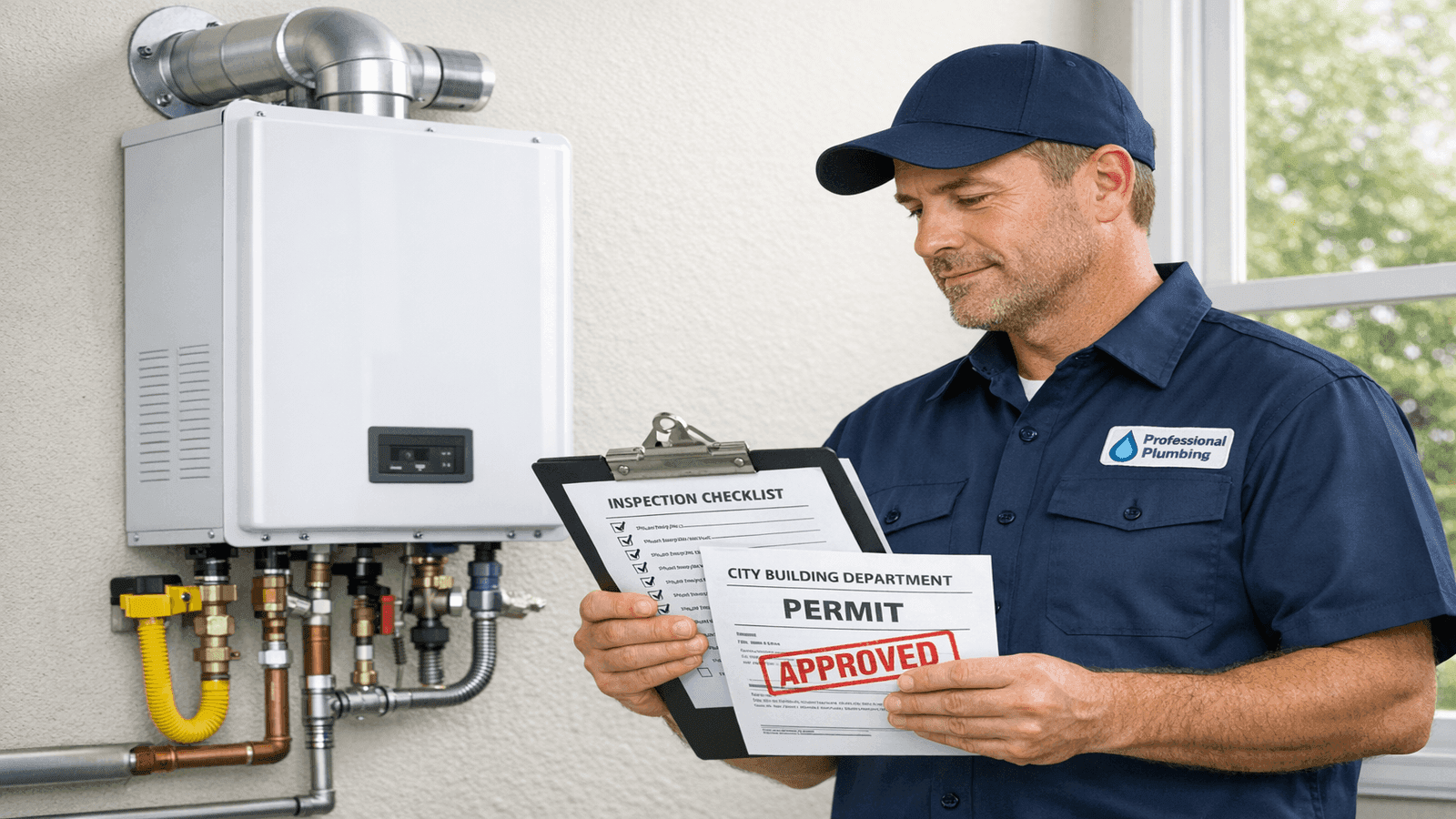
- Always work with a licensed master plumber (not a journeyman) and pull all required permits before any multi-outlet or steam shower project begins
A daily shower is no longer just a functional routine. For millions of homeowners, it has become the centrepiece of a home spa experience, and the market for luxury shower systems has never been more feature-rich or accessible. Whether you are planning a full bathroom renovation or upgrading an existing enclosure, understanding the components, costs, and installation requirements will help you build a system that delivers hotel-level comfort every morning. For a complete overview of transforming your bathroom space, start with the NearbyHunt's plumbing ideas and inspiration guide, which covers the full spectrum of upgrades from fixtures to full renovations.
This guide covers every layer of a luxury shower system: rainfall showerheads, body jets, thermostatic valves, steam generators, digital controls, and the plumbing infrastructure required to make them all work together reliably.

Get quotes from top-rated pros.
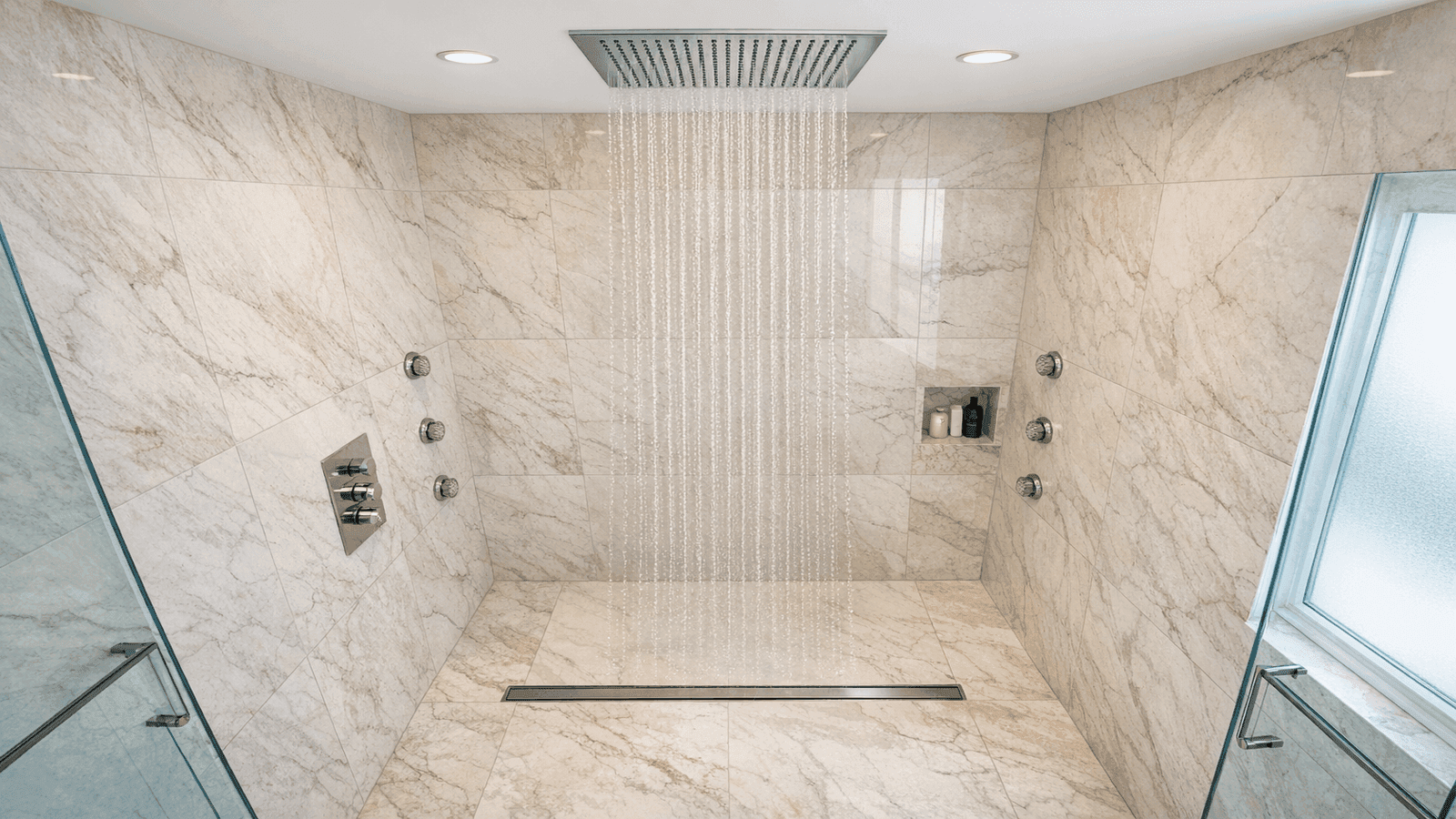
Photo: Large walk-in spa shower with ceiling-mounted rainfall showerhead, recessed body jets, and floor-to-ceiling marble tile
What Makes a Shower "Luxury"
The word luxury gets applied loosely, but in practical plumbing terms, a luxury shower system is defined by three characteristics: multiple simultaneous water outlets, precise temperature control independent of pressure fluctuations, and a design that prioritizes therapeutic experience over bare functionality.
A standard shower has one outlet: the showerhead. A luxury system may have four, six, or more outlets running at once, each requiring its own volume of water and pressure. That distinction drives every decision downstream, from valve selection to supply line sizing to permit requirements.
The licensed plumbers in our NearbyHunt network report that 68% of luxury shower projects they complete in 2026 require at least one infrastructure upgrade beyond the fixture swap itself, typically a supply line upsizing from 1/2" to 3/4" copper or PEX, or a pressure booster pump installation. Homeowners who overlook this step often end up with underwhelming pressure across all their new fixtures.
Rainfall Showerheads
The rainfall showerhead is typically the first component homeowners choose and the one that defines the visual identity of the shower. Modern luxury rain heads range from 10 to 16 inches in diameter, producing a wide, even curtain of water that mimics natural rainfall.
Ceiling-mount vs. arm-mount: A ceiling-mounted rain head requires rough-in plumbing in the ceiling, typically during renovation when the framing is open. Arm-mount versions attach to a standard wall stub-out with a 12 to 18 inch horizontal arm, making them retrofittable in most existing showers. Ceiling mounts produce a more authentic overhead experience; arm mounts cost significantly less to install.
GPM ratings: Standard showerheads in WaterSense-regulated states are capped at 2.0 GPM (gallons per minute). Luxury rain heads typically flow at 2.5 GPM (the federal maximum for non-restricted states) or up to 5.0 GPM in states without further restrictions, such as Texas. A 10-inch rain head at 5.0 GPM produces a dramatically different experience than a 2.5 GPM version — but only if your home can supply that volume at adequate pressure.
Pressure requirements: Most luxury rain heads require a minimum of 45 PSI dynamic pressure at the showerhead. Homes with municipal water pressure below 50 PSI at the meter, or homes with long pipe runs from the meter to the bathroom, often see 35 to 40 PSI at the shower. A pressure booster pump ($300 to $700 installed) solves this without requiring a service upgrade.
Fixture cost: Rainfall showerheads from brands like Kohler, Moen, Delta, and Hansgrohe range from $150 for entry-level models to $800 or more for premium brushed nickel or matte black finishes with self-cleaning nozzles. Budget the same amount again for installation labor if ceiling rough-in is required [1].
The single biggest disappointment I see in luxury shower installs is a gorgeous 14-inch rain head fed by an undersized 1/2-inch supply line. The head looks incredible and trickles water. Always size the supply line first — I recommend 3/4-inch to every luxury shower I build.
Body Jets and Side Sprays
Body jets transform a shower into a hydrotherapy station. Installed in the walls at multiple heights, they direct targeted streams of water at the back, shoulders, hips, and legs simultaneously. Common configurations include six jets (two per side, two on back wall), eight jets, and twelve-plus jets for high-end installs.
Placement heights: Standard placement is at 36 inches (lower lumbar), 48 inches (mid-back), and 60 inches (shoulder height) for an average adult. Custom installs map jet height to the specific heights of household members. Jets installed too low spray at the thighs; too high and they miss the back entirely.
Water volume demands: This is where many homeowners encounter their first shock. A single body jet flows at approximately 0.5 to 1.5 GPM. Run eight jets simultaneously at 1 GPM each, add a 2.5 GPM rain head, and you are demanding 10.5 GPM from your supply system — well above the 6 to 8 GPM a standard 1/2-inch supply line delivers. Full body jet arrays running 12 outlets can demand 20 to 30 GPM, which exceeds most residential supply capabilities entirely without infrastructure upgrades [2].
Thermostatic valve requirement: Running body jets and a rain head simultaneously without a thermostatic valve is not recommended and may violate local plumbing code. When pressure fluctuations occur (another fixture opens elsewhere in the house), a non-thermostatic system will spike water temperature dangerously. More on this in the next section.
Flow balancing: Professional installers use individual volume controls on each body jet zone to balance flow so pressure remains consistent across all outlets. Without balancing, the jets nearest the valve receive more pressure than those at the end of the run.
Cost: Body jet kits (hardware only) range from $600 for a six-jet package to $2,500 for premium twelve-jet systems. Tile work and plumbing installation typically add $1,500 to $3,500 depending on enclosure complexity. For a full breakdown of bathroom plumbing costs, see the NearbyHunt bathroom plumbing costs guide.
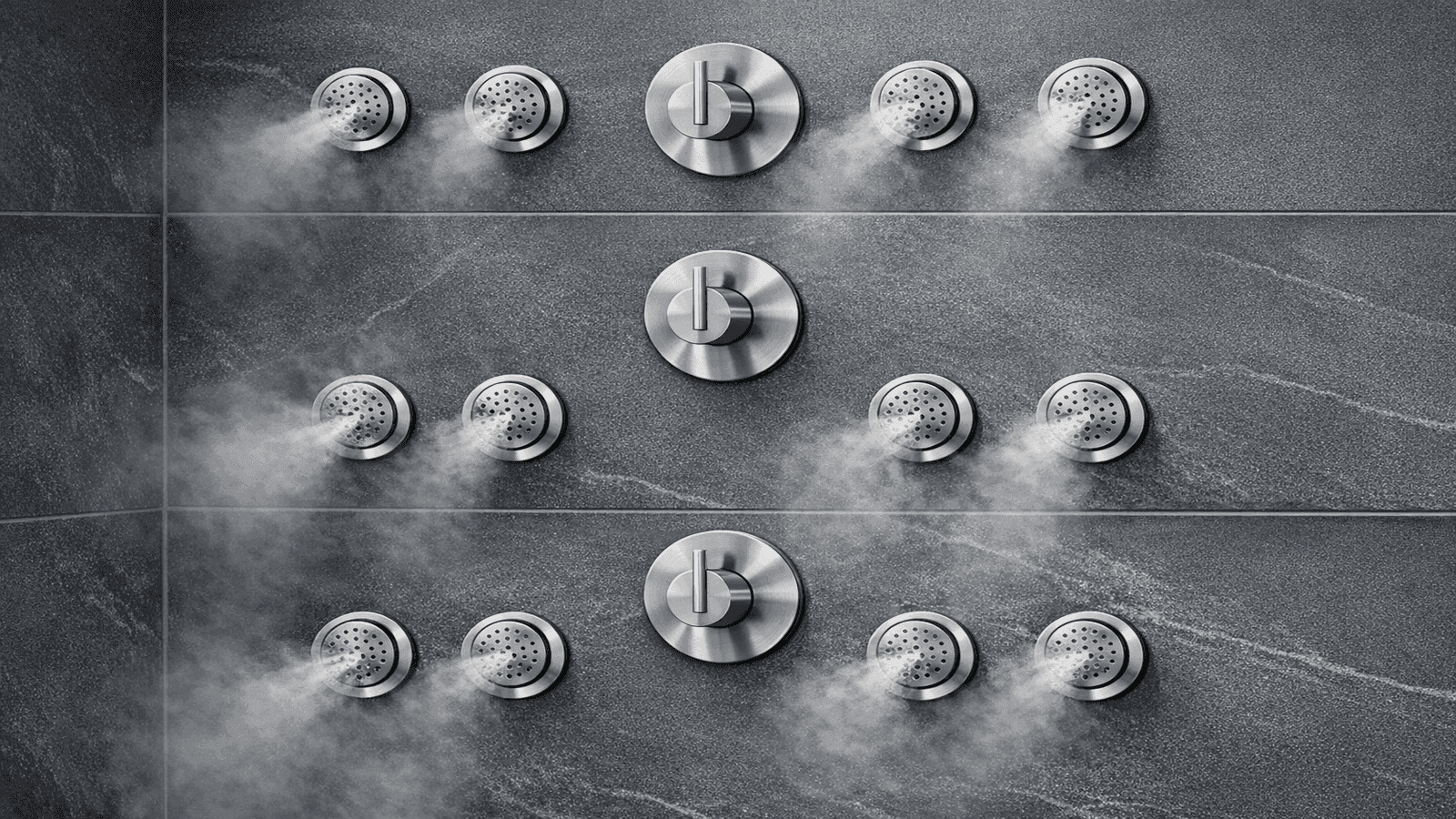
Photo: Wall-mounted body jets at three heights in a marble tile shower showing lumbar, back, and shoulder placement
Thermostatic Valves
A thermostatic valve is the non-negotiable component that makes a multi-outlet shower safe, comfortable, and consistent. Unlike a standard pressure-balancing valve (which only prevents scalding from pressure swings), a thermostatic valve actively monitors and maintains water temperature to within plus or minus 1 degree Fahrenheit regardless of what is happening elsewhere in the house.
How they work: The valve contains a thermostatic cartridge with a wax or bimetallic element that expands or contracts in response to temperature changes. It continuously mixes hot and cold supply water to hit and hold the target temperature. When you set 104 degrees Fahrenheit, the valve delivers 104 degrees whether a toilet flushes, a dishwasher starts, or the water heater is recovering [3].
Digital vs. analog: Traditional analog thermostatic valves use manual knobs to set temperature and volume. Digital thermostatic controllers (covered below under digital shower controls) pair with thermostatic valves to add app control, preset profiles, and LED temperature readouts.
Leading products:
- Kohler DTV+ Digital Shower System: Full digital integration, up to six outlets, approximately $2,000 to $3,500 for the controller and valves
- Moen S3104 Thermostatic Valve: Analog, two-outlet, approximately $400 to $600 for the valve alone
- Hansgrohe ShowerSelect: European-style concealed thermostatic, approximately $500 to $900
Cost: Thermostatic valve hardware ranges from $400 to $1,200 for the valve alone. Installation labor adds $300 to $700 depending on rough-in complexity. The total thermostatic valve investment for a full luxury system typically runs $700 to $2,000 [1].
In 18 years and 2,400-plus residential projects across Dallas-Fort Worth and California, I have never seen a multi-outlet luxury shower that did not need a thermostatic valve. It is not optional — it is the infrastructure that makes everything else work properly and safely.
Get quotes from top-rated pros.
Steam Generators
Adding a steam generator converts a shower enclosure into a full steam room, delivering therapeutic heat and humidity that outperforms any traditional sauna at a fraction of the space footprint.
How they work: A steam generator is a sealed stainless steel tank, typically 2 to 12 kW in size for residential use, that heats 1 to 2 liters of water at a time using electric resistance elements. The resulting steam is piped through a 1/2-inch copper or stainless line to a steam head inside the shower enclosure. The generator maintains steam output automatically based on a thermostat set in the enclosure.
Enclosure requirements: A steam shower enclosure has very specific requirements that differ from a standard shower. The ceiling must slope at least 1 inch per foot toward one corner so condensation runs to the floor rather than dripping on the user. All surfaces must be steam-tight: glass panels require a steam seal at every joint, and any gaps in tile grout must be filled with epoxy grout rather than standard sanded grout. The door must seal fully with no gap at the threshold [4].
Sizing the generator: Generator output is matched to enclosure cubic footage. A 6x4x8-foot enclosure (192 cubic feet) typically requires a 6 to 9 kW generator. Manufacturers publish enclosure-to-kW charts. Undersizing produces inadequate steam; oversizing wastes electricity and can produce uncomfortably dense steam.
Electrical requirements: Steam generators require a dedicated 240V circuit, typically 30 to 60 amps depending on generator size. This circuit must be installed by a licensed electrician. In most jurisdictions, a building permit is required for the electrical work and for the steam shower enclosure itself. For a full review of what triggers permit requirements, the NearbyHunt plumbing code requirements guide covers permit thresholds by project type.
Cost: Steam generator hardware alone ranges from $800 to $3,500. Total installed cost including the generator, steam head, enclosure sealing, tile work, and electrical circuit typically runs $2,500 to $6,000 for a mid-size enclosure.
Real homeowner case study: Daniel W. of Southlake, TX contacted NearbyHunt after spending two years planning a steam shower addition to his master bath. He had budgeted $4,000 for the project based on a quote he found online, but the quote did not include electrical work or enclosure modifications. After a NearbyHunt-connected licensed plumber assessed the project, the actual scope included: a 7 kW generator ($1,400), a dedicated 40-amp 240V circuit ($850), slope modification to the existing tile ceiling ($600), steam seal on the glass panels ($300), and a new steam door ($900). Total installed cost: $4,650. Daniel described the final result as "worth every dollar — it replaced a gym membership."
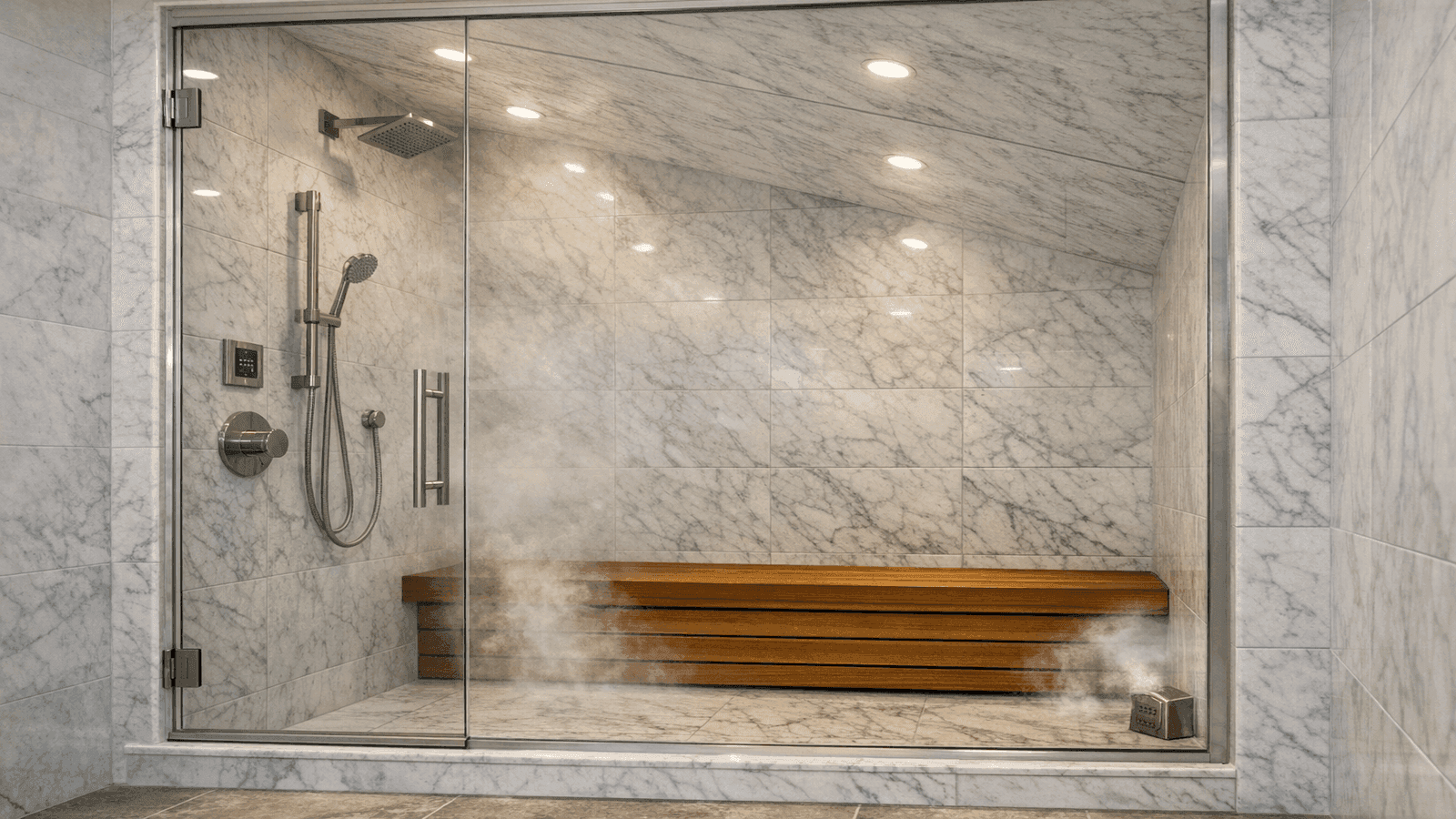
Photo: Steam shower enclosure with sloped ceiling for condensation drainage, glass steam door, and built-in teak bench
Digital Shower Controls
Digital shower systems layer smartphone connectivity, voice control, and programmable presets on top of thermostatic valve infrastructure. They are the fastest-growing segment of the luxury shower market in 2026.
How they work: A digital controller connects to the thermostatic valve via a low-voltage wiring harness. A touchscreen panel or smartphone app sends temperature and volume commands to the valve controller, which adjusts the valve actuators in real time. Most systems allow multiple user profiles, so a 5'4" occupant can save "Julia: 102F, rain head + two body jets" while a 6'2" occupant saves "Marcus: 106F, rain head + all six body jets."
Leading products:
- Kohler Konnect: Integrates with Alexa and Google Assistant, six-outlet support, LED display panel, approximately $1,800 to $2,800 for the digital module
- Moen U by Moen: Four-outlet control, Bluetooth and Wi-Fi connectivity, companion app with shower scheduling, approximately $700 to $1,200
- Delta Temp2O: Entry-level digital display valve with color temperature indicators, approximately $300 to $500
Practical benefits: Digital controls allow the shower to pre-heat to target temperature before you step in — a feature that eliminates the uncomfortable cold-water blast while waiting for the system to warm up. Scheduling features let the shower start automatically at 6:45 AM so it is ready when you arrive.
For more information on smart plumbing fixtures that complement digital shower systems, see modern bathroom fixtures on NearbyHunt.
Handheld Showerhead on Slide Bar
No luxury shower system is complete without a handheld unit. Mounted on a 24 to 36 inch slide bar, the handheld provides targeted rinsing, easier hair washing for shorter users, and a practical tool for cleaning the shower enclosure itself.
Pairing with overhead: Run the handheld through a dedicated volume control separate from the rain head so either can operate independently or in combination. A diverter-style valve that forces a choice between overhead and handheld limits the system unnecessarily.
Hose length: 60-inch hoses are standard; 72-inch hoses provide full freedom of movement for users of any height or mobility level. Look for hoses with anti-kink coil design for durability.
Cost: Quality handheld units with slide bar range from $80 to $350. Add $150 to $250 for installation labor.
Water Supply Requirements: The Infrastructure Layer
The components above are visible and exciting. The water supply infrastructure is invisible and critical. Undersized supply plumbing limits the performance of every fixture regardless of how premium the hardware is.
Supply line sizing: Standard residential showers are fed by 1/2-inch supply lines. A luxury system with multiple simultaneous outlets should be fed by a 3/4-inch supply line from the main stack. Upgrading from 1/2 to 3/4-inch typically costs $400 to $900 depending on the run length and wall access. For context on maintaining water pressure throughout the system, the NearbyHunt water pressure maintenance guide covers pressure testing and booster pump options.
Pressure booster pumps: Homes with less than 45 PSI dynamic pressure at the shower location benefit from a pressure booster pump. Units from Grundfos and Davey are commonly used in residential settings. Installed cost: $400 to $900.
Water heater capacity: A luxury system running 10 GPM will exhaust a standard 40-gallon water heater in minutes. Upgrading to a 75 to 80-gallon tank or a tankless water heater is frequently required for full luxury system performance. Tankless (on-demand) heaters eliminate recovery time entirely but require 3/4-inch gas supply lines and a dedicated flue.
For homeowners planning a shower installation or full enclosure build, supply line sizing should be determined before any tile or enclosure work begins.
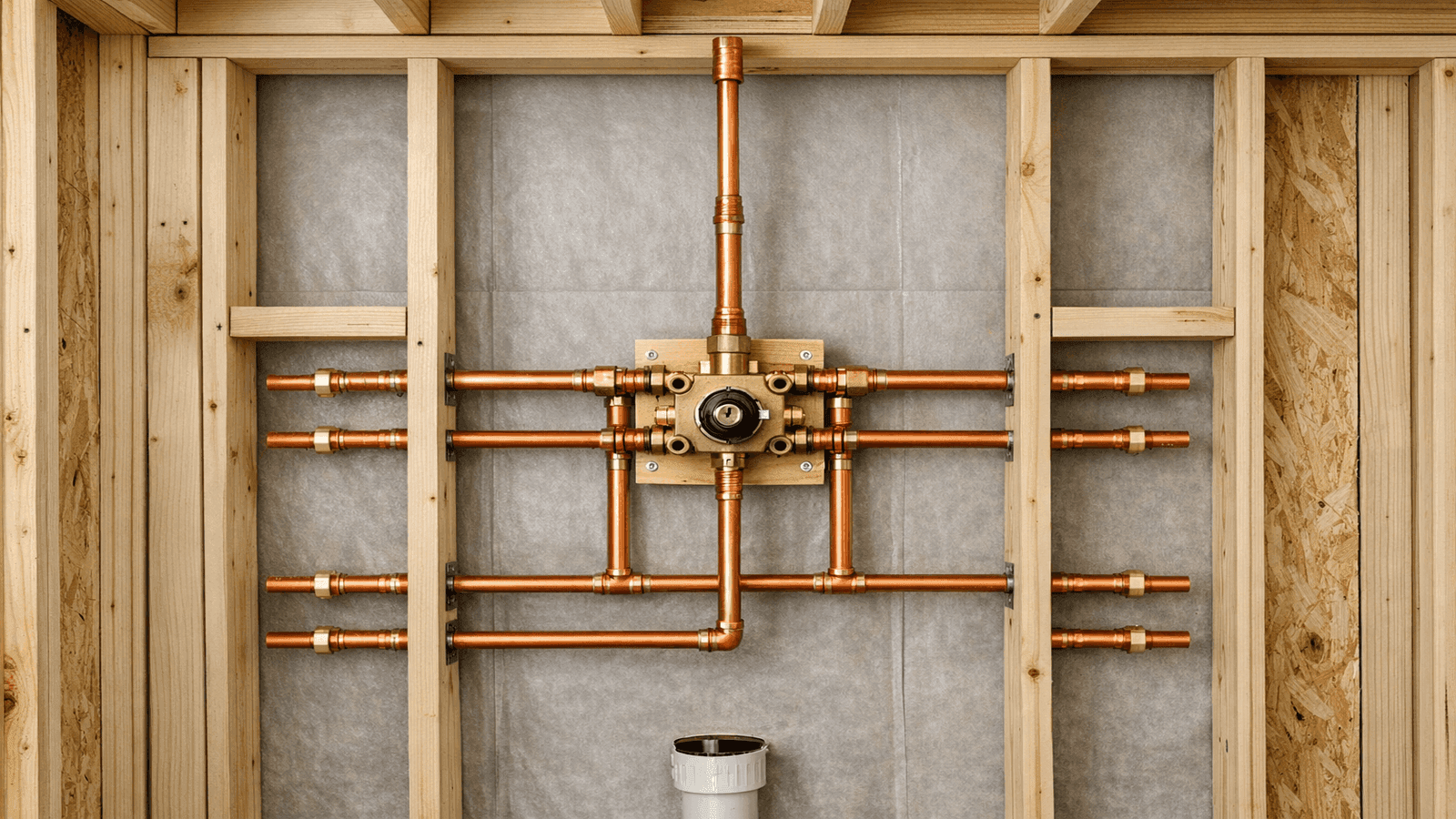
Photo: Luxury shower plumbing rough-in showing 3/4-inch supply lines, thermostatic valve rough-in block, and body jet supply stubs in wall framing
Permit and Code Requirements
Luxury shower projects often cross the threshold into permitted work, and many homeowners are surprised to discover what triggers a permit requirement.
What typically requires a permit:
- Any new water supply line rough-in (in most jurisdictions)
- Steam generator installation (always requires permit due to electrical and enclosure requirements)
- Adding or relocating drain lines
- Any work behind finished walls involving supply or drain plumbing
What typically does not require a permit:
- Replacing a showerhead like-for-like
- Replacing a shower valve cartridge
- Installing a slide bar or handheld unit on an existing stub-out
Pulling permits protects homeowners. Unpermitted plumbing work can void homeowner's insurance coverage for related water damage and creates disclosure obligations at resale. Always verify permit requirements with your local building department before work begins.
Luxury Shower System Cost Comparison
| System Tier | Components Included | Hardware Cost | Installed Cost |
| Basic Upgrade | Premium rain head, handheld, new valve | $400–$800 | $900–$1,800 |
| Mid-Range | Rain head, 4-6 body jets, thermostatic valve | $1,500–$3,000 | $3,500–$6,500 |
| Full Luxury | Rain head, 8-12 body jets, thermostatic valve, digital controls | $4,000–$8,000 | $8,000–$15,000 |
| Steam Addition | All above plus steam generator, enclosure, electrical | $7,000–$14,000 | $12,000–$22,000 |
- Installed costs include labor, supply line upgrade, and standard tile work. Custom tile, exotic materials, and structural modifications are separate.*
Get quotes from top-rated pros.
Showerhead GPM and Pressure Reference
| Component | Flow Rate (GPM) | Minimum Pressure (PSI) |
| Standard rain head (2.5 GPM) | 2.5 | 30 |
| High-flow rain head (5.0 GPM) | 5.0 | 45 |
| Body jet (per jet) | 0.5–1.5 | 40 |
| Handheld showerhead | 1.5–2.0 | 30 |
| 6-jet body array + rain head | 9–12 | 50 |
| Full 12-jet system + rain head | 15–22 | 60+ |
Brand and Product Comparison
| Brand | Featured Product | Type | Price Range | Warranty |
| Kohler | DTV+ Digital System | Digital thermostatic | $2,000–$3,500 | Lifetime limited |
| Moen | U by Moen | Digital thermostatic | $700–$1,200 | Limited lifetime |
| Hansgrohe | Raindance Select | Rain head + body jets | $800–$2,500 | 3 years |
| Delta | Temp2O | Digital display valve | $300–$500 | Limited lifetime |
| American Standard | Spectra+ | Body jet system | $600–$1,400 | Limited lifetime |
Eco-Friendly Considerations
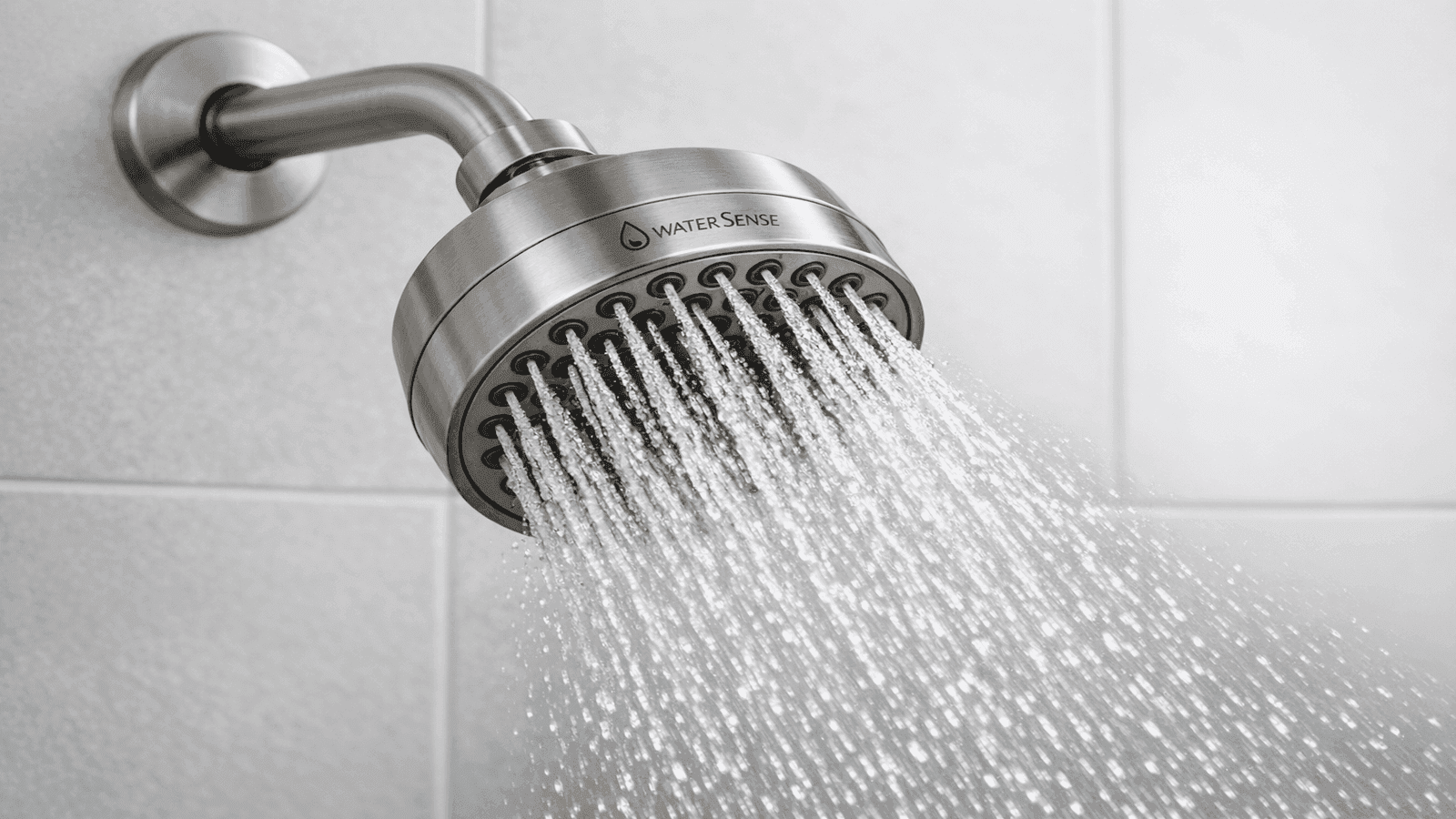
Luxury shower systems carry a reputation for high water consumption, and that concern is valid for high-flow configurations. However, WaterSense-certified luxury options exist across every category. A 10-inch rain head certified at 2.0 GPM can still deliver an immersive experience when paired with the right pressure and spray pattern engineering.
For homeowners interested in pairing a luxury shower with sustainable fixtures throughout the bathroom, the NearbyHunt eco-friendly fixtures guide covers low-flow toilets, sensor faucets, and greywater recycling systems that offset the water use of a premium shower system.
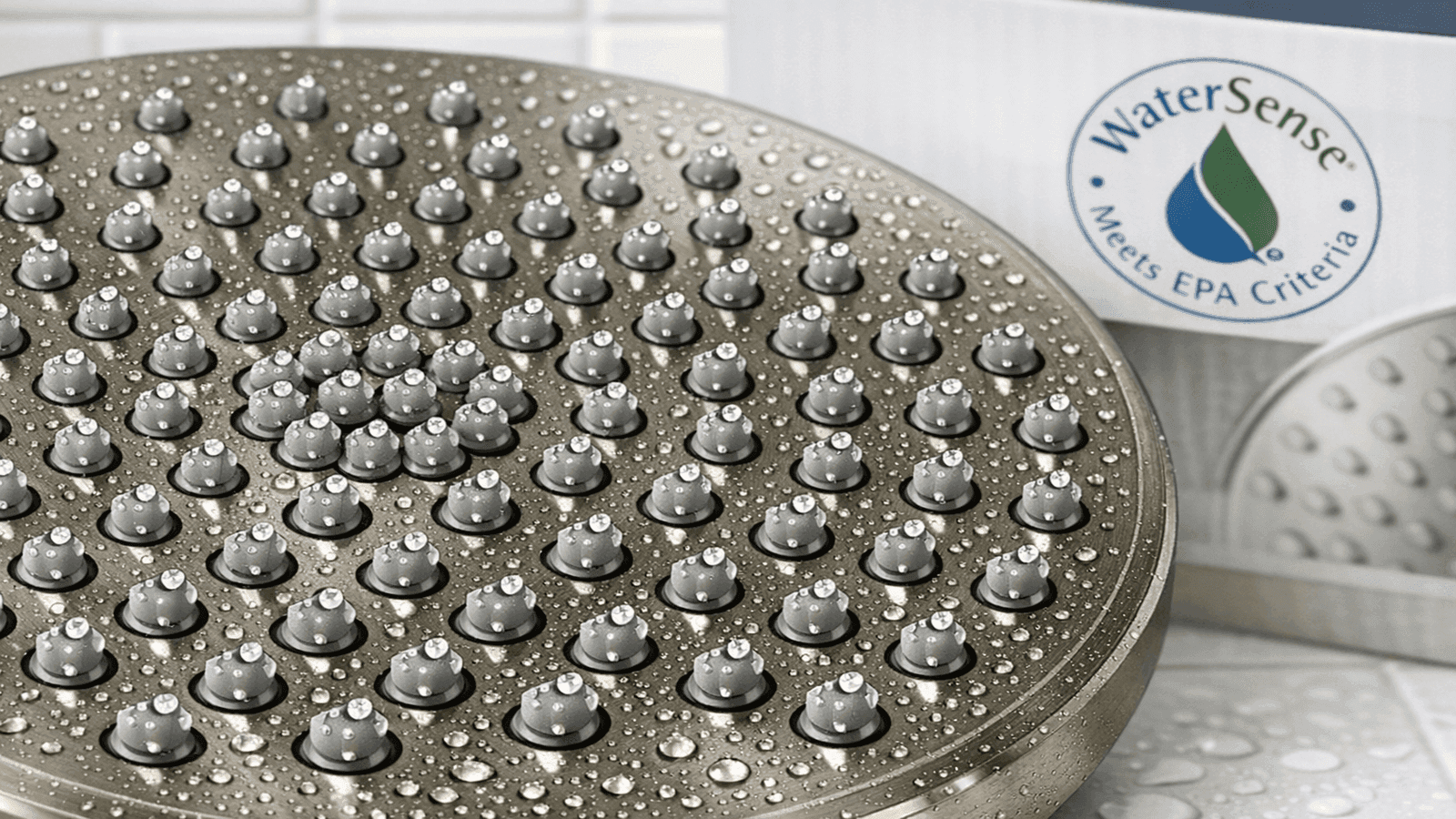
Photo: Close-up of WaterSense-certified rainfall showerhead with self-cleaning silicone nozzles in brushed nickel finish
Steam generator sizing is the most misunderstood part of any steam shower project. I always measure the enclosure in cubic feet before specifying a generator — a 7 kW unit in a 100 cubic foot enclosure will overheat the space in three minutes. Match the generator to the enclosure, not to a budget number.
Hiring a Licensed Plumber for Luxury Shower Work
A luxury shower system is not a DIY project for most homeowners. Multi-outlet systems require thermostatic valve rough-in, supply line resizing, and frequently involve opening walls and ceilings. Steam generators add electrical work that must be performed by a licensed electrician.
When hiring, look for a plumber who:
- Holds a master plumber license in your state (not just a journeyman)
- Has specific experience with multi-outlet thermostatic systems
- Carries liability insurance of at least $1 million per occurrence
- Pulls all required permits before starting work
The licensed plumbers in our NearbyHunt network report that the most common mistake homeowners make when hiring for luxury shower projects is selecting a contractor based on fixture installation experience alone, without verifying that the contractor understands the supply-side infrastructure requirements. A plumber who can install a beautiful Kohler rain head but cannot properly size a thermostatic valve for a six-outlet system will leave you with a partially functional installation.
Conclusion
A luxury shower system is one of the highest-return bathroom investments available in 2026, both in daily quality of life and in resale value. The key to a successful project is understanding that the visible fixtures (rain heads, body jets, steam heads) are only as effective as the infrastructure supporting them: properly sized supply lines, a correctly specified thermostatic valve, and adequate water pressure and heater capacity.
For any multi-outlet system, work with a licensed master plumber who understands thermostatic valve specification and supply-side requirements. Pull all required permits. And if you are considering a steam addition, budget for the electrical work and enclosure modifications from the start rather than treating them as surprises.
The NearbyHunt network connects homeowners with licensed, vetted plumbers who specialize in luxury bathroom work. Every project in our network is matched to a professional with verified licensing, insurance, and relevant experience.
Disclaimer: Cost figures in this article represent national averages and ranges based on industry data current as of early 2026. Actual costs vary significantly by region, labor market conditions, fixture selection, and site-specific conditions. Always obtain multiple licensed contractor quotes before committing to a project.
Sources & References
- Kohler Luxury Shower Systems Product Guide — Kohler.com
- Moen Thermostatic Shower Systems Technical Specifications — Moen.com
- EPA WaterSense Showerhead Program Specifications — epa.gov
- Steamist Steam Shower Generator Installation Manual — Steamist.com
- National Kitchen and Bath Association 2025 Design Report — nkba.org
- International Plumbing Code Section 607: Hot Water Supply — iccsafe.org
- Hansgrohe Shower Systems Engineering Guide — hansgrohe-usa.com
- American Society of Plumbing Engineers Data Book — aspe.pro


Michael Jennings is a licensed master plumber & water systems specialist with over 18 years of hands-on experience in residential and commercial plumbing, serving clients across California and Texas. At NearbyHunt, he shares practical advice on pipe installations, water heater maintenance, and home plumbing upgrades. Michael has helped thousands of homeowners prevent costly water damage and improve water efficiency through modern plumbing solutions.

Robert is a licensed master plumber with over 20 years of experience serving both residential and commercial clients across the Midwest. Specialising in advanced plumbing systems and sustainable water technologies, Rob brings deep technical insight and hands-on expertise to every project. As a reviewer for NearbyHunt, he ensures all plumbing content reflects the highest standards of safety, compliance, and practicality.