- Hair causes over 80% of shower drain clogs. The average person sheds 50-100 hairs per day, and most go straight down the drain.
- Most shower clogs sit within 2 feet of the drain opening, meaning a $3 drain hook resolves the majority of cases without any disassembly.
- Hiring a plumber to clear a shower drain costs $100-$275 on average (HomeAdvisor 2025). The DIY fix costs $0-$5 in most cases.
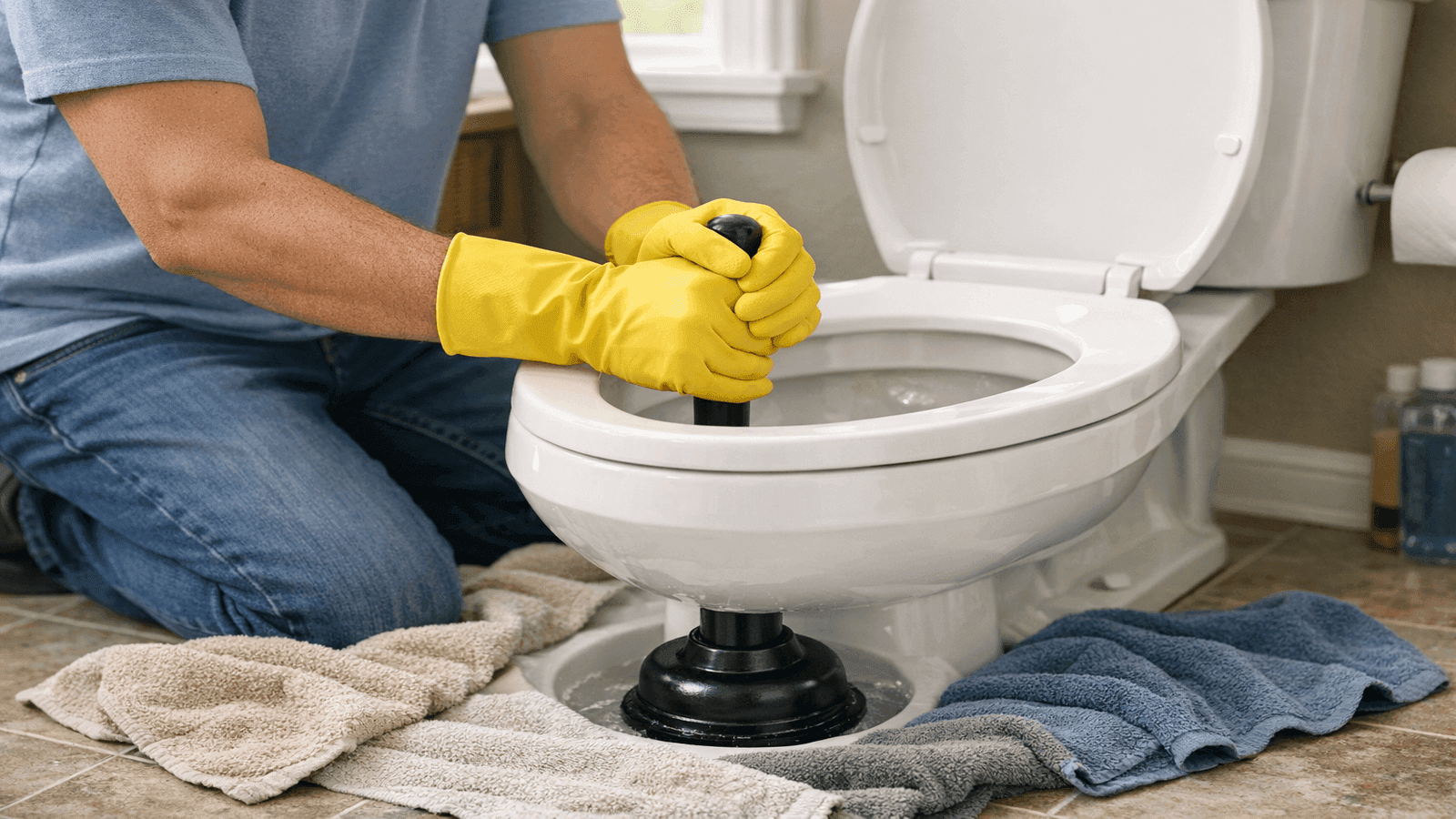
- A cup plunger works on shower drains because the drain opening is flat. This is the opposite of toilets, which require a flange plunger.
- Over 80% of U.S. homes have hard water, which accelerates soap scum buildup and makes shower drain clogs worse over time.
- Never use chemical drain cleaners as the first step: manual removal and a drain hook clear most shower clogs in under 10 minutes at zero cost.
A slow shower drain is not just annoying. Standing ankle-deep in soapy water every morning is a sign that hair and soap scum have built up to the point where the drain is nearly blocked. According to HomeAdvisor, a professional drain-clearing service costs $100-$275, while most homeowners can fix it themselves in under 15 minutes.
This guide covers what actually builds up in your shower drain, the right tools for each situation, and 6 methods in order of escalation. Start with Method 1 before buying anything. You will also find clear signs of when a clog signals a bigger plumbing problem and how to prevent clogs from coming back.
This guide is part of the DIY Plumbing Guides series covering the most common household plumbing repairs.
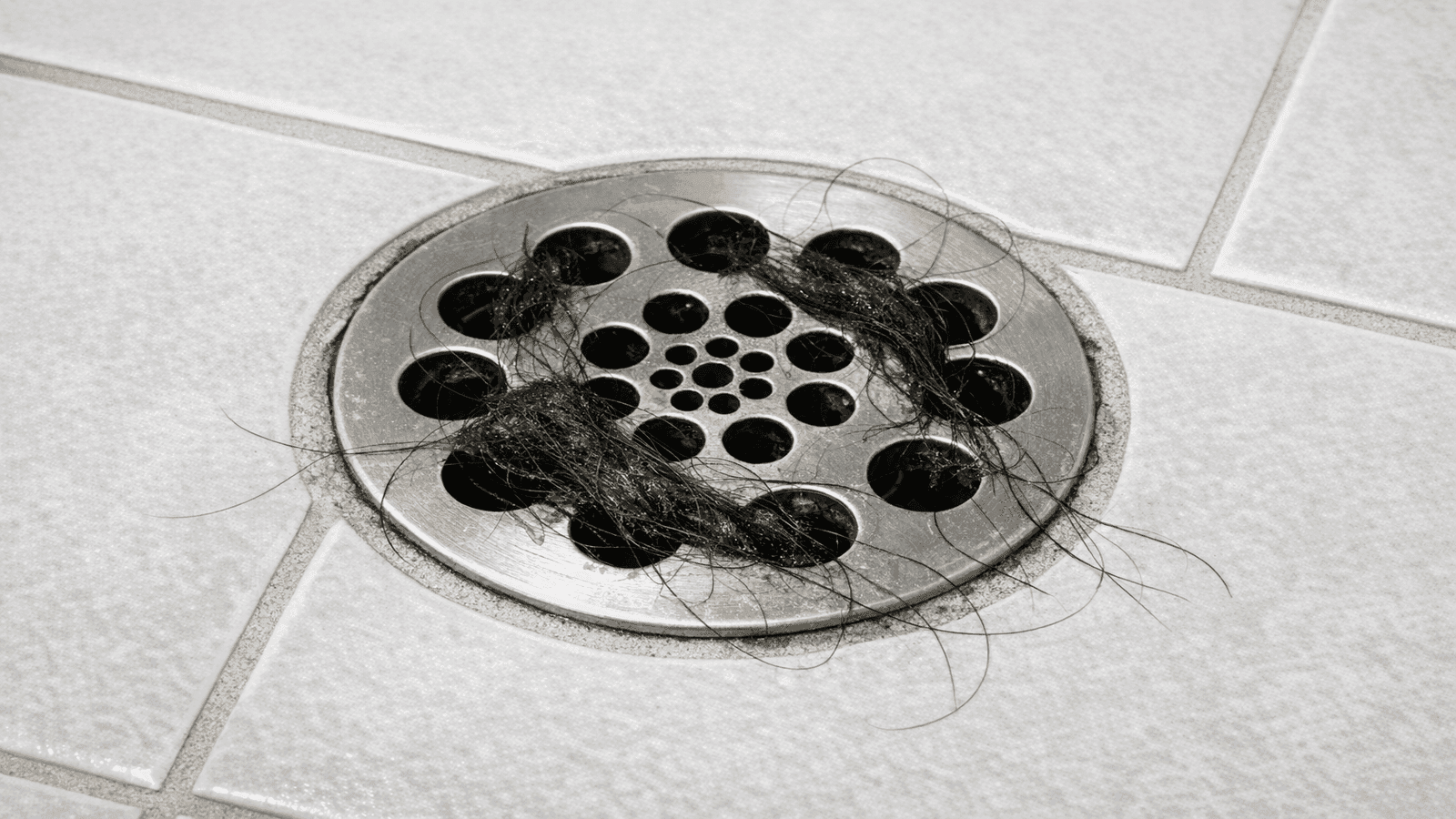
Photo: Close-up of a shower drain with visible hair buildup around and inside the drain cover, bathroom tile background, natural overhead lighting
Why Shower Drains Clog (What You're Actually Dealing With)
Hair is the dominant cause of shower drain blockages. The average person loses 50-100 hairs per day, and showering accelerates shedding. Over 4-6 weeks, a full household's hair accumulates into a dense, wet mass inside the drain pipe. That mass is what is slowing your drain.
Soap scum binds to hair and the pipe walls. Traditional bar soap contains animal fat that reacts with hard water minerals to form a sticky gray film. This is what turns a loose hair tangle into a solid blockage. Hard water minerals (calcium and magnesium) also coat the inside of drain pipes over time, narrowing their effective diameter. In the 80%+ of U.S. homes with hard water, this process happens faster than most homeowners expect.
Depth matters when choosing a method. Clogs within 2 feet of the drain cover (the majority) respond to manual removal or a drain hook. Clogs deeper than 2 feet require a drain snake.
Most shower drain clogs I get called about are sitting right at the bottom of the drain cover or just below it. When I pull up the screen, there is a hair clump the size of a golf ball. People assume it is deeper because the drain is slow, but slow drainage often means a partial blockage right at the top. Start there before spending money on tools or chemicals. You will be right 6 times out of 10.

What You'll Need (Tools by Method)
| Tool | What It Clears | Cost |
| Rubber gloves | Safety for all methods | $5-$10 |
| Drain hook / Zip-It tool | Hair clogs within 18-24 inches | $3-$5 |
| Cup plunger | Partial clogs, soft buildup | $10-$20 |
| Baking soda + white vinegar | Soap scum and light organic buildup | $0 (pantry) |
| Drain snake / hand auger | Deep clogs 3-25 ft in | $20-$50 |
| Enzyme drain cleaner | Gradual buildup, maintenance | $8-$15 |
A cup plunger (flat bottom, red) is the correct choice for shower drains. A flange plunger is designed for toilets only and will not create a proper seal on a flat shower drain.
6 Methods to Clear a Shower Drain
Get quotes from top-rated pros.
Method 1: Remove and Clean the Drain Cover
When to use: Always. Start here regardless of how bad the clog appears. This step resolves roughly 40% of shower drain clogs at zero cost.
- Put on rubber gloves.
- Remove the drain cover. Most unscrew counterclockwise; some pop up with a flathead screwdriver slotted under the edge.
- Look into the drain with a flashlight. In most cases, the hair clog is visible immediately.
- Use your fingers or needle-nose pliers to grip the hair mass and pull straight up in one steady motion. Do not push it further down.
- Drop the pulled hair into a trash bag immediately (it will smell).
- Run hot water for 30 seconds to flush any loose debris.
- Replace the drain cover.
Pro tip: Keep a flathead screwdriver in the bathroom for monthly drain cover removal before buildup gets serious.
Method 2: Drain Hook / Hair Catcher Tool (Zip-It)
When to use: After Method 1 when manual reach is not enough. The Zip-It extends 18-24 inches, reaching clogs beyond finger reach. This resolves most shower drain clogs for under $5.
- Purchase a Zip-It or similar barbed plastic drain hook ($3-$5 at any hardware store or online).
- Remove the drain cover if possible, or insert the hook through the cover openings.
- Feed the hook down into the drain 12-18 inches.
- Slowly rotate the hook and pull upward with a steady motion. The barbs grab onto hair tangles.
- Remove whatever comes up and discard in a trash bag.
- Repeat 2-3 passes until the hook comes back clean.
- Flush with hot water.
Method 3: Plunger
When to use: After the drain hook, for partial clogs with soft buildup that need pressure to dislodge.
- Use a cup plunger (flat bottom). Do not use a flange plunger here.
- If your shower has an overflow plate, tape over it to prevent suction loss.
- Run enough water into the shower pan to cover the lip of the plunger cup.
- Place the cup directly over the drain opening and press down firmly to create a seal.
- Pump up and down forcefully 10-15 times, keeping the seal intact throughout.
- Lift the plunger and check whether water drains. Repeat 2-3 sets if needed.
Method 4: Baking Soda and Vinegar
When to use: Soap scum and light organic buildup. Good as a follow-up after Methods 1 and 2 to clean residue from pipe walls. Not effective for solid hair clogs deeper in the pipe.
- Pour 1/2 cup of baking soda directly into the drain opening.
- Follow immediately with 1/2 cup of white vinegar. It will fizz.
- Cover the drain opening with the drain cover or a folded rag to keep the reaction inside the pipe.
- Wait 15-30 minutes.
- Flush with the hottest tap water available for 60 seconds.
This is a maintenance-level method. Do not skip to this before trying the drain hook for a visible hair clog. It will not dissolve a dense hair mass on its own.
Method 5: Drain Snake / Hand Auger
When to use: After Methods 1-3 have failed or after the plunger produces no result. The snake reaches clogs 3-25 feet into the pipe. For a full walkthrough of drain snake technique, see How to Snake a Drain.
- Purchase or rent a hand auger / drain snake (3-25 ft capacity, $20-$50).
- Remove the drain cover.
- Feed the snake cable into the drain by rotating the handle clockwise while pushing forward.
- When you feel resistance, you have reached the clog. Continue rotating to work through it.
- If the clog is a hair mass: the snake will break it apart. Keep rotating until resistance drops, then pull back slowly.
- If resistance feels like a foreign object: reverse the rotation to try pulling it back toward you.
- Withdraw the snake, clean the cable, and flush the drain with hot water.
There is an important difference between a slow drain and a completely blocked drain. Slow means partial buildup: a drain hook and hot water flush will usually solve it. Complete blockage, where water does not move at all, often means a foreign object or a hair clog that has been packing in for months. That is when you need the snake. Do not waste time on baking soda if the water is just sitting there. Go straight to the snake and work it out mechanically.
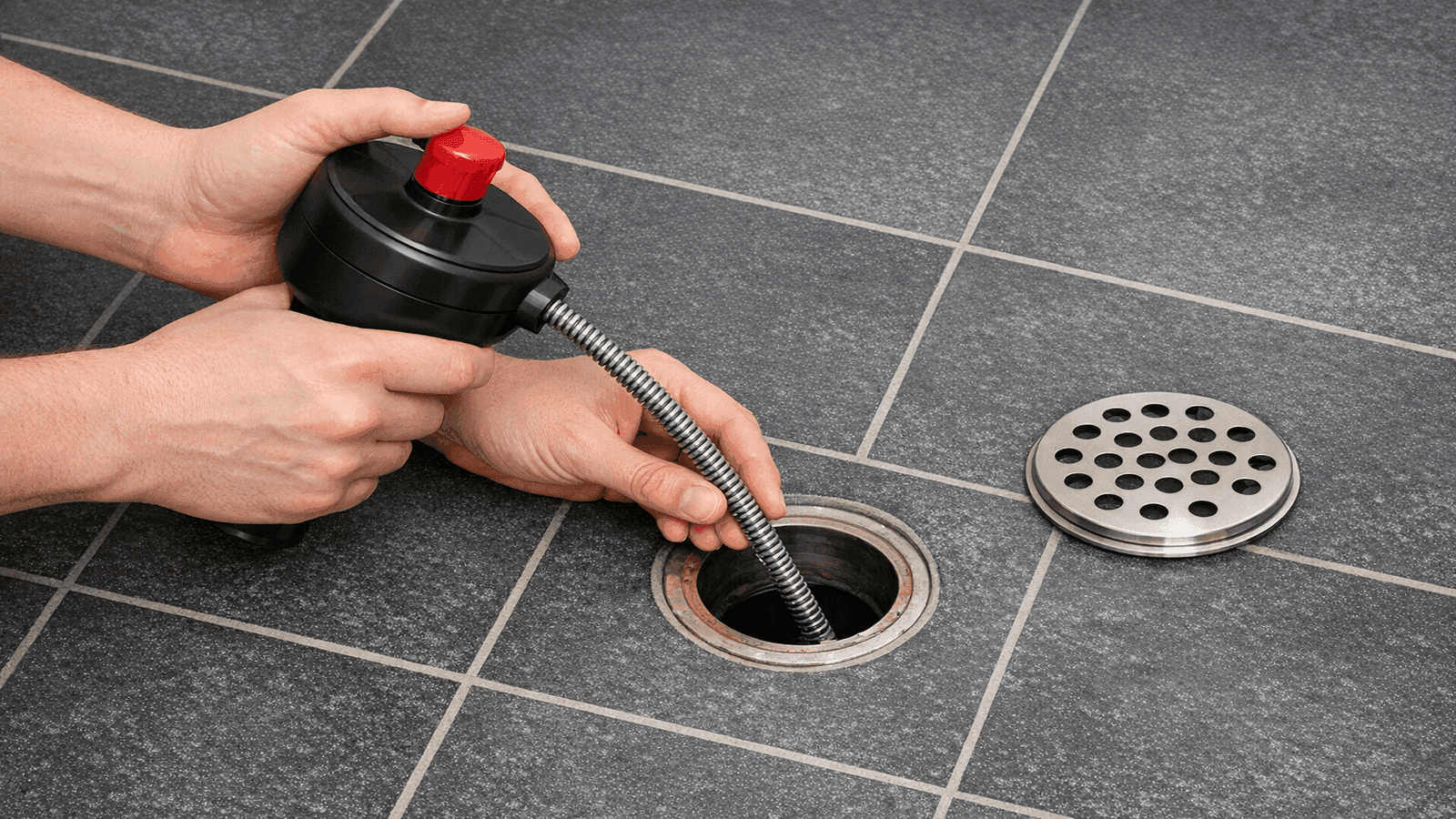
Photo: Hand auger being fed into a shower drain opening, showing correct grip and cable angle, tile floor visible
Method 6: Enzyme Drain Cleaner
When to use: Gradual buildup and slow drains where there is no complete blockage. Also excellent as a monthly maintenance treatment to prevent clogs from forming. Not effective for immediate complete blockages.
- Purchase an enzyme-based drain cleaner (Bio-Clean, Green Gobbler Enzyme, or similar). These use bacteria to digest organic material rather than harsh chemicals.
- Pour the recommended amount down the drain before bed.
- Do not run water for 6-8 hours (overnight is ideal).
- Flush with hot water in the morning.
A note on chemical drain cleaners (Drano): Unlike toilets, shower drains can tolerate chemical cleaners as a last resort. However, they degrade older metal pipes, release toxic fumes in enclosed bathrooms, and are corrosive on skin. Use them only after all 6 methods have failed, follow label instructions exactly, and never mix them with other cleaners. Ventilate the bathroom fully before and during use.
When to Call a Plumber
Some situations go beyond what these 6 methods can address. Attempting to DIY a main sewer line issue from the shower drain opening can make things significantly worse.
Call a plumber if:
- Multiple drains in the house are slow or backing up at the same time (shower, sink, and toilet all affected). This indicates a main sewer line blockage, not a shower drain clog.
- You detect a sewage or rotten egg smell coming from the drain even after clearing it.
- Water from the shower backs up into the tub or appears in other fixtures when you run the shower.
- You have tried all 6 methods and the drain is still completely blocked.
- The clog returns within a week of clearing it, repeatedly.
Cost if you do need to call:
- Shower drain clearing (hair and soap scum): $100-$275 (HomeAdvisor 2025)
- Deeper sewer line issue: $150-$500 for snaking, $300-$800+ for hydrojetting
Get quotes from top-rated pros.
Water backing up in the shower when you flush the toilet is the clearest sign I know that this is no longer a shower drain problem. It means sewage has nowhere to go because the main line is blocked. That is a same-day plumber call. Do not snake it from the shower drain side. You need a main line cleanout. I see homeowners damage their own pipes trying to snake a sewer backup from a fixture. Get a camera inspection first so you know exactly what you are dealing with.
If your toilet is also draining slowly alongside the shower, see How to Unclog a Toilet to rule out a separate fixture clog before assuming sewer line involvement.
Prevent Shower Drain Clogs
Three habits prevent the vast majority of shower drain calls.
1. Install a drain hair catcher. A mesh screen or silicone hair catcher placed over the drain opening costs $5-$10 and catches most hair before it enters the pipe. Empty it after every shower or two. This single step eliminates most shower drain service calls.
2. Monthly enzyme treatment. Once a month, pour an enzyme drain cleaner down the shower drain before bed. The bacteria digest residual hair, soap scum, and organic buildup before it hardens into a clog. At $8-$15 per bottle (multiple treatments), it costs far less than one plumber visit.
3. Weekly hot water flush. Once a week, run the hottest tap water available for 60-90 seconds to melt soap scum and push loose buildup toward the main sewer line before it bonds to the pipe walls.

Photo: Silicone hair catcher installed over a shower drain, visibly catching hair, clean tile surround
Conclusion
Most shower drain clogs are a hair clump sitting within 2 feet of the drain opening, and a $3 drain hook fixes them in under 10 minutes. Work through the 6 methods in order: manual removal, drain hook, plunger, baking soda and vinegar, drain snake, then enzyme cleaner. Reserve chemical cleaners for a last resort, and call a plumber if multiple drains are affected at once.
The best long-term strategy is a $5-$10 silicone hair catcher combined with a monthly enzyme treatment. That two-step habit eliminates the majority of shower drain problems before they start.
For more household plumbing repairs you can handle yourself, visit the full DIY Plumbing Guides series.
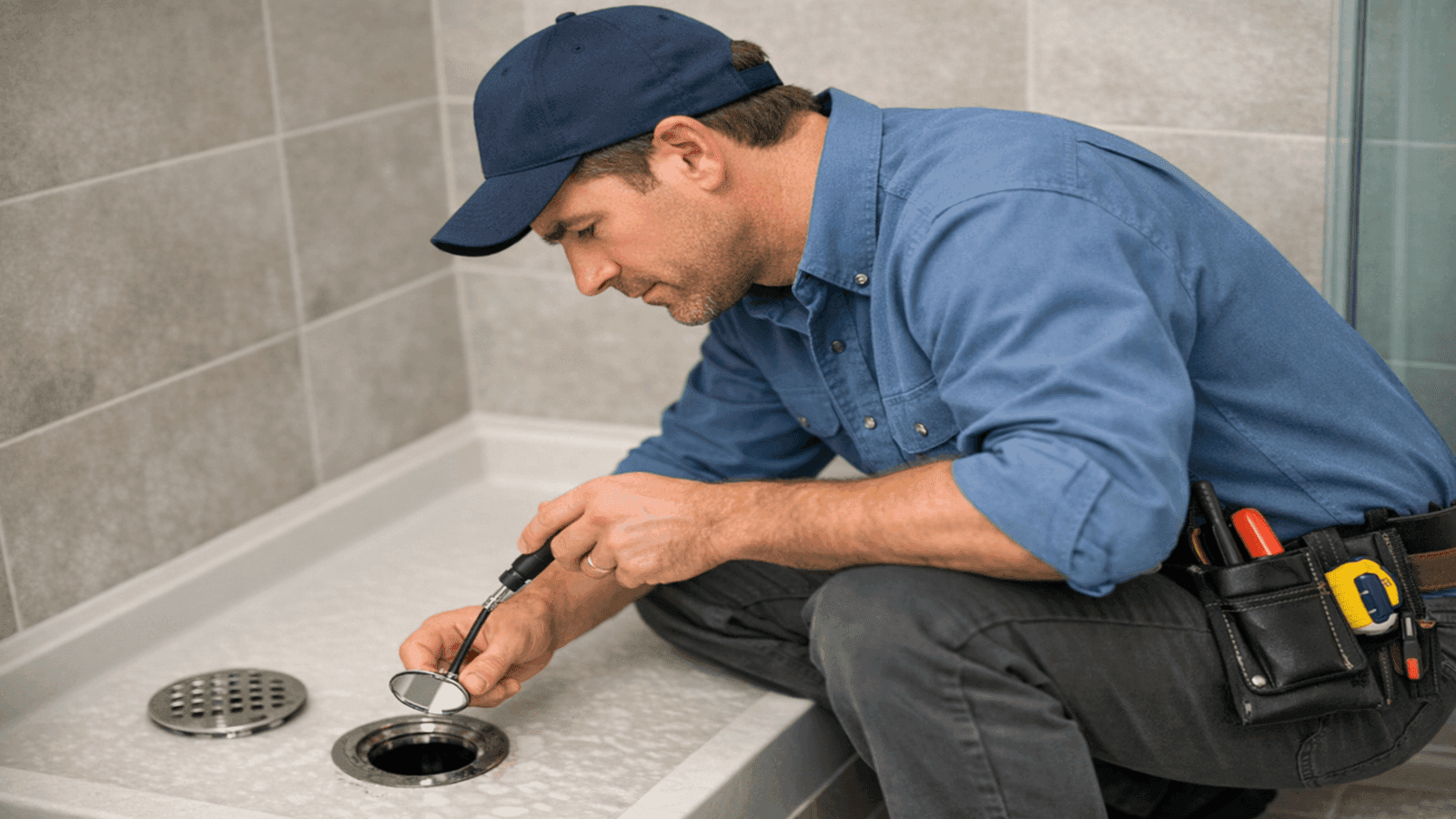
Photo: Plumber inspecting a shower drain with a small mirror or camera tool, professional context, bathroom tile background
Disclaimer: Cost ranges listed in this guide are national averages based on 2025-2026 industry data. Actual costs vary by location, severity, and contractor. Always get multiple quotes for plumbing work. Prices in major metro areas may run 20-40% higher than national averages. This guide is for educational purposes; consult a licensed plumber for issues beyond basic DIY repairs.


Michael Jennings is a licensed master plumber & water systems specialist with over 18 years of hands-on experience in residential and commercial plumbing, serving clients across California and Texas. At NearbyHunt, he shares practical advice on pipe installations, water heater maintenance, and home plumbing upgrades. Michael has helped thousands of homeowners prevent costly water damage and improve water efficiency through modern plumbing solutions.

Robert is a licensed master plumber with over 20 years of experience serving both residential and commercial clients across the Midwest. Specialising in advanced plumbing systems and sustainable water technologies, Rob brings deep technical insight and hands-on expertise to every project. As a reviewer for NearbyHunt, he ensures all plumbing content reflects the highest standards of safety, compliance, and practicality.