- Sump pump installation costs $800 to $3,000 in 2026, averaging $1,100 for a complete system with pit excavation and discharge routing.
- A submersible pump sits inside the pit for quiet, high-volume operation; a pedestal pump stands above the pit, costs less, and lasts up to 25 years.
- IPC code requires a pit at least 18 inches in diameter and 24 inches deep; local codes may require larger dimensions or a permit before excavation.
- A check valve on the discharge line prevents water from flowing back into the pit after each pump cycle, protecting motor life.
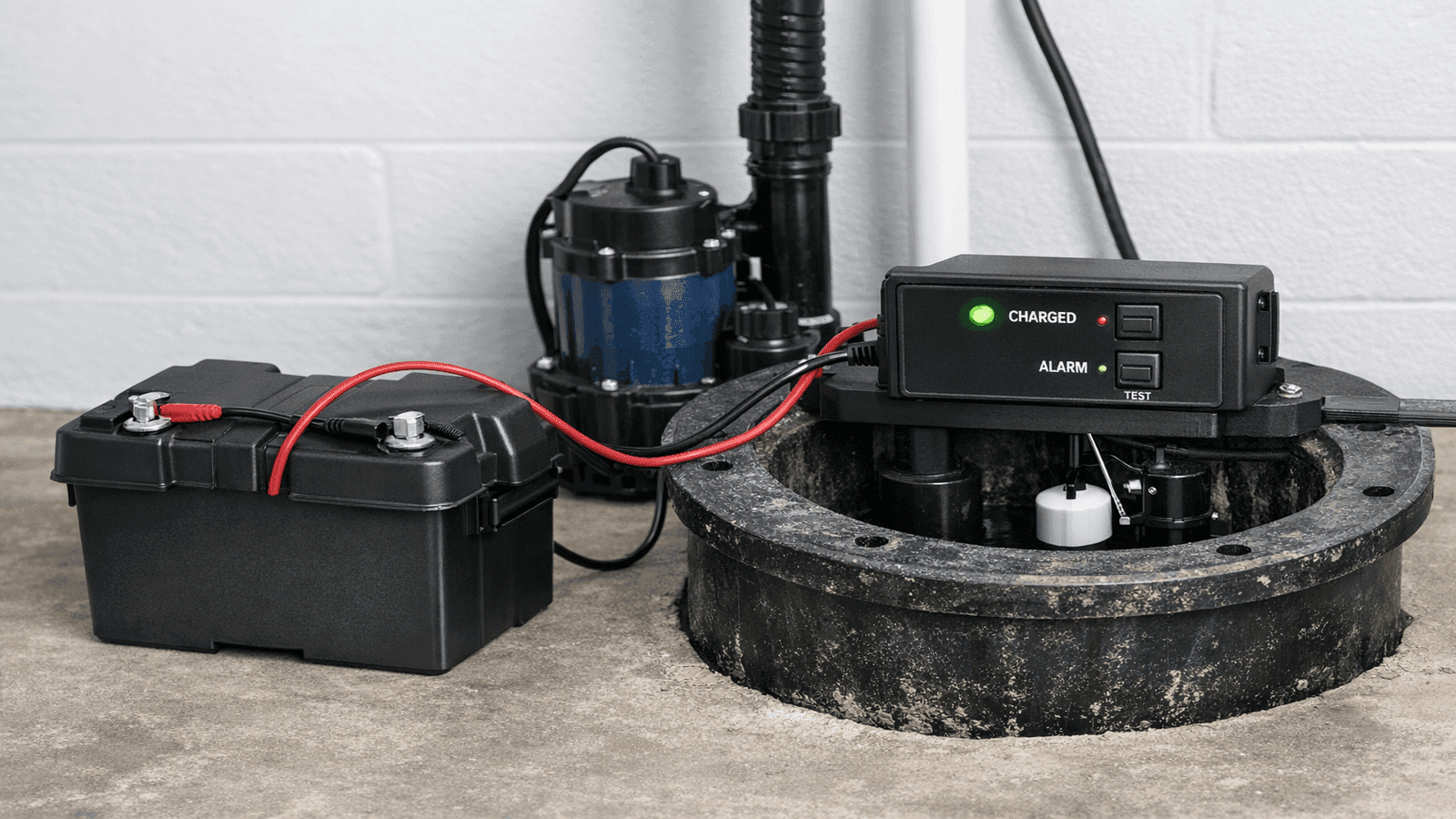
- Battery backup systems add $150 to $400 and provide 5 to 8 hours of protection during power outages.
- Permits are required in most jurisdictions for new pit excavation or electrical circuit work, with fees ranging from $50 to $250.
Basement flooding is the most expensive water damage event a homeowner can face, with remediation bills routinely exceeding $25,000 [1]. A properly installed sump pump actively removes water that has already entered the soil beneath your foundation, stopping it before it rises to floor level. Michael has completed 2,400-plus residential plumbing projects across Dallas-Fort Worth and California in his 18-year career, and this guide reflects lessons from installations that range from straightforward swaps to complex remodels. This guide covers pump type selection, pit sizing, check valve placement, discharge routing, battery backup, and permit requirements. For context on where sump pump installation fits within your home's overall plumbing system, see our complete plumbing installation guide.

Get quotes from top-rated pros.
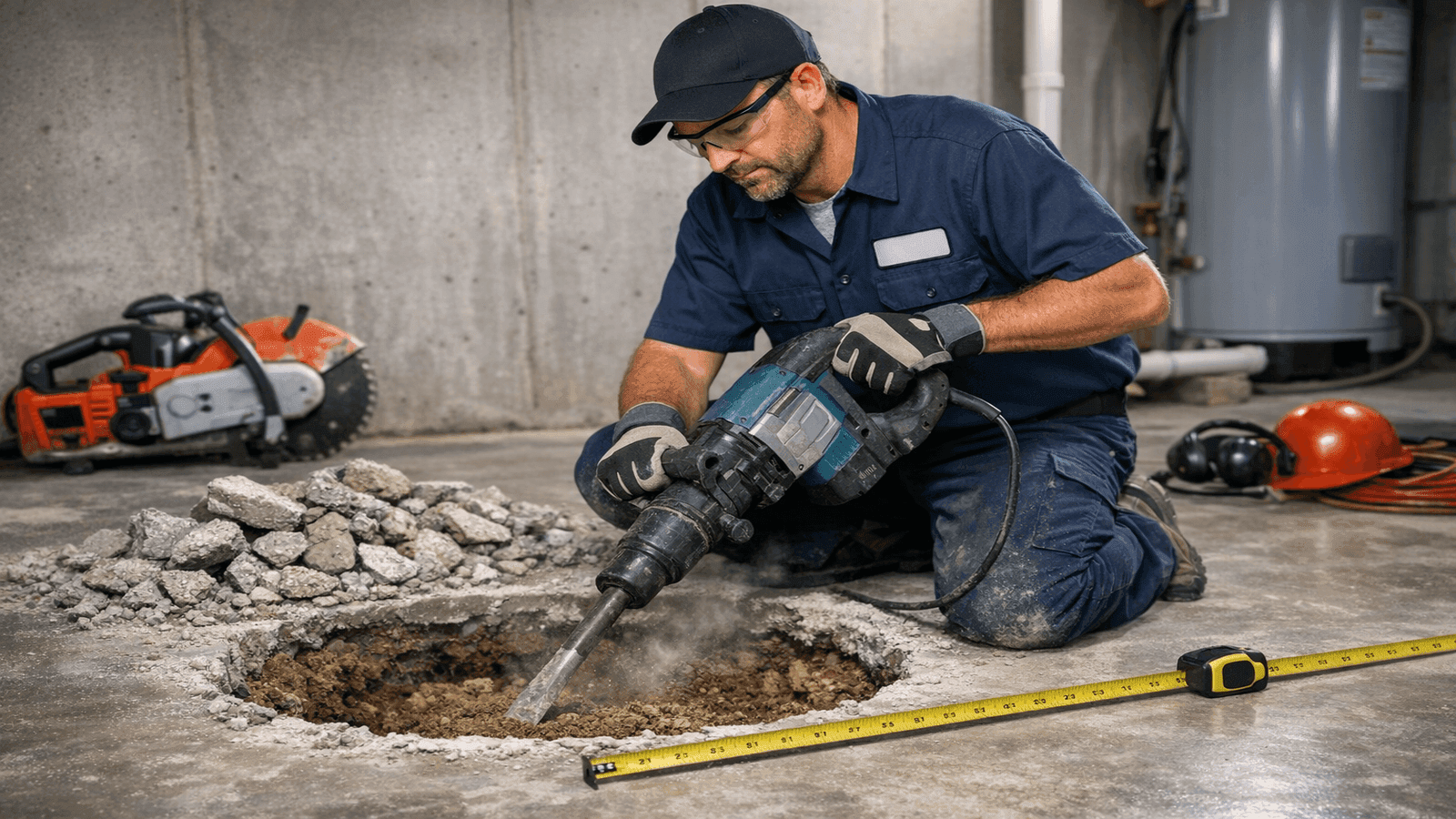
Photo: Licensed plumber excavating a sump pit in a basement floor, concrete removed and gravel base visible
Submersible vs. Pedestal Sump Pumps
Choosing the right pump type before installation determines pit size, electrical requirements, and long-term maintenance access.
Submersible pumps sit inside the pit below the water line. The motor operates submerged, keeping noise levels low and handling higher water volumes. Drawbacks: harder to service, 7 to 15-year lifespan, higher unit cost ($200 to $600).
| Feature | Submersible | Pedestal |
| Unit cost | $200 to $600 | $100 to $200 |
| Typical lifespan | 7 to 15 years | 15 to 25 years |
| Noise level | Low | Moderate to high |
| Flow capacity | Higher | Lower |
| Service access | Requires removing pump | Motor exposed, easy |
| Best for | Finished basements, high water volume | Unfinished basements, budget installs |
For most finished basements in the Dallas area, I specify a 1/2-horsepower submersible. The noise difference matters to homeowners with living space above the mechanical room, and the higher flow rate handles clay-soil drainage loads better than a pedestal. Pedestal pumps are the right call for unfinished utility spaces where access and longevity outweigh acoustics.
Sump Pit Sizing and Excavation
Code-Minimum Pit Dimensions
The International Plumbing Code (IPC) sets minimum pit dimensions at 18 inches in diameter and 24 inches deep [2]. Many plumbers size up to 24 inches in diameter and 30 inches deep when water volume is significant or a battery backup pump will share the pit. The pit floor must be solid concrete or compacted gravel to support the pump without settling.
Excavation Process
New pit excavation typically takes 2 to 4 hours:
- Mark the pit location at the lowest basement floor point, ideally at a foundation wall corner.
- Cut the concrete slab with a diamond blade saw (rental: $80 to $150 per day).
- Excavate to the required depth plus 6 inches for a gravel drainage bed.
- Set the pit liner (pre-formed plastic or perforated concrete tile) into the excavation.
- Backfill around the liner with clean gravel to slab level, then patch concrete around the top.
- Allow the concrete patch to cure 24 to 48 hours before setting the pump.
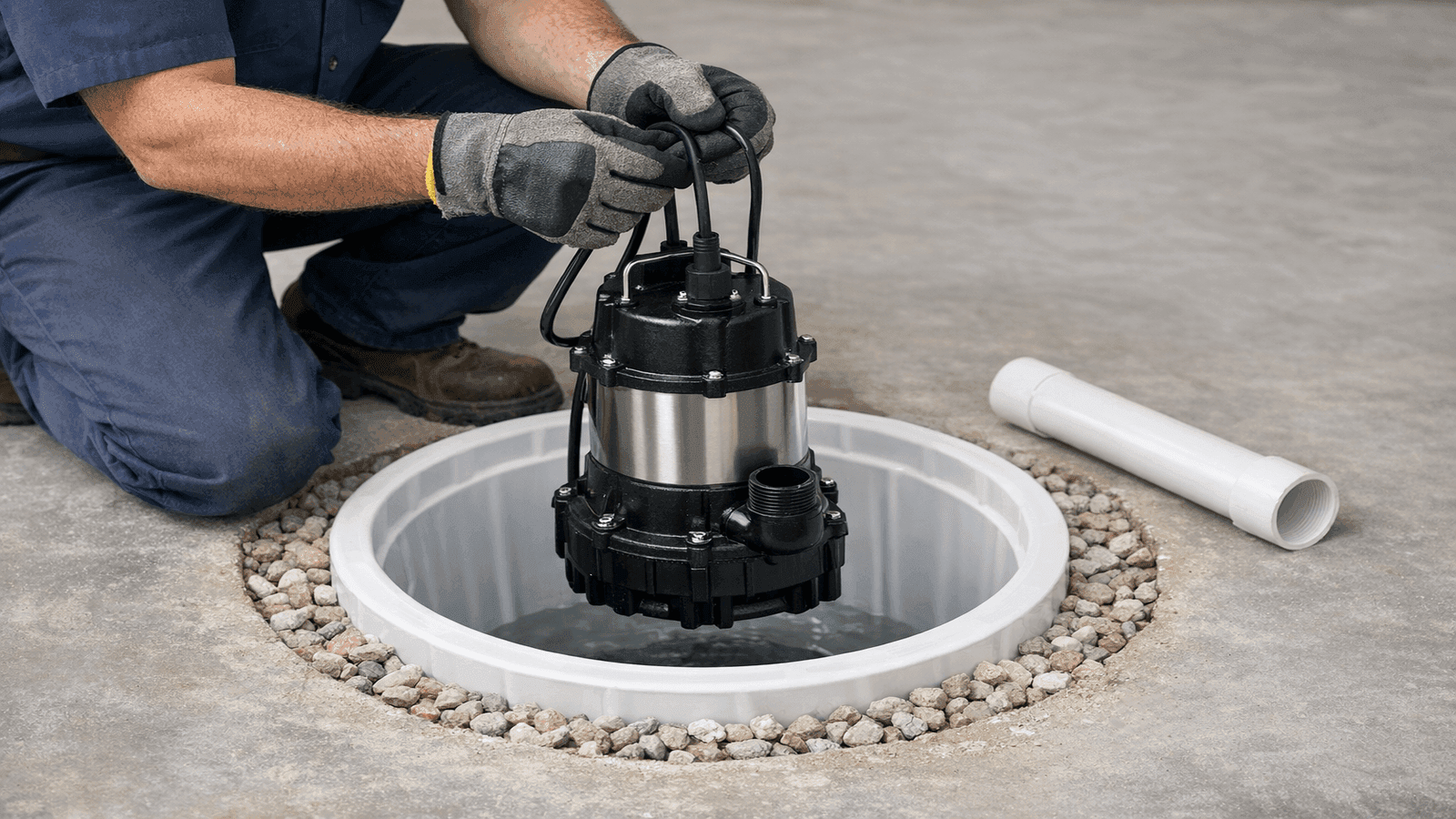
Photo: Submersible sump pump being lowered into a newly lined pit in a basement floor, discharge port visible
A permit is required for pit excavation in most jurisdictions [3]. Inspections cover pit dimensions, liner material, discharge routing, and the electrical circuit. Fees run $50 to $250.
The most common pit mistake I see from DIY installs is setting the liner too high, leaving 3 or 4 inches of liner above the concrete rather than flush. That lip catches debris, interferes with the cover seal, and creates a trip hazard. Set the top of the liner within 1 to 2 inches of the finished floor, then apply a concrete collar around the perimeter.
Get quotes from top-rated pros.
Real Installation Story
A homeowner in Houston, Texas contacted a plumber after the finished basement flooded twice in one season despite having a 10-year-old sump pump already installed. The inspection revealed a 1/3-horsepower pedestal pump in a pit sized for the original 1990s construction, never upgraded when the basement was finished and the water table rose due to new development nearby. The pit was undersized at 14 inches in diameter, and the discharge line had a partial freeze crack from a 2021 cold snap. The plumber excavated a new 24-inch pit, installed a 1/2-horsepower submersible with a battery backup, and rerouted the discharge 12 feet from the foundation. Total cost: $2,100. The homeowner has had zero water intrusion through two subsequent storm seasons.
Check Valve Installation
The check valve is the most important single component in the discharge line. Without one, every time the pump shuts off, the column of water in the discharge pipe falls back into the pit. The pump activates again almost immediately, running two to three times more cycles per hour than the motor was designed for.
Install the check valve 12 to 18 inches above the pump discharge outlet on the vertical section before any horizontal run. Use PVC (standard residential) or brass (high-pressure) sized to match the discharge pipe, typically 1.5 inches. Spring-loaded valves close faster and reduce water hammer compared to swing check valves.
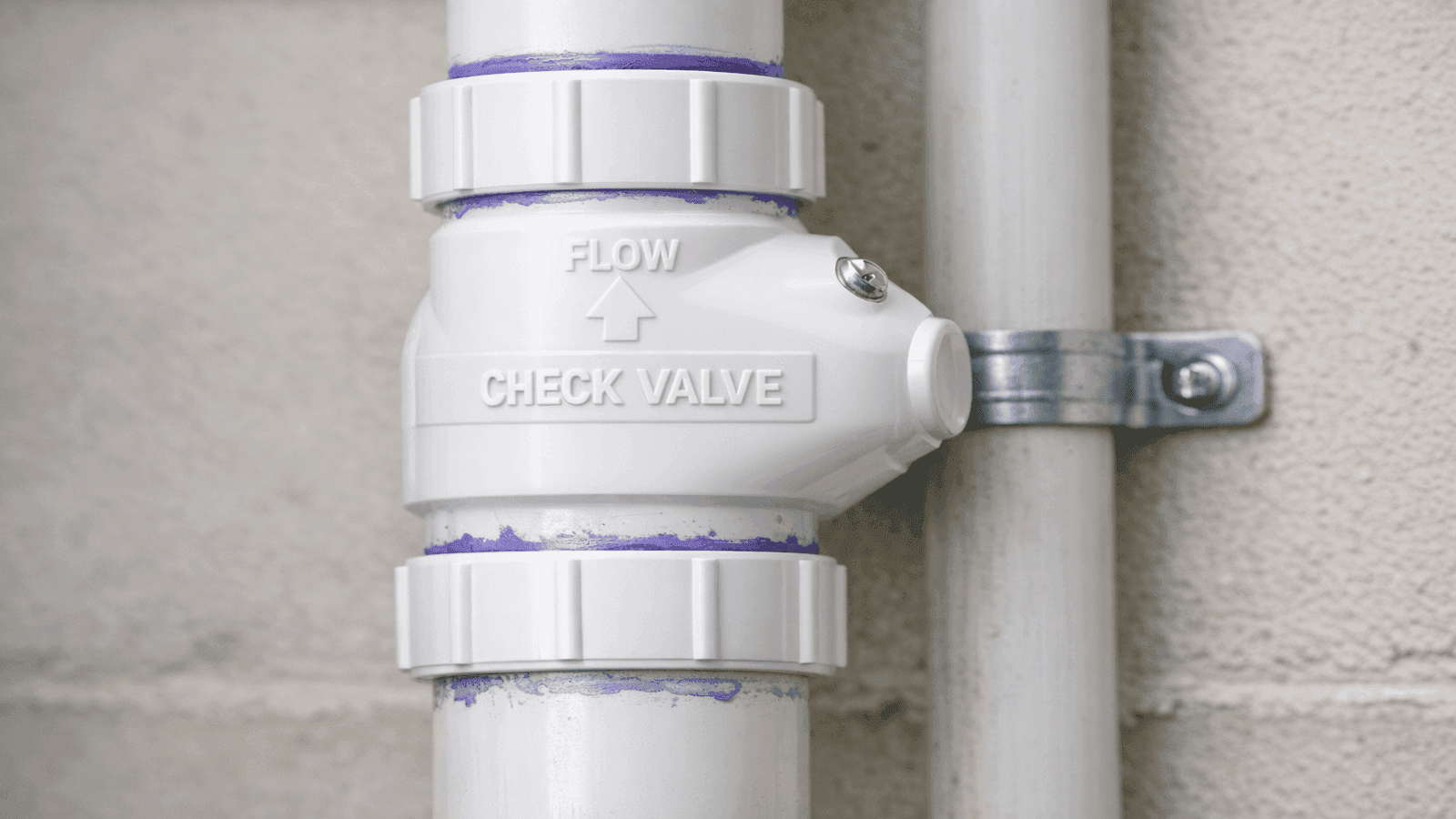
Photo: Close-up of check valve installed on vertical discharge pipe section above sump pump, flow direction marked
After installation, cycle the pump manually and listen for the valve closing. A working valve produces a clean click. A valve allowing backflow is silent: water returns to the pit without sound.
The licensed plumbers in our NearbyHunt network report that undersized discharge pipes (3/4-inch instead of 1.5-inch) are found in roughly one in five older homes they service, and the undersized pipe is almost always the reason the original pump burned out prematurely.
Discharge Line Routing and Code Requirements
The IPC and most local codes require discharge to terminate at least 10 feet from the foundation [2]. Terminating too close recycles water back into the soil beneath the foundation.
Prohibited discharge locations:
- Municipal sanitary sewer or drain lines
- Neighbor's property without written permission
- Pedestrian pathways where ice can form in winter
The discharge pipe must drain completely after each cycle or terminate with a freeze-proof fitting. A frozen line stops flow and can burn out the pump motor within hours.
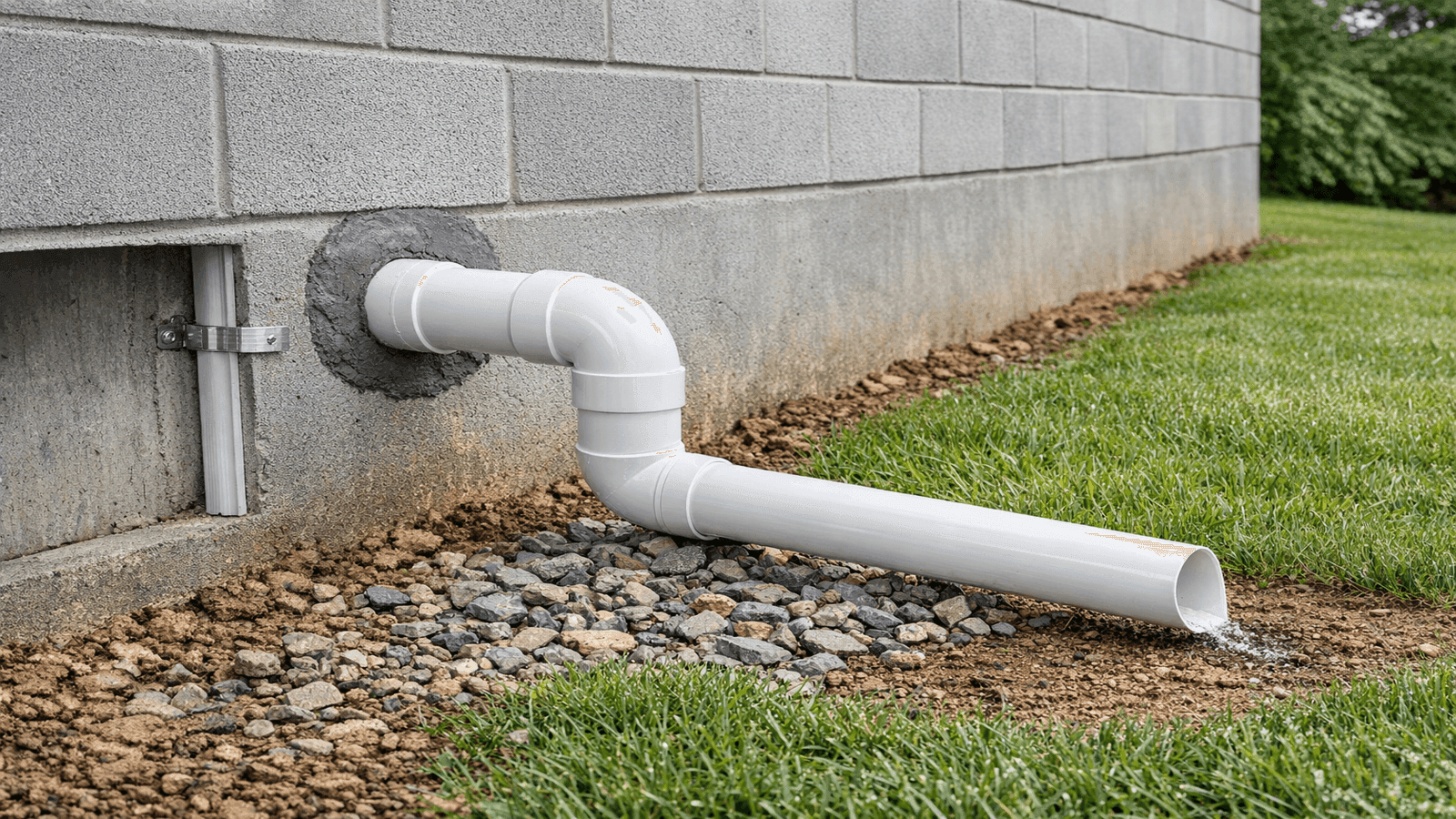
Photo: PVC discharge pipe exiting through basement wall, elbow fitting directing water away from foundation exterior
About 30% of flooded basements I assess have a sump pump that was running. The pump had a frozen discharge line and ran all night against a closed system until it seized. A $15 freeze-proof fitting and a proper pipe slope would have prevented every one of those calls.
Battery Backup Systems
A battery backup protects your basement during the exact scenario where a primary pump is most needed: a severe storm that simultaneously raises the water table and knocks out grid power.
12V DC backup pumps mount in the same pit and activate when the primary fails or water rises above the primary float. Capacity: 1,000 to 2,000 gallons per hour.
High-capacity AGM systems (Wayne WSS30V, Zoeller Aquanot) provide 5 to 8 hours of continuous runtime [4]. Battery replacement every 3 to 5 years is required regardless of use.
Water-powered backup pumps use municipal water pressure with no battery. For every gallon pumped out, 1 to 2 gallons of municipal water are consumed. Not suitable for wells.
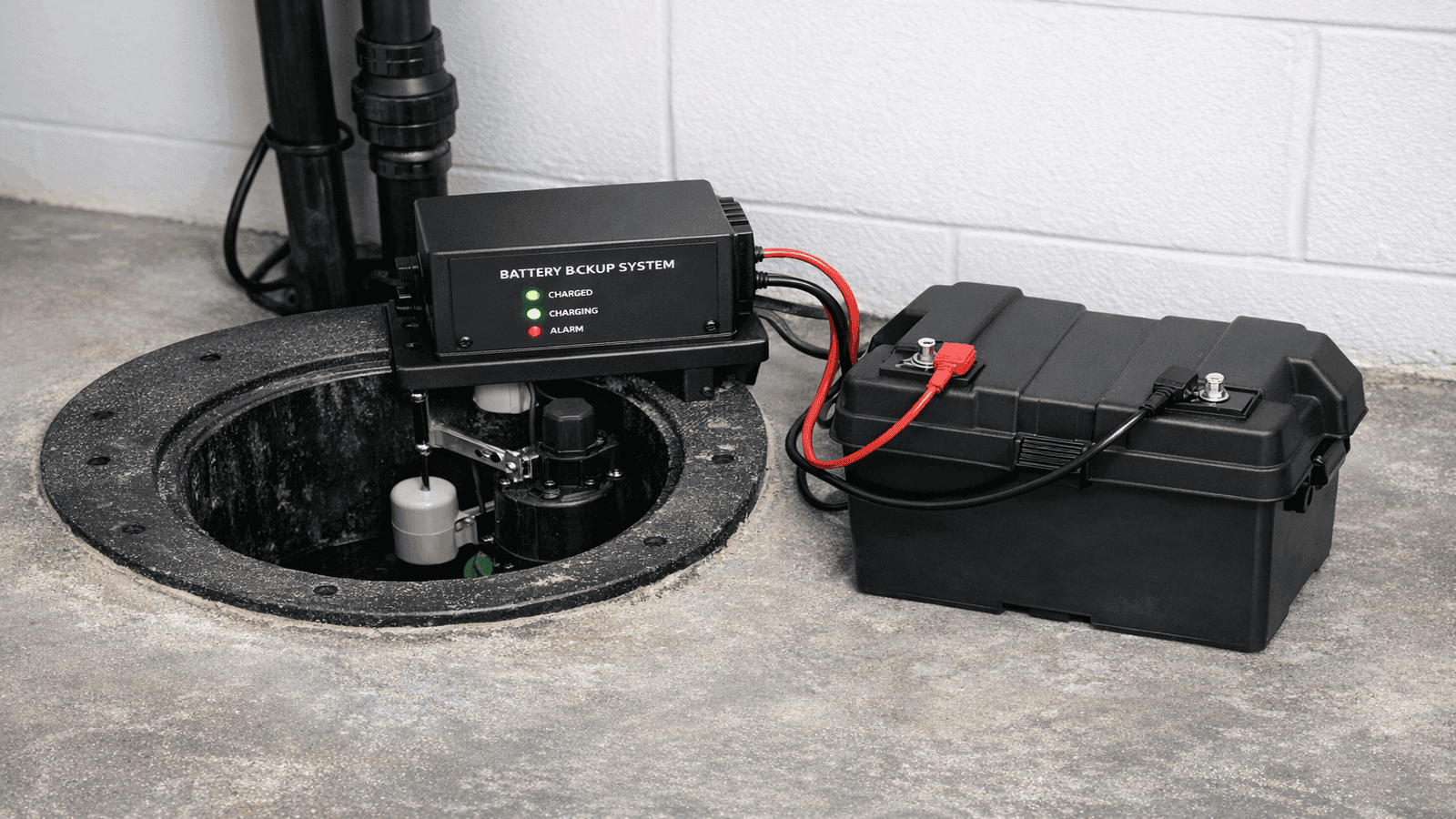
Photo: Battery backup unit connected to sump pump system in basement pit, control panel and battery visible
| Backup Type | Cost | Runtime | Limitation |
| 12V battery backup | $150 to $350 | 5 to 8 hours | Battery degrades, needs replacement |
| High-capacity AGM | $300 to $500 | 8 to 12 hours | Battery cost every 3 to 5 years |
| Water-powered | $200 to $350 | Unlimited | Municipal water only |
Complete Installation Cost Breakdown
Get quotes from top-rated pros.
| Component | Low | Mid | High |
| Submersible pump unit | $200 | $350 | $600 |
| Pit excavation and liner (new) | $300 | $500 | $1,000 |
| Check valve and discharge piping | $100 | $175 | $350 |
| Labor (4 to 8 hours) | $340 | $600 | $1,200 |
| Battery backup | $150 | $300 | $500 |
| Permit fee | $50 | $125 | $250 |
| Total (complete new install) | $800 | $1,400 | $3,000 |
Pump replacement only (existing pit, existing discharge line): $300 to $700 [5].
Signs You Need a Sump Pump
- Visible water seeping through floor cracks or the base of foundation walls during or after rain
- White mineral deposits (efflorescence) on basement walls, indicating chronic moisture movement
- Prior flooding events, even minor; water that reached floor level once will reach it again
- Home in a flood zone (FEMA designation AE, AH, or X shaded) [1]
- Clay-heavy soil that holds water against the foundation instead of draining
- Basement finishing planned: install before finishing to protect the investment
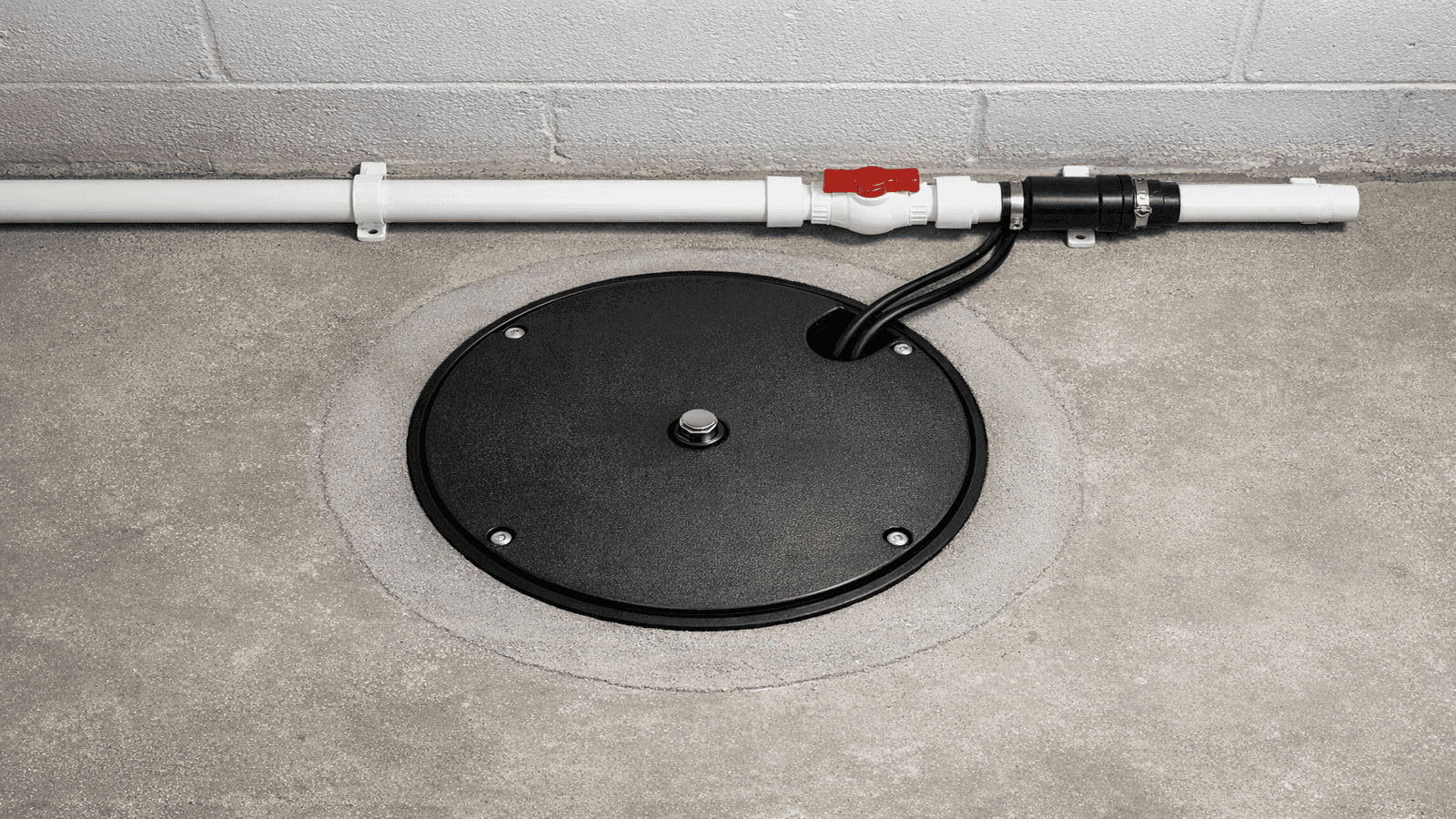
Photo: Flooded basement with water on floor, furniture damaged, illustrating consequences of missing sump pump
Permit Requirements and Maintenance
Most jurisdictions require a permit for new sump pit excavation (cutting the concrete slab) and for installing a dedicated electrical circuit [3]. For a full breakdown of plumbing permit requirements, see our plumbing code requirements guide.
After installation, follow a simple maintenance routine. For the full protocol including float testing and check valve inspection, see our sump pump maintenance guide.
| Task | Frequency |
| Float switch test (pour 5 gallons into pit) | Every 3 months |
| Visual pit inspection and debris removal | Every 3 months |
| Check valve and discharge line inspection | Annually |
| Battery backup load test | Every 6 months |
| Battery replacement | Every 3 to 5 years |
| Full professional service inspection | Annually |
New installations look great on day one. The pump you tested perfectly at install is the pump you will never test again, and then it fails during a storm at 2 AM. Put a quarterly bucket pour test on your calendar. It takes 10 minutes and is the most reliable failure-prevention habit I know.
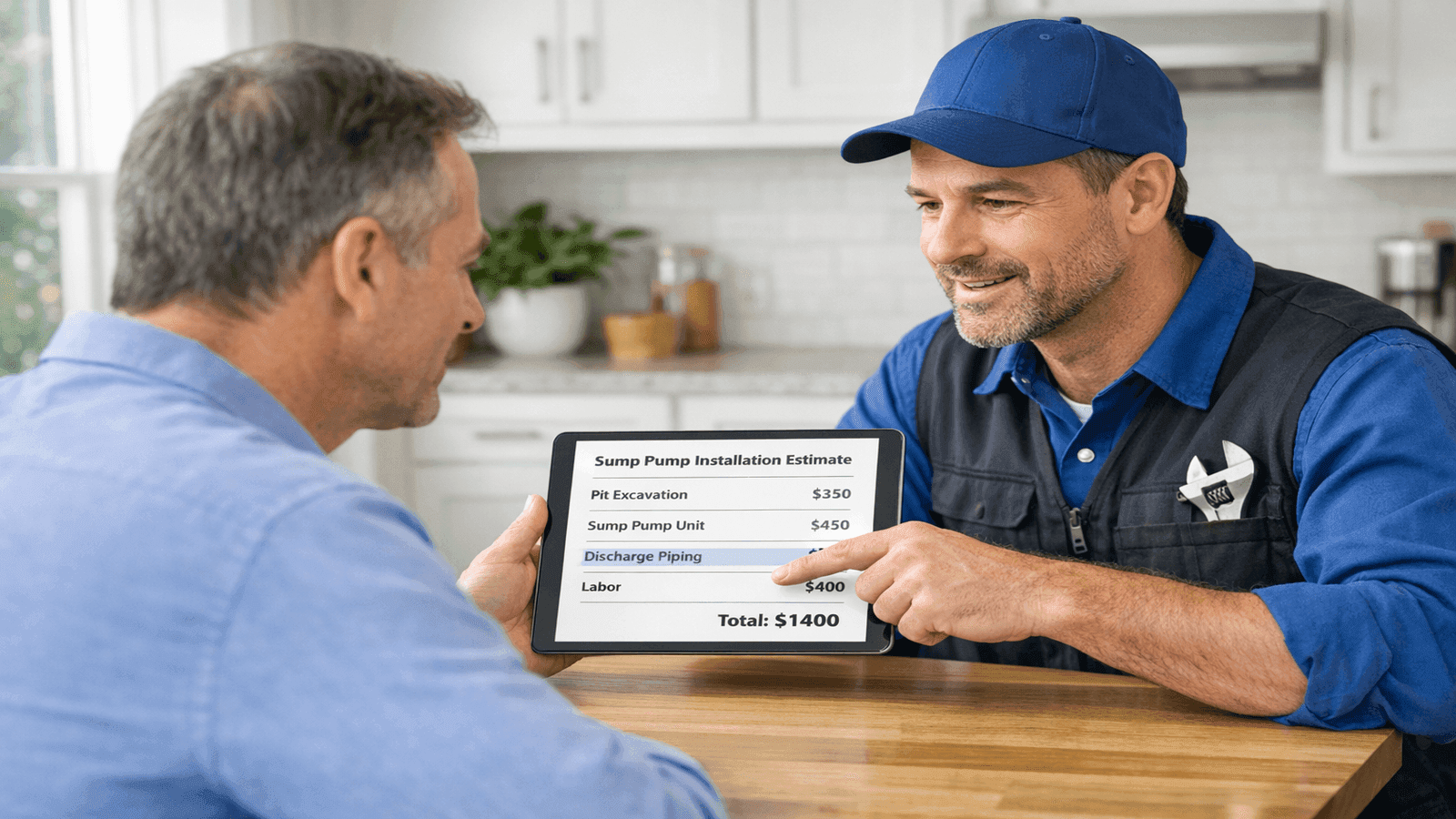
Photo: Finished sump pit with solid cover installed flush with basement floor, discharge pipe visible along wall
Conclusion
A properly installed sump pump, sized correctly with a check valve, compliant discharge line, and battery backup, provides decades of reliable basement protection. The difference between a $1,400 installation and a $25,000 flood remediation is almost entirely the quality of that initial installation. Hire a licensed plumber for pit excavation, discharge routing, and electrical connections. Verify the permit before any concrete is cut. Test the system quarterly to confirm it works when weather demands it.
For guidance on shutting off your water supply before any plumbing work, see our water supply shutoff guide.
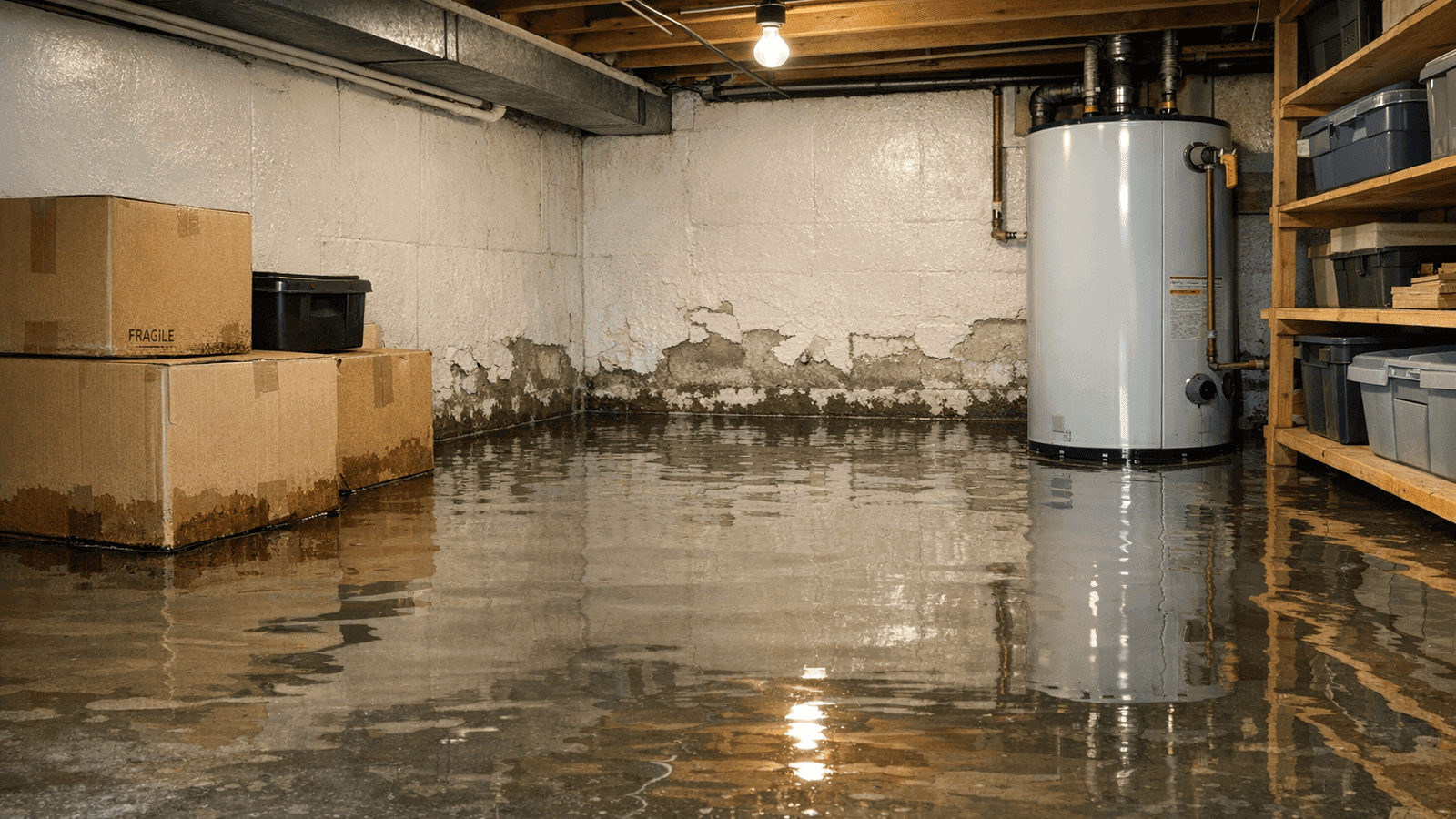
Photo: Homeowner reviewing sump pump installation quote with licensed plumber at kitchen table, paperwork visible
Disclaimer: Installation costs, code requirements, and permit obligations vary by jurisdiction and are subject to change. Always verify local building code requirements with your municipal building department before beginning any sump pump installation. This article is for informational purposes only and does not constitute licensed plumbing advice for your specific installation conditions.
Sources & References
- FEMA: Flood Damage Statistics and Flood Zone Maps
- International Plumbing Code 2018 - Section 1113.1.2: Sump Pit Requirements
- PHCC: Plumbing Permit and Maintenance Recommendations
- This Old House: Sump Pump Cost Guide 2026
- Forbes Home: Sump Pump Installation Cost 2026
- RadonSeal: Sump Pit Sizing and Pump Capacity

Michael Jennings is a licensed master plumber & water systems specialist with over 18 years of hands-on experience in residential and commercial plumbing, serving clients across California and Texas. At NearbyHunt, he shares practical advice on pipe installations, water heater maintenance, and home plumbing upgrades. Michael has helped thousands of homeowners prevent costly water damage and improve water efficiency through modern plumbing solutions.

Robert is a licensed master plumber with over 20 years of experience serving both residential and commercial clients across the Midwest. Specialising in advanced plumbing systems and sustainable water technologies, Rob brings deep technical insight and hands-on expertise to every project. As a reviewer for NearbyHunt, he ensures all plumbing content reflects the highest standards of safety, compliance, and practicality.