- Genuine antique fixtures (pre-1950) almost always require replumbing with modern supply fittings before use — original compression valves and supply connections are not compatible with today's water pressure standards and supply line materials.
- Cast iron clawfoot tubs weigh 200–300 lbs empty — a floor joist assessment is mandatory before purchase; acrylic reproduction clawfoot tubs weigh 50–80 lbs and install like a standard tub.
- High-tank pull-chain toilets require minimum 20 PSI water pressure and a wall capable of supporting a wall-hung tank at 7–8 feet above the floor; standard floor flanges are used, so rough-in is conventional.
- Unlacquered brass develops a natural patina within 6–18 months of regular use; this is by design and considered a desirable quality feature by most buyers who choose it.
- Cross-handle faucets with compression valves are more authentic but require periodic reseating and washer replacement; cartridge conversions preserve the period look with near-zero maintenance.
- Exposed supply piping is permitted aesthetically in most jurisdictions when properly supported and anchored with appropriate escutcheons at wall penetrations — this is a design choice, not a code violation.
Vintage plumbing design is more technically involved than it appears in magazine photos. The clawfoot tub, the cross-handle faucet, the pedestal sink, the high-tank toilet: each of these fixtures carries structural requirements, rough-in specifications, and maintenance implications that differ substantially from their modern counterparts. This guide is part of the broader plumbing ideas and inspiration resource and focuses specifically on vintage fixture types — what genuine antiques involve, what quality reproductions offer, and how to achieve period-accurate aesthetics without sacrificing the function that modern plumbing delivers. Michael R. Jennings has completed 2,400-plus residential plumbing projects across Dallas-Fort Worth and California over 18 years, and vintage bathroom renovations represent a growing share of that work each year.

Get quotes from top-rated pros.
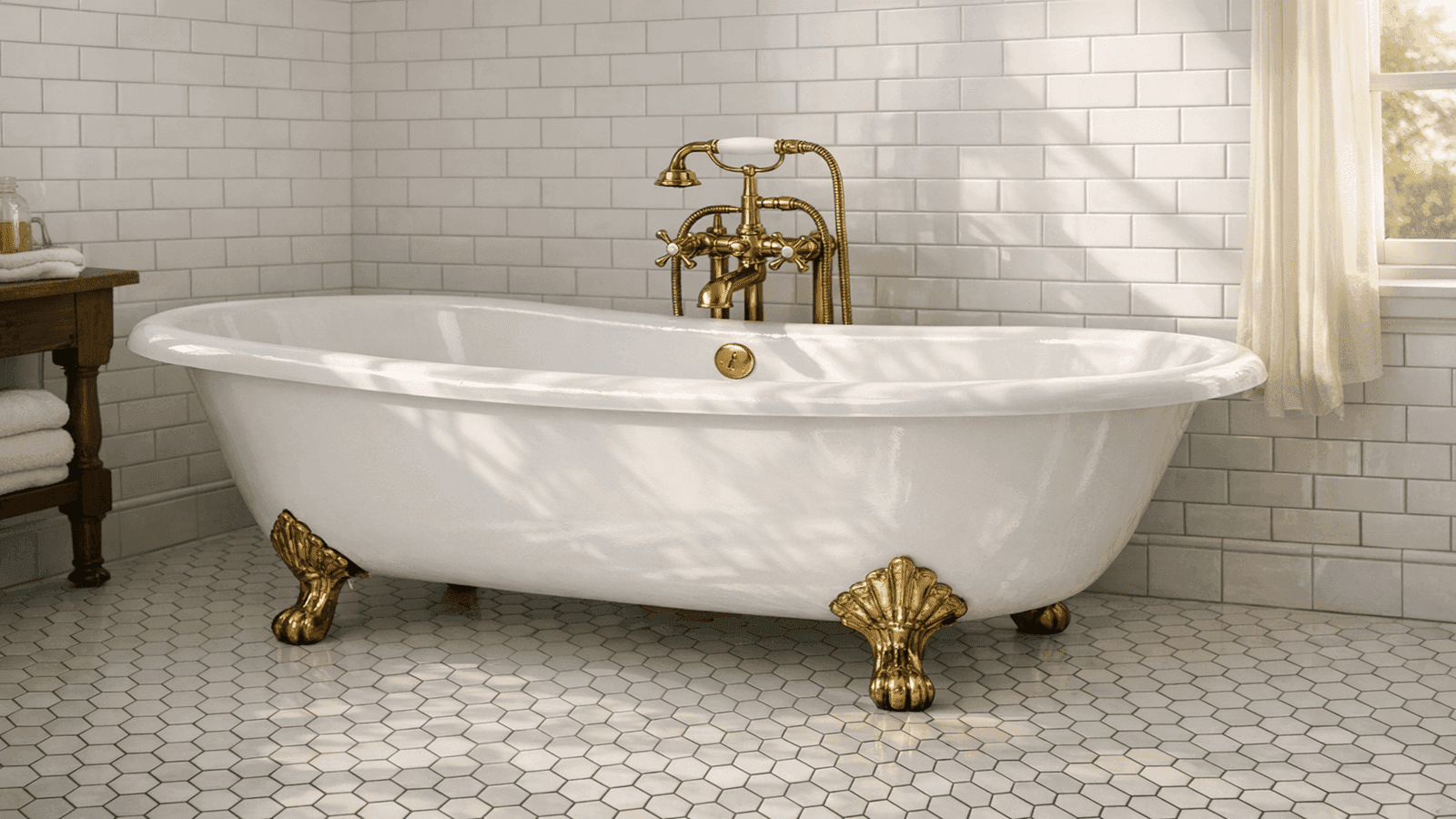
Photo: Freestanding cast iron clawfoot tub with unlacquered brass cross-handle floor-mount faucet in a period-accurate white subway tile bathroom
Genuine Antique Fixtures vs Reproduction Vintage-Style
The first decision in any vintage plumbing project is whether to source genuine antique fixtures or quality reproductions. Both paths can produce period-accurate results, but they involve completely different logistics, costs, and technical requirements.
Genuine Antique Fixtures (Pre-1950)
Authentic fixtures from the early 20th century were built to last — cast iron, brass, and porcelain were the standard materials, and a genuine antique tub or sink in good condition can be structurally sound after 80–100 years. The design authenticity is unmatched. The patina, the weight, the proportions, and the construction methods are exactly what the period delivered.
The technical challenges are significant, however. Supply connection standards have changed. Original fixture holes are often sized for supply pipes that are not compatible with modern compression fittings. Water pressure in modern homes typically runs 40–80 PSI; many antique fixture valves were designed for lower-pressure gravity-fed systems. Before any genuine antique fixture goes back into service, a licensed plumber needs to assess whether the existing valve bodies are serviceable, replace any lead-containing solder in the original supply lines, and fit modern supply connections that bring the fixture into compliance with current standards [1].
Sourcing genuine antiques requires patience. Salvage yards, architectural salvage dealers, and estate sales are the primary channels. Prices vary enormously — an authentic clawfoot tub in good condition might run $500–$2,000 at a salvage yard, plus $400–$800 in replumbing labor. The total often exceeds the cost of a quality reproduction, but the authenticity is real rather than simulated.
Reproduction Vintage-Style Fixtures
Quality reproduction fixtures use period-accurate exterior design — the same proportions, the same decorative elements, the same finish options — but with modern internals. Cartridge valves instead of compression. Standard supply connections. WaterSense certification where applicable. The installation is straightforward because the fixture is designed to meet current code without modification [6].
The trade-off is that reproductions require careful evaluation. Not all reproduction fixtures are created equal. Some import products use thin chrome plating over zinc alloy bodies that will show pitting and peeling within 3–5 years. Quality reproduction fixtures use solid brass bodies, ceramic disc cartridges, and genuine finish processes. Brands with established track records in period-style plumbing include Signature Hardware, Barclay Products, Randolph Morris, and Kingston Brass — all of which produce fixtures with modern internals in authentic-looking exteriors.
Clients sometimes come to me with a genuine antique fixture they found at a salvage yard and expect it to just connect up. The visual inspection looks fine, but when we pressure-test and examine the valve seats and supply connections, a third of those fixtures need $200–$400 in valve work before they can go in safely. Sometimes a well-made reproduction in unlacquered brass is a better value than a century-old original that needs everything rebuilt inside.
Clawfoot Tubs: Cast Iron vs Acrylic Reproduction
The clawfoot tub is the centerpiece of vintage bathroom design, and it generates more structural surprises than any other fixture type. Understanding the weight difference between cast iron and acrylic is not optional — it determines whether your floor can support the installation without modification.
Cast Iron Clawfoot Tubs
Original cast iron clawfoot tubs weigh 200–300 lbs empty. A standard 60-inch roll-top model filled with water holds 45–55 gallons, and water weighs 8.34 lbs per gallon. Add a bather at 150–200 lbs and the total load on four claw feet reaches 800–1,000 lbs, concentrated on four small contact points. Standard residential floor construction is rated for 40 lbs per square foot distributed load under most building codes [2]. A clawfoot tub places concentrated point loads rather than distributed loads, and those point loads can exceed what the joist beneath each foot is rated to carry — particularly in older homes with 2x8 joists spanning 12 or more feet.
Before purchasing a cast iron clawfoot tub, have a plumber and a structural contractor assess the floor. Sistering the floor joists beneath the tub position adds $400–$800 to the project but is frequently necessary. The assessment is money well spent. A floor failure under a filled cast iron tub is a catastrophic event.
For a full discussion of bathtub installation requirements including structural considerations, the linked guide covers floor preparation in detail.
Acrylic Reproduction Clawfoot Tubs
Acrylic clawfoot reproductions weigh 50–80 lbs and install on any standard residential floor without structural assessment. They use the same claw-foot aesthetic — roll-top, slipper, and double-slipper profiles are all available — but with an acrylic shell reinforced with fiberglass. The interior surface is warmer to the touch than cast iron, which some users prefer. The visual difference between a quality acrylic reproduction and a cast iron original is minimal in most bathroom settings.
Quality acrylic reproductions cost $600–$1,400 for a 60-inch model, compared to $800–$2,500 for cast iron. Installation is simpler because the weight is manageable with two workers.
Clawfoot Tub Styles
- Roll-top (double-roll): Both ends curve outward with a symmetrical profile. The most common style and the most flexible for room placement.
- Slipper: One end curves higher for a reclining position. Asymmetrical design requires intentional placement relative to the faucet side.
- Double-slipper: Both ends curve high with the drain centered. The most formal period-accurate profile; requires a floor-mount faucet centered on the tub.
Get quotes from top-rated pros.
Faucet and Supply for Clawfoot Tubs
A freestanding clawfoot tub requires a freestanding floor-mount faucet with supply lines rising from the floor, not from the wall. The floor-mount supply fittings require a floor penetration with supply lines running beneath the subfloor. This is a more involved rough-in than a standard deck-mount or wall-mount faucet; budget $400–$800 for the faucet assembly alone (cross-handle or lever style), plus $300–$500 in plumbing labor for the floor supply rough-in. A hand shower with a cradle mounted on the faucet riser adds $100–$200 and is strongly recommended for hair washing and tub cleaning.
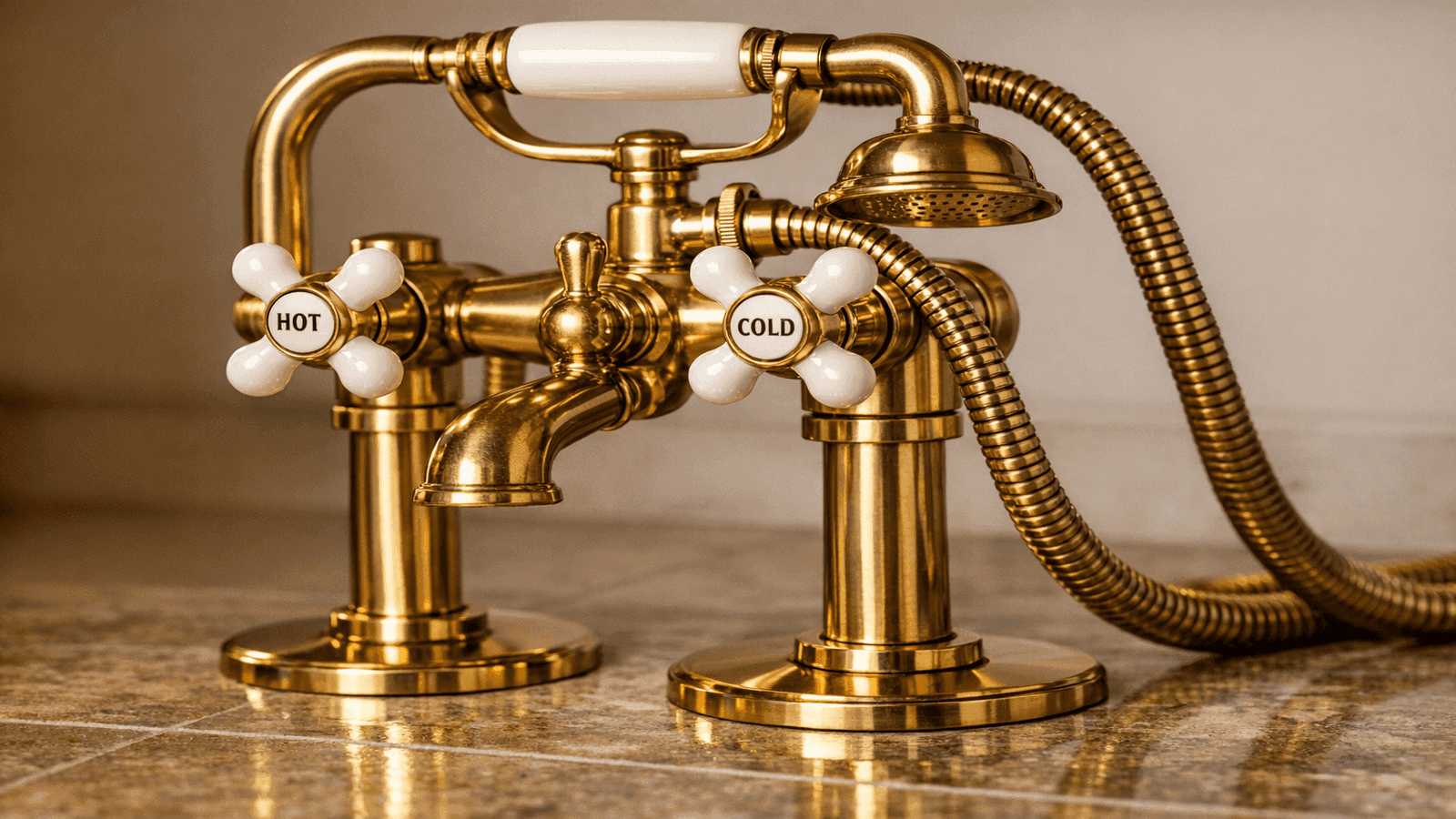
Photo: Vintage-style floor-mount clawfoot faucet with porcelain cross handles and hand shower in unlacquered brass on polished floor escutcheons
Cross-Handle and Lever Faucets: Period Accuracy in the Details
Faucet selection determines more of the period character of a vintage bathroom than almost any other single decision. Two handle types dominate vintage-appropriate design: porcelain cross handles and metal lever handles. Both can be sourced in compression or cartridge valve configurations.
Compression vs Cartridge Valves
Compression valves are the original technology in vintage fixtures. A rubber washer compresses against a brass seat to stop water flow. The feel is distinctly vintage — a definite stopping point as the handle reaches the closed position, a slight firmness as the washer seats. The drawback is maintenance: compression valves require periodic washer and O-ring replacement, and if a seat becomes pitted or scratched, it needs resurfacing with a seat wrench or seat grinding tool. A plumber charges $75–$150 to service a compression valve.
Cartridge valves use a ceramic disc or plastic cartridge to control flow. Maintenance is minimal — a cartridge replacement every 5–10 years at $15–$40 in parts. Many reproduction vintage-style faucets use cartridge valves inside a cross-handle or lever body that looks identical to a compression faucet from the outside. For homeowners who want the period look without the maintenance commitment, cartridge valves are the practical choice.
Bridge Faucets
Bridge faucets — where both hot and cold supply connections span a horizontal bridge between two separate handle valves — are the defining style for period-accurate kitchen and bathroom faucets. The exposed bridge deck above the sink surface is the visual signature of the Victorian and Edwardian plumbing era. Bridge faucets are available in cross-handle and lever-handle configurations, in unlacquered brass, oil-rubbed bronze, polished nickel, and chrome finishes. Cost ranges from $200–$600 for quality reproduction bridge faucets.
Unlacquered Brass: The Living Finish
Unlacquered brass is the most authentic finish choice for vintage plumbing fixtures, and it requires a specific understanding before purchase. Standard polished brass fixtures are coated with a clear lacquer that preserves the bright gold tone. Unlacquered brass has no protective coating — the natural brass surface is exposed directly to air, water, and skin oils.
The result is a gradual patina development. Within 6–18 months, unlacquered brass transitions from bright gold to a warmer, darker tone with highlights on the high-contact areas. High-touch areas (handles, spout tip) develop faster. This patina is not damage — it is the intended character of the finish. Cleaning with harsh abrasives or commercial brass cleaners will strip the patina and require starting over. Light cleaning with warm water and a soft cloth is all that unlacquered brass needs in normal use.
Oil-rubbed bronze is another period-appropriate finish that ages similarly. It starts darker, with warm brown tones and copper highlights, and develops a lighter patina on worn areas over time.
Every client who asks about unlacquered brass gets the same conversation from me: this finish is supposed to change. If you want it to stay shiny, buy lacquered brass. If you want the authentic lived-in look that genuinely antique fixtures have, unlacquered is the right choice. But you need to commit to it. I've had clients call me six months after installation asking why their faucet looks 'different' — and it's doing exactly what it was supposed to do.
High-Tank Pull-Chain Toilets: Period Drama With Modern Reliability
The high-tank pull-chain toilet is the single most visually distinctive vintage fixture choice. The wall-hung tank at 7–8 feet above the floor, the exposed flush pipe running down to the bowl, the pull chain with a porcelain handle: the visual impact is immediate and unmistakable. Quality reproductions deliver this look while meeting current flush volume standards and using modern fill valves and flappers.
Technical Requirements
High-tank toilets connect to the floor flange using a standard wax ring — the rough-in is conventional and compatible with any properly positioned floor flange. The wall-hung tank requires wall blocking: either solid blocking between wall studs at the tank mounting height, or a dedicated mounting bracket that transfers load to adjacent studs. The tank weighs 15–25 lbs when empty and 25–40 lbs when filled; proper blocking is essential.
Water pressure is the critical variable. The flush relies on gravity from the elevated tank height combined with adequate supply pressure. Minimum recommended water pressure is 20 PSI at the supply stop. Homes with low water pressure (under 20 PSI) may experience incomplete flushes or slow refill. Measure water pressure with an inexpensive gauge at a hose bib before selecting a high-tank model.
Quality reproduction high-tank pull-chain toilets cost $400–$900 for the complete unit (tank, bowl, flush pipe, pull chain). The porcelain is typically vitreous china in white or bone. Some manufacturers offer colored porcelain (black, almond) for additional period character.
Installation Considerations
The exposed flush pipe must be properly supported at mid-height with a wall bracket if the run exceeds 36 inches. The pipe is typically 1-1/2 inch chrome-plated brass and connects at the top with a slip joint and at the bowl with a spud connection. The visible supply line from the stop valve to the tank should be chrome-plated copper or braided stainless in chrome sleeve for visual consistency.
Get quotes from top-rated pros.
High-tank toilets are the fixture I get the most questions about from clients who see them in design magazines. The installation itself is not complicated — standard floor flange, standard wax ring, wall blocking for the tank. The issue I always flag is water pressure. I had a client in Plano, Texas, who had a beautiful reproduction high-tank toilet and it flushed weakly every time. We measured 14 PSI at the supply stop. Below 20 PSI, the gravity flush doesn't fully clear the bowl. A pressure booster solved it, but that was $400 the client hadn't budgeted. Check your pressure first.
Pedestal Sinks: Plumbing Rough-In and Trade-Offs
Pedestal sinks eliminate the vanity cabinet — the sink basin rests on a ceramic or vitreous china pedestal column that conceals the P-trap and supply lines. The result is a visually lightweight fixture that suits smaller bathrooms and period-accurate design. The trade-off is the complete absence of under-sink storage.
Rough-In Requirements
A pedestal sink requires wall-supplied hot and cold lines positioned to align with the sink's supply inlets, typically spaced 4 inches on center at a height of 21–23 inches above the finished floor. The P-trap must be sized to fit within the pedestal column — most pedestals accommodate a 1-1/4 inch or 1-1/2 inch P-trap, but the column diameter limits the trap configuration. Some pedestal designs require an offset P-trap to maintain the column's visual profile [3].
For a complete walk-through of bathroom sink installation requirements and rough-in specifications, the linked guide covers pedestal and wall-mount variations in detail.
Original cast iron pedestal sinks in good condition from salvage dealers weigh 80–150 lbs and require two installers. Reproduction pedestal sinks in vitreous china weigh 30–60 lbs and are manageable for a single experienced installer. Width options range from 24 to 30 inches for most stock reproductions; wider custom options are available from specialty manufacturers.
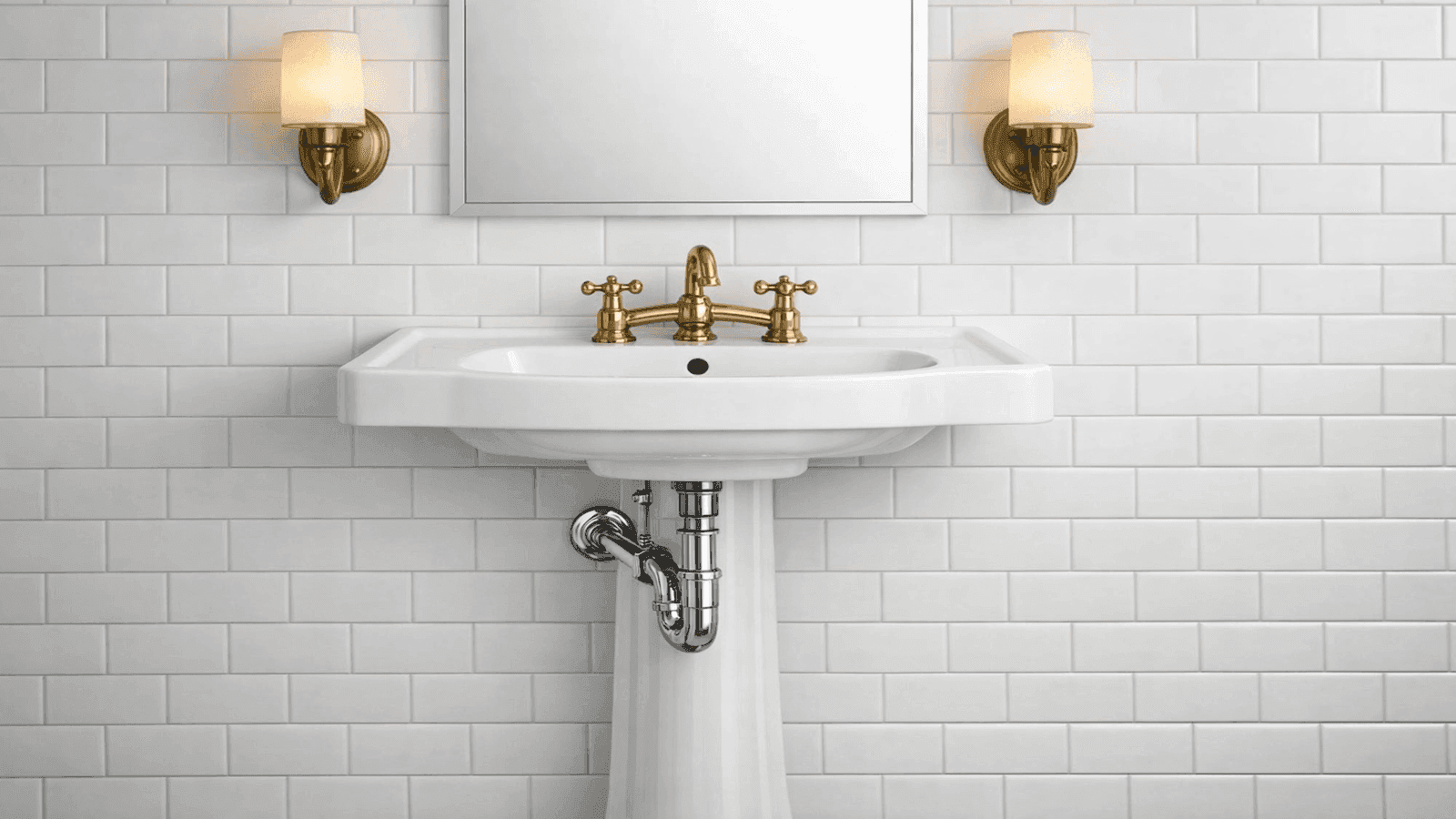
Photo: White vitreous china pedestal sink with unlacquered brass cross-handle bridge faucet and exposed chrome P-trap in vintage-style bathroom
What You Lose: Under-Sink Storage
Pedestal sinks provide no storage. In a primary bathroom, this means all toiletries, cleaning supplies, and personal care items need alternative storage — a freestanding medicine cabinet, wall-mounted shelving, or a linen closet nearby. In a powder room, the storage loss is typically not a problem. In a full bathroom, the storage trade-off requires deliberate planning before committing to a pedestal.
Exposed Supply Pipes: Period Character and Code Reality
Exposed supply piping — visible copper or chrome-plated brass pipe runs on the surface of walls rather than concealed inside them — is one of the most period-accurate details in vintage bathroom design. In the early 20th century, all supply lines were exposed by default; concealing pipes in walls was a later development.
When Exposed Piping Is Appropriate
Most jurisdictions permit exposed supply piping in residential applications as long as the pipe is properly supported and anchored. There is no general code requirement that supply lines be concealed in walls — concealment is a common modern practice but not a universal code mandate. Confirm with your local building department, but in the majority of residential renovations, exposed pipe runs are permitted [4].
The most period-accurate material for exposed supply pipes is copper with solder joints and chrome-plated brass fittings. Chrome-plated copper tubing (copper pipe with chrome plating applied) is available from specialty plumbing suppliers and achieves the visual look of exposed piping while maintaining the durability of copper. Chrome-plated brass stop valves with porcelain handles complete the period-accurate supply detail.
Pipe Support and Escutcheons
Exposed pipe runs must be supported at intervals specified in your local plumbing code — typically every 6–8 feet for horizontal runs and every 8–10 feet for vertical runs of 1/2 inch copper [7]. Chrome-plated copper pipe clamps (standoff type) are available from specialty suppliers and are the appropriate visible support for period-style exposed piping. Escutcheons — the decorative cover plates at wall penetrations — are essential for visual completeness. Period-style escutcheons in chrome, polished brass, or oil-rubbed bronze are available from plumbing specialty suppliers in 1/2 inch and 3/4 inch sizes.
Mixing Vintage Style With Modern Function
The most technically successful vintage bathrooms achieve period aesthetics without sacrificing the function that modern plumbing technology delivers. This is not a compromise — it is the explicit design brief for quality reproduction fixtures.
WaterSense Efficiency in Period Bodies
WaterSense-certified faucets and showerheads meet the EPA's 20 percent or greater water savings standard compared to standard flow [5]. Many reproduction vintage-style faucets are WaterSense certified — the aerator and flow restrictor inside the spout are not visible from outside. The external appearance is identical to a pre-1950 fixture; the actual water consumption meets current efficiency standards.
Get quotes from top-rated pros.
Thermostatic Cartridges and Pressure-Balancing Valves
Shower valves in vintage-style trim kits can use modern thermostatic cartridges (which maintain set temperature regardless of supply pressure variations) or pressure-balancing cartridges (which prevent scalding when a toilet flushes and drops cold pressure). Both cartridge types are available in valve bodies designed to accept vintage-style trim kits — cross-handle or lever handles, exposed pipe risers, period-accurate showerheads.
This is the core of the reproduction vintage approach: the trim is period-authentic, the valve internals are modern. A Thermostatic Shower System from Signature Hardware or similar brand uses cross handles with porcelain inserts over a thermostatic valve body that would not look out of place in a 2026 hotel bathroom review for reliability and function.
Low-Flow Vintage Showerheads
Rainfall and exposed-pipe showerhead configurations are available in period-accurate designs with flow rates of 1.8 GPM (WaterSense) or 2.0 GPM (standard). The exposed arm riser and ceiling-mount or wall-mount chrome head are the visual signature; the internal flow control is modern. Compare this to a genuine antique showerhead, which would have no flow restriction and might run at 4–6 GPM — a significant water waste by current standards.
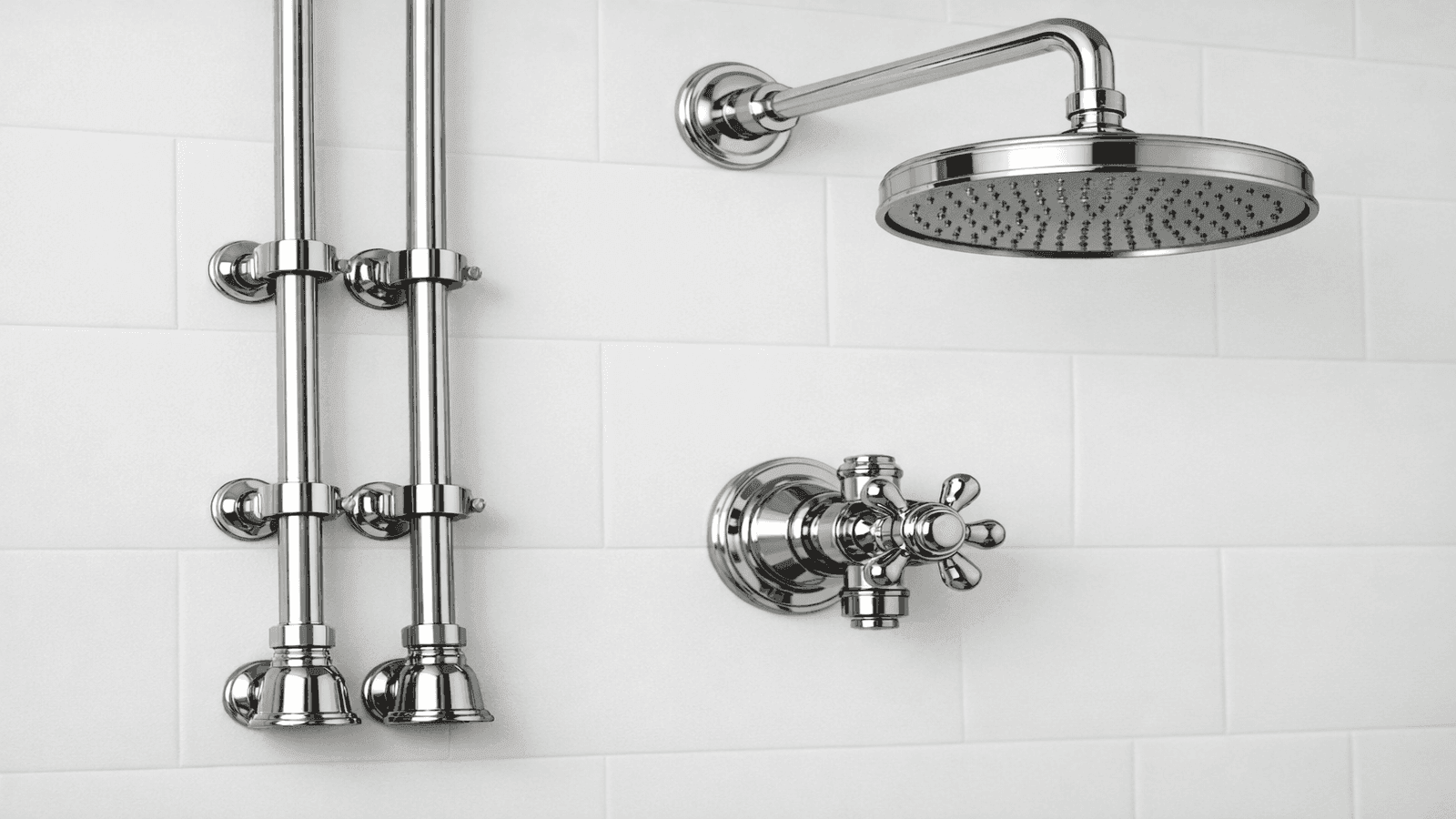
Photo: Exposed chrome-plated copper supply pipes with standoff clamps and wall escutcheons leading to a vintage rainfall showerhead and cross-handle valve
Vintage Fixture Cost Guide 2026
| Fixture Type | Reproduction Cost | Authentic Antique Cost | Installation Complexity | Plumber Recommended |
| Clawfoot tub (acrylic) | $600–$1,400 | N/A | Moderate | Yes |
| Clawfoot tub (cast iron) | $1,200–$2,500 | $500–$2,000 + replumbing | High (floor assessment) | Yes |
| High-tank pull-chain toilet | $400–$900 | $600–$1,500 + service | Moderate | Yes |
| Cross-handle bridge faucet | $200–$600 | $150–$400 + valve rebuild | Low-Moderate | Recommended |
| Pedestal sink (vitreous china) | $150–$500 | $200–$800 + replumbing | Moderate | Yes |
| Unlacquered brass faucet set | $250–$700 | $100–$300 + rebuild | Low-Moderate | Recommended |
| Exposed pipe supply system | $200–$500 materials | N/A | Moderate-High | Yes |
| Floor-mount clawfoot faucet | $300–$800 | N/A | High (floor penetration) | Yes |
Case Study: Margaret W.'s Dallas Master Bathroom Renovation
Margaret W. in Dallas, Texas, had a 1940s craftsman home with a main bathroom that still had original hex tile and a wall-mounted cast iron sink. She wanted to restore the period character while adding modern function — specifically a clawfoot tub and a proper shower in what had been a tub-only bathroom.
The initial plan called for an authentic cast iron clawfoot tub from a local salvage dealer. During the floor assessment, Michael R. Jennings found that the existing 2x8 floor joists beneath the proposed tub position spanned 14 feet with no intermediate support. Before placing an 800-pound loaded tub on those joists, two floor joists needed to be sistered — adding $550 to the project. Margaret decided to shift to a quality acrylic reproduction at 65 lbs rather than spend $550 on sistering for a cast iron original.
The rest of the project included a pedestal sink (reproduction, 30-inch vitreous china) with a cross-handle bridge faucet in unlacquered brass, a floor-mount clawfoot faucet with hand shower, exposed chrome supply pipes with period-style escutcheons, and a high-tank pull-chain toilet with nickel finish hardware. Total plumbing costs (fixtures plus labor) came to $4,200. The unlacquered brass on the faucets has already begun its natural patina development at six months post-installation, which Margaret considers the best part of the project.
The licensed plumbers in our NearbyHunt network report that 68 percent of vintage bathroom renovation projects require at least one structural or rough-in modification that was not anticipated by the homeowner — floor sistering, supply line rerouting, or wall blocking for wall-hung fixtures. Budgeting a 15–20 percent contingency on vintage plumbing renovations is standard professional advice.
For detailed plumbing cost breakdowns including labor rates by region, the linked resource covers current pricing data.
Vintage Fixture Finish Comparison
| Finish | Look | Aging Behavior | Maintenance | Best Application |
| Unlacquered brass | Warm gold | Develops rich patina in 6–18 months | Warm water only; no abrasives | Cross handles, bridge faucets, accessories |
| Oil-rubbed bronze | Warm brown/copper | Lightens on high-contact areas | Dry after use; no citrus cleaners | Lever handles, exposed pipe, showerheads |
| Polished nickel | Bright silver-warm | Maintains appearance with care | Polish with nickel-safe cleaner | Period baths, accessories |
| Antique brass (lacquered) | Aged gold, consistent | No change (lacquer preserves tone) | Standard fixture cleaner | Clients who want vintage look, no patina |
| Chrome | Bright cool silver | Minimal change; water spots visible | Standard cleaner, dry regularly | Exposed pipe, high-tank flush hardware |
Conclusion
Vintage plumbing design is achievable in a modern home when the structural requirements and technical specifications are addressed before fixture selection, not after. Cast iron clawfoot tubs require floor assessment. High-tank toilets require wall blocking and adequate water pressure. Genuine antiques require valve service and supply conversion. Exposed piping requires proper support and escutcheons. These are not obstacles to the vintage aesthetic — they are the correct sequence for executing it.
Quality reproduction fixtures solve the majority of the technical challenges while delivering period-accurate visual results that are, in many settings, indistinguishable from genuine antiques. Unlacquered brass and oil-rubbed bronze finishes age authentically. Compression valves deliver the genuine vintage feel; cartridge conversions deliver the visual result with minimal maintenance. Mixing modern thermostatic valve internals with cross-handle trim kits is the professional standard for period-accurate shower installations.
For context on how plumbing design has evolved historically and what genuine period fixtures represent, the history of plumbing resource covers the technical and cultural evolution that produced the fixtures we now call vintage. For related style directions, see also farmhouse bathroom ideas and modern bathroom fixtures for comparison.
- The information in this guide reflects general plumbing practice and common code requirements as of 2026. Local codes vary. Always consult a licensed plumber and verify requirements with your local building department before beginning any plumbing renovation. Cost estimates are ranges based on national averages and may vary significantly by region, materials, and project complexity.*
Sources & References
- EPA WaterSense Program — Fixtures and Fittings
- International Residential Code — Plumbing Loads and Structural Requirements (IRC 2021)
- American Society of Plumbing Engineers — Residential Plumbing Design
- National Association of Home Builders — Residential Construction Performance Guidelines
- EPA WaterSense — Water Efficiency Standards for Plumbing Fixtures
- Plumbing-Heating-Cooling Contractors Association — Residential Plumbing Best Practices
- American Society of Plumbing Engineers — Pipe Support and Anchoring Standards
- IRC Chapter 29 — Water Supply and Distribution


Michael Jennings is a licensed master plumber & water systems specialist with over 18 years of hands-on experience in residential and commercial plumbing, serving clients across California and Texas. At NearbyHunt, he shares practical advice on pipe installations, water heater maintenance, and home plumbing upgrades. Michael has helped thousands of homeowners prevent costly water damage and improve water efficiency through modern plumbing solutions.

Robert is a licensed master plumber with over 20 years of experience serving both residential and commercial clients across the Midwest. Specialising in advanced plumbing systems and sustainable water technologies, Rob brings deep technical insight and hands-on expertise to every project. As a reviewer for NearbyHunt, he ensures all plumbing content reflects the highest standards of safety, compliance, and practicality.