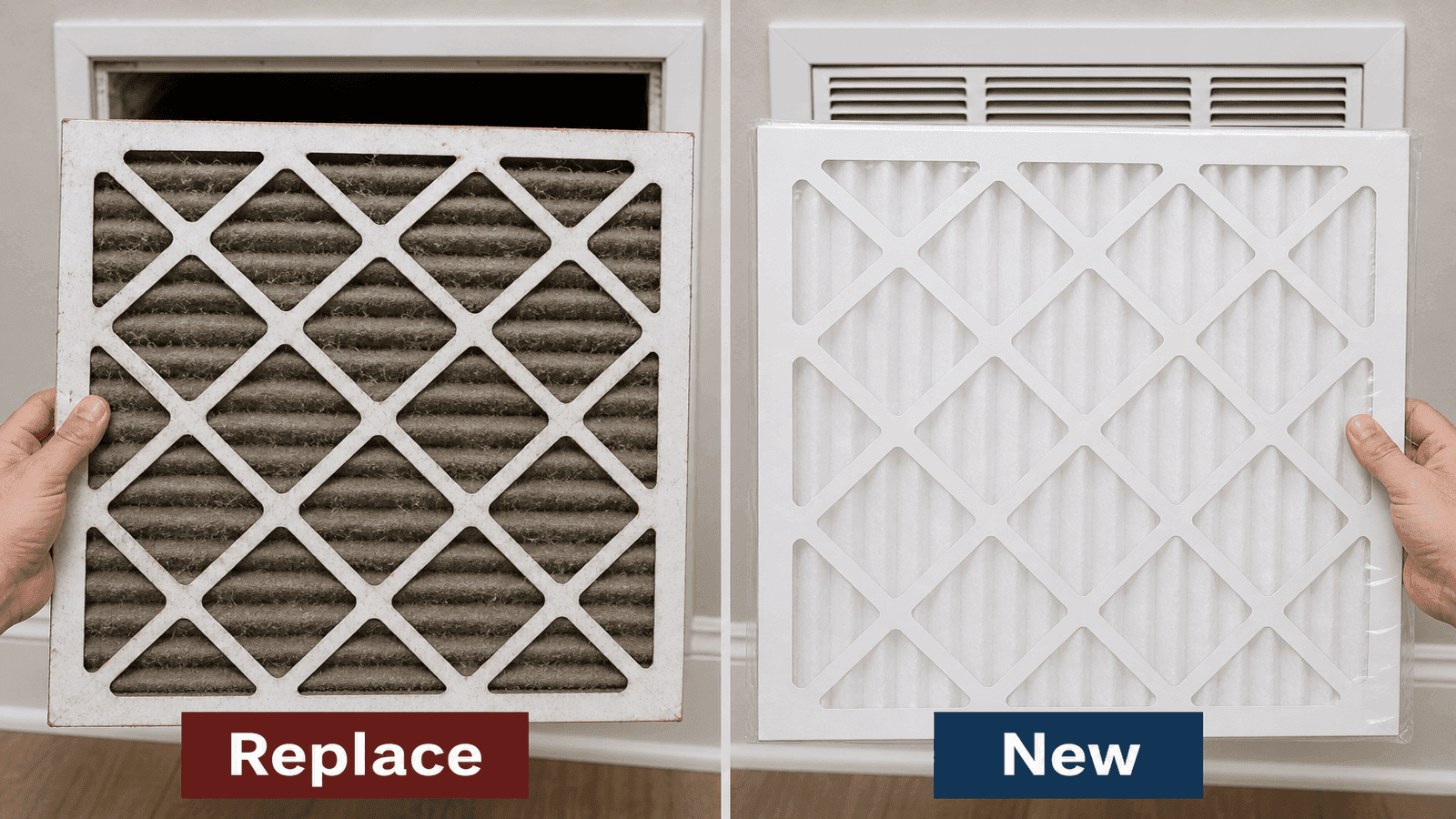
- The EPA reports that indoor air can be 2 to 5 times more polluted than outdoor air, and Americans spend roughly 90% of their time indoors, making HVAC-driven air quality control a direct health issue.
- MERV-rated filters between 8 and 13 capture the most common residential pollutants, including dust, pollen, pet dander, mold spores, and some bacteria, without overstressing standard HVAC equipment.
- ASHRAE Standard 62.2 requires whole-house mechanical ventilation calculated at 7.5 CFM per person plus 1% of the home's square footage, ensuring continuous fresh air exchange.
- Indoor humidity between 30% and 50% is the EPA-recommended range for preventing mold growth, dust mite proliferation, and respiratory irritation.
- The NearbyHunt network reports that 61% of HVAC service calls related to air quality trace back to clogged filters, blocked return vents, or disconnected ductwork rather than equipment failure.
- A properly maintained HVAC system can reduce airborne particulate concentrations by 50 to 70% compared to homes with neglected filters and sealed ductwork leaks. [1]

Get quotes from top-rated pros.
The air inside your home is not as clean as it looks. According to the Environmental Protection Agency, indoor air pollutant concentrations are typically 2 to 5 times higher than outdoor levels, and in some cases, more than 100 times higher. [1] Given that the average American spends approximately 90% of their time indoors, the quality of that air has a measurable impact on respiratory health, sleep quality, cognitive performance, and long-term disease risk.
Your HVAC system is the primary mechanical system responsible for filtering, circulating, and conditioning the air you breathe at home. It is not just a comfort system. When properly configured and maintained, it functions as a continuous air cleaning system. When neglected, it becomes a distribution network for dust, allergens, mold spores, and volatile organic compounds (VOCs).
This article covers how HVAC systems influence indoor air quality through three core functions: filtration, ventilation, and humidity control. Each section includes specific standards, equipment recommendations, and maintenance practices that directly improve the air in your home.
For a broader look at how heating, cooling, and ventilation systems work together, the All About HVAC pillar guide covers system types, components, and operational principles.
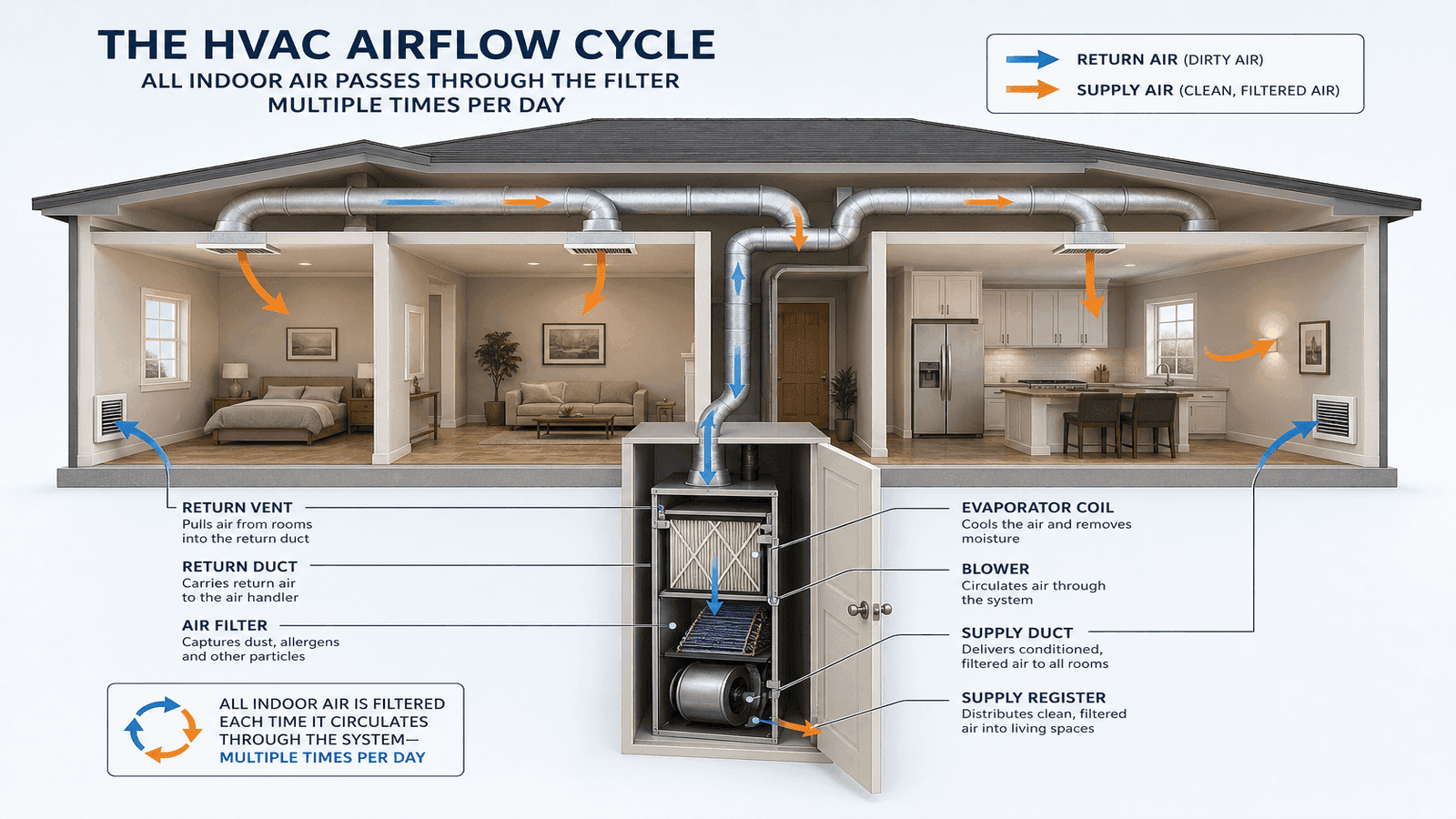
Photo: Cutaway diagram of a residential home showing HVAC airflow cycle with return air pulled through ducts and filter in the air handler then distributed as clean conditioned air through supply ducts and registers into living spaces.
Why Indoor Air Quality Matters
Indoor air quality (IAQ) refers to the condition of the air inside buildings as it relates to the health and comfort of the occupants. Poor IAQ is linked to a wide range of health effects, from mild irritation to serious chronic disease.
Common Indoor Air Pollutants
Residential homes contain a mix of pollutants that HVAC systems either help control or inadvertently circulate:
| Pollutant | Common Sources | Health Effects | HVAC Control Method |
| Particulate matter (PM2.5, PM10) | Cooking, candles, dust, pet dander | Respiratory irritation, asthma triggers | Filtration (MERV 8+) |
| Volatile organic compounds (VOCs) | Paint, cleaning products, furniture | Headaches, nausea, long-term organ damage | Ventilation, fresh air intake |
| Mold spores | Damp areas, HVAC condensate, leaks | Allergic reactions, respiratory infections | Humidity control, filtration |
| Carbon monoxide (CO) | Gas appliances, attached garages | Poisoning, death at high concentrations | Ventilation, dedicated CO detectors |
| Dust mites | Bedding, carpeting, upholstery | Allergic rhinitis, asthma | Humidity control (below 50%), filtration |
| Radon | Soil beneath foundation | Lung cancer (second leading cause) | Dedicated mitigation systems, not HVAC |
| Biological allergens | Pets, pests, outdoor pollen | Sneezing, congestion, asthma | Filtration (MERV 11+), duct sealing |
Not all pollutants can be addressed by HVAC alone. Radon and carbon monoxide require dedicated detection and mitigation systems. [1]*
The Health Impact
The World Health Organization attributes an estimated 3.2 million premature deaths annually to indoor air pollution globally. [2] In U.S. homes, the National Institute of Environmental Health Sciences identifies indoor allergens and irritants as primary triggers for the roughly 25 million Americans with asthma. Children, older adults, and people with respiratory conditions are the most vulnerable, and they tend to spend the most time indoors. [3]
Most homeowners think their air is clean because they cannot see anything floating in it. The reality is that the particles causing the most health problems, PM2.5 and smaller, are invisible. Your HVAC filter is the only thing standing between those particles and your lungs.
HVAC Filtration: Your First Line of Defense
The air filter in your HVAC system is the single most important component for controlling airborne particulates. Every time air cycles through the system (typically 5 to 7 times per day in a properly sized system), it passes through the filter. The filter's efficiency determines what gets trapped and what gets recirculated into your living space.
Understanding MERV Ratings
MERV stands for Minimum Efficiency Reporting Value, a rating system developed by ASHRAE (American Society of Heating, Refrigerating, and Air-Conditioning Engineers) that measures a filter's ability to capture particles between 0.3 and 10 microns. The scale runs from 1 to 20, with higher numbers indicating finer filtration. [4]
MERV Rating Comparison for Residential HVAC
Get quotes from top-rated pros.
| MERV Rating | Particles Captured | Best For | Pressure Drop Impact | Typical Cost (per filter) |
| 1-4 | Pollen, dust mites, carpet fibers (>10 microns) | Minimal protection, equipment only | Very low | $2-$5 |
| 5-8 | Mold spores, pet dander, dust (3-10 microns) | Standard residential use | Low | $5-$15 |
| 9-12 | Fine dust, legionella, humidifier dust (1-3 microns) | Improved residential, allergy sufferers | Moderate | $10-$25 |
| 13-16 | Bacteria, tobacco smoke, sneeze droplets (0.3-1 microns) | Superior residential, health-sensitive | Higher | $15-$40 |
| 17-20 | Virus carriers, carbon dust, sea salt (<0.3 microns) | Hospitals, clean rooms (not typical residential) | Very high | $25-$100+ |
Cost ranges reflect standard 1-inch and 4-inch residential filters as of 2026. Pricing varies by brand and size. [4]*
Which MERV Rating Should You Use?
For most homes, a MERV 8 to 13 filter provides the best balance between air cleaning performance and system compatibility. The EPA recommends a minimum of MERV 13 for homes where occupants have respiratory sensitivities. [1] However, not every HVAC system can handle MERV 13 filters without airflow restriction.
Before upgrading your filter, check these factors:
- System static pressure tolerance. Your HVAC system is designed to operate within a specific static pressure range (measured in inches of water column). A filter that is too restrictive forces the blower to work harder, increasing energy consumption and potentially damaging the motor.
- Filter slot dimensions. Many older systems have 1-inch filter slots, which limit options at higher MERV ratings. A 4-inch or 5-inch media filter cabinet can be installed to accommodate deeper, higher-MERV filters without excessive pressure drop.
- Ductwork condition. Leaky ductwork reduces the system's ability to pull air through the filter, meaning a higher-MERV filter may starve the system of airflow. Seal ducts before upgrading filters.
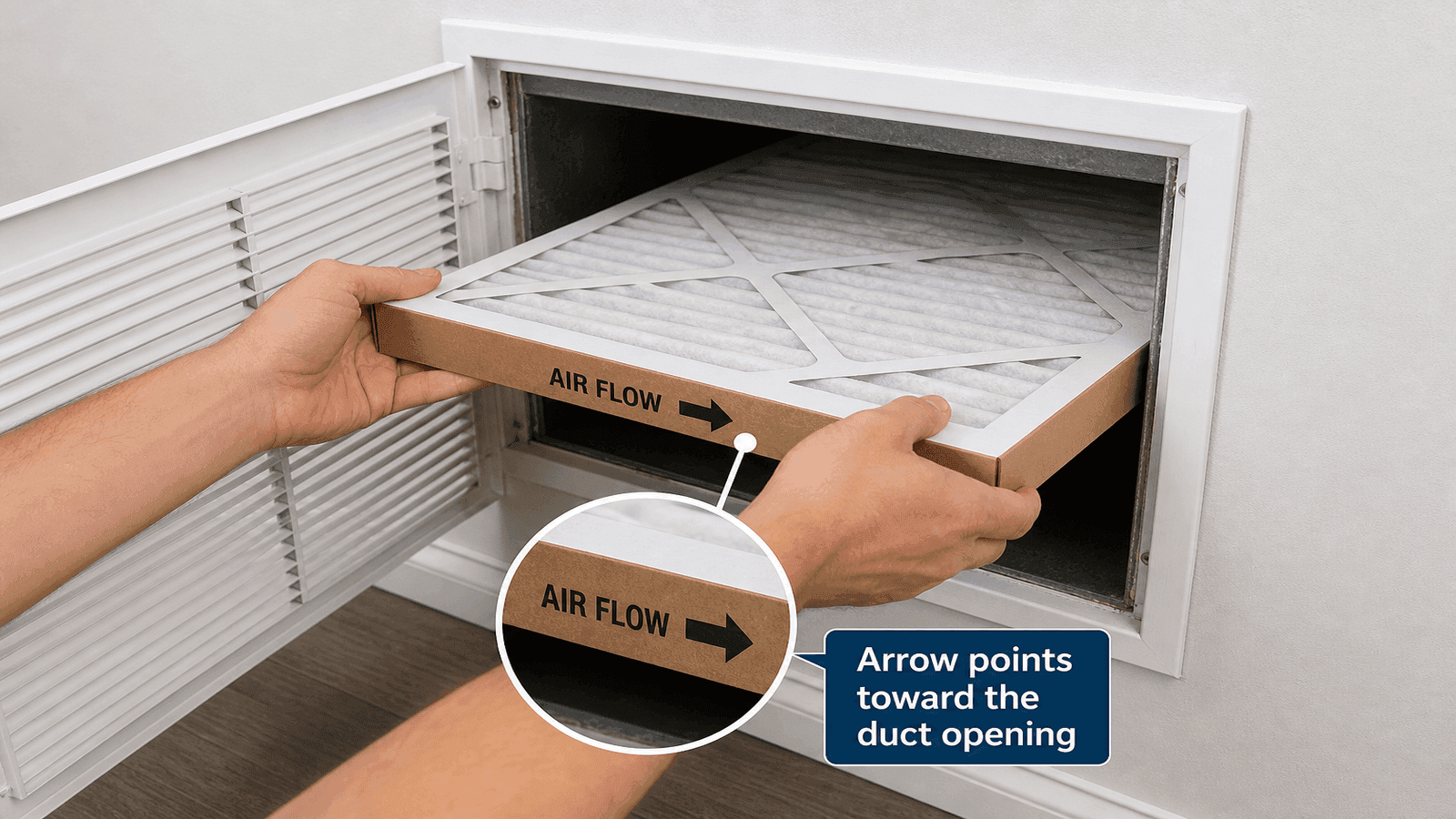
I tell every homeowner the same thing: the best filter is the one you actually change on schedule. A MERV 13 filter that sits in the system for six months is worse than a MERV 8 filter changed every 60 days. A clogged filter does not filter. It restricts.
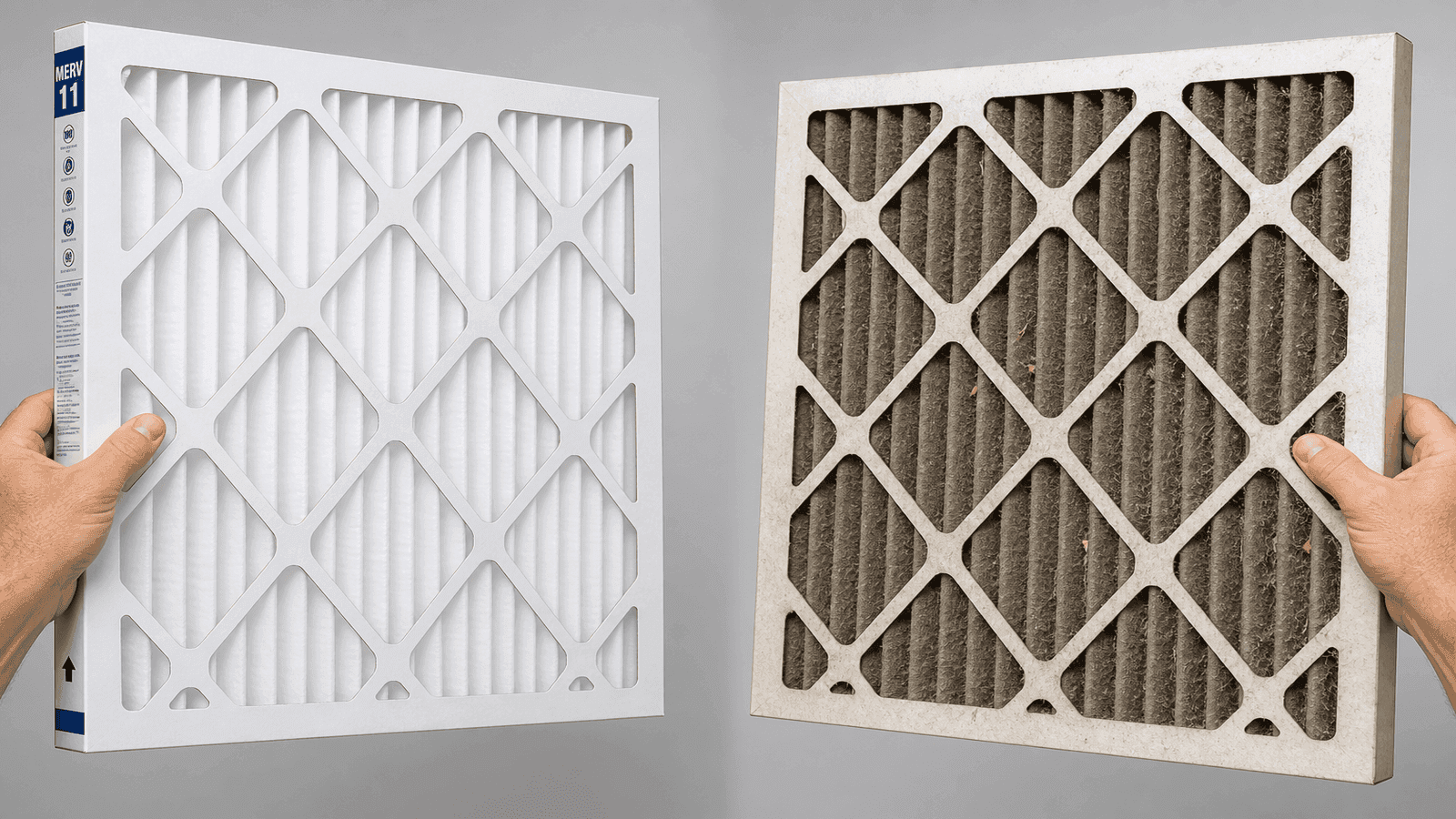
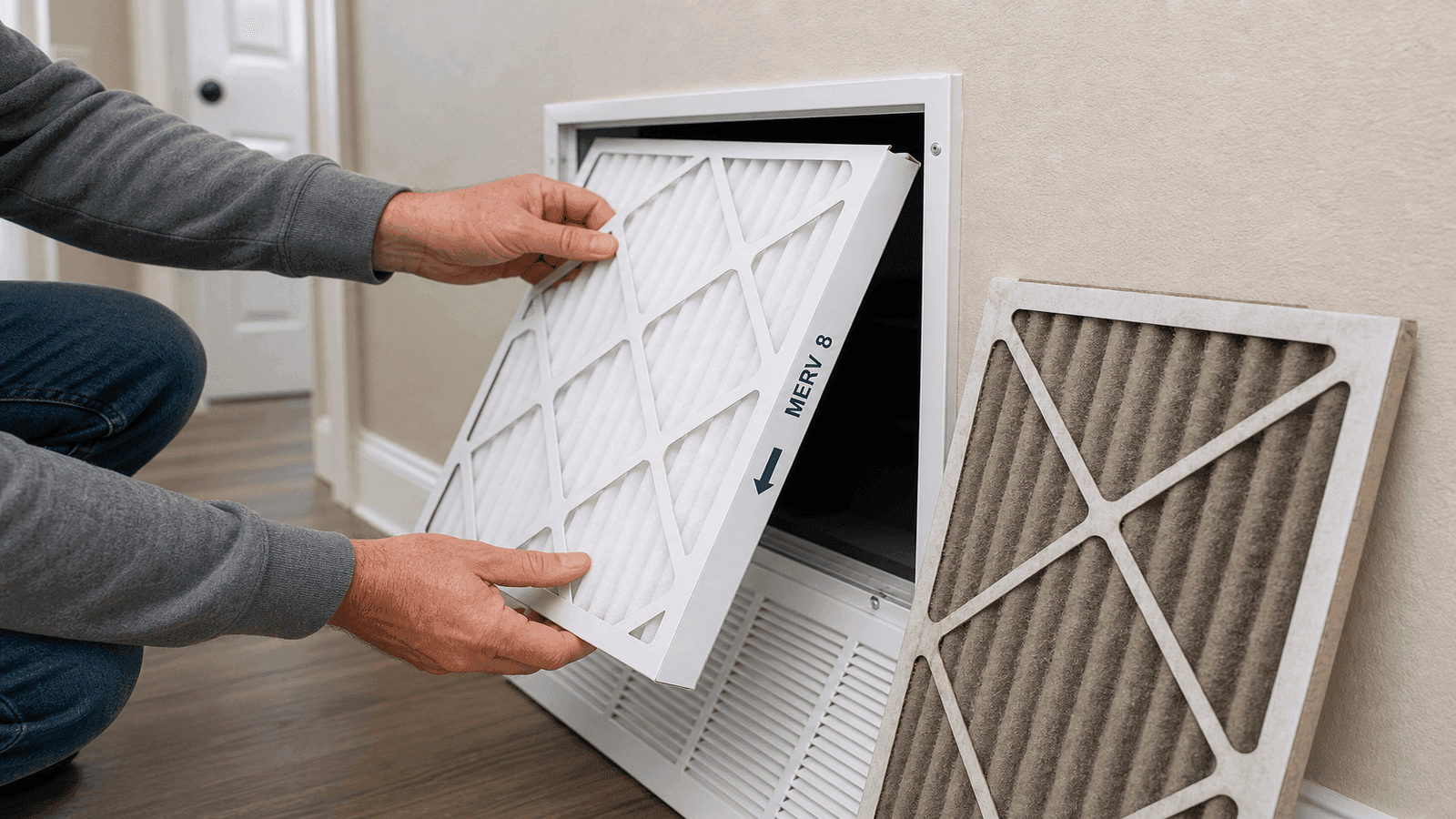
Photo: Side-by-side comparison of a clean new white pleated HVAC air filter next to a heavily clogged filter covered in gray-brown dust and pet hair after months of use showing why regular replacement is essential.
Ventilation: Bringing Fresh Air In
Filtration handles particles already in the air. Ventilation addresses a different problem: replacing stale, pollutant-laden indoor air with fresh outdoor air. Without adequate ventilation, pollutants generated inside the home (cooking fumes, VOCs from cleaning products, CO2 from breathing) accumulate continuously.
The ASHRAE 62.2 Standard
ASHRAE Standard 62.2 is the recognized national standard for ventilation in residential buildings. It establishes the minimum mechanical ventilation rate required to maintain acceptable indoor air quality. [5]
The formula is straightforward:
Required CFM = (Number of bedrooms + 1) x 7.5 + (Floor area in sq ft x 0.01)
For a 2,000-square-foot home with 3 bedrooms:
- People factor: (3 + 1) x 7.5 = 30 CFM
- Area factor: 2,000 x 0.01 = 20 CFM
- Total required: 50 CFM of continuous mechanical ventilation
Quick Reference: Ventilation Requirements by Home Size
| Home Size (sq ft) | 2 Bedrooms | 3 Bedrooms | 4 Bedrooms |
| 1,000 | 32.5 CFM | 40 CFM | 47.5 CFM |
| 1,500 | 37.5 CFM | 45 CFM | 52.5 CFM |
| 2,000 | 42.5 CFM | 50 CFM | 57.5 CFM |
| 2,500 | 47.5 CFM | 55 CFM | 62.5 CFM |
| 3,000 | 52.5 CFM | 60 CFM | 67.5 CFM |
Based on ASHRAE 62.2 continuous ventilation formula. Local codes may require higher rates. [5]*
Types of Residential Ventilation
Exhaust-only ventilation uses a continuously running bathroom exhaust fan to pull stale air out. Fresh air enters through natural leaks in the building envelope. Simple and inexpensive, but creates negative pressure that can pull in unfiltered outdoor pollutants.
Supply ventilation uses a dedicated fan or duct connected to the HVAC return to bring filtered outdoor air in. The home operates under slight positive pressure, preventing uncontrolled air infiltration.
Balanced ventilation uses both supply and exhaust fans to move equal volumes of air. Energy recovery ventilators (ERVs) and heat recovery ventilators (HRVs) transfer heat and moisture between outgoing and incoming air streams, reducing the energy cost of conditioning fresh air.
| Ventilation Type | Installed Cost | Energy Impact | Best Climate | Air Quality Control |
| Exhaust-only | $150-$400 | Low | Mild climates | Limited (unfiltered intake) |
| Supply | $300-$800 | Moderate | Hot, humid climates | Good (filtered intake) |
| ERV (balanced) | $1,500-$3,500 | Low (heat recovery) | All climates | Excellent (filtered, conditioned) |
| HRV (balanced) | $1,200-$3,000 | Low (heat recovery) | Cold climates | Excellent (filtered, conditioned) |
Installed costs reflect typical contractor pricing for residential retrofit installations as of 2026. [5]*
Get quotes from top-rated pros.
Case Study: The Ramirez Family, Austin, Texas
Maria and Carlos Ramirez noticed persistent morning headaches and congestion in their 2,200-square-foot home built in 2019. The home had tight construction with an ACH50 (air changes per hour at 50 pascals) of 2.8, well below the energy code threshold. Their HVAC system had no dedicated fresh air intake.
A NearbyHunt-connected HVAC technician measured CO2 levels in the master bedroom overnight and recorded peak concentrations of 2,400 ppm, well above the 1,000 ppm threshold where cognitive effects become measurable. The solution was a supply ventilation system connected to the HVAC return plenum with a motorized damper and MERV 13 filter on the incoming air. The total installed cost was $680.
Within two weeks, the family reported that morning headaches had stopped. Follow-up CO2 measurements showed overnight peaks of 750 ppm. The fix was not a new HVAC system or an air purifier. It was 50 CFM of filtered fresh air.
Humidity Control: The Invisible Factor
Humidity is the most underestimated component of indoor air quality. The EPA recommends maintaining indoor relative humidity between 30% and 50%. [1] Outside this range, biological pollutants thrive and building materials deteriorate.
What Happens Outside the 30-50% Range
Below 30% relative humidity:
- Mucous membranes in the nose and throat dry out, reducing the body's natural defense against airborne pathogens
- Static electricity increases, causing discomfort and potential damage to electronics
- Wood flooring, furniture, and trim crack and separate at joints
- Skin becomes dry and irritated, especially during sleep
Above 50% relative humidity:
- Mold growth accelerates on surfaces and within wall cavities
- Dust mite populations increase significantly (dust mites thrive above 50% RH)
- Condensation forms on cold surfaces (windows, exterior walls, ductwork)
- Wood absorbs moisture, leading to swelling, warping, and eventual rot
- Musty odors develop from microbial activity [6]
How HVAC Systems Control Humidity
Your air conditioning system is a dehumidifier by design. As warm, humid air passes over the cold evaporator coil, moisture condenses on the coil surface and drains away through the condensate line. A properly sized and functioning AC system typically maintains indoor humidity between 40% and 55% during cooling season.
Problems arise when:
- The AC system is oversized. An oversized unit cools the air quickly but shuts off before running long enough to remove adequate moisture. Short cycling (frequent on-off cycles) leaves humidity high even when the temperature is comfortable.
- The condensate drain is clogged. A blocked drain causes water to back up into the drain pan, which can overflow into the air handler or ductwork, creating a mold incubation environment directly inside the system.
- Ductwork runs through unconditioned spaces. Supply ducts in hot attics or crawl spaces can develop condensation on the outside of the duct, dripping moisture onto insulation and framing below.
Whole-Home Humidity Solutions
| Equipment | Function | Typical Cost (Installed) | Best For |
| Whole-home dehumidifier | Removes excess moisture independently of AC | $1,800-$3,500 | Humid climates, basements |
| Whole-home humidifier (bypass) | Adds moisture using furnace airflow | $400-$700 | Dry winter climates |
| Whole-home humidifier (steam) | Adds moisture independently of furnace | $1,200-$2,500 | Very dry climates, large homes |
| ERV with moisture transfer | Balances humidity between incoming/outgoing air | $1,500-$3,500 | Mixed climates year-round |
Costs reflect typical contractor-installed pricing for residential systems as of 2026. [6]*
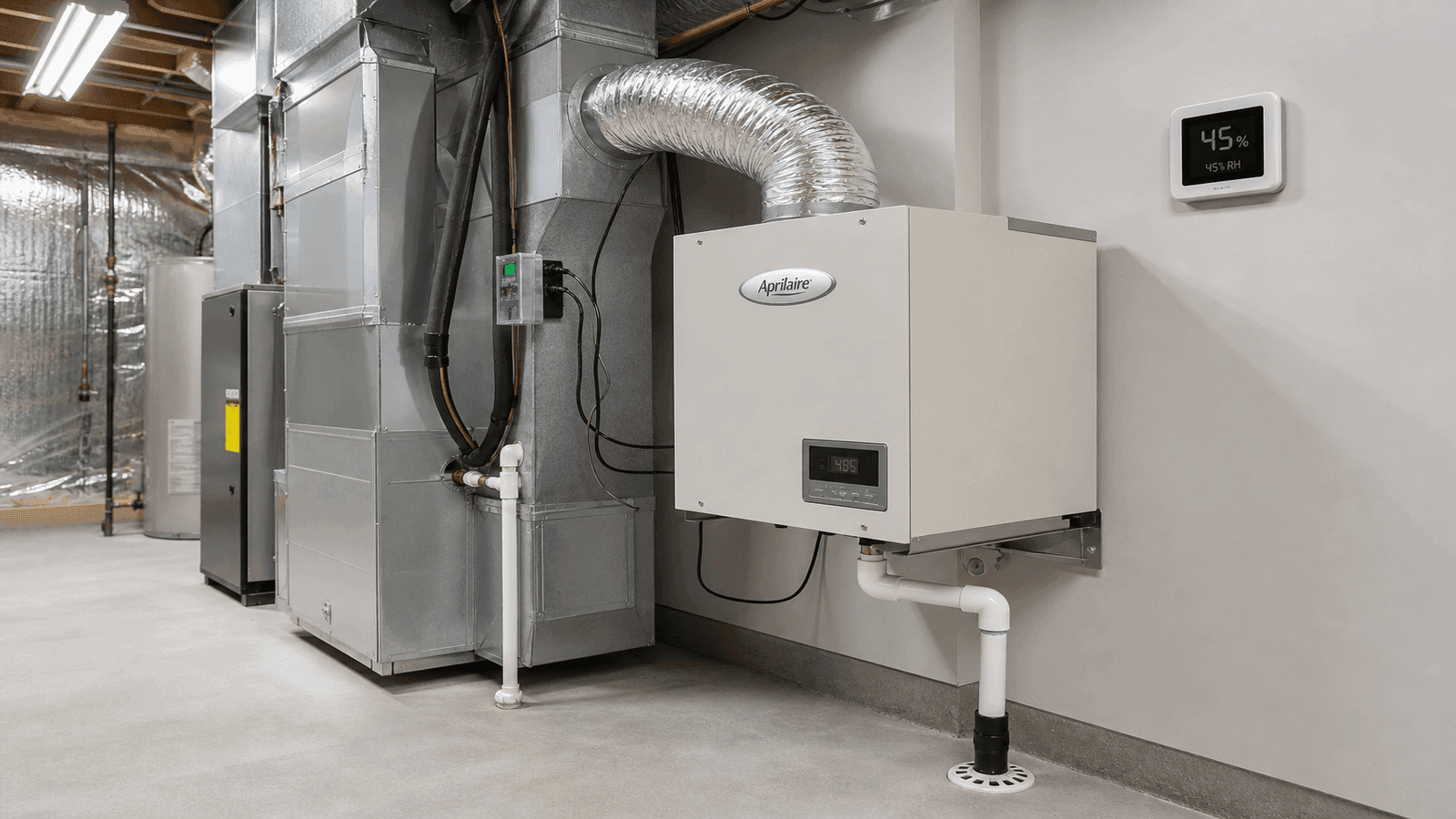
Photo: Professionally installed whole-home dehumidifier in a residential basement connected to HVAC ductwork with a condensate drain line and a wall-mounted digital hygrometer showing 45 percent relative humidity.
The number one complaint I hear from homeowners in the upper Midwest is dry air in winter. They run a portable humidifier in every room and still wake up with cracked lips and nosebleeds. A bypass humidifier installed on the furnace plenum costs $500 and solves the problem for the entire house. It is one of the best value upgrades in residential HVAC.
Ductwork: The Hidden Distribution Network
Your duct system is the circulatory system of your HVAC. If ducts are leaky, dirty, or poorly designed, even the best filter and ventilation setup cannot deliver clean air effectively.
Common Ductwork Problems Affecting Air Quality
Leaky ducts. The average home loses 20 to 30% of conditioned air through duct leaks, according to ENERGY STAR. [7] Those leaks do not just waste energy. In ducts running through attics, crawl spaces, or wall cavities, leaks draw in unfiltered air containing insulation fibers, dust, pest debris, and in some regions, radon. That unfiltered air bypasses your HVAC filter entirely and enters your living space through supply registers.
Disconnected duct runs. Flex duct connections at boots and plenums can pull apart over time, especially in attics where thermal cycling causes expansion and contraction. A disconnected duct dumps conditioned air into the attic while pulling attic air into the living space through return leaks.
Dirty duct interiors. Ducts exposed to moisture from condensation, flooding, or HVAC leaks can develop mold colonies on interior surfaces. The blower then distributes mold spores directly into every room served by that duct run.
Get quotes from top-rated pros.
NearbyHunt Network Insight
HVAC contractors in the NearbyHunt network report that 61% of air quality-related service calls are resolved by addressing one of three issues: clogged filters (most common), blocked or closed return vents (second), and disconnected or leaking ductwork (third). Equipment replacement is rarely the answer. Maintenance and duct integrity solve the majority of residential IAQ complaints.
When to Consider Duct Cleaning
The EPA notes that routine duct cleaning has not been proven to prevent health problems. [1] However, duct cleaning is warranted when visible mold growth is confirmed inside ducts, when vermin infestation is present, when excessive debris is being released from registers, or after major renovations that generated significant dust.
For a comprehensive look at HVAC system components and how they interact, the All About HVAC guide covers system architecture in detail.
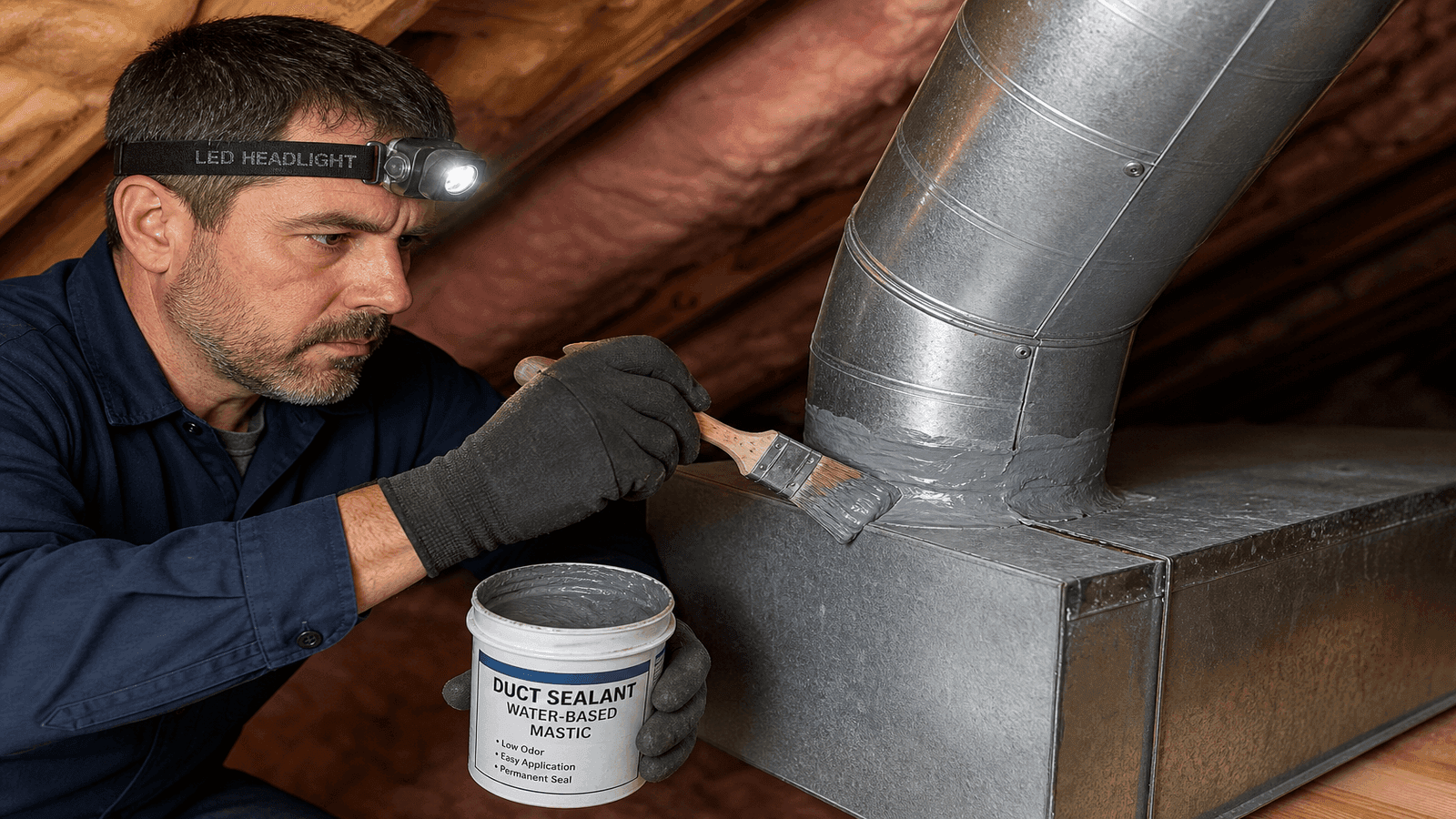
Photo: HVAC technician in a residential attic applying gray mastic sealant to a sheet metal ductwork joint connection to prevent air leaks that compromise indoor air quality.
Building a Complete IAQ Strategy
Improving indoor air quality is not a single purchase. It is a system-level approach that addresses filtration, ventilation, humidity, and maintenance together.
Step-by-Step IAQ Improvement Plan
Step 1: Assess your current filter. Check the MERV rating of your current filter. If it is below MERV 8, upgrade to at least MERV 8. If your system can handle it (check static pressure), move to MERV 11 or MERV 13. Confirm filter size and slot depth.
Step 2: Establish a filter replacement schedule. Standard 1-inch filters should be replaced every 30 to 90 days depending on household conditions (pets, construction, high-traffic). 4-inch media filters typically last 6 to 12 months. Set calendar reminders.
Step 3: Evaluate ventilation. Calculate your ASHRAE 62.2 requirement using the formula above. If your home has no dedicated fresh air intake and was built after 2000 (tighter construction), you likely need mechanical ventilation. Have CO2 levels tested if headaches, stuffiness, or poor sleep are persistent complaints.
Step 4: Check humidity. Purchase a digital hygrometer ($10 to $30) and monitor relative humidity in different rooms. If readings consistently fall below 30% in winter or above 55% in summer, address humidity with HVAC-integrated equipment.
Step 5: Inspect ductwork. Have a contractor inspect accessible duct connections for leaks, disconnections, and moisture damage. Seal leaks with mastic or metal-backed tape (not standard cloth duct tape, which degrades quickly).
Step 6: Schedule annual HVAC maintenance. A professional tune-up should include coil cleaning, condensate drain clearing, blower inspection, and refrigerant check. Clean coils and clear drains directly prevent mold growth inside the system.
IAQ Improvement Priority and Cost Summary
| Priority | Action | Estimated Cost | Impact on IAQ |
| 1 | Upgrade to MERV 11+ filter | $10-$25 per filter | High |
| 2 | Regular filter replacement schedule | $40-$150/year | High |
| 3 | Seal duct leaks | $300-$1,000 | High |
| 4 | Add mechanical ventilation | $150-$3,500 | High |
| 5 | Install whole-home dehumidifier/humidifier | $400-$3,500 | Medium-High |
| 6 | UV-C coil treatment | $400-$1,200 | Medium |
| 7 | Annual professional HVAC maintenance | $150-$300/visit | Medium |
Common IAQ Mistakes to Avoid
- Closing supply vents in unused rooms. This increases static pressure in the duct system, forces air through leaks, and can cause the evaporator coil to freeze. Leave all vents open.
- Running the fan on "auto" instead of "on." In "on" mode, the blower runs continuously, passing air through the filter even when the system is not actively heating or cooling. Continuous fan operation improves filtration for a modest electricity increase ($5 to $15 per month).
- Ignoring the condensate drain. A clogged condensate drain is a direct mold risk inside your air handler. Pour a cup of distilled white vinegar through the drain line every 3 months during cooling season.
- Using air fresheners to mask odors. Plug-in air fresheners, aerosol sprays, and scented candles introduce VOCs and particulates into the air. They add pollutants rather than removing them.
The biggest IAQ mistake I see is homeowners who spend $600 on a portable air purifier but have not changed their HVAC filter in eight months. The HVAC system moves 10 times the air volume of any portable unit. Fix the basics first.
Conclusion
Indoor air quality is not a luxury concern. It is a health issue that your HVAC system addresses every hour it runs. The three pillars of HVAC-driven air quality are filtration (trapping particles before they recirculate), ventilation (replacing stale air with fresh outdoor air), and humidity control (maintaining the 30-50% range where biological pollutants cannot thrive).
The most impactful improvements are also the least expensive: upgrading to a MERV 11 or higher filter, establishing a consistent replacement schedule, and sealing duct leaks. These three actions alone can reduce airborne particulate levels by more than half in most homes.
For homes built after 2000 with tight construction, mechanical ventilation is not optional. If your home has no fresh air intake and occupants experience morning headaches, persistent stuffiness, or elevated CO2 readings, a supply or balanced ventilation system will make a measurable difference.
Connect with a qualified HVAC technician through NearbyHunt to assess your home's filtration, ventilation, and humidity control. A professional evaluation takes less than two hours and provides a clear action plan prioritized by impact and cost.
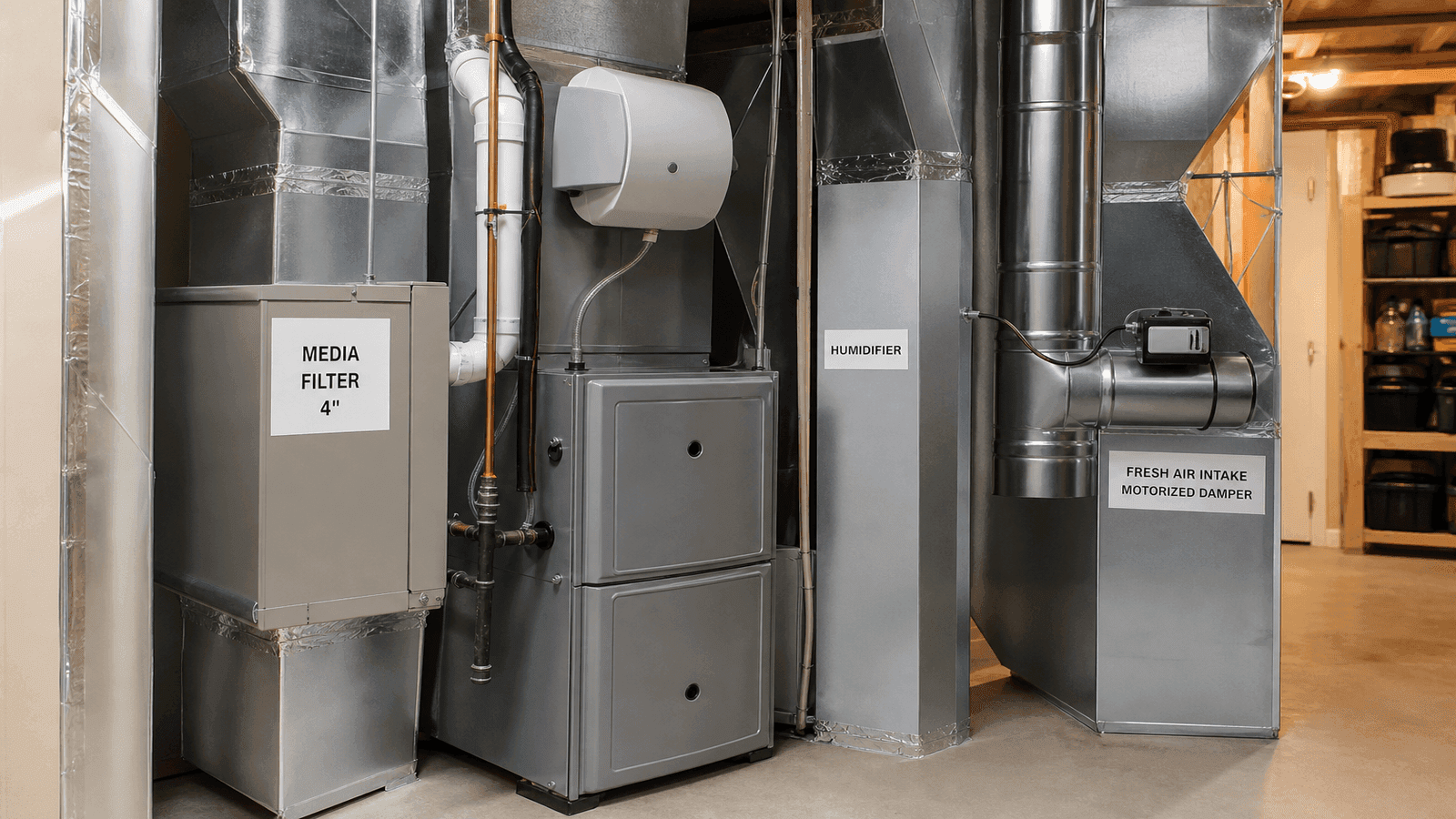
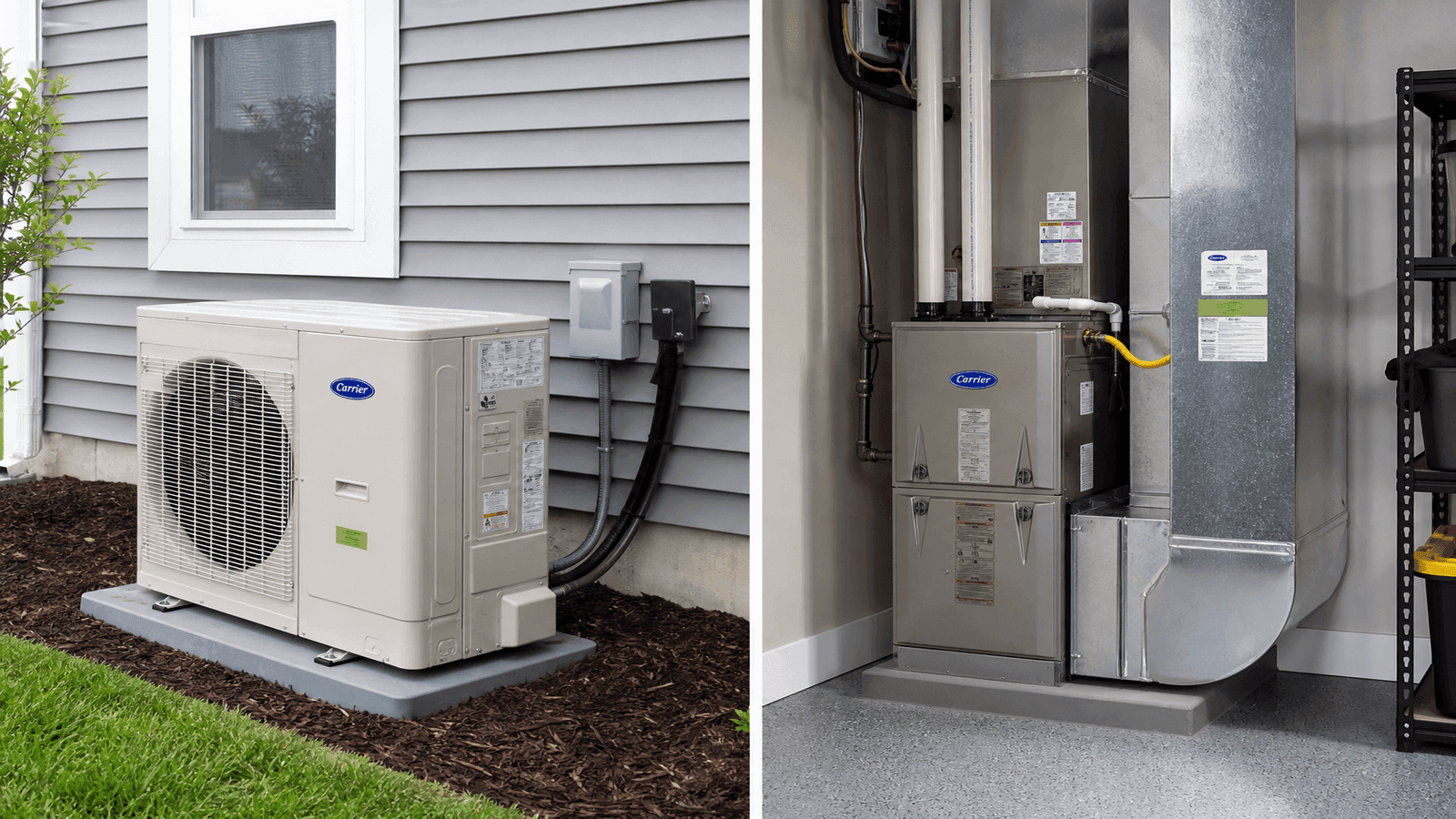
Photo: Modern residential HVAC system in a utility room showing a high-efficiency air handler with media filter cabinet, sealed ductwork, whole-home humidifier, and fresh air intake representing a complete indoor air quality setup.
Disclaimer: This article provides general educational information about HVAC systems and services. It is not intended as professional HVAC advice for specific situations. Local building codes, climate conditions, and individual home characteristics vary significantly. Always consult a licensed, certified HVAC professional for system-specific recommendations, installations, and repairs. Cost estimates are national averages as of 2026 and may differ in your area.
Sources
- EPA. "Introduction to IAQ."
- WHO. "Household Air Pollution."
- NIEHS. "Indoor Air Quality."
- EPA. "MERV Rating."
- ASHRAE. "Standard 62.2."
- Carrier. "Humidity Guide."
- ENERGY STAR. "Duct Sealing."
- EPA. "Air Cleaners."

Daniel is an EPA-certified HVAC technician & Energy Efficiency Consultant with over 14 years of experience in maintaining and installing heating and cooling systems throughout the Midwest. Passionate about sustainability, Dan specialises in energy-efficient retrofits and intelligent climate control systems. He writes for NearbyHunt to help homeowners extend the lifespan of their HVAC units while lowering utility bills.

Christine is an EPA-certified HVAC professional with 17 years of experience in heating, cooling, and indoor air quality systems. She has managed large-scale residential installations and worked as a technical trainer for new HVAC apprentices. Chris’s reviews focus on accuracy, safety, and performance standards in modern HVAC practices.