- BTU, SEER2, AFUE, and HSPF2 are the four efficiency and sizing metrics you will encounter on every HVAC equipment quote and energy label [1].
- The DOE replaced SEER with SEER2 in 2023, using a more realistic test that better reflects actual home conditions. Minimum ratings are now 13.4 SEER2 (North) and 14.3 SEER2 (South) [2].
- MERV ratings range from 1 to 16 for residential filters. Most homes perform best with MERV 8 to 13, balancing filtration and airflow [3].
- R-454B refrigerant replaced R-410A for all new equipment manufactured after January 1, 2025. Existing R-410A systems can still be serviced with no immediate action required [4].
- Understanding terms like load calculation, static pressure, and superheat helps you evaluate contractor proposals and spot red flags before signing a contract.
- Heating and cooling account for roughly 48% of residential energy consumption, making HVAC literacy one of the most cost-effective forms of homeowner education [5].
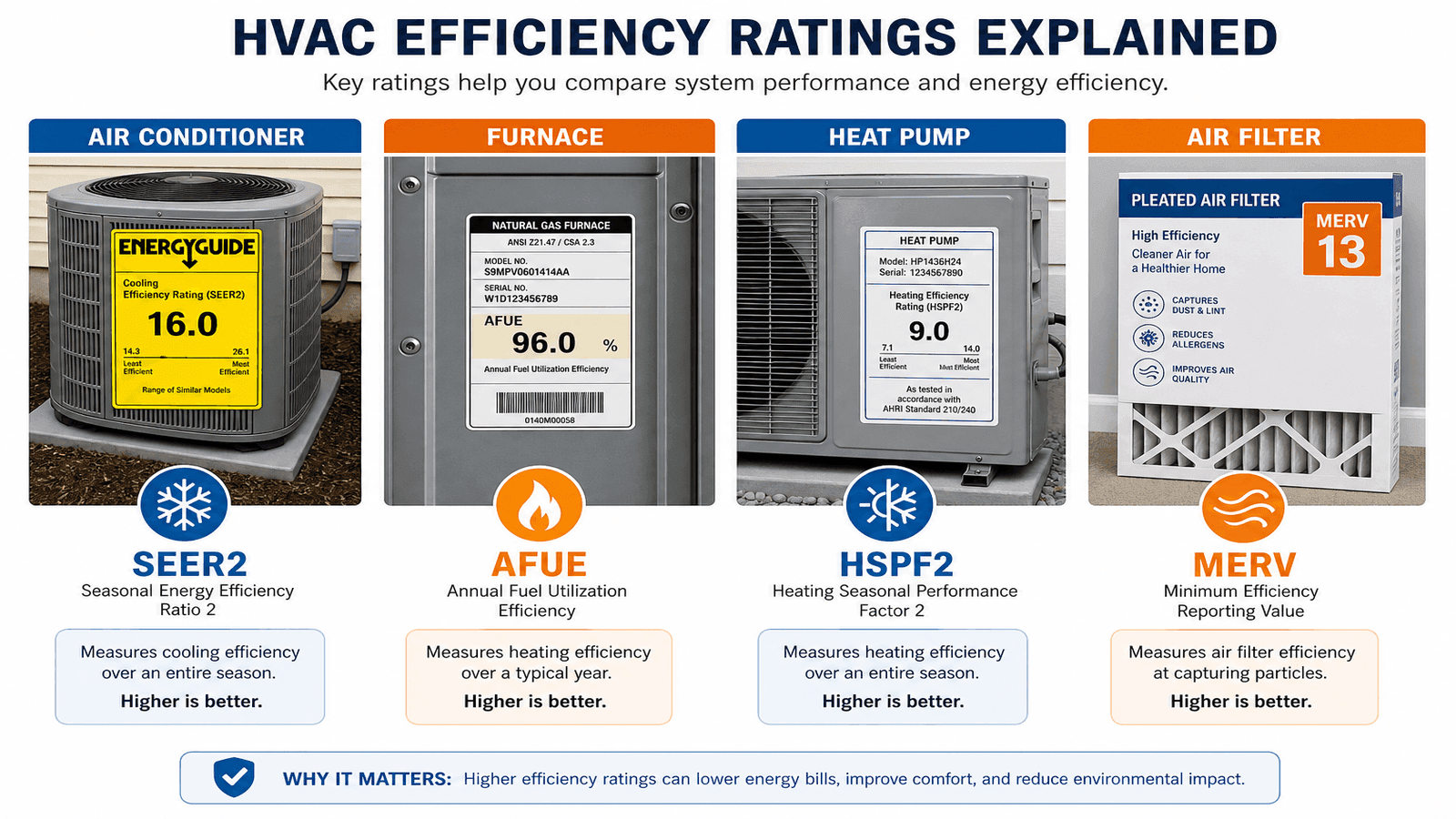
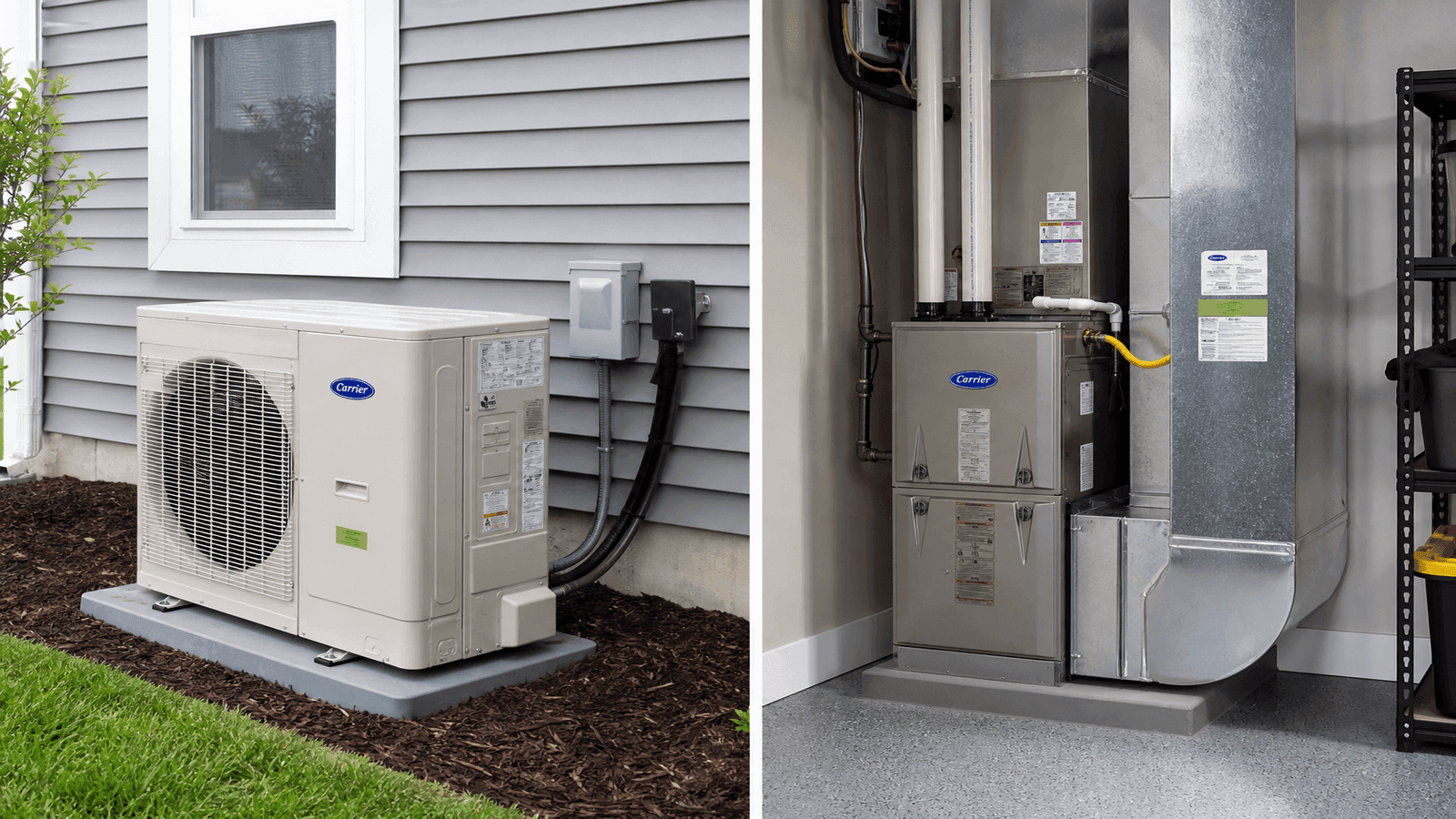
Photo: HVAC efficiency rating labels on residential equipment showing SEER2 and AFUE values
Why HVAC Terminology Matters
Every HVAC contractor proposal includes technical terms that influence what you pay, how efficiently your system runs, and how long it lasts. A homeowner who does not understand SEER2 ratings cannot tell whether a $7,000 quote is a good deal or a poor one. Someone unfamiliar with load calculations cannot recognize when a contractor skips the Manual J assessment and oversizes a system by 30%, a mistake that leads to short cycling, humidity problems, and premature compressor failure.
When a contractor says "14.3 SEER2 with an 80% AFUE furnace and a MERV 11 filter," that sentence should be meaningful to you. This guide makes it meaningful.
For a broader overview of HVAC systems, equipment types, and maintenance, visit our pillar guide on all about HVAC.

Get quotes from top-rated pros.
The homeowners who ask the best questions get the best systems. When a customer understands what SEER2 means and can compare it across proposals, they push contractors to compete on value rather than just price. I have seen that knowledge save families $1,500 or more on equipment that actually fits their home.
Efficiency Rating Terms
Efficiency ratings tell you how much useful heating or cooling you get for every dollar of energy consumed. These are the numbers that determine your monthly utility bills for the life of the equipment.
BTU
BTU stands for British Thermal Unit. It measures the amount of heat energy needed to raise the temperature of one pound of water by one degree Fahrenheit. In HVAC, BTU output measures a system's heating or cooling capacity. One ton of air conditioning equals 12,000 BTU per hour [1]. A typical 2,000 sq ft home in a moderate climate needs roughly 36,000 to 60,000 BTU of cooling capacity, depending on insulation, window quality, and sun exposure.
SEER2
SEER2 (Seasonal Energy Efficiency Ratio 2) measures cooling efficiency across an entire cooling season. It replaced the original SEER metric in 2023 when the Department of Energy adopted a more demanding test procedure (M1) that uses 0.5 inches of water column static pressure instead of the old 0.1 inches [2]. This change better simulates the resistance of real ductwork in an actual home.
Current minimums are 13.4 SEER2 in the North region and 14.3 SEER2 in the Southeast and Southwest regions. High-efficiency models reach 20 to 24+ SEER2. Each point of SEER2 translates to roughly 7% in cooling energy savings [2].
A system previously rated at SEER 16 typically earns a SEER2 14 to 15 under the new standard. The equipment is not less efficient; the test is simply more realistic.
EER2
EER2 (Energy Efficiency Ratio 2) measures cooling efficiency at a single, specific condition: 95 degrees Fahrenheit outside temperature. Unlike SEER2 (which averages over a range of outdoor conditions across a full season), EER2 captures peak-load performance. The Southwest region requires a minimum of 12.2 EER2 in addition to the SEER2 minimum [2]. If you live in Phoenix or Las Vegas, EER2 matters more than SEER2 because your system operates near peak load for months.
AFUE
AFUE (Annual Fuel Utilization Efficiency) measures what percentage of fuel a gas or oil furnace converts into usable heat. The federal minimum is 80% AFUE for non-weatherized furnaces, meaning 80 cents of every fuel dollar becomes heat while 20 cents escapes up the flue [1]. High-efficiency condensing furnaces reach 96% to 98.5% AFUE by extracting additional heat from exhaust gases through a secondary heat exchanger.
HSPF2
HSPF2 (Heating Seasonal Performance Factor 2) measures heat pump heating efficiency across a full heating season. The national minimum is 7.5 HSPF2, with top-performing models reaching 10 to 13 HSPF2 [2]. Higher HSPF2 means less electricity consumed for the same amount of heat delivered. This metric is especially important in cold climates where the heat pump does heavy heating work for five or more months per year.
COP
COP (Coefficient of Performance) expresses heating efficiency as a ratio at a specific outdoor temperature. A COP of 3.0 means the system delivers 3 units of heat energy for every 1 unit of electrical energy consumed. Ground-source (geothermal) heat pumps typically achieve COPs of 3.5 to 5.0, while air-source heat pumps range from 1.5 (at very cold temperatures) to 4.0+ (in mild conditions) [1].
Get quotes from top-rated pros.
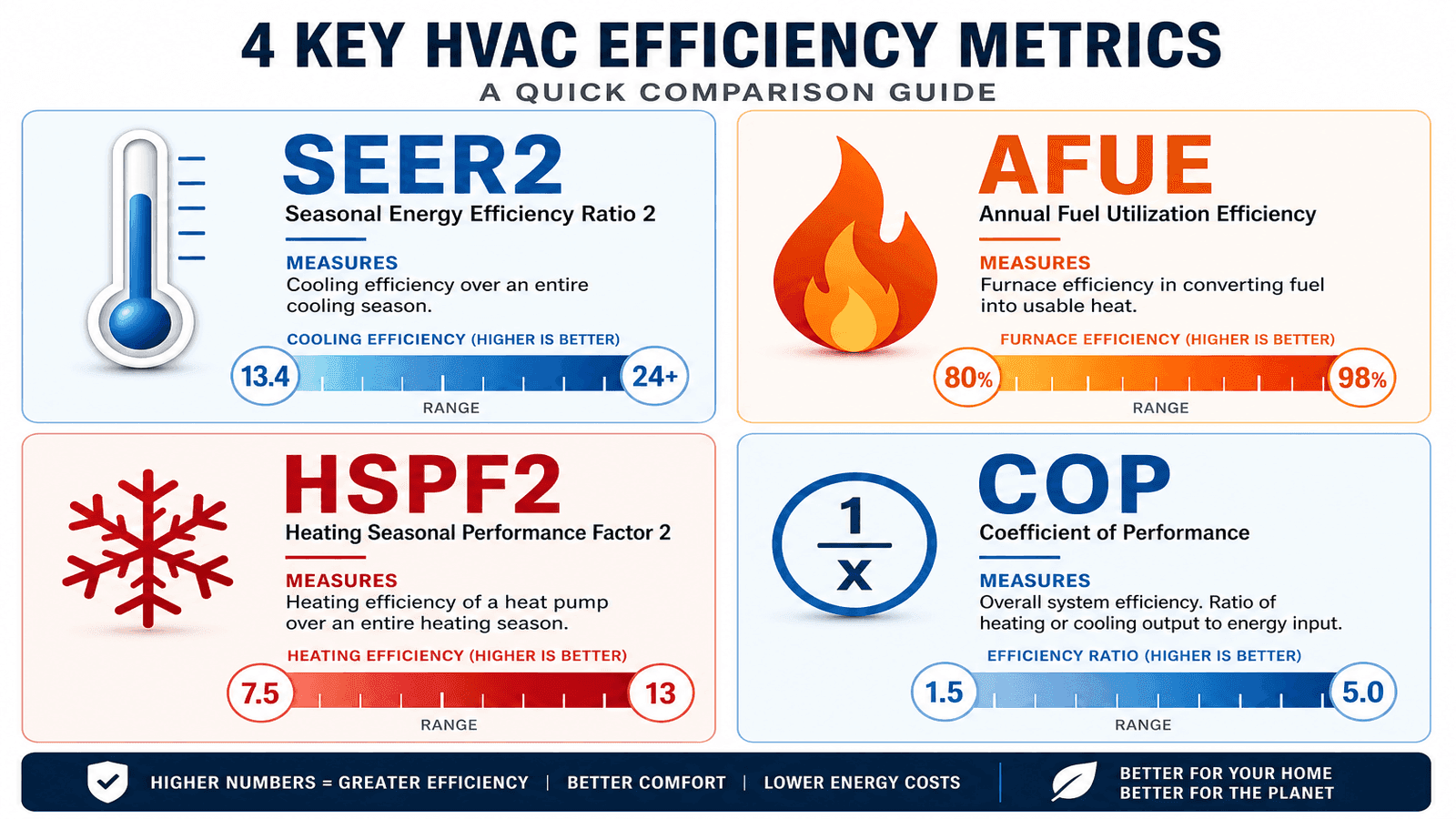
Photo: Infographic comparing SEER2, AFUE, HSPF2, and COP efficiency ratings with visual scales
Equipment and Sizing Terms
These terms describe how HVAC equipment is categorized, measured, and matched to your home.
Ton (Cooling Capacity)
In HVAC, a ton does not refer to weight. It measures cooling capacity: one ton equals 12,000 BTU per hour of heat removal. The term dates back to the ice-harvesting era, when one ton of ice melting over 24 hours absorbed 288,000 BTU (12,000 BTU per hour). Residential systems typically range from 1.5 to 5 tons. Proper sizing requires a Manual J load calculation, not a square-footage rule of thumb.
Manual J Load Calculation
A Manual J load calculation is the industry-standard method for determining the correct heating and cooling capacity for a specific home. Developed by ACCA (Air Conditioning Contractors of America), it accounts for square footage, insulation R-values, window area and orientation, air infiltration rates, number of occupants, appliance heat gain, and local climate data [6]. A proper Manual J takes 1 to 3 hours and produces a room-by-room analysis.
Skipped load calculations are the number one installation mistake identified by HVAC professionals in the NearbyHunt network. An oversized system short cycles, fails to dehumidify, and wears out prematurely. An undersized system runs continuously and cannot maintain the set temperature on extreme days.
I have walked into homes where the previous installer put in a 5-ton system based on square footage alone, and the house only needed 3 tons. That family dealt with cold, clammy air every summer because the oversized AC cooled too fast to remove humidity. A $200 load calculation would have prevented a $12,000 mistake.
Static Pressure
Static pressure is the resistance to airflow within your duct system, measured in inches of water column (in. w.c.). It functions like blood pressure for your HVAC system. Normal operating range is 0.5 to 0.8 in. w.c. total external static pressure [6]. Readings above 0.8 in. w.c. indicate restricted airflow from undersized ducts, dirty filters, closed dampers, or collapsed flex duct. High static pressure forces the blower to work harder, increases energy consumption, and can damage the motor.
CFM
CFM (Cubic Feet per Minute) measures airflow volume. Residential HVAC systems deliver approximately 400 CFM per ton of cooling capacity. A 3-ton system should move around 1,200 CFM through the duct system. Low CFM causes poor cooling performance and frozen evaporator coils. High CFM can prevent proper dehumidification.
Variable Speed, Two-Stage, and Single-Stage
These terms describe how equipment modulates its output:
- Single-stage operates at 100% capacity or off. The system cycles on and off repeatedly, creating temperature swings of 2 to 4 degrees.
- Two-stage runs at a low setting (approximately 60 to 70% capacity) most of the time and switches to high only during peak demand. This produces more even temperatures and better humidity control.
- Variable-speed (inverter-driven) continuously adjusts output from roughly 30% to 100% capacity to match the exact load at any given moment. These systems are the quietest, most efficient, and most comfortable option available. They run almost continuously at low speed rather than cycling on and off.
Refrigerant and Component Terms
Refrigerant is the working fluid that makes cooling and heat pump heating possible. Understanding refrigerant terminology helps you follow service discussions and prepare for equipment transitions.
R-410A
R-410A (brand name Puron) has been the standard residential refrigerant since 2010, when it replaced R-22 (Freon). It has a global warming potential (GWP) of 2,088, which drove regulators to phase it down [4].
R-454B
R-454B (Puron Advance) is the primary replacement for R-410A. Manufacturing of new R-410A residential equipment stopped January 1, 2025 [4]. R-454B has a GWP of 466 (78% lower than R-410A) and is classified as A2L (mildly flammable), requiring updated safety standards in new equipment. Existing R-410A systems do not need replacement. The transition adds 8% to 10% to new equipment prices [4].
Evaporator Coil
The evaporator coil sits inside your home (above the furnace or in the air handler) and absorbs heat from indoor air. Cold refrigerant flows through the coil while warm air passes over it. The refrigerant absorbs heat and evaporates from liquid to gas. A dirty evaporator coil reduces efficiency and can cause the system to freeze.
Get quotes from top-rated pros.
Condenser Coil
The condenser coil sits in the outdoor unit and releases collected heat. Hot refrigerant gas enters the coil, outdoor air passes over it, and the refrigerant condenses back into liquid. Keep the condenser coil clean with at least 2 feet of clearance around the outdoor unit.
Compressor
The compressor pressurizes refrigerant gas and circulates it through the system. It is the most expensive component to replace, typically $1,500 to $3,000 [5]. Modern systems use scroll compressors (fixed-speed) or inverter-driven compressors (variable-speed) that adjust output continuously.
Expansion Valve
The expansion valve controls refrigerant flow into the evaporator coil. A TXV (Thermostatic Expansion Valve) adjusts mechanically based on temperature and pressure. An EEV (Electronic Expansion Valve) uses electronic control for more precise metering, common in variable-speed systems.
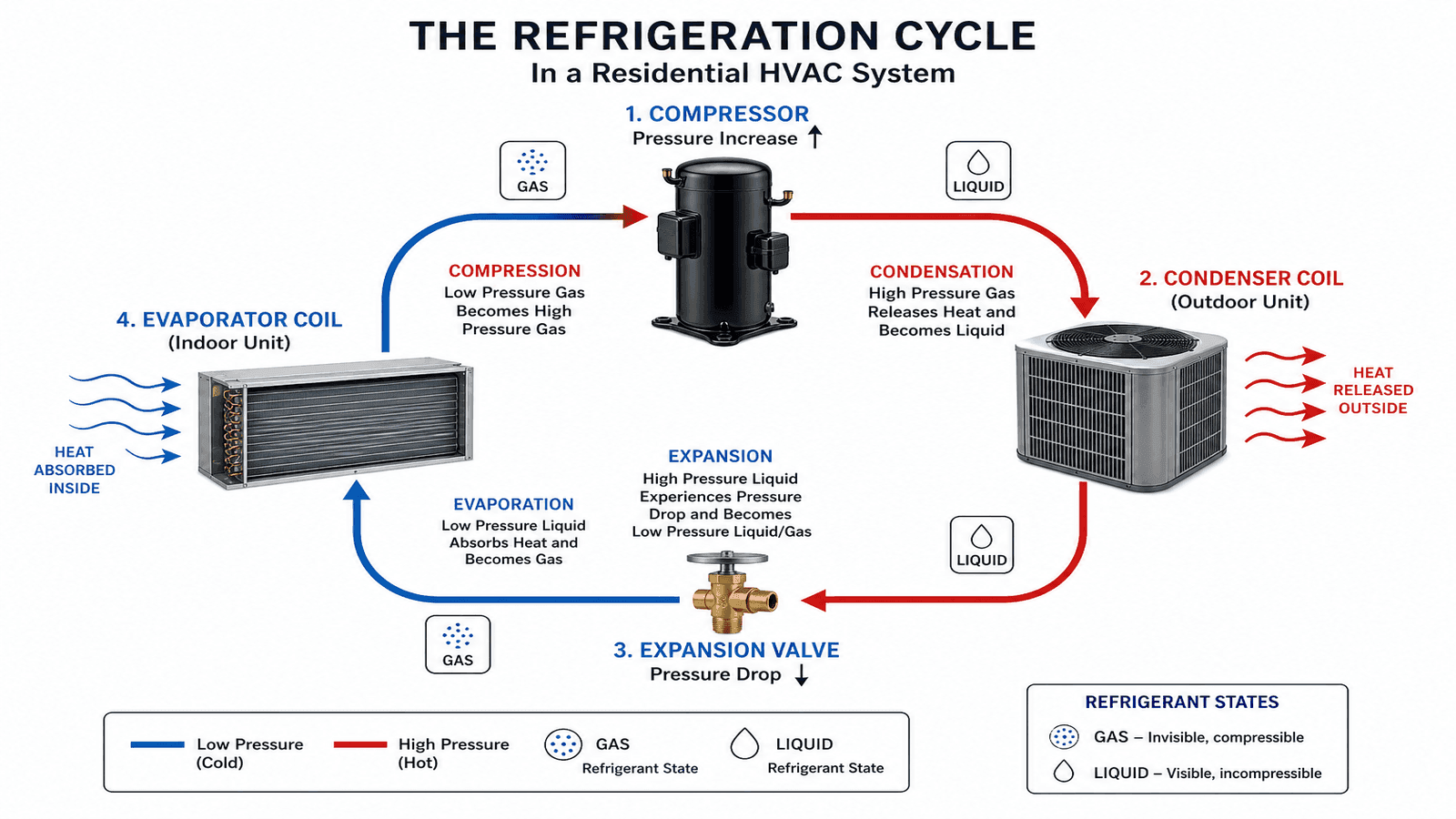
Photo: Diagram of refrigeration cycle showing compressor, condenser, expansion valve, and evaporator with refrigerant flow
Air Quality and Filtration Terms
Indoor air quality is directly connected to your HVAC system. These terms show up on filter packaging, air quality reports, and IAQ equipment proposals.
MERV Rating
MERV (Minimum Efficiency Reporting Value) is the ASHRAE standard for rating air filter effectiveness. The scale runs from 1 to 16 for residential applications [3]:
| MERV Range | Captures | Best For |
| 1 to 4 | Pollen, dust mites, carpet fibers | Basic protection, minimal filtration |
| 5 to 8 | Mold spores, pet dander, dust | Standard residential use |
| 9 to 12 | Fine dust, legionella, auto emissions | Allergy-sensitive homes |
| 13 to 16 | Bacteria, tobacco smoke, sneeze droplets | Asthma, immunocompromised residents |
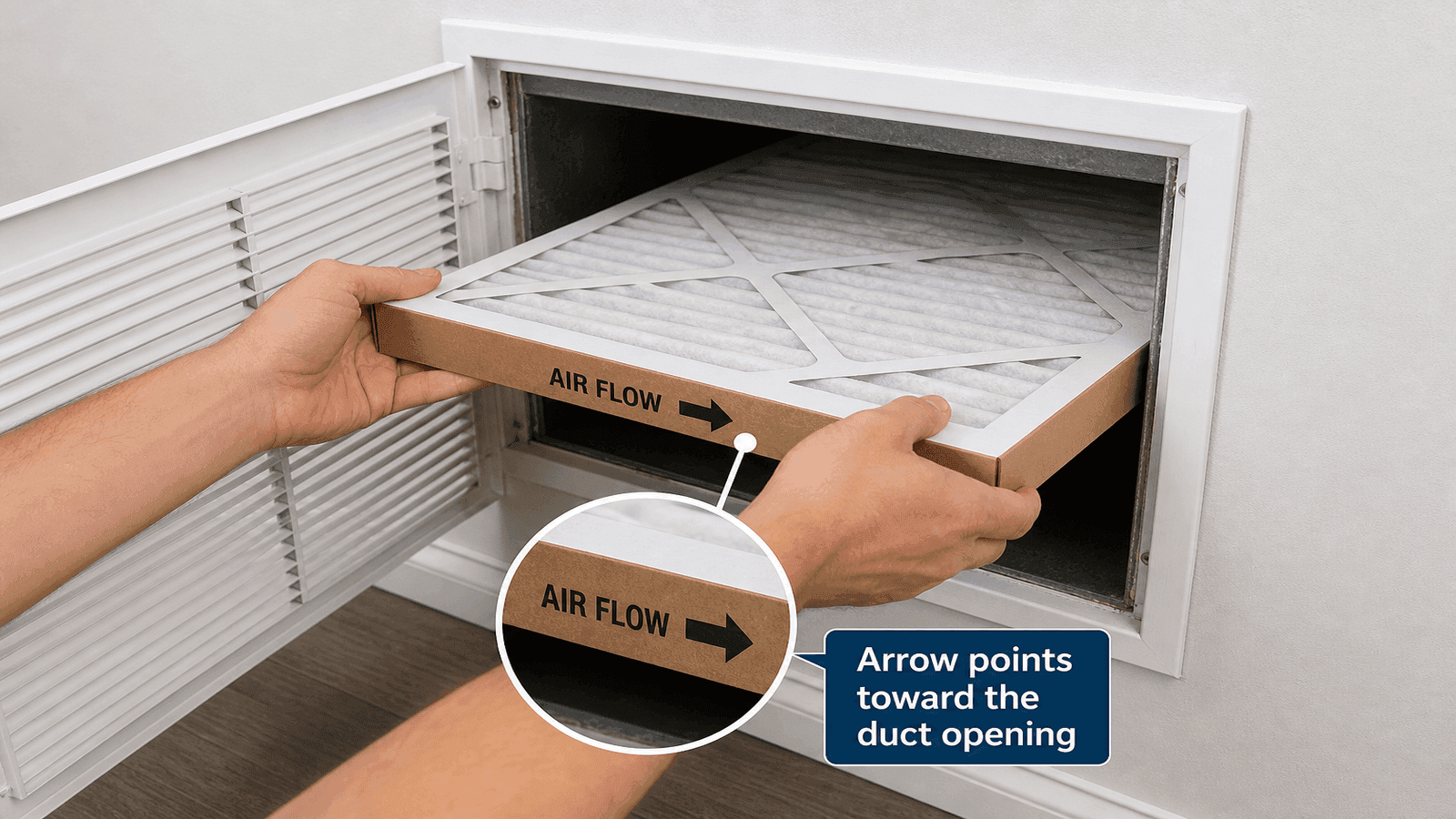
Most residential systems perform best with MERV 8 to 13 filters. Filters above MERV 13 can restrict airflow in standard ductwork and strain the blower motor, so consult your HVAC technician before upgrading beyond MERV 13 [3].
HEPA
HEPA (High Efficiency Particulate Air) filters capture 99.97% of particles 0.3 microns and larger. True HEPA filters are too restrictive for most standard duct systems and are typically used in standalone air purifiers. If a contractor recommends a "HEPA-rated" duct filter, verify whether it is true HEPA or a MERV 13 to 16 filter marketed with HEPA branding.
Relative Humidity
Relative humidity (RH) is the percentage of moisture in the air compared to the maximum moisture the air can hold at that temperature. The EPA recommends maintaining indoor RH between 30% and 50% [3]. Above 60% RH encourages mold growth, dust mites, and musty odors. Below 30% RH causes dry skin, static electricity, and cracking wood.
Properly sized HVAC systems remove more humidity than oversized ones because they run longer per cycle, allowing more moisture to condense on the evaporator coil.
Ductwork and Airflow Terms
Your duct system distributes conditioned air throughout the home. Problems with ductwork account for some of the most common HVAC performance complaints.
Supply and Return Ducts
Supply ducts carry conditioned air from the air handler to rooms through supply registers. Return ducts pull room air back to the system through return air grilles. A balanced system has adequate return pathways from every conditioned room. Blocking return grilles disrupts airflow balance and increases static pressure.
Get quotes from top-rated pros.
Plenum
The plenum is the enclosed air chamber attached directly to the air handler. The supply plenum distributes air into branch ducts; the return plenum collects air before it passes through the filter and coil. Plenum connections are critical sealing points because airflow volume is highest here.
Duct Leakage
According to ENERGY STAR, the average home loses 20% to 30% of conditioned air through duct leaks [7]. Duct leakage testing (duct blaster test) measures total leakage in CFM25. Many building codes now require testing for new construction, with a maximum allowable leakage of 4% to 8% of total system airflow.
Thermostat and Control Terms
Thermostats control when and how your HVAC system operates. Modern thermostat technology has introduced several terms worth understanding.
Setpoint and Deadband
The setpoint is the target temperature you program into your thermostat. The deadband (also called temperature differential) is the range around the setpoint within which the system will not cycle on. A typical deadband is 1 to 2 degrees. If your cooling setpoint is 72 degrees with a 1-degree deadband, the system turns on at 73 and shuts off at 72.
Heat Pump Balance Point
The balance point is the outdoor temperature at which a heat pump's heating capacity equals the building's heat loss. Below the balance point, supplemental heat activates. For older heat pumps, the balance point was typically 35 to 40 degrees. Modern cold-climate heat pumps push this down to 5 degrees or lower [5].
Smart Thermostat
Smart thermostats (Nest, Ecobee, Honeywell Home) connect to Wi-Fi and use occupancy sensors, weather data, and learning algorithms to optimize schedules. Key features include geofencing, remote access, energy usage reports, and integration with variable-speed equipment for tighter temperature control.
Real-World Case Study: Maria S., Denver, Colorado
Maria S. owns a 1,800 sq ft ranch-style home in Denver with a 16-year-old 13 SEER air conditioner paired with an 80% AFUE gas furnace. The system still ran, but her summer electric bills had climbed to $280 per month, and the furnace struggled to keep the home above 68 degrees on the coldest January nights.
She contacted three HVAC contractors through NearbyHunt. The first quoted a 14.3 SEER2 AC and 80% AFUE furnace for $8,200 with no load calculation mentioned.
The second performed a Manual J load calculation and recommended a dual-fuel system: a 17 SEER2 cold-climate heat pump with a 96% AFUE gas furnace backup for $13,400. He showed Maria her calculated load of 36,000 BTU cooling and 42,000 BTU heating, and explained why the previous 3.5-ton system had been oversized by nearly a full ton.
The third recommended a variable-speed mini-split at $16,800, more than Maria needed for her ducted home.
Maria chose the second contractor. The correctly sized 2.5-ton dual-fuel system reduced her summer electric bills to $165 per month (a 41% reduction). The heat pump handles heating down to 15 degrees, covering approximately 90% of Denver's heating hours. Her first-year combined heating and cooling costs dropped by $1,100.
The $200 Manual J prevented a $3,000 oversizing mistake and delivered measurably better comfort.
NearbyHunt Network Insight
In a survey of 127 NearbyHunt HVAC contractors conducted in early 2026, 68% said homeowner confusion about efficiency ratings (SEER2, AFUE, HSPF2) is the primary barrier to selling higher-efficiency equipment. When homeowners understand the difference between 14.3 SEER2 and 20 SEER2 in actual dollar terms, they are significantly more likely to invest in equipment that pays for itself within 5 to 7 years through energy savings.
The most commonly misunderstood terms: SEER2 vs. the old SEER rating, the difference between AFUE and COP, what "variable speed" means for comfort, and why Manual J load calculations matter more than the brand name on the equipment.
Looking for a certified HVAC technician who can explain your options in plain language? Find trusted HVAC professionals near you on NearbyHunt and get free quotes from contractors who prioritize proper sizing and honest communication.

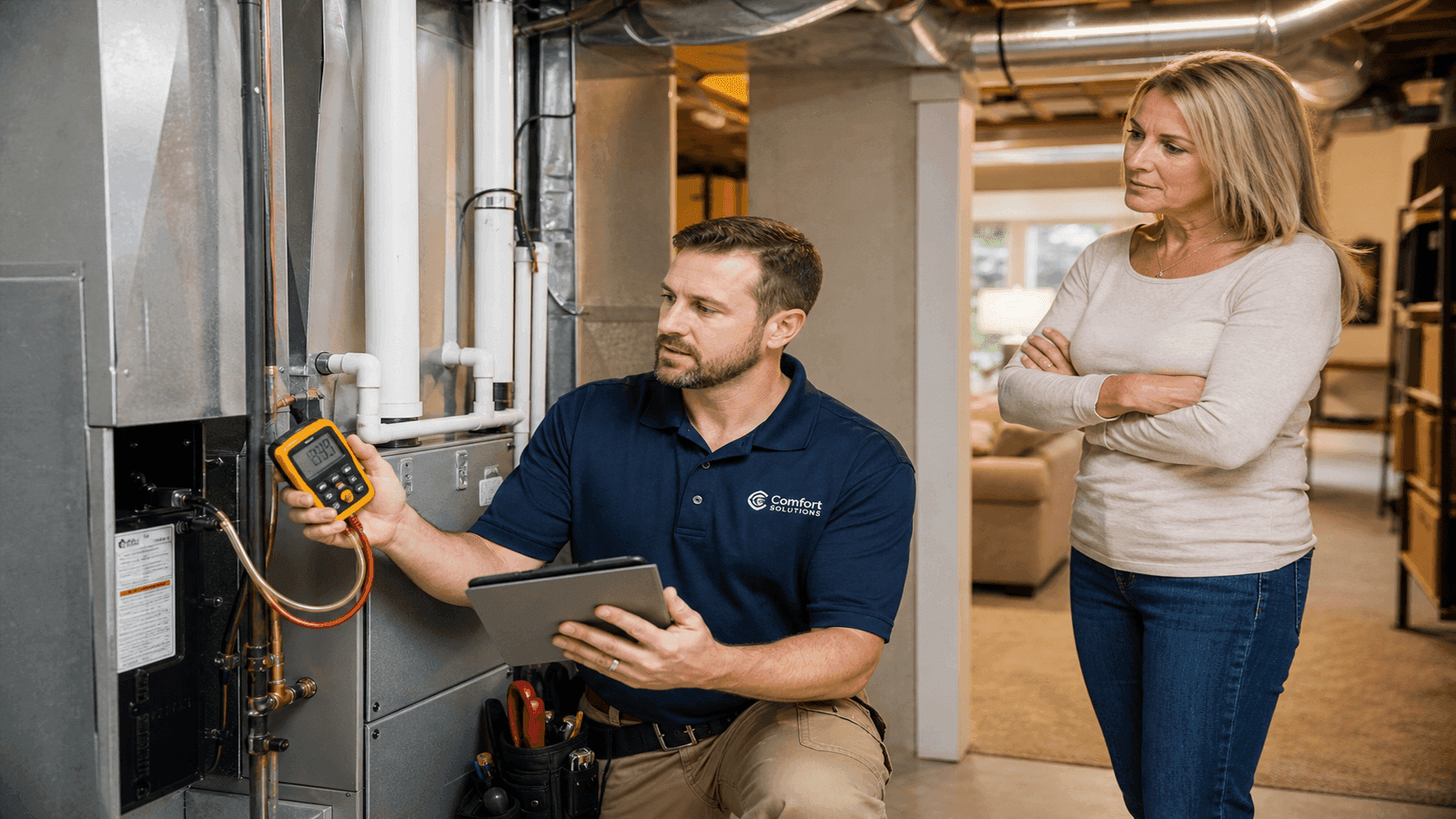
Photo: HVAC technician explaining equipment ratings to a homeowner using a tablet showing efficiency data
Conclusion
Disclaimer: This article provides general educational information about HVAC terminology and concepts. It is not intended as professional HVAC advice for specific installations, repairs, or equipment selection. Local building codes, climate conditions, and individual home characteristics vary significantly. Always consult a licensed, certified HVAC professional for system-specific recommendations. Efficiency ratings and cost estimates reflect industry standards as of 2026 and may vary by region and manufacturer.
Sources & References
[1] U.S. Department of Energy. "Energy Saver: Heating and Cooling."
[2] U.S. Department of Energy. "SEER2, EER2, and HSPF2 Efficiency Standards."
[3] U.S. Environmental Protection Agency. "What is a MERV Rating?"
[4] U.S. Environmental Protection Agency. "Refrigerant Transition: R-454B."
[5] ServiceTitan. "HVAC Industry Statistics 2026."
[6] ACCA (Air Conditioning Contractors of America). "Manual J Residential Load Calculation."
[7] ENERGY STAR. "Duct Sealing."

Daniel is an EPA-certified HVAC technician & Energy Efficiency Consultant with over 14 years of experience in maintaining and installing heating and cooling systems throughout the Midwest. Passionate about sustainability, Dan specialises in energy-efficient retrofits and intelligent climate control systems. He writes for NearbyHunt to help homeowners extend the lifespan of their HVAC units while lowering utility bills.

Christine is an EPA-certified HVAC professional with 17 years of experience in heating, cooling, and indoor air quality systems. She has managed large-scale residential installations and worked as a technical trainer for new HVAC apprentices. Chris’s reviews focus on accuracy, safety, and performance standards in modern HVAC practices.