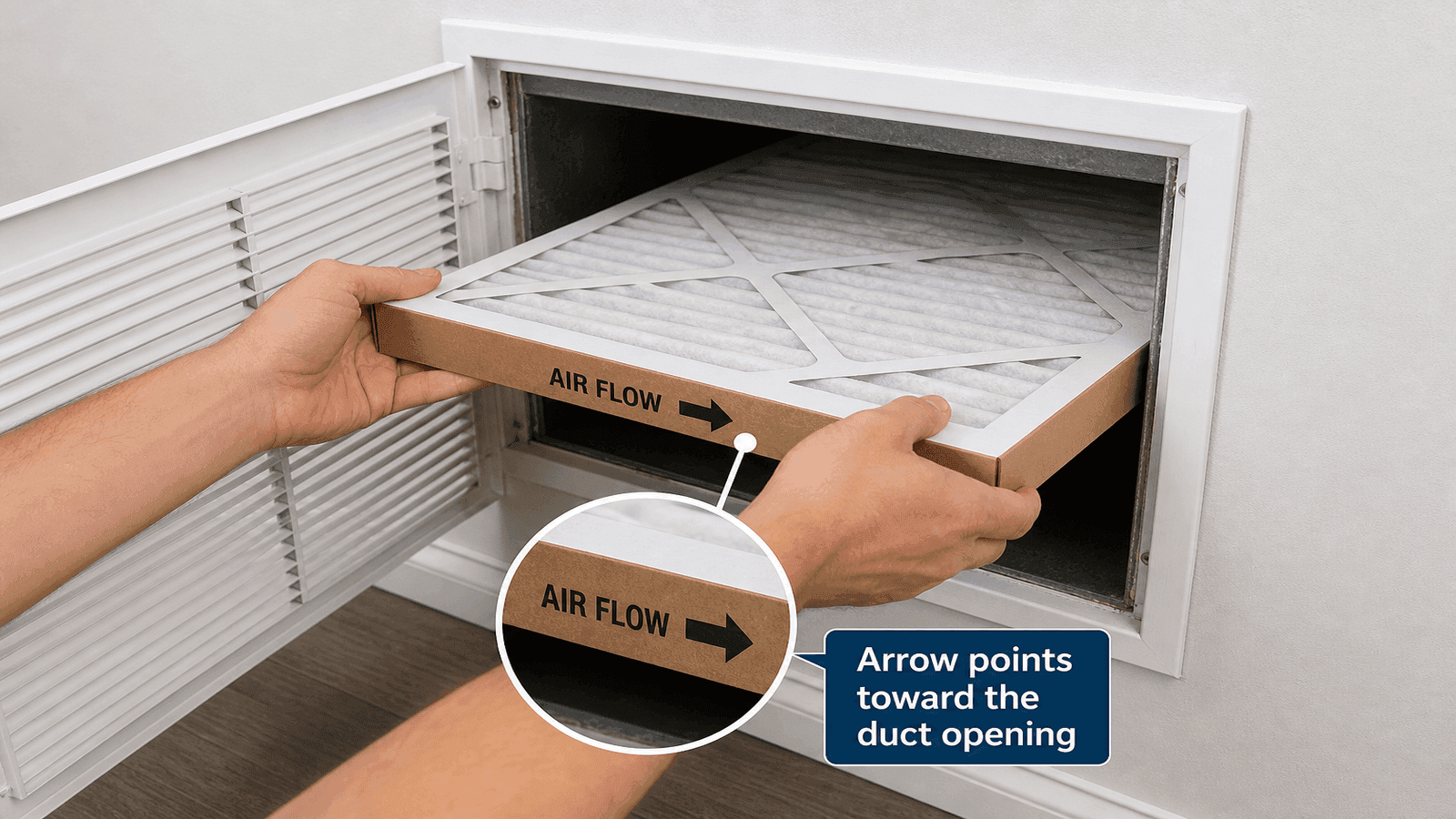
- Dirty air filters cause 40% of all HVAC service calls and can increase energy bills by 5-15%, making filter replacement the single most effective maintenance task [1].
- Refrigerant leaks reduce cooling capacity by 30-40% while nearly doubling electricity consumption, with repair costs averaging $200-$1,500 depending on leak location [2].
- Thermostat malfunctions account for roughly 1 in 5 service calls and often mimic more serious system failures, yet many can be resolved with a battery change or recalibration [3].
- Short cycling damages compressors rated for 15 years of normal use in as little as 7-8 years, turning a preventable issue into a $1,500-$3,000 replacement [4].
- Annual preventive maintenance costing $150-$300 prevents up to 95% of major breakdowns according to ASHRAE guidelines [5].
Your HVAC system works thousands of hours each year to keep your home comfortable. According to the Department of Energy, heating and cooling accounts for roughly 48% of energy use in a typical U.S. home, making it the largest single energy expense [1]. When something goes wrong, the results range from mild discomfort to emergency repair bills exceeding $3,000.
Daniel Torres, our Certified HVAC Technician with EPA 608 Universal and NATE certifications and 14 years of experience in Minneapolis, has diagnosed and repaired every problem on this list hundreds of times. His field data shows that 15 specific issues account for the vast majority of residential HVAC calls, and most share a common root cause: deferred maintenance.

Get quotes from top-rated pros.
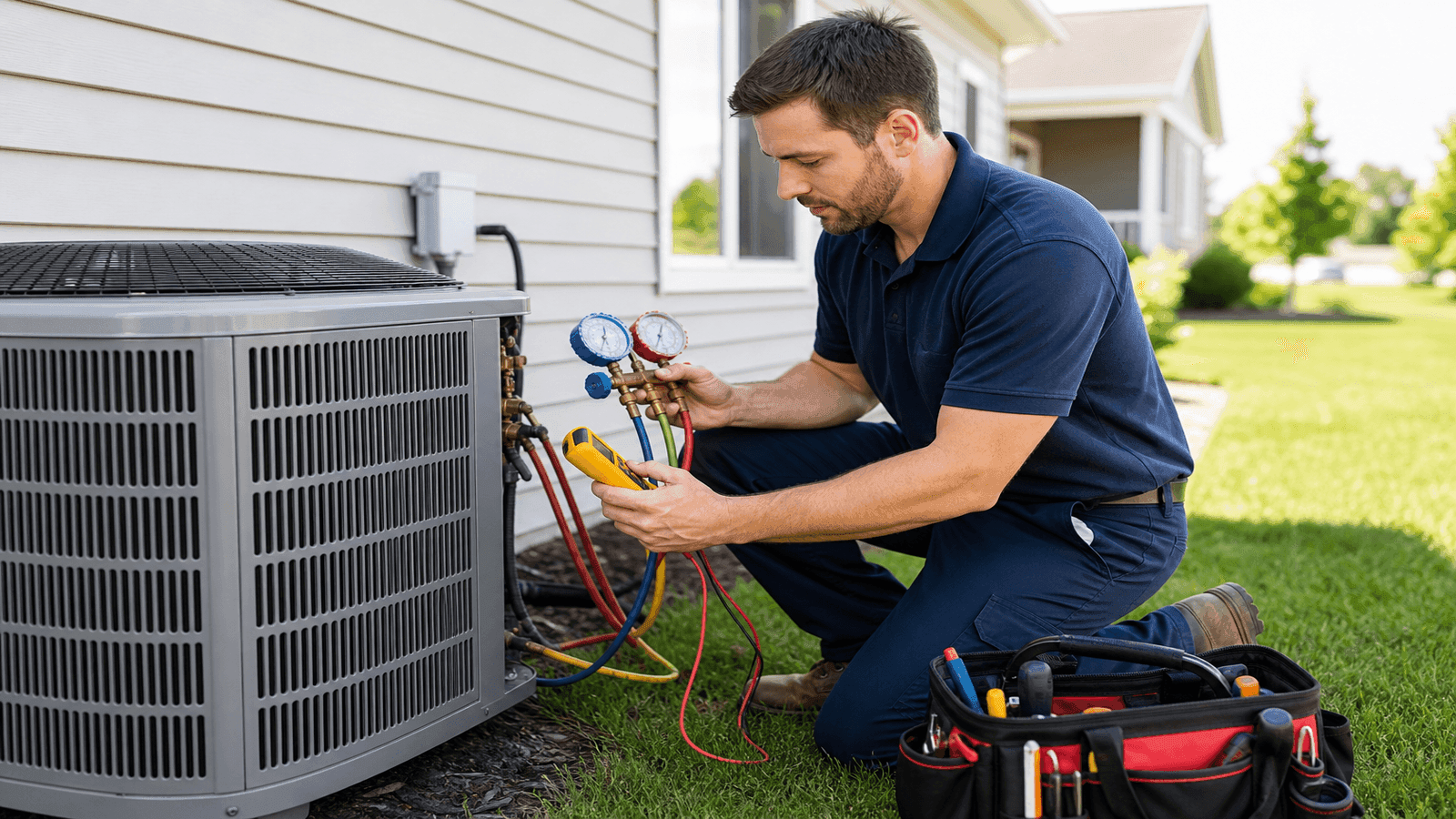
Photo: HVAC technician inspecting a residential air conditioning unit with diagnostic tools and gauges
1. Dirty or Clogged Air Filters
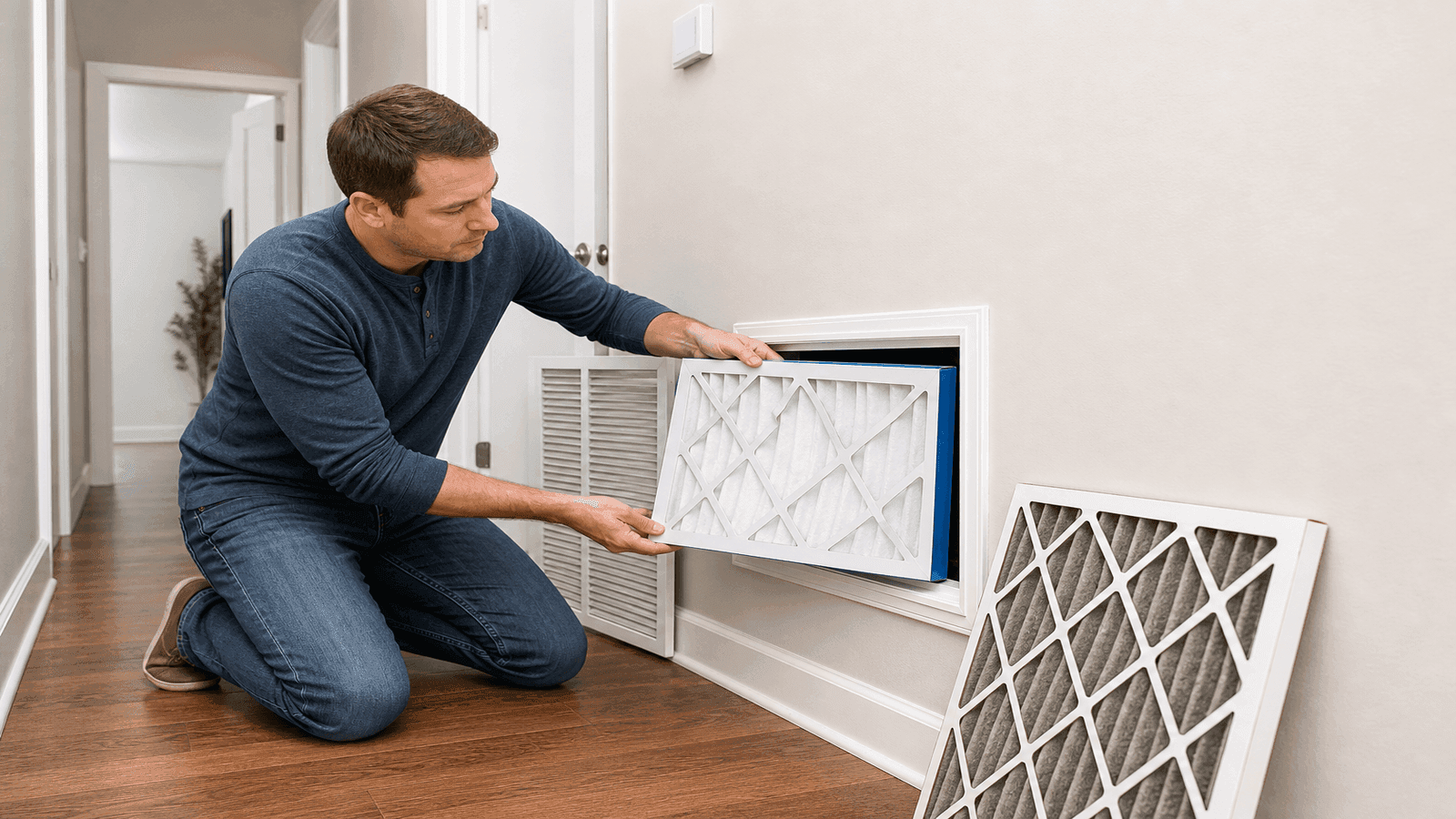
Dirty filters are the #1 cause of HVAC failures. The EPA estimates that a clogged filter increases heating and cooling costs by 5-15% because the system works harder to push air through restricted passages [1]. Over time, that strain damages blower motors, causes evaporator coils to freeze, and triggers shutdowns.
This is always a DIY fix. Standard filters cost $5-$25 and take less than two minutes to swap. Check monthly and replace every 30-90 days. Homes with pets should change filters every 30 days.
- DIY filter replacement: $5-$25
- Emergency service call for frozen coil from dirty filter: $150-$400
- Blower motor replacement from prolonged strain: $400-$900
I'd estimate that 4 out of every 10 service calls I run could have been avoided with a $15 filter change. Homeowners spend $300 on a service call, and I pull out a filter that looks like a carpet sample. Set a reminder on your phone every 30 days.
2. Refrigerant Leaks
Refrigerant is the lifeblood of your cooling system. The EPA estimates that residential systems leak refrigerant at 5-11% per year on average [2]. A system running 15-20% low consumes nearly twice the normal electricity while delivering only 60-70% of its rated cooling capacity.
Warning signs include warm air from vents despite the system running, ice formation on the evaporator coil, hissing sounds near the indoor unit, and rising electric bills without increased usage.
Always call a professional. Refrigerant handling requires EPA 608 certification, and DIY work is illegal under federal law. Leak detection and minor repair costs $200-$600, while major coil leaks run $600-$1,500. Evaporator coil replacement averages $900-$2,700 [7].
3. Thermostat Malfunctions
A faulty thermostat can make your entire system appear broken when the equipment itself is fine. ACCA estimates that thermostat-related issues account for approximately 20% of all residential service calls [3].
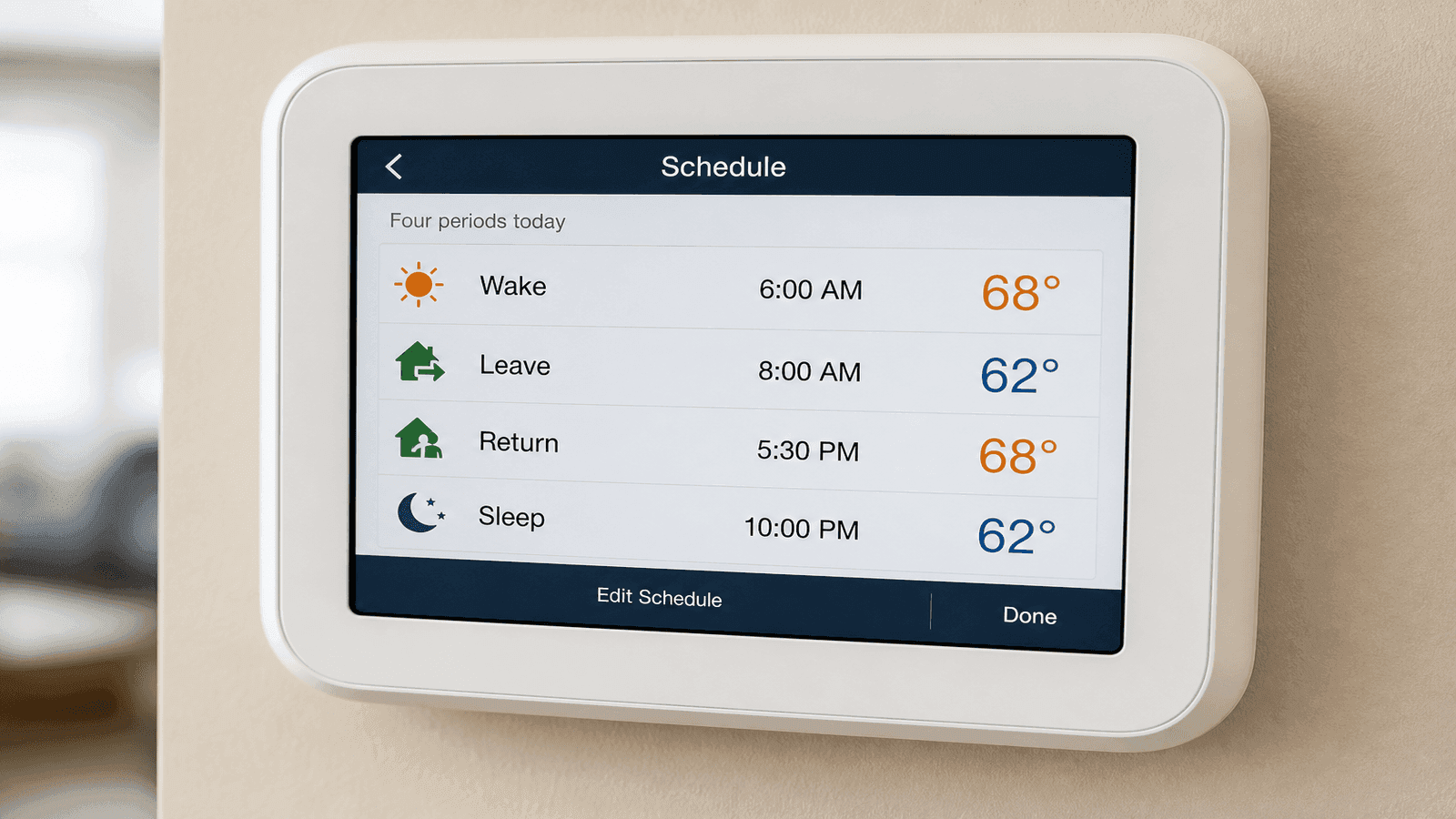
Start with DIY troubleshooting: replace batteries (solves the problem roughly half the time), check mode settings (heat vs. cool), and verify the temperature setting is accurate. Thermostat replacement costs $50-$150 for basic models or $200-$400 for smart thermostat installation.

Photo: Homeowner checking a smart thermostat displaying temperature settings on a living room wall
4. Frozen Evaporator Coils
Ice on the indoor coil blocks airflow entirely and forces the system to shut down. According to Trane, restricted airflow is the #1 cause of frozen coils, and a dirty filter is the most common source of that restriction [4].
Other causes include low refrigerant levels, malfunctioning blower motors, blocked return air vents, and running AC when outdoor temperatures drop below 60F.
If you see ice, turn AC off immediately and set the fan to ON (not AUTO). Let ice melt completely (2-4 hours), then check the filter. If the coil freezes again after restart with a clean filter, the issue is likely low refrigerant or a failing blower motor, both requiring professional service ($150-$700).
5. Short Cycling
Short cycling occurs when your system turns on and off rapidly, running only 2-5 minutes before shutting down. Every startup stresses compressor bearings, windings, and electrical connections. A compressor rated for 15 years of normal cycling might last only 7-8 years under constant short cycling [4].
Common causes include oversized equipment, dirty air filters, low refrigerant, faulty thermostats, and failing capacitors. Check the filter and thermostat first. If both are fine, call a professional, since short cycling often signals refrigerant problems or oversized equipment. Capacitor replacement costs $150-$300, while compressor replacement from short cycling damage runs $1,500-$3,000.
6. Uneven Heating or Cooling
Some rooms feel like a sauna while others stay cold. The Department of Energy reports that typical duct systems lose 25-40% of conditioned air through leaks, holes, and poorly connected ducts [1].
Check that all supply registers are open and unobstructed. Beyond that, professional duct sealing ($1,500-$3,500) or zoning system installation ($2,000-$3,500) typically resolves the issue.
I see duct leakage on almost every service call in homes built before 2000. Homeowners spend thousands upgrading to a high-efficiency furnace, then wonder why their bills barely changed. The answer is usually sitting in their attic: disconnected duct joints blowing conditioned air into unconditioned space.
Get quotes from top-rated pros.
7. Strange Noises
HVAC systems should operate with a consistent, low hum. Unusual sounds indicate specific mechanical problems.
| Sound | Likely Cause | Urgency |
| Banging or clanking | Loose or broken component | High |
| Screeching | Worn belt or bearing failure | Medium-High |
| Rattling | Loose panels or ductwork | Low |
| Buzzing | Electrical issue or failing contactor | Medium-High |
| Hissing | Refrigerant or duct leak | High |
| Grinding | Motor bearing failure | High (shut off immediately) |
Rattling from loose panels is a DIY fix. Any grinding, screeching, or hissing requires immediate professional attention ($100-$600 for belt or bearing replacement, $1,500-$3,000 for compressor issues).
8. Water Leaks Around the Unit
Water pooling around the indoor unit usually means a clogged condensate drain line. Clear it yourself using a wet/dry vacuum on the outdoor drain outlet or flushing with white vinegar. Professional drain service costs $100-$250 if DIY methods fail. Ignoring leaks leads to $1,000-$5,000+ in water damage.
9. Blower Motor Failure
When the blower motor fails, you get no airflow even though the system appears to be running. Warning signs include weak airflow, unusual humming, and intermittent air delivery. Always call a professional. Replacement costs $400-$900 including parts and labor.
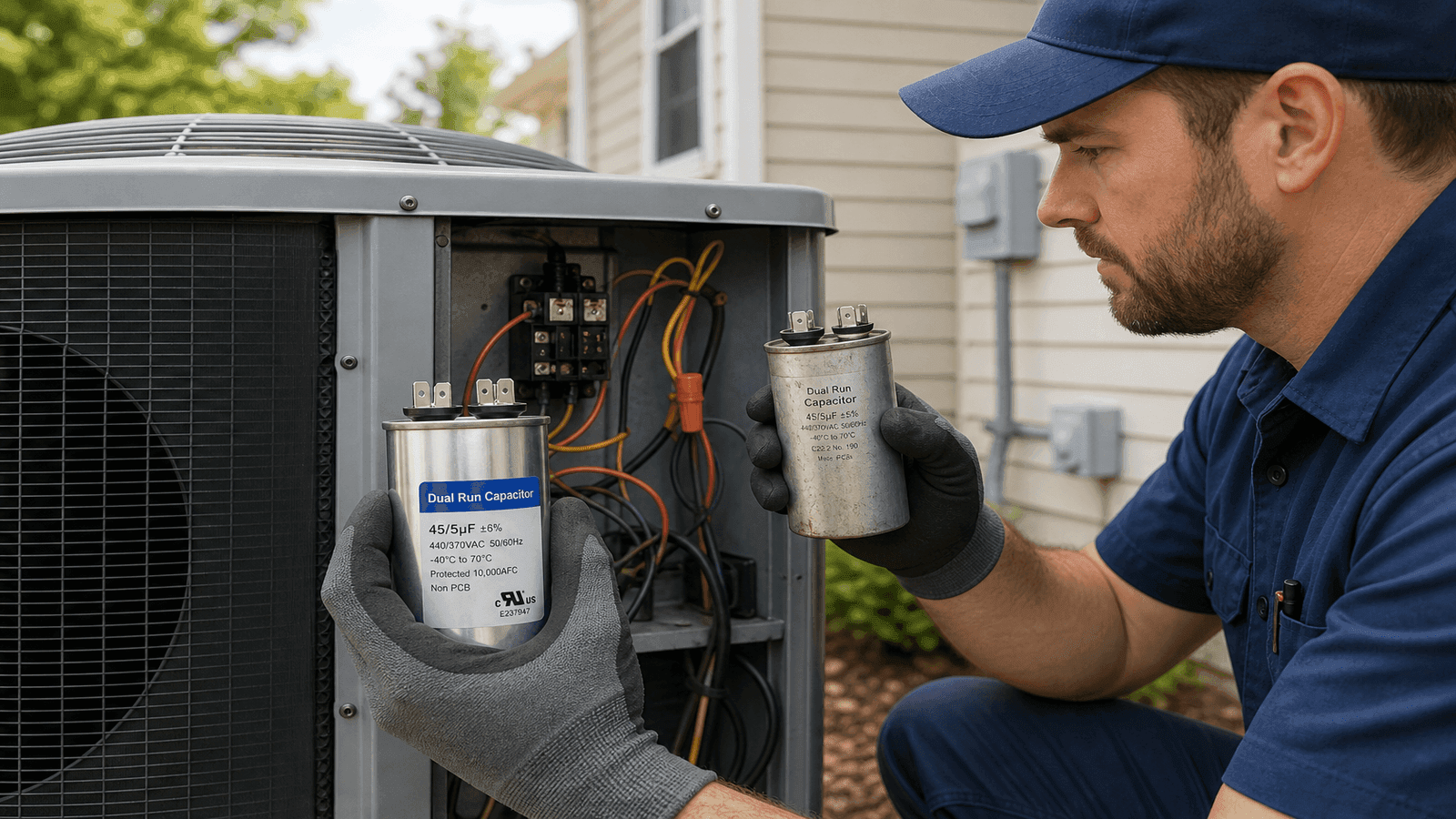
10. Capacitor Failure
Capacitors start the compressor and fan motors. Signs of failure include a system that hums but will not start, or an outdoor unit that shuts off after a few seconds. Capacitors store dangerous electrical charges. Never attempt DIY repair. Professional replacement costs $150-$300, one of the most affordable HVAC repairs.
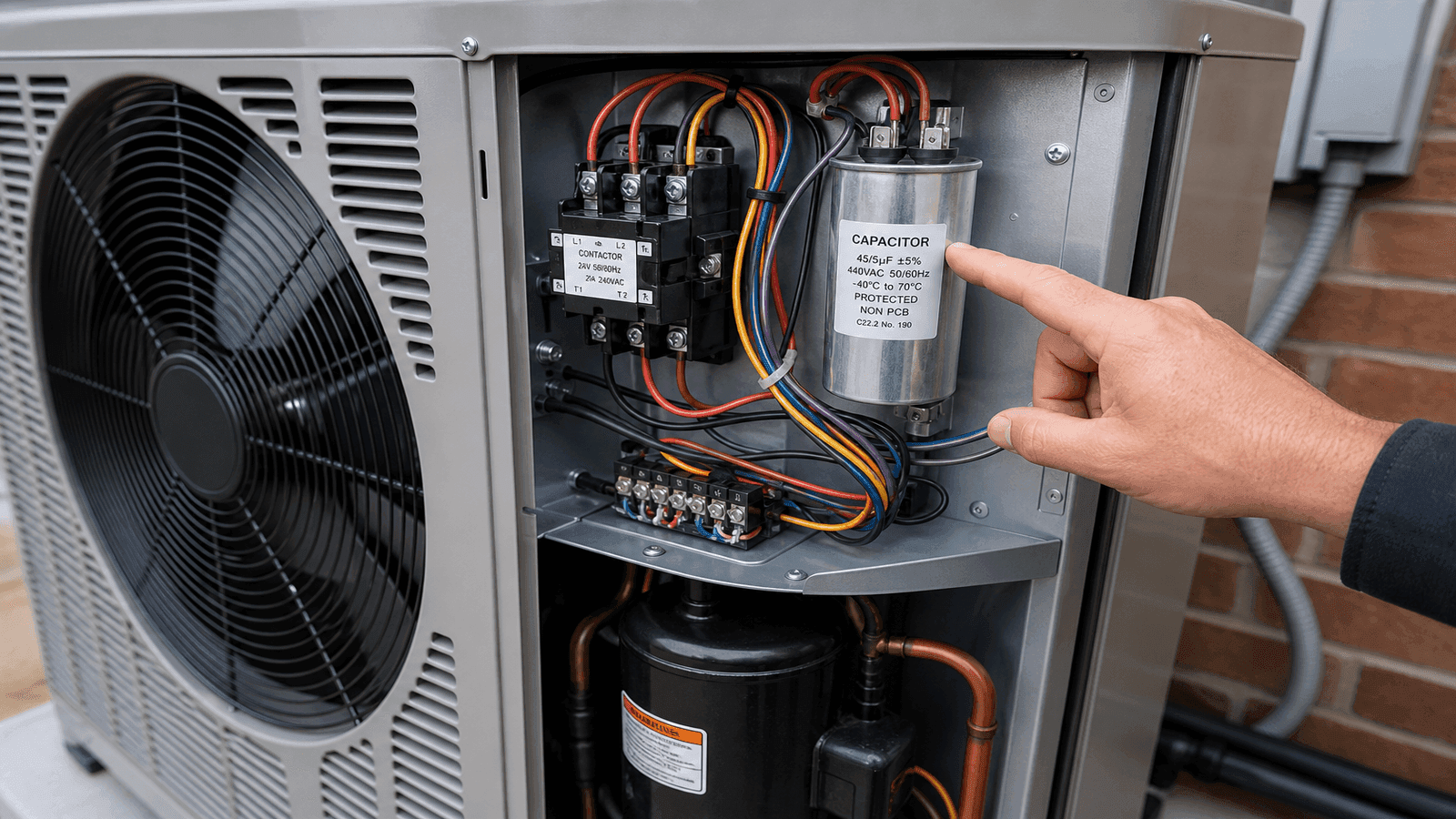
Photo: Close-up of an HVAC outdoor condenser unit showing internal components including capacitor and fan motor
11. Pilot Light and Ignition Problems
Gas furnaces rely on pilot lights or electronic ignition to start heating. Relighting a pilot light is a DIY task following manufacturer instructions. Cleaning a dirty flame sensor with fine-grit sandpaper is also manageable for experienced homeowners. Hot surface igniter replacement costs $150-$350. Gas valve issues ($300-$700) require a licensed technician.
12. Dirty Condenser Coils
The outdoor unit releases heat from your home. When coils get coated with dirt and debris, efficiency drops significantly. Keep 2 feet of clearance around the unit and spray coils gently with a garden hose (never a pressure washer). Professional deep cleaning costs $150-$400.
I tell every customer the same thing: treat your outdoor unit like a garden. Keep plants, mulch, and debris at least 2 feet away on all sides. Five minutes with a garden hose in spring saves hundreds on your electric bill.
13. Duct Leakage
Leaky ductwork wastes 25-40% of conditioned air [1]. Seal visible gaps with mastic sealant or metal-backed UL 181 tape (never cloth duct tape, which fails within 1-2 years). Professional duct sealing costs $1,500-$3,500. Aeroseal technology runs $2,000-$4,000.
Get quotes from top-rated pros.
14. Electrical Control Failures
Control boards, relays, and contactors coordinate system operation. Always call a professional for electrical issues. If your breaker trips repeatedly, do not keep resetting it, as that indicates a serious fault. Contactor replacement costs $150-$400, control board replacement runs $300-$700.
15. Heat Pump Defrost Problems
Heat pumps normally form light frost in cold weather and clear it with defrost cycles. Heavy ice buildup that will not clear indicates defrost cycle failure. Never chip or scrape ice off the unit. Switch to emergency heat mode and call a technician. Defrost timer replacement costs $200-$400, reversing valve replacement runs $500-$2,500.
Case Study: The Anderson Family's $4,200 Lesson
Mark and Lisa Anderson of Plymouth, Minnesota, contacted Daniel through NearbyHunt in January 2025 after their 12-year-old furnace started short cycling during a cold snap.
The Andersons had skipped annual maintenance for three consecutive years. Daniel's inspection revealed a heavily clogged filter (in place for over 8 months), a cracked heat exchanger from years of restricted airflow overheating, and a failing blower motor bearing.
The cracked heat exchanger was the critical finding, since it can leak carbon monoxide into the home. Total costs: $2,800 for the heat exchanger, $750 for the blower motor, and $650 for a full system tune-up. Daniel estimates that annual maintenance at $150-$200 per visit would have caught the airflow restriction before it caused damage, saving the family over $3,500.
NearbyHunt Network Insight
Data from HVAC professionals in the NearbyHunt network shows consistent patterns across service areas:
| Service Type | % of Requests | Average Cost |
| AC not cooling | 28% | $200-$600 |
| Furnace not heating | 22% | $250-$700 |
| Annual maintenance | 18% | $150-$300 |
| Strange noises | 12% | $150-$500 |
| Thermostat issues | 9% | $100-$400 |
| System replacement | 5% | $5,000-$14,000 |
Across all categories, 74% of homeowners expect service within 24 hours when their heating or cooling is out [6].
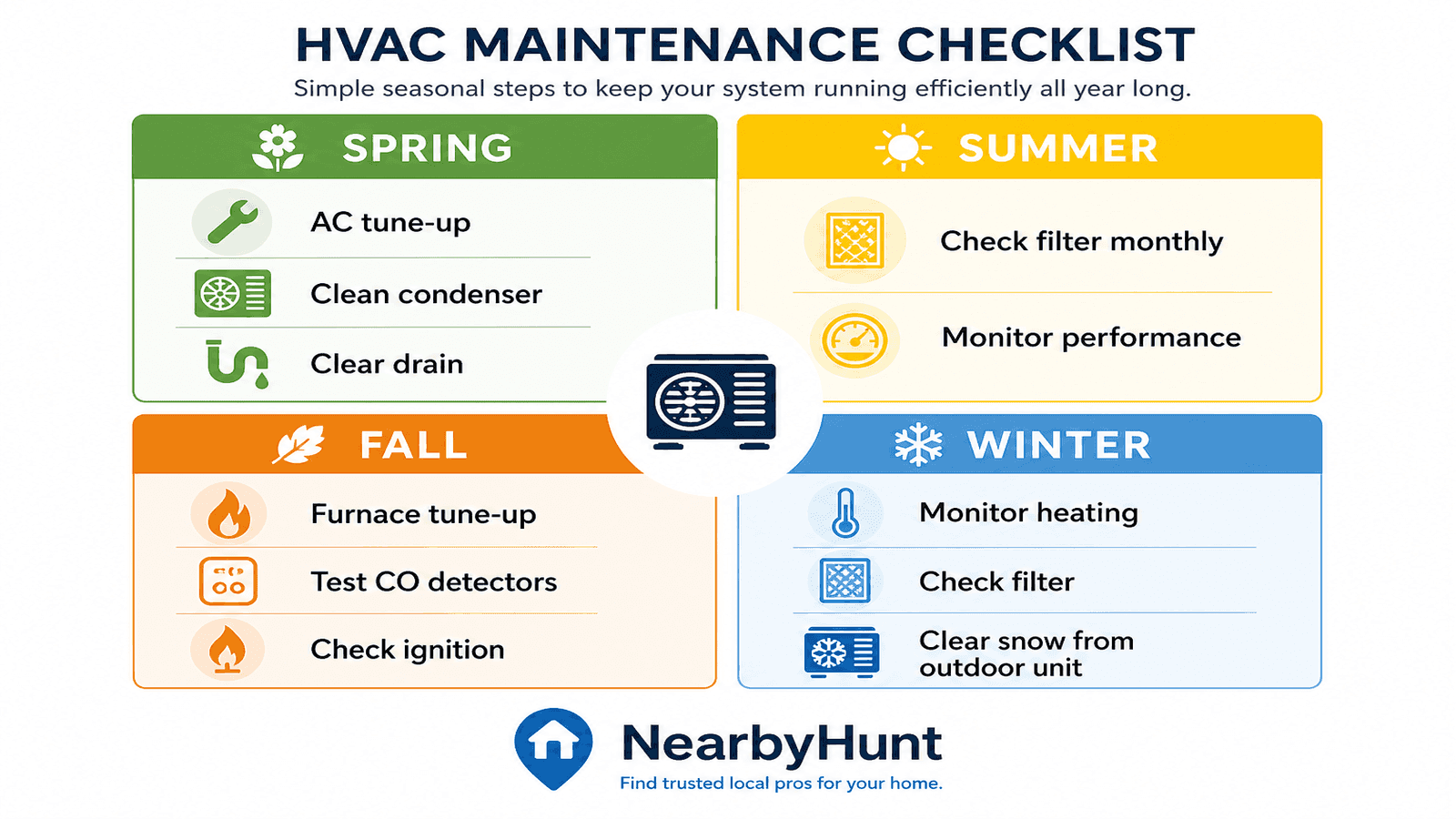
Photo: Seasonal HVAC maintenance checklist infographic showing spring and fall tasks for homeowners
Preventive Maintenance Schedule
Monthly (homeowner): Check and replace air filter. Clear debris from outdoor unit. Verify thermostat operation.
Spring: Schedule professional AC tune-up ($100-$200). Clean condenser coils. Clear condensate drain with vinegar flush.
Fall: Schedule professional furnace tune-up ($100-$200). Test carbon monoxide detectors. Check ignition system.
Annually: Professional duct inspection every 3-5 years. Evaluate equipment age and plan replacements for systems over 15 years old.
Sources and References
[1] U.S. Department of Energy. "Energy Saver: Heating and Cooling."
[2] U.S. Environmental Protection Agency. "Refrigerant Management: Residential Systems."
[3] Air Conditioning Contractors of America (ACCA). "Residential HVAC Service Call Analysis."
[4] Trane Technologies. "Frozen Evaporator Coil: Causes and Prevention."
[5] ASHRAE. "ANSI/ASHRAE/ACCA Standard 180: Inspection and Maintenance of HVAC Systems."
[6] FIELDBOSS. "HVAC Customer Frustrations Revealed: 2025 Survey."
[7] ServiceTitan. "HVAC Statistics: Industry Data and Cost Benchmarks."
[8] ENERGY STAR. "Heat and Cool Efficiently."
Disclaimer: HVAC problems vary based on equipment type, home age, climate zone, and local building codes. The costs provided are national averages from 2025-2026 data and may not reflect your specific situation. Always get written estimates from licensed, insured HVAC technicians before proceeding with repairs. Some HVAC work requires permits and must be performed by licensed professionals. Gas furnace repairs should only be performed by qualified technicians due to carbon monoxide risks. This article is for informational purposes only and does not constitute professional HVAC advice for your specific situation.

Daniel is an EPA-certified HVAC technician & Energy Efficiency Consultant with over 14 years of experience in maintaining and installing heating and cooling systems throughout the Midwest. Passionate about sustainability, Dan specialises in energy-efficient retrofits and intelligent climate control systems. He writes for NearbyHunt to help homeowners extend the lifespan of their HVAC units while lowering utility bills.

Christine is an EPA-certified HVAC professional with 17 years of experience in heating, cooling, and indoor air quality systems. She has managed large-scale residential installations and worked as a technical trainer for new HVAC apprentices. Chris’s reviews focus on accuracy, safety, and performance standards in modern HVAC practices.